Tag: reduction

  • The mechanism of borohydride reductions. Part 1: ethanal.

    Sodium borohydride is the tamer cousin of lithium aluminium hydride (LAH). It is used in aqueous solution to e.g. reduce aldehydes and ketones, but it leaves acids, amides and esters alone. Here I start an exploration of why it is such a different reducing agent.
    BH4

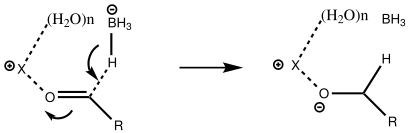
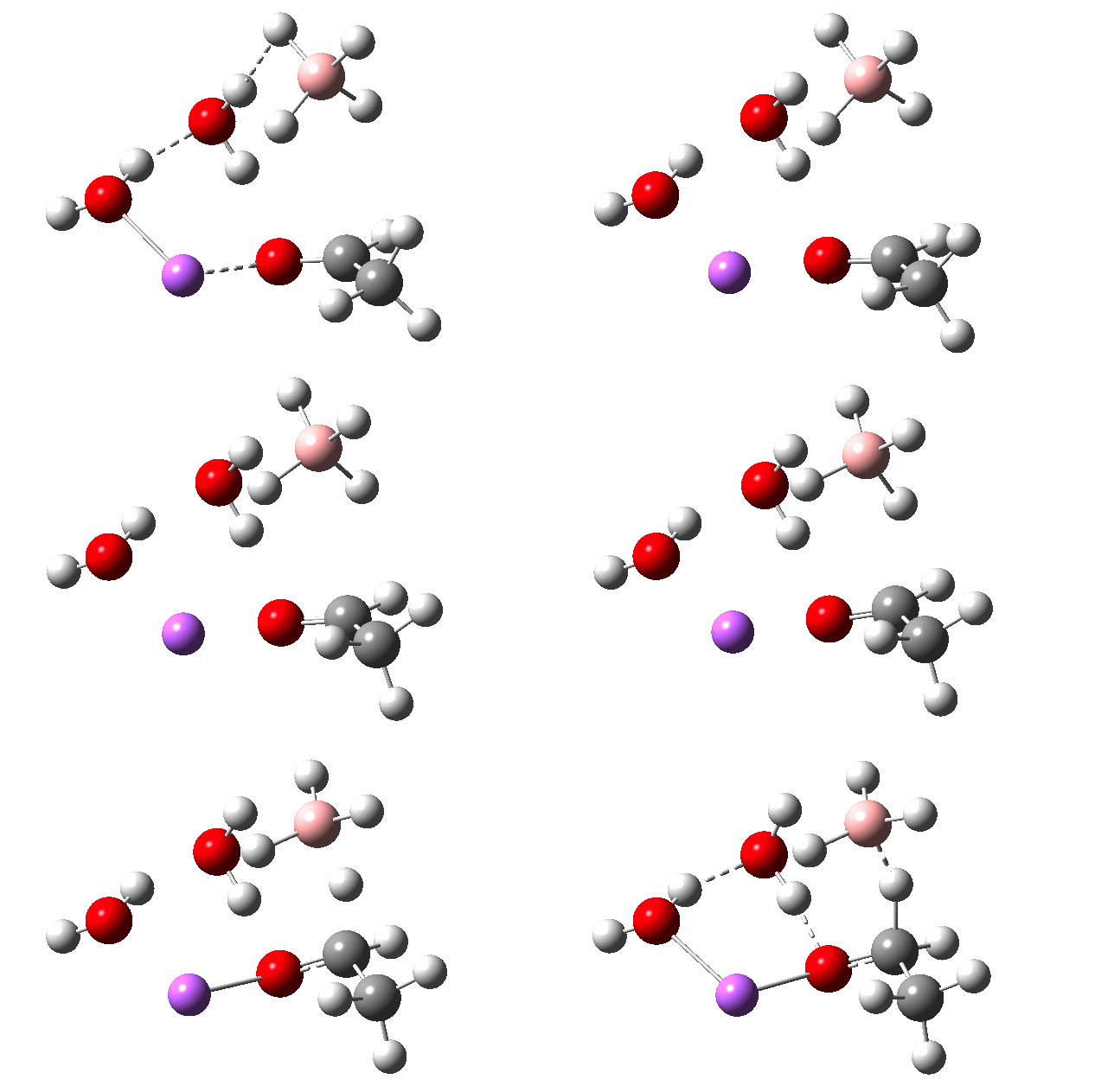
    Initially, I am using Li, not Na (X=Li), to enable a more or less equal comparison with LAH, with water molecules to solvate rather than ether (n=2,3,5) and R set to Me. First, n=2, for which the IRC is shown below. In this model, we will assume that the carbonyl has not first reacted with water to form a gem-diol. The free energy barrier is 9.6 kcal/mol (ωB97XD/6-311+G(d,p)/SCRF=water) which corresponds to a very fast reaction at room temperatures.
    BH4a
    The immediate product is, if anything, more interesting than the transition state[cite]10.14469/ch/191186[/cite] with quite a stretched length for the newly formed C-H bond and predicted stretching wavenumber for this bond of 2137 cm-1. This effect is similar to that seen for the LAH reduction of cinnamaldehyde, and is due to stereoelectronic antiperiplanar alignment of the oxyanionic oxygen lone pair with the C-H bond. This species is also some 6.5 kcal/mol higher in energy than the reactant, and is clearly not the final product of the reaction (which must contain e.g. B-O bonds), the mechanism for which will not be investigated here immediately.
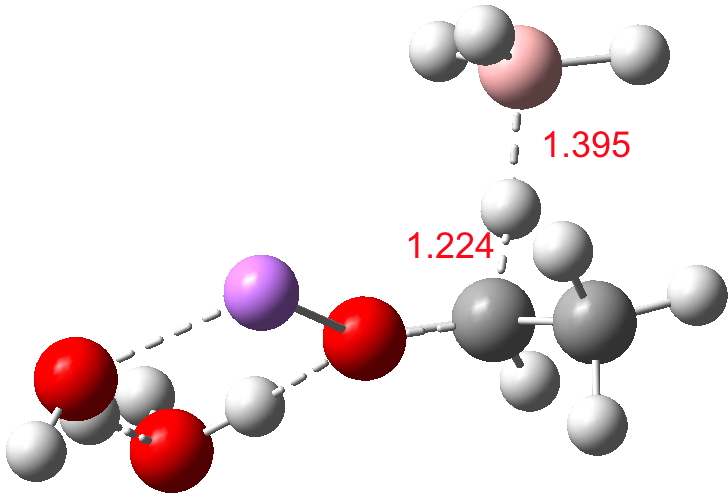
    BH4-2p
    For n=3, we see new solvation patterns, including a dihydrogen bond formed between water and the borohydride at the transition state; ΔG† is 10.0 kcal.mol.
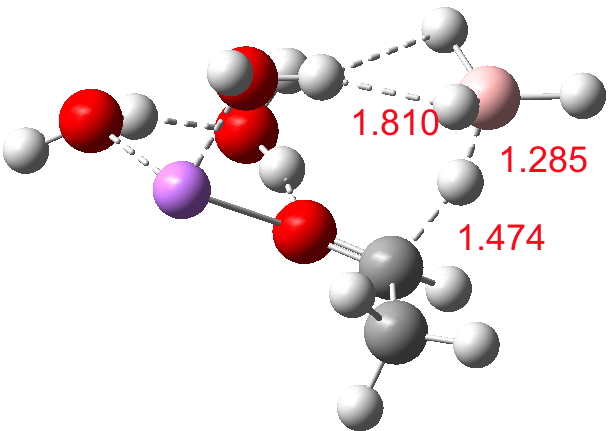
    Click for  3D.
    Click for 3D.

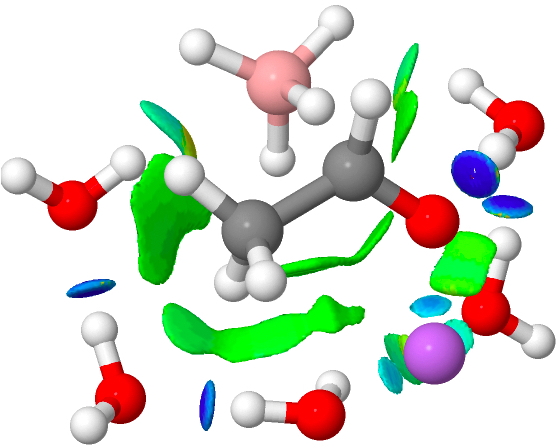
    Finally, n=5, where the TS is showing a cage-like structure of complex weak interactions, ΔG† is 11.3 kcal.mol. We see a model where inclusion of explicit solvent molecules can have a significant influence on the size of the barrier obtained.
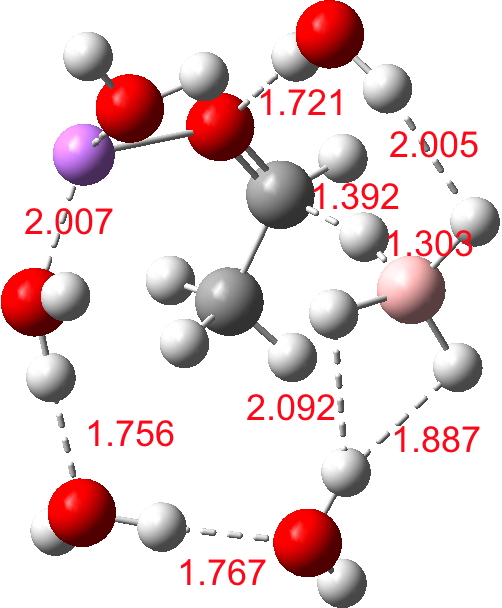
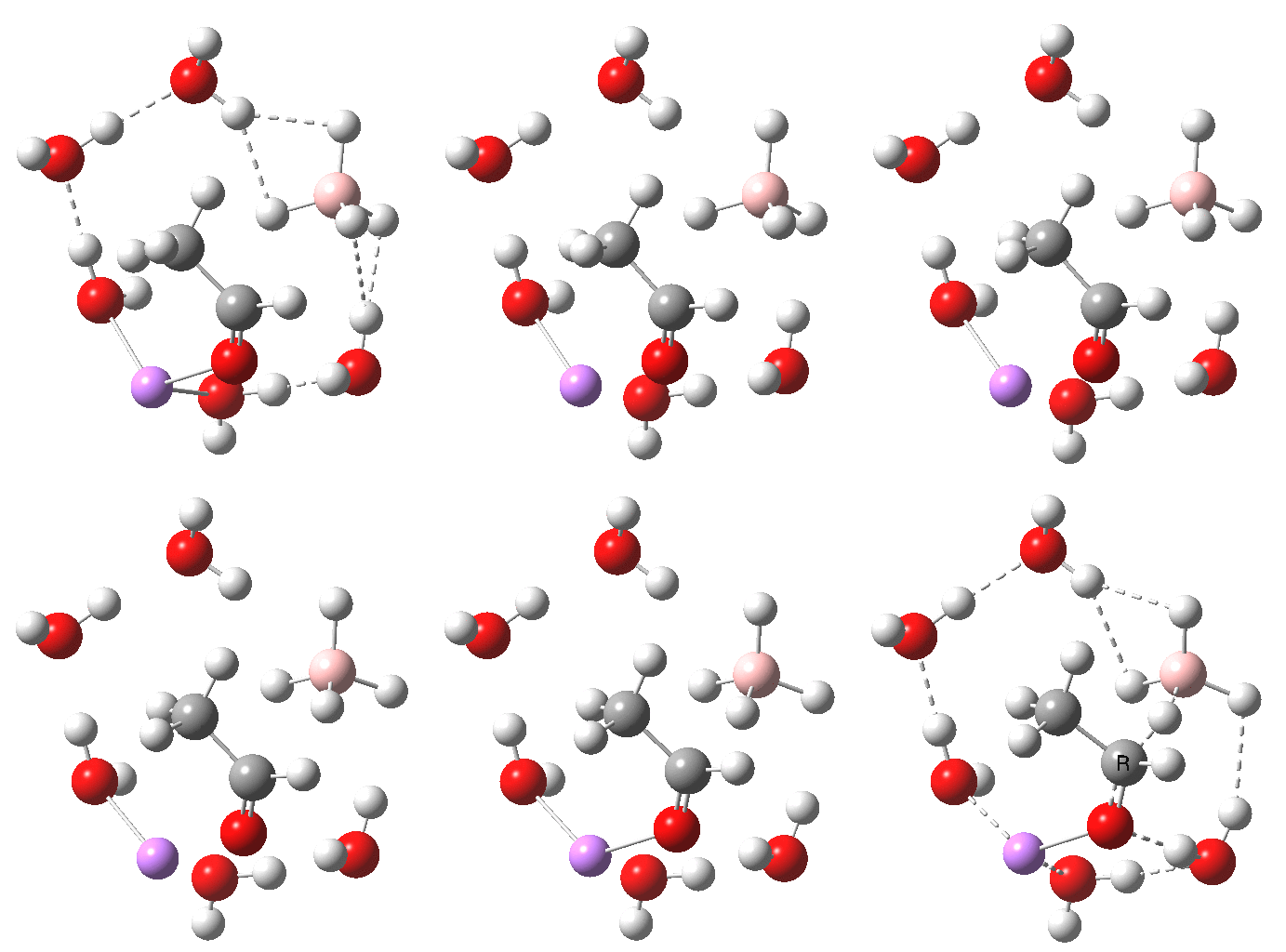
    Click for 3D
    BH4-5-TS

    BH4-5

    NCI surface. Click for  3D.
    NCI surface. Click for 3D. Blue=strong attractions, green=weak.
    n ΔG298‡ FAIR Data citation
    2 9.6 [cite]10.14469/ch/191188[/cite]
    3 10.0 [cite]10.14469/ch/191189[/cite]
    5 11.3 [cite]10.14469/ch/191192[/cite]

    With a mechanistic prototype now identified, it is time to start varying some of the parameters, such as X and R. This will enable us to assess the models built here to see if they reflect reality.
  • A better model for the mechanism of Lithal (LAH) reduction of cinnamaldehyde?

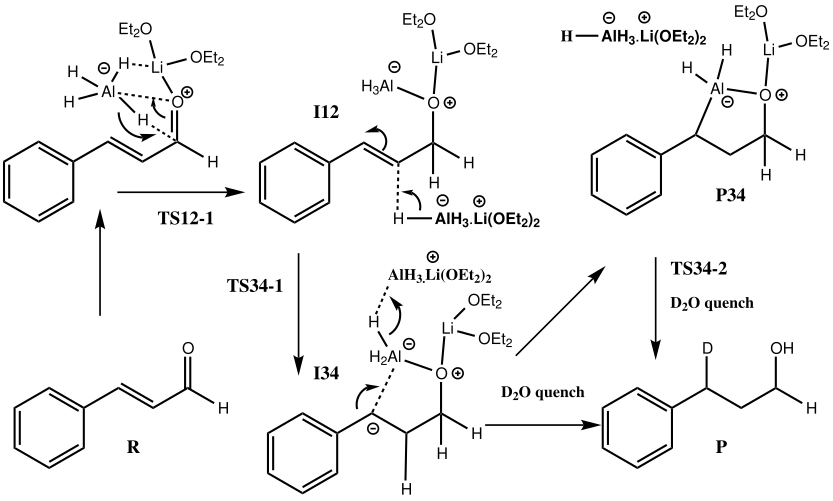
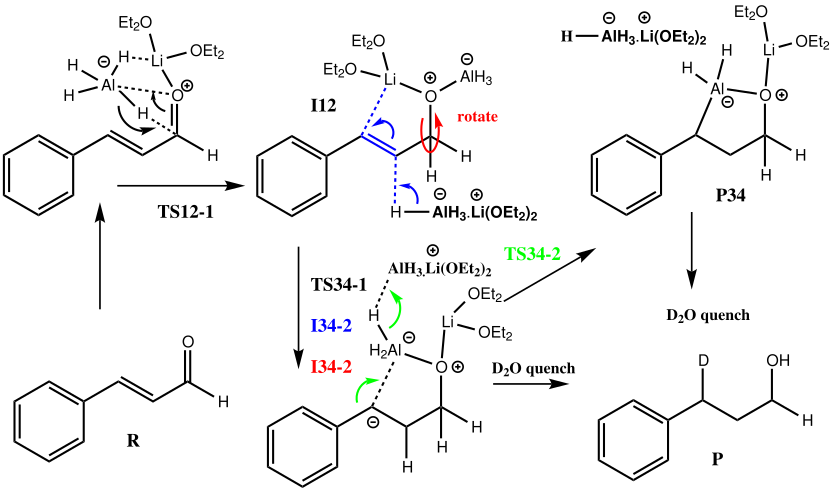
    Previously on this blog: modelling the reduction of cinnamaldehyde using one molecule of lithal shows easy reduction of the carbonyl but a high barrier at the next stage, the reduction of the double bond. Here is a quantum energetic exploration of what might happen when a second LAH is added to the brew (the usual ωB97XD/6-311+G(d,p)/SCRF=diethyl ether).

    LAH1

    In a comment at the end of the first post on this theme, I had noted some crystal structures containing in effect HxAl.Li(OR)y units (x=3,4; y=0-3), noting the variety of structural motifs. The current exploration does not even attempt to cover this range of possibilities, but it is informed by the types of weak interaction that these structures reveal. I will nevertheless accept that whatever pathway is revealed here is likely to represent an energetic upper bound and recognise that lower energy pathways may well exist but are yet to be explored.

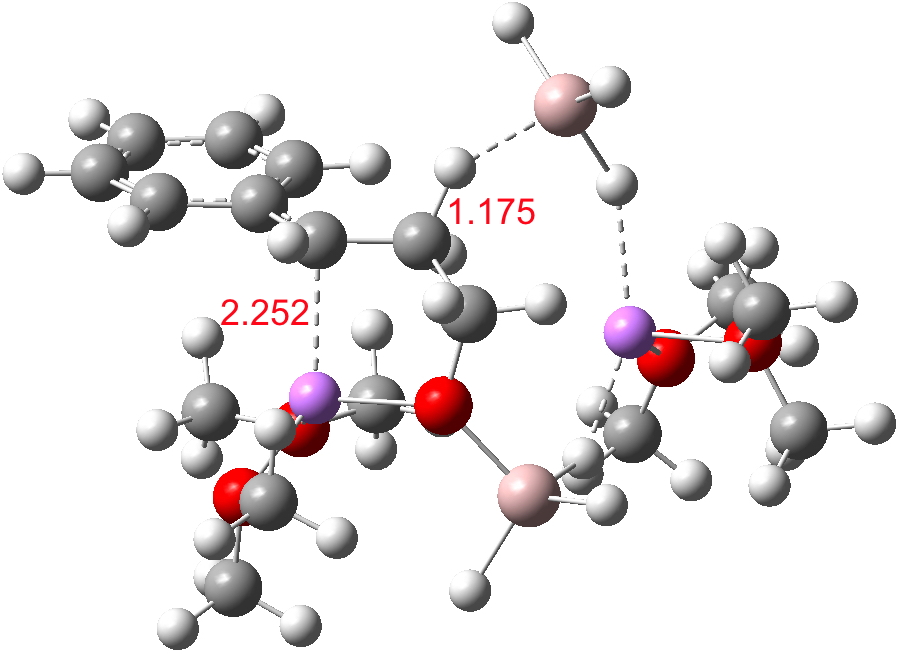
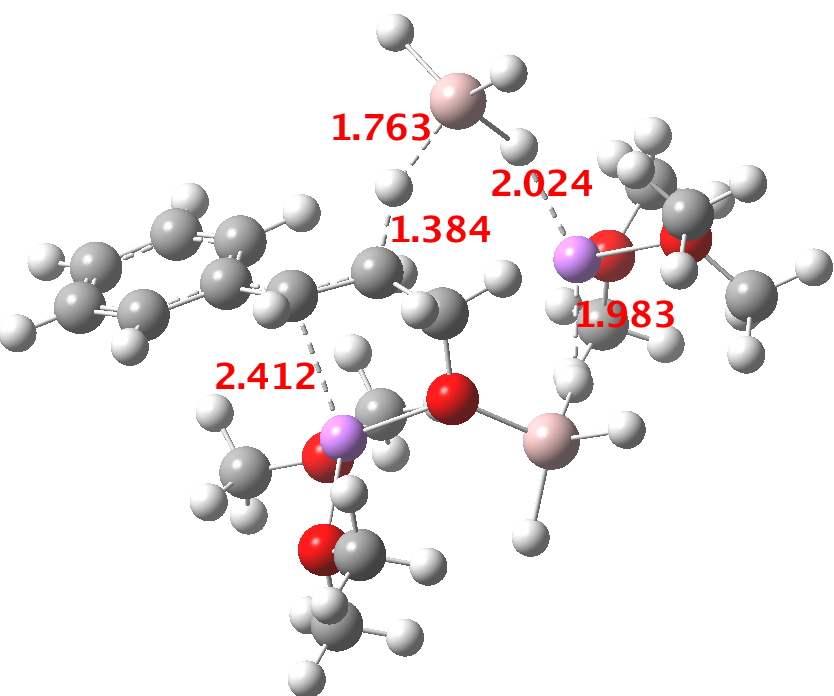
    1. At the I12 stage, a second AlH4.Li(OMe)2 is added and hydride transfer occurs antiperiplanar across the C=C bond (TS34-1). The computed free energy barrier ΔG298† is ~24 kcal/mol. The magnitude of this barrier corresponds to a relatively slow reaction occurring around room temperatures or slightly higher.
      Click for  3D
      TS. Click for 3D

      TS34a
      Click for  3D
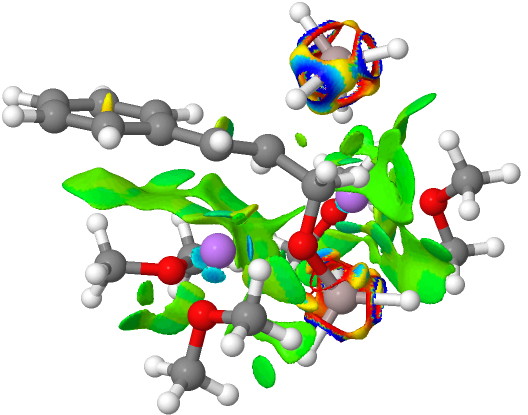
      NCI Isosurface (green regions are dispersion stabilizing) Click for 3D
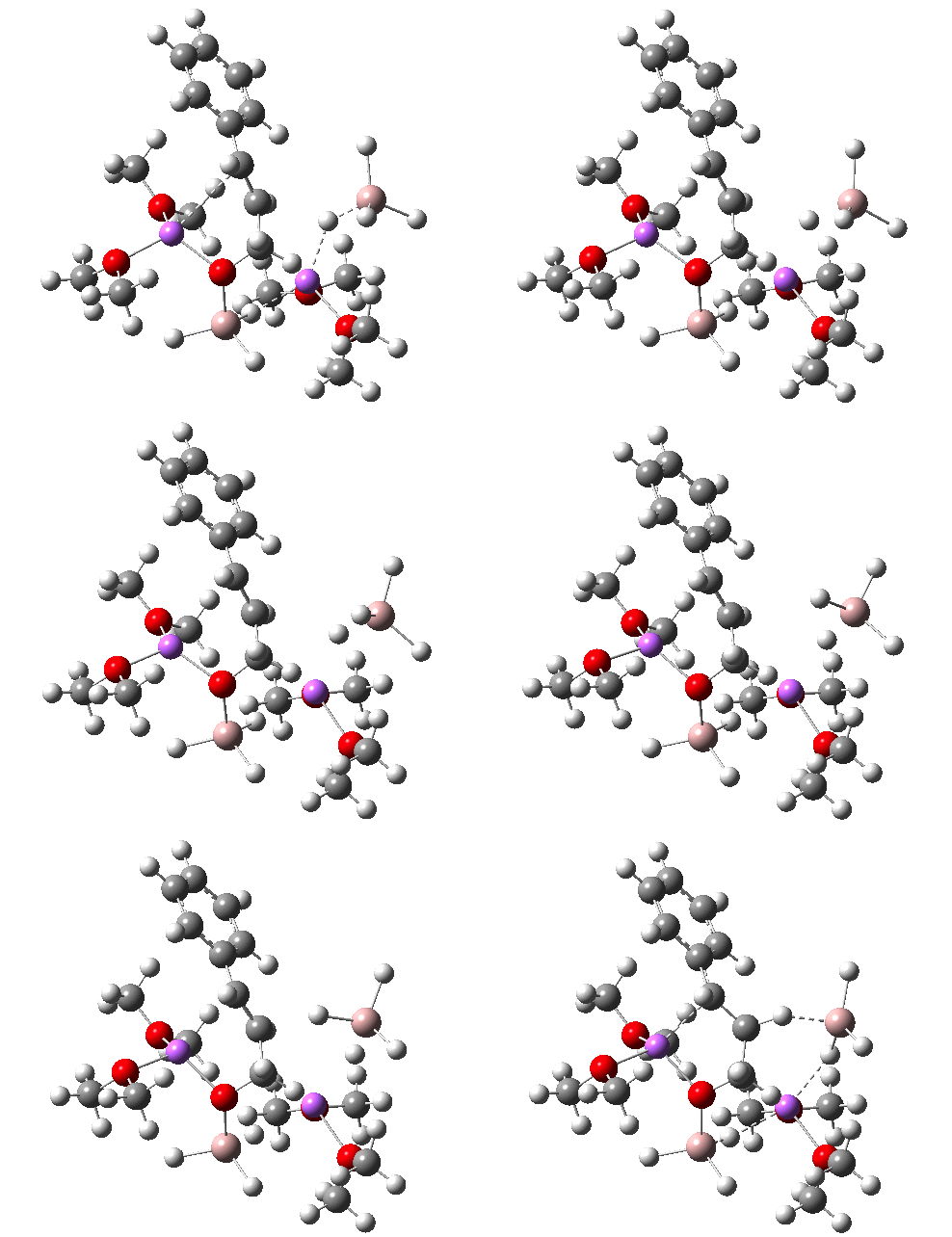
    2. A transient shallow intermediate I34-1 is formed in which the benzylic anion is stabilised by an adjacent solvated Li centre. The energy of this species (Table below) needs some explanation. Can its free energy really be 1.5 kcal/mol higher than that of the preceding transition state? Yes, because its entropy is lower! The transition state is located on a total energy surface, which does not include thermal and entropic corrections; these are always applied AFTER the stationary points are located. If one inspects these total energies, I34-1 emerges as 1.2 kcal/mol lower than the preceding transition state. This sort of result serves to remind us of the dynamic nature of a potential energy surface, and that static energies may on occasion lead to odd results. Its geometry is shown below, and this too has an interesting feature. The C-H bond just created from the LAH is antiperiplanar to the benzylic anion (locked anti by the Li) and the resulting stereoelectronic effect reduces its C-H calculated[cite]10.14469/ch/191178[/cite] stretching wavenumber from the normal value of ~3100 cm-1 to 2231 cm-1, a remarkable reduction.
      Click for  3D
      I34-1. Click for 3D
    3. The C-O-AlH3.Li(OMe)2 ligand now needs to rotate to I34-2 so that metal exchange on the benzylic carbon can occur, with Al displacing Li at that position. As with I34-1, the free energy of this species is actually slightly higher than that of TS34-1. Two AlH3 groups now exist at this stage (each of them formed by hydride donation as part of the reduction process, see below). A hydride transfer metathesis between them (H2Al-H-Al3 is actually a stable bridged species) will generate an AlH2 as part of the 5-ring aluminate ester in P34 and regenerate a molecule of LAH. Transition states for these processes (i.e. TS34-2) proved difficult to locate; it may be that the ligand rotation and the hydride metathesis are part of the same concerted process but that is not proven yet.
      Click for  3D
      I34-2. Click for 3D
    4. The final product prior to hydrolysis is appropriately exoenergic.
    5. I would also remark that many aspects of this reaction remain unexplored. For example, AlH4 can deliver up to four hydrides, becoming progressively substituted as Al(OR)nHy and in the process loosing Al-H…Li weak interactions. What influence this has on the barriers remains unknown.
    Species Relative ΔG298, kcal/mol FAIR Data-DOI
    I12 0.0 [cite]10.14469/ch/191172[/cite]
    TS34-1 24.1 [cite]10.14469/ch/191177[/cite]
    I34-1 25.5 [cite]10.14469/ch/191178[/cite]
    I34-2 25.0 [cite]10.14469/ch/191181[/cite]
    P34 -8.8 [cite]10.14469/ch/191171[/cite]

    In summary, the first step in the reduction of cinnamaldehyde to cinnamyl alcohol requires just one molecule of “LiAlH4” as reductant and has a very low barrier to reaction. To construct a reasonable model to account for the slower further reduction of the C=C bond requires adding a further LiAlH4, the key feature being the availability of a lithium centre to stabilise out the forming benzylic carbanion. No doubt even better models might include the effects of adding e.g. a third molecule of LAH, and a much more extensive exploration of the various conformational options. But I think the present model might be good enough to augment the apparently relatively limited mechanistic speculations found in text books on the topic.


    You sometimes see this phrase in articles reporting transition state location. What is means it that I tried a half-dozen what I thought were reasonable possibilities, and none of them satisfactorily converged. This semi-random exploration of the potential energy surface revealed a very flat energy potential, with lots of conformational possibilities. At this point, you have to decide whether it is worth the time to continue hunting.


    Acknowledgments

    This post has been cross-posted in PDF format at Authorea.

  • Mechanism of the reduction of a carboxylic acid by borane: revisited and revised.

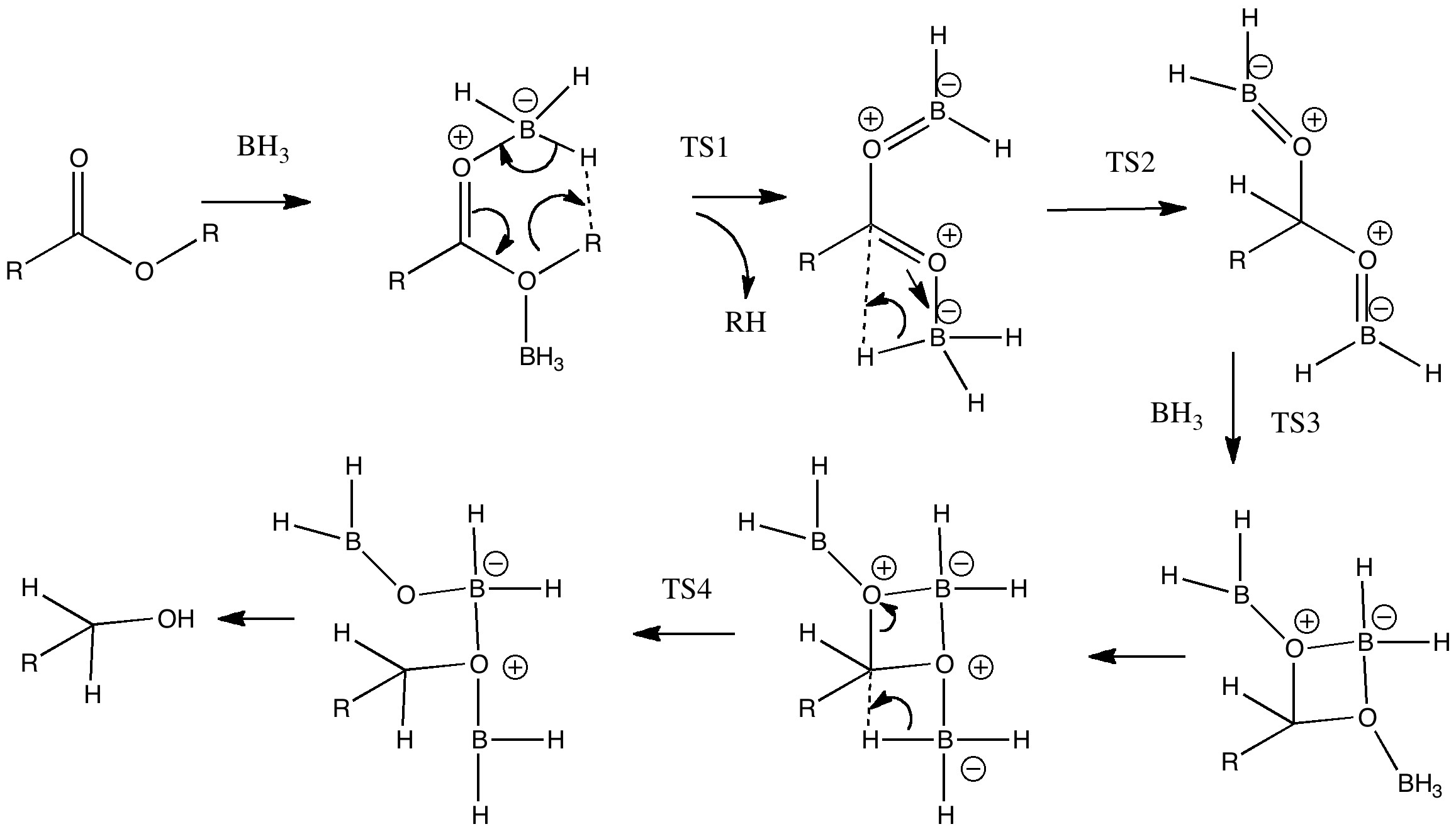
    I asked a while back whether blogs could be considered a serious form of scholarly scientific communication (and so has Peter Murray-Rust more recently). A case for doing so might be my post of about a year ago, addressing why borane reduces a carboxylic acid, but not its ester, where I suggested a possible mechanism. Well, colleagues have raised some interesting questions, both on the blog itself and more silently by email to me. As a result, I have tried to address some of these questions, and accordingly my original scheme needs some revision! This sort of iterative process of getting to the truth with the help of the community (a kind of crowd-sourced chemistry) is where I feel blogs do have a genuine role to play.

    The reduction of a carboxylic acid by borane

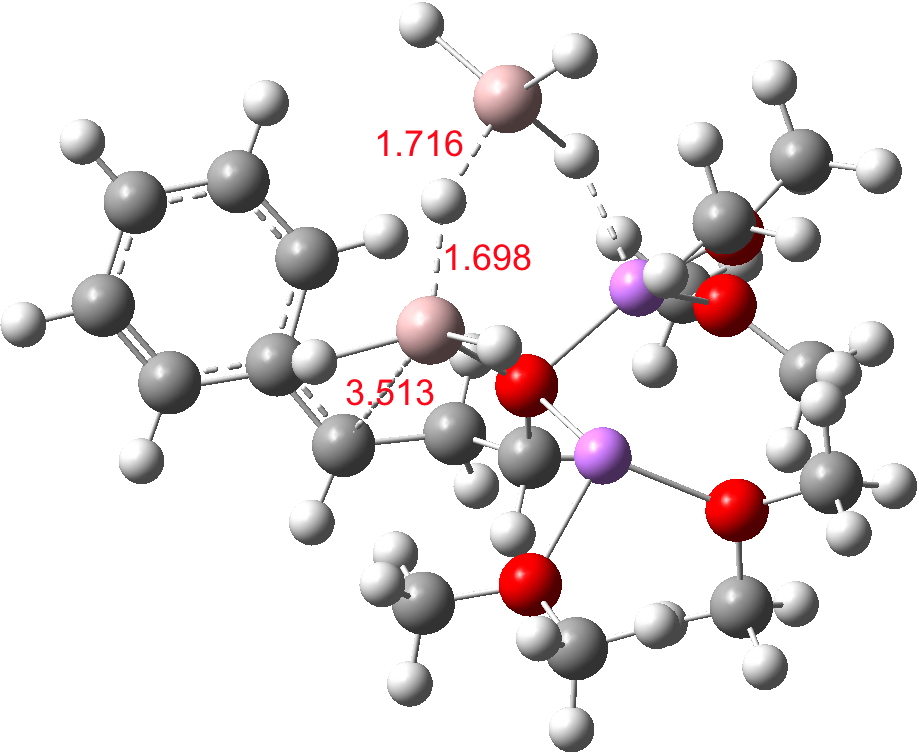
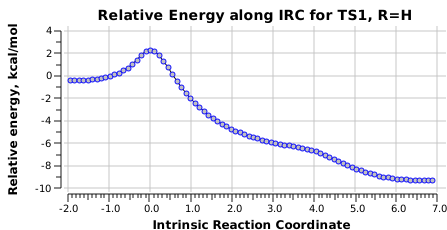
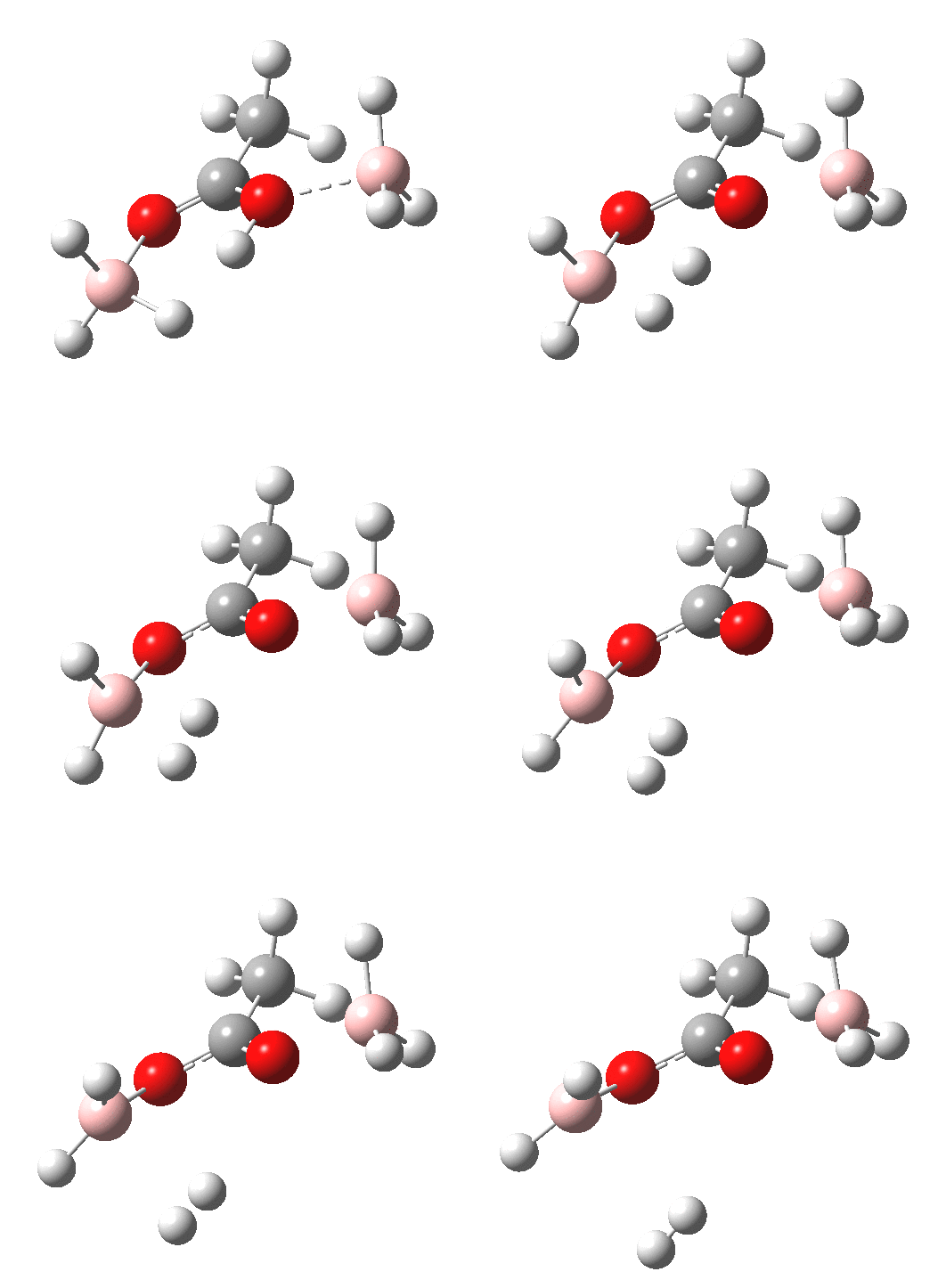
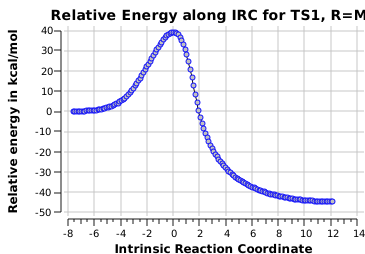
    TS1 in this scheme is modified from before to include an extra borane coordinating to the oxygen of the O-R group. I will include here the intrinsic reaction coordinate [computed at ωB97XD/6-311G(d,p)], since it shows some fascinating features.

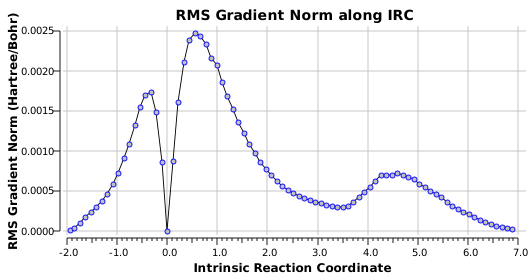
    One notes that the barrier for extrusion (R=H) is lower than before, due to the effect of the extra coordinated BH3 group. But notice the “bump” at an IRC value of ~4.0. If one inspects the gradients along the IRC, they reveal that the ejecting H-H molecule is tempted to coordinate to the boron to form a 5-coordinate species (a “hidden intermediate”) before abruptly changing direction and flying off into space!

    You can see an animation by invoking this link  or below:

    acyloxy+bh3-irc

    What happens if R=Me (an ester)? Well, the activation energy is now closer to 40 kcal/mol, which means the rate of the reaction would be very slow. Notice the bump corresponding to 5-coordinate boron has now vanished!

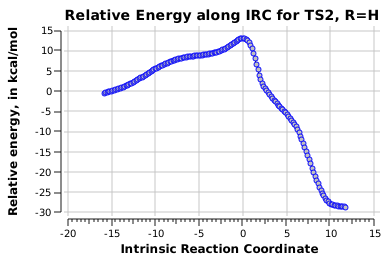
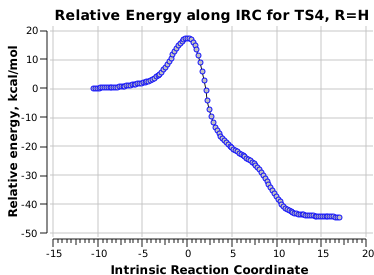
    Again, a link for IRC animation of the reaction (it is rather nice, even if a say so myself). QED? Well, not quite. One still has to show that TS2 – TS4 do not control things! The IRC for TS2 (the first addition of a hydrogen to the carbon) is shown below, again with fascinating bumps along the way. The TS2 animation is here. The free energy of TS2 is 6.9 kcal/mol lower than TS1 (even though the actual activation barrier is higher), which makes the latter the rate determining step. Note the bumps at  IRC = -8 and +5. These are due to rotations setting up the reaction.

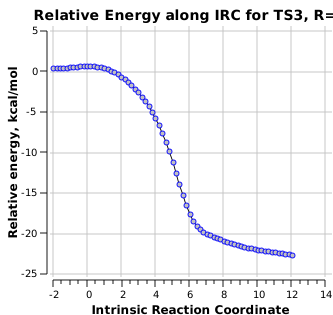
    TS3, a ring closing reaction (animation) shows an unexpected feature which I leave you to discover for yourself. TS4 is the second and final addition of a hydrogen to the carbon, with animation and resembling an SN2 inversion. The reaction is completed by hydrolysis.

    The relative free energies of TS1, 2, 3 and 4 are respectively 0.0, -6.9, -35.0 and -19.4 kcal/mol, which makes the overall rate limiting step TS1. If that is the case, then this explains why borane reduces only a carboxylic acid and not an ester.

    Now all I have to do is explain all of this to my tutorial group! Mind you, this is a deceptively complex mechanism, and who knows if it may yet spring surprises.

    Acknowledgments

    This post has been cross-posted in PDF format at Authorea.