Tag: free energy

  • An alternative mechanism for nucleophilic substitution at silicon using a tetra-alkyl ammonium fluoride.

    In the previous post, I explored the mechanism for nucleophilic substitution at a silicon centre proceeding via retention of configuration involving a Berry-like pseudorotation. Here I probe an alternative route involving inversion of configuration at the Si centre. Both stereochemical modes are known to occur, depending on the leaving group, solvent and other factors.[cite]10.1016/S0040-4020(01)89077-3[/cite],[cite]10.1021/ja01006a024[/cite],[cite]10.1021/ja00784a081[/cite]

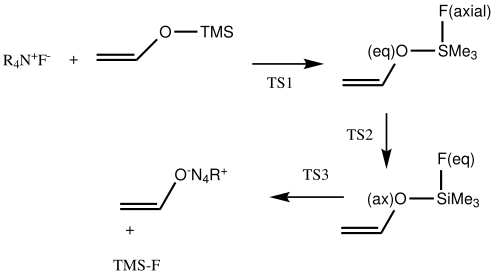
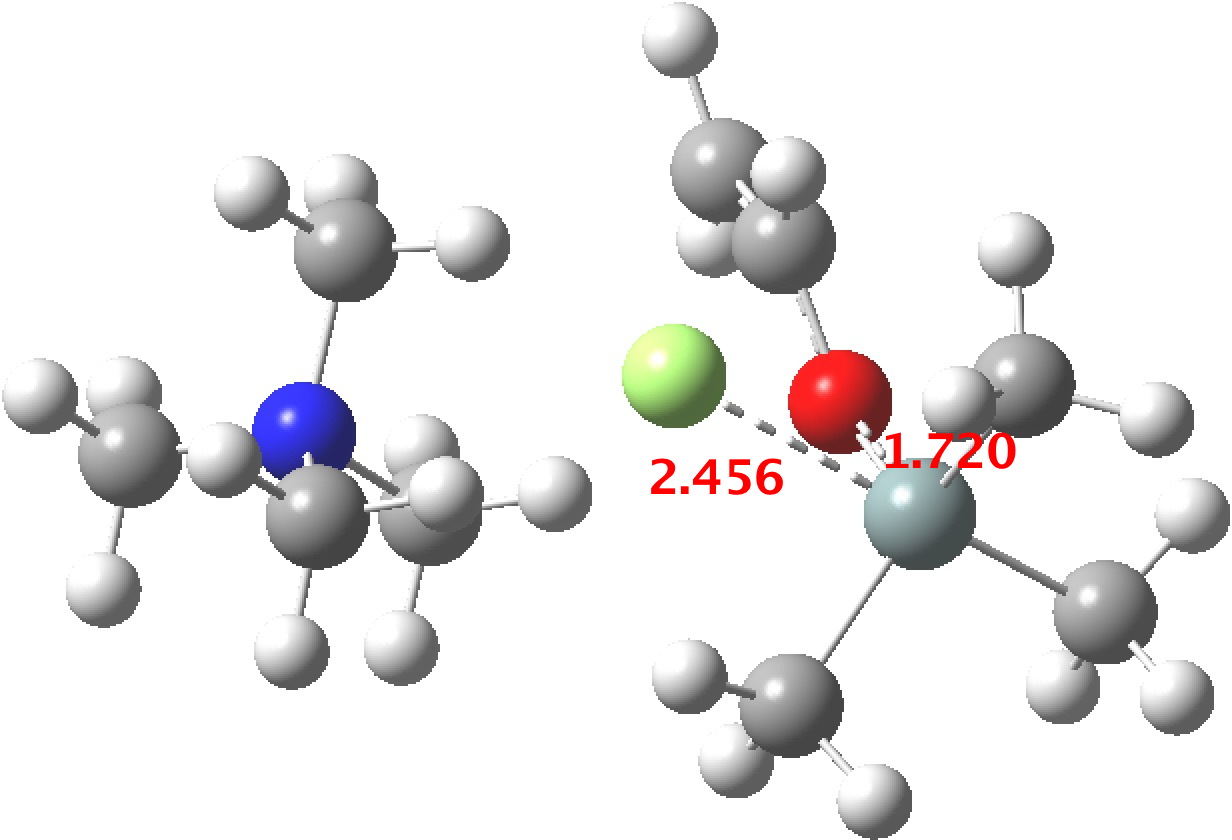
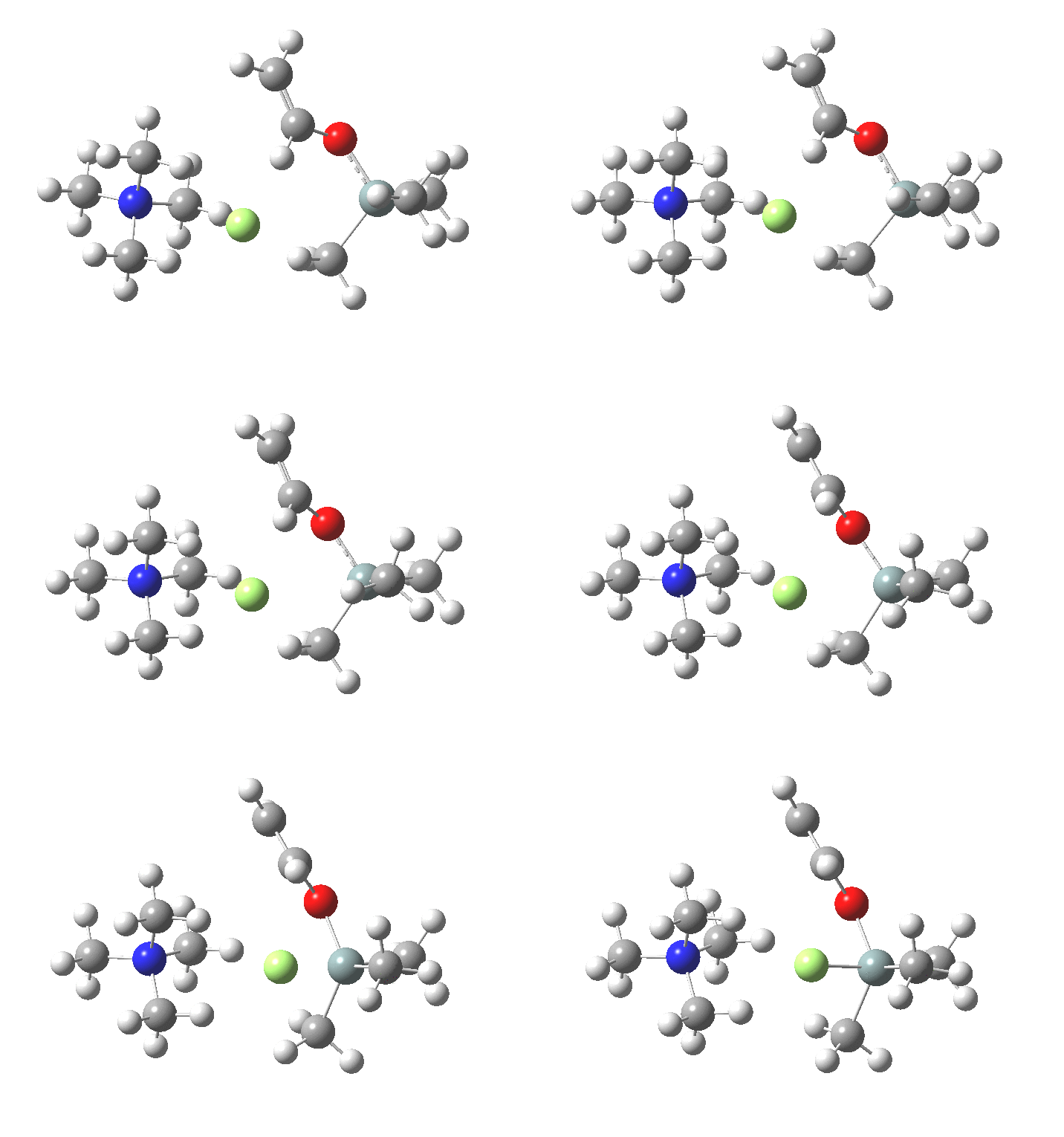
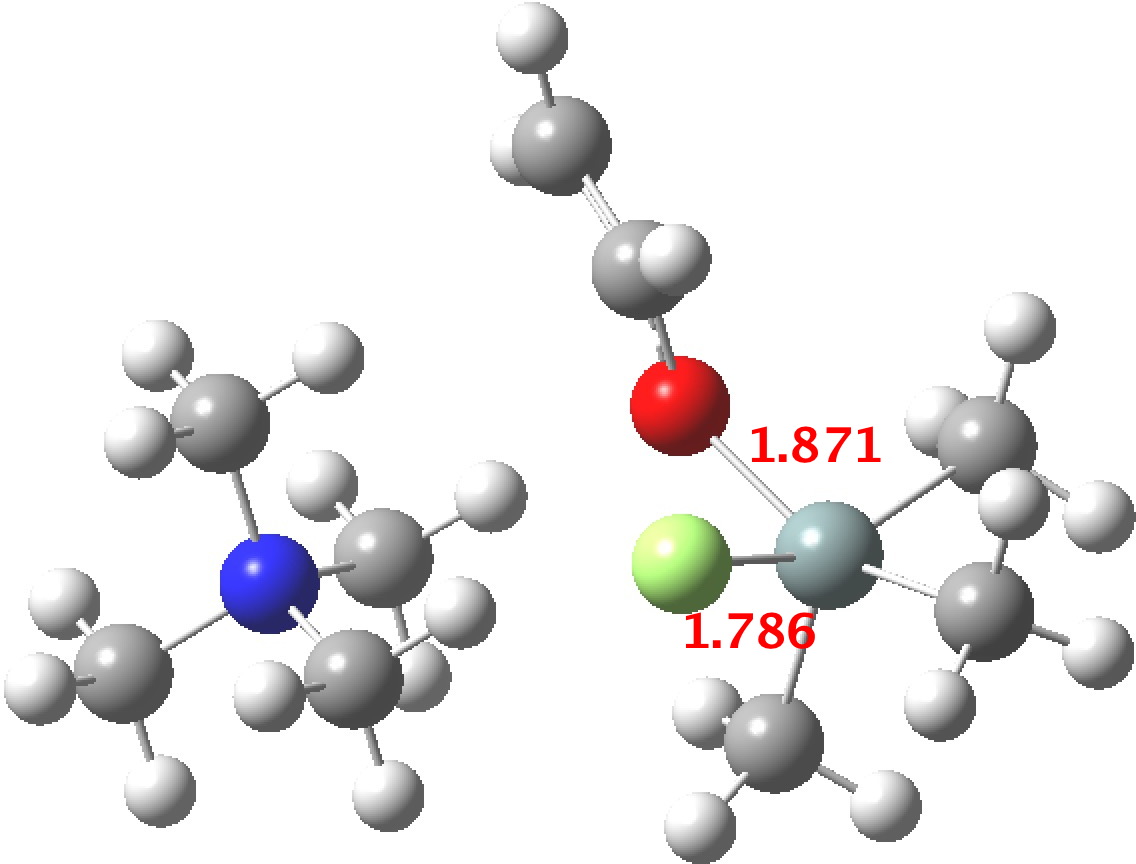
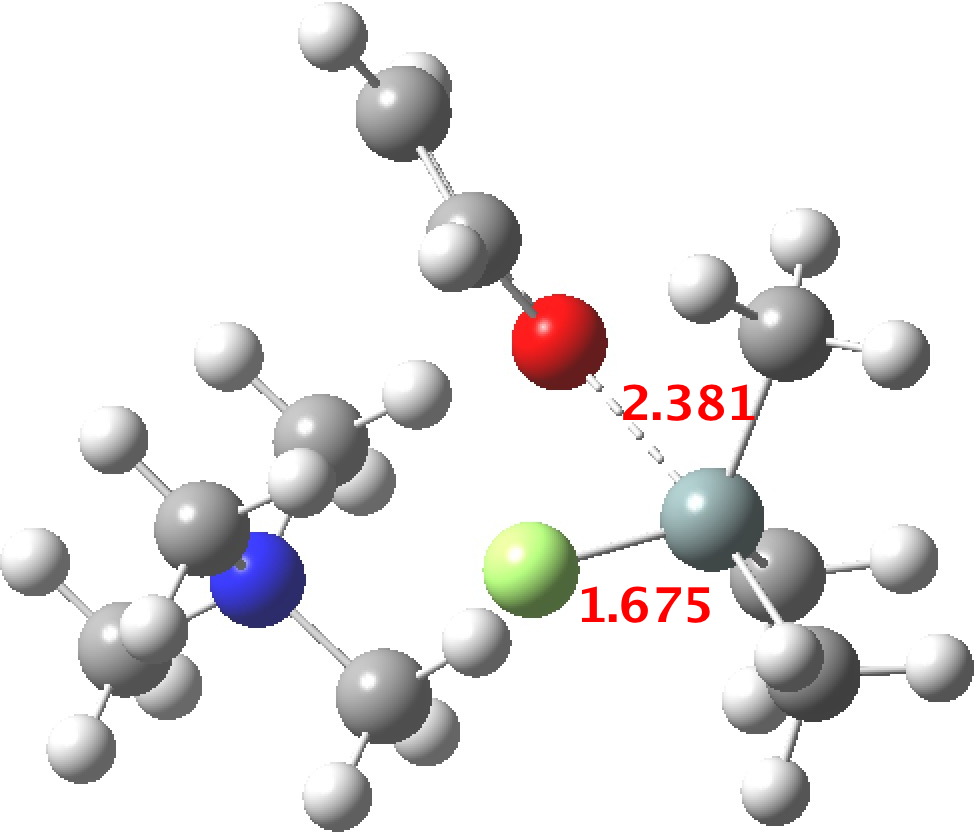
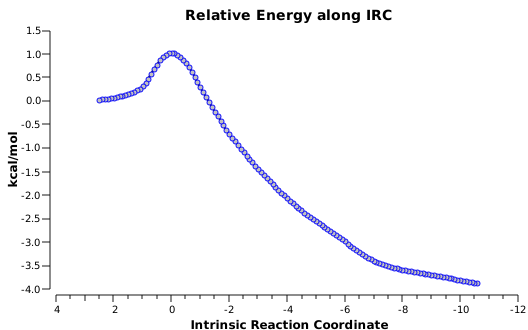
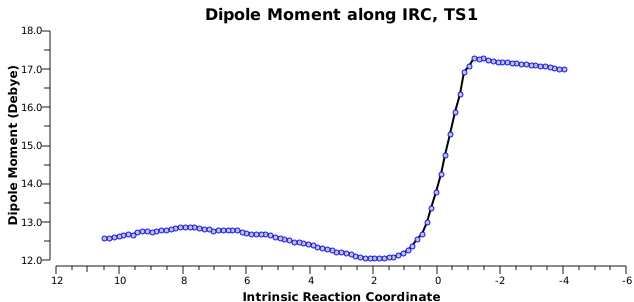
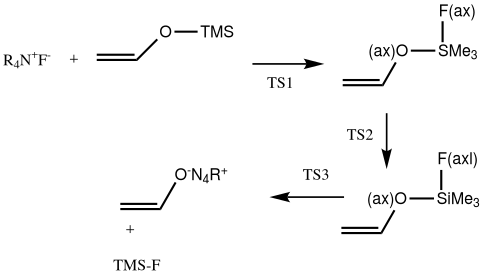
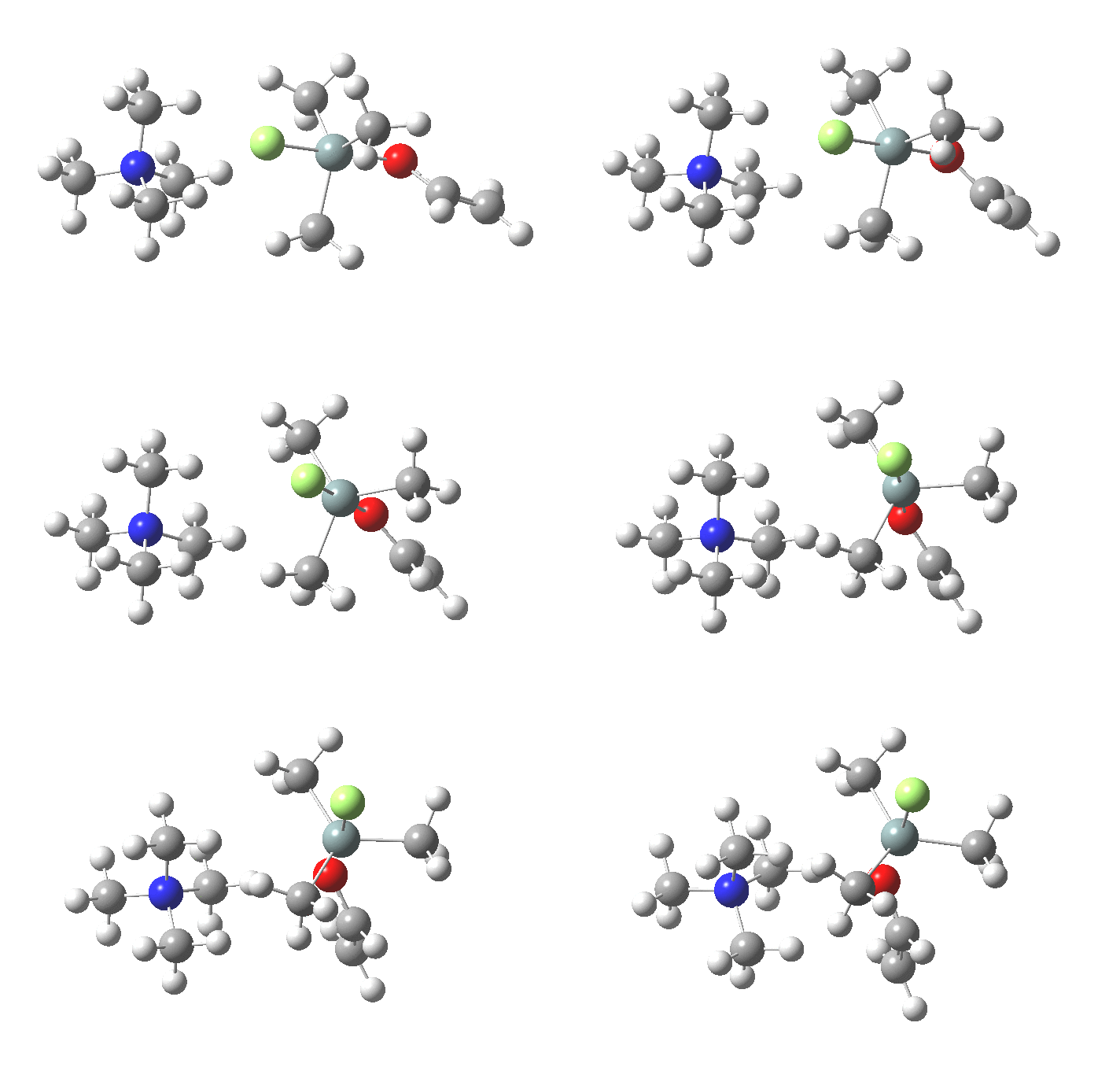
    This alternative involves attack by F along the axial trajectory of the trigonal bipyramidal Si centre, with the OR group occupying the other axial position (TS1). In order to prepare the OR group for elimination with inversion of stereochemistry, the ion-pair complex has to reorganise (a process replacing the previous Berry pseudorotation necessary with for stereochemical retention) via TS2. And finally the OR is eliminated in TS3. The energetics of this pathway (ωB97XD/6-31+G(d) or Def2-TZVPPD/SCRF=thf) are shown below, with the inversion pathway coming out lower in energy than the previously reported retention pathway. 

    System Relative free energy DataDOI
    Inversion mechanism
    Reactants 0.0 [cite]10.14469/hpc/565[/cite]

    TS1

    4.9 (4.1)* [cite]10.14469/hpc/570[/cite]
    TS2 3.1 [cite]10.14469/ch/195052[/cite]
    TS3 0.0 (-0.8)* [cite]10.14469/hpc/567[/cite]
    Retention mechanism
    TS1 7.9 (8.3)* [cite]10.14469/hpc/554[/cite]
    TS2 9.2 (8.7)* [cite]10.14469/hpc/577[/cite]
    TS3 5.2 (4.9)* [cite]10.14469/hpc/539[/cite]

    * Values in parentheses are computed for the Def2-TZVPPD basis set.

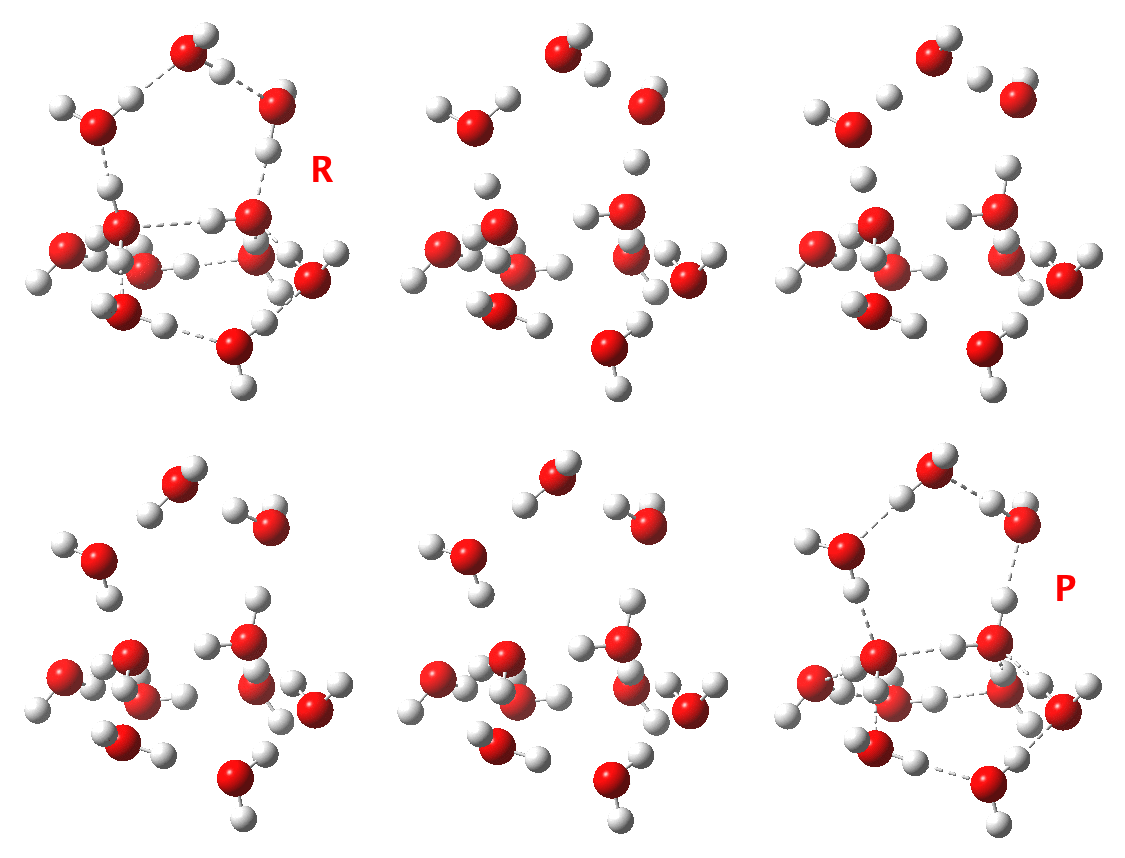
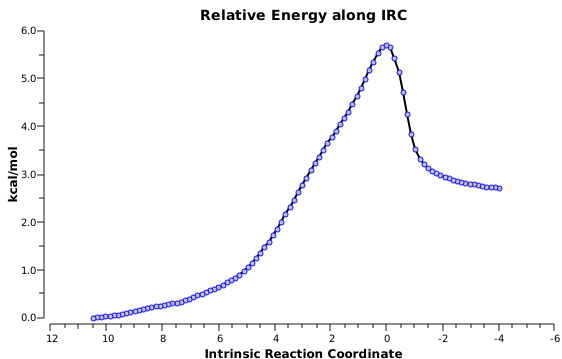
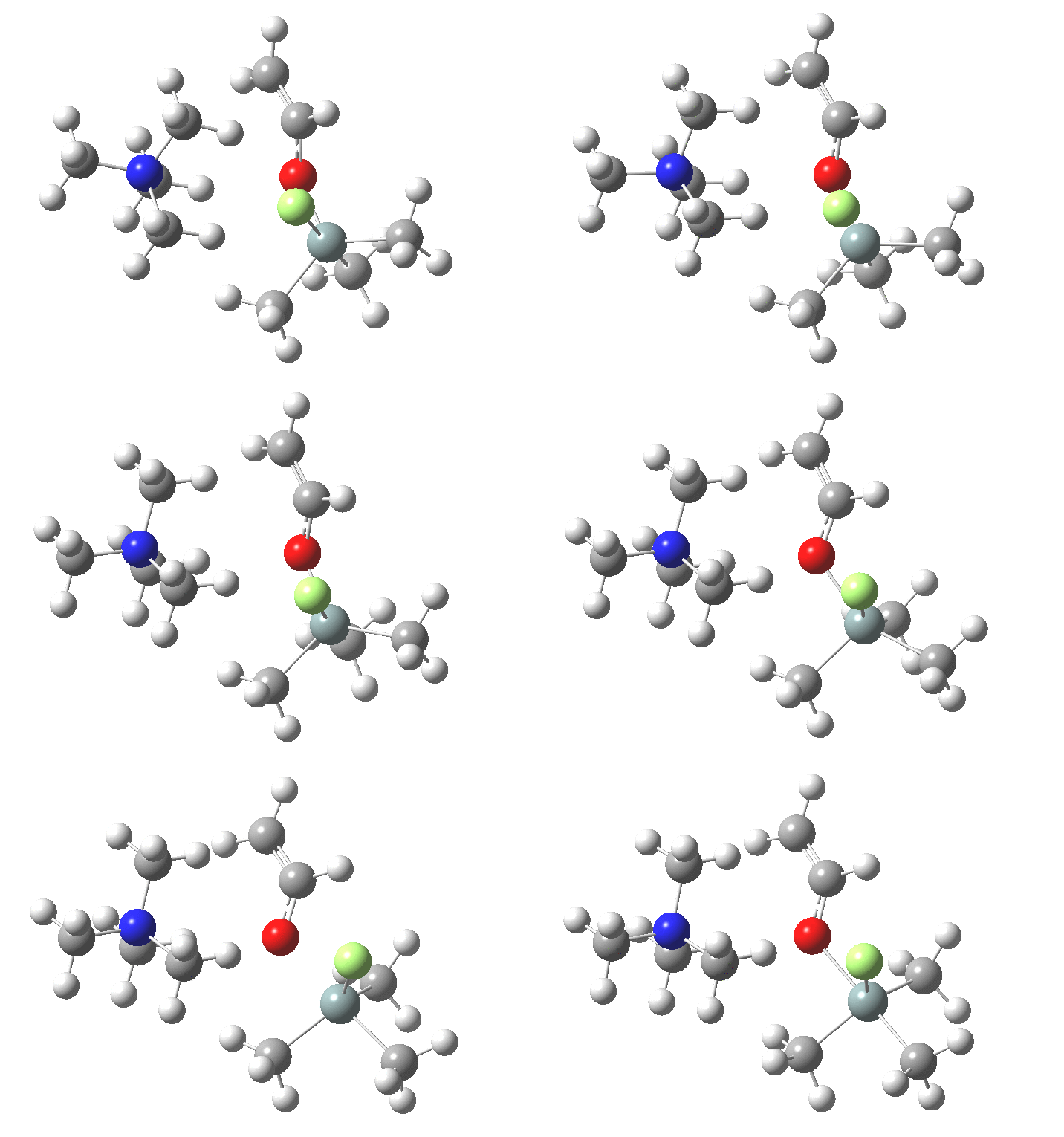
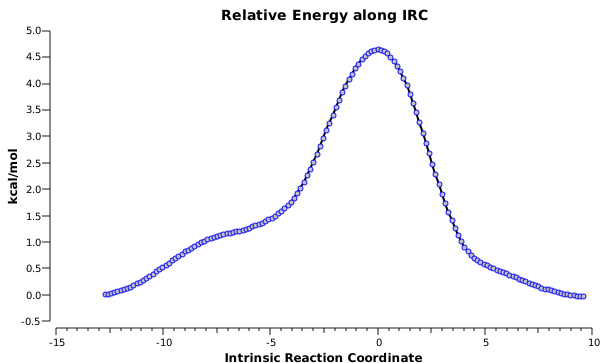
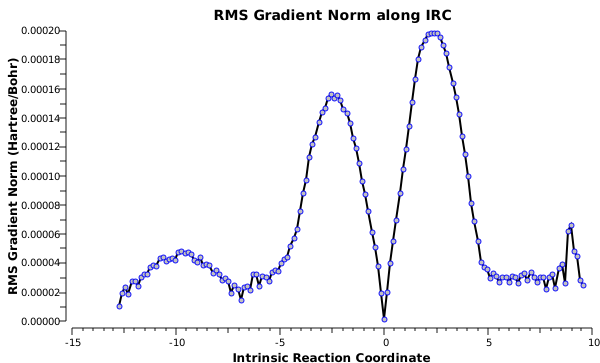
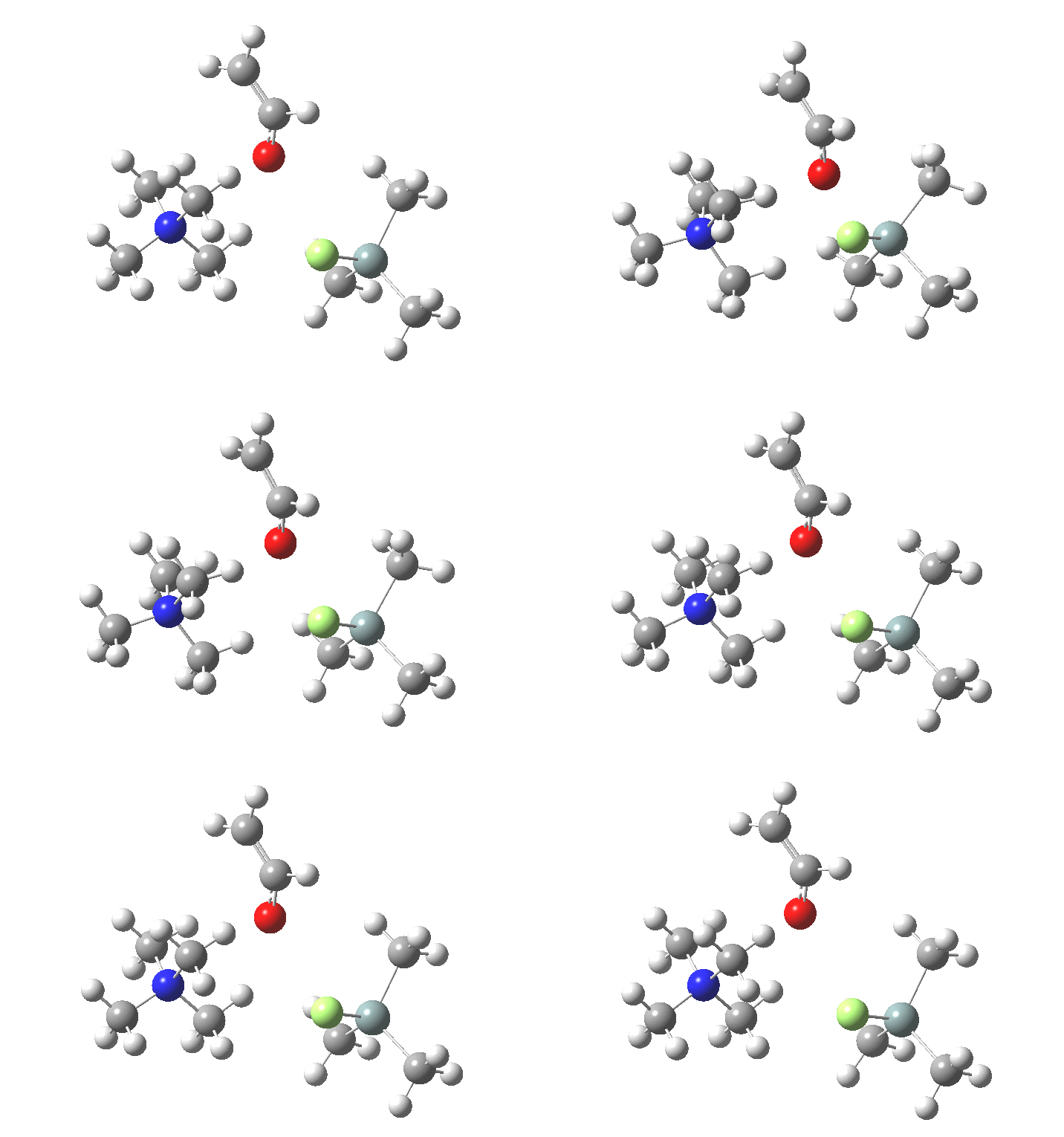
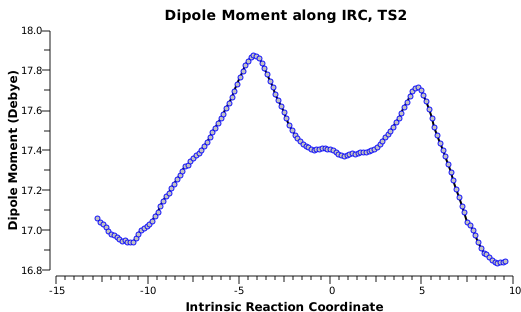
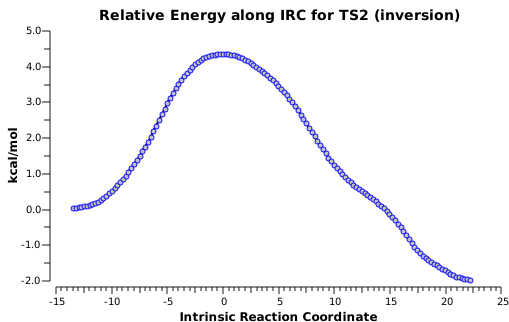
    The key new finding for the inversion mechanism is the ion-pair isomerisation (TS2), which is animated below. Transition states which involve no rearrangement at a bond (either formation/cleavage or rotation) are quite rare, and it is nice to show one here.


    So the nucleophilic displacement reaction at 4-substituted silicon centres is really quite different from carbon.Two distinct associative/elimination mechanisms proceeding through 5-coordinate silicon seem possible. For the specific case of tetra-alkyl ammonium fluoride as nucleophile and an enolate anion as the leaving group, it appears that an inversion mechanism is favoured, and one gets strong indications of this from crystal structures of such 5-coordinate species. It might be nice to repeat this study with a reaction which is known to strongly favour retention of configuration.

  • The mechanism of silylether deprotection using a tetra-alkyl ammonium fluoride.

    The substitution of a nucleofuge (a good leaving group) by a nucleophile at a carbon centre occurs with inversion of configuration at the carbon, the mechanism being known by the term SN2 (a story I have also told in this post). Such displacement at silicon famously proceeds by a quite different mechanism, which I here quantify with some calculations.

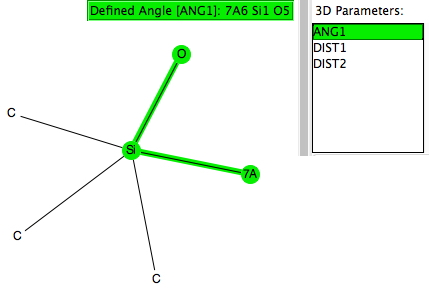
    Trialkylsilyl is often used to protect OH groups, and as shown in the diagram above is specifically used to enforce the enol form of a ketone by replacing the OH with OTMS. The TMS can then be removed when required by utilising nucleophilic addition of e.g. fluoride anion from tetra-alkyl ammonium fluoride to form a 5-coordinate silicon intermediate, followed by collapse of this intermediate with expulsion of the oxygen to form an enolate anion. Before starting the calculations, I searched the crystal structure database for examples of R3SIF(OR), as in the search query below.

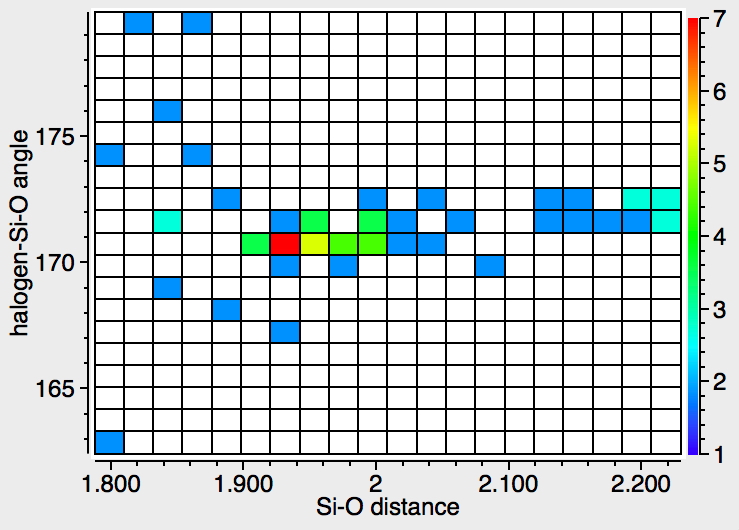
    There were 55 instances of such species, and show below are their geometric characteristics. In all cases, the two electronegative substituents occupy the axial positions of a trigonal bipyramidal geometry. This of course is the orientation adopted by the two electronegative substituents in the SN2 mechanism for carbon, but with silicon this carbon "transition state" can be replaced by a stable (and as we see often crystalline) intermediate!

    Turning to calculations (ωB97XD/6-31+G(d)/SCRF=thf), one can locate three transition states for the silicon process (there is only one for the SN2 reaction with carbon).

    1. TS1 represents attack of fluoride anion along the axial position of the forming 5-coordinate silicon.[cite]10.14469/hpc/554[/cite],[cite]10.14469/hpc/564[/cite] The oxygen in this instance occupies an equatorial position, and this close proximity between the incoming F(-) and the about to depart OR groups represents a retention of configuration at the Si. Note that the reaction is endo-energic. (c.f. [cite]10.1016/S0040-4020(01)89077-3[/cite]).


    2. The next step, TS2[cite]10.14469/hpc/551[/cite],[cite]10.14469/hpc/553[/cite]  is to move the F ligand to an equatorial position and the OR group from equatorial to its own axial position so that it can depart in the manner the F adopted to arrive. This requires what is called a Berry pseudorotation, an essentially isoenergic process.


      You might note a "hidden intermediate" at IRC ~-7 (the "bump" in the energy profile). This is caused by re-organisation of the ion-pair geometry, with the tetra-alkyl ammonium cation moving its orientation.
    3. TS3[cite]10.14469/hpc/539[/cite],[cite]10.14469/hpc/552[/cite] now eliminates the OR group to complete the deprotection.


    The free energies are summarised below. Key points include:

    1. The overall free energy of deprotection is appropriately exo-energic.
    2. The highest energy barrier is actually for pseudo-rotation! This suggests that tuning the deprotection with alternative alkyl or aryl groups on the silicon may be a matter of controlling the Berry pseudorotation process.
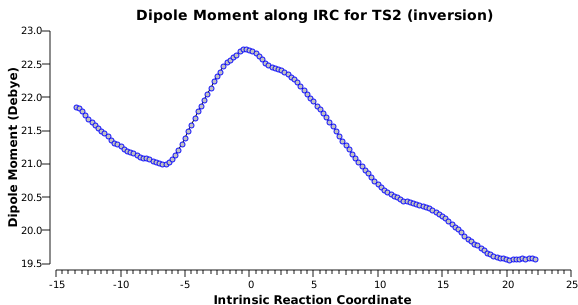
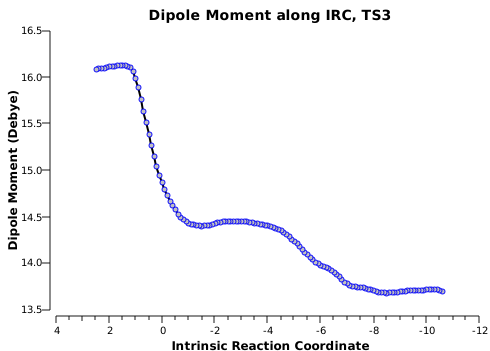
    3. TS1-3 proceed with the attacking and leaving groups in close proximity (the angle between an axial and an equatorial group is ~90° of course, whereas for a di-axial relationship (the inversion of the SN2 mechanism) it is instead 180°. This close proximity of nucleophile and nucleofuge minimises the required reorganisation of the ammonium counter-ion in the ion-pairs, and possibly also the dipole moments induced by the reactions, the changes of which for the three reactions are shown below:


    4. The 5-coordinate intermediate where both F and O are axial is in fact significantly lower in energy (a cooperative effect) than when only one of them is axial, which matches the orientations identified above in the 55 crystal structures. For a substitution to occur, the cooperative strengthening of the Si-O and Si-F bonds must be removed; hence the retention of configuration.
    System Relative free energy DataDOI
    Reactants 0.0 [cite]10.14469/hpc/565[/cite]
    TS1 7.9 [cite]10.14469/hpc/554[/cite]
    Int F(ax), O(eq) 5.1 [cite]10.14469/hpc/555[/cite]
    TS2 10.2 (9.2)* [cite]10.14469/hpc/551[/cite]
    Int F(eq), O(ax) 5.1 [cite]10.14469/hpc/540[/cite]
    TS3 5.2 [cite]10.14469/hpc/539[/cite]
    Products -4.0 [cite]10.14469/hpc/563[/cite]
    Int F,O(ax) -2.5 [cite]10.14469/hpc/550[/cite]

    *A lower energy orientation of the ion-pair has subsequently been found.[cite]10.14469/hpc/577[/cite]

    This analysis shows just how different the carbon and the silicon substitution reactions are and how it is the pseudorotation interconverting two 5-coordinate intermediates that appears to be a key step. But questions remain unanswered. What is the energy of the pseudorotation interconverting an intermediate with ax/eq electronegative groups to one with di-axial electronegative groups? Are there transition states starting from the diaxial intermediate and resulting in elimination, and if so what are their relative energies? I leave answers to a follow up post. 

  • Autoionization of hydrogen fluoride.

    The autoionization of water involves two molecules transfering a proton to give hydronium hydroxide, a process for which the free energy of reaction is well known. Here I ask what might happen with the next element along in the periodic table, F.

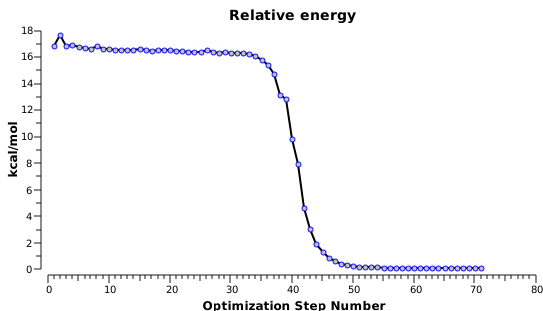
    I have been unable to find much about the autoionization of HF in the literature; the pH of neat HF appears unreported (unlike that of H2O, which of course is 7). Even the dielectric constant of liquid HF[cite]10.1063/1.1680219[/cite],[cite]10.1063/1.1319172[/cite] seems to vary widely, the largest reported being ~84. It is suggested that liquid HF is much less ordered than e.g. water, and this suggests that a single static model is unlikely to be entirely realistic. Nonetheless, I thought it might be informative to take the model I previously constructed for water and try applying it to HF. Here is part of the geometry optimisation cycle[cite]10.14469/ch/192032[/cite] from the original edited water model. I used ωB97XD/Def2-TZVPPD/SCRF=water for the model. Why continuum water as the solvation treatment? Well, standard parameters for liquid HF are not available (perhaps given the variation in dielectric) and since the upper bound might be similar to water, I decided to use that to see what I got. Clearly however an approximation.

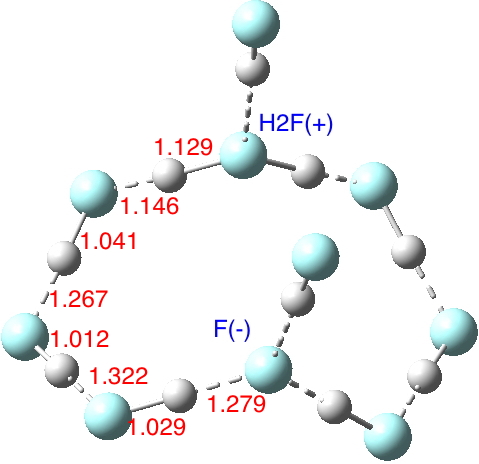
    The low energy final geometry corresponds to 10 HF molecules and lies about 16 kcal/mol lower (in total energy) than the cyclic structure containing H2F+.F species connected by two (HF)3 bridges and two further non-bridge HF molecules hydrogen bonding to the H2Fand the F. In fact the ionic structure turns out to be a transition state for proton shifting along the chain to create (HF)10, with a free energy barrier of 9.2 kcal/mol above the neutral form.[cite]10.14469/ch/192034[/cite] This difference between ionic and non-ionic forms is considerably less than that for water as previously indicated. Note also how much shorter the hydrogen bonding H…F distances are in the HF cluster.

    So unlike water, where the hydronium hydroxide is a clear minimum in the potential with a small but distinct barrier (~3.5 kcal/mol[cite]10.14469/ch/192022[/cite]) to proton transfer, with HF at the same level of theory the barrier is zero. Perhaps the difference might be because whereas hydronium hydroxide can support three stabilizing (H2O)3 bridges, only two (HF)3 bridges are possible with H2F+.F. It might also be higher levels of theory (or better/larger models of the HF cluster) could well give a barrier for the process, but this does tend to suggest that the dynamics of HF liquid may suggest quite different lifetimes for autoionized forms of HF compared to water. Liquid HF is clearly just as complicated a liquid as is H2O, certainly much less is known about it.

  • Deuteronium deuteroxide. The why of pD 7.435.

    Earlier, I constructed a possible model of hydronium hydroxide, or H3O+.OH– One way of assessing the quality of the model is to calculate the free energy difference between it and two normal water molecules and compare the result to the measured difference. Here I apply a further test of the model using isotopes.

    Pure water has pH 7, which means equal concentrations for both [H3O+] and  [OH] of 10-7M. Converting this to a free energy one gets ΔG298 19.088 kcal/mol. Now the pD of pure deuterium oxide is reported as 7.435, equivalent to ΔG298 20.274, an isotope effect on the free energy of ΔΔG298 =1.186 kcal/mol. How does the theoretical model (ωB97XD/Def2-TZVPPD/SCRF=water) previously reported[cite]10.14469/ch/191999[/cite],[cite]10.14469/ch/191998[/cite] do? The value obtained is 1.215,[cite]10.14469/hpc/407[/cite] an apparent error of only 0.029 kcal/mol. I am quite pleased with the close correspondence; at least the model is capable of reporting good isotope effects on the ionisation equilibrium of pure water!

    Finally, with some confidence assured, one might apply this to tritonium tritoxide. Tritiated water is so radioactive it would boil in an instant, probably well before its pT could be measured. ΔΔG298 is calculated as 1.798 kcal/mol. Will this estimate ever be challenged by experiment?


    ‡ It is assumed no isotope effect acts on the dielectric constant of water and hence the continuum model used here to model it. In fact the isotope effect on this property is modest; ε298 = 77.94, compared with 78.36 for normal water.[cite]10.6028/jres.060.060[/cite]


    Acknowledgments

    This post has been cross-posted in PDF format at Authorea.

  • Oxane oxide: a tautomer of hydrogen peroxide.

    If H3N+-O is viable compared with its tautomer H2N-OH when carrying water bridges, then why not try H2O+-O vs HO-OH?

    There are no examples to be found in crystal structures! The solvated structure of H2O+-O is modified directly from that of H3N+-Oand the computed (ωB97XD/6-311++G(d,p)/SCRF=water) structure[cite]10.14469/ch/192005[/cite] is shown below. Noteworthy is that the hydrogen bonds at the O+ end are far stronger than those to at the O end.

    NH3-8

    The corresponding hydrated hydrogen peroxide is 16.3 kcal/mol lower in free energy; this compares favourably with the value for water itself and suggests that oxane oxide might also be capable of isolation inside a suitable hydrogen bond stabilising cavity.

  • Azane oxide, a tautomer of hydroxylamine.

    In the previous post I described how hydronium hydroxide or H3O+…HO, an intermolecular tautomer of water, has recently been observed captured inside an organic cage[cite]10.1002/chem.201406383[/cite] and how the free-standing species in water can be captured computationally with the help of solvating water bridges. Here I explore azane oxide or H3N+-O, a tautomer of the better known hydroxylamine (H2N-OH).

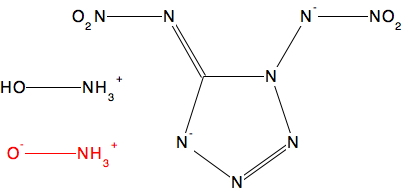
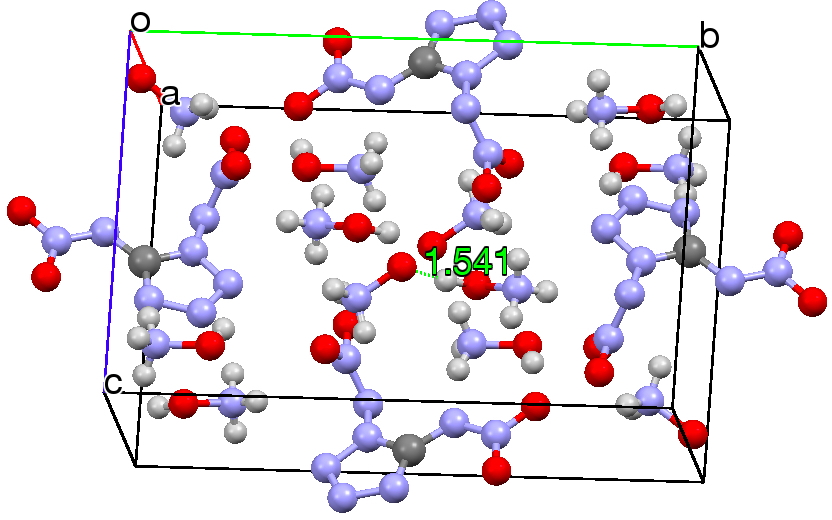
    The usual search[cite]10.14469/hpc/380[/cite] of the Cambridge structure database reveals only two (related) entries[cite]10.5517/CC14DDQN[/cite],[cite]10.5517/CCWS8LH[/cite] the second reported in 2015.[cite]10.1002/anie.201502919[/cite].

    NH3-8
    NH3-8

    Now, location of hydrogen atoms is always a bit tricky, but here we see two species H3N+-OH…O-+NH3 connected by a strong hydrogen bond of 1.54Å (click on the above image to see this packing). However, it is noteworthy that the N-O bonds for each of these species are exactly the same length (1.412Å); one might have imagined that whether the oxygen carries a proton or not would affect its bond length to nitrogen. There is here a strong hint that energetically the azane oxide might be relatively low in energy relative to hydroxylamine and perhaps that the zwitterionic form might be favoured when captured with hydrogen bonds.

    So certainly time for a computational exploration of this species. I am using the three water bridges as before, each comprised of three water molecules and the ωB97XD/6-311++G(d,p)/SCRF=water method. In fact the structure optimises[cite]10.14469/ch/192000[/cite] to a delightful propeller-like geometry in which bridges are formed from both two AND three waters across the ion-pair, with overall three-fold C3 symmetry (i.e. chiral! Indeed, this species has a predicted optical rotation of 40° at 589nm).

    NH3-8

    Hydroxylamine itself has a less symmetric arrangement of hydrogen bonds[cite]10.14469/ch/192001[/cite], with a free energy in fact very similar (within 1 kcal/mol) to the ion-pair isomer. Here, a stochastic (statistical) exploration of all the various arrangements of water would be needed to be confident that the lowest energy form had been located. I would note that the N-O bond lengths in the ion-pair and neutral forms are respectively 1.399 and 1.435Å.

    NH3-8

    Certainly, this very brief computational look at azane oxide suggests that concentrations of this species in aqueous solutions of hydroxylamine might be appreciable (detectable). Its "trapping" inside a suitably designed cavity must be a realistic possibility (the cavity used to trap hydronium hydroxide probably does not have the correct dimensions for this purpose), as indeed illustrated in the two crystal structures noted above.


    I have represented this species in ionic form, but you may find text books showing it in dative form, or H3N→O. My personal inclination is to always prefer the ionic form, if only because it enables connections/analogies such as the one here to hydronium hydroxide to be more easily made.

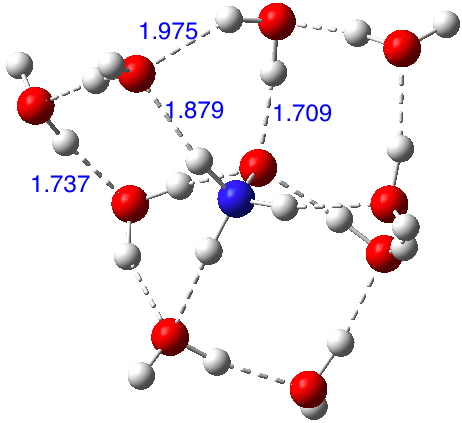
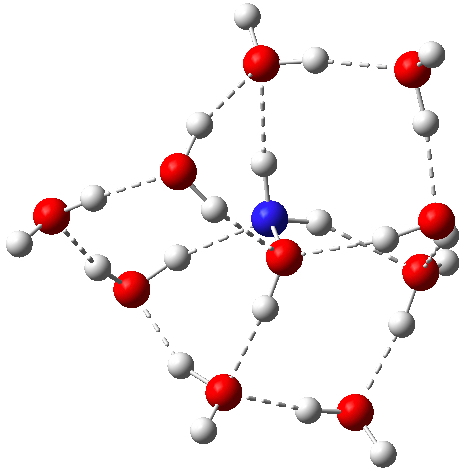
  • Hydronium hydroxide: the why of pH 7.

    Ammonium hydroxide (NH4+…OH) can be characterised quantum mechanically when stabilised by water bridges connecting the ion-pairs. It is a small step from there to hydronium hydroxide, or H3O+…OH. The measured concentrations [H3O+] ≡ [OH] give rise of course to the well-known pH 7 of pure water, and converting this ionization constant to a free energy indicates that the solvated ion-pair must be some ~19.1 kcal/mol higher in free energy than water itself. So can a quantum calculation reproduce pH7 for water?

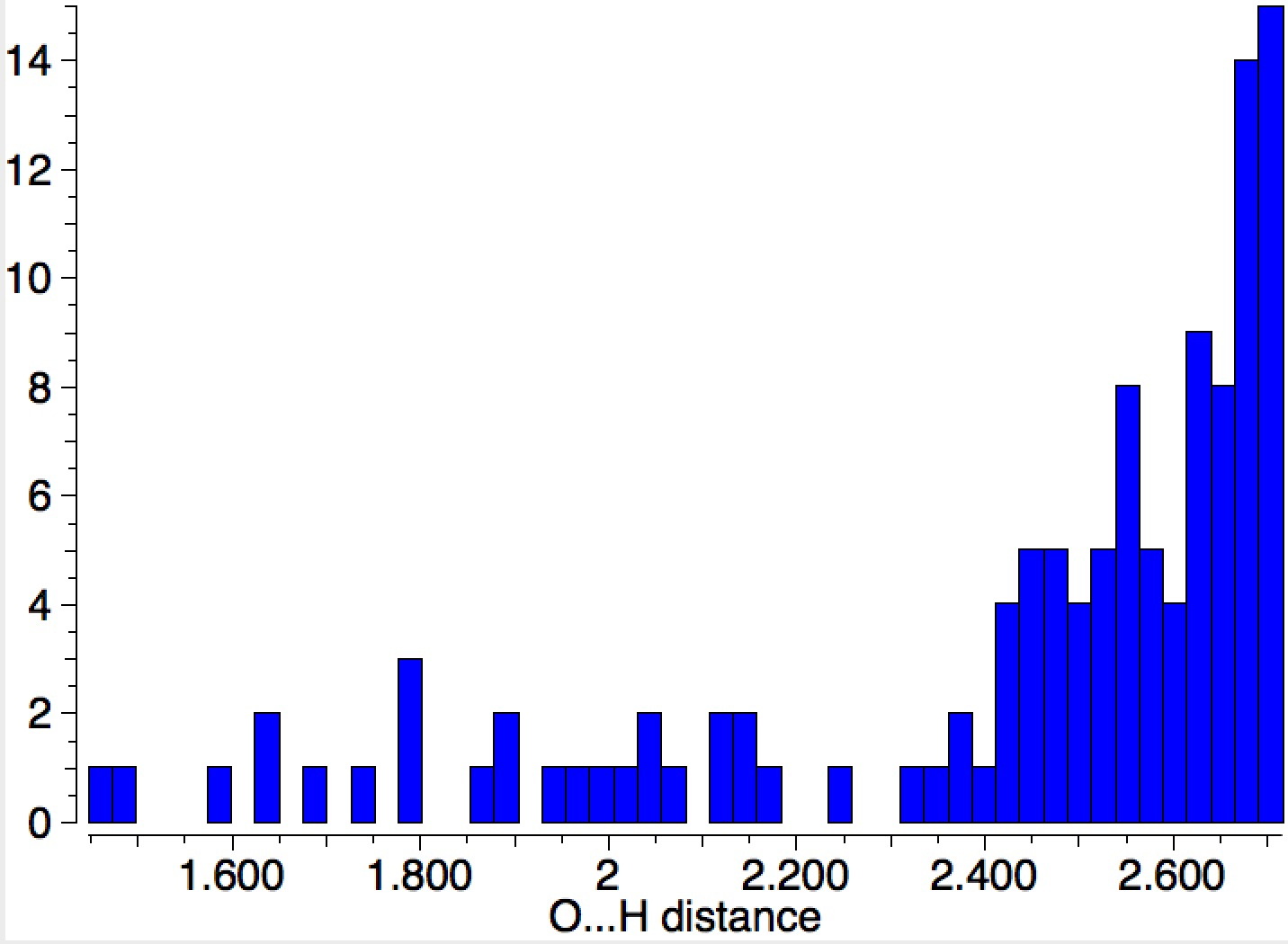
    Let me start by saying that locating a stable minimum for H3O+…OH is non-trival. I have been trying to find a structure on and off for a little while now, but all my erstwhile attempts have resulted in barrierless proton transfers back to H2O…OH2. So I now decided on a more systematic approach by running a CSD (Cambridge structure database) search, defining the species H3O+ and specifying that the oxygen sustain one additional hydrogen bond, as per H3O+….H.[cite]10.14469/hpc/370[/cite] This produced 69 hits, with the distribution of O…H distances shown below indicating that a wide spectrum of hydrogen bond lengths to this oxygen appears possible.
    NH3-8

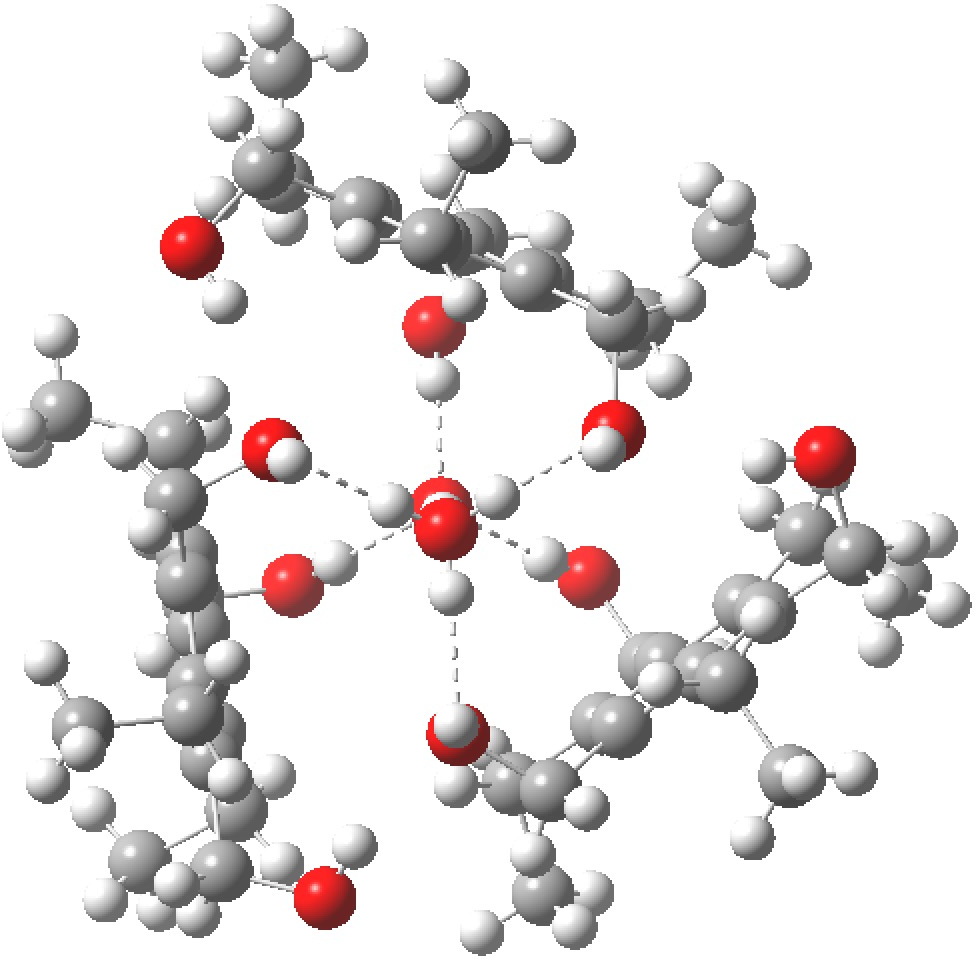
    Restricting the search to  H3O+….H-O  and specifying that the last O is bonded to just one atom reduces this to one hit.[cite]10.1002/chem.201406383[/cite] If you click on the image below or visit here[cite]10.5517/CC13Q0F8[/cite] you will see the hydrogen bonding pattern in this unique example is of the type (ROH…H)3O+…HO(…HOR)3 with overall three-fold symmetry. The "bridge" across the ion pair in this case is formed from hydrogen bonds to -CH2OH groups in 1,3,5-tris(hydroxymethyl)-2,4,6-triethylbenzene.
    NH3-8

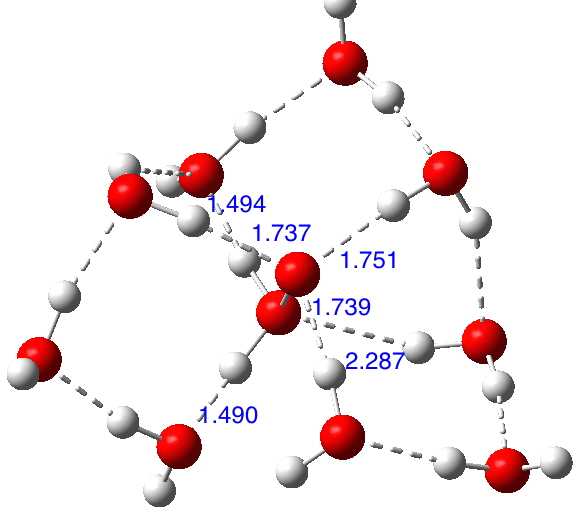
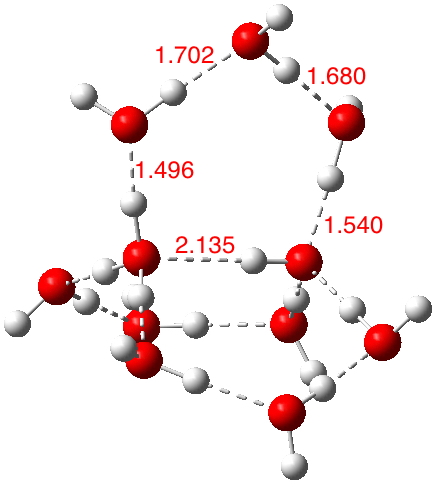
    This structure immediately poses the question of whether water bridges could replace the organic bridge in the species above, to enable the elusive water-solvated hydronium hydroxide to finally be characterised as a bona-fide minimum in a quantum mechanical potential. By analogy one would need three bridges, each to be comprised of 3H2O. In other words a system containing  eleven water molecules.  An ωB97XD/6-311++G(d,p)/SCRF=water calculation indeed reveals this C3-symmetric arrangement is a minimum with a calculated[cite]10.14469/ch/191994[/cite] free energy (298K) 23.3 (23.5/Def2-TZVPPD) kcal/mol above that of the corresponding water cluster[cite]10.14469/ch/191995[/cite] in which a proton transfer has neutralised the ion pair. The error of +4.2 kcal/mol is probably due to a combination of incomplete basis set (calculations with better bases are under way), incomplete correction for solvation (continuum) as well as the limited size of the explicit water cluster (nine supporting water molecules) and other aspects such as the DFT method itself and the RRHO partition function approximations for thermal corrections. It would be a useful calibrant of all these aspects to explore whether these various corrections would converge to the known value or not.

    The calculated geometry[cite]10.14469/ch/191994[/cite] reveals a H3O…HO hydrogen bond ~2.14Å, well within the range shown in the crystal structure distribution above.
    NH3-8

    With the basic model for hydronium hydroxide identified, one can now explore how to improve both the accuracy of the model in reproducing the "pH 7" observable and how indeed one might engineer a more superbasic variation.

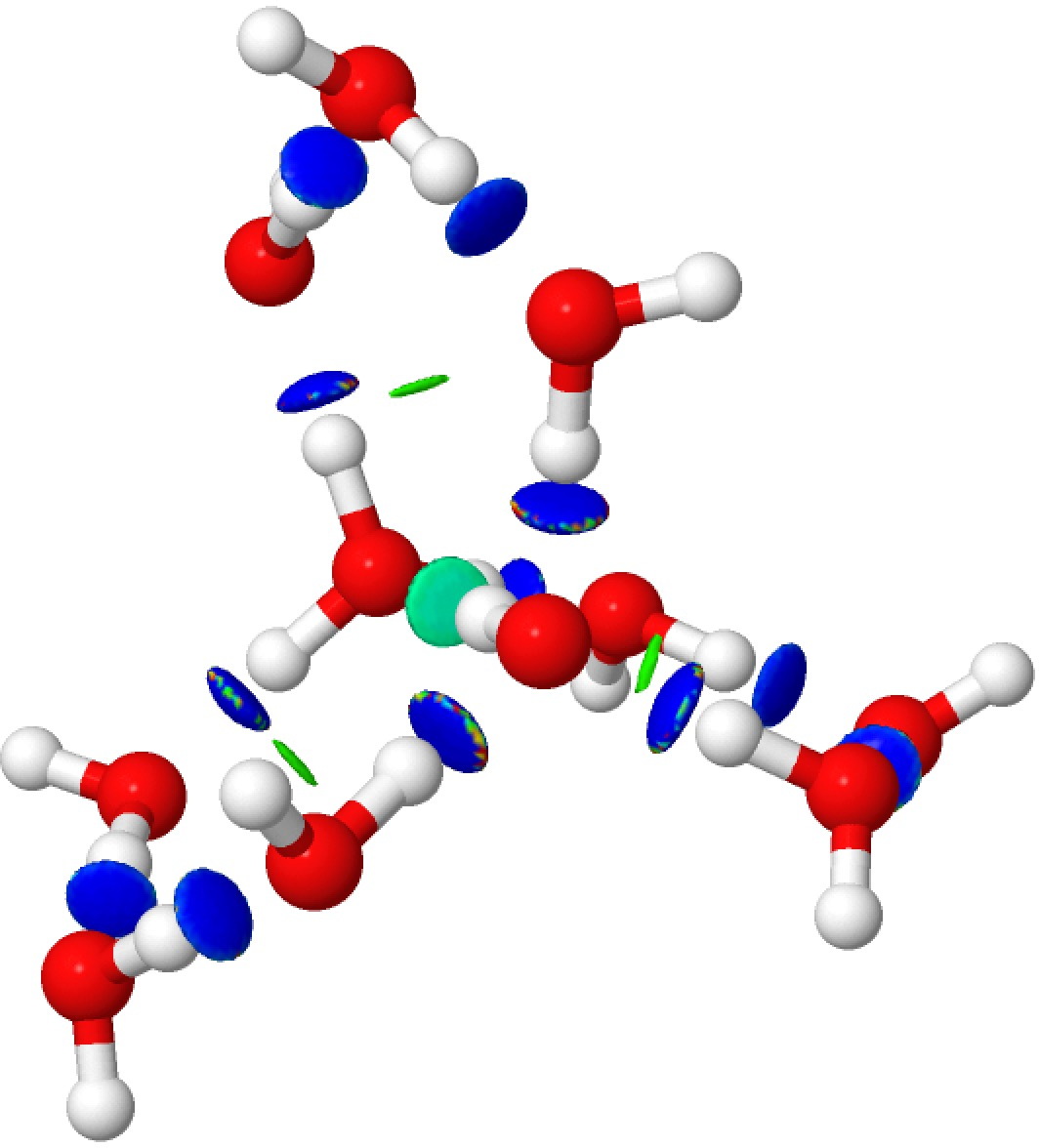
    Addendum 1: The NCI (non-covalent-interaction) analysis of the hydronium hydroxide water complex is shown below. The blue regions indicate strong hydrogen bonds, with cyan being weaker. In fact, the covalent/non-covalent threshold normally taken for an  NCI analysis  (0.05 au) had to be increased to 0.10 for this example (the default threshold was already treating the HO…H interactions as covalent rather than non-covalent).
    NH3-8

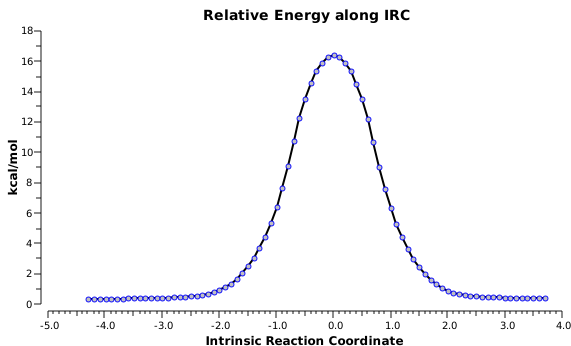
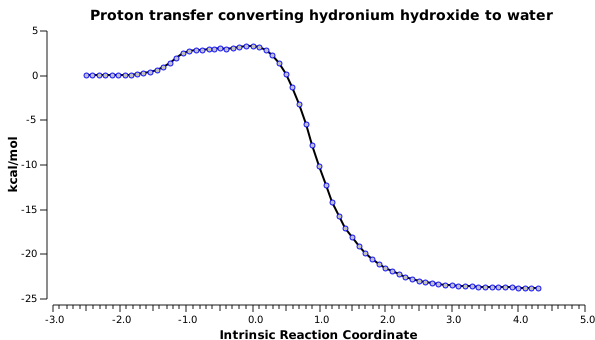
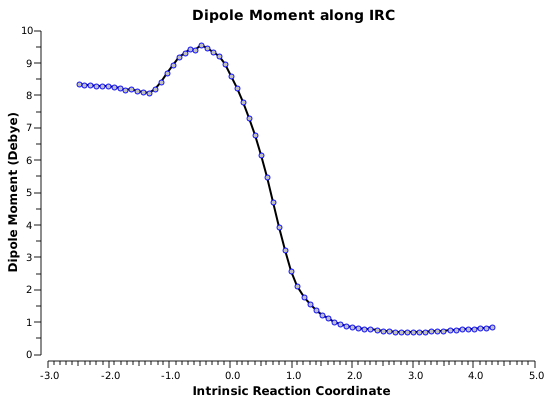
    Addendum 2: Shown below is the intrinsic reaction cooordinate (IRC) calculated[cite]10.14469/ch/192002[/cite] for the proton transfer from the hydronium hydroxide ion-pair to form neutral water, revealing a barrier of ~3kcal/mol and exothermicity of 23 kcal/mol and how the dipole moment evolves.
    NH3-8
    NH3-8
    NH3-8


    Dissociation/equilibrium constants are rarely converted into free energies in text books and elsewhere. I would argue here that one gets a better intuitive feeling for such systems if expressed as energies. In this case, such a self-ionization energy for water might also be a useful way of calibrating how any given quantum mechanical procedure might perform in terms of the solvation model etc.

    Recent calculations of like-charge pairs of either H3O+ or OH have been reported[cite]10.1039/C5CP02182K[/cite] but not as an ion-pair. The temperature dependence of the autoionization has also been reported[cite]10.1063/1.1878712[/cite] as involving, inter alia, changes in the coordination number of the OH with temperature.

    It is implicit when one talks about connecting bonds that the weaker hydrogen bonds do not qualify. Of course there is a whole spectrum of hydrogen bonding strengths; ones involved in ion-pairs for example can be up to 3 times stronger than those to neutral systems.


    Acknowledgments

    This post has been cross-posted in PDF format at Authorea.
  • I’ve started so I’ll finish. Kinetic isotope effect models for a general acid as a catalyst in the protiodecarboxylation of indoles.

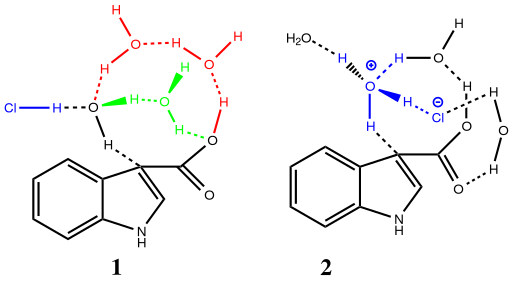
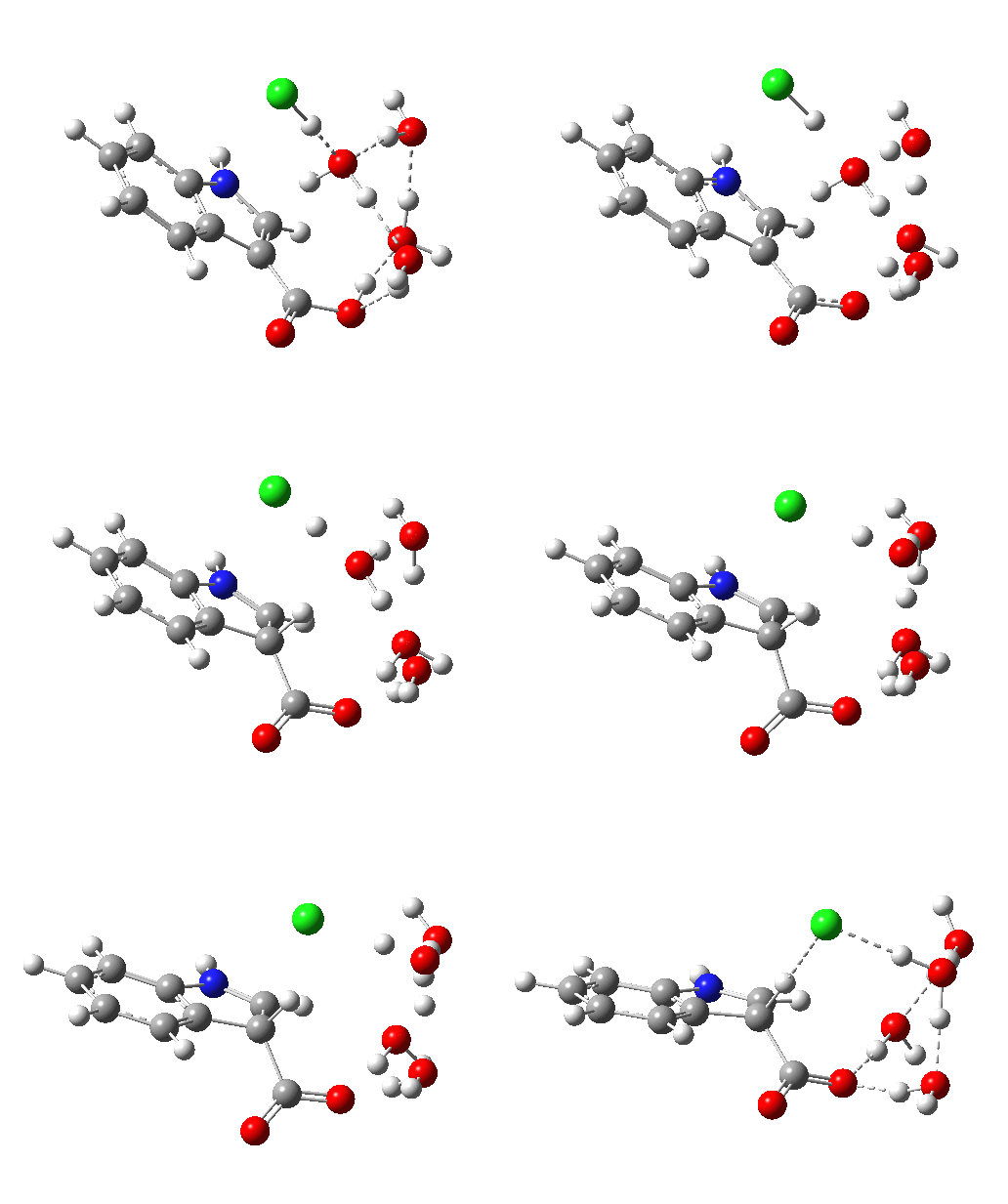
    Earlier I explored models for the heteroaromatic electrophilic protiodecarboxylation of an 3-substituted indole, focusing on the role of water as the proton transfer and delivery agent. Next, came models for both water and the general base catalysed ionization of indolinones. Here I explore general acid catalysis by evaluating the properties of two possible models for decarboxylation of 3-indole carboxylic acid, one involving proton transfer (PT) from neutral water in the presence of covalent un-ionized HCl (1) and one with PT from a protonated water resulting from ionised HCl (2).

    Indole diazocoupling

    The original study[cite]10.1039/P29770000281[/cite] noted that the rate of decarboxylation fitted well to the kinetic expression: rate = {a + b[L3O+]/(1 + c[L3O+])}[indole], where L can be H or D. Experimentally, [L3O+] is controlled by adding a strong general acid such as HCl, which when the appropriate number of water molecules are added[cite]10.1002/chem.201504016[/cite] fully ionizes to H3O+.OH. Now for B3LYP+D3/Def2-TZVPD/SCRF=water calculations:

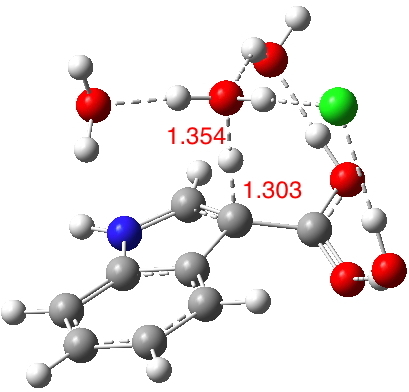
    • Model takes the pure water model and adds HCl (blue above) via hydrogen bonding to the H2O that is transferring the proton to the indole ring. Three water molecules are hydrogen bonding to the carboxylate oxygens to create a bicyclic network in which a ring of either 8 or 10 atoms can act as the proton relay structure. The question now arises whether the proton relay takes the longer (red) route or the slightly shorter green route.
    • Isomeric model 2 uses H3O+ for proton transfer, with an adjacent Cl to complete the ion-pair.
    Model ΔG298 (0.044M) DataDOIs kH/kD[cite]10.14469/hpc/204[/cite]
    1 27.4 [cite]10.14469/ch/191792[/cite],[cite]10.14469/ch/191795[/cite],[cite]10.14469/ch/191794[/cite],[cite]10.14469/ch/191767[/cite] 5.69
    2 16.8 (14.8) [cite]10.14469/ch/191795[/cite],[cite]10.14469/ch/191790[/cite],[cite]-[/cite] 2.45

    Reactant as a non-ionised covalent HCl. reactant as an isomeric ionized H3O+.Cl–  beng 2.0 kcal/mol higher in energ within this solvation model. Note added in proof. A significantly lower form of the reactant has subsequently been located which increases the free energy barrier to 22.1 kcal (vis 22.0 actually measured!). Diacussion of this can be seen in the associated post here.

    1. An IRC for Model 1 shows that the proton relay takes the red path, whereas without the HCl the green path is followed.


      Indole diazocoupling

      The transition state free energy however is ..

    2. 10.6‡ or 12.6 kcal/mol higher than model (click on the image below to load a 3D model). The general acid catalysed model is therefore preferred. The difference in free energy between the two models corresponds to a rate acceleration of >106, which is indeed similar to that observed[cite]10.1039/P29770000281[/cite].

    Decarboxylation using a general acid catalyst

    The clincher comes with calculation[cite]10.14469/hpc/204[/cite] of the kinetic isotope effects (KIE). For general acid catalysis, they were measured as kH/kD ~2.5.[cite]10.1039/P29770000281[/cite]

    • For model 1, using an un-ionised reactant and un-ionised transition state, the calculated KIE is 5.69 (very similar to that calculated for the water catalysed reaction, 5.66) but not a good fit to experiment.
    • For model 2, using the same un-ionised reactant but an ionised transition state, KIE = 2.04, a much better fit.
    • For model 2, using ionised reactant AND transition state, KIE = 2.45, an even better fit to experiment.

    So we now have a model for the general acid catalysed decarboxylation of a 3-indole carboxylate which agrees with both the kinetic behaviours and the isotope effects measured for this reaction. Since the barrier is a relatively large one, proton tunnelling may play a lesser role in this interpretation, and the stage is set to use this model to e.g. explore how isotope effects are indeed influenced by tuning the reactivity using ring substitutents, the original purpose of my researches all those years ago. Perhaps the catch phrase I’ve started so I’ll start is now more apposite.


    Acknowledgments

    This post has been cross-posted in PDF format at Authorea.
  • A better model for the mechanism of Lithal (LAH) reduction of cinnamaldehyde?

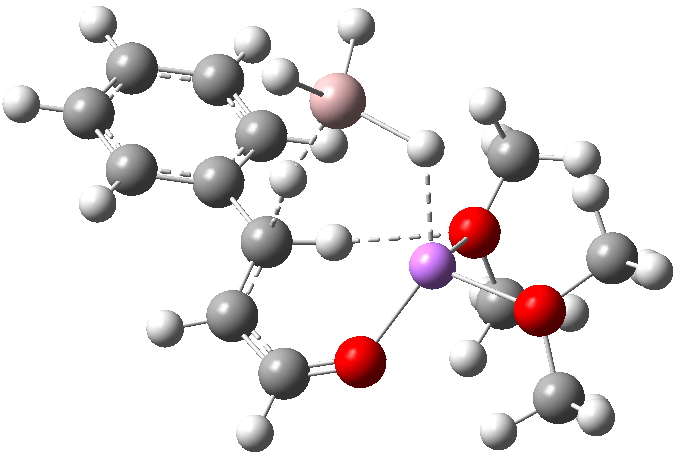
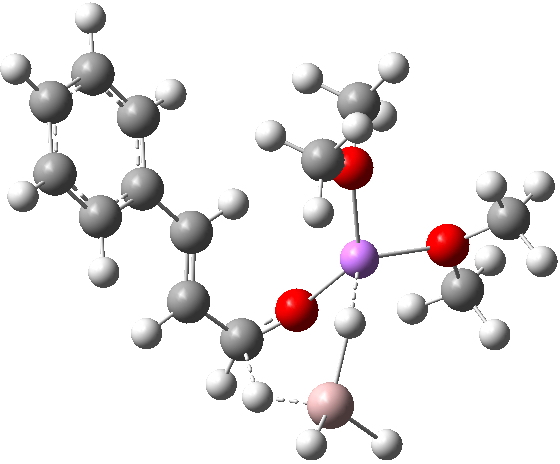
    Previously on this blog: modelling the reduction of cinnamaldehyde using one molecule of lithal shows easy reduction of the carbonyl but a high barrier at the next stage, the reduction of the double bond. Here is a quantum energetic exploration of what might happen when a second LAH is added to the brew (the usual ωB97XD/6-311+G(d,p)/SCRF=diethyl ether).

    LAH1

    In a comment at the end of the first post on this theme, I had noted some crystal structures containing in effect HxAl.Li(OR)y units (x=3,4; y=0-3), noting the variety of structural motifs. The current exploration does not even attempt to cover this range of possibilities, but it is informed by the types of weak interaction that these structures reveal. I will nevertheless accept that whatever pathway is revealed here is likely to represent an energetic upper bound and recognise that lower energy pathways may well exist but are yet to be explored.

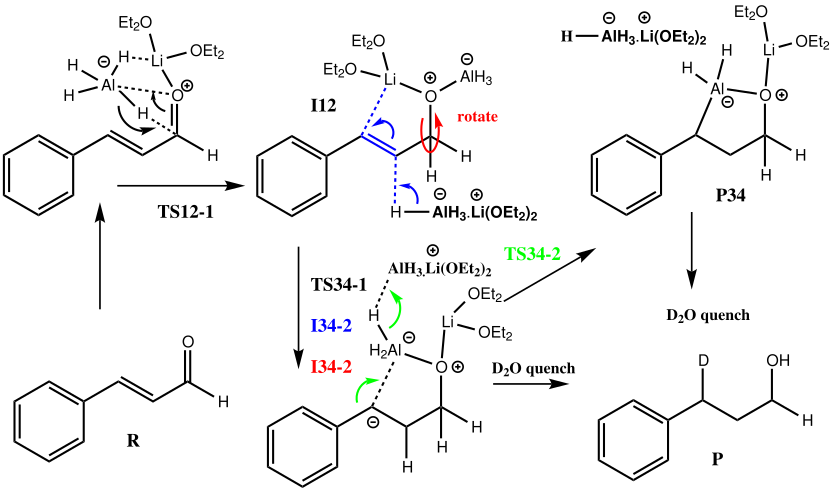
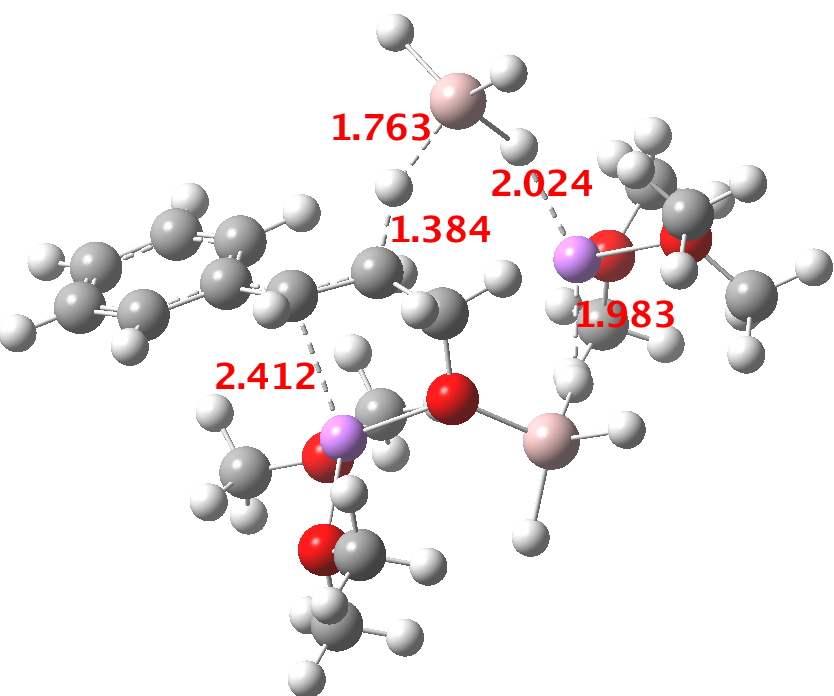
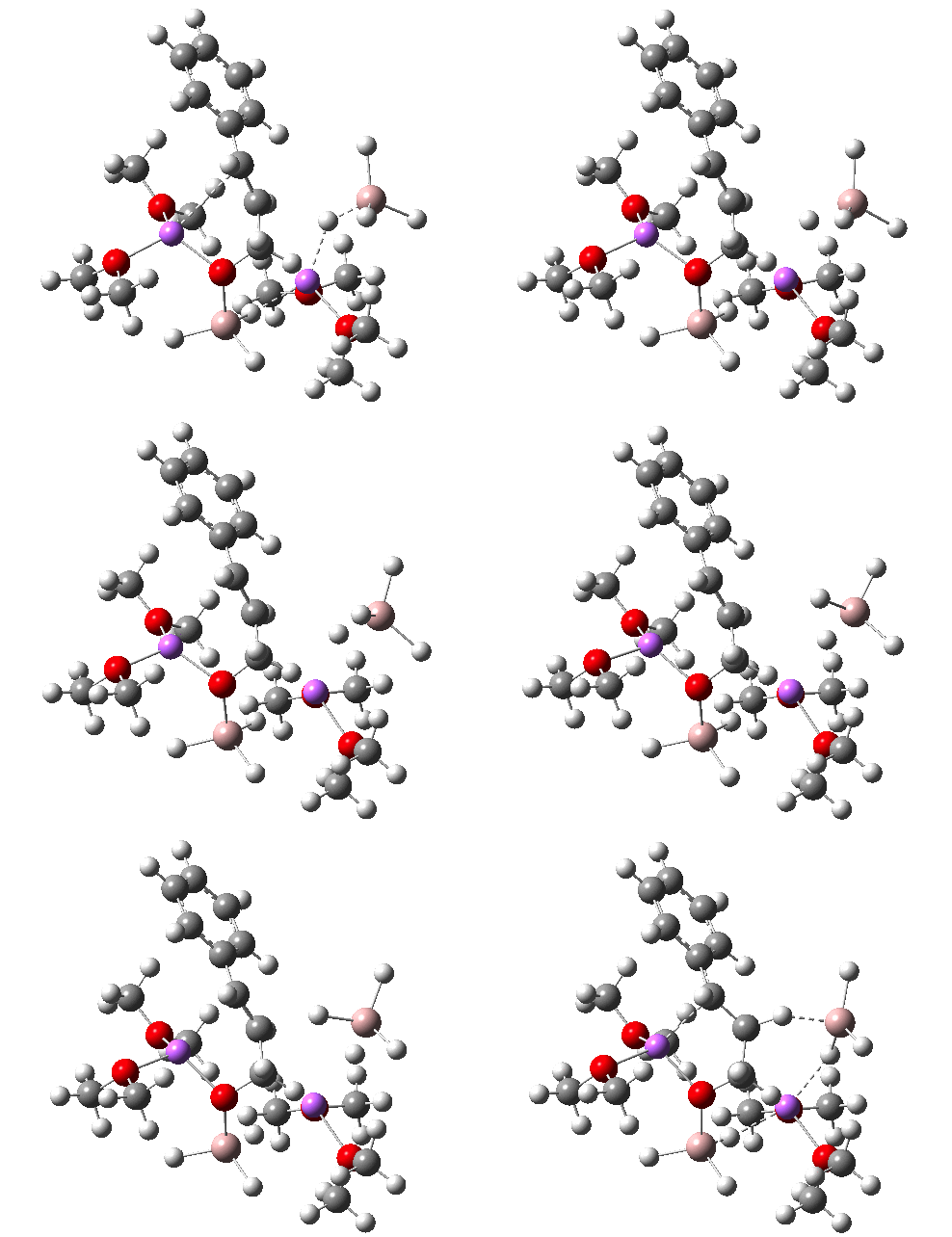
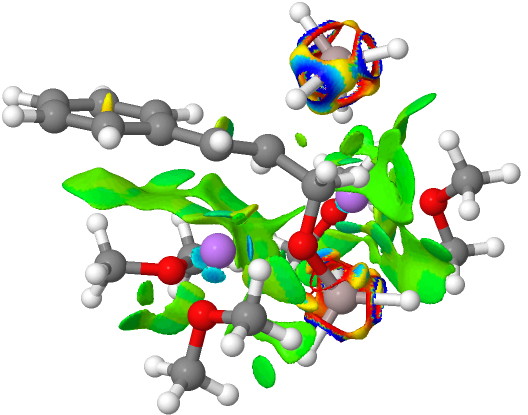
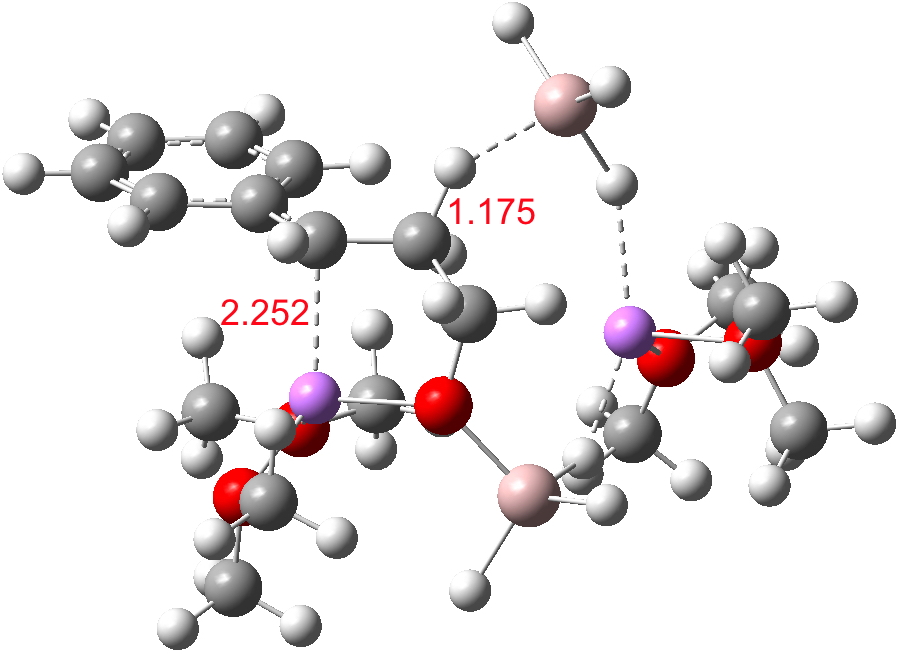
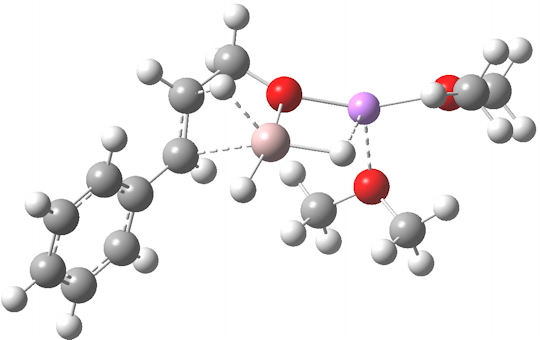
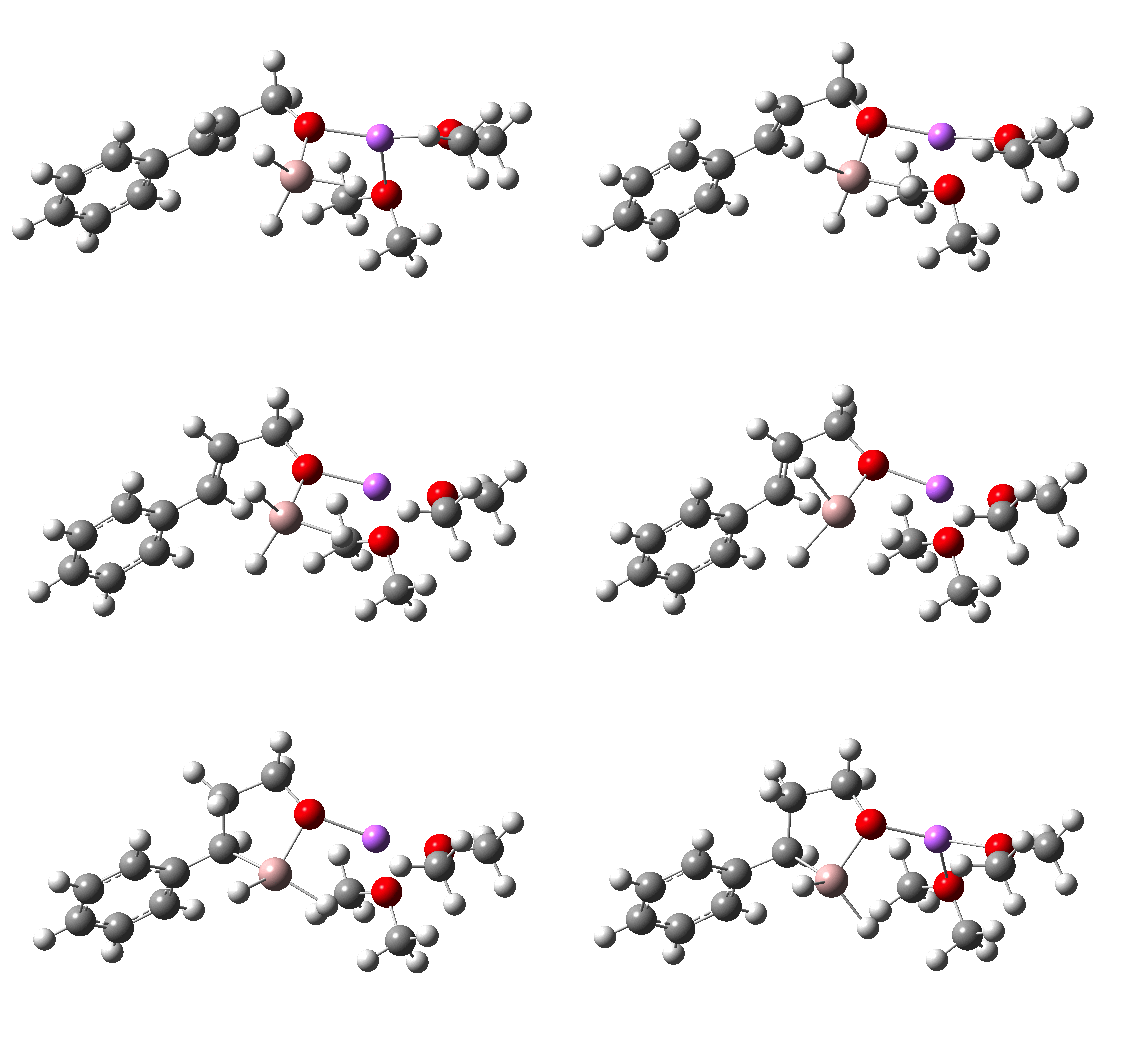
    1. At the I12 stage, a second AlH4.Li(OMe)2 is added and hydride transfer occurs antiperiplanar across the C=C bond (TS34-1). The computed free energy barrier ΔG298 is ~24 kcal/mol. The magnitude of this barrier corresponds to a relatively slow reaction occurring around room temperatures or slightly higher.
      Click for  3D
      TS. Click for 3D

      TS34a
      Click for  3D
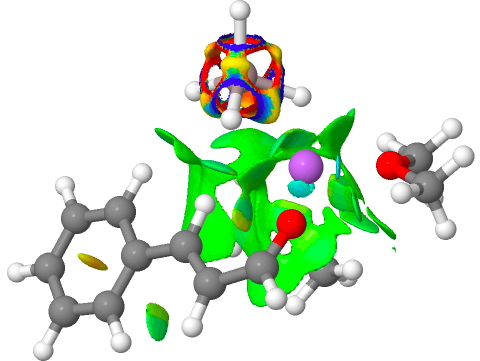
      NCI Isosurface (green regions are dispersion stabilizing) Click for 3D
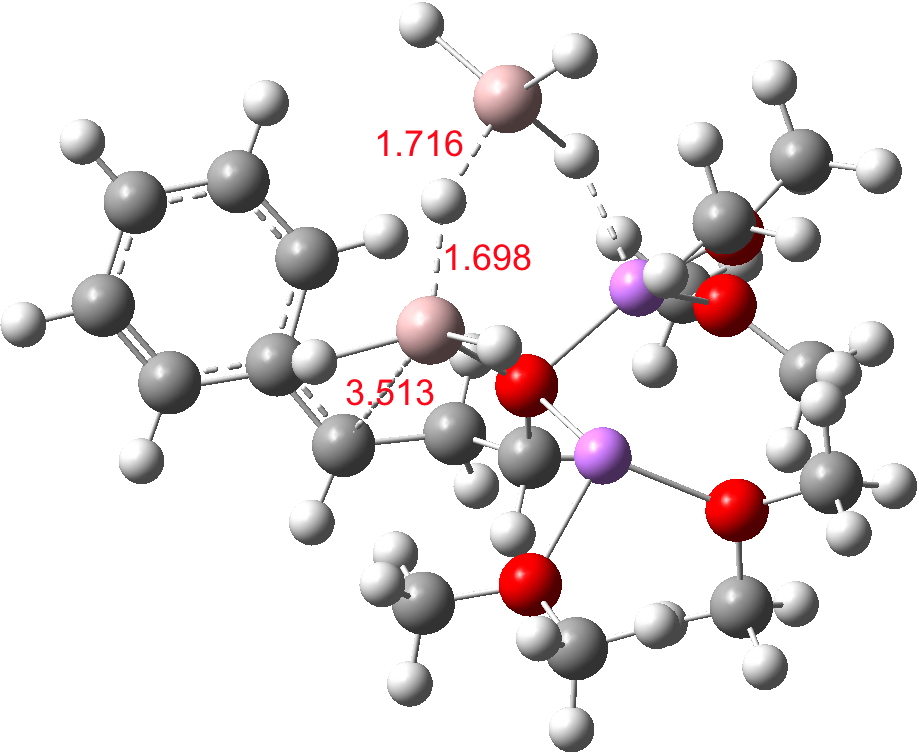
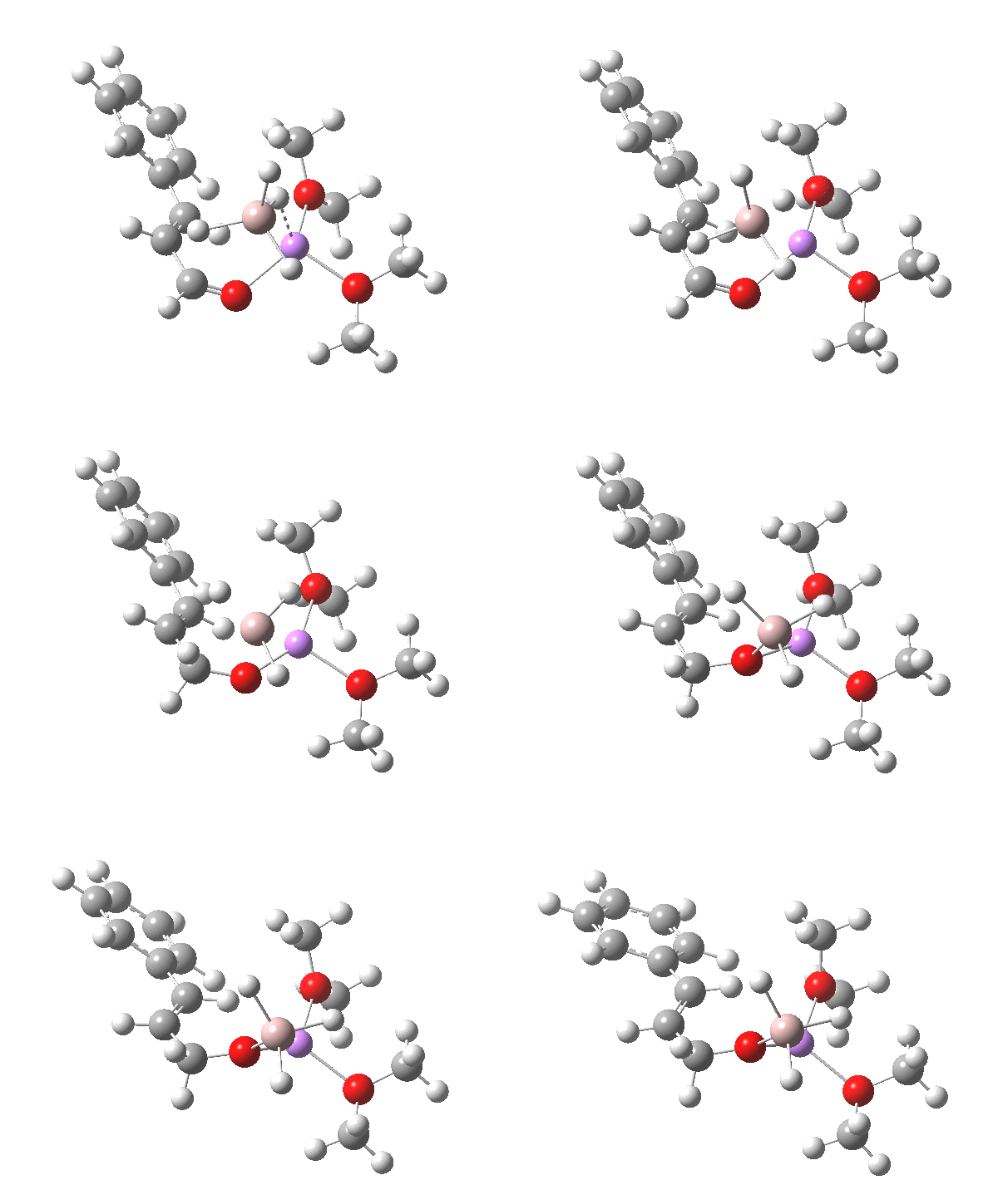
    2. A transient shallow intermediate I34-1 is formed in which the benzylic anion is stabilised by an adjacent solvated Li centre. The energy of this species (Table below) needs some explanation. Can its free energy really be 1.5 kcal/mol higher than that of the preceding transition state? Yes, because its entropy is lower! The transition state is located on a total energy surface, which does not include thermal and entropic corrections; these are always applied AFTER the stationary points are located. If one inspects these total energies, I34-1 emerges as 1.2 kcal/mol lower than the preceding transition state. This sort of result serves to remind us of the dynamic nature of a potential energy surface, and that static energies may on occasion lead to odd results. Its geometry is shown below, and this too has an interesting feature. The C-H bond just created from the LAH is antiperiplanar to the benzylic anion (locked anti by the Li) and the resulting stereoelectronic effect reduces its C-H calculated[cite]10.14469/ch/191178[/cite] stretching wavenumber from the normal value of ~3100 cm-1 to 2231 cm-1, a remarkable reduction.
      Click for  3D
      I34-1. Click for 3D
    3. The C-O-AlH3.Li(OMe)2 ligand now needs to rotate to I34-2 so that metal exchange on the benzylic carbon can occur, with Al displacing Li at that position. As with I34-1, the free energy of this species is actually slightly higher than that of TS34-1. Two AlH3 groups now exist at this stage (each of them formed by hydride donation as part of the reduction process, see below). A hydride transfer metathesis between them (H2Al-H-Al3 is actually a stable bridged species) will generate an AlH2 as part of the 5-ring aluminate ester in P34 and regenerate a molecule of LAH. Transition states for these processes (i.e. TS34-2) proved difficult to locate; it may be that the ligand rotation and the hydride metathesis are part of the same concerted process but that is not proven yet.
      Click for  3D
      I34-2. Click for 3D
    4. The final product prior to hydrolysis is appropriately exoenergic.
    5. I would also remark that many aspects of this reaction remain unexplored. For example, AlH4 can deliver up to four hydrides, becoming progressively substituted as Al(OR)nHy and in the process loosing Al-H…Li weak interactions. What influence this has on the barriers remains unknown.
    Species Relative ΔG298, kcal/mol FAIR Data-DOI
    I12 0.0 [cite]10.14469/ch/191172[/cite]
    TS34-1 24.1 [cite]10.14469/ch/191177[/cite]
    I34-1 25.5 [cite]10.14469/ch/191178[/cite]
    I34-2 25.0 [cite]10.14469/ch/191181[/cite]
    P34 -8.8 [cite]10.14469/ch/191171[/cite]

    In summary, the first step in the reduction of cinnamaldehyde to cinnamyl alcohol requires just one molecule of “LiAlH4” as reductant and has a very low barrier to reaction. To construct a reasonable model to account for the slower further reduction of the C=C bond requires adding a further LiAlH4, the key feature being the availability of a lithium centre to stabilise out the forming benzylic carbanion. No doubt even better models might include the effects of adding e.g. a third molecule of LAH, and a much more extensive exploration of the various conformational options. But I think the present model might be good enough to augment the apparently relatively limited mechanistic speculations found in text books on the topic.


    You sometimes see this phrase in articles reporting transition state location. What is means it that I tried a half-dozen what I thought were reasonable possibilities, and none of them satisfactorily converged. This semi-random exploration of the potential energy surface revealed a very flat energy potential, with lots of conformational possibilities. At this point, you have to decide whether it is worth the time to continue hunting.


    Acknowledgments

    This post has been cross-posted in PDF format at Authorea.
  • Mechanism of the Lithal (LAH) reduction of cinnamaldehyde.
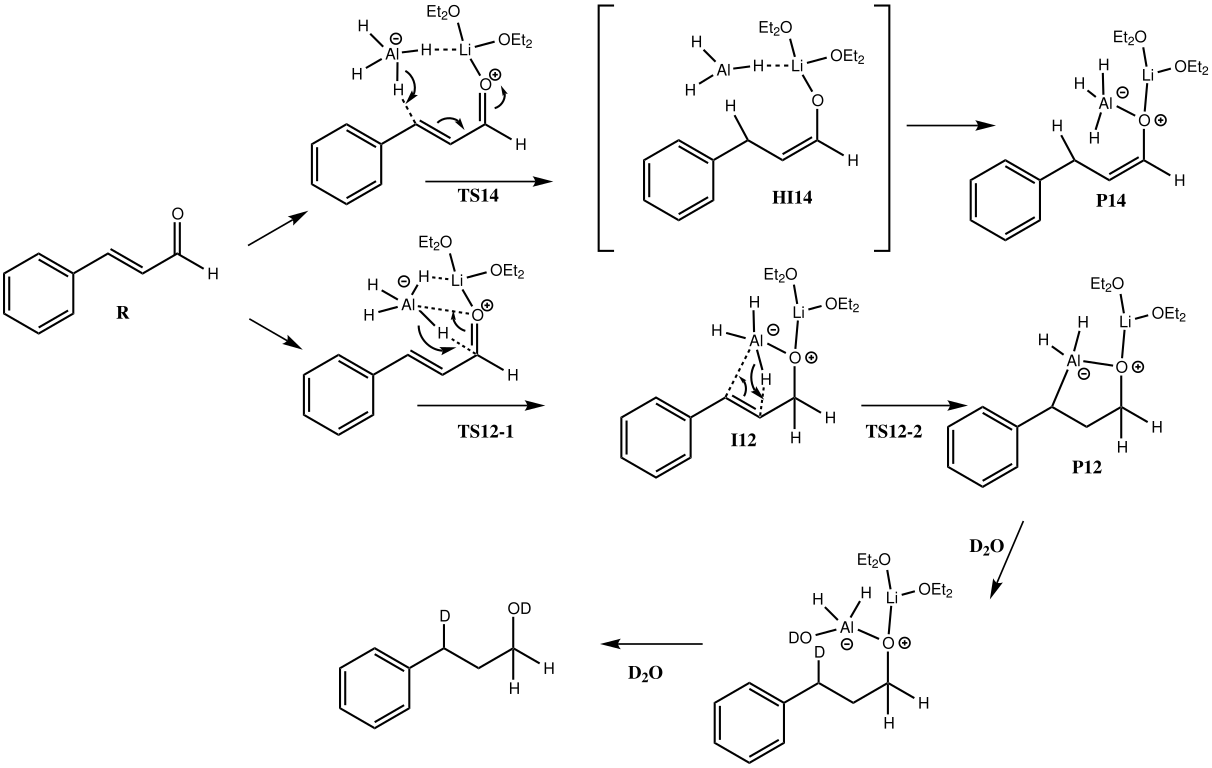
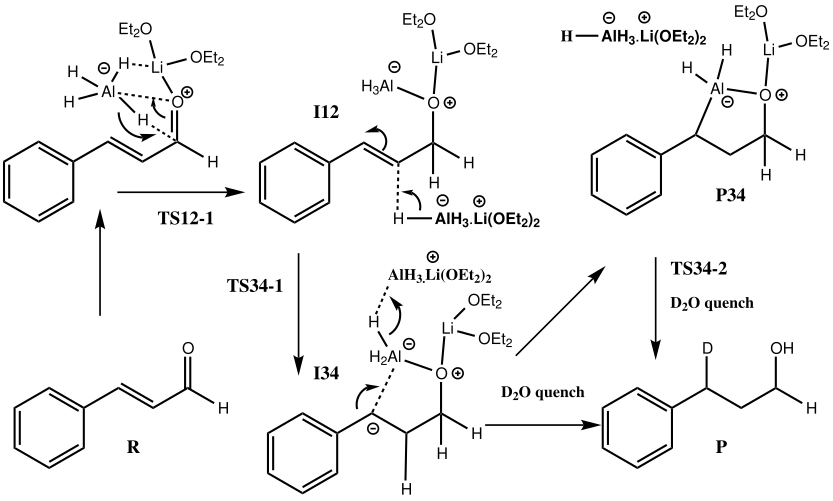
    The reduction of cinnamaldehyde by lithium aluminium hydride (LAH) was reported in a classic series of experiments[cite]10.1021/ja01197a060[/cite],[cite]10.1021/ja01202a082[/cite],[cite]10.1021/ja01190a082[/cite] dating from 1947-8. The reaction was first introduced into the organic chemistry laboratories here at Imperial College decades ago, vanished for a short period, and has recently been reintroduced again. The experiment is really simple in concept; add LAH to cinnamaldehyde and you get just reduction of the carbonyl group; invert the order of addition and you additionally get reduction of the double bond. Here I investigate the mechanism of these reductions using computation (ωB97XD/6-311+G(d,p)/SCRF=diethyl ether).

    LAH
    The mechanism can be envisaged as proceeding through a 1,4-hydride attack (TS14) with a hidden intermediate (HI14) on the reaction path, or instead finding a pathway involving either one or two consecutive 1,2-attacks; TS12-1, TS12-2 via an explicit intermediate I12. Experiment shows that quenching with D2O at the end of the reduction to replace a C-Al with a C-D bond certainly seems to rule out the 1,4 route, since that would not lead to incorporation of deuterium at the benzylic position. So does the computational model reflect this reality?

    Species Relative ΔG, kcal/mol FAIR Data-DOI
    R 0.0 [cite]10.14469/ch/191154[/cite]
    TS14 +11.7 [cite]10.14469/ch/191148[/cite]
    P14 -38.8 [cite]10.14469/ch/191152[/cite]
    TS12-1 +8.4 [cite]10.14469/ch/191149[/cite]
    I12 -35.8 [cite]10.14469/ch/191151[/cite]
    TS12-2 +6.5 (42.3) [cite]10.14469/ch/191156[/cite]
    P12 -52.4 [cite]10.14469/ch/191155[/cite]

    I have chosen a model in which two dimethyl ether molecules solvate the lithium cation. The reactant itself has an interesting structure, in which two of the Al-H bonds form bridges to the Li, which ends up being five-coordinated. Further weak C-H…O=C hydrogen bonding is also observed. The NCI (non-covalent-interaction) surfaces are well worth inspecting (inspection notes: the NCI surrounding the Al has artefacts, since the value of the electron density surrounding the metal is lower than covalent density for the other elements. Click on the image below to load the 3D model).

    Click for  3D
    Click for 3D

    TS14 retains that C-H…O=C hydrogen bond, but the double Al-H-Li bridge is lost. The 8-ring for the TS allows the hydride transfer to be approximately linear, and the Bürgi-Dunitz angle of approach of the hydride to the double bond is 107.4°. Whilst the barrier is acceptably low, the reaction reaches a cul-de-sac down this path; it has no low energy escape route.

    TS14
    Click for 3D

    TS12-1 loses the C-H…O=C hydrogen bond, but being 3.3 kcal/mol lower in free energy than TS14 fortunately provides a lower energy alternative to that cul-de-sac! The Bürgi-Dunitz angle is 112.0°.
    TS12-1
    LAH12-1

    TS12-2 is required to proceed further to the dihydrocinnamyl alcohol reduction product P12, and now we have to confront the nub of the problem. Why does this further reduction only proceed when the LAH is in excess? TS12-2 itself corresponds to an Al-H addition across a C=C double bond.[cite]10.6084/m9.figshare.1362146[/cite], with a similar barrier to TS12-1. The answer to this conundrum is to recognise that I12 forms what is called a resting state for the reaction, and that to proceed further the reaction has to overcome the barrier from I12 to TS12-2. That barrier is 42.3 kcal/mol, far too high to proceed thermally. When one encounters an unreasonable barrier, one has to look very carefully at the model one has constructed for the process.

    Click for 3D
    Click for 3D

    LAH12-2a

    Clearly, the model I used here is lacking something. Since the reaction only proceeds when LAH is in excess, we can formulate the hypothesis that further LAH must be added to the model, from which a more reasonable barrier might emerge. If I find out how that can be done, I will report back here.


    LAH as a reagent was originally available in powder form, which could be quite tricky to handle and could cause fires if not handled properly. The lab organiser Chris tells me it now comes in standard-sized pellets which are far easier and safer to handle in a laboratory, allowing its re-introduction.
    Biographical note. This footnote is added because I spent three years as a Ph.D. student trying to construct transition state models by measuring kinetic isotope effects. My failure to do so convincingly meant I decided to spend a further three years as a Post Doc inverting the concept by learning how to model transition states using quantum mechanical computation. I first applied these skills as an independent researcher to locating the transition state for Cl-H addition (vs Al-H in this post) across a C=C double bond and computing the associated isotope effects.[cite]10.1039/C39810000939[/cite] This article ends with the assertion that “SCF-MO calculations may provide a more rational basis for interpreting kinetic isotopes than the reverse procedure of attempting to establish a transition state model from the observed kinetic data.” It is nice to see that posterity has shown that this assessment was about right.