Posts Tagged ‘Matter’

Hypervalent or not? A fluxional triselenide.

Saturday, February 24th, 2018

Another post inspired by a comment on an earlier one; I had been discussing compounds of the type I.In (n=4,6) as possible candidates for hypervalency. The comment suggests the below as a similar analogue, deriving from observations made in 1989.[1]

This compound was investigated using 77Se NMR, with the following conclusions:

  1. The compound is fluxional, with the lines at room temperature broadened compared to those at -50°C.
  2. At -50°C the peaks are sharp enough to discern 1JSe-Se couplings, with multiplicities and integrations that suggest a central Se is surrounded by four equivalent further Se atoms, with shifts of 655.1 and 251.2 ppm.
  3. The magnitude of this 1JSe-Se coupling (391 Hz) leads to the suggestion of a considerable contribution of a resonance form with Se=Se bonds (structure 2 above).
  4. This was supported by 2J13C-77Se couplings which also imply a symmetrically coordinated central  Se.
  5. Thus the two resonance forms 1 or 2 above were suggested as the predominant form at -50°C, with an increasing incursion of the open chain isomer 3 at higher temperatures giving rise to the observed fluxional dynamic behaviour.
  6. One may surmise from these results that the central Se is certainly hypercoordinated and by the classical interpretations hypervalent.

Here are some calculations (R=H), at the ωB97XD/Def2-TZVPP/SCRF=chloroform level.‡ In red are the calculated Wiberg Se-Se bond orders, which give little indication of any Se=Se double bond character. 

The calculated 77Se shifts are shown in magenta, with the observed values being 655 and 255 ppm. The match is not good, the errors were 120 and 20.5 ppm.  However calculated shifts for elements adjacent to e.g. Se or Br etc suffer from relativistic effects such as spin orbit coupling.[2] Thus the shift for the central Se, surrounded by four other Se atoms is likely to have a significant error, but the error for the four other Se atoms should be less. The reverse is true.

However, all the calculations of this species (up to Def2-TZVPPD basis set) showed this symmetric form of D2h symmetry to actually be a transition state, as per below.

There is a minimum with the structure below in which one pair of Se-Se lengths are longer than the other pair and for which the free energy is 6.5 kcal/mol lower. The Wiberg bond orders for the two sets of Se-Se bonds are now 0.16 and 0.86, which very much corresponds to structure 3 above.

Assuming that this compound is fluxional even at -50°C, the average of the pairs of Se atoms gives calculated shifts of 667 ppm (655 obs) whilst the central Se is 204.6 ppm (251 obs). The latter, influenced by two especially short Se-Se distances, is likely to have a very large spin-orbit coupling error, whilst for the former the error will be smaller (13C shifts adjacent to one Br typically have induced calculated errors of about 14 ppm[2]).

At this point I searched the Cambridge structure database for Se coordinated by four other Se atoms. A close analogue[3] has the structure shown below, in which pairs of Se-Se interactions have unequal bond lengths, the shorter being ~2.45Å. This matches the calculation above reasonably well.
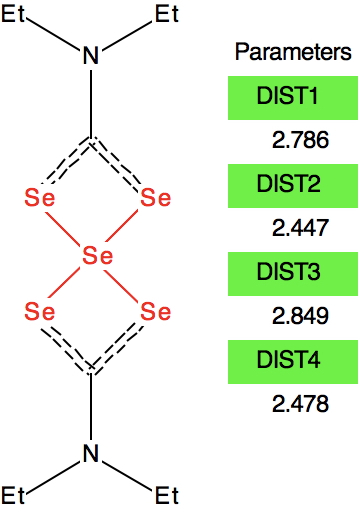
Reconciling these various observations, we might assume that even at -50°C the fluxional behaviour has not been frozen out. Given that the fluxional barrier is only 6.5 kcal/mol, it is unlikely that the spectrum could be measured at a sufficiently low temperature to reveal not two sets of Se signals in the ratio 4:1 but three in the ratio 2:2:1. The spin-spin couplings reported presumably are a result of averaging a genuine 1JSe-Se coupling with a through space coupling.

So it appears that the analysis of the 77Se NMR reported in this article [1] may not be quite what it seems. A better interpretation is that structure 3 is the most realistic. This means no hypercoordination for the Se, never mind hypervalence!


FAIR data at DOI: 10.14469/hpc/3724. The original reference, Me2Se was incorrectly calculated without solvation by chloroform. The values shown here are now corrected from those shown in the original post.
References

  1. Y. Mazaki, and K. Kobayashi, "Structure and intramolecular dynamics of bis(diisobutylselenocarbamoyl) triselenide as identified in solution by the 77Se-NMR spectroscopy", Tetrahedron Letters, vol. 30, pp. 2813-2816, 1989. https://doi.org/10.1016/s0040-4039(00)99132-9
  2. D.C. Braddock, and H.S. Rzepa, "Structural Reassignment of Obtusallenes V, VI, and VII by GIAO-Based Density Functional Prediction", Journal of Natural Products, vol. 71, pp. 728-730, 2008. https://doi.org/10.1021/np0705918
  3. R.O. Gould, C.L. Jones, W.J. Savage, and T.A. Stephenson, "Crystal and molecular structure of bis(NN-diethyldiselenocarbamato)-selenium(II)", Journal of the Chemical Society, Dalton Transactions, pp. 908, 1976. https://doi.org/10.1039/dt9760000908

Hypervalent Helium – not!

Friday, February 16th, 2018

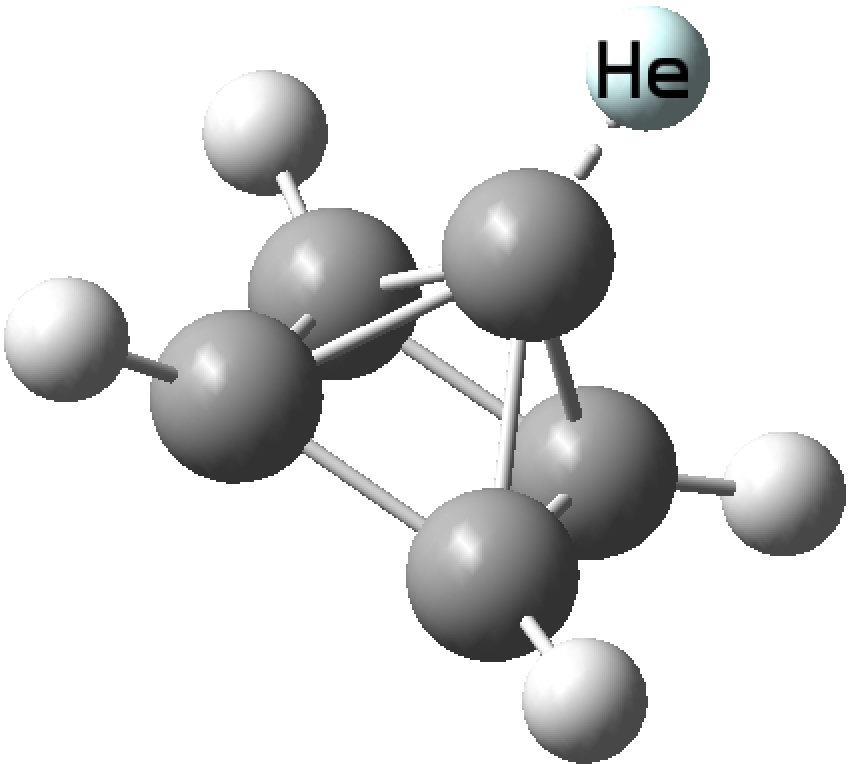
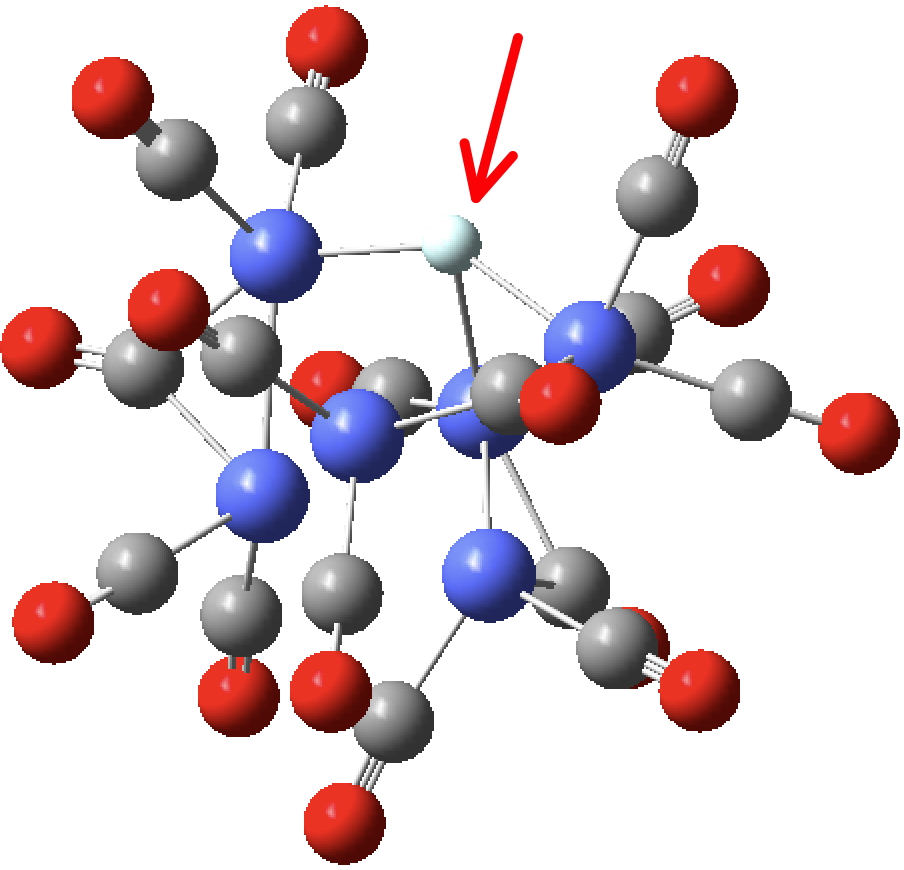
Last year, this article[1] attracted a lot of attention as the first example of molecular helium in the form of Na2He. In fact, the helium in this species has a calculated bond index of only 0.15 and it is better classified as a sodium electride with the ionisation induced by pressure and the presence of helium atoms. The helium is neither valent, nor indeed hypervalent (the meanings are in fact equivalent for this element). In a separate blog posted in 2013, I noted a cobalt carbonyl complex containing a hexacoordinate hydrogen in the form of hydride, H. A comment appended to this blog insightfully asked about the isoelectronic complex containing He instead of H. Here, rather belatedly, I respond to this comment!

The complex [HCo6(CO)15] has a calculated bond index at the hydrogen of 0.988 and a calculated NMR chemical shift of 21.6 ppm (ωB97XD/Def2-TZVPPD calculation) compared to a measured value of 23.2 ppm. Despite being six-coordinate, the hydride has a bond index that does not exceed one (it is not hypervalent).

So here is the neutral helium analogue. The He bond index emerges as 0.71 at the geometry of the hydride complex. Compare this with the bond index of 0.15 calculated for Na2He and it would be fair to say that at this geometry, the helium in [HeCo6(CO)15] would have a greater claim to be a molecular compound. Back in 2010, extrapolating from a series of posts here, I had speculated[2] about other molecular species of He, including the di-cation below. This has a He bond index of 0.54, rather less than that in [HeCo6(CO)15] but much more than in Na2He. It is also vibrationally stable.

But now, [HeCo6(CO)15] goes “pear-shaped” (why do pears have such a bad press?). I started a process of optimizing the geometry of this complex (ωB97Xd/Def2-TZVPPD). Slowly, the He started to creep out of the centre of the complex and emerge from the cavity. After about 100 steps it reached the geometry shown below, at which point the Wiberg bond index has dropped to 0.62 and still going down. I think it might take a few more steps to be completely expelled, but I have stopped the geometry optimisation at this stage.

So helium appears not to be valent in [HeCo6(CO)15]. However, I have yet to try Ne, which is both larger and softer. I will post results here.


All data at 10.14469/hpc/3587.

References

  1. X. Dong, A.R. Oganov, A.F. Goncharov, E. Stavrou, S. Lobanov, G. Saleh, G. Qian, Q. Zhu, C. Gatti, V.L. Deringer, R. Dronskowski, X. Zhou, V.B. Prakapenka, Z. Konôpková, I.A. Popov, A.I. Boldyrev, and H. Wang, "A stable compound of helium and sodium at high pressure", Nature Chemistry, vol. 9, pp. 440-445, 2017. https://doi.org/10.1038/nchem.2716
  2. H.S. Rzepa, "The rational design of helium bonds", Nature Chemistry, vol. 2, pp. 390-393, 2010. https://doi.org/10.1038/nchem.596

Ammonide: an alkalide formed from ammonia and resembling an electride.

Sunday, December 17th, 2017

Alkalides are anionic alkali compounds containing e.g. sodide (Na), kalide (K), rubidide (Rb) or caeside (Cs). Around 90 examples can be found in the Cambridge structure database (see DOI: 10.14469/hpc/3453  for the search query and results). So what about the ammonium analogue, ammonide (NH4)? A quick search of Scifinder drew a blank! So here I take a look at this intriguingly simple little molecule.

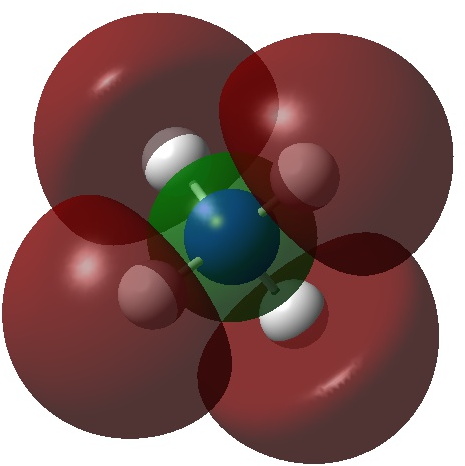
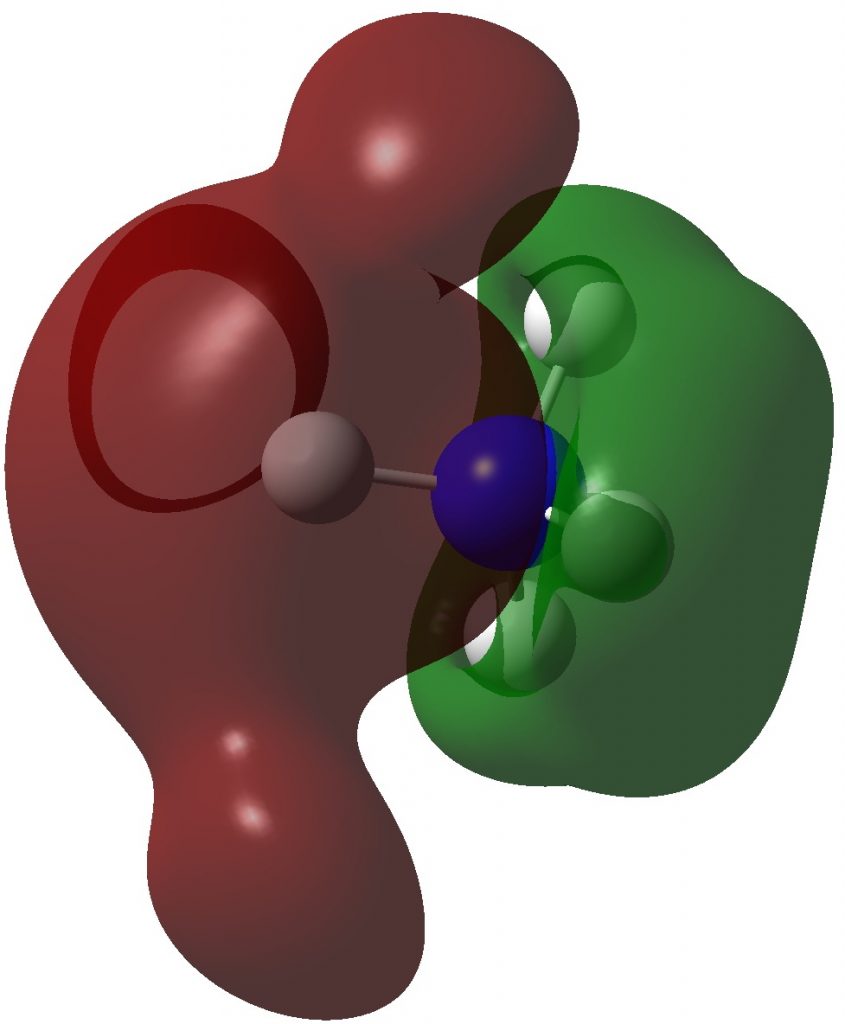
It can be formed by adding two electrons to the ammonium cation; NH4+ + 2e ↠ NH4. One might be encouraged to do this since the LUMO (lowest unoccupied molecular orbital, below) of the ammonium cation has A1 symmetry and so can accept two electrons without the penalty of Jahn-Teller distortions. These electrons will apparently expand the valence electron “octet” around the nitrogen from 8 to 10; a hypervalent species then?

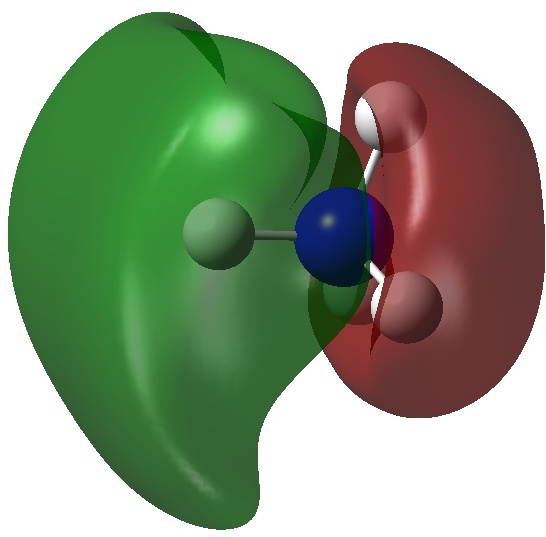
So what are the (calculated) properties of NH4? The energy of the now HOMO (highest occupied molecular orbital) at the ωB97XD/Def2-TZVPPD/solvent=water level is -3.6eV, a respectable electron affinity (the additional electrons are said to be bound). More insight can be obtained from the NBO analysis, which produces localized versions of the molecular orbitals. There are four equivalent NBOs, one of which is shown below.

Each is bonding along one H-N bond, mildly anti-bonding along the other three N-H bonds, but again bonding in the H-H regions! This matches the observations made earlier that when more electrons are pumped into normally valent main group molecules, they will occupy the antibonding levels. This is accompanied by a reduction in the bond orders associated with the central atom. In this case, the N-H bond orders are reduced from 0.79 to 0.602 and the total bond index at the nitrogen is reduced from 3.16 to 2.408. The bond index at hydrogen is at first sight increased from 0.79 to a surprising 1.0003, but this is explained because the H-H bond orders are 0.1328 (three for each H), which brings the H index up to 1.0. The N-H vibration (A1 symmetric) is 3466 cm-1 for NH4+  which is reduced to 2659 for NH4.

So it appears that adding two electrons to the ammonium cation induces H-H bonding! More insight can be obtained from an ELF analysis of the electron density basins.

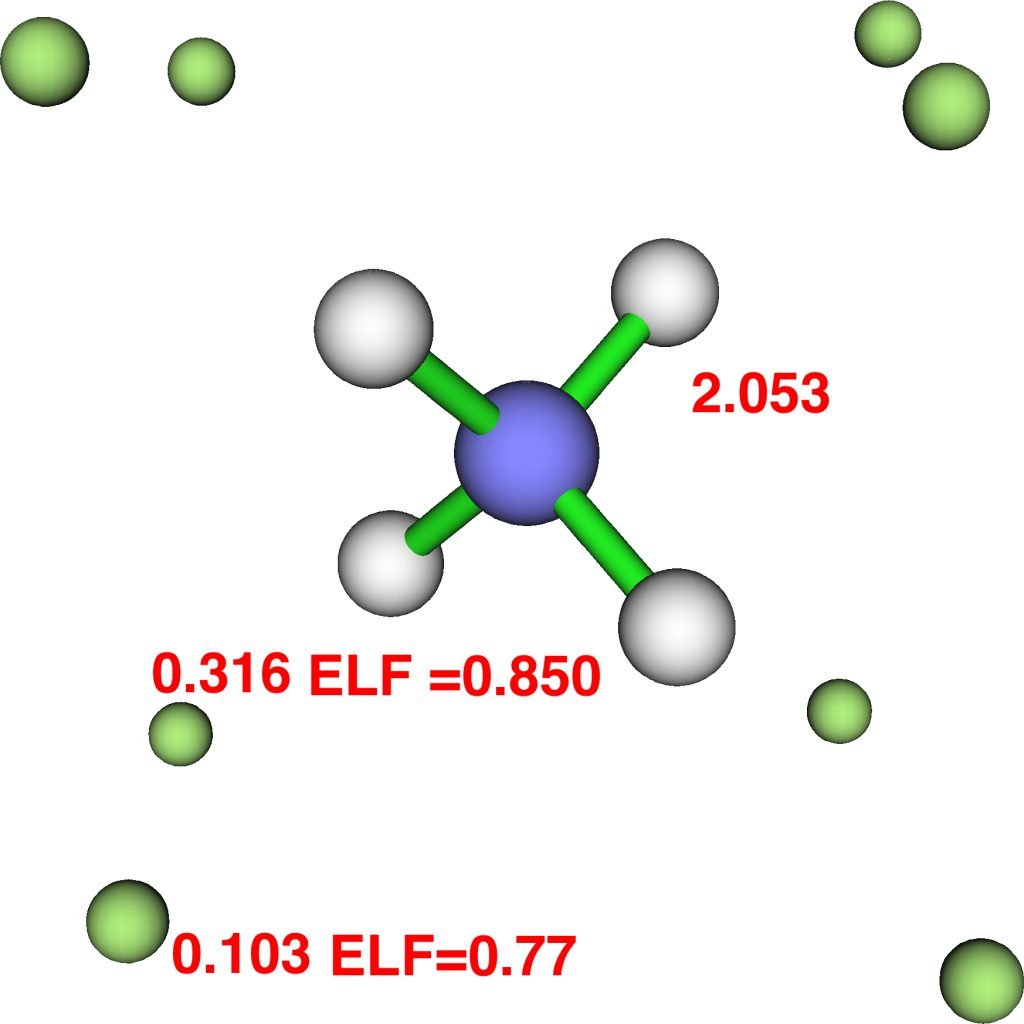
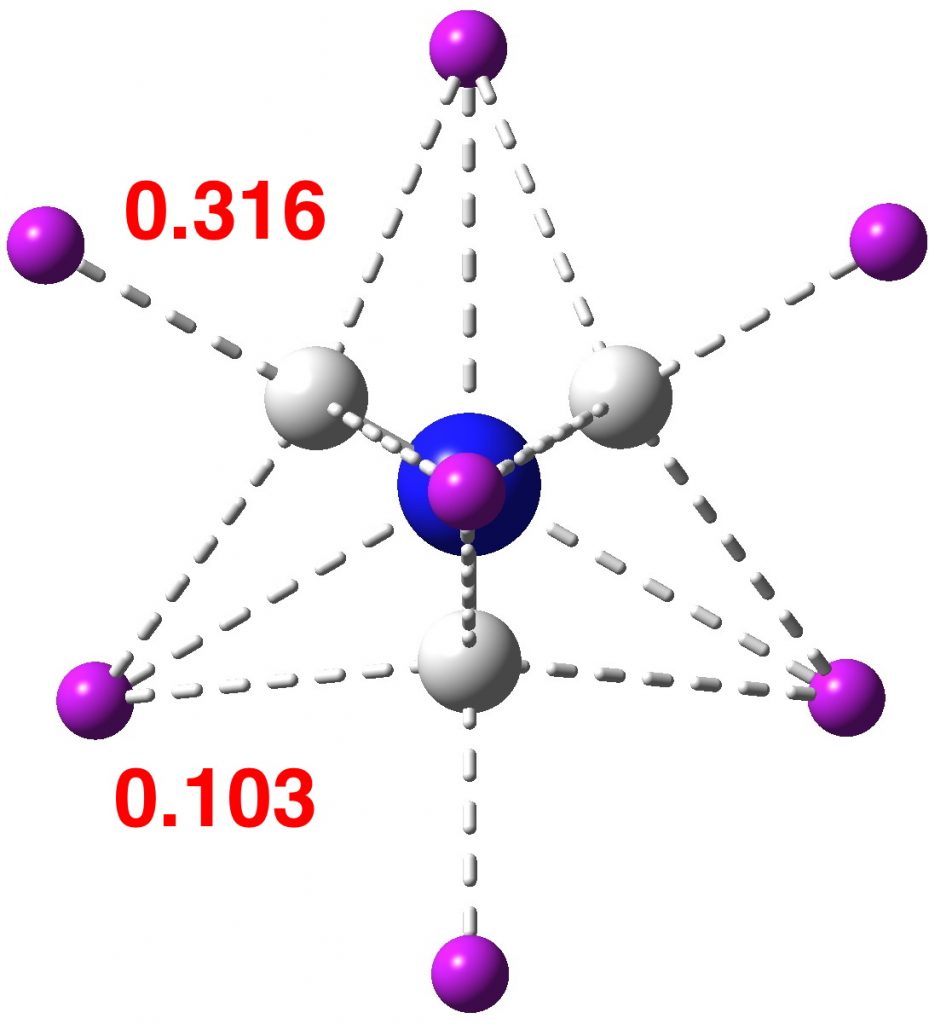
The above shows four attractors (as they are called) centered at the hydrogen nuclei, with 2.053e each (4*2.053 = 8.212e). The remaining ~2e are located in basins (green) centered at two different types of attractors. One is along the axis of each N-H bond and exo to it (0.316e) and the other sits on top of any set of three hydrogens (0.103e), 1.68e in total. The value of the ELF function at the attractor is shown above. You should realize that ELF=1.0 corresponds to perfectly localized electrons (for which the kinetic energy density is zero) and ELF=0.5 would correspond to a free-electron gas. The ELF value of e.g. 0.77 is getting close to an electron gas, and in fact corresponds to what we call an electride.

So, the nitrogen valence shell electron octet is not actually exceeded! The additional two electrons in ammonide sit beyond the nitrogen, in H-H regions. Whether or not it is a viable species for detection remains to be established, but even its computed bonding properties have proved interesting and it deserves to join the alkalide family. 

Postscript

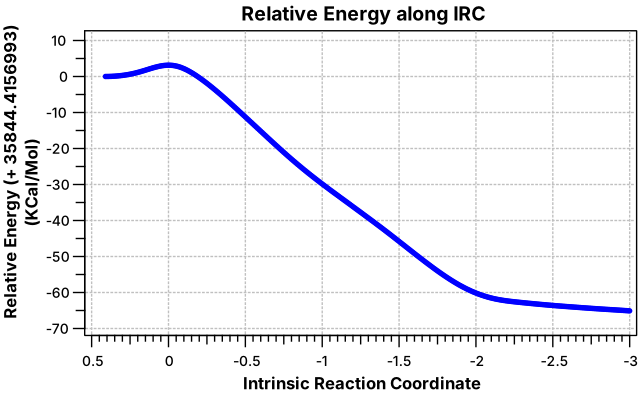
Ammonide exists in a shallow well in the potential energy surface, shown below, with the dissociation to ammonia and hydride anion being exothermic.

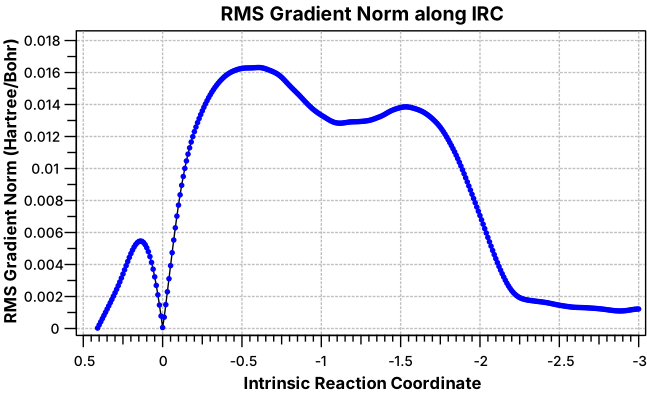
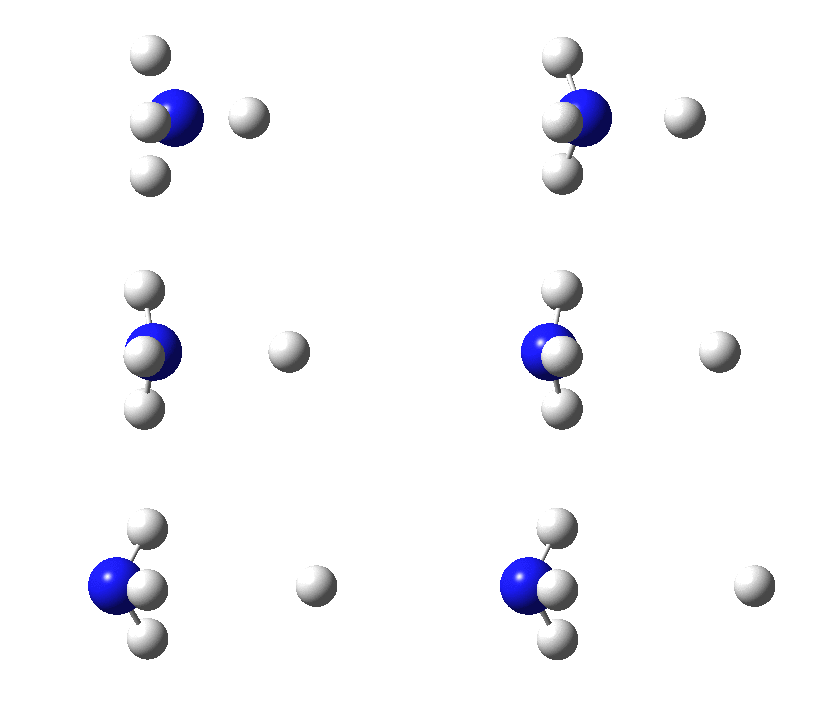
The intrinsic reaction coordinate shows one interesting feature at  IRC ~-1.1 which corresponds to repulsion between the hydride and the lone pair of the nitrogen atom resulting in inversion of configuration during the latter stages of the IRC.


FAIR data collection; 10.14469/hpc/3455. Perhaps unsurprisingly, these values are somewhat basis set dependent. Thus a ωB97XD/Def2-QZVPPD/Water calculation gives the following values: bond index at N, 1.998, N-H bond index, 0.4995, H-H bond index 0.1689, H bond index 1.0062, total Rydberg population, 0.2738, ν(A1) 2686 cm-1. The ELF basins are H, 2.039, exo-basins 0.282 and 0.141 (total 1.692). The improved basis set better describes the diffuse regions beyond the N-H bonds.

Hydrogen capture by boron: a crazy reaction path!

Thursday, September 21st, 2017

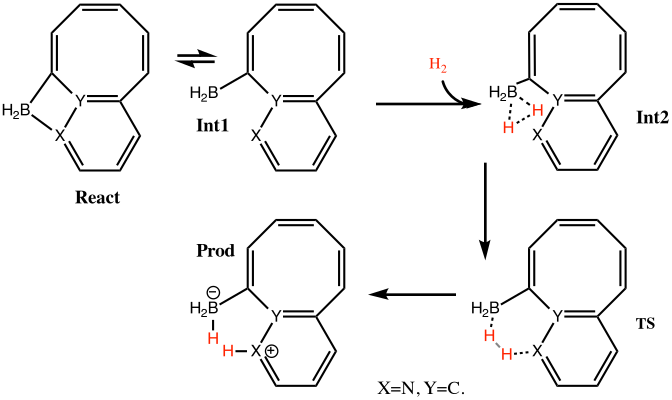
A recent article reports, amongst other topics, a computationally modelled reaction involving the capture of molecular hydrogen using a substituted borane (X=N, Y=C).[1] The mechanism involves an initial equilibrium between React and Int1, followed by capture of the hydrogen by Int1 to form a 5-coordinate borane intermediate (Int2 below, as per Figure 11). This was followed by assistance from a proximate basic nitrogen to complete the hydrogen capture via a TS involving H-H cleavage. The forward free energy barrier to capture was ~11 kcal/mol and ~4 kcal/mol in the reverse direction (relative to the species labelled Int1), both suitably low for reversible hydrogen capture. Here I explore a simple variation to this fascinating reaction.


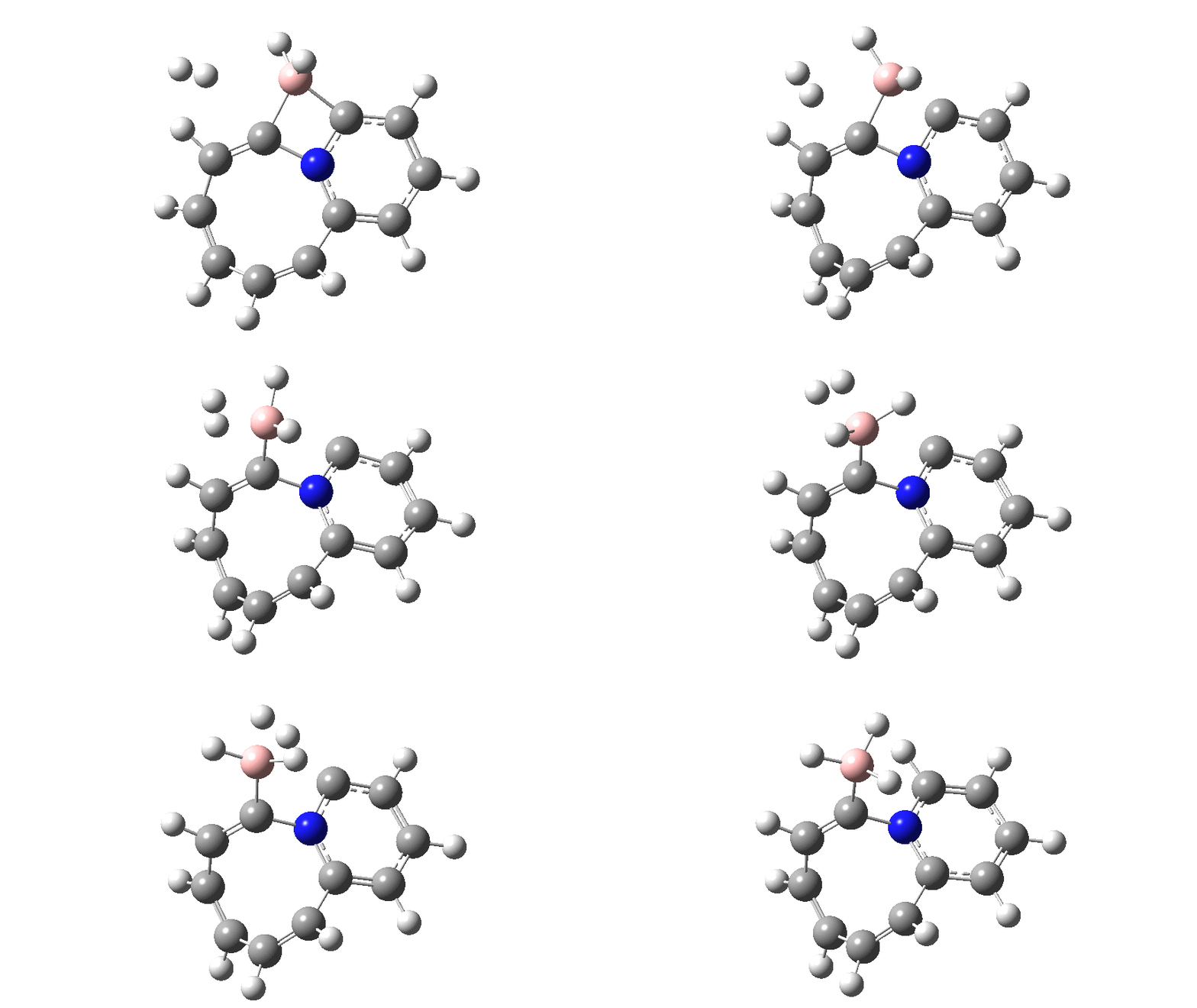
This variation involves transposing X and Y such that Y=N+ and X=C to form a carbon ylide such that X=C becomes much more nucleophilic than the original nitrogen nucleophile. An animation of the full IRC (intrinsic reaction coordinate computed at ωB97XD/cc-pvtz; FAIR data doi: 10.14469/hpc/2704) is shown below.

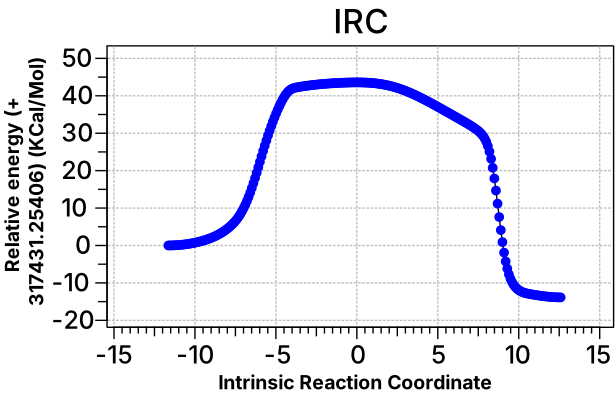
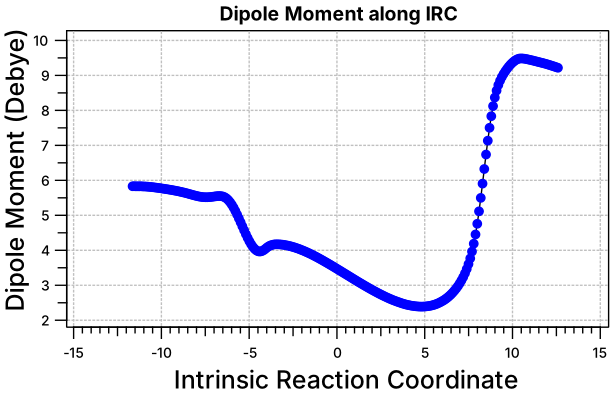
The profile shows that the reaction is concerted between the species labelled React and Prod; no sign of Int1 and Int2!

  1. The region IRC -12 to -5 involves B-C bond cleavage. Because the C is so very nucleophilic, the 4-ring species labelled React becomes very stable and opening it requires a high barrier.
  2. Between IRC -5 and 0, the BH2 group rotates, losing its original interaction with the C to slowly create an empty acceptor orbital on the boron which can then interact with the incoming hydrogen.
  3. At IRC= 0 (the transition state) the hydrogen has been captured by the boron to form a 5-coordinate species, in a manoeuvre that reminds one of the orbital capture of satellites by planets on their way to the outer reaches of the solar system. If the barrier to this capture is computed from IRC= -4 (the region of Int2) it is very much lower than the original system[1], again a reflection of the higher nucleophilicity of X=C.
  4. The fly past continues until IRC= +7, at which point one end of the bound hydrogen has become suitably orientated to interact with the nucleophilic carbon via lone-pair donation into the acceptor H-H σ* orbital, thus helping to break it.
  5. By IRC= +9, the H-H cleavage is complete.
  6. By IRC= +13 the reaction has reached Prod, being overall ~ -12 kcal/mol exothermic.
  7. The overall thermochemistry is dominated by the potent carbon nucleophile in the reactant, which in turn makes this modification entirely useless for the purposes of a hydrogen-capture system!


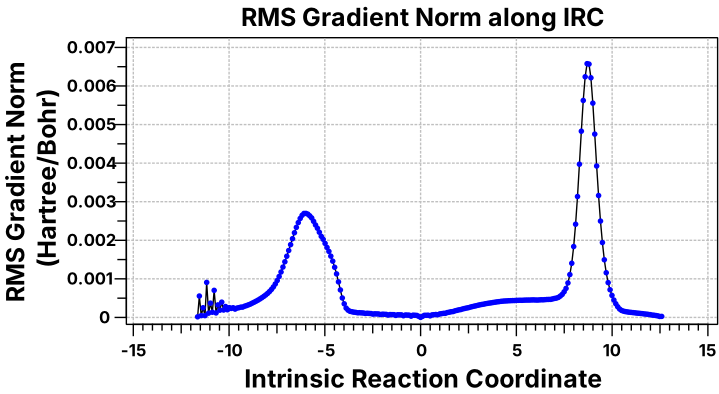
The evolution of the dipole moment along the IRC shows very non-linear behaviour (such plots are rarely shown in most published IRC analyses; they should be!), ending of course with the ionic zwitterion that is the imminium borohydride Prod. Indeed the entire reaction coordinate is an unusually vivid example of a non-least motion path!

This simple atom transposition has given us a very instructive exercise in reaction paths, by-passing entirely both  Int1 and Int2 (making them hidden intermediates), and converting React → Prod into a concerted reaction. It would be great to probe this convoluted journey using reaction dynamics!


Archived as DOI: 10.14469/hpc/3096

Such a species can be seen as a hidden intermediate in the mechanism of reduction of a carboxylic acid by diborane.

None were shown in the original study.[1]

References

  1. L. Li, M. Lei, Y. Xie, H.F. Schaefer, B. Chen, and R. Hoffmann, "Stabilizing a different cyclooctatetraene stereoisomer", Proceedings of the National Academy of Sciences, vol. 114, pp. 9803-9808, 2017. https://doi.org/10.1073/pnas.1709586114

First, hexacoordinate carbon – now pentacoordinate oxygen?

Saturday, March 25th, 2017

The previous post demonstrated the simple iso-electronic progression from six-coordinate carbon to five coordinate nitrogen. Here, a further progression to oxygen is investigated computationally.

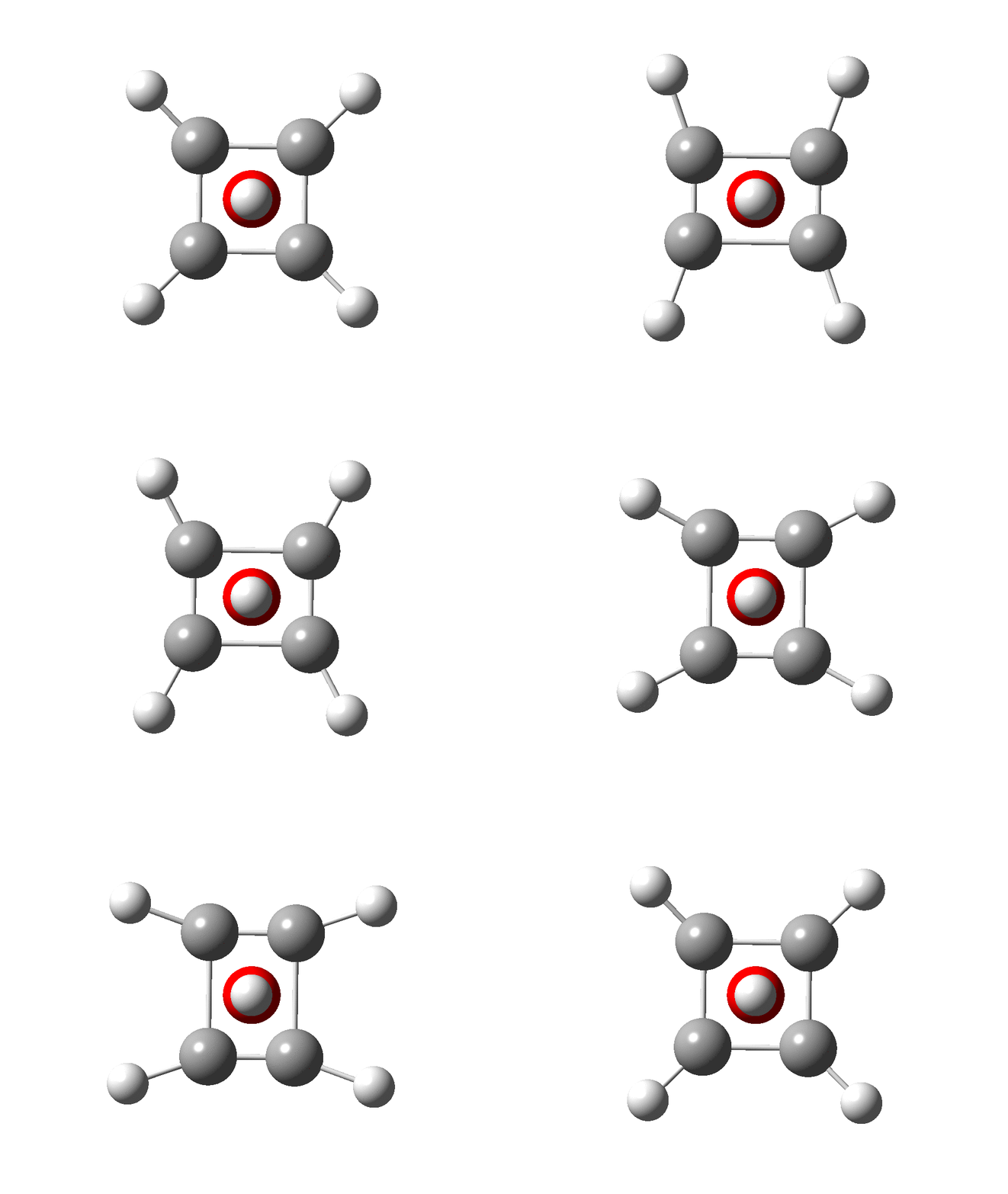
The systems are formally constructed from a cyclobutadienyl di-anion and firstly the HO5+ cation, giving a tri-cationic complex. There are no examples of the resulting motif in the Cambridge structure database. A ωB97XD/Def2-TZVPP calculation (DOI: 10.14469/hpc/2350) shows it is again a stable minimum, with a Kekule mode of 1203 cm-1.

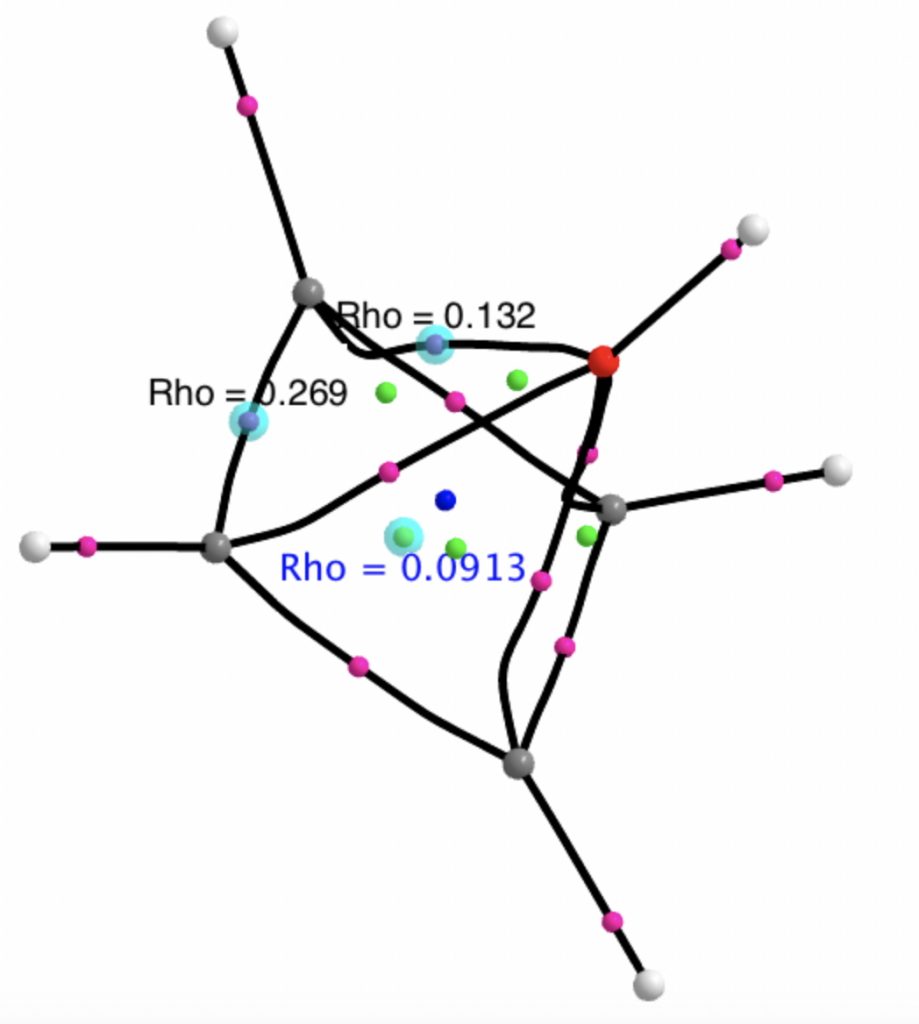
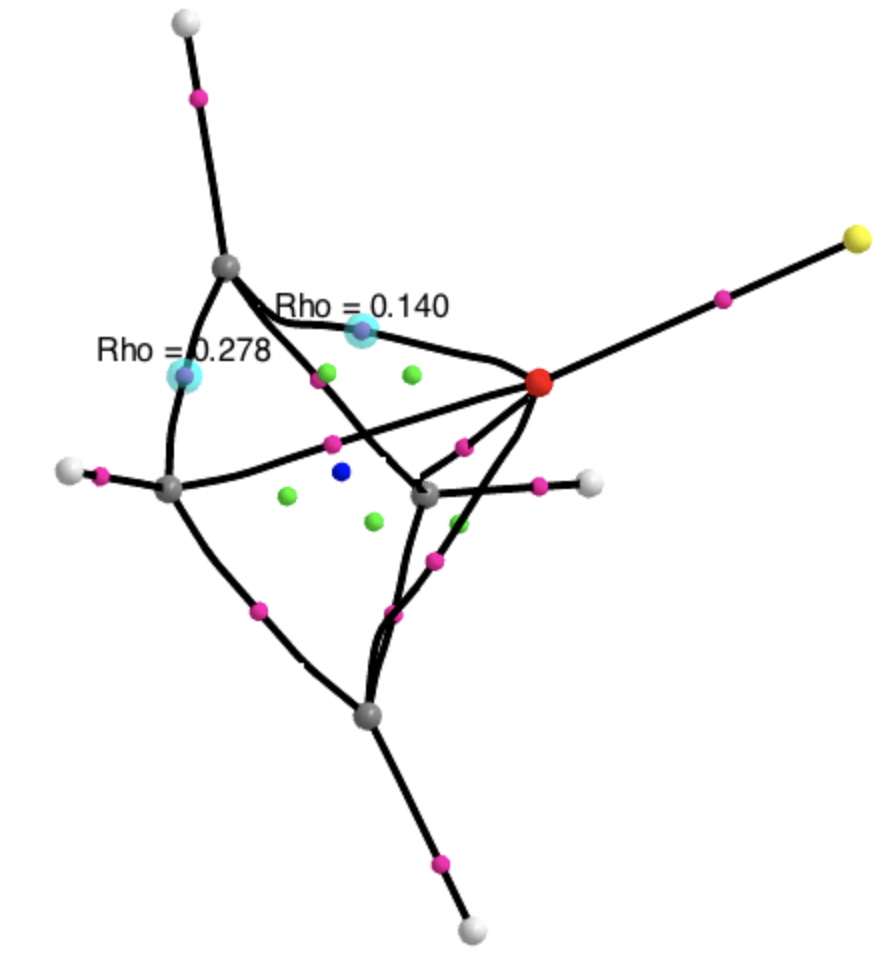
A QTAIM  topological analysis of the electron density shows it differs from the nitrogen analogue in now having the ring topological feature for the basal four carbons, which in turn gives rise to a cage critical point (blue dot). The values of the electron density are lower than for N.

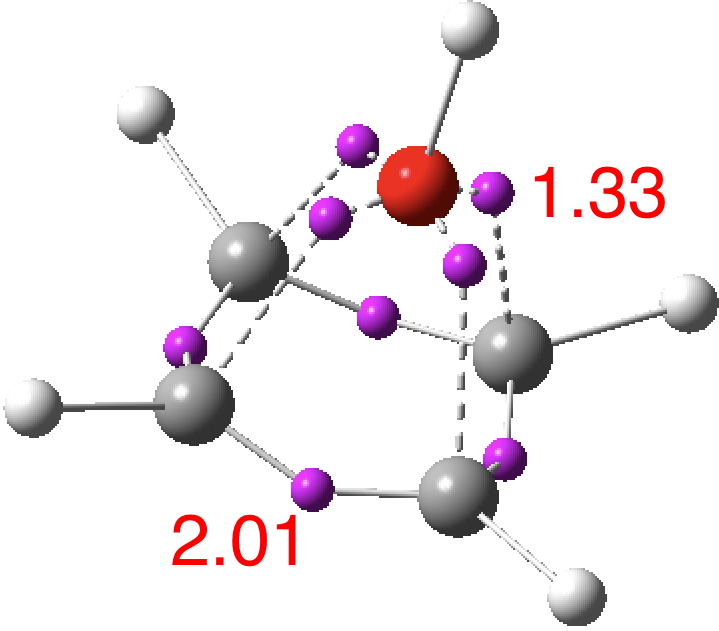
The ELF basin analysis shows the C-C bonds are regular single ones (2.01e), whereas the C-O bonds have a slightly greater electron population than the C-N bonds discussed in the previous post.

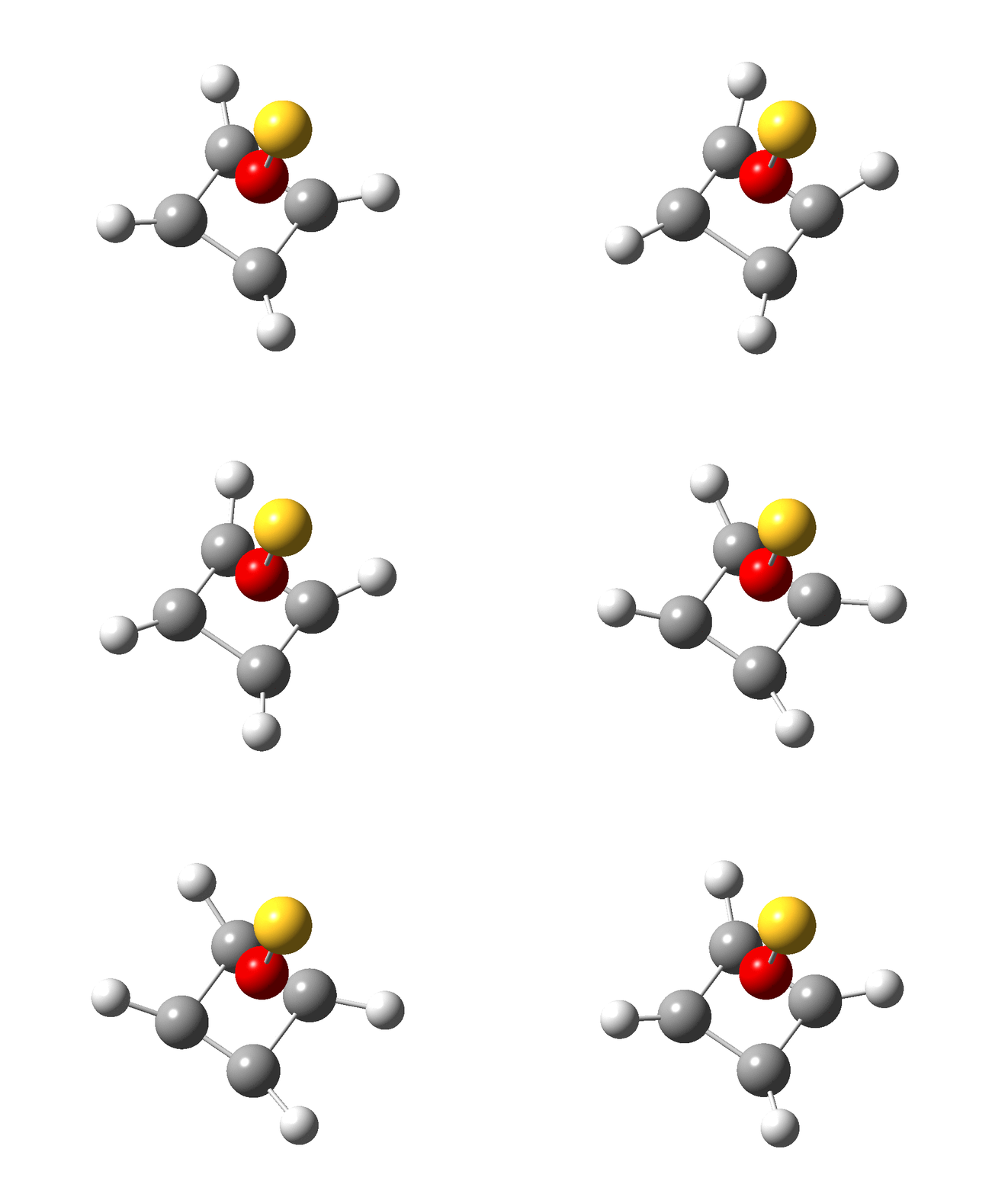
I suspect the prospects of making a stable tri-cation in such a small molecule are lower than the crystal di-cation achieved with carbon as the apical atom. But the charge can be reduced to a di-cation by replacing the HO5+  above with S-O5+; the animation below showing the Kekule mode (1140 cm-1, DOI: 10.14469/hpc/2356).

And for some (negative) loose ends.

  1. The P equivalent constructed from cyclobutadienyl di-anion and HP4+ is now unremarkably 5-coordinate. But in fact it is not a stable minimum (DOI: 10.14469/hpc/2357), having two negative force constants.
  2. as does the system  from cyclobutadienyl di-anion and O=P4+(DOI: 10.14469/hpc/2358)
  3. and the system from cyclobutadienyl di-anion and HS5+(DOI: 10.14469/hpc/2360).
  4. Transposition of S/O to give O-S5+ likewise (DOI: 10.14469/hpc/2359).

So the family of hyper-coordinate 2nd row main group elements now comprises the experimentally verified C, with N and O now open to such verification.

First, hexacoordinate carbon – now pentacoordinate nitrogen?

Saturday, March 25th, 2017

A few years back I followed a train of thought here which ended with hexacoordinate carbon, then a hypothesis rather than a demonstrated reality. That reality was recently confirmed via a crystal structure, DOI:10.5517/CCDC.CSD.CC1M71QM[1]. Here is a similar proposal for penta-coordinate nitrogen.

First, a search of the CSD (Cambridge structure database) for such nitrogen. There are only three hits[2], [3], [4] all of which relate to RN bonded to four borons as part of a boron cage. There are none which relate to RN bonded to four carbon atoms. 

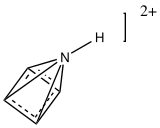
The original argument was based on cyclopentadienyl anion and its symmetric coordination to RC3+ to achieve six coordination for one carbon. Morphing C to the iso-electronic Ngets one to the ligand RN4+ and this can now be coordinated to the di-anion of cyclobutadiene, also iso-electronic in the 6π sense to cyclopentadienyl mono-anion.

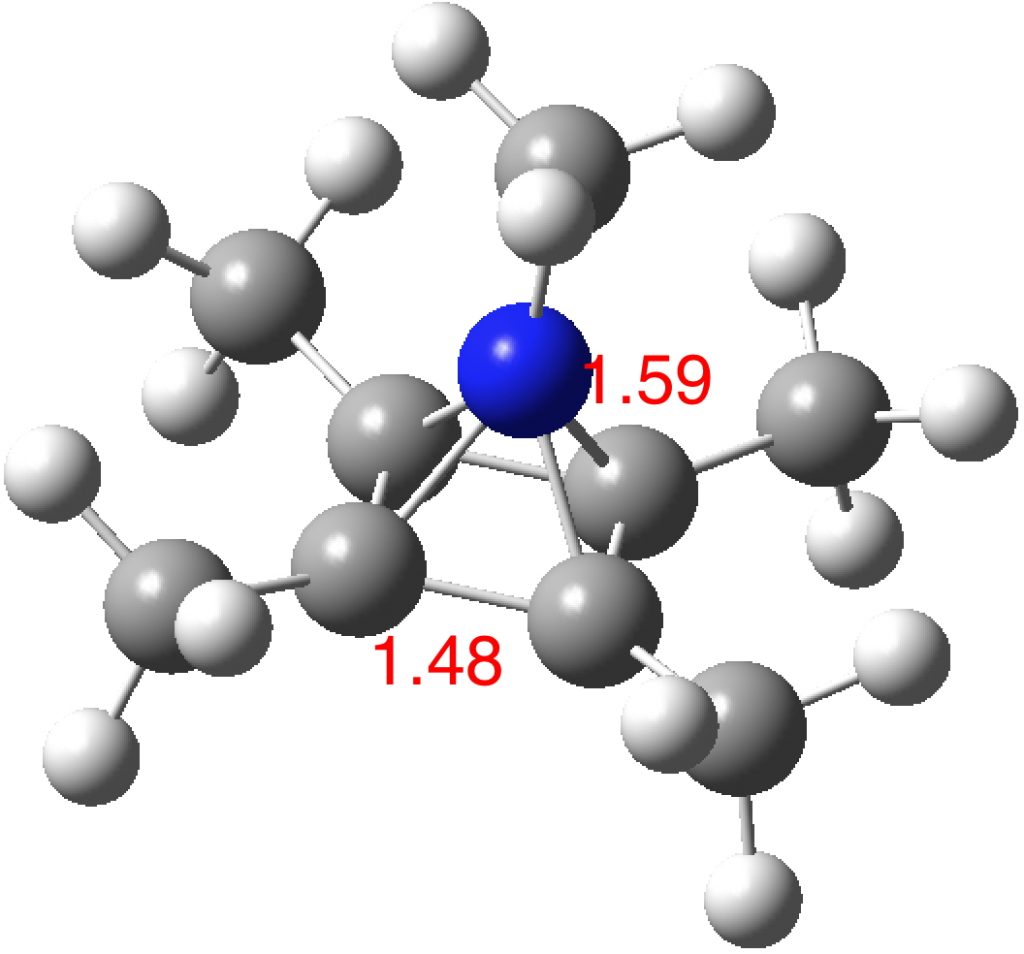
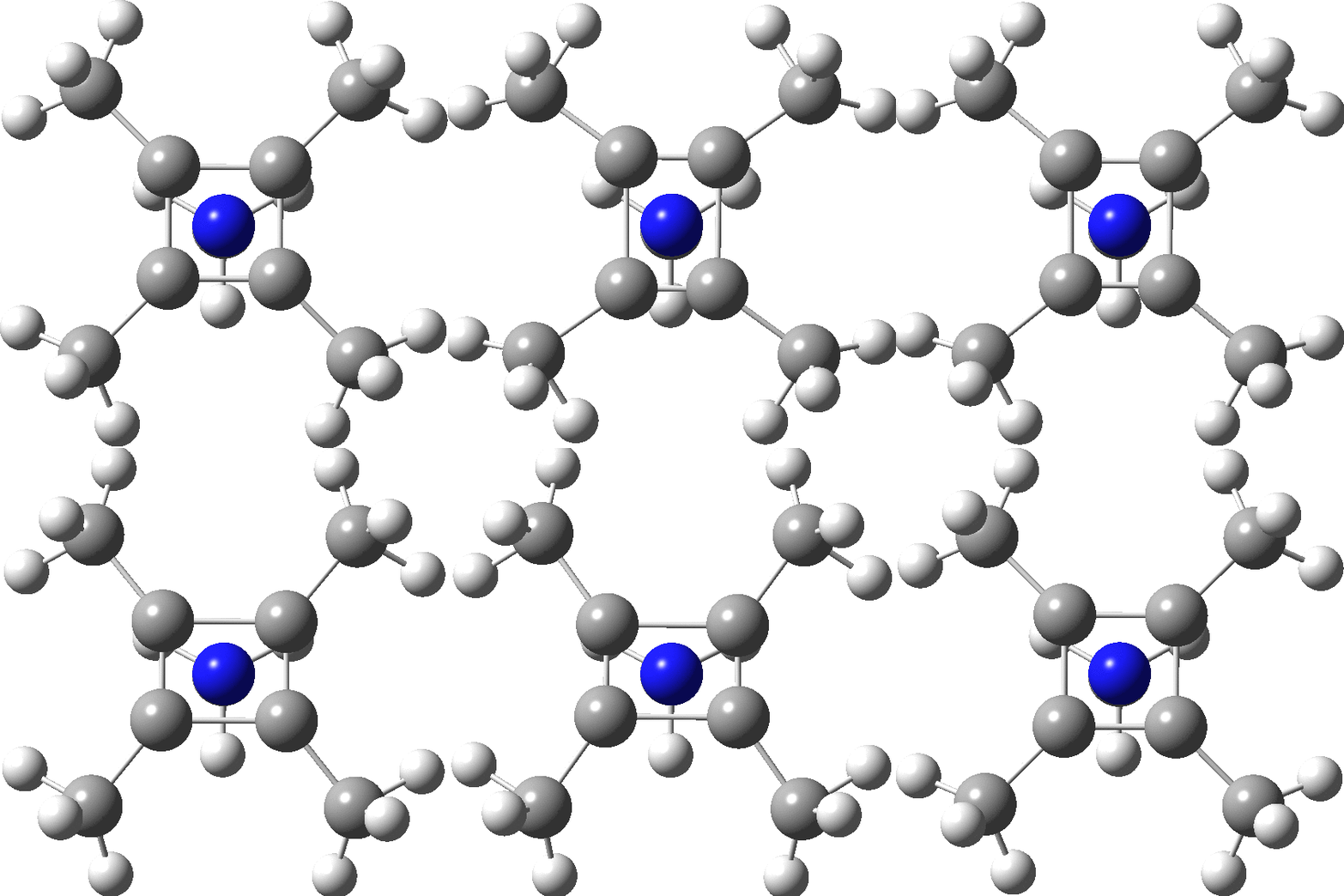
The optimised structure of the methylated system (ωB97XD/Def2-TZVPP) as shown below (DOI: 10.14469/hpc/2348) is a true minimum and reveals a 5-coordinate nitrogen. It is the dication of an isomer of pentamethyl pyrrole.

One of the normal modes for this molecule is the so-called Kekule vibration, which elongates two C-C bonds and shortens the other two. The value (1266 cm-1) is typical of aromatic systems.

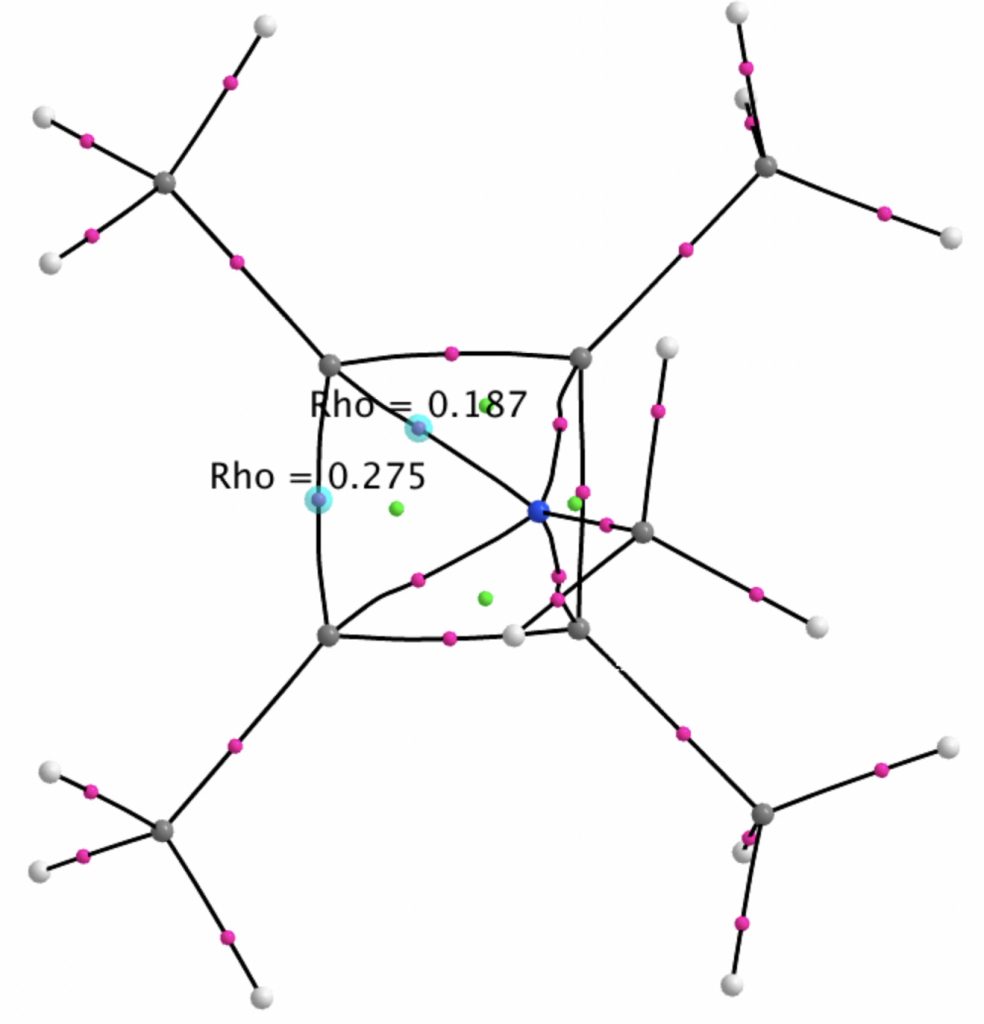
A QTAIM analysis shows four line (bond) critical points (LCP, magenta) connecting the 4-carbon base of the system and four further LCPs connecting each carbon to the nitrogen. Significantly, the four carbons are not themselves characterised by a ring critical point (RCP, green), these being confined to the rings formed between two carbons and the nitrogen. The value of the electron density ρ(r) at the basal bond is typical of a single bond; the value to the nitrogen indicates the bond has a smaller order.

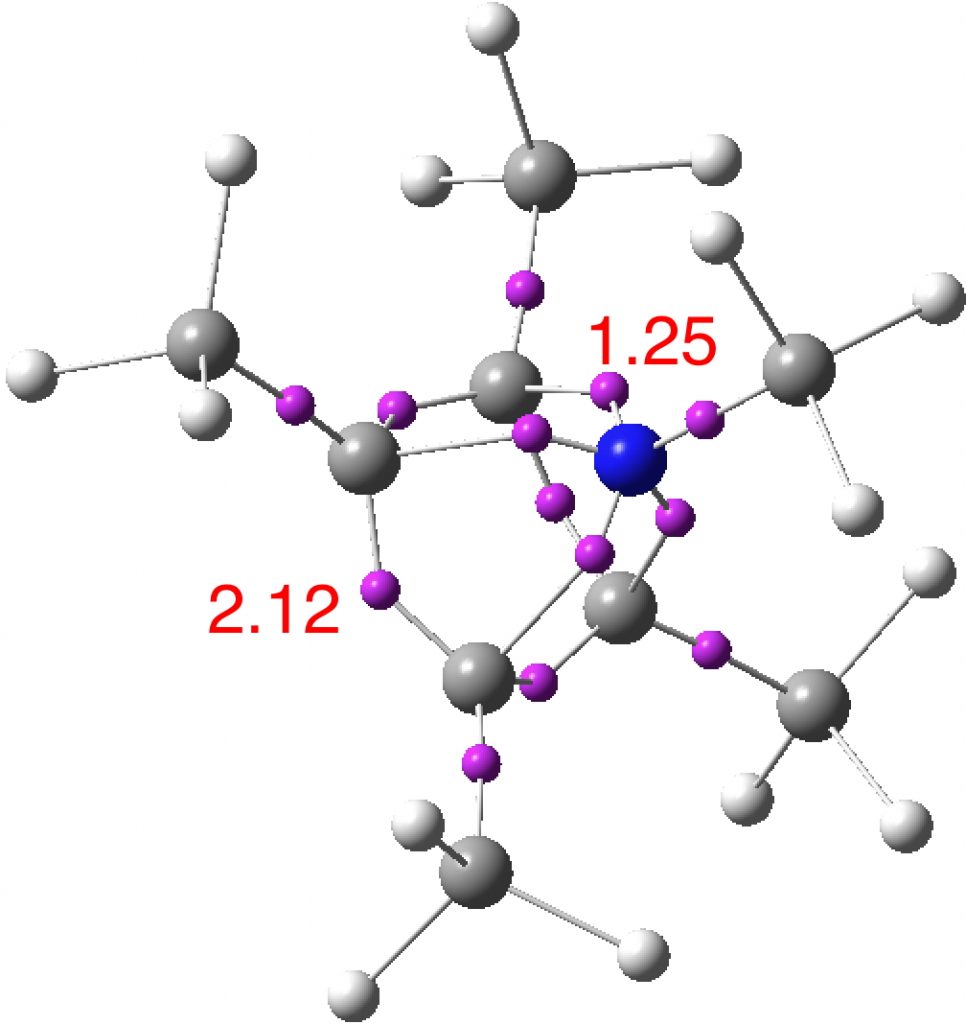
An ELF (electron localisation function) analysis is similar, showing basal C-C electron basins of 2.12e and C-N basins of 1.25e.

In hunting for examples of hyper-coordination in the second row of the periodic table, the focus has tended largely towards identifying carbon examples. Perhaps that might now right-shift to the adjacent element nitrogen?

References

  1. M. Malischewski, and K. Seppelt, "Crystal Structure Determination of the Pentagonal‐Pyramidal Hexamethylbenzene Dication C<sub>6</sub>(CH<sub>3</sub>)<sub>6</sub><sup>2+</sup>", Angewandte Chemie International Edition, vol. 56, pp. 368-370, 2016. https://doi.org/10.1002/anie.201608795
  2. U. Doerfler, J.D. Kennedy, L. Barton, C.M. Collins, and N.P. Rath, "Polyhedral azadirhodaborane chemistry. Reaction of [{RhCl2(η5-C5Me5) }2] with [EtH2NB8H11NHEt] to give contiguous ten-vertex [1-Et-6,7-(η5-C5Me5)2- closo-6,7,1-Rh2NB7H7 ]", Journal of the Chemical Society, Dalton Transactions, pp. 707-708, 1997. https://doi.org/10.1039/a700132k
  3. L. Schneider, U. Englert, and P. Paetzold, "Die Kristallstruktur von Aza‐<i>closo</i>‐decaboran NB<sub>9</sub>H<sub>10</sub>", Zeitschrift für anorganische und allgemeine Chemie, vol. 620, pp. 1191-1193, 1994. https://doi.org/10.1002/zaac.19946200711
  4. M. Mueller, U. Englert, and P. Paetzold, "X-ray Crystallographic Structure of a 7-Aza-nido-undecaborane Derivative: (NB2tBu3H)NB10H12", Inorganic Chemistry, vol. 34, pp. 5925-5926, 1995. https://doi.org/10.1021/ic00127a034

Pyrophoric metals + the mechanism of thermal decomposition of magnesium oxalate.

Sunday, March 19th, 2017

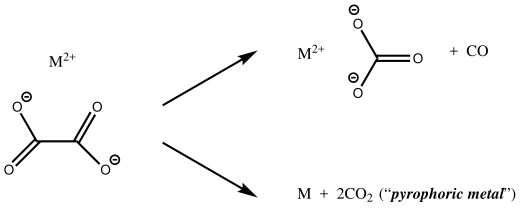
A pyrophoric metal is one that burns spontaneously in oxygen; I came across this phenomenon as a teenager doing experiments at home. Pyrophoric iron for example is prepared by heating anhydrous iron (II) oxalate in a sealed test tube (i.e. to 600° or higher). When the tube is broken open and the contents released, a shower of sparks forms. Not all metals do this; early group metals such as calcium undergo a different reaction releasing carbon monoxide and forming calcium carbonate and not the metal itself. Here as a prelude to the pyrophoric reaction proper, I take a look at this alternative mechanism using calculations.


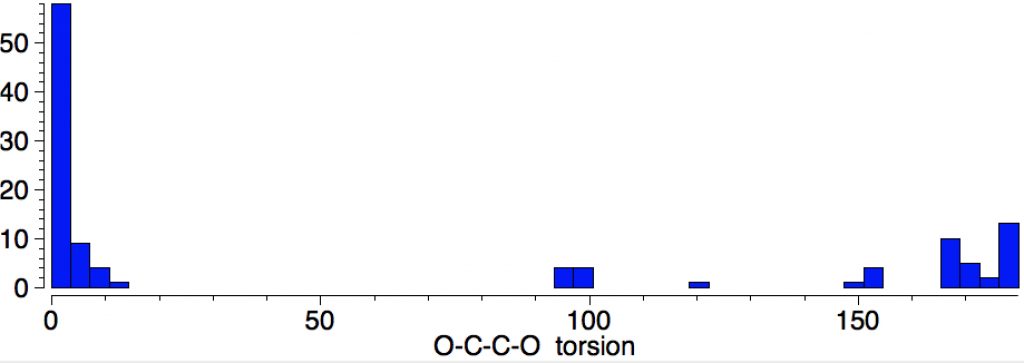
There are ~60 crystal structures of metal oxalates, of which several are naturally occurring minerals (Fe, humboldtine[1], Ca, Weddellite[2], Li[3], Na[4], K[5], Cs[6]. The natural geometry of the oxalate di-anion is planar (torsion 0 or 180°) but a small number are twisted such as the caesium oxalate.

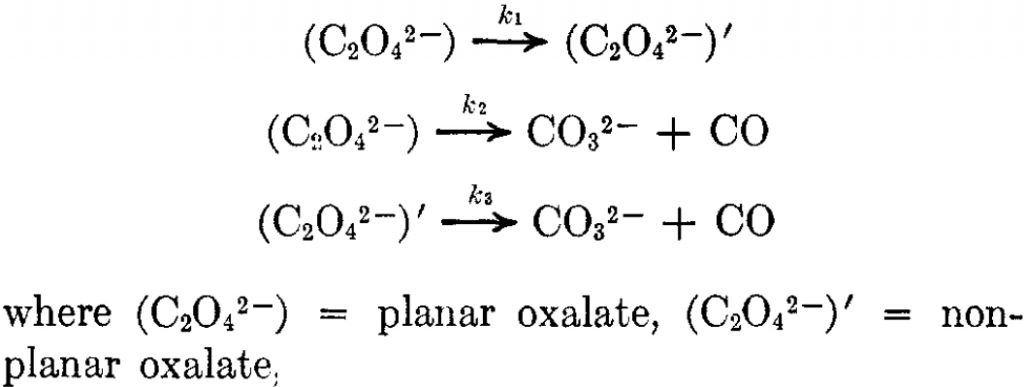
The kinetics of pyrolysis of a number of metal  oxalates were studied some years ago (Ca[7], Li[8]) indicating barriers ranging from 53-68 kcal/mol. One proposed mechanism is as shown in this article.[7]

It was surmised from the kinetic analysis that the k1 activation step (rotation about the C-C bond from planar to twisted) was ~12 ± 20 kcal/mol, whilst steps k2 or k3 had the much higher activation energy noted above. A search (of Scifinder) for quantum mechanical “reality checks” of this mechanism revealed a blank and so I apply such a check here using Mg as the metal.

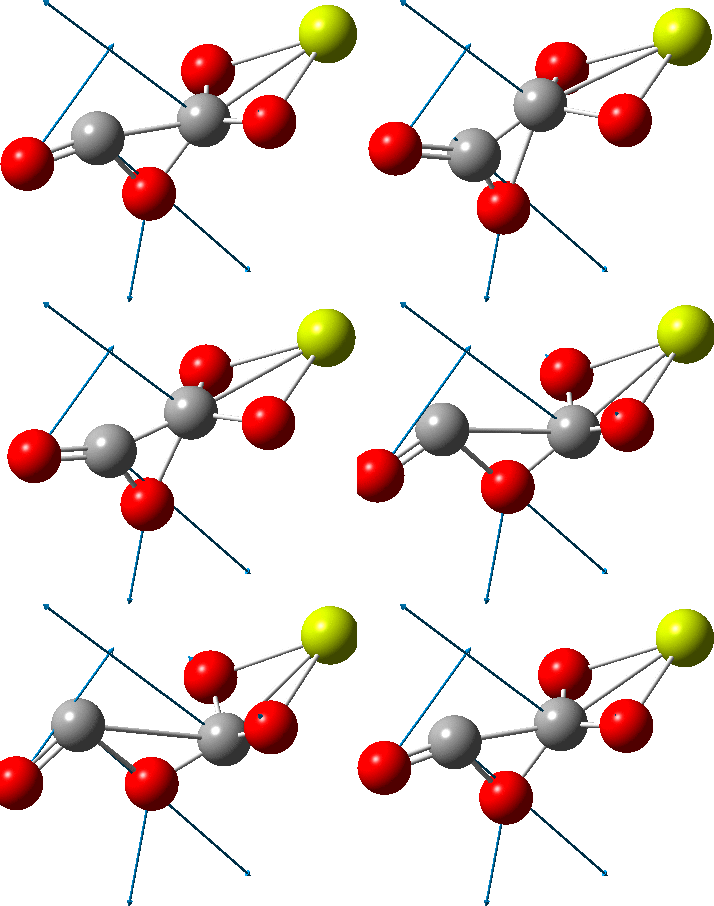
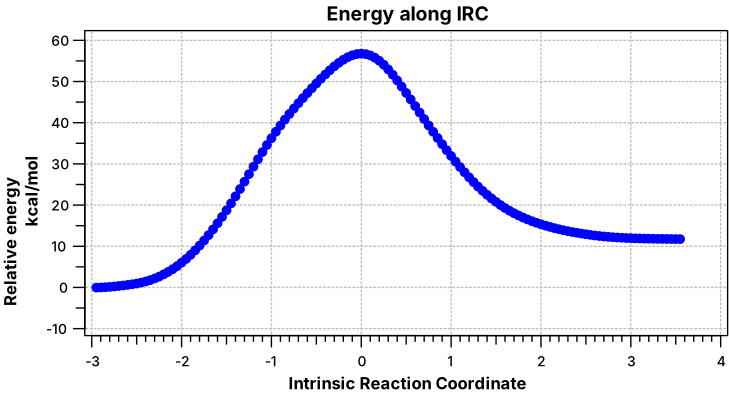
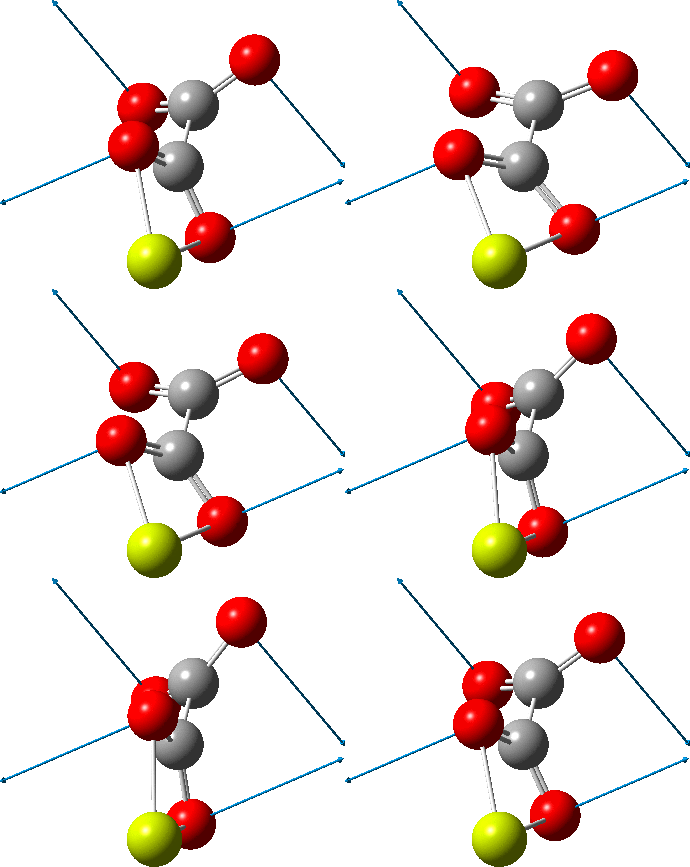
The carbonyl extrusion step (ωB97XD/Def2-TZVPPD/SCRF=water, DOI: 10.14469/hpc/2320) was studied with a water solvent field applied in an effort to mimic the solid state crystal structure of the species as a better representation of the ionic lattice than a pure vacuum calculation.An IRC (intrinsic reaction coordinate, DOI: 10.14469/hpc/2324) reveals the start-point geometry still has a very small negative force constant (-38 cm-1, DOI: 10.14469/hpc/2321) which now corresponds to a small rotation about the C-C bond to give a C2-symmetric conformation:

But the barrier for this process is tiny and nothing like the ~12 ± 20 kcal/mol inferred from the kinetic analysis. Perhaps most of the incentive to pack into a totally planar geometry comes from the interactions in the ionic lattice. The calculated free energy barrier (ΔG298 54.7 kcal/mol, ΔG755 55.1 kcal/mol) is within the reported measured range.
The mechanism for production of pyrophoric metal itself is likely to be far more complex, involving (inter alia) electron transfer from oxygen to metal. If I find anything I will report back here.

References

  1. T. Echigo, and M. Kimata, "Single-crystal X-ray diffraction and spectroscopic studies on humboldtine and lindbergite: weak Jahn–Teller effect of Fe2+ ion", Physics and Chemistry of Minerals, vol. 35, pp. 467-475, 2008. https://doi.org/10.1007/s00269-008-0241-7
  2. C. Sterling, "Crystal structure analysis of weddellite, CaC2O4.(2+x)H2O", Acta Crystallographica, vol. 18, pp. 917-921, 1965. https://doi.org/10.1107/s0365110x65002219
  3. https://doi.org/
  4. G.A. Jeffrey, and G.S. Parry, "The Crystal Structure of Sodium Oxalate", Journal of the American Chemical Society, vol. 76, pp. 5283-5286, 1954. https://doi.org/10.1021/ja01650a007
  5. Dinnebier, R.E.., Vensky, S.., Panthofer, M.., and Jansen, M.., "CCDC 192180: Experimental Crystal Structure Determination", 2003. https://doi.org/10.5517/cc6fzcy
  6. Dinnebier, R.E.., Vensky, S.., Panthofer, M.., and Jansen, M.., "CCDC 192182: Experimental Crystal Structure Determination", 2003. https://doi.org/10.5517/cc6fzf0
  7. F.E. Freeberg, K.O. Hartman, I.C. Hisatsune, and J.M. Schempf, "Kinetics of calcium oxalate pyrolysis", The Journal of Physical Chemistry, vol. 71, pp. 397-402, 1967. https://doi.org/10.1021/j100861a029
  8. D. Dollimore, and D. Tinsley, "The thermal decomposition of oxalates. Part XII. The thermal decomposition of lithium oxalate", Journal of the Chemical Society A: Inorganic, Physical, Theoretical, pp. 3043, 1971. https://doi.org/10.1039/j19710003043

VSEPR Theory: A closer look at bromine trifluoride, BrF3.

Tuesday, February 14th, 2017

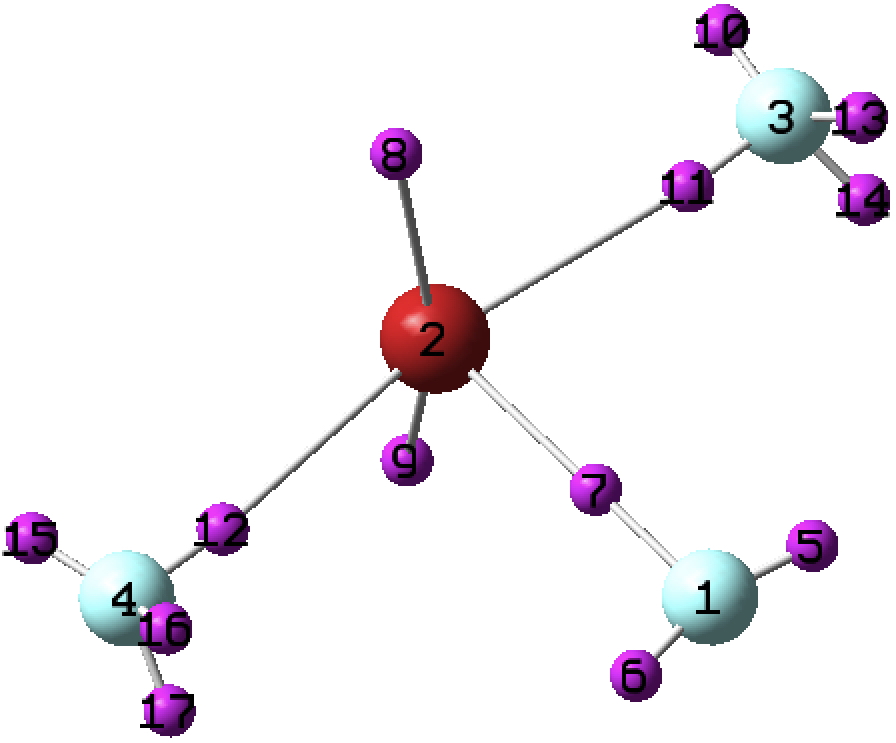
I analysed the bonding in chlorine trifluoride a few years back in terms of VSEPR theory. I noticed that several searches on this topic which led people to this post also included a query about the differences between it and the bromine analogue. For those who posed this question, here is an equivalent analysis.

The calculation is done at the same level as before (ωB97XD/6-311++D(d,p)) for consistency (DOI: 10.14469/hpc/2160)

Click for 3D

  1. Basins 8 and 9 have electron populations of 2.33e (2.07e for the chlorine analogue) with an angle subtended at Br of 159°. The greater electron population and hence electron pair repulsion has the effect of increasing the angle compared to Cl (154°). The coordination is even more square pyramidal than with Cl.
  2. Basin 7 has a population of 0.73e, this time less than Cl (0.87e). 
  3. Basins 11 and 12 are 0.82e. With Cl, this single basin was replaced by a pair of split basins, each pair summing to 0.91e (the same effect happens with F-F). The angle 4-2-3 is 172° (174° for Cl) which suggests a slightly increased 2-electron-3-centre interaction between e.g. atoms 1-4 or 1-3 compared to Cl.
  4. The total basin count surrounding the Br is therefore 7.03e, compared to 6.84e with Cl, which suggests Br is slightly more electronegative in this context than Cl.

Bromine has a habit of springing surprises, but not so much in this example.

Na2He: a stable compound of helium and sodium at high pressure.

Saturday, February 11th, 2017

On February 6th I was alerted to this intriguing article[1] by a phone call, made 55 minutes before the article embargo was due to be released. Gizmodo wanted to know if I could provide an (almost) instant quote. After a few days, this report of a stable compound of helium and sodium still seems impressive to me and I now impart a few more thoughts here.

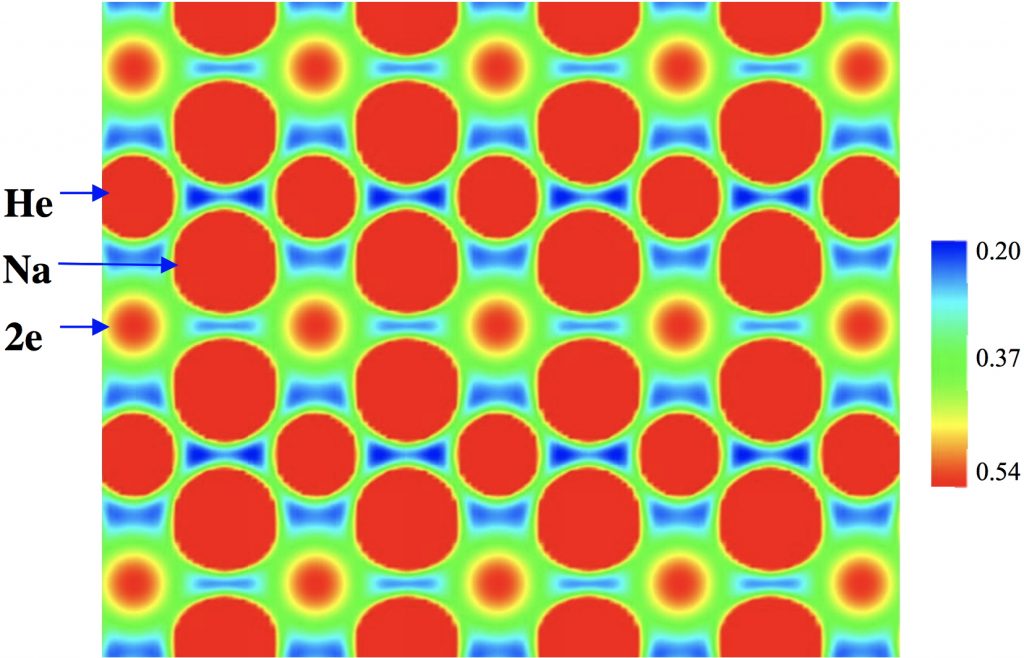
The discovery originates from 17 authors based in 17 different institutions, an impressive illustration of global science and cooperation. I illustrate with this diagram, to be found not in the main article body but in its supporting information and for which the caption reads:


Computed charge density (eÅ-3) of Na2He at 300 GPa, plotted in the [110] plane of the conventional cell. The color bar gives the scale.

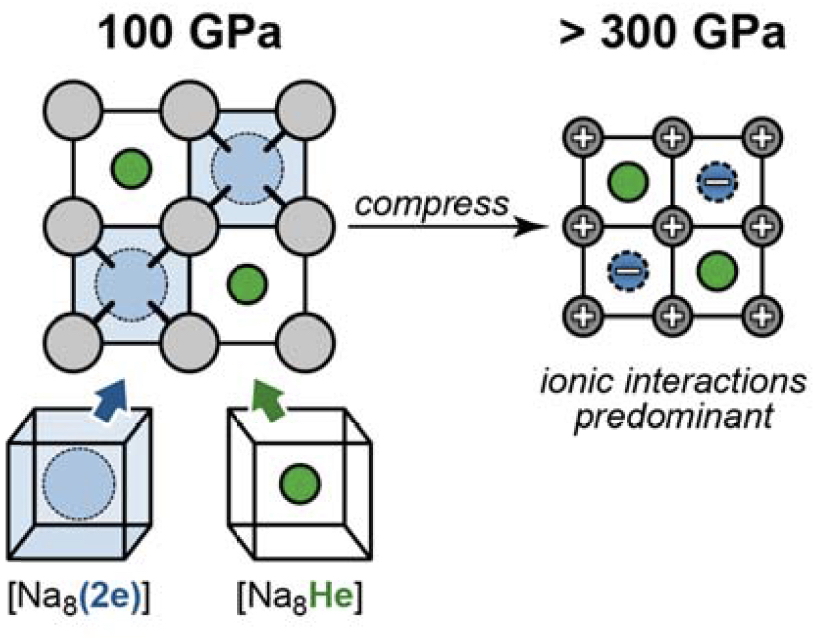
The nuclei carry of course the greatest charge density, but the density labelled “2e” is not nuclear-centered. This is typical of species known as electrides, where positive cations are associated with just electrons acting as the counter-anion and about which there was an extensive debate earlier on this blog. There is much discussion in the article[1] about the essential role of the He atoms in bringing about the formation of such an electride, an effect that is summarised in a second diagram also found in the supporting information:

I found myself thinking that it would be great to have the first diagram represented as a movie, evolving as the pressure is increased from say ambient to 300 GPa, and presumably showing the “2e” feature (which means diamagnetic electrons) forming as the pressure increases. Would their evolution be abrupt (a step change) or gradual as the pressure increases and the interatomic distances all decrease? As I understand it, this chemical phenomenon is due not so much to the usual coulombic attraction between positive nuclei and negative charge density from the electronic wavefunction leading to e.g. covalent bonds, but to electron repulsions induced by decreasing nuclear separations resulting in electride-like ionisation and hence electron localisation into the “interstitial cavities” of the lattice. Without pressure, you would just have sodium and helium atoms!

The urge to obtain this intriguing electronic wavefunction for myself now appeared (wavefunctions are rarely if ever included in supporting information). To do this you must have atom coordinates available, But such data was not to be found in the supporting information. It was eventually tracked down (by a crystallographer; thanks Andrew!) to the caption in Figure 2.

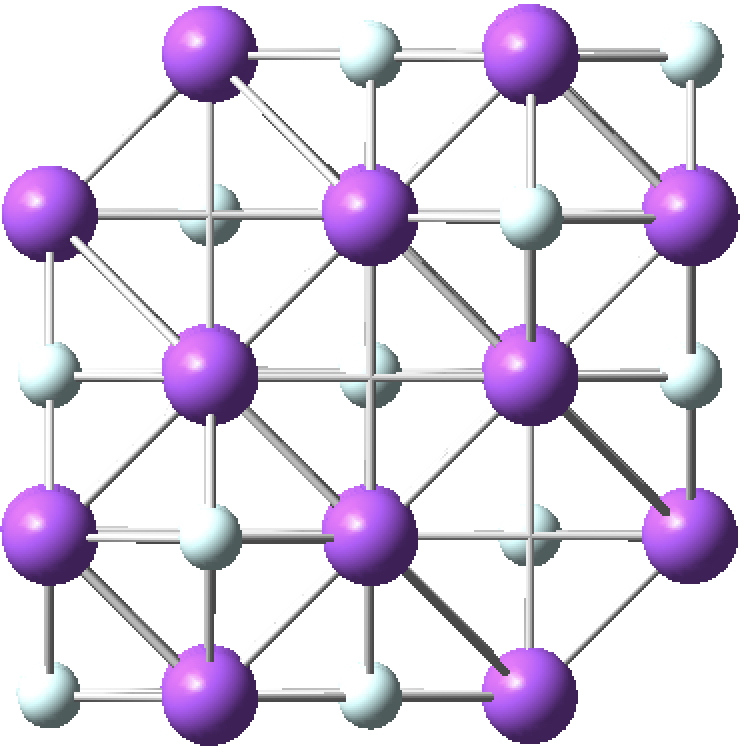
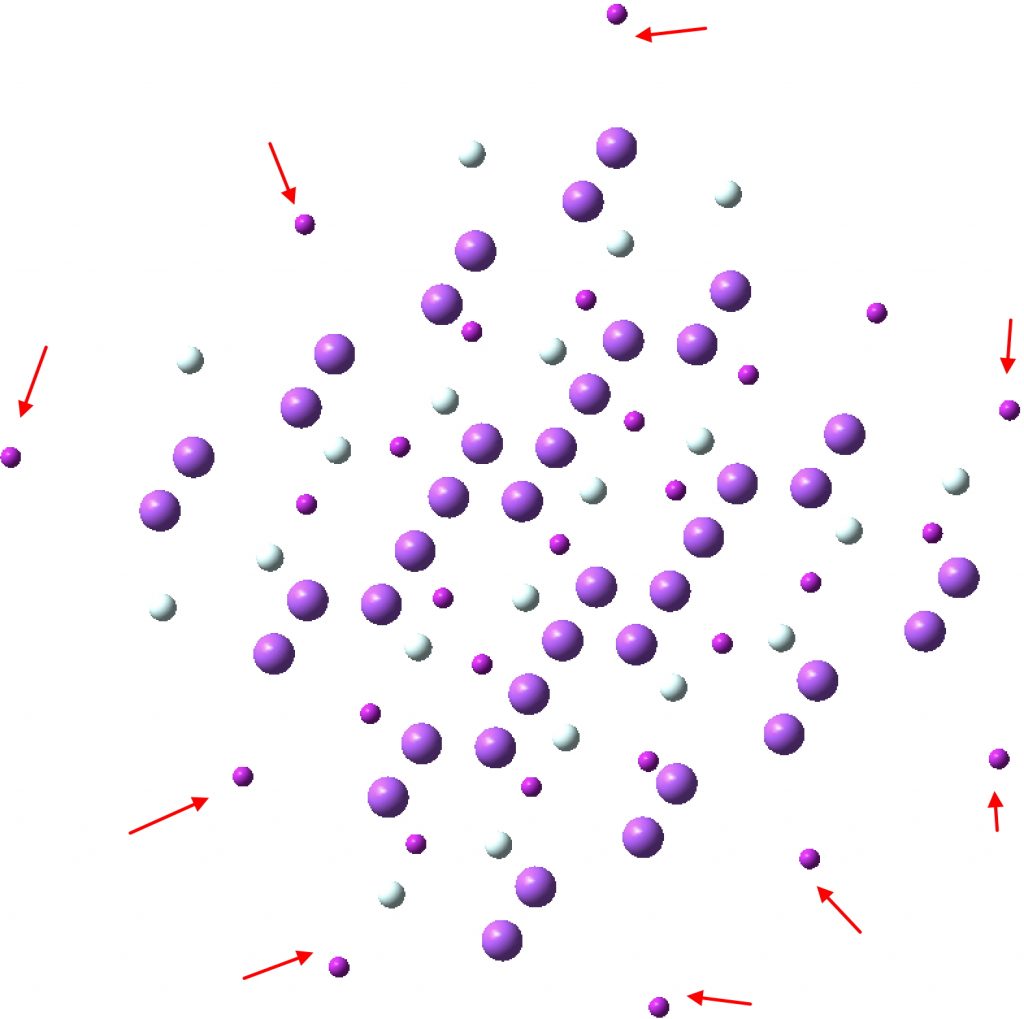
However, you probably do need to be a crystallographer to convert this data into a set of coordinates. This was done and is here deposited as a CIF file for you to play with if you wish (DOI:10.14469/hpc/2154)[2]. I have reduced the packing of the unit cell obtained from this CIF file (198 atoms) to just 60 and you can enjoy them by clicking on the diagram below. I should point out that if one uses a program that can recognise the periodic lattice such as Crystal (used in the article discussed here), there is no need to make such reductions, but in this instance I wanted to use a program such as Gaussian in discrete (non-periodic) mode, for which the calculation (B3LYP/Def2-SVPD) has DOI: 10.14469/hpc/2156[3] and where you can also find a wavefunction file to play with if you wish.

Click for 3D model

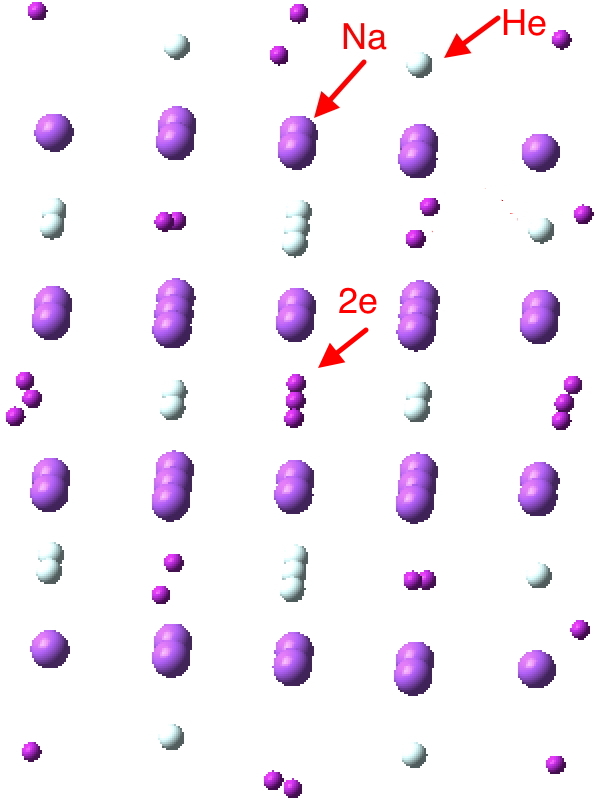
An ELF analysis for this non-periodic wavefunction looks as below. The ELF basins labelled “2e” located in the centre of the cube show an integrated electron population of ~1.9e and correspond to the localised electron pairs noted in the article above.

Click for 3D

The basins on the boundaries of this non-periodic unit show reduced integrations (red arrows below, 0.08 – 1.7e) and are artefacts of the non-periodic approximation introduced.

The ionization into an electride is brought about by the close proximity of the atoms as induced by high pressure. Releasing the pressure would allow the ionized electrons to re-attach themselves to the valence shell of the sodium atoms, thus destroying the unique properties of the system. It is certainly true that this system challenges our normal concepts of what a molecule is. The presence of He is essential and yet its electrons are hardly involved in the re-organised wavefunction. I cannot wait for more examples to be discovered!


To meet the 55 minute deadline, I was given about 15 minutes thinking time!

Instant responses on social media now seem a sine qua non of the political world, so why not the scientific one?!

References

  1. X. Dong, A.R. Oganov, A.F. Goncharov, E. Stavrou, S. Lobanov, G. Saleh, G. Qian, Q. Zhu, C. Gatti, V.L. Deringer, R. Dronskowski, X. Zhou, V.B. Prakapenka, Z. Konôpková, I.A. Popov, A.I. Boldyrev, and H. Wang, "A stable compound of helium and sodium at high pressure", Nature Chemistry, vol. 9, pp. 440-445, 2017. https://doi.org/10.1038/nchem.2716
  2. H. Rzepa, "Na2He: a stable compound of helium and sodium at high pressure.", 2017. https://doi.org/10.14469/hpc/2154
  3. H. Rzepa, "He20Na40", 2017. https://doi.org/10.14469/hpc/2156

Braiding a molecular knot with eight crossings.

Friday, January 20th, 2017

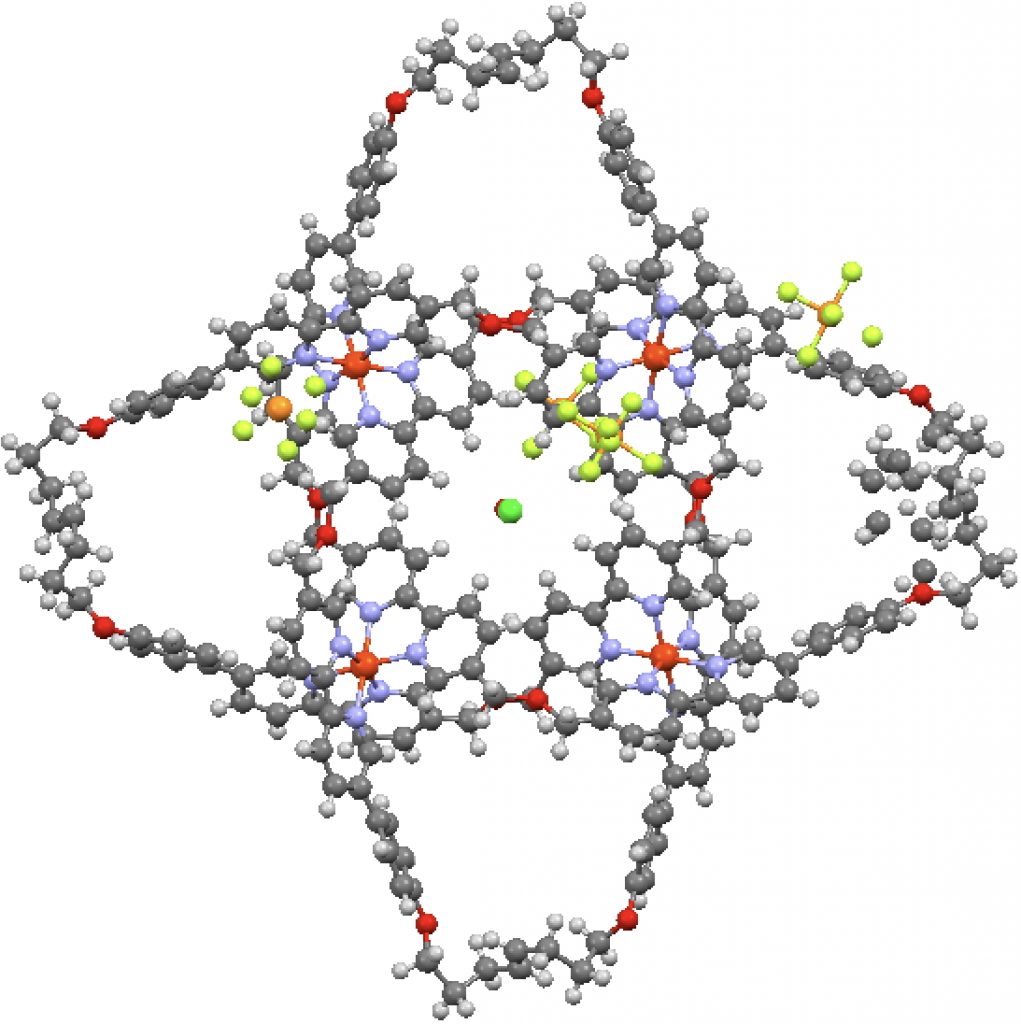
This is one of those posts of a molecule whose very structure is interesting enough to merit a picture and a 3D model. The study[1] reports a molecular knot with the remarkable number of eight crossings.

The DOI for the 3D model is 10.5517/CCDC.CSD.CC1M85Y0 (or click on the image above). Such topology intersects with work we did a few years back on high-order crossings in fully conjugated π-systems[2], which were then illustrated[3] with hypothetical charged higher order annulenes exhibiting linking numbers Lk of up to 6π. A fully π-conjugated system, also with a linking number in the π-framework of 6π but in the form of a trefoil braid was even suggested on this blog, with a common feature of a central templating atom (a cation rather than an anion). Another example of a previously reported pentadecanuclear manganese metallacycle[4] was also assigned a linking number of 6π.

The molecule above is not completely π-conjugated around the braid and so special properties related to aromaticity and associated ring currents resulting from the topology of the cyclic conjugation[5] are not expected to accrue in the eight-crossing molecular braid[1]. We might also look forward to examples of the characterisation of braids with an odd-number of crossings such as trefoils, pentafoils, heptafoils, etc, as associated with the name Möbius.

References

  1. J.J. Danon, A. Krüger, D.A. Leigh, J. Lemonnier, A.J. Stephens, I.J. Vitorica-Yrezabal, and S.L. Woltering, "Braiding a molecular knot with eight crossings", Science, vol. 355, pp. 159-162, 2017. https://doi.org/10.1126/science.aal1619
  2. S.M. Rappaport, and H.S. Rzepa, "Intrinsically Chiral Aromaticity. Rules Incorporating Linking Number, Twist, and Writhe for Higher-Twist Möbius Annulenes", Journal of the American Chemical Society, vol. 130, pp. 7613-7619, 2008. https://doi.org/10.1021/ja710438j
  3. C.S. Wannere, H.S. Rzepa, B.C. Rinderspacher, A. Paul, C.S.M. Allan, H.F. Schaefer, and P.V.R. Schleyer, "The Geometry and Electronic Topology of Higher-Order Charged Möbius Annulenes", The Journal of Physical Chemistry A, vol. 113, pp. 11619-11629, 2009. https://doi.org/10.1021/jp902176a
  4. H.S. Rzepa, "Linking Number Analysis of a Pentadecanuclear Metallamacrocycle: A Möbius-Craig System Revealed", Inorganic Chemistry, vol. 47, pp. 8932-8934, 2008. https://doi.org/10.1021/ic800987f
  5. P.L. Ayers, R.J. Boyd, P. Bultinck, M. Caffarel, R. Carbó-Dorca, M. Causá, J. Cioslowski, J. Contreras-Garcia, D.L. Cooper, P. Coppens, C. Gatti, S. Grabowsky, P. Lazzeretti, P. Macchi, . Martín Pendás, P.L. Popelier, K. Ruedenberg, H. Rzepa, A. Savin, A. Sax, W.E. Schwarz, S. Shahbazian, B. Silvi, M. Solà, and V. Tsirelson, "Six questions on topology in theoretical chemistry", Computational and Theoretical Chemistry, vol. 1053, pp. 2-16, 2015. https://doi.org/10.1016/j.comptc.2014.09.028