Mechanism of the dimerisation of Nitrosobenzene.

June 14th, 2025

I am in the process of revising my annual lecture to first year university students on the topic of “curly arrows”. I like to start my story in 1924, when Robert Robinson published the very first example[1] as an illustration of why nitrosobenzene undergoes electrophilic bromination in the para position of the benzene ring. I follow this up by showing how “data mining” can be used to see if this supports his assertion. I have used the very latest version of the CSD crystal structure database to update the version originally posted here in 2020.[2]

I then discuss some possible reasons why Robinson might have thought that bromination goes in the para position, including the observation[3] that nitrosobenzene is in equilibrium with its dimer, and that such a dimer might be expected to more reactive towards electrophiles than the “deactivated” monomer.

Not part of the main lecture, but held in reserve for any questions at the end, is the following curly arrow pushing for the dimerisation.
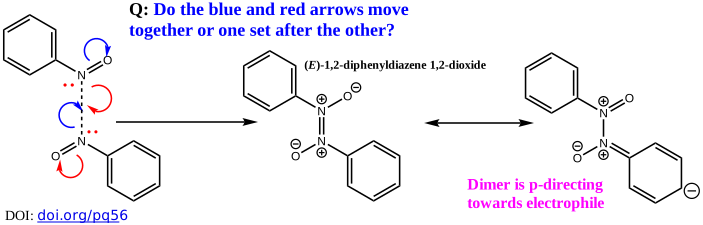
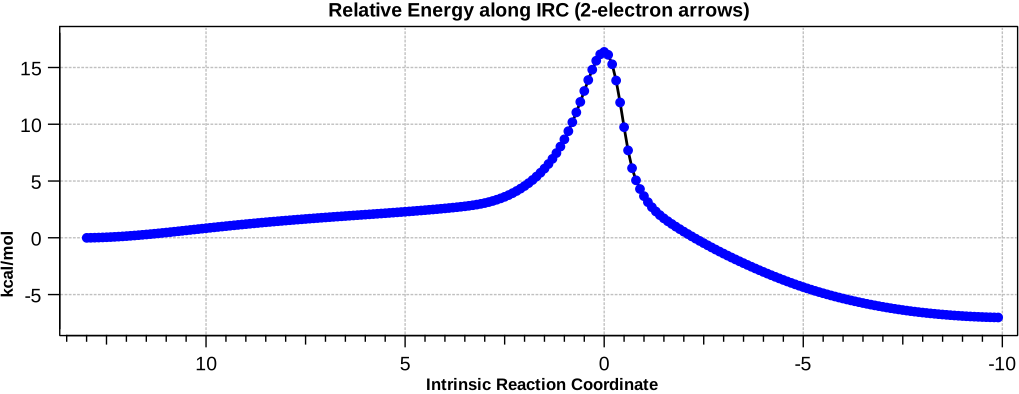
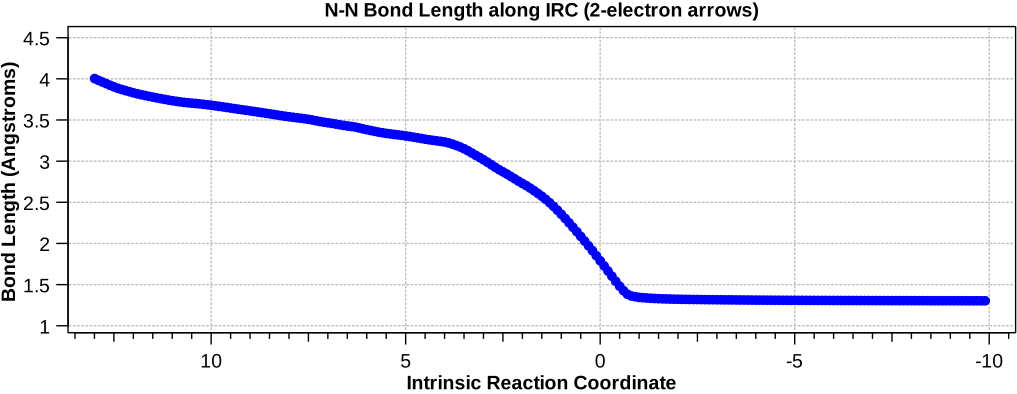
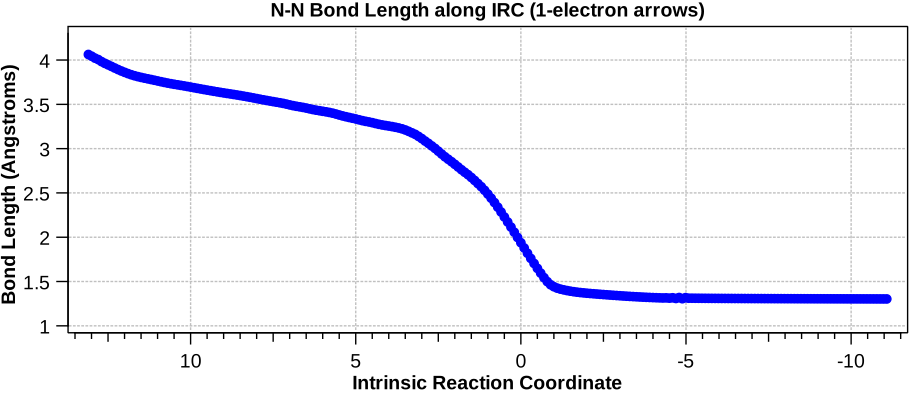
This raises a simple question – do both the red and blue arrows shown below participate at the same time, or do they go sequentially? Time then for some calculation to answer this last question. An ωB97XD/Def2-TZVPP/SCRF=chloroform calculation[4] using a closed shell wavefunction (to correspond to two-electron curly arrows) appears to show a smooth reaction profile. The N-N bond length also converges from no bond to a double bond shortly after the transition state (NN = 1.3Å) without anything intermediate (this for the (Z)-stereochemical isomer, not the one shown above and which will be discussed later). The reported activation free energy for this process ΔG198 is 15.7 kcal/mol[3] whilst the calculated value by this method is 25.5 kcal/mol. Even allowing for a concentration effect (1M) and quasi-harmonic corrections to the free energy, it is still 23.9 kcal/mol.
In a previous post[5] when an overly large barrier was computed, one reason is that the wavefunction might have “biradical” character and that the appropriate curly arrows might not be the appropriate two electron variety at all, but instead one-electron ones, as shown below.
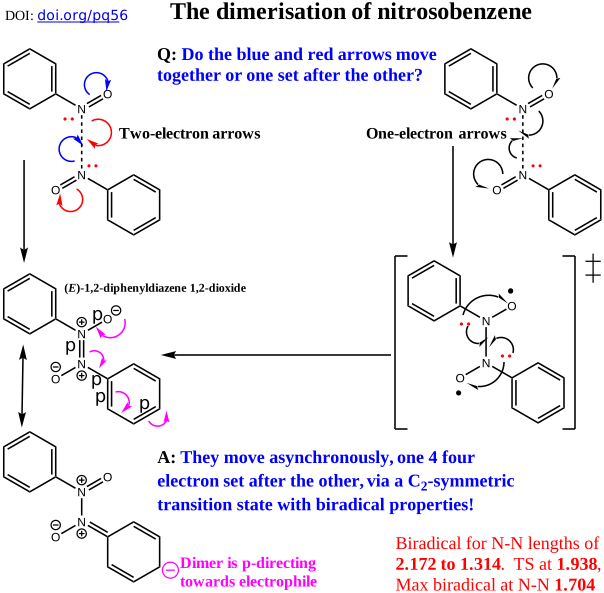

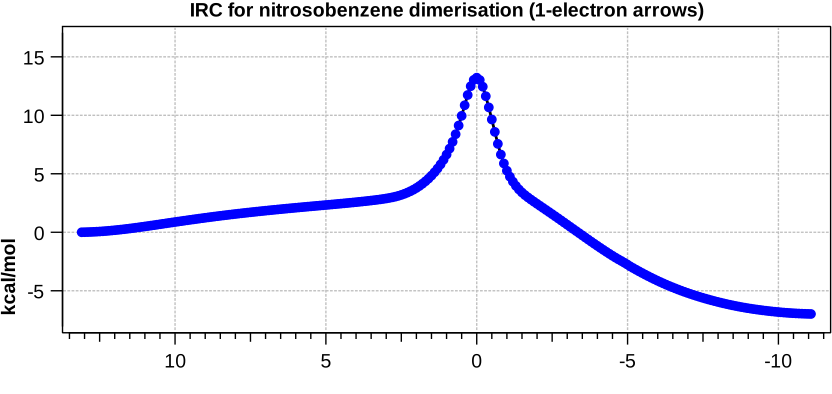
The degree of biradical character is given by the spin-expectation operator <S2>, which has a value of 0.0 for no biradical character and 1.0 for a pure biradical. This time the transition state for the dimerisation is calculated to have a value of <S2> = 0.5418 and ΔG198 is now calculated as 21.8 kcal/mol (20.3 with quasi-harmonic corrections).

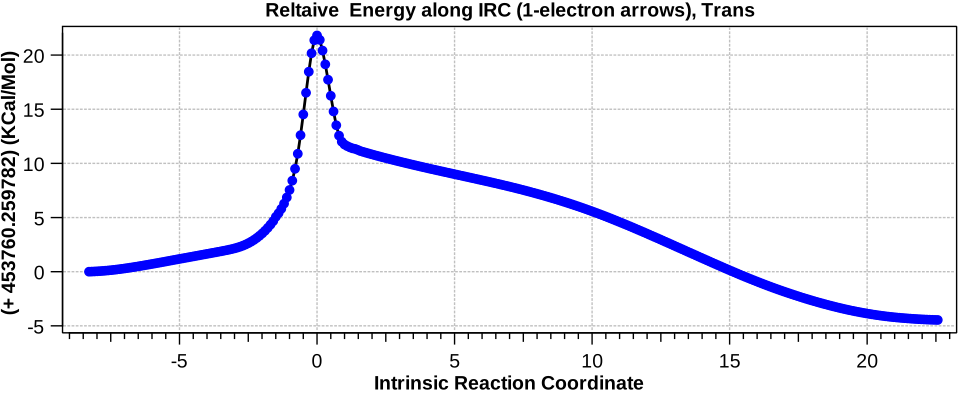
The energy and N-N bond length profiles for the reaction coordinate using “one-electron” curly arrows are shown below, the former being around 4 kcal/mol lower than for the two-electron arrows.
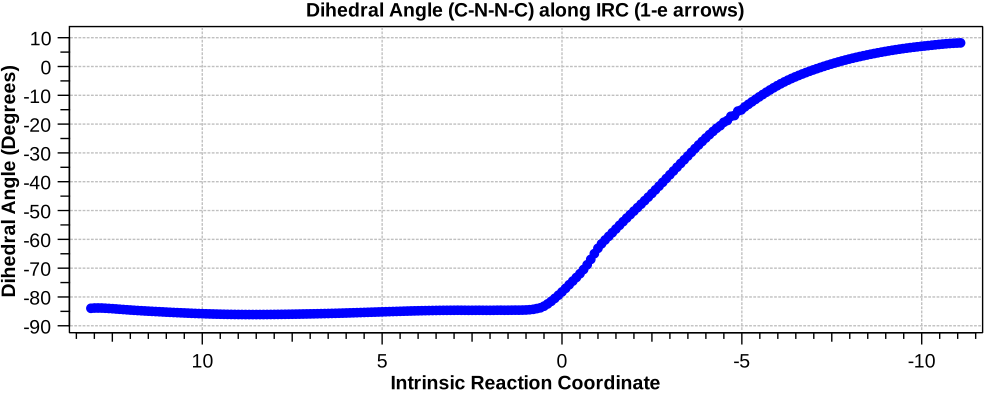
The dihedral at the central C-N-N-C bond shows it almost entirely twisted at the transition state (as might befit a biradical) and then a smooth rotation to co-planarity (as befits a double bond) as the second bond forms.
Because the system has C2-symmetry and importantly no plane of symmetry, the π and σ electrons are now allowed to mix together and this can be seen in the two (equivalent) orbital overlap models below at the transition state, each nitrogen lone pair managing to overlap constructively (blue with purple, red with orange, click on the diagram to load the orbitals) with the N-N π* orbital of the second nitrosobenzene.

Why is this simple system better described (energetically) by the use of one-electron arrows rather than two electron ones? A simple explanation might be that the electrons like to move consecutively simply to reduce the electron repulsion that the two-electron model would impose on it (reducing the electron correlation incurred in the process). It’s probably more complicated than this, but it shows a rare example where two-electron arrows are not the most appropriate for describing a chemical reaction.


Postscript. The 1-electron transition state (<S2> = 0.981) for formation of the trans stereochemical (E) isomer is higher than the cis (Z) by ~4 kcal/mol.

References

  1. "Forthcoming events", Journal of the Society of Chemical Industry, vol. 43, pp. 1295-1298, 1924. https://doi.org/10.1002/jctb.5000435208
  2. H. Rzepa, "The first ever curly arrows. Revisited with some crystal structure mining.", 2020. https://doi.org/10.59350/c6thp-wqe69
  3. K.G. Orrell, V. Šik, and D. Stephenson, "Study of the monomer‐dimer equilibrium of nitrosobenzene using multinuclear one‐ and two‐dimensional NMR techniques", Magnetic Resonance in Chemistry, vol. 25, pp. 1007-1011, 1987. https://doi.org/10.1002/mrc.1260251118
  4. H. Rzepa, "The mechanism of nitrosobenzene dimerisation", 2025. https://doi.org/10.14469/hpc/15278
  5. H. Rzepa, "Mechanism of the Masamune-Bergman reaction. Part 4. Why was the DFT energy barrier too high for the Calicheamicin reaction?", 2024. https://doi.org/10.59350/k4340-t6971
How many of the compounds that appear in the chemical literature are mentioned just once?

June 6th, 2025

Tom recently emailed me this question: Do you know how to find out how many of the compounds that appear in the chemical literature are mentioned just once? Intrigued, I first set out to find out how many substances, as Chemical Abstracts refers to the them, there were as of 5 June, 2025. There is a static estimate here (219 million), but to get the most up to date information, I asked CAS directly. They responded immediately (thanks Lee!) with 294,778,693 on the date mentioned above. It is not actually possible to answer the first question itself using CAS SciFinder, but again CAS came up with a value: “there are 113,383,649 substances in CAS Registry with only one CAplus citation” equivalent to  “38.5% of the current substances have only 1 reference.” I should add this estimate was qualified by “that can be misleading, since that includes salts, multicomponents, etc. But that’s a first pass.” I am actually impressed that as many as 61.5% are mentioned more than once, since before learning the answer, I had intuitively guessed that percentage as being much lower.

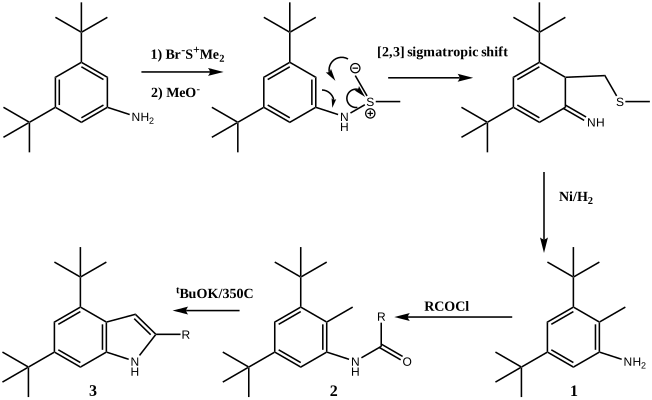
My mind then went back to the year 1974, when my PhD thesis was published.[1] As part of this research, I had managed to synthesize several sterically hindered indoles, culminating in the preparations of 2-Methyl-3,5-di-t-butylindole (3, R=Me)and  2,4,6-tri-t-butylindole (3, R=t-Butyl) by the route shown below (R= Me, t-Butyl –  a different route also gave the same product). I was very proud of this, since my research supervisor intimated to me a few years later that he had not believed I would succeed, on the grounds that making sterically hindered systems can be quite challenging! This work was published in a journal in 1975.[2]

Next, to find out what “impact” this work has had in the intervening 50 years. Well, a CAS SciFinder search revealed that 2-Methyl-3,5-di-t-butylindole (3, R=Me) was one of the 38.5% of the current substances that have only 1 reference, to just our own work. Zero impact then! But worse was to come –  2,4,6-tri-t-butylindole (3, R=t-Butyl) did not even have 1 reference – as far as CAS was concerned, it was an unknown compound! So too were the precursors 2-methyl-3,5-di-t-butylaniline (1) and the anilides 2 (R=Me, t-butyl).

The explanation can be found – at least  in part – by reading our article[2] and from  the computational modelling I did some forty years later.[3] We were measuring kinetic isotope effects on the rate of diazo-coupling of these indoles and had noted in the article that 2,4,6-tri-t-butylindole was so hindered it simply did not diazo-couple at any measurable rate. As a result, it was not included by us in the experimental section detailing its synthesis (we really should have). The absence of the anilides 2 in the CAS database is perhaps understandable, since they are merely precursors to the final cyclisation and these are not always characterised as fully as final products. I have retrieved the experimental information in my PhD thesis[1]  and reproduce it here so that you can see it as well.  I note that the anilide 2, R=Me) is mentioned only in passing (red text below) whilst for 2, R=t-Butyl, only an m.p. and mass spec weight are included.

I have now set myself the challenge of whether substances 1 and especially 3 (R=t-Butyl) at least can be retrospectively added to the CAS database. Watch this space!


2-Methyl-3,5-di-t-butylaniline.

Bromine (8g) was added to dimethylsulfide (3.2g) in dichloromethane (40 ml) at -46° (chorobenzene/N2 cooling bath) with no precautions taken to exclude moisture. A yellow crystalline precipitate of bromosulfonium bromide salt was formed. 3,5-Di-t-butyl aniline (10g) and triethylamine (5g) in dichoromethane (10 ml) were added dropwise, during the course of which the yellow salt dissolved and white crystals of triethylammonium bromide were deposited. After 2 hours at -46°, a solution of sodium (2.5g) in methanol (15 ml) was added, resulting in the production of a white precipitate of sodium bromide. After 8 hours at 20° the rearrangement was essentially complete and the solution was shaken with water, the solvent separated and evaporated to give a yellow oil (12g, 95%) which crystallised on standing. δ 1.30 (9H, s), 1.47 (9H, s) 2.13 (3H, s), 4.12 (4H, br), 6.53, 6.83 (2H, dd, JAB 2Hz). m/e 265 (M+), 218 (M+-CH3S+).

Raney nickel (prepared from 210g of 50% Na/Al alloy) was stirred with a solution of the 2-methylthiomethyl-3,5-di-t-butylaniline (32g) in ethanol (150 ml) at 70° for 1 hour. Filtration and evaporation of the solvent gave an oil which on distillation gave 2-methyl-3,5-di-t-butylaniline (66%), b.p. 126°/2.7 mm. δ 1.25, 1.38 (18H, d), 2.17 (3H, s), 3.27 (2H, s), 6.43, 6.75 (2H, dd, JAB 2Hz).

2-Methyl-3,5-di-t-butylindole.

2-Methyl-3,5-di-t-butylaniline (2g) in ether (20 ml) and triethylamine (1g) was mixed with acetyl chloride (1.2 g) in ether. After 1 hour the ether was washed with 0.01N HCl and the solvent removed to give the acetyl derivative (90%). The acetyl derivative was cyclised by potassium t-butoxide at 360° to give a melt which was boiled up with water. Ether extraction followed by crystallisation from hexane gave 2-methyl-4,6-di-t-butylindole (30%), m.p. 176°. νmax 3370, 1617, 1538, 849, 784, 755 cm-1. δ 1.35, 1.45 (18H, d), 2.37 (3H, s), 6.27 (1H, m), 6.97 (1H, s), 7.4 (1H, br, exchanges with D2O). λmax (log ε) 223 (4.35), 272 (3.95). m/e 243 (M+), 225 (M+-15). Found C, 81.95; H, 11.41; N, 6.19%. C15H25N requires C, 82.12; H, 11.48; N 6.38%.

2,4,6-Tri-t-butyl indole.

2-Methyl-3,5-di-t-butyl aniline was acylated with trimethyl acetyl chloride in ether to give the anilide (97%), m.p. (ether) 215°, m/e 303 (M+). Fusion with potassium t-butoxide at 350C gave on cooling a solid which was treated with water, giving brown crystals of the 1:1 t-butanol complex. These were dried and sublimed very slowly at 70° to give a colourless glass (25%), pure by nmr and tlc. νmax 3450, 3310, 2960, 2870, 1645, 1600, 1370, 800 cm-1. δ 1.30, 1.35, 1.48 (27H, t), 6.25 (1H, d, 2Hz), 6.95 (1H, d, 2Hz, 7.72 (1H, s, exchanges with D2O). m/e 285 (M+), 270 (M+-15). Found C, 84.12; H, 10.97; N, 4.76%. C20H31N requires C, 84.14; H, 10.94; N 4.90%.


References

  1. H.S. Rzepa, "Hydrogen transfer reactions of indoles", 1974. https://doi.org/10.14469/spiral/20860
  2. B.C. Challis, and H.S. Rzepa, "The mechanism of diazo-coupling to indoles and the effect of steric hindrance on the rate-limiting step", Journal of the Chemical Society, Perkin Transactions 2, pp. 1209, 1975. https://doi.org/10.1039/p29750001209
  3. H. Rzepa, "I've started so I'll finish. The mechanism of diazo coupling to indoles – forty (three) years on!", 2015. https://doi.org/10.59350/1jhn9-9v717

Cyclo-S6 (Hexathiane) – anomeric effects again!

June 1st, 2025

I thought I was done with exploring anomeric effects in small sulfur rings. However, I then realised that all the systems that I had described had an odd number of atoms and that I had not looked at any even numbered rings. Thus hexasulfur is a smaller (known) ring version of S8, the latter by far the best known allotrope of this element of course.

Its crystal structure[1] shows it has D3d symmetry, with six identical S-S bond lengths of 2.068Å. A MN15-L/Def2-TZVPP calculation[2] replicates this pretty well.

Since anomeric effects manifest in crystal structures by unequal bond lengths, at first sight it seemed unlikely that this ring could be shown to exhibit them. But wait, another conformation can be found, what in cyclohexane would be called the twist-boat. It is however around 12 kcal/mol higher in free energy than the stable form.[3] and has lower (chiral) D2 symmetry. This now shows two slightly shorter bonds and four slightly longer bonds. The anomeric NBO E(2) perturbation energies are a relatively modest 7.93 kcal/mol (S1Lp-S2-S6σ*) resulting in modest S1-S2 bond shortening and comensurate S2-S6 lengthening. By symmetry, three other identical effects manifest.

So these stereoelectronic effects CAN manifest in even-numbered rings, but only in this case as a higher energy conformer.

I also show O6, with C2 symmetry. As with O7 and O5 discussed previously[4] the anomeric effect promotes (partial) dissociation into three molecules of O2[5], but this process is not complete (computationally)  and weak partial bonds of ~1.997 and 2.06Å remain between the three O2 species, which are probably in fact artefacts of using a single-determinantal wavefunction. However it is fun to observe that the NBO E(2) terms are now (O1Lp-O5-O6σ*) 135 kcal/mol and the even larger (O2Lp-O3-O4σ*) 218 kcal/mol (tending to ∞ for a fully broken bond). These absurdly large values are a consequence of the non-converging perturbation expansion, but they are still amusing to see.

If you want to see the orbital interactions (as shown on the earlier blogs on this topic), why not download the wavefunction (the .fchk file) from the repository archive at the DOIs shown above and reveal them for yourself using suitable programs (the free Avogadro2 program is one that can do this exceedingly well). After this, I hesitate to say I will not find some other aspects of small sulfur and oxygen rings to write about, but other topics call for the time being!

References

  1. J. Steidel, J. Pickardt, and R. Steudel, "Redetermination of the Crystal and Molecular Structure of Cyclohexasulfur, S<sub>6</sub> [1]", Zeitschrift für Naturforschung B, vol. 33, pp. 1554-1555, 1978. https://doi.org/10.1515/znb-1978-1238
  2. H. Rzepa, "S6, D3d, NBO7 G =-2388.986031", 2025. https://doi.org/10.14469/hpc/15261
  3. H. Rzepa, "S6, D2, NBO7 G = -2388.966504 DG = +12.25", 2025. https://doi.org/10.14469/hpc/15260
  4. H. Rzepa, "Cyclo-Heptasulfur, S<sub>7</sub> – a classic anomeric effect discovered during a pub lunch!", 2025. https://doi.org/10.59350/rzepa.28407
  5. H. Rzepa, "O6 NBO C2, G = -450.664220", 2025. https://doi.org/10.14469/hpc/15259

Forty (one) years on – The pico-mac-nano and Chemdraw.

June 1st, 2025

Last year I reminisced on the occasion of the 40th Anniversary of the Macintosh computer.[1] Four decades of advances in technology now mean I can do a fair amount of computational quantum modelling on a recent Mac (one from 2022 with M1 processor), and since then they have only got even (~2 or 3 times) faster with the M4 processor. Many of the recent calculations done for these blogs have included at least one or two that were done on the Mac. So I was intrigued to find that a real working version of the original Mac is about to be released for sale, but with a twist. Its called the “Pico-mac-nano” and from its name it is truly diminutive, being only 6.2 cm high – half the height of a can of cola – and with a 2″ LCD display. It comes with a connector for a keyboard and mouse, although currently it has no sound.

Although that is not really its purpose, would it not be amazing if eg Chemdraw could be installed, a program that is also now 40 years old! Happy anniversary Chemdraw!


(Image from https://blog.1bitrainbow.com/wp-content/uploads/2025/03/Big-Brother-Mono-926×1024.jpg)

References

  1. H. Rzepa, "The Macintosh computer at 40.", 2024. https://doi.org/10.59350/f11dr-93t29

S7I1+: The largest anomeric effect exhibited by sulfur.

May 21st, 2025

In this series of posts about the electronic effects in small sulfur rings[1] I have explored increasingly large induced geometric effects. Here is the largest so far, for the compound S7I1+[2]


The calculated geometry[3] is shown below, with the crystallographic values in parentheses – the two matching very well.

The calculated NBO7 stereoelectronic analysis identifies an especially strong donor (S7) interaction with an acceptor S4-S7, the E(2) energy being 36.9 kcal/mol. The Wiberg S4-S5 bond index is 0.512 and the S-S stretching wavenumber is ν 131. The Wiberg index for S4-S7 is 1.4618 and the S-S stretch ν 667 cm-1, matching the shortest bond.

The electronic overlap is shown below (click on image to view as a 3D model).

So we end with the current record for an SLp/SSσ* interaction of 36.9 kcal/mol. Who would have thought that small sulfur rings could be such fun!

References

  1. H. Rzepa, "5-Imino-5λ<sup>4</sup>-heptathiepane 3-oxide. More exuberent anomeric effects.", 2025. https://doi.org/10.59350/rzepa.28615
  2. J. Passmore, G. Sutherland, P. Taylor, T.K. Whidden, and P.S. White, "Preparations and x-ray crystal structures of iodo-cyclo-heptasulfur hexafluoroantimonate(V) and hexafluoroarsenate(V), S7ISbF6 and S7IAsF6", Inorganic Chemistry, vol. 20, pp. 3839-3845, 1981. https://doi.org/10.1021/ic50225a048
  3. H. Rzepa, "S7I(+) ax G = -3083.654991", 2025. https://doi.org/10.14469/hpc/15236

5-Imino-5λ4-heptathiepane 3-oxide. More exuberent anomeric effects.

May 20th, 2025

The two previous  posts[1],[2] on the topic of anomeric effects in 7-membered sulfur rings illustrated how orbital interactions between the lone pairs in the molecules and S-S bonds produced widely varying S-S bond lengths in the molecules, some are shorter than normal (which is ~2.05Å for e.g. the S8 ring) by ~ 0.1Å and some are longer by ~0.24Å. Here we extend this to the unknown molecule shown below.

The usual  MN15L/Def2-TZVPP calculation[3] gives the calculated geometry shown below. In parentheses are the calculated S-S vibrational wavenumbers (some are marked with ~ since these modes are contaminated by mixing with other parts of the molecules).

The interaction energies between the donor and acceptor, E(2), are shown below. Numbers 5-8 are the same as was identified for the parent molecule S7, but the energies have increased substantially (previously 12.3/10.1 kcal/mol). The Wiberg bond index for the strongest bond (S2-S3) is 1.276 and the weakest (S1-S2) is 0.610, quite some variation! Given that the known S7O was already very unstable[4], it seems unlikely that the probably even more unstable S7ONH could ever be isolated, but there is a challenge!

# Acceptor S-S bond Donor Lp NBO E(2) Energy
1 S4-S5 O8 31.9
2 S1-S2 N9 29.6
3 S1-S6 N9 27.0
4 S5-S6 O8 20.4
5 S4-S5 S7 16.8
6 S1-S2 S3 16.4
7 S3-S7 S2 15.4
8 S3-S7 S4 15.2

There are numerous compounds with six, seven and eight membered sulfur rings, and it would always be worth keeping an eye out for unusually short or long S-S bonds in them, since they may well be more manifestations of these sulfur anomeric effects.

References

  1. H. Rzepa, "Cycloheptasulfur sulfoxide, S<sub>7</sub>O – Anomeric effects galore!", 2025. https://doi.org/10.59350/rzepa.28515
  2. H. Rzepa, "Cyclo-Heptasulfur, S<sub>7</sub> – a classic anomeric effect discovered during a pub lunch!", 2025. https://doi.org/10.59350/rzepa.28407
  3. H. Rzepa, "S7O2 NBO7 Cs symmetry", 2025. https://doi.org/10.14469/hpc/15235
  4. R. Steudel, R. Reinhardt, and T. Sandow, "Bond Interaction in Sulfur Rings: Crystal and Molecular Structure of <i>cyclo</i>‐Heptasulfur Oxide, S<sub>7</sub>O", Angewandte Chemie International Edition in English, vol. 16, pp. 716-716, 1977. https://doi.org/10.1002/anie.197707161

Cycloheptasulfur sulfoxide, S7O – Anomeric effects galore!

May 19th, 2025

The monosulfoxide of cyclo-heptasulfur was reported along with cycloheptasulfur itself in 1977,[1] along with the remarks that “The δ modification of S7 contains bonds of widely differing length: this has never been observed before in an unsubstituted molecule. and “the same effect having also been observed in other sulfur rings (S8O, S7I1+ and S7O).” Here I take a look at the last of these other molecules, the monosulfoxide of S7, as a follow up to the commentary on S7 itself.[2]

The axial oxygen isomer is calculated as being 3.68 kcal/mol more stable than the equatorial form[3] and a comparison of its calculated (MN15L/Def2-TZVPP) and observed structure is shown below. The S-S lengths do indeed vary widely.

As before, an explanation is provided by analysing the orbitals of the molecule using NBO7. The interactions tabled below are ordered by the largest first. That from the oxygen into the S4-S5 antibonding NBO (28.2 kcal/mol) is the biggest I have observed for an anomeric effect involving an S-S bond. The greatest all-sulfur effect (16.8 kcal/mol) is increased compared to that previously found for S7 itself (12.35 kcal/mol).

Donor lone Pair Acceptor antibonding NBO E(2), kcal/mol Acceptor bond distance, Å
O8 S4-S5 28.2 2.28
O8 S5-S6 20.2 2.15
S7 S4-S5 16.8 2.28
S4 S3-S7 14.8 2.18
S2 S3-S7 12.5 2.18
S3 S5-S6 10.3 2.15
O8 S5-S6 9.6 2.15
S6 S1-S2 9.1 2.10

E(2) NBO overlaps Click on image to load 3D rotatable model
28.2

20.0

16.8

14.8

12.5

10.3

9.6

9.1

The S-S stretching modes also vary by more than a factor of two; ν4-7 619 cm-1, ν2-3 528 cm-1, ν1-6 548 cm-1, ν3-7 368 cm-1, ν5-6 331 cm-1, ν4-5 287 cm-1.

It is indeed remarkable that this small molecule can exhibit as many as eight different anomeric interactions, including two unusually large ones and three regular ones. The result is the profusion of different S-S bond lengths originally commented[1] on accompanied by the wide variety of S-S stretching modes. Can this record be beaten, either in the number or the magnitude of the effects. The answer is YES, but not for a known molecule. See next post!

References

  1. R. Steudel, R. Reinhardt, and T. Sandow, "Bond Interaction in Sulfur Rings: Crystal and Molecular Structure of <i>cyclo</i>‐Heptasulfur Oxide, S<sub>7</sub>O", Angewandte Chemie International Edition in English, vol. 16, pp. 716-716, 1977. https://doi.org/10.1002/anie.197707161
  2. H. Rzepa, "Cyclo-Heptasulfur, S<sub>7</sub> – a classic anomeric effect discovered during a pub lunch!", 2025. https://doi.org/10.59350/rzepa.28407
  3. H. Rzepa, "Cyclo-Heptasulfur, S7 – a classic anomeric effect discovered during a pub lunch!", 2025. https://doi.org/10.14469/hpc/15228

Cyclo-Heptasulfur, S7 – a classic anomeric effect discovered during a pub lunch!

May 16th, 2025

Way back in 1977, the crystal structure of the sulfur ring S7 was reported.[1] The authors noted that “The δ modification of S7 contains bonds of widely differing length: this has never been observed before in an unsubstituted molecule.” No explanation was offered, although they note that similar effects have been observed in S8O, S7I+ and S7O. The S7 molecule was yesterday brought to my attention (thanks Derek!) over a pub lunch and in the time honoured manner of scientists, sketched out on a napkin – with a pen obtained from the waitress!. As an “organic chemist”, I immediately thought “anomeric effects”. And so indeed it has proven. A calculation using the MN15L/Def2-TZVPP DFT method and analysis using the Weinhold NBO7 procedure[2] reveals the following structure (with Cs symmetry) and indeed the four unique S-S distances are all different (experimental values in parentheses). So how does this arise?


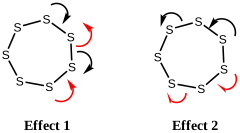
Effect 1 is the donation of a lone pair from sulfur S4 or S2 into the antibonding orbital of the long S3-S7 bond labelled 2.174Å. The NBO E(2) perturbation energy is 12.35 kcal/mol, a fairly large effect when you consider that the more conventional value involving oxygen instead of sulfur is ~16 kcal/mol. There are two such donations (black and red) and so this long bond is doubly lengthened. Simultaneously the S4-S7 or S2-S3 bonds associated with the donor sulfur are shortened to 1.982Å.

You can see the orbitals involved below (click on the image to obtain a 3D rotatable model) and consider that the blue phase overlaps positively with the purple and also the red with orange. These overlaps conspire to move electrons from the S4 lone pair into the S4-S7 bond and to move electrons from the S3-S7 bond into an S3 lone pair and hence to shorten the first to give it some π-bond character (Wiberg bond index 1.1796) and to lengthen the second bond (Wiberg bond index 0.8295).

Effect 2 is the donation of a lone pair from sulfur S3 or S7 into the antibonding orbital of the S1-S2 bond with length 2.087Å. Only one donation – E(2) is now 10.12 kcal/mol – for each of the two S-S antibonding orbitals occurs (S1-S2 and S4-S5) and hence the lengthening of these is less than before. This again serves to shorten the S2-S3 and S4-S7 bonds labelled with the distance of 1.982Å

A smaller effect (E(2) 4.6 kcal/mol) occurs between S2/S4 and S1-S6/S5-S6.

So this adds a nice stereoelectronic explanation to an observation made almost 50 years ago. Perhaps this example should be included in all taught inorganic curricula?


Postscript: The S-S stretching frequencies vary a great deal. The symmetric and antisymmetric S2-S3 and S4-S7 modes are respectively ν 564 and 557 cm-1 whilst the S3-S7 mode is way less at 370 cm-1


References

  1. R. Steudel, R. Reinhardt, and F. Schuster, "Crystal and Molecular Structure of <i>cyclo</i>‐Heptasulfur (δ‐S<sub>7</sub>)", Angewandte Chemie International Edition in English, vol. 16, pp. 715-715, 1977. https://doi.org/10.1002/anie.197707151
  2. H. Rzepa, "Cyclo-Heptasulfur, S7 – a classic anomeric effect discovered during a pub lunch!", 2025. https://doi.org/10.14469/hpc/15228

Referencing and citing a science-based blog post.

April 8th, 2025

Back in early 2012, I pondered about the relationships between a science-based blog post and a science-based journal article[1]. This was in part induced by my discovering a blog plugin called Kcite, which allow a journal articles to be appended to the blog in the form of a numbered reference list. The only required input for Kcite was the DOI of the article (as you can see earlier in this paragraph). For around 500 posts after that moment, I always strove to add such references to my posts. Around 2016, I started including references to data in the form of repository DOIs to sit alongside the journal references, but this feature stopped working a year or two later because of changes in the metadata resolved by the DOI. Kcite itself lasted until January 2024 for this blog, when a required update to the software running the blog (WordPress) meant that it no longer worked and had to be removed as a plugin. Two years ago, Rogue Scholar (Science blogging on steroids) started coming along to the rescue.[2] ,[3] It provides some amazing automated features and infrastructure to blogs; I will illustrate from those listed on the top page of Rogue Scholar itself:

  1. No waiting time — blogs can join via a simple form. Blog posts are automatically archived within minutes after publication on your blog.
  2. No fees — blog posts are archived without fees to either readers or authors. Rogue Scholar is sustained by donations and sponsorships.
  3. Archived — blog posts are archived by Rogue Scholar, and semiannually by the Internet Archive Archive-It service.
  4. Findable — every blog post is searchable via rich metadata and full-text search.
  5. Citeable — every blog post is assigned a Digital Object Identifier (DOI), to make them citable and trackable. Rogue Scholar shows citations to blog posts found by Crossref.
  6. Interoperable — metadata are distributed via Crossref and ORCID, and downstream services using their metadata catalogs.
  7. Reusable — the full-text of every blog post is distributed under the terms of the Creative Commons Attribution 4.0 license.
  8. Communities — blog posts automatically become part of communities for your blog, the blog subject area, and topic communities based on blog post tags.

Part of the stuff that goes on behind the scenes is integration with CrossRef (which handles information about journal articles) and that in turn enables insights such as how Blogs abstracted by Rogue Scholar can be cited within journal articles and other blogs and gives some idea of the impact that these blogs are making. Here I illustrate some searches so enabled by having Rogue Scholar abstract a blog;

  1. https://rogue-scholar.org/search?q=references:*&sort=newest This shows that Rogue Scholar has captured (currently) 2003 references abstracted from blogs.
  2. https://rogue-scholar.org/communities/rzepa/records?q=references:*&sort=newest Of these (currently) 504 have come from mostly identifying the [4] entries in my own blogs.
  3. https://rogue-scholar.org/search?q=citations:*&sort=newest shows all citations of the blogs in the Rogue Scholar community, currently at 519.
  4. https://rogue-scholar.org/search?q=citations:10.59350/*&sort=newest This lists the number of citations originating from the  DOI prefix 10.59350 (which is that of the Rogue Scholar community).
  5. https://docs.rogue-scholar.org/dashboard lists other statistics. This are revealing, indicating currently only 6% of posts currently have references, although the uptake of institutional origins (ROR) and researcher ID (ORCID) is much better.
  6. The distribution amongst subject areas is 6.8% in the chemical sciences:

Meanwhile, work is under way to resuscitate the Kcite plugin, so that references are once again collected at the bottom of each post. Meanwhile, such a list can instead be found at the archived version of the posts at Rogue Scholar, as for example for this post itself. Also for the future is identifying how many of the references cited in blogs relate to research objects such as journal articles, and how many are instead to data held in e.g. data repositories. Such data reference richness in journal articles themselves is gradually increasing[5],[6] and it to be hoped also in science-based blogs themselves in the future.

References

  1. H. Rzepa, "The blog post as a scientific article: citation management", 2012. https://doi.org/10.59350/3pbz1-vcd67
  2. M. Fenner, "Automatically list all your publications in your blog", 2013. https://doi.org/10.53731/axtz227-73n18e7
  3. M. Fenner, "Rogue Scholar now shows citations of science blog posts", 2025. https://doi.org/10.53731/4bvt3-hmd07
  4. https://doi.org/
  5. H. Rzepa, "Finding and Discovery Aids as part of data availability statements for research articles.", 2025. https://doi.org/10.59350/th26w-gev67
  6. D.C. Braddock, S. Lee, and H.S. Rzepa, "Modelling kinetic isotope effects for Swern oxidation using DFT-based transition state theory", Digital Discovery, vol. 3, pp. 1496-1508, 2024. https://doi.org/10.1039/d3dd00246b

Crystallography meets DFT Quantum modelling.

March 17th, 2025

X-ray crystallography is the technique of using the diffraction of x-rays by the electrons in a molecule to determine the positions of all the atoms in that molecule. Quantum theory teaches us that the electrons are to be found in shells around the atomic nuclei. There are two broad types, the outermost shell (also called the valence shell) and all the inner or core shells. The density of the core electrons is much higher (more compact) than the more diffuse valence shell for all but the hydrogen atom, which only has valence electrons. How does this relate to x-ray diffraction by electrons? Well, core electrons, because of their relative compactness, diffract X-rays more strongly than the valence electrons. This compactness of the core also means that its electron density distribution can be well (but not exactly) approximated by a sphere, with the nucleus at the centre of that sphere. And from this it follows that the density for each atom can be treated independently, the so-called IAM or independent atom model. For example all the carbon atoms in a molecule are approximated as having the same value for the electron density of their core shell. But the IAM approximation is much less good for hydrogen atoms, especially when they are attached to very polar atoms (Li, O, F, etc) and even atoms such as carbon or oxygen have noticeable deviations as illustrated in  figure 1 below. [1]


Figure 1 from [1] with caption: Deformation Hirshfeld densities for the carbon (left) and oxygen (right) atoms in the carboxylate group of Gly-l-Ala, i.e. difference between the spherical atomic electron density used in the IAM and the non-spherical Hirshfeld atom density used in Hirshfeld atom refinement=HAR (IAM minus HAR). Red = negative, blue = positive. Isovalue = 0.17 eÅ−3.

X-ray crystallography is all about matching the electron density map of a model structure with the electron density map derived from the diffraction data. In “conventional” X-ray crystallography – i.e. that used by most crystallographers –  the electron density map of the model is calculated using the IAM approach, where no consideration is given to any distortion of the electron density distribution caused by things like bonds – each atom is treated independently (hence the name). This method especially struggles with hydrogens and hence the inferred position of the hydrogen nucleus at the centre of an assumed spherical distribution is often difficult to obtain accurately. Enter quantum crystallography, whereby a model of the electron density distribution in a molecule can be calculated by solving the Schrodinger equation, nowadays to a very reasonable approximation in a reasonable time (minutes) using so-called density functional theory, or DFT. The resulting electron density map for the model structure might be expected to more closely match reality than the IAM approach. Most obviously affected by this change is the handling of hydrogen atoms. If one considers a C–H bond from an sp3 carbon atom, using an IAM approach the hydrogen atom (i.e. its nucleus or proton) would be placed at the centre of maximum electron density, in the full knowledge that this is not actually where the hydrogen atom nucleus itself is. The direction of the C–H vector would be correct, but the distance would be too short. In the quantum crystallography approach, the positions of e.g. hydrogen atom nuclei are not exactly coincident with the electron density maxima, amounting in effect to non-spherical atoms, thus avoiding the systematic errors seen in the IAM approach. Smaller, but possibly still significant such errors might be expected for e.g. the 2nd row elements and beyond.

Getting reliable hydrogen atom positions has previously required a neutron diffraction study, which is difficult, expensive and time consuming. So the idea of using the non-spherical DFT densities rather than the spherical IAM approach to build a model using X-ray diffraction data is very appealing. But does it work? To test this, we decided to go back to some previously published structures that were handled using the IAM approach, and re-refining them using quantum crystallography. We do not have the corresponding neutron studies to check the answers against, but we can still see how well the structures themselves refine and what new problems this approach might throw up.

Method

The original published structures[2] were refined with SHELX-2014[3] which uses an independent atom model (IAM) approach. The results reported here employed NoSpherA2[1], [4] using Hirshfeld atom refinement[5] and selecting Def2-SVP as the (all-atom) basis set and ωB97X-V as the DFT method (the results seem relatively insensitive to either), implemented in the ORCA program.[6] For the first attempts no changes were made to the structures beyond the anisotropic refinement of the now unconstrained hydrogen atoms. For four of the structures a number of the hydrogen atoms went non-positive definite (i.e. one of the radii of a thermal ellipsoid refined to a negative length), which is physically nonsensical and would be a significant barrier to publication. (we don’t quite want to say “unpublishable” as there are almost always exceptions, but a non-positive definite thermal parameter is pretty close to being unacceptable.) For these cases, a second version was created (V2) where all of the hydrogen atoms were refined isotropically but with the distances and thermal parameters still allowed to refine. For AB1709 (18b), this still had the isotropic thermal parameter of one of the hydrogen atoms (H11) go non-positive definite, so for that one hydrogen atom the free isotropic thermal parameter was replaced with a riding one.

The results

We chose a set of seven structures published in 2017[7] and refined as noted above using conventional methods. These seven also comprise one of the very first sets of crystal structures for which full diffraction data were made available,[2] rather than just the refined structure in the form of a CIF file. The  new results have also been deposited[8] to augment the record for these compounds. Spreadsheets corresponding to the images below can be obtained by clicking on the image.

  1. All seven structures saw a reduction in the final R-factor.[8] However, all of the structures also saw a significant increase in the number of parameters (as the hydrogen atoms went from using zero parameters each in a fully riding model to nine parameters each in a fully free anisotropic model). However, all the QM refinements passed the Hamilton test, suggesting that the reduced R-factors do indeed reflect a better model, rather than just being a consequence of the significantly increased number of parameters.
  2. All four of the structures containing bromine atoms had a number of the hydrogen atoms go non-positive definite when refined anisotropically. It is not clear exactly why this happened – there does not appear to be any correlation with data quality or intensity (as crudely measured by R(int) and mean I/σ respectively), and though the redundancy for these structures is fairly low (between 1.5 and 1.7), those for the non-bromine structures are not much better (1.5, 2.3 and 4.9). These data sets were the result of experiments designed to collect 98.5% of the symmetry unique data with no consideration for redundancy at all. However comparison of the initial and secondary versions of the refinements of these four structure does show that the substantial majority of the observed R-factor decrease can be achieved without using anisotropic hydrogen atoms.
  3. As regards the precision of the structures, using one C(sp2)–C(sp3) bond as a proxy (the C7–C8 bond) we can see that the estimated standard deviation is either the same or only slightly lower in all seven structures, suggesting that getting lower e.s.d.s would not be a motivating factor for using quantum crystallography.
  4. One of the more unexpected results was the variation in F(000). In X-ray crystallography (deliberate emphasis on X-ray, as neutron diffraction is different) F(000) is supposed to be the total number of electrons present in the unit cell, and is used as an overall scale factor for the electron density map. It is very much not supposed to be variable, and any discrepancy would indicate an error in the calculated or reported formula and should be corrected. We do not understand why the QM refinements give a different answer than the IAM ones (some up and some down — normalised to a per molecule basis the range is –1.1 to +2.2), though it seems likely to be associated with cut-offs (boundaries) in measuring the “smeared out” electron density in the QM models, The IAM models all give the expected “correct” values.
  5. Based on the checkCIF reports for the QM structures, if quantum crystallography catches on in a big way, then checkCIF will probably need to be updated, there now being a number of high level alerts for long X–H bonds.
  6. One of the major areas of uncertainty with quantum crystallography is what/how much data needs to be collected. Symmetry unique data to 0.84 Å seems insufficient, but what would be sufficient — full sphere, redundancy, higher resolution? Would the final results be worth the extra time investment? None of the above aspects are clear at this stage, but it will be interesting to see how the technique develops.

These seven crystal structures also occupy an interesting position for posterity. Data for them has been made available spanning eight years which illustrates two significantly different refinement methods being used during this period, as well as having access to  the original complete diffraction image data to allow any completely new analysis to be made in the future.  Who knows, maybe in eight years time an even better method may become available for comparison with the results reported here.


To put this into context, 0.17 eA-3 would generally be regarded as a pretty low level background noise, similar to the value of the maximum residual electron density a crystallographer might be happy with. The structure which showed the smallest change in R factor on using quantum crystallography, i.e. AB1608b, was re-run with the triple-ζ Def2-TZVPP basis set. This did give lower R factors but by very little (3.38% to 3.36% aniso with npd; 3.39 to 3.38 iso).

References

  1. F. Kleemiss, O.V. Dolomanov, M. Bodensteiner, N. Peyerimhoff, L. Midgley, L.J. Bourhis, A. Genoni, L.A. Malaspina, D. Jayatilaka, J.L. Spencer, F. White, B. Grundkötter-Stock, S. Steinhauer, D. Lentz, H. Puschmann, and S. Grabowsky, "Accurate crystal structures and chemical properties from NoSpherA2", Chemical Science, vol. 12, pp. 1675-1692, 2021. https://doi.org/10.1039/d0sc05526c
  2. J. Almond-Thynne, "Crystal structure data for Synthesis and Reactions of Benzannulated Spiroaminals; Tetrahydrospirobiquinolines", 2017. https://doi.org/10.14469/hpc/2297
  3. G.M. Sheldrick, "Crystal structure refinement with<i>SHELXL</i>", Acta Crystallographica Section C Structural Chemistry, vol. 71, pp. 3-8, 2015. https://doi.org/10.1107/s2053229614024218
  4. O.V. Dolomanov, L.J. Bourhis, R.J. Gildea, J.A.K. Howard, and H. Puschmann, "<i>OLEX2</i>: a complete structure solution, refinement and analysis program", Journal of Applied Crystallography, vol. 42, pp. 339-341, 2009. https://doi.org/10.1107/s0021889808042726
  5. S.C. Capelli, H. Bürgi, B. Dittrich, S. Grabowsky, and D. Jayatilaka, "Hirshfeld atom refinement", IUCrJ, vol. 1, pp. 361-379, 2014. https://doi.org/10.1107/s2052252514014845
  6. F. Neese, "The ORCA program system", WIREs Computational Molecular Science, vol. 2, pp. 73-78, 2011. https://doi.org/10.1002/wcms.81
  7. J. Almond-Thynne, A.J.P. White, A. Polyzos, H.S. Rzepa, P.J. Parsons, and A.G.M. Barrett, "Synthesis and Reactions of Benzannulated Spiroaminals: Tetrahydrospirobiquinolines", ACS Omega, vol. 2, pp. 3241-3249, 2017. https://doi.org/10.1021/acsomega.7b00482
  8. H. Rzepa, "Crystallography meets DFT Quantum modelling", 2025. https://doi.org/10.14469/hpc/15030