Archive for the ‘crystal_structure_mining’ Category

Cyclo-Heptasulfur, S7 – a classic anomeric effect discovered during a pub lunch!

Friday, May 16th, 2025

Way back in 1977, the crystal structure of the sulfur ring S7 was reported.[1] The authors noted that “The δ modification of S7 contains bonds of widely differing length: this has never been observed before in an unsubstituted molecule.” No explanation was offered, although they note that similar effects have been observed in S8O, S7I+ and S7O. The S7 molecule was yesterday brought to my attention (thanks Derek!) over a pub lunch and in the time honoured manner of scientists, sketched out on a napkin – with a pen obtained from the waitress!. As an “organic chemist”, I immediately thought “anomeric effects”. And so indeed it has proven. A calculation using the MN15L/Def2-TZVPP DFT method and analysis using the Weinhold NBO7 procedure[2] reveals the following structure (with Cs symmetry) and indeed the four unique S-S distances are all different (experimental values in parentheses). So how does this arise?


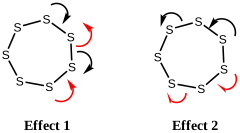
Effect 1 is the donation of a lone pair from sulfur S4 or S2 into the antibonding orbital of the long S3-S7 bond labelled 2.174Å. The NBO E(2) perturbation energy is 12.35 kcal/mol, a fairly large effect when you consider that the more conventional value involving oxygen instead of sulfur is ~16 kcal/mol. There are two such donations (black and red) and so this long bond is doubly lengthened. Simultaneously the S4-S7 or S2-S3 bonds associated with the donor sulfur are shortened to 1.982Å.
You can see the orbitals involved below (click on the image to obtain a 3D rotatable model) and consider that the blue phase overlaps positively with the purple and also the red with orange. These overlaps conspire to move electrons from the S4 lone pair into the S4-S7 bond and to move electrons from the S3-S7 bond into an S3 lone pair and hence to shorten the first to give it some π-bond character (Wiberg bond index 1.1796) and to lengthen the second bond (Wiberg bond index 0.8295).

Effect 2 is the donation of a lone pair from sulfur S3 or S7 into the antibonding orbital of the S1-S2 bond with length 2.087Å. Only one donation – E(2) is now 10.12 kcal/mol – for each of the two S-S antibonding orbitals occurs (S1-S2 and S4-S5) and hence the lengthening of these is less than before. This again serves to shorten the S2-S3 and S4-S7 bonds labelled with the distance of 1.982Å

A smaller effect (E(2) 4.6 kcal/mol) occurs between S2/S4 and S1-S6/S5-S6.

So this adds a nice stereoelectronic explanation to an observation made almost 50 years ago. Perhaps this example should be included in all taught inorganic curricula?


Postscript: The S-S stretching frequencies vary a great deal. The symmetric and antisymmetric S2-S3 and S4-S7 modes are respectively ν 564 and 557 cm-1 whilst the S3-S7 mode is way less at 370 cm-1


References

  1. R. Steudel, R. Reinhardt, and F. Schuster, "Crystal and Molecular Structure of <i>cyclo</i>‐Heptasulfur (δ‐S<sub>7</sub>)", Angewandte Chemie International Edition in English, vol. 16, pp. 715-715, 1977. https://doi.org/10.1002/anie.197707151
  2. H. Rzepa, "Cyclo-Heptasulfur, S7 – a classic anomeric effect discovered during a pub lunch!", 2025. https://doi.org/10.14469/hpc/15228

Blue blood.

Monday, August 7th, 2023

Respiratory pigments are metalloproteins that transport O2, the best known being the bright red/crimson coloured hemoglobin in human blood. The colour derives from Fe2+ at the core of a tetraporphyrin ring. But less well known is blue blood, and here the colour derives from an oxyhemocyanin unit based on Cu1+ (the de-oxy form is colourless) rather than iron. See below for the carapace of a red rock crab.

Here I take a look at this very unusual structure, the core of which is an imidazole ring coordinated via nitrogen to the metal Cu.
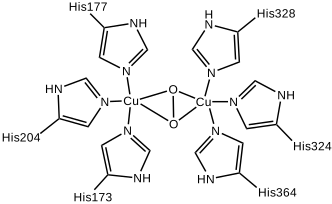
A search of the crystal structure database for the following sub-structure reveals 12 hits, with a range of O-O distances ranging from 1.37 to 1.54Å. A histogram of the O-O lengths in the Cu(O-O)Cu sub structure shown below shows quite a distribution amongst the 12 known examples.

Of these, one (UTETEU[1], DOI: [2]) is perhaps the closest to the oxyhemocyanin core, albeit with the imidazole heterocycle replaced by the isomeric pyrazole ring (no Ag or Au examples are known). The overall 2+ charge deriving from two Cu1+ units is internally balanced with two 4-coordinate B1- end caps, and this system was chosen as the starting model for some computational studies.[3]

Firstly, the crystal structure reveals an O-O distance of 1.531Å; the O=O distance (from crystal structures where it is present) is ~1.24Å (DOI: 10.5517/cct597h) for neutral (triplet?) oxygen, ~1.50Å for the dianion O22- and 1.32Å for the monoanion O21-[4].

Computational models were constructed at the ωB97XD/Def2-SVPP level, FAIR Data DOI: 10.14469/hpc/12584.

The computed O-O distance for a singlet state of the complex is shorter than that measured in the crystal structure (1.368 vs 1.531Å). At the better Def2-TZVPP basis set level, the O-O bond length is 1.379Å, still shorter. A model of singlet state oxyhemocyanin itself (Def2-TZVPP) as a di-cation (these charges are balanced by carboxylate anions from the surrounding protein) shows a very similar O-O bond length (1.361Å).

How about the oxyhemocyanin as a triplet state, the same state of isolated oxygen itself? Oxyhemocyanin now has a O-O distance of 1.477Å (Def2-TZVPP) and a Cu-O distance of 1.972 (1.934 from crystal structure of UTETEU). The UTETEU analogue has a calculated distance of 1.483Å (crystal structure 1.531Å), which strongly suggests that this system exists as a triplet rather than as a singlet spin state (click on image below to view as a 3D model).

The spin density in UTETEU is shown above, which indicates that the two unpaired electrons are delocalised on Cu, nitrogen and O atoms, compared to only the oxygen in O2 itself.

So we may conclude from this brief investigation into the structures of this component of “blue blood” captures oxygen as a sandwich between two copper atoms (a mode very unlike the iron equivalent in hemoglobin), and moreover that the spin state in this capture retains the triplet motif of gaseous oxygen itself, whilst the spin density of the unpaired electrons is delocalised over both copper, nitrogen and oxygen.


This post has DOI: 10.14469/hpc/13111


References

  1. R. Dalhoff, R. Schmidt, L. Steeb, K. Rabatinova, M. Witte, S. Teeuwen, S. Benjamaâ, H. Hüppe, A. Hoffmann, and S. Herres-Pawlis, "The bridge towards a more stable and active side-on-peroxido (Cu<sub>2</sub><sup>II</sup>(µ-η<sup>2</sup>:η<sup>2</sup>-O<sub>2</sub>)) complex as a tyrosinase model system", Faraday Discussions, vol. 244, pp. 134-153, 2023. https://doi.org/10.1039/d2fd00162d
  2. Zhang, Shiyu., Fallah, Hengameh., Gardner, Evan J.., Kundu, Subrata., Bertke, Jeffery A.., Cundari, Thomas R.., and Warren, Timothy H.., "CCDC 1468787: Experimental Crystal Structure Determination", 2016. https://doi.org/10.5517/ccdc.csd.cc1l9d7j
  3. N. Kitajima, K. Fujisawa, C. Fujimoto, Y. Morooka, S. Hashimoto, T. Kitagawa, K. Toriumi, K. Tatsumi, and A. Nakamura, "A new model for dioxygen binding in hemocyanin. Synthesis, characterization, and molecular structure of the .mu.-.eta.2:.eta.2 peroxo dinuclear copper(II) complexes, [Cu(HB(3,5-R2pz)3)]2(O2) (R = isopropyl and Ph)", Journal of the American Chemical Society, vol. 114, pp. 1277-1291, 1992. https://doi.org/10.1021/ja00030a025
  4. H. Seyeda, and M. Jansen, "A novel access to ionic superoxides and the first accurate determination of the bond distance in O2−", Journal of the Chemical Society, Dalton Transactions, pp. 875-876, 1998. https://doi.org/10.1039/a800952j

Tunable aromaticity? An unrecognized new aromatic molecule?

Sunday, May 21st, 2023

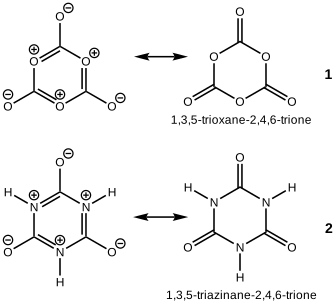
Some time ago in 2010, I showed a chemical problem I used to set during university entrance interviews. It was all about pattern recognition and how one can develop a hypothesis based on this. In that instance, it involved recognising that a cyclic molecule which appeared to have the cyclohexatriene benzene-aromatic pattern 1 was in fact a trimer of carbon dioxide. Perhaps small amounts of this aromatic molecule exist in solutions of fizzy drinks? Analysing these patterns occupied about 10-20 minutes of an interview, and although you might think I was posing a difficult challenge, many students successfully rose to it! Now I revisit, but with a slightly better reality check on a related molecule 2 (cyanuric acid).

.

As many as 58 examples of crystal structures of 1,3,5-triazinane-2,4,6-trione 2 (cyanuric acid) are known, often with a co-adduct. Cyanuric acid is in effect a cyclic trimer of isocyanic acid rather than of carbon dioxide. These examples tend to be planar, with a mean C-N ring distance of ~1.37Å and a C-O distance of 1.22Å. 

Two outliers stand out, both from a very recently published article, being a co-adduct with melamine (1,3,5-triazine-2,4,6-triamine).[1] QACSUI02 exhibits a shorter C-N distance of ~1.33Å but a longer C-O distances of 1.32Å and have a symmetrical patten of hydrogen bonds to the six receptors of the central unit. Could this correspond more closely to the cyclohexatriene resonance structures shown to the left of the diagram at the top? The first task is to see if these bond lengths can be replicated using calculation (often a useful procedure to check that the crystal structure is correct). For this purpose, the structure below was chosen as the starting point for various models, using an ωB97XD/Def2-TZVPP model.

Model C-N distance C-O distance
QACSUI02 (crystal structure) 1.331 1.318
ωB97XD/Def2-TZVPP as single layer 1.3678 1.2185
ωB97XD/Def2-TZVPP three layers 1.365 1.218
ωB97XD/Def2-TZVPP no H-bonds 1.3816 1.2002

XAKSOU (crystal structure) 1.367 1.208
ωB97XD/Def2-TZVPP  1.3670 1.2213

This creates a mystery. The calculated bond lengths show that whilst H-bonding to the central ring decreases the C-N length by 0.014Å and increases the C-O length by 0.017Å, this effect is nowhere near large enough to match the apparent lengths in the crystal structure, where a C-N effect of ~0.037Å would be needed.

Another system XAKSOU has been reported where discrete LiCl units replace the hydrogen the H-bonds formed to melamine above.[2] A Li is coordinated to the carbonyl oxygen instead of a hydrogen bond, and a chloride anion from another molecule in the unit cell replaces the H-bond to nitrogen.

In the computed model, an intramolecular Cl-H hydrogen bond is used as the model, resulting in similar C-N lengths as the crystal structure (one which does not match the lengths in the outlying crystal structure QACSUI02)

So the final question to ask is whether this latter structure is aromatic. NICS(0)/(1) values of -2.8/-1.1ppm are computed, which suggests very little aromaticity (aromatic values would be -10 to -20 pm). So it does not seem as if aromaticity can be tuned into cyanuric acid 2 by polarising both the NH and CO units with ionic/H-bond interactions so that the aromatic cyclohexatriene motif is better favoured over the 1,3,5-triazinane-2,4,6-trione non-aromatic resonance form. Are there any other examples where aromatically tunable molecules might be possible?

References

  1. K. Song, H. Yang, B. Chen, X. Lin, Y. Liu, Y. Liu, H. Li, S. Zheng, and Z. Chen, "The facile implementing ternary resistive memory in graphite-like melamine-cyanuric acid hydrogen-bonded organic framework with high ternary yield and environmental tolerance", Applied Surface Science, vol. 608, pp. 155161, 2023. https://doi.org/10.1016/j.apsusc.2022.155161
  2. O. Shemchuk, D. Braga, L. Maini, and F. Grepioni, "Anhydrous ionic co-crystals of cyanuric acid with LiCl and NaCl", CrystEngComm, vol. 19, pp. 1366-1369, 2017. https://doi.org/10.1039/c7ce00037e

Geometries of proton transfers: modelled using total energy or free energy?

Monday, April 18th, 2022

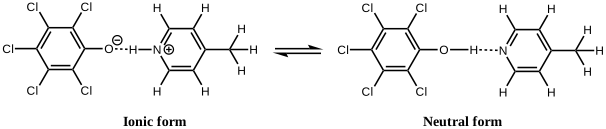
Proton transfers are amongst the most common of all chemical reactions. They are often thought of as “trivial” and even may not feature in many mechanistic schemes, other than perhaps the notation “PT”. The types with the lowest energy barriers for transfer often involve heteroatoms such as N and O, and the conventional transition state might be supposed to be when the proton is located at about the half way distance between the two heteroatoms. This should be the energy high point between the two positions for the proton. But what if a crystal structure is determined with the proton in exactly this position? Well, the first hypothesis is that using X-rays as the diffracting radiation is unreliable, because protons scatter x-rays very poorly. Then a more arduous neutron diffraction study is sometimes undertaken, which is generally assumed to be more reliable in determining the position of the proton. Just such a study was undertaken for the structure shown below (RAKQOJ)[1], dataDOI: 10.5517/cc57db3 for the 80K determination. The substituents had been selected to try to maximise the symmetry of the O…H…N motif via pKa tuning (for another tuning attempt, see this blog). The more general landscape this molecule fits into[2] is shown below:

The results obtained for the position of the proton for RAKQOJ were fascinating. They were very dependent on the temperature of the crystal! At room temperatures (using X-rays), the proton was measured as 1.09Å from the oxygen and 1.47Å from the nitrogen (neutral form above). At 20K, the OH distance was 1.309Å and the HN 1.206Å (~ionic form above). Indeed, the very title of this article is First O-H-N Hydrogen Bond with a Centered Proton Obtained by Thermally Induced Proton Migration. The authors give a number of reasons for this behaviour (their ref 17[1] and also[2]), but one they do not mention is thermally induced changes in the dielectric constant of the crystal with temperature, given that in one position for the proton the molecule is ionic and in the other neutral. So I decided to model the system as a function of solvent. In this model, the solvent dielectric is used to approximate the crystal dielectric. My first choice of energy function is to compute geometries using the B3LYP+GD3BJ/Def2=TZVPP/SCRF=solvent method to see what might emerge and as a possible prelude to trying other functionals. FAIR data for these calculations are collected at DOI: 10.14469/hpc/10368.

Solvent ε ΔG298 for O…HN rO…H rHN ΔG298 for OH…N rOH rH…N ΔG298
TS (PT)
rOH rHN
Water 78.4 -2893.387188
-2893.334325
1.4913 1.0827 -2893.386705
-2893.334333
1.0364 1.5696 -2893.387668
-2893.336183
1.1852 1.2899
Dichloro
methane
8.9 -2893.385173 1.4566 1.0945 -2893.385662 1.0309 1.5878 -2893.386022 1.2072 1.2642
Chloroform 4.7 -2893.382254 1.4227 1.1082 -2893.384514 1.0261 1.6049 -2893.384773 1.2321 1.2388
Dibutyl ether 3.1 -2893.380813 1.3778 1.1302 -2893.383511 1.0213 1.6235 -2893.382918 1.2667 1.2078
Toluene 2.4 -2893.379752 1.3248 1.1635 -2893.382915 1.0178 1.6385 -2893.379773 1.2851 1.1934
Gas phase 0 n/a -2893.377949 1.0009 1.7387 n/a
Expt (RT)
[1]
? n/a 1.09 1.47 n/a
Expt (20K)
[1]
? n/a 1.309 1.206 n/a

At 20K

Results:

  1. The geometries for each model are obtained by minimising the total energy of the system as a function of the 3N-6 geometric variables (coordinates). 
  2. The geometries show that for all solvents, TWO minima in the total energy are obtained, one for the ionic and one for the neutral form. This is called a double-well energy potential. Even a non-polar solvent such as toluene produces a solvation energy of ~3.1 kcal/mol compared to the gas phase, which is sufficient to induce a double-well potential.
  3. Without solvent (gas phase), only the neutral geometry is obtained. 
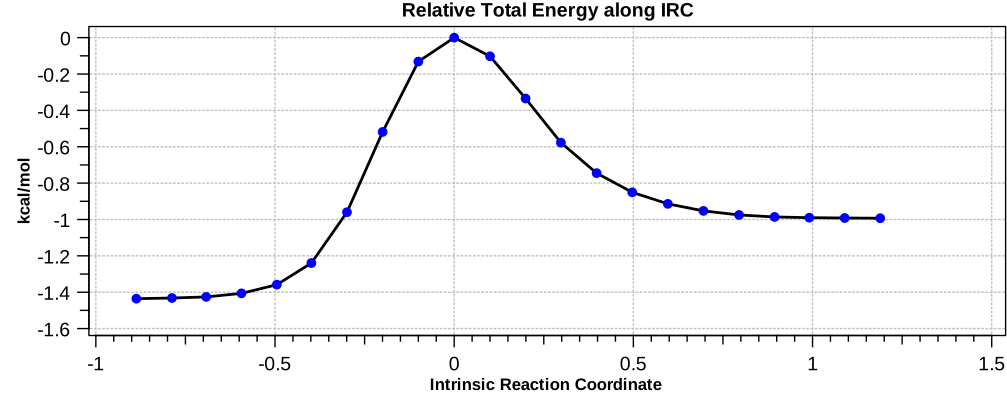
  4. In the most polar solvent water, the double well potential looks like this:

    The ionic well is about 0.4 kcal/mol lower in total energy (and ~0.3 kcal/mol in free energy, see table above) than the neutral form, with a barrier connecting neutral to ionic only 1.0 kcal/mol. A transition state + intrinsic reaction coordinate (IRC) can be easily located on this total energy potential, confirming the double-well form.
  5. When free energies ΔG are computed, which include thermal effects such as entropy and zero-point energy, the transition state emerges as 0.3 kcal/mol less than the total energy of the ionic form (red entries, Table). In effect, the free energy potential surface is INVERTED compared to the total energy surface and the “transition state” becomes the lowest point on the energy surface. So this point is a minimum in the free energy but a maximum in the total energy, the result of adding thermal effects to the total energy.
  6. In dichloromethane, the free energy of the neutral form is now lower by 0.3 kcal/mol than the ionic form. The OH bond is starting to get shorter and the NH one longer. The transition state is now 0.22 kcal/mol lower than the neutral form. With chloroform, the OH and HN bonds have become ~equal in length, the proton is symmetrically disposed.
  7. By the time dibutyl ether as solvent is reached, the transition state is no longer lower in ΔG than the neutral form, moving on to being 2.0 kcal/mol higher for toluene. So as the solvent polarity decreases, we see a change in the potential from a single well in ΔG, in which the proton is centred, to a very asymmetric well in which the proton is attached to the oxygen.
  8. Can we match the observed neutron diffraction results to the calculations? As the temperature decreases, the neutron diffraction shows the start of proton transfer from oxygen to nitrogen to form an ionic species. The calculations show that this can be modelled by an increase in the effective dielectric constant of the  medium. The computed “transition state” for proton transfer somewhere between dibutyl ether and toluene (as a dielectric media) emerges as approximately the best model for the structure of this species. At this dielectric, the calculated ΔG is no longer quite the lowest free energy point in the potential. This might be due to the many approximations used in this model such as minimisation of total energy, the partition function method used to calculate entropy, the nature of the DFT functional, the continuum solvation model, the basis set, etc. 

Conclusions:

These results were obtained with the approximation that minimising the total molecular energy produces a computed geometry that can be compared to the experimental neutron diffraction structures. But can one do better? Obtaining molecular geometries by minimising the computed free energies would be non-trivial. Firstly, minimisation would depend on availability of first derivatives of the energy function with respect to coordinates, in this case ΔG. These are not available for any DFT codes. The result would itself be temperature dependent (as indeed are the experimental results shown above). Furthermore, ΔG is computed from normal vibrational modes and these are only appropriate when the first derivatives of the function are zero, at which point the so-called six rotations and translations of the molecule in free space also have zero energy. So we need vibrations to compute derivatives, but we need derivatives to compute vibrations in this classical approach.

It would be great for example if the approximate model of the potential for a hydrogen transfer used above as based on minimising total energies for derivatives could be checked against a model based on geometries optimised using free energies instead. Such procedures do exist,[3] using molecular dynamics trajectory methods.


This post has DOI: 10.14469/hpc/10382 [4]

References

  1. T. Steiner, I. Majerz, and C.C. Wilson, "First O−H−N Hydrogen Bond with a Centered Proton Obtained by Thermally Induced Proton Migration", Angewandte Chemie International Edition, vol. 40, pp. 2651-2654, 2001. https://doi.org/10.1002/1521-3773(20010716)40:14<2651::aid-anie2651>3.0.co;2-2
  2. I. Majerz, and M.J. Gutmann, "Mechanism of proton transfer in the strong OHN intermolecular hydrogen bond", RSC Advances, vol. 1, pp. 219, 2011. https://doi.org/10.1039/c1ra00219h
  3. M. Higashi, S. Hayashi, and S. Kato, "Geometry optimization based on linear response free energy with quantum mechanical/molecular mechanical method: Applications to Menshutkin-type and Claisen rearrangement reactions in aqueous solution", The Journal of Chemical Physics, vol. 126, 2007. https://doi.org/10.1063/1.2715941
  4. H. Rzepa, "Geometries of proton transfers: modelled using total energy or free energy?", 2022. https://doi.org/10.14469/hpc/10368

Protein-Biotin complexes. Crystal structure mining.

Sunday, December 12th, 2021

In the previous post, I showed some of the diverse “non-classical”interactions between Biotin and a protein where it binds very strongly. Here I take a look at two of these interactions to discover how common they are in small molecule structures.

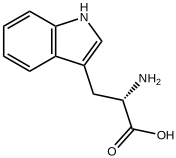
The first search is of a CH hydrogen bond to the face of the aromatic ring in a tryptophane residue

The search is shown below, in which the distance of the hydrogen to the ring centroid is defined, as is the angle subtended at that centroid, constrained to lie within 20° of a vertical approach.

The resulting heat plot shows 2772 entries (no disorder, no errors, R < 0.05), with a rather diffuse red spot at around 2.7-2.8Å (but which can be as short as 2.3Å) and an angle of approach of ~90±5°. This matches the concept of a region of interaction rather than a more focused “hydrogen bond”. It is seen as a relatively common motif!


The next search is for “hydrogen bonding” between the sulfur of an C-S-C unit (as found in Biotin) and an OH group.
This is less common, with 151 entries in the Cambridge small molecule database, the red spot having a relatively short S…H distance of 1.65Å and a slightly non linear angle.

The NH analogue of this search is shown below (422 hits) shows two clusters. The one with a large angle at H is more concentrated and reveals a distance of ~2.9Å whilst the second cluster has smaller angle and a long tail out to ~2.5Å

So we conclude there is ample evidence in small molecule crystal structures for the types of interaction mooted for Biotin with proteins.

First came Molnupiravir – now there is Paxlovid as a SARS-CoV-2 protease inhibitor. An NCI analysis of the ligand.

Saturday, November 13th, 2021

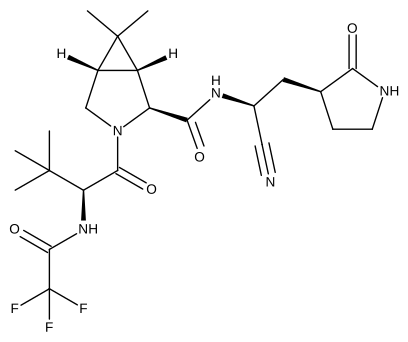
Earlier this year, Molnupiravir hit the headlines as a promising antiviral drug. This is now followed by Paxlovid, which is the first small molecule to be aimed by design at the SAR-CoV-2 protein and which is reported as reducing greatly the risk of hospitalization or death when given within three days of symptoms appearing in high risk patients.

The Wikipedia page (first created in 2021) will display a pretty good JSmol 3D model of this; the coordinates being generated automatically on the fly from a SMILES string, which specifies only what atoms are connected in the structure by bonds. Given that the structure of this molecule as embedded in the SARS-CoV-2 main protease[1] has been determined (and can be viewed here), I thought I might display those coordinates as an alternative to the Wikipedia/JSmol generated structure.

Click to get 3D model

I extracted the ligand from the PDF file and then added hydrogens manually to obtain the above result. There are two noteworthy points about these representations:

  1. A mystery concerns the nominal C≡N group on the top right, which displays an angle at the carbon of 117°. A cyano group is of course linear (180°). This is not a defect of the crystal structure determination, but an indication of a rather stronger interaction occurring (as indeed noted[1]). The distance between the carbon of the cyano group and an adjacent sulfur is 1.814Å, which indicates a covalent bond has formed to the cyano group. The nitrogen of the erstwhile cyano group is 3.013Å away from an adjacent NH group, which suggests it is stabilised by a hydrogen bond.
  2. Crystal structure searching of units with S…C…N in which the N has only one bond reveals zero hits, but searches of S…C…NH reveal nine hits, with S…C distances in the range 1.74 – 1.80Å and C…N distances in the region 1.25-1.27&Aring. The reported CN distance is 1.251&ARing, confirming that when bound to the protein, the cyano group is replaced by an S-C=NH group and hence is clearly an important component of the mode of action of Paxlovid.
  3. The conformation of Paxlovid is in one respect not fully represented by the Wikipedia diagram, as shown below. This implies the t-butyl group (on the left) as being well separated from the pyrrolidinone ring system at the right of the molecule.

    In fact the two groups are adjacent, being held in that conformation by probably a combination of weak dispersion forces and a contribution from the surrounding protein in the crystal structure. This is more graphically shown by the NCI (non-covalent-interaction) diagram below (DOI: 10.14469/hpc/9964), where the green areas in the region between the two groups (ringed in red) represent stabilising interactions between them. You might also spot other green/cyan regions indicating additional weak hydrogen bonds between C-H groups and oxygen!

PAXLOVID NCI analysis

There are only a small number of crystal structures of small molecules containing the S-C=NH motif. I will try to find out how common this is in protein-ligand structures.


There are many tools for performing this operation. I used the following procedure. I downloaded the PDB file (https://files.rcsb.org/download/7vh8.cif), opened it in CSD Mercury, selected the ligand (by identifying the CF3 group and clicking on one atom), inverted the selection so that everything but the ligand was then selected and using edit/structure, I deleted the selected atoms, leaving only the ligand.

Postsript

The cyanopyrrolidine group such as in Paxlovid is well known as a specific probe.[2],[3],[4] CovalentInDB is a comprehensive database facilitating the discovery of such covalent inhibitors[5] and is available here. There is also a program called DataWarrior that is potentially able to find such probes.

References

  1. Y. Zhao, C. Fang, Q. Zhang, R. Zhang, X. Zhao, Y. Duan, H. Wang, Y. Zhu, L. Feng, J. Zhao, M. Shao, X. Yang, L. Zhang, C. Peng, K. Yang, D. Ma, Z. Rao, and H. Yang, "Crystal structure of SARS-CoV-2 main protease in complex with protease inhibitor PF-07321332", Protein & Cell, vol. 13, pp. 689-693, 2021. https://doi.org/10.1007/s13238-021-00883-2
  2. N. Panyain, A. Godinat, A.R. Thawani, S. Lachiondo-Ortega, K. Mason, S. Elkhalifa, L.M. Smith, J.A. Harrigan, and E.W. Tate, "Activity-based protein profiling reveals deubiquitinase and aldehyde dehydrogenase targets of a cyanopyrrolidine probe", RSC Medicinal Chemistry, vol. 12, pp. 1935-1943, 2021. https://doi.org/10.1039/d1md00218j
  3. N. Panyain, A. Godinat, T. Lanyon-Hogg, S. Lachiondo-Ortega, E.J. Will, C. Soudy, M. Mondal, K. Mason, S. Elkhalifa, L.M. Smith, J.A. Harrigan, and E.W. Tate, "Discovery of a Potent and Selective Covalent Inhibitor and Activity-Based Probe for the Deubiquitylating Enzyme UCHL1, with Antifibrotic Activity", Journal of the American Chemical Society, vol. 142, pp. 12020-12026, 2020. https://doi.org/10.1021/jacs.0c04527
  4. C. Bashore, P. Jaishankar, N.J. Skelton, J. Fuhrmann, B.R. Hearn, P.S. Liu, A.R. Renslo, and E.C. Dueber, "Cyanopyrrolidine Inhibitors of Ubiquitin Specific Protease 7 Mediate Desulfhydration of the Active-Site Cysteine", ACS Chemical Biology, vol. 15, pp. 1392-1400, 2020. https://doi.org/10.1021/acschembio.0c00031
  5. H. Du, J. Gao, G. Weng, J. Ding, X. Chai, J. Pang, Y. Kang, D. Li, D. Cao, and T. Hou, "CovalentInDB: a comprehensive database facilitating the discovery of covalent inhibitors", Nucleic Acids Research, vol. 49, pp. D1122-D1129, 2020. https://doi.org/10.1093/nar/gkaa876

More examples of crystal structures containing embedded linear chains of iodines.

Sunday, October 17th, 2021

The previous post described the fascinating 170-year history of a crystalline compound known as Herapathite and its connection to the mechanism of the Finkelstein reaction via the complex of Na+I2 (or Na22+I42-). Both compounds exhibit (approximately) linear chains of iodine atoms in their crystal structures, a connection which was discovered serendipitously. Here I pursue a rather more systematic way of tracking down similar compounds.

Here is one search query which can be used in the CSD database of crystal structures. A chain of eight iodine atoms is defined, and the six angles subtended at iodine restricted to the range 150-180° (i.e. linear). The inner six iodines are also defined as having only two bonded atoms.

This results in four hits (October 2021), three of which are shown below (the fourth, JOPLEH, contains chains of I82- anions which do not appear to be infinitely repeating).

  1. IQIVIP, containing the heterocyclic unit pyrroloperylene and connected chains of I29.[1] See also DOI: 10.5517/ccdc.csd.cc1m1tj0

    Click to load 3D model of IQIVIP


    The truly remarkable feature is that the iodine chain appears to adopt a gentle right-handed helix in this isomer. One has to wonder how this might respond to light!
  2. IQIVOV, closely related to IQIVIP, this time containing connected chains of gently spiralling I10 groups.[1] See also DOI: 10.5517/ccdc.csd.cc1m1tk1

    Click to load 3D model of IQIVOV

  3. WEVFAE, containing a tetramethyl stilbonium cation (an analogue of a tetramethylammonium cation) and this time infinite chains of I83- anions.[2]

    Click to load 3D model of WEVFAE

The list is not long, but contains some fascinating examples of how iodine can catenate into infinitely long chains, sometimes linear (on the time averaged scale at the temperature of the data recording), sometimes gently helical and as with Herapathite, a rather more undulating motif. Again how the crystals of these compounds respond to light remains to be established. However it may be that since these three molecules are reported variously as being black-green, black and golden, some may be opaque to light in any orientation. I also note that linear chains of Ag, Ga In and Tl have also been reported in inorganic metal nitrides.[3]


The same result is obtained if the specification of iodine in this search is replaced by “any” element. This post has DOI: 10.14469/hpc/9540. See also DOI: 10.1016/j.hm.2005.11.005 for a connection between coiled chains of iodine atoms and Einstein’s theory of teleparallel spacetime, invoking torsional geometries.

References

  1. S. Madhu, H.A. Evans, V.V.T. Doan‐Nguyen, J.G. Labram, G. Wu, M.L. Chabinyc, R. Seshadri, and F. Wudl, "Infinite Polyiodide Chains in the Pyrroloperylene–Iodine Complex: Insights into the Starch–Iodine and Perylene–Iodine Complexes", Angewandte Chemie International Edition, vol. 55, pp. 8032-8035, 2016. https://doi.org/10.1002/anie.201601585
  2. U. Behrens, H.J. Breunig, M. Denker, and K.H. Ebert, "Iodine Chains in (Me<sub>4</sub>Sb)<sub>3</sub>I<sub>8</sub> and Discrete Triiodide Ions in Me<sub>4</sub>AsI<sub>3</sub>", Angewandte Chemie International Edition in English, vol. 33, pp. 987-989, 1994. https://doi.org/10.1002/anie.199409871
  3. P. Höhn, G. Auffermann, R. Ramlau, H. Rosner, W. Schnelle, and R. Kniep, "(Ca<sub>7</sub>N<sub>4</sub>)[M<sub><i>x</i></sub>] (M=Ag, Ga, In, Tl): Linear Metal Chains as Guests in a Subnitride Host", Angewandte Chemie International Edition, vol. 45, pp. 6681-6685, 2006. https://doi.org/10.1002/anie.200601726

Herapathite: an example of (double?) serendipity.

Thursday, October 14th, 2021

On October 13, 2021, the historical group of the Royal Society of Chemistry organised a symposium celebrating ~150 years of the history of (molecular) chirality. We met for the first time in person for more than 18 months and were treated to a splendid and diverse program about the subject. The first speaker was Professor John Steeds from Bristol, talking about the early history of light and the discovery of its polarisation. When a slide was shown about herapathite[1] my “antennae” started vibrating. This is a crystalline substance made by combining elemental iodine with quinine in acidic conditions and was first discovered by William Herapath as long ago as 1852[2] in unusual circumstances. Now to the serendipity!

Herapath was able to get small crystals of this substance and discovered that when he placed one crystal upon another at “right angles”, the combination went “black as midnight”. He recognised that it was functioning as an excellent linear light polarizer, absorbing virtually all the light polarized along the shorter axis of the best-developed facet of the crystal. A number of well known scientists investigated this substance at the time, but by about 1951 it had largely been forgotten. The person to rediscover it was Edwin Land, of Polaroid camera fame.[3] He oriented the microcrystals into an extruded polymer to stabilize them and hence produce the first large-aperture light polarizer, which enabled him to manufacture his first camera. The serendipity resulted from him spotting the by then forgotten properties of Herapathite (I wonder if he recorded how this actually came about) and recognising how to exploit it.

In 2009 Bart Kahr had noticed that the crystal structure of this material had never been reported. It was a challenging structure to solve[1] but established that the polarizing property of the crystals was in large measure due to the presence of infinite chains of I3 units aligned in an almost linear channel in the crystal structure. And so it was that in October 2021, John Steeds showed the structure containing these iodine chains in his slide on the topic. The crystal structure is in the CCDC database as WEYDOV and can be seen here at DOI: 10.5517/ccsdg7v I show below part of the extended lattice, showing that chain of iodines.

Click to view 3D model of WEYDOV

So the next (possible) instance of serendipity. From the audience, I immediately recognised this structural motif as being related to the crystal structure of both Na+I (NAIACE) and Na+I2 (GADMOO)[4] which I discussed in one of the very first posts on this blog in 2009 as part of a story about the Finkelstein reaction. Both these structures were obtained from acetone solution, and this solvent very much forms part of the crystal structures, serving to coordinate the sodium cations and playing the role of the quinine in herapathite. The iodine chains, comprising in GADMOO units of I3 and I, are almost exactly linear!

Click to view 3D model of NAICE

Click to view 3D model of GADMOO

So, the question arises as to whether crystals of Na+I2 have ever been examined for light polarisation? One might also ask whether eg the chiral quinine imparts a critical property to the herapathite crystal, or could the achiral acetone also serve the purpose? What would happen if substituted versions of acetone were used (halo, methyl etc)? Would they destroy those linear chains, or would they survive? Are repeating chains of I3 units essential, or can chains of alternating units of I3 and I also serve the purpose? All questions that can only be answered by experiments! Anyone up for trying?


This post has DOI: 10.14469/hpc/9537


References

  1. B. Kahr, J. Freudenthal, S. Phillips, and W. Kaminsky, "Herapathite", Science, vol. 324, pp. 1407-1407, 2009. https://doi.org/10.1126/science.1173605
  2. W.B. Herapath, "XXVI. <i>On the optical properties of a newly-discovered salt of quinine, which crystalline substance possesses the power of polarizing a ray of light, like tourmaline, and at certain angles of rotation of depolarizing it, like selenite</i>", The London, Edinburgh, and Dublin Philosophical Magazine and Journal of Science, vol. 3, pp. 161-173, 1852. https://doi.org/10.1080/14786445208646983
  3. E.H. Land, "Some Aspects of the Development of Sheet Polarizers*", Journal of the Optical Society of America, vol. 41, pp. 957, 1951. https://doi.org/10.1364/josa.41.000957
  4. R.A. Howie, and J.L. Wardell, "Polymeric tris(μ<sub>2</sub>-acetone-κ<sup>2</sup><i>O</i>:<i>O</i>)sodium polyiodide at 120 K", Acta Crystallographica Section C Crystal Structure Communications, vol. 59, pp. m184-m186, 2003. https://doi.org/10.1107/s0108270103006395

More record breakers for the anomeric effect involving C-N bonds.

Saturday, September 4th, 2021

An earlier post investigated large anomeric effects involving two oxygen atoms attached to a common carbon atom.

A variation is to replace one oxygen by a nitrogen atom, as in N-C-O. Shown below is a scatter plot of the two distances to the common carbon atom derived from crystal structures.

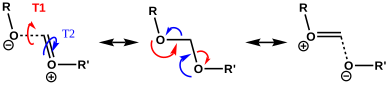
You can see some entries for which the C-O bond length is shorter than normal and the C-N distance very much longer than normal; an example of a highly asymmetric anomeric effect operating in just one direction rather than the two shown in the top diagram (red/blue arrows).

One example is LOFPON[1] (DOI: 10.5517/cc121rsn) with bond lengths shown calculated at the ωB97XD/def2svpp level (Calculation DOI: 10.14469/hpc/8682) and is rationalised by the nitrogen being a quaternary cation and hence an excellent leaving group which biases the electron flow towards it. Anomeric effects can be quantified using a technique known as NBO analysis, which uses perturbation theory to estimate the interaction energy between a donor orbital (the oxygen lone pair in this case) and an acceptor orbital (the C-N σ* unoccupied orbital). Populating the C-N σ* antibonding orbital causes the C-N length to increase and the interaction energy in this example is 36.4 kcal/mol. This is around twice the normal value for anomeric effects and so is unusually large.

LOFPON

The other prominent example is NAWNUV (Data DOI: 10.5517/cc93pkm) where the bond length asymmetry is slightly larger and so is the perturbation energy (E2) is 41.0 kcal/mol (ωB97XD/def2svpp calculation DOI: 10.14469/hpc/8378). 

NAWNUV

In the opposite direction, NUQKAM[2] is an example of a lengthened C-O bond and a shortened C-N bond, with the crystal structure (DOI: 10.5517/ccv3ln5) shown below.

In this instance, a ωB97XD/def2svpp calculation (Data DOI: 10.14469/hpc/8806) does not bear this structure out, with CN and CO bond lengths of 1.422 (vs 1.369) and 1.434 (vs 1.529)Å and a final E(2) of 22.1 kcal/mol (which is close to normal). This is an example of how mining the crystal structure can yield results that can be checked by a different (quantum computational) technique, which in this instance reveals a probable issue in the crystal structure refinement which is probably causing the apparently large anomeric effect in the crystal structure to manifest.

Another entry is ANUVUD[3] with a crystal structure (data DOI: 10.5517/ccdc.csd.cc24zxdg) shown below and CN and CO lengths of 1.391 and 1.559Å, which in this case ARE reasonably replicated by calculation (1.402, 1.499). This effect is promoted by the good leaving group ability of the carboxylate anion and the antiperiplanar orientation of the nitrogen lone pair with respect to the C-O bond, E(2)=35.2 kcal/mol (DOI: 10.14469/hpc/8807)

I end with FEHYOG, a relatively old structure[4] showing a very long C-N distance (1.673Å) but a normal associated C-O distance (1.423Å). This rings an alarm bell. Indeed, the respective computed distances are 1.482 and 1.425Å, a significant discrepancy (DOI: 10.14469/hpc/8769). The NBO interaction energy is an umremarkable 12.5 kcal/mol.

Data mining of the crystal structure database has revealed a number of abnormally large bond length asymmetries around the N-C-O unit. Some of these are true record breakers, but two have been identified where calculations cannot reproduce the observed bond lengths. One might indeed ask whether a quantum computation of the structure might not be added to the curation checks made by the CCDC of their database. It might improve the quality of the data even further!

References

  1. N. Mercadal, S.P. Day, A. Jarmyn, M.B. Pitak, S.J. Coles, C. Wilson, G.J. Rees, J.V. Hanna, and J.D. Wallis, "<i>O</i>-<i>vs. N</i>-protonation of 1-dimethylaminonaphthalene-8-ketones: formation of a<i>peri</i>N–C bond or a hydrogen bond to the pi-electron density of a carbonyl group", CrystEngComm, vol. 16, pp. 8363-8374, 2014. https://doi.org/10.1039/c4ce00981a
  2. A. Rivera, J.J. Rojas, J. Ríos-Motta, M. Dušek, and K. Fejfarová, "3,3′-Ethylenebis(3,4-dihydro-6-chloro-2<i>H</i>-1,3-benzoxazine)", Acta Crystallographica Section E Structure Reports Online, vol. 66, pp. o1134-o1134, 2010. https://doi.org/10.1107/s1600536810014248
  3. Y. Wang, D. Sun, Y. Chen, J. Xu, Y. Xu, X. Yue, J. Jia, H. Li, and L. Chen, "Alkaloids of Delphinium grandiflorum and their implication to H2O2-induced cardiomyocytes injury", Bioorganic & Medicinal Chemistry, vol. 37, pp. 116113, 2021. https://doi.org/10.1016/j.bmc.2021.116113
  4. N. Paillous, S.F. Forgues, J. Jaud, and J. Devillers, "[2 + 2] Cycloaddition of two CN double bonds. First structural evidence for head-to-tail photodimerization in the 2-phenylbenzoxazole series", J. Chem. Soc., Chem. Commun., pp. 578-579, 1987. https://doi.org/10.1039/c39870000578

Sterically stabilized cyclopropenylidenes. An example of Octopus publishing?

Sunday, August 15th, 2021

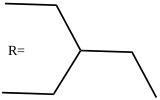
Whilst I was discussing the future of scientific publication in the last post, a debate was happening behind the scenes regarding the small molecule cyclopropenylidene. This is the smallest known molecule displaying π-aromaticity, but its high reactivity means that it is unlikely to be isolated in the condensed phase. A question in the discussion asked if substituting it with a large sterically hindering group such as R=Et3C might help prevent its dimerisation and hence allow for isolation of the monomer so that its properties can be studied.

But first, a crystal structure search for this interesting group, Et3C, which is one step up in steric size from the very much better known Me3C or t-butyl. As it happens 34 examples emerge, and the dihedral angle distribution of the three ethyl groups is shown below. The three clusters all correspond to conformations with two gauche and one anti ethyl group. 

Whilst on the topic of crystal structures, I note that there are 5 examples known of the next steric homologue, i-Pr3C and a surprising 18 of t-Bu3C. I will discuss these groups elsewhere.

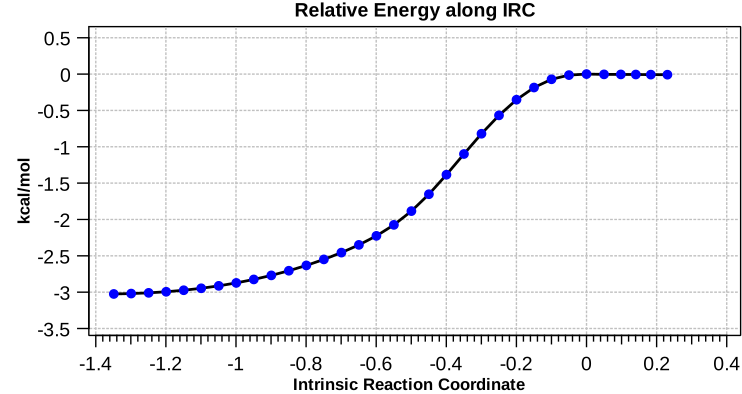
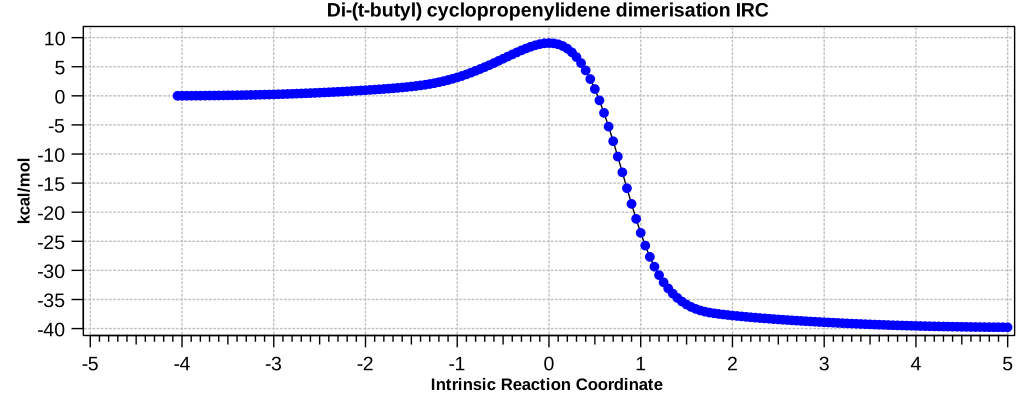
Next, a protocol for modelling the dimerisation: ωB97XD/Def2-SVPP/SCRF=dichloromethane. The IRC for R=H is shown at DOI: 10.14469/hpc/8705 and here I show that for R=Me3 showing a slightly larger barrier.

The results for three substituents are summarised in the table below which show that the barrier is a maximum for the t-butyl group and then decreases slightly for the apparently “larger” Et3C group.

R ΔG FAIR Data DOI
H 14.4 10.14469/hpc/8470
10.14469/hpc/8495
Me3C 16.0 10.14469/hpc/8706
10.14469/hpc/8707
Et3C 15.4 10.14469/hpc/8712
10.14469/hpc/8724
iPr3C* 25.5 10.14469/hpc/8722
tBu3C* 101.7 10.14469/hpc/8768
10.14469/hpc/8743

The analysis of this result is as noted in the discussion alluded to above, which is that these large groups, bristling with exposed hydrogen atoms, are strong dispersion attractors, at the right interatomic distances. The t-butyl group must be slightly sterically repulsive for the dimerisation reaction, but those dispersion attractions stabilise the slightly larger Et3C group. This could be tested further with R=i-Pr3C and t-Bu3C*.

I wanted to end this by going back to the opening line of this post. It struck me that the three posts here on the topic of cyclopropenylidene and the discussion they induced is not dissimilar from the “octopus” publishing modelling I had previously looked at.

  1. It started with setting out the initial seeding publication, in this case by noting that cyclopropenylidene had recently been reported in the atmosphere of Saturn’s moon Titan.[1].
  2. The hypothesis was that this molecule might be π-aromatic, an observation not noted in the original report (DOI: 10.14469/hpc/8716)
  3. A protocol for testing this hypothesis was to look at the occupied molecular orbitals of this molecule using a DFT-based quantum method (DOI: 10.14469/hpc/8716)
  4. The data resulting from this protocol is published (DOI: 10.14469/hpc/8714).
  5. Visual analysis showed two π-electrons (4n+2, n=0) i0n a molecular orbital fully delocalised around the three membered ring, which itself implies charge asymmetry in the molecule (DOI: 10.14469/hpc/8716)
  6. The original hypothesis of ring aromaticity was thus confirmed.
  7. A real-world problem then arose in the discussion relating to the dipole moment of this species resulting from the charge asymmetry.
  8. The review in this case was by comments posted to the blog posts here (a form of non-anonymous review).
  9. These reviews then spawned a new hypothesis, that a molecule based on cyclopropenylidene might support a record-large dipole moment (DOI: 10.14469/hpc/8717)
  10. This idea started a new cycle in which cyclopropenylidene might react with a source of dicarbon to give the desired molecule (DOI: 10.14469/hpc/8717)
  11. This cycle in turn spawned the current discussion, which relates to whether cyclopropenylidene might have a sufficiently long bimolecular lifetime to react with another molecule in preference to reacting with itself (DOI: 10.14469/hpc/8715)
  12. With a fork into crystal structure mining of steric groups beyond t-butyl.
  13. The latter resulting in a further cycle likely to be started relating to the hypothesis of R = i-Pr3C as an interesting steric group.

So we see here what might map to three cycles of “octopus publishing”. Those cycles were however non-linear, in that they did not happen in quite the sequence outline above; the discussions forked and split out from the original cycle, re-entering at different points in the cycle. My point being that scientific research is indeed very often cyclical and non-linear, albeit traditionally its reporting taking place in a form where many of the individual aspects of this process are bundled together in the form of a research article, a box-set if you will, which you can binge on if you wish. The concept of Octopus publishing is to fragment this model into smaller, stand-alone episodes, linked perhaps by a metadata-based DOI crumb trail. Lets see if the perceived benefits of publishing in this way catch on in chemistry.


*Further entries added to table.

References

  1. C.A. Nixon, A.E. Thelen, M.A. Cordiner, Z. Kisiel, S.B. Charnley, E.M. Molter, J. Serigano, P.G.J. Irwin, N.A. Teanby, and Y. Kuan, "Detection of Cyclopropenylidene on Titan with ALMA", The Astronomical Journal, vol. 160, pp. 205, 2020. https://doi.org/10.3847/1538-3881/abb679