Posts Tagged ‘Historical’

Sir Geoffrey Wilkinson: An anniversary celebration. 23 March, 2022, Burlington House, London.

Thursday, March 24th, 2022

The meeting covered the scientific life of Professor Sir Geoffrey Wilkinson from the perspective of collaborators, friends and family and celebrated three anniversaries, the centenary of his birth (2021), the half-century anniversary of the Nobel prize (2023) and 70 years almost to the day (1 April) since the publication of the seminal article on Ferrocene (2022).[1]


The meeting was organised as “inverse hybrid” (to use the new terminology), with a maximum capacity in-person audience attending along with fourteen speakers, three of whom were remote and one who could not attend on the day but whose presentation was given on their behalf. I will not give abstracts for the talks here, but note two common themes that I thought emerged during the day.

  1. All the speakers found themes in either their memories of Wilkinson and their time in his laboratories or their current research work that show how he continues to  influence, along with the famous text book that he co-wrote, the modern world of chemistry. He truly left a remarkable legacy.
  2. This is a personal observation, but in his day, Wilkinson was famously sceptical of the ability of molecular modelling to cast profound insights into the molecules his group were studying. Yesterday I think with only one or two exceptions, the talks were accompanied by “DFT modelling” helping to provide such insights, either into the reaction mechanisms via energy profiles or into the properties of the molecules themselves, including their spectroscopy.

A small exhibition of artefacts included his famous portrait, all the editions of the text book and other items from his desk.

Finally, I thought I might explore the famous controversy surrounding the model of ferrocene which is shown in the photos below. It is shown with the two cyclopentadienyl rings in a so-called “eclipsed” conformation. To cast light on this, I show a search of the Cambridge crystal database of all molecules with this sub-structure. There are 24,868 of them.

The histogram plot of the dihedral angle is shown below. The staggered geometry has a dihedral of 36° and you can see a small maximum at this point in the distribution below. But this is dwarfed by 0°, the value for the eclipsed orientation. The  barrier  to  rotation is  known to be very small, and this is reflected in the almost continuous distribution amongst those 24,868 molecules.

References

  1. G. Wilkinson, M. Rosenblum, M.C. Whiting, and R.B. Woodward, "THE STRUCTURE OF IRON BIS-CYCLOPENTADIENYL", Journal of the American Chemical Society, vol. 74, pp. 2125-2126, 1952. https://doi.org/10.1021/ja01128a527

Herapathite: an example of (double?) serendipity.

Thursday, October 14th, 2021

On October 13, 2021, the historical group of the Royal Society of Chemistry organised a symposium celebrating ~150 years of the history of (molecular) chirality. We met for the first time in person for more than 18 months and were treated to a splendid and diverse program about the subject. The first speaker was Professor John Steeds from Bristol, talking about the early history of light and the discovery of its polarisation. When a slide was shown about herapathite[1] my “antennae” started vibrating. This is a crystalline substance made by combining elemental iodine with quinine in acidic conditions and was first discovered by William Herapath as long ago as 1852[2] in unusual circumstances. Now to the serendipity!

Herapath was able to get small crystals of this substance and discovered that when he placed one crystal upon another at “right angles”, the combination went “black as midnight”. He recognised that it was functioning as an excellent linear light polarizer, absorbing virtually all the light polarized along the shorter axis of the best-developed facet of the crystal. A number of well known scientists investigated this substance at the time, but by about 1951 it had largely been forgotten. The person to rediscover it was Edwin Land, of Polaroid camera fame.[3] He oriented the microcrystals into an extruded polymer to stabilize them and hence produce the first large-aperture light polarizer, which enabled him to manufacture his first camera. The serendipity resulted from him spotting the by then forgotten properties of Herapathite (I wonder if he recorded how this actually came about) and recognising how to exploit it.

In 2009 Bart Kahr had noticed that the crystal structure of this material had never been reported. It was a challenging structure to solve[1] but established that the polarizing property of the crystals was in large measure due to the presence of infinite chains of I3 units aligned in an almost linear channel in the crystal structure. And so it was that in October 2021, John Steeds showed the structure containing these iodine chains in his slide on the topic. The crystal structure is in the CCDC database as WEYDOV and can be seen here at DOI: 10.5517/ccsdg7v I show below part of the extended lattice, showing that chain of iodines.

Click to view 3D model of WEYDOV

So the next (possible) instance of serendipity. From the audience, I immediately recognised this structural motif as being related to the crystal structure of both Na+I (NAIACE) and Na+I2 (GADMOO)[4] which I discussed in one of the very first posts on this blog in 2009 as part of a story about the Finkelstein reaction. Both these structures were obtained from acetone solution, and this solvent very much forms part of the crystal structures, serving to coordinate the sodium cations and playing the role of the quinine in herapathite. The iodine chains, comprising in GADMOO units of I3 and I, are almost exactly linear!

Click to view 3D model of NAICE

Click to view 3D model of GADMOO

So, the question arises as to whether crystals of Na+I2 have ever been examined for light polarisation? One might also ask whether eg the chiral quinine imparts a critical property to the herapathite crystal, or could the achiral acetone also serve the purpose? What would happen if substituted versions of acetone were used (halo, methyl etc)? Would they destroy those linear chains, or would they survive? Are repeating chains of I3 units essential, or can chains of alternating units of I3 and I also serve the purpose? All questions that can only be answered by experiments! Anyone up for trying?


This post has DOI: 10.14469/hpc/9537


References

  1. B. Kahr, J. Freudenthal, S. Phillips, and W. Kaminsky, "Herapathite", Science, vol. 324, pp. 1407-1407, 2009. https://doi.org/10.1126/science.1173605
  2. W.B. Herapath, "XXVI. <i>On the optical properties of a newly-discovered salt of quinine, which crystalline substance possesses the power of polarizing a ray of light, like tourmaline, and at certain angles of rotation of depolarizing it, like selenite</i>", The London, Edinburgh, and Dublin Philosophical Magazine and Journal of Science, vol. 3, pp. 161-173, 1852. https://doi.org/10.1080/14786445208646983
  3. E.H. Land, "Some Aspects of the Development of Sheet Polarizers*", Journal of the Optical Society of America, vol. 41, pp. 957, 1951. https://doi.org/10.1364/josa.41.000957
  4. R.A. Howie, and J.L. Wardell, "Polymeric tris(μ<sub>2</sub>-acetone-κ<sup>2</sup><i>O</i>:<i>O</i>)sodium polyiodide at 120 K", Acta Crystallographica Section C Crystal Structure Communications, vol. 59, pp. m184-m186, 2003. https://doi.org/10.1107/s0108270103006395

The thermal reactions … took precisely the opposite stereochemical course to that which we had predicted. A non-covalent-interaction view of the model.

Wednesday, February 3rd, 2021

Another foray into one of the more famous anecdotal chemistry “models”, the analysis of which led directly to the formulation of the WoodWard-Hoffmann (stereochemical) rules for pericyclic reactions. Previously, I tried to produce a modern computer model of what Woodward might have had to hand when discovering that the stereochemical outcome of a key reaction in his vitamin B12 synthesis was opposite to that predicted using his best model of the reaction.

Vitamin B12 synthesis

Such computer models generate quite accurate 3D coordinates of the transition state for the reaction and this can be most simply analysed for finding e.g. steric clashes. These are when two atoms (mostly hydrogen) approach too close to one another. But we now know that in the region 1.9 – 2.4Å these close approaches can be attractive as well as repulsive and so distances alone are not the complete story. Here I analyse these models using a technique known as non-covalent-interactions (NCI). This is based on the electron density and its reduced density gradients and it explores not merely simply distances between atoms but the non-bonded or weakly interacting regions of a molecule, generating a colour coded surface of interaction rather than pairwise distances. The colour coding goes from red (strongly destabilising, or repulsive regions) to blue (stabilising or attractive regions), with green representing weakly stabilising and yellow weakly destabilising. It gives a much more rounded picture of the entire molecule.

Disrotatory TS for G to H, Click for 3D

Conrotatory “TS” for G to J, Click for 3D

The NCI surfaces are shown above and are best expanded into a rotatable 3D model by clicking on either image. Regions of interest are shown with arrows. The region of the “steric clash” identified for the (thermal) transition state G to H (the one actually found by experiment) can be seen with the arrow in the top right. It is colour coded light blue (attractive; note the very attractive dark blue for the O…HO hydrogen bond in the system), but it is immediately next to a yellow/orange region (repulsive). This again reminds us that “stabilising” and “destabilizing” regions of a molecule can be adjacent to each other, something that physical models cannot convey. The steric clash for the “transition state” G to J (in quotes because it is actually a transition state calculated for the excited triplet state and not the ground state) is indicated with the arrow, being a clash of two methyl groups. It is coded green, indicating weak NCI stabilization.

So, in this analysis, steric clashes become more complex as indicators of reaction outcomes, since it is the overall balance of stabilisation and destabilisation that determines this. You might argue that Woodward would have found this modern analysis far too woolly to be useful in the sense he used, which is as an alert for the possibility of a new principle in organic reaction mechanisms and certainly a Nobel prize for his collaborator Hoffmann!


The region of the C-C bond which is forming in this transition state has a very non-standard electron density, to which this analysis cannot really be applied. So that region should be disregarded for the “non-covalent” analysis being done here. Plots a reduced density isosurface, colour mapped with ABS(ρ)*SIGN(λ2), where λ2 is the middle eigenvalue of the Hessian matrix of the electron density. A web page for generating such surfaces can be found at DOI: ftkt.

The Stevens rearrangement: how history gives us new insights.

Friday, January 29th, 2021

In a recent post, I told the story of how in the early 1960s, Robert Woodward had encountered an unexpected stereochemical outcome to the reaction of a hexatriene, part of his grand synthesis of vitamin B12. He had constructed a model of the reaction he wanted to undertake, perhaps with the help of a physical model, concluding that the most favourable of the two he had built was not matched by the actual outcome of the reaction. He was thus driven to systematise such (Pericyclic) reactions by developing rules for them with Roald Hoffmann. This involved a classification scheme of “allowed” and “forbidden” pericyclic reactions and his original favoured model in fact corresponded to the latter type. When physical model building in the 1960s was gradually replaced by models based on quantum mechanical calculations from the 1970s onwards, the term “allowed” morphed into “a relatively low energy transition state for the reaction can be located” and very often “no transition state exists for a forbidden reaction”. The famous quote “there are no exceptions” (to this rule) was often interpreted that if a “forbidden reaction” did apparently proceed, its mechanism was NOT that of a pericyclic reaction. Inspired by all of this, I recollected a famous “exception” to the rules which is often explained by such non-pericyclic character, the Stevens rearrangement[1],[2],[3] by a 1,2-shift.

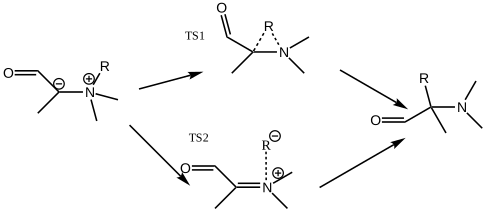
Here, R = benzyl (in the original experiment). The crucial point here is that the reaction readily proceeds at moderate temperatures and that if the R group is chiral, it proceeds with retention of configuration. Why was this remarkable? Because if this is indeed a four electron 1,2-sigmatropic pericyclic reaction, it is predicted to proceed with inversion of configuration at the R group. So 1,2-migration with retention would be an exception to the Woodward-Hoffmann rules and to avoid being an exception, it clearly cannot be a pericyclic reaction! Time for some calculations, at the B3LYP+GD3BJ/Def2-SVP/SCRF=water level (FAIR Data DOI: 10.14469/hpc/7855)

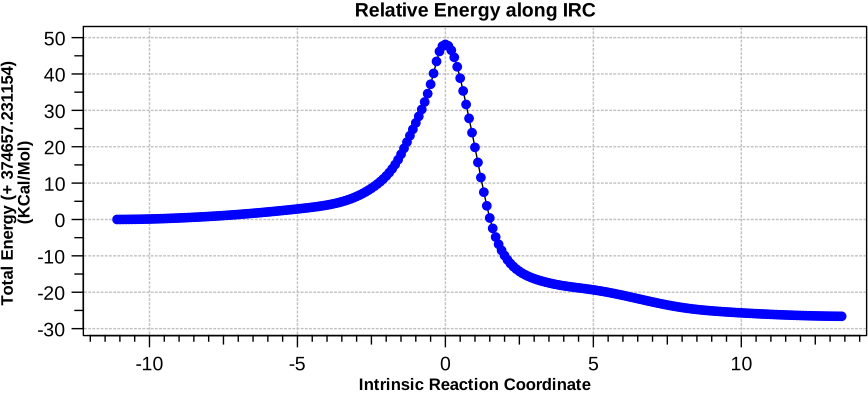
The above is the classic 1,2-sigmatropic migration of a benzyl group from N to C, proceeding with retention of configuration. Hey, look at the barrier (TS1, ΔG 48.2 kcal/mol), which is way too high to be a viable reaction. This teaches us the first lesson; it can be possible to locate the transition state for “forbidden” thermal reactions, but it is likely they will be very high in energy. Forbidden in this case means in terms of energy; sometimes it can mean in terms of orbital symmetry, or even transition state anti-aromaticity.

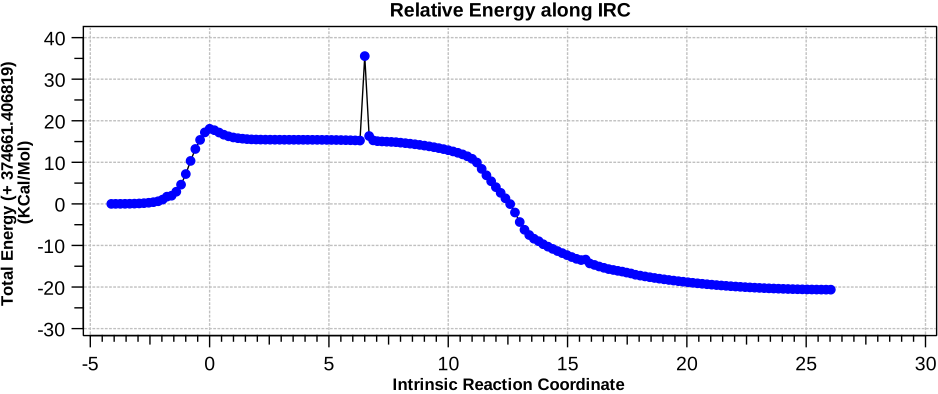
Now we have to do something clever with the keywords for the calculation. This involves adding guess(mix.always) and running a spin unrestricted version, ub3lyp. This does a very simple CI (configuration interaction), mixing the HOMO and LUMO to allow an open-shell biradical as a solution for the wavefunction. In effect we are mixing an excited state into the wavefunction, which reflects the Woodward-Hoffmann observation that a “forbidden” thermal reaction can proceed as an “allowed” photochemical, i.e. excited state, reaction! Now one gets an entirely different outcome, with an activation free energy of TS2, ΔG 13.9 kcal/mol, a facile thermal reaction. 

At IRC values of -1 to zero, simple C-N bond cleavage occurs. The closed shell reactant has  a value for the spin expectation operator <S**2>= 0.0000, but by the TS, it has acquired the value  <S**2>= 0.4214. To give you an idea of what this means, a “pure” biradical has a value of <S**2>= 1.0000. So this is half way to becoming a pure biradical, and in effect also half way from a pure closed shell ion-pair (which would again have <S**2>= 0.00000). From IRC = +1 to IRC = +10, this continues to evolve, reaching a maximum value of <S**2>= 1.0084 at ~IRC 11 (a pure biradical). Then the value of <S**2> collapses rapidly to 0.000, indicating formation of an ion pair, but only well after the transition state is passed. This ion pair then recombines to form a C-C bond and the final product. 

Spin density at TS2. Click to view 3D model

So to summarise, the Stevens 1,2-rearrangement is a very asymmetrical process, breaking the C-N bond long before the C-C bond starts to form. In this sense it is really not a pericyclic reaction! At the transition state, it has character of both a biradical and an ion-pair, very much a Janus-like mechanism with two faces to it.

But what of the stereochemistry? Well, here is a suggestion. As it progresses on its way, first to acquire biradical character and then to lose that in favour of ion-pair character, the phenyl group retains its involvement with the rest of the molecule via dispersion attractions. So these dispersion terms may well be strong enough to prevent the phenyl group from any rotations that would be required to produce stereochemical inversion rather than the observed retention. I do not believe that the role of dispersion attractions in the Stevens mechanism has been proposed before. A colleague who works with fluorinated compounds has suggested that perhaps fluorinated substrates may show different dispersion behaviours, maybe leading to stereochemical scrambling. An experiment worth doing?

References

  1. T.S. Stevens, E.M. Creighton, A.B. Gordon, and M. MacNicol, "CCCCXXIII.—Degradation of quaternary ammonium salts. Part I", J. Chem. Soc., vol. 0, pp. 3193-3197, 1928. https://doi.org/10.1039/jr9280003193
  2. T.S. Stevens, "CCLXX.—Degradation of quaternary ammonium salts. Part II", J. Chem. Soc., vol. 0, pp. 2107-2119, 1930. https://doi.org/10.1039/jr9300002107
  3. T.S. Stevens, W.W. Snedden, E.T. Stiller, and T. Thomson, "CCLXXI.—Degradation of quaternary ammonium salts. Part III", J. Chem. Soc., vol. 0, pp. 2119-2125, 1930. https://doi.org/10.1039/jr9300002119

The thermal reactions … took precisely the opposite stereochemical course to that which we had predicted

Wednesday, January 20th, 2021

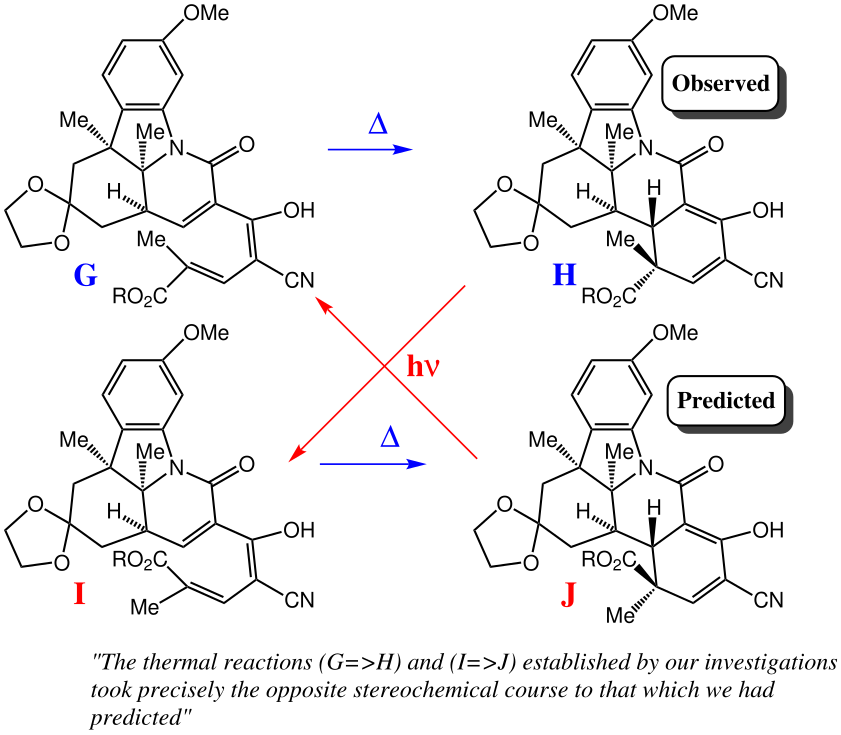
The quote of the post title comes from R. B. Woodward explaining the genesis of the discovery of what are now known as the Woodward-Hoffmann rules for pericyclic reactions.[1] I first wrote about this in 2012, noting that “for (that) blog, I do not want to investigate the transition states”. Here I take a closer look at this aspect.
Vitamin B12 synthesis

I will start by explaining my then reluctance to discuss transition states. Woodward in describing this discovery (in Chem. Soc. Special Publications (Aromaticity), 1967, 21, 217; a historic article which unfortunately remains off-line) notes the “steric preference for attack below the plane for C-5 and a gentle spiral for the cyclization to achieve the required stereochemistry at C-6″. In reference to the diagram above, he is talking about the reaction G to J which he thought was favoured over G to H on steric grounds. We must now try to judge what criteria might have been used to establish these steric grounds. He might have been referring to the relative thermodynamic stabilities of H vs J, which is the aspect I addressed in my earlier blog. But it has now been pointed out to me that Woodward is more likely to have been thinking about the transition state for the reaction, in referring to a “gentle spiral” for the reaction path as inferred by model building. So why my reluctance in 2012 to look at this aspect? As Woodward himself quickly came to realise, the transition state for G to H is electronically “allowed” but the transition state for G to J is electronically “forbidden”. Let me qualify that. The latter is only forbidden on the ground state electronic surface, but it is allowed on an open shell excited state (photochemical) surface. It is very difficult (if not impossible) to directly compare the energies of these two electronic states for any steric differences that might be hidden or embedded within them. So how did Woodward initially infer a “steric preference” between these two reactions?

Model building reached its peak as an essential tool for understanding chemistry in the 1950s, with the likes of Pauling and Watson + Crick making Nobel-prize winning discoveries using this technique. By the 1960s, one could buy commercial model building kits, such as Dreiding stereomodels (1958) which focused on the bonds themselves and CPK or spacefilling models (~1952[2]) based on the size of the atom (a technique pioneered by Loschmidt as long ago as 1860). I would point out that such models are constructed for molecules in their presumed ground electronic state! So Woodward must have been constructing models for G to H and G to J with the implicit assumption that they were in the ground electronic state. Clearly he noticed something which led him to conclude that these models predicted G to J over G to H. I do not know if his models have survived to posterity and are now in a museum somewhere; the chances are we will never know exactly what it was that alerted him that the formation of G to H was so unexpected that it triggered a Nobel-prize winning theory!

Having declined to build TS models in my original musings on this topic, I now decided to bite the bullet and try to now locate at least approximate models for both possible stereochemical outcomes. The disrotatory transition state for G to H is relatively trivial. Here I used the PM7 method, which I noted previously nicely absorbs dispersion corrections which may be important! It also allows a full IRC for the reaction path to be constructed in just a few hours (a DFT approach would take quite a lot longer). The FAIR data for my models can be found at DOI: 10.14469/hpc/7806

I then realised that the electronically “forbidden” transformation G to J (something that makes locating a transition state on the ground state surface unlikely) was in fact allowed for an open shell triplet state (a excited state). In this state, transition state location actually proceeds without issue to find a nice conrotatory transition state.

The two key transition state models are each shown below in two representations. The clashes noted are approaches of two atoms closer than the sum of the van der Waals radii. First, I note that transition state G to H clashes a hydrogen with the adjacent methyl group (H…H contact 1.937Å using the PM7 semi-empirical method, 1.942Å using the ωB97XD/6-311G(d,p) density functional method).

G to H, ball and stick representation. Click to view 3D

G to H, spacefilling representation

G to J also exhibits a clash, albeit a lesser one, between the hydrogens of two methyl groups (2.01Å for PM7, 2.03Å for ωB97XD/6-311G(d,p)). So one could argue that G to J is indeed favoured on steric grounds over G to H, but only by about 0.07Å in the close approach of pairs of non-bonded hydrogen atoms. I also note that Woodward’s gentle spiral or spiral of low pitch is in fact a left-handed one!

G to J, ball and stick representation. Click to view 3D

G to J, spacefilling representation.

To get another perspective on what this means in reality, I conducted a search of the CSD (Cambridge structure database) for the sub-structure shown below:

The results show H…H contacts down to about 2.03Å, which suggests that the steric clash for G to H probably is slightly repulsive, whilst that for G to J could be on the verge of being attractive.

We might conclude that there is probably only a small steric difference between the two quantitative reaction models G to H and G to J as evaluated here, probably favouring the latter and assuming that the sterics are expressed entirely by van der Waals distances and have not been absorbed into bond angles etc. Of course much of what I have done and explained here was not common in the 1960s. The details of how Woodward’s models were actually constructed and how quantitative they were may never be discovered. It matters not of course, since the surprise of finding the actual product was H and not J went on to catalyse one of the great theories of organic chemistry!


My thanks to Jeff Seeman and Dean Tantillo for contacting me about this, inspiring the above revisitation and much interesting discussion; J. Seeman and D. Tantillo, “On the Structural Assignments Underlying R. B. Woodward’s Most Personal Data Point That Led to the Woodward-Hoffmann Rules. Related Research by E. J. Corey and Alfred G. Hortmann.”, Chem. Euro. J., 2021, in press. As noted elsewhere on this blog, H…H contacts as short as 1.5Å have been measured experimentally. To turn the 3D view of the molecule into a spacefill model, right-click in the model window and invoke Scheme/CPK Spacefill as shown below:

References

  1. R.B. Woodward, and R. Hoffmann, "Stereochemistry of Electrocyclic Reactions", Journal of the American Chemical Society, vol. 87, pp. 395-397, 1965. https://doi.org/10.1021/ja01080a054
  2. R.B. Corey, and L. Pauling, "Molecular Models of Amino Acids, Peptides, and Proteins", Review of Scientific Instruments, vol. 24, pp. 621-627, 1953. https://doi.org/10.1063/1.1770803

Internet Archeology: an example of a revitalised molecular resource with a new activity now built in.

Thursday, November 5th, 2020

In Internet terms, 23 years ago is verging on pre-history. Much of what was happening around 1997 on the Web was still highly experimental and so its worth taking a look at some of this to see how it has survived or whether it can be “curated” into a form that would still be useful. I had noted in my earlier comment a site which early on had become non-functional and then speculated whether any volunteers might have suggestions for how to best rescue it.

There are two ways of approaching any such rescue operation; a manual editing of the code behind the site (the HTML) or a more automated approach to doing so. The site in question in fact probably has more than 200 HTML documents that would need such an edit, which is impractical (or costly) for human curation. But the underlying well-formed structure of HTML lends itself to automation and now a saviour in the form of Ángel has indeed come forward with the solution!

One of the least stable aspects of Web pages written in the period 1993-1998 or so was the manner in which extensions to perform specialised tasks were handled. The first solution in chemistry[1] was to use the Web page itself to launch an external molecular viewer such as Rasmol via a protocol known as MIME,[2] but that depended very much on the viewer already being pre-installed on the device being used. This was a shop-stopper if you did not have the administrative rights to do so. Netscape was a company set up in 1994 whose main product was an innovative browser which could be extended by “embedding” a window directly into the display page using a plug-in rather than the earlier solution of having a separate window.  In 1995, one such plugin appeared for the Netscape browser called “Chime”, which allowed 3D coordinates representing a molecule to be displayed as an interactive model within the page. The plugin still had to be pre-installed by the user and this is how in 1997 https://www.ch.ic.ac.uk/vchemlib was set up to function.

The limitations of plugin pre-installation soon became apparent. A partial solution was to download the plugin as part of invoking the web page itself. For this to work across a range of different devices running different operating systems, the plugin had to work on all of them. The solution was based on Java applets, which in turn would still rely on an initial underlying installation (with admin rights) of the JRE (Java Run-time Environment) on the device. This would now support a wide variety of different Java applets, rather than requiring each of them to be pre-installed by the viewer of the page. Between the period 1998 or so up to around 2015, the functionality of the Chime plugin was implemented and indeed greatly extended into the Java-based Jmol applet.[3] Unfortunately, using this did now require rewriting the underlying HTML code for each individual Jmol invocation.

The next step brings us up to the present method, which was to replace the Java applet by a Javascript-based module which would NOT require a JRE to be pre-installed. All the required installation would be handled by the browser itself; the runtime environment in effect was now built into browser itself. This again required a change to the HTML code for the invoking this tool. So the nature of the curation required to revitalise https://www.ch.ic.ac.uk/vchemlib/ can now be defined: replace the HTML code used to invoke Chime by new code which invokes its current replacement, JSmol (which stands for JavaScript Jmol). The good news is that this is a simple programmatic procedure, which itself can be implemented using Javascript. Here is where Angel comes in. He has freshly written convert.js as a script which performs this task. It is now invoked by simply adding a header to every HTML document as <script src="convert.js" type="text/javascript"></script> and all the necessary conversion from the old Chime syntax is then done on the fly when the page is loaded.

The big win is that as a toolkit, JSmol is very much more capable than Chime ever was! One of the many interesting things it can do that was not previously possible is “computation”. I thought I would illustrate how this veritable resource has not only been curated back into (mostly) working order, but also how its functionality as a molecular toolkit has been greatly enhanced. 

We are going to illustrate this using the tool optimize structure, the menu for which can be invoked by a right-mouse click anywhere in the molecule window. What does this mean? Well, I need to start by covering the basic sources for 3D molecular coordinates, which can be generated using a wide variety of methods, some of which are listed below.

  1. They may be derived from simple 2D flat diagrams such as produced by e.g. Chemdraw, with some indication of 3D using chemical hashes and wedges. The “z” coordinate can be zero for all atoms. Clearly not optimal.
  2. A 3D structure can be generated from a 2D one using very simple rules about the 3D environment about each atom, such as tetrahedral carbons and simple standard bond lengths and angles. Programs such as Avogadro[4] can do this as part of loading a molecule with only 2D coordinates present.
  3. This simple rule can be extended to using a full force field, which includes much more information about bond distances, bond angles, torsions, inclusion of van der Waals attractions and repulsions and electrostatic effects (but significantly not any effects based on electronic structure).
  4. Full-blown quantum mechanical computation of the geometry, including electronic effects.
  5. Experimental coordinates such as obtained using crystallography. 

In general, information on which of the above categories were used to obtain the 3D coordinates are infrequently, if ever, actually declared on the web page. Indeed, this information for the site https://www.ch.ic.ac.uk/vchemlib/ is missing, only the original author might know! Of these types, #3 is computationally fast enough to be implemented into a Javascript such as JSmol, so we can now test how “optimised” any set of 3D coordinates actually is (#4 is not yet possible). Here are some instructions on how to proceed. For illustration I will use this molecule from the site, accessed as https://www.ch.ic.ac.uk/vchemlib/mol/direct_pdb.html?senses/vision/colour/pdbs/carotene.pdb The coordinates are expressed in the so-called PDB format, which was originally developed with proteins in mind and not small molecules.

  1. Load the link above and right-click to bring up the toolbar menu shown below:
  2. When doing any computation (especially one that might turn out to be slow!), it is useful to get feedback and this is done by opening the Console. With the molecule now available to inspect, you might notice some anomalies indicated with red arrows.
  3. The top panel of the Console shows JSmol responses and the bottom panel is where you can type commands for JSmol. Type the following commands one at a time into this bottom panel, each ending with pressing the return key:
    • set forcefield "MMFF94
    • set minimizationMaxAtoms 400
    • minimize steps 100
  4. This produces the result shown below. The MMFF94 force field has been selected, the maximum atom count set to 400 (default is 200) and 100 steps of energy minimisation requested (the default).  The energy E is the so-called steric energy, which is the sum of all the terms given in #3 above. The fact that it starts with a value of 27606 kJ/mol and reaches 157 kcal/mol after 100 iterations suggests that the 3D coordinates were indeed far from optimum;  E is normally in the range -300 to + 300 kcal. Notice also the dE is the change in energy every 10 iterations. You really need to get this down a bit lower, so repeat the minimise instruction (and set the max steps to a larger value such as 1000)
  5. The minimisation finally converges after 806 cycles (a default of 100 is rarely enough) to 108.6 kcal. To update to the final geometry, enter a return in the bottom panel. Inspect the region indicated with red arrows again!

  6. Now type set forcefield "UFF" into the bottom panel and repeat the minimisations until convergence is obtained (about 4000 cycles!). This is using a much more approximate force field, but one that is applicable to most elements in the periodic table. The initial UFF energy is 1086 kJ/mol and the final one 627, a much smaller change than before (absolute MMFF94 and UFF energies themselves cannot be compared) accompanied by only a small change to the final geometry.
  7. Now type e.g. write beta-carotene.pdb into the bottom panel to download the final and now optimised geometry file to your device. You might as well put all that hard-earned optimisation to good use elsewhere. 
  8. I will end with an experiment to highlight an issue intrinsic to force field optimisations. The force field operates by identifying standard environments for the atoms and bonds in the molecule, such as the atom hybridisations and assigning the correct type of force constant to them. If the molecule has not been defined correctly, this process cannot be done. In these instances, only the UFF field can be used. Then try this example:
    https://www.ch.ic.ac.uk/vchemlib/mol/direct_pdb.html?polymer/synth/acrylates/pdbs/methyl_methacrylate.pdb
    and try to select the MMFF84 force field and mimimize. It will instead use the UFF field, almost certainly because the so called CONECT records in the PDB file are incomplete or incorrect. Nowadays, PDB is rarely used for these sorts of purposes, with e.g. a Molfile or CML format being preferred. This has much more reliable connectivity and bond type information baked into it. This sort of issue can be a real problem for larger molecules, since there are 100s of connection records defined and even a single error in any of them can prevent a good force field from being used. Even an experimentally derived set of coordinates such as from a crystal structure will still require atom and bond types to be correctly assigned. The general solution to this sort of issue is to move over to a quantum mechanical (QM) treatment, where atom and bond types are not used at all.  Instead the only information needed is the atom list and a set of approximate coordinates (and charge if the molecule is not neutral together with spin state).  Unfortunately,  implementing a QM procedure into JSmol would require computers that are perhaps a factor of ten faster interactively than current ones. Not impossible to envisage and perhaps the next improvement to this site in another 10 years time!

The concept that a Web-based resource like this can provide a chemical toolkit embedded within the page to conduct experiments such as the ones described above was nonetheless very much the original intention envisaged all those years ago.[1]


Just to clear this up, Java and Javascript are NOT the same despite the name. This is implied as kJ in this version of JSmol. You might as well write out carotene.mol or carotene.cml, which are better suited for further processing with more reliable bond records. The latter was indeed designed to avoid any loss of information during such conversions if at all possible! A similar anomaly formed the basis of this critique of the vibrational mode imaging of a tetraphenylporphrin.

References

  1. O. Casher, G.K. Chandramohan, M.J. Hargreaves, C. Leach, P. Murray-Rust, H.S. Rzepa, R. Sayle, and B.J. Whitaker, "Hyperactive molecules and the World-Wide-Web information system", Journal of the Chemical Society, Perkin Transactions 2, pp. 7, 1995. https://doi.org/10.1039/p29950000007
  2. H.S. Rzepa, P. Murray-Rust, and B.J. Whitaker, "The Application of Chemical Multipurpose Internet Mail Extensions (Chemical MIME) Internet Standards to Electronic Mail and World Wide Web Information Exchange", Journal of Chemical Information and Computer Sciences, vol. 38, pp. 976-982, 1998. https://doi.org/10.1021/ci9803233
  3. R.M. Hanson, "<i>Jmol</i>– a paradigm shift in crystallographic visualization", Journal of Applied Crystallography, vol. 43, pp. 1250-1260, 2010. https://doi.org/10.1107/s0021889810030256
  4. M.D. Hanwell, D.E. Curtis, D.C. Lonie, T. Vandermeersch, E. Zurek, and G.R. Hutchison, "Avogadro: an advanced semantic chemical editor, visualization, and analysis platform", Journal of Cheminformatics, vol. 4, 2012. https://doi.org/10.1186/1758-2946-4-17

Blasts from the past: a snapshot of online content in chemistry, ~1994-1998.

Monday, September 28th, 2020

With universities around the world having to very rapidly transition to blended learning (a mixture of virtual and face-2-face experiences) with a very large component based on online materials, I thought it might be interesting to try to give one snapshot of when the online experience started to happen in chemistry.

My start point will in fact be 1993, when the method of exposing online content currently in use (the “web”) really got going. Using the HTML language, Web servers started to appear in abundance around that time. By the end of 1993, perhaps 50 Web servers were operational and of course the number started to rise exponentially thereafter, to the point that they must number billions by now. There had of course been online content before then, largely in the form of file downloads using protocols such as FTP or Gopher, but the Web was the first that allowed richly visual content to be immediately presented online in an easily navigable form using hyperlinks. By around 1995, there was sufficient online content that collections of such materials started appearing. Remember, this was still before the days of global search engines such as Google (which in fact appeared around 1996) allowed you to find material. So it was that I too decided then to create a snapshot of what materials there were on the topic of chemistry. My effort occurred from 1994-1998 and it can be found here:

https://www.ch.ic.ac.uk/GIC/

It indeed has not been curated since 1998, and so what is called “link rot” has set in. After >22 years, this is very considerable, as you will no doubt discover for yourselves. There are 48 sites in this collection and although I have not tried them all, I suspect no more than perhaps 10 continue to resolve to content to this day. Much of it relates to university level content, but at least one of our own projects (Virtual Chemistry library, or V-chemlib) was directed at schools and museums (the Science museum in fact).

Even if the main site has not suffered link-rot, the content may well have done. In those days a variety of early techologies were used to animate the content and render it more interactive. One of these was the Chime 3D molecular viewer, which the project above makes use of. That is no longer functional (although with some curation, there is no doubt it could be rescued).

So this exercise is really one which might be called Internet Archeology, of finding artefacts and materials that have been long buried and whose discovery and analysis yields fascinating insights into their own eras. In this case, an era that is only 22-26 years ago! I doubt anyone at the time thought that a mere quarter of a century later, almost entire university courses might be delivered in this way, and for reasons no-one would wish to have experienced.


Volunteers to do so welcome!

The (+) in D-(+)-glyceraldehyde means it has a positive optical rotation? Wrong!

Friday, December 6th, 2019

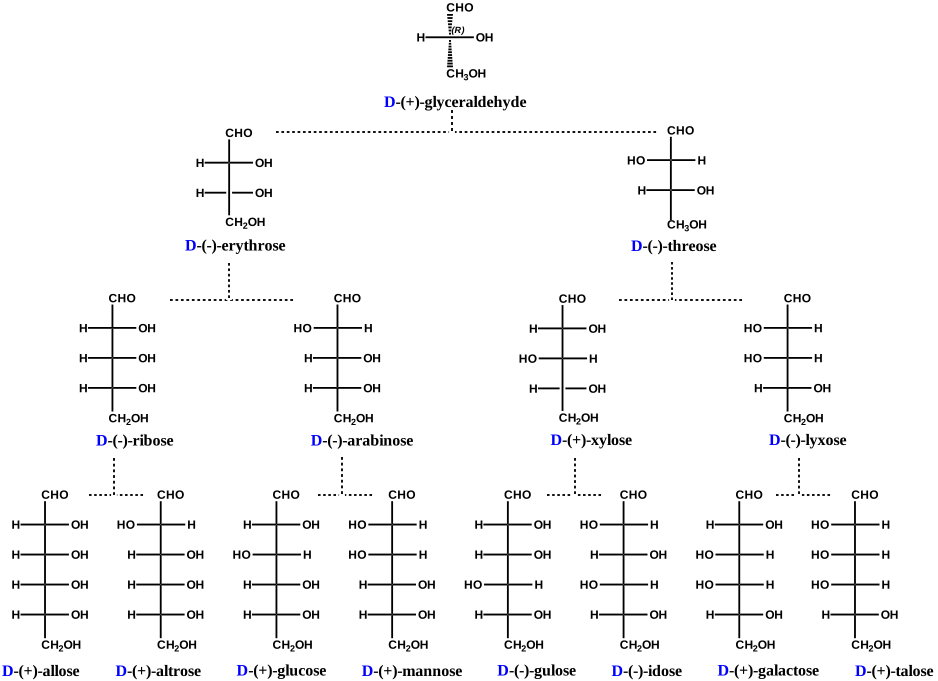
Text books often show the following diagram, famously consolidated over many years by Emil Fischer from 1891 onwards. At the top sits D-(+)-glyceraldehyde, to which all the monosaccharides below are connected by painstaking chemical transformations.

In this notation, D (for all these structures) indicates the absolute configuration of the series, deriving from placing the last highest priority group before an achiral carbon at the bottom of the representation (the hydroxyl group) to the right of the diagram (= dextro = D). The mirror images of all these species would be designated L (since the hydroxide group would now be on the left). The challenge emerges in connecting this absolute configuration to some measurable property, and during the late 19th century, the only feasible measurement would be the sign of the optical rotation. It was decided that since no method existed at the time to connect absolute configuration to the sign of optical rotation, D-glyceraldehyde (nowadays more commonly referred to by its CIP notatation (R)-glyceraldehyde), would be by convention connected to the enantiomer giving a positive rotation, hence D-(+)-glyceraldehyde. This species has indeed mostly been reported as having a small positive rotation of e.g. +9.2[1] in water. If a future procedure were to confirm that the D-enantiomer had a positive rotation, Fischer’s guess would be proven correct. Possibly.

I quickly mention that this experiment was of course carried out in 1951, as noted in the previous post[2], but on a rubidium tartrate salt and not on glyceraldehyde itself (which is a liquid). Since the two could be connected by chemical synthesis, Fischer’s guess was indeed confirmed as correct. This proof rapidly made D-(+)-glyceraldehyde less relevant as the tentpole of absolute configuration (in sugars) and people stopped worrying about it. But the assertion that the D/(R) enantiomer has a positive rotation by indicating (+) continues in all the diagrams related to the above that I have come across. So is it correct?

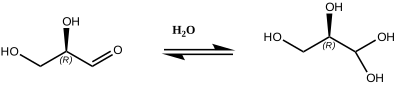
Well, an earlier attempt in 1937 to assign optical rotation to absolute configuration had been attempted by Kirkwood[3] using quantum mechanical theory to make that connection. I thought I might apply the modern version of that approach to (R)-glyceraldehyde, using the same procedure I had tried earlier. A conformational analysis of the molecule, followed by dispersion-corrected calculation of free energies and then of the optical rotations gives the following table. Data is at 10.14469/hpc/6436These calculations show that the rotation is strongly negative! Can they be in serious error? Perhaps however there are two different species in solution. Indeed, the equilibrium below is shown to favour the rhs for aldehydes, as shown by the following concentration profile as a function of temperature.[4] This shows that at 30°, only 4% of this molecule is in the aldehyde form.

The article also reports optical rotations, at three wavelengths. I should note here that the notation (+) means only the rotation at 589nm (yes, you can get sign inversions on moving from one wavelength to another![5]). At 30° the observed rotation for D-glyceraldehyde is indeed strongly negative, whilst it is the hydrated form that is moderately (+).

There is a discrepancy of ~47° between these measured values and the calculated one at 589nm. I hope to explore the origins of this error in a separate post.

So we see by both experiment and theory that D-(+)-glyceraldehyde, if the meaning of that (+) is to be upheld, should really be D-(-)-glyceraldehyde. Note that many of the sugars shown in the top diagram have (-) as well as (+), and so there is no reason that glyceraldehyde should be any different.

References

  1. H.J. Lamble, M.J. Danson, D.W. Hough, and S.D. Bull, "Engineering stereocontrol into an aldolase-catalysed reaction", Chemical Communications, pp. 124, 2005. https://doi.org/10.1039/b413255f
  2. J.M. BIJVOET, A.F. PEERDEMAN, and A.J. van BOMMEL, "Determination of the Absolute Configuration of Optically Active Compounds by Means of X-Rays", Nature, vol. 168, pp. 271-272, 1951. https://doi.org/10.1038/168271a0
  3. J.G. Kirkwood, "On the Theory of Optical Rotatory Power", The Journal of Chemical Physics, vol. 5, pp. 479-491, 1937. https://doi.org/10.1063/1.1750060
  4. M. Fedoroňko, "Optical activity of D-glyceraldehyde in aqueous solutions", Collection of Czechoslovak Chemical Communications, vol. 49, pp. 1167-1172, 1984. https://doi.org/10.1135/cccc19841167
  5. M.S. Andrade, V.S. Silva, A.M. Lourenço, A.M. Lobo, and H.S. Rzepa, "Chiroptical Properties of Streptorubin B: The Synergy Between Theory and Experiment", Chirality, vol. 27, pp. 745-751, 2015. https://doi.org/10.1002/chir.22486

Prediction preceding experiment in chemistry – how unlucky was John Kirkwood?

Saturday, November 30th, 2019

Some areas of science progressed via very famous predictions that were subsequently verified by experiments. Think of Einstein and gravitational waves or of Dirac and the positron. There are fewer well-known examples in chemistry; perhaps Watson and Crick’s prediction of the structure of DNA, albeit based on the interpretation of an existing experimental result. Here I take a look at a what if, that of John Kirkwood’s prediction of the absolute configuration of a small molecule based entirely on matching up the sign of a measured optical rotation with that predicted by (his) theory.

The confirmation that Emil Fischer’s 1891 proposed convention for the absolute configuration of sugars was in fact correct was famously made by Bijvoet in 1951 using crystallography.[1] I first told this story in 2012, noting that Kirkwood apparently made his seminal contribution a year later in 1952[2] using his quantum mechanical theory of optical rotation to independently come up with the same result. Nowadays he rarely gets the credit for solving the problem of absolute configuration. But wait, Kirkwood’s first stab at solving this problem in fact came in 1937,[3] a full 14 years before Bijvoet’s famous result (for which incidentally the Nobel prize was not awarded). 

I have been asked to talk about this story at a Historical meeting of the Royal Society of Chemistry in March 2020, and for this purpose thought I should take a closer look at Kirkwood’s 1937 article. In it, he sets out his quantum mechanical theory of optical rotation. Remember that in that era, there was no recourse to computers and solving the required (heavily approximated) equations had to be done entirely using mechanical calculators. Kirkwood chooses to analyse the following molecule;

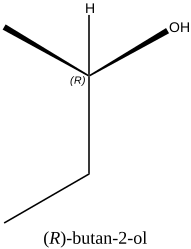
I have redrawn it below in more modern form (and name). The difference between the two is in the notations and (R). The former relates to the sign of the optical rotation [α]D where d stands for dextrorotation, or clockwise and is also often represented by (+) and being the sign of the measured rotation. (R) is the modern notation for the absolute configuration shown by Kirkwood in his diagram (Fig. 1).

He is asserting below that the enantiomer of butan-2-ol with a measured rotation of 13.9° has (in modern notation) the absolute configuration (R) because his calculations predict somewhere between 9.5° and 21.9° for this specific three-dimensional geometry. So why is Kirkwood not lauded for solving this problem in 1937? Well, because we now know that (R)-butan-2-ol has a negative rotation of -13.9°![4]

Kirkwood is however very aware of the potential problems with his approach. In a nutshell, conformation! In particular, the conformers resulting from rotation about the central C-C bond and especially the C-O bond, where for the purposes of his theory he assumed axial symmetry about that bond.

and

Now, in 1937 the area of such conformational analysis was hardly known; only in 1948[5] would Barton first put it firmly on the map (and win the Nobel prize for this work). So, in attempting his connection between and (R), Kirkwood was in a sense far too ahead of his time. It worth asking what modern quantum mechanical theory makes of this problem and does it cast any light on why Kirkwood actually got his assignment wrong (in 1937,[3] although he WAS correct in 1952[2]).

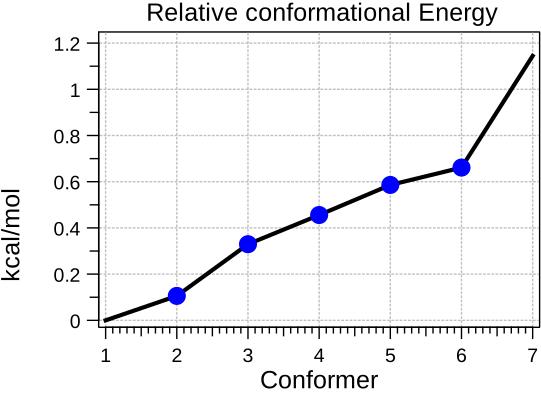
  1. Firstly, I carried out a comprehensive search of the rotamers about the C-C and C-O bond using molecular mechanics (a method first introduced by Barton in 1948[5]) and using the MMFF94 forcefield. This identifies seven distinct conformations arising from rotations about these two bonds. Some warning signs area aready present; these seven are bounded by an energy of only 1.2 kcal/mol! All are likely to have a significant Boltzmann population.
  2. Next, to ramp up the level of theory to density functional quantum mechanics, at the B3LYP+GD3+BJ/Def2-TZVPP/SCRF=diethyl ether level (FAIR Data: 10.14469/hpc/6367) and at the minimum energy geometry for each conformation, an optical rotation is calculated (at the ωB97XD/Def2-TZVPP/SCRF=diethyl ether) level. Whilst not the highest practical level possible nowadays, it far exceeds in accuracy what Kirkwood had at his disposal in 1937. The results are at 10.14469/hpc/6367 and available as a spreadsheet if you want to adapt this for your own needs.

What can we conclude?

  1. All seven conformations have a significant population (at 298K). The ordering, with one small exception, is the same for both Molecular and Quantum mechanics. The relative free energies span a slightly larger range than the steric energies obtained from molecular mechanics (1.7 kcal/mol) but all have a population of >6%.
  2. Three conformations have a negative or (-) predicted rotation, and four are positive (+).
  3. When weighted by population, the overall predicted rotation is -18°, which compares well with that observed (~-13°).
  4. Kirkwood, who was not able to include all seven conformations in his analysis, was deeply unlucky that his particular choices/assumptions of conformations happened to have (+) rotations. But he was very much aware that this result could happen (although he does underestimate this in concluding that his tentative result is “probably accurate”. To be fair, if he had been more realistic, the referees might well have rejected his article!).

So the “what if“.

  • If Kirkwood had chosen a conformationally simpler molecule which did not have as many as seven populated conformations, he may well have got his prediction correct (and for mostly the right reasons!). 
  • But he has to be given lots of credit for recognising that optical rotations can be sensitive to conformational analysis. In this regard he could be regarded as one of the early fathers of that entire (Nobel prizing winning) field.
  • He was 14 years ahead of the eventual unambiguous experiment that verified the Fischer convention. Of course he would have needed to correlate the absolute configuration of butan-2-ol with those of both sugars and amino acids using chemical transformations. In 1937, this may well have been quite synthetically challenging (but of course perhaps this correlation may have been actually known at the time. Does anybody reading this know?)
  • But given that two other discoveries, both of which won the Nobel prize (the structure of peptides and the structure of DNA), depended on knowing with certainty the absolute configurations of amino acids and sugars respectively, Kirkwood’s method could be argued directly impacted upon no less than three Nobel prizes within two decades of his initial work.
  • Remember that Watson and Crick “predicted” that the DNA helix is right-handed, as it happens on the basis of a single “short” H…H contact in their model which apparently disfavoured a left-handed helix. Boy was that a lucky guess (since that conclusion cannot be sustained nowadays on the basis of short H…H contacts). And that Pauling, in his own initial structures suggesting an α-helix in some proteins, predicted (wrongly) that the helix was left handed.  

So I think that yes, Kirkwood was pretty unlucky in his 1937 effort. And by 1952 (when he was correct), the opportunity for widespread recognition for this work and perhaps even a Nobel prize, had passed.


Stereochemical notation has suffered from some measure of confusion over the years. Much of that confusion was cleared up with the introduction of the CIP rules, but historical vestiges remain. Thus d was originally used by Fischer himself to indicate configuration using the sense of direction on his diagram, but by others (including Kirkwood in 1937) to indicate the sense of direction of polarised light, an entirely different property. Eventually, the configurational sense became distinguished from the rotational light sense by capitalising the former (which of itself can still lead to confusions). Nowadays, the configuration of an entire molecule tends to be described by specifying the absolute configuration of all the asymmetric units using the CIP formalism, whilst Fischer’s formalism (now rationalised D/L), is only applied to sugars and cannot be used generally for other molecules. If you want to explore the temperature dependence of the Boltzmann populations and hence the predicted change in rotation with temperature, do please download the spreadsheet and try it out for yourself! The elapsed time for these 14 calculations took about 2 hours. The exhaustive molecular mechanics calculations took <20 seconds.

References

  1. J.M. BIJVOET, A.F. PEERDEMAN, and A.J. van BOMMEL, "Determination of the Absolute Configuration of Optically Active Compounds by Means of X-Rays", Nature, vol. 168, pp. 271-272, 1951. https://doi.org/10.1038/168271a0
  2. W.W. Wood, W. Fickett, and J.G. Kirkwood, "The Absolute Configuration of Optically Active Molecules", The Journal of Chemical Physics, vol. 20, pp. 561-568, 1952. https://doi.org/10.1063/1.1700491
  3. J.G. Kirkwood, "On the Theory of Optical Rotatory Power", The Journal of Chemical Physics, vol. 5, pp. 479-491, 1937. https://doi.org/10.1063/1.1750060
  4. A.Z. Gonzalez, J.G. Román, E. Gonzalez, J. Martinez, J.R. Medina, K. Matos, and J.A. Soderquist, "9-Borabicyclo[3.3.2]decanes and the Asymmetric Hydroboration of 1,1-Disubstituted Alkenes", Journal of the American Chemical Society, vol. 130, pp. 9218-9219, 2008. https://doi.org/10.1021/ja803119p
  5. D.H.R. Barton, "83. Interactions between non-bonded atoms, and the structure of cis-decalin", Journal of the Chemical Society (Resumed), pp. 340, 1948. https://doi.org/10.1039/jr9480000340

Pierre and Marie Curie.

Friday, October 23rd, 2015

I have previously shown the grave of  William Perkin, a great british organic chemist. On a recent visit to  Paris, I went to see the crypt in the Panthéon, the great french secular necropolis. What a contrast to Perkin! 

curie2

The Curies have a crypt all to themselves (VII), and other great french scientists such as Bertholet and Langevin as well as mathematicians such as Lagrange who are also interred in other crypts. It is surprising in fact how exclusive admission to the Pantheon is (and how much space for new tombs there still is); whilst many of the graves relate to famous soldiers dating from the french revolution and not a few politicians of course as well as famous literary figures, science and chemistry are very well represented! The French have even named a metro station after the Curies …

curie1

with a  caption that makes nice reading for the passengers whilst waiting for a train.

curie3

A highly readable description of their work can be found in Oliver Sacks’ book Uncle Tungsten. And if you ever visit Paris, remember to ask to go to Gay-Lussac’s lab (who is not interred in the Panthéon), preserved in a time-warp from 100 years ago.