Posts Tagged ‘Interesting chemistry’

Detecting anomeric effects in tetrahedral carbon bearing four oxygen substituents.

Monday, March 18th, 2024

I have written a few times about the so-called “anomeric effect“, which relates to stereoelectronic interactions in molecules such as sugars bearing a tetrahedral carbon atom with at least two oxygen substituents. The effect can be detected when the two C-O bond lengths in such molecules are inspected, most obviously when one of these bonds has a very different length from the other. The effect originates when one of the lone pair of electrons on one oxygen atom uniquely overlaps with the C-O antibonding σ* on another oxygen, thus shortening the length of the donating oxygen-carbon length and lengthening the length of accepting C-O bond. Here I take a look at tetra-substituted versions of this (C(OR)4), where in theory there are up to eight lone pairs, interacting with any of three C-O bonds, giving a total of 24 possible anomeric effects in one molecule.


We start the process with a search of the Cambridge crystal structure database, using the following search query:

This yields 25 hits. We now want to find out what the longest and shortest C-O bonds are, and how large the difference between them is. To do this, we have to resort to applying some functions, using the calculator tool built into the Mercury analysis software. The following functions were used:

  1. Greatest('search3'.'DIST1','search3'.'DIST2','search3'.'DIST3','search3'.'DIST4')
  2. Least('search3'.'DIST1','search3'.'DIST2','search3'.'DIST3','search3'.'DIST4')
  3. Greatest('search3'.'DIST1', 'search3'.'DIST2', 'search3'.'DIST3', 'search3'.'DIST4')-Least('search3'.'DIST1', 'search3'.'DIST2', 'search3'.'DIST3', 'search3'.'DIST4')

The results can be displayed as below, in which the difference between the two bond lengths is colour coded (red = greatest, blue = least).

  1. Here you can see that when the difference between the longest and short C-O bond lengths is small, the colour is blue.
  2. Green dots show a difference of about 0.04-0.05Å
  3. The red dot has the greatest difference of 0.087Å and corresponds to the entry SILDOH ([1], DataDOI: [2], 10.5517/ccq8lq8.

The next step is to apply a “reality check” using computation, here a MN15L/Def2-TZVPP calculation on the top eight entries as sorted by the largest C-O bond length differences (ΔrC-O > 0.05Å.[3], data DOI: 10.14469/hpc/13925

CCDC Ref code Crystal structure Computational structure
Longest Shortest Δ Longest shortest Δ
SILDOH 1.451 1.364 0.087 1.441 1.367 0.074
PILTOU 1.432 1.361 0.071 1.418 1.378 0.040
GISSAD 1.435 1.367 0.068 1.422 1.375 0.047
BODGEG 1.507 1.442 0.065 1.424 1.370 0.054
GINLOF 1.425 1.364 0.061 1.418 1.377 0.041
POCPOO 1.419 1.361 0.058 1.421 1.371 0.050
KEVFUM 1.417 1.361 0.056 1.395 1.391 0.004
AHEYAO 1.423 1.370 0.053 1.422 1.372 0.050
  1. The largest effect occurs for SILDOH, and this is replicated by calculation.
  2. The largest discrepancy between measurement and calculation is for KEVFUM,  where calculation predicts almost no C-O bond differences. This will be discussed elsewhere.

Focusing on SILDOH, we look at the NBO E(2) energies for the donor-acceptor interactions of an oxygen lone pair donating into a C-O antibonding σ* orbital.

Click on the image below for a 3D model of the two interacting orbitals (positive overlap = blue + purple, red + orange)

The interaction of LpO1 to the long bond C5-O4 = 18.0 and LpO2 to C5-O4 = 16.3 kcal/mol, whereas in the reverse directions, LpO4 to C5-O1 is only 6.0 kcal/mol and LpO4 to C5-O2 is 10.7 kcal/mol.  For a “normal” C-O bond however such as  C5-O3,  LpO2 to C5-O3 = 3.1 and LPO1 to C5-O3 = 5.3 kcal/mol. In effect, two oxygens “gang up” on weakening the  long C5-O4 bond, but leave the shorter C5-O3 bond alone. So the individual anomeric effects are no larger than normal, but the cooperative effect of two acting together is what produces the final geometric asymmetry.

The Wiberg bond index mirrors this effect. The bond indices are 0.9882 for O1-C5 and C5-O4 0.8512 (Δ =-0.137) which is a big difference in bond order and accounting for the large (record?) difference in bond length.

In the next post, I will analyse the equivalent molecules B(OR)4.

References

  1. R. Betz, and P. Klüfers, "Norbornane-2,7-diyl 1′,2′-phenylene orthocarbonate", Acta Crystallographica Section E Structure Reports Online, vol. 63, pp. o3933-o3933, 2007. https://doi.org/10.1107/s1600536807042298
  2. Betz, R.., and Klufers, P.., "CCDC 663670: Experimental Crystal Structure Determination", 2007. https://doi.org/10.5517/ccq8lq8
  3. H. Rzepa, "Detecting anomeric effects in tetrahedral carbon bearing four oxygen substituents.", 2024. https://doi.org/10.14469/hpc/13925

Scholarly journals vs Scholarly Blogs.

Friday, January 12th, 2024

First, a very brief history of scholarly publishing, starting in 1665[1] when scientific journals started to be published by learned societies. This model continued until the 1950s, when commercial publishers such as Pergamon Press started with their USP (unique selling point) of rapid time to publication of ~3 months,[2] compared to typical times for many learned society publishers of 2 years or longer. Fast forward another 50 years or so, and the commercial publishers were now dominating the scene, but the business model was still based on institutional subscriptions, whereby the institution rather than authors paid the costs of publication. As the number of journals expanded, even well-off institutions had to make difficult decisions on which subscriptions to keep and which to cancel. By the late 1990s the delivery model was changing from print to online, but the overall issue was that many scientists around the world no longer had access to many journals.

Enter the APC, or article processing charge, whereby the authors themselves had to reimburse the journals for publishing their papers, although they could often still recover these costs from their institution. The cost of an APC depended on the reputation of the journal; those with the highest “impact factors” often charged the highest APCs, some of which could reach £5000+ for a single “paper” (still called that even in an electronic era). Also, some journals remained “hybrid”, where the costs were split between institutional subscriptions and APC funded. At least the latter could be accessed by anyone (including the “public”) without restriction (Open-Access) often also referred to as GOLD  and even Diamond (also known as platinum) articles which  are  GOLD open access but without author fees. Diamond is typically used by publishers who are keen to emphasise that they do not charge authors to publish open access.

With many APCs ranging from £1000 up to £5000 or more, some started asking why it should cost so much to have this type of publishing infrastructure. Also in the early 2000s, “social media” started up, which at first tended to concentrate on instant publication and hence impact. The longevity of these media was not considered capable or indeed even desirable of rivalling that achieved by journal publishers, which after all had been around for 360 years or so. Things have begun to change however. Enter as an example Rogue Scholar, and its associated blog Front Matter. The aim here is to exploit the underpinning technical infrastructure of a blog host by automatically adding features more commonly associated with learned society or commercial journal publishing.

I wrote[3] about some of the features available last September and now only four months later the functionality continues to expand. This includes:

  1. The ability to acquire a JATS XML version (Journal article tag suite), the standard format for scholarly articles
  2. I had previously noted that Blog posts are assigned a DOI based on the Crossref registration agency, and hence also acquire a metadata record which becomes useful for searching. All 800+ of the posts on this site have such a DOI for example.
  3. One interesting recent use of blogs is to act as a science newsletter associated with a funded grant, as an adjunct to simply publishing the research results in a journal.
  4. Indexing is also making big strides with the introduction of an API (application programmer interface), another service offered by scholarly publishers. As part of this, fields of science are being added to the metadata to enable filtering such as eg Chemistry
  5. Archiving, in theory for all of posterity, is also starting to be addressed . This requires transformation from HTML, typically used in blogs, to a medium more appropriate for long term archiving.

The cost of the infrastructures described above are certainly very much less than eg the APC charges noted above, in part because they are so highly automated. I expect things will move very rapidly on this front.


It is hoped to automatically include these in the post itself in the future. Meanwhile, it can easily be retrieved by a suitable search.

References

  1. H. Oldenburg, "Epistle dedicatory", Philosophical Transactions of the Royal Society of London, vol. 1, pp. i-ii, 1665. https://doi.org/10.1098/rstl.1665.0001
  2. D. Ginsburg, and W.J. Rosenfelder, "Alicyclic studies—X", Tetrahedron, vol. 1, pp. 3-8, 1957. https://doi.org/10.1016/0040-4020(57)85003-0
  3. H. Rzepa, "Improving the Science blog – The Rogue Scholar service.", 2023. https://doi.org/10.59350/8m2d8-47b52

More examples of “double-headed” curly arrows: S and C Nucleophiles attacking acetyl chloride

Thursday, October 12th, 2023

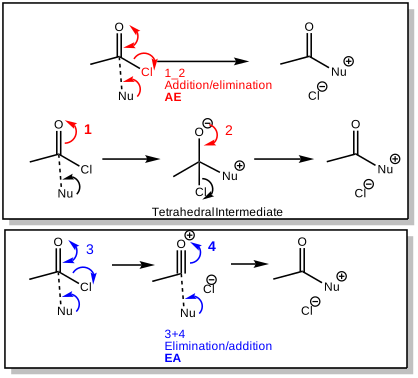
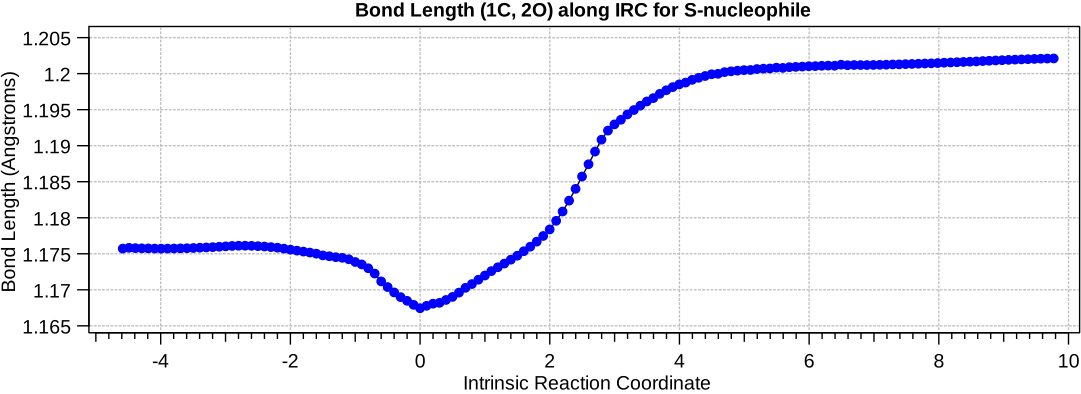
In an earlier post on this topic,[1] I described how the curly-arrows describing the mechanism of a nucleophilic addition at a carbonyl group choreograph in two distinct ways, as seen in red or blue below. The arrows in red can be described as firstly addition to the carbonyl group to form either a transient intermediate (a two-step process) or instead a formal transition state state as a concerted single-step mechanism. The blue arrows do the reverse; firstly elimination and then followed by addition. I will use the shorthand AE for the first type and EA for the second type. Here I explore some more nucleophiles to see which of these two mechanisms they follow. Data for these results can be found at 10.14469/hpc/13171
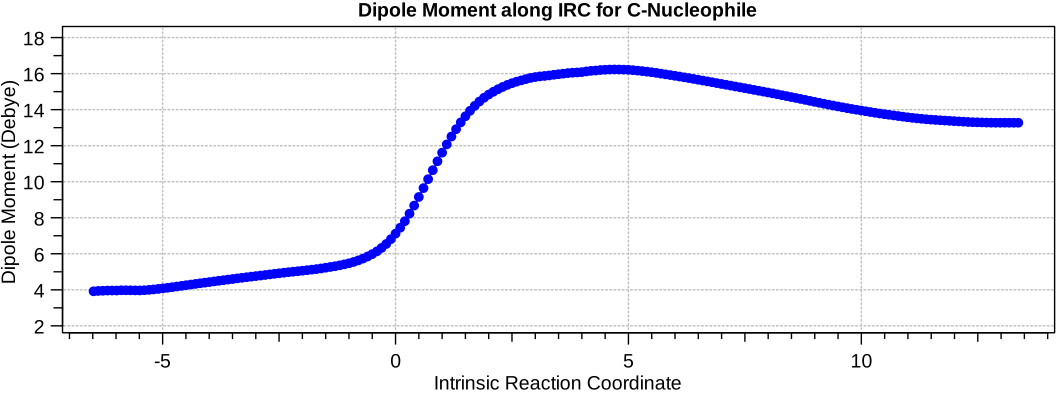
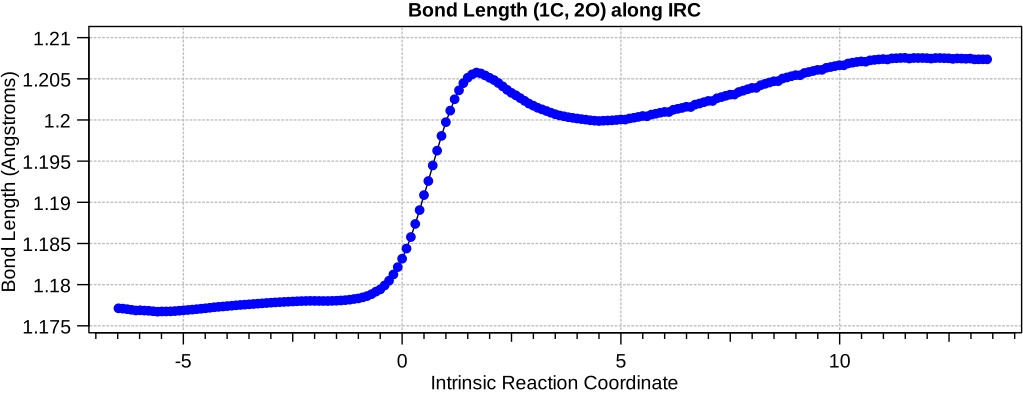
N- carbon ylid: This is a very facile (low-barrier) reaction with a C-O bond length response that initially increases steeply, followed by a more modest decline and hence corresponds to an AE mechanism.

P carbon-Ylid:  Essentially identical to the previous example, and again an AE mechanism.

S carbon-ylid: Again, an AE mechanism.

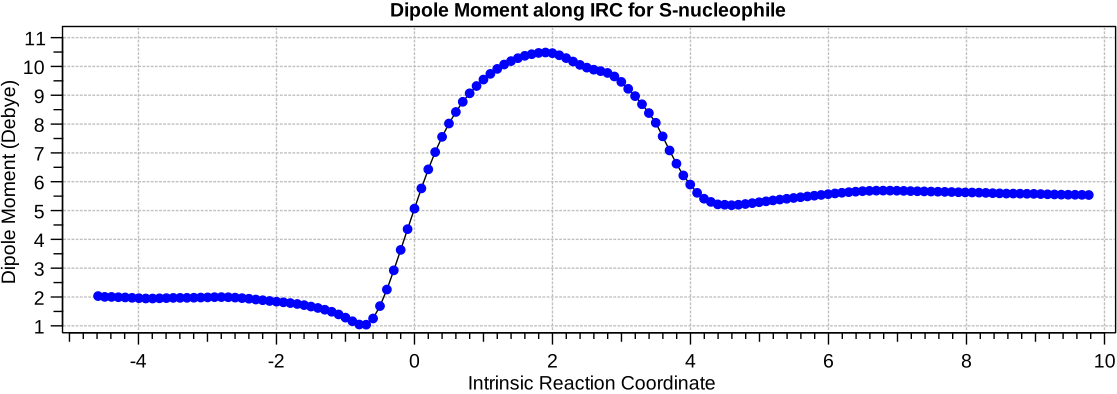
S-nucleophile:  This one is different, showing a larger barrier and initial small decrease in the C-O length followed by a larger increase. This one is an EA mechanism.

As I noted previously, it would be useful to have two double headed curly arrows available in palletes of these; <—> (AE) and >—< (EA) to illustrate the difference between the two mechanistic types.


This is the first instance where I cite a blog using a CrossRef DOI generated for it. Previous such citations used a DataCite DOI, which the bibliographic software used here to add them to the post (Kcite) does not support.


References

  1. H. Rzepa, "The "double-headed" curly arrow as used in mechanistic representations.", 2023. https://doi.org/10.59350/f00wf-5tq46

Blue blood.

Monday, August 7th, 2023

Respiratory pigments are metalloproteins that transport O2, the best known being the bright red/crimson coloured hemoglobin in human blood. The colour derives from Fe2+ at the core of a tetraporphyrin ring. But less well known is blue blood, and here the colour derives from an oxyhemocyanin unit based on Cu1+ (the de-oxy form is colourless) rather than iron. See below for the carapace of a red rock crab.

Here I take a look at this very unusual structure, the core of which is an imidazole ring coordinated via nitrogen to the metal Cu.
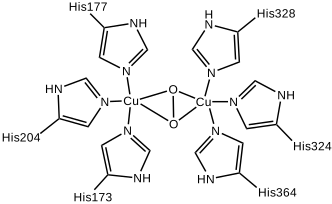
A search of the crystal structure database for the following sub-structure reveals 12 hits, with a range of O-O distances ranging from 1.37 to 1.54Å. A histogram of the O-O lengths in the Cu(O-O)Cu sub structure shown below shows quite a distribution amongst the 12 known examples.

Of these, one (UTETEU[1], DOI: [2]) is perhaps the closest to the oxyhemocyanin core, albeit with the imidazole heterocycle replaced by the isomeric pyrazole ring (no Ag or Au examples are known). The overall 2+ charge deriving from two Cu1+ units is internally balanced with two 4-coordinate B1- end caps, and this system was chosen as the starting model for some computational studies.[3]

Firstly, the crystal structure reveals an O-O distance of 1.531Å; the O=O distance (from crystal structures where it is present) is ~1.24Å (DOI: 10.5517/cct597h) for neutral (triplet?) oxygen, ~1.50Å for the dianion O22- and 1.32Å for the monoanion O21-[4].

Computational models were constructed at the ωB97XD/Def2-SVPP level, FAIR Data DOI: 10.14469/hpc/12584.

The computed O-O distance for a singlet state of the complex is shorter than that measured in the crystal structure (1.368 vs 1.531Å). At the better Def2-TZVPP basis set level, the O-O bond length is 1.379Å, still shorter. A model of singlet state oxyhemocyanin itself (Def2-TZVPP) as a di-cation (these charges are balanced by carboxylate anions from the surrounding protein) shows a very similar O-O bond length (1.361Å).

How about the oxyhemocyanin as a triplet state, the same state of isolated oxygen itself? Oxyhemocyanin now has a O-O distance of 1.477Å (Def2-TZVPP) and a Cu-O distance of 1.972 (1.934 from crystal structure of UTETEU). The UTETEU analogue has a calculated distance of 1.483Å (crystal structure 1.531Å), which strongly suggests that this system exists as a triplet rather than as a singlet spin state (click on image below to view as a 3D model).

The spin density in UTETEU is shown above, which indicates that the two unpaired electrons are delocalised on Cu, nitrogen and O atoms, compared to only the oxygen in O2 itself.

So we may conclude from this brief investigation into the structures of this component of “blue blood” captures oxygen as a sandwich between two copper atoms (a mode very unlike the iron equivalent in hemoglobin), and moreover that the spin state in this capture retains the triplet motif of gaseous oxygen itself, whilst the spin density of the unpaired electrons is delocalised over both copper, nitrogen and oxygen.


This post has DOI: 10.14469/hpc/13111


References

  1. R. Dalhoff, R. Schmidt, L. Steeb, K. Rabatinova, M. Witte, S. Teeuwen, S. Benjamaâ, H. Hüppe, A. Hoffmann, and S. Herres-Pawlis, "The bridge towards a more stable and active side-on-peroxido (Cu<sub>2</sub><sup>II</sup>(µ-η<sup>2</sup>:η<sup>2</sup>-O<sub>2</sub>)) complex as a tyrosinase model system", Faraday Discussions, vol. 244, pp. 134-153, 2023. https://doi.org/10.1039/d2fd00162d
  2. Zhang, Shiyu., Fallah, Hengameh., Gardner, Evan J.., Kundu, Subrata., Bertke, Jeffery A.., Cundari, Thomas R.., and Warren, Timothy H.., "CCDC 1468787: Experimental Crystal Structure Determination", 2016. https://doi.org/10.5517/ccdc.csd.cc1l9d7j
  3. N. Kitajima, K. Fujisawa, C. Fujimoto, Y. Morooka, S. Hashimoto, T. Kitagawa, K. Toriumi, K. Tatsumi, and A. Nakamura, "A new model for dioxygen binding in hemocyanin. Synthesis, characterization, and molecular structure of the .mu.-.eta.2:.eta.2 peroxo dinuclear copper(II) complexes, [Cu(HB(3,5-R2pz)3)]2(O2) (R = isopropyl and Ph)", Journal of the American Chemical Society, vol. 114, pp. 1277-1291, 1992. https://doi.org/10.1021/ja00030a025
  4. H. Seyeda, and M. Jansen, "A novel access to ionic superoxides and the first accurate determination of the bond distance in O2−", Journal of the Chemical Society, Dalton Transactions, pp. 875-876, 1998. https://doi.org/10.1039/a800952j

One vs two bond rotation – An example using Acyl amides

Monday, April 3rd, 2023

One of the important aspects of chemical reaction mechanisms is the order in which things happen. More specifically, the order in which bonds make or break when there are more than two involved in undertaking a reaction. So we have:

  1. concerted mechanisms, when all bonds in any particular stage of a mechanism are changing in concert via a unique transition state,
  2. asynchronous concerted mechanism, when all the bonds are changing, but not necessarily all at the same rate and which may involve so called “hidden intermediates”, but which nevertheless stil involves only one transition state.
  3. stepwise mechanisms, in which more than one transition state is involved, connected by a discrete intermediate along the pathway.

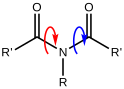
Here I consider an example of another type of (isomerisation) mechanism, involving bond rotations rather than bond formations or breakages. The two bonds in this case have a higher bond order than 1, and so are starting to verge on a type of isomerism known as atropisomerism, where the rotation takes place on a relatively slow time scale (unlike single bonds themselves, where rotation about them is normally relatively fast). Do two such bonds rotate in a stepwise or a concerted manner? In the structure below, we have two rotatable bonds, shown in red and blue, which due to conjugation of the lone electron pair on the nitrogen atoms with the carbonyl group have bond orders >1. Do these bonds rotate in concert or in a stepwise manner?

The calculations of the rotations are done at the B3LYP+GD3+BJ/Def2-SVPP/SCRF=DCM level, Data DOI: 10.14469/hpc/12299

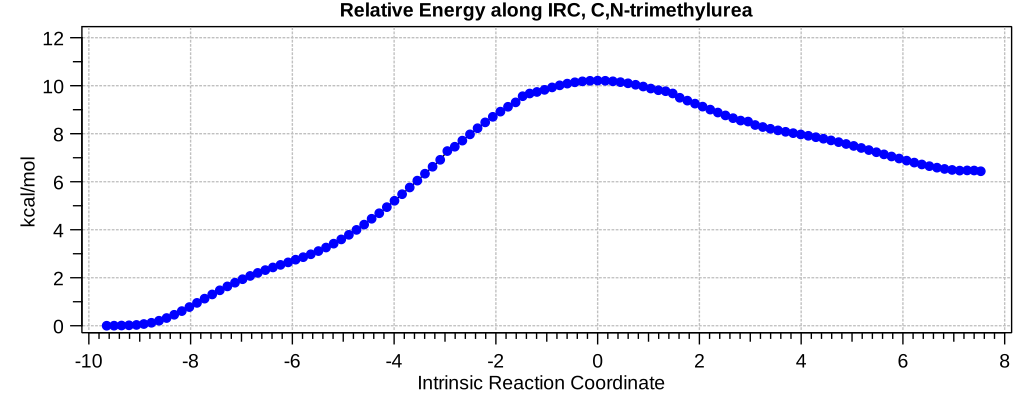
  1. Firstly, for the system R=R’ = Me. The reaction coordinate is specified around the red bond.

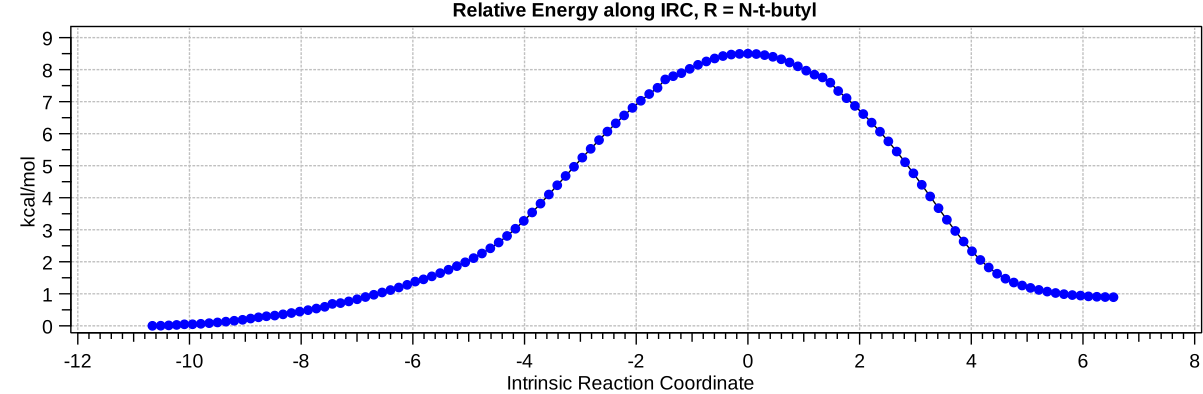
    The animation along the IRC (Intrinsic reaction coordinate) appears below, where you can see the red bond rotating and the blue bond spectating.

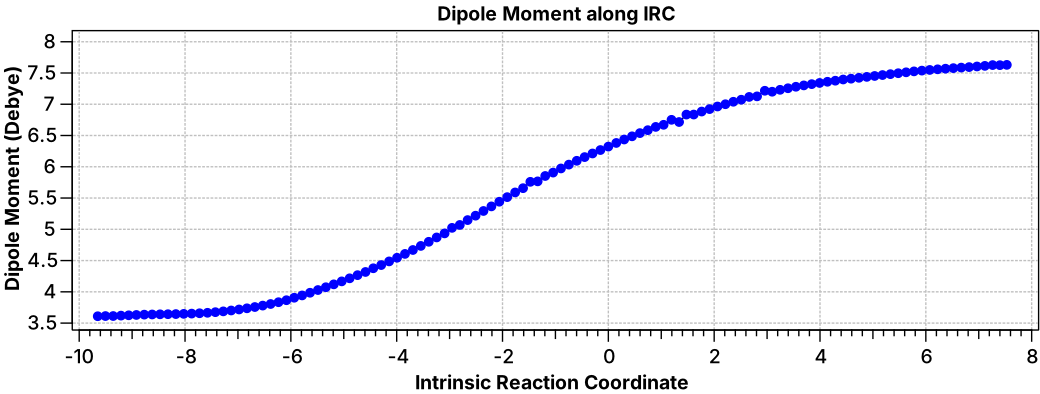
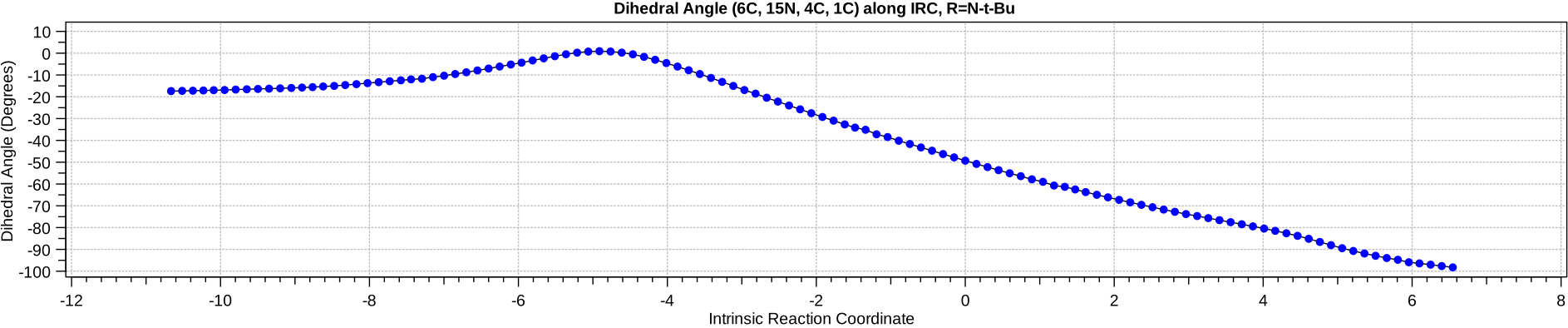
  2. The response of the dihedral angles about both bonds is shown below, which reinforces the conclusion that whilst one dihedral changes by about 180°, the other hardly changes. The overall dipole moment changes significantly as a result of the relative orientation of the two carbonyl groups changing. The two bonds can be said to rotate in a stepwise mechanism, involving an intermediate where one has rotated and the other has not.


  3. When the bulk of the central group is increased, different behaviour is now observed.

  4. Both dihedral angles now change by ~180°, in concert but not in synchrony! The first more or less transforms evenly by ~180°, but the second changes direction at ~IRC=-5 to rejoin the other.

When the steric bulk means that the rotating substituents start to interfere with each other, so-called “gearing” starts to take place where the motions of the two become coupled by the gears. The rotations are now a concerted asynchronous process.

So now to my concluding thought. The above is a simple example of gearing involving rotation about two coupled bonds. So how many bonds can be simultaneously geared so that when one rotates, the others do as well? I am now hunting for an example of three such bonds geared together. And is there a limit to how many can do so in concert? Here we enter into analogy with bond cleavage, where there are numerous examples of bonds breaking in concert, if not in synchrony. Most pericyclic processes are of this type. Is there a similar patten in bond rotations?

Derek Lowe asks “What’s a Journal For?” – Knowledge graphs?

Friday, October 21st, 2022

What’s a Journal For? This debate has been raging ever since preprint servers were introduced as far back as 1991! Indeed, during my recent submission of a journal article, one of the questions asked was whether the article was already deposited in such a preprint server (in a positive sense, and not one excluding further submission progress). Since my previous comment on this theme was made more than three years ago, I thought I might update it.

I might start with the observation that some think the concept of a journal really comprises three separate components (up to eight have been suggested); the story or narrative being told, the data on which that story is based and the citations or bibliography which set the context of the story. The latter two components have both developed their own publishing models; the data in a repository and accompanied by rich metadata which provides at least some of the context and citations which have their own model. Article metadata also includes its own citations helping to place the data into a wider context or “bigger picture” as expressed by a knowledge graph,[1] which even CAS Scifinder will now reveal based on your specific search!. Such metadata is also now generally a component of the overall metadata associated with journal articles. The data component is being accompanied by extensive work to enhance the accompanying metadata models[2] and we might expect rapid progress to be made here in the near future.

So again to ask “what’s a journal for” if two of its essential components have their own publishing models? The story will always have an important role to play and peer review of that story will always be an important aspect of the journal – indeed perhaps the most important aspect. So should we focus in our attention on this?  I noted that in 2017, a brave new experiment claiming “Open access • Publication charge free • Public peer review • Wikipedia-integrated” of which public peer review was an important component, has accumulated relatively few publications since. I also noted an article[3] in which the reviewers (but not their reviews) are clearly indicated. This concept too has not made much headway. Will things change in the future? Some think that they have too, or the entire concept of scientific publishing will indeed fragment into many different models and no longer fully serve its purpose.


I cannot resist including my own knowledge graph here, which reveals nicely the impacts of some of the work I have been associated with, as represented by the fans on the outside of the central graph.

Although a major component of many peer reviews has the focus on the data and (missing) citations.

References

  1. H. Cousijn, R. Braukmann, M. Fenner, C. Ferguson, R. van Horik, R. Lammey, A. Meadows, and S. Lambert, "Connected Research: The Potential of the PID Graph", Patterns, vol. 2, pp. 100180, 2021. https://doi.org/10.1016/j.patter.2020.100180
  2. R.M. Hanson, D. Jeannerat, M. Archibald, I.J. Bruno, S.J. Chalk, A.N. Davies, R.J. Lancashire, J. Lang, and H.S. Rzepa, "IUPAC specification for the FAIR management of spectroscopic data in chemistry (IUPAC FAIRSpec) – guiding principles", Pure and Applied Chemistry, vol. 94, pp. 623-636, 2022. https://doi.org/10.1515/pac-2021-2009
  3. L. Li, M. Lei, Y. Xie, H.F. Schaefer, B. Chen, and R. Hoffmann, "Stabilizing a different cyclooctatetraene stereoisomer", Proceedings of the National Academy of Sciences, vol. 114, pp. 9803-9808, 2017. https://doi.org/10.1073/pnas.1709586114

Nitroaryls- A less-toxic alternative reagent for ozonolysis: modelling the final step to form carbonyls.

Saturday, October 8th, 2022

Sometimes you come across a reaction which is so simple in concept that you wonder why it took so long to be accomplished in practice. In this case, replacing toxic ozone O3 as used to fragment an alkene into two carbonyl compounds (“ozonolysis”) by a relatively non-toxic simple nitro-group based reagent, ArNO2 in which the central atom of ozone is substituted by an N-aryl group. As reported by Derek Lowe, two groups have published[1], [2] details of such a reaction (Ar = 4-cyano or 3-CF3,5-NO2). But there are (at least) two tricks; the first is to use photo-excitation using purple LEDs (390nm light) to activate the nitro group. The second is to establish the best aryl substituents to use for achieving maximum yields of the carbonyl compounds and the best conditions for achieving the cyclo-reversion reaction, shown below as TS1. That step requires heating the cyclo-adduct up to ~80° in (aqueous) acetonitrile for anywhere between 1-48 hours. Here I take a computational look at that last step, the premise being that if such a model is available for this mechanism, it could in principle be used to optimise the conditions for the process.

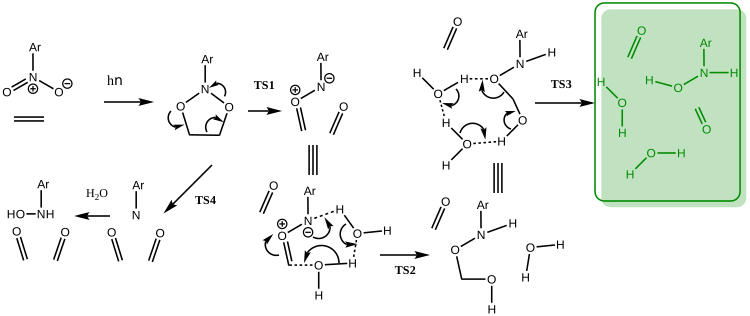
The proposed mechanism for the workup in aqueous acetonitrile[2] is shown below, involving TS1 (a thermal pericyclic cycloreversion reaction), TS2 and TS3 involving intervention of either two or three water molecules to produce the carbonyl compounds and  an aryl hydroxylamine (which might of itself be a valuable product). It was also mooted[2] that an alternative mechanism might involve extrusion of an aryl nitrene instead of a cycloreversion (shown as TS4). The calculations use the following method: (U)ωB97XD/Def2-TZVPP/SCRF=acetonitrile. The FAIR data DOI for them is 10.14469/hpc/11269.

Since the workup occurs at up to ~80° in aqueous acetonitrile,[2] the activation free energy that would allow this must be <~25 kcal/mol.

  1. The first model is a simple closed shell cyclo-reversion, solvated only by the model continuum, giving a barrier (for ethene as substrate) which is a little on the high side for a relatively facile thermal reaction.
  2. At this level, the nitrene extrusion reaction identifies as a second order saddle-point with a very high energy, eliminating it from possibility for the mechanism.
  3. Allowing the wavefunction to have some biradical character (TS1 has <S2> before annihilation 0.5534, after 0.0858; a pure biradical for which singlet and triplet states are equal in energy would have a value of 1.00) lowers the energy by a modest 2.5 kcal/mol in this model, but producing a somewhat more realistic free energy barrier.
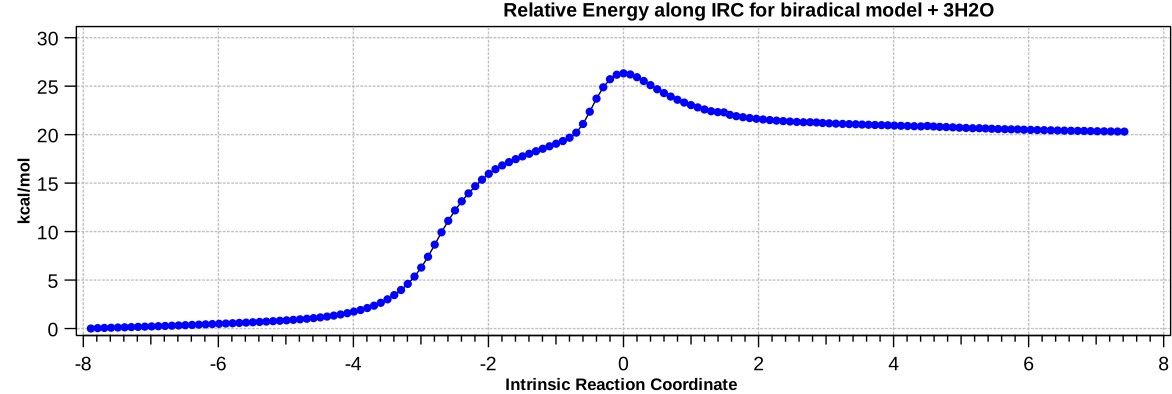
  4. Adding 2H2O to the model allows TS2 and  TS3 to be directly compared to TS1. The barrier drops a further 3.0 or 4.3 kcal/mol respectively for 2 or 3 waters, and also clearly indicates that TS1 is the rate-limiting step. The barrier corresponds to a reaction which is reasonably fast at ambient or slightly elevated temperatures.
Model ΔG TS1 ΔG TS2 ΔG TS3
Reactants 0
Closed shell ionic 30.0
“TS4” 73.9
+biradical 27.5
+biradical + 2H2O 24.5 13.7 9.2
+biradical + 3H2O 23.2 12.6 -1.5
Products + 3H2O -20.4

The results here could be used for e.g. computational exploration of how variation in the aromatic group might affect the barrier for cycloreversion. Ideally, a version of this reaction which might operate at much lower temperatures would enhance this alternative to using ozone.


The ΔGvalue for p-CN.3H2O is lower (22.1 kcal/mol vs 23.3 kcal/mol) suggesting it proceeds rather more quickly than the m-CF3,NO2 version. This post has DOI: 10.14469/hpc/11319

References

  1. D.E. Wise, E.S. Gogarnoiu, A.D. Duke, J.M. Paolillo, T.L. Vacala, W.A. Hussain, and M. Parasram, "Photoinduced Oxygen Transfer Using Nitroarenes for the Anaerobic Cleavage of Alkenes", Journal of the American Chemical Society, vol. 144, pp. 15437-15442, 2022. https://doi.org/10.1021/jacs.2c05648
  2. A. Ruffoni, C. Hampton, M. Simonetti, and D. Leonori, "Photoexcited nitroarenes for the oxidative cleavage of alkenes", Nature, vol. 610, pp. 81-86, 2022. https://doi.org/10.1038/s41586-022-05211-0

What is the largest angle possible at 4-coordinate carbon – 180°?

Sunday, September 11th, 2022

Four-coordinate carbon normally adopts a tetrahedral shape, where the four angles at the carbon are all 109.47°. But how large can that angle get, and can it even get to be 180°?

A search of the CSD (crystal structure database) reveals a spiropentane as having the largest such angle, VAJHAP with 164°[1]

Because crystal structures might have artefacts such as disorder etc, it is always good to check this with a calculation; hence ωB97XD/Def2-TZVPP (FAIR data DOI: 10.14469/hpc/11148) for which a calculated angle of 163.8° is reassuring. The smallest angle in this system by the way is 58°, pretty normal for three-membered rings.

The localised orbitals show the C-C region defining the large angle to be very “bent” (a banana bond) but otherwise fairly normal.

So can one “engineer” an even larger angle? Replacing the C=C of the benzo group with a shorter CHgroup produces the following, which is now almost linear (almost a “hemispherical” carbon).


What about the smallest angle at 4-coordinate carbon? Could it be significantly smaller than the 57° noted above for a three membered ring? Searching the CSD reveals XAQHIH[2] with an angle of 43° but the calculation above now does not confirm this, the angle changing from 43° to 59° during optimisation. A reminder that when exploring extreme geometric values, always check with a calculation!


The next candidate is CAZFUE[3] with an apparent measured angle of 48°. This appears to have C2 symmetry, and a calculation with this gives a value of 46.6°. But all is not what it seems. This is a classic example of a semibullvalene [3,3] Cope rearrangement, caught in the “middle” so to speak (See this post here). In fact this geometry is actually a transition state, and the crystal structure is the thermal average of two positions, making it appear symmetrical. The ground state for this structure as calculated is different! The two angles now emerge as 40 and 57° (average 48.6°). At the “transition state”, one of the four “bonds” to carbon is unusually long (2.07Å), which is the direct cause of the small 48° angle. If this is not allowed as a “bond”, the angle at the other true 4-coordinate carbon emerges as normal at 57°

So the answer to the smallest angle does seem to be around 57°, but it could be as small as 47° if one allows bonds of 2.07Å in one’s definition of 4-coordinate. The candidate for the largest bond angle, of almost 180°, seems a reasonable synthetic target!

References

  1. R. Boese, D. Blaeser, K. Gomann, and U.H. Brinker, "Spiropentane as a tensile spring", Journal of the American Chemical Society, vol. 111, pp. 1501-1503, 1989. https://doi.org/10.1021/ja00186a058
  2. M.V. Roux, J.Z. Dávalos, P. Jiménez, R. Notario, O. Castaño, J.S. Chickos, W. Hanshaw, H. Zhao, N. Rath, J.F. Liebman, B.S. Farivar, and A. Bashir-Hashemi, "Cubane, Cuneane, and Their Carboxylates:  A Calorimetric, Crystallographic, Calculational, and Conceptual Coinvestigation", The Journal of Organic Chemistry, vol. 70, pp. 5461-5470, 2005. https://doi.org/10.1021/jo050471+
  3. H. Quast, Y. Görlach, J. Christ, E. Peters, K. Peters, H.G. von Schnering, L.M. Jackman, A. Ibar, and A.J. Freyer, "Crystal and molecular structure and the cope activation barriers of some dicyano-1,5-dimethylsemibullvalenes", Tetrahedron Letters, vol. 24, pp. 5595-5598, 1983. https://doi.org/10.1016/s0040-4039(00)94150-9

Unexpected Isomerization of Oxetane-Carboxylic Acids – catalyst design.

Saturday, August 13th, 2022

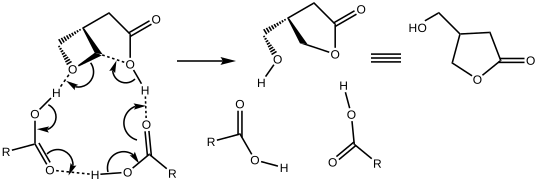
Previously, a mechanism with a reasonable predicted energy was modelled for the isomerisation of an oxetane carboxylic acid to a lactone by using two further molecules of acid to transfer the proton and in the process encouraging an Sn2 reaction with inversion to open the oxetane ring.

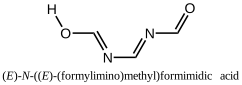
We are now ready to explore variations to this mechanism to see what happens. The first hypothesis is that of replacing two carboxylic acids with one molecule with similar properties, the argument being that bringing two acids together decreases their entropy and hence increases the free energy required for the process. If they come pre-joined, this entropic problem is eliminated and the free energy should reduce. Shown below is a small conjugated molecule with the central OHO motif replaced by NCN instead.

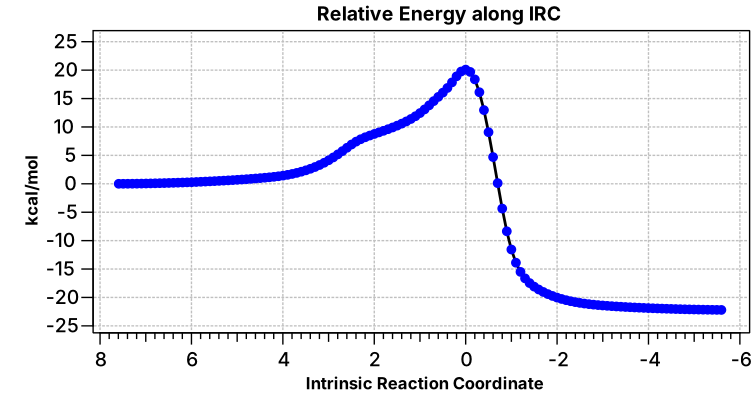
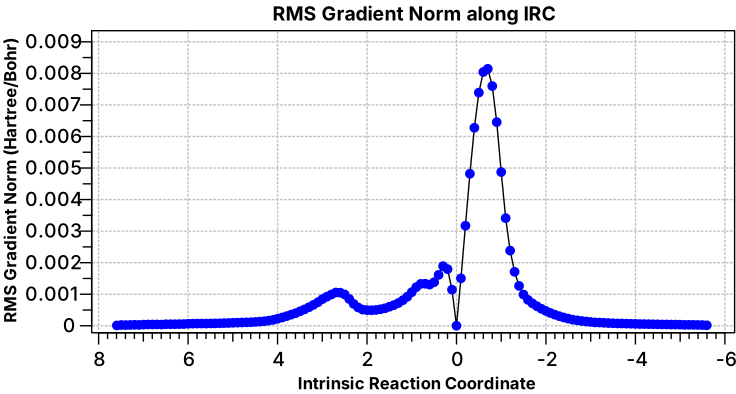
The activation free energy (ωB97XF/Def2-TZVPP, FAIR DOI: 10.14469/hpc/10820) is 18.4 kcal/mol, to be compared to 27.0 when using two carboxylic acids for the transfer. Of course, one would need to optimise the catalyst for many properties, including ease of synthesis, stability, size, isomerism etc, but you get the idea from the procedure here.

The catalyst “designed” here is for proton transfer. One has to wonder whether bespoke catalysts of this type might be useful for any reaction where proton transfer is a vital component!


DOI: 10.14469/hpc/10858 and 10.14469/hpc/10862


Dioxane tetraketone – an ACS molecule of the week with a mystery.

Wednesday, June 22nd, 2022

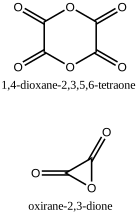
I have long been fascinated by polymers of either carbon dioxide, or carbon monoxide, or combinations of both. One such molecule, referred to as dioxane tetraketone when it was featured on the ACS molecule-of-the-week site and also known as the anhydride of oxalic acid, or more formally 1,4-dioxane-2,3,5,6-tetraone, has been speculated upon for more than a century.[1]

The history of chemistry has many molecules whose existence has been speculated upon, but where attempted syntheses have failed and for which sound theoretical reasons often only emerged many years later.[2]

The synthesis of dioxane tetraketone was finally achieved in 1998[3] at low temperatures (243K), although it was noted that in CDCl3/Et2O solutions at 273K it quickly decomposed to give equal quantities of carbon monoxide and dioxide. The characterisation was by 13C NMR, for which a single signal at 144.9 ppm was observed. The predicted value using the ACD/CNMR Predictor 2.0 Program (a so-called additive rule-based method) was 154 ppm (the value obtained using a similar tool available in Chemdraw is 150.9 ppm). The monomer oxirane-2,3-dione was also eliminated because of its predicted 13C shift using the same method of 167 ppm (155.3 using Chemdraw). Here I thought I would check these chemical shifts using a DFT-based method and also look at the barrier to the decomposition to see if it corresponds to a facile reaction at 273K (FAIR Data DOI: 10.14469/hpc/10619).

Firstly the NMR, using eg ωB97XD/aug-cc-pvdz/SCRF=chloroform. The calculated value of 148.2 ppm compares well with the observed value of 144.9 ppm. The value calculated for oxirane-2,3-dione was 156.6 ppm, rather lower than the ACD/Predictor method but in agreement with the Chemdraw implementation. The predicted IR spectrum (not reported) is shown below, should it ever be measured for this species.

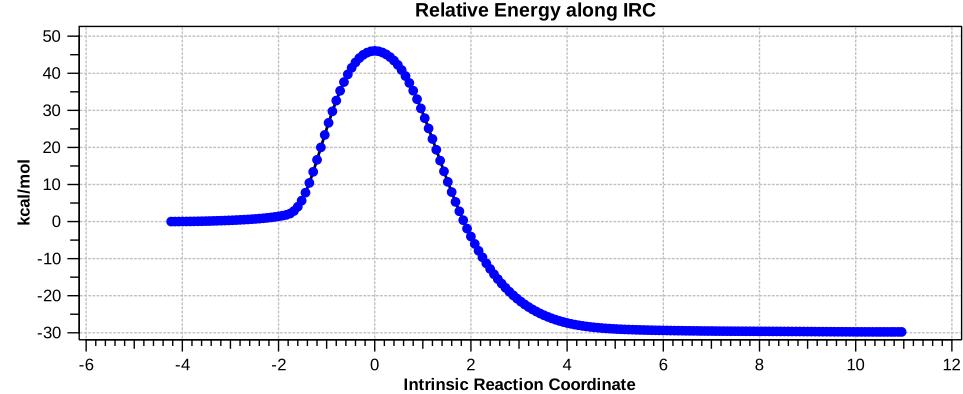
Next, the reaction energy profile, this time calculated using ωB97XD/Def2-TZVPP for the reaction mechanism shown below.

The IRC reveals that the mechanism (black arrows) is followed, in a concerted process that reveals absolutely no sign of any ionic intermediate (red) which could then lead to oxirane-2,3-dione (blue). The barrier ΔG is 36.9 kcal/mol (it is lower than the total energy inferred below because the entropy is very positive, one molecule being converted to four during the reaction) which is far to high to correspond to a reaction that easily occurs at 273K. The value in water as solvent is very similar, again indicating that the ionic route is not enhanced by a polar solvent. The transition state has another feature of interest. It has C2 chiral symmetry, typical of a pericyclic reaction with Möbius topology, as indeed would be appropriate for an eight electron process.

So what about that mystery then? Well, experimentally dioxane tetraketone decomposes at 273K, which would correspond to a free energy barrier of around 14-15 kcal/mol. The calculated value is far higher, too high to be simply an error in the DFT method. So here is a suggestion. CDCl3, unless very carefully purified, contains HCl, which could very easily catalyse the reaction. So if another solvent were to be tried, lets say acetonitrile in which any trace of acid has been removed, would solutions of dioxane tetraketone then persist at room temperatures for far longer?  An experiment perhaps to be tried!


Perhaps the most fascinating is the cyclic trimer of carbon dioxide, which arguably has pretensions to be aromatic. It has very recently been synthesized.[4],[5]

References

  1. H. Staudinger, "Oxalylchlorid", Berichte der deutschen chemischen Gesellschaft, vol. 41, pp. 3558-3566, 1908. https://doi.org/10.1002/cber.19080410335
  2. H.M. Perks, and J.F. Liebman, "Paradigms and Paradoxes: Aspects of the Energetics of Carboxylic Acids and Their Anhydrides", Structural Chemistry, vol. 11, pp. 265-269, 2000. https://doi.org/10.1023/a:1009270411806
  3. P. Strazzolini, A. Gambi, A.G. Giumanini, and H. Vancik, "The reaction between ethanedioyl (oxalyl) dihalides and Ag2C2O4: a route to Staudinger’s elusive ethanedioic (oxalic) acid anhydride", Journal of the Chemical Society, Perkin Transactions 1, pp. 2553-2558, 1998. https://doi.org/10.1039/a803430c
  4. M.J. Rodig, A.W. Snow, P. Scholl, and S. Rea, "Synthesis and Low Temperature Spectroscopic Observation of 1,3,5-Trioxane-2,4,6-Trione: The Cyclic Trimer of Carbon Dioxide", The Journal of Organic Chemistry, vol. 81, pp. 5354-5361, 2016. https://doi.org/10.1021/acs.joc.6b00647
  5. H. Takeuchi, "Geometry Optimization of Carbon Dioxide Clusters (CO<sub>2</sub>)<sub><i>n</i></sub> for 4 ≤ <i>n</i> ≤ 40", The Journal of Physical Chemistry A, vol. 112, pp. 7492-7497, 2008. https://doi.org/10.1021/jp802872p