Archive for the ‘reaction mechanism’ Category

Why an Electron-Withdrawing Group is an o, m-Director rather than m-Director in Electrophilic Aromatic Substitution: The example of CN vs NC.

Tuesday, July 22nd, 2025

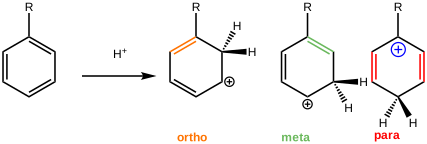
In the previous post[1] I followed up on an article published on the theme “Physical Organic Chemistry: Never Out of Style“.[2] Paul Rablen presented the case that the amount of o (ortho) product in electrophilic substitution of a phenyl ring bearing an EWG (electron withdrawing group) is often large enough to merit changing the long held rule-of-thumb for EWGs from being just meta directors into being ortho and meta-directors, with a preference for meta. I showed how Paul’s elegant insight could be complemented by an NBO7 analysis of the donor-acceptor interactions in the σ-complex formed by protonating the phenyl ring bearing the EWG. Both the o– and m– isomers showed similar NBO orbital patterns and associated E(2) donor/acceptor interaction energies and also matched the observation that the proportion of meta is modestly greater than ortho substitution (steric effects not modelled). These interactions were both very different from those calculated for the para isomer.

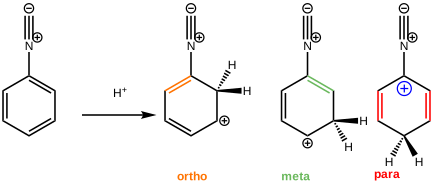
Here using the same NBO7 analysis, I look at what happens when you transpose the atoms of CN to form the isocyanide NC.

The orbital overlaps for NC as substituent can be seen as 3D rotatable models below (click on image to open model).

These effects (ωB97XD/Def2-QZVPP/SCRF=DCM) can be summarised in the table below.

ΔΔG, kcal/mol o m p
CN 0.51 0.0 1.23
NC 0.36 2.86 0.0
NBO7 E(2) Terms: o m p
CN as donor 14.3 9.4 0.2
CN as acceptor 18.8 23.9 0.2
NC as donor 28.8 17.9 0.4
NC as acceptor 12.4 15.7

What emerges is that the two groups cyanide (CN) and isocyanide (NC) can act as both π-electron acceptors and π-electron donors. For the former, the o– and m– electron acceptor interactions are larger, whilst for the latter the o– and m– electron donor effects dominate. However, the interactions for both o– and m– are qualitatively very similar and it is therefore correct to group them together, as was implied in the title of the recently published article.[2] In contrast it seems appropriate to treat p– direction as a qualitatively different effect.


This post has DOI: 10.59350/rzepa.29121

References

  1. H. Rzepa, ""Typical Electron-Withdrawing Groups Are o, m-Directors Rather than m-Directors in Electrophilic Aromatic Substitution"", 2025. https://doi.org/10.59350/rzepa.28993
  2. P.R. Rablen, "Typical Electron-Withdrawing Groups Are <i>ortho</i>, <i>meta</i>-Directors Rather than <i>meta</i>-Directors in Electrophilic Aromatic Substitution", The Journal of Organic Chemistry, vol. 90, pp. 6090-6093, 2025. https://doi.org/10.1021/acs.joc.5c00426

“Typical Electron-Withdrawing Groups Are o, m-Directors Rather than m-Directors in Electrophilic Aromatic Substitution”

Thursday, July 17th, 2025

The title of this post comes from an article published in a special virtual issue on the theme “Physical Organic Chemistry: Never Out of Style[1] There, Paul Rablen presents the case that the amount of o (ortho) product in electrophilic substitution of a phenyl ring bearing an EWG (electron withdrawing group) is often large enough to merit changing the long held rule-of-thumb for EWGs from being just meta directors into these substituents are best understood as ortho, meta-directors, with a preference for meta. I cannot help but add here a citation[2] to the earliest publication I can find showing tables of both o,p and m-directing groups and dating from 1887, so this rule is 138 years old (at least).

Here I thought I might show some computational models (ωB97XD/Def2-QZVPP/SCRF=Dichloromethane)[3] derived from the relative stability of the Wheland or σ-complex produced by protonating the Ph-EWG molecule in the three possible positions on the ring – and now taking the opportunity to add some unusual EWGs to the table to explore how far this effect might be pushed.

I start by looking at the results reported for benzonitrile (EWG = CN), for typical product distributions:

  1. o– (~16%), m– (~82%) and p– (~2%) are cited for nitronium ion as electrophile
  2. o– (23%), m– ( 74%) and p– (3% ) for chlorination
  3. o– (34%), m– (55%) and p– (1%) for uncatalysed bromination (see [4] for an unexpectedly complex mechanism and kinetic analysis of this particular reaction)
  4. σ-complex calculations [5] which result in values of o– (43%), m– (55%) and p– (2%) for benzonitrile.
    • The observation was made[5] that inclusion of a solvation correction substantially improved the agreement with the limited experimental information available to us regarding product distributions in EAS and the results below certainly confirm that (especially for benzonitrile). Solvent also has a significant effect on the optimised geometry of each system (see Table).

The calculations reported here[3] are similar to those reported using a slightly different model[5]. For the specific example of benzonitrile, the authors of the original report expressed surprise that their computations showed that “the ortho and meta σ-complexes were … about equally stable“. The results for this blog show a slightly larger and perhaps more realistic (?) discrimination in favour of meta by 0.51 kcal/mol in the free energy.

Other noteworthy observations include that

  1. compared with CN, the iso-electronic isonitrile group NC is a strong and conventional o/p director, with a preference for p.
  2. The EWG R=BO (a known, albeit very unstable molecule[6]) is the next isoelectronic isomer of CN and it now reveals a very strong preference for meta-substitution, with only 3.5% ortho. So this group does NOT follow the proposed new rule of “ortho, meta-directors, with a preference for meta” although this is unlikely to ever be able to be tested experimentally due to the instability of this species (it readily trimerises).
  3. Finally in this isoelectronic progression for R=BeF, the calculations seem now to show that this is a strong o– director (61%) and that m is only 29%, again not following the newly modified rule but probably untestable.
  4. R=NO however does seem to be an example of the new modified rule, since the percentage of o– is as high as 23.8%. Here it is significant that for both the o– and mσ-complexes, the NO group was calculated as being co-planar with the phenyl ring, thus indicating significant conjugation – but the p-isomer (2.3%) was twisted and hence un-conjugated (dihedral values shown below).
  5. The same result is obtained for R=NO2, with the p-isomer having a twist angle of 67°.

Cationic intermediates in electrophilic substitution of Ph-R
R ΔΔG298, kcal/mol
(pop, %) ortho,
rC-R
Å
ΔΔG298,
(pop, %) meta
rC-R ΔΔG298,
(pop, %) para
rC-R
NC, gas
-4.72
(21.42)
1.349
0.0
(0.01)
1.369
-5.51
(78.57)
1.348
NC, DCM
-2.50
(35.51)
1.359
0.0
(0.56)
1.377
-2.86
(63.93)
1.359
CN, gas
-1.38
(60.56)
1.423
0.0
(6.07)
1.433
+0.36
(33.37)
1.425
CN, DCM
+0.51
(27.68)
1.428
0.0
(64.05)
1.435
+1.23
(8.27)
1.433
BO, gas
+0.96
(16.76)
1.541
0.0
(82.34)
1.540
+2.72
(0.09)
1.549
BO, DCM
+1.99
(3.52)
1.537
0.0
(96.34)
1.532
+3.93
(0.14)
1.547
BeF, gas
+0.23
(38.78)
1.727
0.0
(56.73)
1.714
+1.53
(4.49)
1.737
BeF, DCM
-0.46
(61.21)
1.748
0.0
(28.66)
1.731
+0.63
(10.13)
1.762

CF3, gas
+0.25
(30.86)
1.524
0.0
(46.87)
1.521
+0.45
(22.27)
1.533
CF3, DCM
+1.45
(8.11)
1.518
0.0
(89.66)
1.513
+2.22
(2.23)
1.528
NO, gas
+0.44
(25.07)
1.460
0.0
(52.32)
1.477
+0.51
.22.61)
1.395
NO, DCM
+0.68
(23.84)
1.458
0.0
(73.87)
1.456
+2.09
(2.29)
1.429
NO2, gas
+1.08
(13.38)
1.487
0.0
(79.88)
1.487
+1.49
(6.73)
1.476
NO2, DCM
+1.80
(4.73)
1.480
0.0
(94.25)
1.478
+2.73
(1.01)
1.481

On to the suggested explanation,[1] where interaction of the π-electrons from the σ-complex with the π* orbital from the EWG was suggested to be stronger not only for the m-isomer but also the o-isomer as compared to the p-isomer. This can now be quantified using NBO7 analysis, which indicates the energy of interaction between pairs of filled donor and empty acceptor orbitals.

For the m-isomer[7] of protonated benzonitrile, the overlap of the two orbitals (CN acting as an acceptor and the phenyl ring as a donor) is shown below (click on the image to get a rotatable 3D model) with blue positively overlapping with purple and red with orange. The NBO E(2) interaction energy is 23.85 kcal/mol (green bond above interacting with R=CN π*).

A reverse donation, from the π-system of the CN group now acting as a donor to the π* of the benzene ring acting as an acceptor has a smaller E(2) = 9.4kcal/mol. This shows that CN can act as both a donor and as an acceptor, but the latter effect is stronger.

For the o-isomer[8] (below), the NBO E(2) interaction energy is somewhat reduced to 18.8 kcal/mol (orange bond above interacting with R=CN π*). but is still considerable and more or less commensurate with the relative free energies of the o– and m-isomers.

A reverse donation, from the π-system of the CN group now acting as a donor to the π* of the benzene ring acting as an acceptor has a smaller E(2) = 14.3 kcal/mol. This again shows that CN can act as both a donor and as an acceptor with the latter effect the stronger.

Things are quite different for the p-isomer[9]. The equivalent CN-acceptor/phenyl-donor orbitals are shown below; they has no real overlap and the associated value for E(2) of 0.23 kcal/mol (red bond above interacting with R=CN π*) is tiny compared to that for the o- and m– isomers.

The reverse donation from the π-system of the CN group now acting as a donor to the π* of the benzene ring acting as an acceptor is equally small, E(2) 0.15 kcal/mol.

Furthermore, the p-isomer NBO E(2) interaction energy for the same atoms as with o– and m– shows two instances of 3.0 kcal/mol (because of the C2v symmetry), also very much reduced from 23.85 or 18.8 kcal/mol.

Although many other interactions can be found in the NBO analysis, this accounts for by far the largest difference between the o, m, and p isomers. These results also match with the observation made above that for R=NO, the o– and m-isomers are fully coplanar, but for the p-isomer the NO group is twisted by about 90° with respect to the phenyl ring. This is also reflected in the calculated torsional or twisting vibrations of the R group, being 89 cm-1 for m-Nitroso vs 23 cm-1 for o-nitroso and again 55 cm-1 for m-nitro vs 38 cm-1 for o-nitro.

So this new NBO7 orbital overlap analysis helps to quantify these effects (the reported qualitative analysis[1] was based on molecular orbitals rather than localised NBO orbitals) and confirms that for some EWG groups at least, the o-isomer is almost as favoured as the m-form. Well, an observation that is 138 years old gets new light shone on it!


This post has DOI: 10.59350/rzepa.28993

References

  1. P.R. Rablen, "Typical Electron-Withdrawing Groups Are <i>ortho</i>, <i>meta</i>-Directors Rather than <i>meta</i>-Directors in Electrophilic Aromatic Substitution", The Journal of Organic Chemistry, vol. 90, pp. 6090-6093, 2025. https://doi.org/10.1021/acs.joc.5c00426
  2. H.E. Armstrong, "XXVIII.—An explanation of the laws which govern substitution in the case of benzenoid compounds", J. Chem. Soc., Trans., vol. 51, pp. 258-268, 1887. https://doi.org/10.1039/ct8875100258
  3. H. Rzepa, "Cationic intermediates in electrophilic substitution of benzene substituted with electron withdrawing groups", 2025. https://doi.org/10.14469/hpc/15341
  4. A.V. Shernyukov, A.M. Genaev, G.E. Salnikov, H.S. Rzepa, and V.G. Shubin, "Noncatalytic bromination of benzene: A combined computational and experimental study", Journal of Computational Chemistry, vol. 37, pp. 210-225, 2015. https://doi.org/10.1002/jcc.23985
  5. P.R. Rablen, and A. Yett, "The relative favorability of placing substituents ortho or para in the cationic intermediate for electrophilic aromatic substitution", Journal of Physical Organic Chemistry, vol. 36, 2022. https://doi.org/10.1002/poc.4457
  6. D.S.N. Parker, B.B. Dangi, N. Balucani, D. Stranges, A.M. Mebel, and R.I. Kaiser, "Gas-Phase Synthesis of Phenyl Oxoborane (C<sub>6</sub>H<sub>5</sub>BO) via the Reaction of Boron Monoxide with Benzene", The Journal of Organic Chemistry, vol. 78, pp. 11896-11900, 2013. https://doi.org/10.1021/jo401942z
  7. H. Rzepa, "Protonated benzonitrile- m G = -324.706886 + DCM => -324.791810 Cavity surface area= 172.569 Ang**2 Cavity volume = 166.107 Ang**3", 2025. https://doi.org/10.14469/hpc/15354
  8. H. Rzepa, "Protonated benzonitrile- o, G = -324.709093 + DCM => G = -324.791005 Cavity surface area= 172.048 Ang**2 Cavity volume 165.997 Ang**3", 2025. https://doi.org/10.14469/hpc/15355
  9. H. Rzepa, "Protonated benzonitrile- p, G = -324.708521 + DCM G = -324.789846 Cavity surface area= 171.955 Ang**2 Cavity volume = 165.449 Ang**3", 2025. https://doi.org/10.14469/hpc/15353

Mechanism of the dimerisation of Nitrosobenzene.

Saturday, June 14th, 2025

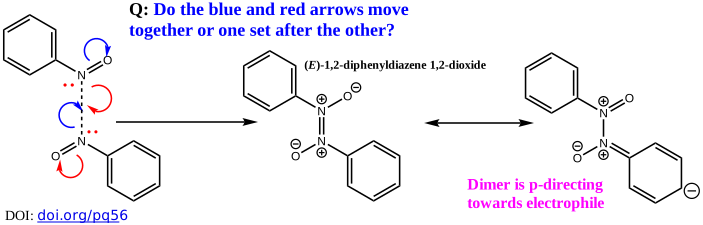
I am in the process of revising my annual lecture to first year university students on the topic of “curly arrows”. I like to start my story in 1924, when Robert Robinson published the very first example[1] as an illustration of why nitrosobenzene undergoes electrophilic bromination in the para position of the benzene ring. I follow this up by showing how “data mining” can be used to see if this supports his assertion. I have used the very latest version of the CSD crystal structure database to update the version originally posted here in 2020.[2]

I then discuss some possible reasons why Robinson might have thought that bromination goes in the para position, including the observation[3] that nitrosobenzene is in equilibrium with its dimer, and that such a dimer might be expected to more reactive towards electrophiles than the “deactivated” monomer.

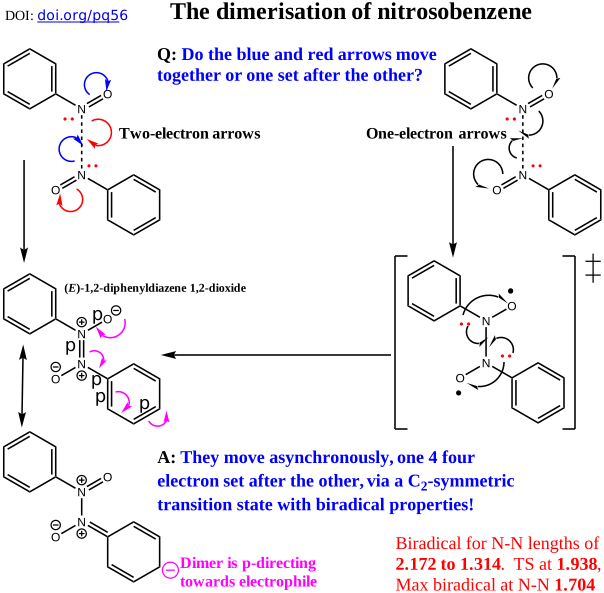
Not part of the main lecture, but held in reserve for any questions at the end, is the following curly arrow pushing for the dimerisation.

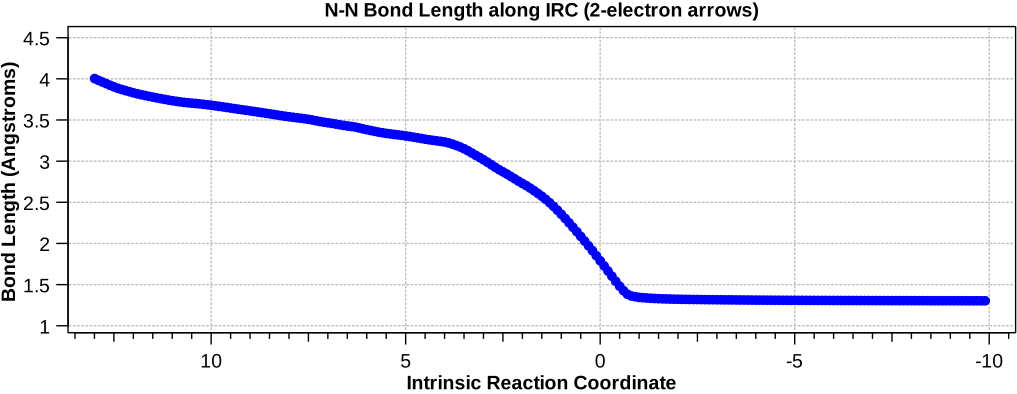
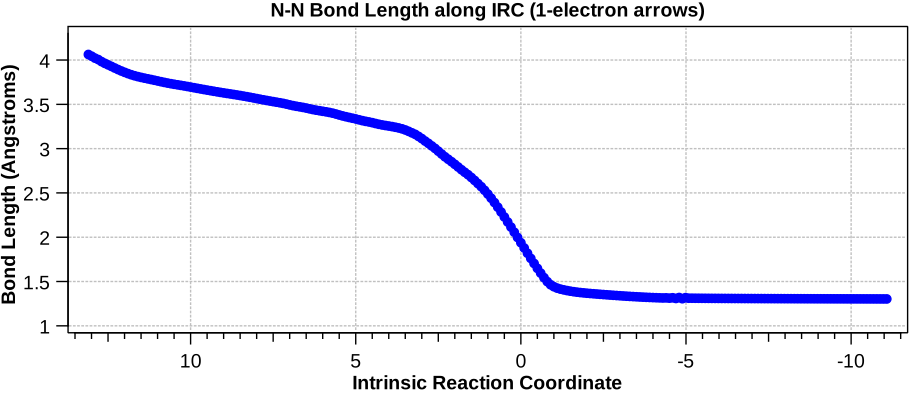
This raises a simple question – do both the red and blue arrows shown below participate at the same time, or do they go sequentially? Time then for some calculation to answer this last question. An ωB97XD/Def2-TZVPP/SCRF=chloroform calculation[4] using a closed shell wavefunction (to correspond to two-electron curly arrows) appears to show a smooth reaction profile. The N-N bond length also converges from no bond to a double bond shortly after the transition state (NN = 1.3Å) without anything intermediate (this for the (Z)-stereochemical isomer, not the one shown above and which will be discussed later). The reported activation free energy for this process ΔG198 is 15.7 kcal/mol[3] whilst the calculated value by this method is 25.5 kcal/mol. Even allowing for a concentration effect (1M) and quasi-harmonic corrections to the free energy, it is still 23.9 kcal/mol.

In a previous post[5] when an overly large barrier was computed, one reason is that the wavefunction might have “biradical” character and that the appropriate curly arrows might not be the appropriate two electron variety at all, but instead one-electron ones, as shown below.


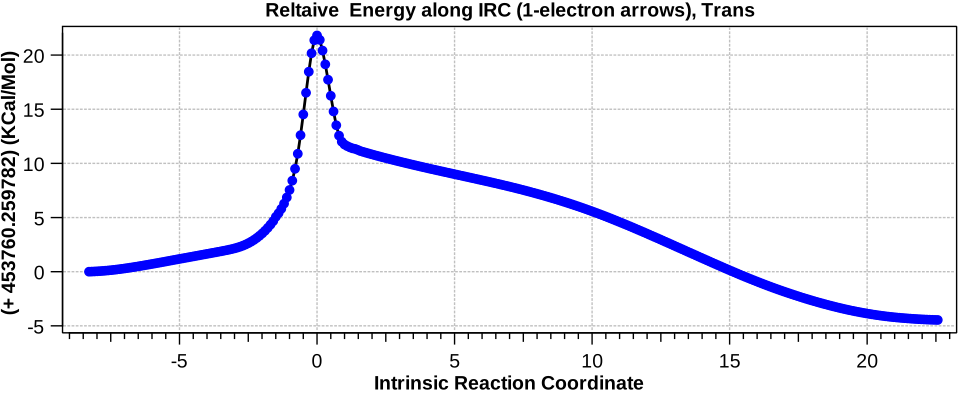
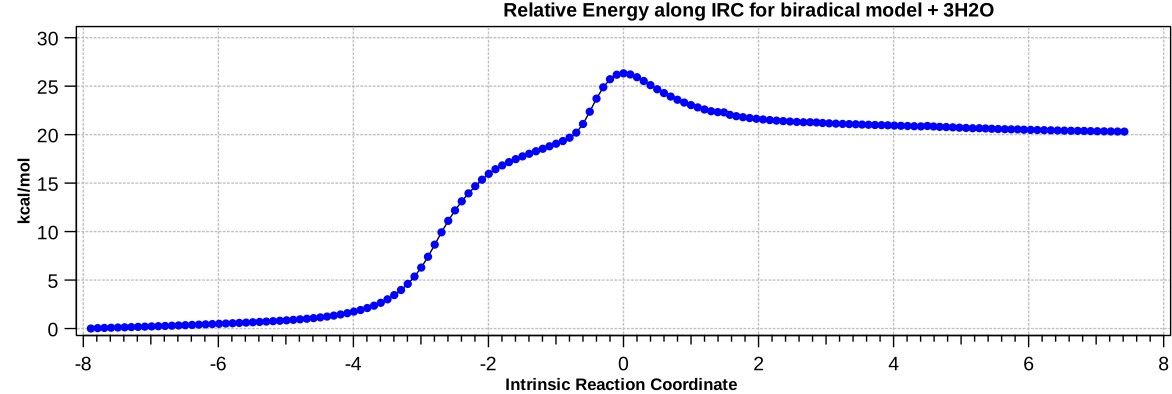
The degree of biradical character is given by the spin-expectation operator <S2>, which has a value of 0.0 for no biradical character and 1.0 for a pure biradical. This time the transition state for the dimerisation is calculated to have a value of <S2> = 0.5418 and ΔG198 is now calculated as 21.8 kcal/mol (20.3 with quasi-harmonic corrections).

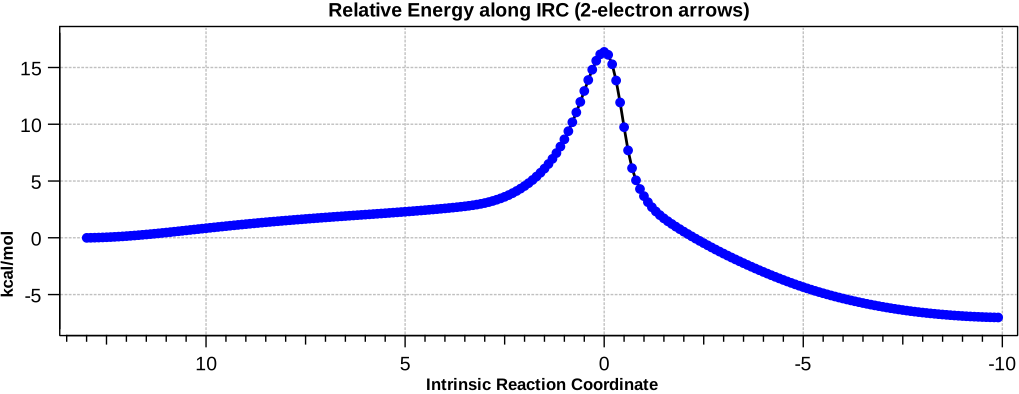
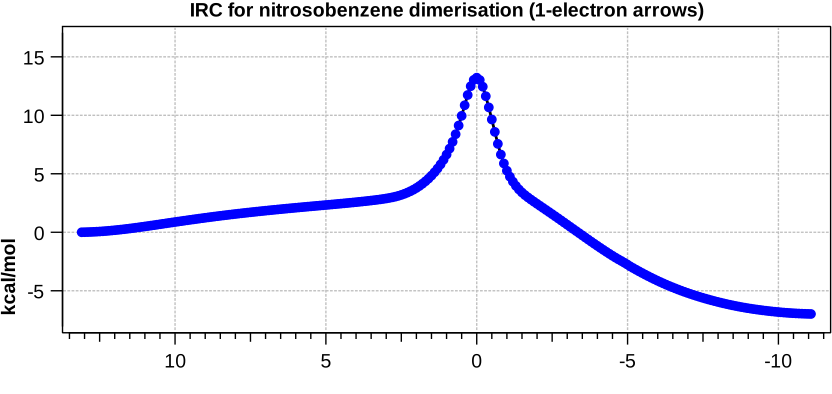
The energy and N-N bond length profiles for the reaction coordinate using “one-electron” curly arrows are shown below, the former being around 4 kcal/mol lower than for the two-electron arrows.


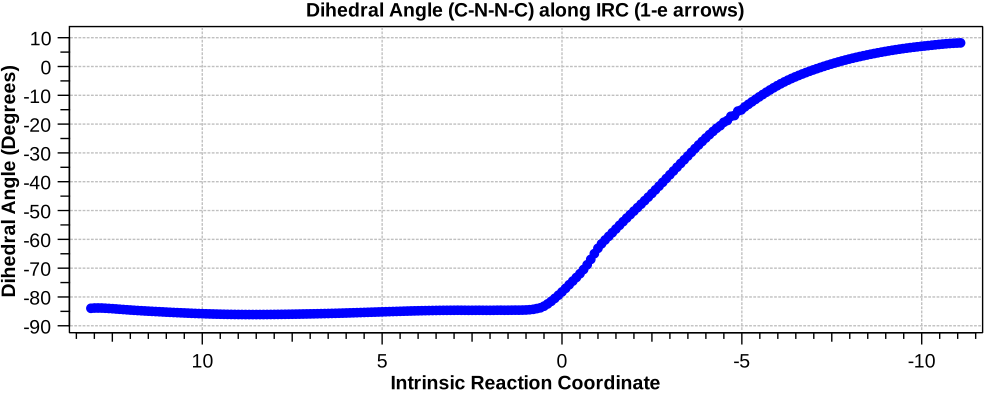
The dihedral at the central C-N-N-C bond shows it almost entirely twisted at the transition state (as might befit a biradical) and then a smooth rotation to co-planarity (as befits a double bond) as the second bond forms.

Because the system has C2-symmetry and importantly no plane of symmetry, the π and σ electrons are now allowed to mix together and this can be seen in the two (equivalent) orbital overlap models below at the transition state, each nitrogen lone pair managing to overlap constructively (blue with purple, red with orange, click on the diagram to load the orbitals) with the N-N π* orbital of the second nitrosobenzene.

Why is this simple system better described (energetically) by the use of one-electron arrows rather than two electron ones? A simple explanation might be that the electrons like to move consecutively simply to reduce the electron repulsion that the two-electron model would impose on it (reducing the electron correlation incurred in the process). It’s probably more complicated than this, but it shows a rare example where two-electron arrows are not the most appropriate for describing a chemical reaction.


Postscript. The 1-electron transition state (<S2> = 0.981) for formation of the trans stereochemical (E) isomer is higher than the cis (Z) by ~4 kcal/mol.


References

  1. "Forthcoming events", Journal of the Society of Chemical Industry, vol. 43, pp. 1295-1298, 1924. https://doi.org/10.1002/jctb.5000435208
  2. H. Rzepa, "The first ever curly arrows. Revisited with some crystal structure mining.", 2020. https://doi.org/10.59350/c6thp-wqe69
  3. K.G. Orrell, V. Šik, and D. Stephenson, "Study of the monomer‐dimer equilibrium of nitrosobenzene using multinuclear one‐ and two‐dimensional NMR techniques", Magnetic Resonance in Chemistry, vol. 25, pp. 1007-1011, 1987. https://doi.org/10.1002/mrc.1260251118
  4. H. Rzepa, "The mechanism of nitrosobenzene dimerisation", 2025. https://doi.org/10.14469/hpc/15278
  5. H. Rzepa, "Mechanism of the Masamune-Bergman reaction. Part 4. Why was the DFT energy barrier too high for the Calicheamicin reaction?", 2024. https://doi.org/10.59350/k4340-t6971

S7I1+: The largest anomeric effect exhibited by sulfur.

Wednesday, May 21st, 2025

In this series of posts about the electronic effects in small sulfur rings[1] I have explored increasingly large induced geometric effects. Here is the largest so far, for the compound S7I1+[2]


The calculated geometry[3] is shown below, with the crystallographic values in parentheses – the two matching very well.

The calculated NBO7 stereoelectronic analysis identifies an especially strong donor (S7) interaction with an acceptor S4-S7, the E(2) energy being 36.9 kcal/mol. The Wiberg S4-S5 bond index is 0.512 and the S-S stretching wavenumber is ν 131. The Wiberg index for S4-S7 is 1.4618 and the S-S stretch ν 667 cm-1, matching the shortest bond.

The electronic overlap is shown below (click on image to view as a 3D model).

So we end with the current record for an SLp/SSσ* interaction of 36.9 kcal/mol. Who would have thought that small sulfur rings could be such fun!

References

  1. H. Rzepa, "5-Imino-5λ<sup>4</sup>-heptathiepane 3-oxide. More exuberent anomeric effects.", 2025. https://doi.org/10.59350/rzepa.28615
  2. J. Passmore, G. Sutherland, P. Taylor, T.K. Whidden, and P.S. White, "Preparations and x-ray crystal structures of iodo-cyclo-heptasulfur hexafluoroantimonate(V) and hexafluoroarsenate(V), S7ISbF6 and S7IAsF6", Inorganic Chemistry, vol. 20, pp. 3839-3845, 1981. https://doi.org/10.1021/ic50225a048
  3. H. Rzepa, "S7I(+) ax G = -3083.654991", 2025. https://doi.org/10.14469/hpc/15236

Cycloheptasulfur sulfoxide, S7O – Anomeric effects galore!

Monday, May 19th, 2025

The monosulfoxide of cyclo-heptasulfur was reported along with cycloheptasulfur itself in 1977,[1] along with the remarks that “The δ modification of S7 contains bonds of widely differing length: this has never been observed before in an unsubstituted molecule. and “the same effect having also been observed in other sulfur rings (S8O, S7I1+ and S7O).” Here I take a look at the last of these other molecules, the monosulfoxide of S7, as a follow up to the commentary on S7 itself.[2]

The axial oxygen isomer is calculated as being 3.68 kcal/mol more stable than the equatorial form[3] and a comparison of its calculated (MN15L/Def2-TZVPP) and observed structure is shown below. The S-S lengths do indeed vary widely.

As before, an explanation is provided by analysing the orbitals of the molecule using NBO7. The interactions tabled below are ordered by the largest first. That from the oxygen into the S4-S5 antibonding NBO (28.2 kcal/mol) is the biggest I have observed for an anomeric effect involving an S-S bond. The greatest all-sulfur effect (16.8 kcal/mol) is increased compared to that previously found for S7 itself (12.35 kcal/mol).

Donor lone Pair Acceptor antibonding NBO E(2), kcal/mol Acceptor bond distance, Å
O8 S4-S5 28.2 2.28
O8 S5-S6 20.2 2.15
S7 S4-S5 16.8 2.28
S4 S3-S7 14.8 2.18
S2 S3-S7 12.5 2.18
S3 S5-S6 10.3 2.15
O8 S5-S6 9.6 2.15
S6 S1-S2 9.1 2.10

E(2) NBO overlaps Click on image to load 3D rotatable model
28.2

20.0

16.8

14.8

12.5

10.3

9.6

9.1

The S-S stretching modes also vary by more than a factor of two; ν4-7 619 cm-1, ν2-3 528 cm-1, ν1-6 548 cm-1, ν3-7 368 cm-1, ν5-6 331 cm-1, ν4-5 287 cm-1.

It is indeed remarkable that this small molecule can exhibit as many as eight different anomeric interactions, including two unusually large ones and three regular ones. The result is the profusion of different S-S bond lengths originally commented[1] on accompanied by the wide variety of S-S stretching modes. Can this record be beaten, either in the number or the magnitude of the effects. The answer is YES, but not for a known molecule. See next post!

References

  1. R. Steudel, R. Reinhardt, and T. Sandow, "Bond Interaction in Sulfur Rings: Crystal and Molecular Structure of <i>cyclo</i>‐Heptasulfur Oxide, S<sub>7</sub>O", Angewandte Chemie International Edition in English, vol. 16, pp. 716-716, 1977. https://doi.org/10.1002/anie.197707161
  2. H. Rzepa, "Cyclo-Heptasulfur, S<sub>7</sub> – a classic anomeric effect discovered during a pub lunch!", 2025. https://doi.org/10.59350/rzepa.28407
  3. H. Rzepa, "Cyclo-Heptasulfur, S7 – a classic anomeric effect discovered during a pub lunch!", 2025. https://doi.org/10.14469/hpc/15228

The “double-headed” curly arrow as used in mechanistic representations.

Tuesday, August 29th, 2023

The schematic representation of a chemical reaction mechanism is often drawn using a palette of arrows connecting or annotating the various molecular structures involved. These can be selected from a chemical arrows palette, taken for this purpose from the commonly used structure drawing program Chemdraw. Explanations of how to apply the individual arrows are not always easy to find however! Circled in red are the ones to be discussed here, although most carry fascinating and often subtle meanings!

The most common meaning of the double-headed arrow is probably best illustrated by the scheme below, which involves the addition of a nucleophile to a carbonyl compound, forming a presumed “tetrahedral” intermediate, which is then immediately followed by the eviction of a leaving group – the chloride anion in the example below. The two red arrows show an electron pair firstly moving to the oxygen, and then with the reverse arrow 2 back to reform the carbonyl group. This process is called an addition/elimination mechanism. It is therefore tempting to conflate the two steps into one by instead using a double-headed arrow (3, blue), which if nothing else, saves a little bit of time in the drawing – a useful examination technique!
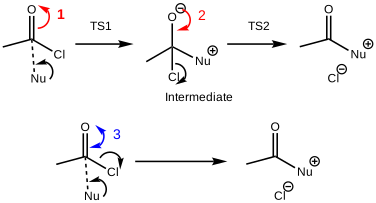
Of course, the top scheme (red arrows) is a two-step process, involving a discrete (tetrahedral) intermediate and two transition states. The conflated scheme below it (blue arrows)  might imply (or not) a single-step process with a single transition state. Since few people who draw such schemes have any information on whether it is a two-step or a single step process, the actual chemical meaning of the double-headed arrow is left implicitly ambiguous, without implying anything about how many discrete steps are involved. However, it is tempting to conclude that the first red arrow (1) reduces the double bond order of the carbonyl group to a single bond, which might therefore be expected to lengthen and the second red arrow (2) reforms the double bond, thus shortening the bond. The two arrows clearly do not move simultaneously. The conflated third arrow (3) leaves the status of the carbonyl bond length changes undefined, or might it mean that it first gets longer and then shorter along the reaction path, depending of course on which moves first!

Enter computation, where the energy pathway of such a reaction can be computed, along with geometries at each stage. Here I explore three examples to see what results (ωB97XD/De2-TZVPP/SCRF=DCM), FAIR DOI: 10.14469/hpc/13171

Acetyl chloride + Methanol.

This uses a model in which a proton transfer from the methanol to the chloride anion is facilitated by water. This enables (but does not enforce) a continuous concerted process to occur. This emerges from the computed intrinsic reaction coordinate (IRC) as having a low barrier and an exothermic reaction, which agrees with experimental observation. The required proton transfer is part of the concerted process, albeit occurring in a second lower energy stage (IRC ~+1.5).
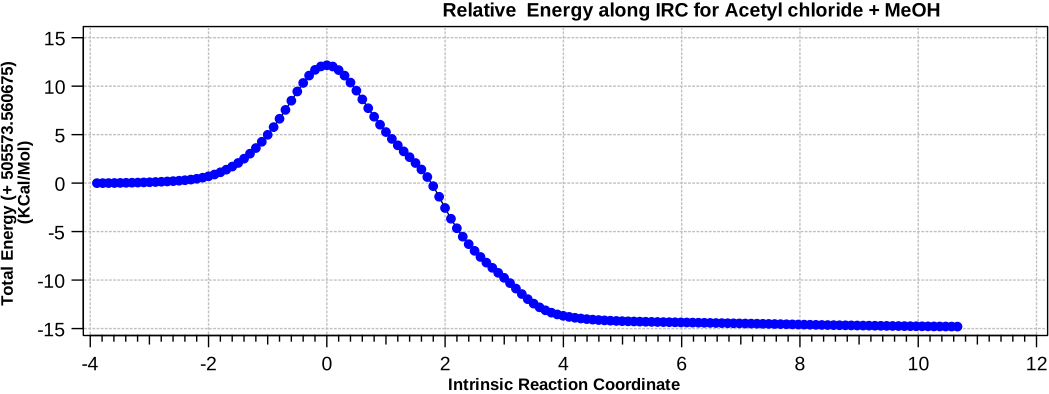
But take a look at how the carbonyl bond length changes along this IRC. It first shortens, and only starts to lengthen as the chloride is evicted. So the carbonyl group actually contracts in length at the transition state, the opposite of what might be inferred by using a double-headed arrow.


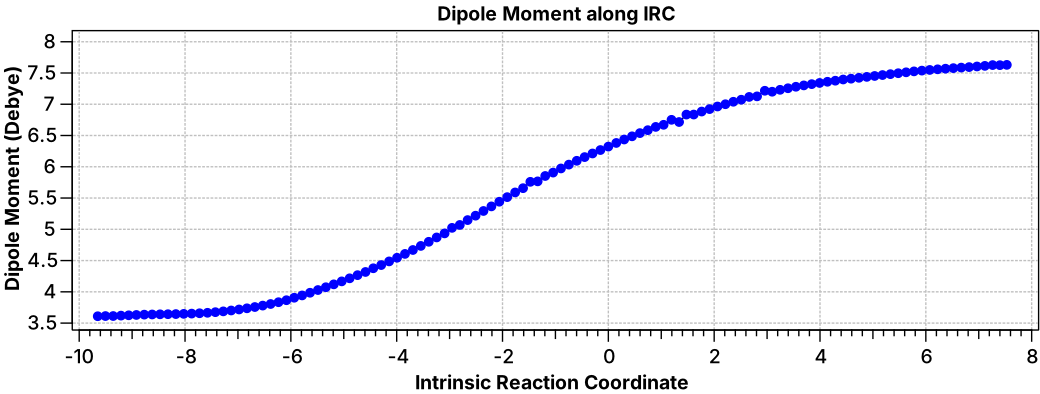
Also included is the dipole moment response, which does seem to correspond to the formation of an ionic intermediate!

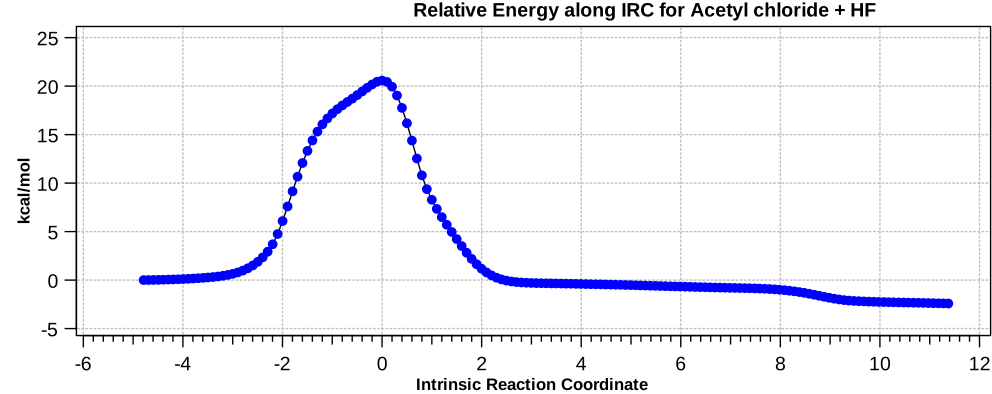
Acetyl chloride + HF.


Hydrogen fluoride as a nucleophile replacing methanol shows a much higher barrier, since it is less good as a nucleophile in this context.
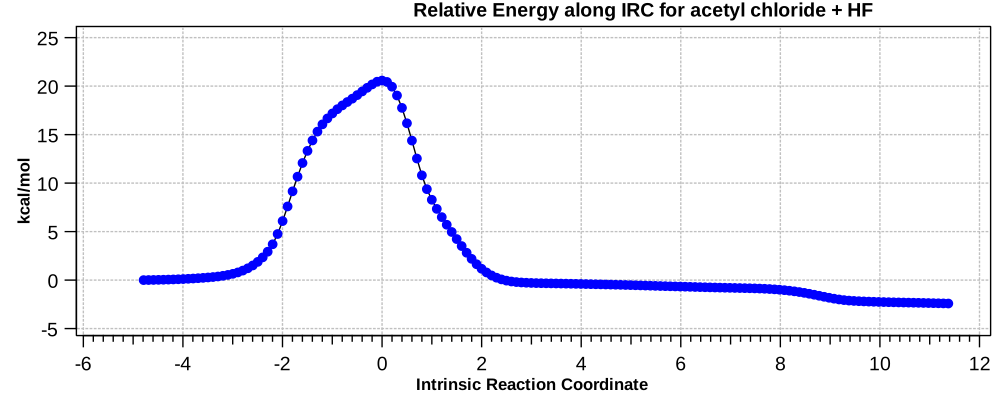
Again, observe the bond length response of the carbonyl group, which is at its shortest at the (single step) transition state.
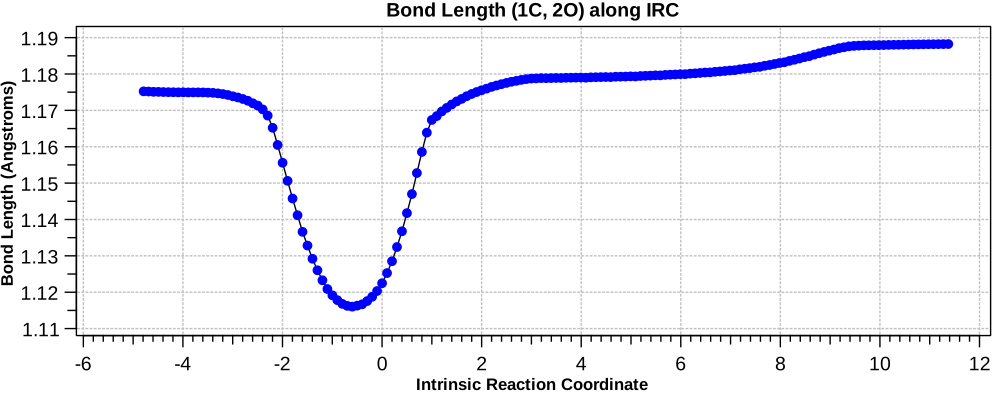
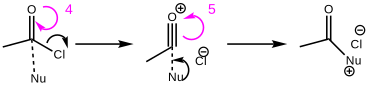
This corresponds to a different interpretation of the double-headed arrow, as per below, but occuring as part of a single concerted process not involving any intermediate.
The dipole moment response is rather different from methanol.

Acetyl chloride + Methylamine.

The energy profile now shows two distinct transition states (IRC ~7 and again at 0.0). The first is a very low energy addition to the carbonyl group with concerted eviction of the chloride anion, which only hydrogen bonds to the water shown. The second stage is the proton transfer from the nitrogen to the water and thence relayed to the chloride anion, for which a transition state at IRC ~0.0 is found.

But now observe the bond length response, which shows a distinct maximum around the first transition state (IRC ~7). This is the opposite behaviour to the previous two systems, and now indeed matches the original inferences one might make from the double headed arrow.

So we can conclude that there are in fact TWO types of double-headed arrow which could be used in mechanistic representations. The first is when arrow 1 is ahead of arrow 2 (red), resulting in initial weakening of the carbonyl bond. The second is when arrow 4 is ahead of arrow 5, resulting in initial strengthening of the carbonyl bond.
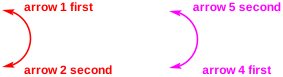
Perhaps to avoid confusion, we really need two different representations of a double-headed arrow to clearly differentiate them! Perhaps a reversal of the direction of the arrowhead? But that does not (yet?) exist in the Chemdraw palette.


This is part of the arcane “knowledge” of chemistry which is often absorbed rather than learnt by students of the subject, but which as a result becomes a language that becomes inscrutable to anyone else! Another example was noted in the previous post.
Pre-mechanism for the Swern Oxidation: formation of chlorodimethylsulfonium chloride.

Friday, August 25th, 2023

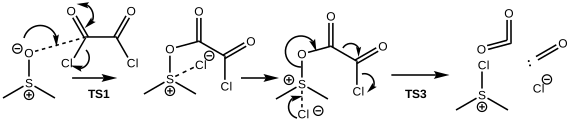
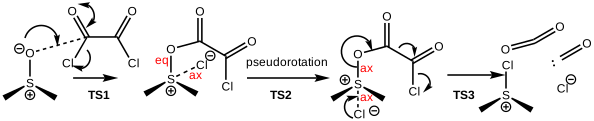
The Swern oxidation[1] is a class of “activated” dimethyl sulfoxide (DMSO) reaction in which the active species is a chlorodimethylsulfonium chloride salt. The mechanism of this transformation as shown in e.g. Wikipedia is illustrated below. However, an interesting and important aspect of chemistry is not apparent in this schematic mechanism and to rectify this, a full computed mechanism is laid out below, for which the FAIR data has a DOI: 10.14469/hpc/13151

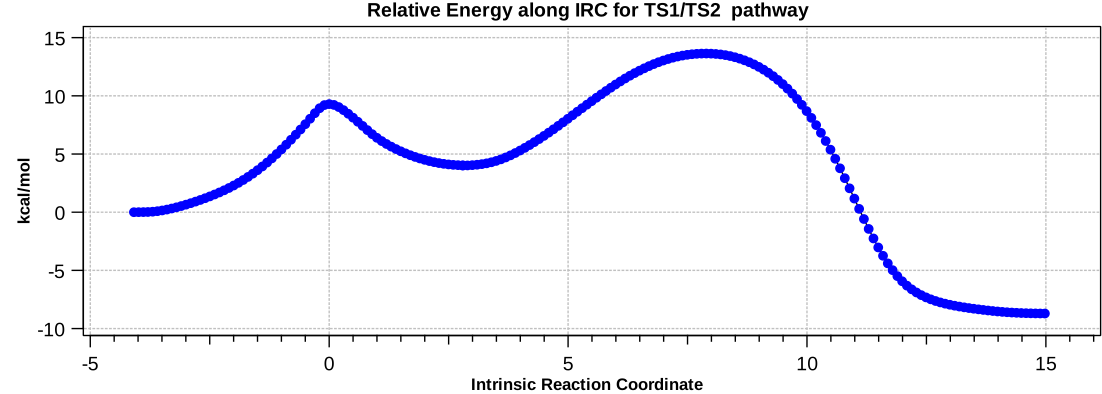
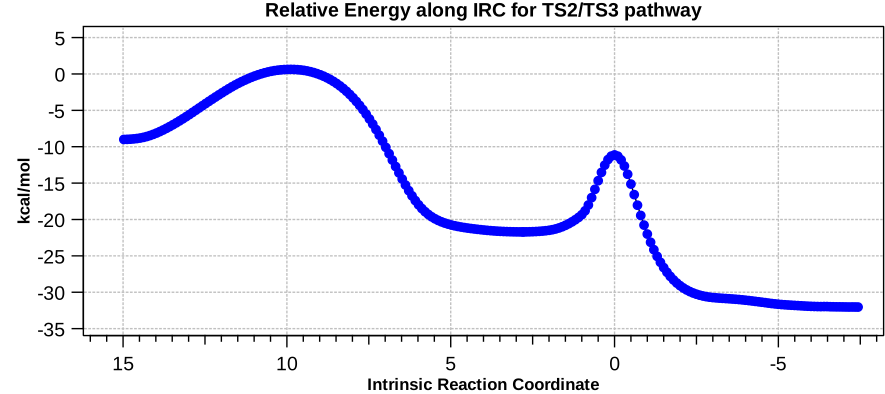
The first step involves attack of the oxygen of the DMSO on one carbon of the oxalyl chloride, which can be considered as an addition/elimination substitution at the carbon. The departing chloride anion ends up loosely associated with the sulfur centre. The net result is that the trigonal bipyramidal sulfur is axially coordinated by the chlorine, but equatorially coordinated by the oxygen. The transition state for this step (TS1), shown at IRC = 0.0 in the above energy profile, has a relatively low activation barrier. Click on any animation to view 3D model.

TS1

The key step is what is called a pseudorotation at the sulfur centre (TS2), which transforms the ax/eq relationship of the Cl/O atoms at the sulfur into an ax/ax one (TS at IRC +8.5 above). This is the energy high point along the reaction path.

TS2

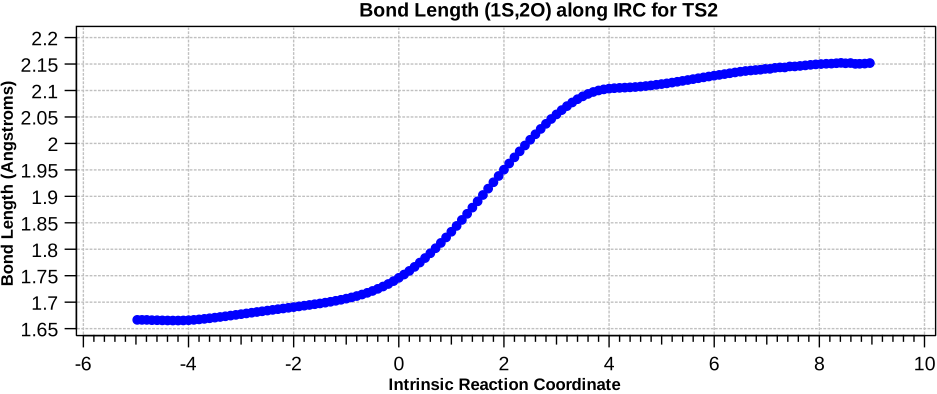
The S-O bond length response during this transformation is shown below. As the chlorine moves into this di-axial relationship, the S-O bond begins to weaken, from 1.666Å at the start, 1.746Å at the TS and 2.152Å at the end.

This prepares the system for the final step (TS3), which is cleavage of the already weakened S-O bond (TS at IRC = 13.0 below, TS = 0.0 being the pseudorotation), accompanied by extrusion of CO, CO2 and Cl. The liberated “ionic” chloride anion ends up loosely associated with the sulfur (2.88Å), whilst the “covalent” chlorine which had helped to evict the oxygen is 2.06Å.

TS3

So to conclude, the mechanism of the formation of chlorodimethylsulfonium chloride is perhaps better illustrated as shown below involving the extra pseudorotation step, which as it happens is actually the rate determining step for this reaction. This pre-mechanism to the Swern oxidation is given little attention in most representations, such as the one at Wikipedia. But it actually contains a multitude of interesting (stereoelectronic) effects and is well worth teaching!


Well, not quite. The Wiki version does not show the eliminating chloride anion in the first step (which is implied). The resulting curly arrows in the Wikipedia version are unbalanced and hence not formally correct! The double-headed arrow included in the representation above indicates an addition/elimination mechanism, which can be tracked by monitoring the carbonyl C=O bond length. It starts at 1.183Å, reaches a maximum of 1.197Å just after the TS, then drops back to 1.191Å at the end as the chloride anion eliminates.


Citing this blog post: DOI 10.14469/hpc/13156


References

  1. K. Omura, and D. Swern, "Oxidation of alcohols by “activated” dimethyl sulfoxide. a preparative, steric and mechanistic study", Tetrahedron, vol. 34, pp. 1651-1660, 1978. https://doi.org/10.1016/0040-4020(78)80197-5

One vs two bond rotation – An example using Acyl amides

Monday, April 3rd, 2023

One of the important aspects of chemical reaction mechanisms is the order in which things happen. More specifically, the order in which bonds make or break when there are more than two involved in undertaking a reaction. So we have:

  1. concerted mechanisms, when all bonds in any particular stage of a mechanism are changing in concert via a unique transition state,
  2. asynchronous concerted mechanism, when all the bonds are changing, but not necessarily all at the same rate and which may involve so called “hidden intermediates”, but which nevertheless stil involves only one transition state.
  3. stepwise mechanisms, in which more than one transition state is involved, connected by a discrete intermediate along the pathway.

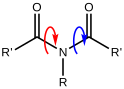
Here I consider an example of another type of (isomerisation) mechanism, involving bond rotations rather than bond formations or breakages. The two bonds in this case have a higher bond order than 1, and so are starting to verge on a type of isomerism known as atropisomerism, where the rotation takes place on a relatively slow time scale (unlike single bonds themselves, where rotation about them is normally relatively fast). Do two such bonds rotate in a stepwise or a concerted manner? In the structure below, we have two rotatable bonds, shown in red and blue, which due to conjugation of the lone electron pair on the nitrogen atoms with the carbonyl group have bond orders >1. Do these bonds rotate in concert or in a stepwise manner?

The calculations of the rotations are done at the B3LYP+GD3+BJ/Def2-SVPP/SCRF=DCM level, Data DOI: 10.14469/hpc/12299

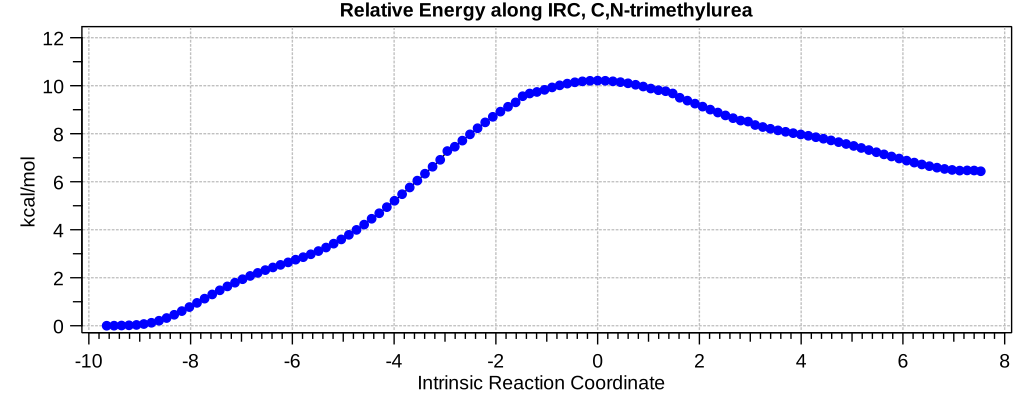
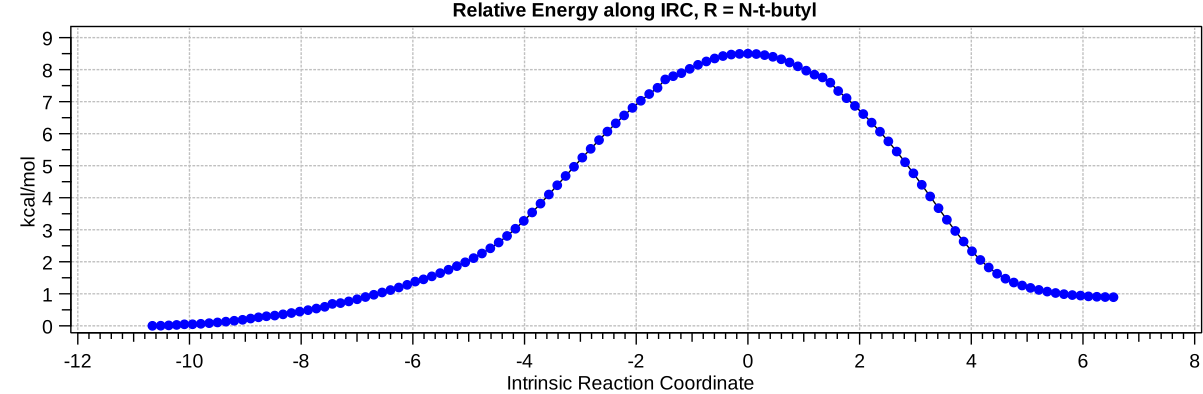
  1. Firstly, for the system R=R’ = Me. The reaction coordinate is specified around the red bond.

    The animation along the IRC (Intrinsic reaction coordinate) appears below, where you can see the red bond rotating and the blue bond spectating.

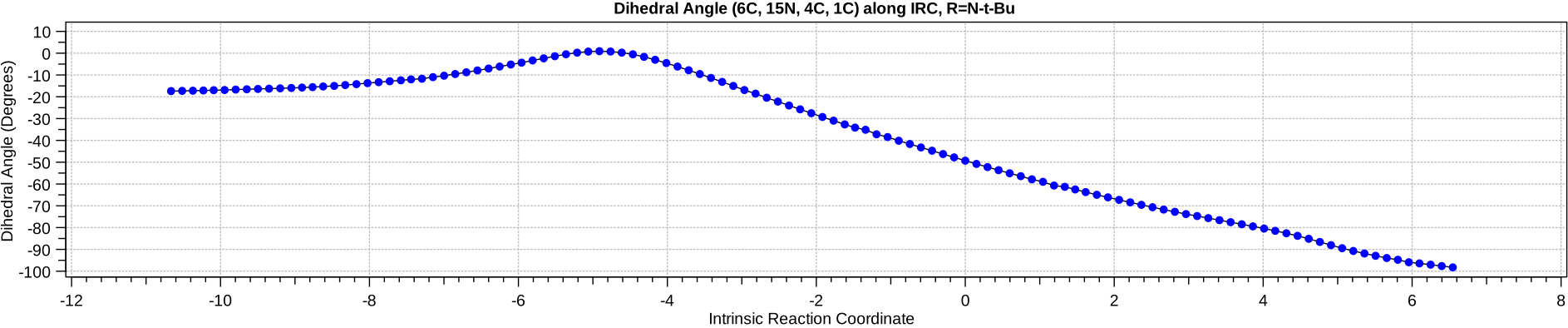
  2. The response of the dihedral angles about both bonds is shown below, which reinforces the conclusion that whilst one dihedral changes by about 180°, the other hardly changes. The overall dipole moment changes significantly as a result of the relative orientation of the two carbonyl groups changing. The two bonds can be said to rotate in a stepwise mechanism, involving an intermediate where one has rotated and the other has not.


  3. When the bulk of the central group is increased, different behaviour is now observed.

  4. Both dihedral angles now change by ~180°, in concert but not in synchrony! The first more or less transforms evenly by ~180°, but the second changes direction at ~IRC=-5 to rejoin the other.

When the steric bulk means that the rotating substituents start to interfere with each other, so-called “gearing” starts to take place where the motions of the two become coupled by the gears. The rotations are now a concerted asynchronous process.

So now to my concluding thought. The above is a simple example of gearing involving rotation about two coupled bonds. So how many bonds can be simultaneously geared so that when one rotates, the others do as well? I am now hunting for an example of three such bonds geared together. And is there a limit to how many can do so in concert? Here we enter into analogy with bond cleavage, where there are numerous examples of bonds breaking in concert, if not in synchrony. Most pericyclic processes are of this type. Is there a similar patten in bond rotations?

Gaseous carbon: The energetics of two forms of tetracarbon, C4 and a challenge!

Tuesday, November 29th, 2022

The topic of dicarbon, C2, has been discussed here for a few years now. It undoubtedly would be a gas! This aspect of the species came to the fore recently[1] when further experiments on a potential chemical precursor of dicarbon, the zwitterion X(+)-C≡C(-), showed that different variants of X(+), such as not only X=PhI(+), but also e.g. X=dibenzothiophenium(+) appeared to generate a gaseous species, which could be trapped as “C2” in a solvent-free connected flask experiment.

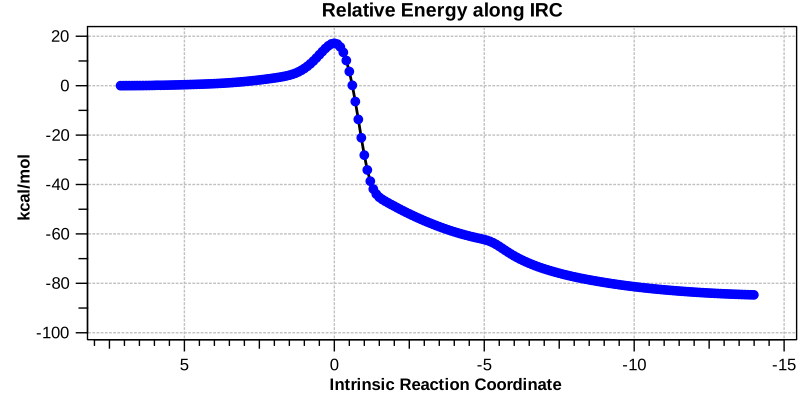
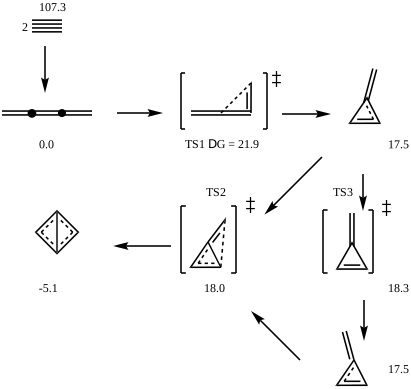
Part of the mystery is that C2 itself is an extremely high energy species, its dimerisation to C4 being around 107 kcal/mol exoenergic in free energy. Now, earlier calculations[2] had revealed that the reaction of the precursor PhI(+)-C≡C(-) with itself can occur on a relatively low energy pathway which avoids the very high energy of C2. The IRC for this reaction is shown below, showing a modest barrier and a very exothermic reaction to the species PhI(+)-CCCC(-) and IPh. 

Here I bring your attention to an odd feature on the IRC, in the region of -5. In this region, effectively “free C4” is formed (at an energy some 60 kcal/mol lower than the reactants and 167 kcal/mol lower than two molecules of free C2), but this species is immediately trapped by a PhI to form the final products with a further decrease in energy of ~20 kcal/mol. Suppose however, in a molecular dynamics sense, some proportion of this “C4” could take a different trajectory and free itself at this point, hence escaping being trapped by PhI? This reaction would then generate what again is presumably a gaseous C4.

Here I explore what might happen next, to answer the question of whether linear C4 is stable, or will it convert into something else? The scheme below shows some of the possible pathways, leading to the bicyclic form which I have previously discussed extensively in terms of its stabilising aromaticity. Calculations are at the CCSD(T)/Def2-TZVPPD gas phase level, allowing biradicals to form (FAIR Data DOI: 10.14469/hpc/11956).

You can see that C4 is in a modest thermal well, with a free energy barrier to cyclisation of ~22 kcal/mol. So generated at relatively low energies, it might retain its linear structure, whereas at room temperatures or higher, it will probably end up as the bicyclic aromatic species.

The key calculation might be that dimerisation reaction shown above. Would molecular dynamics show that a proportion of the reaction allows the escape of C4? Would that be temperature/pressure dependent? I am not about to try these calculations, but offers of doing so gladly accepted! But that does not necessarily solve the mystery of this reaction, alluded to above.[1] Is the trapped gaseous species C2 itself, C4 in some form, or indeed something else entirely?


This post has DOI: 10.14469/hpc/11959


References

  1. H.S. Rzepa, M. Arita, K. Miyamoto, and M. Uchiyama, "A combined DFT-predictive and experimental exploration of the sensitivity towards nucleofuge variation in zwitterionic intermediates relating to mechanistic models for unimolecular chemical generation and trapping of free C <sub>2</sub> and alternative bimolecular pathways involving no free C <sub>2</sub>", Physical Chemistry Chemical Physics, vol. 24, pp. 25816-25821, 2022. https://doi.org/10.1039/d2cp01214f
  2. H.S. Rzepa, "Routes involving no free C <sub>2</sub> in a DFT-computed mechanistic model for the reported room-temperature chemical synthesis of C <sub>2</sub>", Physical Chemistry Chemical Physics, vol. 23, pp. 12630-12636, 2021. https://doi.org/10.1039/d1cp02056k

Nitroaryls- A less-toxic alternative reagent for ozonolysis: modelling the final step to form carbonyls.

Saturday, October 8th, 2022

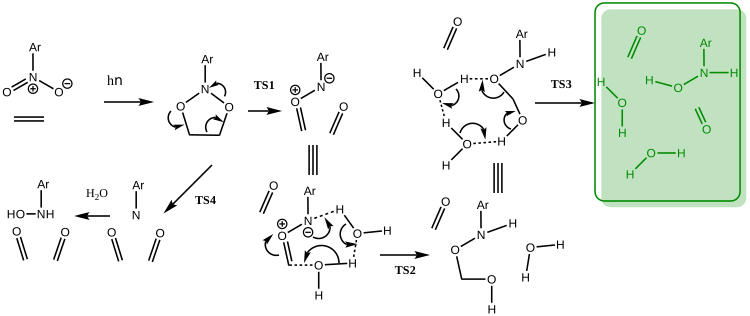
Sometimes you come across a reaction which is so simple in concept that you wonder why it took so long to be accomplished in practice. In this case, replacing toxic ozone O3 as used to fragment an alkene into two carbonyl compounds (“ozonolysis”) by a relatively non-toxic simple nitro-group based reagent, ArNO2 in which the central atom of ozone is substituted by an N-aryl group. As reported by Derek Lowe, two groups have published[1], [2] details of such a reaction (Ar = 4-cyano or 3-CF3,5-NO2). But there are (at least) two tricks; the first is to use photo-excitation using purple LEDs (390nm light) to activate the nitro group. The second is to establish the best aryl substituents to use for achieving maximum yields of the carbonyl compounds and the best conditions for achieving the cyclo-reversion reaction, shown below as TS1. That step requires heating the cyclo-adduct up to ~80° in (aqueous) acetonitrile for anywhere between 1-48 hours. Here I take a computational look at that last step, the premise being that if such a model is available for this mechanism, it could in principle be used to optimise the conditions for the process.

The proposed mechanism for the workup in aqueous acetonitrile[2] is shown below, involving TS1 (a thermal pericyclic cycloreversion reaction), TS2 and TS3 involving intervention of either two or three water molecules to produce the carbonyl compounds and  an aryl hydroxylamine (which might of itself be a valuable product). It was also mooted[2] that an alternative mechanism might involve extrusion of an aryl nitrene instead of a cycloreversion (shown as TS4). The calculations use the following method: (U)ωB97XD/Def2-TZVPP/SCRF=acetonitrile. The FAIR data DOI for them is 10.14469/hpc/11269.

Since the workup occurs at up to ~80° in aqueous acetonitrile,[2] the activation free energy that would allow this must be <~25 kcal/mol.

  1. The first model is a simple closed shell cyclo-reversion, solvated only by the model continuum, giving a barrier (for ethene as substrate) which is a little on the high side for a relatively facile thermal reaction.
  2. At this level, the nitrene extrusion reaction identifies as a second order saddle-point with a very high energy, eliminating it from possibility for the mechanism.
  3. Allowing the wavefunction to have some biradical character (TS1 has <S2> before annihilation 0.5534, after 0.0858; a pure biradical for which singlet and triplet states are equal in energy would have a value of 1.00) lowers the energy by a modest 2.5 kcal/mol in this model, but producing a somewhat more realistic free energy barrier.
  4. Adding 2H2O to the model allows TS2 and  TS3 to be directly compared to TS1. The barrier drops a further 3.0 or 4.3 kcal/mol respectively for 2 or 3 waters, and also clearly indicates that TS1 is the rate-limiting step. The barrier corresponds to a reaction which is reasonably fast at ambient or slightly elevated temperatures.
Model ΔG TS1 ΔG TS2 ΔG TS3
Reactants 0
Closed shell ionic 30.0
“TS4” 73.9
+biradical 27.5
+biradical + 2H2O 24.5 13.7 9.2
+biradical + 3H2O 23.2 12.6 -1.5
Products + 3H2O -20.4

The results here could be used for e.g. computational exploration of how variation in the aromatic group might affect the barrier for cycloreversion. Ideally, a version of this reaction which might operate at much lower temperatures would enhance this alternative to using ozone.


The ΔGvalue for p-CN.3H2O is lower (22.1 kcal/mol vs 23.3 kcal/mol) suggesting it proceeds rather more quickly than the m-CF3,NO2 version. This post has DOI: 10.14469/hpc/11319

References

  1. D.E. Wise, E.S. Gogarnoiu, A.D. Duke, J.M. Paolillo, T.L. Vacala, W.A. Hussain, and M. Parasram, "Photoinduced Oxygen Transfer Using Nitroarenes for the Anaerobic Cleavage of Alkenes", Journal of the American Chemical Society, vol. 144, pp. 15437-15442, 2022. https://doi.org/10.1021/jacs.2c05648
  2. A. Ruffoni, C. Hampton, M. Simonetti, and D. Leonori, "Photoexcited nitroarenes for the oxidative cleavage of alkenes", Nature, vol. 610, pp. 81-86, 2022. https://doi.org/10.1038/s41586-022-05211-0