Archive for the ‘Curly arrows’ Category

The “double-headed” curly arrow as used in mechanistic representations.

Tuesday, August 29th, 2023

The schematic representation of a chemical reaction mechanism is often drawn using a palette of arrows connecting or annotating the various molecular structures involved. These can be selected from a chemical arrows palette, taken for this purpose from the commonly used structure drawing program Chemdraw. Explanations of how to apply the individual arrows are not always easy to find however! Circled in red are the ones to be discussed here, although most carry fascinating and often subtle meanings!

The most common meaning of the double-headed arrow is probably best illustrated by the scheme below, which involves the addition of a nucleophile to a carbonyl compound, forming a presumed “tetrahedral” intermediate, which is then immediately followed by the eviction of a leaving group – the chloride anion in the example below. The two red arrows show an electron pair firstly moving to the oxygen, and then with the reverse arrow 2 back to reform the carbonyl group. This process is called an addition/elimination mechanism. It is therefore tempting to conflate the two steps into one by instead using a double-headed arrow (3, blue), which if nothing else, saves a little bit of time in the drawing – a useful examination technique!
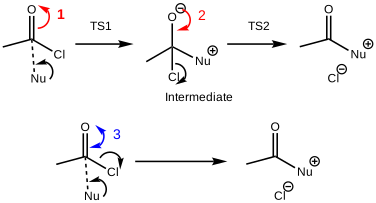
Of course, the top scheme (red arrows) is a two-step process, involving a discrete (tetrahedral) intermediate and two transition states. The conflated scheme below it (blue arrows)  might imply (or not) a single-step process with a single transition state. Since few people who draw such schemes have any information on whether it is a two-step or a single step process, the actual chemical meaning of the double-headed arrow is left implicitly ambiguous, without implying anything about how many discrete steps are involved. However, it is tempting to conclude that the first red arrow (1) reduces the double bond order of the carbonyl group to a single bond, which might therefore be expected to lengthen and the second red arrow (2) reforms the double bond, thus shortening the bond. The two arrows clearly do not move simultaneously. The conflated third arrow (3) leaves the status of the carbonyl bond length changes undefined, or might it mean that it first gets longer and then shorter along the reaction path, depending of course on which moves first!

Enter computation, where the energy pathway of such a reaction can be computed, along with geometries at each stage. Here I explore three examples to see what results (ωB97XD/De2-TZVPP/SCRF=DCM), FAIR DOI: 10.14469/hpc/13171

Acetyl chloride + Methanol.

This uses a model in which a proton transfer from the methanol to the chloride anion is facilitated by water. This enables (but does not enforce) a continuous concerted process to occur. This emerges from the computed intrinsic reaction coordinate (IRC) as having a low barrier and an exothermic reaction, which agrees with experimental observation. The required proton transfer is part of the concerted process, albeit occurring in a second lower energy stage (IRC ~+1.5).
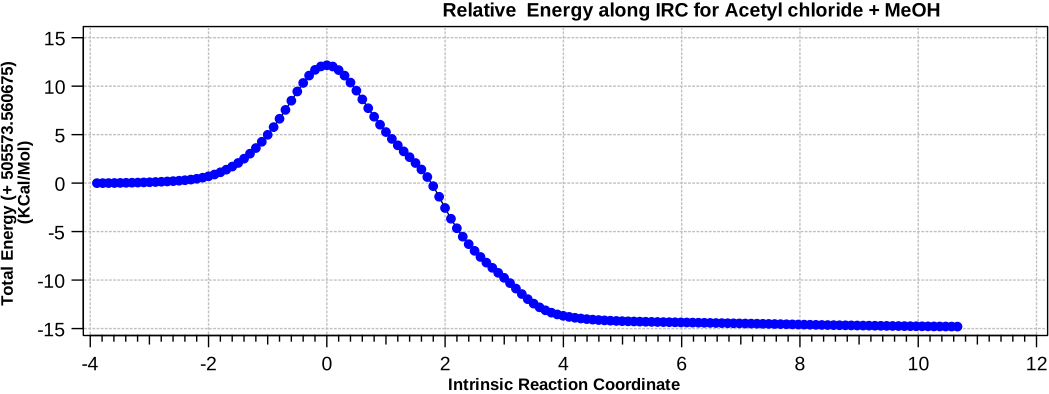
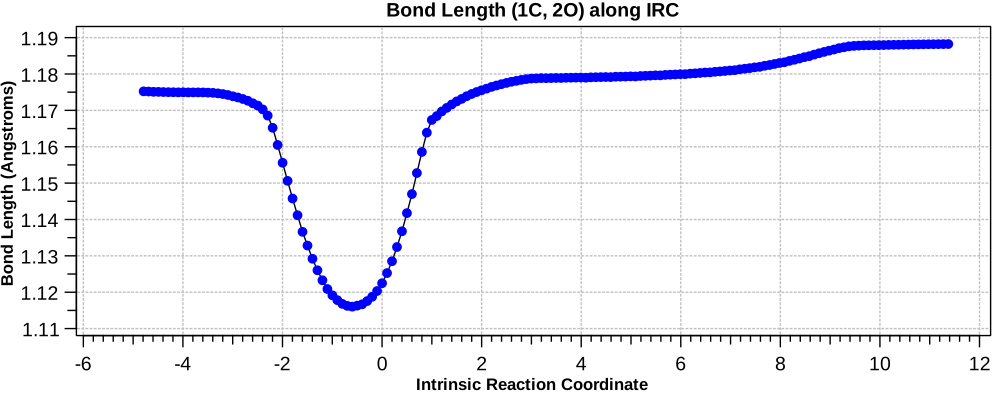
But take a look at how the carbonyl bond length changes along this IRC. It first shortens, and only starts to lengthen as the chloride is evicted. So the carbonyl group actually contracts in length at the transition state, the opposite of what might be inferred by using a double-headed arrow.


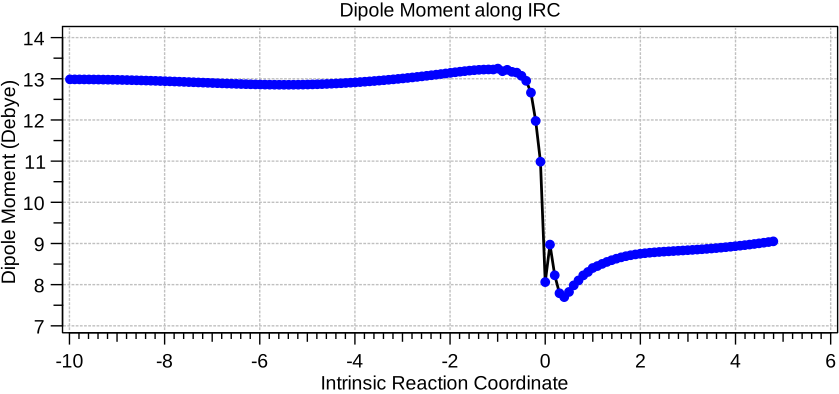
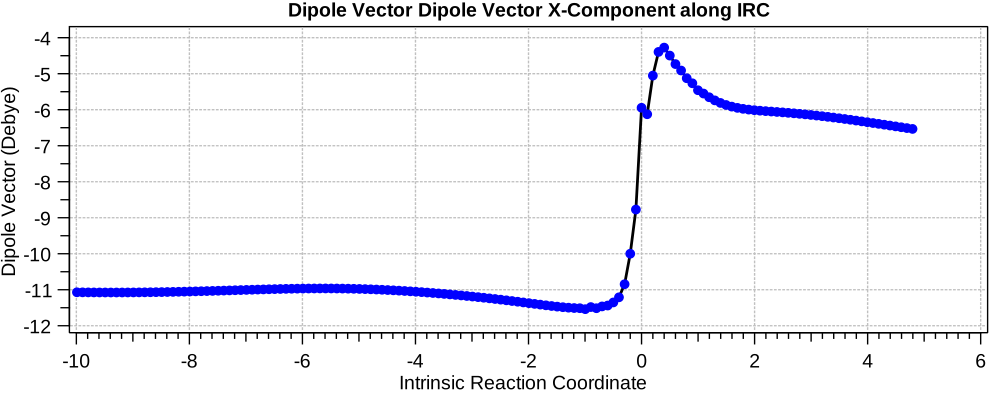
Also included is the dipole moment response, which does seem to correspond to the formation of an ionic intermediate!

Acetyl chloride + HF.


Hydrogen fluoride as a nucleophile replacing methanol shows a much higher barrier, since it is less good as a nucleophile in this context.
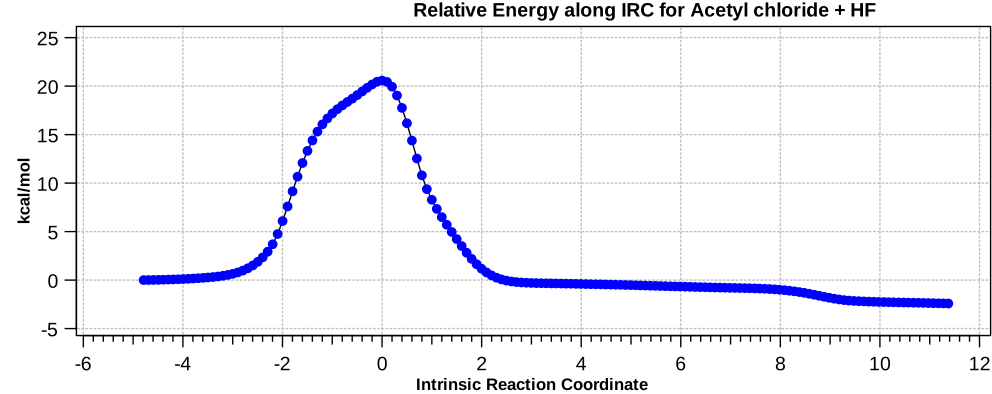
Again, observe the bond length response of the carbonyl group, which is at its shortest at the (single step) transition state.
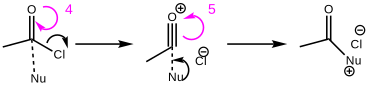
This corresponds to a different interpretation of the double-headed arrow, as per below, but occuring as part of a single concerted process not involving any intermediate.
The dipole moment response is rather different from methanol.

Acetyl chloride + Methylamine.

The energy profile now shows two distinct transition states (IRC ~7 and again at 0.0). The first is a very low energy addition to the carbonyl group with concerted eviction of the chloride anion, which only hydrogen bonds to the water shown. The second stage is the proton transfer from the nitrogen to the water and thence relayed to the chloride anion, for which a transition state at IRC ~0.0 is found.

But now observe the bond length response, which shows a distinct maximum around the first transition state (IRC ~7). This is the opposite behaviour to the previous two systems, and now indeed matches the original inferences one might make from the double headed arrow.

So we can conclude that there are in fact TWO types of double-headed arrow which could be used in mechanistic representations. The first is when arrow 1 is ahead of arrow 2 (red), resulting in initial weakening of the carbonyl bond. The second is when arrow 4 is ahead of arrow 5, resulting in initial strengthening of the carbonyl bond.
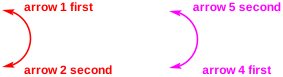
Perhaps to avoid confusion, we really need two different representations of a double-headed arrow to clearly differentiate them! Perhaps a reversal of the direction of the arrowhead? But that does not (yet?) exist in the Chemdraw palette.


This is part of the arcane “knowledge” of chemistry which is often absorbed rather than learnt by students of the subject, but which as a result becomes a language that becomes inscrutable to anyone else! Another example was noted in the previous post.
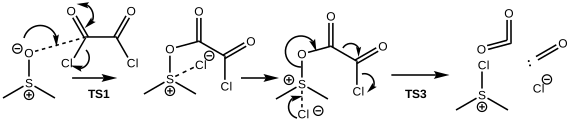
Pre-mechanism for the Swern Oxidation: formation of chlorodimethylsulfonium chloride.

Friday, August 25th, 2023

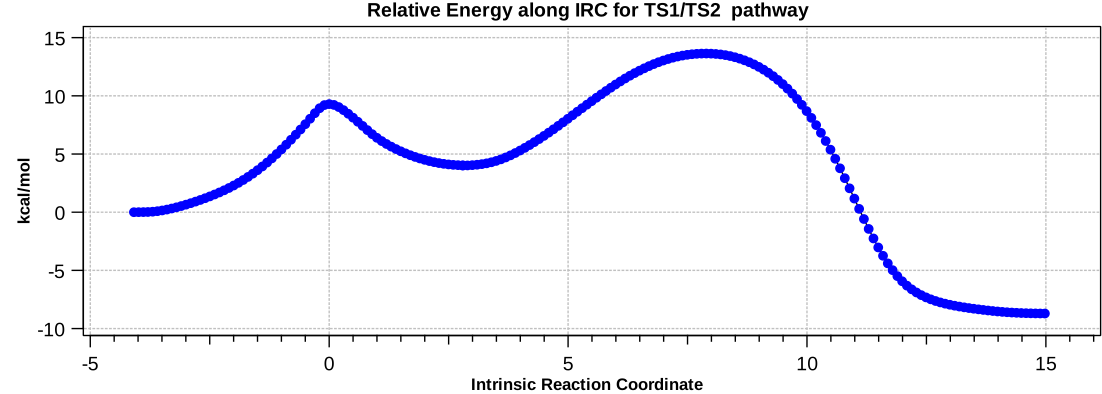
The Swern oxidation[1] is a class of “activated” dimethyl sulfoxide (DMSO) reaction in which the active species is a chlorodimethylsulfonium chloride salt. The mechanism of this transformation as shown in e.g. Wikipedia is illustrated below. However, an interesting and important aspect of chemistry is not apparent in this schematic mechanism and to rectify this, a full computed mechanism is laid out below, for which the FAIR data has a DOI: 10.14469/hpc/13151


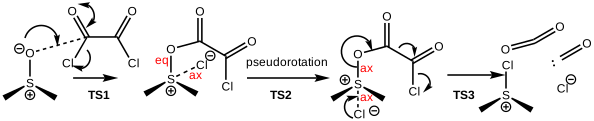
The first step involves attack of the oxygen of the DMSO on one carbon of the oxalyl chloride, which can be considered as an addition/elimination substitution at the carbon. The departing chloride anion ends up loosely associated with the sulfur centre. The net result is that the trigonal bipyramidal sulfur is axially coordinated by the chlorine, but equatorially coordinated by the oxygen. The transition state for this step (TS1), shown at IRC = 0.0 in the above energy profile, has a relatively low activation barrier. Click on any animation to view 3D model.

TS1

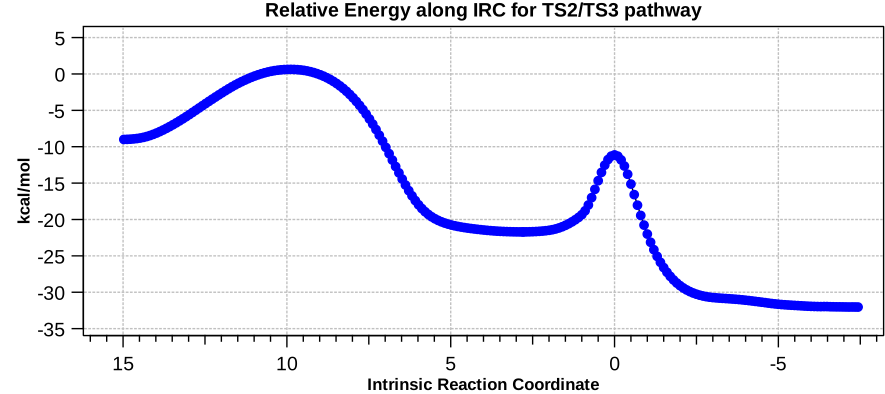
The key step is what is called a pseudorotation at the sulfur centre (TS2), which transforms the ax/eq relationship of the Cl/O atoms at the sulfur into an ax/ax one (TS at IRC +8.5 above). This is the energy high point along the reaction path.

TS2

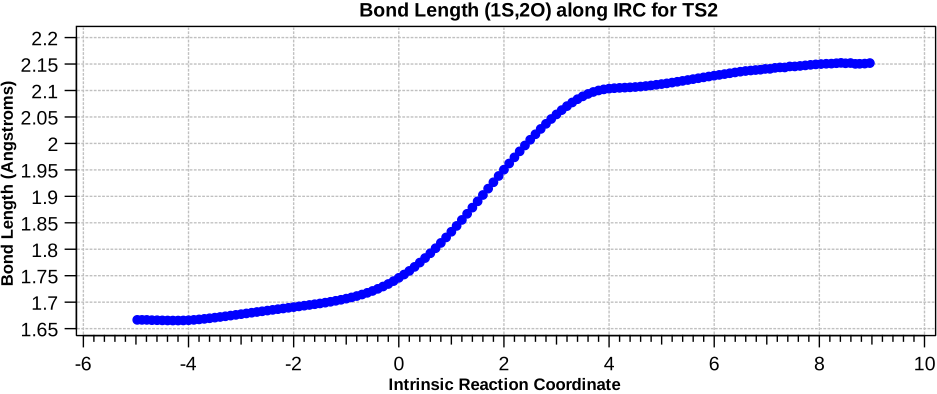
The S-O bond length response during this transformation is shown below. As the chlorine moves into this di-axial relationship, the S-O bond begins to weaken, from 1.666Å at the start, 1.746Å at the TS and 2.152Å at the end.

This prepares the system for the final step (TS3), which is cleavage of the already weakened S-O bond (TS at IRC = 13.0 below, TS = 0.0 being the pseudorotation), accompanied by extrusion of CO, CO2 and Cl. The liberated “ionic” chloride anion ends up loosely associated with the sulfur (2.88Å), whilst the “covalent” chlorine which had helped to evict the oxygen is 2.06Å.

TS3

So to conclude, the mechanism of the formation of chlorodimethylsulfonium chloride is perhaps better illustrated as shown below involving the extra pseudorotation step, which as it happens is actually the rate determining step for this reaction. This pre-mechanism to the Swern oxidation is given little attention in most representations, such as the one at Wikipedia. But it actually contains a multitude of interesting (stereoelectronic) effects and is well worth teaching!


Well, not quite. The Wiki version does not show the eliminating chloride anion in the first step (which is implied). The resulting curly arrows in the Wikipedia version are unbalanced and hence not formally correct! The double-headed arrow included in the representation above indicates an addition/elimination mechanism, which can be tracked by monitoring the carbonyl C=O bond length. It starts at 1.183Å, reaches a maximum of 1.197Å just after the TS, then drops back to 1.191Å at the end as the chloride anion eliminates.


Citing this blog post: DOI 10.14469/hpc/13156


References

  1. K. Omura, and D. Swern, "Oxidation of alcohols by “activated” dimethyl sulfoxide. a preparative, steric and mechanistic study", Tetrahedron, vol. 34, pp. 1651-1660, 1978. https://doi.org/10.1016/0040-4020(78)80197-5

Dimerisation of cyclopropenylidene: what are the correct “curly arrows” for this process?

Wednesday, July 21st, 2021

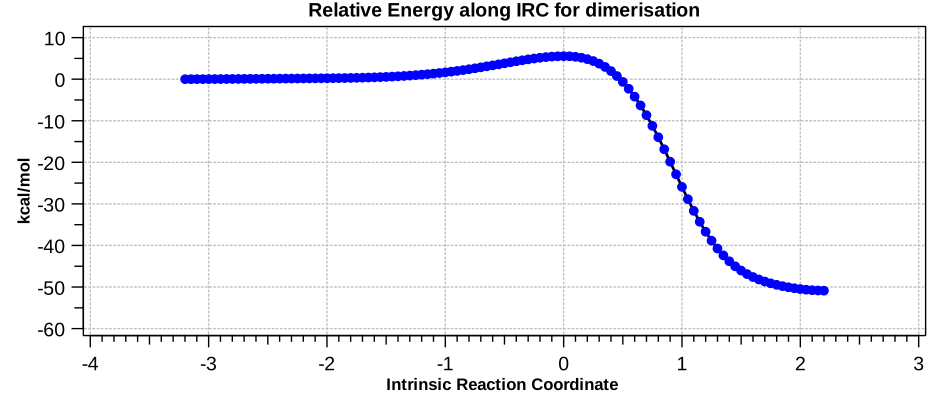
In another post, a discussion arose about whether it might be possible to trap cyclopropenylidene to form a small molecule with a large dipole moment. Doing so assumes that cyclopropenylidene has a sufficiently long lifetime to so react, before it does so with itself to e.g. dimerise. That dimerisation has an energy profile shown below, with a free energy of activation of 14.4 kcal/mol, so a facile reaction that will indeed compete with reaction with Ph-I+-CC.

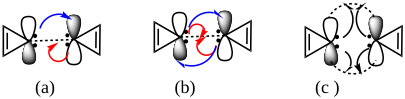
The schematic above shows some arrow pushing schemes for this reaction. In (a), one pair of electrons in the reacting carbene will have to be elevated into the π-system to form the π covalent bond, whilst the other pair of electrons will remain as σ and form a C-C σ-bond. One could do this in two stages. Firstly the double excitation of a carbene lone pair into the p-orbital and then the reaction between the two different electronic states of this species. In fact the IRC above shows no sign at all of a two-stage process; the reaction is entirely synchronous. An NBO analysis at the transition state for the reaction shows two equivalent carbene lone pairs each overlapping with one of the two empty p-orbitals on the original carbene. Click on the diagrams below to obtain rotatable 3D models of this overlap.

So perhaps representation (b) of this reaction might be as follows, in which each electron of the carbene lone pair does something different, one becoming π and one remaining σ. This reminds of how proton-coupled electron transfers are represented, in which the two electrons of an electron pair each do different things.[1]

Another way of thinking about it is not to form one σ- and one π-bond but to form two “banana bonds” as in (c), in which each of these bonds is equivalent. Banana bonds have rather gone out of vogue, largely because they do not illustrate why an alkene has different reactivity to an alkane. There will also be those who would dismiss these attempts on the grounds that “curly arrows” are merely a qualitative representation/book-keeping of the reaction and should not be used for implying quantum mechanical results. I happen to think otherwise, but the above does serve to illustrate that sometimes, the “curly arrows” for a reaction do need some thinking about!

References

  1. J.E.M.N. Klein, and G. Knizia, "cPCET versus HAT: A Direct Theoretical Method for Distinguishing X–H Bond‐Activation Mechanisms", Angewandte Chemie International Edition, vol. 57, pp. 11913-11917, 2018. https://doi.org/10.1002/anie.201805511

Trimerous pericyclic reactions.

Thursday, October 8th, 2020

I occasionally spot an old blog that emerges, if only briefly, as “trending”. In this instance, only the second blog I ever wrote here, way back in 2009 as a follow up to this article.[1] With something of that age, its always worth revisiting to see if any aspect needs updating or expanding, given the uptick in interest. It related to the observation that there can be more than one way of expressing the “curly arrows” for some pericyclic reactions. These alternatives may each represent different types of such reactions, hence leading to a conundrum for students of how to label the mechanism. I had noted in that blog that I intended to revisit the topic and so a mere eleven years later here it is!

Annulenes, or cyclic conjugated polyenes can (hypothetically) indulge in transannular cyclisations which can be regarded as either two electrocyclic reactions, or one cycloaddition reaction, or perhaps a chimera of all three which here I describe as trimerous. Locating the transition states for such a trimerous reaction is quite straightforward and here I give the FAIR data DOI for all the examples shown below (DOI: 10.14469/hpc/7440). The calculations are all at the B3LYP+GD3BJ/Def2-TZVPP level.

The central reaction can be represented as a cycloaddition in which two new bonds form between the termini of two conjugated alkenes. The stereochemistry for each alkene component is defined as either suprafacial (the two new bonds form to the same face of that alkene) or antarafacial (the two new bonds form on opposite faces of that alkene). Another way of representing the curly arrow mechanism is to draw to separate electrocyclic reactions, in which one new bond is formed between the termini of a conjugated alkene. If this bond connects at each end to the same face of that alkene, the bond forms suprafacially, if it connects opposite faces of that alkene it forms antarafacially. One must also count the number of cyclic curly arrows used in each representation; the examples above illustrate two, three or four curly arrows, representing four, six or eight electrons. One can now combine these attributes to form some selection rules.

For thermal reactions, one can state that if the total electron count represented by an odd number of curly arrows corresponding to the formula 4n+2 (n = 0,1,2, etc, the n is NOT the same as that shown in the scheme above) and there are either no (or an even number of) antarafacial components, the reaction will be “allowed” and proceed through a “Huckel aromatic transition state“. Alternatively, if the total electron count corresponds to an even number of curly arrows matching the formula 4n (n=1,2, etc) and there is one (or an odd number of) antarafacial components, the reaction will this time proceed through a “Mobius aromatic transition state“. These are in fact a concise alternative statement of the Woodward-Hoffmann selection rules for thermal pericyclic reactions.

Entry # n (scheme only) [ ]-Annulene
TS
 electron count
in each ring
s/a
components
NICS for each
ring centroid
1 0 10 endo 4,6,4 a,s+s,a -3.5,-15.3,-3.5
2 0 10 exo 4,6,4 a,s+s,a -2.8,-11.6,-2.8
3 0 12, saddle=1 4,8,4 s,s+a,* -0.1,-10.3,-2.0
4 0 12, saddle=2 4,8,4 *,s+a,* -0.9,-10.7,-0.9
5 1 14 endo 6,6,6 a,s+s,a +2.2,-17.1,+2.2
6 1 14 exo 6,6,6 a,s+s,a +9.7,-11.1,+9.7
7 1 16 6,8,6 a,s+a,a +9.1,-9.6,+9.1
8 2 18 endo, saddle=1 8,6,8 s,s+s,a -2.0,-15.0,-
9 2 18 endo, saddle=2 8,6,8 *,s+s,* -0.5,-17.1,-0.5
10 2 18 exo,saddle=1 8,6,8 a,s+s,a -6.2,-4.5,-3.7
11 2 18 exo,saddle=2 8,6,8 a,s+s,a -8.2,-1.4,-8.2
12 2 20,saddle=3 8,8,8 a,s+*,a -8.5,+0.3,-8.5

No ring centroid in AIM analysis.The symmetrical geometry has two negative force constants (saddle=2), representing an asymmetric distortion to a true transition state (saddle=1).

For the reactions shown in the scheme above, we will determine the NICS (Nucleus independent chemical shift) value at the ring centroid of each reaction to ascertain the aromaticity in that ring. The effective ring centroid in turn is located by performing an AIM analysis of the topology of the electron density and locating the RCP (ring critical points in that density; a critical point itself is one where the first derivatives of the density with respect to the three cartesian coordinates is zero) or in several examples the CCP (Cage critical point). I will discuss some of these systems individually, but in fact there is a wealth of information available for each one and to discover it all, you should go to the data files and inspect all the structures for yourself. Firstly, the colour code in the table above:

  • In the s/a column, blue represents systems where the electrocyclic component forms a bond antarafacially. whereas the cycloaddition component forms both bonds suprafacially to both the alkene and the diene.
  • Red represents systems where the electrocyclic component forms a terminus bond antarafacially and the cycloaddition component forms a bond suprafacially to the alkene but antarafacially to the diene.
  • Where the π-system in the pericyclic transition state has a local orthogonality (i.e. the pericyclic π-system is locally twisted by 90°±6 at one point) it is not possible to confidently distinguish between supra and antarafacial. Such instances are declared non-aromatic and are shown in black.
  • In the NICS column, green represents an aromatic value and red an antiaromatic value. Black is effectively non-aromatic.

Individual entries

The way to read the table above is the following. In the 4th column (electron count in each ring, corresponding to the curly arrows representing the reaction at that ring), determine if the count belongs to the 4n or the 4n+2 rule.  Next for each ring, is the number of antarafacial components odd, or zero. Finally, does the NICS aromaticity index match with the inference from the first two properties, i.e. 4n+2 + zero a = aromatic, 4n + odd a = aromatic and the corollary of 4n+2 + odd a = anti-aromatic, 4n + zero a = anti-aromatic.

Entry 1:  All three rings correspond to aromatic pericyclic transition states, but with the cycloaddition ring far more aromatic than the electroclisation rings. This is reflected in the bond lengths in the rings. The cycloaddition ring has lengths close to the “aromatic” value of 1.4Å. whereas the electrocyclic rings have highly alternating bond lengths. The calculated lengths correspond to the “cycloaddition” curly arrows in the scheme above and not to the “electrocyclic” arrows. This reaction does not have the characteristics of three simultaneous pericyclic reactions, or to use the parlance of the title of this post, it is not trimerous.

Click image to see 3D model.

Entry 6: This time, the central ring is again strongly aromatic (4n+2 + zero a = aromatic) but the two outer rings are strongly antiaromatic (4n+2 + odd a = anti-aromatic). Again the curly arrows correspond to cycloaddition and not electrocyclisation.

Click image to see 3D model.

Entry 11: As with entry 1, all three rings should again be aromatic (4n+2 + zero a = aromatic;4n + odd a = aromatic).In reality the bond lengths and  aromaticity indicate that this time the curly arrows are those of two concurrent electrocyclic reactions and NOT of one cycloaddition.  But there is a sting in the tail. This symmetrical system is NOT a true transition state. 

Click image to see 3D model.

Entry 10: This is the true transition state corresponding to entry 11, in which completion of one electrocyclic reaction preceeds the other; they are no longer synchronous but asynchronous, with one C-C bond (1.946Å) formed before the other (2.790Å). This pericyclic reaction can indeed be now considered trimerous, albeit with the three individual pericyclic reactions happening at different rates.

Click image to see 3D model

We can see that allowed pericyclic reactions in which three separate modes operate in concert (trimerous) are unlikely to happen. In effect the “aromaticity” tends to localise in one region rather than operate simultaneously in three rings. The collection of examples above also nicely illustrates the operation of the Woodward-Hoffmann rules as recast in terms of transition state aromaticity.


The original blog was also data rich, containing the encouragement to Click above to obtain model. It did not however cite the DOI of the repository entry for this data, an omission here rectified. †Or even, but no examples of this in the table.

References

  1. H.S. Rzepa, "The Aromaticity of Pericyclic Reaction Transition States", Journal of Chemical Education, vol. 84, pp. 1535, 2007. https://doi.org/10.1021/ed084p1535

Curly arrows in the 21st Century. Proton-coupled electron transfers.

Wednesday, June 10th, 2020

One of the most fascinating and important articles dealing with curly arrows I have seen is that by Klein and Knizia on the topic of C-H bond activations using an iron catalyst.[1] These are so-called high spin systems with unpaired electrons and the mechanism of C-H activation involves both double headed (two electron) and fish-hook (single electron) movement. Here I focus on a specific type of reaction, the concerted proton-coupled-electron transfer or cPCET, as illustrated below. These sorts of reactions happen also to be of considerable biological importance, including e.g. the mechanism of photosynthesis and many other important transformations.

A hydrogen atom comprises a proton and one electron. The question is whether the proton and the electron travel together as a true hydrogen atom when the hydrogen relocates, or do they each take their separate way, as in the PCET reaction shown above. I will discuss the arrows shown briefly first.

  1. The blue arrow originates at an oxygen lone pair, donating two electrons into a O-H bond. 
  2. The hydrogen starts off with two electrons in a C-H bond. In a pure proton transfer, it would lose both these electrons to the carbon (as an acid) and the proton would travel to the oxygen (as the base, which receives the proton). In fact these two C-H electrons go off in different directions.
    • One (shown with a red fish-hook curly arrow) goes to the carbon to form a carbon radical.
    • The other electron (shown with a dashed fish-hook curly arrow) travels to the Iron. The latter starts off in oxidation state +3 with five unpaired electrons in the high spin state (of which only one is shown above) and is reduced by receiving this electron to an oxidation state +2 and four unpaired electrons (again these are not shown above) with the fifth unpaired electron now becoming a carbon-centered radical. 
  3. The formal charges on the atoms change. The oxygen shares its lone electron pair with a hydrogen and so formally looses its exclusive hold on that electron pair and becomes formally positive. The iron receiving an electron becomes less positive/more negative, changing from Fe(III) ≡ 3+ → Fe(II) ≡ 2+. 
  4. In this representation, both the number of unpaired electrons and the charges balance on both sides of the equation, a crucial aspect of using curly arrows. One cannot create charge out of nothing. Similarly one cannot change the number of unpaired electrons on either side of the equation, unless the electronic state itself changes.
  5. Finally, note that the number of lone pairs in this instance also balance.

Now for an actual calculation of the reaction path using quantum mechanics.[1] The actual molecular model used is shown below. The C-H bond comes from a bis(allylic) alkene, whilst the ligands around the Fe include three neutral imidazole units coordinated through N, the methylalanine aminoacid anion is coordinated through one O(-), neutral acetamide is bound through O and hydroxyl anion (-) completing the octahedral coordination. The two ligand anionic charges noted are formally balanced by Fe(2+), and specifying that the whole system itself has a charge of (+) gives us an oxidation state of Fe(3+) with five formal valence electrons (down from 3d6.4s2 for the neutral atom). Only the hydroxyl ligand to Fe is shown above, the other five are hidden. The whole system is “high spin”, which means it has five unpaired electrons, only one of which is shown for the reactant Fe atom in the schematic diagram above. The other four unpaired and unshown electrons on the Fe are common to both reactant and product.

With the proton going in one direction, and an electron elsewhere, one might expect a change in the dipole moment properties. Below you can see the quite abrupt change in these properties in the same region that the electron/proton transfers happen.

The progress of the reaction is shown by a set of specific types of localised orbital (actually called an IBO or intrinsic bond orbital in this instance) as the reaction evolves from the left to the right. You can think of some of these  orbitals, selected on the basis of their changes in energy as the reaction proceeds, as corresponding to the curly arrows for the reaction. It is possible to reduce such orbitals to a point (a locus) by increasing their isosurface threshold and then to chart these locii as the reaction proceeds. This would then correspond to the path of a curly arrow.  

Below is a specific orbital transformation, corresponding to the curly arrow shown at the top here in dashed red.[1] This orbital starts off located along the C-H bond and as the electron transfers, the orbital morphs (abruptly, like the dipole moment properties above) into an d-orbital located on the iron. It vanishes from one region and re-appears in another, a little like the famous cheshire cat.

When I gave my talk to students alluded to in an earlier post, I was keen to get the message over that the veritable concept of curly arrows, which will be 100 years old in 2024, is still an evolving and modern concept and not stuck in any ancient time warp. This mechanism by Klein and Knizia illustrates nicely how true that is. The take home message is that curly arrows really are fit for the 21st century.

References

  1. J.E.M.N. Klein, and G. Knizia, "cPCET versus HAT: A Direct Theoretical Method for Distinguishing X–H Bond‐Activation Mechanisms", Angewandte Chemie International Edition, vol. 57, pp. 11913-11917, 2018. https://doi.org/10.1002/anie.201805511

The first ever curly arrows. Revisited with some crystal structure mining.

Wednesday, May 27th, 2020

With the current global lockdown, and students along with everyone else staying at home, I have noticed some old posts of mine are getting more attention than normal. One of these is an analysis I did in 2012 of Robinson’s original curly arrow illustration. That and the fact that I am about to give a lecture on what I call my autobiographical journey discovering them, to our own students here (remotely of course), has prompted me to revisit my original discussion.

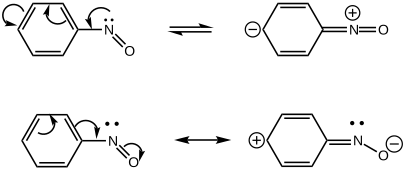
Of the two modern representations of nitrosobenzene, the first corresponds to Robinson’s arrows, being an attempt to show, by resonance, that the molecule is o/p directing towards an electrophile. Hence the accumulation of negative charge in the p-position (and other resonance structures can be drawn with it in the o-positions) encouraging electrophilic attack there. The second is the modern version, with the electron flow going in the other direction and hence discouraging electrophilic attack at the o/p positions. All this hinges on the observation that the nitrogen lone pair, involved in the first representation, lies in the plane of the molecule and hence is orthogonal (at 90°) to the π-electrons in the benzene ring and cannot overlap with them. In the modern view, this lone pair plays no part in the resonance. 

This can be tested by searching for experimental crystal structures of nitrosobenzenes. I did mention this in the original post, but showed no results. So here is the analysis, in which the plots below analyse the torsion about the phenylNO bond. You can see all the examples are either red or blue, which indicates torsions of ~180 or 0°. You can perceive a very nice correlation between the length of the C-N and the N-O bonds. As the latter gets shorter, the former gets longer. This only matches the second resonance shown above and not the Robinson version! Across all known crystal structures of nitrosobenzenes, the balance between these two resonance forms changes, no doubt as a result of substituents on the benzene ring. 

A different plot which now includes the angle at the nitrogen shows very little variation in that angle (113-118°), and certainly not the much larger variation implied by Robinson’s representation. As the N-O bond gets longer, so the angle at the nitrogen opens up a bit, the lone pair on the nitrogen being repulsed by the now three lone pairs on the oxygen anion.

I have noted previously that such crystal structure mining can be used to capture many basic concepts in chemistry.[1] This is a particularly clear one, discriminating between two possible forms of curly arrow. Conversely, it shows how curly arrows can be used to simply rationalise structural variations across a series of compounds.


There is one outlier (it does not appear in the plots above, since these are restricted to structures with an R-factor <5%), that shows a linear Ph-N=O system (DOI: 10.5517/cc108dl8) and which may be a Robinson-like valence bond isomer of nitrosobenzene. It will be investigated further!

References

  1. H.S. Rzepa, "Discovering More Chemical Concepts from 3D Chemical Information Searches of Crystal Structure Databases", Journal of Chemical Education, vol. 93, pp. 550-554, 2015. https://doi.org/10.1021/acs.jchemed.5b00346

Choreographing a chemical ballet: what happens if you change one of the actors?

Friday, May 8th, 2020

Earlier, I explored the choreography or “timing”, of what might be described as the curly arrows for a typical taught reaction mechanism, the 1,4-addition of a nucleophile to an unsaturated carbonyl compound (scheme 1). I am now going to explore the consequences of changing one of the actors by adding the nucleophile to an unsaturated imine rather than carbonyl compound (scheme 2). 

                                  Scheme 1

                                  Scheme 2

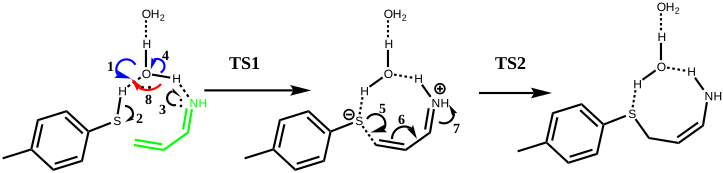
For the reaction shown in Scheme 1, the maximum energy point along the reaction path involves the formation of an S-C bond (arrow 2 in scheme 1) rather than transfer of a proton. Scheme 2 has a new actor in which NH replaces O and which is a better base (i.e. has a greater affinity for a proton). The mechanism again starts with arrows 1 and 2 launching proceedings. If you watch the animation below very carefully, you will notice that arrows 3 and 4 lag behind them. This means that you have to have the blue arrows 1 and 4 as distinctly separate arrows. An alternative depiction (and in truth very probably the depiction you would find in pretty much all text books and lecture notes) would be to combine arrows 1 and 4 into the single red arrow 8. If you do this however, you loose this subtle nuance to the mechanism.

                    Animated Reaction coordinate for TS1 (scheme 2) Click to load 3D model

                     Energy along reaction coordinate for TS1 (Scheme 2)

The product of this first step is a zwitterionic (internal ion-pair) compound. This then goes on to form the S-C bond (arrows 57) via TS2, with the energy of this second transition state being lower than than TS1.

                            Animated reaction coordinate for TS2 (Scheme 2)

The free energy barrier for this second step is low (ΔG 0.6 kcal/mol) because it is an ion-pair reacting to form a neutral molecule, always a facile process. Because the slowest step in this reaction (TS1) involves a proton transfer, this should now show a primary deuterium kinetic isotope effect. Indeed this is calculated to have the value 4.0 at 298K. There is a prediction for an experiment to undertake!

Species
(FAIR Data: dt5d)

Relative energy

kcal/mol

Reactant 0.0
TS1 7.7
Zwitterion 2.2
TS2 2.8
Product -12.5

To sumarise

  1. Changing a C=O group to a C=NH group changes the nature of the mechanism from concerted asynchrous to stepwise.
  2. As a result of this change, the highest energy step now involves asynchronous proton transfers rather than S-C bond formation.
  3. The curly arrows can be used to reflect these steps, with two (blue) arrows being preferred to a single (red) one.

So by expanding the conventional number of curly arrows used to include extra ones capturing asynchronicity in the reaction, one can indeed add further information to the curly arrow formalism.


This post has DOI: dt6v


Choreographing a chemical ballet: a story of the mechanism of 1,4-Michael addition.

Monday, April 13th, 2020

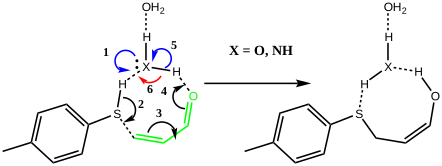
A reaction can be thought of as molecular dancers performing moves. A choreographer is needed to organise the performance into the ballet that is a reaction mechanism. Here I explore another facet of the Michael addition of a nucleophile to a conjugated carbonyl compound. The performers this time are p-toluene thiol playing the role of nucleophile, adding to but-2-enal (green) acting as the electrophile and with either water or ammonia serving the role of a catalytic base to help things along.

The scheme above is deliberately set out as an eight-membered ring so that if the three dancers wish to do so, they can all act in concert. Oh, there is also a bit-actor (water) forming a hydrogen bond to X, the role of which will become clearer as the ballet proceeds. The curly arrows indicate what the electrons in the bonds or the lone pairs are expected to do. The three black arrows can be accompanied by either two blue arrows to give five in all, or just four if the two blue arrows are replaced by a single red one.

The choreographer in our performance is actually going to be a density functional quantum mechanical calculation (ωB97XD/Def2-TZVPP/SCRF=water, data at DOI: 10.14469/hpc/7027 since you ask), which has the single minded intention of ensuring that the cast is at the lowest possible energy at each stage of the ballet. The performance is shown below with X=O in the cast (water). Water is a poor base; its ability to grab a proton is weak. 

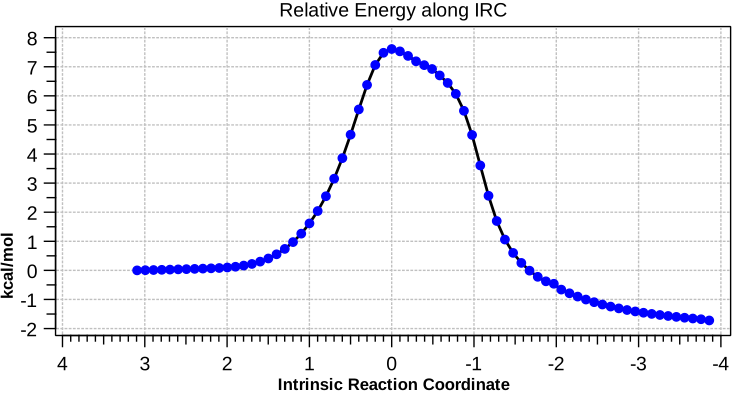
We can also show the entire dance using an Intrinsic Reaction Coordinate or IRC, this being the lowest energy pathway that the cast can achieve along this particular route to the end. Watch the animation above to see the performance! The catalyst (X=O remember) firstly gets into the best position to grab a proton from the S-H group, using its lone pair located on the oxygen (the base). It is helped by the bit-playing second water molecule, which forms an assisting support to the (lets call her) ballerina via a strong hydrogen bond. Having grabbed the proton from the ballerino, the catalyst transforms (temporarily) into a hydronium cation, paired now with a thiolate anion as an ion-pair. Temporarily, because this sort of arrangement is called a “hidden intermediate” in that this ion-pair is hidden, never actually forming. The water needs considerable help to become protonated (remember, it is a weak base), with the assisting water bit-player helping to stabilize the hydronium cation by a strong hydrogen bond it has formed.

The transition state for the reaction. Click to view 3D model. The vibration is that of the “transition state normal mode” as the molecule goes over the top of the barrier.

We now introduce the (relative) energy of the entire collection of molecules and have reached the stage of IRC=-1 on the X-axis. One final push is now needed, in which two things happen. Firstly, a S-C bond is formed (IRC = 0.0, the transition state) but as soon as it starts forming so does the rather unhappy hydronium cation relieve itself of the unwelcome proton it just acquired, by off-loading it onto the oxygen of the acrolein. You can see the structure of this transition state above (click on the image to turn it into a rotatable 3D model)

The catalyst is back to where it started (along with its bit-playing partner) and we now have a completed reaction and it all happened as a single act ballet (we call this a concerted performance). The products are lower in energy than the starting point, which is always good! Molecules tend to be lazy and do not much like becoming higher in energy (ATP, or adenosine triphosphate is a famously unlazy molecule which is very good at acquiring lots of energy and redistributing it about our bodies to feed our muscles).

We can look at another property which tells us a bit more about the curly arrows, which represent rearrangement of electrons within the molecule. If they get separated, their charges also become separated and this is reflected in the dipole moment along the reaction coordinate. In the early stages, blue arrow 1 starts to form a hydrogen bond from the lone pair of the water to the hydrogen on the S. As it does this, the dipole moment decreases. At the point that the proton finally decided to hop from the sulfur to the approaching water oxygen, the charge separation shoots up, reaching its maximum at IRC = -1 (IRC = 0 by the way represents the energy high point for the process, called the transition state).

I want now to address the vital point of why I drew two different arrangements of curly arrows, one with two blue arrows (1 and 5) and the other with just one red arrow (6). If we had instead used just the latter, then we would have been obliged to transfer both protons at exactly the same time. So blue arrow 1 is a better representation of what is actually going on. Only now do the black arrows 24 get into the performance, forming the S-C bond (2), reducing the first double bond in the acrolein to single, whilst reforming it adjacently (3) and transforming the second C=O double bond into C-O and O-H bonds (4). This encourages the second blue arrow (5) to, concurrently with the black arrows, transfer a proton and reform the lone pair onto the original oxygen of the water catalyst.

Let us now change the cast, replacing the original water catalyst with an ammonia (X=NH). Because N has a smaller nuclear charge than oxygen, it is happier at sharing its lone pair with a proton; it is said to be more basic. This means that an ammonium cation is a more willing performer than the hydronium cation. The ballet now occurs in two acts rather than one. The first act involves that now basic nitrogen removing the proton from the SH (arrow 1+2), but with arrow 2 ending up residing entirely on the S (as a sulfur lone pair) rather than immediately going on to form a S-C bond.

Act 1: Proton transfer from N to S.

There is then an intermission when the newly formed ion-pair takes a break, followed by the second act starting with a slightly different arrow 2 (it starts not at the S-H bond, but put on a new costume during the break to start as a new lone pair formed on the S) creating the new S-C bond. There is another difference compared to the water catalyst; the ammonium cation is now slightly reluctant to relinquish that proton and this only happens right at the end.

Act 2: Carbon-sulfur bond formation/Proton transfer. Click to view 3D model.

The energy high point is again S-C bond formation (IRC = 0.0), and the barrier the molecules needed to overcome to reach the energy high point is much lower than before. The nitrogen hangs on to its newly acquired proton until IRC = -2 and the reaction does look complete by IRC = -10. But in a final flourish (let’s call it an encore) something happens between IRC -10 to -15. Miffed at having to part with a hydrogen it had become fond of, the nitrogen lone pair instead now makes friends with a C-H bond (as part of a hydrogen bond; it is not basic enough to entirely remove a hydrogen from a carbon). 

The language has been slightly anthropomorphic, but we have covered a lot of chemistry with this reaction and learnt a lot about the sequence in which bonds form and how curly arrows can be used to relate to this process.


The encore: We can check to see if this last part comes purely from the fevered imagination of the density functional calculation or whether there is a basis in reality for this new friendship. The plot below comes from a search of all known crystal structures for organic molecules (which recently passed one million). Of these, 21 exhibit a CH…N distance < 2.45Å and the “hotspot” (in red) indicates that the strongest of these is ~2.15Å and that the C-H…N angle is approximately linear. So the effect is real!


See also this post for the non-catalysed version of this reaction.


This post has DOI: http://doi.org/dr96

Substituent effects on the mechanism of Michael 1,4-Nucleophilic addition.

Sunday, March 29th, 2020

In the previous post, I looked at the mechanism for 1,4-nucleophilic addition to an activated alkene (the Michael reaction). The model nucleophile was malonaldehyde after deprotonation and the model electrophile was acrolein (prop-2-enal), with the rate determining transition state being carbon-carbon bond formation between the two, accompanied by proton transfer to the oxygen of the acrolein.

Here I look at the effect of changing one of the aldehyde groups on the malonaldehyde to a variety of others and in particular how this might affect the relative timing of the C-C formation and the accompanying proton transfer to oxygen. Will this vary with substituents?

The activation free energies for TS2 are shown below, showing that as the acidity of the proton on the incipient nucleophile decreases along the series R=NO2 to R=H, the free energy barrier goes up. 

Substituent ΔΔG298 (TS2)

NO2

11.5

CHO

16.3

CN

16.7

OMe

31.9

H

35.8

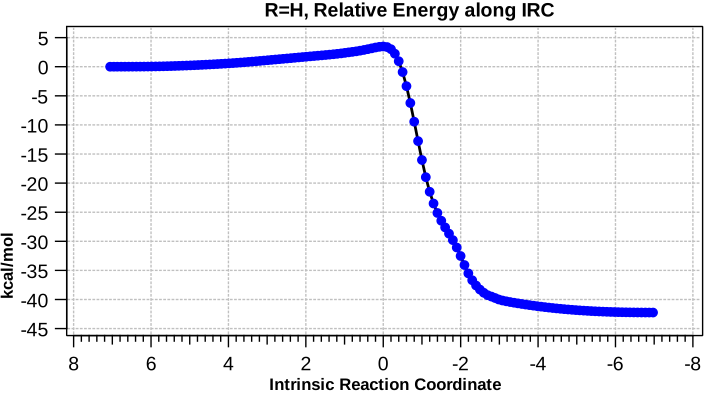
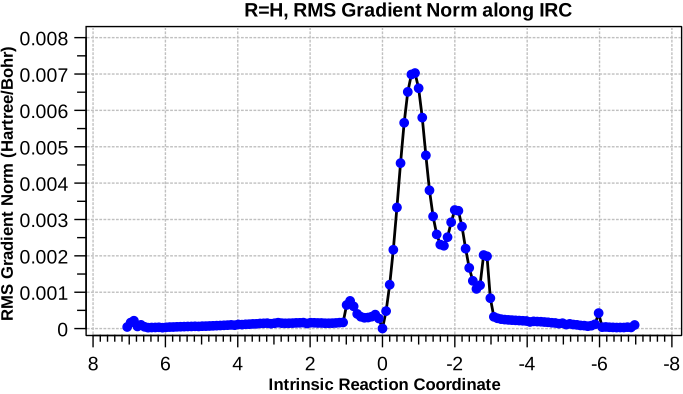
The asynchrony of the C-C formation and the PT is clearly shown for R=NO2. This can be seen most clearly when the gradient norm along the reaction path is plotted. This has TWO maxima at IRC 0.5 and 1.4, with a hidden (zwitterionic) intermediate in-between.

For R=H the gradient norm peaks are at IRC 0.8 and 2.1; the reaction is equally asynchronous. If you are wondering why the barrier looks smaller for R=H than for R=NO2 it is because Int1 is a lot less stable for R=H (= more reactive) than for nitro.

So this was a surprise in the end. Unlike substituent effects on electrophilic peracid epoxidation of an alkene,[1] nucleophilic addition to an alkene does not seem to exhibit a large substituent effect on its choreography.

References

  1. J.E.M.N. Klein, G. Knizia, and H.S. Rzepa, "Epoxidation of Alkenes by Peracids: From Textbook Mechanisms to a Quantum Mechanically Derived Curly‐Arrow Depiction", ChemistryOpen, vol. 8, pp. 1244-1250, 2019. https://doi.org/10.1002/open.201900099

The Graham reaction: Deciding upon a reasonable mechanism and curly arrow representation.

Monday, February 18th, 2019

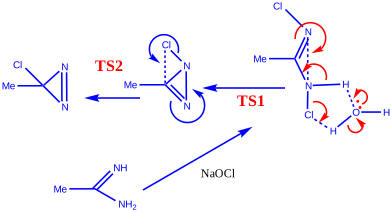
Students learning organic chemistry are often asked in examinations and tutorials to devise the mechanisms (as represented by curly arrows) for the core corpus of important reactions, with the purpose of learning skills that allow them to go on to improvise mechanisms for new reactions. A common question asked by students is how should such mechanisms be presented in an exam in order to gain full credit? Alternatively, is there a single correct mechanism for any given reaction? To which the lecturer or tutor will often respond that any reasonable mechanism will receive such credit. The implication is that a mechanism is “reasonable” if it “follows the rules”. The rules are rarely declared fully, but seem to be part of the absorbed but often mysterious skill acquired in learning the subject. These rules also include those governing how the curly arrows should be drawn. Here I explore this topic using the Graham reaction.[1]

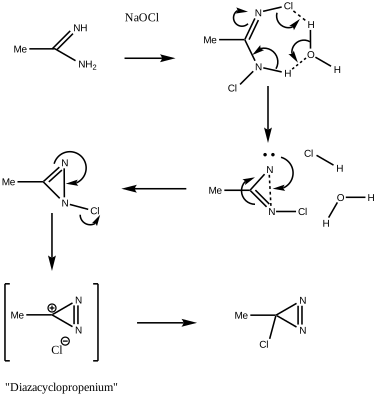
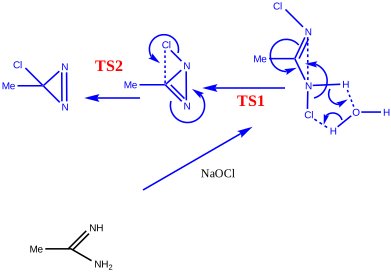
I start by noting the year in which the Graham procedure was published, 1965. Although the routine representation of mechanism using curly arrows had been established for about 5-10 years by then, the quality of such representations in many articles was patchy. Thus, this one (the publisher will need payment for me to reproduce the diagram here, so I leave you to get it yourself) needs some modern tidying up. In the scheme below, I have also made a small change, using water itself as a base to remove a NH proton, rather than hydroxide anion as used in the article (I will return to the anion later). The immediate reason is that water is a much simpler molecule to use at the start of our investigation than solvated sodium hydroxide. You might want to start with comparing the mechanism above with the literature version[1] to discover any differences. 

The next stage is to compute all of this using quantum mechanics, which will tell us about the energy of the system as it evolves and also identify the free energy of the transition states for the reaction. I am not going to go into any detail of how these energies are obtained, suffice to say that all the calculations can be found at the following DOI: 10.14469/hpc/5045 The results of this exercise are represented by the following alternative mechanism.

How was this new scheme obtained? The key step is locating a transition state in the energy surface, a point where the first derivatives of the energy with respect to all the 3N-6 coordinates defining the geometry (the derivative vector) are zero and where the second derivative matrix has just one negative eigenvalue (check up on your Maths for what these terms mean). Each located transition state (which is an energy maximum in just one of the 3N-6 coordinates) can be followed downhill in energy to two energy minima, one of which is declared the reactant of the reaction and the other the product, using a process known as an IRC (intrinsic reaction coordinate). The coordinates of these minima are then inspected so they can be mapped to the conventional representations shown above. New bonds in the formalism above are shown with dashed lines and have an arrow-head ending at their mid-point; breaking bonds (more generally, bonds reducing their bond order) have an arrow starting from their mid-point. The change in geometry along the IRC for TS1 can then be shown as an animation of the reaction coordinate, which you can see below.

Don’t worry too much about when bonds appear to connect or disconnect, the animation program simply uses a simple bond length rule to do this. The major difference with the original mechanism is that it is the chlorine on the nitrogen also bearing a proton that gets removed. Also, the N-N bond is formed as part of the same concerted process, rather than as a separate step.

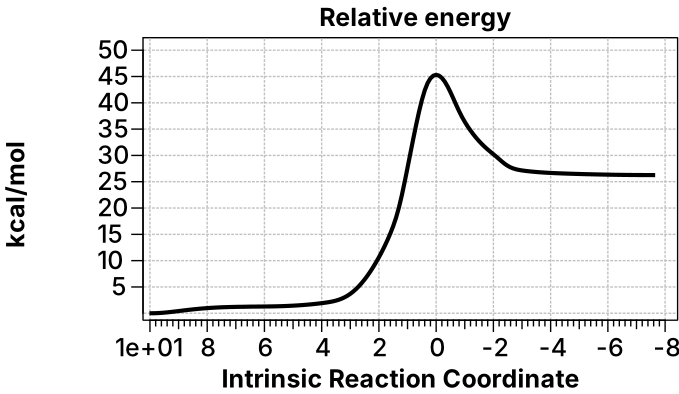
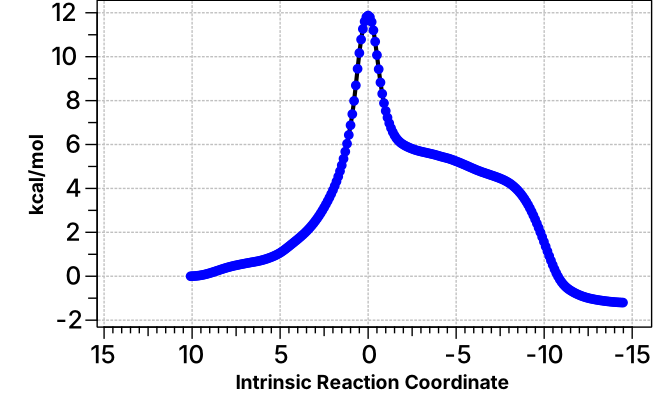
Shown above is the computed energy along the reaction path. Here a “reality check” can be carried out. The activation free energy (the difference between the transition state and the reactant) emerges as a rather unsavoury ΔG=40.8 kcal/mol. Why is this unsavoury? Well, according to transition state theory, the rate of a (unimolecular) reaction is given by the expression: Ln(k/T) = 23.76 – ΔG/RT where T is temperature (~323K in this example), R = is the gas constant and k is the unimolecular rate constant. When you solve it for ΔG=40.8, it turns out to be a very slow reaction indeed. More typically, a reaction that occurs in a few minutes at this sort of temperature has ΔG= ~15 kcal/mol. So this turns out to be an “unreasonable” mechanism, but based on the quantum mechanically predicted rate and not on the nature of the “curly arrows”. And no, one cannot do this sort of thing in an examination (not even on a mobile phone; there is no app for it, yet!) I must also mention that the “curly arrows” used in the above representation are, like the bonds, based on simple rules of connecting a breaking with a forming bond with such an arrow. There IS a method of computing both their number and their coordinates “realistically”, but I will defer this to a future post. So be patient!
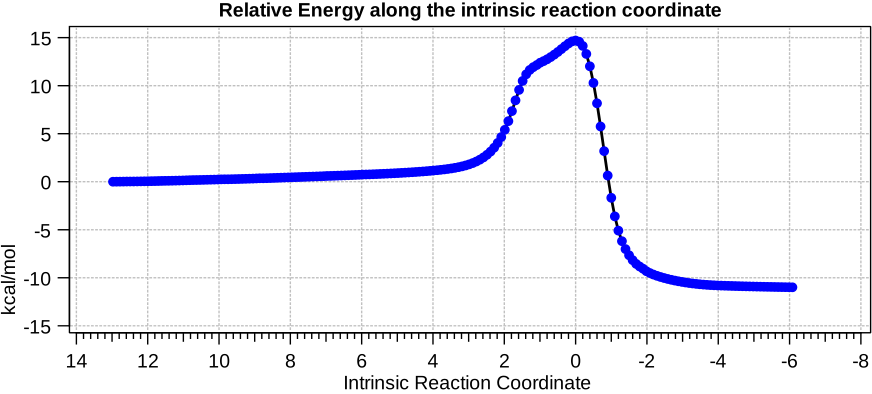
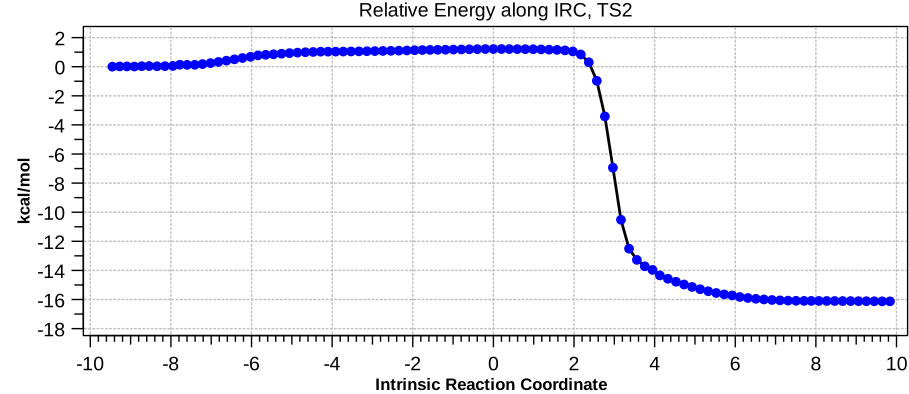
The next thing to note is that the energy plot shows this stage of the reaction as being endothermic. Time to locate TS2, which it turns out corresponds to the N to C migration of the chlorine to complete the Graham reaction. As it happens, TS2 is computed to be 10.6 kcal/mol lower than TS1 in free energy, so it is not “rate limiting”.

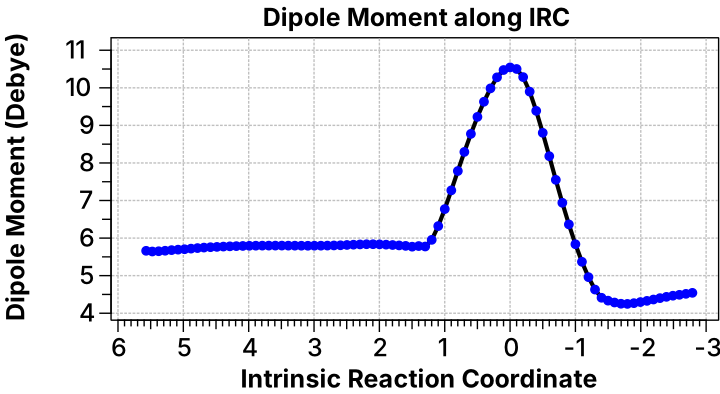
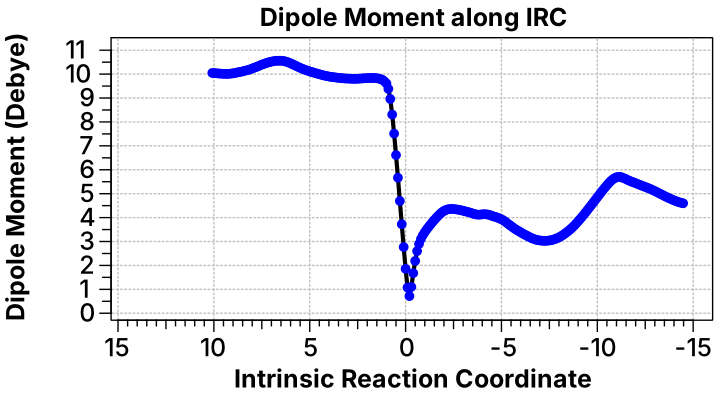
To provide insight into the properties of this reaction path, a plot of the calculated dipole moment along the reaction path is shown. At the transition state (IRC value = 0), the dipole moment is a maximum, which suggests it is trying to form an ion-pair, part of which is the diazacylopropenium cation shown in the first scheme above. The ion-pair is however not fully formed, probably because it is not solvated properly.

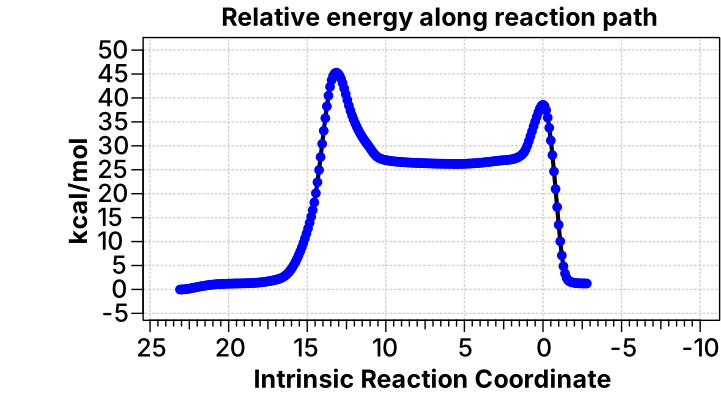
We can add the two reaction paths together to get the overall reaction energy, which is no longer endothermic but approximately thermoneutral. Things are still not quite “reasonable” because the actual reaction is exothermic.

Time then to move on to hydroxide anion as the catalytic base, in the form of sodium hydroxide. To do this, we need to include lots of water molecules (here six), primarily to solvate the Na+ (shown in purple below) but also any liberated Cl. You can see the water molecules moving around a lot as the reaction proceeds, via again TS1 to end at a similar point as before.

The energy plot is now rather different. The activation energy is now lower than the 15 kcal/mol requirement for a fast reaction; in fact ΔG= 9.5 kcal/mol and overall it is already showing exothermicity. What a difference replacing a proton (from water) by a sodium cation makes!

Take a look also at this dipole moment plot as the reaction proceeds! TS1 is almost entirely non-ionic!

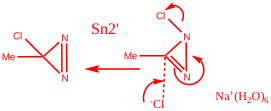
To complete the reaction, the chlorines have to rearrange. This time a rather different mode is adopted, as shown below, termed an Sn2′ reaction. The energy of TS2′ is again lower than TS1, by 9.2 kcal/mol. Again no explicit diazacylopropenium cation-anion pair (an aromatic 4n+2, n=0 Hückel system) is formed.


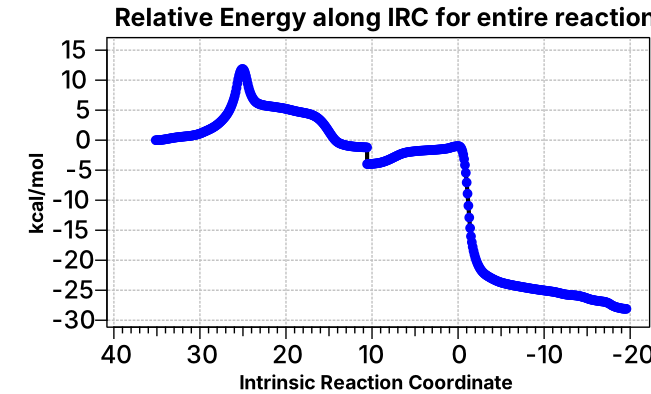
Combing both stages of the reaction as before. The discontinuity in the centre is due to further solvent reorganisation not picked up at the ends of the two individual IRCs which were joined to make this plot. Note also that the reaction is now appropriately exothermic overall.

So what have we learnt?

  1. That a “reasonable” mechanism as shown in a journal article, and perhaps reproduced in a text-book, lecture or tutorial notes or even an examination, can be subjected in a non-arbitrary manner to a reality check using modern quantum mechanical calculations.
  2. For the Graham reaction, this results in a somewhat different pathway for the reaction compared to the original suggestion.
    1. In particular, the removal of chlorine occurs from the same nitrogen as the initial deprotonation
    2. This process does not result in an intermediate nitrene being formed, rather the chlorine removal is concerted with N-N bond formation.
    3. The resulting 1-chloro-1H-diazirine does not directly ionize to form a diazacyclopropenium cation-chloride anion ion pair, but instead can undertake an Sn2′ reaction to form the final 3-chloro-3-methyl-3H-diazirine.
  3. A simple change in the conditions, such as replacing water as a catalytic agent with Na+OH(5H2O) can have a large impact on the energetics and indeed pathways involved. In this case, the reaction is conducted in NaOCl or NaOBr solutions, for which the pH is ~13.5, indicating [OH] is ~0.3M.
  4. The curly arrows here are “reasonable” for the computed pathway, but are determined by some simple formalisms which I have adopted (such as terminating an arrow-head at the mid-point of a newly forming bond). As I hinted above, these curly arrows can also be subjected to quantum mechanical scrutiny and I hope to illustrate this process in a future post.
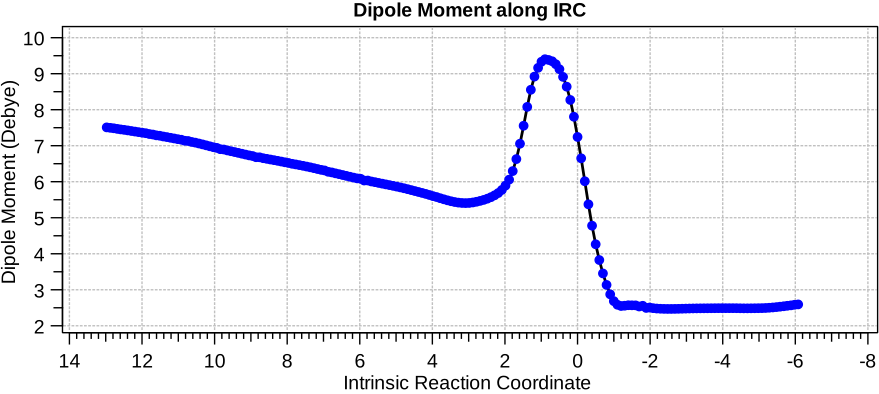
But do not think I am suggesting here that this is the “correct” mechanism, it is merely one mechanism for which the relative energies of the various postulated species involved have been calculated relatively accurately. It does not preclude that other, perhaps different, routes could be identified in the future where the energetics of the process are even lower. 


This blog is inspired by the two students who recently asked such questions. In fact, you also have to acquire this completely unrelated article[2] for reasons I leave you to discover yourself. You might want to consider the merits or demerits of an alternative way of showing the curly arrows. Is this representation “more reasonable”? I thank Ed Smith for measuring this value for NaOBr and for suggesting the Graham reaction in the first place as an interesting one to model.

References

  1. W.H. Graham, "The Halogenation of Amidines. I. Synthesis of 3-Halo- and Other Negatively Substituted Diazirines<sup>1</sup>", Journal of the American Chemical Society, vol. 87, pp. 4396-4397, 1965. https://doi.org/10.1021/ja00947a040
  2. E.W. Abel, B.C. Crosse, and D.B. Brady, "Trimeric Alkylthiotricarbonyls of Manganese and Rhenium", Journal of the American Chemical Society, vol. 87, pp. 4397-4398, 1965. https://doi.org/10.1021/ja00947a041