Posts Tagged ‘free energy’

Imaging normal vibrational modes of a single molecule of CoTPP: a mystery about the nature of the imaged species.

Thursday, April 25th, 2019

Previously, I explored (computationally) the normal vibrational modes of Co(II)-tetraphenylporphyrin (CoTPP) as a “flattened” species on copper or gold surfaces for comparison with those recently imaged[1]. The initial intent was to estimate the “flattening” energy. There are six electronic possibilities for this molecule on a metal surface. Respectively positively, or negatively charged and a neutral species, each in either a low or a high-spin electronic state. I reported five of these earlier, finding each had quite high barriers for “flattening” the molecule. For the final 6th possibility, the triplet anion, the SCF (self-consistent-field) had failed to converge, but for which I can now report converged results.

charge

Spin

Multiplicity

ΔG, Twisted Ph,
Hartree
ΔG, “flattened”,
Hartree

ΔΔG,

kcal/mol

-1 Triplet -3294.68134 (C2) -3294.64735 (C2v) 21.3
-3294.60006 (Cs) 51.0
-3294.37012 (D2h) 195.3
Singlet -3294.67713 (S4) -3294.39418 (D4h) 175.6
-3294.39321 (D2h) 178.2
-3294.56652 (D2) 69.4
FAIR data at DOI: 10.14469/hpc/5486

I am exploring the so-called “flattened” mode, induced by the voltage applied at the tip of the STM (scanning-tunnelling microscope) probe and which causes the phenyl rings to rotate as per above. This rotation in turn causes the hydrogen atom-pair encircled above to approach each other very closely. To avoid these repulsions, the molecule buckles into one of two modes. The first causes the phenyl rings to stack up/down/up/down. The second involves an all-up stacking, as shown below. Although these are in fact 4th-order saddle points as isolated molecules, the STM voltage can inject sufficient energy to convert these into apparently stable minima on the metal surface.

All syn mode, Triplet anion

The up/down/up/down “flattened” form (below) shows a much more modest planarisation energy than all the other charged/neutral states reported in the previous post, whereas the all-up isomer (which on the face of it looks a far easier proposition to come into close contact with a metal surface) is far higher in free energy.

The caption to Figure 3 in the original article[1] does not explicitly mention the nature of the metal surface on which the vibrations were recorded, but we do get “The intensity in the upper right corner of the 320-cm−1 map is from a neighbouring Cu–CO stretch” which suggests it is in fact a copper surface. Coupled with the other observation that in “contrast to gold, the Kondo resonance of cobalt disappears on Cu(100), suggesting that it acquires nearly a full electron from the metal (see Extended Data Fig. 2),” the model below of a triplet-state anion on the Cu surface seems the most appropriate.

Syn/anti mode, Triplet anion with C2v symmetry

There is one final remark made in the article worth repeating here: “This suggests that the vibronic functions are complex-valued in this state, as expected for Jahn–Teller active degenerate orbitals of the planar porphyrin.26” Orbital degeneracy can only occur if the molecule has e.g. D4h point group symmetry, whereas the triplet anion stationary-point shown in the figure above has only C2v symmetry for which no orbital degeneracies (E) are expected. Enforcing D4h symmetry on Co(II) tetraphenylporphyrin results in eight pairs of H…H contacts of 1.34Å, which is an impossibly short distance (the shortest known is ~1.5Å). Moreover this geometry has an equally impossible free energy 176 kcal/mol above the relaxed free molecule. Visually from Figure 3, the H…H contact distance looks even shorter (below, circled in red)! A D2h form (with no E-type orbitals) can also be located.

Singlet, Calculated with D4h symmetry. Click for vibrations.

Singlet, Calculated with D2h symmetry. Click for vibrations.

Taken from Figure 3 (Ref 1).

These totally flat species are calculated to be at 13 or 12th-order saddle points, with the eight most negative force constants having vectors which correspond to up/down avoidance motions of the proximate hydrogen pairs encircled above and the remaining being buckling modes of the entire ring.

So to the mystery, being the nature of the “flattened” CoTPP on the copper metal surface, as represented in Figure 3 of the article.[1] Is it truly flat, as implied by the article? If so, the energy of such a species would be beyond the limits of what is normally considered feasible. Moreover, it would represent a species with truly mind-blowing short H…H contacts. Or could it be a saddle-shaped geometry, where the phenyl rings are not lying flat in contact with the metal but interacting via the phenyl para-hydrogens? That geometry has not only a much more reasonable energy above the unflattened free molecule, but also acceptable H…H contacts (~2.0.Å) However, would such a shape correspond to the visualised vibrational modes also shown in Figure 3? I have a feeling that there must be more to this story.


These convergence problems were solved by improving the basis set via adding “diffuse” functions, as in (u)ωB97XD/6-311+G(d,p). If the crystal structure for these species is flattened without geometry optimisation, the H-H distance is around 0.8Å

References

  1. J. Lee, K.T. Crampton, N. Tallarida, and V.A. Apkarian, "Visualizing vibrational normal modes of a single molecule with atomically confined light", Nature, vol. 568, pp. 78-82, 2019. https://doi.org/10.1038/s41586-019-1059-9
Smoke and mirrors. All is not what it seems with this Sn2 reaction!

Thursday, April 4th, 2019

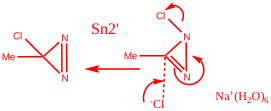
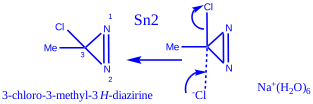
Previously, I explored the Graham reaction to form a diazirine. The second phase of the reaction involved an Sn2′ displacement of N-Cl forming C-Cl. Here I ask how facile the simpler displacement of C-Cl by another chlorine might be and whether the mechanism is Sn2 or the alternative Sn1. The reason for posing this question is that as an Sn1 reaction, simply ionizing off the chlorine to form a diazacyclopropenium cation might be a very easy process. Why? Because the resulting cation is analogous to the cyclopropenium cation, famously proposed by Breslow as the first example of a 4n+2 aromatic ring for which the value of n is zero and not 1 as for benzene.[1] Another example of a famous “Sn1” reaction is the solvolysis of t-butyl chloride to form the very stable tertiary carbocation and chloride anion (except in fact that it is not an Sn1 reaction but an Sn2 one!)

Here is the located transition state for the above, using Na+.6H2O as the counter-ion to the chloride. The calculated free energy of this transition state is 3.2 kcal/mol lower than the previous Sn2′ version (FAIR data collection, 10.14469/hpc/5045), with an overall barrier to reaction of 26.5 kcal/mol. This compares to ~24.5 kcal/mol obtained by Breslow for solvolysis of the cyclopropenyl tosylate. Given the relatively simple solvation model I used in the calculation (only six waters to solvate all the ions, and a continuum solvent field for water), the agreement is not too bad.

The animation above is of a normal vibrational mode known as the transition mode (click on the image above to get a 3D rotatable animated model). The calculated vectors for this mode (its energy being an eigenvalue of the force constant matrix) are regularly used to “characterise” a transition state. I will digress with a quick bit of history here, starting in 1972 when another famous article appeared.[2] The key aspect of this study was the derivation of the first derivatives of the energy of a molecule with respect to the (3N) geometrical coordinates of the atoms, using a relatively simply quantum mechanical method (MINDO/2) to obtain that energy. Analytical first derivatives of the MINDO/2 Hamiltonian were then used to both locate the transition state for a simple reaction and then to evaluate the second derivatives (the force constant matrix) using a finite difference method. That force constant matrix, when diagonalized, reveals one negative root (eigenvalue) which is characteristic of a transition state. The vectors reveal how the atoms displace along the vibration, and should of course approximate to the path to either reactant or product.

Since that time, it has been a more or less mandatory requirement for any study reporting transition state models to characterise them using the vectors of the negative eigenvalue. The eigenvalue invariably expressed as a wavenumber. Because this comes from the square root of the mass-weighted negative force constant, it is often called the imaginary mode. Thus in this example, 115i cm-1, the i indicating it is an imaginary number. The vectors are derived from quadratic force constants, which is a parabolic potential surface for the molecule. Since most potential surfaces are not quadratic, it is recognized as an approximation, but nonetheless good enough to serve to characterise the transition state as the one connecting the assumed reactant and product. Thousands of published studies in the literature have used this approach.

So now to the animation above. If you look closely you will see that it is a nitrogen and not a carbon that is oscillating between two chlorines (here it is the lighter atoms that move most). The vectors confirm that, with a large one at N and only a small one at C. So it is Sn2 displacement at nitrogen that we have located? 

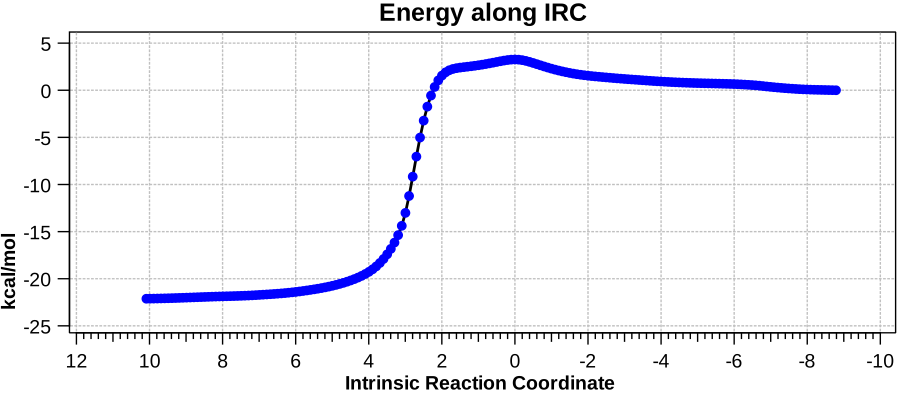
Not so fast. This is a reminder that we have to explore a larger region of the potential energy surface, beyond the quadratic region of the transition state from which the vectors above are derived. This is done using an IRC (intrinsic reaction coordinate). Here it is, and you see something remarkable.

The Cl…N…Cl motions seen above in the transition state mode change very strongly in regions away from the transition state. On one side of the transition state, it forms a Cl…C bond, on the other side a Cl…N.

It is also reasonable to ask why the paths either side of the transition state are not the same? That may be because with only six explicit water molecules, three of which solvate the sodium ion, there are not enough to solvate equally the chloride anions either side of the transition state. As a result one chlorine does not behave in quite the same way as the other. The addition of an extra water molecule or two may well change the resulting reaction coordinate significantly.

The overall message is that there are two ways to characterise a computed reaction path. One involves looking at the motions of all the atoms just in the narrow region of the transition state. Most reported literature studies do only this. When the full path is explored with an IRC, a different picture can emerge, as here. The Cl…N…Cl Sn2 mode is replaced by a Cl…C/N…Cl mode. This example however is probably rare, with most reactions the transition state vibration and the IRC do actually agree!

References

  1. R. Breslow, "SYNTHESIS OF THE s-TRIPHENYLCYCLOPROPENYL CATION", Journal of the American Chemical Society, vol. 79, pp. 5318-5318, 1957. https://doi.org/10.1021/ja01576a067
  2. J.W. McIver, and A. Komornicki, "Structure of transition states in organic reactions. General theory and an application to the cyclobutene-butadiene isomerization using a semiempirical molecular orbital method", Journal of the American Chemical Society, vol. 94, pp. 2625-2633, 1972. https://doi.org/10.1021/ja00763a011

The Graham reaction: Deciding upon a reasonable mechanism and curly arrow representation.

Monday, February 18th, 2019

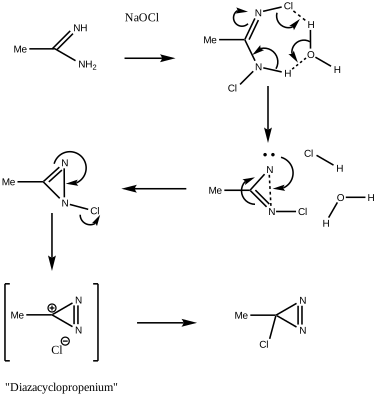
Students learning organic chemistry are often asked in examinations and tutorials to devise the mechanisms (as represented by curly arrows) for the core corpus of important reactions, with the purpose of learning skills that allow them to go on to improvise mechanisms for new reactions. A common question asked by students is how should such mechanisms be presented in an exam in order to gain full credit? Alternatively, is there a single correct mechanism for any given reaction? To which the lecturer or tutor will often respond that any reasonable mechanism will receive such credit. The implication is that a mechanism is “reasonable” if it “follows the rules”. The rules are rarely declared fully, but seem to be part of the absorbed but often mysterious skill acquired in learning the subject. These rules also include those governing how the curly arrows should be drawn. Here I explore this topic using the Graham reaction.[1]

I start by noting the year in which the Graham procedure was published, 1965. Although the routine representation of mechanism using curly arrows had been established for about 5-10 years by then, the quality of such representations in many articles was patchy. Thus, this one (the publisher will need payment for me to reproduce the diagram here, so I leave you to get it yourself) needs some modern tidying up. In the scheme below, I have also made a small change, using water itself as a base to remove a NH proton, rather than hydroxide anion as used in the article (I will return to the anion later). The immediate reason is that water is a much simpler molecule to use at the start of our investigation than solvated sodium hydroxide. You might want to start with comparing the mechanism above with the literature version[1] to discover any differences. 

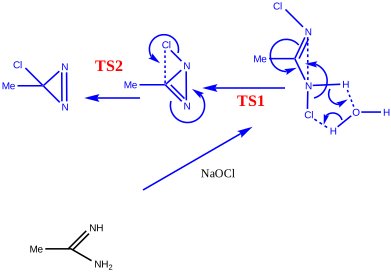
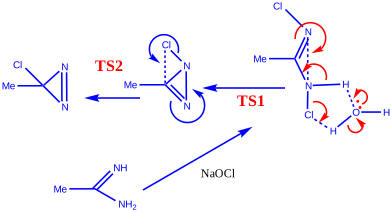
The next stage is to compute all of this using quantum mechanics, which will tell us about the energy of the system as it evolves and also identify the free energy of the transition states for the reaction. I am not going to go into any detail of how these energies are obtained, suffice to say that all the calculations can be found at the following DOI: 10.14469/hpc/5045 The results of this exercise are represented by the following alternative mechanism.

How was this new scheme obtained? The key step is locating a transition state in the energy surface, a point where the first derivatives of the energy with respect to all the 3N-6 coordinates defining the geometry (the derivative vector) are zero and where the second derivative matrix has just one negative eigenvalue (check up on your Maths for what these terms mean). Each located transition state (which is an energy maximum in just one of the 3N-6 coordinates) can be followed downhill in energy to two energy minima, one of which is declared the reactant of the reaction and the other the product, using a process known as an IRC (intrinsic reaction coordinate). The coordinates of these minima are then inspected so they can be mapped to the conventional representations shown above. New bonds in the formalism above are shown with dashed lines and have an arrow-head ending at their mid-point; breaking bonds (more generally, bonds reducing their bond order) have an arrow starting from their mid-point. The change in geometry along the IRC for TS1 can then be shown as an animation of the reaction coordinate, which you can see below.

Don’t worry too much about when bonds appear to connect or disconnect, the animation program simply uses a simple bond length rule to do this. The major difference with the original mechanism is that it is the chlorine on the nitrogen also bearing a proton that gets removed. Also, the N-N bond is formed as part of the same concerted process, rather than as a separate step.

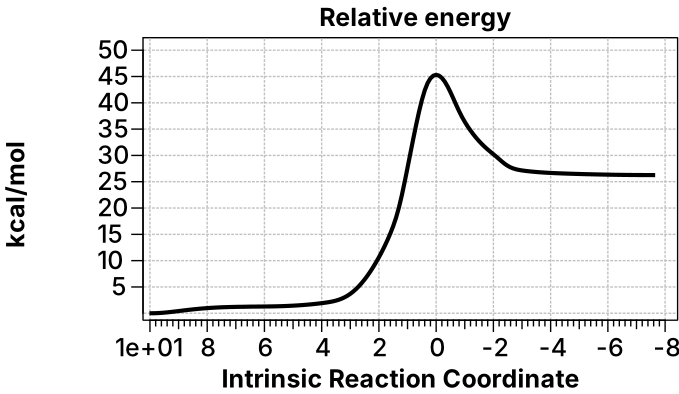
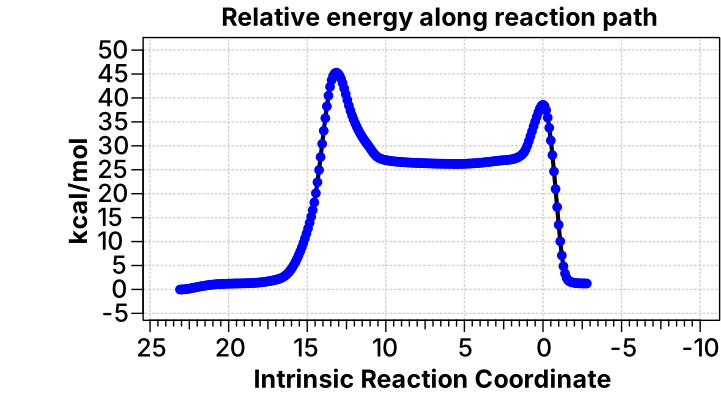
Shown above is the computed energy along the reaction path. Here a “reality check” can be carried out. The activation free energy (the difference between the transition state and the reactant) emerges as a rather unsavoury ΔG=40.8 kcal/mol. Why is this unsavoury? Well, according to transition state theory, the rate of a (unimolecular) reaction is given by the expression: Ln(k/T) = 23.76 – ΔG/RT where T is temperature (~323K in this example), R = is the gas constant and k is the unimolecular rate constant. When you solve it for ΔG=40.8, it turns out to be a very slow reaction indeed. More typically, a reaction that occurs in a few minutes at this sort of temperature has ΔG= ~15 kcal/mol. So this turns out to be an “unreasonable” mechanism, but based on the quantum mechanically predicted rate and not on the nature of the “curly arrows”. And no, one cannot do this sort of thing in an examination (not even on a mobile phone; there is no app for it, yet!) I must also mention that the “curly arrows” used in the above representation are, like the bonds, based on simple rules of connecting a breaking with a forming bond with such an arrow. There IS a method of computing both their number and their coordinates “realistically”, but I will defer this to a future post. So be patient!

The next thing to note is that the energy plot shows this stage of the reaction as being endothermic. Time to locate TS2, which it turns out corresponds to the N to C migration of the chlorine to complete the Graham reaction. As it happens, TS2 is computed to be 10.6 kcal/mol lower than TS1 in free energy, so it is not “rate limiting”.

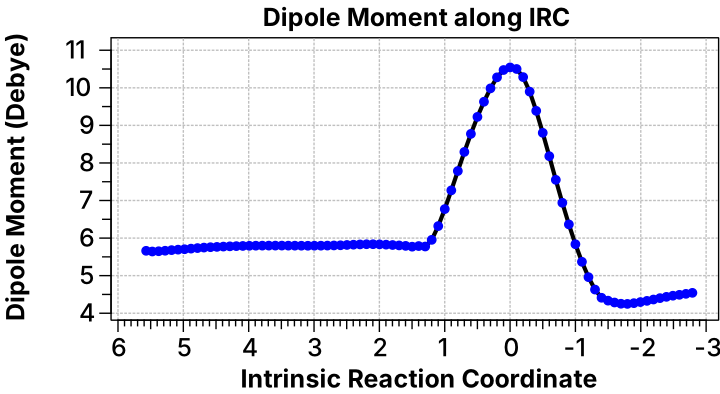
To provide insight into the properties of this reaction path, a plot of the calculated dipole moment along the reaction path is shown. At the transition state (IRC value = 0), the dipole moment is a maximum, which suggests it is trying to form an ion-pair, part of which is the diazacylopropenium cation shown in the first scheme above. The ion-pair is however not fully formed, probably because it is not solvated properly.

We can add the two reaction paths together to get the overall reaction energy, which is no longer endothermic but approximately thermoneutral. Things are still not quite “reasonable” because the actual reaction is exothermic.

Time then to move on to hydroxide anion as the catalytic base, in the form of sodium hydroxide. To do this, we need to include lots of water molecules (here six), primarily to solvate the Na+ (shown in purple below) but also any liberated Cl. You can see the water molecules moving around a lot as the reaction proceeds, via again TS1 to end at a similar point as before.

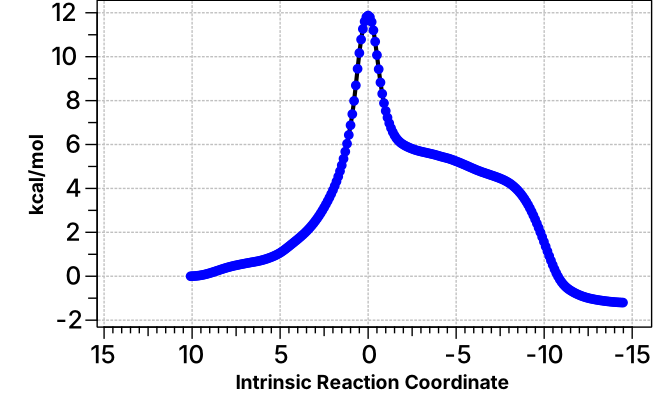
The energy plot is now rather different. The activation energy is now lower than the 15 kcal/mol requirement for a fast reaction; in fact ΔG= 9.5 kcal/mol and overall it is already showing exothermicity. What a difference replacing a proton (from water) by a sodium cation makes!

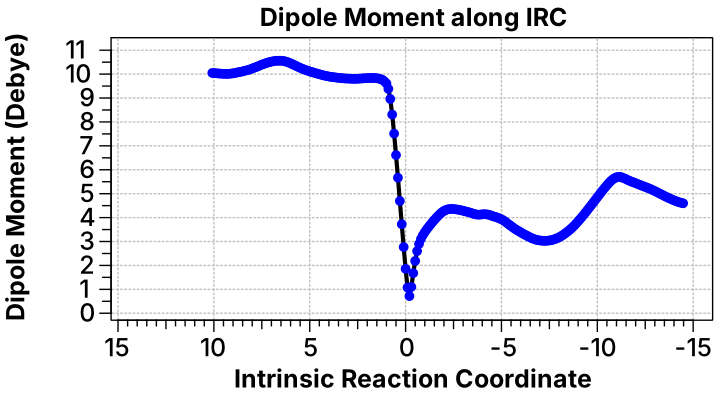
Take a look also at this dipole moment plot as the reaction proceeds! TS1 is almost entirely non-ionic!

To complete the reaction, the chlorines have to rearrange. This time a rather different mode is adopted, as shown below, termed an Sn2′ reaction. The energy of TS2′ is again lower than TS1, by 9.2 kcal/mol. Again no explicit diazacylopropenium cation-anion pair (an aromatic 4n+2, n=0 Hückel system) is formed.


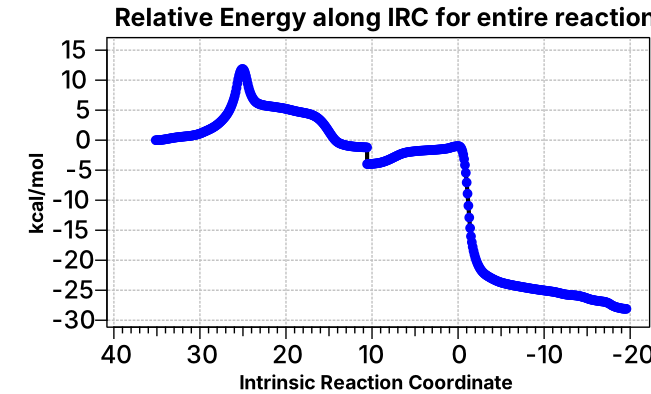
Combing both stages of the reaction as before. The discontinuity in the centre is due to further solvent reorganisation not picked up at the ends of the two individual IRCs which were joined to make this plot. Note also that the reaction is now appropriately exothermic overall.

So what have we learnt?

  1. That a “reasonable” mechanism as shown in a journal article, and perhaps reproduced in a text-book, lecture or tutorial notes or even an examination, can be subjected in a non-arbitrary manner to a reality check using modern quantum mechanical calculations.
  2. For the Graham reaction, this results in a somewhat different pathway for the reaction compared to the original suggestion.
    1. In particular, the removal of chlorine occurs from the same nitrogen as the initial deprotonation
    2. This process does not result in an intermediate nitrene being formed, rather the chlorine removal is concerted with N-N bond formation.
    3. The resulting 1-chloro-1H-diazirine does not directly ionize to form a diazacyclopropenium cation-chloride anion ion pair, but instead can undertake an Sn2′ reaction to form the final 3-chloro-3-methyl-3H-diazirine.
  3. A simple change in the conditions, such as replacing water as a catalytic agent with Na+OH(5H2O) can have a large impact on the energetics and indeed pathways involved. In this case, the reaction is conducted in NaOCl or NaOBr solutions, for which the pH is ~13.5, indicating [OH] is ~0.3M.
  4. The curly arrows here are “reasonable” for the computed pathway, but are determined by some simple formalisms which I have adopted (such as terminating an arrow-head at the mid-point of a newly forming bond). As I hinted above, these curly arrows can also be subjected to quantum mechanical scrutiny and I hope to illustrate this process in a future post.

But do not think I am suggesting here that this is the “correct” mechanism, it is merely one mechanism for which the relative energies of the various postulated species involved have been calculated relatively accurately. It does not preclude that other, perhaps different, routes could be identified in the future where the energetics of the process are even lower. 


This blog is inspired by the two students who recently asked such questions. In fact, you also have to acquire this completely unrelated article[2] for reasons I leave you to discover yourself. You might want to consider the merits or demerits of an alternative way of showing the curly arrows. Is this representation “more reasonable”? I thank Ed Smith for measuring this value for NaOBr and for suggesting the Graham reaction in the first place as an interesting one to model.

References

  1. W.H. Graham, "The Halogenation of Amidines. I. Synthesis of 3-Halo- and Other Negatively Substituted Diazirines<sup>1</sup>", Journal of the American Chemical Society, vol. 87, pp. 4396-4397, 1965. https://doi.org/10.1021/ja00947a040
  2. E.W. Abel, B.C. Crosse, and D.B. Brady, "Trimeric Alkylthiotricarbonyls of Manganese and Rhenium", Journal of the American Chemical Society, vol. 87, pp. 4397-4398, 1965. https://doi.org/10.1021/ja00947a041

Hypervalent or not? A fluxional triselenide.

Saturday, February 24th, 2018

Another post inspired by a comment on an earlier one; I had been discussing compounds of the type I.In (n=4,6) as possible candidates for hypervalency. The comment suggests the below as a similar analogue, deriving from observations made in 1989.[1]

This compound was investigated using 77Se NMR, with the following conclusions:

  1. The compound is fluxional, with the lines at room temperature broadened compared to those at -50°C.
  2. At -50°C the peaks are sharp enough to discern 1JSe-Se couplings, with multiplicities and integrations that suggest a central Se is surrounded by four equivalent further Se atoms, with shifts of 655.1 and 251.2 ppm.
  3. The magnitude of this 1JSe-Se coupling (391 Hz) leads to the suggestion of a considerable contribution of a resonance form with Se=Se bonds (structure 2 above).
  4. This was supported by 2J13C-77Se couplings which also imply a symmetrically coordinated central  Se.
  5. Thus the two resonance forms 1 or 2 above were suggested as the predominant form at -50°C, with an increasing incursion of the open chain isomer 3 at higher temperatures giving rise to the observed fluxional dynamic behaviour.
  6. One may surmise from these results that the central Se is certainly hypercoordinated and by the classical interpretations hypervalent.

Here are some calculations (R=H), at the ωB97XD/Def2-TZVPP/SCRF=chloroform level.‡ In red are the calculated Wiberg Se-Se bond orders, which give little indication of any Se=Se double bond character. 

The calculated 77Se shifts are shown in magenta, with the observed values being 655 and 255 ppm. The match is not good, the errors were 120 and 20.5 ppm.  However calculated shifts for elements adjacent to e.g. Se or Br etc suffer from relativistic effects such as spin orbit coupling.[2] Thus the shift for the central Se, surrounded by four other Se atoms is likely to have a significant error, but the error for the four other Se atoms should be less. The reverse is true.

However, all the calculations of this species (up to Def2-TZVPPD basis set) showed this symmetric form of D2h symmetry to actually be a transition state, as per below.

There is a minimum with the structure below in which one pair of Se-Se lengths are longer than the other pair and for which the free energy is 6.5 kcal/mol lower. The Wiberg bond orders for the two sets of Se-Se bonds are now 0.16 and 0.86, which very much corresponds to structure 3 above.

Assuming that this compound is fluxional even at -50°C, the average of the pairs of Se atoms gives calculated shifts of 667 ppm (655 obs) whilst the central Se is 204.6 ppm (251 obs). The latter, influenced by two especially short Se-Se distances, is likely to have a very large spin-orbit coupling error, whilst for the former the error will be smaller (13C shifts adjacent to one Br typically have induced calculated errors of about 14 ppm[2]).

At this point I searched the Cambridge structure database for Se coordinated by four other Se atoms. A close analogue[3] has the structure shown below, in which pairs of Se-Se interactions have unequal bond lengths, the shorter being ~2.45Å. This matches the calculation above reasonably well.

Reconciling these various observations, we might assume that even at -50°C the fluxional behaviour has not been frozen out. Given that the fluxional barrier is only 6.5 kcal/mol, it is unlikely that the spectrum could be measured at a sufficiently low temperature to reveal not two sets of Se signals in the ratio 4:1 but three in the ratio 2:2:1. The spin-spin couplings reported presumably are a result of averaging a genuine 1JSe-Se coupling with a through space coupling.

So it appears that the analysis of the 77Se NMR reported in this article [1] may not be quite what it seems. A better interpretation is that structure 3 is the most realistic. This means no hypercoordination for the Se, never mind hypervalence!


FAIR data at DOI: 10.14469/hpc/3724. The original reference, Me2Se was incorrectly calculated without solvation by chloroform. The values shown here are now corrected from those shown in the original post.

References

  1. Y. Mazaki, and K. Kobayashi, "Structure and intramolecular dynamics of bis(diisobutylselenocarbamoyl) triselenide as identified in solution by the 77Se-NMR spectroscopy", Tetrahedron Letters, vol. 30, pp. 2813-2816, 1989. https://doi.org/10.1016/s0040-4039(00)99132-9
  2. D.C. Braddock, and H.S. Rzepa, "Structural Reassignment of Obtusallenes V, VI, and VII by GIAO-Based Density Functional Prediction", Journal of Natural Products, vol. 71, pp. 728-730, 2008. https://doi.org/10.1021/np0705918
  3. R.O. Gould, C.L. Jones, W.J. Savage, and T.A. Stephenson, "Crystal and molecular structure of bis(NN-diethyldiselenocarbamato)-selenium(II)", Journal of the Chemical Society, Dalton Transactions, pp. 908, 1976. https://doi.org/10.1039/dt9760000908

Octet expansion and hypervalence in dimethylidyne-λ6-sulfane.

Tuesday, November 28th, 2017

I started this story by looking at octet expansion and hypervalence in non-polar hypercoordinate species such as S(-CH3)6, then moved on to S(=CH2)3. Finally now its the turn of S(≡CH)2.

As the triple bonds imply, this seems to represent twelve shared valence electrons surround the sulfur, six from S itself and three from each carbon. The octet is clearly expanded from eight to twelve. But is all as it seems?

The linear form reveals the following localized orbitals. Six NBOs are localized to the S-C regions, of which four are bonding, two σ and two π. The remaining four electrons are in two non-bonding lone pairs, with a mild anti-bonding S-C component. So the bond order comes out as ~four, not six! This corresponds to the story told in the earlier blogs that the electrons in excess of the octet tend to occupy either non or antibonding orbitals.

In fact the full NBO analysis gives a value of 4.0920 for the S bond index and little Rydberg character; S: [core]3S(1.02)3p(3.61)3d(0.13).

Next, the ELF analysis, based not on orbitals but the derived electron densities. Each S-C region shows an ELF circular attractor integrating to 5.44e (or 10.88e for the S valence region). So the ELF reflects not only the density arising from bonding orbitals, but the non-bonding ones as well! 

Take a look at the ELF basin for the two hydrogen atoms; at 2.42e each this shell is ALSO expanded from the normal 2! Apart from the normal C-H localised NBO orbital, one can also see small C-H bonding contributions from the four NBOs labelled B above as well. So ELF analysis of the shared electrons in this species seems to show octet expansion for S and similar shell expansion for H. But we now know that simply taking the ELF basin population and dividing by two to get the bond or valence index can be misleading. The ELF analysis includes non or even anti-bonding density contributions and so it cannot be used to infer hyperbonding (hypervalence).

I must now confess to withholding some vital information from you. The linear HC≡S≡CH molecule is not a minimum, having four computed negative force constants, the normal mode of one of which is animated  below. 

The true minimum has C2 symmetry as follows and it corresponds to that mysterious structure shown at the top and hitherto not mentioned. This form is 14.6 kcal/mol lower in free energy than the linear variety. 

The ELF analysis confirms this species as bis(carbene), with two “lone pairs” on S. All the octet expansion has vanished; of the ~six electrons hitherto located in each C-S region, four have morphed into lone pairs, leaving only ~two in the S-C regions. The sulfur is now allocated 7.44e, a  “normal” octet.

At this point, I remind that the great G. N. Lewis himself, the original coiner of the eight electron valence rule, pondered whether acetylene might have a related bis(carbene) form. It is nice to come up with an example of this more than 100 years after his original suggestion.


FAIR Data DOI for the collection: 10.14469/hpc/3333

The di-anion of dilithium (not the Star Trek variety): Another “Hyper-bond”?

Saturday, September 16th, 2017

Early in 2011, I wrote about how the diatomic molecule Be2 might be persuaded to improve upon its normal unbound state (bond order ~zero) by a double electronic excitation to a strongly bound species. I yesterday updated this post with further suggestions and one of these inspired this follow-up.

The standard molecular orbital diagram for Be2 below shows two electrons in both the 2s Σg and Σu levels, the first being considered bonding and the second antibonding. By exciting the two electrons from the Σu into the Πu MO to form a triplet, one converts one antibonding occupancy into two bonding occupancies, in the process changing the total formal bond order from zero to two.


The triplet excited state of diberyllium

You can see the results of my playing with these ideas both in my appended comments to the original post and the table below. This shows that the calculated bond order for the excited triplet state of Be2 is actually closer to 1.50 rather than to two, but definitely not zero!

System Wiberg bond order Bond length FAIR Data
Be2 singlet 0.15 2.805 10.14469/hpc/3082
Be2 excited triplet 1.50 1.785 10.14469/hpc/3075
Be22+ 1.00 2.135 10.14469/hpc/3076
Be22- triplet 0.89 2.242 10.14469/hpc/3074
Be22- excited singlet 3.00 1.817 10.14469/hpc/3083

The games above represent isoelectronic substitutions and here I try one more, namely that Li22- is isoelectronic with Be2. Unlike the latter, there is no need to force an electronic excitation (ωB97XD/Def2-QZVPPD/SCRF=water) to achieve the required occupancies with Li22-.

System Wiberg bond order Bond length FAIR Data
Li22- triplet 1.501 2.381 10.14469/hpc/3087

I also checked what crystal structures could tell us about Li-Li bonds and it seems 2.38Å is about as short as they get.

At this point, the NBO analysis of the Li22- localised orbitals alerted me to another feature, which is that the Rydberg occupancy amounted to 2.18e. This in turn reminded me of the previous post which dealt with such occupancy in another small molecule, CH3F2-, but here the Rydberg occupancy involved the 3s/3p AOs of the carbon and the fluorine. With Li22- triplet, it is of the lithium 2p AO (2.18e) and only a tiny occupancy of 3d (0.03). By definition, for alkali metals such as Li the normal valence shell is just 2s, whereas 2p occupancy is considered a Rydberg state; a hypervalent state if you will. So Li22- triplet has a Li-Li hyper-bond! Of course, by this definition most Li compounds are then hypervalent, since many have populated 2p shells.

Even if use of the term hyper-bond to describe Li22- triplet is rather artificial, this example does reveal the games one can play with the first row elements Li-B (see table above). Given that most introductory text books on bonding normally only explain the diatomics formed from N-Ne (occasionally including C), I might suggest that these earlier elements are equally instructive and fun to play with.


This species is 36.0 kcal/mol higher in free energy than two separated Li anions.

The di-anion of dilithium (not the Star Trek variety): Another "Hyper-bond"?

Saturday, September 16th, 2017

Early in 2011, I wrote about how the diatomic molecule Be2 might be persuaded to improve upon its normal unbound state (bond order ~zero) by a double electronic excitation to a strongly bound species. I yesterday updated this post with further suggestions and one of these inspired this follow-up.

The standard molecular orbital diagram for Be2 below shows two electrons in both the 2s Σg and Σu levels, the first being considered bonding and the second antibonding. By exciting the two electrons from the Σu into the Πu MO to form a triplet, one converts one antibonding occupancy into two bonding occupancies, in the process changing the total formal bond order from zero to two.


The triplet excited state of diberyllium

You can see the results of my playing with these ideas both in my appended comments to the original post and the table below. This shows that the calculated bond order for the excited triplet state of Be2 is actually closer to 1.50 rather than to two, but definitely not zero!

System Wiberg bond order Bond length FAIR Data
Be2 singlet 0.15 2.805 10.14469/hpc/3082
Be2 excited triplet 1.50 1.785 10.14469/hpc/3075
Be22+ 1.00 2.135 10.14469/hpc/3076
Be22- triplet 0.89 2.242 10.14469/hpc/3074
Be22- excited singlet 3.00 1.817 10.14469/hpc/3083

The games above represent isoelectronic substitutions and here I try one more, namely that Li22- is isoelectronic with Be2. Unlike the latter, there is no need to force an electronic excitation (ωB97XD/Def2-QZVPPD/SCRF=water) to achieve the required occupancies with Li22-.

System Wiberg bond order Bond length FAIR Data
Li22- triplet 1.501 2.381 10.14469/hpc/3087

I also checked what crystal structures could tell us about Li-Li bonds and it seems 2.38Å is about as short as they get.

At this point, the NBO analysis of the Li22- localised orbitals alerted me to another feature, which is that the Rydberg occupancy amounted to 2.18e. This in turn reminded me of the previous post which dealt with such occupancy in another small molecule, CH3F2-, but here the Rydberg occupancy involved the 3s/3p AOs of the carbon and the fluorine. With Li22- triplet, it is of the lithium 2p AO (2.18e) and only a tiny occupancy of 3d (0.03). By definition, for alkali metals such as Li the normal valence shell is just 2s, whereas 2p occupancy is considered a Rydberg state; a hypervalent state if you will. So Li22- triplet has a Li-Li hyper-bond! Of course, by this definition most Li compounds are then hypervalent, since many have populated 2p shells.

Even if use of the term hyper-bond to describe Li22- triplet is rather artificial, this example does reveal the games one can play with the first row elements Li-B (see table above). Given that most introductory text books on bonding normally only explain the diatomics formed from N-Ne (occasionally including C), I might suggest that these earlier elements are equally instructive and fun to play with.


This species is 36.0 kcal/mol higher in free energy than two separated Li anions.

The conformation of enols: revealed and explained.

Thursday, April 6th, 2017

Enols are simple compounds with an OH group as a substituent on a C=C double bond and with a very distinct conformational preference for the OH group. Here I take a look at this preference as revealed by crystal structures, with the theoretical explanation.

First, a search of the Cambridge structure database (CDS), using the search query shown below (DOI: 10.14469/hpc/2429)


The first search (no errors, no disorder, R < 0.05) is unconstrained in the sense that the HO group is free to hydrogen bond itself. The syn conformer has the torsion of 0° and it has a distinct preponderance over the anti isomer (180°). There is the first hint that the most probable C=C distance for the syn isomer may be longer than that for the anti, but this is not yet entirely convincing.
To try to make it so, a constrained search is now performed, in which only structures where the HO group has no contact (hydrogen bonding) interaction are included. This is achieved using a “Boolean” search;

The number of hits approximately halves, but the proportion of syn examples increases considerably. There is an interesting double “hot-spot” distribution, which amplifies the lengthening of the C=C bond compared to the anti orientation.

The next constraint added is that the data collection must be <100K (to reduce thermal noise) which reduces the hits considerably but now shows the lengthening of the C=C bond for the syn isomer very clearly.

A final plot is of the C=C length vs the C-O length (no temperature, but HO interaction constraint). If there were no correlation, the distribution would be ~circular. In fact it clearly shows that as the C=C bond lengthens, the C-O bond contracts.

Now for some calculations (ωB97XD/Def2-TZVPP, DOI: 10.14469/hpc/2429) which reveal the following:

  1. The free energy of the syn isomer is 1.2 kcal/mol lower than that of the syn. The effect is small, and hence easily masked by other interactions such as hydrogen bonding to the OH group. Hence the reason why removing such interactions from the search above increased the syn population compared to anti.
  2. The syn C=C bond length (1.325Å) is longer than the anti (1.322Å). 
  3. The syn isomer has one unique σO-Lp*C-C NBO orbital interaction (below) with a value of E(2) 7.7 kcal/mol, which is absent in the anti form. As it happens, a πO*C=C interaction is present in both forms but is also stronger in the syn isomer (E(2)= 46.8 vs 44.2 kcal/mol).
    unoccupied NBO, σ*C-C
    Occupied NBO, σO-Lp
  4. The overlap of the filled σO-Lp with the empty σ*C-C orbital is shown below (blue overlaps with purple, red overlaps with orange).

    To view the overlap in rotatable 3D, click on any of the colour diagrams above.

It is nice to see how experiment (crystal structures) and theory (the calculation of geometries and orbital interactions) can quickly and simply be reconciled. Both these searches and the calculations can be done in just one day of “laboratory time” and I think it would make for an interesting undergraduate chemistry lab experiment.


This visualisation uses Java. Increasingly this browser plugin is becoming more onerous to activate (because of increased security) and some browsers do not support it at all. The macOS Safari browser is one that still does, but you do have to allow it via the security permissions.


More tetrahedral fun. Spherical aromaticity (and other oddities) in N4 and C4 systems?

Thursday, March 2nd, 2017

The thread thus far. The post about Na2He introduced the electride anionic counter-ion to Na+ as corresponding topologically to a rare feature known as a non-nuclear attractor. This prompted speculation about other systems with such a feature, and the focus shifted to a tetrahedral arrangement of four hydrogen atoms as a dication, sharing a total of two valence electrons. The story now continues here.

What emerged during comments about H42+ was that a density functional (DFT) derived wavefunction seemed to predict it to be a stable minimum, but that wavefunctions derived from coupled cluster or CASSCF methods predicted it to be a three-fold degenerate transition state instead. So I asked myself if perhaps other similar tetrahedral molecules less susceptible to such method ambiguity might be found. Here I record some of the species I investigated. 

  1. N4 in a tetrahedral allotropic arrangement of the element (ωB97XD/Def2-TZVPP DFT method: 10.14469/hpc/2217 and CCSD(T)/Def2-TZVPP 10.14469/hpc/2216). I found this intriguing, because each nitrogen has a lone pair of electrons and such an arrangement of eight electrons might be spherically aromatic according to the rule: 2(n+1)2, where n=1[1]. Nitself is indeed a true minimum (rN-N  1.460Å) with all positive force constants at both the DFT (767, 1005 and 1443) and CCSD(T) (726, 940 and 1304 cm-1) levels, but with a free energy ~185 kcal/mol higher than dinitrogen. The electronic topology is uneventfully classical, with six line (bond) critical points along each N-N axis (magenta), four ring critical points (green) and one cage point (inner blue sphere); there is no non-nuclear attractor present.The NICS value at the centre of the tetrahedron (coincident with the cage critical point) is -73 ppm, which does suggest aromaticity.
  2. C4 in a tetrahedral allotropic arrangement of this element is also a minimum as closed shell singlet (rC-C 1.646Å) again with positive force constants (ωB97XD/Def2-TZVPP DFT, 10.14469/hpc/2224, 434, 715, 1052 cm-1) and the same electronic topology as N4.
    The magnetic shielding at the ring centre is -1685 ppm, a value clearly perturbed by core ring currents or other factors; the molecule does not map to the 2(n+1)2 spherical aromaticity rule, which only allows values of 2,8,18, 32… electrons. I tried applying the ELF procedure using the computed WFN file (either direct or symmetrised, using both TopMod and MultiWFN) but the results did not have Td symmetry.
  3. C42+ with two fewer electrons is also a minimum as a closed shell singlet (rC-C 1.521Å) tetrahedral species (ωB97XD/Def2-TZVPP: 10.14469/hpc/2218, 1132, 1136, 1448 cm-1; CCSD(T)/Def2-TZVPP 10.14469/hpc/2225 showing rather different normal mode energies of ~330, 592, 1126 cm-1 ) which can be thought as mapping to the spherical aromaticity formula 2(n+1)2, where n=0. The electronic topology is slightly different from C4 itself, with four ring points (green) very close to the cage point in the centre.The ELF function now behaves itself in terms of symmetry, and produces a result in fact very similar to the H42+ molecule which started this topic rolling. There is an ELF basin with 0.14e located in the centroid and six equivalent basins (2.25e) spanning each pair of carbon atoms, although these C-C bonds are hugely banana shaped! That central electron basin closely resembles the one found in H42+ itself. The magnetic shielding at the centre of 3349 ppm is not meaningful in deciding if the molecule is indeed “aromatic”.
  4. C41-  is again a tetrahedral minimum, this time as a quartet 4A1 state (ωB97XD/Def2-TZVPP: 10.14469/hpc/2219, 918, 1024, 1377 cm-1; CCSD(T)/Def2-TZVPP 10.14469/hpc/2237, 824, 895, 1303 cm-1). The electronic topology is the same as before.Open shell spherical aromaticity[2] is given by the 2N2 + 2N + 1 (with S = N + ½) rule. A quartet state has S=3/2, hence N=1 and the formula stipulates 5 delocalizable electrons for aromaticity, which this species has! The isotropic magnetic shielding is 695 ppm, which again is not immediately helpful.The ELF analysis ((above) shows just two types of basin, with four “lone pairs” at each carbon vertex (1.24e) and eight associated with the C-C “bent” bonds (1.95e). 

What did I learn?

  • Firstly, that the (very unstable) tetrahedral allotrope of nitrogen might be a spherical aromatic.
  • Secondly, that tetrahedral closed-shell singlet C4 has a very odd wavefunction; this needs further work.
  • Thirdly that tetrahedral C42+  closely resembles H42+  in having a basin of electrons at the very centre, but that unlike H42+ it does appear to be a stable minimum.
  • Finally, that the radical anion C4 might be perhaps the smallest possible example of an open shell spherical aromatic.

And perhaps also in trying to answer some simple questions, I have also raised several more puzzles. Onwards and occasionally upwards.


This wavefunction is clearly odd, and needs further analysis.

References

  1. A. Hirsch, Z. Chen, and H. Jiao, "Spherical Aromaticity inIh Symmetrical Fullerenes: The 2(N+1)2 Rule", Angewandte Chemie, vol. 39, pp. 3915-3917, 2000. https://doi.org/10.1002/1521-3773(20001103)39:21<3915::aid-anie3915>3.0.co;2-o
  2. J. Poater, and M. Solà, "Open-shell spherical aromaticity: the 2N2 + 2N + 1 (with S = N + ½) rule", Chemical Communications, vol. 47, pp. 11647, 2011. https://doi.org/10.1039/c1cc14958j

Ritonavir: a look at a famous example of conformational polymorphism.

Monday, January 2nd, 2017

Here is an inside peek at another one of Derek Lowe’s 250 milestones in chemistry, the polymorphism of Ritonavir.[1] The story in a nutshell concerns one of a pharma company’s worst nightmares; a drug which has been successfully brought to market unexpectedly “changes” after a few years on market to a less effective form (or to use the drug term, formulation). This can happen via a phenomenon known as polymorphism, where the crystalline structure of a molecule can have more than one form. In this case, form I was formulated into soluble tablets for oral intake. During later manufacturing, a new less-soluble form appeared and “within weeks this new polymorph began to appear throughout both the bulk drug and formulation areas[1]

The structure of the original form I is shown below (3D DOI: 10.5517/CCRVC75). The compound has three HN-CO peptide linkages, all of which are in the stereoelectronically favoured s-cis form, with a dihedral angle of 180° across the H-N and C=O vectors.

Click for 3D

To show how favourable this s-cis form is, here is a search of the Cambridge structural database for acyclic HN-C=O bonds; of the ~8200 examples, only 5 have an s-trans torsion of ~180°. It is I feel statistically not entirely correct to convert this ratio of K=1640 to a free energy, but if one does, then at 298K, RTlnK works out to 4.4 kcal/mol. Note also that two compounds show an angle of ~90° (artefacts?).

The new type-II form that emerged has only two s-cis peptide linkages, and the third has isomerised to this higher energy s-trans form (3D DOI: 10.5517/CCRVC97)

Click for 3D

This has various knock-on effects on the conformation of the actual molecule itself.

  1. The cis-trans isomerisation of a peptide or amide bond is a relatively high energy process, since the C=N bond order is higher than 1. For example, in the 1H NMR spectrum of N,N-dimethyl formamide at room temperature, one can famously observe two methyl resonances and it is only at higher temperatures that the two signals coalesce due to more rapid rotation about the C=N bond.
  2. A pedant might query whether this isomerism is correctly termed a conformational or a configurational change? High-energy rotations that result in cis/trans isomerisms are normally referred to as a configurational changes, whereas low energy rotations about e.g. single bonds are known as conformational changes (thus the conformational changes in cyclohexane). There is a grey region such as this one, where the boundary between the two terms is encountered. 
  3. This isomerism has the knock-on effect of inducing a much lower energy rotation of a C-C single bond (on the left hand side of the representations above), rotating from a dihedral angle of +193 in form I to +51 in form II.
  4. More minor affects are seen in the conformation of the central benzyl group and the S/N heterocyclic ring on the right hand side.
  5. All these low energy conformational effects occur because a better hydrogen bonding network can then be set up in the crystal lattice, something not easily predictable  from the diagrams of the single molecules shown above.
  6. Overall, the free energy of the lattice is lower, despite the higher energy of the s-trans peptide bond. 
  7. Clearly, the dynamics of crystallisation initially favoured form I (despite the higher energy of the crystallised outcome), but if a tiny seed of form II is present (or perhaps other impurities) this can dramatically (but unpredictably) change these crystallisation dynamics.

I suspect that since 1998 when this story unfolded, all new drugs in which one or more s-cis peptide bonds are present have caused anxiety. In the system above for example, one might ask whether cis/trans isomerisation of instead either of the other two peptide bonds present might have similar results? Or hypothesize whether inhibiting the associated rotation of the C-C single bond noted above by appropriate “tethering” might prevent form I from converting to form II. Since 1998, I am sure trying to predict the solid form of an organic molecule from its isolated structure using computational methods has dramatically increased, although I have not found in SciFinder any reported instances of such modelling for Ritonavir itself.[2] Perhaps, if such a method were found, it might be too commercially valuable to share?

References

  1. J. Bauer, S. Spanton, R. Henry, J. Quick, W. Dziki, W. Porter, and J. Morris, "Ritonavir: An Extraordinary Example of Conformational Polymorphism", Pharmaceutical Research, vol. 18, pp. 859-866, 2001. https://doi.org/10.1023/a:1011052932607
  2. S.R. Chemburkar, J. Bauer, K. Deming, H. Spiwek, K. Patel, J. Morris, R. Henry, S. Spanton, W. Dziki, W. Porter, J. Quick, P. Bauer, J. Donaubauer, B.A. Narayanan, M. Soldani, D. Riley, and K. McFarland, "Dealing with the Impact of Ritonavir Polymorphs on the Late Stages of Bulk Drug Process Development", Organic Process Research & Development, vol. 4, pp. 413-417, 2000. https://doi.org/10.1021/op000023y