Posts Tagged ‘potential energy surface’
Thursday, April 4th, 2019
Previously, I explored the Graham reaction to form a diazirine. The second phase of the reaction involved an Sn2′ displacement of N-Cl forming C-Cl. Here I ask how facile the simpler displacement of C-Cl by another chlorine might be and whether the mechanism is Sn2 or the alternative Sn1.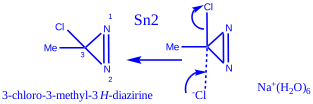 The reason for posing this question is that as an Sn1 reaction, simply ionizing off the chlorine to form a diazacyclopropenium cation might be a very easy process. Why? Because the resulting cation is analogous to the cyclopropenium cation, famously proposed by Breslow as the first example of a 4n+2 aromatic ring for which the value of n is zero and not 1 as for benzene.[1] Another example of a famous “Sn1” reaction is the solvolysis of t-butyl chloride to form the very stable tertiary carbocation and chloride anion (except in fact that it is not an Sn1 reaction but an Sn2 one!)
Here is the located transition state for the above, using Na+.6H2O as the counter-ion to the chloride. The calculated free energy of this transition state is 3.2 kcal/mol lower than the previous Sn2′ version (FAIR data collection, 10.14469/hpc/5045), with an overall barrier to reaction of 26.5 kcal/mol. This compares to ~24.5 kcal/mol obtained by Breslow for solvolysis of the cyclopropenyl tosylate. Given the relatively simple solvation model I used in the calculation (only six waters to solvate all the ions, and a continuum solvent field for water), the agreement is not too bad.

The animation above is of a normal vibrational mode known as the transition mode (click on the image above to get a 3D rotatable animated model). The calculated vectors for this mode (its energy being an eigenvalue of the force constant matrix) are regularly used to “characterise” a transition state. I will digress with a quick bit of history here, starting in 1972 when another famous article appeared.[2] The key aspect of this study was the derivation of the first derivatives of the energy of a molecule with respect to the (3N) geometrical coordinates of the atoms, using a relatively simply quantum mechanical method (MINDO/2) to obtain that energy. Analytical first derivatives of the MINDO/2 Hamiltonian were then used to both locate the transition state for a simple reaction and then to evaluate the second derivatives (the force constant matrix) using a finite difference method. That force constant matrix, when diagonalized, reveals one negative root (eigenvalue) which is characteristic of a transition state. The vectors reveal how the atoms displace along the vibration, and should of course approximate to the path to either reactant or product.
Since that time, it has been a more or less mandatory requirement for any study reporting transition state models to characterise them using the vectors of the negative eigenvalue. The eigenvalue invariably expressed as a wavenumber. Because this comes from the square root of the mass-weighted negative force constant, it is often called the imaginary mode. Thus in this example, 115i cm-1, the i indicating it is an imaginary number. The vectors are derived from quadratic force constants, which is a parabolic potential surface for the molecule. Since most potential surfaces are not quadratic, it is recognized as an approximation, but nonetheless good enough to serve to characterise the transition state as the one connecting the assumed reactant and product. Thousands of published studies in the literature have used this approach.
So now to the animation above. If you look closely you will see that it is a nitrogen and not a carbon that is oscillating between two chlorines (here it is the lighter atoms that move most). The vectors confirm that, with a large one at N and only a small one at C. So it is Sn2 displacement at nitrogen that we have located?
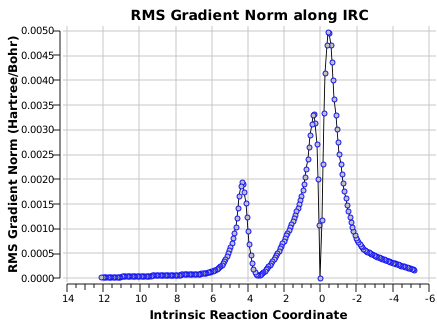
Not so fast. This is a reminder that we have to explore a larger region of the potential energy surface, beyond the quadratic region of the transition state from which the vectors above are derived. This is done using an IRC (intrinsic reaction coordinate). Here it is, and you see something remarkable.

The Cl…N…Cl motions seen above in the transition state mode change very strongly in regions away from the transition state. On one side of the transition state, it forms a Cl…C bond, on the other side a Cl…N.
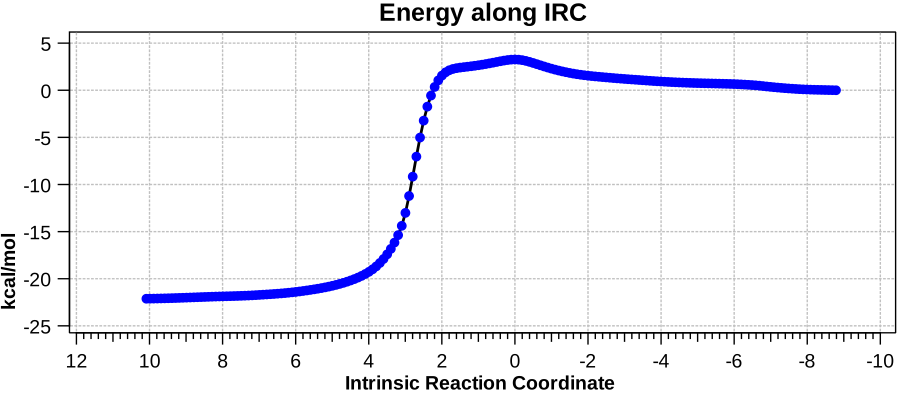
It is also reasonable to ask why the paths either side of the transition state are not the same? That may be because with only six explicit water molecules, three of which solvate the sodium ion, there are not enough to solvate equally the chloride anions either side of the transition state. As a result one chlorine does not behave in quite the same way as the other. The addition of an extra water molecule or two may well change the resulting reaction coordinate significantly.
The overall message is that there are two ways to characterise a computed reaction path. One involves looking at the motions of all the atoms just in the narrow region of the transition state. Most reported literature studies do only this. When the full path is explored with an IRC, a different picture can emerge, as here. The Cl…N…Cl Sn2 mode is replaced by a Cl…C/N…Cl mode. This example however is probably rare, with most reactions the transition state vibration and the IRC do actually agree!
References
- R. Breslow, "SYNTHESIS OF THE s-TRIPHENYLCYCLOPROPENYL CATION", Journal of the American Chemical Society, vol. 79, pp. 5318-5318, 1957. https://doi.org/10.1021/ja01576a067
- J.W. McIver, and A. Komornicki, "Structure of transition states in organic reactions. General theory and an application to the cyclobutene-butadiene isomerization using a semiempirical molecular orbital method", Journal of the American Chemical Society, vol. 94, pp. 2625-2633, 1972. https://doi.org/10.1021/ja00763a011
Tags:animation, Carbenium ion, Cations, Chemical elements, chemical reaction, Chemistry, Chlorine, computational chemistry, Cyclopropenium ion, Diazirine, energy, energy profile, free energy, Halogens, Natural sciences, Nucleophilic aromatic substitution, Oxidizing agents, Physical sciences, potential energy surface, SN1 reaction, Substitution reactions
Posted in reaction mechanism | No Comments »
Friday, December 21st, 2018
Five years back, I speculated about the mechanism of the epoxidation of ethene by a peracid, concluding that kinetic isotope effects provided interesting evidence that this mechanism is highly asynchronous and involves a so-called “hidden intermediate”. Here I revisit this reaction in which a small change is applied to the atoms involved.
Below are two representations of the mechanism. The synchronous mechanism involves five “curly arrows”, two of which are involved in forming a bond between oxygen and carbon, and three of which transfer a proton to the group X (X=O). The second variation asynchronously stops at the half way stage to form a pseudo ion-pair (the “hidden intermediate”) and the proton transfer only occurs in the second stage. If the ethene is substituted with deuterium, experimentally an inverse kinetic isotope effect is observed, which provides strong evidence that at the transition state, no proton transfer is occurring
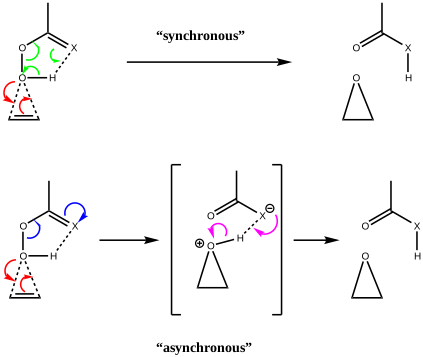
Before I go on, I should say that you will not find the mechanism as shown in either variation above in very many text books, which tend to practice “curly arrow economy” by employing only four arrows. I will not pursue this aspect here, except to note that as drawn above, the synchronous mechanism resembles that of a pericyclic reaction in a variation known as coarctate, as I noted in the original post (DOI: 10.14469/hpc/4807).
Now I introduce a veritable variation into this reaction, known as Payne epoxidation[1],† which replaces the peracid with a reagent generated by adding hydrogen peroxide to a nitrile to generate a transient species which can be represented by X=NH above. How does this change things? The model below also uses propene rather than ethene (M062X/Def2-TZVPPD/SCRF=dichloromethane).‡ This transition state (ΔG298 31.3 kcal/mol) shows two C-O bond formations, and as before the proton is clearly not yet transferred to the nitrogen (X=NH). Because of this asynchrony, the reaction could also be called a coarctate pseudo-pericyclic reaction.

Asynchronous concerted mechanism. Click for 3D
However, the proton transfer is nonetheless part of a concerted mechanism, as shown by the IRC profile. 
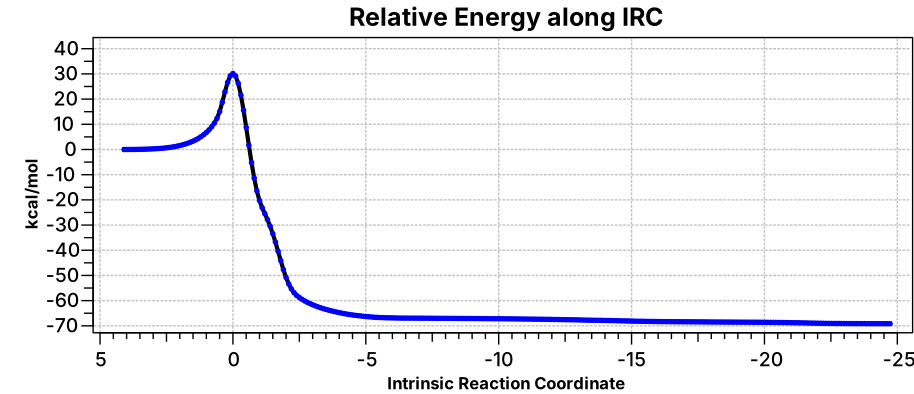
The gradient norm most clearly shows the “hidden ion-pair intermediate” at IRC = -1, and the proton transfer only occurs after this point is passed.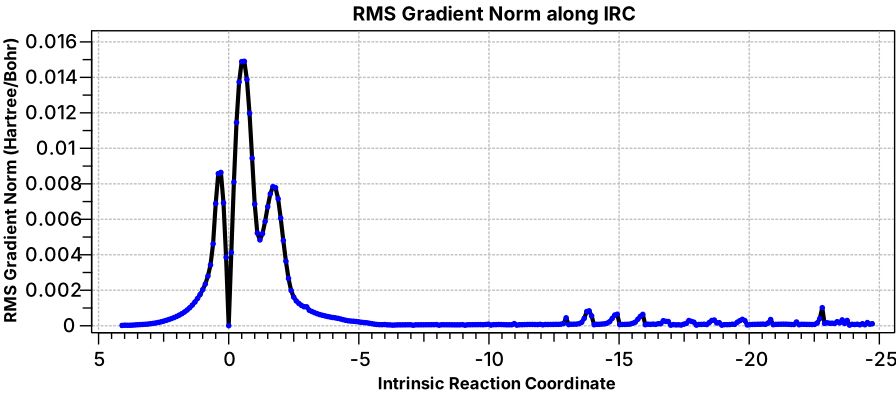
This is even more spectacularly illustrated with a plot of dipole moment along the IRC; 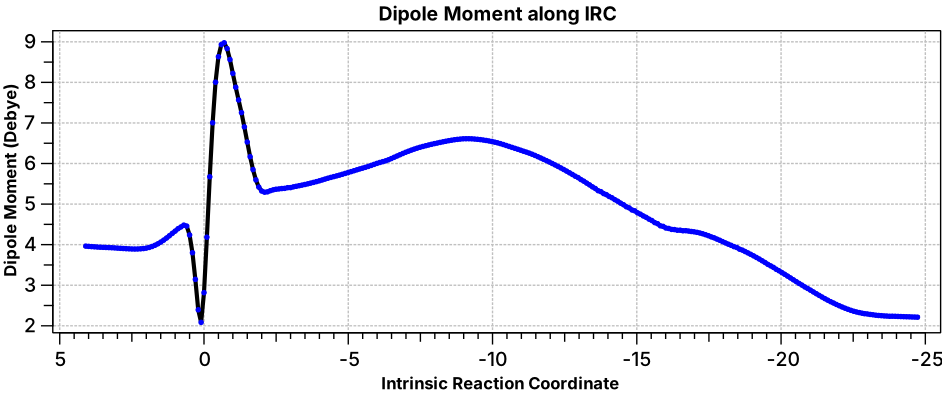
In truth, no real differences are yet revealed between the Payne reagent and the peracid. In fact, this is a real surprise, since the NH of the Payne reagent should be very much more basic than the carbonyl oxygen of the peracid. But more exploration of the potential energy surface reveals another transition state!

Stepwise mechanism. Click for 3D
 This is seen forming the two C-O bonds AFTER the proton transfer from oxygen to nitrogen. It is 4.2 kcal/mol lower than the first transition state, which corresponds to the scheme below.
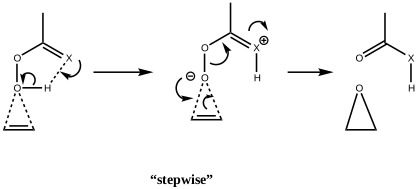
The new ion-pair shown above is 7.1 kcal/mol higher than the previous reactant, but is so much more basic than before that the overall activation energy is indeed lowered. Two distinctly separate IRCs can be constructed for this alternative, the first a pure proton transfer (not shown) and the second a pure C-O bond forming process (below). This second step is both concerted and almost purely synchronous.
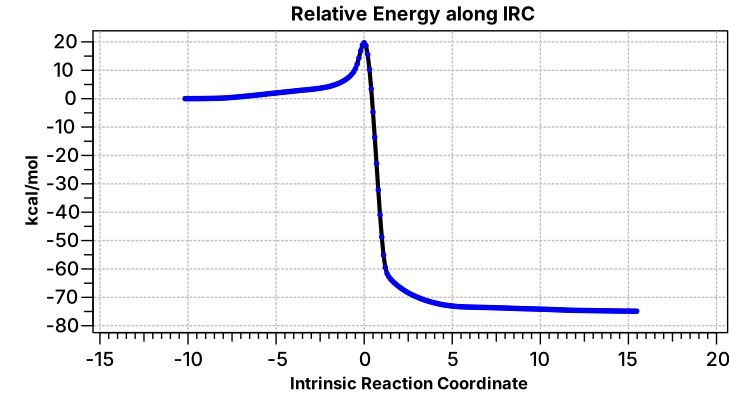
So now we see how a small change to the reactant molecules (X=O to X=NH) can induce a reaction for which two quite different mechanisms can operate, an asynchronous one albeit with a hidden intermediate and a fully stepwise one in which a quite different, but this time real, intermediate is involved. Nevertheless for both the peracid mechanism and the peroxyimine variation shown here, the proton transfer is NOT involved in the rate limiting step. So for this variation too, inverse kinetic isotope effects would be expected.
‡FAIR data for the calculations at DOI: 10.14469/hpc/4909 †Thanks Ed for pointing this out.
References
- G.B. PAYNE, P.H. DEMING, and P.H. WILLIAMS, "Reactions of Hydrogen Peroxide. VII. Alkali-Catalyzed Epoxidation and Oxidation Using a Nitrile as Co-reactant", The Journal of Organic Chemistry, vol. 26, pp. 659-663, 1961. https://doi.org/10.1021/jo01062a004
Tags:Chemical kinetics, chemical reaction, Chemistry, Deuterium, Isotope effect, Kinetic isotope effect, Natural sciences, Organic chemistry, overall activation energy, pericyclic reaction, Physical organic chemistry, Physical sciences, potential energy surface, Rearrangement reactions
Posted in Interesting chemistry | 5 Comments »
Sunday, December 17th, 2017
Alkalides are anionic alkali compounds containing e.g. sodide (Na–), kalide (K–), rubidide (Rb–) or caeside (Cs–). Around 90 examples can be found in the Cambridge structure database (see DOI: 10.14469/hpc/3453 for the search query and results). So what about the ammonium analogue, ammonide (NH4–)? A quick search of Scifinder drew a blank! So here I take a look at this intriguingly simple little molecule.‡
It can be formed by adding two electrons to the ammonium cation; NH4+ + 2e ↠ NH4–. One might be encouraged to do this since the LUMO (lowest unoccupied molecular orbital, below) of the ammonium cation has A1 symmetry and so can accept two electrons without the penalty of Jahn-Teller distortions. These electrons will apparently expand the valence electron “octet” around the nitrogen from 8 to 10; a hypervalent species then?
So what are the (calculated) properties of NH4–? The energy of the now HOMO (highest occupied molecular orbital) at the ωB97XD/Def2-TZVPPD/solvent=water level is -3.6eV, a respectable electron affinity (the additional electrons are said to be bound). More insight can be obtained from the NBO analysis, which produces localized versions of the molecular orbitals. There are four equivalent NBOs, one of which is shown below.

Each is bonding along one H-N bond, mildly anti-bonding along the other three N-H bonds, but again bonding in the H-H regions! This matches the observations made earlier that when more electrons are pumped into normally valent main group molecules, they will occupy the antibonding levels. This is accompanied by a reduction in the bond orders associated with the central atom. In this case, the N-H bond orders are reduced from 0.79 to 0.602 and the total bond index at the nitrogen is reduced from 3.16 to 2.408. The bond index at hydrogen is at first sight increased from 0.79 to a surprising 1.0003, but this is explained because the H-H bond orders are 0.1328 (three for each H), which brings the H index up to 1.0. The N-H vibration (A1 symmetric) is 3466 cm-1 for NH4+ which is reduced to 2659 for NH4–.†
So it appears that adding two electrons to the ammonium cation induces H-H bonding! More insight can be obtained from an ELF analysis of the electron density basins.

The above shows four attractors (as they are called) centered at the hydrogen nuclei, with 2.053e each (4*2.053 = 8.212e). The remaining ~2e are located in basins (green) centered at two different types of attractors. One is along the axis of each N-H bond and exo to it (0.316e) and the other sits on top of any set of three hydrogens (0.103e), 1.68e in total. The value of the ELF function at the attractor is shown above. You should realize that ELF=1.0 corresponds to perfectly localized electrons (for which the kinetic energy density is zero) and ELF=0.5 would correspond to a free-electron gas. The ELF value of e.g. 0.77 is getting close to an electron gas, and in fact corresponds to what we call an electride.

So, the nitrogen valence shell electron octet is not actually exceeded! The additional two electrons in ammonide sit beyond the nitrogen, in H-H regions. Whether or not it is a viable species for detection remains to be established, but even its computed bonding properties have proved interesting and it deserves to join the alkalide family.
Postscript
Ammonide exists in a shallow well in the potential energy surface, shown below, with the dissociation to ammonia and hydride anion being exothermic.
The intrinsic reaction coordinate shows one interesting feature at IRC ~-1.1 which corresponds to repulsion between the hydride and the lone pair of the nitrogen atom resulting in inversion of configuration during the latter stages of the IRC.


‡FAIR data collection; 10.14469/hpc/3455. †Perhaps unsurprisingly, these values are somewhat basis set dependent. Thus a ωB97XD/Def2-QZVPPD/Water calculation gives the following values: bond index at N, 1.998, N-H bond index, 0.4995, H-H bond index 0.1689, H bond index 1.0062, total Rydberg population, 0.2738, ν(A1) 2686 cm-1. The ELF basins are H, 2.039, exo-basins 0.282 and 0.141 (total 1.692). The improved basis set better describes the diffuse regions beyond the N-H bonds.
Tags:Alkalide, Ammonium, Anions, Atomic physics, Chemistry, electron gas, energy, free-electron gas, Jahn-Teller, kinetic energy density, Matter, Nitrogen, potential energy surface, search query
Posted in Hypervalency | 2 Comments »
Sunday, October 1st, 2017
I noted in my WATOC conference report a presentation describing the use of calculated reaction barriers (and derived rate constants) as mechanistic reality checks. Computations, it was claimed, have now reached a level of accuracy whereby a barrier calculated as being 6 kcal/mol too high can start ringing mechanistic alarm bells. So when I came across this article[1] in which calculated barriers for a dyotropic ring expansion observed under mild conditions in dichloromethane as solvent were used to make mechanistic inferences, I decided to explore the mechanism a bit further.

Shown in blue above is the reported outcome, a dyotropic transposition of a OMs group with a ring CH2 group. Shown in red are my additions.
The observed product is a 6,6-bicyclic ring system, for which various calculated mechanistic pathways were reported (R=H)[1].
- The first involved dyotropic-like [1,2] transposition of the neutral molecule, for which barriers >39 kcal/mol were calculated[1]. These are certainly too high to be viable and the warning bells were certainly heeded.
- These bells led the authors to the hypothesis that protonation of the OMs group would facilitate the reaction (Figure 7[1]). Their model included the proton, but did not include any counter-ion. A barrier of 5.6 kcal/mol for this system was estimated and considered “fully compatible with the mild experimental conditions“. However, as they also noted, “a singular transition structure could not be located due to the topology of the potential energy surface” and “A nudged elastic band method (was) employed to explore how the reaction proceeds“. This latter method was new to me, but in fact since I now thought the barrier might be too low; warning bells started to ring for me now.
- I thought the answer might relate to the lack of a negative counter-ion to the positive proton and so I added HCl instead of H+ (red above) to create a more physically realistic model of an acid catalyst; an isolated cation is an un-physical model, unless found in e.g. a mass spectrometer. Also included were two explicit water molecules, waters that were also included in the reported models[1], to help stabilise what was likely to be an ion-pair like system, labelled HI in the diagram above. I will explain what HI means shortly.
- I used the same ωB97XD/Def2-SVPP/SCRF=DCM method as originally reported[1]. The inclusion of explicit HCl instead of H+ now readily allowed a transition state to be located and an IRC (intrinsic reaction coordinate) could be computed (FAIR data DOI: 10.14469/hpc/3016) as a replacement for nudged elastic bands! This profile turned out to have some remarkable features, as I will discuss below.
- I also recomputed the reactant and transition state at the Def2-TZVPPD basis set level, which allows for a better description of negative ions (FAIR data DOI: 10.14469/hpc/3095,10.14469/hpc/3140) and this results in a calculated ΔG‡195 of ~16 kcal/mol, less than the original computed transition state barriers of >39 kcal/mol and closer to the barrier required for mild experimental conditions at -78°C.
- An animation of the IRC at the ωB97XD/Def2-SVPP/SCRF=DCM level (10.14469/hpc/3016) is shown below. It is a concerted formally dyotropic process, albeit very asynchronous in nature in which C-OMs bond breaking precedes C migration, which in turn precedes C-OMs bond formation.

- The energy profile is shown below.

- Between IRC -13 and IRC -6, the reaction prepares for a proton transfer from HCl to the mesityl oxygen, which occurs ~IRC -4.
- From IRC -3 to IRC +1, the profile is very flat, which probably is the cause of the original failure[1] to locate a transition state.
- The region IRC -3 to +2 is where the CH2 group starts to migrate, reaching the half way point at ~ IRC 0, the transition state.
- At IRC +4, the alkyl [1,2] migration is complete and a hidden ion-pair intermediate has formed.
- From IRC +5 to +17, this hidden ion-pair collapses to form the final non-ionic product. In the process a second proton transfer occurs back to the chloride anion (~IRC +5).
- The hidden ion-pair intermediate can be seen more clearly in this plot of the energy derivative gradient norm at IRC +4. The two proton transfers can be seen very clearly as sharp features at IRC -4 and +5.

- The zone of the hidden ion-pair intermediate can also be seen in this dipole moment plot.

- This next plot charts the changes in the length of the bond labelled (a) in the diagram above. As the CH2 migration starts to create a carbocation-mesityl anion pair, the bond connecting the two rings is now tempted to also migrate. Doing so would create a more stable tertiary carbocation centre.

- This is mirrored by the length of the bond labelled (b). As (a) lengthens, so (b) contracts. But then at IRC +4, the aspirations of both bonds are cruelly frustrated. The methane sulfonic acid has just lost its proton (which has returned to its original home, the chloride anion) and, as an anion, is now voraciously seeking a cation. It out-competes bond (b) and forms a C-O bond. The rejected bond (b) rapidly retreats.

- The knock-on effects of this battle between two electron donors can be see further afield. Here is a plot of one C-H bond length (shown above as R-C; R=H). In the expectation that bond (b) will depart, it starts to increase its hyperconjugation with the adjacent carbon, but then retreats along with bond (b).

There are lots more fun to be had with these IRC plots, but I will stop there and try to summarise. This [1,2] dyotropic transposition only has a reasonably low barrier if an ion-pair can be formed. This in turn requires a proton as catalyst, which starts off life attached to Cl, then migrates to O to enhance the ion-pair formation, and finally returns back home to the Cl. By using just a proton (without chloride) in the original study[1], in effect only the region of the reaction coordinate not involving the proton transfers was studied, i.e. IRC -4 to IRC +5. That would indeed give the misleading impression of a very small barrier for the reaction. By including a larger region of the reaction coordinate with the addition of chloride, we get a more realistic model for the reaction.
More importantly, we learn a lot more about the reaction from this better model. The most important new insights are:
- Beyond the transition state at IRC = 0, we have pathways for both the formation of a 6,6 bicyclic ring (the blue route in the scheme above) and an alternative 5,7 bicyclic ring product (red route above). The 6,6 product was isolated in 70% yield, which leaves open the possibility that some 5,7 product was formed but was not identified. It would be worth repeating the original synthesis to see if any such product could in fact be detected.
- The fact that remote substituents such as R have a response to the reaction suggests that they could be used to mediate between 6,6 and 7,5 ring formation. Perhaps some modification could be found that would lead to only 5,7 product? I will explore this computationally and report my results back presently.
- This may represent yet another example where reaction dynamics play a role in determining the product outcome. One transition state but two possible products! So, as also noted in the previous post, yet another candidate for a molecular dynamics study?
References
- H. Santalla, O.N. Faza, G. Gómez, Y. Fall, and C. Silva López, "From Hydrindane to Decalin: A Mild Transformation through a Dyotropic Ring Expansion", Organic Letters, vol. 19, pp. 3648-3651, 2017. https://doi.org/10.1021/acs.orglett.7b01621
Tags:animation, bicyclic ring product, energy derivative gradient norm, energy profile, final non-ionic product, Organic chemistry, possible products, potential energy surface, realistic model for the reaction
Posted in pericyclic, reaction mechanism | 3 Comments »
Sunday, April 9th, 2017
Both the cyclopropenium cation and the cyclopentadienide anion are well-known 4n+2-type aromatic ions, but could the two together form an ion-pair?

A search of the Cambridge structure database reveals 52 instances of the cyclopropenium cation with a variety of counter-anions, 77 cyclopentadienide anions with a variety of counter-cations and one (SOWMOG, private communication to CSD) where the two sub-structures are common. The pyridinium-cyclopropenium fragment is actually a di-cation stabilized with dimethylamino substituents, with these charges balanced by two cyclopentadienide anions stabilized with ester substituents. The stacking distance between the ion-pairs is ~3.5-3.6Å, a bit larger than normal π-π stacking distances of 3.2-3.3Å

So could a “pure” cyclopropenium cyclopentadienide ion-pair exist, and if so what would its π-π stacking distance be? A ωB97XD/Def2-TZVPPD/SCRF=water calculation (DOI: 10.14469/hpc/2442) provides one answer to this question; 2.57Å!‡ It is a true minimum in the potential energy surface (all +ve force constants) with a calculated dipole moment of only 7.57D. This species is “only” 27.1 kcal/mol higher in ΔG than the neutral hydrocarbon (DOI: 10.14469/hpc/2443), a difference which is as low as it is because of the gain in aromatic stabilization of two rings upon ion-pair formation.

A few posts back, I was considering candidates for the most polar neutral compound synthesized and I suggested a candidate with a dipole moment of ~22D, based as it happens on cyclopropenium and cyclopentadienide rings directly connected by a bond. So when this bond is removed and the two rings are allowed to stack one above the other, we now have an interesting inversion of the original challenge: what is the least-polar ionic organic compound (ionic in the sense of being an unconnected ion-pair)?
Here are some more properties of this intriguing “neutral” ion-pair.
- It has a number of low-frequency modes with correspond to the two rings moving with respect to each other (ν 216 cm-1)

- The molecular electrostatic potential illustrates the sense of polarization, with negative region (orange) residing on the 5-membered ring:

- The most stable π-type molecular orbital (below) reminds of the π-complex formed in the benzidine rearrangement and that in fact modelling this ion-pair may require a multi-reference (CASSCF) wavefunction, with the single-determinantal one used here only being a first approximation.

- A QTAIM analysis of the electron density topology shows only weak “bond” connectors between the two rings, with ρ(r) being typical of weak interactions such as hydrogen bonds.

- An ELF (electron localisation function) analysis also holds no surprises, with all the electron density basins (purple) confined to the two rings, just as expected of an ion-pair.

- I will leave one further question to a future discussion; what happens to the aromaticity and ring currents of the two individual rings as they combine to form this ion-pair? Might this property be connected to the very close separation between the two rings?
So we have a remarkably “neutral” ionic hydrocarbon to match the “ionic” neutral organic molecules previously discussed. This ion-pair may yet prove to have interesting properties, even if is unlikely to be synthesized without the addition of stabilising substituents.
‡ For example, the stacking distance in graphite is 3.35Å.
Tags:Anions, Aromatization, Cation–pi interaction, Chemistry, Cyclopentadienyl anion, Ion, Ion association, potential energy surface, Simple aromatic rings
Posted in crystal_structure_mining, Interesting chemistry | 6 Comments »
Saturday, April 1st, 2017
In a comment appended to an earlier post, I mused about the magnitude of the force constant relating to the interconversion between a classical and a non-classical structure for the norbornyl cation. Most calculations indicate the force constant for an “isolated” symmetrical cation is +ve, which means it is a true minimum and not a transition state for a [1,2] shift. The latter would have been required if the species equilibrated between two classical carbocations. I then pondered what might happen to both the magnitude and the sign of this force constant if various layers of solvation and eventually a counter-ion were to be applied to the molecule, so that a bridge of sorts between the different states of solid crystals, superacid and aqueous solutions might be built.
I augmented the model in stages. The results are summarised in the table below.
- Firstly, adding a self-consistent-reaction-field (SCRF) continuum model for water.
- Then adding to that four explicit water molecules symmetrically arranged around the four C-H groups mostly likely to be solvated via hydrogen bonds.
- The final model added a chloride anion to complete the ion pair and a further three water molecules to act as its solvation sphere. A search of the Cambridge structure database for any instances of a molecule with a designated C+ and a nucleophilic halide– with zero coordination number (a free halide anion) reveals no hits; such ion-pairs are clearly very unstable towards covalent bond formation, existing if at all only as transient species or when the counter-ion is non-nucleophilic such as R4B–.
| Calculated geometries, Def2-TZVPP/SCRF=water |
|
Model
|
Apical C-C
distance,Å
|
Basal C-C
distance,Å
|
ν [1,2]
cm-1
|
DataDOI |
Vacuum, cation
B3LYP+D3BJ |
1.888 |
1.388 |
+140 |
10.14469/hpc/2410 |
Vacuum, cation
ωB97XD |
1.830 |
1.388 |
+235 |
10.14469/hpc/2409 |
Vacuum, cation
B2PLYPD3 |
1.872 |
1.390 |
+194 |
10.14469/hpc/2238 |
SCRF, cation
ωB97XD |
1.819 |
1.387 |
+236 |
10.14469/hpc/2413 |
SCRF, cation
B2PLYPD3 |
1.858 |
1.388 |
+202 |
10.14469/hpc/2243 |
SCRF+4H2O, cation
B2PLYPD3 |
1.838 |
1.390 |
+254 |
10.14469/hpc/2246 |
SCRF+7H2O+Cl– ion pair
B3LYP+D3BJ |
1.593, 2.485 |
1.510 |
– |
10.14469/hpc/2408 |
SCRF+7H2O+Cl– ion pair
ωB97XD |
1.795, 1.817 |
1.385 |
+249 |
10.14469/hpc/2411 |
As the solvation and environment of the cationic model improves, the apical distance shortens significantly. But the crunch comes when a chloride counter-anion is added to desymmetrise this environment. Using the veritable B3LYP functional, but with an added dispersion term (D3BJ) and starting from a partially optimised ion-pair geometry, this geometry optimisation (shown animated below) rapidly quenches the ion-pair to form a covalent norbornyl chloride. It is noteworthy that the magnitude of the [1,2] vibration force constant (140 cm-1) is rather smaller using B3LYP than the other methods explored.

The next method tried was ωB97XD, which contains a built-in dispersion term (D2) and also reveals a larger force constant for the gas phase [1,2] shift (≡235 cm-1). Starting from the same initial geometry as the B3LYP calculation, optimisation of the ion-pair proceeds remarkably slowly‡ (even using the recalcfc=5 keyword to recompute the force constant matrix/search direction every five cycles to improve behaviour), suggesting that the potential energy surface is very flat indeed. The final geometry retains the ion-pair character (dipole moment 23D) but reveals distinct asymmetry in the resulting bridged structure, for which the [1,2] shift is ν 249 cm-1.

It is clear that the structure of the norbornyl ion-pair is balanced on a knife-edge. Perturbations such as change of density functional (e.g. B3LYP+D3BJ) can topple it over that edge. Weaker asymmetry can also be induced by the presence of the contact-anion and water molecules. I have selected just one solvation model, which includes seven water molecules and an explicit anion. Clearly a more statistical and dynamical approach to the number of waters and their orientation around the norbornyl ring system would sample a much larger set of models. It may be that some of them do again topple the symmetric bridge structure off its delicate perch whilst others retain it. Perhaps this is why the results from the enormous range of solvolysis mechanisms are so difficult to always reconcile. A crystal structure may also be a relatively large perturbation to the solution structure of this species!
The title of one of the last articles published (posthumously) with Paul Schleyer as a co-author[1] is “Norbornyl Cation Isomers Still Fascinate“. True indeed.
‡This renders refinement using the B2PLYPD3 double-hybrid method[2] an exceptionally slow process, since computing the force constant matrix using this method is very computationally intensive at the selected triple-ζ level.
References
- P.V.R. Schleyer, V.V. Mainz, and E.T. Strom, "Norbornyl Cation Isomers Still Fascinate", ACS Symposium Series, pp. 139-168, 2015. https://doi.org/10.1021/bk-2015-1209.ch007
- L. Goerigk, and S. Grimme, "Efficient and Accurate Double-Hybrid-Meta-GGA Density Functionals—Evaluation with the Extended GMTKN30 Database for General Main Group Thermochemistry, Kinetics, and Noncovalent Interactions", Journal of Chemical Theory and Computation, vol. 7, pp. 291-309, 2010. https://doi.org/10.1021/ct100466k
Tags:Carbocations, chemical bonding, Chemistry, constant matrix/search direction, continuum model for water, gas phase, Paul Schleyer, Physical organic chemistry, potential energy surface, Reactive intermediates, superacid and aqueous solutions
Posted in crystal_structure_mining, Interesting chemistry, reaction mechanism | 8 Comments »
Monday, October 31st, 2016
Is asking a question such as “what is the smallest angle subtended at a chain of three connected 4-coordinate carbon atoms” just seeking another chemical record, or could it unearth interesting chemistry?
A simple search of the Cambridge structure database for a chain of three carbons, each bearing four substituents (sp3 hybridized in normal paralance) reveals the following distribution:

The value 60° is of course a three-membered cyclopropane ring. The tail of the distribution is very small, and there are a few small outliers with values of < 54°. Most of the time such outliers are in fact simple errors, but here we see that they are in fact semibullvalenes, of the type shown below, with the small angle subtended at the central of the three carbon atoms coloured in red.

In this diagram I have added my own semantic interpretation of what is going on. Let me itemise this:
- These molecules can undergo very rapid [3,3] sigmatropic rearrangements, shifting a σ-bond away from the 3-ring to create another such ring.
- This process elongates one of the C-C bonds and of neccessity this reduces the angle at the associated carbon.
- I have drawn two types of arrow connecting the two structures. The first is an equilibrium arrow, which implies a transition state connecting the two species. This transition state will have equal bond lengths for the forming/breaking C-C bond, and the transition state will have a rate constant which is slower than the time taken for one molecular vibration (~10-15s)
- It is also possible however that the second arrow is the correct one, and this implies an electronic resonance rather than a nuclear motion. This would have a rate constant comensurate with electron dynamics (~10-18 s) rather than nuclear vibrations.
What does x-ray crystallography measure? Well the diffraction of photons by electrons. In order to obtain a diffraction pattern, enough photons have to be diffracted to be measured, and even with most modern instruments this still takes minutes or hours. During this period, all the various nuclear positions encountered as a result of vibrations or equilibria are sampled. So if the rate constant for the [3,3] sigmatropic rearrangement is fast, x-ray diffraction will measure the average of the two sets of nuclear positions, which can be distinguished only with some difficulty (if at all) from the structure implied instead by electronic resonance.
If the equilibrium arrow applies, then the small angles of <54° are merely the average of the normal value for a 3-membered ring and a smaller value for a structure where one of the C-C bonds has been removed. In my opening sentence, I noted that the three carbon carbon atoms had to be connected in a chain. This is no longer true; the goalposts have been moved (a lot)!
If its an electron resonance, then the three carbon atoms are still connected, albeit one of the two C-C bonds is no longer a single bond but rather weaker and hence longer. The goalposts have merely been slightly shifted!
A calculation (B3LYP/Def2-TZVPP+D3 dispersion, doi: 10.14469/hpc/1850, [1]) of the structure KUZFUE [2] shows the C2-symmetric species shown below, with an elongated C-C bond and hence a reduced C-C-C angle, as being a true minimum (a resonance) rather than a transition state (an equilibrium). The vibration which shortens one C-C bond and lengthens the other has the real calculated wavenumber 244 cm-1.‡ But the boundary between the two possibilities (often referred to as the boundary between a single and a double minimum in a potential energy surface) is notoriously difficult to capture using calculations.

How could experiment definitively settle the issue? Well, the SLAC beam is a unique instrument. Its source of X-rays is so intense that you can get an analysable diffraction pattern from a crystal on a timescale so short that during this period no nuclear motions occur (not even vibrations). Those nuclear positions capture the true equilibrium positions of the atoms in the molecule. Now, how does one get beam time on the SLAC?
‡ Click on the image above to see an animation of this normal mode. If you are running the macOS Safari browser, make sure Preferences/Security/Plug-in settings/Java has the site ch.ic.ac.uk or ch.imperial.ac.uk set to on. If you do not do this, the somewhat unhelpful message You do not have Java applets enabled in your web browser, or your browser is blocking this applet. will appear. Note also that new system installations might tend to switch these settings to off.
References
- H. Rzepa, "CAZFUE", 2016. https://doi.org/10.14469/hpc/1850
- L.M. Jackman, A. Benesi, A. Mayer, H. Quast, E.M. Peters, K. Peters, and H.G. Von Schnering, "The Cope rearrangement of 1,5-dimethylsemibullvalene-2,6- and 3,7-dicarbonitriles in the solid state", Journal of the American Chemical Society, vol. 111, pp. 1512-1513, 1989. https://doi.org/10.1021/ja00186a064
Tags:animation, Bicyclic molecule, chemical record, Chemistry, City: Cambridge, Cycloalkane, Cyclopropanes, Java, Molecular geometry, Organic chemistry, potential energy surface, Safari, Web browser, X-ray
Posted in crystal_structure_mining, reaction mechanism | 7 Comments »
Friday, April 10th, 2015
Previously on this blog: modelling the reduction of cinnamaldehyde using one molecule of lithal shows easy reduction of the carbonyl but a high barrier at the next stage, the reduction of the double bond. Here is a quantum energetic exploration of what might happen when a second LAH is added to the brew (the usual ωB97XD/6-311+G(d,p)/SCRF=diethyl ether).

In a comment at the end of the first post on this theme, I had noted some crystal structures containing in effect HxAl.Li(OR)y units (x=3,4; y=0-3), noting the variety of structural motifs. The current exploration does not even attempt to cover this range of possibilities, but it is informed by the types of weak interaction that these structures reveal. I will nevertheless accept that whatever pathway is revealed here is likely to represent an energetic upper bound and recognise that lower energy pathways may well exist but are yet to be explored.
- At the I12 stage, a second AlH4–.Li(OMe)2 is added and hydride transfer occurs antiperiplanar across the C=C bond (TS34-1). The computed free energy barrier ΔG298† is ~24 kcal/mol. The magnitude of this barrier corresponds to a relatively slow reaction occurring around room temperatures or slightly higher.

TS. Click for 3D


NCI Isosurface (green regions are dispersion stabilizing) Click for 3D
- A transient shallow intermediate I34-1 is formed in which the benzylic anion is stabilised by an adjacent solvated Li centre. The energy of this species (Table below) needs some explanation.‡ Can its free energy really be 1.5 kcal/mol higher than that of the preceding transition state? Yes, because its entropy is lower! The transition state is located on a total energy surface, which does not include thermal and entropic corrections; these are always applied AFTER the stationary points are located. If one inspects these total energies, I34-1 emerges as 1.2 kcal/mol lower than the preceding transition state. This sort of result serves to remind us of the dynamic nature of a potential energy surface, and that static energies may on occasion lead to odd results. Its geometry is shown below, and this too has an interesting feature. The C-H bond just created from the LAH is antiperiplanar to the benzylic anion (locked anti by the Li) and the resulting stereoelectronic effect reduces its C-H calculated[1] stretching wavenumber from the normal value of ~3100 cm-1 to 2231 cm-1, a remarkable reduction.

I34-1. Click for 3D
- The C-O-AlH3.Li(OMe)2 ligand now needs to rotate to I34-2 so that metal exchange on the benzylic carbon can occur, with Al displacing Li at that position. As with I34-1, the free energy of this species is actually slightly higher than that of TS34-1. Two AlH3 groups now exist at this stage (each of them formed by hydride donation as part of the reduction process, see below). A hydride transfer metathesis between them (H2Al-H-Al3 is actually a stable bridged species) will generate an AlH2 as part of the 5-ring aluminate ester in P34 and regenerate a molecule of LAH. Transition states for these processes (i.e. TS34-2) proved difficult to locate;† it may be that the ligand rotation and the hydride metathesis are part of the same concerted process but that is not proven yet.

I34-2. Click for 3D
- The final product prior to hydrolysis is appropriately exoenergic.
- I would also remark that many aspects of this reaction remain unexplored. For example, AlH4 can deliver up to four hydrides, becoming progressively substituted as Al(OR)nHy and in the process loosing Al-H…Li weak interactions. What influence this has on the barriers remains unknown.
In summary, the first step in the reduction of cinnamaldehyde to cinnamyl alcohol requires just one molecule of “LiAlH4” as reductant and has a very low barrier to reaction. To construct a reasonable model to account for the slower further reduction of the C=C bond requires adding a further LiAlH4, the key feature being the availability of a lithium centre to stabilise out the forming benzylic carbanion. No doubt even better models might include the effects of adding e.g. a third molecule of LAH, and a much more extensive exploration of the various conformational options. But I think the present model might be good enough to augment the apparently relatively limited mechanistic speculations found in text books on the topic.
†You sometimes see this phrase in articles reporting transition state location. What is means it that I tried a half-dozen what I thought were reasonable possibilities, and none of them satisfactorily converged. This semi-random exploration of the potential energy surface revealed a very flat energy potential, with lots of conformational possibilities. At this point, you have to decide whether it is worth the time to continue hunting.
References
- H.S. Rzepa, and H.S. Rzepa, "C 17 H 40 Al 2 Li 2 O 5", 2015. https://doi.org/10.14469/ch/191178
- H.S. Rzepa, and H.S. Rzepa, "C 17 H 40 Al 2 Li 2 O 5", 2015. https://doi.org/10.14469/ch/191172
- H.S. Rzepa, and H.S. Rzepa, "C 17 H 40 Al 2 Li 2 O 5", 2015. https://doi.org/10.14469/ch/191177
- H.S. Rzepa, and H.S. Rzepa, "C 17 H 40 Al 2 Li 2 O 5", 2015. https://doi.org/10.14469/ch/191181
- H.S. Rzepa, and H.S. Rzepa, "C 17 H 40 Al 2 Li 2 O 5", 2015. https://doi.org/10.14469/ch/191171
Tags:computed free energy barrier, energy, energy surface, final product, flat energy potential, free energy, lower energy pathways, metal exchange, pence, potential energy surface, reduction, Yes
Posted in reaction mechanism | No Comments »
Thursday, October 9th, 2014
This second report highlights two “themes”, or common ideas that seem to emerge spontaneously from diversely different talks. Most conferences do have them.
The first is “embedding“, which in this context means treating different parts of a probably complex molecular system at different levels of theory. Thus Emily Carter in her plenary described how a periodic crystal treated by density functional theory, or DFT could have an embedded component in which the electronic structures are described instead by multi-reference correlated wave functions (CAS-PT2). She illustrated this by discussing what happens when a triplet state oxygen molecule approaches the surface of an aluminium crystal, and (mostly) dissociates into surface bound oxygen atoms with Al-O bonds. The spin state of the oxygen changes smoothly to an overall singlet, with a rapid transfer of charge at the saddle point in the potential energy surface. The numbered of embedded Al atoms had to be at least a cluster of 14 to reproduce the observed reaction barriers (DFT on its own gets a zero barrier!). This sort of study is important in understanding the details of what is happening in metal surface catalysis.
Arieh Warshel then addressed the same theme with his own talk entitled Multiscale Modeling of Complex Biological Systems and Processes. Here you got quantum embedding in a mechanical force field description of some very large molecules. This was a broad brush talk, but what I did get out of it was the concept of asymmetry in molecular systems. Whereas an organic chemist thinks of asymmetry as often relating to just a single chiral carbon centre in a molecule, nature operates on vaster scales. Thus the enzyme ATPase has a molecular axle or spindle, which rotates to assemble the phosphate groups one at a time. This spindle rotates asymmetrically, i.e. always in a specific direction, and Warshel attempts to describe the origins of this rotational asymmetry at a molecular level. Well, this is Nobel prize winning stuff! He followed this up with filaments that “walk” along surfaces in one (asymmetric) direction, first lifting up one point of attachment, and then re-attaching at a different point such that the filament develops a clear sense of direction in its walk. This of course is all done with molecular dynamics, and (I think) has its origins in subtle electrostatics.
Stefan Grimme in his plenary also described dynamic processes, this time those that happen in a mass spectrometer when a molecule is ionised by electron impact. Removal of an electron produces a complex set of ionised states, in which many different single bonds may be weakened due to this ionisation. He developed simplified DFT (sDFT) methods that can be applied to molecular dynamics, and assembled a “black box” which predicts the expected fragmentations over a time scale of a ps or so. By sampling the trajectories, he estimated the intensities of the various positively charged species and overlaid this on the observed EI-MS. The agreement was often spectacular. A particularly interesting example was the fragmentation of taxol. Here, no molecular ion is found, only much lighter ions. The molecular dynamics shows that rather than consecutive single-bond fragmentations, you instead get multiple bonds more or less all fragmenting at the same time. Tougher was to reproduce rearrangements, such as the McLafferty. Here, the semi-empirical method OM2 was more successful. His work means you can just “dial-a-mass-spectrum” and he speculates whether getting a good fit with the observed spectrum could tell you subtle aspects of the gas-phase molecular species, what its tautomeric state might be or perhaps even its conformation. He also described large-scale (800+) atom simulations of electronic circular dichroism (ECD) spectra of organometallic systems. Octahedral complexes can be prepared in chiral form, and this theoretical ECD treatment allows determination of absolute configuration of these often non-crystalline systems. Here you often need to compute 1000 or more electronic states, and if you have ever tried such ECD simulations, you will know that this is a lot of states!
We had been expecting Stefan to talk about dispersion effects in molecules, another emerging theme. Instead lots of other people mentioned them. In my talk I showed how including a D3-dispersion correction could dramatically change the predicted enantioselectivity of a chiral aldol condensation.[1]
The above observations of course cannot be in the least representative; typical of a modern conference there are five parallel sessions and 400+ posters, and so it represents a highly personal and selective snapshot.
References
Tags:Complex Biological Systems, condensation, gas-phase molecular species, metal surface catalysis, molecular systems, non-crystalline systems, organic chemist, organometallic systems, potential energy surface, representative, Stefan Grimme, Thus Emily Carter
Posted in Interesting chemistry, WATOC reports | 1 Comment »
Sunday, February 16th, 2014
The potential energy surface for a molecule tells us about how it might react. These surfaces have been charted for thousands of reactions using quantum mechanics, and their basic features are thought to be well understood. Coming across an entirely new feature is rare. So what do you make of the following?
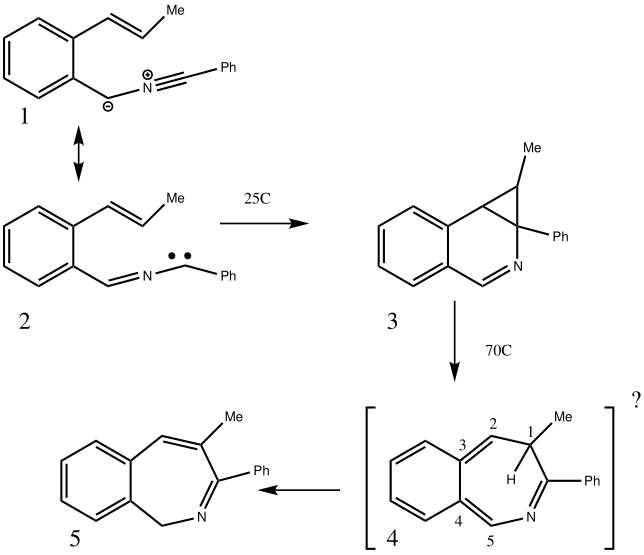
The reaction is shown above[1], and on the face of it, it looks like a normal pericyclic cascade. The standard mechanism inferred from simple mechanistic rules is to rewrite the ylid 1 as a carbene 2. This then undergoes a carbene insertion into an alkene to give 3, followed by an electrocyclic ring opening to give a presumed intermediate 4, and finally a [1,5] hydrogen migration ending in 5. Fairly uncontroversial stuff, you might think. The criterion is that it looks reasonable (each step has precedent).
The above reaction was discovered in 1992, before such simple mechanistic speculation could really be followed up by a good quality quantum mechanical investigation of how reasonable it really was. Well, this is 2014, and one need really spend no more than a few hours finding out. Before I present the results, it is worth reminding of the basic features of a potential energy surface:
- Reactant (intermediates) and products are all minima in such a surface. They are characterised by having 3N-6 (N= number of atoms) +ve force constants, and all the first derivatives (of geometric variables with respect to energy) are zero, as they also are for the next three types.
- A pair of minima can be connected by a transition state (a first order saddle point), for which 3N-7 of the force constants are +ve and precisely one is -ve.
- Less useful for mechanism are the 2nd order saddle points, which often connect a pair of transition states, and these have 3N-8 +ve force constants and 2 -ve ones. They are not kinetically important.
- Rarely, one finds two first order saddle points connected by a so-called valley ridge, and so one transition state can go downhill to another, and thence bifurcate into two possible products via a valley-ridge inflexion point.
- These four basic features have recently been augmented by so-called hidden intermediates. These emerge as a feature on the intrinsic reaction coordinate (IRC), being a frustrated minimum along that pathway. Frustrated, because the first derivatives never quite become zero (and the energy never quite a minimum) and so it does not qualify for any of the above definitions. Such points are increasingly being used to infer how small design changes to the reacting molecule might either fully stabilize such an intermediate, or perhaps remove it.
What we are about to discover relates to category 5, but with a new twist. Let us start with the IRC for 2 → 3[2] computed as ωB97XD/6-311G(d,p)/methanol.

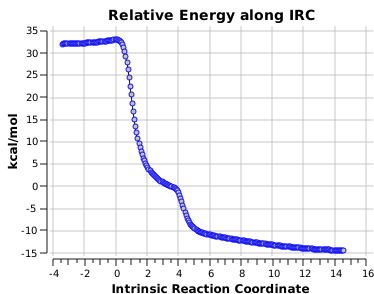
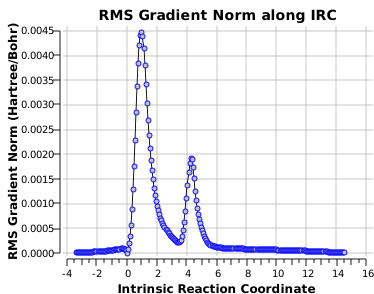
- The first noteworthy feature is that the activation energy for this reaction is tiny (~ 2 kcal/mol). The reactant 1 is in fact generated in situ from the imidoyl chloride and potassium t-butoxide; in effect it reacts as soon as it is formed!
- After this early transition state has passed, the reaction appears to pause at IRC ~3.6. This is a nice example of a hidden intermediate. You can see from the gradient plot of the IRC that the derivatives became small at this point, but do not quite become zero. I have set the relative energy to be zero at this point, for a reason which will soon become apparent. And then the reaction picks up again.
- In the IRC region 8-14, we get a conformational phenomenon, the slow rotation of the phenyl group.
So, the scheme at the top is not correct! Species 4 is reached BEFORE species 3, and 4 is a hidden rather than a real intermediate.
So to the next reaction, which is the [1,5] hydrogen shift.[3] This in fact starts where the last left off, at 3, and ends at 5. But again, 4 crops up as a hidden intermediate! It is common to BOTH reactions.‡ Two completely different types of reaction share 4 as a common hidden intermediate. Think of it as two flight paths intersecting at a common point in 3D space.

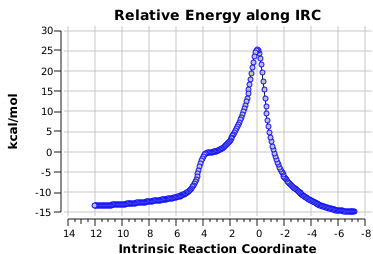
- This reaction can be thought of as a concerted pericyclic cascade. By this I mean two consecutive pericyclic processes, separated not so much by a real intermediate as a hidden one (4). A conjoined pericyclic if you will.
- A reality check. The original report says that the reaction of 2 → 3 occurs at 25°C, and 3 is fully characterised by NMR. The next phase, 3 → 5 only occurs at 70°C. The rate at which 2 → 3 forms must be determined by the rate of formation of 1/2 and not by the pathway shown above. Then the route for 3 → 5 crosses the route taken by 2 → 3 and proceeds on upwards to the transition state for [1,5] H transfer. One might argue that when the 3 → 5 journey has reached 4 it has two options; to continue on to 5, or to go on to 2. Another question might relate to the original journey of 2 → 3. When it reaches point 4, could it then take a sharp turn and instead head for 5 thus by-passing 3 entirely? Well no, because at this stage 3 is entirely downhill, where 5 needs some more climbing doing.
- The reality check has just one fly in the ointment; the barrier to the [1,5] shift is ~40 kcal/mol, about 15 kcal/mol too high to occur at 70C. It might be that instead we have a base-catalysed bimolecular deprotonation/reprotonation as a competing pathway.
Nonetheless, it would be interesting to act as an observer and stand at crossroads 4 watching molecules go by. Some are coming from 2 and headed for 3, some are coming from the other direction heading for 5. Each set has a sense of direction of where they are headed (and memory of where they have come from). You might spot where I am going with this; molecular dynamics! But 4 certainly is an interesting feature on the potential energy surface of this system, and not one I have ever seen before (indeed, has anyone seen similar?).
‡ Because 4 is not a stationary point in the potential surface (its gradients are not zero), it can only be characterised in the context of the IRC pathway. So its two manifestations in the two different IRCs are very similar, but are not identical.
References
- K.R. Motion, I.R. Robertson, J.T. Sharp, and M.D. Walkinshaw, "Reactions of diene-conjugated 1,3-dipolar intermediates: the formation of cyclopropa[c]isoquinolines from benzonitrile o-alkenylbenzyl ylides and their rearrangements to benzazepines", Journal of the Chemical Society, Perkin Transactions 1, pp. 1709, 1992. https://doi.org/10.1039/p19920001709
- H.S. Rzepa, "Gaussian Job Archive for C17H15N", 2014. https://doi.org/10.6084/m9.figshare.936551
- H.S. Rzepa, "Gaussian Job Archive for C17H15N", 2014. https://doi.org/10.6084/m9.figshare.936657
Tags:potential energy surface
Posted in pericyclic, reaction mechanism | 11 Comments »


