Posts Tagged ‘gas phase’

Organocatalytic cyclopropanation of an enal: (computational) assignment of absolute configurations.

Saturday, September 1st, 2018

I am exploring the fascinating diverse facets of a recently published laboratory experiment for undergraduate students.[1] Previously I looked at a possible mechanistic route for the reaction between an enal (a conjugated aldehyde-alkene) and benzyl chloride catalysed by base and a chiral amine, followed by the use of NMR coupling constants to assign relative stereochemistries. Here I take a look at some chiroptical techniques which can be used to assign absolute stereochemistries (configurations).

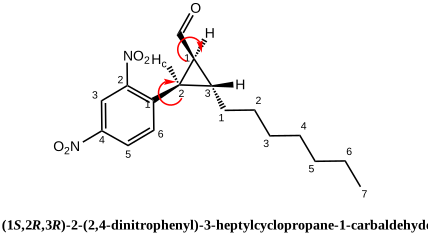
I will focus on the compound 4a, the major stereochemical product of this student laboratory reaction, with the stereochemistry as represented in e.g. the abstract of the main article[1] and shown below with added CIP (Cahn-Ingold-Prelog) notation as (1S,2R,3R);

Its enantiomer (not shown in the article) is of course;
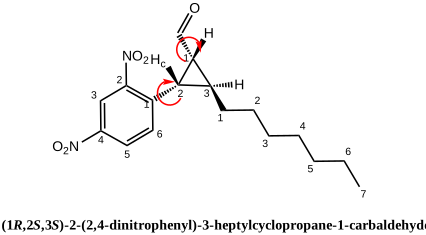
In the article supporting information[1]), the major diasteromer of 4a deriving from use of the S stereoisomer of the prolinol catalyst is reported as having an optical rotation (ORP) [α]D25 of -62.4°, p6 or -58.1°, p5), but the stereo-labels are not added there. On  p1 (“based on a student report”) 4a was however labelled as (1R,2S,3S) and the chirality (S) of the catalyst used was also noted in the adjacent experimental procedure. One might then reasonably match (1R,2S,3S)-4a to the S-catalyst and hence (1S,2R,3R)-4a to the R-catalyst.  However, in a laboratory environment where both S and R catalysts are in circulation, it is always useful to have procedures available for independent checks.

There are two methods of assigning absolute chirality, crystallography and chiroptical spectroscopy. The former does require crystalline samples; the latter can use solutions. To cut to the chase, the former method was used for a related compound where the n-heptyl group above is replaced by a p-chlorophenyl substituent (perhaps because the latter imparts suitable crystallinity). On p S123 of the SI of an earlier article[2] the assignment for the p-chlorophenyl derivative was as (1R,2S,3S)-4a for S-catalyst (see DOI: 10.5517/ccdc.csd.cc1mcqg5 OZAXEU). But this procedure is not entirely foolproof; the stereochemistry is decided by interactions between often bulky substituents at the transition state and it might be that here the p-chlorophenyl derivative has different properties from n-heptyl. Moreover bulk solutions may be different in their composition from single crystals. So it is useful to obtain independent proof.

An absolute assignment procedure based on chiroptical methods was first famously used by Kirkwood in 1951 (the Fischer convention is confirmed as a structurally correct representation of absolute configuration).[3] Such calculations need to take into account e.g. rotational conformers about the two bonds labelled in red above. In the previous post, I had noted variation of up to 2Hz in the calculated 3JHH coupling constants as a result of this mobility. This variation is probably too small to really influence any relative stereochemical interpretations, but is the same true for chiroptical assignments?

In Table 1 we can see whether this is still true for the predicted optical rotation of compound 4a, using two different functionals for the calculation (B3LYP and M062X respectively). The results rather surprised me; a simple bond rotation of an aryl or carbonyl group can invert the sign of the rotation. Clearly the observed optical rotation of -62.4° arises from a suitable combination of different Boltzmann populations of the individual bond rotamers, but to combine these accurately you would need to know the solution populations themselves very accurately and that is quite a challenge. So at this stage, we do not really have totally convincing independent evidence of whether the observed negative optical rotation corresponds to (1S,2R,3R)-4a or to its enantiomer (1R,2S,3S).

Table 1. Calculated Optical rotations for (1S,2R,3R)-4a. 

FAIR Data DOI: 10.14469/hpc/4678

Conformer

ORP [α]D, B3LYP+GD3BJ/Def2-TZVPP/SCRF=chloroform

ORP [α]D, M062X/Def2-TZVPP/SCRF=chloroform

4 +376 +238
3 -335 -301
2 -247 -223
1 +710 +522

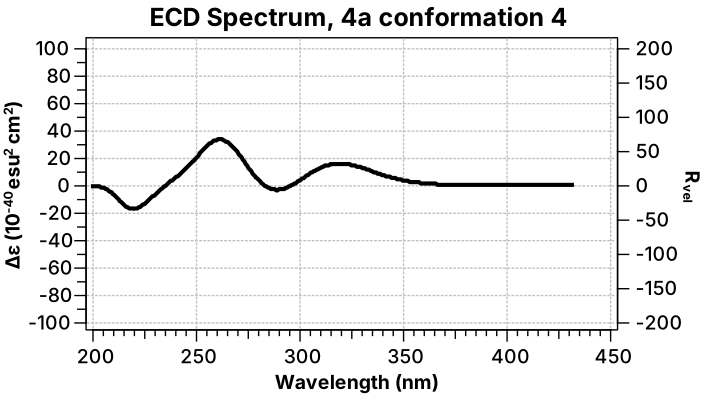
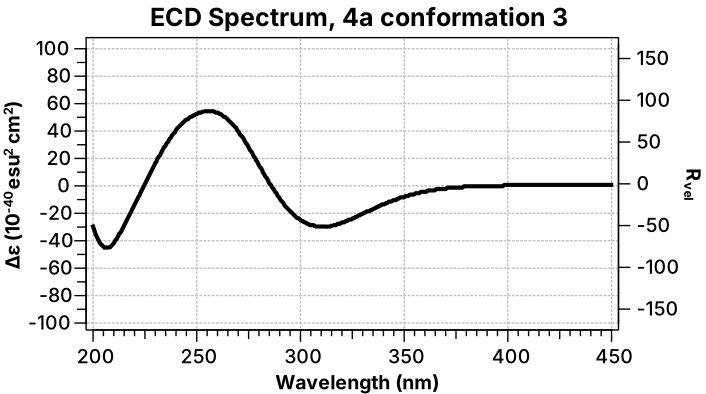
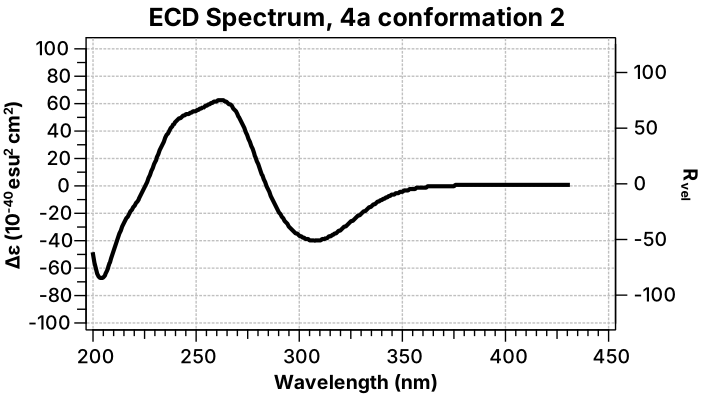
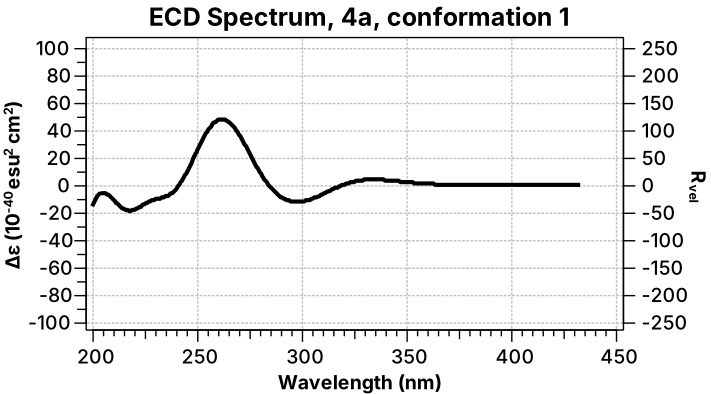
Next, another chiroptical technique, electronic circular dichroism, or ECD. Here, the sign of the difference in absorption of polarized light (Δε), and known at the Cotton effect, characterises the specific enantiomer. The experimental Cotton effect for compound 4a obtained from S-catalyst (known as 3d in the SI, p S142[2]) can be simply summarised as +ve@315nm and -ve@275nm. Comparison with calculated spectra (Figure S17, p S146-7[2])  was performed using a Boltzmann-averaging (albeit based on enthalpies rather than the formally correct free energies), for three significant populations and this procedure matched to (1R,2S,3S).  Since the reported calculations were apparently for gas phase (and replacing n-heptyl with methyl) here I have repeated them in the actual solvent used (acetonitrile) and with the heptyl present. Although the ECD responses can still be severely dependent on the conformation, three of the spectra qualitatively agree that the responses at ~300nm and 260 nm are respectively -ve and +ve. This confirms that (1S,2R,3R)-4a is the wrong enantiomer for S-catalyst and that the correct assignment is therefore (1R,2S,3S), as was indeed reported.[2]

Table 2. Calculated electronic circular dichroism for

 (1S,2R,3R)-4a. FAIR Data DOI: 10.14469/hpc/4678

Conformer

ECD calculation, ωB97XD/Def2-TZVPP

4
3
2
1

It is still true that the overall the fit between chiroptical experiment and theory can be sensitive to the Boltzmann population, as obtained from e.g. ΔΔG = -RT ln [1]/[2]), where 1 and 2 are two different conformers. ΔΔG is a difficult energy difference to compute accurately. Here is a suggested exercise in the statistics of error propagation. How does an error in ΔΔG propagate to the ratio of concentrations of two conformers [1]/[2]? Or, how accurately must ΔΔG be calculated in order to predict conformer populations to say better than 5%.

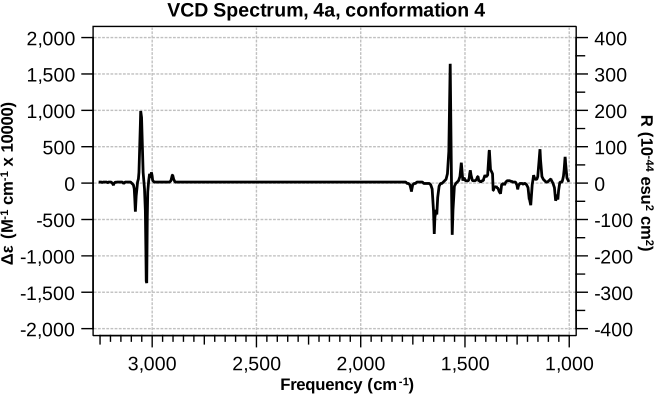
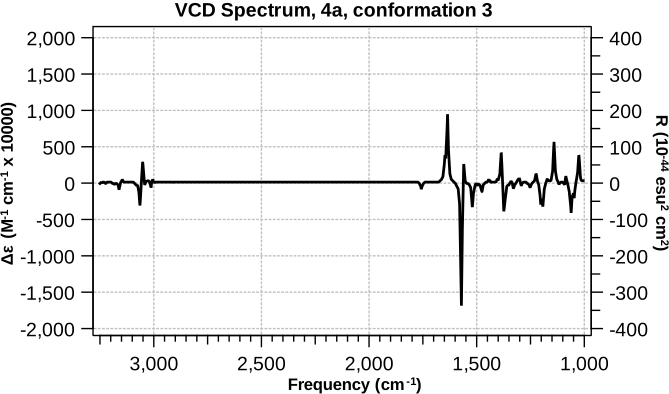
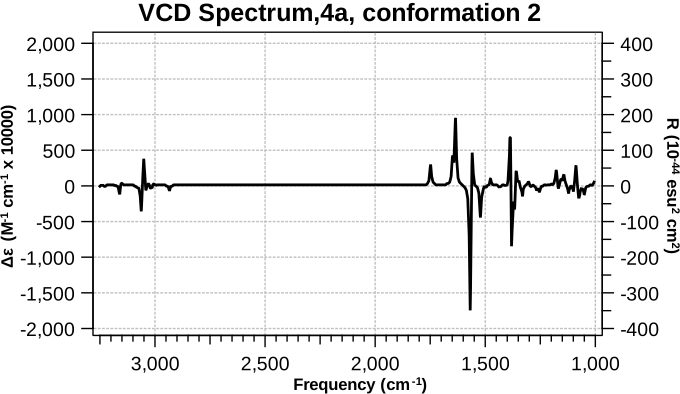
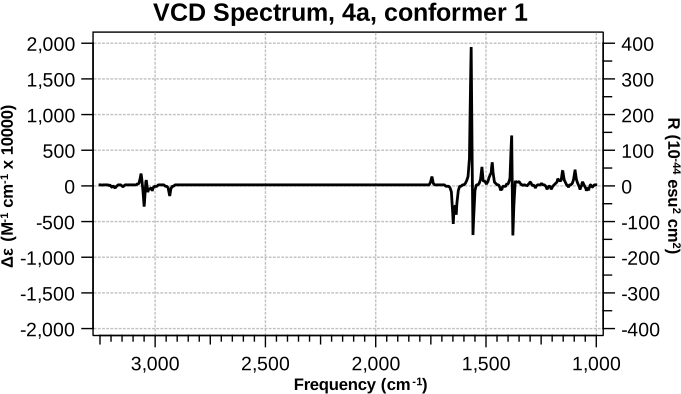
One more go at chiroptics, this time Vibrational Circular Dichroism, or VCD. The nature of the chromophore is different, but the principle is the same as ECD. I have deliberately truncated the spectrum to cut off all vibrations below 1000 cm-1 (these being the modes associated with group rotations) but to no avail, the four conformations all still look too different to avoid doing a Boltzmann averaging.

Table 3. Calculated VCD spectra for (1S,2R,3R)-4a. 

Conformer Spectrum
4
3
2
1

A modern VCD instrument does have one trick up its sleeve for coping with the conformer problem. The sample (as a thin-film) can be annealed down to very low temperatures before the spectrum is recorded. This effectively removes all higher energy forms, leaving just the most stable conformation as the only species present. However, that is an expensive experiment (and instrument!) to use.

There are perhaps some 2 million scalemic molecules (substances where one chiral form is in excess over the mirror image) for which chiroptical properties have been reported, but probably <50,000 crystal structures where absolute configurations have been assigned. Thus the vast majority of absolute configuration assignments have been done either chiroptically or by synthetic correlations (chemical transformations from molecules of known absolute configuration, with the assumption that you know how each transformation affects the chiral centres present). Given some of the difficulties and challenges noted above, it is tempting to conclude that a significant proportion of those 2 million molecules may have been mis-assigned (I once estimated up to 20%). However, we may conclude that the molecules discussed here are safely assigned correctly! 


No CIP-stereolabels appear in the article itself.[1] Perhaps this assignment is omitted in order to provide a student exercise? There are many errors in stereochemical assignments in the literature. A good many of them may be the result of simple sample mis-labelling.[4] The caption to Figure S17 states All the simulations are for the 1R,2R,3S absolute configuration. This is probably an error and should read 1R,2S,3SA correction of ~+15nm is sometimes applied to these values, but not done here.


References

  1. M. Meazza, A. Kowalczuk, S. Watkins, S. Holland, T.A. Logothetis, and R. Rios, "Organocatalytic Cyclopropanation of (<i>E</i>)-Dec-2-enal: Synthesis, Spectral Analysis and Mechanistic Understanding", Journal of Chemical Education, vol. 95, pp. 1832-1839, 2018. https://doi.org/10.1021/acs.jchemed.7b00566
  2. M. Meazza, M. Ashe, H.Y. Shin, H.S. Yang, A. Mazzanti, J.W. Yang, and R. Rios, "Enantioselective Organocatalytic Cyclopropanation of Enals Using Benzyl Chlorides", The Journal of Organic Chemistry, vol. 81, pp. 3488-3500, 2016. https://doi.org/10.1021/acs.joc.5b02801
  3. W.W. Wood, W. Fickett, and J.G. Kirkwood, "The Absolute Configuration of Optically Active Molecules", The Journal of Chemical Physics, vol. 20, pp. 561-568, 1952. https://doi.org/10.1063/1.1700491
  4. H.S. Rzepa, "The Chiro-optical Properties of a Lemniscular Octaphyrin", Organic Letters, vol. 11, 2009. https://doi.org/10.1021/ol901172g

One more WATOC 2017 Report.

Thursday, August 31st, 2017

Conferences can be intense, and this one is no exception. After five days, saturation is in danger of setting in. But before it does, I include two more (very) brief things I have learnt.

  1. Sason Shaik introduced a theme he first investigated years ago, but for which no experiment had been devised for verification. He revived his theme when a journalist contacted him last year to report exactly such an observation, which I now recount. A Diels-Alder adduct was captured between a flat layer of gold atoms and the tip of a scanning-tunneling microscope. With the molecule exactly oriented, a strong external electric field (OEEF) was applied, in both senses of polarisation. This is exactly the model studied by Sason, who had argued thus. A Diels-Alder reaction can be modelled using VB theory as the avoided crossing of a covalent ground state with ionic excited states at the transition state. Depending on the polarisation of an applied external electric field and the orientation of the molecule, one of these ionic states can stabilized or destabilised by about 8 kcal/mol, thus either stabilising or destabilising the transition state itself by mixing with the covalent state.

    And so it was that the oriented molecule caught between a gold layer and an STM probe could be persuaded to undergo a retro-Diels-Alder far more easily than it would thermally. The technique can even be tuned to selecting between endo and exo isomers. Sason held out the prospect that the toolbox of the synthetic chemist, which already includes Δ, hν and ? (ultrasound) as reagents, might be extended using OEEF. He called this a smart reagent since it can be tuned to the reaction required (as of course can light). At the moment this technique can only be applied to one molecule at a time, but it might be just a matter of designing a suitable apparatus!

  2. Pavel Hobza talked about non-covalent interactions, an occasional theme on this blog. Amongst many interesting observations was that the DNA helix is not stabilised as such by the hydrogen bonding between the base pairs but by the π-π stacking between them. One of these examples caught my eye, the known weak “hydrogen bonded” weak complex between benzene and chloroform in the gas phase. The C-H hydrogen points directly to the ring centroid and the C-H vibrational wavenumber is blue shifted by 12 cm-1. At the time this (experimental) observation caused consternation, since all known hydrogen bonds (both strong and weak) were routinely characterised by the magnitude of their red shift (up to ~100 cm-1). In fact, as Pavel showed, this interaction is less electrostatic in nature and more like dispersion attraction. Accurate calculations including dispersion also predict a blue shift for this system. A question from the audience suggested that as many π-facial “hydrogen bonds” in the crystal state tend to point not to the ring centroid but to the ring edge, what would happen if the chloroform H were to slide across the surface of the ring until it reached the edge; would the CH shift invert to become red, implying a change from dispersion interaction to whatever is implied by a hydrogen bond?

Apologies to all those who gave fascinating talks which are unrecorded here. I hope some tiny and selective flavour nevertheless emerges of WATOC 17.

Dispersion “bonds”: a new example with an ultra-short H…H distance.

Monday, June 26th, 2017

About 18 months ago, there was much discussion on this blog about a system reported by Bob Pascal and co-workers containing a short H…H contact of ~1.5Å[1]. In this system, the hydrogens were both attached to Si as Si-H…H-Si and compressed together by rings. Now a new report[2] and commented upon by Steve Bachrach, claims a similar distance for hydrogens attached to carbon, i.e. C-H…H-C, but without the ring compression.

This new example is the structure of an C3-symmetric all-meta tBu-triphenylmethane R-H…H-R dimer determined by neutron diffraction (DOI: 10.5517/ccdc.csd.cc1nc1bd) and the close interaction is achieved purely by attractions due to dispersion forces accumulating in the remainder of the molecules. This study also reports a diverse set of computed properties for this new system, but one property reported as part of the previous discussion was not presented, the 1JH-H coupling constant. I have computed it here in the hope that it might be possible to measure by some means, perhaps in the solid state?

The chemical shift of the R3CH proton is measured as a singlet at ~7.35 ppm (in deuterated benzene, Figure S6, SI). 

The value calculated using B3LYP/Def2-TZVPP (gas phase) is 7.39 and 7.69 ppm (averaged to 7.54 for a rapidly exchanging environment). The 1J coupling is calculated as 4.3 Hz at the B3LYP/Def2-TZVPP level, DOI: 10.14469/hpc/2699. The designation 1J is normally taken as a 1-bond pathway for the coupling. In this example, the designation of the H-H region as a “bond” is the interesting discussion point!

I end by noting here my observation that although the neutron diffraction study of ammonium tetraphenylborate shows the  N-H protons as pointing directly towards the centroid of phenyl groups, the original observation[3] was made that “even at 20 K the ammonium ion performs large amplitude motions which allow the N-H vectors to sample the entire face of the aromatic system”.  The equivalent thermal motion for the triphenylmethane system here would have the  C-H vectors orbiting around each other in a manner that increases the H-H separation, but which averages out to them pointing directly towards one another?  The calculated normal coordinate analysis of this system is not available from the article SI, so the ease of  C-C-H bending to achieve such motion is difficult to ascertain. Perhaps trying to detect the 1J coupling might illuminate whether this happens?


Postscript. Prof Schreiner has indicated that that the methine assignment is 5.79 ppm (b below) and not 7.35 as marked with a diamond in the S6 figure caption (a below). This is of course measured in d6-benzene solution and applies to the monomer, not presumably the dimer. The calculated value of 7.54 ppm as reported above applies specifically to the dimer, which suggests a significant shift of ~2ppm upon dimer formation. It would be interesting to verify this prediction via a solid-state measurement.


Measuring coupling would require an asymmetric environment to differentiate the two chemical shifts of the interacting hydrogens. Although the C3 symmetry of the crystal structure could provide such an environment, it is observed to be fluxional in solution,  which equalises the two chemical shifts on the NMR time scale. Two non-equivalent protons exhibiting only mutual couplings manifest as an AB-type double doublet of peaks in the NMR spectrum. As the difference in chemical shift between the two nuclei (in units of Hz) approaches in magnitude the value of the coupling constant between them (also in Hz), the AB quartet becomes increasingly second-order in appearance. This means that the intensities of the two outer peaks starts to decrease and the two inner peak intensities increase. When the chemical shift difference between them reaches zero, the intensity of the two outer peaks also becomes zero and the two inner peaks superimpose to become a single peak. This means that the coupling constant cannot be measured from the splitting of the peaks (which has vanished). It does not mean of course that the coupling itself has vanished; it merely no longer manifests in the spectrum.

References

  1. J. Zong, J.T. Mague, and R.A. Pascal, "Exceptional Steric Congestion in an <i>in</i>,<i>in</i>-Bis(hydrosilane)", Journal of the American Chemical Society, vol. 135, pp. 13235-13237, 2013. https://doi.org/10.1021/ja407398w
  2. S. Rösel, H. Quanz, C. Logemann, J. Becker, E. Mossou, L. Cañadillas-Delgado, E. Caldeweyher, S. Grimme, and P.R. Schreiner, "London Dispersion Enables the Shortest Intermolecular Hydrocarbon H···H Contact", Journal of the American Chemical Society, vol. 139, pp. 7428-7431, 2017. https://doi.org/10.1021/jacs.7b01879
  3. T. Steiner, and S.A. Mason, "Short N<sup>+</sup>—H...Ph hydrogen bonds in ammonium tetraphenylborate characterized by neutron diffraction", Acta Crystallographica Section B Structural Science, vol. 56, pp. 254-260, 2000. https://doi.org/10.1107/s0108768199012318

Dispersion "bonds": a new example with an ultra-short H…H distance.

Monday, June 26th, 2017

About 18 months ago, there was much discussion on this blog about a system reported by Bob Pascal and co-workers containing a short H…H contact of ~1.5Å[1]. In this system, the hydrogens were both attached to Si as Si-H…H-Si and compressed together by rings. Now a new report[2] and commented upon by Steve Bachrach, claims a similar distance for hydrogens attached to carbon, i.e. C-H…H-C, but without the ring compression.

This new example is the structure of an C3-symmetric all-meta tBu-triphenylmethane R-H…H-R dimer determined by neutron diffraction (DOI: 10.5517/ccdc.csd.cc1nc1bd) and the close interaction is achieved purely by attractions due to dispersion forces accumulating in the remainder of the molecules. This study also reports a diverse set of computed properties for this new system, but one property reported as part of the previous discussion was not presented, the 1JH-H coupling constant. I have computed it here in the hope that it might be possible to measure by some means, perhaps in the solid state?

The chemical shift of the R3CH proton is measured as a singlet at ~7.35 ppm (in deuterated benzene, Figure S6, SI). 

The value calculated using B3LYP/Def2-TZVPP (gas phase) is 7.39 and 7.69 ppm (averaged to 7.54 for a rapidly exchanging environment). The 1J coupling is calculated as 4.3 Hz at the B3LYP/Def2-TZVPP level, DOI: 10.14469/hpc/2699. The designation 1J is normally taken as a 1-bond pathway for the coupling. In this example, the designation of the H-H region as a “bond” is the interesting discussion point!

I end by noting here my observation that although the neutron diffraction study of ammonium tetraphenylborate shows the  N-H protons as pointing directly towards the centroid of phenyl groups, the original observation[3] was made that “even at 20 K the ammonium ion performs large amplitude motions which allow the N-H vectors to sample the entire face of the aromatic system”.  The equivalent thermal motion for the triphenylmethane system here would have the  C-H vectors orbiting around each other in a manner that increases the H-H separation, but which averages out to them pointing directly towards one another?  The calculated normal coordinate analysis of this system is not available from the article SI, so the ease of  C-C-H bending to achieve such motion is difficult to ascertain. Perhaps trying to detect the 1J coupling might illuminate whether this happens?


Postscript. Prof Schreiner has indicated that that the methine assignment is 5.79 ppm (b below) and not 7.35 as marked with a diamond in the S6 figure caption (a below). This is of course measured in d6-benzene solution and applies to the monomer, not presumably the dimer. The calculated value of 7.54 ppm as reported above applies specifically to the dimer, which suggests a significant shift of ~2ppm upon dimer formation. It would be interesting to verify this prediction via a solid-state measurement.


Measuring coupling would require an asymmetric environment to differentiate the two chemical shifts of the interacting hydrogens. Although the C3 symmetry of the crystal structure could provide such an environment, it is observed to be fluxional in solution,  which equalises the two chemical shifts on the NMR time scale. Two non-equivalent protons exhibiting only mutual couplings manifest as an AB-type double doublet of peaks in the NMR spectrum. As the difference in chemical shift between the two nuclei (in units of Hz) approaches in magnitude the value of the coupling constant between them (also in Hz), the AB quartet becomes increasingly second-order in appearance. This means that the intensities of the two outer peaks starts to decrease and the two inner peak intensities increase. When the chemical shift difference between them reaches zero, the intensity of the two outer peaks also becomes zero and the two inner peaks superimpose to become a single peak. This means that the coupling constant cannot be measured from the splitting of the peaks (which has vanished). It does not mean of course that the coupling itself has vanished; it merely no longer manifests in the spectrum.

References

  1. J. Zong, J.T. Mague, and R.A. Pascal, "Exceptional Steric Congestion in an <i>in</i>,<i>in</i>-Bis(hydrosilane)", Journal of the American Chemical Society, vol. 135, pp. 13235-13237, 2013. https://doi.org/10.1021/ja407398w
  2. S. Rösel, H. Quanz, C. Logemann, J. Becker, E. Mossou, L. Cañadillas-Delgado, E. Caldeweyher, S. Grimme, and P.R. Schreiner, "London Dispersion Enables the Shortest Intermolecular Hydrocarbon H···H Contact", Journal of the American Chemical Society, vol. 139, pp. 7428-7431, 2017. https://doi.org/10.1021/jacs.7b01879
  3. T. Steiner, and S.A. Mason, "Short N<sup>+</sup>—H...Ph hydrogen bonds in ammonium tetraphenylborate characterized by neutron diffraction", Acta Crystallographica Section B Structural Science, vol. 56, pp. 254-260, 2000. https://doi.org/10.1107/s0108768199012318

Tautomeric polymorphism.

Thursday, June 1st, 2017

Conformational polymorphism occurs when a compound crystallises in two polymorphs differing only in the relative orientations of flexible groups (e.g. Ritonavir). At the Beilstein conference, Ian Bruno mentioned another type;  tautomeric polymorphism, where a compound can crystallise in two forms differing in the position of acidic protons. Here I explore three such examples.

The term occurs in the title of this article,[1] for a compound known as Omeprazole.

When the bottom structure (the 6-methoxy) is used to search the CSD, two separate series are found. The first of these is UDAVIF (DOI:  10.5517/ccp82qq,  6-Methoxy-2-((4-methoxy-3,5-dimethyl-2-pyridinyl)methylsulfinyl)-1H-benzimidazole). There is no information regarding the absolute configuration of the chiral S-centre. Although the downloaded coordinates show it as R it is probably a racemic mixture. A note added to the structure declares disorder: “Omeprazole exists as solid solutions of the two tautomers. The structure is mixed 5-methoxy/6-methoxy with occupancies 0.078:0.922“, which indicates 7.8% is present as in the upper structure above. 

The second hit is VAYXOI (DOI: 10.5517/ccp82pp, rac-6-Methoxy-2-(((4-methoxy-3,5-dimethyl-2-pyridinyl)methyl)sulfinyl)-1H-benzimidazole) which now contains no disorder; the contaminating 5-methoxy tautomer is no longer present. Perhaps not quite a true tautomeric polymorph, since the 5-methoxy tautomer is never observed in pure form.

This does occur with a second example. DEBFAR[2] represents the keto form on the right which crystallises from methanol, whilst YUYDOL as the enol form on the left crystallises from n-hexane. 

Calculations shed some light on this behaviour. DEBFAR has a computed (DOI: 10.14469/hpc/2591)  dipole moment of 11D, whereas YUYDOL (DOI: 10.14469/hpc/2590) is 2.5D. In chloroform solutions (~half way between the two solvent polarities), the keto form is ~6.1 kcal/mol lower in ΔG than the enol. The crystal packing for the two forms is very different and the differences in this packing must clearly amount to >6.1 kcal/mol to over-ride the lesser stability of DEBFAR in solution.


The final example [3] is illustrated using scheme 2 from that article, one entitled tautomeric species of 4-hydroxynicotinic acid:

The original diagram has two unfortunate bond errors which are NOT reproduced above (and which perhaps are a good topic for discussion in tutorials with students), along with an unusual interpretation of the term tautomerism. The blue arrows above are mine and I suggest the isomerism between the connected species is resonance isomerism, and not tautomerism. So three possible different true tautomers then. Five crystal structures are reported which I list below.

  1. 10.5517/cctswjz (KUXPUP, 4-oxo-1,4-dihydropyridine-3-carboxylic acid, no H2O),  10.5517/ccdc.csd.cc1kfyxv (KUXPUP01 no H2O) and 10.5517/ccdc.csd.cc1kfyzx (KUXPUP02 no H2O)
  2. 10.5517/ccx59s4 (AVEMUK, 4-Oxo-1,4-dihydropyridine-3-carboxylic acid hemihydrate) and  10.5517/ccdc.csd.cc1kfz21 (AVEMUK01)
  3. 10.5517/ccdc.csd.cc1kfz54 (AKIHIN, 4-hydroxypyridin-1-ium-3-carboxylate monohydrate) 
  4. 10.5517/ccdc.csd.cc1kfz10 (AKIHAF, 4-hydroxypyridin-1-ium-3-carboxylate)

KUXPUP and AVEMUK differ only in the presence of one solvent water molecule and both represent tautomer 2 above. AKIHIN and AKIHAF similarly represent tautomer 3 above; both are represented as 3a in the CSD and not as 3b. There are no examples of tautomer 1 in the crystal structure database; it may only exist in the gas phase. So the equilibrium 2 ⇌ 3 is another genuine example of tautomeric polymorphism, with the keto form favoured by more polar solvents, as was noted for the previous example.

With this last article,[3] comprehensive calculations at a good level were reported, including modelling the periodic cell using the Crystal program and including corrections such as BSSE (basis set superposition error) and dispersion terms. I was hopeful that this might lead me to something as simple as the computed dipole moments of the (isolated) species (as I reported above for the previous system), but these were not mentioned in the text of the article. Unfortunately, the supporting information also had no details of any such calculations, which left me frustrated again at how difficult it can be in (it has to be said) the vast majority of articles which report calculations to get details of such calculations. 

Tautomeric polymorphism remains a very rare phenomenon. SciFinder for example only has 19 references citing it (2 of which are to conference talks). Perhaps the most intriguing[4] claims that 2-thiobarbituric acid has the richest collection of tautomeric polymorphs with five. Since no calculations are reported there, I might try these out and report back here.

Postscript:  Here is some analysis of 2-thiobarbituric.

  1. THBARB (DOI 10.5517/cctbxcd10.5517/cctbxfg  and 10.5517/cctbxgh) are three polymorphs of  the keto tautomer, the isolated molecule having a small calculated dipole moment (DOI: 10.14469/hpc/2632).
  2. PABNAJ (DOI: 10.5517/cctbxbc) is a polymorph in the enol form, with a much larger calculated dipole moment (DOI: 10.14469/hpc/2633)
  3. PABNIR (DOI: 10.5517/cctbxdf) is a mixed polymorph with one enol paired with one keto form. 

The relative free-energies of the isolated molecules are 0.0 (keto) and 9.0 (enol). The keto-enol pair is 0.4 kcal/mol more stable than the isolated components. This again shows the effect that crystal packing can have on the relative energies and also shows that a  simple inspection of the dipole moment may cast light on the polymorphism.


References

  1. P.M. Bhatt, and G.R. Desiraju, "Tautomeric polymorphism in omeprazole", Chemical Communications, pp. 2057, 2007. https://doi.org/10.1039/b700506g
  2. Y. Akama, M. Shiro, T. Ueda, and M. Kajitani, "Keto and Enol Tautomers of 4-Benzoyl-3-methyl-1-phenyl-5(2H)-pyrazolone", Acta Crystallographica Section C Crystal Structure Communications, vol. 51, pp. 1310-1314, 1995. https://doi.org/10.1107/s0108270194007389
  3. S. Long, M. Zhang, P. Zhou, F. Yu, S. Parkin, and T. Li, "Tautomeric Polymorphism of 4-Hydroxynicotinic Acid", Crystal Growth & Design, vol. 16, pp. 2573-2580, 2016. https://doi.org/10.1021/acs.cgd.5b01639
  4. M. Chierotti, L. Ferrero, N. Garino, R. Gobetto, L. Pellegrino, D. Braga, F. Grepioni, and L. Maini, "The Richest Collection of Tautomeric Polymorphs: The Case of 2‐Thiobarbituric Acid", Chemistry – A European Journal, vol. 16, pp. 4347-4358, 2010. https://doi.org/10.1002/chem.200902485

What is the (calculated) structure of a norbornyl cation anion-pair in water?

Saturday, April 1st, 2017

In a comment appended to an earlier post, I mused about the magnitude of the force constant relating to the interconversion between a classical and a non-classical structure for the norbornyl cation. Most calculations indicate the force constant for an “isolated” symmetrical cation is +ve, which means it is a true minimum and not a transition state for a [1,2] shift. The latter would have been required if the species equilibrated between two classical carbocations. I then pondered what might happen to both the magnitude and the sign of this force constant if various layers of solvation and eventually a counter-ion were to be applied to the molecule, so that a bridge of sorts between the different states of solid crystals, superacid and aqueous solutions might be built.

I augmented the model in stages. The results are summarised in the table below.

  • Firstly, adding a self-consistent-reaction-field (SCRF) continuum model for water.
  • Then adding to that four explicit water molecules symmetrically arranged around the four C-H groups mostly likely to be solvated via hydrogen bonds.
  • The final model added a chloride anion to complete the ion pair and a further three water molecules to act as its solvation sphere. A search of the Cambridge structure database for any instances of a molecule with a designated C+ and a nucleophilic halide with zero coordination number (a free halide anion) reveals no hits; such ion-pairs are clearly very unstable towards covalent bond formation, existing if at all only as transient species or when the counter-ion is non-nucleophilic such as R4B.
Calculated geometries, Def2-TZVPP/SCRF=water

Model

Apical C-C

distance,Å

Basal C-C

distance,Å

ν [1,2]

cm-1

DataDOI
Vacuum, cation
B3LYP+D3BJ
1.888 1.388 +140 10.14469/hpc/2410
Vacuum, cation
ωB97XD
1.830 1.388 +235 10.14469/hpc/2409
Vacuum, cation
B2PLYPD3
1.872 1.390 +194 10.14469/hpc/2238
SCRF, cation
ωB97XD
1.819 1.387 +236 10.14469/hpc/2413
SCRF, cation
B2PLYPD3
1.858 1.388 +202 10.14469/hpc/2243
SCRF+4H2O, cation
B2PLYPD3
1.838 1.390 +254 10.14469/hpc/2246
SCRF+7H2O+Cl ion pair
B3LYP+D3BJ
1.593, 2.485 1.510 10.14469/hpc/2408
SCRF+7H2O+Cl ion pair
ωB97XD
1.795, 1.817 1.385 +249 10.14469/hpc/2411

As the solvation and environment of the cationic model improves, the apical distance shortens significantly. But the crunch comes when a chloride counter-anion is added to desymmetrise this environment. Using the veritable B3LYP functional, but with an added dispersion term (D3BJ) and starting from a partially optimised ion-pair geometry, this geometry optimisation (shown animated below) rapidly quenches the ion-pair to form a covalent norbornyl chloride. It is noteworthy that the magnitude of the [1,2] vibration force constant (140 cm-1) is rather smaller using B3LYP than the other methods explored. 

The next method tried was ωB97XD, which contains a built-in dispersion term (D2) and also reveals a larger force constant for the gas phase [1,2] shift (≡235 cm-1). Starting from the same initial geometry as the B3LYP calculation, optimisation of the ion-pair proceeds remarkably slowly (even using the recalcfc=5 keyword to recompute the force constant matrix/search direction every five cycles to improve behaviour), suggesting that the potential energy surface is very flat indeed. The final geometry retains the ion-pair character (dipole moment 23D) but reveals distinct asymmetry in the resulting bridged structure, for which the [1,2] shift is ν 249 cm-1.

It is clear that the structure of the norbornyl ion-pair is balanced on a knife-edge. Perturbations such as change of density functional (e.g. B3LYP+D3BJ) can topple it over that edge. Weaker asymmetry can also be induced by the presence of the contact-anion and water molecules. I have selected just one solvation model, which includes seven water molecules and an explicit anion. Clearly a more statistical and dynamical approach to the number of waters and their orientation around the norbornyl ring system would sample a much larger set of models. It may be that some of them do again topple the symmetric bridge structure off its delicate perch whilst others retain it. Perhaps this is why the results from the enormous range of solvolysis mechanisms are so difficult to always reconcile. A crystal structure may also be a relatively large perturbation to the solution structure of this species!

The title of one of the last articles published (posthumously) with Paul Schleyer as a co-author[1] is “Norbornyl Cation Isomers Still Fascinate“. True indeed.


This renders refinement using the B2PLYPD3 double-hybrid method[2] an exceptionally slow process, since computing the force constant matrix using this method is very computationally intensive at the selected triple-ζ level.

References

  1. P.V.R. Schleyer, V.V. Mainz, and E.T. Strom, "Norbornyl Cation Isomers Still Fascinate", ACS Symposium Series, pp. 139-168, 2015. https://doi.org/10.1021/bk-2015-1209.ch007
  2. L. Goerigk, and S. Grimme, "Efficient and Accurate Double-Hybrid-Meta-GGA Density Functionals—Evaluation with the Extended GMTKN30 Database for General Main Group Thermochemistry, Kinetics, and Noncovalent Interactions", Journal of Chemical Theory and Computation, vol. 7, pp. 291-309, 2010. https://doi.org/10.1021/ct100466k

A 5-high straight flush of water-ionised acids?

Tuesday, March 17th, 2015

I do not play poker, and so I had to look up a 5-4-3-2-1(A), which Wikipedia informs me is a 5-high straight flush, also apparently known as a steel wheel. In previous posts  I have suggested acids which can be ionised by (probably) 5, 4, 3 or  1 discrete water molecules in the gas phase; now to try to track down  a candidate for ionisation by the required two water molecules to form that straight flush.

As the counter-anion to quaternary ammonium cations, bis(trifluoromethylsulfonyl)imide is a component of some ionic liquids. Its conjugate acid is thought[1],[2] to protonate on the nitrogen.

Click for 3D

Click for 3D

My first obvious attempt was to place two waters near that N-H to see if it would ionise from that position.[3] The proton remains attached to the nitrogen(-:
ZURWEO-N

Next, how about re-locating the waters so that they are closer to the sulfonyl oxygens? This time we do have the characteristic hydronium cation forming.[4] However, the free energy of this isomer is +6.7 kcal/mol higher relative to the NH form. So not a 5-high straight flush in a strict sense, but it perhaps does give a hint of how one might design the missing card.

Click for 3D

Click for 3D


Confession time. I did spend many a Wednesday afternoon as an undergraduate playing the card game bridge.


References

  1. "Structures of bis(fluorosulfonyl)imide HN(SO<sub>2</sub>F)<sub>2</sub>, bis(trifluoromethylsulfonyl)imide HN(SO<sub>2</sub>CF<sub>3</sub>)<sub>2</sub>, and their potassium salts at 150 K", Zeitschrift für Kristallographie - Crystalline Materials, vol. 213, pp. 217-222, 1998. https://doi.org/10.1524/zkri.1998.213.4.217
  2. Zak, Z.., and Ruzicka, A.., "CCDC 119129: Experimental Crystal Structure Determination", 1999. https://doi.org/10.5517/cc3zyww
  3. H.S. Rzepa, "C 2 H 5 F 6 N 1 O 6 S 2", 2015. https://doi.org/10.14469/ch/191136
  4. H.S. Rzepa, "C 2 H 5 F 6 N 1 O 6 S 2", 2015. https://doi.org/10.14469/ch/191137

Is CLi6 hypervalent?

Friday, July 5th, 2013

A comment made on the previous post on the topic of hexa-coordinate carbon cited an article entitled “Observation of hypervalent CLi6 by Knudsen-effusion mass spectrometry[1] by Kudo as a amongst the earliest of evidence that such species can exist (in the gas phase). It was a spectacular vindication of the earlier theoretical prediction[2],[3] that such 6-coordinate species are stable with respect to dissociation to CLi4 and Li2.

The terminology describes these lithium carbides as effectively hypervalent; Kudo in the abstract of his 1992 article uses the more explicit phrase “carbon can expand its octet of electrons to form this relatively stable molecule“. We are taught early on in chemistry that the carbon octet is due to double occupation of four molecular orbitals formed using linear combinations derived from the relatively low energy 2s/2p carbon atomic orbital basis. Octet expansion on carbon must therefore involve to some degree the next atomic shell (3s/3p), which is normally regarded as too high in energy to be capable of significant population for carbon. But use of the 3s/3p shell seems at first sight inevitable. If one constructs an octahedral complex CLi6 surely ten electrons must be involved in bonding, four from the carbon and six from the equivalent lithiums? The 3s/3p carbon population must therefore be ~2 electrons, and we can truly describe a molecule where carbon has of necessity expanded its octet of electrons to ten as hypervalent. Or can we?

How does a quantitative (ωB97XD/6-311++G(d) ) calculation[4] reveal this effective hypervalency? 

  1. The octahedral geometry is indeed a stable minimum, with the lowest vibrational wavenumber being 194 cm-1.
  2. It also checks out as clearly a closed shell species, stable to open shell perturbations.
  3. An NBO analysis reveals the Rydberg population (those 3s/3p atomic orbitals) to be only 0.09 electrons.
  4. It partitions the electrons into 13.97 for the 1s cores of the seven atoms, 7.67 “valence-Lewis” (i.e. shared covalent) and a mysterious 2.27 (valence, non-Lewis).

We now have a problem. One of the standard methods for partitioning electrons has isolated two of our ten electrons and placed them, with small partial occupancy, into unshared “lone pairs”, located as it happens on the lithium atoms (shown below for one of these partial lone “pairs”). The carbon is NOT hypervalent, and it has NOT expanded its octet.

Click for  3D

Click for 3D

So I tried another procedure, deliberately chosen to be rather different from the orbital-based NBO formalism. This is analysis of the ELF, or electron localisation function, and represents an attempt to derive the result based on a function related to the electron density. The red spheres shown below are the centroids of the twelve ELF basins located:

Click for  3D

Click for 3D

Each of these (equivalent) basins has an electron population of ~0.81, making ~9.7 electrons in total. Each lithium sits on a square arrangement of four of these basins, and so has access to ~3.2 valence electrons. How do we interpret the situation for carbon however? Does its valence shell contain an expanded 9.7 electrons? Well, not necessarily. You can see that each of the basins has a three-centre relationship between the one carbon and TWO lithiums. These electrons contribute not just to C-Li bonding, but also to Li…Li bonding. So these 9.7 electrons contribute in part to bonding that does NOT involve the carbon. We can see this in the (Wiberg) bond orders, 0.254 for the C-Li interaction, and 0.116 for adjacent Li…Li interactions (such an explanation was also suggested for why II7 has no expanded octet at the central iodine). In fact, the origins of this effect were first clearly identified in the theoretical analysis of 1983[3]: “the extra electrons beyond the usual octet are involved with metal-metal bonding rather than with interactions of the metals with the central atoms“.

It is nice to see that despite the passage of 30 years, and despite the introduction of many new ways of analysing the wavefunctions and hence the bonding of molecules, the essential original interpretation[3] remains robustly correct! 

References

  1. H. Kudo, "Observation of hypervalent CLi6 by Knudsen-effusion mass spectrometry", Nature, vol. 355, pp. 432-434, 1992. https://doi.org/10.1038/355432a0
  2. E.D. Jemmis, J. Chandrasekhar, E.U. Wuerthwein, P.V.R. Schleyer, J.W. Chinn, F.J. Landro, R.J. Lagow, B. Luke, and J.A. Pople, "Lithiated carbocations. The generation, structure, and stability of CLi5+", Journal of the American Chemical Society, vol. 104, pp. 4275-4276, 1982. https://doi.org/10.1021/ja00379a051
  3. P.V.R. Schleyer, E.U. Wuerthwein, E. Kaufmann, T. Clark, and J.A. Pople, "Effectively hypervalent molecules. 2. Lithium carbide (CLi5), lithium carbide (CLi6), and the related effectively hypervalent first row molecules, CLi5-nHn and CLi6-nHn", Journal of the American Chemical Society, vol. 105, pp. 5930-5932, 1983. https://doi.org/10.1021/ja00356a045
  4. "C 1 Li 6", 2013. http://hdl.handle.net/10042/24790

Why is the carbonyl IR stretch in an ester higher than in a ketone?

Thursday, February 28th, 2013

Infra-red spectroscopy of molecules was introduced 110 years ago by Coblentz[1] as the first functional group spectroscopic method (” The structure of the compound has a great influence on the absorption spectra. In many cases it seems as though certain bonds are due to certain groups.“). It hangs on in laboratories to this day as a rapid and occasionally valuable diagnostic tool, taking just minutes to measure. Its modern utility rests on detecting common functional groups, mostly based around identifying the nature of double or triple bonds, and to a lesser extent in differentiating between different kinds of C-H stretches[2] (and of course OH and NH). One common use is to identify the environment of carbonyl groups, C=O. These tend to come in the form of aldehydes and ketones, esters, amides, acyl halides, anhydrides and carbonyls which are part of small rings. The analysis is performed by assigning the value of the C=O stretching wavenumber to a particular range characteristic of each type of compound. Thus ketones are said to inhabit the range of ~1715-1740 cm-1 and simple esters come at ~1740-1760 cm-1, some 20-30 cm-1 higher. Here I try to analyse how this difference arises.

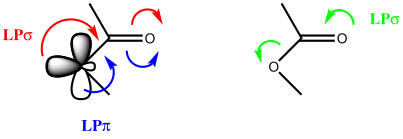
The analysis is based on trying to understand how the components of an ester interact with each other, and in particular how the alkyl oxygen interacts with the carbonyl group. Three electronic interactions in particular can be focused on (below). The first two of these weaken the C=O bond; the last strengthens it. So which effect wins out?

s-cis-ester1

  1. The donation of an in-plane σ lone pair (Lpσ) on the alkyl oxygen into the C=O σ* acceptor (red arrows) 
  2. The donation of an out-of-plane π lone pair (Lpπ) into the C=O π* acceptor (blue arrows)
  3. The donation of an in-plane σ lone pair (Lpσ) on the acyl oxygen into the C-O σ* acceptor (green arrows) 

I will start with computational models, which have the advantage that one can dissect how the vibrations arise. The first two rows show a comparison of the experimental gas phase values[3] with a standard “medium level” ωB97XD/6-311G(d,p) calculation. The discrepancy amounts to ~100-114 cm-1

The carbonyl stretch in esters and ketones
Method: Ester Ketone
Expt (gas phase)[3] 1761 1737
Harmonic ωB97XD/6-311G(d,p) 1860 1851
Anharmonic ωB97XD/6-311G(d,p) 1832 1828
Harmonic ωB97XD/aug-cc-pvQZ 1836 1831
Harmonic CCSD(T)/6-311G(d,p) 1826 1792
Corrected CCSD(T)/6-311G(d,p) ~1774 ~1749
Expt (gas phase) 1761 1737
Reduced CCSD(T)/6-311G(d,p) 1764 1743

There are several possible causes for such errors:

  1. The calculation is for harmonic frequencies; whereas those measured are anharmonic. 
  2. DFT-level force constants at modestly sized basis set levels are known to be too large compared with a complete basis set calculation (CBS). It used to be the practice in fact to routinely scale the force constants down by ~10% to correct for this effect.
  3. The correlation treatment in a DFT approach is incomplete (an error which may in fact be also absorbed into the 10% correction noted above).

So to really get to the root of why an observed ester carbonyl stretch is higher than that of the equivalent ketone, we have to get a handle on these effects above. 

  1. One can calculate cubic and quartic force constants to get an estimate of the effect of anharmonicity on the (harmonic/quadratic) values, which emerges as 23-28 cm-1 
  2. Upping the level of the basis set to aug-cc-pVQZ (close to, but not quite a CBS) reveals further corrections of 20-24 cm-1 
  3. Replacing the DFT method with a CCSD(T)-level treatment of the dynamic correlation gives corrections of 34 and 59 cm-1 respectively for ester and ketone. Assuming the corrections can be treated additively, one can apply the first two to the third, producing “corrected” CCSD(T)/6-311G(d,p) values which are only about 12-13 cm-1 higher than the observed value. This remaining discrepancy is probably due to the difference between aug-cc-pvQZ and a complete basis set (CBS) and any remaining errors in the correlation modelled by CCSD(T). We can be assured now that our theory is reproducing experiment very well.

Now that we can assess the accuracy of our computational methods, we need to try to relate the results to the C=O bond itself. Does turning a ketone into an ester really make it stronger? To directly compare the C=O bond of two different molecules, we need to eliminate the effects of mixing the C=O normal stretching mode with similar energy modes arising from other parts of the molecule. A simple way of estimating this is to set the mass of all but two of the atoms to a very small value (0.00001), leaving only the masses of the C and O as normal; this is shown as a reduced frequency in the table above. The harmonic CCSD(T)/6-311G(d,p) C=O “pure” mode reduces to 1764 for methyl ethanoate and 1743 cm-1 for propanone. So after all of this, at least we now know that the force constant for the C=O stretch really is stronger for an ester. The green arrows seem to win out over the blue/red ones.

One calculation too many? The (Wiberg) bond order for the C=O bond can be derived from the wavefunctions. Its value is 1.635 for ester, and 1.681 for ketone (CCSD/6-311G(d,p)) or 1.766/1.848 (ωB97XD/aug-cc-pvQZ). This is the opposite to that inferred from the carbonyl stretch, and hence favours the blue/red arrows over the green arrows. I set out in this post to try to bring clarity to how an adjacent oxygen influences how we think of the properties of the C=O functional group, but as happens quite often, the answer you get depends on the measurement you make.


‡ The solution values in e.g. acetonitrile are reduced by ~20 cm-1, reaching the values often quoted in text books for these functional groups. † The effect on C-H values is greater, e.g. a reduction from 3186 to 2967 cm-1.

References

  1. W.W. Coblentz, "Infra-red Absorption Spectra: I. Gases", Physical Review (Series I), vol. 20, pp. 273-291, 1905. https://doi.org/10.1103/physrevseriesi.20.273
  2. J.L. Arbour, H.S. Rzepa, J. Contreras‐García, L.A. Adrio, E.M. Barreiro, and K.K.(. Hii, "Silver‐Catalysed Enantioselective Addition of OH and NH Bonds to Allenes: A New Model for Stereoselectivity Based on Noncovalent Interactions", Chemistry – A European Journal, vol. 18, pp. 11317-11324, 2012. https://doi.org/10.1002/chem.201200547
  3. M.W. Wong, K.B. Wiberg, and M. Frisch, "Hartree–Fock second derivatives and electric field properties in a solvent reaction field: Theory and application", The Journal of Chemical Physics, vol. 95, pp. 8991-8998, 1991. https://doi.org/10.1063/1.461230

Joining up the pieces. Peroxidation of ethyne.

Monday, July 9th, 2012

Sometimes, connections between different areas of chemistry just pop out (without the help of semantic web tools, this is called serendipity). So here, I will try to join up some threads which emerge from previous posts.

  1. I had noted that antiaromaticity in cyclopropenium anion is lessened by the system adopting gross geometric distortions, which take the anionic lone pair out of conjugation from the ring.
  2. Similarly, cyclobutadiene can form a complex with the guanidinium cation in which the anti-aromaticity is reduced by the formation of strong C…H-N hydrogen bonds.
  3. Unhappy with modelling a cation without a counter-ion, I added one. I noted that the cyclobutadiene+ ion pair was more stable in this more complete form.
  4. My next connection is to a post on how ethyne reacts with peracetic acid. The initial product of this reaction is oxirene, which like cyclobutadiene or cyclopropenium anion is anti-aromatic. This time, the liberated acetic acid forms a remarkably strong hydrogen bond to the oxygen of the antiaromatic ring as a way of reducing the antiaromaticity. 
  5. Particularly noteworthy was that the initial attack of oxygen on the alkyne was very asymmetric. This reminded of another post on the reaction of dichlorocarbene with ethene, which too is asymmetric, yet again to avoid an antiaromatic transition state. However, as the hydrogen bond in 4 above get stronger, the antiaromatic oxirene becomes symmetrical again. It is as if the hydrogen bond had replaced the need for asymmetry (as with 2 above).
  6. Another asymmetric example is the 2+2 closed shell cycloaddition of two ethenes, which adopt a different form of distortion.

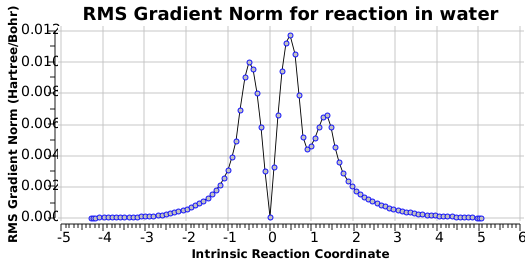
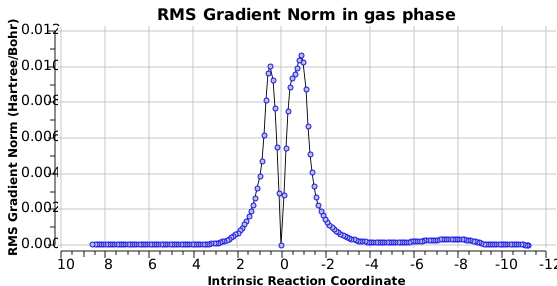
The original alkyne+peracid study was conducted using a gas phase model. I decided to revisit it now, but to change the modelled medium from the gas phase to continuum water. I show the IRC (intrinsic reaction coordinates) for this reaction in continuum water followed by the gas phase below (click on the animations to see the transition state model).

I want to compare the difference that introducing a model solvent (water) has made to the appearance of the reaction path.

  1. In water, the symmetry of the forming antiaromatic oxirene ring is always maintained. There is no distortion; the combination of hydrogen bond, developing ionicity and its stabilization by the model solvent, appears to eliminate the need for such distortion. The free energy barrier, ΔG (ωB97XD/6-311G(d,p) is 32.2 kcal/mol, outside of a room temperature reaction.
  2. In water, the proton transfer step comes much later, and is visible in the RMS gradient norm at +1.4.
  3. In the gas phase, the IRC is much more complex (as previously noted). Pronounced asymmetry develops, and this only resymmetrises late on, when the hydrogen bond forms.
  4. In the gas phase, the proton transfer occurs relatively early, and it cannot be found as a discrete feature in the RMS gradient norm plot. 
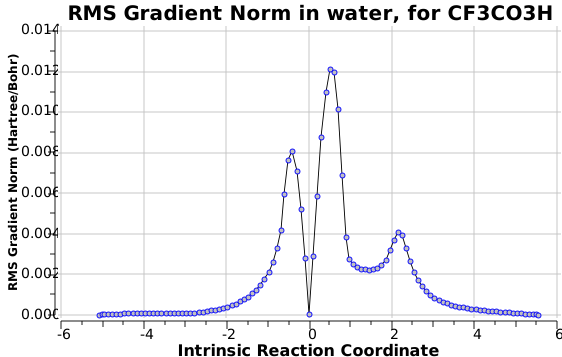
  5. If a more acidic peracid is introduced, say CF3CO3H, and the reaction is again simulated in water, the proton transfer is further delayed (below), and the barrier drops to ΔG 25.9 kcal/mol, an entirely viable thermal reaction. I do not believe this particular variation has ever been tested experimentally; anyone up for it? 
  6. The product of the CF3CO3H reaction is shown below. It has a remarkably short predicted hydrogen bond of 1.55Å between the oxirene and the trifluoracetic acid.

The take home message is that the very nature of a reaction, the geometry (symmetry) of the molecules taking part, and the timing of the changes can be very visibly changed by simulating the event with a solvent. In the past of course, all such computational studies were conducted purely as a gas phase model.

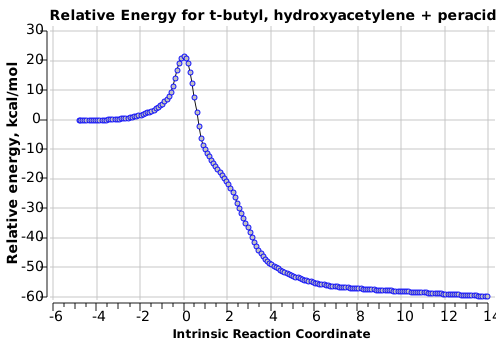
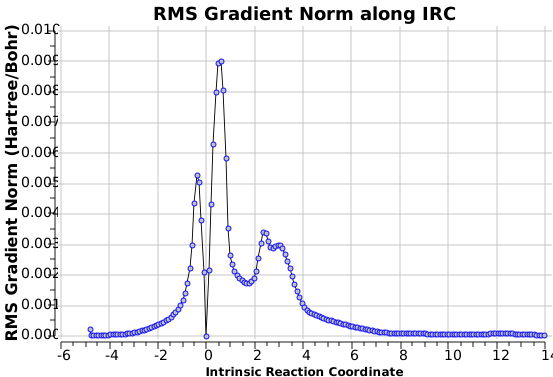
Postscript:The above shows how even a change in continuum solvent can affect the features of the reaction path. A rather greater perturbation is to change e.g. the substituents on the alkyne. I have tried replacing one H with t-butyl, and the other with OH. The rationale for the former is that t-butyl acetylene is actually the substrate that this reaction has been performed on, and for OH that it pushes electrons into the oxirene, making is more anti-aromatic and hence more liable to avoid that antiaromaticity. Animation of the IRC for this combination is shown below. Notice how the reaction now proceeds in a concerted manner directly from the alkyne to the hydroxy-carbene, without any sign of an intervening oxirene. 

The energy and gradient profiles for this variation are shown below. Notice in particular how the barrier has dropped; it is now a much easier reaction.