Archive for the ‘Chiroptics’ Category

Determining absolute configuration: Cylindricine.

Wednesday, February 1st, 2023

Nature has produced most natural molecules as chiral objects, which means the molecule can come in two enantiomeric forms, each being the mirror image of the other. When a natural product is synthesised in a laboratory, a chiral synthesis means just one form is made, and then is compared with the natural product to see if it matches. Just such a process was following in the recent synthesis of cylindricine, a marine alkaloid[1] featured on the ACS molecule-of-the-week site. The authors noted that the absolute configuration of cylindricine as isolated naturally had remained unassigned, and as it happens one way of measuring the properties of the individual enantiomer – its optical rotation – had not been determined. So in part, the purpose of this synthesis was to determine the absolute configuration of this molecule. Here I explore this process.
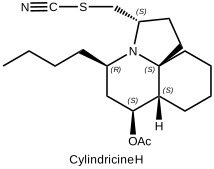
There are several different procedures for finding the absolute configuration of a molecule.

  1. By synthesis from a starting material, itself presumed of known absolute configuration – in this example, a molecule[2] which had been previously assigned an absolute configuration. The presumption then is that all the transformations made to this molecule have stereochemically certain and predictable outcomes and of course that the configuration of the starting material in this process was not in any doubt. Ultimately, this chain of inferences should be traceable all the way back to D-(+)-glyceraldehyde. These inference chains can involve multiple groups working at different times.
  2. Alternative methods can be used as an independent check on the first method above, which depend only on the properties of the target molecule itself and not on any inference chain. One such is the “gold standard”, introduced in 1951[3] and using X-ray crystallography. This method is quite common nowadays, but it does require a suitable crystal for measurement.
  3. The so-called chiroptical properties of the target molecule can also be subjected to computational prediction, a method first introduced in 1937[4] using the optical rotation as the measure and based on linearly polarized light at a specific wavelength (normally corresponding ot 589nm). As was found in 1937, this can be quite a fragile method, depending very much on the actual conformations of the molecule. Rigid molecules are more predictable than flexible ones. Cylindricine itself has a number of conformations or orientations of the various substituents and it then becomes an question of finding the most stable of these, in terms of their overall contributing populations.
  4. A more recent method is the use of a technique known Electronic circular dichroism (ECD), which uses circularly rather than linearly polarised light, across a range of wavelengths from ~200 up to ~800nm.
  5. An even more recent chiroptical method is VCD or Vibrational Circular Dichroism. This spectroscopic technique detects differences in attenuation of left and right circularly polarized light passing through a sample. It is an extension of circular dichroism spectroscopy into the infrared ranges.

Any or all of methods 3-5 could be used to independently check on the results inferred in procedure 1. Here I report the results of such an attempted verification.

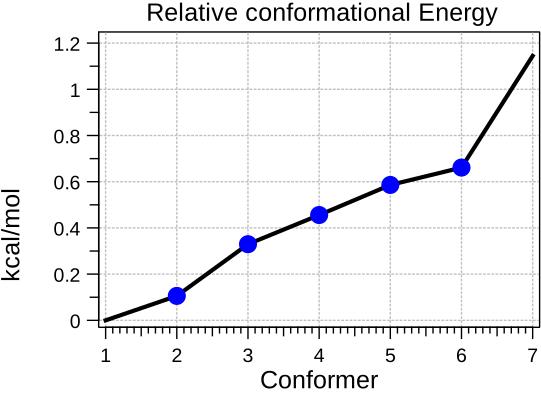
The start point is an attempt to find the most stable conformation of cylindricine. Here I am using a conformational tool called GMMX, part of the Gaussview suite. Loading the molecule as drawn above, six rotatable bonds are automatically identified and the program systematically rotates about all of these in turn using a molecular mechanics force field to compute an energy. This field includes so-called dispersion or van der Waals attractions. I used the MMFF94 force field, with its origins in the pharmaceutical industries and reasonably suitable for a natural product. The lowest energy conformation obtained is shown below, but it should be noted that there are 36 further conformations within 3.5 kcal/mol of the lowest. This conformer was chosen for the chiroptical calculations described in 3-5 above. Of course, more thoroughly all the conformers with a population of at least 1% should be included in this process for a more comprehensive analysis.

To get an inkling of why this conformer might be the lowest in energy, inspect the model below (click on the image to get a 3D rotatable model). It shows the so-called NCI (non-covalent-interactions), which are mostly composed of hydrogen bond and dispersion stabilisations. Each little blue/green isosurface is one of these – and the more of them there are – the more stable the conformer.

For this conformer, the calculated optical rotation emerge as -34° at 589nm (FAIR Data DOI: 10.14469/hpc/12231). The reported value is -8.5°. You might think that the agreement is poor, but such calculations are only reasonably clear-cut for large values of the rotations! Clearly, this calculation provides some supporting evidence that the assignment of absolute configuration is correct. The take home message is not the value of the rotation but its sign, where calculation and measurement agree. The next step would be to perform a full conformational average over all 37 conformations!

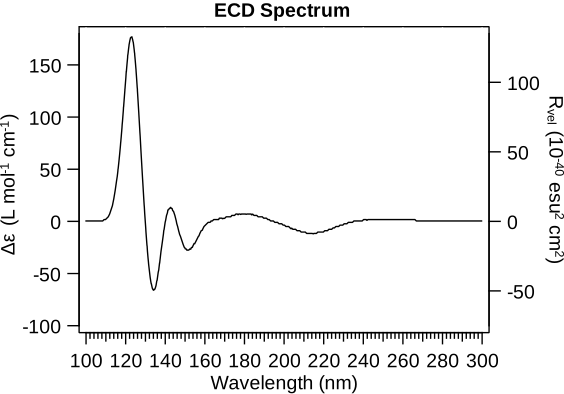
The calculated ECD spectrum is shown below. It only shows a weak negative feature at ~220nm and strong evidence requires features at >280nm to be clear cut. This result suggests that recording this spectrum is not recommended.
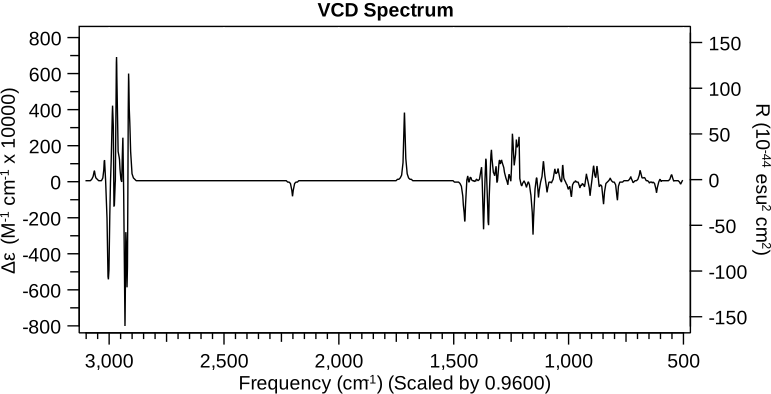
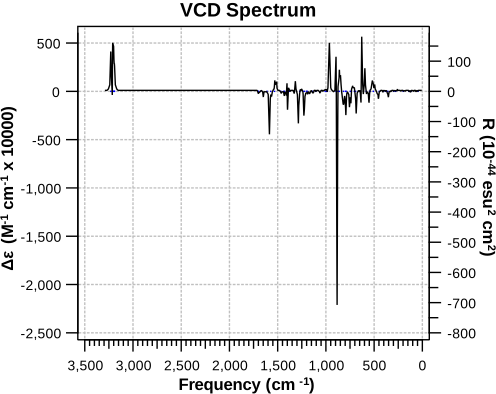
The VCD spectrum is shown below. This does show strong features in both the C-H stretching region and the 1500-800 wavenumber region and would be a good diagnostic. Recording it would indirectly also reveal whether the conformer chosen above is likely to be correct or not.
So the above provides a start point for a more comprehensive and independent method for verifying the absolute configuration. The total synthesis using a starting material of known configuration it has to be said is normally pretty reliable, but there are rare examples where a mistake in assignment was made of such a precursor and which was indeed corrected by VCD assignment.[5]


This blog has DOI: 10.14469/hpc/12233

References

  1. M. Piccichè, A. Pinto, R. Griera, J. Bosch, and M. Amat, "Total Synthesis of (−)-Cylindricine H", Organic Letters, vol. 24, pp. 5356-5360, 2022. https://doi.org/10.1021/acs.orglett.2c02004
  2. M. Amat, O. Bassas, N. Llor, M. Cantó, M. Pérez, E. Molins, and J. Bosch, "Dynamic Kinetic Resolution and Desymmetrization Processes: A Straightforward Methodology for the Enantioselective Synthesis of Piperidines", Chemistry – A European Journal, vol. 12, pp. 7872-7881, 2006. https://doi.org/10.1002/chem.200600420
  3. J.M. BIJVOET, A.F. PEERDEMAN, and A.J. van BOMMEL, "Determination of the Absolute Configuration of Optically Active Compounds by Means of X-Rays", Nature, vol. 168, pp. 271-272, 1951. https://doi.org/10.1038/168271a0
  4. J.G. Kirkwood, "On the Theory of Optical Rotatory Power", The Journal of Chemical Physics, vol. 5, pp. 479-491, 1937. https://doi.org/10.1063/1.1750060
  5. J.L. Arbour, H.S. Rzepa, A.J.P. White, and K.K.(. Hii, "Unusual regiodivergence in metal-catalysed intramolecular cyclisation of γ-allenols", Chem. Commun., pp. 7125-7127, 2009. https://doi.org/10.1039/b913295c

Molecule of the year 2021: Infinitene.

Thursday, December 16th, 2021

The annual “molecule of the year” results for 2021 are now available … and the winner is Infinitene.[1] This is a benzocirculene in the form of a figure eight loop (the infinity symbol), a shape which is also called a lemniscate [2] after the mathematical (2D) function due to Bernoulli. The most common class of molecule which exhibits this (well known) motif are hexaphyrins (hexaporphyrins; porphyrin is a tetraphyrin)[3],[4],[5], many of which exhibit lemniscular topology as determined from a crystal structure. Straightforward annulenes have also been noted to display this[6] (as first suggested here for a [14]annulene[7]) and other molecules show higher-order Möbius forms such as trefoil knots.[8],[9] This new example uses twelve benzo groups instead of six porphyrin units to construct the lemniscate. So the motif is not new, but this is the first time it has been constructed purely from benzene rings.

The molecule has D2 chiral symmetry and is shown below (click on the image for the 3D model obtained from the crystal structure).

The authors suggest that the aromaticity in a D2-symmetric [12]-circulene is confined to six “Clar” rings each of six electrons, and is not delocalised around the entire molecule. For a molecule with this topology (defined by a linking number, Lk = 2π[10]) the entire system would be defined as aromatic (delocalised) for 4n+2 electrons and antiaromatic for 4n electrons around a continuous annulene loop. In this example outer annulene circuits of either 34 or 38 carbons can be constructed which retain D2-symmetry and which both follow the 4n+2 rule, whilst a small inner circuit of 14 carbons can be also be constructed. There are probably other D2-symmetric circuits that could be constructed.

When I saw the molecule, I asked myself what the calculated chiroptical properties for the molecule might be; the optical rotation of the two (separated) enantiomers of [12]-circulene were reported as +1130° (P,P) and -1112° (M,M). The calculated value (ωB97XD/Def2-TZVPP) is in excellent agreement. I have also included versions of this system with [11] and [10] benzo rings, which will be discussed in a future post.

Benzene units optical rotation (589nm), ° DOI
12 (P,P) +1143 10.14469/hpc/10000
11 (P,P) +1025 10.14469/hpc/10037
10 (P,P) -163 10.14469/hpc/10001

For good measure, the calculated VCD spectrum

Now to the geometry, as obtained from the crystal structure. The [12]circulene shows in total 12 short lengths of 1.348ű0.014, indicating significant localisation in the system. The D2-symmetric C34 path through the system shows a mean length for each bond of 1.405Å, with a maximum value of 1.443Å and a minimum 1.334Å. For this path, the topology of the system indicates Lw = 2π = 0.393Tw + 1.607Wr[11] This means that most of the coiling of the molecule that results in that figure eight is actually comprised of a topological property known as writhe (Wr) rather than adjacent twisting (Tw) of the p-orbitals. This retains much p(π)-p(π) overlap and hence stabilisation. The values for the inner C14 route are Lw = 2π = 1.256Tw + 0.744Wr which is more highly twisted than the larger outer pathway and so aromaticity via this route is less favoured due to less favourable p(π)-p(π) overlaps.

I also note that the Lw = 2π is an alternative chiral descriptor to the helical notation of (P,P). The (M,M) form would have Lw = -2π. The linking number is more general for more complex helical forms such as trefoils, cinquefoils, hexafoils etc.

So it turns out that this molecule has a fascinating challenge for trying to describe its extended delocalised aromaticity (rather than localised six-membered Clar rings), since more than one “annulene route” for which the “Hückel/Möbius rules” might apply exists.[10] Given that the maximum bond length for one of those routes (the [34]annulene) is 1.443Å, there may well be a contribution from this mode of aromaticity other than that from the Clar rings.

I hope to take a look at the [11] and [10]circulenes in a future post.


The explanation for this sign inversion is delightful but too complex to give here.[12]


This post has DOI: 10.14469/hpc/10036


References

  1. K. Itami, M. Krzeszewski, and H. Ito, "Infinitene: A Helically Twisted Figure-Eight [12]Circulene Topoisomer", 2021. https://doi.org/10.26434/chemrxiv-2021-pcwcc
  2. C.S.M. Allan, and H.S. Rzepa, "Chiral Aromaticities. AIM and ELF Critical Point and NICS Magnetic Analyses of Möbius-Type Aromaticity and Homoaromaticity in Lemniscular Annulenes and Hexaphyrins", The Journal of Organic Chemistry, vol. 73, pp. 6615-6622, 2008. https://doi.org/10.1021/jo801022b
  3. H. Rath, J. Sankar, V. PrabhuRaja, T.K. ChandrashekarPresent address: The D, B.S. Joshi, and R. Roy, "Figure-eight aromatic core-modified octaphyrins with six meso links: syntheses and structural characterization", Chemical Communications, pp. 3343, 2005. https://doi.org/10.1039/b502327k
  4. H. Rath, J. Sankar, V. PrabhuRaja, T.K. Chandrashekar, and B.S. Joshi, "Aromatic Core-Modified Twisted Heptaphyrins[1.1.1.1.1.1.0]:  Syntheses and Structural Characterization", Organic Letters, vol. 7, pp. 5445-5448, 2005. https://doi.org/10.1021/ol0521937
  5. S. Shimizu, N. Aratani, and A. Osuka, "<i>meso</i>‐Trifluoromethyl‐Substituted Expanded Porphyrins", Chemistry – A European Journal, vol. 12, pp. 4909-4918, 2006. https://doi.org/10.1002/chem.200600158
  6. T. Perera, F.R. Fronczek, and S.F. Watkins, "2,9,16,23-Tetrakis(1-methylethyl)-5,6,11,12,13,14,19,20,25,26,27,28-dodecadehydrotetrabenzo[<i>a</i>,<i>e</i>,<i>k</i>,<i>o</i>]cycloeicosene", Acta Crystallographica Section E Structure Reports Online, vol. 67, pp. o3493-o3493, 2011. https://doi.org/10.1107/s1600536811048604
  7. H.S. Rzepa, "A Double-Twist Möbius-Aromatic Conformation of [14]Annulene", Organic Letters, vol. 7, pp. 4637-4639, 2005. https://doi.org/10.1021/ol0518333
  8. G.R. Schaller, F. Topić, K. Rissanen, Y. Okamoto, J. Shen, and R. Herges, "Design and synthesis of the first triply twisted Möbius annulene", Nature Chemistry, vol. 6, pp. 608-613, 2014. https://doi.org/10.1038/nchem.1955
  9. S.M. Bachrach, and H.S. Rzepa, "Cycloparaphenylene Möbius trefoils", Chemical Communications, vol. 56, pp. 13567-13570, 2020. https://doi.org/10.1039/d0cc04190d
  10. P.L. Ayers, R.J. Boyd, P. Bultinck, M. Caffarel, R. Carbó-Dorca, M. Causá, J. Cioslowski, J. Contreras-Garcia, D.L. Cooper, P. Coppens, C. Gatti, S. Grabowsky, P. Lazzeretti, P. Macchi, . Martín Pendás, P.L. Popelier, K. Ruedenberg, H. Rzepa, A. Savin, A. Sax, W.E. Schwarz, S. Shahbazian, B. Silvi, M. Solà, and V. Tsirelson, "Six questions on topology in theoretical chemistry", Computational and Theoretical Chemistry, vol. 1053, pp. 2-16, 2015. https://doi.org/10.1016/j.comptc.2014.09.028
  11. S.M. Rappaport, and H.S. Rzepa, "Intrinsically Chiral Aromaticity. Rules Incorporating Linking Number, Twist, and Writhe for Higher-Twist Möbius Annulenes", Journal of the American Chemical Society, vol. 130, pp. 7613-7619, 2008. https://doi.org/10.1021/ja710438j
  12. M.S. Andrade, V.S. Silva, A.M. Lourenço, A.M. Lobo, and H.S. Rzepa, "Chiroptical Properties of Streptorubin B: The Synergy Between Theory and Experiment", Chirality, vol. 27, pp. 745-751, 2015. https://doi.org/10.1002/chir.22486

More examples of crystal structures containing embedded linear chains of iodines.

Sunday, October 17th, 2021

The previous post described the fascinating 170-year history of a crystalline compound known as Herapathite and its connection to the mechanism of the Finkelstein reaction via the complex of Na+I2 (or Na22+I42-). Both compounds exhibit (approximately) linear chains of iodine atoms in their crystal structures, a connection which was discovered serendipitously. Here I pursue a rather more systematic way of tracking down similar compounds.

Here is one search query which can be used in the CSD database of crystal structures. A chain of eight iodine atoms is defined, and the six angles subtended at iodine restricted to the range 150-180° (i.e. linear). The inner six iodines are also defined as having only two bonded atoms.

This results in four hits (October 2021), three of which are shown below (the fourth, JOPLEH, contains chains of I82- anions which do not appear to be infinitely repeating).

  1. IQIVIP, containing the heterocyclic unit pyrroloperylene and connected chains of I29.[1] See also DOI: 10.5517/ccdc.csd.cc1m1tj0

    Click to load 3D model of IQIVIP


    The truly remarkable feature is that the iodine chain appears to adopt a gentle right-handed helix in this isomer. One has to wonder how this might respond to light!
  2. IQIVOV, closely related to IQIVIP, this time containing connected chains of gently spiralling I10 groups.[1] See also DOI: 10.5517/ccdc.csd.cc1m1tk1

    Click to load 3D model of IQIVOV

  3. WEVFAE, containing a tetramethyl stilbonium cation (an analogue of a tetramethylammonium cation) and this time infinite chains of I83- anions.[2]

    Click to load 3D model of WEVFAE

The list is not long, but contains some fascinating examples of how iodine can catenate into infinitely long chains, sometimes linear (on the time averaged scale at the temperature of the data recording), sometimes gently helical and as with Herapathite, a rather more undulating motif. Again how the crystals of these compounds respond to light remains to be established. However it may be that since these three molecules are reported variously as being black-green, black and golden, some may be opaque to light in any orientation. I also note that linear chains of Ag, Ga In and Tl have also been reported in inorganic metal nitrides.[3]


The same result is obtained if the specification of iodine in this search is replaced by “any” element. This post has DOI: 10.14469/hpc/9540. See also DOI: 10.1016/j.hm.2005.11.005 for a connection between coiled chains of iodine atoms and Einstein’s theory of teleparallel spacetime, invoking torsional geometries.

References

  1. S. Madhu, H.A. Evans, V.V.T. Doan‐Nguyen, J.G. Labram, G. Wu, M.L. Chabinyc, R. Seshadri, and F. Wudl, "Infinite Polyiodide Chains in the Pyrroloperylene–Iodine Complex: Insights into the Starch–Iodine and Perylene–Iodine Complexes", Angewandte Chemie International Edition, vol. 55, pp. 8032-8035, 2016. https://doi.org/10.1002/anie.201601585
  2. U. Behrens, H.J. Breunig, M. Denker, and K.H. Ebert, "Iodine Chains in (Me<sub>4</sub>Sb)<sub>3</sub>I<sub>8</sub> and Discrete Triiodide Ions in Me<sub>4</sub>AsI<sub>3</sub>", Angewandte Chemie International Edition in English, vol. 33, pp. 987-989, 1994. https://doi.org/10.1002/anie.199409871
  3. P. Höhn, G. Auffermann, R. Ramlau, H. Rosner, W. Schnelle, and R. Kniep, "(Ca<sub>7</sub>N<sub>4</sub>)[M<sub><i>x</i></sub>] (M=Ag, Ga, In, Tl): Linear Metal Chains as Guests in a Subnitride Host", Angewandte Chemie International Edition, vol. 45, pp. 6681-6685, 2006. https://doi.org/10.1002/anie.200601726

Herapathite: an example of (double?) serendipity.

Thursday, October 14th, 2021

On October 13, 2021, the historical group of the Royal Society of Chemistry organised a symposium celebrating ~150 years of the history of (molecular) chirality. We met for the first time in person for more than 18 months and were treated to a splendid and diverse program about the subject. The first speaker was Professor John Steeds from Bristol, talking about the early history of light and the discovery of its polarisation. When a slide was shown about herapathite[1] my “antennae” started vibrating. This is a crystalline substance made by combining elemental iodine with quinine in acidic conditions and was first discovered by William Herapath as long ago as 1852[2] in unusual circumstances. Now to the serendipity!

Herapath was able to get small crystals of this substance and discovered that when he placed one crystal upon another at “right angles”, the combination went “black as midnight”. He recognised that it was functioning as an excellent linear light polarizer, absorbing virtually all the light polarized along the shorter axis of the best-developed facet of the crystal. A number of well known scientists investigated this substance at the time, but by about 1951 it had largely been forgotten. The person to rediscover it was Edwin Land, of Polaroid camera fame.[3] He oriented the microcrystals into an extruded polymer to stabilize them and hence produce the first large-aperture light polarizer, which enabled him to manufacture his first camera. The serendipity resulted from him spotting the by then forgotten properties of Herapathite (I wonder if he recorded how this actually came about) and recognising how to exploit it.

In 2009 Bart Kahr had noticed that the crystal structure of this material had never been reported. It was a challenging structure to solve[1] but established that the polarizing property of the crystals was in large measure due to the presence of infinite chains of I3 units aligned in an almost linear channel in the crystal structure. And so it was that in October 2021, John Steeds showed the structure containing these iodine chains in his slide on the topic. The crystal structure is in the CCDC database as WEYDOV and can be seen here at DOI: 10.5517/ccsdg7v I show below part of the extended lattice, showing that chain of iodines.

Click to view 3D model of WEYDOV

So the next (possible) instance of serendipity. From the audience, I immediately recognised this structural motif as being related to the crystal structure of both Na+I (NAIACE) and Na+I2 (GADMOO)[4] which I discussed in one of the very first posts on this blog in 2009 as part of a story about the Finkelstein reaction. Both these structures were obtained from acetone solution, and this solvent very much forms part of the crystal structures, serving to coordinate the sodium cations and playing the role of the quinine in herapathite. The iodine chains, comprising in GADMOO units of I3 and I, are almost exactly linear!

Click to view 3D model of NAICE

Click to view 3D model of GADMOO

So, the question arises as to whether crystals of Na+I2 have ever been examined for light polarisation? One might also ask whether eg the chiral quinine imparts a critical property to the herapathite crystal, or could the achiral acetone also serve the purpose? What would happen if substituted versions of acetone were used (halo, methyl etc)? Would they destroy those linear chains, or would they survive? Are repeating chains of I3 units essential, or can chains of alternating units of I3 and I also serve the purpose? All questions that can only be answered by experiments! Anyone up for trying?


This post has DOI: 10.14469/hpc/9537


References

  1. B. Kahr, J. Freudenthal, S. Phillips, and W. Kaminsky, "Herapathite", Science, vol. 324, pp. 1407-1407, 2009. https://doi.org/10.1126/science.1173605
  2. W.B. Herapath, "XXVI. <i>On the optical properties of a newly-discovered salt of quinine, which crystalline substance possesses the power of polarizing a ray of light, like tourmaline, and at certain angles of rotation of depolarizing it, like selenite</i>", The London, Edinburgh, and Dublin Philosophical Magazine and Journal of Science, vol. 3, pp. 161-173, 1852. https://doi.org/10.1080/14786445208646983
  3. E.H. Land, "Some Aspects of the Development of Sheet Polarizers*", Journal of the Optical Society of America, vol. 41, pp. 957, 1951. https://doi.org/10.1364/josa.41.000957
  4. R.A. Howie, and J.L. Wardell, "Polymeric tris(μ<sub>2</sub>-acetone-κ<sup>2</sup><i>O</i>:<i>O</i>)sodium polyiodide at 120 K", Acta Crystallographica Section C Crystal Structure Communications, vol. 59, pp. m184-m186, 2003. https://doi.org/10.1107/s0108270103006395

L-Malic acid: An exercise in conformational analysis impacting upon optical rotatory dispersion (ORD).

Friday, December 20th, 2019

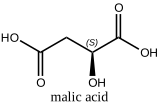
My momentum of describing early attempts to use optical rotation to correlate absolute configuration of small molecules such as glyceraldehyde and lactic acid with their optical rotations has carried me to L-Malic acid (below labelled as (S)-Malic acid).

The measured optical rotatory dispersion curve at low wavelengths is shown below (dashed line for Malic acid, solid line for Lactic acid). A sign inversion occurs <220nm to negative rotations. [1] I decided to explore how modern theory of both conformational analysis and chiroptical calculation performs for this small molecule at these wavelengths.

You need good tools to investigate the conformational space of even a small molecule such as malic acid. I used Gaussview 6 with the GMMX plugin. This identifies rotatable bonds and uses molecular mechanics to optimise all unique conformations which are located up to 3.5 kcal/mol above the lowest energy one. Using this procedure for malic acid produces 17 conformations! The geometry of each was then re-optimised at the following level: B3LYP+GD3BJ dispersion correction, Def2-TZVPP basis and using a superfinegrid pruned to 175,974 for first-row atoms (the default grid is 99,590 in the Gaussian 16 program) to avoid any significant incurrence of rotational dependence of the computed energy. Extra tight convergence criteria for the SCF and 2-electron integrals (12 and 14 respectively in the Gaussian definition) were also selected. A solvent correction for ethanol was also included and the free energy calculated. Once the geometries were obtained, the optical rotations were calculated using ωB97XF/Def2-TZVPP/SCRF=ethanol (DOI: 110.14469/hpc/6510) and the results inserted into a spreadsheet (which is available for you to inspect for yourself).

To summarise.

Wavelength ~Observed rotation, ° Calculated rotation, °
260 +250 +194
230 +1500 +318
220 +900 +385
215 +400 +631
205 -2660 -1778
  1. One first notes that 9 of the conformers have a population >1% and the maximum population of any single conformer is ~30%.
  2. Secondly, the ORD curve in the region 200-230 is extremely steep, so even tiny changes in the wavelength can induce large changes in the optical rotation. This propagates onto the calculations, where the accuracy of the predicted λmax is only about 20nm at this level of theory. This means that the maxima and minima in the experimental  ORD curve are likely to be displaced with respect to the calculated curve by perhaps 20nm.
  3. Next, I note the enormous variation in rotation amongst the conformers themselves. Thus at 215nm, the conformer with the largest +ve rotation has the value +28964°, and the largest -ve is -11749°, with the final value weighted by the Boltzmann populations being much smaller at 631°. This means you are weighting very large positive and negative numbers to produce a much smaller sum. Clearly even small errors in calculating the Boltzmann population could have a big impact upon the final total rotation. 

Given all these errors, and the observation that I have not plotted a complete range of wavelengths in order to determine the maximum and minimum values in the ORD curve, the final agreement with experiment is actually not that bad! Perhaps however it is easy to see why ORD is rarely used nowadays to assign absolute configuration using computations, given this combination of interacting errors. Perhaps the greatest value in performing these calculations is actually to give some sense of a reality check on the computed conformational analysis itself, with its calculated Boltzmann populations!


This also confirms that the rotation of L-Lactic acid is positive (+) for wavelengths down to 220nm, below which the sign also inverts to a negative rotation. Kuhn’s assertion of absolute configuration of lactic acid is nonetheless proven correct, although he only had access to the much less useful value of the rotation at 589nm.[2] The free Avogadro program can also perform this task.The calculations also include the VCD or vibrational circular dichroism responses for each conformation. I have thus far avoided the task of applying the Boltzmann populations to the VCD spectra for 1cm-1 increments to reveal the expected spectrum.

References

  1. J. Cymerman Craig, and S. Roy, "Optical rotatory dispersion and absolute configuration—IV", Tetrahedron, vol. 21, pp. 1847-1853, 1965. https://doi.org/10.1016/s0040-4020(01)98655-7
  2. W. Kuhn, "Absolute Konfiguration der Milchsäure.", Zeitschrift für Physikalische Chemie, vol. 31B, pp. 23-57, 1936. https://doi.org/10.1515/zpch-1936-3105

Sign inversions in optical rotation as a function of wavelength (ORD spectra)

Monday, December 9th, 2019

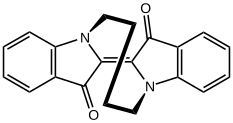
I have been discussing some historical aspects of the absolute configuration of molecules and how it was connected to their optical rotations. The nomenclature for certain types of molecules such as sugars and less commonly amino acids includes the notation (+) to indicate that the specific optical rotation of the molecule has a positive (rather than a negative) value. What is rarely mentioned is the implicit wavelength at which the rotation is measured. Historically polarimeters operated at the so-called sodium Fraunhofer D-line (588.995nm, hence the name [α]D) and only much more recently at the mercury e-line (546.073nm). The former was used for uncoloured organic molecules, since it was realised early on that colour and optical rotation did not mix well. Here I take a closer look at this aspect by constructing the hypothetical molecule shown below.

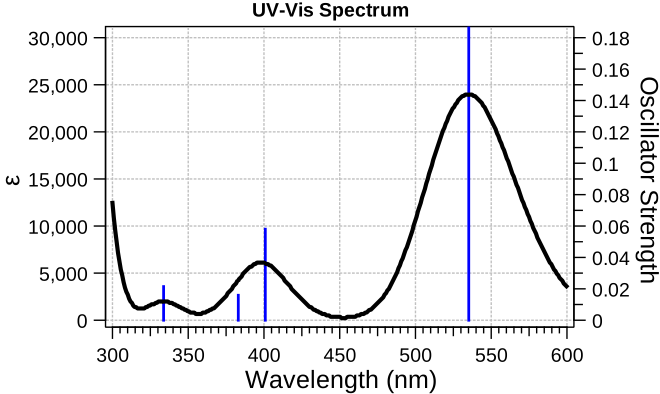
The rational behind this choice is that it is (a) based on indigo, which is deep blue in colour and (b) has a bridge of four methylene groups added to make it (axially) asymmetric. The calculated UV/Vis spectrum (ωB97XD/Def2-SVP/SCRF=water, FAIR DOI: 10.14469/hpc/6457) is shown below and you can see the very intense absorption at 535nm (corresponding to a visually blue colour).

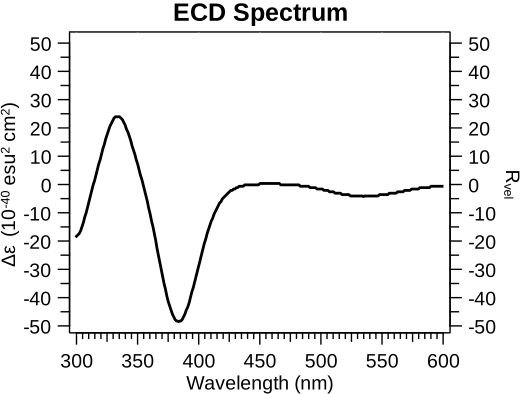
The electronic circular dichroism version of this spectrum (simply the difference in absorbance between left and right polarised light instead of absorbance by unpolarised light) is shown below, and this form of chiroptical spectroscopy in large measure replaced the use of specific optical rotations as a means of assigning absolute configurations from the 1960s onwards. Note that the large peak at 535nm is replaced by a much smaller one (the Cotton effect) in the ECD spectrum.

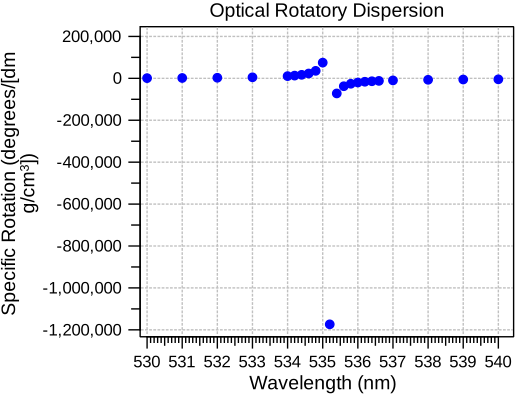
Now I show the original optical rotation as a function of wavelength in 10nm increments. At 589nm ([α]D) it is negative (-1364°), but what on earth is going on at a wavelength of ~535nm, which as you can see above is the value of the first electronic excitation?

An expansion in 0.2nm increments shows more clearly what is happening. The negative value suddently shoots down to -1,200,000°, frankly an absurd value, before discontinuously reversing sign to a positive value of 75,000°. At exactly the value of the electronic absorption it is zero. Most people seeing this happen would conclude that the mathematics derived from the solutions of the quantum mechanical equations is resulting in an unphysical discontinuity. It is in fact the result of the behaviour of the electric and magnetic dipole moment vectors, and it CAN be seen experimentally, albeit never in quite such extreme form![1] The sign of the optical rotation CAN invert, but in this very strange manner whereby if it starts as negative, it first becomes infinitely negative before passing through zero and becoming infinitely positive and finally settling down to a normal positive value. The reason by the way why the “blip” in the ORD spectrum above is +ve, but -ve in the expansion below is “digital resolution”, with the top trace having too coarse a resolution to capture the detail. Now the reason why optical rotation measurement at 589nm becomes clear; it avoids any inversions caused by this effect for the majority of less-coloured molecules. However, if you do have a molecule that were to absorb at 589nm itself, the sodium D-line is the last wavelength you would want to use to measure its optical rotation!

So the notation (+) or (-) used to describe the sign of the specific rotation of a chiral molecule might give the misleading impression that it is a characteristic of the molecule at all wavelengths used to measure it. The rotation can change sign an impressive number of times as the wavelength changes! Does anyone know of any coloured pharmaceutical drugs that are available as pure enantiomers?  It would be fun to repeat the above on such a molecule.

References

  1. M.S. Andrade, V.S. Silva, A.M. Lourenço, A.M. Lobo, and H.S. Rzepa, "Chiroptical Properties of Streptorubin B: The Synergy Between Theory and Experiment", Chirality, vol. 27, pp. 745-751, 2015. https://doi.org/10.1002/chir.22486

What effect do explicit solvent molecules have on calculated optical rotation: D-("+")-Glyceraldehyde.

Saturday, December 7th, 2019

In this series of posts on optical rotations, I firstly noted Kirkwood’s 1937 attempt to correlate the optical rotation of butan-2-ol with its absolute configuration. He had identified as essential knowing the relative orientation (the term conformation was not yet in common use) of the two methyl groups (the modern terms are gauche vs anti) and also that of the hydroxyl group, noting that anisotropy from this group could influence his result (he had assumed it was linear, or axially symmetric). I then looked at D-(+)-glyceraldehyde, noting that this species itself has a strongly negative rotation and that it is the hydrated diol that results in a positive rotation and hence the (+) designation. Here I take another look at this latter system to see what effect adding explicit water molecules to the unhydrated form of glyceraldehyde might have on its computed rotation, on the premise that strong hydrogen bonds can also contribute anisotropy to the system.

Firstly, here again are the computed results for glyceraldehyde on its own, albeit encased in a continuum solvent field for water (SCRF=water). At 303K and 589nm, the computed rotation is -193° compared to -147° inferred from the population of the aldehyde.[1]

Here are the new values (FAIR data DOI: 10.14469/hpc/6445) obtained by adding an explicit water molecule to the original conformations. This also introduces extra conformations, some of which are included below. This reduces the calculated value by ~25° to improve the agreement with measurement (-147°). The value at 436nm is -411 (calc), -380 (obs).

So a 25° correction is not entirely insignificant, but does not change the overall conclusion that the optical rotation of D-(+) glyceraldehyde is (-). How might the model be improved further?

  1. Adding more water molecules, in theory until a limit is reached where further anisotropy is not added to the model. But the major disadvantage is that each extra water molecule increases the conformational space to be explored. With say seven added water molecules, there are probably 100s of conformations that would have to be searched, now a major undertaking.
  2. Another interesting avenue to explore is the temperature dependence of the optical rotation. The experimental values are shown below. This is due to the change in Boltzmann populations as a function of temperature.

    At 343K, the original calculations without inclusion of a water molecule reduce the calculated rotation changes from -193 to -182.5, or about 10°. The observed value is a change of 39°. However, with the model including an extra water molecule, the value changes from -168.5 to -171°. So it might well be that reproduction of the temperature effects will require more water molecules added to the model.


References

  1. M. Fedoroňko, "Optical activity of D-glyceraldehyde in aqueous solutions", Collection of Czechoslovak Chemical Communications, vol. 49, pp. 1167-1172, 1984. https://doi.org/10.1135/cccc19841167

What effect do explicit solvent molecules have on calculated optical rotation: D-(“+”)-Glyceraldehyde.

Saturday, December 7th, 2019

In this series of posts on optical rotations, I firstly noted Kirkwood’s 1937 attempt to correlate the optical rotation of butan-2-ol with its absolute configuration. He had identified as essential knowing the relative orientation (the term conformation was not yet in common use) of the two methyl groups (the modern terms are gauche vs anti) and also that of the hydroxyl group, noting that anisotropy from this group could influence his result (he had assumed it was linear, or axially symmetric). I then looked at D-(+)-glyceraldehyde, noting that this species itself has a strongly negative rotation and that it is the hydrated diol that results in a positive rotation and hence the (+) designation. Here I take another look at this latter system to see what effect adding explicit water molecules to the unhydrated form of glyceraldehyde might have on its computed rotation, on the premise that strong hydrogen bonds can also contribute anisotropy to the system.

Firstly, here again are the computed results for glyceraldehyde on its own, albeit encased in a continuum solvent field for water (SCRF=water). At 303K and 589nm, the computed rotation is -193° compared to -147° inferred from the population of the aldehyde.[1]

Here are the new values (FAIR data DOI: 10.14469/hpc/6445) obtained by adding an explicit water molecule to the original conformations. This also introduces extra conformations, some of which are included below. This reduces the calculated value by ~25° to improve the agreement with measurement (-147°). The value at 436nm is -411 (calc), -380 (obs).

So a 25° correction is not entirely insignificant, but does not change the overall conclusion that the optical rotation of D-(+) glyceraldehyde is (-). How might the model be improved further?

  1. Adding more water molecules, in theory until a limit is reached where further anisotropy is not added to the model. But the major disadvantage is that each extra water molecule increases the conformational space to be explored. With say seven added water molecules, there are probably 100s of conformations that would have to be searched, now a major undertaking.
  2. Another interesting avenue to explore is the temperature dependence of the optical rotation. The experimental values are shown below. This is due to the change in Boltzmann populations as a function of temperature.

    At 343K, the original calculations without inclusion of a water molecule reduce the calculated rotation changes from -193 to -182.5, or about 10°. The observed value is a change of 39°. However, with the model including an extra water molecule, the value changes from -168.5 to -171°. So it might well be that reproduction of the temperature effects will require more water molecules added to the model.


References

  1. M. Fedoroňko, "Optical activity of D-glyceraldehyde in aqueous solutions", Collection of Czechoslovak Chemical Communications, vol. 49, pp. 1167-1172, 1984. https://doi.org/10.1135/cccc19841167

The (+) in D-(+)-glyceraldehyde means it has a positive optical rotation? Wrong!

Friday, December 6th, 2019

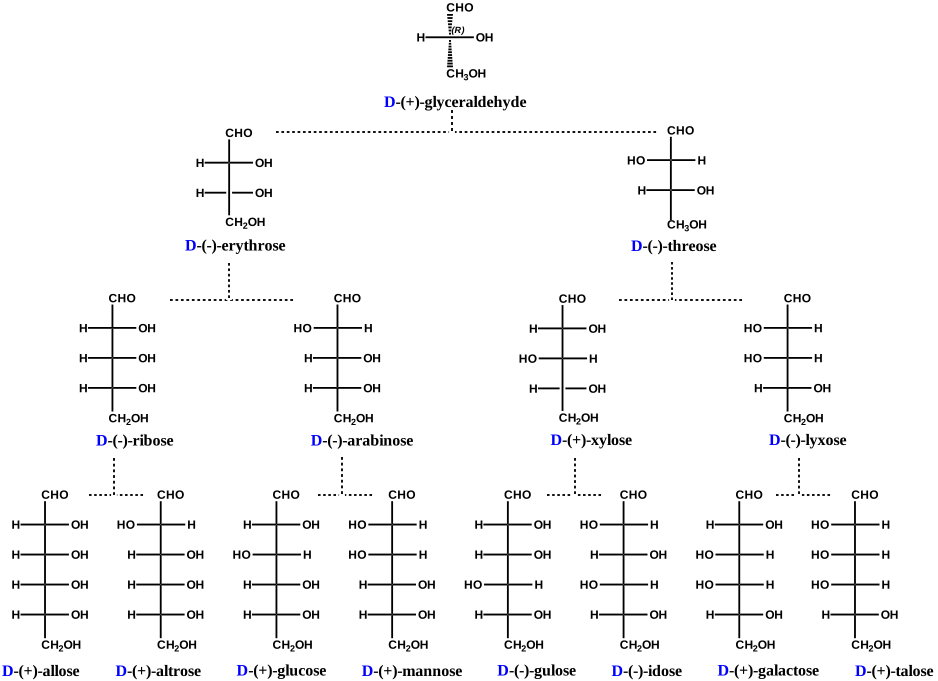
Text books often show the following diagram, famously consolidated over many years by Emil Fischer from 1891 onwards. At the top sits D-(+)-glyceraldehyde, to which all the monosaccharides below are connected by painstaking chemical transformations.

In this notation, D (for all these structures) indicates the absolute configuration of the series, deriving from placing the last highest priority group before an achiral carbon at the bottom of the representation (the hydroxyl group) to the right of the diagram (= dextro = D). The mirror images of all these species would be designated L (since the hydroxide group would now be on the left). The challenge emerges in connecting this absolute configuration to some measurable property, and during the late 19th century, the only feasible measurement would be the sign of the optical rotation. It was decided that since no method existed at the time to connect absolute configuration to the sign of optical rotation, D-glyceraldehyde (nowadays more commonly referred to by its CIP notatation (R)-glyceraldehyde), would be by convention connected to the enantiomer giving a positive rotation, hence D-(+)-glyceraldehyde. This species has indeed mostly been reported as having a small positive rotation of e.g. +9.2[1] in water. If a future procedure were to confirm that the D-enantiomer had a positive rotation, Fischer’s guess would be proven correct. Possibly.

I quickly mention that this experiment was of course carried out in 1951, as noted in the previous post[2], but on a rubidium tartrate salt and not on glyceraldehyde itself (which is a liquid). Since the two could be connected by chemical synthesis, Fischer’s guess was indeed confirmed as correct. This proof rapidly made D-(+)-glyceraldehyde less relevant as the tentpole of absolute configuration (in sugars) and people stopped worrying about it. But the assertion that the D/(R) enantiomer has a positive rotation by indicating (+) continues in all the diagrams related to the above that I have come across. So is it correct?

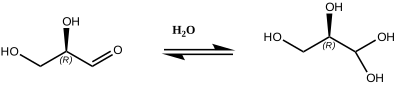
Well, an earlier attempt in 1937 to assign optical rotation to absolute configuration had been attempted by Kirkwood[3] using quantum mechanical theory to make that connection. I thought I might apply the modern version of that approach to (R)-glyceraldehyde, using the same procedure I had tried earlier. A conformational analysis of the molecule, followed by dispersion-corrected calculation of free energies and then of the optical rotations gives the following table. Data is at 10.14469/hpc/6436These calculations show that the rotation is strongly negative! Can they be in serious error? Perhaps however there are two different species in solution. Indeed, the equilibrium below is shown to favour the rhs for aldehydes, as shown by the following concentration profile as a function of temperature.[4] This shows that at 30°, only 4% of this molecule is in the aldehyde form.

The article also reports optical rotations, at three wavelengths. I should note here that the notation (+) means only the rotation at 589nm (yes, you can get sign inversions on moving from one wavelength to another![5]). At 30° the observed rotation for D-glyceraldehyde is indeed strongly negative, whilst it is the hydrated form that is moderately (+).

There is a discrepancy of ~47° between these measured values and the calculated one at 589nm. I hope to explore the origins of this error in a separate post.

So we see by both experiment and theory that D-(+)-glyceraldehyde, if the meaning of that (+) is to be upheld, should really be D-(-)-glyceraldehyde. Note that many of the sugars shown in the top diagram have (-) as well as (+), and so there is no reason that glyceraldehyde should be any different.

References

  1. H.J. Lamble, M.J. Danson, D.W. Hough, and S.D. Bull, "Engineering stereocontrol into an aldolase-catalysed reaction", Chemical Communications, pp. 124, 2005. https://doi.org/10.1039/b413255f
  2. J.M. BIJVOET, A.F. PEERDEMAN, and A.J. van BOMMEL, "Determination of the Absolute Configuration of Optically Active Compounds by Means of X-Rays", Nature, vol. 168, pp. 271-272, 1951. https://doi.org/10.1038/168271a0
  3. J.G. Kirkwood, "On the Theory of Optical Rotatory Power", The Journal of Chemical Physics, vol. 5, pp. 479-491, 1937. https://doi.org/10.1063/1.1750060
  4. M. Fedoroňko, "Optical activity of D-glyceraldehyde in aqueous solutions", Collection of Czechoslovak Chemical Communications, vol. 49, pp. 1167-1172, 1984. https://doi.org/10.1135/cccc19841167
  5. M.S. Andrade, V.S. Silva, A.M. Lourenço, A.M. Lobo, and H.S. Rzepa, "Chiroptical Properties of Streptorubin B: The Synergy Between Theory and Experiment", Chirality, vol. 27, pp. 745-751, 2015. https://doi.org/10.1002/chir.22486

Prediction preceding experiment in chemistry – how unlucky was John Kirkwood?

Saturday, November 30th, 2019

Some areas of science progressed via very famous predictions that were subsequently verified by experiments. Think of Einstein and gravitational waves or of Dirac and the positron. There are fewer well-known examples in chemistry; perhaps Watson and Crick’s prediction of the structure of DNA, albeit based on the interpretation of an existing experimental result. Here I take a look at a what if, that of John Kirkwood’s prediction of the absolute configuration of a small molecule based entirely on matching up the sign of a measured optical rotation with that predicted by (his) theory.

The confirmation that Emil Fischer’s 1891 proposed convention for the absolute configuration of sugars was in fact correct was famously made by Bijvoet in 1951 using crystallography.[1] I first told this story in 2012, noting that Kirkwood apparently made his seminal contribution a year later in 1952[2] using his quantum mechanical theory of optical rotation to independently come up with the same result. Nowadays he rarely gets the credit for solving the problem of absolute configuration. But wait, Kirkwood’s first stab at solving this problem in fact came in 1937,[3] a full 14 years before Bijvoet’s famous result (for which incidentally the Nobel prize was not awarded). 

I have been asked to talk about this story at a Historical meeting of the Royal Society of Chemistry in March 2020, and for this purpose thought I should take a closer look at Kirkwood’s 1937 article. In it, he sets out his quantum mechanical theory of optical rotation. Remember that in that era, there was no recourse to computers and solving the required (heavily approximated) equations had to be done entirely using mechanical calculators. Kirkwood chooses to analyse the following molecule;

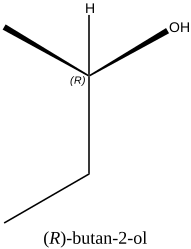
I have redrawn it below in more modern form (and name). The difference between the two is in the notations and (R). The former relates to the sign of the optical rotation [α]D where d stands for dextrorotation, or clockwise and is also often represented by (+) and being the sign of the measured rotation. (R) is the modern notation for the absolute configuration shown by Kirkwood in his diagram (Fig. 1).

He is asserting below that the enantiomer of butan-2-ol with a measured rotation of 13.9° has (in modern notation) the absolute configuration (R) because his calculations predict somewhere between 9.5° and 21.9° for this specific three-dimensional geometry. So why is Kirkwood not lauded for solving this problem in 1937? Well, because we now know that (R)-butan-2-ol has a negative rotation of -13.9°![4]

Kirkwood is however very aware of the potential problems with his approach. In a nutshell, conformation! In particular, the conformers resulting from rotation about the central C-C bond and especially the C-O bond, where for the purposes of his theory he assumed axial symmetry about that bond.

and

Now, in 1937 the area of such conformational analysis was hardly known; only in 1948[5] would Barton first put it firmly on the map (and win the Nobel prize for this work). So, in attempting his connection between and (R), Kirkwood was in a sense far too ahead of his time. It worth asking what modern quantum mechanical theory makes of this problem and does it cast any light on why Kirkwood actually got his assignment wrong (in 1937,[3] although he WAS correct in 1952[2]).

  1. Firstly, I carried out a comprehensive search of the rotamers about the C-C and C-O bond using molecular mechanics (a method first introduced by Barton in 1948[5]) and using the MMFF94 forcefield. This identifies seven distinct conformations arising from rotations about these two bonds. Some warning signs area aready present; these seven are bounded by an energy of only 1.2 kcal/mol! All are likely to have a significant Boltzmann population.
  2. Next, to ramp up the level of theory to density functional quantum mechanics, at the B3LYP+GD3+BJ/Def2-TZVPP/SCRF=diethyl ether level (FAIR Data: 10.14469/hpc/6367) and at the minimum energy geometry for each conformation, an optical rotation is calculated (at the ωB97XD/Def2-TZVPP/SCRF=diethyl ether) level. Whilst not the highest practical level possible nowadays, it far exceeds in accuracy what Kirkwood had at his disposal in 1937. The results are at 10.14469/hpc/6367 and available as a spreadsheet if you want to adapt this for your own needs.

What can we conclude?

  1. All seven conformations have a significant population (at 298K). The ordering, with one small exception, is the same for both Molecular and Quantum mechanics. The relative free energies span a slightly larger range than the steric energies obtained from molecular mechanics (1.7 kcal/mol) but all have a population of >6%.
  2. Three conformations have a negative or (-) predicted rotation, and four are positive (+).
  3. When weighted by population, the overall predicted rotation is -18°, which compares well with that observed (~-13°).
  4. Kirkwood, who was not able to include all seven conformations in his analysis, was deeply unlucky that his particular choices/assumptions of conformations happened to have (+) rotations. But he was very much aware that this result could happen (although he does underestimate this in concluding that his tentative result is “probably accurate”. To be fair, if he had been more realistic, the referees might well have rejected his article!).

So the “what if“.

  • If Kirkwood had chosen a conformationally simpler molecule which did not have as many as seven populated conformations, he may well have got his prediction correct (and for mostly the right reasons!). 
  • But he has to be given lots of credit for recognising that optical rotations can be sensitive to conformational analysis. In this regard he could be regarded as one of the early fathers of that entire (Nobel prizing winning) field.
  • He was 14 years ahead of the eventual unambiguous experiment that verified the Fischer convention. Of course he would have needed to correlate the absolute configuration of butan-2-ol with those of both sugars and amino acids using chemical transformations. In 1937, this may well have been quite synthetically challenging (but of course perhaps this correlation may have been actually known at the time. Does anybody reading this know?)
  • But given that two other discoveries, both of which won the Nobel prize (the structure of peptides and the structure of DNA), depended on knowing with certainty the absolute configurations of amino acids and sugars respectively, Kirkwood’s method could be argued directly impacted upon no less than three Nobel prizes within two decades of his initial work.
  • Remember that Watson and Crick “predicted” that the DNA helix is right-handed, as it happens on the basis of a single “short” H…H contact in their model which apparently disfavoured a left-handed helix. Boy was that a lucky guess (since that conclusion cannot be sustained nowadays on the basis of short H…H contacts). And that Pauling, in his own initial structures suggesting an α-helix in some proteins, predicted (wrongly) that the helix was left handed.  

So I think that yes, Kirkwood was pretty unlucky in his 1937 effort. And by 1952 (when he was correct), the opportunity for widespread recognition for this work and perhaps even a Nobel prize, had passed.


Stereochemical notation has suffered from some measure of confusion over the years. Much of that confusion was cleared up with the introduction of the CIP rules, but historical vestiges remain. Thus d was originally used by Fischer himself to indicate configuration using the sense of direction on his diagram, but by others (including Kirkwood in 1937) to indicate the sense of direction of polarised light, an entirely different property. Eventually, the configurational sense became distinguished from the rotational light sense by capitalising the former (which of itself can still lead to confusions). Nowadays, the configuration of an entire molecule tends to be described by specifying the absolute configuration of all the asymmetric units using the CIP formalism, whilst Fischer’s formalism (now rationalised D/L), is only applied to sugars and cannot be used generally for other molecules. If you want to explore the temperature dependence of the Boltzmann populations and hence the predicted change in rotation with temperature, do please download the spreadsheet and try it out for yourself! The elapsed time for these 14 calculations took about 2 hours. The exhaustive molecular mechanics calculations took <20 seconds.

References

  1. J.M. BIJVOET, A.F. PEERDEMAN, and A.J. van BOMMEL, "Determination of the Absolute Configuration of Optically Active Compounds by Means of X-Rays", Nature, vol. 168, pp. 271-272, 1951. https://doi.org/10.1038/168271a0
  2. W.W. Wood, W. Fickett, and J.G. Kirkwood, "The Absolute Configuration of Optically Active Molecules", The Journal of Chemical Physics, vol. 20, pp. 561-568, 1952. https://doi.org/10.1063/1.1700491
  3. J.G. Kirkwood, "On the Theory of Optical Rotatory Power", The Journal of Chemical Physics, vol. 5, pp. 479-491, 1937. https://doi.org/10.1063/1.1750060
  4. A.Z. Gonzalez, J.G. Román, E. Gonzalez, J. Martinez, J.R. Medina, K. Matos, and J.A. Soderquist, "9-Borabicyclo[3.3.2]decanes and the Asymmetric Hydroboration of 1,1-Disubstituted Alkenes", Journal of the American Chemical Society, vol. 130, pp. 9218-9219, 2008. https://doi.org/10.1021/ja803119p
  5. D.H.R. Barton, "83. Interactions between non-bonded atoms, and the structure of cis-decalin", Journal of the Chemical Society (Resumed), pp. 340, 1948. https://doi.org/10.1039/jr9480000340