A new example of a quadruple bond from carbon – to Fe.

November 7th, 2020

Way back in 2010, I was writing about an experience I had just had during an organic chemistry tutorial, which morphed into speculation as to whether a carbon atom might sustain a quadruple bond to nitrogen. A decade on, and possibly approaching 100 articles by many authors on the topic, quadruple bonds to carbon continue to fascinate. Now an article as appeared[1] repeating this speculation for a carbon to iron quadruple bond, in the very simple species C⩸Fe(CO)3. This is particularly exciting because of the very real prospect of synthesising this species and perchance getting a crystal structure (something not possible with most of the other quadruply bonded carbon systems studied to date).

They authors report[1] that this sytem is well described by a single-configurational wavefunction and hence that a M062X/Def2-TZVPP calculation is a good description of the bonding. In the article you will find the valence molecular orbitals shown, which by their nature show a lot of delocalisation. Because the more localised NBOs are not shown in the article, I illustrate them here, as 3D rotatable models. The DOI for the calculation can be found at 10.14469/hpc/7537.

CFe(CO)3
NBO 37 π NBO 36 π

Click to view 3D model of NBO 37

Click to view 3D model of NBO 36

NBO 33 σ NBO 23 σ

Click to view 3D model of NBO 33

Click to view 3D model of NBO 23

These NBOs show very clearly that the two higher energy orbitals are orthogonal π-bonds to carbon from Fe and the two lower energy orbitals are both σ-bonds to carbon from Fe. Exactly the same picture appears for C2, which has been often mentioned on this blog.

All that remains is that some inspired synthetic chemist sets out to make C⩸Fe(CO)3 and to report back on its properties. I fancy the last has not yet been heard about quadruple bonds to carbon!


Postscript: Here are the analogous orbitals for the species N⩸Mn(CO)3 to illustrate their evolution across an isoelectronic series.

NMn(CO)3
NBO 35 NBO 34

Click to view 3D model of NBO 35

Click to view 3D model of NBO 34

NBO 33 NBO 20

Click to view 3D model of NBO 33

Click to view 3D model of NBO 20

NBO 33 (the higher in energy of the two σ-type bonds) has an interesting structure. Here it is at a slightly lower threshold:

Click to view 3D model of NBO 33 for NMn(CO)3 at threshold 0.015au

It has an inner compact σ-bond running along the axis of the bond and an outer “wrap” of different phase. A two layer σ-bond if you like!

References

  1. A.J. Kalita, S.S. Rohman, C. Kashyap, S.S. Ullah, and A.K. Guha, "Transition metal carbon quadruple bond: viability through single electron transmutation", Physical Chemistry Chemical Physics, vol. 22, pp. 24178-24180, 2020. https://doi.org/10.1039/d0cp03436c

Internet Archeology: an example of a revitalised molecular resource with a new activity now built in.

November 5th, 2020

In Internet terms, 23 years ago is verging on pre-history. Much of what was happening around 1997 on the Web was still highly experimental and so its worth taking a look at some of this to see how it has survived or whether it can be “curated” into a form that would still be useful. I had noted in my earlier comment a site which early on had become non-functional and then speculated whether any volunteers might have suggestions for how to best rescue it.

There are two ways of approaching any such rescue operation; a manual editing of the code behind the site (the HTML) or a more automated approach to doing so. The site in question in fact probably has more than 200 HTML documents that would need such an edit, which is impractical (or costly) for human curation. But the underlying well-formed structure of HTML lends itself to automation and now a saviour in the form of Ángel has indeed come forward with the solution!

One of the least stable aspects of Web pages written in the period 1993-1998 or so was the manner in which extensions to perform specialised tasks were handled. The first solution in chemistry[1] was to use the Web page itself to launch an external molecular viewer such as Rasmol via a protocol known as MIME,[2] but that depended very much on the viewer already being pre-installed on the device being used. This was a shop-stopper if you did not have the administrative rights to do so. Netscape was a company set up in 1994 whose main product was an innovative browser which could be extended by “embedding” a window directly into the display page using a plug-in rather than the earlier solution of having a separate window.  In 1995, one such plugin appeared for the Netscape browser called “Chime”, which allowed 3D coordinates representing a molecule to be displayed as an interactive model within the page. The plugin still had to be pre-installed by the user and this is how in 1997 https://www.ch.ic.ac.uk/vchemlib was set up to function.

The limitations of plugin pre-installation soon became apparent. A partial solution was to download the plugin as part of invoking the web page itself. For this to work across a range of different devices running different operating systems, the plugin had to work on all of them. The solution was based on Java applets, which in turn would still rely on an initial underlying installation (with admin rights) of the JRE (Java Run-time Environment) on the device. This would now support a wide variety of different Java applets, rather than requiring each of them to be pre-installed by the viewer of the page. Between the period 1998 or so up to around 2015, the functionality of the Chime plugin was implemented and indeed greatly extended into the Java-based Jmol applet.[3] Unfortunately, using this did now require rewriting the underlying HTML code for each individual Jmol invocation.

The next step brings us up to the present method, which was to replace the Java applet by a Javascript-based module which would NOT require a JRE to be pre-installed. All the required installation would be handled by the browser itself; the runtime environment in effect was now built into browser itself. This again required a change to the HTML code for the invoking this tool. So the nature of the curation required to revitalise https://www.ch.ic.ac.uk/vchemlib/ can now be defined: replace the HTML code used to invoke Chime by new code which invokes its current replacement, JSmol (which stands for JavaScript Jmol). The good news is that this is a simple programmatic procedure, which itself can be implemented using Javascript. Here is where Angel comes in. He has freshly written convert.js as a script which performs this task. It is now invoked by simply adding a header to every HTML document as <script src="convert.js" type="text/javascript"></script> and all the necessary conversion from the old Chime syntax is then done on the fly when the page is loaded.

The big win is that as a toolkit, JSmol is very much more capable than Chime ever was! One of the many interesting things it can do that was not previously possible is “computation”. I thought I would illustrate how this veritable resource has not only been curated back into (mostly) working order, but also how its functionality as a molecular toolkit has been greatly enhanced. 

We are going to illustrate this using the tool optimize structure, the menu for which can be invoked by a right-mouse click anywhere in the molecule window. What does this mean? Well, I need to start by covering the basic sources for 3D molecular coordinates, which can be generated using a wide variety of methods, some of which are listed below.

  1. They may be derived from simple 2D flat diagrams such as produced by e.g. Chemdraw, with some indication of 3D using chemical hashes and wedges. The “z” coordinate can be zero for all atoms. Clearly not optimal.
  2. A 3D structure can be generated from a 2D one using very simple rules about the 3D environment about each atom, such as tetrahedral carbons and simple standard bond lengths and angles. Programs such as Avogadro[4] can do this as part of loading a molecule with only 2D coordinates present.
  3. This simple rule can be extended to using a full force field, which includes much more information about bond distances, bond angles, torsions, inclusion of van der Waals attractions and repulsions and electrostatic effects (but significantly not any effects based on electronic structure).
  4. Full-blown quantum mechanical computation of the geometry, including electronic effects.
  5. Experimental coordinates such as obtained using crystallography. 

In general, information on which of the above categories were used to obtain the 3D coordinates are infrequently, if ever, actually declared on the web page. Indeed, this information for the site https://www.ch.ic.ac.uk/vchemlib/ is missing, only the original author might know! Of these types, #3 is computationally fast enough to be implemented into a Javascript such as JSmol, so we can now test how “optimised” any set of 3D coordinates actually is (#4 is not yet possible). Here are some instructions on how to proceed. For illustration I will use this molecule from the site, accessed as https://www.ch.ic.ac.uk/vchemlib/mol/direct_pdb.html?senses/vision/colour/pdbs/carotene.pdb The coordinates are expressed in the so-called PDB format, which was originally developed with proteins in mind and not small molecules.

  1. Load the link above and right-click to bring up the toolbar menu shown below:
  2. When doing any computation (especially one that might turn out to be slow!), it is useful to get feedback and this is done by opening the Console. With the molecule now available to inspect, you might notice some anomalies indicated with red arrows.
  3. The top panel of the Console shows JSmol responses and the bottom panel is where you can type commands for JSmol. Type the following commands one at a time into this bottom panel, each ending with pressing the return key:
    • set forcefield "MMFF94
    • set minimizationMaxAtoms 400
    • minimize steps 100
  4. This produces the result shown below. The MMFF94 force field has been selected, the maximum atom count set to 400 (default is 200) and 100 steps of energy minimisation requested (the default).  The energy E is the so-called steric energy, which is the sum of all the terms given in #3 above. The fact that it starts with a value of 27606 kJ/mol and reaches 157 kcal/mol after 100 iterations suggests that the 3D coordinates were indeed far from optimum;  E is normally in the range -300 to + 300 kcal. Notice also the dE is the change in energy every 10 iterations. You really need to get this down a bit lower, so repeat the minimise instruction (and set the max steps to a larger value such as 1000)
  5. The minimisation finally converges after 806 cycles (a default of 100 is rarely enough) to 108.6 kcal. To update to the final geometry, enter a return in the bottom panel. Inspect the region indicated with red arrows again!

  6. Now type set forcefield "UFF" into the bottom panel and repeat the minimisations until convergence is obtained (about 4000 cycles!). This is using a much more approximate force field, but one that is applicable to most elements in the periodic table. The initial UFF energy is 1086 kJ/mol and the final one 627, a much smaller change than before (absolute MMFF94 and UFF energies themselves cannot be compared) accompanied by only a small change to the final geometry.
  7. Now type e.g. write beta-carotene.pdb into the bottom panel to download the final and now optimised geometry file to your device. You might as well put all that hard-earned optimisation to good use elsewhere. 
  8. I will end with an experiment to highlight an issue intrinsic to force field optimisations. The force field operates by identifying standard environments for the atoms and bonds in the molecule, such as the atom hybridisations and assigning the correct type of force constant to them. If the molecule has not been defined correctly, this process cannot be done. In these instances, only the UFF field can be used. Then try this example:
    https://www.ch.ic.ac.uk/vchemlib/mol/direct_pdb.html?polymer/synth/acrylates/pdbs/methyl_methacrylate.pdb
    and try to select the MMFF84 force field and mimimize. It will instead use the UFF field, almost certainly because the so called CONECT records in the PDB file are incomplete or incorrect. Nowadays, PDB is rarely used for these sorts of purposes, with e.g. a Molfile or CML format being preferred. This has much more reliable connectivity and bond type information baked into it. This sort of issue can be a real problem for larger molecules, since there are 100s of connection records defined and even a single error in any of them can prevent a good force field from being used. Even an experimentally derived set of coordinates such as from a crystal structure will still require atom and bond types to be correctly assigned. The general solution to this sort of issue is to move over to a quantum mechanical (QM) treatment, where atom and bond types are not used at all.  Instead the only information needed is the atom list and a set of approximate coordinates (and charge if the molecule is not neutral together with spin state).  Unfortunately,  implementing a QM procedure into JSmol would require computers that are perhaps a factor of ten faster interactively than current ones. Not impossible to envisage and perhaps the next improvement to this site in another 10 years time!

The concept that a Web-based resource like this can provide a chemical toolkit embedded within the page to conduct experiments such as the ones described above was nonetheless very much the original intention envisaged all those years ago.[1]


Just to clear this up, Java and Javascript are NOT the same despite the name. This is implied as kJ in this version of JSmol. You might as well write out carotene.mol or carotene.cml, which are better suited for further processing with more reliable bond records. The latter was indeed designed to avoid any loss of information during such conversions if at all possible! A similar anomaly formed the basis of this critique of the vibrational mode imaging of a tetraphenylporphrin.

References

  1. O. Casher, G.K. Chandramohan, M.J. Hargreaves, C. Leach, P. Murray-Rust, H.S. Rzepa, R. Sayle, and B.J. Whitaker, "Hyperactive molecules and the World-Wide-Web information system", Journal of the Chemical Society, Perkin Transactions 2, pp. 7, 1995. https://doi.org/10.1039/p29950000007
  2. H.S. Rzepa, P. Murray-Rust, and B.J. Whitaker, "The Application of Chemical Multipurpose Internet Mail Extensions (Chemical MIME) Internet Standards to Electronic Mail and World Wide Web Information Exchange", Journal of Chemical Information and Computer Sciences, vol. 38, pp. 976-982, 1998. https://doi.org/10.1021/ci9803233
  3. R.M. Hanson, "<i>Jmol</i>– a paradigm shift in crystallographic visualization", Journal of Applied Crystallography, vol. 43, pp. 1250-1260, 2010. https://doi.org/10.1107/s0021889810030256
  4. M.D. Hanwell, D.E. Curtis, D.C. Lonie, T. Vandermeersch, E. Zurek, and G.R. Hutchison, "Avogadro: an advanced semantic chemical editor, visualization, and analysis platform", Journal of Cheminformatics, vol. 4, 2012. https://doi.org/10.1186/1758-2946-4-17

Trimerous pericyclic reactions: what is the effect of changing the electron count by two?

November 2nd, 2020

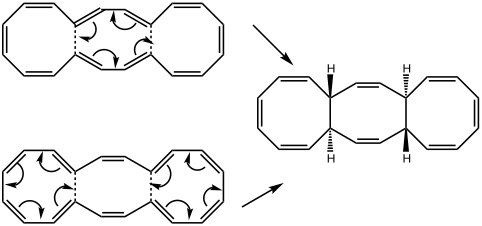
In an earlier post, I pondered on how the “arrow pushing” for the thermal pericyclic reactions of some annulenes (cyclic conjugated hydrocarbons) could be represented in terms of either two separate electrocyclic reactions or of one cycloaddition reaction. Each reaction is governed by selection rules which can be stated in terms of the anticipated aromaticity of the pericyclic transition state as belonging to a 4n or a 4n+2 class. This in turn determines whether the topology of the transition state belongs to a class of aromatic species known as either Hückel or Möbius. Here I play with the observation that by adding or removing two electrons from the molecule, the two classes 4n and 4n+2 can be swapped. What happens to the aromaticities of the transition states if that is done?

The test bed is a [20]annulene, which might undertake either a eight electron (4n) 4s+4s cycloaddition in the inner ring, or two eight electron (4n) electrocyclic reactions in the outer rings in which the new bond is formed antarafacially from opposite faces. The selection rules suggest that the former must proceed through an anti or non-aromatic Hückel transition state and the latter through an aromatic Möbius transition state.

We are measuring the aromaticity by using the so-called NICS NMR method, for which an aromatic value is a negative chemical shift for the NICS probe, a non-aromatic value is ~0 and an anti-aromatic value a positive chemical shift. The location of these probes is determined by analysis of the critical points in the electron density of the transition states and placement at either the ring or the cage critical point so determined.

# System Charge ν(s) ν(a) NICS (outer rings) NICS (inner ring) ΔG DOI
1 trans, D2 0 -399 -433 -6.7 -0.3 -774.036424 7483
2 trans, D2 +2 -388 -399 +4.0 +2.1 -773.381567 7490
3 trans, D2 -2 -412 -324 -15.0 -12.9 -774.179873 7526
4 cis, Cs 0 -413 -369 -8.6 -5.4 -774.048172 7482
5 cis, Cs +2 -640 -453 +11.1 +2.1 -773.386424 7493
6 cis, C2 0 -491 -459 -8.3 +1.4 -774.059141 7486
7 cis, C2 +2 -685 -479 +10.5 +2.3/+3.7 -773.392100 7497
8 cis, C2 -2 -926 -533 +8.4 -13.9 -774.2029900 7525

Each of the stationary points located is in fact a saddle point of order 2 (and in some cases 3), with ν(s) corresponding to normal vibrational mode for synchronous formation of both bonds, and ν(a) to formation of one C-C bond but cleavage of the other. The fact that both the force constants for these modes are negative suggests that the two electrocyclic reactions are independent and occur consecutively rather than concurrently. This then argues against it being a synchronous cycloaddition reaction, but could of course still be a highly asynchronous one.

The first three examples are in fact for a [20]annulene with a central trans rather than cis double bond (as illustrated above), resulting in D2 symmetry. The neutral system has the outer ring aromatic (-ve NICS) and the inner ring non-aromatic, as appropriate for the rules stated above. Removing two electrons might you would imagine swap these two, but of course the electrons are removed from the entire [20]annulene as a whole, and not from specific regions. In fact it results in mildly anti-aromatic rings in both regions. Adding two electrons now makes the rings strongly aromatic, behaving as if the two electrons have really only modified the inner cycloaddition reaction.

The reactions with a cis stereochemistry at the central bond again confirm for the rules for the neutral annulene, but now the dianion predicts the outer ring to be anti-aromatic and the inner one aromatic, with a reversal of aromaticity for both sets of rings. Despite the cycloaddition now being an aromatic transition state, the force constants still indicate it to be asynchronous. But the observation that ν(s) is now significantly larger than ν(a) suggests that perhaps the reaction can indeed now be considered as at least in part an asymmetric cycloaddition. 

Click to view vibrational modes

What is the point of doing these calculations, you may well ask? Its unlikely that they could ever be subjected to experimental tests! Well, here we are using quantum mechanical calculations as an experimental procedure in its own right, to try to push the simple pericyclic selection rules beyond anything envisaged by its original formulators.

Room-temperature superconductivity in a carbonaceous sulfur hydride!

October 17th, 2020

The title of this post indicates the exciting prospect that a method of producing a room temperature superconductor has finally been achived[1]. This is only possible at enormous pressures however; >267 gigaPascals (GPa) or 2,635,023 atmospheres.

The system is made by milling a mixture of elemental carbon and sulfur, followed by adding hydrogen gas, compression to 4 GPa and finally laser-induced photolysis at 532nm for several hours. The result of this is the production of three entirely unexotic molecules, H2S, CH4 and H2 in approximately stoichiometic quantities, which at this pressure form a complex bound by van der Waals attractions. Since in this blog, I am particularly interested in molecular structures, my eye was drawn to “Extended data Figure 6, A DFT-optimized structure for (H2S)(CH4)H2 (variant 2) at 4 GPa. This structure was produced by DFT optimisation modelled at 4 GPa using the PBE functional and importantly the now standard Grimme dispersion correction (often indicated as GD3+BJ, and used frequently on this blog). Since this complex is bound by dispersion attractions, it might be tempting to conclude that the intermolecular features of this structure originate in part from the Grimme dispersion model as well as possible hydrogen bonding from quantum effects.

I would love to be able to play with this structure to e.g. measure properties such as hydrogen bonding lengths or perform e.g. a QTAIM analysis, but have not yet acquired the “extended data” of figure 6 in the form of coordinates.‡  I have italicised the term extended data, being unsure what the journal means by this. If the figure relates to the three-dimensional extended structure of the crystal form of this complex, then one might imagine that any extended data associated with this figure would indeed be the numerical coordinates. Since the authors express the hope that “chemical tuning” of this system might enable complexes exhibiting superconductivity at lower pressures, I fancy that these coordinates might help provide insight into how to achieve such tuning. This closing paragraph of mine arose because I still frequently fail to see even prestiguous journals doing very much to encourage FAIR data associated with articles. In this instance, FAIR, at least to my mind is more than just a Figure (with or without extended data), but is genuinely inter-operable (I) or re-usable (R) data such as indeed are coordinates. To this end, I am unconvinced that this “extended data figure” is indeed properly FAIR.


I have requested these from the authors, and hope to make them available in the form of a 3D rotatable model here on the blog. It would be interesting to know if this model has been tested at the enormous pressures in this experiment. Standard dispersion models pertain to normal pressures. As was done here for Na2He.

References

  1. E. Snider, N. Dasenbrock-Gammon, R. McBride, M. Debessai, H. Vindana, K. Vencatasamy, K.V. Lawler, A. Salamat, and R.P. Dias, "RETRACTED ARTICLE: Room-temperature superconductivity in a carbonaceous sulfur hydride", Nature, vol. 586, pp. 373-377, 2020. https://doi.org/10.1038/s41586-020-2801-z

Trimerous pericyclic reactions.

October 8th, 2020

I occasionally spot an old blog that emerges, if only briefly, as “trending”. In this instance, only the second blog I ever wrote here, way back in 2009 as a follow up to this article.[1] With something of that age, its always worth revisiting to see if any aspect needs updating or expanding, given the uptick in interest. It related to the observation that there can be more than one way of expressing the “curly arrows” for some pericyclic reactions. These alternatives may each represent different types of such reactions, hence leading to a conundrum for students of how to label the mechanism. I had noted in that blog that I intended to revisit the topic and so a mere eleven years later here it is!

Annulenes, or cyclic conjugated polyenes can (hypothetically) indulge in transannular cyclisations which can be regarded as either two electrocyclic reactions, or one cycloaddition reaction, or perhaps a chimera of all three which here I describe as trimerous. Locating the transition states for such a trimerous reaction is quite straightforward and here I give the FAIR data DOI for all the examples shown below (DOI: 10.14469/hpc/7440). The calculations are all at the B3LYP+GD3BJ/Def2-TZVPP level.

The central reaction can be represented as a cycloaddition in which two new bonds form between the termini of two conjugated alkenes. The stereochemistry for each alkene component is defined as either suprafacial (the two new bonds form to the same face of that alkene) or antarafacial (the two new bonds form on opposite faces of that alkene). Another way of representing the curly arrow mechanism is to draw to separate electrocyclic reactions, in which one new bond is formed between the termini of a conjugated alkene. If this bond connects at each end to the same face of that alkene, the bond forms suprafacially, if it connects opposite faces of that alkene it forms antarafacially. One must also count the number of cyclic curly arrows used in each representation; the examples above illustrate two, three or four curly arrows, representing four, six or eight electrons. One can now combine these attributes to form some selection rules.

For thermal reactions, one can state that if the total electron count represented by an odd number of curly arrows corresponding to the formula 4n+2 (n = 0,1,2, etc, the n is NOT the same as that shown in the scheme above) and there are either no (or an even number of) antarafacial components, the reaction will be “allowed” and proceed through a “Huckel aromatic transition state“. Alternatively, if the total electron count corresponds to an even number of curly arrows matching the formula 4n (n=1,2, etc) and there is one (or an odd number of) antarafacial components, the reaction will this time proceed through a “Mobius aromatic transition state“. These are in fact a concise alternative statement of the Woodward-Hoffmann selection rules for thermal pericyclic reactions.

Entry # n (scheme only) [ ]-Annulene
TS
 electron count
in each ring
s/a
components
NICS for each
ring centroid
1 0 10 endo 4,6,4 a,s+s,a -3.5,-15.3,-3.5
2 0 10 exo 4,6,4 a,s+s,a -2.8,-11.6,-2.8
3 0 12, saddle=1 4,8,4 s,s+a,* -0.1,-10.3,-2.0
4 0 12, saddle=2 4,8,4 *,s+a,* -0.9,-10.7,-0.9
5 1 14 endo 6,6,6 a,s+s,a +2.2,-17.1,+2.2
6 1 14 exo 6,6,6 a,s+s,a +9.7,-11.1,+9.7
7 1 16 6,8,6 a,s+a,a +9.1,-9.6,+9.1
8 2 18 endo, saddle=1 8,6,8 s,s+s,a -2.0,-15.0,-
9 2 18 endo, saddle=2 8,6,8 *,s+s,* -0.5,-17.1,-0.5
10 2 18 exo,saddle=1 8,6,8 a,s+s,a -6.2,-4.5,-3.7
11 2 18 exo,saddle=2 8,6,8 a,s+s,a -8.2,-1.4,-8.2
12 2 20,saddle=3 8,8,8 a,s+*,a -8.5,+0.3,-8.5

No ring centroid in AIM analysis.The symmetrical geometry has two negative force constants (saddle=2), representing an asymmetric distortion to a true transition state (saddle=1).

For the reactions shown in the scheme above, we will determine the NICS (Nucleus independent chemical shift) value at the ring centroid of each reaction to ascertain the aromaticity in that ring. The effective ring centroid in turn is located by performing an AIM analysis of the topology of the electron density and locating the RCP (ring critical points in that density; a critical point itself is one where the first derivatives of the density with respect to the three cartesian coordinates is zero) or in several examples the CCP (Cage critical point). I will discuss some of these systems individually, but in fact there is a wealth of information available for each one and to discover it all, you should go to the data files and inspect all the structures for yourself. Firstly, the colour code in the table above:

  • In the s/a column, blue represents systems where the electrocyclic component forms a bond antarafacially. whereas the cycloaddition component forms both bonds suprafacially to both the alkene and the diene.
  • Red represents systems where the electrocyclic component forms a terminus bond antarafacially and the cycloaddition component forms a bond suprafacially to the alkene but antarafacially to the diene.
  • Where the π-system in the pericyclic transition state has a local orthogonality (i.e. the pericyclic π-system is locally twisted by 90°±6 at one point) it is not possible to confidently distinguish between supra and antarafacial. Such instances are declared non-aromatic and are shown in black.
  • In the NICS column, green represents an aromatic value and red an antiaromatic value. Black is effectively non-aromatic.

Individual entries

The way to read the table above is the following. In the 4th column (electron count in each ring, corresponding to the curly arrows representing the reaction at that ring), determine if the count belongs to the 4n or the 4n+2 rule.  Next for each ring, is the number of antarafacial components odd, or zero. Finally, does the NICS aromaticity index match with the inference from the first two properties, i.e. 4n+2 + zero a = aromatic, 4n + odd a = aromatic and the corollary of 4n+2 + odd a = anti-aromatic, 4n + zero a = anti-aromatic.

Entry 1:  All three rings correspond to aromatic pericyclic transition states, but with the cycloaddition ring far more aromatic than the electroclisation rings. This is reflected in the bond lengths in the rings. The cycloaddition ring has lengths close to the “aromatic” value of 1.4Å. whereas the electrocyclic rings have highly alternating bond lengths. The calculated lengths correspond to the “cycloaddition” curly arrows in the scheme above and not to the “electrocyclic” arrows. This reaction does not have the characteristics of three simultaneous pericyclic reactions, or to use the parlance of the title of this post, it is not trimerous.

Click image to see 3D model.

Entry 6: This time, the central ring is again strongly aromatic (4n+2 + zero a = aromatic) but the two outer rings are strongly antiaromatic (4n+2 + odd a = anti-aromatic). Again the curly arrows correspond to cycloaddition and not electrocyclisation.

Click image to see 3D model.

Entry 11: As with entry 1, all three rings should again be aromatic (4n+2 + zero a = aromatic;4n + odd a = aromatic).In reality the bond lengths and  aromaticity indicate that this time the curly arrows are those of two concurrent electrocyclic reactions and NOT of one cycloaddition.  But there is a sting in the tail. This symmetrical system is NOT a true transition state. 

Click image to see 3D model.

Entry 10: This is the true transition state corresponding to entry 11, in which completion of one electrocyclic reaction preceeds the other; they are no longer synchronous but asynchronous, with one C-C bond (1.946Å) formed before the other (2.790Å). This pericyclic reaction can indeed be now considered trimerous, albeit with the three individual pericyclic reactions happening at different rates.

Click image to see 3D model

We can see that allowed pericyclic reactions in which three separate modes operate in concert (trimerous) are unlikely to happen. In effect the “aromaticity” tends to localise in one region rather than operate simultaneously in three rings. The collection of examples above also nicely illustrates the operation of the Woodward-Hoffmann rules as recast in terms of transition state aromaticity.


The original blog was also data rich, containing the encouragement to Click above to obtain model. It did not however cite the DOI of the repository entry for this data, an omission here rectified. †Or even, but no examples of this in the table.

References

  1. H.S. Rzepa, "The Aromaticity of Pericyclic Reaction Transition States", Journal of Chemical Education, vol. 84, pp. 1535, 2007. https://doi.org/10.1021/ed084p1535

Blasts from the past: a snapshot of online content in chemistry, ~1994-1998.

September 28th, 2020

With universities around the world having to very rapidly transition to blended learning (a mixture of virtual and face-2-face experiences) with a very large component based on online materials, I thought it might be interesting to try to give one snapshot of when the online experience started to happen in chemistry.

My start point will in fact be 1993, when the method of exposing online content currently in use (the “web”) really got going. Using the HTML language, Web servers started to appear in abundance around that time. By the end of 1993, perhaps 50 Web servers were operational and of course the number started to rise exponentially thereafter, to the point that they must number billions by now. There had of course been online content before then, largely in the form of file downloads using protocols such as FTP or Gopher, but the Web was the first that allowed richly visual content to be immediately presented online in an easily navigable form using hyperlinks. By around 1995, there was sufficient online content that collections of such materials started appearing. Remember, this was still before the days of global search engines such as Google (which in fact appeared around 1996) allowed you to find material. So it was that I too decided then to create a snapshot of what materials there were on the topic of chemistry. My effort occurred from 1994-1998 and it can be found here:

https://www.ch.ic.ac.uk/GIC/

It indeed has not been curated since 1998, and so what is called “link rot” has set in. After >22 years, this is very considerable, as you will no doubt discover for yourselves. There are 48 sites in this collection and although I have not tried them all, I suspect no more than perhaps 10 continue to resolve to content to this day. Much of it relates to university level content, but at least one of our own projects (Virtual Chemistry library, or V-chemlib) was directed at schools and museums (the Science museum in fact).

Even if the main site has not suffered link-rot, the content may well have done. In those days a variety of early techologies were used to animate the content and render it more interactive. One of these was the Chime 3D molecular viewer, which the project above makes use of. That is no longer functional (although with some curation, there is no doubt it could be rescued).

So this exercise is really one which might be called Internet Archeology, of finding artefacts and materials that have been long buried and whose discovery and analysis yields fascinating insights into their own eras. In this case, an era that is only 22-26 years ago! I doubt anyone at the time thought that a mere quarter of a century later, almost entire university courses might be delivered in this way, and for reasons no-one would wish to have experienced.


Volunteers to do so welcome!

The Willgerodt-Kindler reaction. Completing the Box set.

September 7th, 2020

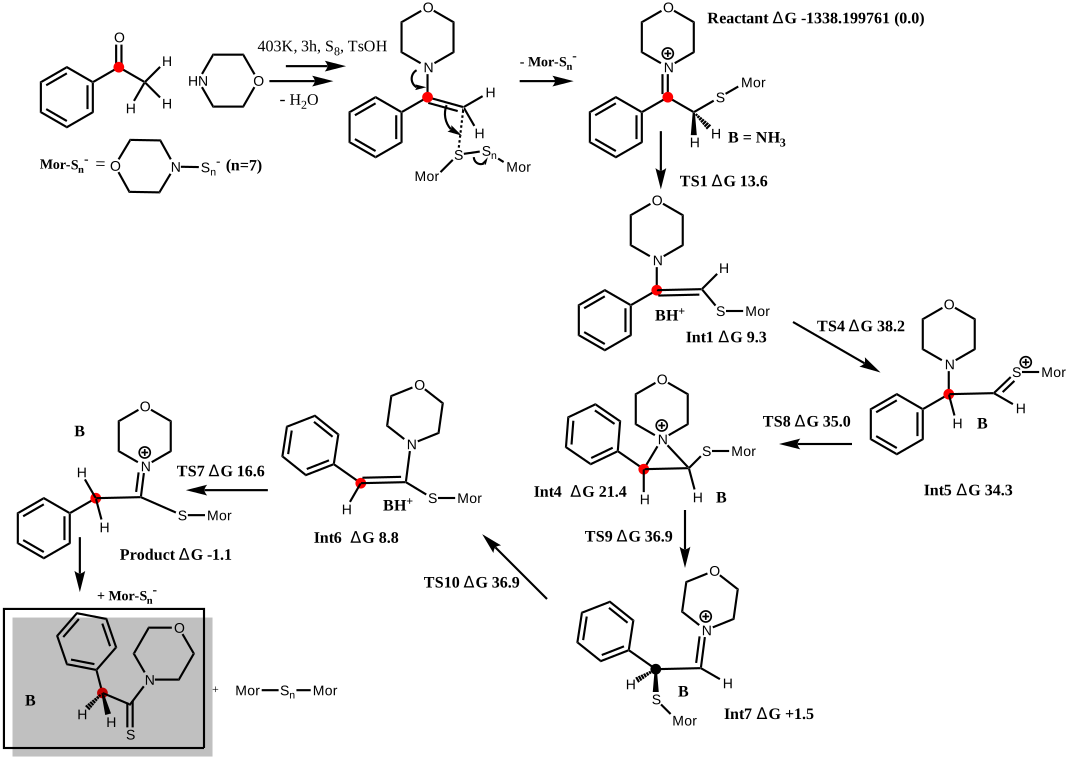
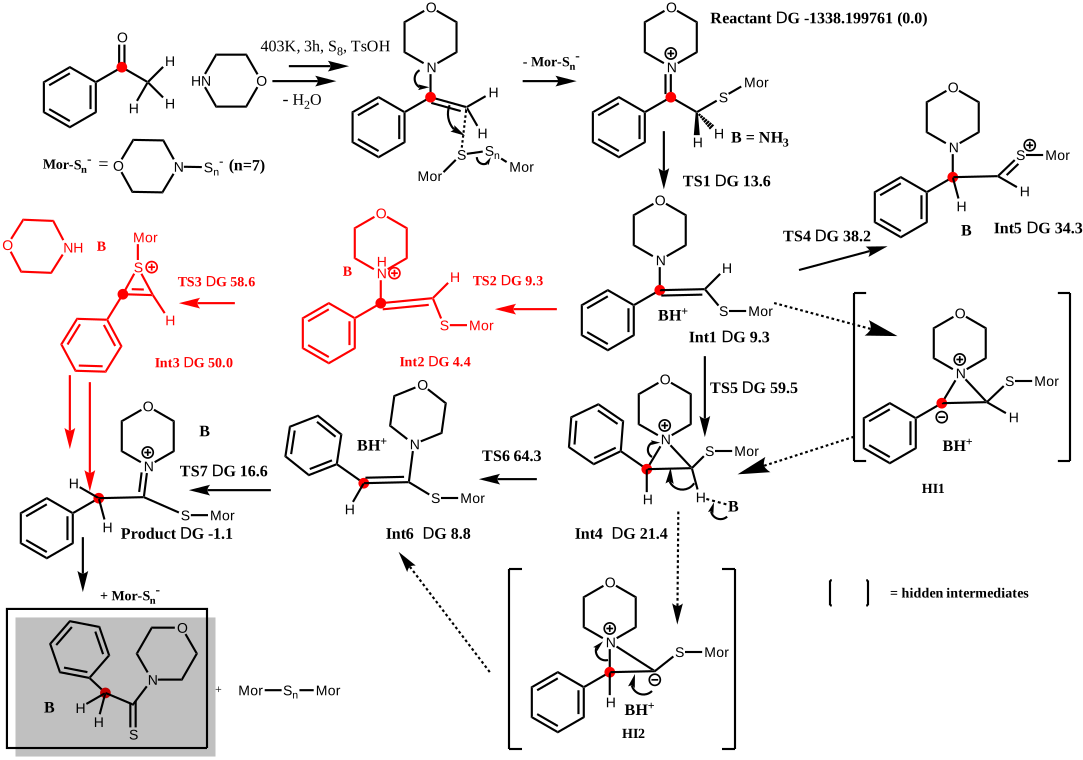
These four posts (the box set) set out to try to define the energetics for a reasonable reaction path for the Willgerodt-Kindler reaction. The rate of this reaction corresponds approximately to a free energy barrier of ~30 kcal/mol. Any pathway found to be >10 kcal/mol at its highest point above this barrier was deemed less probable. The first three efforts at defining such pathways all gave such a result. Here I try a fourth pathway in search of the hitherto elusive appropriately low energy barrier.

The previously explored pathway invoked an aziridinium cation as an intermediate (Int4). The challenge now is to define a route into this intermediate and another out of it to lead to the eventual product. I previously explored the energy of forming Int4 by first using the lone pair of electrons on the nitrogen to form the ring, resulting in a carbanionic ylid which only then gained a proton to form Int4. This time I will try reversing this sequence, by protonation first to form Int5 via TS4, forming a cation resonance stabilized via sulfur. Only then does the nitrogen lone pair come into play to form the ring via TS8. The free energy barriers for both these species are now within a reasonable range, being within 10 kcal/mol of the estimated rate barrier (FAIR data for this pathway collected at DOI: 10.14469/hpc/7385). It is also important to note that this is only an exploratory model, which has not yet been “optimized”. Thus to reduce the computer time needed, ammonia is used as a model base. The full model would use morpholine, which as a better base might be expected to eg reduce the barrier for TS4. Also, these are bimolecular reactions computed for a standard state of ~0.04M. More concentrated solutions would also reduce the barrier. The anion present along the entire reaction pathway is not included in this model; doing so might also alter slightly the barriers.

TS4.

TS5

Having found a reasonable route to Int4, it now has to be converted in the first instance to  Int6, which is then easily protonated to the initial product, leading eventually to the thioamide outcome of this reaction. After much exploration, a good route was found to unexpectedly involve Int7. This is formed by ring opening of Int4 via TS9, with the sulfur migrating along the carbon chain in preference to forming the rather less resonance stabilized benzylic cation. Int7 then reverses this migration, with the base removing a proton and the sulfur migrating back to the carbon atom it had started from in Int4 via TS10. Both these barriers are also <10 kcal/mol of the barrier inferred from the reaction rate.

TS9

TS10

We thus finally have a model which is in accord with the kinetics of this reaction. As noted above, the model can always be refined further by eg improving the base, searching for lower energy conformers of the various transition states etc. Such optimisation can often reduce barriers further by perhaps 3-4 kcal/mol, along with the aforementioned reduction of a bimolecular reaction by increasing concentrations.

I hope this “box set” of mechanistic investigations gives some insight into how a reaction can be explored using calculations. In this instance we also have the benefit that our final mechanism does lead to an interesting prediction. Thus Int7 is predicted to be almost as stable as the final product. Perhaps its presence might be detectable if searched for. Identifying some Int7 in the reaction products would certainly provide good supporting evidence for our conclusions.


The DOI for this post is 10.14469/hpc/7387


High-performance polythioesters with high chemical recyclability.

September 2nd, 2020

Here I investigate a recent report[1] of a new generation of polyesters with the intrinsic properties of high crystallinity and chemical recyclability. The latter point is key, since many current plastics cannot be easily recycled to a form which can be used to regenerate the original polymer with high yield. Here I show some aspects of this fascinating new type of polymer.

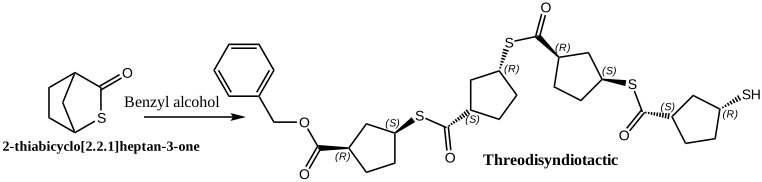
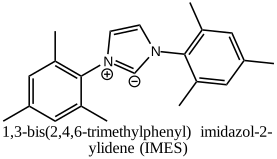
The starting monomer is 2-thiabicyclo[2.2.1]heptan-3-one, which is easily prepared on a 50g scale. When polymerised with the organocatalyst IMES (below) it produces a stereoregular threodisyndiotactic polymer of the structure shown above. Various other catalysts produced different stereochemistries.

The 13C NMR spectrum of the IMES-catalysed polymer showed just a single 13C carbonyl resonance, and the stereochemical assignment was based in part on DFT geometry optimisation calculations and then obtaining relative free energies of a model dimeric molecule, capped as a methyl ester rather than a benzyl ester. These showed that the (R,S,S,R) stereoisomer was lower than the next lowest by ~1.3 kcal/mol (Figure below). These calculations were done using a DFT procedure (BP86) that does not include dispersion corrections and so I could not but help wonder whether the conformational analysis was entirely reliable, especially if it is to be used to “tentatively” assign stereochemistry (the authors’ own description, Figure 3 below) to the pure stereopolymer B.

I thought I might make my own very quick investigation of the conformation of these quite flexible monomers. I proceeded as follows:

  1. I drew the molecule as a tetramer as shown above, for the (R,S,S,R) stereoisomer and saved the coordinates as a molfile. This adds approximate three dimensionality based on the hashes and wedges. I used a tetramer to give it sufficient size to coil around on itself if it wanted to; a dimer is a little too small to do this.
  2. This is then fed to a program which can refine such approximate structures using molecular mechanics (the MMFF94s force field, which intrinsically includes attractive dispersion terms). In this instance, I used Avogadro, producing a more accurate 3D model of the system.
  3. This was then subjected to semi-systematic conformer searching using Avogadro. The lowest energy of 27 conformations found was then taken forward for optimisation using quantum mechanical procedures.
  4. The first of these used PM7, a rapid semi-empirical procedure that includes the 3rd generation Grimme dispersion correction.
  5. This was then subjected to B3LYP+GD3BJ/Def2-SVP final refinement (again a procedure that includes a modified GD3 dispersion term with BJ damping).

The original dimer model reported in the supporting information for the article as stereoisomer 1 is shown below next to the tetramer optimised using the procedure described above.

Conformation of literature stereoisomer 1, (R,S,S,R). Click to show 3D rotatable mode

Conformation of 1 as obtained by the procedures above on the tetramer. Click to show 3D rotatable model.

Conformer 5.1 kcal/mol lower in free energy

You can explore both conformations yourself by clicking on the images above to get a 3D rotatable model. They do look rather different, in that the tetramer is wound back upon itself (a sort of hairpin looping), encouraged by the face of the phenyl group which accepts a 5-ring by dispersion attractions. The tentative assignment[1] that the (R,S,S,R) stereochemistry corresponds to that of the pure polymer B produced using the IMES catalyst must probably be just that, tentative. No doubt crystallography will verify this in due course.

We see here a possible glimpse of the future of plastics, whereby highly recyclable polymers can be produced that recover the original monomer with very little loss. All that is needed now is that the plastic is efficiently recycled and not just dumped into the oceans!


Data at DOI: 10.14469/hpc/7375

References

  1. C. Shi, M.L. McGraw, Z. Li, L. Cavallo, L. Falivene, and E.Y. Chen, "High-performance pan-tactic polythioesters with intrinsic crystallinity and chemical recyclability", Science Advances, vol. 6, 2020. https://doi.org/10.1126/sciadv.abc0495

Exploiting the power of persistent identifiers (PIDs) for locating all kinds of research object.

August 29th, 2020

The folks at DataCite have announced a new research object discovery service which aims to give users a “comprehensive overview of connections between entities in the research landscape”. The portal https://commons.datacite.org acts as the entry point for three basic types of persistent identifiers (PIDs);

  1. Research works, using the DOI (digital object identifier) as a PID. This includes both research articles and research data as “works” or research objects and can be invoked using the prefix https://commons.datacite.org/doi.org?query= to the search query.
  2. People, using the ORCID as a PID via the prefix https://commons.datacite.org/orcid.org?query=
  3. Organisations, using ROR as a PID using the prefix https://commons.datacite.org/ror.org?query=
  4. If one wants to construct a search which combines any two, or all three of the above categories, then the search prefix is simply https://commons.datacite.org/?query=

To use this very modern type of discovery portal, one currently has to be familiar with how to construct a valid search query to be appended to any of the above prefixes. This is now well documented at https://support.datacite.org/docs/datacite-commons, although it still requires some work and patience to construct a precise search query. This in turn requires knowledge of the so-called “metadata schema“, on which the indexing is based.

This sort of activity is best illustrated using examples. As it happens I have already collected a decent set at https://doi.org/drrm, nicely illustrating that a search query, or a collection of search queries, can themselves be considered as a valid research object! That collection used the prefix https://search.datacite.org/works?query= which might usefully be considered as now obsoleted by https://commons.datacite.org/?query=. You can take any of the original queries and try them out here. I will show just two:

  1. https://commons.datacite.org/?query=titles.title:*amidation* The orignal search gives 170 hits, since it is based largely on DOIs for datasets only. The new version of the search yields 1016 hits, since it includes authors and organisations as well. The results look like this, indicating 846 hits come from the CrossRef registration agency (mostly journals) and the rest from DataCite (mostly data).

  1. https://commons.datacite.org/?query=media.media_type:chemical/x-mnpub*+AND+(subjects.subjectScheme:inchikey+AND+subjects.subject:*BHYQUOWHUMNGMD-UHFFFAOYSA-N*)+AND+(subjects.subjectScheme:NMR_Nucleus+AND+subjects.subject:11B)+AND+(subjects.subjectScheme:NMR_Solvent+AND+subjects.subject:CDCl3) is a the other end of the spectrum for specificity, constraining the search to some very specific chemical properties, the nature of which should be reasonably obvious from the syntax of the query. This specificity is why it continues to give just one hit.

The evolution of these search facilities gives an interesting pointer to what the future might hold. New registration agencies can be easily added to the above lists for including other kinds of research object. For example, instruments and their properties. One can combine these diverse properties into a single search, thus revealing scientific information or connections that may not be apparent from historical (chemical) abstracting agencies such as e.g. CAS or Reaxys. Importantly, all the metadata on which the indexing is based is fully open and not proprietary and currently at least searches such as the above are free at point of use (unlike the chemical registration agencies noted for which commercial licenses have to be purchased by organisations). The concept of searching for relationships across different types of PID is summarised by the term “PID Graph“. This in turn can reveal other properties of the objects, such as e.g. usage statistics and citations;

It is good to see this evolution of new ways of finding scientific information and I rather think that we have only just began to see the potential of this approach; there is much more to come. Exciting times ahead I fancy!


This post has a PID: 10.14469/hpc/7366.


The Willgerodt-Kindler Reaction: mechanistic reality check 3. A peek under the hood for transition state location.

August 27th, 2020

The two previous surveys of the potential energy surface for this, it has to be said, rather obscure reaction led to energy barriers that were rather to high to be entirely convincing. So here is a third possibility.

The red section corresponds to the previous exploration, in which a 3-membered sulfur ring intermediate was mooted. Here we go back to a 3-ring with nitrogen instead. The key aspect is the formation of this aziridinium cation species labelled Int4. This mechanistic step can be considered in two ways:

  1. As a concerted E2-type addition/elimination reaction, with the leaving group in the elimination step being a quaternary ammonium salt as in the Hofmann elimination. This has a major issue in this case, in that for E2 reactions the two reacting bonds have to be antiperiplanar to each other. If they are part of a 3-membered ring, this alignment is difficult to achieve. This does hint that the mechanism may be either stepwise, or certainly asynchronous to avoid this problem.
  2. As the stepwise formation formation of a cyclopropyl carbanion via an electrocyclic ring closure of Int1, followed by protonation of the anionic centre to form Int4. These two steps could be stepwise consecutive, or concerted in either synchronous or asynchronous fashion. This then to be followed by the same sequence in reverse, i.e. deprotonation of the aziridine followed by electrocyclic ring opening to form the isomeric Int6. The electrocyclic reaction of cyclopropyl carbanion[1] is a 4n-electron reaction, for which the Woodward-Hoffmann rules stipulate conrotation.

Since locating TS5 and TS6 proved non-trivial, I thought it might be informative to give a blow by blow account of the procedure I adopted.

  1. The crux of finding a transition state is to identify suitable (internal) coordinates to act as the reaction coordinate. In this example if take the second mechanistic type above, we have a C-N bond length as one (internal) coordinate, we have the C-H and H-N lengths as two more, and finally the most tricky, which is how to define conrotation of the two termini of the forming/breaking C-N bond. This can be done with two dihedral angle definitions at each end of this bond, which gives a total of seven internals that could be components of a reaction coordinate. This is amongst the most complex of reaction coordinate definitions, since most transition states can be approximated by just 1-3 internals.
  2. I started by specifying the most simple molecule imaginable for this reaction, the cyclopropyl carbanion and its opening to a allylic anion. We are going to ignore any proton transfers at this stage, which reduces the internal reaction coordinates to five. The C-C bond is assumed to have a transition state value of 2.1Å and the two pairs of dihedral angles 45 and 135° to define conrotation. These five coordinates are constrained to these values and all the other (internal) coordinates are optimised. The constrained five are then released and the structure is reoptimised, but specifying that the full force constant (2nd derivative) matrix is recomputed from scratch at each step. This allows the optimisation to operate with the most accurate estimate of the curvatures of the potential energy surface at each step (calcall as a value for the OPT key word in eg the Gaussian program system). This super-strong procedure is computationally cheap for this small molecule, and converges in ~5-6 cycles. The method chosen to perform these calculations was B3LYP+GD3BJ/Def2-SVP/SCRF=water with a superfinegrid integral quadrature, and integral accuracy of 10**-14.
  3. I note that the reference I cited for this reaction[1] was not helpful, since no transition state geometrical parameters are reported in the article; not even the value of the key C-C bond length at the transition state. This sort of reporting would be considered as quite inadequate by today’s standards.
  4. Next, the CH2 in cyclopropyl is replaced by the isoelectronic NH2+ and another C-H is replaced by the substituent S-NH2. The original five reaction coordinate values (the now C-N length and the four dihedral) are constrained to the previously optimised values for cyclopropyl carbanion, whilst again all the rest are fully optimised (modredundant keyword in Gaussian). When that procedure is complete, all coordinates are now fully optimised, this time requiring only an initial calcfc for the 2nd derivatives in the opt keyword. As it happens, the perturbation of the original cyclopropyl carbanion transition state geometry by these new substituents is relatively small, so again convergence is rapid.
  5. The C-S-NH group however has introduced four conformational alternative, including the orientatoin of the nitrogen lone pair. All four are located, and the lowest free energy now selected as the model.
  6. Next, one C-H is replaced by C-Ph. Again initially the five reaction coordinates are fixed at the previously optimised values, the rest optimised, and then that geometry taken forward for the final step in which all coordinates are optimized.
  7. The last step repeats step 6, but this time the NH2 groups are replaced by the full morpholine ring system in a chair conformation.
  8. The final step is to add NH4+ as in B=NH3, oriented so as to hydrogen bond to the carbanionic centre, with an initial C…HN length of 1.9Å. Again this is done by first freezing the five reaction coordinates and the C…HN length whilst re-optimizing the rest and then releasing, as in steps 6 and 7. This then add the proton transfer into the model. Finally, the transition states are recomputed with a better (Def2-TZVPP) basis set.

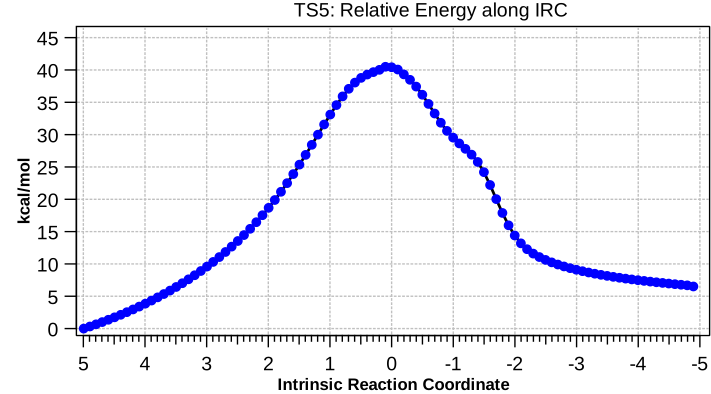
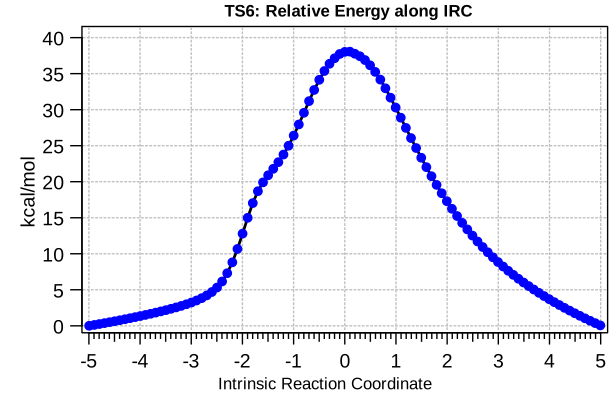
This procedure finally leads to TS5 and TS6. The IRC (intrinsic reaction coordinate paths) for each are shown as animations below, which clearly show that whilst the electrocyclic ring opening is a distinctly different phase from the proton transfer, these two basic steps are nonetheless part of the same concerted (albeit asynchronous) process. In other words, there is only one transition state connecting eg Int1 and  Int4 and no discrete, only hidden, intermediates HI1 or HI2. These are revealed by the inflexions in the energy profiles at ~IRC = -1 (TS5) and ~ -1.5 (TS6) rather than the minima you would see for a true reaction intermediate.

Well, after all that effort, the high points in the potential energy surfaces relative to the reactant are again >60 kcal/mol, too high to be realistic. But one has certainly learnt a lot about how to chart potential energy surfaces. Whilst much of the time this turns out to be a relatively simple process to explore, in this particular case it is proving especially tricky to find a pathway of reasonable (~30 kcal/mol) energy.


The data are at DOI: 10.14469/hpc/7356. To be fair, when this was done in 1971, we are in the very dawn of transition state location for complex molecules (i.e. those with more than a few atoms) and many of the techniques used were still evolving rapidly, including how data was being reported and how the transition state was characterised as having one negative force constant.

References

  1. M.J.S. Dewar, and S. Kirschner, "MINDO [modified intermediate neglect of differential overlap]/2 study of aromatic ("allowed") electrocyclic reactions of cyclopropyl and cyclobutene", Journal of the American Chemical Society, vol. 93, pp. 4290-4291, 1971. https://doi.org/10.1021/ja00746a033