Archive for the ‘Uncategorized’ Category

The direct approach is not always the best: butadiene plus dichlorocarbene

Wednesday, September 19th, 2012

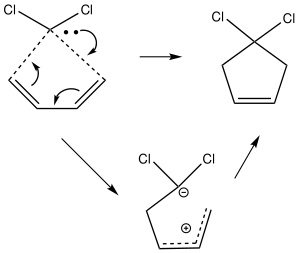
The four-electron thermal cycloaddition (in reverse a cheletropic elimination) of dichlorocarbene to ethene is a classic example of a forbidden pericyclic process taking a roundabout route to avoid directly violating the Woodward-Hoffmann rules. However, a thermal six-electron process normally does take the direct route, as in for example the Diels-Alder cycloaddition as Houk and co have recently showed using molecular dynamics[1]. So can one contrive a six-electron cycloaddition involving dichlorocarbene?

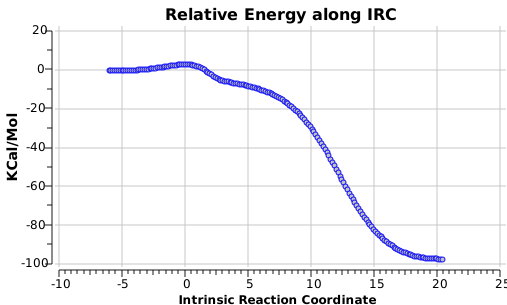
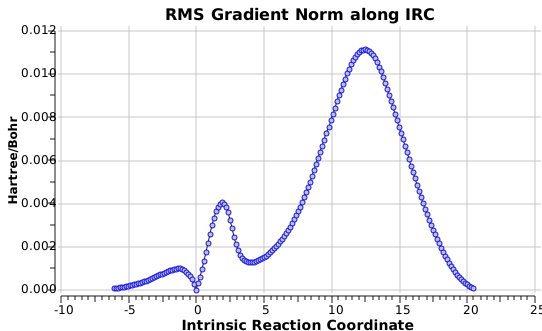
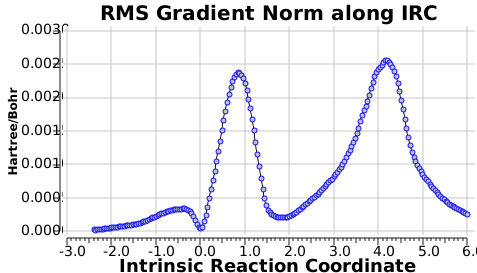
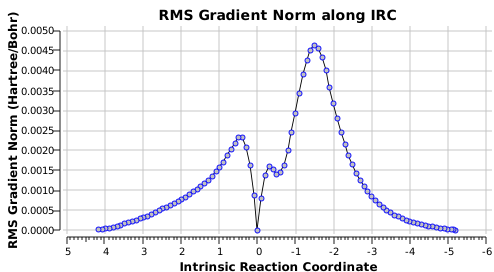
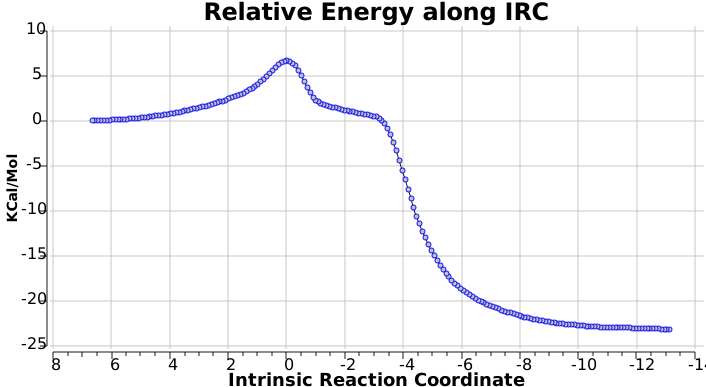
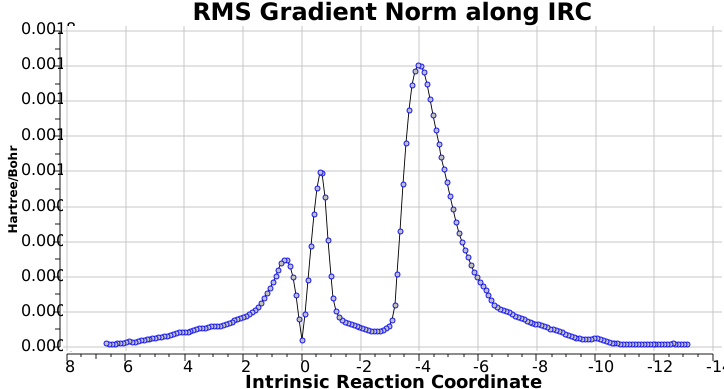
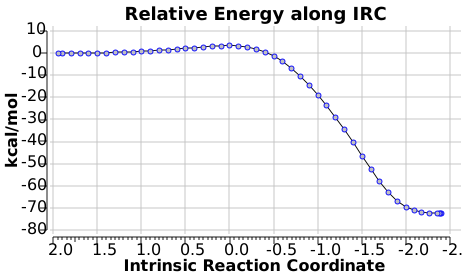
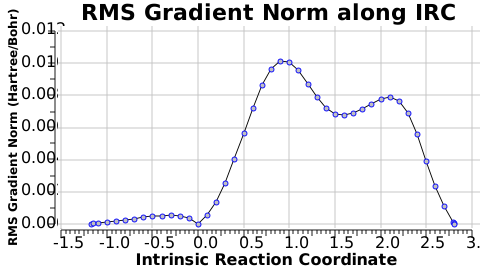
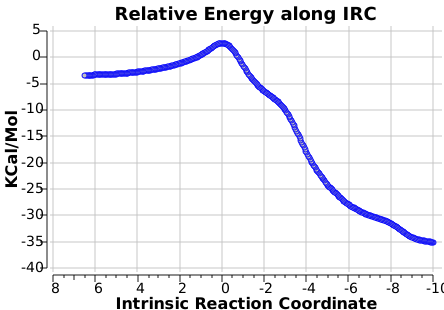
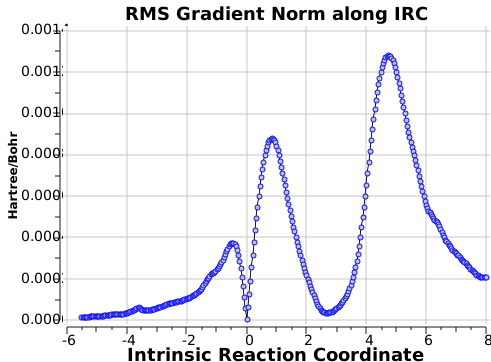
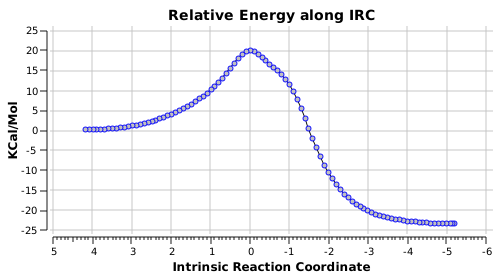
Surely, it should now form the two new C-C bonds at the same time (synchronously)? Well, here comes a ωB97XD/6-311G(d,p)/SCRF=dichloromethane intrinsic reaction coordinate calculation:

Butadiene + dichlorocarbene.

  1. The reaction starts at IRC -5, 
  2. and proceeds with only a small barrier to the transition state (IRC =0.0) 
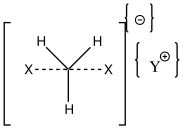
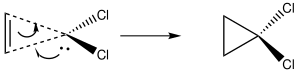
  3. At IRC +4, the potential flattens out and the gradients drop, with formation of the first C-C bond completed. But the gradients do not quite go to zero, which would have implied the formation of a discrete intermediate such as:
  4. The concerted reaction continues and by IRC ~ +11, the two chlorine atoms now exhibit quite different C-Cl lengths. The one that is orthogonal to the second forming C-C bond is normal (1.815Å), whereas the one antiperiplanar to the C-C bond is 1.92Å. There are some interesting stereoelectronic alignments involved.
  5. Coincidentally perhaps, but these phenomena of an intermediate almost forming in a system containing a CCl2 group with concomitant lengthening of one C-Cl bond compared to the other, was also observed in my IRC for the addition of thiolate to a dichlorobuteneone. For that system,  Dan Singleton’s work had shown that molecular dynamics is necessary to obtain a more complete picture, and that may well be also true for the example here!  Perhaps Ken Houk might give it a go!
  6. The second C-C bond then completes at around IRC +16.

Well, this shows that a reaction only modestly removed from the classical six-electron Diels-Alder can change character dramatically from the synchrony expected of the latter. I am hunting for a simple explanation of this phenomenon, but perhaps participation of the C-Cl bonds makes this different from a simple cycloaddition. Or possibly, the explanation will only properly emerge when the molecular dynamics is studied?

References

  1. K. Black, P. Liu, L. Xu, C. Doubleday, and K.N. Houk, "Dynamics, transition states, and timing of bond formation in Diels–Alder reactions", Proceedings of the National Academy of Sciences, vol. 109, pp. 12860-12865, 2012. https://doi.org/10.1073/pnas.1209316109

The history of stereochemical notation: a search for the earliest example.

Wednesday, September 12th, 2012

All organic chemists are familiar with the stereochemical notation for bonds, as shown below. But I had difficulty tracking down when it was introduced, and by whom. I offer a suggestion here, but if anyone reading this blog has got a better/earlier attribution, please let us know!

I suggest that the source is an article written by Derek Barton and R. C. Cookson in 1955 and published in 1956, entitled “The principles of conformational analysis” (DOI: http://dx.doi.org/10.1039/QR9561000044 ). Some examples are shown below. Compound 19 makes explicit the Fischer convention; 26/27 are indeed very modern, and 66 uses not wedges but bold bonds (which is very common nowadays but suffers from having a slightly different semantic interpretation which was proposed by Maehr).

One might ask what another master of the period, R. B. Woodward was using. Thus in his 1956 article on the synthesis of lysergic acid, we see this. Plenty of stereochemistry, but not annotated as per above! What you do find  (and with Barton as well) is essentially modern use of the arrow pushing conventions, so by this period it was thoroughly established.

Going back to 1951, we see Stork offering a stereospecific synthesis (as far as I can tell, the first use of precisely this term in the literature). But in this example, there is no real need for clarification using the modern stereochemical notation.

So, can anyone find examples of modern notation earlier than Barton’s usage?

The Sn2 reaction: followed up.

Wednesday, September 12th, 2012

An obvious issue to follow-up my last post on the (solvated) intrinisic reaction coordinate for the Sn2 reaction is how variation of the halogen (X) impacts upon the nature of the potential.

X=F X=Cl
X=Br X=I
X=F X=Cl
X=Br X=I

The change in slope of the gradient norm along the IRC is hardly noticeable for Y=Na, X=F, but increases up to X=I. The distance between the two halogens varies as 3.74, 4.68, 4.98, 5.40Å at the point where the gradients change character (all at the ωB97XD/6-311+G(d,p)/SCRF=methanol level). This nicely reinforces the explanation given before, that the dimensions of the box defined by the two halogens is too large for the small central CH3 to fit in snugly for X=Cl,Br and I, but is not an issue with the very much smaller box with X=F. One more variation; replacing CH3 with the slightly smaller NH3(+) results in the box contracting to 4.74Å (X=Br) and again the very characteristic behaviour.

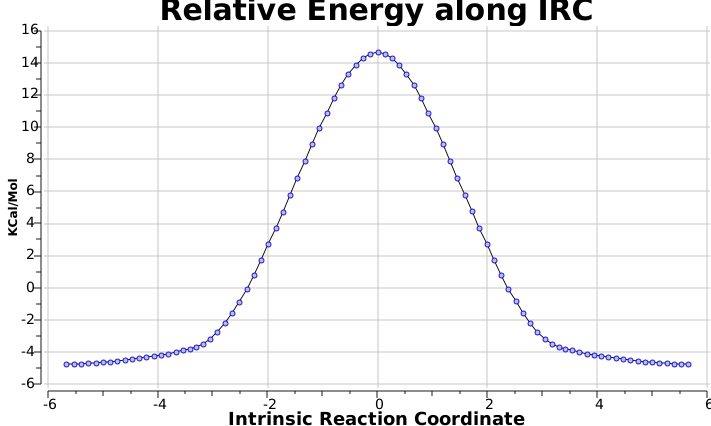
I should end with a quick comment on the form of the potential energy surfaces. That for the last example above is typical and looks like as below. But this shape is not what many textbooks show. These indicate that as the halide (anion) approaches the (neutral) molecule, an initial ion-dipole complex is form as a minimum, before surmounting the barrier and forming a similar complex the other side. The diagram below (and all the others) show no sign of these minima. This is because all the systems are computed as neutral ion-pairs and a solvation correction has been applied to the potential. Under these conditions, the classical form of the potential found in text books does not pertain.


Digital repository entries
system Dspace Chempound Figshare
NH3(+), X=Br 10042/20313 a25daa67-d409-4d38-8d35-8a009f449bc9 10.6084/m9.figshare.95816
CH3, X=F 10042/20314 dfccf382-8c60-459c-8da0-c6efdd2b0931 10.6084/m9.figshare.95817
CH3, X=Cl 10042/20315 d5ab33c2a-9e92-49a0-b488-f0559bbc2061 10.6084/m9.figshare.95818
CH3, X=Br 10042/20316 5b1995f1-fef0-451b-a467-80a592081119
CH3, X=I 10042/20317 d9149e4e-466e-4358-9de5-67a47950eff1 10.6084/m9.figshare.95819

Dynamic effects in nucleophilic substitution at trigonal carbon (with Na+) revisited.

Monday, August 13th, 2012

This reaction looks simple but is deceptively complex. To recapitulate: tolyl thiolate (X=Na) reacts with the dichlorobutenone to give two substitution products in a 81:19 ratio, a result that Singleton and Bogle argue arises from a statistical distribution of dynamic trajectories bifurcating out of a single transition state favouring 2 over 3. On the grounds (presumably) that the presence of both the cation X (=Na+) and H-bonded solvent (ethanol) are uninfluential, neither species was explicitly included in the transition state model used to derive the dynamics. I speculated whether in fact the spatial distribution of counterions and solvent (set up by explicit hydrogen bonds and O…Na+ interactions) might in fact be perturbed from un-influential randomness by co-ordination to the carbonyl group present in the system. I also raised the issue of what the origin of the electronic effects leading to the major product might be. 
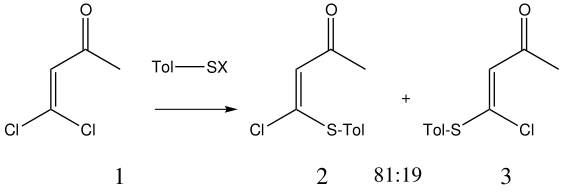
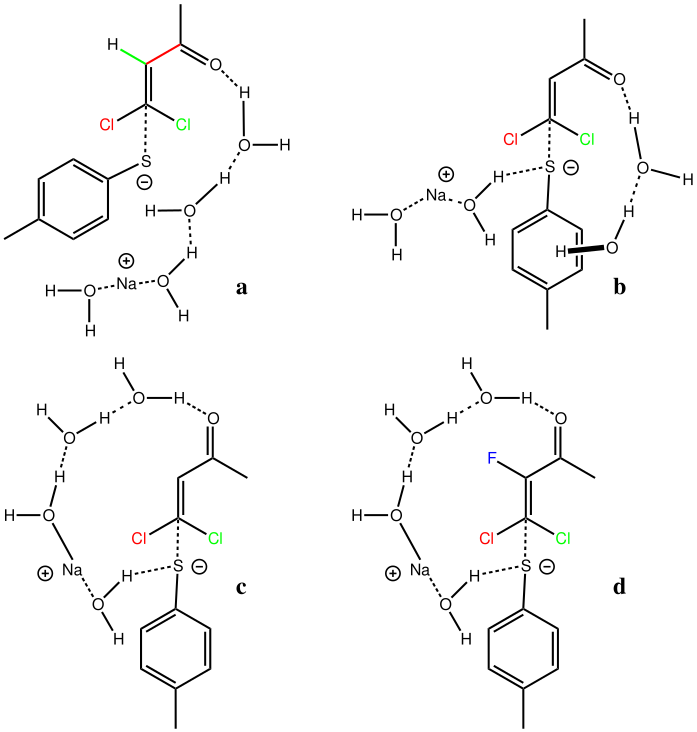
In this post I try to delve deeper into both these issues. In the earlier model, I focused on possible coordination models around that carbonyl, using two Na+ cations (on the premise that such coordination has precedent in crystal structures). This model did (correctly) predict this major product, and we are now discussing what the origins of the minor product may be (it is a measure of how far computational modelling has come that we are nowadays increasingly concerned with these minor outcomes). Here I move to a more stochiometric model using just one Na+ assisted with four solvent molecules (modelled here with just water). This results in an overall charge of zero on the whole system, which avoids having to create what could be regarded as artificially charged models resulting from omission of the counterion. Three possible arrangements of these additional units are shown below, selected for the following reasons:

  • (a) was set up to explore whether the orientation of the tolyl thiolate ring might be determined by either π-facial hydrogen bonds to the solvent, or a π-facial interaction with the Na+
  • (b) was set up to explore if moving the Na+ closer to the thiolate would influence which of the two chlorines (red or green) would be eventually ejected.
  • (c) was set up to explore whether the orientation of the carbonyl group might be influencing the outcome, based on differing stereoelectronic interactions between the two C-Cl bonds and either the C-C(C=O) unit or the alternative C-H bond.
  • (d) whether replacing the C-H bond in (c) with a C-F bond results in a different interaction with the two C-Cl bonds.
We might ask why stop at just these four? Surely one should sample all reasonable explicit models that might have a significant Boltzmann population in the real reaction? That is certainly desirable (but a much larger computational project); here I am just using these models for the purpose of understanding a little better what might be going on.

Model (a)

This is optimised using the same level as before (B3LYP/6-31+G(d,p)/SCRF=ethanol) and reveals that the Na+ cation ends up with coordination just from solvent, and not from the aryl face. The chlorine labeled green in the diagram above ends up being evicted, and its trajectory then leads it (slowly) towards the Na+ cation in a reaction that is fully concerted (no enolate anion intermediates along the route).

The IRC for this model has the following intriguing features:
  1. At an IRC = 0.0 (the transition state), the lengths of the C-Cl bond for the atom labelled red is 1.84Å and green is 1.817Å. This situation persists until around IRC = -1 (1.926Å and 1.915Å). In other words, the longer of the two C-Cl bonds is NOT the one that is about to be ejected. But here is the even odder thing. The Wiberg bond order index of these two C-Cl bonds is respectively 0.932 and 0.916 at this stage. Here we see the longer bond having also the larger bond order, and so the bond order (but not the bond length) turns out to be the more reliable indicator of which bond is about to break totally. The NBO E(2) term shows that the C-Cl(green) bond has a significant interaction with the antiperiplanar C-H bond (also shown in green) of 4.9 kcal/mol, compared with the C-C (red) σ-bond which has a lower E(2) term for interaction with the antiperiplanar C-Cl(red) bond of 2.1. [Added in proof: Donation from the C-Cl bonds into the C-S σ* bond is also greater for C-Cl(green, 81 kcal/mol) than C-Cl(red, 25 kcal/mol)]**. These effects all conspire to weaken the C-Cl(green) bond more than the C-Cl(red) alternative.
  2. Only at IRC -1.5 (well past the transition state) do the two C-Cl bond lengths become equal (~1.95Å). So initially at least, BOTH C-Cl bonds start to cleave, but then stereoelectronic effects take over and a discrimination in favour of the green C-Cl bond wins out over the red. 
  3. By IRC -4, the C-Cl(red) bond has reversed its elongation, and has contracted back down to 1.86Å, whilst the C-Cl(green) has continued to extend to 2.76Å.
  4. By IRC  -8, the formation of  NaCl is complete.
  5. Thus we can say that the major product of this reaction results from stereoelectronic control discriminating between the two chlorine atoms.
  6. We might also observe that because post-transition state the two C-Cl bonds continue to elongate (before one bond continues on its way and the other backtracks), the dynamics of what goes on (via coupling with rotational and other vibrational modes) could easily account for the (minor) outcome, as indeed Singleton and Bogle argued.
Model (b)

The next task is to see how stable the above effects are to the disposition of the Na+ and solvent molecules. Model (b) shows the same behaviour; the chlorine atom is evicted via stereoelectronic control, rather than simply heading off towards the Na+ atom (i.e. electrostatic control).

Model (c) also demonstrates how the stereoelectronic alignments dominate over stabilisation of the forming chloride anion. This time, the chloride is evicted into a region not occupied by either solvent molecules or the Na+ ion, the charge being stabilised only by the continuum solvent field.

Model (c) was also subjected to a robustness test of the actual wavefunction. The original method was based on B3LYP/6-31+G(d,p)/SCRF=ethanol. Accordingly, (c) was re-computed using ωB97XD/6-311+G(d,p)/SCRF=ethanol. The DFT functional is a more modern one that includes the effects of dispersion attractions, and the basis set is of triple rather than double-ζ quality. The essential features are unchanged.

Model (d) tests whether perturbing the electronic environment has more effect than changing the explicit surroundings.

  1. It turns out that this is even more complex stereoelectronically. Observe how the bond to the (cyan coloured) fluorine atom elongates before shortening again as the anti-periplanar C-Cl bond breaks. The length starts off as 1.41, lengthens to 1.45 (at IRC +2.6) before ending up as 1.414Å, again the result of stereoelectronic effects. 
  2. A second noteworthy feature is that at IRC +2.6, the gradients (almost but not quite) drop to zero. At this stage, both C-Cl bonds AND the C-F bond are approximately at their maximum length, and this almost constitutes a discrete intermediate along the pathway.
  3. The feature in the gradients at IRC +5 represents the eviction of the chloride.
I will conclude by summarising the above. The formation of the dominant product 2 seems to be the result of stereoelectronic control at the transition state. This outcome seems to be pretty robust to the transition state model constructed, namely whether one (or two) Na+ counter-ions are included in the model, and indeed their position, as well as the inclusion of up to four explicit solvent molecules. This robustness even extends to an electronic perturbation resulting from replacing a C-H bond by a C-F bond. Thus constructing a selection of physically realistic models with neutral charge and solvent has not resulted in locating an explicit transition state which (in terms of its free energy) might account for the formation of the minor product 3.

Another test which might be envisaged would be to take e.g. model (a) and subject it to molecular dynamics to show that the outcome, in which ~20% of the trajectories lead to 3, is itself robust towards addition of counter-ion and solvent to the original model.


These values do seem to be very basis set dependent. Thus using B3LYP/6-311+G(d,p), the σC-Cl(green) to σ*C-S value is 58 and σC-Cl(red) to σ*C-S is 18. The trend however occurs across basis sets.


The stereochemical origins of the Wittig reaction.

Tuesday, August 7th, 2012

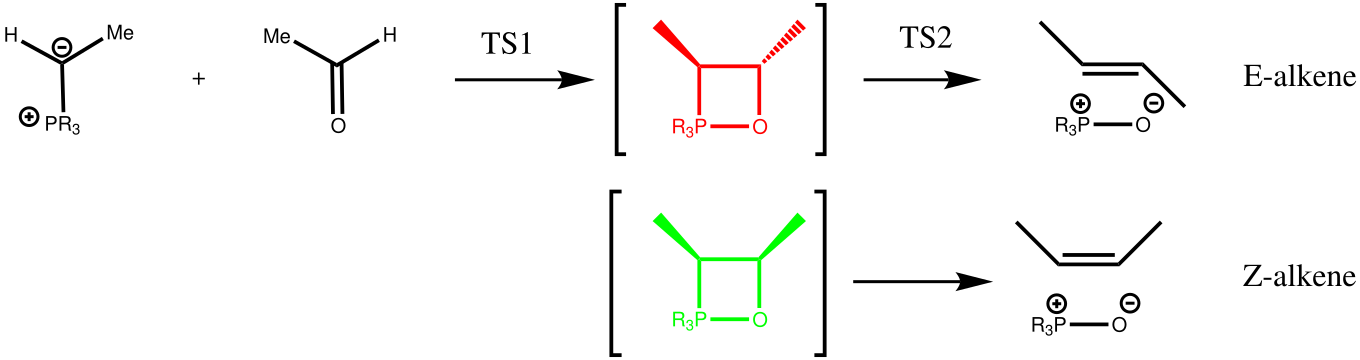
This is another of those textbook reactions, involving reaction of a carbonyl compound with a phosphonium ylid to form an alkene and a phosphine oxide. The reaction continues to be frequently used, in part because it can be highly stereospecific. 

Thus the standard version tends to give Z-alkenes with good specificity, and is thought to proceed via an oxaphosphatane 4-ring intermediate. The reaction and its stereochemistry is sensitive to the reagent (including the nature of the R group), and so one model cannot capture all the aspects of this transform. Here I am starting with the very simple model shown above, where R=H (ωB97XD/6-311G(d,p)/SCRF=tetrahydrofuran). There are four transition states to consider; whether the  rate-determining (stereochemical determining) step is TS1 or TS2, and whether the relative orientation of the two (in this example methyl) groups are syn or anti, resulting in E– or Z– alkenes. The most interesting issue would be whether the mechanism can account for why the apparently more sterically hindered route leading to the Z-alkene is often the actual outcome. 

Leading to E-alkene
TS1 0.0 kcal/mol TS2 -3.9
Leading to Z-alkene
TS1 0.0 kcal/mol TS2 -2.6

Key comments about these results:

  1. TS1 is higher than TS2 in both cases, and so (for these substituents) is rate determining.
  2. At this transition state, the two methyl groups are moving apart for the E-isomer but together for the Z-isomer. But at the transition states themselves, the steric interaction of these two groups is fairly similar, and the Z-transition state has much better antiperiplanar bond alignments compensating for the methyl clash. To put it in a nutshell, the increased steric clash for formation of the Z-isomer comes only AFTER the transition state is passed.
    E-alkene forming Z-alkene forming
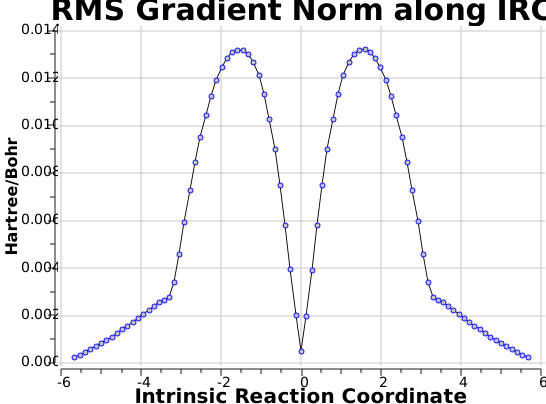
  3. The gradients of the IRC profile for this step of the Wittig reveal that much of the action occurs after the transition state is passed, at IRC=3 for the E and IRC=4 for Z, this comprising rotation around the first formed C-C bond in order to create the P-O bond. This is where the steric clash of methyls for the Z-isomer really kicks in, but it has no impact upon the energy of the transition state, coming too late for that.
    E-alkene forming Z-alkene forming
  4. The model we have built is sterically incomplete; we have used PH3 rather than eg PPh3 (done so as to allow an IRC to be computed in a reasonable time). If we look at the models above (click on the images to get a 3D model), then it is clear that the E-transition state will suffer the greater steric clash of a methyl with one of the phenyl groups on the phosphorus than the Z-isomer will. This probably accounts for why this latter isomer is the normal stereochemical outcome.

Much more could be done here, but even a fairly simple model of the Wittig reaction can bring a lot of insight into its unique characteristics.

The Curtius rearrangement. One step or two?

Monday, August 6th, 2012

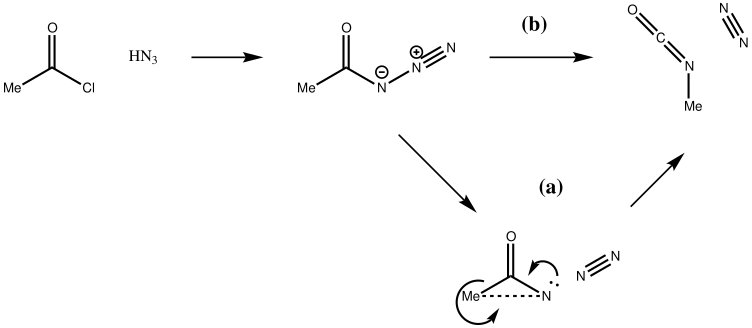
The Curtius reaction is represented in most chemistry texts and notes as following path (a) below. It is one of a general class of thermally induced rearrangement which might be described as elimination/migration (in a sense similar to this ring contraction migration/elimination), in this case implicating a nitrene intermediate if the two steps occur consecutively. Wikipedia is normally very much on the ball with this sort of thing, and a comment about the reaction mechanism there notes that current evidence prefers route (b), avoiding nitrene intermediacy (and hence formally removing this from examples of nitrene reactions).

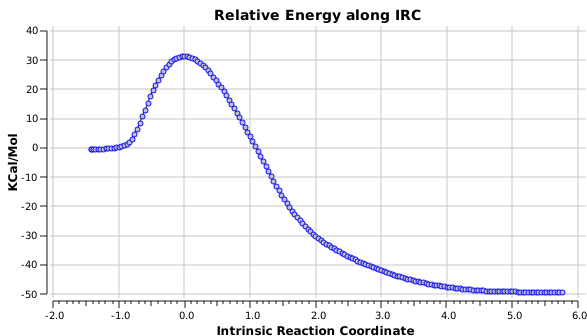
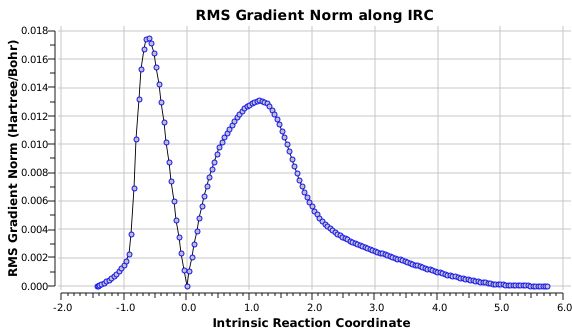
So time for a reality check (which in this case takes the form of a ωB97XD/6-311G(d,p)/SCRF=dichloromethane calculation). 

This is pretty clear-cut; no nitrene intermediate. Now for the standard text-books to catch up!

Cyclopentadiene: a hydrocarbon at the crossroads of …

Sunday, July 29th, 2012

organic chemistry. It does not look like much, but this small little molecule brought us ferrocene, fluxional NMR, aromatic anions and valley-ridge inflexion points. You might not have heard of this last one, but in fact I mentioned the phenomenon in my post on nitrosobenzene. As for being at a crossroads, more like a Y-junction. Let me explain why.
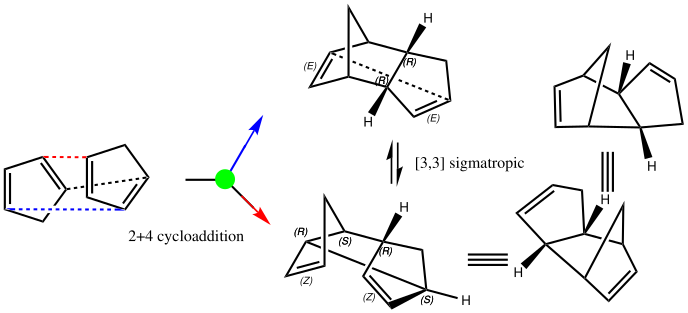
Cyclopentadiene is made by thermal cracking of its dimer, and on standing it slowly reverts to this species. At its simplest, this dimerisation can be described as a π2s + π4s pericyclic cycloaddition, one of the monomers being the π2s and the other the π4s. Two new bonds are formed; one of these is shown in black, but the other can be either the one in red (which makes the π4s the monomer on the right) or the one in blue (in which case the π4s comes from the molecule on the left). How do these two partners decide which role each is to play? Well, the short answer is that, initially at least, they do not! The reaction proceeds very asynchronously, forming at first only the black bond. Eventually, they cannot take the suspense any longer, and when the point indicated with a green dot is reached, they finally have to take a decision. Up to the green dot, the potential energy surface has followed along a valley ridge, and the green decision point is known as the bifurcation point; one with an equal probability of the reaction giving either the top dimer or the bottom dimer.
If you are sharp-eyed you may notice a methyl group has been added to one of the monomers; this was done to balance the decision very slightly in favour of one route down from the green point over the other. Otherwise, the IRC pathway often just stops at the green point, unable to decide which way to take.

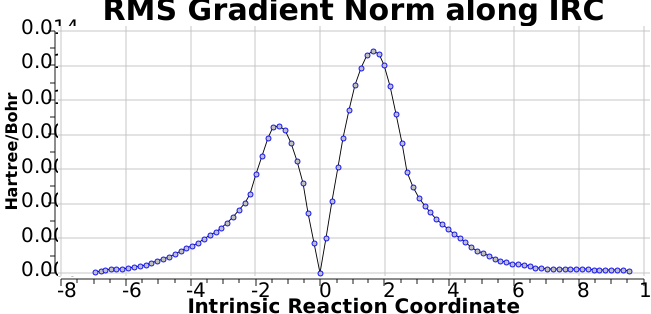
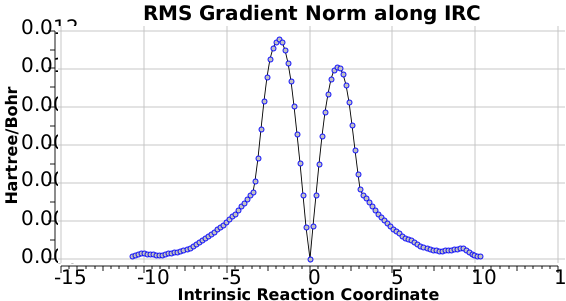
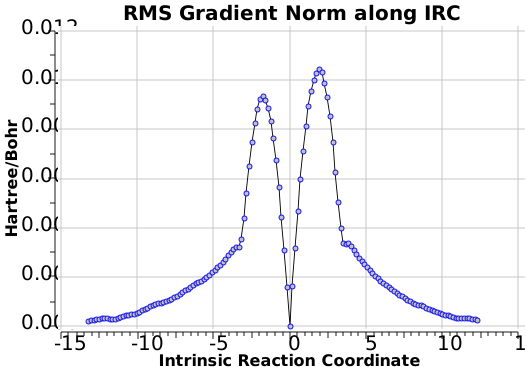
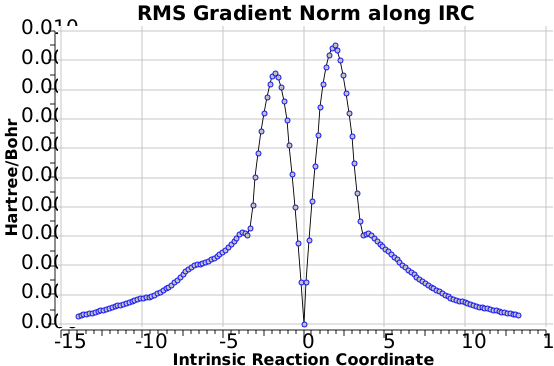
You can see this oddity reflected in the gradient norm of the IRC, which at IRC -1.5 suddenly acquires a new feature, the formation of the second bond. The lesson here is to remember that bonds do not have to form at the same time, they can instead follow, one after the other.

The two different dimers that result from the bifurcation are not in fact identical, they are mirror images (diastereomers because of the methyl group) of each other. They can in turn be inter-converted by a Cope rearrangement, a [3,3] sigmatropic reaction. The transition state for this process is none other than the green point reached earlier. It is indeed a transition state at a crossroads, connecting two quite different reactions, the Diels-Alder cycloaddition and the [3,3] Cope enantiomerisation of the dimer product. Such a reaction has been christened a bispericyclic reaction, one truly at a Y-junction.

Who would have thought that such an un-pretentious molecule could teach us so much. You can see this and many other examples of pericylic reactions in my course on the topic, available on an iPad by clicking here.

Postscript: I have managed to run a full IRC on the system without the methyl perturbation.

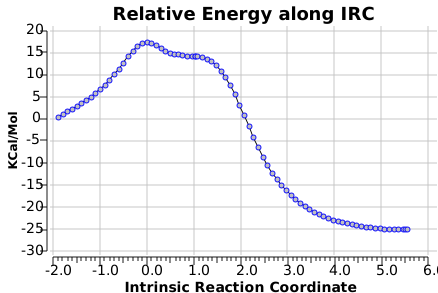
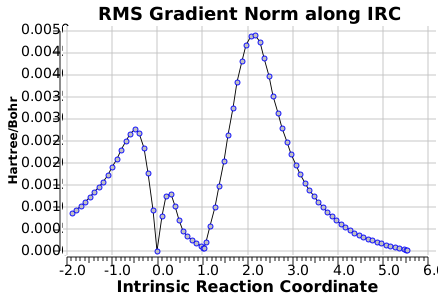
The bifurcation point (green dot) is clearly seen in the following two plots at a value of  IRC +1.0

Origins of the Regioselectivity of Cyclopropylcarbinyl Ring Opening Reactions.

Friday, July 20th, 2012

Twenty years are acknowledged to be a long time in Internet/Web terms. In the early days (in 1994), it was a taken that the passage of 1 Web day in the Internet time-warp was ~≡ 7 for the rest of the world (the same factor as applied to the lives of canines). This temporal warping can also be said to apply to computational chemistry. I previously revisited some computational work done in 1992, and here I rediscover another investigation from that year[1] and that era. The aim in this post is to compare not only how the presentation of the results has changed, but how the computational models have as well.

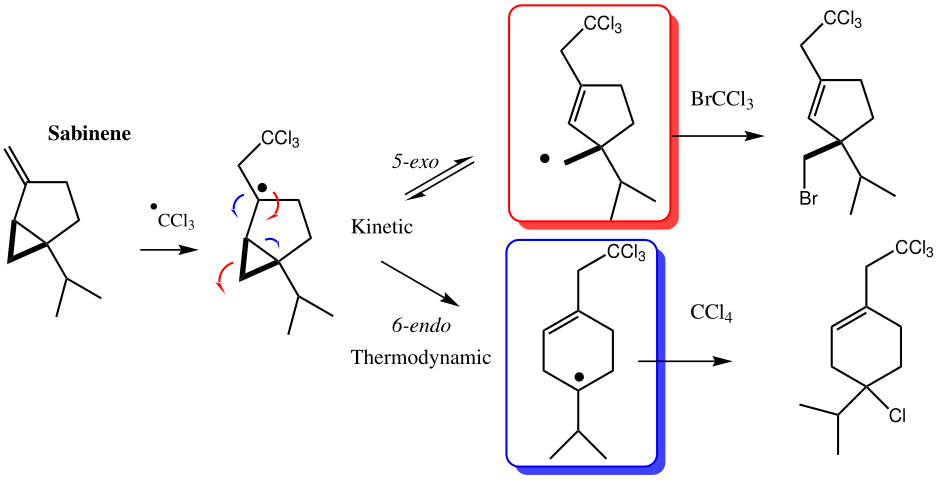
Experiment had shown that Sabinene undergoes a radical ring-opening of the cyclopropane when treated with CCl3 radicals. If BrCCl3 is used as solvent, the kinetic 5-exo product is immediately trapped. If instead the reaction is conducted in the less reactive trap CCl4, the thermodynamic 6-endo product is isolated. The objective was to investigate the origins of these effects. In 1992, computational modelling was limited by the speed and memory of the computers to the following:

  1. Semi-empirical methods such as PM3 (ab initio methods were used only sparingly).
  2. Larger groups (in this case, the CCl3 and isopropyl groups) were trimmed off
  3. Simulations were often for the gas phase only (although the self-consistent-reaction-field was starting to be used to simulate solution).
  4. The properties of transition states were analysed via their molecular orbitals alone, and these were often disconcertingly complex:

The conclusion in 1992 using these techniques found that the transition state for 5-exo ring formation was 3.1 kcal/mol higher than for 6-endo, contrary to the experimental result. With no support from mere activation energies, perhaps slightly desperate recourse was made to an orbital correlation diagram, and the discussion included, inter alia, an arcane feature involving an avoided orbital crossing unique to the 5-exo transition state. Perhaps, in retrospect, rather too arcane for the intended audience, since this is unfortunately not a well cited article.

How might one do things differently (better?) twenty years on?

  1. Here, I start with presenting a (3D) model of each transition state. This was not done in 1992 for reasons of space (the journal format limited the page length very strictly) and of course the journal was only available in printed form (no e-journals then!).
  2. The model itself can be greatly improved (ωB97XD/6-311G(d,p)/CPCM=CCl4).  We now have a DFT calculation, including proper dispersion terms (which PM3 lacks by the way) and good triple-ζ basis set (PM3 is single-ζ), with inclusion of solvation (even though this is a radical, the dipole moments are nevertheless in the range 3-4D, and hence a gas phase model may not be entirely appropriate) and with no trimming off of groups. Crucially (in retrospect), my decision to delete the CCl3 group in 1992 was not a sound one! We have no archive from those days however, so cannot double-check this point. The modern calculation is indeed archived here (although of course whether this archive will itself still be available in 20 years time remains to be established!). 
  3. With modern computers, these new models took about 2.25 hours each to compute (the entire project was done in one working day). The 5-exo transition state is shown below:
  4. The presentation of this model can also be improved from that available 20 years ago. As usual, just click on the image above to see it.
  5. The free energy of activation, ΔG298 = 10.6 kcal/mol, is an entirely reasonable value for radical ring opening of a cyclopropyl (this value is mysteriously not reported in the 1992 version, for which I also take complete blame).
  6. The isomeric 6-endo transition state (which is observed to be kinetically slower) indeed now has the higher calculated barrier (ΔG298 = 11.5 kcal/mol) and this value corresponds to a process about 5 times slower than 5-exo. Recollect, PM3 obtained the opposite result, but possibly that was because the CCl3 group was not present in the model.
  7. We can learn a little about the dynamics of the reaction path; note how the isopropyl group rotates near the end of the ring-opening, due to some form of σ-conjugation no doubt.
  8. Instead of delocalised molecular orbitals, we are going to present localized NBOs, and in particular look at the localised effect to the C-CCl3 bond. The orbitals for the 5-exo transition state are shown first. The red-blue is the C-CCl3 σ* NBO orbital, the purple-orange is the highest energy doubly occupied NBO orbital (these two are selected because they represent a pair with a small energy gap, which means a larger interaction energy). Where blue and purple, or orange and red overlap, we have a stabilizing influence.
  9. The equivalent pair of NBOs for the 6-endo transition state overlaps much less well (click on image to get a rotatable 3D model to see for yourself). 
  10. Nevertheless, the 6-endo transition state manages an overlap between the highest singly occupied NBO and the C-Cl σ*, but because it involves only one, and not a pair of electrons, the stabilizing effect is smaller.
  11. What we conclude is that at the transition state, the 5-exo isomer has the more stabilizing orbital overlaps, but that beyond the transition state, the greater thermodynamic stability of the 6-endo isomer takes over.

Well, here we have a refresh of some chemistry analysed 20 years ago, and done with the help of software and hardware tools that have advanced considerably during this period. One may only speculate what another refresh in 20 years time might bring! 

References

  1. R.A. Batey, P. Grice, J.D. Harling, W.B. Motherwell, and H.S. Rzepa, "Origins of the regioselectivity of cyclopropylcarbinyl ring opening reactions in bicyclo [n.1.0] systems", Journal of the Chemical Society, Chemical Communications, pp. 942, 1992. https://doi.org/10.1039/c39920000942

Dynamic effects in nucleophilic substitution at trigonal carbon (with Na+).

Thursday, July 19th, 2012

In the preceding post, I described a fascinating experiment and calculation by Bogle and Singleton, in which the trajectory distribution of molecules emerging from a single transition state was used to rationalise the formation of two isomeric products 2 and 3.  In the present post, I explore possible consequences of including a sodium cation (X=Na+ below) in the computational model.

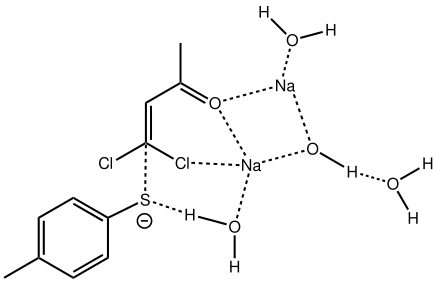
Sitting down to construct such a model, one is immediately faced with important decisions. Na+ comes with baggage, namely groupies in the form of solvent molecules and ionic bonding. The latter means less certainty regarding where to place the ion (covalent bonds have that nice attribute that their orientation and length is pretty predictable most of the time). I decided to construct the model shown below, using not one Na+ but two (such structures are known from the Cambridge crystal data base), the second Na+ being charge balanced by hydroxide anion.

The resulting transition state (B3LYP/6-31+G(d,p)/CPCM=ethanol) is shown below, and the free energy activation barrier, ΔG is 11.7 kcal/mol, well down on the value obtained using X=H+, and entirely reasonable for a reaction occurring at room temperature. This suggests that the model is not unreasonable (but of course does not prove it is the best).

The geometry of this transition state is significant. Of the two C-Cl bond lengths, the shorter (click the image above to inspect the model) is the one cis to the carbonyl (subsequent elimination of which would result in formation of the major product 2). But an IRC reveals what happens next. Recollect that when X=H+ a tetrahedral intermediate is formed that then collapses with elimination of H3O+Cl. This time, no intermediate is seen on the IRC, and the requisite C-Cl bond is broken to form 2 in a concerted (but very asynchronous) manner, and in the manner reported by Bogle and Singleton for a model without counterion and explicit solvent.

Notice how preparation for eviction of the C-Cl bond only starts after the transition state is passed. The forces on the departing chloride start to grow after the dihedral angle of the Ar-S-C-Cl system has become antiperiplanar (IRC -3), resulting in the anion shooting out towards one of the two Na+ cations to form solvated NaCl.

So we now have a rather more complete model. But is it yet complete enough? How would one go about evicting the other chloride, resulting in formation of 3? I think it is fairly clear that the model will have to be enlarged yet again, this time to include at least one more Na+ located on the other side of the carbonyl, and ready to receive the anion. Possibly at least another two water molecules and one hydroxide anion would be required to surround this cation. Clearly, such a model would have grown substantially compared to the original one (Occam might not be happy), and that we are gradually edging towards having two quite separate transition state models to account for each of 2 and 3. At this stage, it would be interesting to apply Bogle and Singleton‘s direct dynamics model to try to establish if each transition state leads to only one product, or whether either of these transition states could result in cross-over to the other product.

I have no feel for whether the  transition state presented here can be treated using direct dynamics; if it could, that would indeed be an interesting simulation.

The direct approach is not always the best: ethene + dichlorocarbene

Tuesday, June 12th, 2012

The reaction between a carbene and an alkene to form a cyclopropane is about as simple a reaction as one can get. But I discussed before how simple little molecules (cyclopropenyl anion) can hold surprises. So consider this reaction:

Transition state for reaction between ethene and dichlorocarbene. Click for 4D.

The reaction is a 4-electron pericyclic process, and so is subject to the Woodward-Hoffmann rules, which imply that such a 4n-thermal process should go with one antarafacial component. But there is a (rarely cited or observed) alternative, as was illustrated for the π22 cycloaddition of ethene to itself. There we saw the gymnastics of a limbo dancer, with one ethene sliding up to the other rather than taking a full-frontal approach. But whilst that reaction had an unrealistic activation barrier of ~50 kcal/mol, the reaction between dichlorocarbene and an alkene is known to be a very facile one. And so the calculation shows (below). The barrier to reaction is small, and so this is an example of a low-barrier nominally forbidden reaction which nevertheless achieves a low barrier by avoiding the direct approach of the two molecules and adopting a round-about path!

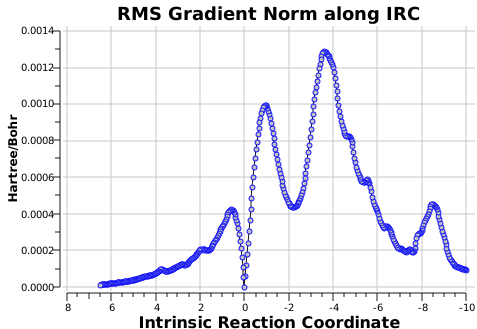
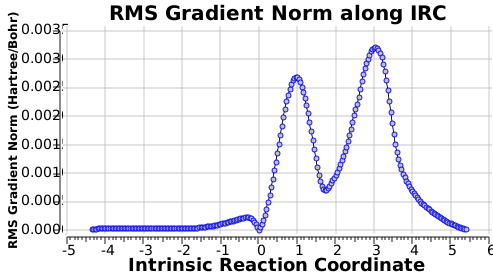
This round-about approach is seen best in the IRC for the addition to dicyano-ethene. Shown above is the gradient norm along the IRC.

  1. From IRC -1.2 to 0.0 (the transition state) the reaction corresponds to the formation of effectively just one C-C bond (a two electron process if you like).
  2. At IRC +2.0 a second distinct feature is seen in the graph, and this now corresponds to the formation of the second C-C bond, involving a sliding motion of the carbene (again, a two-electron process).

So by breaking a four-electron process into two phases, each involving just one electron pair, a lot of the forbidden Woodward-Hoffmann character seems to be avoided. Truly the direct approach not being the best!