September 22nd, 2016
Compounds with O-O bonds often have weird properties. For example, artemisinin, which has some fascinating stereoelectronics. Here is another such, recently in the news and known as HMTD (hexamethylene triperoxide diamine). The crystal structure was reported some time ago[1] and the article included an inspection of the computed wavefunction. However this did not look at the potential stereoelectronics in this species, which I now address here.

A ωB97XD/Def2-TZVPP calculation[2] can be analysed for the NBO-derived interaction terms. This identifies an electron donor (normally a bond or a lone pair) and its E(2) perturbation energy interaction with an acceptor (normally an empty σ* antibond). Here we are interested in the interaction between the nitrogen “lone pair” and the adjacent C-O σ* antibond, of which there are six in the molecule due to the D3 symmetry. E(2) is ~22.4 kcal/mol, which is a large effect (the equivalent value for the so-called anomeric interaction between an oxygen lone pair and a C-O antibond is ~18 kcal/mol). The effect of donation into the empty C-O σ* antibond is to weaken it, unless the effect is balanced by a reciprocal interaction in the opposing direction, which is often the case in sugar-derived anomeric effects. Sugars of course are thermally relatively stable. In the case of HMTD, the reverse effect would be an oxygen Lp donating into the N-C σ* antibond and this has the value of 14.5 kcal/mol. Since the two are not balanced, this presumably contributes to the very unstable nature of this molecule.
An alternative way of looking at what the electrons are up to is ELF, a function based on the electron density which identifies the centroids of electron basins. The red arrows point to the four basins associated with the nitrogen “lone pair” (mostly the dumb-bell-shaped p-atomic orbital, hence four basins), and the integration being 3.2e for each nitrogen. This is a rather odd number for a “lone pair”. There is undoubtedly something unusual about this wavefunction which has yet to be identified.

Finally, I ask how common the N(sp3)-C(sp3)-O-O structure motif might be? In fact the Cambridge structure database has 81 entries! The scatterplot below includes 51 of them (no disorder, no errors, R<0.05). No clear-cut conclusions emerge from these statistics, except just a hint that as the C-O distance gets longer, the N-C distance might get shorter and that shorter N-C lengths are associated with shorter O-O lengths.

References
- A. Wierzbicki, E.A. Salter, E.A. Cioffi, and E.D. Stevens, "Density Functional Theory and X-ray Investigations of P- and M-Hexamethylene Triperoxide Diamine and Its Dialdehyde Derivative", The Journal of Physical Chemistry A, vol. 105, pp. 8763-8768, 2001. https://doi.org/10.1021/jp0123841
- H. Rzepa, "HMTD Hexamethylenetriperoxidediamine D3 NBO", 2016. https://doi.org/10.14469/hpc/1663
Tags: Amines, Artemisinin, Chemistry, Functional groups, Hexamethylene triperoxide diamine, Organic chemistry, Organic peroxides, Peroxide, perturbation energy interaction, Stereoelectronics
Posted in Interesting chemistry | 1 Comment »
September 21st, 2016
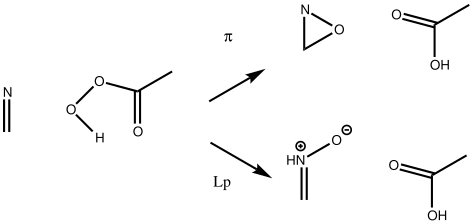
Nucleophiles are species that seek to react with an electron deficient centre by donating a lone or a π-bond pair of electrons. The ambident variety has two or more such possible sources in the same molecule, an example of which might be hydroxylamine or H2NOH. I previously discussed how for this example, the energetics allow the nitrogen lone pair (Lp) to win out over the O Lp. Here, I play a similar game, but this time setting an NLp up against a π-pair.
Before exploring this computationally, a reality check using measured crystal structures. Below is the search query used to explore the ability of the imine π-bond (the more novel or unusual of the two possibilities) to hydrogen bond to a proton as the model electrophile (see [1] for anther example of using this as a probe).

DIST1 is the distance from a hydrogen to the mid-point of the C=N bond (set to be in the range 1.8-2.7Å, the latter being shorter than the combined van der Waals radii of the atoms). The torsion is set to |70-110|° to restrict the approach of the hydrogen to above or below the π-bond. The usual no errors, no disorder, R < 0.05 and H-positions normalised applies. Some 2501 hits for intermolecular approaches closer than the van der Waals contact are found, with one hot-spot at a distance of 2.65Å and a torsion of ~100°. There is of course a continuum between a hydrogen bond and a dispersion attraction, but this plot shows there to be a fair few examples at distances of 2.4Å, a shortening which is normally taken as a hydrogen bond rather than a dispersion mode.

Using a simple imine as the nucleophile and a peracid as electrophile,[2] ωB97XD/Def2-TZVPP/SCRF=dichloromethane calculations (N[3],π[4]) reveal the N barrier to be 16.2 kcal/mol lower in free energy (ΔG298) than π. The normal explanation is that a Lp is bound only to a single nucleus, whereas a two-centre bonded pair is attracted to two nuclei. The means that the former therefore is more readily “available” to donate to an electrophile, by apparently 16.2 kcal/mol.
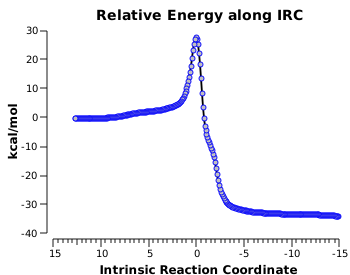
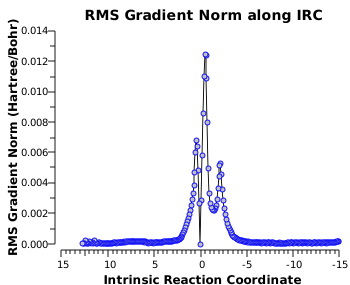
The IRC energy profile[5] for Nlp as a σ-nucleophile is shown below, with a relatively reasonable thermal barrier to reaction. The feature at IRC = 2 is in fact the proton transfer, which occurs only after the transition state has been passed. This behaviour was noted previously for the reaction of ethene with peracid, as verified experimentally by the measurement of kinetic isotope effects.

The π-nucleophilic route is shown below.[6] Note the higher barrier and the greater synchrony between the oxygen transfer and the proton transfer.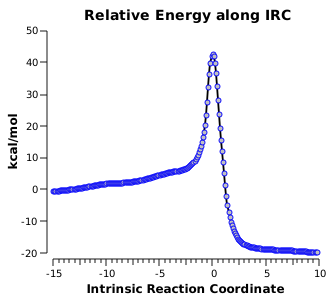
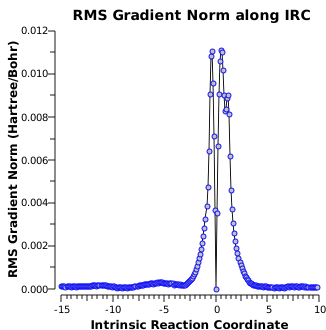

This leaves us with something of a problem. According to the literature,[2] the balance between σ or π is very even for the reaction between a peracid and an imine. For an aryl substituted imine, the proportion of the two products changes from 0% N (nitrone) and 100% π (oxaziridine) to 100% N and 0% π simply by changing the nature of the substituent. To achieve what is often referred to as 100% selectivity (normally understood as the minor isomer being <1% of the formed products) takes a free energy difference of ~2.7 kcal/mol (in fact ~RT ln 100/1), and a complete inversion is therefore ~5.4 kcal/mol. The computed difference of 16.2 kcal/mol is far too large to achieve such an inversion (substituent effects are rarely if ever of this magnitude). When faced with such a mismatch between experiment and computation, the explanation is normally because the modelled mechanism is the wrong one. So in this case, time to hunt for an alternative way of forming the oxaziridine. If I find a solution, I will update this post.
References
- H.S. Rzepa, "Discovering More Chemical Concepts from 3D Chemical Information Searches of Crystal Structure Databases", Journal of Chemical Education, vol. 93, pp. 550-554, 2015. https://doi.org/10.1021/acs.jchemed.5b00346
- D.R. Boyd, P.B. Coulter, N.D. Sharma, W. Jennings, and V.E. Wilson, "Normal, abnormal and pseudo-abnormal reaction pathways for the imine-peroxyacid reaction", Tetrahedron Letters, vol. 26, pp. 1673-1676, 1985. https://doi.org/10.1016/s0040-4039(00)98582-4
- H.S. Rzepa, "C 3 H 7 N 1 O 3", 2016. https://doi.org/10.14469/ch/195458
- https://doi.org/
- H. Rzepa, "Imine + peracetic acid,N attack IRC", 2016. https://doi.org/10.14469/hpc/1658
- H. Rzepa, "Imine + peracetic acid, pi attack IRC", 2016. https://doi.org/10.14469/hpc/1659
Posted in crystal_structure_mining, reaction mechanism | No Comments »
September 19th, 2016
I previously explored stabilized “carbenes” with the formal structures (R2N)2C:, concluding that perhaps the alternative ionic representation R2N+=C–NR2 might reflect their structures better. Here I take a broader look at the “carbene” landscape before asking the question “what about nitrenes?”
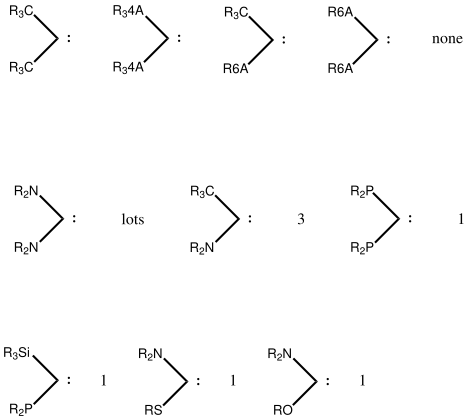
The top row shows the compounds for which no crystal structure could be found.‡ This includes the traditional carbon-substituted unstabilized carbenes, as well as those substituted with either group 4A or 6A elements (Si, S, etc). Isolated hits were however found as follows for other combinations (all interesting, but I do not discuss them here).
- R2N-C-CR3 [1],[2],[3],[4],[5],[6]
- R2P-C-Si [7],[8]
- R2P-C-PR2 [9],[10]
- R2N-C-OR [11]
- R2N-C-SR [12]
At this point I turned to nitrenes. As with unstabilised carbenes, the nitrogen is described as having one covalent bond, one unshared spin-paired lone pair of electrons and two further unpaired electrons to give a total valence shell count of six (and in fact a triplet spin state). Are there any examples? Just one, formally corresponding to R2P-N (DEGSEP[13]). To explore what the nature of the single P-N bond is, I did a search for the P-N bond lengths of all P-N compounds in the CSD (of any bond type). The distribution shows ~1.48Å as the shortest and ~1.8Å as the longest.There is no sign of a multimodal distribution indicating partitioning into e.g. single, double or triple bonds.

So what about our nitrene? The P-N bond is 1.456Å, which is very much at the short end of the spectrum above, and so pretty far from the formal simple definition of a nitrene given above. So now for a ωB97XD/Def2-TZVPP calculation of the singlet wavefunction[14] (the triplet state is 22 kcal/mol higher in energy[15]) for a model compound with calculated CN distance 1.493Å and from which an ELF-based localisation and integration of the electron basins can be derived. The total basin integration for the N can be taken as 7.77e (close to the octet) if basins 15 and 16 are assumed to be shared (covalent) and this gives the P-N bond double bond character. If basins 15 and 16 are not included (and taken as localised just on the P), the N has 5.81e and an associated single bond.

A search of the CSD specifying P≡N as the search query returns lengths in the range 1.47-1.56Å, which our example certainly conforms to. So perhaps we can tentatively conclude that the only example thus far reported of a crystalline nitrene in fact sustains a very short bond to the nitrogen. It could be considered as the N having a filled octet in its valence shell, and certainly a bond order higher than one, if not actually triple.
‡For the search query, see [16]
References
- Marchenko, Anatoliy., Koidan, Heorgyi., Hurieva, Anastasiya., Kurpiieva, Olena., Vlasenko, Yurii., Kostyuk, Aleksandr., Tubaro, Cristina., Lenarda, Anna., Biffis, Andrea., and Graiff, Claudia., "CCDC 997216: Experimental Crystal Structure Determination", 2014. https://doi.org/10.5517/cc12gp8h
- A. Marchenko, H. Koidan, A. Hurieva, O. Kurpiieva, Y. Vlasenko, A. Kostyuk, C. Tubaro, A. Lenarda, A. Biffis, and C. Graiff, "N-phosphanyl-imidazolin-2-ylidenes: Novel stable carbenes as bidentate ligands for late transition metals", Journal of Organometallic Chemistry, vol. 771, pp. 14-23, 2014. https://doi.org/10.1016/j.jorganchem.2014.05.036
- Lavallo, V.., Mafhouz, J.., Canac, Y.., Donnadieu, B.., Schoeller, W.W.., and Bertrand, G.., "CCDC 236934: Experimental Crystal Structure Determination", 2004. https://doi.org/10.5517/cc7yk1r
- V. Lavallo, J. Mafhouz, Y. Canac, B. Donnadieu, W.W. Schoeller, and G. Bertrand, "Synthesis, Reactivity, and Ligand Properties of a Stable Alkyl Carbene", Journal of the American Chemical Society, vol. 126, pp. 8670-8671, 2004. https://doi.org/10.1021/ja047503f
- Lavallo, V.., Frey, G.D.., Kousar, S.., Donnadieu, B.., and Bertrand, G.., "CCDC 651272: Experimental Crystal Structure Determination", 2008. https://doi.org/10.5517/ccpvpsz
- V. Lavallo, G.D. Frey, S. Kousar, B. Donnadieu, and G. Bertrand, "Allene formation by gold catalyzed cross-coupling of masked carbenes and vinylidenes", Proceedings of the National Academy of Sciences, vol. 104, pp. 13569-13573, 2007. https://doi.org/10.1073/pnas.0705809104
- Marsh, R.E.., and Clemente, D.A.., "CCDC 625624: Experimental Crystal Structure Determination", 2008. https://doi.org/10.5517/ccp00f3
- R.E. Marsh, and D.A. Clemente, "A survey of crystal structures published in the Journal of the American Chemical Society", Inorganica Chimica Acta, vol. 360, pp. 4017-4024, 2007. https://doi.org/10.1016/j.ica.2007.02.050
- Martin, D.., Baceiredo, A.., Gornitzka, H.., Schoeller, W.W.., and Bertrand, G.., "CCDC 252551: Experimental Crystal Structure Determination", 2005. https://doi.org/10.5517/cc8gst9
- D. Martin, A. Baceiredo, H. Gornitzka, W.W. Schoeller, and G. Bertrand, "A Stable P‐Heterocyclic Carbene", Angewandte Chemie International Edition, vol. 44, pp. 1700-1703, 2005. https://doi.org/10.1002/anie.200462239
- R.W. Alder, C.P. Butts, and A.G. Orpen, "Stable Aminooxy- and Aminothiocarbenes", Journal of the American Chemical Society, vol. 120, pp. 11526-11527, 1998. https://doi.org/10.1021/ja9819312
- A.J. Arduengo, J.R. Goerlich, and W.J. Marshall, "A Stable Thiazol‐2‐ylidene and Its Dimer", Liebigs Annalen, vol. 1997, pp. 365-374, 1997. https://doi.org/10.1002/jlac.199719970213
- Dielmann, F.., Back, O.., Henry-Ellinger, M.., Jerabek, P.., Frenking, G.., and Bertrand, G.., "CCDC 884586: Experimental Crystal Structure Determination", 2013. https://doi.org/10.5517/ccyph14
- H. Rzepa, "DEGSEP", 2016. https://doi.org/10.14469/hpc/1625
- H. Rzepa, "DEGSEP triplet", 2016. https://doi.org/10.14469/hpc/1626
- H. Rzepa, "CSD Search query for carbenes", 2016. https://doi.org/10.14469/hpc/1624
Posted in crystal_structure_mining | 1 Comment »
September 19th, 2016
I previously explored stabilized “carbenes” with the formal structures (R2N)2C:, concluding that perhaps the alternative ionic representation R2N+=C–NR2 might reflect their structures better. Here I take a broader look at the “carbene” landscape before asking the question “what about nitrenes?”
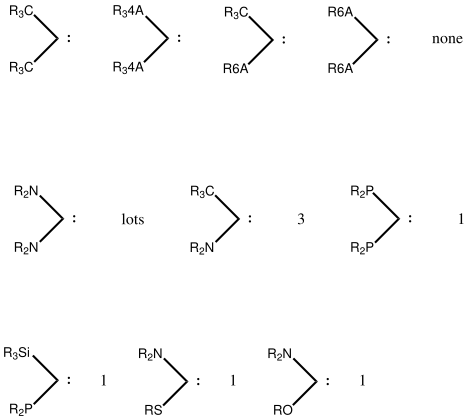
The top row shows the compounds for which no crystal structure could be found.‡ This includes the traditional carbon-substituted unstabilized carbenes, as well as those substituted with either group 4A or 6A elements (Si, S, etc). Isolated hits were however found as follows for other combinations (all interesting, but I do not discuss them here).
- R2N-C-CR3 [1],[2],[3],[4],[5],[6]
- R2P-C-Si [7],[8]
- R2P-C-PR2 [9],[10]
- R2N-C-OR [11]
- R2N-C-SR [12]
At this point I turned to nitrenes. As with unstabilised carbenes, the nitrogen is described as having one covalent bond, one unshared spin-paired lone pair of electrons and two further unpaired electrons to give a total valence shell count of six (and in fact a triplet spin state). Are there any examples? Just one, formally corresponding to R2P-N (DEGSEP[13]). To explore what the nature of the single P-N bond is, I did a search for the P-N bond lengths of all P-N compounds in the CSD (of any bond type). The distribution shows ~1.48Å as the shortest and ~1.8Å as the longest.There is no sign of a multimodal distribution indicating partitioning into e.g. single, double or triple bonds.

So what about our nitrene? The P-N bond is 1.456Å, which is very much at the short end of the spectrum above, and so pretty far from the formal simple definition of a nitrene given above. So now for a ωB97XD/Def2-TZVPP calculation of the singlet wavefunction[14] (the triplet state is 22 kcal/mol higher in energy[15]) for a model compound with calculated CN distance 1.493Å and from which an ELF-based localisation and integration of the electron basins can be derived. The total basin integration for the N can be taken as 7.77e (close to the octet) if basins 15 and 16 are assumed to be shared (covalent) and this gives the P-N bond double bond character. If basins 15 and 16 are not included (and taken as localised just on the P), the N has 5.81e and an associated single bond.

A search of the CSD specifying P≡N as the search query returns lengths in the range 1.47-1.56Å, which our example certainly conforms to. So perhaps we can tentatively conclude that the only example thus far reported of a crystalline nitrene in fact sustains a very short bond to the nitrogen. It could be considered as the N having a filled octet in its valence shell, and certainly a bond order higher than one, if not actually triple.
‡For the search query, see [16]
References
- Marchenko, Anatoliy., Koidan, Heorgyi., Hurieva, Anastasiya., Kurpiieva, Olena., Vlasenko, Yurii., Kostyuk, Aleksandr., Tubaro, Cristina., Lenarda, Anna., Biffis, Andrea., and Graiff, Claudia., "CCDC 997216: Experimental Crystal Structure Determination", 2014. https://doi.org/10.5517/cc12gp8h
- A. Marchenko, H. Koidan, A. Hurieva, O. Kurpiieva, Y. Vlasenko, A. Kostyuk, C. Tubaro, A. Lenarda, A. Biffis, and C. Graiff, "N-phosphanyl-imidazolin-2-ylidenes: Novel stable carbenes as bidentate ligands for late transition metals", Journal of Organometallic Chemistry, vol. 771, pp. 14-23, 2014. https://doi.org/10.1016/j.jorganchem.2014.05.036
- Lavallo, V.., Mafhouz, J.., Canac, Y.., Donnadieu, B.., Schoeller, W.W.., and Bertrand, G.., "CCDC 236934: Experimental Crystal Structure Determination", 2004. https://doi.org/10.5517/cc7yk1r
- V. Lavallo, J. Mafhouz, Y. Canac, B. Donnadieu, W.W. Schoeller, and G. Bertrand, "Synthesis, Reactivity, and Ligand Properties of a Stable Alkyl Carbene", Journal of the American Chemical Society, vol. 126, pp. 8670-8671, 2004. https://doi.org/10.1021/ja047503f
- Lavallo, V.., Frey, G.D.., Kousar, S.., Donnadieu, B.., and Bertrand, G.., "CCDC 651272: Experimental Crystal Structure Determination", 2008. https://doi.org/10.5517/ccpvpsz
- V. Lavallo, G.D. Frey, S. Kousar, B. Donnadieu, and G. Bertrand, "Allene formation by gold catalyzed cross-coupling of masked carbenes and vinylidenes", Proceedings of the National Academy of Sciences, vol. 104, pp. 13569-13573, 2007. https://doi.org/10.1073/pnas.0705809104
- Marsh, R.E.., and Clemente, D.A.., "CCDC 625624: Experimental Crystal Structure Determination", 2008. https://doi.org/10.5517/ccp00f3
- R.E. Marsh, and D.A. Clemente, "A survey of crystal structures published in the Journal of the American Chemical Society", Inorganica Chimica Acta, vol. 360, pp. 4017-4024, 2007. https://doi.org/10.1016/j.ica.2007.02.050
- Martin, D.., Baceiredo, A.., Gornitzka, H.., Schoeller, W.W.., and Bertrand, G.., "CCDC 252551: Experimental Crystal Structure Determination", 2005. https://doi.org/10.5517/cc8gst9
- D. Martin, A. Baceiredo, H. Gornitzka, W.W. Schoeller, and G. Bertrand, "A Stable P‐Heterocyclic Carbene", Angewandte Chemie International Edition, vol. 44, pp. 1700-1703, 2005. https://doi.org/10.1002/anie.200462239
- R.W. Alder, C.P. Butts, and A.G. Orpen, "Stable Aminooxy- and Aminothiocarbenes", Journal of the American Chemical Society, vol. 120, pp. 11526-11527, 1998. https://doi.org/10.1021/ja9819312
- A.J. Arduengo, J.R. Goerlich, and W.J. Marshall, "A Stable Thiazol‐2‐ylidene and Its Dimer", Liebigs Annalen, vol. 1997, pp. 365-374, 1997. https://doi.org/10.1002/jlac.199719970213
- Dielmann, F.., Back, O.., Henry-Ellinger, M.., Jerabek, P.., Frenking, G.., and Bertrand, G.., "CCDC 884586: Experimental Crystal Structure Determination", 2013. https://doi.org/10.5517/ccyph14
- H. Rzepa, "DEGSEP", 2016. https://doi.org/10.14469/hpc/1625
- H. Rzepa, "DEGSEP triplet", 2016. https://doi.org/10.14469/hpc/1626
- H. Rzepa, "CSD Search query for carbenes", 2016. https://doi.org/10.14469/hpc/1624
Posted in crystal_structure_mining | 1 Comment »
September 11th, 2016
To quote from Wikipedia: in chemistry, a carbene is a molecule containing a neutral carbon atom with a valence of two and two unshared valence electrons. The most ubiquitous type of carbene of recent times is the one shown below as 1, often referred to as a resonance stabilised or persistent carbene. This type is of interest because of its ability to act as a ligand to an astonishingly wide variety of metals, with many of the resulting complexes being important catalysts. The Wiki page on persistent carbenes shows them throughout in form 1 below, thus reinforcing the belief that they have a valence of two and by implication six (2×2 shared + 2 unshared) electrons in the valence shell of carbon. Here I consider whether this name is really appropriate.
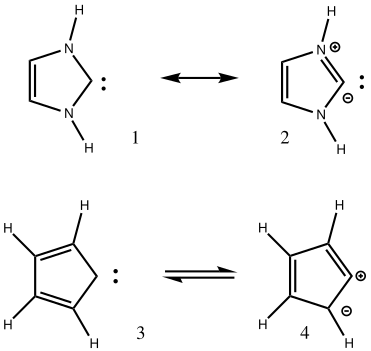
Let us start by counting the electrons in the 2p atomic orbitals on the ring atoms of 1, forming what we call a π-system. There are six; two from the carbons shown connected by a double bond, C=C and a further four from the two nitrogen lone pairs. Now in benzene, we also have six π-electrons in a ring and this molecule is of course famously aromatic due to the diatropic ring current created by the circulation of these six electrons. Moreover, all the C-C bonds are equal in length, ~1.4Å long (although the reasons for this equality are subtle).
So does 1 behave similarly? A ωB97XD/Def2-TZVPP calculation[1] shows the following calculated structure, in which all the bonds are clearly intermediate between single and double. The N-C(“carbene”) length of 1.357Å in particular is much shorter than a C-N single bond (~1.44AÅ), which tends to suggest that the resonance form 2 is a better representation than 1. This form is also pretty similar to pyrrole, itself a well-known hetero-aromatic species.
An alternative reality check is crystal structures. There are 42 examples (no errors, no disorder, R < 0.05) in the Cambridge structure database (CSD) and the distribution of C-N bond lengths below is indeed quite similar to the calculation shown above for the unsubstituted parent, with the lhs “hot-spot” almost exactly coincident. The C-C length similarly corresponds.


Let us try a technique for explicitly counting electrons, the ELF (electron localisation method), which works directly on a function of the electron density to identify the centroids of localized “basins” containing the integrated density. The three surrounding the “carbene” atom sum to 7.54e (with small seepage also into the carbon 1s core; 2.08e). A “normal” carbon on the C=C bond is 7.65e. The localization below turns out to closely resemble resonance structure 2 above.

Further in-silico experiments can be carried out with species 3 and 4, in which a carbon atom replaces each of the nitrogens. This reduces the total electron count by two and now this poor molecule has a difficult choice to make. Should it be the π-system that sacrifices these two electrons, or could it be the σ-lone-pair found on the two-coordinate carbon? We will let the quantum mechanical solution decide[2] (with a constraint that the molecule be planar). The electrons arrange themselves to resemble the resonance form 4, choosing to retain the six π-electrons and sacrifice the carbene “unshared pair”. The 2-coordinate carbon as a vinyl cation now does have ~6 valence electrons (ELF indicates 5.23e). 
What about the other choice? By promoting two electrons from HOMO to LUMO one can also calculate 3 (again constrained to planarity)[3] which finally does correspond to the classical description of a carbene.

The arrow connecting 3 and 4 in the scheme at the top is NOT in this case an electronic resonance, but a a real equilibrium between two different species separated by an energy barrier. With only four π-electrons in a cycle it is also antiaromatic, and so the two localised alkene bonds avoid any conjugation with each other. This form has a free energy some 5.7 kcal/ml higher than the aromatic form. In fact, the molecule is very keen to avoid all antiaromaticity and hence if the planar constraint is lifted, it will distort with no activation to a non-planar diene (just as cyclo-octatetraene does to a non-planar tetra-ene). And to complete the tale, even though 4 is aromatic, it too distorts without activation to an odd-looking non-planar form with no symmetry[4],[5],[6] (but that is another story).
The final word should be that the naming of these types of persistent carbene does need a reality check; they should not be called this at all! They are really dipolar species or carbon-ylides as shown in 2. As it happens, a very closely related species in which one sulfur replaces one nitrogen is a very familiar compound, vitamin B1 or thiamine. The only example of a stable deprotonated thiamine derivative is referred to as a carbene[7], perhaps because with an acid catalyst it can dimerise in the manner expected of a real carbene. Significantly however, without acid catalyst this does not happen; a true carbene would not require such a catalyst.
References
- H. Rzepa, "NHC wfn", 2016. https://doi.org/10.14469/hpc/1473
- H. Rzepa, "butadiene carbene aromatic -192.700746", 2016. https://doi.org/10.14469/hpc/1581
- H. Rzepa, "butadiene carbene antiaromatic guess=alter -192.691607", 2016. https://doi.org/10.14469/hpc/1582
- H. Rzepa, "C5H4 non-planar, Cs symmetry", 2016. https://doi.org/10.14469/hpc/1583
- H. Rzepa, "C5H4 non-planar, C2 symmetry", 2016. https://doi.org/10.14469/hpc/1584
- H. Rzepa, "C5H4 non-planar, no symmetry", 2016. https://doi.org/10.14469/hpc/1585
- A.J. Arduengo, J.R. Goerlich, and W.J. Marshall, "A Stable Thiazol‐2‐ylidene and Its Dimer", Liebigs Annalen, vol. 1997, pp. 365-374, 1997. https://doi.org/10.1002/jlac.199719970213
Tags: Carbenes, chemical bonding, energy barrier, free energy, Functional groups, Ligand, Mesoionic carbene, Organometallic chemistry, Persistent carbene, quantum mechanical solution, Reactive intermediates, Transition metal carbene complex, Valence, Valence electron
Posted in crystal_structure_mining, General | No Comments »
September 11th, 2016
To quote from Wikipedia: in chemistry, a carbene is a molecule containing a neutral carbon atom with a valence of two and two unshared valence electrons. The most ubiquitous type of carbene of recent times is the one shown below as 1, often referred to as a resonance stabilised or persistent carbene. This type is of interest because of its ability to act as a ligand to an astonishingly wide variety of metals, with many of the resulting complexes being important catalysts. The Wiki page on persistent carbenes shows them throughout in form 1 below, thus reinforcing the belief that they have a valence of two and by implication six (2×2 shared + 2 unshared) electrons in the valence shell of carbon. Here I consider whether this name is really appropriate.

Let us start by counting the electrons in the 2p atomic orbitals on the ring atoms of 1, forming what we call a π-system. There are six; two from the carbons shown connected by a double bond, C=C and a further four from the two nitrogen lone pairs. Now in benzene, we also have six π-electrons in a ring and this molecule is of course famously aromatic due to the diatropic ring current created by the circulation of these six electrons. Moreover, all the C-C bonds are equal in length, ~1.4Å long (although the reasons for this equality are subtle).
So does 1 behave similarly? A ωB97XD/Def2-TZVPP calculation[1] shows the following calculated structure, in which all the bonds are clearly intermediate between single and double. The N-C(“carbene”) length of 1.357Å in particular is much shorter than a C-N single bond (~1.44AÅ), which tends to suggest that the resonance form 2 is a better representation than 1. This form is also pretty similar to pyrrole, itself a well-known hetero-aromatic species.
An alternative reality check is crystal structures. There are 42 examples (no errors, no disorder, R < 0.05) in the Cambridge structure database (CSD) and the distribution of C-N bond lengths below is indeed quite similar to the calculation shown above for the unsubstituted parent, with the lhs “hot-spot” almost exactly coincident. The C-C length similarly corresponds.


Let us try a technique for explicitly counting electrons, the ELF (electron localisation method), which works directly on a function of the electron density to identify the centroids of localized “basins” containing the integrated density. The three surrounding the “carbene” atom sum to 7.54e (with small seepage also into the carbon 1s core; 2.08e). A “normal” carbon on the C=C bond is 7.65e. The localization below turns out to closely resemble resonance structure 2 above.

Further in-silico experiments can be carried out with species 3 and 4, in which a carbon atom replaces each of the nitrogens. This reduces the total electron count by two and now this poor molecule has a difficult choice to make. Should it be the π-system that sacrifices these two electrons, or could it be the σ-lone-pair found on the two-coordinate carbon? We will let the quantum mechanical solution decide[2] (with a constraint that the molecule be planar). The electrons arrange themselves to resemble the resonance form 4, choosing to retain the six π-electrons and sacrifice the carbene “unshared pair”. The 2-coordinate carbon as a vinyl cation now does have ~6 valence electrons (ELF indicates 5.23e). 
What about the other choice? By promoting two electrons from HOMO to LUMO one can also calculate 3 (again constrained to planarity)[3] which finally does correspond to the classical description of a carbene.

The arrow connecting 3 and 4 in the scheme at the top is NOT in this case an electronic resonance, but a a real equilibrium between two different species separated by an energy barrier. With only four π-electrons in a cycle it is also antiaromatic, and so the two localised alkene bonds avoid any conjugation with each other. This form has a free energy some 5.7 kcal/ml higher than the aromatic form. In fact, the molecule is very keen to avoid all antiaromaticity and hence if the planar constraint is lifted, it will distort with no activation to a non-planar diene (just as cyclo-octatetraene does to a non-planar tetra-ene). And to complete the tale, even though 4 is aromatic, it too distorts without activation to an odd-looking non-planar form with no symmetry[4],[5],[6] (but that is another story).
The final word should be that the naming of these types of persistent carbene does need a reality check; they should not be called this at all! They are really dipolar species or carbon-ylides as shown in 2. As it happens, a very closely related species in which one sulfur replaces one nitrogen is a very familiar compound, vitamin B1 or thiamine. The only example of a stable deprotonated thiamine derivative is referred to as a carbene[7], perhaps because with an acid catalyst it can dimerise in the manner expected of a real carbene. Significantly however, without acid catalyst this does not happen; a true carbene would not require such a catalyst.
References
- H. Rzepa, "NHC wfn", 2016. https://doi.org/10.14469/hpc/1473
- H. Rzepa, "butadiene carbene aromatic -192.700746", 2016. https://doi.org/10.14469/hpc/1581
- H. Rzepa, "butadiene carbene antiaromatic guess=alter -192.691607", 2016. https://doi.org/10.14469/hpc/1582
- H. Rzepa, "C5H4 non-planar, Cs symmetry", 2016. https://doi.org/10.14469/hpc/1583
- H. Rzepa, "C5H4 non-planar, C2 symmetry", 2016. https://doi.org/10.14469/hpc/1584
- H. Rzepa, "C5H4 non-planar, no symmetry", 2016. https://doi.org/10.14469/hpc/1585
- A.J. Arduengo, J.R. Goerlich, and W.J. Marshall, "A Stable Thiazol‐2‐ylidene and Its Dimer", Liebigs Annalen, vol. 1997, pp. 365-374, 1997. https://doi.org/10.1002/jlac.199719970213
Tags: Carbenes, chemical bonding, energy barrier, free energy, Functional groups, Ligand, Mesoionic carbene, Organometallic chemistry, Persistent carbene, quantum mechanical solution, Reactive intermediates, Transition metal carbene complex, Valence, Valence electron
Posted in crystal_structure_mining, General | No Comments »
September 1st, 2016
Bromoallene is a pretty simple molecule, with two non-equivalent double bonds. How might it react with an electrophile, say dimethyldioxirane (DMDO) to form an epoxide?[1] Here I explore the difference between two different and very simple approaches to predicting its reactivity. 
Both approaches rely on the properties of the reactant and use two types of molecule orbitals derived from its electronic wavefunction. The first of these is very well-known as the molecular orbital (MO), which has the property that it tends to delocalise over all the contributing atoms (the “molecule”). MOs are often used in this context; the highest energy occupied MO is thought of as being associated with the most nucleophilic (electron donating) regions of the molecule and so such a HOMO would be expected to predict the region of nucleophilic attack. The second is known as the natural bond orbital (NBO), which is evaluated in a manner that tends to localise it on bonds (the functional groups or reaction centres) and atom centres. What do these respective orbitals reveal for bromoallene?
| The MOs |
| HOMO, -0.3380 |
HOMO-1, -0.3692 au |
 Click for 3D |
 Click for 3D |
| The NBOs |
| HONBO, -0.3769 |
HONBO-2, -0.3898 |
 Click for 3D |
 Click for 3D |
The table above shows the energies (in Hartrees) of the four relevant orbitals. The less negative (less stable) the orbital, the more nucleophilic it is. The (heavily) delocalized HOMO is located on the C=C bond bond carrying the C-Br bond, Δ1,2 alkene, but it also has a large component on the Br. The more stable HOMO-1 is located on the C=C bond located away from the Br, the Δ2,3 alkene and also with a (different type of) component on the Br.
In contrast, the HONBO is located on the Δ2,3 alkene and it is the HONBO-2 that is on the Δ1,2 alkene. Both these orbitals have very little “leakage” onto other atoms, they are almost completely localised.
Well, now we have a problem since these two analyses lead to diametrically opposing predictions! So what does experiment say? A recent article[1] addresses this issue by isolating the initially formed epoxide from reaction with DMDO and characterising it using crystallography. But here comes the catch; such isolation only proved possible if the allene was also substituted with large sterically bulky groups such as t-butyl or adamantyl. And the isolated product was the Δ1,2 epoxide. So does that mean that the MO method was correct and the NBO method wrong? Well, not necessarily. Those large groups play an additional role via steric effects. To factor in such effects one has to look at the transition state model for the reaction rather than depending purely on the reactant properties. And the steric effects in this case appear to win out over the electronic ones.[1]
The Klopman[2]-Salem[3] equation (shown in very simplified, and original, form below for just the covalent term) casts some light on what is going on. This term is a double summation over occupied/unoccupied (donor-acceptor) orbital interactions, involving the coefficients of the orbitals (the overlap integrals in effect) in the numerator and the energy difference between the occupied/unoccupied orbital pair as denominator.

Performing such a double summation is rarely attempted; instead the equation is reduced to just one single term involving the donor of highest energy and the acceptor of lowest energy, ensuring the energy difference is a minimum and hence the term itself is (potentially) the largest in the summation. There is still the issue of the orbital coefficients, and here we get to the crux of the difference between the use of MOs and NBOs. You can see by inspection that the two π-MOs for bromoallene have different coefficients on the two atoms of interest, the two carbons of the double bond. One really has to evaluate the size of this term in the summation by using quantitative values for the respective coefficients and to very probably include the further terms in the summation for any other orbitals which also have significantly non-zero coefficients on these two atoms. But with the NBOs, the localisation procedure used to derive them has reduced the coefficients to just the carbon atoms and effectively no other atoms; all the other terms in the double summation in effect do drop out entirely. So with NBOs, the only number that matters is the energy difference between the occupied/empty orbitals (the denominator). But since the acceptor (the electrophile, DMDO in this case) is the same for both regiochemistries, things reduce even further to just comparing the donor energies for the two alternatives (Table above). The higher/less stable of these will have the greater contribution in the Klopman-Salem equation.
This little molecule teaches the important lesson that electronic and steric effects both play a role in directing reactions, and in this system they may well oppose each other. Simple interpretations based on reactant orbitals may give only a partial and even potentially misleading answer.
References
- D. Christopher Braddock, A. Mahtey, H.S. Rzepa, and A.J.P. White, "Stable bromoallene oxides", Chemical Communications, vol. 52, pp. 11219-11222, 2016. https://doi.org/10.1039/c6cc06395k
- G. Klopman, "Chemical reactivity and the concept of charge- and frontier-controlled reactions", Journal of the American Chemical Society, vol. 90, pp. 223-234, 1968. https://doi.org/10.1021/ja01004a002
- L. Salem, "Intermolecular orbital theory of the interaction between conjugated systems. I. General theory", Journal of the American Chemical Society, vol. 90, pp. 543-552, 1968. https://doi.org/10.1021/ja01005a001
Tags: chemical bonding, chemical reaction, Chemistry, Delocalized electron, double bond, energy, energy difference, HOMO/LUMO, lowest energy, Molecular orbital, Natural bond orbital, Nature, Physics, Quantum chemistry, stable HOMO-1
Posted in reaction mechanism | No Comments »
August 17th, 2016
In the previous post, I noted that a chemistry publisher is about to repeat an earlier experiment in serving pre-prints of journal articles. It would be fair to suggest that following the first great period of journal innovation, the boom in rapid publication “camera-ready” articles in the 1960s, the next period of rapid innovation started around 1994 driven by the uptake of the World-Wide-Web. The CLIC project[1] aimed to embed additional data-based components into the online presentation of the journal Chem Communications, taking the form of pop-up interactive 3D molecular models and spectra. The Internet Journal of Chemistry was designed from scratch to take advantage of this new medium.[2] Here I take a look at one recent experiment in innovation which incorporates “augmented reality”.[3]
The title is interesting: “Combination of Enabling Technologies to Improve and Describe the Stereoselectivity of Wolff–Staudinger Cascade Reaction“. One of these technologies relates to “microwave-assisted flow generation of primary ketenes by thermal decomposition of α-diazoketones at high temperature”, but the journal presentation itself attempts the “faster interpretation of computed data via a new web-based molecular viewer, which takes advantage from Augmented Reality (AR) technology“. To access this component directly, go to the link https://leyscigateway.ch.cam.ac.uk/staudinger/ It is not incorporated into the journal infrastructures as the CLIC project attempted, but is perhaps closer to the model I noted in the previous post of supporting (FAIR) data associated with the article and hosted separately from the journal.
What happens next depends rather on the Web browser you are using. With many browsers and tablets, a conventional 3D molecular presentation appears; there is no button present where the red arrow points. You will find out this is because “Augmented Reality is not available in your browser, as the getUserMedia() API is not supported“

Some browsers (the latest Opera, FireFox, Chrome) do support this feature, and a new AR button appears. Selecting this now layers the video from the device camera onto the 3D molecular model; the molecule now floats in the scene captured by the camera (which in the case below is the room I am sitting in). After a few seconds you are urged to “point the camera towards the AR marker”. The supporting information contains such AR markers as a navigation aid for the 3D coordinates contained there. An example is:

If this marker is now brought into the camera view (by printing it, sic) and holding it in front of the camera image, the marker resolves into further data relevant to the molecule of interest, layered into the existing scene of the room and the molecule. For the marker above, it resolves to a reaction energy profile which reveals where the specific molecule sits energetically in terms of the overall reaction.

This layering of “heads up” molecular data into a scene comprising a 3D molecular model and the human viewer of that molecule captured in video is what defines the concept of “augmented reality” (the data being the augmentation, rather than the human).
Having now tried it out, I was left wondering whether this truly was a great advance in enabling technology for chemistry journals. The role of the camera seems primarily to capture the AR markers contained in the supporting information; the presence of the reader in the video image apparently inspecting the molecule could be regarded as a distraction. The AR markers (QR codes) are merely visual representations of a URL, which in the form of a DOI (as used in this blog) to locate data is rather more familiar to most readers. The DOI, by the way, carries further information in the form of metadata, and which when sent to e.g. DataCite, enables the data to be found. Does the data need to be layered onto the molecule (and apparently floating in front of the reader) to become usable? Could it instead be placed in a pop-up or separate window of its own (as the 1994 CLIC project achieved)? Do the AR markers enable the data to be FAIR? One can Find the data (albeit only by reading and printing the supporting information) and view it in the AR scene, but is it Accessible (can one access the underlying numerical data?) or Interoperable (place it into another program) or Re-usable?
As with all enabling technologies, one has to always ask if that technology helps or hinders. Or is the principle of KISS (keep it simple) sometimes better? It is however good to see research groups experimenting with these themes and meanwhile readers can judge for themselves whether “heads up” AR augmentation of the data describing research is indeed the next big thing.
References
- D. James, B.J. Whitaker, C. Hildyard, H.S. Rzepa, O. Casher, J.M. Goodman, D. Riddick, and P. Murray‐Rust, "The case for content integrity in electronic chemistry journals: The CLIC project", New Review of Information Networking, vol. 1, pp. 61-69, 1995. https://doi.org/10.1080/13614579509516846
- S.M. Bachrach, and S.R. Heller, "The<i>Internet Journal of Chemistry:</i>A Case Study of an Electronic Chemistry Journal", Serials Review, vol. 26, pp. 3-14, 2000. https://doi.org/10.1080/00987913.2000.10764578
- S. Ley, B. Musio, F. Mariani, E. Śliwiński, M. Kabeshov, and H. Odajima, "Combination of Enabling Technologies to Improve and Describe the Stereoselectivity of Wolff–Staudinger Cascade Reaction", Synthesis, vol. 48, pp. 3515-3526, 2016. https://doi.org/10.1055/s-0035-1562579
Tags: Academia, Academic publishing, Boom, Design, Design Services, Innovation, Internet Journal, online presentation, Preprint, Publishing, reaction energy profile, technology helps, Web browser, web-based molecular viewer
Posted in General | 1 Comment »
August 16th, 2016
This week the ACS announced its intention to establish a “ChemRxiv preprint server to promote early research sharing“. This was first tried quite a few years ago, following the example of especially the physicists. As I recollect the experiment lasted about a year, attracted few submissions and even fewer of high quality. Will the concept succeed this time, in particular as promoted by a commercial publisher rather than a community of scientists (as was the original physicists model)?
The RSC (itself a highly successful commercial publisher) has picked up on this and run its own commentary. You will find quotes from yours truly there, along with Peter Murray-Rust, a long time ardent promoter of community driven open science. One interesting aspect is that the ACS runs around 50 journals, and the decision on whether each will accept preprints for publication will (shortly = next few weeks) be made by the individual editors. I wonder if the eventual list of those supporting the project will bring any surprises (bets on J. Am. Chem. Soc. preprints anyone)?
But I want to pick up on the declared aspiration “to promote early research sharing“. Here I couple research sharing with data sharing. If you share your research, you should also share the data resulting from that research. We are now entering a new era of data sharing (in part as a result of mandation by various funding bodies) and so one has to ask whether a pre-print server will encourage people to create and share FAIR data (data which is findable, accessible, inter-operable and re-usable) as a model to replace the current one of “supporting information” held in enormous PDF files (mostly unFAIR on at least three counts). This question is indeed posed in the RSC commentary. What I would like to see happen are projects such as that described here, which create what were described as “first class research objects”, and which I think amply fulfil the criteria of being FAIR. So, will ChemRxiv preprint servers help promote such FAIR data sharing as part of early research sharing? We will find out soon.
The ACS supports OA (Open Access) sharing of articles, provided the authors pay (or arrange payment of) the appropriate APC or article processing charge. These charges are complex, being subject to various discounts (for example if you as an author are an ACS member or not) but are generally not insignificant (> $1000). I wondered whether preprints might be subject to an APC, and so I asked the ACS. The response was “we don’t anticipate any submission or usages fees at this time“. I think that means free at point of submission, and free at point of readership “at this time“.
Finally, let me now summarise as I understand the current family of “research publications”:
- The preprint
- The final author version as submitted to a journal
- The “version of record” (VoR) as published by the journal
- Any FAIR published data associated with the article
All four of these are attempts at “research sharing”. Each may be located in a different location, and each may have its own DOI. And of course we cannot easily know how much overlap there is between each of them. Thus, how might 1-3 differ in terms of the story or “narrative” of scientific claims? Does 4 agree or support 1-3? Does 4 agree with perhaps data subsets contained in 1-3? If keeping abreast of the current research literature is a challenge, imagine having to cope with/reconcile up to four versions of each “publication”!
Lots of food for thought here. We have not heard the last of these themes.
Tags: Academia, Academic publishing, article processing charge, author, Data publishing, Data sharing, food, Grey literature, Open access, Open science, PDF, Peter Murray-Rust, pre-print server, Preprint, preprint server, Public sphere, Publishing, Scholarly communication, Technology/Internet
Posted in Chemical IT | 1 Comment »
August 8th, 2016
The previous post contained an exploration of the anomeric effect as it occurs at an atom centre X for which the effect is manifest in crystal structures. Here I quantify the effect, by selecting the test molecule MeO-X-OMe, where X is of two types:
- A two-coordinate atom across the series B-O and Al-S, and carrying the appropriate molecular charge such that X carries two lone pairs of electrons (thus the charge is 0 for O, but -3 for B).
- A four-coordinate atom across the series B-O and Al-S, with X-H bonds replacing the lone pairs on this centre in the previous example, and again with appropriate molecule charges (e.g. +2 for SH2).
The donor in the anomeric interaction always originates on the oxygen of the MeO group attached to X. The acceptor is always the X-O σ* empty orbital. The results (table below, ωB97XD/Def2-TZVPP calculation, NBO E(2) in kcal/mol) confirm that as X gets more electronegative, the X-O σ* empty orbital becomes a better acceptor, and so the NBO E(2) interaction energy which quantifies the anomeric interaction gets larger. Eventually (with X=OH2) the donation of electrons into the X-O σ* empty orbital becomes so effective that the X-O bond (in this case O-O) dissociates fully and the NBO perturbation cannot be computed. Also for reference, a “normal” anomeric interaction (such as is found in e.g. sugars) is around 18 kcal/mol. Anything larger than this could be considered especially strong, and anything less than ~10 kcal/mol would be regarded as weak.
| X[1]* |
| BH2 |
CH2 |
NH2 |
OH2 |
| 12.5 |
17.7 |
18.5 |
dissociates |
| AlH2 |
SiH2 |
PH2 |
SH2 |
| 6.9 |
12.9 |
21.9 |
31.3 |
| B |
C |
N |
O |
| 8.3 |
11.7 |
12.9 |
14.2 |
| Al |
Si |
P |
S |
| 4.8 |
6.6 |
11.2 |
18.2 |
For the entry X=S, the E(2) term is actually larger than for the oxygen. I should note that the Me group itself is not passive in this process. The C-H bonds can also act as significant electron donors, but here I am not going to analyse this additional complexity.
This table reveals that there is nothing special about carbon as an anomeric centre, and here also the normal intimate association with the term anomeric and heterocyclohexanes such as found in sugars.
* Here I introduce a refinement to my normal process of citing the data produced for any specific calculation. Rather than including 16 individual citations for each cell in the table, I have gathered all these calculations into a collection and cite here only the DOI of that collection. When resolved, the individual members of that collection can then be inspected for the actual data.
References
- H. Rzepa, "Anomeric interactions at atom centres", 2016. https://doi.org/10.14469/hpc/1221
Tags: Anomer, Anomeric effect, Atomic orbital, Carbohydrate chemistry, Carbohydrates, Chemical bond, chemical bonding, Chemistry, Hydrogen bond, interaction energy, Lone pair, Physical organic chemistry, Quantum chemistry
Posted in Interesting chemistry | No Comments »