Posts Tagged ‘energy’

The roles of water in the hydrolysis of an acetal.

Wednesday, November 18th, 2015

In the previous post, I pondered how a substituent (X below) might act to slow down the hydrolysis of an acetal. Here I extend that by probing the role of water molecules in the mechanism of acetal hydrolysis.

acetal1

Water molecules can participate in three ways:

  1. One water acts as a nucleophile to replace one of the oxygen atoms of the acetal
  2. n waters in total participate in a proton transfer relay, in which a proton from the acid used to protonate one oxygen in the acetal is counterbalanced by another removed by a cooperating water.
  3. m waters serve as a stabilizer via hydrogen bonding. 
  4. Water can also be modelled as a continuum dielectric solvent.

My previous model included just one explicit water molecule (n=1) participating in 1 and 2 above (but not via 3) + the continuum model 4; the objective then being to study variation in X. I noted that the resulting barriers to reaction were too high for a facile thermal reaction; the model had to be incomplete. Here the objective is to probe the consequences of various deployments of up to four water molecules in this mechanism (X=R=H) to see if the model can be improved.

n m ΔE, kcal/mol ΔG DataDOI
1 0 38.4 38.2 [1]
2 0 36.5 34.1 [2],[3],[3]
3 0 32.1 30.4 [4],[5][6]
4 0 28.1 29.9 [7],[8],[5]

3 1 29.8 29.5 [9],[8],[10]
2 2 30.5 31.3 [11],[8],[12]
1 3 26.9 29.7 [13],[8],[14]

The energies shown above generally show that water molecules are almost as happy when participating in a (cyclic) proton relay as when (passively) solvating the acid. This is probably in part at least because a cyclic proton transfer relay cross-polarises adjacent waters, increasing their own hydrogen bond strengths. Nevertheless, with four water molecules, the possible arrangements in the table above are all in fact quite similar in energy, suggesting that the actual system is a complex dynamic one involving many states of similar energy. A proper molecular-dynamics based sampling of these and other states is probably needed to construct the most realistic model. The extended four-water model results in a lowering of the predicted barrier by ~9-10 kcal/mol to become a more reasonable value for a thermal reaction, perhaps appropriate for catalysis by a relatively weak acid such as acetic. The improvement in part may be because the linear requirement for an Sn2 displacement is more easily accommodated by the larger rings created by using more water molecules.

Click for  3D

Click for 3D

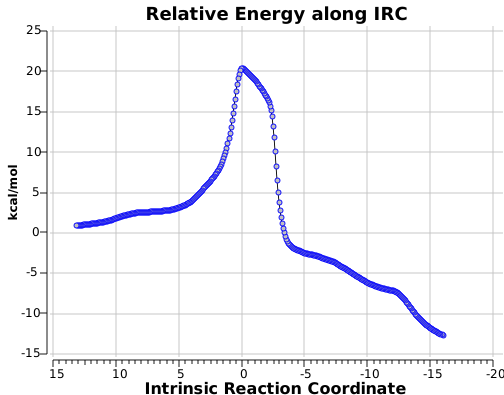
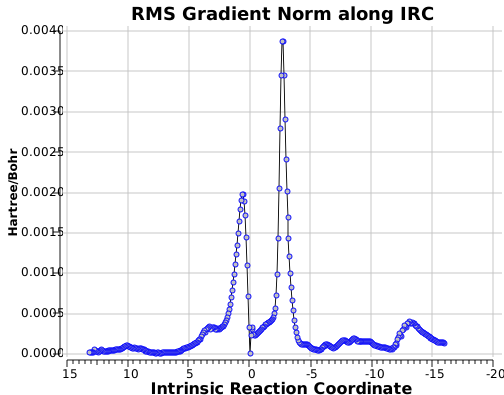
An intrinsic reaction coordinate (IRC) is also instructive, shown as the gradient normal along the IRC. The features are as follows:

  1. IRC ~8, the water molecules are reorganising themselves ready for the proton relay
  2. IRC 2, a dip in the gradient norm reveal a hidden intermediate corresponding to the first proton transfer to the oxygen of the acetal.
  3. IRC 0 is of course the transition state
  4. IRC -2 corresponds to a dip for the second proton transfer
  5. IRC -3 to -4 the third and fourth proton transfers occur, showing that they are sequential rather than synchronous.

3+0G

3+0a

This examples shows how modelling using transition state theory can yield reasonably realistic answers, but also that the next step in computational modelling, reaction dynamics, is probably needed to properly explore the statistical aspects of mechanism.

References

  1. H.S. Rzepa, "C 6 H 14 O 5", 2015. https://doi.org/10.14469/ch/191581
  2. H.S. Rzepa, and H.S. Rzepa, "C 6 H 16 O 6", 2015. https://doi.org/10.14469/ch/191599
  3. H.S. Rzepa, "C6H16O6", 2015. https://doi.org/10.14469/ch/191600
  4. H.S. Rzepa, "C 6 H 18 O 7", 2015. https://doi.org/10.14469/ch/191601
  5. https://doi.org/
  6. H.S. Rzepa, "C 6 H 20 O 8", 2015. https://doi.org/10.14469/ch/191606
  7. H.S. Rzepa, and H.S. Rzepa, "C 6 H 20 O 8", 2015. https://doi.org/10.14469/ch/191607
  8. H.S. Rzepa, "C 6 H 20 O 8", 2015. https://doi.org/10.14469/ch/191604
  9. H.S. Rzepa, "C6H20O8", 2015. https://doi.org/10.14469/ch/191610
  10. H.S. Rzepa, "C 6 H 20 O 8", 2015. https://doi.org/10.14469/ch/191603
  11. H.S. Rzepa, "C6H20O8", 2015. https://doi.org/10.14469/ch/191605
  12. H.S. Rzepa, "C 6 H 20 O 8", 2015. https://doi.org/10.14469/ch/191609
  13. H.S. Rzepa, "C6H20O8", 2015. https://doi.org/10.14469/ch/191621

Yes, no, yes. Computational mechanistic exploration of (nickel-catalysed) cyclopropanation using tetramethylammonium triflate.

Thursday, October 1st, 2015

A fascinating re-examination has appeared[1] of a reaction first published[2] in 1960 by Wittig and then[3] repudiated by him in 1964 since it could not be replicated by a later student. According to the new work, the secret to a successful replication seems to be the presence of traces of a nickel catalyst (originally coming from e.g. a nickel spatula?). In this recent article[1] a mechanism for the catalytic cycle is proposed. Here I thought I might explore this mechanism using calculations to see if any further insights might emerge.

cyclopropanation

In the mechanism above (I have retained the original numbering shown in the article itself), Ln is set to 2PH3 as an initial approximation and the solvent thf is approximated only by a continuum solvation field, with no explicit thf molecules involved at this stage. At this level and using ωB97XD/Def2-SVPD/SCRF=thf free energies, one can explore the cycle quite quickly (~2-3 days). It is also interesting that this reaction unusually involved nine different elements (I wonder what the record is? Not much greater I suspect).

Species ΔΔG298 DataDOI
4+CH2NMe3+LiOTf + ethene +23.9 [4],[5]
5 0.0 [6]
TS (5→ 9) 12.7 [7],[8]
9 + LiOTf + NMe3 0.2 [9]
TS (9 + ethene → 6) 7.2 [10],[11]
6 4.8 [12]
TS (6 → 7) 11.2 [13],[14]
7 -36.3 [15]
TS (7 → 4+8) -18.8 [16],[17]
4+8 + LiOTf + NMe3 -29.7 [4]

The structure of the complex 5 is more or less as shown in the article. The mean single bonded Ni-C length in the Cambridge structure database (CSD) is ~1.9Å, and (formally at least) Ni=C lengths are shorter at ~1.80-1.85. There is one reasonable analogy to the sub-structure shown below[18],[19] with a C-Ni length of 1.90, Ni-Li = 2.51 and Li-C = 2.40 which is reasonably similar to what is shown below. 

T

Click for  3D

Click for 3D

The elimination of NMe3 reveals a reasonable thermal barrier, resulting in the formation of the nickel-carbene product and the complex between NMe3 and LiOTf. 

5a5-9

The Ni-carbene then reacts with alkene (modelled here by ethene) to form a Ni-alkene π-complex, with a very low barrier to the exo-energic reaction.

9-6a9-6

This complex then rearranges, again with a small barrier, to the metallocyclobutane, with considerable release of energy.

6-7a6-7

Finally, the metallocyclobutane extrudes the nickel to form cyclopropane bound to the Ni(PH3)2 as a pseudo-π/agostic complex, with this step of the reaction being somewhat endo-energic (+6.6 kcal/mol). As modelled, it produces a low-coordination Ni product 4, which also causes the initial reactants to be relatively high in energy (+23.9 relative to 5). This suggests that the entire cycle should optimally be repeated by including say two explicit thf solvent molecules, which could coordinate to 4, thus lowering its energy relative to the rest of the cycle. 

7-4a7-4

Below is shown the NCI (non-covalent-interactions) surface for the Ni-cyclopropane complex, revealing the relatively high density between the Ni and the edge of the cyclopropane (high enough indeed to be considered on the verge of being covalent density). No examples of this motif are found in the CSD.

Click for  3D

Click for 3D


Overall, the reaction as shown shows entirely reasonable energetics and activation free energy barriers (with the caveat that inclusion of explicit solvent molecules might improve things, see above). We might conclude from this that the catalytic cycle as proposed is entirely reasonable. What we cannot comment on of course is the relative energetics of any of the competing side reaction shown in the original scheme,[1] but it would be really easy to include them in a more complete analysis if needed. I wanted to show here that a simple reality check on a proposed reaction mechanism can be quick to perform, and perhaps nowadays should be regarded as a sine qua non of mechanistic speculation.

References

  1. S.A. Künzi, J.M. Sarria Toro, T. den Hartog, and P. Chen, "Nickel‐Catalyzed Cyclopropanation with NMe<sub>4</sub>OTf and <i>n</i>BuLi", Angewandte Chemie International Edition, vol. 54, pp. 10670-10674, 2015. https://doi.org/10.1002/anie.201505482
  2. V. Franzen, and G. Wittig, "Trimethylammonium‐methylid als Methylen‐Donator", Angewandte Chemie, vol. 72, pp. 417-417, 1960. https://doi.org/10.1002/ange.19600721210
  3. G. Wittig, and D. Krauss, "Cyclopropanierungen bei Einwirkung von <i>N</i>‐Yliden auf Olefine", Justus Liebigs Annalen der Chemie, vol. 679, pp. 34-41, 1964. https://doi.org/10.1002/jlac.19646790106
  4. H.S. Rzepa, "C 4 H 9 F 3 Li 1 N 1 O 3 S 1", 2015. https://doi.org/10.14469/ch/191545
  5. H.S. Rzepa, "C 5 H 11 F 3 Li 1 N 1 O 3 S 1", 2015. https://doi.org/10.14469/ch/191553
  6. H.S. Rzepa, and H.S. Rzepa, "C 5 H 17 F 3 Li 1 N 1 Ni 1 O 3 P 2 S 1", 2015. https://doi.org/10.14469/ch/191554
  7. H.S. Rzepa, "C 5 H 17 F 3 Li 1 N 1 Ni 1 O 3 P 2 S 1", 2015. https://doi.org/10.14469/ch/191536
  8. H.S. Rzepa, "C5H17F3LiNNiO3P2S", 2015. https://doi.org/10.14469/ch/191550
  9. H.S. Rzepa, and H.S. Rzepa, "C 5 H 17 F 3 Li 1 N 1 Ni 1 O 3 P 2 S 1", 2015. https://doi.org/10.14469/ch/191555
  10. H.S. Rzepa, "C 3 H 12 Ni 1 P 2", 2015. https://doi.org/10.14469/ch/191547
  11. H.S. Rzepa, "C3H12NiP2", 2015. https://doi.org/10.14469/ch/191546
  12. H.S. Rzepa, "C 3 H 12 Ni 1 P 2", 2015. https://doi.org/10.14469/ch/191541
  13. H.S. Rzepa, "C 3 H 12 Ni 1 P 2", 2015. https://doi.org/10.14469/ch/191540
  14. H.S. Rzepa, "C3H12NiP2", 2015. https://doi.org/10.14469/ch/191548
  15. H.S. Rzepa, "C 3 H 12 Ni 1 P 2", 2015. https://doi.org/10.14469/ch/191542
  16. H.S. Rzepa, "C 3 H 12 Ni 1 P 2", 2015. https://doi.org/10.14469/ch/191537
  17. H.S. Rzepa, "C3H12NiP2", 2015. https://doi.org/10.14469/ch/191538
  18. Buchalski, P.., Grabowska, I.., Kaminska, E.., and Suwinska, K.., "CCDC 650794: Experimental Crystal Structure Determination", 2008. https://doi.org/10.5517/ccpv6c2
  19. P. Buchalski, I. Grabowska, E. Kamińska, and K. Suwińska, "Synthesis and Structures of 9-Nickelafluorenyllithium Complexes", Organometallics, vol. 27, pp. 2346-2349, 2008. https://doi.org/10.1021/om701275u

Natural abundance kinetic isotope effects: mechanism of the Baeyer-Villiger reaction.

Wednesday, June 10th, 2015

I have blogged before about the mechanism of this classical oxidation reaction. Here I further explore computed models, and whether they match the observed kinetic isotope effects (KIE) obtained using the natural-abundance method described in the previous post.

BV

There is much previous study of this rearrangement, and the issue can be reduced to deciding whether TS1 or TS2 is rate-limiting. The conventional text-book wisdom is that the carbon migration step TS2 is the “rds” and it was therefore quite a surprise when Singleton and Szymanski[1] obtained KIE which seemed to clearly point instead to TS1 as being rate limiting, inferred from a large 13C effect (~1.05) at the carbonyl carbon (blue star) and none at the α-carbon (red star). This result (for this specific reaction and conditions, which is dichloromethane as solvent) is now routinely quoted[2] when the mechanism is discussed. This latter article reports[2] calculated energetics for TS1 and TS2 (see Table 1 in this article) and after exploring various models, the conclusion is that TS1 and TS2 are essentially isoenergic. However, no isotope effects are computed for their models, and so we do not know if TS1 or TS2 agrees better with the reported values.[2] Since I had managed to get pretty good agreement with experimental KIEs using the ωB97XD/Def2-TZVPP/SCRF=xylenes model for the Diels-Alder reaction, I thought I would try the same method to see how it performs for the Baeyer-Villiger.

It is in fact non-trivial to set up a consistent model. Using arrow pushing, one can on paper draw three variations for TS1, the formation of the peroxyhemiacetal tetrahedral intermediate (TI) and also often called the Criegee intermediate.

BV2

  1. TS1a is the “text-book” variation, involving the production of a zwitterionic intermediate which immediately undergoes a proton transfer (PT). The arrows tend not to be used for this last step, since the direct transfer would involve a 4-membered ring and a highly non-linear geometry at the transferring proton which is understood to be “unfavourable”. Such zwitterions involve a large degree of charge separation and hence a large dipole moment. In a non-protic solvent such as dichloromethane, one is very loath to use such species in a mechanism, and it’s not modelled here either.
  2. Using just cyclohexanone and peracid, it is in fact difficult to avoid ionic species. TS1b is an attempt which shows the proton transfer is done first on the peracid to create a so-called carbonyl ylid, and this then reacts with the ketone
  3. If however a proton transfer agent is introduced as TS1c, one can use this species (shown in red above) to transfer the proton as part of a concerted mechanism; this was in fact the expedient used in the earlier theoretical study[2] and this route tends to avoid much if not all of the charge separation. The acid comes from the product of the reaction, and hence the kinetics may in fact have an induction period when this acid builds up. The initial proton transfer reagent may also be traces of water present in reagents or solvent. Singleton and Szymanski in fact include no supporting information in their article and so we do not know what the concentrations used were (assumed for the present discussion as 1M) whether everything was rigorously dried, or indeed what the kinetic order in [peracid] turned out to be.

The same problem is faced with TS2; how to transfer a proton? Because we want to compare the relative energies of TS1 and TS2, we also have to atom-balance the mechanism, and so the additional acid component introduced into TS1c is also retained in two alternative mechanisms for TS2 (and for TS1b).

BV3

  1. TS2a uses just the components of the tetrahedral intermediate (TI), but again in a fashion that requires no charge separation during the reaction. The additional acid component (red) plays a passive role, hydrogen bonding to the TI.
  2. TS2b now incorporates the additional acid by expanding the ring (green) in an active role.

IRCs using the 6-311G(d,p) basis) for TS1[3] and TS2[4] are interesting in revealing relative synchronicity of the proton transfers for TS1 but asynchronicity for TS2 involving a hidden intermediate.
BV1a

BV2a

The energy, energy gradient and dipole moment magnitudes for this second step are particularly fascinating. The dipole moment starts off quite small (3.1D) at the TI, and is still so at the TS, but almost immediately afterwards, it shoots up to ~12D as the hidden intermediate develops (IRC ~4) Two successive proton transfers (IRC ~6, 7) then reduce the value down again.
BV2E
BV2G
BV2D

A table of results can now be constructed for these various models, evaluating two different basis sets for the calculation.

system ΔΔG298 (1M)
ωB97XD/6-311G(d,p)/SCRF=DCM, kcal/mol
Dipolemoment,D ΔG298 (1M)
ωB97XD/Def2-TZVPP/SCRF=DCM
Reactants +1.4a -3.3a[5],[6],[7]
Complexed state 0.0[8] 5.0 0.0[9]
TS1a n/a n/a n/a
TS1b 32.9[10] 8.6 32.2[11]
TS1c 14.9[12] 3.0 16.1[13]
TI -1.7[14] 3.1 -0.3[15]
TS2a 22.2[16] 9.3 25.0[17]
TS2b 20.2[12] 5.4 22.7[18]
Product -69.8[19] 5.3 [20]

aThis value is corrected to a standard state of 1M for a termolecular reaction by 3.78 kcal/mol from the computed free energies at 1 atm as described previously.[21]

  1. Firstly, one must note that the resting state for the reactants depends on the concentration. At 1M at the higher basis set, its the separated reactants, but at the lower it is the hydrogen bonded complex between them. Increasing the concentration would favour the latter.
  2. TS1c is significantly lower in free energy than TS2b, a result somewhat at variance with the earlier report.[2] The functional used in the present calculation, the basis set, the dispersion model and the solvation model are all improvements on the original work.
  3. Likewise, the energy of TI, the Criegee intermediate emerges as similar to the reactants. Coupled with the magnitude of the barrier for TS1c this does tend to point to a relatively rapid pre-equilibrium and that TS2b determines the rate of reaction.

Kinetic isotope effects for our models

Having constructed models, we can now subject them to testing against the measured kinetic isotope effects.[1]

bv4

  1. The measured values are shown above. The first set (a) are what are described as intermolecular isotope effects and result from measuring changes in the isotopic abundance obtained by recovering unreacted starting material after a large proportion of the reaction has gone to completion. This was interpreted as indicating TS1 was rate limiting. Using instead the uncomplexed cyclohexanone has only a small effect (C1: 1.023 complexed, 1.021 uncomplexed).
  2. The values in parentheses were obtained using the TS1c model above and are relative to the complexed reactant involving hydrogen bonds between the cyclohexanone, the peracid and the acid catalyst. The agreement can only be described as partial.
    •  The predicted 13C isotope effect at C1 is about half of the measured value. The previous calibration of the method being used had resulted in agreement within experimental error for the Diels Alder reaction, and so this large disagreement is unexpected.
    • The 2H KIE at C2 is within experimental error.
    • The  2H KIE at C3 is badly out. Here, it is the experimental result that seems wrong, since there is no reason to expect any KIE at this position especially since the 13C at the same position is 1.00 for both measured and calculated values.
  3. So we might infer an inconclusive result. I can only speculate on the computed model here, and invoke in effect the variation principle. If the model is wrong, we would expect a more correct model to have a lower rather than higher energy relative to reactants. The free energy of activation however is already low, corresponding to a very fast room temperature reaction; too fast indeed to easily recover any unreacted starting material if that were to be rate limiting!
  4. Set (b) corresponds to what is described as an intramolecular KIE as defined by TS2, since it is measured from isotopic ratio changes in the product rather than reactant as the reaction progresses.
    • The value in (…) is relative to the complexed reactants and the value in […] is relative to TI.
    • The predicted 13C isotope effect at C2m (the migrating carbon) agrees within experimental error with the measured value if the TI is used as the reference. This nicely shows how isotope effects for what may not be a rate limiting step can be measured by this technique.
    • The predicted 13C isotope effect at C1 (which is not reported in the original article) relative to TI is significant, and it would be nice to confirm the computed model by a measurement at this position.
    • The other KIE also agree reasonably with experiment when TI is specified as the reactant for this step.

So is there support from the calculations for the formation of the semi-peroxyacetal being rate limiting, as claimed by Singleton and Szymanski[1]? There is no doubt that the KIE obtained from measuring the product is different from measuring the reactant, but the lack of agreement for two of the measured values for TS1 is a concern. Perhaps one might conclude that this is an experiment well worth repeating. Of the two computed models, TS1 and TS2, the variation principle would again lead us to suspecting that the one with higher energy can only be decreased by improvement, whereas improvement of the one with the lower energy cannot also increase its relative energy. So if a new model for the carbon migration step can be found, its activation free energy must be lower than that already identified. But the excellent agreement between TS2b shown in (b) suggests that this model is already pretty good! Lowering its energy by >7kcal/mol to make TS1 rate limiting would probably require quite a different model.

What I think is more certain is the value of subjecting the measured KIE to computed models, in the knowledge that if the model is indeed realistic a good agreement should be expected. And it is a shame that the natural abundance KIE method cannot be applied to oxygen isotope effects, which would surely settle the issue. And I should end by reminding that there is evidence that the mechanism may be quite sensitive to variation of solvent, ketone, peracid, pH, etc, and so these conclusions only apply to this specific reaction in  dichloromethane.


For TI > TS2, the 18O KIE is predicted as 1.048 (peroxy oxygen) and 1.032 (acyl oxygen). For Reactant > TS1, the values are respectively 0.998 and 1.003.


References

  1. D.A. Singleton, and M.J. Szymanski, "Simultaneous Determination of Intermolecular and Intramolecular <sup>13</sup>C and <sup>2</sup>H Kinetic Isotope Effects at Natural Abundance", Journal of the American Chemical Society, vol. 121, pp. 9455-9456, 1999. https://doi.org/10.1021/ja992016z
  2. J.R. Alvarez-Idaboy, and L. Reyes, "Reinvestigating the Role of Multiple Hydrogen Transfers in Baeyer−Villiger Reactions", The Journal of Organic Chemistry, vol. 72, pp. 6580-6583, 2007. https://doi.org/10.1021/jo070956t
  3. H.S. Rzepa, "C20H20Cl2O6", 2015. https://doi.org/10.14469/ch/191318
  4. H.S. Rzepa, "C20H20Cl2O6", 2015. https://doi.org/10.14469/ch/191317
  5. H.S. Rzepa, "C 7 H 5 Cl 1 O 2", 2015. https://doi.org/10.14469/ch/191322
  6. H.S. Rzepa, "C 7 H 5 Cl 1 O 3", 2015. https://doi.org/10.14469/ch/191323
  7. H.S. Rzepa, "C 6 H 10 O 1", 2015. https://doi.org/10.14469/ch/191324
  8. H.S. Rzepa, "C 20 H 20 Cl 2 O 6", 2015. https://doi.org/10.14469/ch/191307
  9. H.S. Rzepa, "C 20 H 20 Cl 2 O 6", 2015. https://doi.org/10.14469/ch/191315
  10. H.S. Rzepa, "C 20 H 20 Cl 2 O 6", 2015. https://doi.org/10.14469/ch/191313
  11. H.S. Rzepa, "C 20 H 20 Cl 2 O 6", 2015. https://doi.org/10.14469/ch/191325
  12. H.S. Rzepa, "C 20 H 20 Cl 2 O 6", 2015. https://doi.org/10.14469/ch/191306
  13. H.S. Rzepa, "C 20 H 20 Cl 2 O 6", 2015. https://doi.org/10.14469/ch/191312
  14. H.S. Rzepa, "C20H20Cl2O6", 2015. https://doi.org/10.14469/ch/191311
  15. H.S. Rzepa, "C 20 H 20 Cl 2 O 6", 2015. https://doi.org/10.14469/ch/191319
  16. H.S. Rzepa, "C 20 H 20 Cl 2 O 6", 2015. https://doi.org/10.14469/ch/191314
  17. H.S. Rzepa, "C 20 H 20 Cl 2 O 6", 2015. https://doi.org/10.14469/ch/191321
  18. H.S. Rzepa, and H.S. Rzepa, "C 20 H 20 Cl 2 O 6", 2015. https://doi.org/10.14469/ch/191320
  19. H.S. Rzepa, "C 20 H 20 Cl 2 O 6", 2015. https://doi.org/10.14469/ch/191310
  20. H.S. Rzepa, "C 20 H 20 Cl 2 O 6", 2015. https://doi.org/10.14469/ch/191327
  21. J.R. Alvarez-Idaboy, L. Reyes, and J. Cruz, "A New Specific Mechanism for the Acid Catalysis of the Addition Step in the Baeyer−Villiger Rearrangement", Organic Letters, vol. 8, pp. 1763-1765, 2006. https://doi.org/10.1021/ol060261z

The mechanism of borohydride reductions. Part 1: ethanal.

Sunday, April 12th, 2015

Sodium borohydride is the tamer cousin of lithium aluminium hydride (LAH). It is used in aqueous solution to e.g. reduce aldehydes and ketones, but it leaves acids, amides and esters alone. Here I start an exploration of why it is such a different reducing agent.
BH4

Initially, I am using Li, not Na (X=Li), to enable a more or less equal comparison with LAH, with water molecules to solvate rather than ether (n=2,3,5) and R set to Me. First, n=2, for which the IRC is shown below. In this model, we will assume that the carbonyl has not first reacted with water to form a gem-diol. The free energy barrier is 9.6 kcal/mol (ωB97XD/6-311+G(d,p)/SCRF=water) which corresponds to a very fast reaction at room temperatures.

BH4a
The immediate product is, if anything, more interesting than the transition state[1] with quite a stretched length for the newly formed C-H bond and predicted stretching wavenumber for this bond of 2137 cm-1. This effect is similar to that seen for the LAH reduction of cinnamaldehyde, and is due to stereoelectronic antiperiplanar alignment of the oxyanionic oxygen lone pair with the C-H bond. This species is also some 6.5 kcal/mol higher in energy than the reactant, and is clearly not the final product of the reaction (which must contain e.g. B-O bonds), the mechanism for which will not be investigated here immediately.
BH4-2p
For n=3, we see new solvation patterns, including a dihydrogen bond formed between water and the borohydride at the transition state; ΔG is 10.0 kcal.mol.

Click for  3D.

Click for 3D.

Finally, n=5, where the TS is showing a cage-like structure of complex weak interactions, ΔG† is 11.3 kcal.mol. We see a model where inclusion of explicit solvent molecules can have a significant influence on the size of the barrier obtained.

Click for  3D

Click for 3D


BH4-5

NCI surface. Click for  3D.

NCI surface. Click for 3D. Blue=strong attractions, green=weak.

n ΔG298 FAIR Data citation
2 9.6 [2]
3 10.0 [3]
5 11.3 [4]

With a mechanistic prototype now identified, it is time to start varying some of the parameters, such as X and R. This will enable us to assess the models built here to see if they reflect reality.

References

  1. H.S. Rzepa, and H.S. Rzepa, "C 2 H 12 B 1 Li 1 O 3", 2015. https://doi.org/10.14469/ch/191186
  2. H.S. Rzepa, and H.S. Rzepa, "C 2 H 12 B 1 Li 1 O 3", 2015. https://doi.org/10.14469/ch/191188
  3. H.S. Rzepa, and H.S. Rzepa, "C 2 H 14 B 1 Li 1 O 4", 2015. https://doi.org/10.14469/ch/191189
  4. H.S. Rzepa, and H.S. Rzepa, "C 2 H 18 B 1 Li 1 O 6", 2015. https://doi.org/10.14469/ch/191192

A better model for the mechanism of Lithal (LAH) reduction of cinnamaldehyde?

Friday, April 10th, 2015

Previously on this blog: modelling the reduction of cinnamaldehyde using one molecule of lithal shows easy reduction of the carbonyl but a high barrier at the next stage, the reduction of the double bond. Here is a quantum energetic exploration of what might happen when a second LAH is added to the brew (the usual ωB97XD/6-311+G(d,p)/SCRF=diethyl ether).

LAH1

In a comment at the end of the first post on this theme, I had noted some crystal structures containing in effect HxAl.Li(OR)y units (x=3,4; y=0-3), noting the variety of structural motifs. The current exploration does not even attempt to cover this range of possibilities, but it is informed by the types of weak interaction that these structures reveal. I will nevertheless accept that whatever pathway is revealed here is likely to represent an energetic upper bound and recognise that lower energy pathways may well exist but are yet to be explored.

  1. At the I12 stage, a second AlH4.Li(OMe)2 is added and hydride transfer occurs antiperiplanar across the C=C bond (TS34-1). The computed free energy barrier ΔG298 is ~24 kcal/mol. The magnitude of this barrier corresponds to a relatively slow reaction occurring around room temperatures or slightly higher.
    Click for  3D

    TS. Click for 3D


    TS34a
    Click for  3D

    NCI Isosurface (green regions are dispersion stabilizing) Click for 3D

  2. A transient shallow intermediate I34-1 is formed in which the benzylic anion is stabilised by an adjacent solvated Li centre. The energy of this species (Table below) needs some explanation. Can its free energy really be 1.5 kcal/mol higher than that of the preceding transition state? Yes, because its entropy is lower! The transition state is located on a total energy surface, which does not include thermal and entropic corrections; these are always applied AFTER the stationary points are located. If one inspects these total energies, I34-1 emerges as 1.2 kcal/mol lower than the preceding transition state. This sort of result serves to remind us of the dynamic nature of a potential energy surface, and that static energies may on occasion lead to odd results. Its geometry is shown below, and this too has an interesting feature. The C-H bond just created from the LAH is antiperiplanar to the benzylic anion (locked anti by the Li) and the resulting stereoelectronic effect reduces its C-H calculated[1] stretching wavenumber from the normal value of ~3100 cm-1 to 2231 cm-1, a remarkable reduction.
    Click for  3D

    I34-1. Click for 3D

  3. The C-O-AlH3.Li(OMe)2 ligand now needs to rotate to I34-2 so that metal exchange on the benzylic carbon can occur, with Al displacing Li at that position. As with I34-1, the free energy of this species is actually slightly higher than that of TS34-1. Two AlH3 groups now exist at this stage (each of them formed by hydride donation as part of the reduction process, see below). A hydride transfer metathesis between them (H2Al-H-Al3 is actually a stable bridged species) will generate an AlH2 as part of the 5-ring aluminate ester in P34 and regenerate a molecule of LAH. Transition states for these processes (i.e. TS34-2) proved difficult to locate; it may be that the ligand rotation and the hydride metathesis are part of the same concerted process but that is not proven yet.
    Click for  3D

    I34-2. Click for 3D

  4. The final product prior to hydrolysis is appropriately exoenergic.
  5. I would also remark that many aspects of this reaction remain unexplored. For example, AlH4 can deliver up to four hydrides, becoming progressively substituted as Al(OR)nHy and in the process loosing Al-H…Li weak interactions. What influence this has on the barriers remains unknown.
Species Relative ΔG298, kcal/mol FAIR Data-DOI
I12 0.0 [2]
TS34-1 24.1 [3]
I34-1 25.5 [1]
I34-2 25.0 [4]
P34 -8.8 [5]

In summary, the first step in the reduction of cinnamaldehyde to cinnamyl alcohol requires just one molecule of “LiAlH4” as reductant and has a very low barrier to reaction. To construct a reasonable model to account for the slower further reduction of the C=C bond requires adding a further LiAlH4, the key feature being the availability of a lithium centre to stabilise out the forming benzylic carbanion. No doubt even better models might include the effects of adding e.g. a third molecule of LAH, and a much more extensive exploration of the various conformational options. But I think the present model might be good enough to augment the apparently relatively limited mechanistic speculations found in text books on the topic.


You sometimes see this phrase in articles reporting transition state location. What is means it that I tried a half-dozen what I thought were reasonable possibilities, and none of them satisfactorily converged. This semi-random exploration of the potential energy surface revealed a very flat energy potential, with lots of conformational possibilities. At this point, you have to decide whether it is worth the time to continue hunting.


References

  1. H.S. Rzepa, and H.S. Rzepa, "C 17 H 40 Al 2 Li 2 O 5", 2015. https://doi.org/10.14469/ch/191178
  2. H.S. Rzepa, and H.S. Rzepa, "C 17 H 40 Al 2 Li 2 O 5", 2015. https://doi.org/10.14469/ch/191172
  3. H.S. Rzepa, and H.S. Rzepa, "C 17 H 40 Al 2 Li 2 O 5", 2015. https://doi.org/10.14469/ch/191177
  4. H.S. Rzepa, and H.S. Rzepa, "C 17 H 40 Al 2 Li 2 O 5", 2015. https://doi.org/10.14469/ch/191181
  5. H.S. Rzepa, and H.S. Rzepa, "C 17 H 40 Al 2 Li 2 O 5", 2015. https://doi.org/10.14469/ch/191171

How many water molecules does it take to ionise HCl?

Saturday, February 14th, 2015

According to Guggemos, Slavicek and Kresin, about 5-6![1]. This is one of those simple ideas, which is probably quite tough to do experimentally. It involved blasting water vapour through a pinhole, adding HCl and measuring the dipole-moment induced deflection by an electric field. They found “evidence for a noticeable rise in the dipole moment occurring at n56“.

Modelling the structures takes little time. So here are some ωB97XD/6-311++G(2d,2p) gas phase models. I state at the outset that these are not dynamic-stochastic models, averaged over many conformations, but a static picture of individual poses. As usual, click on individual images to obtain an interactive 3D model (Java required).

n=1.[2] Dipole moment 3.7D

hcl+1h2o

n=2.[3] Dipole moment 2.4D. Note how the O…H bond becomes shorter.

hcl+2h2o

n=3.[4] Dipole moment 2.5D. Note how the key O..H bond is contracting rapidly, as are the other H-bond interactions. This is the cyclic polarisation effect, where each bond influences the others. We are starting to approach the formation of H3O+ and Cl!

hcl+3h2o

n=4.[5] Dipole moment 2.3 D, We have two ways to add the next water molecule, firstly to try to stabilise the H3O+. Nope.

hcl+4h2o

n=4,[5] Dipole moment 1.1 D. Better by solvating the Cl! The proton originally attached to the Cl is now starting its transfer to the water to form that hydronium cation, but the dipole moment is not yet large.

hcl+4h2o1

n=5.[6] Dipole moment 4.7D. The ionisation is almost complete and the dipole moment is on the increase.

5

n=6.[7] The dipole moment is up to 8.2D and the three H-O bonds of the hydronium cation are almost all equal in length.

6

A cautionary observation though. The isomer below for n=6[8] is lower in energy by ΔG -1.2 kcal/mol, and its dipole moment is only 2.5D! The charges (summed onto heavy atoms) show the chloride to have -0.88 and the hydronium cation +0.88, so it is a true ion-pair, despite its dipole moment.

6a

So these calculations do indeed appear to confirm that 5-6 water molecules are required to ionise HCl. But it does raise the interesting issue that even for n=6, there are poses for the assembly which have low dipole moments. Clearly of course the observed dipole moment is a dynamic average over many conformations of similar energy but the prediction that some of these may have low dipole moments should be noted.


If you right-click in the 3D model area, you can bring down a list of vibrational modes for each complex from the first item of the pop-up menu that appears (labelled model). You might wish to e.g. explore how the H-Cl stretch vibration changes as the ionisation increases.


References

  1. N. Guggemos, P. Slavíček, and V.V. Kresin, "Electric Dipole Moments of Nanosolvated Acid Molecules in Water Clusters", Physical Review Letters, vol. 114, 2015. https://doi.org/10.1103/physrevlett.114.043401
  2. H.S. Rzepa, "H 3 Cl 1 O 1", 2015. https://doi.org/10.14469/ch/189758
  3. H.S. Rzepa, "H 5 Cl 1 O 2", 2015. https://doi.org/10.14469/ch/189760
  4. H.S. Rzepa, "H 7 Cl 1 O 3", 2015. https://doi.org/10.14469/ch/189759
  5. H.S. Rzepa, "H 9 Cl 1 O 4", 2015. https://doi.org/10.14469/ch/189763
  6. H.S. Rzepa, "H 11 Cl 1 O 5", 2015. https://doi.org/10.14469/ch/189756
  7. H.S. Rzepa, "H 13 Cl 1 O 6", 2015. https://doi.org/10.14469/ch/189761
  8. H.S. Rzepa, "H 13 Cl 1 O 6", 2015. https://doi.org/10.14469/ch/189764

Fine-tuning a (hydrogen) bond into symmetry.

Friday, January 23rd, 2015

Sometimes you come across a bond in chemistry that just shouts at you. This happened to me in 1989[1] with the molecule shown below. Here is its story and, 26 years later, how I responded.

JAZCOC

To start at the beginning, there was a problem with the measured 1H NMR spectrum; specifically (Y=H, Z=O) there are supposedly 16 protons, but only 15 could be located. What had happened to the 16th? To understand how one proton had been “lost”, you should appreciate that on most FT-NMR instruments, one has to specify a spectral window to collect data, and normally for protons, that window ranges from ~14 to -2 ppm. So the standard response to lost signals is to expand the window. When that was done, the offending proton appeared at 19 ppm! You should understand that this is an unusual chemical shift for a proton, and is normally taken as indicating very high acidity. But carboxylic acid protons are not regarded as particularly acidic? The mystery was resolved by recording the crystal structure at low temperatures, and this revealed that this hydrogen was (almost) symmetrically disposed between the oxygen and the nitrogen. The N-H distance was 1.32Å and the OH 1.17Å. Whilst such symmetric disposition is not that unusual between two atoms of the same type (O-H-O or N-H-N) it was quite unexpected between two different heteroatoms. And such symmetry alone is sufficient to induce very high chemical shifts; acidity per se does not come into it.

That bond clearly shouted at me; so much so that in the text of the original article, we wrote “it is interesting to speculate whether these characteristics could be fine tuned by modification of the pKa values with suitable ring substitution“. What I had in mind was whether the position of the H could be made perfectly symmetric by adjusting the substituents. But for 26 years this idea lay dormant. Until this post! Rather than make lot of compounds (1-3 years!) I will do it with (lots of) computation (2 days!!).

So to start we need a reality check. I am using the pbe1pbe/tzvp/scrf=chloroform method (this functional is often used for hydrogen bonds) and the collected results are shown in the table below.

  1. For Y=H, Z=O, the calculation predicts single minimum, with the hydrogen closer to O. Starting from an NH bound hydrogen ends with it on O. It is what is called a single well potential. The disposition of that H is not quite correct, but the computed 1H NMR shift is pretty close to experiment, and so I will take this method as reasonably good.
  2. With Y=Li, the polarisation of the N-Li bond enhances the basicity of the second N, and the H now ends up on this atom rather than O (even if it starts on O). Another single well potential. We now know that any symmetric species must occur somewhere between Y=H and Y=Li in terms of the electronegativity of the substituent Y.
  3. Unsurprisingly, Y=Na does not bracket Y=H/Li and the H moves even closer to the N. Again a single well potential.
  4. Y=Li.1H2O or 2H2O do not help either (surprisingly?)
  5. Y=BeH brackets Y=H/Li, but we also see new behaviour with a double-well potential; the H can be attached to either O or N and the former is slightly more stable by 0.22 kcal/mol in ΔG. The barrier is tiny, well below the energy of the first vibrational level, and so experimentally this system will manifest as the average of these two isomers and the H will similarly manifest with its most probable position being at the average of the two minima, N-H ~1.30, O-H ~1.3Å. Success!  At this point, the NMR shift is at its greatest.
  6. Y=BH2 continues the trend as a double minimum, this time with the H-O species the more stable by ΔG 0.68 kcal/mol; we are now past the symmetric point.
  7. By Y=SiH3, the single-well minimum (with H-O) is restored and we emerge with the same result as Y=H.
  8. And to complete the scan, Y=H, Z=S is the same as Z=O.
  9. Some second order tuning can be tried by changing the substituent on Y=BeH to Y=BeF, again a double minimum with HO more stable than NH by 0.30 kcal/mol in ΔG, and with a ΔG298 barrier from O to N of only 0.02 kcal/mol! The fine-tuning is again towards symmetrisation.

I will stop at that point. Unfortunately of course the Y=BeF derivative is unfeasible synthetically and hence unlikely to be tested.

Y N-H, Å O-H, Å δ, ppm FAIR Data Citation
H (expt) 1.32 1.17 19.0 [1]
H (calc) 1.48 1.04 18.6 [2]
Li 1.06 1.52 16.5 [2]
Na 1.05 1.55 15.6 [3]
Li.H2O 1.06 1.52 16.6 [4]
Li.2H2O 1.06 1.52 16.6 [5]
BeH 1.11 1.39 20.6 [6]
BeH 1.49 1.04 18.7 [7]
BH2 1.06 1.56 16.6 [8]
BH2 1.53 1.03 17.6 [7]
SiH3 1.48 1.04 18.8 [9]
Z=S 1.50 1.03 18.8 [10]
BeF 1.12 1.38 20.9 [11]
BeF (TS) 1.15 1.32 22.5 [12]
BeF 1.48 1.04 18.7 [13]

Another reality check, a search of crystal structures. DIST2 = OH, DIST1 = NH, for structures recorded below 140K, R < 0.05%, no errors, no disorder. The structure above is shown as a blue dot. They do tend to show asymmetry, but it is interesting how many such structures have emerged since our own 1989 report; the effect is not that rare any more.
H-bond

The above plot shows lots more systems that might be subjected to the sort of tuning above, and who knows one of them may even yield to experimental validation.

References

  1. P. Camilleri, C.A. Marby, B. Odell, H.S. Rzepa, R.N. Sheppard, J.J.P. Stewart, and D.J. Williams, "X-Ray crystallographic and NMR evidence for a uniquely strong OH ? N hydrogen bond in the solid state and solution", Journal of the Chemical Society, Chemical Communications, pp. 1722, 1989. https://doi.org/10.1039/c39890001722
  2. H.S. Rzepa, "C 13 H 14 Li 1 N 3 O 3", 2015. https://doi.org/10.14469/ch/189475
  3. H.S. Rzepa, "C 13 H 14 N 3 Na 1 O 3", 2015. https://doi.org/10.14469/ch/189477
  4. H.S. Rzepa, "C 13 H 16 Li 1 N 3 O 4", 2015. https://doi.org/10.14469/ch/189478
  5. H.S. Rzepa, "C 13 H 18 Li 1 N 3 O 5", 2015. https://doi.org/10.14469/ch/189480
  6. H.S. Rzepa, "C 13 H 15 Be 1 N 3 O 3", 2015. https://doi.org/10.14469/ch/189476
  7. H.S. Rzepa, "C 13 H 15 Be 1 N 3 O 3", 2015. https://doi.org/10.14469/ch/189492
  8. H.S. Rzepa, "C 13 H 16 B 1 N 3 O 3", 2015. https://doi.org/10.14469/ch/189479
  9. H.S. Rzepa, "C 13 H 17 N 3 O 3 Si 1", 2015. https://doi.org/10.14469/ch/189481
  10. J.S. Dawson, "Cl 4 Ni 1 -2", 2016. https://doi.org/10.14469/ch/193726
  11. H.S. Rzepa, "C 13 H 14 Be 1 F 1 N 3 O 3", 2015. https://doi.org/10.14469/ch/189489
  12. C. Townsend, "Cl 4 Ni 1 -2", 2016. https://doi.org/10.14469/ch/193727

More simple experiments with crystal data. The pyramidalisation of nitrogen.

Saturday, November 1st, 2014

We are approaching 1 million recorded crystal structures (actually, around 716,000 in the CCDC and just over 300,00 in COD). One delight with having this wealth of information is the simple little explorations that can take just a minute or so to do. This one was sparked by my helping a colleague update a set of interactive lecture demos dealing with stereochemistry. Three of the examples included molecules where chirality originates in stereogenic centres with just three attached groups. An example might be a sulfoxide, for which the priority rule is to assign the lone pair present with atomic number zero. The issue then arises as to whether this centre is configurationally stable, i.e. does it invert in an umbrella motion slowly or quickly.  My initial intention was to see if crystal structures could cast any light at all on this aspect.

pyramidal

Central atom has three bonded atoms as C, of which either all three must themselves have four attached atoms, or one can have just three attached atoms as shown above, along with acyclic character for the three bonds attached to the central atom, R ≤ 0.1, not disordered and no errors.

Using the search definition above for R3N one gets the result below. It shows a hot spot for an angle subtended at the nitrogen of ~111°, indicating a pyramidal nitrogen. But how easily is that perturbed? (which is almost like asking how easily can it invert its configuration?).

R3N, all sp3 attached carbons

A perturbation can be applied by changing just one of the attached carbons as having three attached atoms of its own (sp2 hybridised). The response is that the hot spot moves to 120° (below). Of course now this includes compounds such as amides and the like. But we have learnt that it takes just one such attached sp2 hybridised carbon to planarize an adjacent nitrogen.

R3N-1sp2-2sp3

The control experiment will now be to apply the same test to a P. The hot spot moves from ~99° (P with three sp3 carbons attached) to ~103° (P with two sp3 and one sp2). This reminds us that the overlap and energy-match between a p-orbital on carbon to an adjacent p-orbital on nitrogen is good, whereas the same overlap/energy match to a p-orbital on P is significantly less so.
R3P-sp3

R3P-1sp2-2sp3

One gets the same result when the central atom is S; the hotspot moves from ~102° to ~105°. Unfortunately, not enough compounds are known for a tri-substituted oxygen compounds to see how this element responds.

R3S-sp3R3S-1sp2-2sp3

My point in illustrating these statistics is to show how much text-book chemistry can be recovered simply by a few quick explorations of crystal structures. One could even argue that much introductory chemistry could be taught by reference to the statistics of such structures.

Amides and inverting the electronics of the Bürgi–Dunitz trajectory.

Thursday, June 26th, 2014

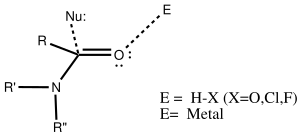
The Bürgi–Dunitz angle describes the trajectory of an approaching nucleophile towards the carbon atom of a carbonyl group. A colleague recently came to my office to ask about the inverse, that is what angle would an electrophile approach (an amide)? Thus it might approach either syn or anti with respect to the nitrogen, which is a feature not found with nucleophilic attack. amide My first thought was to calculate the wavefunction and identify the location and energy (= electrophilicity) of the lone pairs (the presumed attractor of an electrophile). But a better more direct approach soon dawned. A search of the crystal structure database. Here is the search definition, with the C=O-E angle, the O-E distance and the N-C=O-E torsion defined (also specified for R factor < 5%, no errors and no disorder). search   The first plot is of the torsion vs the distance, for E = H-X (X=O,F, Cl) amides

  1. The first observation is to note the prominent “hotspot” at a torsion of 180° and a (hydrogen bonding) distance of ~1.60-1.65Å. Amides, so it seems, prefer the electrophile (a proton) to approach anti to the nitrogen
  2. There is a smaller hotspot at a torsion of 0° and a rather longer distance of ~1.8Å corresponding to syn approach.
  3. And finally a barely discernible (but real) one at ~90°, corresponding to the proton attaching itself to the carbonyl π-bond.
  4. A plot of the angles involved reveals that the anti hotspot occurs at ~100° whilst the syn hotspot is about 120°.amides-angles
  5. whilst replacing the proton as electrophile by any metal results in a distinct change.amides-angles1amides-angles2
  6. Syn approach now holds the (red) hotspot, and the angle opens up to ~135°, whilst the anti approach covers a wider angle range of 130-150°
  7. A third hotspot region occurs for the 90° torsion, again metal-π-bond interactions.

The above is a very general statistical survey. As with most bonding effects, one really should investigate every example to discover any perturbing circumstances or structural motifs that might distort the outcome. But for a ten minute exercise in response to a fascinating question from a colleague, it’s not bad! And it certainly nicely inverts the usual Bürgi–Dunitz view of carbonyl groups.

Ribulose-1,5-bisphosphate + carbon dioxide → carbon fixation!

Sunday, April 20th, 2014

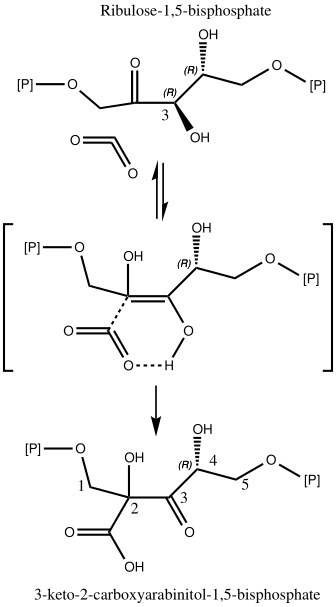
Ribulose-1,5-bisphosphate reacts with carbon dioxide to produce 3-keto-2-carboxyarabinitol 1,5-bisphosphate as the first step in the biochemical process of carbon fixation. It needs an enzyme to do this (Ribulose-1,5-bisphosphate carboxylase/oxygenase, or RuBisCO) and lots of ATP (adenosine triphosphate, produced by photosynthesis). Here I ask what the nature of the uncatalysed transition state is, and hence the task that might be facing the catalyst in reducing the activation barrier to that of a facile thermal reaction. I present my process in the order it was done.

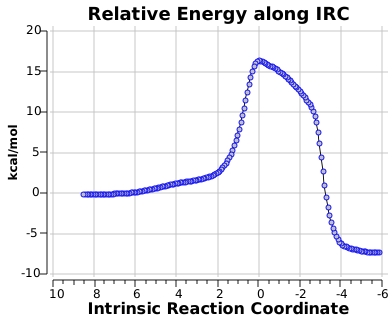
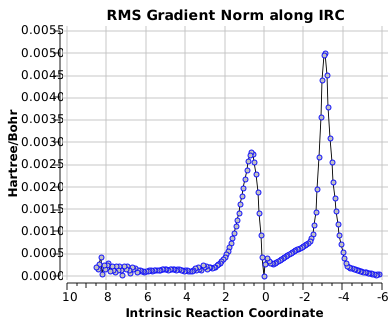
carboxFirstly, I will hypothesize that since C3 needs to lose a hydrogen, the easiest way of doing so is to form the enol of Ribulose-1,5-bisphosphate. I am going to start by reducing the above model to its core; C1 and the attached phosphate is replaced by a methyl, and C4-5 likewise. In this model, it takes 13.1 kcal/mol of free energy to enolize.[1],[2] This species can then react with CO2 (potentially with an accompanying proton transfer) to give 3-keto-2-carboxyarabinitol 1,5-bisphosphate directly. The transition state at the ωB97XD/6-311G(d,p)/SCRF=water level[3] has an IRC (intrinsic reaction coordinate)[4] that reveals the activation barrier is ~17 kcal/mol with respect to the enol (19.5 in ΔG298), with the overall reaction[5] being exo-energic by -2.6 kcal/mol with respect to the enol, but endo-energic by +10.5 kcal/mol with respect to keto-Ribulose-1,5-bisphosphate + carbon dioxide. Note the characteristic feature at IRC -3.0 of a hidden zwitterionic intermediate, which marks a belated proton transfer occurring AFTER the transition state for C-C bond formation. The reaction is asynchronous for this basic model.
carbox
carboxE
carboxG
For this very basic (phosphate-free) model of Ribulose-1,5-bisphosphate, the total computed free energy barrier@298K is 32.6 kcal/mol (standard state of 0.041M; reduced by ~1.9 kcal/mol for more concentrated, e.g. 1M solutions). This is ~13 kcal/mol too high to correspond to a uncatalysed fast process at room temperatures, a gap that the phosphate end-groups and the enzyme have to address (a challenge typically enzymes do manage to achieve).

With a basic model in place, it is time to restore those truncated phosphate end-groups to see what their contribution might be (treated as dianions each for the time being, and stabilized by using a continuum solvent field for water). First, the energies:

System ΔΔG Data DOI
Ribulose-1,5-bisphosphate as keto + CO2  0.0 [6]
Ribulose-1,5-bisphosphate as enol + CO2 13.0 [7]
Transition state 34.8 [8]
Acyclic 3-keto-2-carboxyarabinitol 1,5-bisphosphate 11.5 [9]
Cyclic 3-keto-2-carboxyarabinitol 1,5-bisphosphate -7.3 [10]

Note the network of hydrogen bonds formed at the transition state geometry (below) and the various gauche stereo-electronic alignments[11] which you should really explore in the Jmol 3D model invoked by clicking below.

carbox-TS

Click for 3D

  1. Addition of the phosphate groups has little effect on the energetics of the keto/enol equilibrium,
  2. or on the barrier to reaction with  carbon dioxide.
  3. But, they DO provide a new low energy sink I have not seen described before for the reaction (below), which makes the overall process from Ribulose-1,5-bisphosphate + CO2 exo-energic by -7.3 kcal/mol. Thus the phosphates provide the overall thermodynamic driving force for the carbon fixation.

    Click  for 3D

    Click for 3D. Cyclic low-energy cyclic chair isomer of 3-keto-2-carboxyarabinitol 1,5-bisphosphate

  4. Which leaves the role of the enzyme as one of reducing the overall activation barrier. The reaction MUST be enzymatically favoured, since the enzyme also needs to control when the cycle occurs, via a light-sensitive switch. If no enzyme-catalysis were needed, then carbon-fixation would occur in the dark, and consume all available ATP in the process. Inferred purely from the results in the table above, two functions can be listed:
    • The enzyme can help increase the effective molarity of the bimolecular reaction between Ribulose-1,5-bisphosphate + CO2. As noted above, increasing the concentration from e.g. 1 atmosphere (0.041M) to 1M reduces ΔG by 1.9 kcal/mol.
    • The most influential role the enzyme could play is to bind the enol form of Ribulose-1,5-bisphosphate preferentially over the keto form. If most of the substrate is bound in this form, that would reduce the overall barrier by 13 kcal/mol, more than enough to enable a room temperature reaction.
    • There may of course be many other subtle effects in operation, such as preferential stabilisation of the transition state, which cannot be inferred here without a detailed knowledge of the enzyme. I have deliberately tried to avoid doing that, since I wanted to see what might be concluded purely from the energetics found above.

There is one final step required; a very rapid decomposition of the 3-keto-2-carboxyarabinitol 1,5-bisphosphate (cyclic or not) to produce two molecules of 3-phosphoglycerate. I will leave my computational-energetic analysis and mechanism of that step to another post.


Postscript. An IRC on the full phosphate model took three days to run and has only just finished.[12] The profile is similar to that obtained for the phosphate-free model, with the exception of the IRC feature at -13, where one phosphate group rotates and starts to H-bond to the 3-keto-2-carboxyarabinitol, resulting in a lower energy conformation than that reported above. The energy of this new conformation[13] relative to the starting point (labelled as 0.0 above) is +2.3 kcal/mol (c.f. +11.5 for the previous conformation). The phosphates clearly remain a strong driving force for the reaction. It is quite possible that even more stable forms of this product could be found (by varying where the acidic protons reside) but at least we now know that the product can be more stable than the reactant (by at least -7.3 kcal/mol), which is the important conclusion.
carbox-prod1E
carbox-prod1G

Postscript 1. Yet another lower energy isomer of the product has popped out[14] being -13.1 kcal/mol lower than the initial reactants.


I do not describe much molecular biology on this blog, but an urge to rectify this was inspired by a TV program I watched four days ago charting how the pathway chronologically known first as the Calvin, then the Calvin-Benson and now the Calvin-Benson-Bassham cycle for carbon fixation became known (and how it gradually gathered attribution). As a chemist who was trained to try to understand reaction mechanisms, my immediate question (unsurprisingly not addressed at all in the TV program) was: what is the key carbon-carbon bond forming step? Here, I simply wanted initially to answer that one simple question and perhaps the aspect of the relative timing of any C-C bond formation and associated proton transfer. This latter idea in turn was hovering in the background of my mind from association with our previous project in proline-catalysed aldol reactions, where a similar question can be posed and indeed has been answered.[15] The rest of what you see here led directly from trying to answer that initial question. Peter Medawar’s 1963 talk Is the scientific paper a fraud? presented the argument that scientific journal articles give a misleading idea of the actual process of scientific discovery[16]. I hope that perhaps as a blog post, the above does give a little insight into the scientific process I experienced for myself over a period of the last two days (and with conclusions which may of course turn out to be quite wrong).

References

  1. H.S. Rzepa, "Gaussian Job Archive for C5H8O4", 2014. https://doi.org/10.6084/m9.figshare.1004015
  2. H.S. Rzepa, "Gaussian Job Archive for C5H8O4", 2014. https://doi.org/10.6084/m9.figshare.1004023
  3. H.S. Rzepa, "Gaussian Job Archive for C5H8O4", 2014. https://doi.org/10.6084/m9.figshare.1004011
  4. H.S. Rzepa, "Gaussian Job Archive for C5H8O4", 2014. https://doi.org/10.6084/m9.figshare.1004037
  5. H.S. Rzepa, "Gaussian Job Archive for C5H8O4", 2014. https://doi.org/10.6084/m9.figshare.1004038
  6. H.S. Rzepa, "Gaussian Job Archive for C6H8O13P2(4-)", 2014. https://doi.org/10.6084/m9.figshare.1004086
  7. H.S. Rzepa, "Gaussian Job Archive for C6H8O13P2(4-)", 2014. https://doi.org/10.6084/m9.figshare.1004066
  8. H.S. Rzepa, "Gaussian Job Archive for C6H8O13P2(4-)", 2014. https://doi.org/10.6084/m9.figshare.1004112
  9. H.S. Rzepa, "Gaussian Job Archive for C6H8O13P2(4-)", 2014. https://doi.org/10.6084/m9.figshare.1004085
  10. H.S. Rzepa, "Gaussian Job Archive for C6H8O13P2(4-)", 2014. https://doi.org/10.6084/m9.figshare.1004111
  11. H.S. Rzepa, "Gaussian Job Archive for C6H8O13P2(4-)", 2014. https://doi.org/10.6084/m9.figshare.1004026
  12. H.S. Rzepa, "Gaussian Job Archive for C6H8O13P2(4-)", 2014. https://doi.org/10.6084/m9.figshare.1004557
  13. H.S. Rzepa, "Gaussian Job Archive for C6H8O13P2(4-)", 2014. https://doi.org/10.6084/m9.figshare.1004614
  14. H.S. Rzepa, "Gaussian Job Archive for C6H8O13P2(4-)", 2014. https://doi.org/10.6084/m9.figshare.1004778
  15. A. Armstrong, R.A. Boto, P. Dingwall, J. Contreras-García, M.J. Harvey, N.J. Mason, and H.S. Rzepa, "The Houk–List transition states for organocatalytic mechanisms revisited", Chem. Sci., vol. 5, pp. 2057-2071, 2014. https://doi.org/10.1039/c3sc53416b
  16. S.M. Howitt, and A.N. Wilson, "Revisiting “Is the scientific paper a fraud?”", The EMBO Reports, vol. 15, pp. 481-484, 2014. https://doi.org/10.1002/embr.201338302