Discovery based research experiences: gauche effects in group 16 elements.

March 2nd, 2016

The upcoming ACS national meeting in San Diego has a CHED (chemical education division) session entitled Implementing Discovery-Based Research Experiences in Undergraduate Chemistry Courses. I had previously explored what I called extreme gauche effects in the molecule F-S-S-F. Here I take this a bit further to see what else can be discovered about molecules containing bonds between group 16 elements (QA= O, S, Se, Te). 

OO-SQ

The search definition is shown above, with DIST1 being the QA-QA bond length, the QA-QA bond being acyclic, each QA bearing only two bonded atoms and NM being any non-metal. The first result shown is for QA=S.

S-S

  1. The first discovery is that the most common torsion (red-hot spot) is about 90°, but there appears to be a statistically significant distortion towards longer S-S distances as the torsion deviates from this angle. For those who are so inclined it would perhaps be worth improving my term "appears to be" with a more formal numerical analysis of the distribution shown above and its significance. Any offers?
  2. The other discovery worth exploring is the number of occurences with an angle of 180°. With F-S-S-F itself (not a solid), I had previously noted that this angle actually represented a transition state in the torsion! So what might be inferred from these examples?

The next search includes a further constraint that the temperature the data was recorded at be <140K. This reduces vibrational "noise" and so should increase the significance. S-S-140

  1. Here we discover the same "V"-shaped distribution as before, possibly more significant statistically than the previous search. Again, a proper statistical analysis of the significance of this result is desirable.

The next search is for QA = Se or Te. X-X

  1. The Se and Te distributions can clearly be distinguished, with a weak "V-shape" visible for Se, but absent for Te. Again, those hits at 180!
  2. There are a few instances "in-between" the two distributions, which appear to be  Se-Te systems.

Finally, QA=QB = O.

O-O

  1. The discovery here is the apparent absence of any "V-shaped" distribution.
  2. The hot spot now occurs at 180°, but with a tail down to 60° or less. Clearly, the definition of "NM" as any non-metal probably needs to be explored further for specific instances to see what influence the nature of NM has. NM for example could be another O, which might be a severe perturbation. 

So here I have tried to tease out seven directions for further discovery. I am attending/presenting at the session I noted at the top and will report back on any interesting observations.

Earth's missing chemistry.

February 24th, 2016

At the precise moment I write this, there is information about 108,230,950 organic and inorganic chemical substances from the World's disclosed chemistry. So it was with a sense of curiosity that I came across this article in the American Mineralogist[1] entitled "Earth’s “missing” minerals" (the first in a series of articles apparently planned on the topic of the missing ones). The abstract is particularly interesting and whilst I encourage you to go read the article itself, I will quote some eye-catching observations from just this abstract:

  1. Mineralogists can apparently accurately estimate a mineralogical diversity of (just) 6394 minerals; compare this with the number of 108,230,950 recorded for organic and inorganic molecules.
  2. Of which however > 1563 have yet to be described (~25%). 
  3. The elements Al, B, C, Cr, Cu, Mg, Na, Ni, P, S, Si, Ta, Te, U, and V are geochemically diverse.
  4. Of this subset, Al, B, C, Cr, P, Si, and Ta, again ~25% remain to be discovered.
  5. Almost 35% of the predicted minerals containing Na are undiscovered, probably because they are white, poorly crystallised and water-soluble!
  6. But fewer then 20% of the minerals of Cu, Mg, Ni, S, Te, U, and V remain to be discovered, attributed to their economic value and often bright colours!
  7. At 9.9%, Te has the smallest predicted percentage of missing minerals of the elements studied.
  8. The disparities in percentages of undiscovered minerals is attributed in part to sociological factors in the search, discovery, and description of mineral species.

Of course comparison with the whole of molecular chemistry is difficult; minerals are natural species, mostly formed I presume without the help of living organisms. Which makes me wonder what proportion of the 108,230,950 organic and inorganic chemical substances noted above occur naturally and have been formed without the help of living organisms. The latter of course are called "natural products", and there must be many millions of those.


Postscript. If you want to search for the crystal structures of minerals, this site is useful: http://database.iem.ac.ru/mincryst/


References

  1. R.M. Hazen, G. Hystad, R.T. Downs, J.J. Golden, A.J. Pires, and E.S. Grew, "Earth’s “missing” minerals", American Mineralogist, vol. 100, pp. 2344-2347, 2015. https://doi.org/10.2138/am-2015-5417

Earth’s missing chemistry.

February 24th, 2016

At the precise moment I write this, there is information about 108,230,950 organic and inorganic chemical substances from the World's disclosed chemistry. So it was with a sense of curiosity that I came across this article in the American Mineralogist[1] entitled "Earth’s “missing” minerals" (the first in a series of articles apparently planned on the topic of the missing ones). The abstract is particularly interesting and whilst I encourage you to go read the article itself, I will quote some eye-catching observations from just this abstract:

  1. Mineralogists can apparently accurately estimate a mineralogical diversity of (just) 6394 minerals; compare this with the number of 108,230,950 recorded for organic and inorganic molecules.
  2. Of which however > 1563 have yet to be described (~25%). 
  3. The elements Al, B, C, Cr, Cu, Mg, Na, Ni, P, S, Si, Ta, Te, U, and V are geochemically diverse.
  4. Of this subset, Al, B, C, Cr, P, Si, and Ta, again ~25% remain to be discovered.
  5. Almost 35% of the predicted minerals containing Na are undiscovered, probably because they are white, poorly crystallised and water-soluble!
  6. But fewer then 20% of the minerals of Cu, Mg, Ni, S, Te, U, and V remain to be discovered, attributed to their economic value and often bright colours!
  7. At 9.9%, Te has the smallest predicted percentage of missing minerals of the elements studied.
  8. The disparities in percentages of undiscovered minerals is attributed in part to sociological factors in the search, discovery, and description of mineral species.

Of course comparison with the whole of molecular chemistry is difficult; minerals are natural species, mostly formed I presume without the help of living organisms. Which makes me wonder what proportion of the 108,230,950 organic and inorganic chemical substances noted above occur naturally and have been formed without the help of living organisms. The latter of course are called "natural products", and there must be many millions of those.


Postscript. If you want to search for the crystal structures of minerals, this site is useful: http://database.iem.ac.ru/mincryst/


References

  1. R.M. Hazen, G. Hystad, R.T. Downs, J.J. Golden, A.J. Pires, and E.S. Grew, "Earth’s “missing” minerals", American Mineralogist, vol. 100, pp. 2344-2347, 2015. https://doi.org/10.2138/am-2015-5417

Real hypervalency in a small molecule.

February 21st, 2016

Hypervalency is defined as a molecule that contains one or more main group elements formally bearing more than eight  electrons in their  valence shell. One example of a molecule so characterised was CLi6[1] where the description "“carbon can expand its octet of electrons to form this relatively stable molecule“ was used. Yet, in this latter case, the octet expansion is in fact an illusion, as indeed are many examples that are cited. The octet shell remains resolutely un-expanded. Here I will explore the tiny molecule CH3F2- where two extra electrons have been added to fluoromethane.

Two such electrons added to e.g. such a methane derivative can be in principle accommodated in two ways:

  1. The electrons on carbon could expand the octet shell by populating molecular orbitals constructed using 3s or 3p atomic orbitals (AOs) as well as the normal 2s and 2p shells. This is also the normal "explanation" for expanded octets, the assumption being that as one moves down the rows of the periodic table (e.g. P, S, Cl, etc) these shells become energetically more accessible (e.g. the 3d or 4s shell for P, S, Cl etc). In fact, for e.g. PF5, the occupancy of such  "Rydberg" shells is only ~0.2 electrons, not a significant octet expansion.
  2. The electrons can instead or as well as populate the antibonding molecular orbitals (MOs) formed from just the 2s/2p AOs. For a methane derivative, there are four bonding MOs (into which the octet of electrons are placed) and four anti-bonding MOs all constructed from the total of eight AOs. Well known examples of populating antibonding MOs are the series N≡N, O=O (singlet), F-F, Ne…Ne where the additional electrons are added to anti-bonding MOs and have the effect of reducing the bond orders from 3 to 2 to 1 to 0. And of course all core shells contain populated bonding and antibonding pairs.

Here are some ωB97XD/Def2-TZVPPD/scrf=water calculations. All these species are molecules with all-real vibrations, being stable toward dissociation to e.g. CH3 + H or CH3 + F.  A transition state for this latter dissocation with IRC[2] can be characterised. In all cases the energy of the highest occupied MO or NBO is -ve, meaning that the electrons are bound, at least in part due to the solvent field applied.

Molecule Wiberg CH order Wiberg CF order Natural Populations E HONBO, au dataDOI
CH42- 0.773

C:[core]2S(1.98)2p(3.82)3S( 0.15)4d( 0.01)

H:1S( 1.00)

-0.144CH4 [3]
CH3F2- 0.980 1.213

C:[core]2S(1.05)2p( 3.20)3S(1.26)4p( 0.01)4d( 0.01)

H:1S( 0.84)2S( 0.01)2p( 0.02)

F:[core]2S(1.88)2p( 5.61)3S( 0.30)3p( 0.04)3d( 0.01)4p( 0.01)

-0.068
Click for  3D

Click for 3D

[4]
CH2F22- 0.871 0.897

C:[core]2S(1.60)2p( 2.64)3S(0.39)3p( 0.01)4d( 0.01)

H:1S(1.19)2S( 0.06)

F:[core]2S(1.86)2p( 5.52)3S( 0.01)3p( 0.01)4p( 0.01)

-0.281
Click for  3D

Click for 3D

[5]
CF42- 0.801

C:[core]2S(1.94)2p( 1.96)3S( 0.19)3p( 0.04)5d( 0.01)

F:[core]2S(1.89)2p( 5.54)3p( 0.01)3d( 0.02)


-0.148CF4 [6]
  1. CH42- shows only small Rydberg occupancy (< 0.2e), but a significantly reduced bond order for the four C-H bonds (each C-H bonding NBO also has some antibonding character for the other three CHs) and hence the molecule is not truly hypervalent.
  2. CH3F2- in contrast shows quite different behavour. The C-H bond order is almost 1 and the C-F bond order is actually >1. Of the two extra electrons, ~1.28 now occupy carbon Rydberg AOs and the fluorine also has significant Rydberg population (~0.36e). So this is a real hypervalent system, in which the total valencies exceed that expected from an octet.
  3. CH2F22- is somewhere inbetween the previous two systems. The carbon has modest Rydberg occupancy (~0.4e) but there is also significant occupation of the antibonding MOs. Both the C-H and C-F bond orders are <1.
  4. CF42- shows a further reduction in the C Rydberg occpancy (<0.2) and the C-F bond order is also reduced. This reduction in bond order is also seen in other so-called hypervalent systems such as PF5.

So of these systems, CH3F2- can be reasonably called hypervalent, whilst the others have much less such character. It does appear that there is a fine balance between placing extra electrons into Rydberg orbitals to expand the "octet" and hence valencies, and placing them in anti-bonding orbitals where the individual valencies are actually reduced. It seems that substituting methane with just one fluorine encourages population of the Rydberg orbitals, but that more fluorines encourage instead population of the antibonding orbitals. What is remarkable is that CH3F2- actually has a (small) barrier to dissociation. The challenge now is to try to design a system which has a significant Rydberg population, a low antibonding population AND is stable to dissociation; this will require some inspiration. So do not hold your breaths!


References

  1. H. Kudo, "Observation of hypervalent CLi6 by Knudsen-effusion mass spectrometry", Nature, vol. 355, pp. 432-434, 1992. https://doi.org/10.1038/355432a0
  2. https://doi.org/
  3. H.S. Rzepa, "C 1 H 4 -2", 2016. https://doi.org/10.14469/ch/191837
  4. H.S. Rzepa, "C 1 H 3 F 1 -2", 2016. https://doi.org/10.14469/ch/191919
  5. H.S. Rzepa, "C 1 H 2 F 2 -2", 2016. https://doi.org/10.14469/ch/191918
  6. H.S. Rzepa, "C 1 F 4 -2", 2016. https://doi.org/10.14469/ch/191916

Bond stretch isomerism. Did this idea first surface 100 years ago?

February 9th, 2016

The phenomenon of bond stretch isomerism, two isomers of a compound differing predominantly in just one bond length, is one of those chemical concepts that wax and occasionally wane.[1] Here I explore such isomerism for the elements Ge, Sn and Pb.

In one earlier post, I noted a form of bond stretch isomerism that can arise from a Jahn-Teller distortion ending in two different geometries in which one or more pairs of bonds swap short/long lengths. Examples include substituted cyclo-octatetraenes[2] and octahedral d9-Cu(II) complexes.[3] A more interesting seminal possibility was implied by G. N. Lewis a century ago when discussing the arrangement of electrons in a (carbon-carbon) triple bond.[4]

lewis1
*It took ~50 years to prove this assertion wrong.[5]

In a commentary, I reported the results of a search of the crystal structure database for the geometries associated with RX≡XR systems (X= C, Si, Ge, Sn, Pb). Here I focus the search[6] specifically for X=Sn,Ge; this version of bond stretch isomerism also allows angles to change (= rehybridisation at atoms) in order to provide a mechanism for a barrier separating the two forms.

For X=Sn, note the presence of up to three clusters, although the relatively low number of hits makes the statistics less certain.

  1. The hotspot cluster centered around angles of 125° and a Sn-Sn distance of ~2.6Å.
  2. Another with angles of <100° and Sn-Sn distances of ~3.3Å.
  3. A third with angles of <100° and Sn-Sn distances of 2.8Å, which may or may not be a genuine unique form of bonding.

This pattern was commented on in 2010 by Power[7], whose group synthesized most of the examples in the hits above. A plot of compounds with Ge-Ge bonds reveals both similarity with (two, possibly three clusters) and difference from (the clusters are closely spaced in terms of the Ge-Ge bond length, but separated in terms of angle) Sn.

GeGe

Time for some computations (which at least will remove random errors in the geometry). I selected the only known example of an RPb-PbR compound[8] as a seed and put it through a B3LYP+D3/Def2-TZVPP calculation (with 172 atoms and 2920 basis functions, this is a relatively large calculation!), which reproduces the known structure pretty well (table).

QIMQUY

So what about another bond stretch isomers? The Pb=Pb variation is indeed a stable minimum around 28.0 kcal/mol above the known structure, which seems to put this form out of experimental reach (with this ligand/aryl group at least). With Sn for the same aryl ligand, the energy difference is smaller (~15.8 kcal/mol for this ligand; Powers reports other systems where the energy difference may be only ~5 kcal/mol). Judging by the distribution of the 13 hits recovered from the CSD search, both bond stretch isomers may be accessible experimentally. The calculations show that the GeGe bond isomers are much closer in energy than SnSn (for this ligand). For all three metals however, the calculated difference in the metal-metal length for the two isomers is ~0.45 – 0.52Å. This strongly suggests that whereas the SnSn plot above is demonstrating bond length isomerism, the GeGe plot may not be; at least not of the same type that the calculations here are revealing (via the Wiberg bond orders).

System Relative energy XX distance RXX angle Wiberg bond order DataDOI
Pb=Pb +28.0 2.767 118.7 1.666 [9]
Pb-Pb 0.0 3.215 (3.188)[8] 93.7 (94.3)[8] 0.889 [10]
Sn=Sn +15.8 2.640 123.1 1.911 [11]
Sn-Sn 0.0 3.126 95.5 0.892 [12]
Ge=Ge +0.5 2.263 125.2 2.138 [13]
Ge-Ge 0.0   2.777 99.7 0.866 [14]

No doubt the particular bond length form is being facilitated by the nature of the ligand and the steric interactions therein imparted, both repulsive AND attractive. These interactions can be visualised via NCI (non-covalent-interaction) plots (click on the image to obtain a rotatable 3D model). First Pb-Pb followed by Pb=Pb. Note how in both cases, the PbPb region is enclosed in regions of weak attractive dispersion interactions, which however avoid the "hemidirected" inert Pb lone pairs.[15]

Pb-Pb Pb=Pb

So in the end we have something of a mystery. There is evidence from crystal structures that at least two bond-stretch isomers of RSnSnR compounds can form, but the calculations indicate that the Sn=Sn form is significantly higher in energy (although not impossibly so for thermal accessibility). Conversely, the Ge=Ge equivalent is very similar in energy to a Ge-Ge form with a significantly longer bond length, but there seems no crystallographic evidence for such a big difference in bond lengths. Perhaps the answer lies with the ligands?

It seems particularly appropriate on the centenary of G. N. Lewis' famous paper in which he clearly notes the possibility of three isomeric forms for the triple bond, to pay tribute to the impact his suggestions continue to make to chemistry.


The individual entries can be inspected via the following dois: [16],[17],[18],[19],[20],[21],[22],[23],[24],[25]

You can view individual entries via the following DOIs: [26],[27],[28],[29],[30],[31],[32],[33],[34],[35]

References

  1. J.A. Labinger, "Bond-stretch isomerism: a case study of a quiet controversy", Comptes Rendus. Chimie, vol. 5, pp. 235-244, 2002. https://doi.org/10.1016/s1631-0748(02)01380-2
  2. J.E. Anderson, and P.A. Kirsch, "Structural equilibria determined by attractive steric interactions. 1,6-Dialkylcyclooctatetraenes and their bond-shift and ring inversion investigated by dynamic NMR spectroscopy and molecular mechanics calculations", Journal of the Chemical Society, Perkin Transactions 2, pp. 1951, 1992. https://doi.org/10.1039/p29920001951
  3. W. Zhang, L. Chen, R. Xiong, T. Nakamura, and S.D. Huang, "New Ferroelectrics Based on Divalent Metal Ion Alum", Journal of the American Chemical Society, vol. 131, pp. 12544-12545, 2009. https://doi.org/10.1021/ja905399x
  4. G.N. Lewis, "THE ATOM AND THE MOLECULE.", Journal of the American Chemical Society, vol. 38, pp. 762-785, 1916. https://doi.org/10.1021/ja02261a002
  5. F.A. Cotton, "Metal-Metal Bonding in [Re<sub>2</sub>X<sub>8</sub>]<sup>2-</sup> Ions and Other Metal Atom Clusters", Inorganic Chemistry, vol. 4, pp. 334-336, 1965. https://doi.org/10.1021/ic50025a016
  6. H. Rzepa, "Crystal structures containing Sn...Sn bonds", 2016. https://doi.org/10.14469/hpc/249
  7. Y. Peng, R.C. Fischer, W.A. Merrill, J. Fischer, L. Pu, B.D. Ellis, J.C. Fettinger, R.H. Herber, and P.P. Power, "Substituent effects in ditetrel alkyne analogues: multiple vs. single bonded isomers", Chemical Science, vol. 1, pp. 461, 2010. https://doi.org/10.1039/c0sc00240b
  8. L. Pu, B. Twamley, and P.P. Power, "Synthesis and Characterization of 2,6-Trip<sub>2</sub>H<sub>3</sub>C<sub>6</sub>PbPbC<sub>6</sub>H<sub>3</sub>-2,6-Trip<sub>2</sub> (Trip = C<sub>6</sub>H<sub>2</sub>-2,4,6-<i>i</i>-Pr<sub>3</sub>):  A Stable Heavier Group 14 Element Analogue of an Alkyne", Journal of the American Chemical Society, vol. 122, pp. 3524-3525, 2000. https://doi.org/10.1021/ja993346m
  9. H.S. Rzepa, "C 72 H 98 Pb 2", 2016. https://doi.org/10.14469/ch/191856
  10. H.S. Rzepa, "C 72 H 98 Pb 2", 2016. https://doi.org/10.14469/ch/191873
  11. https://doi.org/
  12. H.S. Rzepa, "C 72 H 98 Sn 2", 2016. https://doi.org/10.14469/ch/191881
  13. H.S. Rzepa, "C 72 H 98 Ge 2", 2016. https://doi.org/10.14469/ch/191882
  14. H.S. Rzepa, "C 72 H 98 Ge 2", 2016. https://doi.org/10.14469/ch/191883
  15. M. Imran, A. Mix, B. Neumann, H. Stammler, U. Monkowius, P. Gründlinger, and N.W. Mitzel, "Hemi- and holo-directed lead(<scp>ii</scp>) complexes in a soft ligand environment", Dalton Transactions, vol. 44, pp. 924-937, 2015. https://doi.org/10.1039/c4dt01406e
  16. Jones, C.., Sidiropoulos, A.., Holzmann, N.., Frenking, G.., and Stasch, A.., "CCDC 892557: Experimental Crystal Structure Determination", 2012. https://doi.org/10.5517/ccyys5t
  17. Phillips, A.D.., Wright, R.J.., Olmstead, M.M.., and Power, P.P.., "CCDC 187521: Experimental Crystal Structure Determination", 2002. https://doi.org/10.5517/cc6942p
  18. Peng, Yang., Fischer, R.C.., Merrill, W.A.., Fischer, J.., Pu, Lihung., Ellis, B.D.., Fettinger, J.C.., Herber, R.H.., and Power, P.P.., "CCDC 771267: Experimental Crystal Structure Determination", 2010. https://doi.org/10.5517/cctwklt
  19. Peng, Yang., Fischer, R.C.., Merrill, W.A.., Fischer, J.., Pu, Lihung., Ellis, B.D.., Fettinger, J.C.., Herber, R.H.., and Power, P.P.., "CCDC 771268: Experimental Crystal Structure Determination", 2010. https://doi.org/10.5517/cctwkmv
  20. Peng, Yang., Fischer, R.C.., Merrill, W.A.., Fischer, J.., Pu, Lihung., Ellis, B.D.., Fettinger, J.C.., Herber, R.H.., and Power, P.P.., "CCDC 771270: Experimental Crystal Structure Determination", 2010. https://doi.org/10.5517/cctwkpx
  21. Peng, Yang., Fischer, R.C.., Merrill, W.A.., Fischer, J.., Pu, Lihung., Ellis, B.D.., Fettinger, J.C.., Herber, R.H.., and Power, P.P.., "CCDC 771271: Experimental Crystal Structure Determination", 2010. https://doi.org/10.5517/cctwkqy
  22. Peng, Yang., Fischer, R.C.., Merrill, W.A.., Fischer, J.., Pu, Lihung., Ellis, B.D.., Fettinger, J.C.., Herber, R.H.., and Power, P.P.., "CCDC 771272: Experimental Crystal Structure Determination", 2010. https://doi.org/10.5517/cctwkrz
  23. Peng, Yang., Fischer, R.C.., Merrill, W.A.., Fischer, J.., Pu, Lihung., Ellis, B.D.., Fettinger, J.C.., Herber, R.H.., and Power, P.P.., "CCDC 771274: Experimental Crystal Structure Determination", 2010. https://doi.org/10.5517/cctwkt1
  24. Fischer, R.C.., Pu, Lihung., Fettinger, J.C.., Brynda, M.A.., and Power, P.P.., "CCDC 624216: Experimental Crystal Structure Determination", 2007. https://doi.org/10.5517/ccnyk04
  25. Pu, Lihung., Phillips, A.D.., Richards, A.F.., Stender, M.., Simons, R.S.., Olmstead, M.M.., and Power, P.P.., "CCDC 221953: Experimental Crystal Structure Determination", 2004. https://doi.org/10.5517/cc7fysc
  26. Sasamori, Takahiro., Sugahara, Tomohiro., Agou, Tomohiro., Guo, Jing-Dong., Nagase, Shigeru., Streubel, Rainer., and Tokitoh, Norihiro., "CCDC 1035078: Experimental Crystal Structure Determination", 2014. https://doi.org/10.5517/cc13r2mk
  27. Sidiropoulos, A.., Jones, C.., Stasch, A.., Klein, S.., and Frenking, G.., "CCDC 749451: Experimental Crystal Structure Determination", 2010. https://doi.org/10.5517/cct4vvm
  28. Shan, Yu-Liang., Yim, Wai-Leung., and So, Cheuk-Wai., "CCDC 1019495: Experimental Crystal Structure Determination", 2015. https://doi.org/10.5517/cc136vy3
  29. Sugiyama, Y.., Sasamori, T.., Hosoi, Y.., Furukawa, Y.., Takagi, N.., Nagase, S.., and Tokitoh, N.., "CCDC 297827: Experimental Crystal Structure Determination", 2006. https://doi.org/10.5517/cc9zxbh
  30. Stender, M.., Phillips, A.D.., Wright, R.J.., and Power, P.P.., "CCDC 180660: Experimental Crystal Structure Determination", 2002. https://doi.org/10.5517/cc61zry
  31. Peng, Yang., Fischer, R.C.., Merrill, W.A.., Fischer, J.., Pu, Lihung., Ellis, B.D.., Fettinger, J.C.., Herber, R.H.., and Power, P.P.., "CCDC 771273: Experimental Crystal Structure Determination", 2010. https://doi.org/10.5517/cctwks0
  32. Peng, Yang., Fischer, R.C.., Merrill, W.A.., Fischer, J.., Pu, Lihung., Ellis, B.D.., Fettinger, J.C.., Herber, R.H.., and Power, P.P.., "CCDC 771269: Experimental Crystal Structure Determination", 2010. https://doi.org/10.5517/cctwknw
  33. Peng, Yang., Fischer, R.C.., Merrill, W.A.., Fischer, J.., Pu, Lihung., Ellis, B.D.., Fettinger, J.C.., Herber, R.H.., and Power, P.P.., "CCDC 771266: Experimental Crystal Structure Determination", 2010. https://doi.org/10.5517/cctwkks
  34. Jones, C.., Sidiropoulos, A.., Holzmann, N.., Frenking, G.., and Stasch, A.., "CCDC 892556: Experimental Crystal Structure Determination", 2012. https://doi.org/10.5517/ccyys4s
  35. Jones, C.., Sidiropoulos, A.., Holzmann, N.., Frenking, G.., and Stasch, A.., "CCDC 892555: Experimental Crystal Structure Determination", 2012. https://doi.org/10.5517/ccyys3r

A molecular balance for dispersion energy?

February 7th, 2016

The geometry of cyclo-octatetraenes differs fundamentally from the lower homologue benzene in exhibiting slow (nuclear) valence bond isomerism rather than rapid (electronic) bond-equalising resonance. In 1992 Anderson and Kirsch[1] exploited this property to describe a simple molecular balance for estimating how two alkyl substituents on the ring might interact via the (currently very topical) mechanism of dispersion (induced-dipole-induced-dipole) attractions. These electron correlation effects are exceptionally difficult to model using formal quantum mechanics and are nowadays normally replaced by more empirical functions such as Grimme's D3BJ correction.[2] Here I explore aspects of how the small molecule below might be used to investigate the accuracy of such estimates of dispersion energies.

bu

The concentration of the two forms shown above can be readily estimated by NMR spectroscopy (the barrier is slow enough to allow peaks for both isomers to be integrated). This shows that the 1,6 form is present in greater concentrations than the 1,4 form, equivalent to a difference in free energy ΔΔG298 of 0.39 kcal/mol in favour of the former. Why is this? Because, it is claimed,  in the 1,6 isomer the two t-butyl groups are close enough to experience mutual dispersion attractions not experienced by the 1,4 form. This can be illustrated using the NCI display below for the two forms.

Click for 3D.  Addition NCI interactions ringed in red.

Click for 3D. 1,6-isomer: Additional NCI interactions ringed in red.

Click for  3D

Click for 3D, 1,4 isomer.

Method Equilibrium constant, 298K ΔΔE ΔΔH298 ΔΔS298 ΔΔG298 Source
Experiment 1.93 1.14 -2.5 0.387 [1]
B3LYP/Def2-TZVPP/CDCl3 (no dispersion) 1.906 0.05 0.00 +1.3 0.382 [3],[4]
B3LYP/Def2-TZVPP/CDCl3 (gd3bj dispersion) 8.36 0.75 0.66 +2.0 1.25 [5],[6]

This contains a contribution of RTLn 2 (= 0.410 kcal/mol = 1.04 in ΔS), where 2 is the symmetry number for a species with C2 rotational symmetry, to the 1,4-isomer only.

The interpretation of these results, as is often found, is non-trivial.

  1. The relative concentrations of species in equilibrium equates with their relative free energies, ΔG298 and not ΔE (the difference in total energy computed using either quantum or molecular mechanics).
  2. ΔG298  has a component derived from the entropy of the system, and this in turn has contributions from symmetry (numbers).  Only the 1,6-isomer has two-fold rotational symmetry for the lowest energy pose of the two t-butyl groups, and this contributes 0.41 kcal/mol to ΔG298. This aspect is not discussed in the original article.[1]
  3. The B3LYP/Def2-TZVPP DFT method predicts ΔΔE to be +0.05 kcal/mol without the inclusion of the D3BJ dispersion correction but +0.75 kcal/mol with. One might approximately equate the latter to the contributions ringed in red in the NCI distributions shown above. The enthalpies (where ΔΔE is corrected for zero point energies) are very similar.
  4. Conversion to ΔG298 involves use of the vibrational frequencies to obtain the entropy; here one encounters a difference between the two double bond isomers. The lowest energy vibration for C2-symmetric 1,4 is 23 cm-1, whereas that for the 1,6 is only 7 cm-1 (a value which also depends on round-off errors and accuracies in the calculation). These errors in the RRHO (rigid-rotor-harmonic-oscillator) approximations makes meaningful calculation of ΔS298 and hence ΔG298 problematic at this small energy difference level. In both cases, this approach suggests that the entropy of the 1,6 form is slightly larger than the 1,4 isomer, whereas the reverse is apparently true by experimental measurement. It might all boil down to those low-frequency vibrations!

So we may conclude that whereas the dispersion uncorrected method gets the right answer for the equilibrium constant for probably the wrong reasons, inclusion of a dispersion correction would get the right answer were it not for the error in the entropy. Agreement with experiment would be obtained if the calculated entropy difference were to be -0.9 kcal/mol K-1 instead of +2.0. Thus the 1,6 isomer has the two t-butyl groups weakly interacting (red circle above), which intuition tends to suggest would reduce the entropy (reduce the disorder) of the system and not increase it. 

At least in this relatively small molecule, we now have a handle for estimating these sorts of effects in terms of variables such as the basis set used, the energy Hamiltonian (e.g. type of functional etc) and of course the dispersion correction.

References

  1. J.E. Anderson, and P.A. Kirsch, "Structural equilibria determined by attractive steric interactions. 1,6-Dialkylcyclooctatetraenes and their bond-shift and ring inversion investigated by dynamic NMR spectroscopy and molecular mechanics calculations", Journal of the Chemical Society, Perkin Transactions 2, pp. 1951, 1992. https://doi.org/10.1039/p29920001951
  2. S. Grimme, S. Ehrlich, and L. Goerigk, "Effect of the damping function in dispersion corrected density functional theory", Journal of Computational Chemistry, vol. 32, pp. 1456-1465, 2011. https://doi.org/10.1002/jcc.21759
  3. H.S. Rzepa, "C 16 H 24", 2016. https://doi.org/10.14469/ch/191875
  4. H.S. Rzepa, "C 16 H 24", 2016. https://doi.org/10.14469/ch/191876
  5. H.S. Rzepa, "C 16 H 24", 2016. https://doi.org/10.14469/ch/191874
  6. H.S. Rzepa, and H.S. Rzepa, "C 16 H 24", 2016. https://doi.org/10.14469/ch/191880

LEARN Workshop: Embedding Research Data as part of the research cycle

February 1st, 2016

I attended the first (of a proposed five) workshops organised by LEARN (an EU-funded project that aims to ...Raise awareness in research data management (RDM) issues & research policy) on Friday. Here I give some quick bullet points relating to things that caught my attention and or interest. The program (and Twitter feed) can be found at https://learnrdm.wordpress.com where other's comments can also be seen. 

  • Henry Oldenburg, founder member and first secretary of the Royal Society, was the first Open Scientist.
  • About 100 people attended the workshop. Of these ~3-5 identified themselves as researchers creating data, and the rest comprised research data managers, administrators, librarians, publishers (but see below) etc. Many were new to their posts.
  • Not publishing scientific data should become recognised as scientific malpractice.
  • Central libraries should pro-actively disperse their knowledge to data scientists in departments.
  • If a scientist is concerned that openly publishing their data might give advantage to their competitors, they are urged to counteract this by "being cleverer than the others". 
  • The three great bastions of open science are (a) Open Data, (b) Open access articles and (c) doing science openly. Examples of this third category include open notebook science (ONS), a form notably pioneered by Jean-Claude Bradley. One attribute of ONS was noted as no insider knowledge.
  • Learned societies should endow medals for Open Science.
  • (Some) publishers are reinventing themselves as Research Facilitators.

The plenaries are all well worth dipping into (certainly the video and in some cases all the slides are scheduled to appear).

If you are a researcher (undergraduate students, PGs, PDRAs, early career researchers and academics) you should immediately track down your local evangelist/expert in RDM and ask what the local infrastructures are (or will be shortly built). 

Quintuple bonds: resurfaced.

January 31st, 2016

Six years ago, I posted on the nature of a then recently reported[1] Cr-Cr quintuple bond. The topic resurfaced as part of the discussion on a more recent post on NSF3, and a sub-topic on the nature of the higher order bonding in C2. The comment made a connection between that discussion and the Cr-Cr bond alluded to above. I responded briefly to that comment, but because I want to include 3D rotatable surfaces, I expand the discussion here and not in the comment.

Firstly, a quick update. Since the original post, quite a few Cr-Cr quintuple bonds have been reported. In searching the crystal structure database, I used the text "quintuple" as a text search term (since specifying a quintuple bond as such is not supported) along with a Boolean AND using the sub-structure Cr-Cr (with any type of bond allowed). The result is shown below. It is striking that in fact these "quintuple" bonds cluster into a set with a bond distance of ~1.74Å and another with 1.83Å. Are these valence bond isomers?


Now to the system shown at the top (one of the 1.74Å set). My original post discussed the results of a density functional evaluation of the properties of the electron density in the Cr-Cr region. Most striking was the value of the Laplacian ∇2ρ(r) of this density, the value of +1.45au being the largest ever reported for a pair of identical atoms. I should remind that ∇2ρ(r) is used as one measure of the character of a bond, being the balance between electronic kinetic energy density and potential energy density along a bond. But it is well recognised that the bonding between such transition metals has what is called multi-reference character; the wavefunction is not well described by just a single doubly occupied electronic configuration. More electronic configurations have to be included, and hence a MC-SCF (multi-configuration) self-consistent description of the wavefunction is needed. So as a response to the comment noted above, I decided to carry out CASSCF/6-311G(d) calculations, in which an active space of electrons and molecular orbitals is specified, and using the geometry previously obtained at the DFT level. Thus a CASSCF(8,8) calculation takes 8 electrons and evaluates all possible configurations arising from placing them into an active space of eight molecular orbitals. With metals unfortunately the active space is likely to be large, and so I decided to computed (10,10), (12,12) and (14,14) CASSCF as well to see if any convergence might occur. The last is close to the limit offered by the program. The values shown below are at the QTAIM line (bond) critical point along the Cr-Cr axis.

Active space ρ(r) 2ρ(r) Total energy, Hartree % of CS config Calculation DOI
8 .303 1.720 -2383.48049 63 [2]
10 .308 1.612 -2383.68830 61 [3]
12 .308 1.612 -2383.70398 60.6 [4]
14 .308 1.612 -2383.72161 59 [5]
DFT .313 1.45 100 [6]

From the trend above, we might safely conclude that the CASSCF active space IS convergent, at least for the density if not for the energy. Also convergent are the properties of the density such as ∇2ρ(r), and noteworthy is that the value of this property is even higher than was obtained using single-configuration DFT theory. So the claim that this system has a record such property does not change. Negative values of the Laplacian are normally taken to indicate a conventionally covalent bond, whereas +ve values show the bond has what is called charge-shift character.[7] So these Cr-Cr quintuple bonds must be amongst the most charge-shifted exemplars!

I show some surfaces (click on the image to get a rotatable model) computed from the CASSCF(14,14) density. Firstly the electron density ρ(r) itself, contoured at 0.25au, showing the high value between the chromium atoms.

Next, ∇2ρ(r) contoured at ±1.5, revealing its high value in the Cr-Cr region (blue = +ve, red = -ve) and then below at ± 0.25 which includes the covalent bonds of the ligands.

Finally, the ELF (electron localisation function) function which tries to gather the electron density into localised ELF basins (numbers are the integration of the electron density in this basin). This looks very similar to that shown previously and is striking because there is no basin in the Cr-Cr region. Instead, the localisation is along the Cr-N bonds. One might describe this as saying that the Cr-Cr region is very highly correlated.


It is a limitation of the WordPress system that such objects cannot be included in comments.


References

  1. C. Hsu, J. Yu, C. Yen, G. Lee, Y. Wang, and Y. Tsai, "Quintuply‐Bonded Dichromium(I) Complexes Featuring Metal–Metal Bond Lengths of 1.74 Å", Angewandte Chemie International Edition, vol. 47, pp. 9933-9936, 2008. https://doi.org/10.1002/anie.200803859
  2. H.S. Rzepa, "C 2 H 6 Cr 2 N 4", 2016. https://doi.org/10.14469/ch/191860
  3. H.S. Rzepa, "C 2 H 6 Cr 2 N 4", 2016. https://doi.org/10.14469/ch/191857
  4. H.S. Rzepa, "C 2 H 6 Cr 2 N 4", 2016. https://doi.org/10.14469/ch/191858
  5. H.S. Rzepa, "C2H6N2O2", 2016. https://doi.org/10.14469/ch/191855
  6. H.S. Rzepa, "C 2 H 6 Cr 2 N 4", 2010. https://doi.org/10.14469/ch/4156
  7. S. Shaik, D. Danovich, W. Wu, and P.C. Hiberty, "Charge-shift bonding and its manifestations in chemistry", Nature Chemistry, vol. 1, pp. 443-449, 2009. https://doi.org/10.1038/nchem.327

Kinetic isotope effect models as a function of ring substituent for indole-3-carboxylic acids and indolin-2-ones.

January 20th, 2016

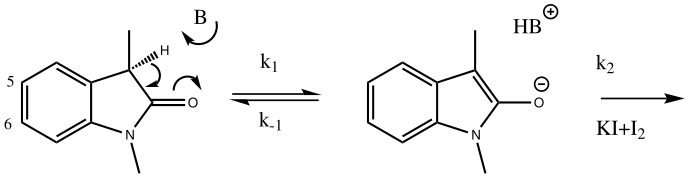
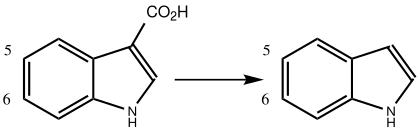
The original strategic objective of my PhD researches in 1972-74 was to explore how primary kinetic hydrogen isotope effects might be influenced by the underlying structures of the transition states involved. Earlier posts dealt with how one can construct quantum-chemical models of these transition states that fit the known properties of the reactions. Now, one can reverse the strategy by computing the expected variation with structure to see if anything interesting might emerge, and then if it does, open up the prospect of further exploration by experiment. Here I will use the base-catalysed enolisation of 1,3-dimethylindolin-2-ones and the decarboxylation of 3-indole carboxylates to explore this aspect.

Indole diazocoupling Indole diazocoupling

The systems and results are shown in the table below, summarised by the points:

1,3-dimethyl-indolinones:

  1. The free energy barriers are very low, but show an overall increase when changing the substituent from nitro to amino, with the 6-position being more sensitive than the 5. However, the increase is not consistent.
  2. The transition state mode changes regularly, the wavenumber more than doubling along the progression.
  3. The basic structure of the proton transfer evolves smoothly, from being an early transition state with 6-nitro to being a late one with 6-amino.
  4. The primary kinetic isotope effect shows less variation, but the trend is to increase as the transition state gets later, even beyond the point where the two bond lengths associated with the tranferring hydrogen are equal in length.
  5. As Dan Singleton has pointed out on this blog, the observed KIE is a combination of effects based purely on the transition state structure and effects resulting from the sharpness of the barrier inducing proton tunneling and this is itself related to the magnitude of νi. The KIE ratios tabulated below derive purely from the former and do not take into account any such tunneling. We can see from the variation in νi that such tunnelling contributions are likely to vary substantially across this range of substituents. As a result, deconvoluting the KIE due to the symmetry of the proton transfer from the contribution due to tunnelling is going to be difficult.
  6. There are other computational errors which might contribute, such as solvent reorganisations due to specific substituents, only partially taken into acount here. In effect the unsubstituted reaction geometry was used as the template for the others, followed of course by a re-optimisation which might not explore other more favourable orientations brought about by the substituents.

Indole-3-carboxylic acids:

  1. The free energy barriers are now much higher than the indolinones, but show a consistent decrease along the series from 6-nitro to 6-amino. This matches with the idea that the indole is a base and the basicity is increased by electron donation and decreased by electron withdrawal.
  2. The transition state mode again changes regularly, increasing as the barrier decreases.
  3. For 5-H, the computed free energy barrier matches that measured remarkably well.
  4. The calculated KIE increase regularly along the series 6-nitro to 6-amino.
  5. The calculated KIE for 5-H matches that measured very well, but that for the 5-chloro does not. One might safely conclude that the outlier is probably the experimental value. The KIE are not obtained by direct measurement of the rate of reaction, but inferred from solving the relatively complex rate equation with inclusion of some approximations and assumptions. Perhaps one of these approximations is not valid for this substituent, or possibly an experimental error has encroached. Were this work to ever be repeated, this entry should be prioritised.
  6. The overall variation in KIE is in fact quite small, but if the KIE can be measured very accurately, then they should be useful for comparison with such calculations.
  7. We cannot really conclude whether the magnitude of the KIE closely reflects the symmetry of the transition state. For all the examples below, the C-H bond is always shorter than the H-O bond. More extreme and probably multiple substituents on the ring (5,6-dinitro? 5,6-diamino?) might have to be used to probe a wider variation in transition state symmetry. For example, the maximum value for proton transfer from a hydronium ion was stated a long time ago to be around 3.6, [1] and it would be of interest to see if that value is attained when the proton transfer becomes fully symmetry.
1,3-dimethylindolin-2-ones[2]
Model ΔG298 (ΔH298) kH/kD (298K) rC-H, rH-O νi DataDOIs
6-nitro 1.94 3.22 1.256, 1.417 611 [3],[4]
5-nitro 1.82 3.65 1.289, 1.364 895 [5],[6]
H 2.48 4.40 1.326, 1.316 1130 [7],[8]
5-amino 6.73 3.86 1.337, 1.304 1182 [9],[10]
6-amino 3.19 4.43 1.349, 1.291 1226 [11],[12]
Indole-3-carboxylic acids[13]
6-nitro

25.1

2.72 1.279,1.391 706 [14],[15]
5-chloro 23.1 2.80 (2.23) 1.300,1.361 873 [16],[17]
5-H

22.1 (22.0)a[18]

2.87 (2.72)[18] 1.304,1.354 921 [19],[20]
6-amino 20.5 3.04 1.308,1.348 950 [21],[22]

aThe barrier is higher than previously reported because a significantly lower isomer of the ionised reactant was subsequently located.[21] Use of this new isomer also has a modest knock-on effect on the computed isotope effect for this system, bringing it into line with the other substituents and also with experiment.

Overall, this study of variation in kinetic isotope effects for proton transfer as induced by variation of ring substitution shows the viability of such computation. The total elapsed time since the start of this project is about three weeks, very much shorter than the original time taken to synthesize the molecules and measure their kinetics. Importantly, these were very much reactions occuring in aqueous solution, where solvation and general acid or general base catalysis occurred. Such reactions have long been thought to be very difficult to model in a non-dynamic discrete sense. The results obtained here tends towards optimism that such calculations may have a useful role to play in understanding such mechanisms.


I would like to express my enormous gratitude to my Ph.D. supervisor, Brian Challis, for starting me along this life-long exploration of reaction mechanisms. I hope the above gives him satisfaction that the endeavour back in 1972 has borne some more fruits.


References

  1. C.G. Swain, D.A. Kuhn, and R.L. Schowen, "Effect of Structural Changes in Reactants on the Position of Hydrogen-Bonding Hydrogens and Solvating Molecules in Transition States. The Mechanism of Tetrahydrofuran Formation from 4-Chlorobutanol<sup>1</sup>", Journal of the American Chemical Society, vol. 87, pp. 1553-1561, 1965. https://doi.org/10.1021/ja01085a025
  2. H. Rzepa, "Kinetic isotope effects for the ionisation of 5- and 6-substituted 1,3-dimethyl indolinones.", 2016. https://doi.org/10.14469/hpc/208
  3. H.S. Rzepa, "C 10 H 19 N 2 Na 1 O 8", 2016. https://doi.org/10.14469/ch/191802
  4. H.S. Rzepa, "C 10 H 19 N 2 Na 1 O 8", 2016. https://doi.org/10.14469/ch/191796
  5. H.S. Rzepa, "C 10 H 19 N 2 Na 1 O 8", 2016. https://doi.org/10.14469/ch/191800
  6. H.S. Rzepa, "C 10 H 19 N 2 Na 1 O 8", 2016. https://doi.org/10.14469/ch/191789
  7. H.S. Rzepa, "C 10 H 20 N 1 Na 1 O 6", 2016. https://doi.org/10.14469/ch/191787
  8. H.S. Rzepa, "C 10 H 20 N 1 Na 1 O 6", 2016. https://doi.org/10.14469/ch/191782
  9. H.S. Rzepa, "C 10 H 21 N 2 Na 1 O 6", 2016. https://doi.org/10.14469/ch/191803
  10. H.S. Rzepa, "C 10 H 21 N 2 Na 1 O 6", 2016. https://doi.org/10.14469/ch/191797
  11. H.S. Rzepa, "C 10 H 21 N 2 Na 1 O 6", 2016. https://doi.org/10.14469/ch/191804
  12. H.S. Rzepa, "C 10 H 21 N 2 Na 1 O 6", 2016. https://doi.org/10.14469/ch/191799
  13. H. Rzepa, "Decarboxylation of 5- and 6-substituted indole-3-carboxylic acids", 2016. https://doi.org/10.14469/hpc/220
  14. H.S. Rzepa, "C 9 H 15 Cl 1 N 2 O 8", 2016. https://doi.org/10.14469/ch/191807
  15. H.S. Rzepa, and H.S. Rzepa, "C 9 H 15 Cl 1 N 2 O 8", 2016. https://doi.org/10.14469/ch/191805
  16. H.S. Rzepa, "C 9 H 15 Cl 2 N 1 O 6", 2016. https://doi.org/10.14469/ch/191822
  17. H.S. Rzepa, "C 9 H 15 Cl 2 N 1 O 6", 2016. https://doi.org/10.14469/ch/191825
  18. B.C. Challis, and H.S. Rzepa, "Heteroaromatic hydrogen exchange reactions. Part 9. Acid catalysed decarboxylation of indole-3-carboxylic acids", Journal of the Chemical Society, Perkin Transactions 2, pp. 281, 1977. https://doi.org/10.1039/p29770000281
  19. H.S. Rzepa, "C 9 H 16 Cl 1 N 1 O 6", 2016. https://doi.org/10.14469/ch/191828
  20. H.S. Rzepa, "C 9 H 16 Cl 1 N 1 O 6", 2016. https://doi.org/10.14469/ch/191790
  21. H.S. Rzepa, "C 9 H 17 Cl 1 N 2 O 6", 2016. https://doi.org/10.14469/ch/191810
  22. H.S. Rzepa, "C 9 H 17 Cl 1 N 2 O 6", 2016. https://doi.org/10.14469/ch/191806

VSEPR Theory: A closer look at trifluorothionitrile, NSF3.

January 16th, 2016

The post on applying VSEPR ("valence shell electron pair repulsion") theory to the geometry of ClF3 has proved perennially popular. So here is a follow-up on another little molecue, F3SN. As the name implies, it is often represented with an S≡N bond. Here I take a look at the conventional analysis.

trifluoorothionitrile

This is as follows:

  1. Six valence electrons on the central S atom.
  2. Three F atoms contribute one electron each.
  3. One electron from the N σ-bond.
  4. Donate two electrons from S to the two π-bonds.
  5. Eight electrons left around central S, ≡ four valence shell electron pairs.
  6. Hence a tetrahedral geometry.
  7. The bond-bond repulsions however are not all equal. The SN bond repels the three SF bonds more than the S-F bonds repel each-other.
  8. Hence the N-S-F angle is greater than the F-S-F angle, a distorted tetrahedron.

Now for a calculation[1];  ωB97XD/Def2-TZVP, where the wavefunction is analysed using ELF (electron localisation function), which is a useful way of locating the centroids of bonds and lone pairs (click on diagram below to see 3D model).

Trifluorosulfonitrile

  • At the outset one notes that there are six ELF disynaptic basins surrounding the central S, integrating to a total of 7.05e. The sulfur is NOT hypervalent; it does not exceed the octet rule.
  • These six "electron sub-pair" basins are arranged octahedrally around the sulfur. The coordination is NOT tetrahedral, as implied above.
  • The three S-N basins have slightly more electrons (1.25e) than the three S-F basins (1.10e), resulting in …
  • the angle subtended at the S for the SN basins being 96° (a bit larger than octahedral) whilst the angle subtended at the S for the SF basins being smaller (89.9°). This matches point 7 above, but is achieved in an entirely different manner.
  • As a result, the N-S-F angle (122.5°) is larger than the ideal tetrahedral angle and the F-S-F angle (93.9°) is smaller, an alternative way of expressing point 7 above.
  • The S≡N triple bond as shown above does have some reality;  it is a "banana bond" with three connectors rather than two. Each banana bond however has only 1.25e, so the bond order of this motif is ~four (not six) but nevertheless resulting in a short S-N distance (1.406Å) with multiple character.

So we have achieved the same result as classical VSEPR, but using partial rather than full electron pairs to do so. We got the same result with ClF3 before. So perhaps this variation could be called "valence shell partial electron pair repulsions" or VSPEPR.

References

  1. H.S. Rzepa, "F 3 N 1 S 1", 2016. https://doi.org/10.14469/ch/191808