I’ve started so I’ll finish. Kinetic isotope effect models for a general acid as a catalyst in the protiodecarboxylation of indoles.

January 10th, 2016

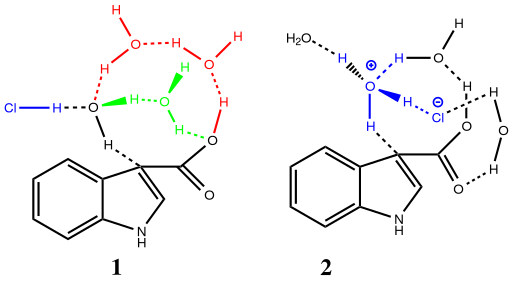
Earlier I explored models for the heteroaromatic electrophilic protiodecarboxylation of an 3-substituted indole, focusing on the role of water as the proton transfer and delivery agent. Next, came models for both water and the general base catalysed ionization of indolinones. Here I explore general acid catalysis by evaluating the properties of two possible models for decarboxylation of 3-indole carboxylic acid, one involving proton transfer (PT) from neutral water in the presence of covalent un-ionized HCl (1) and one with PT from a protonated water resulting from ionised HCl (2).

Indole diazocoupling

The original study[1] noted that the rate of decarboxylation fitted well to the kinetic expression: rate = {a + b[L3O+]/(1 + c[L3O+])}[indole], where L can be H or D. Experimentally, [L3O+] is controlled by adding a strong general acid such as HCl, which when the appropriate number of water molecules are added[2] fully ionizes to H3O+.OH. Now for B3LYP+D3/Def2-TZVPD/SCRF=water calculations:

  • Model takes the pure water model and adds HCl (blue above) via hydrogen bonding to the H2O that is transferring the proton to the indole ring. Three water molecules are hydrogen bonding to the carboxylate oxygens to create a bicyclic network in which a ring of either 8 or 10 atoms can act as the proton relay structure. The question now arises whether the proton relay takes the longer (red) route or the slightly shorter green route.
  • Isomeric model 2 uses H3O+ for proton transfer, with an adjacent Cl to complete the ion-pair.
Model ΔG298 (0.044M) DataDOIs kH/kD[3]
1 27.4 [4],[5],[6],[7] 5.69
2 16.8 (18.8) [5],[8] 2.45

Reactant as a non-ionised covalent HCl. reactant as an isomeric ionized H3O+.Cl–  beng 2.0 kcal/mol higher in energ within this solvation model.

  1. An IRC for Model 1 shows that the proton relay takes the red path, whereas without the HCl the green path is followed.

    Indole diazocoupling

    The transition state free energy however is ..

  2. 10.6‡ or 8.6 kcal/mol higher than model (click on the image below to load a 3D model). The general acid catalysed model is therefore preferred. The difference in free energy between the two models corresponds to a rate acceleration of >106, which is indeed similar to that observed[1].

Decarboxylation using a general acid catalyst

The clincher comes with calculation[3] of the kinetic isotope effects (KIE). For general acid catalysis, they were measured as kH/kD ~2.5.[1]

  • For model 1, using an un-ionised reactant and un-ionised transition state, the calculated KIE is 5.69 (very similar to that calculated for the water catalysed reaction, 5.66) but not a good fit to experiment.
  • For model 2, using the same un-ionised reactant but an ionised transition state, KIE = 2.04, a much better fit.
  • For model 2, using ionised reactant AND transition state, KIE = 2.45, an even better fit to experiment.

So we now have a model for the general acid catalysed decarboxylation of a 3-indole carboxylate which agrees with both the kinetic behaviours and the isotope effects measured for this reaction. Since the barrier is a relatively large one, proton tunnelling may play a lesser role in this interpretation, and the stage is set to use this model to e.g. explore how isotope effects are indeed influenced by tuning the reactivity using ring substitutents, the original purpose of my researches all those years ago. Perhaps the catch phrase I’ve started so I’ll start is now more apposite.

References

  1. B.C. Challis, and H.S. Rzepa, "Heteroaromatic hydrogen exchange reactions. Part 9. Acid catalysed decarboxylation of indole-3-carboxylic acids", Journal of the Chemical Society, Perkin Transactions 2, pp. 281, 1977. https://doi.org/10.1039/p29770000281
  2. A. Vargas‐Caamal, J.L. Cabellos, F. Ortiz‐Chi, H.S. Rzepa, A. Restrepo, and G. Merino, "How Many Water Molecules Does it Take to Dissociate HCl?", Chemistry – A European Journal, vol. 22, pp. 2812-2818, 2016. https://doi.org/10.1002/chem.201504016
  3. H. Rzepa, "Ionic model for general acid catalysed decarboxylation", 2016. https://doi.org/10.14469/hpc/204
  4. H.S. Rzepa, "C 9 H 16 Cl 1 N 1 O 6", 2016. https://doi.org/10.14469/ch/191792
  5. H.S. Rzepa, "C 9 H 16 Cl 1 N 1 O 6", 2016. https://doi.org/10.14469/ch/191795
  6. H.S. Rzepa, "C 9 H 16 Cl 1 N 1 O 6", 2016. https://doi.org/10.14469/ch/191794
  7. H.S. Rzepa, "C9H16ClNO6", 2016. https://doi.org/10.14469/ch/191767
  8. H.S. Rzepa, "C 9 H 16 Cl 1 N 1 O 6", 2016. https://doi.org/10.14469/ch/191790

I’ve started so I’ll finish. The ionisation mechanism and kinetic isotope effects for 1,3-dimethylindolin-2 one

January 7th, 2016

This is the third and final study deriving from my Ph.D.[1]. The first two topics dealt with the mechanism of heteroaromatic electrophilic attack using either a diazonium cation or a proton as electrophile, followed by either proton abstraction or carbon dioxide loss from the resulting Wheland intermediate. This final study inverts this sequence by starting with the proton abstraction from an indolinone by a base to create/aromatize to a indole-2-enolate intermediate, which only then is followed by electrophilic attack (by iodine).  Here I explore what light quantum chemical modelling might cast on the mechanism.

Indole diazocoupling

The concentration of I3 is used to follow the reaction, given by the expression:  [I3] = k1[B][indolinone]t – k-1/k2*ln[I3] + const, where  k2* = k2/715[I] + k2' , the latter being the rate coefficient for the reaction between the enolate intermediate and I3. With appropriate least squares analysis of this rate equation, a value for k1 using either 1H or 2H (≡ D) isotopes can be extracted and this gives an isotope effect k1H/k1D of 6.3 ± 0.6. Note that this value does NOT depend on [B]. Here, I am going to try to see if I can construct a quantum mechanical model which reproduces this value.

Indole diazocoupling

  1. Model 1 uses just three water molecules as a proton relay (B3LYP+D3/Def2-TZVP/SCRF=water).
  2. Model 2 uses 2H2O.NaOH solvated by two extra passive water molecules. Since under these conditions, the NaOH is largely ionic, [B] ≡ [OH]
Model ΔG298 (ΔH298) kH/kD (298K) DataDOIs
1 28.0 (22.9) 10.3 [2],[3],[4]
2 2.5 (2.8) 4.4 [5],[6],[7]

The plot of rate vs [B] shows[1] that the uncatalysed (water) rate is very slow (intercept passes more or less through zero) and the calculated free energy barrier (28.0 kcal/mol) confirms a slow rate at ambient temperatures. Note in the final (aromatized) product, there is a noticeable hydrogen bond between the 3-carbon and a water molecule (2.14Å). The calculated kinetic isotope effect[8] is substantially larger than observed experimentally for the base catalysed contribution.

Indolineone ionization using 3 water molecules

In the presence of NaOH (standard state = 1 atm = 0.044M), the enthalpy barrier drops very substantially to 2.8 kcal/mol and the free energy to 2.5 kcal/mol. Similar behaviour was noted previously on this blog for the hydrolysis of thalidomide. Although the magnitude of the reduction in barrier in fact implies an extremely fast reaction, recollect that [B]=[OH] appears in the rate equation  and since its value is very much less than 0.044M, the observed rate is relatively slow.

Indolineone ionization using 3 water molecules + NaOH

The calculated KIE for the hydroxide catalysed mechanism is much smaller that for the water route, but also smaller than is observed. This is a value uncorrected for tunnelling, which given the small barrier might be significant. 

These calculations show how a model for ionization of indolinone can be constructed, and used to e.g. probe the sensitivity of KIE to perturbations induced by ring substituents, which may form the basis of a future post.


This is a non-linear equation with kinetics that straddle zero and first order behaviour. In 1972, it was not easily possible to graph such functions in a manner where the slope of a linear plot would yield the rate constant. It was only computers and languages such as Fortran which allowed such non-linear least squares analysis of the rate. In the event, it turned out that the presence of 50% methanol in the mixed aqueous solutions was the cause; in other solvents the kinetics approximated zero order behavour very well.

References

  1. B.C. Challis, and H.S. Rzepa, "Heteroaromatic hydrogen exchange reactions. Part VIII. The ionisation of 1,3-dimethylindolin-2-one", Journal of the Chemical Society, Perkin Transactions 2, pp. 1822, 1975. https://doi.org/10.1039/p29750001822
  2. H.S. Rzepa, "C 10 H 17 N 1 O 4", 2016. https://doi.org/10.14469/ch/191786
  3. H.S. Rzepa, "C 10 H 17 N 1 O 4", 2016. https://doi.org/10.14469/ch/191765
  4. H.S. Rzepa, "C10H17NO4", 2016. https://doi.org/10.14469/ch/191784
  5. H.S. Rzepa, "C 10 H 20 N 1 Na 1 O 6", 2016. https://doi.org/10.14469/ch/191787
  6. H.S. Rzepa, "C 10 H 20 N 1 Na 1 O 6", 2016. https://doi.org/10.14469/ch/191782
  7. H.S. Rzepa, "C10H20NNaO6", 2016. https://doi.org/10.14469/ch/191785
  8. H. Rzepa, "Mechanisms and kinetic isotope effects for the base catalysed ionisation of 1,3-dimethyl indolinone.", 2016. https://doi.org/10.14469/hpc/202

Some examples of open access publications citing managed research data (RDM).

January 5th, 2016

In May 2015, the EPSRC funding council in the UK required researchers to publish the outcomes of the funded work to include an OA (open access) version of the narrative and to cite the managed research data used to support the research with a DOI (digital object identifier). I was discussing these aspects with a senior manager (research outcomes) at the EPSRC and he asked me to provide some examples from my area of chemistry; here are some.

The basics are covered by three broad actions:

  1. The researcher should adopt a research data management plan. This can be quite brief, but it is important that it be updated as the strategies evolve with time and that it is consistent within the group (ideally the department).

    • It would include a general policy for the research group to access and if appropriate share a common, private, storage area for the so-called "active data" (data still being analysed and processed). It could for example take the form of cloud storage, using commercial providers such as Box, DropBox or GitHub. The data is accessible only to those who have been granted access.
    • It could be a software organizer in which cloud storage is implicit. For quantum calculations, we use a locally developed system for the purpose which serves a storage function and which has one other even more important attribute in functioning as a generator and collector of metadata associated with the datasets being generated.[1],[2],[3]
  2. The narrative describing the research is then published as an OA article, conjointly with …
  3. … the datasets being published to a data repository, and assigned a DOI.
  4. There are some delicate aspects of ensuring that actions 2 and 3 are synchronised, ensuring that the article cites the data and that the data cites the article. I will not here detail the mechanisms for achieving this.

What follows here are 11 examples of OA articles in which managed data is cited in the manner decribed at the start. You may notice a diversity of styles and procedures. At the time most of these examples were being worked upon, there were few examples or indeed guidelines, and so these really constitute an exploration of various ways in which it can be done.

Article 

DOI

Article short DOI

Representative

dataset

Data is cited as:
[4] 9qg [5]
  • Additional file 1. Interactivity box 1. Data-based object illustrating various aspects of the interaction at the heart of Z-DNA.
  • A footnote in the preceding object: The original complete data set is also available at http://doi.org/10.14469/ch/13514 via a digital repository.
[6] 9qf [7] Interactive Table S1, using dataDOIs referencing a data repository, as eg http://doi.org/10042/to-8576 and 11 other examples.
[8] 9p3 [7]
  • Full details of all calculations are available via the individual digital repository entries associated with Interactivity Boxes 1 and 2 (Web enhanced objects) available with this article (doi 10.6084/m9.figshare.797484, shortdoi: rns) or directly by the following doi resolvers: TS1, 10042/to-13699 and ~40 further entries
  • supplemental data: 10.6084/m9.figshare.777773, shortdoi: rnf.
[9] 9p2 [10] Ref 20 and 21 as an Interactivity box, datadoi: 10.6084/m9.figshare.785756, shortdoi: n6q and further references to individual datasets are available in this object.
[11] 9p4 [12]
  • Each data table or data Figure is assigned a doi in the Figshare repository (see footnotes), all retrievable as e.g. shortdoi: qd8.
  • Each figure or table contains further data citations (~20 per table).
[13] 9p5 [14]
  • footnotes to individual tables (Table 5, Table 7, Table 9)
  • and in the section Associated content at the end of the article, citing Interactive Tables 1, which themselves cite further datadois.
[1] vf4   This article discusses the technology behind five examples of articles which themselves contain citations to data.
[15] 9p6 [16] Refs 17 (doi: 10.6084/m9.figshare.988346, shortdoi: tb3) and 18 (doi: 10.6084/m9.figshare.1293562, shortdoi: znk)
[2] 73z [17] References 27 (10.6084/m9.figshare.1266197, shortdoi: xn3) and 28 (10.6084/m9.figshare.1342036, shortdoi: 2zb).
[18] 9p9 [19] Ref 15, in the form: An interactive table corresponding to the data for these calculations and the experimental details can be retrieved from doi:10.6084/m9.figshare.1181739, shortdoi: vz9. NCI surfaces were created using the resource doi:10.6084/m9.figshare.811862, shortdoi: n5b.
[3] 73x [20] Refs 36 (doi:10.6084/m9.figshare.1342036, shortdoi: 2zb) and ref 50 (10.6084/m9.figshare.1330063, shortdoi:6cq).

I hope this table adds to the open collection of pointers linking open access research articles to associated managed data. One really requires this association to be achieved using metadata and perhaps something along these lines might emerge quite soon from the fruits of the current collaborations between CrossRef and DataCite. Ideally, one should be able to pose search queries along the lines of identifying all research data associated with an article, and indeed vice versa.

When the scientific journal arose some 350 years ago, the format and presentation of the narrative evolved only relatively slowly, an evolution that has accelerated somewhat in the online era largely due to the author guidelines imposed by the publishers. I suspect most authors were happy to allow the publishers to take control of this aspect. There may now however be a similar expectation that the publishers specify how authors' data is managed and presented. I would however argue here that it is the authors themselves who know the attributes of their data best and the 11 examples above show one evolutionary process of the data publication process which in this instance was largely determined by the authors themselves. We should strive to allow the authors to retain these measures of creativity in the future, as RDM and its integration into journals matures and develops.


Interactive tables here were created as convenient collections of dataset DOIs, and have been presented in conjunction with visualisation software such as Jmol or JSmol. These tables can themselves be published in a repository and assigned a DOI. Most of the examples we prepared were published in the Figshare repository (the DOIs for some of which are shown in the last column of the table above). Special actions had to be taken at the Figshare end to allow the tables to be incorporated into the landing page presentation corresponding to the DOI. In December 2015, the site was refactored and this functionality is currently disabled, but should be restored in the near future.

 If anyone reading this post is aware of interesting chemistry examples illustrating formal data citation of managed research data using e.g. a DOI in published articles, do please let me know and if appropriate I will add them to the table above.


References

  1. M.J. Harvey, N.J. Mason, and H.S. Rzepa, "Digital Data Repositories in Chemistry and Their Integration with Journals and Electronic Notebooks", Journal of Chemical Information and Modeling, vol. 54, pp. 2627-2635, 2014. https://doi.org/10.1021/ci500302p
  2. M.J. Harvey, N.J. Mason, A. McLean, and H.S. Rzepa, "Standards-based metadata procedures for retrieving data for display or mining utilizing persistent (data-DOI) identifiers", Journal of Cheminformatics, vol. 7, 2015. https://doi.org/10.1186/s13321-015-0081-7
  3. M.J. Harvey, N.J. Mason, A. McLean, P. Murray-Rust, H.S. Rzepa, and J.J.P. Stewart, "Standards-based curation of a decade-old digital repository dataset of molecular information", Journal of Cheminformatics, vol. 7, 2015. https://doi.org/10.1186/s13321-015-0093-3
  4. H.S. Rzepa, "Chemical datuments as scientific enablers", Journal of Cheminformatics, vol. 5, 2013. https://doi.org/10.1186/1758-2946-5-6
  5. H.S. Rzepa, "C 19 H 28 N 9 O 10 P 1", 2012. https://doi.org/10.14469/ch/13514
  6. M.J. Gomes, L.F. Pinto, P.M. Glória, H.S. Rzepa, S. Prabhakar, and A.M. Lobo, "N-heteroatom substitution effect in 3-aza-cope rearrangements", Chemistry Central Journal, vol. 7, 2013. https://doi.org/10.1186/1752-153x-7-94
  7. H.S. Rzepa, "C 11 H 16 N 1 O 5 -1", 2011. https://doi.org/10.14469/ch/8551
  8. F.L. Cherblanc, Y. Lo, W.A. Herrebout, P. Bultinck, H.S. Rzepa, and M.J. Fuchter, "Mechanistic and Chiroptical Studies on the Desulfurization of Epidithiodioxopiperazines Reveal Universal Retention of Configuration at the Bridgehead Carbon Atoms", The Journal of Organic Chemistry, vol. 78, pp. 11646-11655, 2013. https://doi.org/10.1021/jo401316a
  9. D. Christopher Braddock, J. Clarke, and H.S. Rzepa, "Epoxidation of bromoallenes connects red algae metabolites by an intersecting bromoallene oxide – Favorskii manifold", Chemical Communications, vol. 49, pp. 11176, 2013. https://doi.org/10.1039/c3cc46720a
  10. H.S. Rzepa, "C 6 H 9 Br 1 O 2", 2013. https://doi.org/10.14469/ch/18928
  11. A. Armstrong, R.A. Boto, P. Dingwall, J. Contreras-García, M.J. Harvey, N.J. Mason, and H.S. Rzepa, "The Houk–List transition states for organocatalytic mechanisms revisited", Chem. Sci., vol. 5, pp. 2057-2071, 2014. https://doi.org/10.1039/c3sc53416b
  12. N. Mason, and N. Mason, "C 18 H 23 N 1 O 3", 2013. https://doi.org/10.14469/ch/18808
  13. S. Lal, H.S. Rzepa, and S. Díez-González, "Catalytic and Computational Studies of N-Heterocyclic Carbene or Phosphine-Containing Copper(I) Complexes for the Synthesis of 5-Iodo-1,2,3-Triazoles", ACS Catalysis, vol. 4, pp. 2274-2287, 2014. https://doi.org/10.1021/cs500326e
  14. H.S. Rzepa, "C 15 H 12 I 1 N 3", 2011. https://doi.org/10.14469/ch/10258
  15. K.K.(. Hii, H.S. Rzepa, and E.H. Smith, "Asymmetric Epoxidation: A Twinned Laboratory and Molecular Modeling Experiment for Upper-Level Organic Chemistry Students", Journal of Chemical Education, vol. 92, pp. 1385-1389, 2015. https://doi.org/10.1021/ed500398e
  16. H.S. Rzepa, "C 21 H 32 O 1 S 2", 2015. https://doi.org/10.14469/ch/177853
  17. H.S. Rzepa, N. Mason, A. Mclean, and M. Harvey, "Interoperability for Data Repositories. Machine Methods for Retrieving Data for Display or Mining Utilising Persistent (data-DOI) Identifiers", 2014. https://doi.org/10.6084/m9.figshare.1266197
  18. T. Lanyon-Hogg, M. Ritzefeld, N. Masumoto, A.I. Magee, H.S. Rzepa, and E.W. Tate, "Modulation of Amide Bond Rotamers in 5-Acyl-6,7-dihydrothieno[3,2-<i>c</i>]pyridines", The Journal of Organic Chemistry, vol. 80, pp. 4370-4377, 2015. https://doi.org/10.1021/acs.joc.5b00205
  19. H.S. Rzepa, "C 15 H 15 N 1 O 1 S 1", 2014. https://doi.org/10.14469/ch/25041
  20. H.S. Rzepa, M.J. Harvey, N.J. Mason, A. Mclean, P. Murray-Rust, and J.J.P. Stewart, "Standards-based curation of a decade-old digital repository dataset of molecular information.", 2015. https://doi.org/10.6084/m9.figshare.1330063

I’ve started so I’ll finish. Mechanism and kinetic isotope effects for protiodecarboxylation of indoles.

January 2nd, 2016

Another mechanistic study we started in 1972[1] is here 40+ years on subjected to quantum mechanical scrutiny.

Indole diazocoupling

The kinetics are again complex, the mechanism involving protonation of the indole carboxylate (by a general acid), followed by the presumption of a zwitterionic Wheland intermediate that then loses carbon dioxide in a second step (blue arrows). Kinetically indistinguishable is a concerted alternative in which both steps are conflated into a concerted but not necessarily synchronous process (red arrows). In 1972, this latter mechanistic alternative was never really considered, iin part because it was not easy to prove or disprove an asynchronous concerted route by experiment. A brief summary of the conclusions:

  1. The reaction was found to be catalysed by a general acid.
  2. But a residual rate at low acid concentration was measured, corresponding to catalysis by water as an acid (shown in the scheme above).
  3. A deuterium isotope effect of ~2.2-2.7 on the apparent protonation step was observed when the reaction was conducted in D2O rather than H2O (the disentangled complex kinetics yielded isotope effects for two other kinetic parameters as well, also in the range 2.0-2.6).
  4. The isotope effects were found to be insensitive to various substituents on the indole, leading to the final conclusion that isotope effects for proton transfer are little influenced by the symmetry of the process.

Here, I set out to test some of these forty-year old assumptions; in particular to see if a model can be constructed that reproduces the unusually low value of the primary deuterium kinetic isotope effect, since normally proton transfers to carbon sustain a value closer to 7.

Now for the mechanism. Shown below are eight potential models for the process.

  1. Model 1 is the most basic, with just a single water molecule delivering a proton to the 3-position of the indole and abstracting it from the carboxylic acid group.
  2. Models 1a, 1b and 1c add a second water as a passive hydrogen bonder.
  3. Model 2 is isomeric to 1a,b,c but the second water now actively participates in the proton relay.
  4. Model 3 replaces the single water molecule with a more acidic proton relay molecule, ethanoic acid (red).
  5. Models 4 and 5 augment model 3 with one water molecule as well, in two different positions.
  6. Model 6 uses a three-water proton relay with one H-bonding water.
  7. Model 7 uses a two-water proton relay with two H-bonding waters.

Indole diazocoupling

The results of a B3LYP+D3/Def2-TZVP/SCRF=water calculation are collected below in the table. The following conclusions can be drawn:

  1. Model 1, with just a single water molecule acting as proton transfer acid/base reveals a concerted route via TS. 
  2. Model 1b, with an extra water acting via a hydrogen bond now changes the mechanism to stepwise via  TS1 and  TS2, the latter being some 12.6 kcal/mol lower in energy and hence making  TS1 rate determining. The kinetic deuterium isotope effect (KIE) on  TS1 of  7.27 is much larger than is observed.  That for the second step TS2 is negligible.
  3. Model 2, isomeric with 1b, is lower by 4 kcal/mol, largely due to a more favourable geometry for linear proton transfer. The KIE is getting closer to the observed value as is the free energy barrier (measured as ΔG298 22 kcal/mol[1]).
  4. Model 3 replaces the water proton transfer agent by ethanoic acid, with a significant lowering of the barrier. This constitutes a prediction for protiodecarboxylation in ethanoic acid solutions.
  5. Models 4 and the isomeric 5 now combines models 2+3, and represents one possibility for general acid catalysis in aqueous ethanoic acid solutions. The KIE is predicted to rise significantly (again, this experiment has not been done).
  6. Model 7 incorporates model 2 (a two-water proton relay) with two additional passive water molecules acting via hydrogen bonds. The barrier is converging to the measured value, and the KIE has now dropped below the measured value! As before TS2 is lower (by 6.8 kcal/mol) than TS1.
  7. Model 6 (below) is isomeric with model 7 and incorporates a three-water proton relay with one solvating water, with a predicted KIE higher than model 6.

Indole diazocoupling

Model ΔG298 dataDOIs Mechanism kH/kD [2]
1 33.8 [3],[4] TS[5] 9.88
1a 35.6 [6],[7]
1b 33.8 (21.2) [6],[8],[9] TS1,TS2[10] 7.27 (1.05)
1c 33.9 [6],[11]
2 29.9 [6],[12] TS1,TS2[13] 4.20
3 20.9 [14],[15] TS1,TS2[16] 4.29
4 25.7 [17],[18] TS1,TS2[19]
5 24.4 [17],[20] TS1,TS2[21] 8.55
6 23.9 [22],[23] TS1,TS2 5.66
7 24.3 (8:17.9) [22],[24],[25] TS1,TS2[26] 1.44

These models show that the arrangements of the solvation and proton-relay components of the mechanism are crucial to understanding the kinetic isotope effects induced by deuterium. The partition function ratios responsible for the KIE emerge[2] as a complex function of the structure and so the KIE itself provides a particularly sensitive probe of these structures. This exploration is not stochastical in nature;  there are clearly many more variations in which even more than four water molecules could be used in the model. One would take the Boltzmann population/weight of each pose and use these to predict the statistical probability of properties such as the KIE. Working in the other direction and from the results shown in the table, a population of ~25% of model 6 and 75% of model 7 would give a KIE in agreement with experiment. A more complete stochastical model would no doubt include many more solvation structures.

In 1972, transition state models could only be slowly and painfully constructed by accumulating kinetic data and making many assumptions. Quantum computation provides a more systematic and rational way in which to base the assumptions. What has emerged for this reaction is that the rate determining protonation of a 3-carboxyindole prior to its decarboxylation is largely defined by the solvation structures that accumulate in the transition state;  we are really learning about solvation here rather than just proton transfer. The two techniques together, experimental kinetics and quantum chemical modelling, are true symbiotes in each informing the other.


Here is a crystal structure which shows an O-H hydrogen bond to the π-face of the indole 5-ring, indicating the indole π-system is basic enough to hydrogen-bond with an acidic proton.[27] This water molecule has an additional role, which I will describe in a separate post.


References

  1. B.C. Challis, and H.S. Rzepa, "Heteroaromatic hydrogen exchange reactions. Part 9. Acid catalysed decarboxylation of indole-3-carboxylic acids", Journal of the Chemical Society, Perkin Transactions 2, pp. 281, 1977. https://doi.org/10.1039/p29770000281
  2. H. Rzepa, "Mechanism and kinetic isotope effects for protiodecarboxylation of indoles.", 2016. https://doi.org/10.14469/hpc/179
  3. H.S. Rzepa, "C 9 H 9 N 1 O 3", 2015. https://doi.org/10.14469/ch/191738
  4. H.S. Rzepa, "C 9 H 9 N 1 O 3", 2015. https://doi.org/10.14469/ch/191728
  5. H.S. Rzepa, "C9H9NO3", 2015. https://doi.org/10.14469/ch/191735
  6. H.S. Rzepa, "C 9 H 11 N 1 O 4", 2015. https://doi.org/10.14469/ch/191737
  7. H.S. Rzepa, "C 9 H 11 N 1 O 4", 2015. https://doi.org/10.14469/ch/191733
  8. H.S. Rzepa, "C 9 H 11 N 1 O 4", 2015. https://doi.org/10.14469/ch/191732
  9. H.S. Rzepa, "C 9 H 11 N 1 O 4", 2015. https://doi.org/10.14469/ch/191748
  10. H.S. Rzepa, "C9H11NO4", 2015. https://doi.org/10.14469/ch/191741
  11. H.S. Rzepa, "C 9 H 11 N 1 O 4", 2015. https://doi.org/10.14469/ch/191729
  12. H.S. Rzepa, "C 9 H 11 N 1 O 4", 2015. https://doi.org/10.14469/ch/191731
  13. H.S. Rzepa, "C9H11NO4", 2015. https://doi.org/10.14469/ch/191739
  14. H.S. Rzepa, "C 11 H 11 N 1 O 4", 2015. https://doi.org/10.14469/ch/191745
  15. H.S. Rzepa, "C 11 H 11 N 1 O 4", 2015. https://doi.org/10.14469/ch/191743
  16. H.S. Rzepa, "C11H11NO4", 2015. https://doi.org/10.14469/ch/191749
  17. H.S. Rzepa, "C 11 H 13 N 1 O 5", 2015. https://doi.org/10.14469/ch/191747
  18. H.S. Rzepa, "C 11 H 13 N 1 O 5", 2015. https://doi.org/10.14469/ch/191734
  19. H.S. Rzepa, "C11H13NO5", 2015. https://doi.org/10.14469/ch/191751
  20. H.S. Rzepa, "C 11 H 13 N 1 O 5", 2015. https://doi.org/10.14469/ch/191742
  21. H.S. Rzepa, "C11H13NO5", 2016. https://doi.org/10.14469/ch/191754
  22. H.S. Rzepa, "C 9 H 15 N 1 O 6", 2016. https://doi.org/10.14469/ch/191753
  23. H.S. Rzepa, "C 9 H 15 N 1 O 6", 2016. https://doi.org/10.14469/ch/191755
  24. H.S. Rzepa, "C 9 H 15 N 1 O 6", 2015. https://doi.org/10.14469/ch/191750
  25. H.S. Rzepa, "C 9 H 15 N 1 O 6", 2015. https://doi.org/10.14469/ch/191752
  26. H.S. Rzepa, "C9H15NO6", 2016. https://doi.org/10.14469/ch/191756
  27. Ibrahim, Abeer A.., Khaledi, Hamid., Hassandarvish, Pouya., Ali, Hapipah Mohd., and Karimian, Hamed., "CCDC 939908: Experimental Crystal Structure Determination", 2014. https://doi.org/10.5517/cc10k1m7

I've started so I'll finish. The mechanism of diazo coupling to indoles – forty (three) years on!

December 24th, 2015

The BBC TV quiz series Mastermind was first broadcast in the UK in 1972, the same time I was starting to investigate the mechanism of diazocoupling to substituted indoles as part of my Ph.D. researches. The BBC program became known for the catch phrase I've started so I'll finish; here I will try to follow this precept with the project I started then. Indole diazocoupling In 1972, one measured the rates of chemical reactions to gain insights into the transition state kinetic model. To obtain more data, we used isotopes such as 2H or 3H, together with substituents such as R-t-butyl to modify the potential energy surfaces of the reactions by inducing steric effects.[1],[2] We found that the kinetics for this reaction were actually complex (in part because of pH dependence) involving a Wheland intermediate (the formation of which is shown with red curly arrows above) followed by the collapse of this intermediate to the diazo-coupled product (blue arrows). Coupling to 2-methyl indole (R=X=H, R'=Me), 2-t-butyl indole (R=H, R'=t-butyl) and 4-methyl-2-t-butyl indole (R=Me, R'=t-butyl) revealed that the kinetic isotope effects induced by replacing H by D or T were "not apparent" (i.e. close to 1), the inference being that the rate constant k1 for those systems was slower than k2; the formation of the Wheland intermediate was rate determining (the rds) for the reaction. But with 2-methyl-4,6-di-t-butyl indole (R=t-butyl, R'=Me) this changed and a deuterium isotope effect of ~7 was observed. The rate determining proton removal from the Wheland intermediate k2 was now slower than k1. With 2,4,6-tri-t-butyl indole, we ended by noting that the reaction become almost too slow to observe and furthermore was accompanied by loss of a t-butyl cation as well as a proton. At this point we attempted to infer some transition state models consistent with these observations. Note that we had relatively little data with which to derive our 3D models (one needs to define a geometry using 3N-6 variables, along with its relative energy and force constants). The text and diagram of our attempt is shown below. TS1 The main points of this argument were;
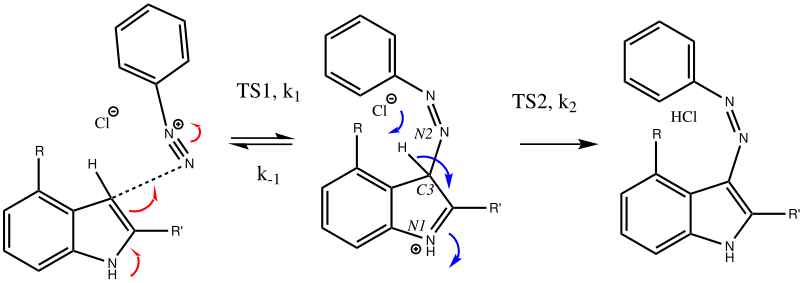
  1. That the Wheland complex is asymmetric, with the diazonium ion adopting a pseudo-axial line of attack.
  2. In contrast, the leaving proton lies closer to the plane of the indole ring
  3. The abstracting base experiences "steric hindrance" if R = t-butyl but not if R' = t-butyl.

I was eager to find out how one might test these models by quantum computation and my next stop in 1974 was to Austin Texas, where Michael Dewar's  group was soon to break the record for computing the geometry of a molecule with 49 atoms (similar in size to the reactions shown above) using the then very new semi-empirical MINDO/3 valence-shell quantum theory. The theory still needed much improvement in a great many aspects and the last forty years has brought us features such as density functional theories, far more accurate all-electron basis sets, superior geometry optimisation methods for transition states, code parallelisation, solvation treatments and increasing recognition that a particular form of electron correlation associated with dispersion energies needed specific attention. These methods would not have become applicable to molecules of this size had the computers themselves not become perhaps 10 million times faster during this period, with a commensurate increase in the digital memories required and decrease in cost. Time then to apply a B3LYP+D3/Def2-TZVP/SCRF=water quantum model to the problem. Four species were computed for each set of substituents; the reactant, a transition state for C…N bond formation (TS1), a Wheland intermediate and a transition state for C-H bond cleavage (TS2). The relative free energies of the last three with respect to the first are shown in the table below. An IRC for R=R'=H (below) was used to show that a bona-fide Wheland intermediate is indeed formed.[3]

IRC animation for TS1, R=R'=H
TS1 IRC
IRC for TS2, R=R'=H
TS2

The relative free energies (kcal/mol) are shown in the table below and the following conclusions can be drawn from this computed model:

  1. For R=R'=H, ΔG298 for TS1 is higher than TS2 (✔ with expt)
  2. With R=t-butyl,R'=Me, ΔG298 of TS1 is 3.1 kcal/mol lower than with R=R'=H. This indicates that t-butyl and methyl groups actually activate electrophilic addition by stabiisation of the induced positive charge, and have no steric effect upon the first step (✔ with our conclusions).
  3. For R= t-butyl,R'=Me, ΔG298 of TS1 is lower than TS2 (✔ with expt).
  4. With R=R'= t-butyl, ΔG298 of TS2 is 4.9 kcal/mol higher than with R=R'=H and is 3.1 kcal/mol higher with R=t-butyl,R'=Me, indicating the steric effect acts on this stage.
  5. The angle of approach of the diazonium electrophile is ~123-118° for R=R'=H and R=R'=t-butyl, about 30° away from a strict pseudo-axial "reactant-like" approach as implied in our sketch above (❌ with diagram above)
  6. The angle of proton abstraction with the plane of the indole ring is 107° for R=R'=H and 100.3° for R=R'=t-butyl, the hydrogen being closer to pseudo-axial than equatorial, relative to the plane of the indole ring  (❌ with diagram above).
  7. The position along the reaction path for proton abstraction is much later with R=R'=t-butyl (rC-H ~1.42Å) than R=R'=H (rC-H ~1.27Å),  (❌ with the statement above: a reactant-like transition state even for the proton expulsion step).
  8. The cross-over between TS1/TS2 as the rds is in the region of the substituents R=Me,R'=t-butyl (~✔ with expt).
  9. The steric interaction occurs not so much between the incoming base and the t-butyl groups, but because of enforced proximity between the t-butyl group and the diazo group induced during the proton removal stage.
  10. The steric effect induced by R=t-butyl is greater than when  R'=t-butyl.
  11. The Wheland intermediate is in a relatively shallow minimum.
R, R' TS1,
ΔG298  k1
∠ N1-C3-N2 Int
ΔG298 
TS2,
ΔG298  k2
∠ N1-C3-H ΔΔG
(TS2-TS1)
kH/kD
(calc)
[4],[5]
R=R'=H 21.4[6],[7] 122.9 19.6[8] 18.6[9] 107.0 -1.8 0.925 (TS1)
R=Me,R'=t-butyl 16.9[10],[11] 121.8 15.2[12] 18.4[13] 101.8 +1.5 0.900 (TS1)
6.4 (TS2)
R=t-butyl,R'=Me 18.3[14],[15] 115.2 16.0[16] 21.7[17] 100.9 +3.4 6.8 (TS2)
R=R'=t-butyl 17.8[18],[19] 117.6 17.8[20] 23.5[21] 100.4 +5.2 6.9 (TS2)

Possible errors in the model:

  1. I have not included any explicit solvent water in which hydrogen bonds to the base (the chloride anion) might moderate its properties.
  2. The ion-pair reactant complex between the phenyl diazonium chloride and the indole has many possible orientations, and these have not been optimised.
  3. The free energies are subject to the usual errors due to the rigid-rotor approximations and other artefacts of partition functions.
  4. Other DFT functionals have not been explored, nor have better basis sets.
  5. This current study is confined to formation of the cis-diazo product.

But even such a model seems to reproduce much of what we learnt about diazocoupling to 2,4-substituted indoles. The calculations you see above took about a week to set up and complete; the original experimental work took (in real-time) ~150 weeks (interleaved with two other mechanistic studies). Also efficient implementation of the quantum theories, together with the computer resources to evaluate the molecular energies and geometries, was almost entirely lacking in 1972 and this has probably only become a realistic project in the last five years or so. So that 43 year wait to finish what I started seems not unreasonable. Nowadays of course, combining experimental kinetic measurements with computational models very often goes hand in hand. It is also worth speculating about the wealth of mechanistic data garnered during the heyday of physical organic chemistry during  the period ~1940-1980. The experiments were not then informed by feedback from computational modelling. However, it seems unlikely that very many of these mechanistic studies will ever be retrospectively augmented with computed models; the funding for the resources to do so is unlikely to ever be seen as a priority.


A little more complex than the scheme above, since the reaction also exhibits dependency on acid concentration. Nowadays, there are a number of computer programs available for analysing such complex kinetics, but in 1972 I had to write my own non-linear least squares fitting analysis of the steady state equation to the measured rates[2] This replaced the use of graph paper to analyse (of necessity much simpler) rate equations. I note that mentions of non-linear least squares methods in kinetic analyses start around 1986[22] Even by 1992, the topic was considered novel enough to warrant a publication[23]

The related diazo coupling to activated aryls such as phenol or aniline shows a mechanistic cross-over between an entirely synchronous path in which no Wheland intermediate is involved (e.g. phenol)[24] to one where the intermediate does form (e.g. aniline).[25] Diazo coupling to e.g. benzofuran rather than indole by the way is also stepwise, but via a very shallow Wheland intermediate[26] and with a higher barrier than indole, making it a very slow reaction.


References

  1. B.C. Challis, and H.S. Rzepa, "The mechanism of diazo-coupling to indoles and the effect of steric hindrance on the rate-limiting step", Journal of the Chemical Society, Perkin Transactions 2, pp. 1209, 1975. https://doi.org/10.1039/p29750001209
  2. H.S. Rzepa, "Hydrogen Transfer Reactions Of Indoles", Zenodo, 1974. https://doi.org/10.5281/zenodo.18777
  3. H.S. Rzepa, "C14H12ClN3", 2015. https://doi.org/10.14469/ch/191707
  4. H.S. Rzepa, "KINISOT. A basic program to calculate kinetic isotope effects using normal coordinate analysis of transition state and reactants.", 2015. https://doi.org/10.5281/zenodo.19272
  5. H. Rzepa, "The mechanism of diazo coupling to indoles", 2015. https://doi.org/10.14469/hpc/176
  6. H.S. Rzepa, "C 14 H 12 Cl 1 N 3", 2015. https://doi.org/10.14469/ch/191705
  7. H.S. Rzepa, "C 14 H 12 Cl 1 N 3", 2015. https://doi.org/10.14469/ch/191698
  8. H.S. Rzepa, "C 14 H 12 Cl 1 N 3", 2015. https://doi.org/10.14469/ch/191713
  9. H.S. Rzepa, "C14H12ClN3", 2015. https://doi.org/10.14469/ch/191712
  10. H.S. Rzepa, "C 19 H 22 Cl 1 N 3", 2015. https://doi.org/10.14469/ch/191723
  11. H.S. Rzepa, "C 19 H 22 Cl 1 N 3", 2015. https://doi.org/10.14469/ch/191719
  12. H.S. Rzepa, "C 19 H 22 Cl 1 N 3", 2015. https://doi.org/10.14469/ch/191721
  13. H.S. Rzepa, "C 19 H 22 Cl 1 N 3", 2015. https://doi.org/10.14469/ch/191720
  14. H.S. Rzepa, "C 19 H 22 Cl 1 N 3", 2015. https://doi.org/10.14469/ch/191722
  15. H.S. Rzepa, "C 19 H 22 Cl 1 N 3", 2015. https://doi.org/10.14469/ch/191717
  16. H.S. Rzepa, "C 19 H 22 Cl 1 N 3", 2015. https://doi.org/10.14469/ch/191726
  17. H.S. Rzepa, "C 19 H 22 Cl 1 N 3", 2015. https://doi.org/10.14469/ch/191714
  18. H.S. Rzepa, "C22H28ClN3", 2015. https://doi.org/10.14469/ch/191715
  19. H.S. Rzepa, "C 22 H 28 Cl 1 N 3", 2015. https://doi.org/10.14469/ch/191706
  20. H.S. Rzepa, "C 22 H 28 Cl 1 N 3", 2015. https://doi.org/10.14469/ch/191709
  21. H.S. Rzepa, "C22H28ClN3", 2015. https://doi.org/10.14469/ch/191718
  22. R. Ambrosetti, G. Bellucci, and R. Bianchini, "Direct numerical approach to complex reaction kinetics: the addition of bromine to cyclohexene in the presence of pyridine", The Journal of Physical Chemistry, vol. 90, pp. 6261-6266, 1986. https://doi.org/10.1021/j100281a038
  23. N.H. Chen, and R. Aris, "Determination of Arrhenius constants by linear and nonlinear fitting", AIChE Journal, vol. 38, pp. 626-628, 1992. https://doi.org/10.1002/aic.690380419
  24. H.S. Rzepa, "C12H11ClN2O", 2015. https://doi.org/10.14469/ch/191700
  25. H.S. Rzepa, "C12H12ClN3", 2015. https://doi.org/10.14469/ch/191699
  26. H.S. Rzepa, "C14H11ClN2O", 2015. https://doi.org/10.14469/ch/191730

I’ve started so I’ll finish. The mechanism of diazo coupling to indoles – forty (three) years on!

December 24th, 2015

The BBC TV quiz series Mastermind was first broadcast in the UK in 1972, the same time I was starting to investigate the mechanism of diazocoupling to substituted indoles as part of my Ph.D. researches. The BBC program became known for the catch phrase I've started so I'll finish; here I will try to follow this precept with the project I started then.

Indole diazocoupling

In 1972, one measured the rates of chemical reactions to gain insights into the transition state kinetic model. To obtain more data, we used isotopes such as 2H or 3H, together with substituents such as R-t-butyl to modify the potential energy surfaces of the reactions by inducing steric effects.[1],[2] We found that the kinetics for this reaction were actually complex (in part because of pH dependence) involving a Wheland intermediate (the formation of which is shown with red curly arrows above) followed by the collapse of this intermediate to the diazo-coupled product (blue arrows). Coupling to 2-methyl indole (R=X=H, R'=Me), 2-t-butyl indole (R=H, R'=t-butyl) and 4-methyl-2-t-butyl indole (R=Me, R'=t-butyl) revealed that the kinetic isotope effects induced by replacing H by D or T were "not apparent" (i.e. close to 1), the inference being that the rate constant k1 for those systems was slower than k2; the formation of the Wheland intermediate was rate determining (the rds) for the reaction. But with 2-methyl-4,6-di-t-butyl indole (R=t-butyl, R'=Me) this changed and a deuterium isotope effect of ~7 was observed. The rate determining proton removal from the Wheland intermediate k2 was now slower than k1. With 2,4,6-tri-t-butyl indole, we ended by noting that the reaction become almost too slow to observe and furthermore was accompanied by loss of a t-butyl cation as well as a proton.

At this point we attempted to infer some transition state models consistent with these observations. Note that we had relatively little data with which to derive our 3D models (one needs to define a geometry using 3N-6 variables, along with its relative energy and force constants). The text and diagram of our attempt is shown below.

TS1

The main points of this argument were;

  1. That the Wheland complex is asymmetric, with the diazonium ion adopting a pseudo-axial line of attack.
  2. In contrast, the leaving proton lies closer to the plane of the indole ring
  3. The abstracting base experiences "steric hindrance" if R = t-butyl but not if R' = t-butyl.

I was eager to find out how one might test these models by quantum computation and my next stop in 1974 was to Austin Texas, where Michael Dewar's  group was soon to break the record for computing the geometry of a molecule with 49 atoms (similar in size to the reactions shown above) using the then very new semi-empirical MINDO/3 valence-shell quantum theory. The theory still needed much improvement in a great many aspects and the last forty years has brought us features such as density functional theories, far more accurate all-electron basis sets, superior geometry optimisation methods for transition states, code parallelisation, solvation treatments and increasing recognition that a particular form of electron correlation associated with dispersion energies needed specific attention. These methods would not have become applicable to molecules of this size had the computers themselves not become perhaps 10 million times faster during this period, with a commensurate increase in the digital memories required and decrease in cost.

Time then to apply a B3LYP+D3/Def2-TZVP/SCRF=water quantum model to the problem. Four species were computed for each set of substituents; the reactant, a transition state for C…N bond formation (TS1), a Wheland intermediate and a transition state for C-H bond cleavage (TS2). The relative free energies of the last three with respect to the first are shown in the table below. An IRC for R=R'=H (below) was used to show that a bona-fide Wheland intermediate is indeed formed.[3]

IRC animation for TS1, R=R'=H
TS1 IRC
IRC for TS2, R=R'=H
TS2

The relative free energies (kcal/mol) are shown in the table below and the following conclusions can be drawn from this computed model:

  1. For R=R'=H, ΔG298 for TS1 is higher than TS2 (✔ with expt)
  2. With R=t-butyl,R'=Me, ΔG298 of TS1 is 3.1 kcal/mol lower than with R=R'=H. This indicates that t-butyl and methyl groups actually activate electrophilic addition by stabiisation of the induced positive charge, and have no steric effect upon the first step (✔ with our conclusions).
  3. For R= t-butyl,R'=Me, ΔG298 of TS1 is lower than TS2 (✔ with expt).
  4. With R=R'= t-butyl, ΔG298 of TS2 is 4.9 kcal/mol higher than with R=R'=H and is 3.1 kcal/molhigher with R=t-butyl,R'=Me, indicating the steric effect acts on this stage.
  5. The angle of approach of the diazonium electrophile is ~123-118° for R=R'=H and R=R'=t-butyl, about 30° away from a strict pseudo-axial "reactant-like" approach as implied in our sketch above (❌ with diagram above)
  6. The angle of proton abstraction with the plane of the indole ring is 107° for R=R'=H and 100.3° for R=R'=t-butyl, the hydrogen being closer to pseudo-axial than equatorial, relative to the plane of the indole ring  (❌ with diagram above).
  7. The position along the reaction path for proton abstraction is much later with R=R'=t-butyl (rC-H ~1.42Å) than R=R'=H (rC-H ~1.27Å),  (❌ with the statement above: a reactant-like transition state even for the proton expulsion step).
  8. The cross-over between TS1/TS2 as the rds is in the region of the substituents R=Me,R'=t-butyl (~✔ with expt).
  9. The steric interaction occurs not so much between the incoming base and the t-butyl groups, but because of enforced proximity between the t-butyl group and the diazo group induced during the proton removal stage.
  10. The steric effect induced by R=t-butyl is greater than when  R'=t-butyl.
  11. The Wheland intermediate is in a relatively shallow minimum.
R, R'

TS1,
ΔG298 

k1

∠ N1-C3-N2

ΔG298 

TS2,
ΔG298 

k2

∠ N1-C3-H

ΔΔG
(TS2-TS1)

kH/kD
(calc)
[4],[5]
R=R'=H 21.4[6],[7] 122.9 19.6[8] 18.6[9] 107.0 -1.8 0.925 (TS1)
R=Me,R'=t-butyl 16.9[10],[11] 121.8 15.2[12] 18.4[13] 101.8 +1.5 0.900 (TS1)
6.4 (TS2)
R=t-butyl,R'=Me 18.3[14],[15] 115.2 16.0[16] 21.7[17] 100.9 +3.4 6.8 (TS2)
R=R'=t-butyl 17.8[18],[19] 117.6 17.8[20] 23.5[21] 100.4 +5.2 6.9 (TS2)

Possible errors in the model:

  1. I have not included any explicit solvent water in which hydrogen bonds to the base (the chloride anion) might moderate its properties.
  2. The ion-pair reactant complex between the phenyl diazonium chloride and the indole has many possible orientations, and these have not been optimised.
  3. The free energies are subject to the usual errors due to the rigid-rotor approximations and other artefacts of partition functions.
  4. Other DFT functionals have not been explored, nor have better basis sets.
  5. This current study is confined to formation of the cis-diazo product.

But even such a model seems to reproduce much of what we learnt about diazocoupling to 2,4-substituted indoles. The calculations you see above took about a week to set up and complete; the original experimental work took (in real-time) ~150 weeks (interleaved with two other mechanistic studies). Also efficient implementation of the quantum theories, together with the computer resources to evaluate the molecular energies and geometries, was almost entirely lacking in 1972 and this has probably only become a realistic project in the last five years or so. So that 43 year wait to finish what I started seems not unreasonable. Nowadays of course, combining experimental kinetic measurements with computational models very often goes hand in hand.

It is also worth speculating about the wealth of mechanistic data garnered during the heyday of physical organic chemistry during  the period ~1940-1980. The experiments were not then informed by feedback from computational modelling. However, it seems unlikely that very many of these mechanistic studies will ever be retrospectively augmented with computed models; the funding for the resources to do so is unlikely to ever be seen as a priority.


A little more complex than the scheme above, since the reaction also exhibits dependency on acid concentration. Nowadays, there are a number of computer programs available for analysing such complex kinetics, but in 1972 I had to write my own non-linear least squares fitting analysis of the steady state equation to the measured rates[2] This replaced the use of graph paper to analyse (of necessity much simpler) rate equations. The related diazo coupling to activated aryls such as phenol or aniline shows a mechanistic cross-over between an entirely synchronous path in which no Wheland intermediate is involved (e.g. phenol)[22] to one where the intermediate does form (e.g. aniline).[23] Diazo coupling to e.g. benzofuran rather than indole will be reported in a future post.


References

  1. B.C. Challis, and H.S. Rzepa, "The mechanism of diazo-coupling to indoles and the effect of steric hindrance on the rate-limiting step", Journal of the Chemical Society, Perkin Transactions 2, pp. 1209, 1975. https://doi.org/10.1039/p29750001209
  2. H.S. Rzepa, "Hydrogen Transfer Reactions Of Indoles", Zenodo, 1974. https://doi.org/10.5281/zenodo.18777
  3. H.S. Rzepa, "C14H12ClN3", 2015. https://doi.org/10.14469/ch/191707
  4. H.S. Rzepa, "KINISOT. A basic program to calculate kinetic isotope effects using normal coordinate analysis of transition state and reactants.", 2015. https://doi.org/10.5281/zenodo.19272
  5. H. Rzepa, "The mechanism of diazo coupling to indoles", 2015. https://doi.org/10.14469/hpc/176
  6. H.S. Rzepa, "C 14 H 12 Cl 1 N 3", 2015. https://doi.org/10.14469/ch/191705
  7. H.S. Rzepa, "C 14 H 12 Cl 1 N 3", 2015. https://doi.org/10.14469/ch/191698
  8. H.S. Rzepa, "C 14 H 12 Cl 1 N 3", 2015. https://doi.org/10.14469/ch/191713
  9. H.S. Rzepa, "C14H12ClN3", 2015. https://doi.org/10.14469/ch/191712
  10. H.S. Rzepa, "C 19 H 22 Cl 1 N 3", 2015. https://doi.org/10.14469/ch/191723
  11. H.S. Rzepa, "C 19 H 22 Cl 1 N 3", 2015. https://doi.org/10.14469/ch/191719
  12. H.S. Rzepa, "C 19 H 22 Cl 1 N 3", 2015. https://doi.org/10.14469/ch/191721
  13. H.S. Rzepa, "C 19 H 22 Cl 1 N 3", 2015. https://doi.org/10.14469/ch/191720
  14. H.S. Rzepa, "C 19 H 22 Cl 1 N 3", 2015. https://doi.org/10.14469/ch/191722
  15. H.S. Rzepa, "C 19 H 22 Cl 1 N 3", 2015. https://doi.org/10.14469/ch/191717
  16. H.S. Rzepa, "C 19 H 22 Cl 1 N 3", 2015. https://doi.org/10.14469/ch/191726
  17. H.S. Rzepa, "C 19 H 22 Cl 1 N 3", 2015. https://doi.org/10.14469/ch/191714
  18. H.S. Rzepa, "C22H28ClN3", 2015. https://doi.org/10.14469/ch/191715
  19. H.S. Rzepa, "C 22 H 28 Cl 1 N 3", 2015. https://doi.org/10.14469/ch/191706
  20. H.S. Rzepa, "C 22 H 28 Cl 1 N 3", 2015. https://doi.org/10.14469/ch/191709
  21. H.S. Rzepa, "C22H28ClN3", 2015. https://doi.org/10.14469/ch/191718
  22. H.S. Rzepa, "C12H11ClN2O", 2015. https://doi.org/10.14469/ch/191700
  23. H.S. Rzepa, "C12H12ClN3", 2015. https://doi.org/10.14469/ch/191699

Could anyone comment on any recent calculated results on the planarity, or lack thereof, of azobenzene?

December 20th, 2015

This question was posted on the CCL (computational chemistry list) by John McKelvey. Here, I give an answer in the form of a search of the CSD (crystal structure database).

I was not sure if the question related purely to the geometries obtained using computational methods or to comparisons with experimentally determined structures. Or indeed whether it related to azobenzene specifically or to azobenzenes in general. Here, I comment only in respect of the latter two. The search was defined as below, with the following specifications:

  1. The absolute value of the central torsion (TOR1) was constrained to 0-60° for cis azobenzenes and to 120-180° for trans azobenzenes.
  2. Two further torsions (TOR2, TOR3) specify the torsion angle about the aryl to N bond.
  3. The R factor is < 0.1, and there are no errors or disorder.
  4. The C-N bonds were specified as acyclic.

search azobenzene

Trans Azobenzenes, 1111 examples
trans azobenzene
Cis Azobenzenes, 42 examples
cis azobenzene

The results show that by and large, trans azo-benzenes are co-planar to ± 30°, but there are some interesting points in the centre with dihedral angles of ~90°. Cis azobenzenes on the other hand are mostly NOT planar, with red hotspots at about 50 or 130° of twist.

These results took about 20 minutes to define, search, and plot as per above. I hope it provides John with an answer, even if it’s not the one he might have meant!

The atom and the molecule: A one-day symposium on 23 March, 2016 celebrating Gilbert N. Lewis.

December 11th, 2015

You might have noticed the occasional reference here to the upcoming centenary of the publication of Gilbert N. Lewis’ famous article entitled “The atom and the molecule“.[1] A symposium exploring his scientific impact and legacy will be held in London on March 23, 2016, exactly 70 years to the day since his death. A list of the speakers and their titles is shown below; there is no attendance fee, but you must register as per the instructions below.


Royal Society of Chemistry Historical Group Meeting on 23th March 2016, Burlington House, Piccadilly, London: The atom and the molecule: A symposium celebrating Gilbert N. Lewis.

  • Dr Patrick Coffey (Berkeley, USA): Does Personality Influence Scientific Credit? Simultaneous Priority Disputes: Lewis vs. Langmuir and Langmuir vs. Harkins
  • Professor Robin Hendry (Durham, UK): Lewis on Structure and the Chemical Bond
  • Professor Alan Dronsfield (UK): An organic chemist reflects on the Lewis two-electron bond
  • Dr Julia Contreras-García (UPMC, France): Do bonds need a name?
  • Professor Nick Greeves (Liverpool, UK): The influence of Lewis on organic chemistry teaching, textbooks and beyond
  • Professor Clark Landis (UWM, USA): Lewis and Lewis-like Structures in the Quantum Era
  • Professor Michael Mingos (Oxford, UK): The Inorganic dimension to Lewis and Kossel’s landmark contributions
  • Dr Patrick Coffey (Berkeley, USA): Lewis’ Life, Death, and Missing Nobel Prize

Prior registration is essential. Please email your name and address to Professor John Nicholson,  jwnicholson01 @ gmail.com


References

  1. G.N. Lewis, "THE ATOM AND THE MOLECULE.", Journal of the American Chemical Society, vol. 38, pp. 762-785, 1916. https://doi.org/10.1021/ja02261a002

More stereo electronics: the Eschenmoser double fragmentation and guerrilla tutorials.

December 10th, 2015

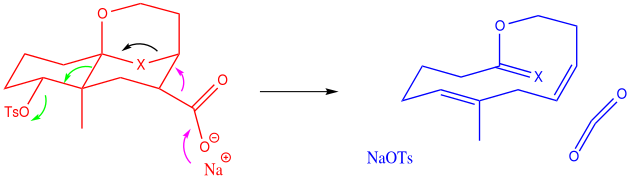
The layout of floor 2 of the chemistry department here contains a number of small rooms which function as tutorial areas. Each has a (non-interactive) whiteboard used by students and tutors for, inter-aliathought-showering. It was in one such room that I found myself with three colleagues this monday afternoon. We soon all sensed something not quite right about the room; it slowly dawned that the whiteboard was entirely devoid of thoughts (it is normally left adorned with chemical hieroglyphics). Before we departed, one of our number crept up to the board and showered the following (the red bit only followed by a ?; thanks Willie!). The chemistry equivalent you might say of Guerrilla gardening. The product shown in blue below is for your benefit here. It is an example of a double fragmentation reaction; by an odd coincidence following on nicely from the previous post.

Eschenmoser

I have now found out that it represents the Eschenmoser double-fragmentation reaction to produce a medium-size macrolide ring.[1] It is interesting for several reasons:

  1. The reaction only proceeds if X=O (but not if X=CH2).
  2. from which the possible role that the anomeric effects in this region play become of interest.
  3. leading to the issue of whether the two fragmentations are connected in a concerted manner or are separate processes (first the green arrows, then the magenta arrows).

So, to provide a possible answer to the guerrilla tutorial on our next visit in a weeks time, I put a preview up here.

System ΔG298 DataDOI
X=O, Reactant 0.0 [2]
X=O, TS1 23.5  [3]
X=O, TS2 14.5  [4]

Analysis

Reactant geometry

The reactant shows an asymmetric anomeric effect, with the X=O bond shorter (1.399Å) than the alternate C-O (1.426Å, diagram below, ωb97xd/6-311g(d,p) calculation). The C-X (X=O) bond shown cleaving in the diagram above is longer than either of the others (1.442Å) and the C-C cleaving bond (green arrow) is also longer than usual (1.563Å)

em1

The four centres involved in the first fragmentation subtend a dihedral angle of 179.8° and the second set 177.6°. Both are therefore perfectly aligned for fragmentation. But the angle between the two fragmentations is 67.2°, meaning that they are NOT aligned correctly to occur synchronously.

Reactant NBO localised orbital analysis

The NBO interaction energy due to overlap (the black arrow above) between the oxygen lone pair (Lp) on X=O and the adjacent C-O* orbital is 16.4 kcal/mol, whereas the reverse interaction from the other oxygen is 10.1 kcal/mol due to a slightly worse anti-periplanar alignment. The NBO E(2) interaction term between the lone pair (Lp) on X=O and the adjacent about-to-fragment C-C* orbital is also relatively large at 6.6 kcal/mol, whereas that for the non-fragmenting C-C* orbital is 4.4 kcal/mol.

Reactant ELF-based lone pair analysis

In order to estimate the dihedral (antiperiplanar) angle between two atoms  (more accurately the anti bond between them) and an electron lone pair on the adjacent oxygen, one needs the coordinates of the oxygen lone pair (Lp). These can be obtained using a localising technique called ELF (electron localisation function). The values are as follows:

  1. X=O, Lp with anomeric C-O bond: 177°
  2. X=O, Lp with fragmenting C-C bond: 174°

So the reactant is already pre-disposed to the green+black fragmentation due to both of the X=O:: lone pairs, hence accounting for why only this substituent shows this reaction. It also hints the first fragmentation (green arrows) is pre-disposed to start before the second one (magenta arrows).

Energies and conclusion

ΔG can be obtained for two discrete transition states (green, TS1 and magenta TS2 steps), the first being distinctly the higher in free energy and corresponding to a reasonable rate reaction at elevated temperatures.

The problem illustrates nicely the importance of aligning reaction centres correctly, and how a lone pair can influence the result.


The corresponding free energy activation barrier for X=CH2 is 25.6 kcal/mol[5],[6]. Transposing  C=CH2 with the remaining oxygen (an untried experiment) gives a barrier of 25.4 kcal/mol.[7]


References

  1. D. Sternbach, M. Shibuya, F. Jaisli, M. Bonetti, and A. Eschenmoser, "Ein fragmentativer Zugang zu Makroliden: (5‐<i>E</i>, 8‐<i>Z</i>)‐6‐Methyl‐5, 8‐undecadien‐11‐olid", Angewandte Chemie, vol. 91, pp. 670-672, 1979. https://doi.org/10.1002/ange.19790910827
  2. H.S. Rzepa, "Gaussian Job Archive for C19H23NaO7S", 2015. https://doi.org/10.6084/m9.figshare.1621347
  3. H.S. Rzepa, "C 19 H 23 Na 1 O 7 S 1", 2015. https://doi.org/10.14469/ch/191687
  4. H.S. Rzepa, "C 19 H 23 Na 1 O 7 S 1", 2015. https://doi.org/10.14469/ch/191683
  5. H.S. Rzepa, "C 20 H 25 Na 1 O 6 S 1", 2015. https://doi.org/10.14469/ch/191701
  6. H.S. Rzepa, "C 20 H 25 Na 1 O 6 S 1", 2015. https://doi.org/10.14469/ch/191697
  7. H.S. Rzepa, "C 20 H 25 Na 1 O 6 S 1", 2015. https://doi.org/10.14469/ch/191708

A tutorial problem in stereoelectronic control. A Grob alternative to the Tiffeneau-Demjanov rearrangement?

November 28th, 2015

In answering tutorial problems, students often need skills in deciding how much time to spend on explaining what does not happen, as well as what does. Here I explore alternatives to the mechanism outlined in the previous post to see what computation has to say about what does (or might) not happen.

TD

I start with posing the question what does the chloride counter-ion do? If you are aware of the literature on computational reaction mechanisms, you may note that where ionic species are involved, one of the ions is often excluded from the calculations. Here for example, the pertinent reacting species is a diazonium cation, but the anion would likely not be mentioned, and the calculation would be performed as a charged cation (the physically unrealistic charge=1 in the input file!). This is because of an awkward difficulty with ion-pairs. There is no formal bond between the two charged fragments (unless a zwitterion) and so it is not entirely obvious quite where to place the counter-ion. In the diagram above, position 1 is where it was in my first exploration, but with knowledge that it might form a hydrogen bond to an acidic hydrogen, one could also perhaps place it into positions 2 or 3. In 2, as shown by the blue arrows and product above, an entirely different reaction occurs known as the Grob fragmentation.[1] In fact as a di-carbonyl compound, it can then participate in an acid-catalysed aldol condensation and this can lead to the same product as the original Tiffeneau-Demjanov rearrangement, albeit with loss of stereochemical integrity. So it might be worth effort in explaining whether this alternative is likely (in other words how robust the likely stereochemical integrity of the product is).

System Relative TS free energy TS Dipole moment DataDOI
1 0.0 17.7 [2]
2 1.4 24.2 [3]
3 3.7 29.3 [4]

The energies of the three located transition states increase with the dipole moment; as the counter-ion moves further from the positive charge, its position becomes less stable. Still, route 2 is not that much higher in energy. Time for an IRC (intrinsic reaction coordinate) to explore what actually does happen during route 2, the possible Grob rearrangement.

grob1

The reaction animation above shows the required Grob characteristic, the green bond breaking. But instead of the OH then de-protonating, the hydrogen stays in place and instead the Tiffeneau-Demjanov migration takes place. This will require removal of a different proton and indeed in the latter stages, the chloride anion starts off in its determined journey to do so.

GrobDM

The variation in dipole moment as the reaction proceeds is fascinating. At IRC -6, it reaches a minimum, but then reverses itself in hunt of a better way of reducing the dipole moment.

What about 3? This is slightly artificial, since the real system has a methoxy group here, which would inhibit this route. One can still learn chemistry though. The hydrogen bond formed from chloride to the OH encourages the anomeric effect to form a partial oxy-anion, which in turn encourages the red bond to break rather than the green one. But in fact no complete proton transfer happens, and the reaction reaches a non-productive cul-de-sac. 

Alt1

So, to conclude, there is no Grob fragmentation! Instead, a slightly confused Tiffeneau-Demjanov migration occurs in a rather more roundabout manner than previously. We have explored here just TWO reaction trajectories. A more statistical exploration of the trajectory landscape will give us a more complete picture, but I rather fancy that would be very well above the call of duty required to answer a stereochemical problem!

References

  1. C.A. Grob, and W. Baumann, "Die 1,4‐Eliminierung unter Fragmentierung", Helvetica Chimica Acta, vol. 38, pp. 594-610, 1955. https://doi.org/10.1002/hlca.19550380306
  2. H.S. Rzepa, "C 8 H 13 Cl 1 N 2 O 4", 2015. https://doi.org/10.14469/ch/191653
  3. H.S. Rzepa, "C 8 H 13 Cl 1 N 2 O 4", 2015. https://doi.org/10.14469/ch/191654
  4. H.S. Rzepa, "C 8 H 13 Cl 1 N 2 O 4", 2015. https://doi.org/10.14469/ch/191655