Posts Tagged ‘Reaction Mechanism’

Oxime formation from hydroxylamine and ketone. Part 2: Elimination.

Tuesday, September 25th, 2012

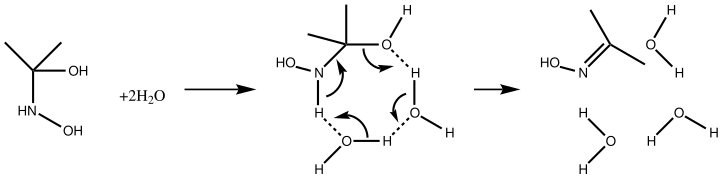
This is the follow-up to the previous post exploring a typical nucleophilic addition-elimination reaction. Here is the elimination step, which as before requires proton transfers. We again adopt a cyclic mechanism to try to avoid the build up of charge separation during those proton movements.

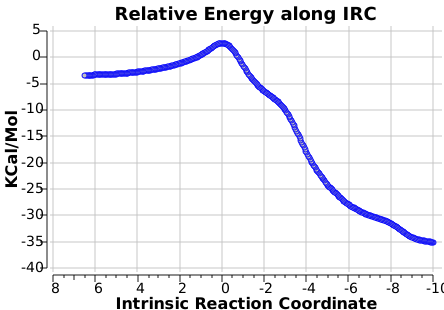
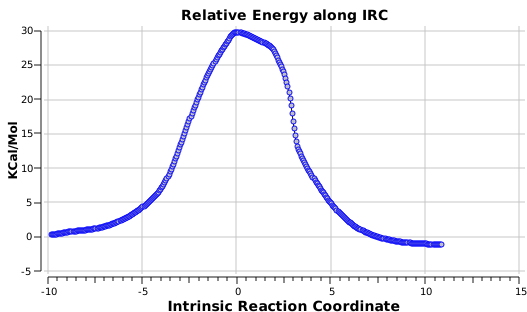
Elimination step to form an oxime. Click for animation of reaction mode.

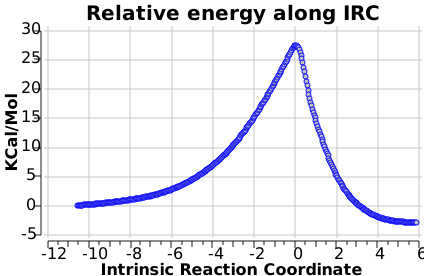
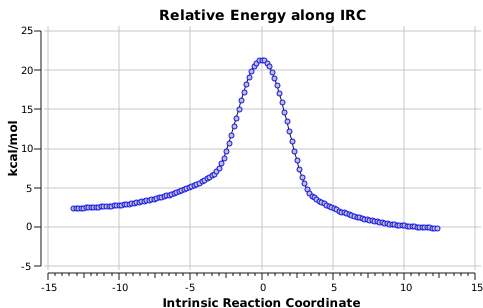
  1. Overall, the transition state for this second stage is 12.1 kcal/mol higher in free energy than the addition step described previously, and some 30 kcal/mol starting from the tetrahedral intermediate. Unlike the first step, where neutral water could participate in a reaction with a low barrier, here neutral water does not do the trick. To reduce the barrier, one probably needs to add e.g. an acid, say HCl to the components. Knowing precisely where to place such an acid is non trivial – I will not reveal an answer now, but will reserve it for a future post.
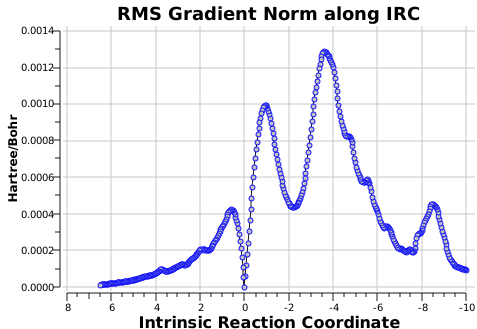
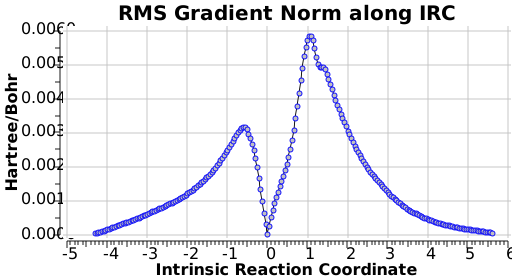
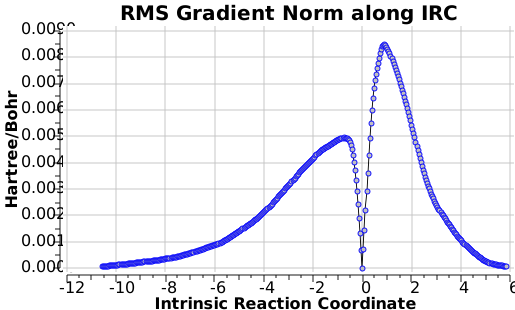
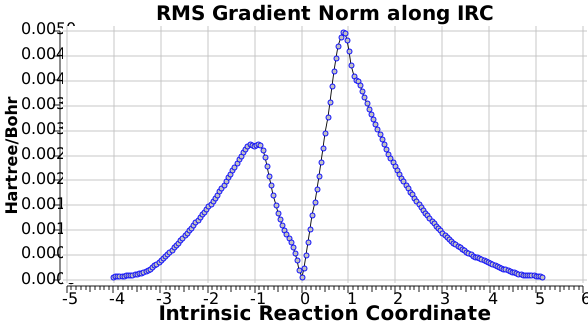
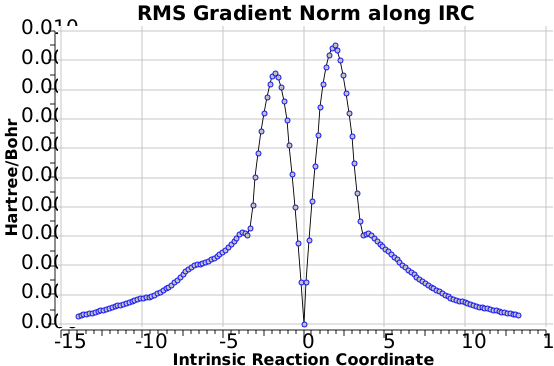
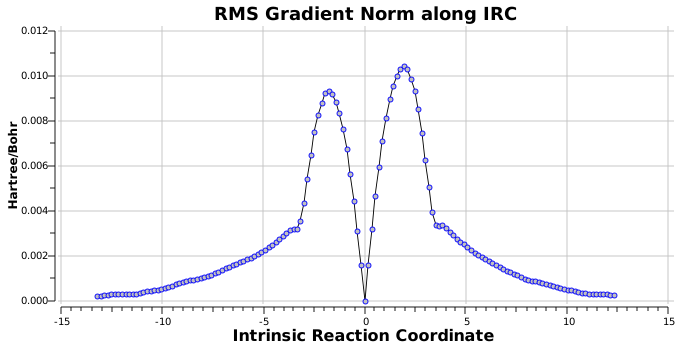
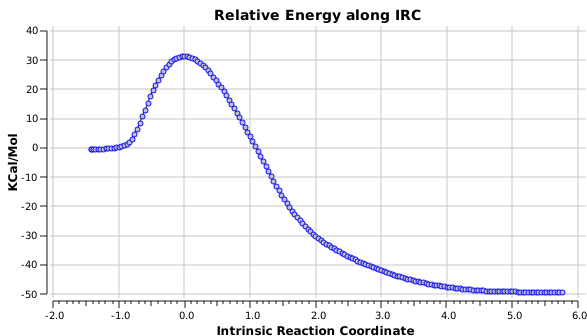
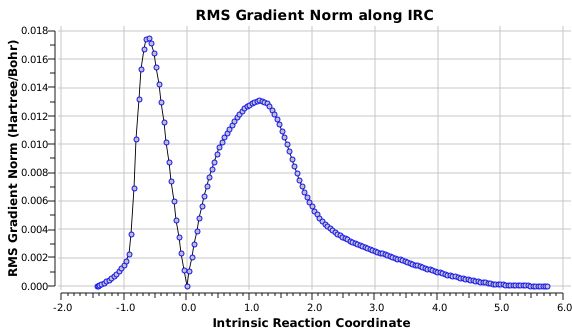
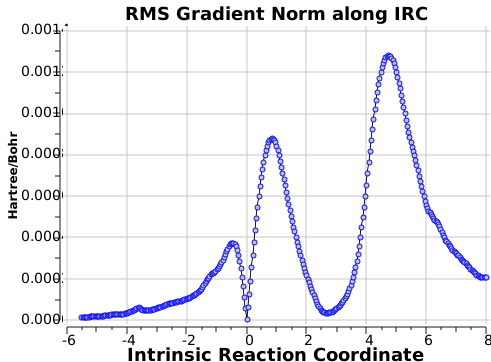
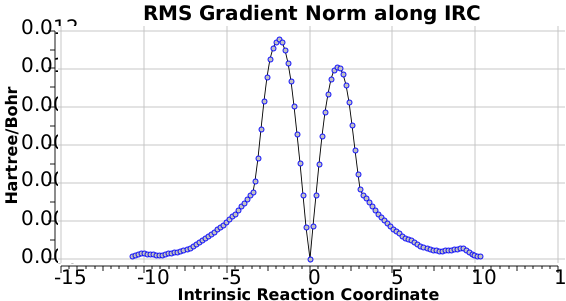
  2. It is worth observing the features (best seen in the gradient norm plot below) in the  IRC. The small feature at  IRC -9  corresponds to rotation of the  C-OH group away from an anomeric conformation to prepare it for accepting a proton.
  3. By IRC -2 (i.e. before the actual transition state is reached), the first proton transfer is well under way from the C-OH group to the first water molecule. The cleavage of the C-OH bond is also starting.
  4. At the transition state (IRC =0.0), this first transfer is almost complete and the second between the two water molecules is starting. The cleavage of the  C-OH bond is largely complete.
  5. By IRC +3,  this second transfer is largely complete and a third from the N-H to the second water is underway.
  6. By IRC +5, the proton transfers are all finished, and the C=N double bond of the oxime is also largely formed.

Well, this particular sequence of events is clearly not the full (or even a partial) answer to the mechanism of the second elimination step for this reaction. We know this because it predicts far too large a barrier. Something is missing from this model, and that something is probably a polarizing group such as HCl. Watch this space.

Oxime formation from hydroxylamine and ketone: a (computational) reality check on stage one of the mechanism.

Sunday, September 23rd, 2012

The mechanism of forming an oxime from nucleophilic addition of a hydroxylamine to a ketone is taught early on in most courses of organic chemistry. Here I subject the first step of this reaction to form a tetrahedral intermediate to quantum mechanical scrutiny.

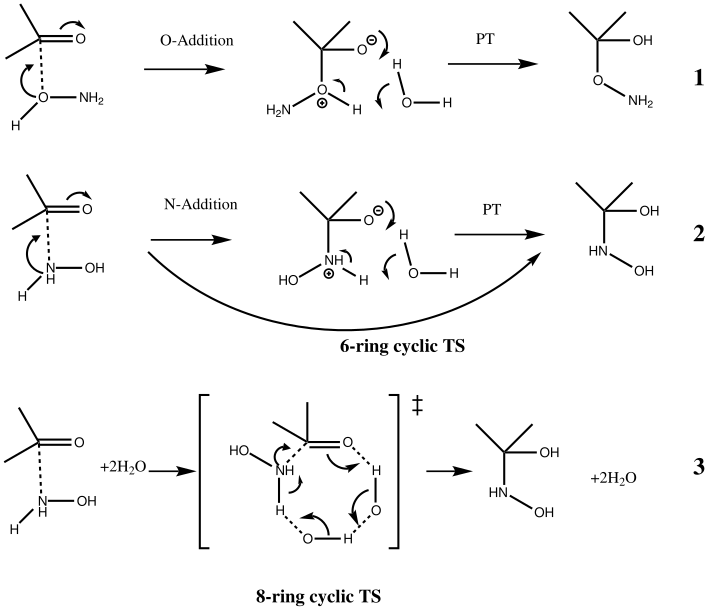
  1. The first decision is to decide which atom of the hydroxylamine acts as the nucleophile. Reaction 1 shows the oxygen and reaction 2 the nitrogen. The text books will tell you that nitrogen nucleophiles are better than oxygen ones. This is because nitrogen is less electronegative than oxygen (it has a smaller nuclear charge) and so binds its single lone pair less tightly than oxygen does its two lone pairs. Sometimes the Klopman-Salem equation is invoked, which tells you that the reactivity is directly proportional to the overlap between the donor MO and the (empty) acceptor MO, and inversely proportional to the energy gap between these two orbitals. Nitrogen wins out because its lone pair is “larger” and hence overlaps better, and because its donor MO energy is higher than oxygen and hence the energy gap between it and the π* C=O acceptor is lower. 
  2. Reality check: We need to construct a suitable transition state for both possibilities, and then compare their free energies. There is a choice of choosing a stepwise pathway (the one shown in all the text books) in which the bond from N or O to C is formed in an initial step, and then followed by a step often just labelled PT to transfer the proton using solvent molecules. These two steps can also be conflated into a single concerted mechanism involving a 6-membered ring transition state. Quantum mechanically, this latter option has the advantage of avoiding any great build up of charge separation at any stage in the mechanism, but has the disadvantage that the entropic loss at the transition state is greater (although “borrowing” a water molecule from a bulk solvent for this purpose is easier than doing so from an infinite distance away).
    1. Shown below is a ωB97XD/6-311G(d,p)/SCRF=water calculation of the transition state for N-attack. It has a dipole moment of 6.2D, which is really quite small, and far from that expected for the zwitterionic intermediate shown in the stepwise mechanism (that would be between 15-30D).

      Cyclic transition state for N-attack. Click for animation of transition mode.

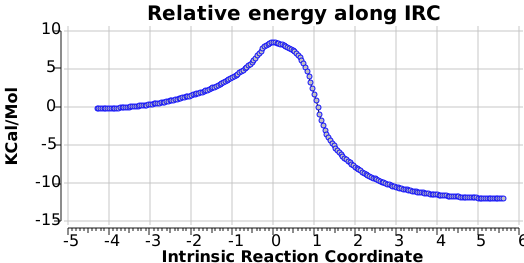
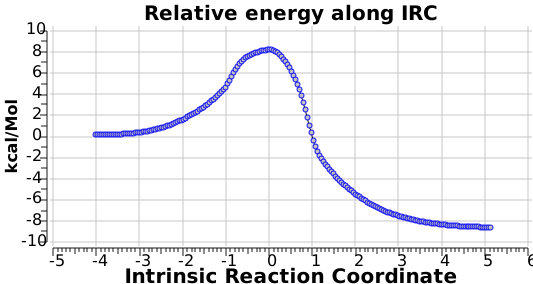
    2. The intrinsic reaction coordinate shows a concerted reaction with quite a small barrier. It is small because the nitrogen is in fact a super-nucleophile, its nucleophilicity has been augmented over that of a simple amine by a so-called α-effect from the adjacent two pairs of lone pairs on the oxygen activating the nitrogen lone pair by lone-pair repulsions. 
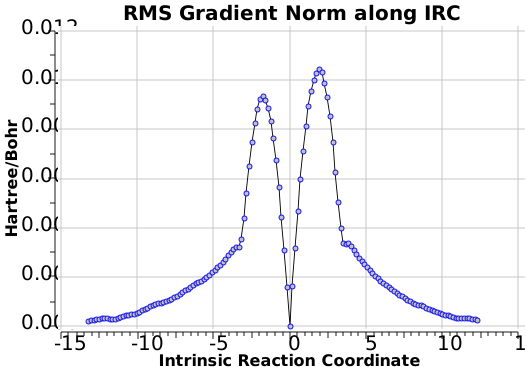
    3. The gradient norm along the coordinate also shows an almost synchronous reaction. The only blip occurs at around IRC +1.3, and this corresponds to the transfer of a proton from NH to a water molecule. An earlier proton transfer from water to the carbonyl oxygen was essentially synchronous with formation of the N-C bond. This synchronicity is what helps avoid any large build up of charge separation. For this reason, I cannot help but feel that the text books could absorb this lesson and show a cyclic concerted reaction mechanism as a probable alternative to two stepwise processes.
  3. Next, O-attack. The IRC for this isomeric mode shows a significantly higher barrier compared to N (the computed relative free energies show the O to be higher by 8.3 kcal/mol than the N) and smaller exothermicity. It reveals even greater synchrony of the two proton transfers with the O-C bond formation. So we have a reality check of the text-books on this point in the form of an energy difference, which is always useful.

    O-attack. Click for animation of reaction mode.

  4. Now that our proton transfers are involved in the mechanism, it is time to take a closer look at the geometry of these transfers. On this point, the text books tell us that the most favourable geometry for a proton transfer is having the proton co-linear with the two oxygens. Whilst this is largely true for the geometries shown above, the resulting 6-membered ring as a result adopts a triangular shape, which is not ideal for the bond angles. This could be solved by incorporating a second water molecule, to give us model shown above.
    1. A second water molecule can be placed in two alternative positions. The first simply solvates the 6-ring transition state. The second actively participates via an enlarged 8-membered ring transition state. It turns out that the latter is lower by 4.5 kcal/mol in free energy, largely due to the far better bond angles and the almost exactly linear proton transfers now possible.

      O-Transition state with two water molecules, one merely hydrogen bonding to the 6-ring (magenta arrow).

      O-Transition state with two water molecules, both part of a cyclic transition state.

    2. So the following is our best model. It is 10.4 kcal/mol lower in free energy than the isomeric O-attack transition state. The timing of the bonds shows that N-C formation coincides with the first proton transfer to the carbonyl oxygen, followed by an O to O proton transfer and finally N to O. The dipole moment at the transition state is 5.9D, revealing little explicit charge separation.

      N-attack via an 8-ring transition state. Click to view animation of reaction mode.

It is worth concluding this exploration by reiterating that the models above are not complete. A bulk solvent would allow (statistical) participation of more than just two solvent molecules, and the dynamics of such a (very complex) process has yet to be explored. But I hope what you see here is a bit closer to “reality” than many a text-book author has when they illustrate their books.


doi:10042/a3uxl

The ten-electron homologue of semibullvalene.

Friday, September 21st, 2012

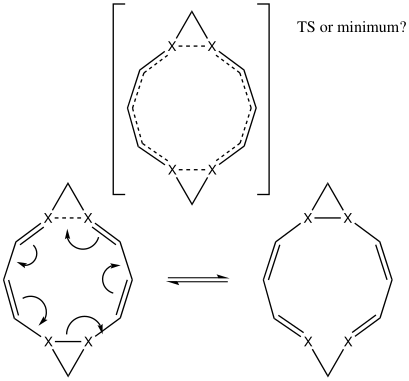
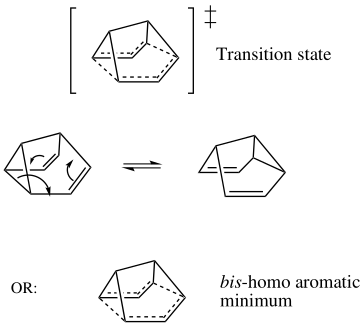
Semibullvalene is a molecule which undergoes a facile [3,3] sigmatropic shift. So facile that it appears this equilibrium can be frozen out at the transition state if suitable substituents are used. This is a six-electron process, which leads to one of those homologous questions; what happens with ten electrons?

A 5,5 double Möbius sigmatropic rearrangement. Click for 3D model.

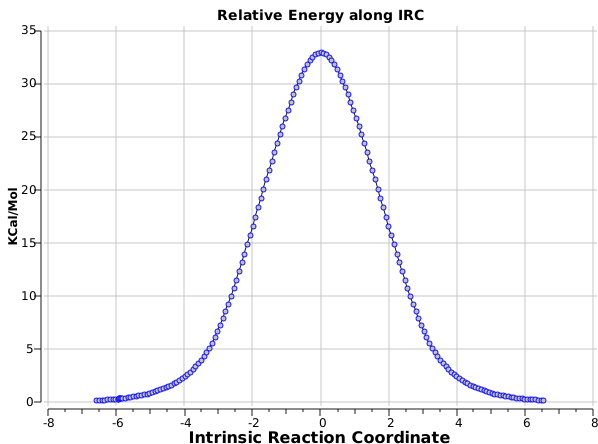
The carbocyclic version (X=CH) is a true [5,5] sigmatropic, ten electron reaction. This one has a twist however. Two in fact; I have shown it as a double-Möbius version, with two antarafacial components! Inspect the model to verify this for yourself. Such systems also have the potential to be aromatic. As you can see from the IRC pathway shown below, the activation barrier is quite high (but not unfeasible so for a thermally activated reaction). To freeze it out (i.e. to remove the barrier entirely) we have some work to do. 

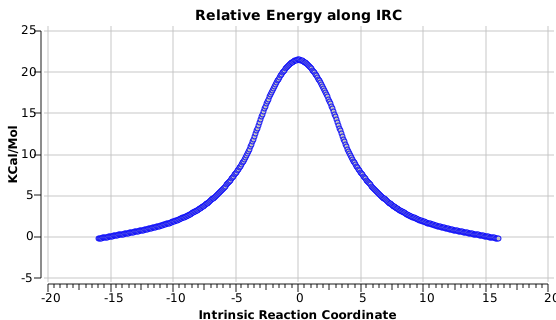
Well, I used the same trick as previously; turning to the tetra-aza derivative (X=N) and for good measure adding two additional cyano groups. As you can see below, this did reduce the barrier, but it’s still a long way from becoming zero. Still, [5,5] sigmatropic shifts are not exactly thick on the ground, and double-Möbius versions rarer still! The substituted one should have a low enough barrier to observe fluxional NMR behaviour at around room temperatures. If no other process takes over of course!

A substituted [5,5] sigmatropic rearrangement. Click for 3D model.

It is also worth noting that ten-electron aromatic systems are not so stable as six-electron ones (as Clar observed), and so suppressing any six-electron pericyclic reactions becomes the challenge.

The direct approach is not always the best: butadiene plus dichlorocarbene

Wednesday, September 19th, 2012

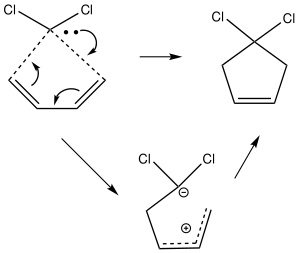
The four-electron thermal cycloaddition (in reverse a cheletropic elimination) of dichlorocarbene to ethene is a classic example of a forbidden pericyclic process taking a roundabout route to avoid directly violating the Woodward-Hoffmann rules. However, a thermal six-electron process normally does take the direct route, as in for example the Diels-Alder cycloaddition as Houk and co have recently showed using molecular dynamics[1]. So can one contrive a six-electron cycloaddition involving dichlorocarbene?

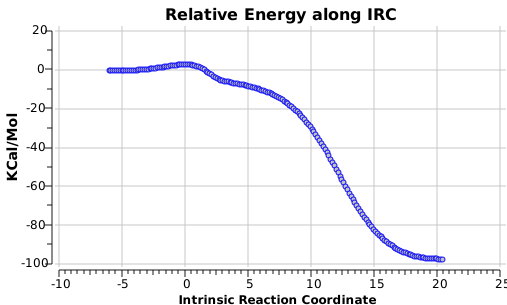
Surely, it should now form the two new C-C bonds at the same time (synchronously)? Well, here comes a ωB97XD/6-311G(d,p)/SCRF=dichloromethane intrinsic reaction coordinate calculation:

Butadiene + dichlorocarbene.

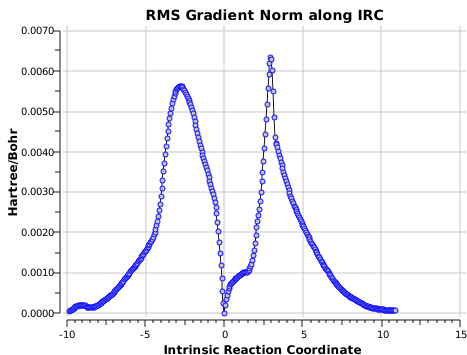
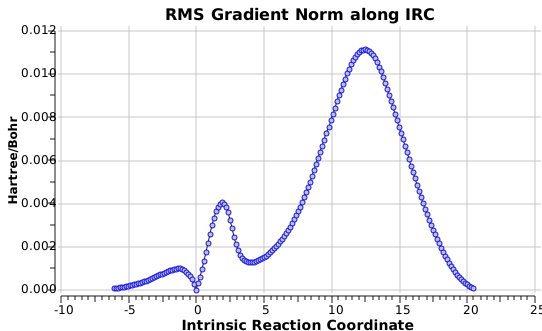
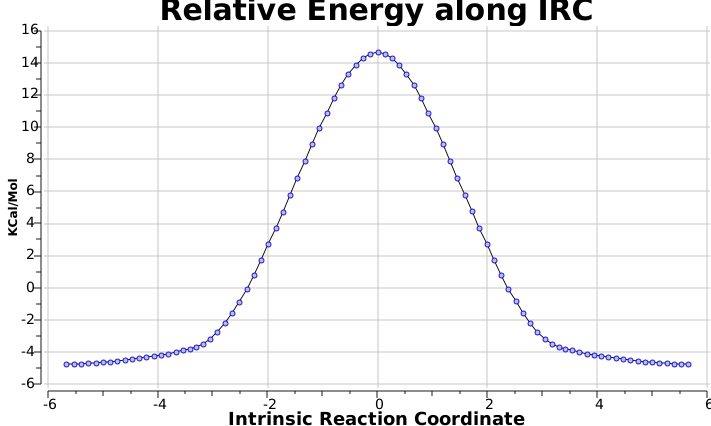
  1. The reaction starts at IRC -5, 
  2. and proceeds with only a small barrier to the transition state (IRC =0.0) 
  3. At IRC +4, the potential flattens out and the gradients drop, with formation of the first C-C bond completed. But the gradients do not quite go to zero, which would have implied the formation of a discrete intermediate such as:
  4. The concerted reaction continues and by IRC ~ +11, the two chlorine atoms now exhibit quite different C-Cl lengths. The one that is orthogonal to the second forming C-C bond is normal (1.815Å), whereas the one antiperiplanar to the C-C bond is 1.92Å. There are some interesting stereoelectronic alignments involved.
  5. Coincidentally perhaps, but these phenomena of an intermediate almost forming in a system containing a CCl2 group with concomitant lengthening of one C-Cl bond compared to the other, was also observed in my IRC for the addition of thiolate to a dichlorobuteneone. For that system,  Dan Singleton’s work had shown that molecular dynamics is necessary to obtain a more complete picture, and that may well be also true for the example here!  Perhaps Ken Houk might give it a go!
  6. The second C-C bond then completes at around IRC +16.

Well, this shows that a reaction only modestly removed from the classical six-electron Diels-Alder can change character dramatically from the synchrony expected of the latter. I am hunting for a simple explanation of this phenomenon, but perhaps participation of the C-Cl bonds makes this different from a simple cycloaddition. Or possibly, the explanation will only properly emerge when the molecular dynamics is studied?

References

  1. K. Black, P. Liu, L. Xu, C. Doubleday, and K.N. Houk, "Dynamics, transition states, and timing of bond formation in Diels–Alder reactions", Proceedings of the National Academy of Sciences, vol. 109, pp. 12860-12865, 2012. https://doi.org/10.1073/pnas.1209316109

Frozen Semibullvalene: a holy grail (and a bis-homoaromatic molecule).

Saturday, September 15th, 2012

Semibullvalene is an unsettling molecule. Whilst it has a classical structure describable by a combination of Lewis-style two electron and four electron bonds, its NMR behaviour reveals it to be highly fluxional. This means that even at low temperatures, the position of these two-electron bonds rapidly shifts in the equilibrium shown below. Nevertheless, this dynamic behaviour can be frozen out at sufficiently low temperatures. But the barrier was sufficiently low that a challenge was set; could one achieve a system in which the barrier was removed entirely, to freeze out the coordinates of the molecule into a structure where the transition state (shown at the top) became instead a true minimum (bottom)? A similar challenge had been set for freezing out the transition state for the Sn2 reaction into a minimum, the topic also of a more recent post here. Here I explore how close we might be to achieving inversion of the semibullvalene [3,3] sigmatropic potential.

Why might such a frozen transition state be interesting? Well, all transition states for allowed thermal pericyclic reactions can be described as aromatic. If one were able to transmogrify such a transition state into a minimum, then it too would be expected to be aromatic, but a most unusual type of aromatic. The C-C bonds which represent the breaking and forming bonds in a [3,3] sigmatropic rearrangement would in effect be two-centre 1-electron bonds, and those electrons would be part of the aromatic sextet. Such bonds are normally referred to as homoaromatic, examples of which are pretty rare. In my previous post, I had noted a crystal structure[1] that apparently sustains two equal C-C bonds of length 1.99Å. However, a calculation at this geometry reveals it in fact to be a transition state (above, top), with an imaginary mode of 275i cm-1. So the challenge (computationally at least) is to find a system where this imaginary mode is changed to become real rather than imaginary.

CAZFUE. Click for animation of imaginary transition state mode.

My effort to achieve this involved augmenting CAZFUE with a further two cyano groups. This did indeed reduce the imaginary mode to 74i cm-1; we are getting close! 

Tetracyano derivative of CAZFUE. Click for animation.

The next step was to read a recent article[2] in which replacing the key C-C bond with a C-N bond was observed to reduce the barrier for the rearrangement to ~ 4 kcal/mol. So I immediately computed the tetra-azo system, in which the two key C-C bonds are now replaced by N-N bonds in order to extend this effect.

Tetra-azo semibullvalene. Click for animation of key frozen mode.

It was gratifying to observe that the [3,3] sigmatropic vibration, imaginary (i.e. corresponding to a transition state) in the previous examples, became +ve (+238 cm-1) in this system. The two N-N bonds are however not completely symmetric (2.06 and 2.17Å), but they are in effect essentially frozen at the half-way stage of the equilibrium.

The final step in this path is to combine the two effects above, by exploring the di-cyano-diaza derivative.

Di-cyano, diazo derivative. Click for 3D.

This now has C2 (chiral) exact two-fold symmetry, with C-N distances of 2.139Å. The [3,3] sigmatropic vibrational mode is again real, with a value of 255 cm-1. A real candidate for synthesis perhaps?

Finally, is it aromatic? The wavefunction for this system is stable (which means no triplet state lower in energy can be found), so it stands a good chance of being so. I will report back on this aspect in a later post.


Postscript: The above calculation for the last system was done at the B3LYP/6-311G(d,p)/SCRF=thf level. A similar result is obtained at e.g. a  MP2/6-311G(d,p)/SCRF=thf level; the  [3,3] vibrational mode has the real value of 318 cm-1.

References

  1. L.M. Jackman, A. Benesi, A. Mayer, H. Quast, E.M. Peters, K. Peters, and H.G. Von Schnering, "The Cope rearrangement of 1,5-dimethylsemibullvalene-2,6- and 3,7-dicarbonitriles in the solid state", Journal of the American Chemical Society, vol. 111, pp. 1512-1513, 1989. https://doi.org/10.1021/ja00186a064
  2. S. Zhang, J. Wei, M. Zhan, Q. Luo, C. Wang, W. Zhang, and Z. Xi, "2,6-Diazasemibullvalenes: Synthesis, Structural Characterization, Reaction Chemistry, and Theoretical Analysis", Journal of the American Chemical Society, vol. 134, pp. 11964-11967, 2012. https://doi.org/10.1021/ja305581f

The Sn2 reaction: followed up.

Wednesday, September 12th, 2012

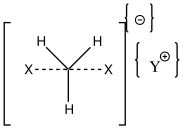
An obvious issue to follow-up my last post on the (solvated) intrinisic reaction coordinate for the Sn2 reaction is how variation of the halogen (X) impacts upon the nature of the potential.

X=F X=Cl
X=Br X=I
X=F X=Cl
X=Br X=I

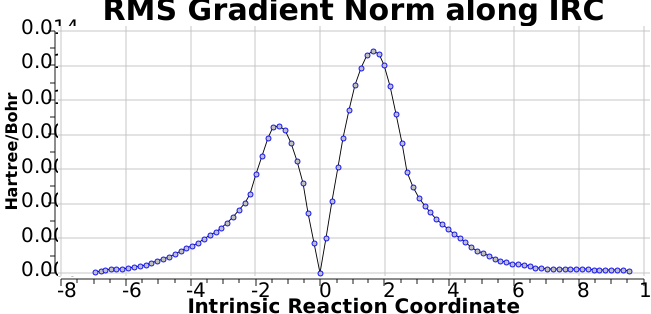
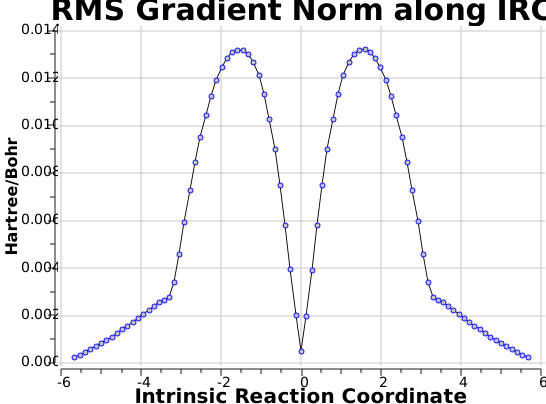
The change in slope of the gradient norm along the IRC is hardly noticeable for Y=Na, X=F, but increases up to X=I. The distance between the two halogens varies as 3.74, 4.68, 4.98, 5.40Å at the point where the gradients change character (all at the ωB97XD/6-311+G(d,p)/SCRF=methanol level). This nicely reinforces the explanation given before, that the dimensions of the box defined by the two halogens is too large for the small central CH3 to fit in snugly for X=Cl,Br and I, but is not an issue with the very much smaller box with X=F. One more variation; replacing CH3 with the slightly smaller NH3(+) results in the box contracting to 4.74Å (X=Br) and again the very characteristic behaviour.

I should end with a quick comment on the form of the potential energy surfaces. That for the last example above is typical and looks like as below. But this shape is not what many textbooks show. These indicate that as the halide (anion) approaches the (neutral) molecule, an initial ion-dipole complex is form as a minimum, before surmounting the barrier and forming a similar complex the other side. The diagram below (and all the others) show no sign of these minima. This is because all the systems are computed as neutral ion-pairs and a solvation correction has been applied to the potential. Under these conditions, the classical form of the potential found in text books does not pertain.


Digital repository entries
system Dspace Chempound Figshare
NH3(+), X=Br 10042/20313 a25daa67-d409-4d38-8d35-8a009f449bc9 10.6084/m9.figshare.95816
CH3, X=F 10042/20314 dfccf382-8c60-459c-8da0-c6efdd2b0931 10.6084/m9.figshare.95817
CH3, X=Cl 10042/20315 d5ab33c2a-9e92-49a0-b488-f0559bbc2061 10.6084/m9.figshare.95818
CH3, X=Br 10042/20316 5b1995f1-fef0-451b-a467-80a592081119
CH3, X=I 10042/20317 d9149e4e-466e-4358-9de5-67a47950eff1 10.6084/m9.figshare.95819

The Sn2 reaction and the anomaly of carbon.

Thursday, September 6th, 2012

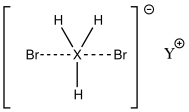
It was three years ago that I first blogged on the topic of the Sn2 reaction. Matthias Bickelhaupt had suggested that the Sn2 reaction involving displacement at a carbon atom was an anomaly; the true behaviour was in fact exhibited by the next element down in the series, silicon. The pentacoordinate species shown below (X=Si) is naturally a minimum, and the fact that for carbon (X=C) one gets instead a transition state resulting in a significant thermal barrier (~ 20 kcal/mol) was a manifestation of abnormal behaviour.

The argument was that carbon as an atom was too small to fit snugly into a box of width ~5Å defined by the positions of two e.g. bromine atoms at more or less their closest possible approach, and instead rattled around between the two halogens, needing to surmount a barrier at the midpoint of the box. Silicon on the other hand being larger, fitted nicely into this box at the centre, and thus being unable to rattle around represented instead a minimum in the potential energy surface. I note (parenthetically) that a similar reason is often used to explain why hydrogen bonds to F are both rare and weak, whereas those to O are common and strong.

As part of a project to create a library of reaction mechanism animations, I calculated the IRC for the reaction above (X=C). This one is slightly different from those one may find in the research literature and textbooks; the counter-ion (Y=Na+) is also included so as to create a neutral system overall. The method is the usual ωB97XD/6-311+G(d,p)/SCRF=water.

If you watch carefully, you will see that at the early and late stages of the reaction, the bromine moves, but during the middle part of the reaction both bromine atoms are absolutely stationary and it is the carbon now that adopts the motion, rattling between the two bromine atoms. This aspect can also be seen very clearly in the two plots below:

Note in particular how the gradient norm plot changes in character at IRC ± 3; the central region represents motion of carbon inside the “box”, the region outside of the box that of the bromine. I think its fascinating how such an apparently simple reaction can carry such insight into molecular behaviour.

Dynamic effects in nucleophilic substitution at trigonal carbon (with Na+) revisited.

Monday, August 13th, 2012

This reaction looks simple but is deceptively complex. To recapitulate: tolyl thiolate (X=Na) reacts with the dichlorobutenone to give two substitution products in a 81:19 ratio, a result that Singleton and Bogle argue arises from a statistical distribution of dynamic trajectories bifurcating out of a single transition state favouring 2 over 3. On the grounds (presumably) that the presence of both the cation X (=Na+) and H-bonded solvent (ethanol) are uninfluential, neither species was explicitly included in the transition state model used to derive the dynamics. I speculated whether in fact the spatial distribution of counterions and solvent (set up by explicit hydrogen bonds and O…Na+ interactions) might in fact be perturbed from un-influential randomness by co-ordination to the carbonyl group present in the system. I also raised the issue of what the origin of the electronic effects leading to the major product might be. 
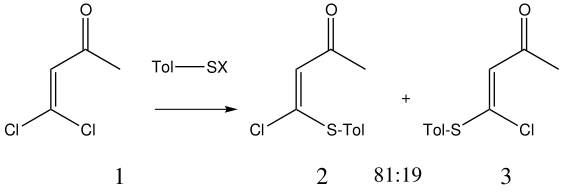
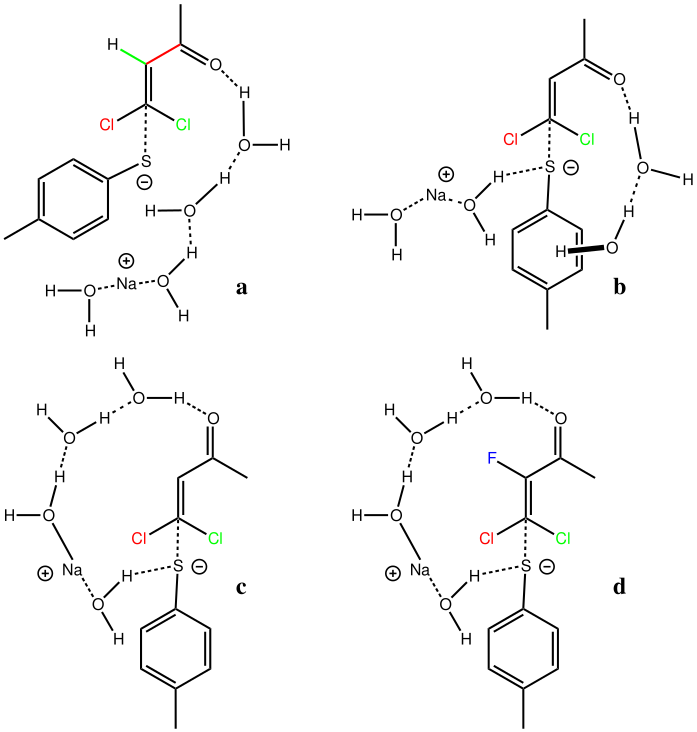
In this post I try to delve deeper into both these issues. In the earlier model, I focused on possible coordination models around that carbonyl, using two Na+ cations (on the premise that such coordination has precedent in crystal structures). This model did (correctly) predict this major product, and we are now discussing what the origins of the minor product may be (it is a measure of how far computational modelling has come that we are nowadays increasingly concerned with these minor outcomes). Here I move to a more stochiometric model using just one Na+ assisted with four solvent molecules (modelled here with just water). This results in an overall charge of zero on the whole system, which avoids having to create what could be regarded as artificially charged models resulting from omission of the counterion. Three possible arrangements of these additional units are shown below, selected for the following reasons:

  • (a) was set up to explore whether the orientation of the tolyl thiolate ring might be determined by either π-facial hydrogen bonds to the solvent, or a π-facial interaction with the Na+
  • (b) was set up to explore if moving the Na+ closer to the thiolate would influence which of the two chlorines (red or green) would be eventually ejected.
  • (c) was set up to explore whether the orientation of the carbonyl group might be influencing the outcome, based on differing stereoelectronic interactions between the two C-Cl bonds and either the C-C(C=O) unit or the alternative C-H bond.
  • (d) whether replacing the C-H bond in (c) with a C-F bond results in a different interaction with the two C-Cl bonds.
We might ask why stop at just these four? Surely one should sample all reasonable explicit models that might have a significant Boltzmann population in the real reaction? That is certainly desirable (but a much larger computational project); here I am just using these models for the purpose of understanding a little better what might be going on.

Model (a)

This is optimised using the same level as before (B3LYP/6-31+G(d,p)/SCRF=ethanol) and reveals that the Na+ cation ends up with coordination just from solvent, and not from the aryl face. The chlorine labeled green in the diagram above ends up being evicted, and its trajectory then leads it (slowly) towards the Na+ cation in a reaction that is fully concerted (no enolate anion intermediates along the route).

The IRC for this model has the following intriguing features:
  1. At an IRC = 0.0 (the transition state), the lengths of the C-Cl bond for the atom labelled red is 1.84Å and green is 1.817Å. This situation persists until around IRC = -1 (1.926Å and 1.915Å). In other words, the longer of the two C-Cl bonds is NOT the one that is about to be ejected. But here is the even odder thing. The Wiberg bond order index of these two C-Cl bonds is respectively 0.932 and 0.916 at this stage. Here we see the longer bond having also the larger bond order, and so the bond order (but not the bond length) turns out to be the more reliable indicator of which bond is about to break totally. The NBO E(2) term shows that the C-Cl(green) bond has a significant interaction with the antiperiplanar C-H bond (also shown in green) of 4.9 kcal/mol, compared with the C-C (red) σ-bond which has a lower E(2) term for interaction with the antiperiplanar C-Cl(red) bond of 2.1. [Added in proof: Donation from the C-Cl bonds into the C-S σ* bond is also greater for C-Cl(green, 81 kcal/mol) than C-Cl(red, 25 kcal/mol)]**. These effects all conspire to weaken the C-Cl(green) bond more than the C-Cl(red) alternative.
  2. Only at IRC -1.5 (well past the transition state) do the two C-Cl bond lengths become equal (~1.95Å). So initially at least, BOTH C-Cl bonds start to cleave, but then stereoelectronic effects take over and a discrimination in favour of the green C-Cl bond wins out over the red. 
  3. By IRC -4, the C-Cl(red) bond has reversed its elongation, and has contracted back down to 1.86Å, whilst the C-Cl(green) has continued to extend to 2.76Å.
  4. By IRC  -8, the formation of  NaCl is complete.
  5. Thus we can say that the major product of this reaction results from stereoelectronic control discriminating between the two chlorine atoms.
  6. We might also observe that because post-transition state the two C-Cl bonds continue to elongate (before one bond continues on its way and the other backtracks), the dynamics of what goes on (via coupling with rotational and other vibrational modes) could easily account for the (minor) outcome, as indeed Singleton and Bogle argued.
Model (b)

The next task is to see how stable the above effects are to the disposition of the Na+ and solvent molecules. Model (b) shows the same behaviour; the chlorine atom is evicted via stereoelectronic control, rather than simply heading off towards the Na+ atom (i.e. electrostatic control).

Model (c) also demonstrates how the stereoelectronic alignments dominate over stabilisation of the forming chloride anion. This time, the chloride is evicted into a region not occupied by either solvent molecules or the Na+ ion, the charge being stabilised only by the continuum solvent field.

Model (c) was also subjected to a robustness test of the actual wavefunction. The original method was based on B3LYP/6-31+G(d,p)/SCRF=ethanol. Accordingly, (c) was re-computed using ωB97XD/6-311+G(d,p)/SCRF=ethanol. The DFT functional is a more modern one that includes the effects of dispersion attractions, and the basis set is of triple rather than double-ζ quality. The essential features are unchanged.

Model (d) tests whether perturbing the electronic environment has more effect than changing the explicit surroundings.

  1. It turns out that this is even more complex stereoelectronically. Observe how the bond to the (cyan coloured) fluorine atom elongates before shortening again as the anti-periplanar C-Cl bond breaks. The length starts off as 1.41, lengthens to 1.45 (at IRC +2.6) before ending up as 1.414Å, again the result of stereoelectronic effects. 
  2. A second noteworthy feature is that at IRC +2.6, the gradients (almost but not quite) drop to zero. At this stage, both C-Cl bonds AND the C-F bond are approximately at their maximum length, and this almost constitutes a discrete intermediate along the pathway.
  3. The feature in the gradients at IRC +5 represents the eviction of the chloride.
I will conclude by summarising the above. The formation of the dominant product 2 seems to be the result of stereoelectronic control at the transition state. This outcome seems to be pretty robust to the transition state model constructed, namely whether one (or two) Na+ counter-ions are included in the model, and indeed their position, as well as the inclusion of up to four explicit solvent molecules. This robustness even extends to an electronic perturbation resulting from replacing a C-H bond by a C-F bond. Thus constructing a selection of physically realistic models with neutral charge and solvent has not resulted in locating an explicit transition state which (in terms of its free energy) might account for the formation of the minor product 3.

Another test which might be envisaged would be to take e.g. model (a) and subject it to molecular dynamics to show that the outcome, in which ~20% of the trajectories lead to 3, is itself robust towards addition of counter-ion and solvent to the original model.


These values do seem to be very basis set dependent. Thus using B3LYP/6-311+G(d,p), the σC-Cl(green) to σ*C-S value is 58 and σC-Cl(red) to σ*C-S is 18. The trend however occurs across basis sets.

The stereochemical origins of the Wittig reaction.

Tuesday, August 7th, 2012

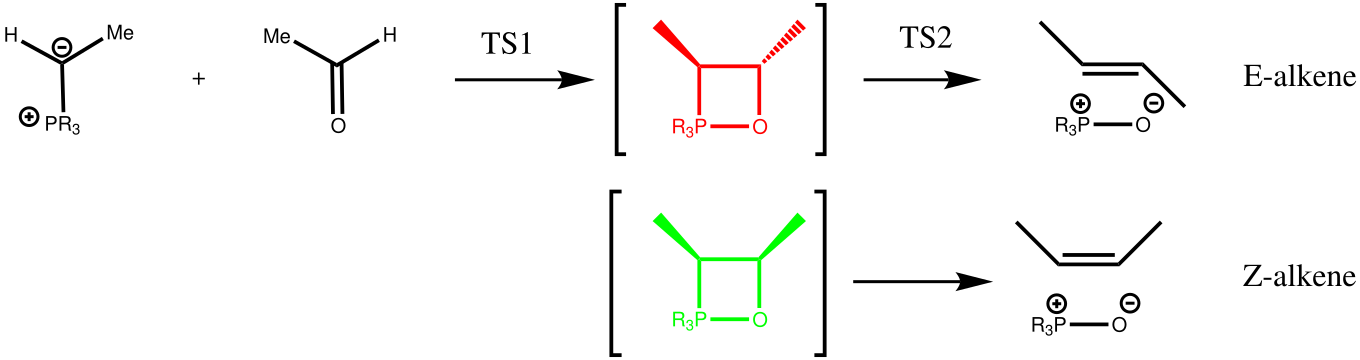
This is another of those textbook reactions, involving reaction of a carbonyl compound with a phosphonium ylid to form an alkene and a phosphine oxide. The reaction continues to be frequently used, in part because it can be highly stereospecific. 

Thus the standard version tends to give Z-alkenes with good specificity, and is thought to proceed via an oxaphosphatane 4-ring intermediate. The reaction and its stereochemistry is sensitive to the reagent (including the nature of the R group), and so one model cannot capture all the aspects of this transform. Here I am starting with the very simple model shown above, where R=H (ωB97XD/6-311G(d,p)/SCRF=tetrahydrofuran). There are four transition states to consider; whether the  rate-determining (stereochemical determining) step is TS1 or TS2, and whether the relative orientation of the two (in this example methyl) groups are syn or anti, resulting in E– or Z– alkenes. The most interesting issue would be whether the mechanism can account for why the apparently more sterically hindered route leading to the Z-alkene is often the actual outcome. 
Leading to E-alkene
TS1 0.0 kcal/mol TS2 -3.9
Leading to Z-alkene
TS1 0.0 kcal/mol TS2 -2.6

Key comments about these results:

  1. TS1 is higher than TS2 in both cases, and so (for these substituents) is rate determining.
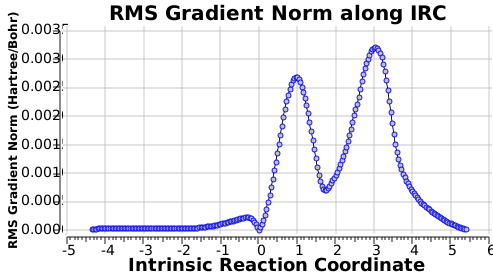
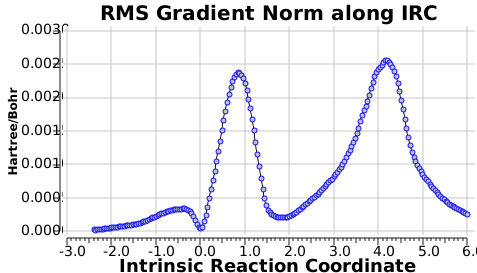
  2. At this transition state, the two methyl groups are moving apart for the E-isomer but together for the Z-isomer. But at the transition states themselves, the steric interaction of these two groups is fairly similar, and the Z-transition state has much better antiperiplanar bond alignments compensating for the methyl clash. To put it in a nutshell, the increased steric clash for formation of the Z-isomer comes only AFTER the transition state is passed.
    E-alkene forming Z-alkene forming
  3. The gradients of the IRC profile for this step of the Wittig reveal that much of the action occurs after the transition state is passed, at IRC=3 for the E and IRC=4 for Z, this comprising rotation around the first formed C-C bond in order to create the P-O bond. This is where the steric clash of methyls for the Z-isomer really kicks in, but it has no impact upon the energy of the transition state, coming too late for that.
    E-alkene forming Z-alkene forming
  4. The model we have built is sterically incomplete; we have used PH3 rather than eg PPh3 (done so as to allow an IRC to be computed in a reasonable time). If we look at the models above (click on the images to get a 3D model), then it is clear that the E-transition state will suffer the greater steric clash of a methyl with one of the phenyl groups on the phosphorus than the Z-isomer will. This probably accounts for why this latter isomer is the normal stereochemical outcome.

Much more could be done here, but even a fairly simple model of the Wittig reaction can bring a lot of insight into its unique characteristics.

The Curtius rearrangement. One step or two?

Monday, August 6th, 2012

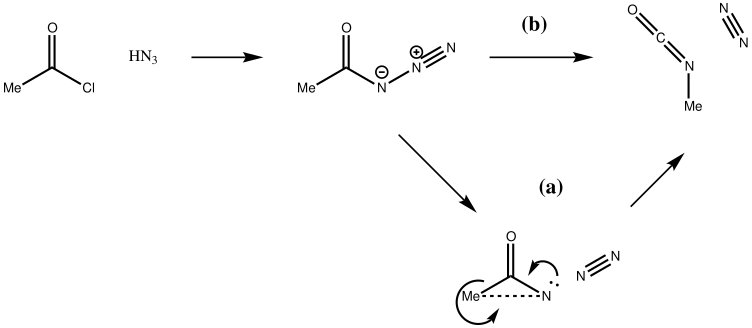
The Curtius reaction is represented in most chemistry texts and notes as following path (a) below. It is one of a general class of thermally induced rearrangement which might be described as elimination/migration (in a sense similar to this ring contraction migration/elimination), in this case implicating a nitrene intermediate if the two steps occur consecutively. Wikipedia is normally very much on the ball with this sort of thing, and a comment about the reaction mechanism there notes that current evidence prefers route (b), avoiding nitrene intermediacy (and hence formally removing this from examples of nitrene reactions).

So time for a reality check (which in this case takes the form of a ωB97XD/6-311G(d,p)/SCRF=dichloromethane calculation). 

This is pretty clear-cut; no nitrene intermediate. Now for the standard text-books to catch up!