Posts Tagged ‘energy’

Woodward’s symmetry considerations applied to electrocyclic reactions.

Monday, May 20th, 2013

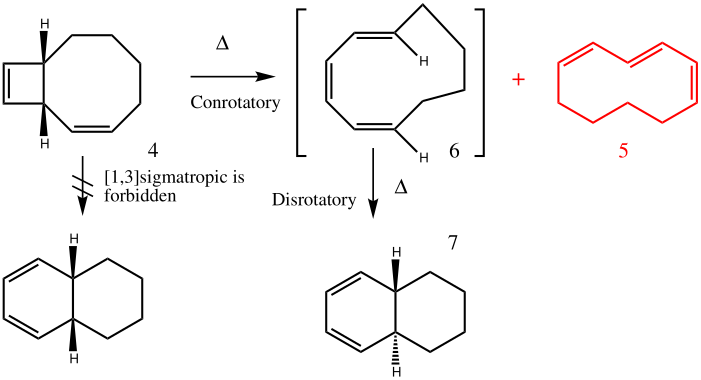
Sometimes the originators of seminal theories in chemistry write a personal and anecdotal account of their work. Niels Bohr[1] was one such and four decades later Robert Woodward wrote “The conservation of orbital symmetry” (Chem. Soc. Special Publications (Aromaticity), 1967, 21, 217-249; it is not online and so no doi can be given). Much interesting chemistry is described there, but (like Bohr in his article), Woodward lists no citations at the end, merely giving attributions by name. Thus the following chemistry (p 236 of this article) is attributed to a Professor Fonken, and goes as follows (excluding the structure in red):
wood

A search of the literature reveals only one published article describing this reaction[2] by Dauben and Haubrich, published some 21 years after Woodward’s description (we might surmise that Gerhard Fonken never published his own results). In fact this more recent study was primarily concerned with 193-nm photochemical transforms (they conclude that “the Woodward-Hoffmann rules of orbital symmetry are not followed”) but you also find that the thermal outcome of heating 4 is a 3:2 mixture of compounds 5 and 6, and that only 6 goes on to give the final product 7. It does look like a classic and uncomplicated example of Woodward-Hoffmann rules.

 So let us subject this system to the “reality check”. The transform of 4 → 5 rotates the two termini of the cleaving bond in a direction that produces the stereoisomer 5, with a trans alkene straddled by two cis-alkenes[3]. The two carbon atoms that define the termini of the newly formed hexatriene are ~ 4.7Å apart; too far to be able to close to form 7.

 4 → 5  4 → 6
8 8

But with any electrocyclic reaction, two directions of rotation are always possible, and it is a rotation in the other direction that gives 4 → 6[4], ending up with a hexatriene with the trans-alkene at one end and not the middle (for which the free energy of activation is 3.1 kcal/mol higher in energy). Now the two termini of the hexatriene end up ~3.0Å apart, much more amenable to forming a bond between them to form 7.

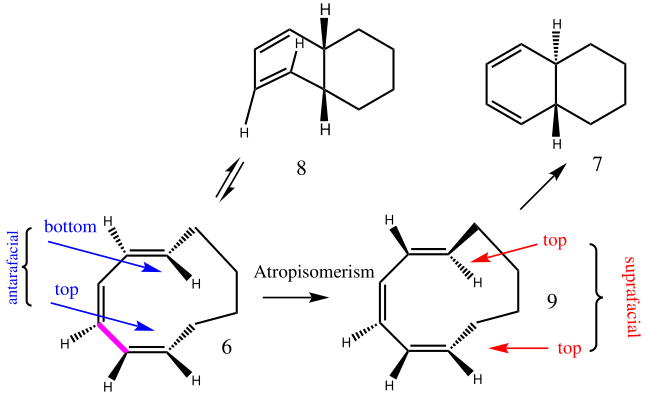
It is at this point that the apparently uncomplicated nature of this example starts to unravel. If one starts from the 3.0Å end-point of the above reaction coordinate and systematically contracts the bond between these two termini, a transition state is found leading not to 7 but to the (endothermic) isomer 8.[5]This form has a six-membered ring with a trans-alkene motif (which explains why it is so endothermic). 
wood1
6 ↠ 8
8 wood2

Before discussing the implications of this transition state, I illustrate another isomerism that 6 can undertake; a low-barrier atropisomerism[6] to form 9, followed by another reaction with a relatively low barrier, 9 ↠  7[7]to give the product that Woodward gives in his essay.

6 ↠ 9
6-atrop 6-atrop
9 ↠ 7
9to7a 9to7a

 We can now analyse the two transformations 6 ↠ 8 and 9 ↠  7. The first involves antarafacial bond formation (blue arrows) at the termini and an accompanying 180° twisting about the magenta bond which creates a second antarafacial component[8]. So this is a thermally allowed six-electron (4n+2) electrocyclisation with a double-Möbius twist[9]. The second reaction is a more conventional purely suprafacial version[10] (red arrows) of the type Woodward was certainly thinking of; it is 18.0 kcal/mol lower in free energy than the first (the transition state for 6 ↠ 9 is 10.8 kcal/mol lower than that for 9 ↠ 7).

I hope that this detailed exploration of what seems like a pretty simple example at first sight shows how applying a “reality-check” of computational quantum mechanics can cast (some unexpected?) new light on an old problem. We may of course speculate on how to inhibit the pathway 6 ↠ 9 ↠ 7 to allow only 6 ↠ 8 to proceed (the reverse barrier from 8 is quite low, so 8 would have to be trapped at very low temperatures). 

References

  1. N. Bohr, "Der Bau der Atome und die physikalischen und chemischen Eigenschaften der Elemente", Zeitschrift f�r Physik, vol. 9, pp. 1-67, 1922. https://doi.org/10.1007/bf01326955
  2. W.G. Dauben, and J.E. Haubrich, "The 193-nm photochemistry of some fused-ring cyclobutenes. Absence of orbital symmetry control", The Journal of Organic Chemistry, vol. 53, pp. 600-606, 1988. https://doi.org/10.1021/jo00238a023
  3. H.S. Rzepa, "Gaussian Job Archive for C10H14", 2013. https://doi.org/10.6084/m9.figshare.704833
  4. H.S. Rzepa, "Gaussian Job Archive for C10H14", 2013. https://doi.org/10.6084/m9.figshare.704834
  5. H.S. Rzepa, "Gaussian Job Archive for C10H14", 2013. https://doi.org/10.6084/m9.figshare.704755
  6. H.S. Rzepa, "Gaussian Job Archive for C10H14", 2013. https://doi.org/10.6084/m9.figshare.704754
  7. H.S. Rzepa, "Gaussian Job Archive for C10H14", 2013. https://doi.org/10.6084/m9.figshare.704844
  8. H.S. Rzepa, "Gaussian Job Archive for C10H14", 2013. https://doi.org/10.6084/m9.figshare.704841
  9. H.S. Rzepa, "Double-twist Möbius aromaticity in a 4n+ 2 electron electrocyclic reaction", Chemical Communications, pp. 5220, 2005. https://doi.org/10.1039/b510508k
  10. H.S. Rzepa, "Gaussian Job Archive for C10H14", 2013. https://doi.org/10.6084/m9.figshare.704995
Au and Pt π-complexes of cyclobutadiene.

Wednesday, May 15th, 2013

In the preceding post, I introduced Dewar’s π-complex theory for alkene-metal compounds, outlining the molecular orbital analysis he presented, in which the filled π-MO of the alkene donates into a Ag+ empty metal orbital and back-donation occurs from a filled metal orbital into the alkene π* MO. Here I play a little “what if” game with this scenario to see what one can learn from doing so.

Au+cbd

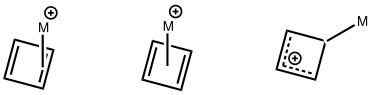
Firstly, I will use Au+ instead of Ag+, so as to make a comparison with Pt2+ a little more direct. The electronic configurations are of course [Xe].4f14.5d10.6s0 and [Xe].4f14.5d8.6s0 respectively. I will also replace a simple ethene with cyclobutadiene, the intent here being that this cyclo-diene is a very much better π-donor due to its anti-aromatic character. It also now has the possibility of acting as a four or a two-electron donor. I started with M=Pt+[1] by adding another double bond to the structure of the ethene complex. 

Pt-cbd

Optimising this starting structure in fact moves the metal and the final geometry has C4v symmetry; in other words the metal is bound symmetrically to all four carbons. The four C-C lengths are all the same (1.46Å) and strongly suggest that four electrons from the cyclobutadiene are participating in bonding; the Pt2+ is clearly capable of accepting four electrons, two into 6sand two into 5d8. In the process, the cyclobutadiene looses its antiaromaticity. The molecular orbitals of this species are all lovely; I illustrate just one below.

Click for  3D.

Click for 3D.

If the Pt in this C4v structure is mutated into Au+, the resulting optimised stationary point exhibits a negative force constant characteristic of a transition state[2]. As the d-shell is already fully, the Au can only accept two electrons, and this is therefore a nice illustration of the “18-electron” rule in operation. So, the Au+ complex must exist in at least one lower energy form. For example, one where the Au+ is coordinated to only one alkene is 94 kcal/mol lower in free energy.[3] This form results in electrons from the coordinated alkene being donated into the 6s Au orbital, and this action reduces the anti-aromaticity of the cyclobutadiene ring.

Au-cs

Another isomer also achieves this result, resulting in a further lowering in free energy of 11.0 kcal/mol[4] The anti-aromaticity this time is eliminated by forming an allyl cation on the ring. I have described this mode in another post, commenting on the effect when a guanidinium cation interacts with cyclobutadiene.Au-cs1

We have learnt that cyclobutadiene has many modes for eliminating 4n-electron antiaromaticity and other destabilising influences upon the ring. It can accept four electrons from a suitable acceptor (Pt2+), or two electrons from Au+ in two different ways.

References

  1. H.S. Rzepa, "Gaussian Job Archive for C4H4Pt(2+)", 2013. https://doi.org/10.6084/m9.figshare.703546
  2. H.S. Rzepa, "Gaussian Job Archive for C4H4Au(1+)", 2013. https://doi.org/10.6084/m9.figshare.703547
  3. H.S. Rzepa, "Gaussian Job Archive for C4H4Au(1+)", 2013. https://doi.org/10.6084/m9.figshare.703576
  4. H.S. Rzepa, "Gaussian Job Archive for C4H4Au(1+)", 2013. https://doi.org/10.6084/m9.figshare.703577

Why diphenyl peroxide does not exist.

Monday, April 29th, 2013

A few posts back, I explored the “benzidine rearrangement” of diphenyl hydrazine. This reaction requires diprotonation to proceed readily, but we then discovered that replacing one NH by an O as in N,O-diphenyl hydroxylamine required only monoprotonation to undergo an equivalent facile rearrangement. So replacing both NHs by O to form diphenyl peroxide (Ph-O-O-Ph) completes this homologous series. I had speculated that PhNHOPh might exist if all traces of catalytic acid were removed, but could the same be done to PhOOPh? Not if it continues the trend and requires no prior protonation at all!

PhOOPh

Here is the results of a ωB97XD/6-311G(d,p)/SCRF=water calculation. Now I should explain that the conventional explanation for the non-existence of PhOOPh is that the O-O bond homolyses very readily to form phenoxy radicals[1]. But of course other peroxides such as t-Bu-O-O-t-Bu do exist (although they are rather fragile) and so the phenyl analogue is clearly special.

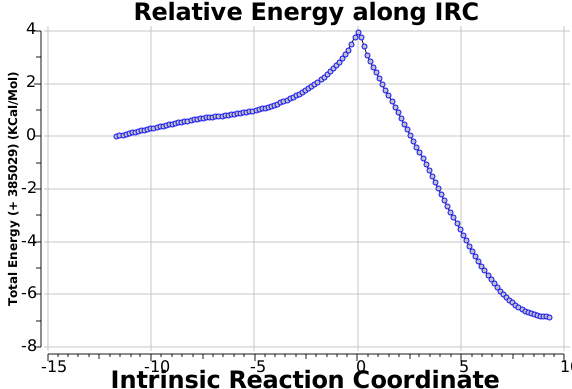
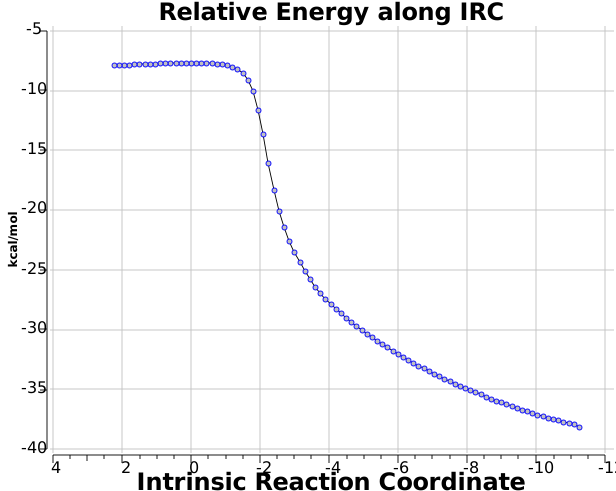
PhOOPh  PhOOPha1 
 PhOOPh2 PhOOPha1 

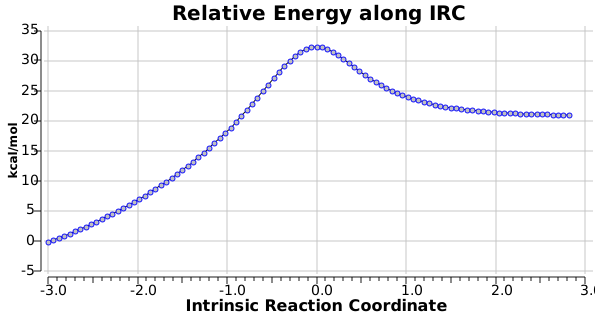
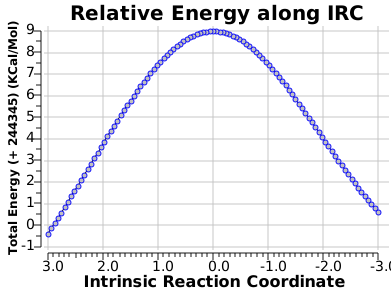
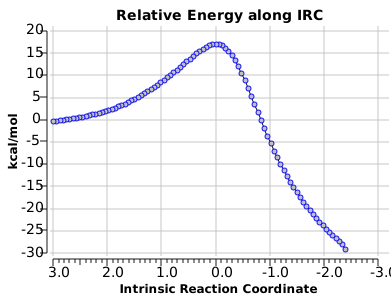
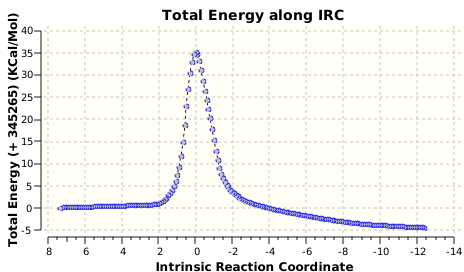
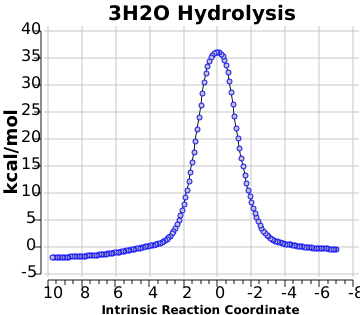
You will notice from the IRC profiles shown above that even without any prior protonation, the barrier to O-O cleavage is really very small (~ 4 kcal/mol). But the method I have used to calculate this is a closed shell DFT procedure. This does not allow the formation of the (open shell) biradical that two phenoxy radicals would represent. The barrier is low even without the formation of phenoxy radicals! Of course, as with the two previous examples, the actual initial product formed is the π-complex as first suggested by Michael Dewar. The wavefunction of such a species requires special treatment, since it is best described as a linear combination of two closed-shell configurations, what is called a multi-configuration or multi-reference wavefunction. So the single-configuration closed shell calculation that the above IRC represents must be an upper bound to a proper description of the energy transition state. In other words, if the description is improved, the barrier can only get even lower! 

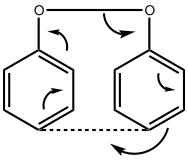
Notice in the above that the π-complex formed in the first stage (of two) is actually lower in energy than the diphenyl peroxide itself, and that the barrier for this π-complex to then collapse to form the C-C bond between the two 4-positions is also tiny. This π-complex in other words is very transient indeed, probably not surviving for even one molecular vibration. To all intents and purposes, this really is a concerted [5,5] sigmatropic shift, as shown in the schematic at the top of this post. But the bottom line is that the homolysis argument need not be the only one (although it  is not necessarily incorrect). One can just as readily explain why PhOOPh does not exist by invoking facile formation of Dewar-like π-complex instead.


Another deceptively simple little molecule that requires such a treatment is C2, the topic of much recent debate![2], [3]

References

  1. R. Benassi, U. Folli, S. Sbardellati, and F. Taddei, "Conformational properties and homolytic bond cleavage of organic peroxides. I. An empirical approach based upon molecular mechanics and <i>ab initio</i> calculations", Journal of Computational Chemistry, vol. 14, pp. 379-391, 1993. https://doi.org/10.1002/jcc.540140402
  2. S. Shaik, H.S. Rzepa, and R. Hoffmann, "One Molecule, Two Atoms, Three Views, Four Bonds?", Angewandte Chemie International Edition, vol. 52, pp. 3020-3033, 2013. https://doi.org/10.1002/anie.201208206
  3. J.M. Matxain, F. Ruipérez, I. Infante, X. Lopez, J.M. Ugalde, G. Merino, and M. Piris, "Communication: Chemical bonding in carbon dimer isovalent series from the natural orbital functional theory perspective", The Journal of Chemical Physics, vol. 138, 2013. https://doi.org/10.1063/1.4802585

How to predict the regioselectivity of epoxide ring opening.

Sunday, April 28th, 2013

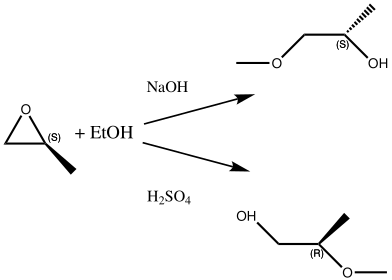
I recently got an email from a student asking about the best way of rationalising epoxide ring opening using some form of molecule orbitals. This reminded me of the famous experiment involving propene epoxide.[1]

propenoxide

In the presence of 0.3% NaOH, propene epoxide reacts with ethanol at the unsubstituted carbon (~82% compared with 56% in pure water, with retention of configuration at the other carbon) but in 1.3% H2SO4, the predominant product involves attack of ethanol at the more substituted carbon (presumably with inversion of configuration at that carbon). There are many ways of modelling this, but here I choose a simple one; inspecting the energy of the lowest unoccupied orbital (the one that will interact with the lone pair orbital on the incoming nucleophile). The issue is what kind of orbital that should be? The best to choose in this sort of situation is a localized orbital, an NBO in fact.

NaOH H2SO4
Energy

Energy 0.353 au

Energy

Energy -0.004 au


Energy

Energy 0.347 au

 
Energy

Energy -0.061 au

In NaOH solutions (where protonation of the epoxide oxygen is suppressed), the lowest energy unoccupied NBO is the O-C  σ* orbital involving the unsubstituted carbon, but where the oxygen is protonated, it now becomes the O-C σ* orbital involving the substituted carbon.

One can also teach a simpler heuristic, namely that protonation of the epoxide encourages the early formation of a carbocation, and that the most substituted such cation is the most stable. In the absence of protonation, some (small) contribution from an incipient alkoxy anion favours the alkoxide formed on the more stable carbon.

References

  1. H.C. Chitwood, and B.T. Freure, "The Reaction of Propylene Oxide with Alcohols", Journal of the American Chemical Society, vol. 68, pp. 680-683, 1946. https://doi.org/10.1021/ja01208a047

The mechanism of ester hydrolysis via alkyl oxygen cleavage under a quantum microscope

Tuesday, April 2nd, 2013

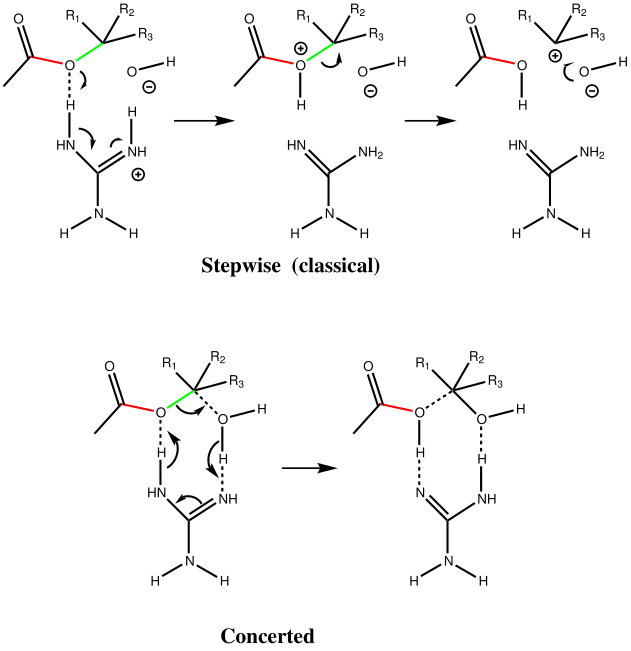
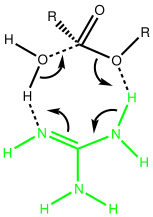
My previous dissection of the mechanism for ester hydrolysis dealt with the acyl-oxygen cleavage route (red bond). There is a much rarer[1] alternative: alkyl-oxygen cleavage (green bond) which I now place under the microscope.

alkyl-ester

Here, guanidine is used as a general acid/base, which results in a reasonable activation barrier for the hydrolysis (using pure water as the catalyst led to high barriers). What I will call the classical stepwise route is shown above, with charge-separated structures in abundance (particularly at the allyl group, where the possibility of forming a carbocation at this centre is central to the mechanism). My philosophy here is to allow quantum mechanics to decide whether to separate charge or not (in effect, only it is allowed decisions about where electrons are). So one can start with a concerted mechanism in which no formal charges are separated, and by subjecting them to wB97XD/6-311G(d,p)/SCRF=water calculation, decide where and if charges develop.

There are two distinct possibilities; hydrolysis with either retention or inversion of configuration at the alkyl group. The results for the transition states are shown below, with the analogous energy for acyl-oxygen cleavage shown for comparison.

Relative energies for hydrolysis of Alkyl acetate
R Acyl-oxygen Alkyl O,inversion Alkyl-O,retention
all H 0.0 15.3 42.5
Me 0.0 16.6 35.0
Me,Me 0.0 16.3 18.2
Me,Me,Me 0.0 16.4 (14.4)  ?

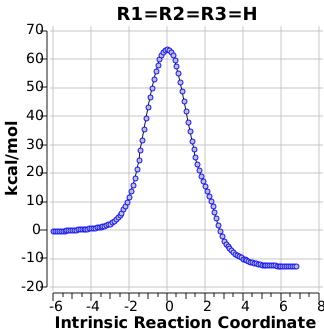
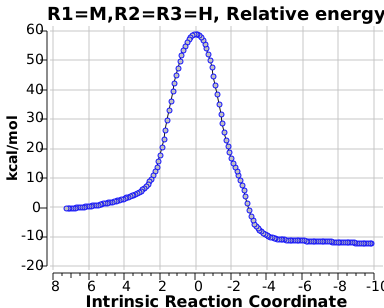
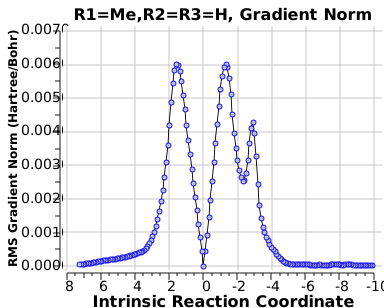
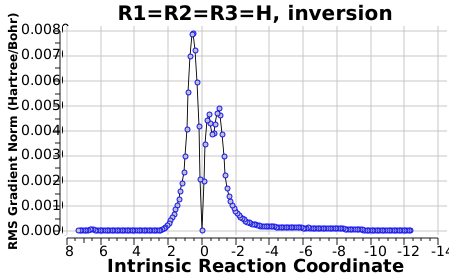
For R1=R2=R3=H and R1=Me,R2=R3=H proceeding with retention of configuration. The IRCs are as below, which reveal a “hidden intermediate” feature (visible as a dip in the gradient norm), which corresponds to a charge-separated zwitterionic intermediate immediately preceding the proton transfer. In other words, the non-charge-separated cyclic/concerted mechanism shown above is “interrupted” by charge separation in a hidden way during, and in an explicit way at the final stage, preferring finally to form the ionic ion-pair rather than neutral acetic acid and guanidine.

alkylg[2] alkylg
alkylMe[3] alkylMe
alkylMeG

For R1=R2=Me, R3=H, we have a change. The C-O bond lengths at the solvolysing methyl increase as the substitution at this carbon increases, e.g. 2.2Å (R=H) → 2.4Å (R1=Me) as the transition state becomes more carbocation like. With increasing carbocationic character, the acidity of the adjacent C-H group increases, until with R1=R2=Me, R3=H it has become acidic enough to be abstracted by any close-by base (in this instance, guanidine). Experimentally, the aqueous hydrolysis of t-butyl acetate is known to proceed with alkyl-oxygen cleavage[1]. In the computational model, the solvolysis mechanism has been intercepted by an elimination mechanism: the two potential surfaces under these circumstances are very close and they merge to ensure a different outcome of the reaction. You can see this effect below;

alkylG-Me2

Click for 3D.

The reaction barrier also drops as the degree of substitution at the migrating carbon increases. At time of writing, no TS had been located for R1=R2=R3 (? in table above) but as you can see the trend could easily take it below the energy for acyl oxygen hydrolysis.

A much lower energy route however is apparently available for the alkyl-oxygen solvolysis route. For R1=R2=R3=H, it proceeds much more favourably with inversion of configuration, an intramolecular Sn2 solvolysis in fact.

alkylg-inva alkylg-inva
alkylg-invg

That for R1=R2=R3 shows a qualitative difference, in resembling the mechanism for Sn1 solvolysis of t-butyl chloride in water. In this case the bond O-C bond labelled 2.3 is cleaving, whilst the C-O bond labelled 3.1 has not yet started to form; an apparently classical Sn1 solvolysis. But take a look at the two atoms labelled [1] and [2]; this C-H bond is also set up to be abstracted by an adjacent base (the carboxylate), and indeed an IRC shows the formation of butene (not solvolysis) to be the final outcome. 

Click for 3D.

Click for 3D.

Unlike the mechanism involving retention of configuration, the barrier for the inversion route does not change much as the substitution at the carbon increases, remaining above the acyl-oxygen solvolysis for even the t-butyl ester (R1=R2=R3=Me). 

To summarise what we might have learnt. Firstly, the mechanism of the apparently simple hydrolysis of alkyl esters of ethanoic (acetic) acid suddenly got much more complicated. It might seem that solvolysis of the O-alkyl bond can proceed with either inversion or retention of configuration at the alkyl carbon; if the latter then the barrier seems to decrease as the stabilisation of the carbocation at this carbon increases. But for both retention and inversion, the mechanistic pathway can easily be subverted by a different reaction involving the formation of an alkene.

One starts to suspect that the model I am using here to study this reaction may be either the wrong kind, or certainly incomplete. In the absence of any explicit water (merely a continuum model acting on its behalf), it seems more basic molecules bound in by hydrogen bonds (guanidine or carboxylate) can take over by acting as bases and abstracting hydrogens from a H-C bond adjacent to the carbocationic centre. In order to redirect the mechanism onto the solvolysis pathway, one probably needs to have a few more explicit water molecules hanging around (so to speak) so as to quickly intercept the forming carbocation, before it can release its proton to the base. In other words, one needs to set up a more statistical model, in which the probability of the desired outcome is in part determined by the probability of having a favourable molecule adjacent to the reacting centre. Who would have thought such a basic prototype for organic chemistry could be so tricky to pin down in a computational model! 

References

  1. C.A. Bunton, and J.L. Wood, "Tracer studies on ester hydrolysis. Part II. The acid hydrolysis of tert.-butyl acetate", Journal of the Chemical Society (Resumed), pp. 1522, 1955. https://doi.org/10.1039/jr9550001522
  2. H.S. Rzepa, "Gaussian Job Archive for C4H13N3O3", 2013. https://doi.org/10.6084/m9.figshare.663603
  3. H.S. Rzepa, "Gaussian Job Archive for C5H15N3O3", 2013. https://doi.org/10.6084/m9.figshare.663619

A sideways look at the mechanism of ester hydrolysis.

Friday, March 29th, 2013

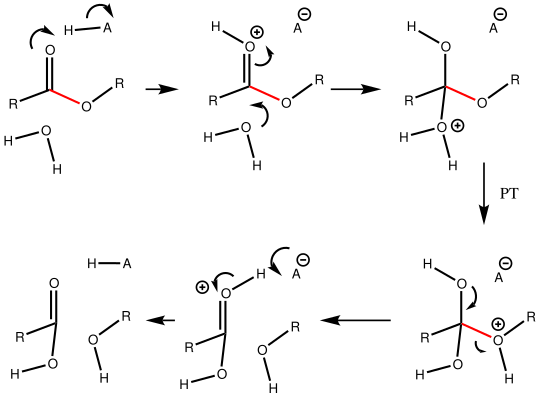
The mechanism of ester hydrolysis is a staple of examination questions in organic chemistry. To get a good grade, one might have to reproduce something like the below. Here, I subject that answer to a reality check.

actyl

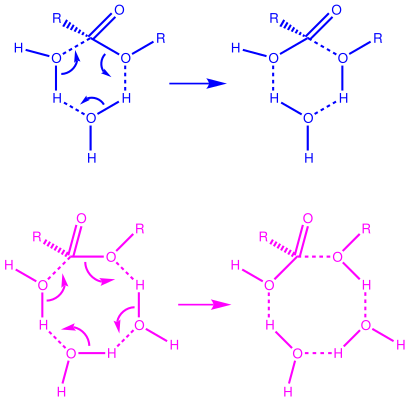
In this scheme, HA is a general acid, R=Me, and the net result is to break what is called the acyl-oxygen bond (red). The mechanism is actually incomplete, since the label PT designates a proton-transfer (the mechanism for which is left somewhat undefined). Additionally, a lot of charges come and go and five steps or so are involved. So a student might be tempted to “fast-track” the whole process. Below I show two such fast-tracks (I prefer to say simplifications):

acetyl-ester1

In the blue mechanism, the role of HA is actually played by one water molecule, and a second water is assisting the PT step (a far more thorough analysis of the mechanism can be found in this reference[1]). The reaction is bimolecular in ester and the HA (=water in this case). The third water would make it a termolecular reaction overall, but if the reaction takes place in water itself than [H2O] would be constant. It would correspond to what the text books call AAC2 since we consider one molecule as an acid HA. But, one could look at it differently and consider the second water as a nucleophile generated by concurrent deprotonation (by the first water). This would make it a BAC2 type. It turns out that if one makes the mechanism cyclic, the AAC2 and BAC2 annihilate each other in effect to create a single (peri)cyclic mechanism (which has no well known name, but might be referred to as the co-operative pathway). Such a mechanism can be extended using a third water molecule (magenta diagram); I will come to the reason for including that presently.

Why would one want to even consider such mechanisms? Because, if you look carefully, you will see no charges! Charge separation (= large dipole moment) takes energy. It is normally thought that this energy is more than compensated for by additional solvation (a process which is implicit rather than explicitly shown in text-book diagrams). But if you do not generate charge separation, you might not need that solvation energy. I will turn to quantum mechanics to try to decide what might be viable (I hesitate to use the term “going on”). 

A ωB97XD/6-311G(d,p)/SCRF=water model (in which solvation is approximately included as a continuum model) calculation yields the following for the blue mechanism.

acyl-ester[2] acyl-ester
  1. Points to note are that it is concerted, in other words the quantum mechanics tells us that all the bonds CAN make and break in a single concerted process within a single kinetic step.
  2. The mechanism has an uncanny resemblance to the nucleophilic aromatic substitution I reported a couple of posts ago! It resembles an Sn2 displacement at an sp2 centre. Such juxtaposition of these two mechanisms is also not found in text-books. Recollect that with such aromatic substitution, it was possible to get both cncerted and stepwise mechanisms, depending on the substituents. Perhaps the same might be possible here?
  3. However, the energy barrier for the process with the substituents shown above (~45 kcal/mol) is rather too high (the experimental value is estimated as >22 kcal/mol[1]). There may be at least three reasons for this;
    • (a) a better solvation model would be needed to lower the energy,
    • (b) the angles subtended at the transferring protons are strained (they optimally should be linear) and
    • (c) water is a very poor general acid (or base)!

But as an answer in an examination, would the blue mechanism actually be wrong? You will have to ask the instructor setting the question how they might respond to that, although these authors[1] certainly conclude that such a concerted mechanism is the more “correct”, at least for hydrolysis in water without added acid or base.

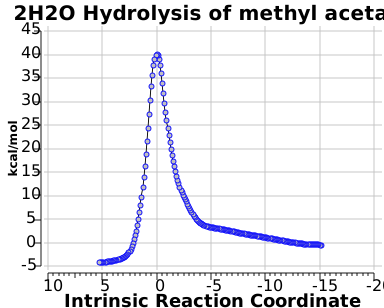
Point  (b) above can be addressed by adding another water molecule, as per the magenta mechanism so as to enlarge the ring and reduce the angular strain. But before I present the results, I need to “normalise” the system by ALSO adding one (solvating) water molecule to the blue route, as below, so that we can directly compare the energies of the blue and magenta pathways.

Click for  3D.

Click for 3D.

The result is a larger ring where the angular strain is clearly reduced. There is an entropic penalty for introducing that third water molecule, but despite this the free energy comes out 5.5 kcal/mol lower, and the activation barrier is also lower (~37 kcal/mol, still rather higher than experiment). It has been reported that incorporation of a 4th water molecule further improves matters[1].

acetyl3H2Oa[3]  acetyl3H2Oa

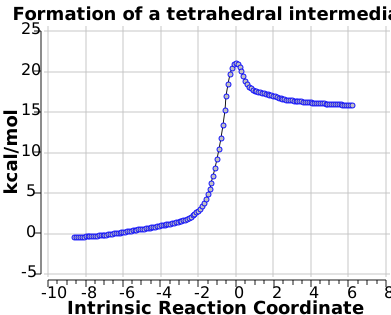
We can also address both points (b) and (c) above by replacing HA=H2O by HA=guanidiniumH+ (green), a better general acid. This polar modification introduces the ability for the system to better sustain charge separations, and indeed the initial product is now an ion pair tetrahedral intermediate (methoxide anion and guanidinium cation) carrying a dipole moment of 14.5D, an increase over the value for the transition state with three waters, 9.7D. The barrier (~21 kcal/mol) has gone in the opposite direction, decreasing significantly compared to the water catalysed reaction. The tetrahedral intermediate sits in an energy well of ~4 kcal/mol.

acetyl-ester2

acet-g[4] acet-g

A second transition state exiting the tetrahedral intermediate has a free energy barrier[5] about 2.5 kcal/ol lower than the one entering it.

Click for  3D.

Click for 3D.

What might we have learnt? That ester hydrolysis using pure water could proceed through a cyclic and concerted transition state, involving three (or perhaps more) water molecules passing a proton baton along the chain, and in the process avoiding any large build up of charge separation. Replace two of these waters with say guanidine as a general acid/conjugate base capable of conjugatively stabilising charge-separated species and the mechanism changes to a stepwise reaction involving a dipolar tetrahedral intermediate sitting in a relatively shallow energy well.

Not possibly a picture that we might expect a student sitting an introductory examination in organic chemistry to reflect in its entirety, but also one that perhaps the text-books might start to hint at? Or: at some stage, armed  merely with a “smart watch-cum-supercomputer”, a student taking such an exam might respond by performing the calculations described here as their submitted answer? Well, not for a year or two perhaps. But it has to be said that everything you see in this post was performed over less than two days of elapsed time, so these “reality checks” are not that time-consuming. Whether you choose to believe them or not of course is another matter.

References

  1. Z. Shi, Y. Hsieh, N. Weinberg, and S. Wolfe, "The neutral hydrolysis of methyl acetate — Part 2. Is there a tetrahedral intermediate?", Canadian Journal of Chemistry, vol. 87, pp. 544-555, 2009. https://doi.org/10.1139/v09-011
  2. H.S. Rzepa, "Gaussian Job Archive for C3H10O4", 2013. https://doi.org/10.6084/m9.figshare.661351
  3. H.S. Rzepa, "Gaussian Job Archive for C3H12O5", 2013. https://doi.org/10.6084/m9.figshare.661789
  4. H.S. Rzepa, "Gaussian Job Archive for C4H13N3O3", 2013. https://doi.org/10.6084/m9.figshare.661791
  5. H.S. Rzepa, "Gaussian Job Archive for C4H13N3O3", 2013. https://doi.org/10.6084/m9.figshare.661799

Understanding the electrophilic aromatic substitution of indole.

Sunday, March 3rd, 2013

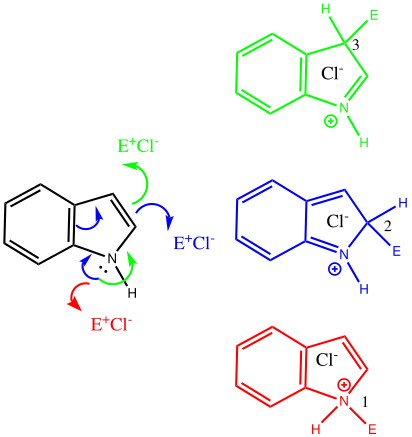
The electrophilic substitution of indoles is a staple of any course on organic chemistry. Indoles also hold a soft-spot for me, since I synthesized not a few as part of my Ph.D. studies.[1],[2] The preference for substitution in the 3-position is normally explained using the arrows shown below (position 3=green,2=blue,1=red). Here I explore how these arrows might be interpreted in terms of various quantum mechanical properties.

indole

I have elsewhere in these posts shown how NBO (natural bond orbitals) can often be used to probe donor-acceptor interactions in molecules. Can it be applied to indole (as donor) interacting with an electrophile (as acceptor) in order to predict where the most nucleophilic centre is? The law is that the pair of such filled/empty orbitals with the lowest energy gap will predict the reactivity. Since the electrophile E is common, we might presume that the NBO donor orbital with the highest energy is the relevant predictor. Well, this emerges as the NBO describing the 8,9 bond; it is not any of those shown above! The next NBO in energy is also located on the benzo group. Only the 3rd-highest NBO corresponds to the red arrows above. In fact the NBO with the least-favourable energy is the one that maps to positions 2 or 3, those normally implicated in the reactions of this molecule. What has gone wrong?

Click for 3D

E=-0.2910au.
Click for 3D

Click for 3D

E=-0.3107au.
Click for 3D

Click for 3D

E=-0.3113au.
Click for 3D

Click for 3D

E=-0.3142au.
Click for 3D

Click for 3D

E=-0.3335au.
Click for 3D

To start understanding, we must review the assumptions made in the above analysis.

  1. Firstly, we need to distinguish between local and global properties of molecules. A local property is one e.g. associated perhaps with an atom or bond. A global property might be the aromaticity of the system as a whole. The NBO analysis, by definition, tries to localise the wavefunction to one or two centres. This means that it reduces a six-electron aromatic ring to three two-centre bonds. But breaking up an aromatic ring may not be the best way of looking at the problem. In this case, the 2,3 N=C bond emerges as the most stable double bond, largely because the six electrons of the benzo group are delocalised and hence not so stable locally! So too much localisation can throw the baby away with the bath water. So let us try a rather more global property, the molecular electrostatic potential (MEP):
    Molecular electrostatic potential. Click  for 3D.

    Molecular electrostatic potential. Click for 3D.

    This probes the molecule for regions which are the most attractive to a proton (=E+). Perhaps surprisingly, the benzo group still emerges as the most attractive region, but at least there is a small attractive finger (green) that reaches out to the 3-position rather than the 2-position (the “right” answer). It is not entirely convincing though, is it?

  2. Which leads us on to another assumption, which invokes Hammond’s postulate that the transition state for the reaction will resemble the stable species nearest to it in free energy. What if the transition state (which is what determines the rate of a reaction) more closely resembles the (initial) product of this reaction, the so-called Wheland intermediate rather than indole itself? I am going to calculate this intermediate in a novel manner; as an ion-pair resulting from reaction of indole with HCl in methanol (I have blogged elsewhere that I regard it as lazy to simple add a proton and put +1 as the overall charge of the system). So here are the relative free energies of indole reacted with HCl in respectively the 1,2 and 3 positions: 4.1, 10.0, 0.0 kcal/mol.The relatively high energy of the 2-substituted intermediate reflects its loss of global aromaticity compared to the other two, rather than necessarily any local property. 
    3-Wheland intermediate. Click for  3D.

    3-Wheland intermediate. Click for 3D.

    We might therefore conclude that one should not seek evidence in the wavefunction of indole itself for the preference for green rather than blue or red arrows as shown above, but in a reaction product which best reflects the global properties such as aromaticity.

  3. One could go one stage further and actually locate explicit transition states for the three isomeric reactions, as was done here. I may report back on this in the future.

I set out these approaches aware that a subject is often taught by reducing it to rules (heuristics) which one then hopes are transferable between different molecules with common local or global features. One does not want to reduce it down merely to numbers computed from a wave equation. But one should also remember that whilst arrow-pushing may be fine for relatively simple systems, it may not be robust towards increasing complexity (i.e. multiple substituents around the ring). At some stage, one will have to take the decision to augment the simple heuristics with computed numbers. Deciding when to do so will be one of the challenges facing the teaching of chemistry over the next decade.

References

  1. B.C. Challis, and H.S. Rzepa, "The mechanism of diazo-coupling to indoles and the effect of steric hindrance on the rate-limiting step", Journal of the Chemical Society, Perkin Transactions 2, pp. 1209, 1975. https://doi.org/10.1039/p29750001209
  2. B.C. Challis, and H.S. Rzepa, "Heteroaromatic hydrogen exchange reactions. Part 9. Acid catalysed decarboxylation of indole-3-carboxylic acids", Journal of the Chemical Society, Perkin Transactions 2, pp. 281, 1977. https://doi.org/10.1039/p29770000281

A to-and-fro of electrons operating in s-cis esters.

Thursday, February 21st, 2013

I conclude my exploration of conformational preferences by taking a look at esters. As before, I start with a search definition, the ester being restricted to one bearing only sp3 carbon centers.

s-cis-ester-torsion-search

The result of such a search is pretty clear-cut; they all exist in just one conformation, the s-cis, in which a lone pair of electrons on the alkyl-oxygen is aligned quite precisely anti-periplanar with the axis of the C=O bond. This very narrow distribution suggests a relatively large energy preference for this orientation, and we need to seek its origins.

s-cis-ester-torsion

This arises from two electronic alignments. The first orients the in-plane alkyl oxygen lone pair (orange-purple below) anti-periplanar with the C=O σ* empty orbital (red-blue; orange=red, blue=purple), an interaction mapping to 7.7 kcal/mol in the NBO E(2) energy. The second reinforcement (not shown) aligns the (O=)C-Me donor bond with the antiperiplanar O-Me acceptor (5.3 kcal/mol). These two interactions are weaker in the s-trans ester, which is 8.1 kcal/mol higher in ΔG298 and for which the E(2) terms are respectively 3.0 and 0.6 kcal/mol. 

Click for  3D.

Lp(alkyl-O)/C=O σ* Click for 3D.

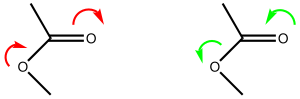
But wait, this interaction has electrons moving from the alkyl oxygen to the acyl oxygen (red arrows below) and apparently weakening the C=O bond in the process. But in an entirely different context, we learn that the C=O vibrational stretching wavenumber for an ester (1750 cm-1) is higher than that of a ketone (~1715 cm-1); the C=O is stronger rather than weaker in the ester. So now we have to move the σ-electrons back again (green arrows below).s-cis-ester

This strengthening of the C=O bond arises from the following overlap of the σ-lone pair on the carbonyl oxygen with the alkyl-O-C σ* empty orbital, for which E(2) is 41.5 kcal/mol, much larger than the previous effect. It however does NOT discriminate between the s-cis and s-trans  conformations, since this interaction is almost the same in the latter (41.8). So we have a to-of-(red)-electrons which promote the s-cis conformation, and rather stronger fro-of-(green)-electrons which strengthen the C=O bond. But they do not cancel each-other; each has its own job to do!

Click for  3D.

Lp(acyl-O)/C-O σ* Click for 3D.

There is one other overlap which may differentiate between s-cis and s-trans, but a rather less obvious one. That is the alkyl-Oπ donating to the acyl C=Oπ* which has E(2) 64.7 for the former and 59.4 kcal/mol for the latter. It is not immediately apparent why this overlap should favour s-cis. It is however the effect that induces a significant rotational barrier about the C-O bond (~12 kcal/mol).

Click for  3D.

Lp (alkyl-O π)/C=O π* Click for 3D.

Here is the result of another search of the crystal database;  namely the C=O distance (DIST1) vs the  C-O distance (DIST2). You can see that the red hot spot (~1400 examples) is very isolated (the blue squares represent < 200 hits), and there seems to be no significant correlation between the two lengths and the structure.

s-cis-ester-distance
I will conclude with a brief discussion of the carbonyl lone pairs. There are two, and one of them has been shown above in the Lp(acyl-O)/C-O σ* interaction. There is another, but it plays no role in the conformation, and is of quite a different character. Although a low-lying orbital, it is clearly non bonding; indeed might be slightly anti-bonding along the C=O axis. These two carbonyl lone pairs are quite different in character, since each performs a different role in the molecule.

Click for  3D.

Click for 3D.

So the conformational analysis of this simple little molecule reveals some interesting toos-and-fros in the electrons. I will deal with the issue of the carbonyl stretching frequencies in another post.

The conformational preference of s-cis amides.

Sunday, February 10th, 2013

Amides with an H-N group are a component of the peptide linkage (O=C-NH). Here I ask what the conformation (it could also be called a configuration) about the C-N bond is. A search of the following type can be defined:

cis-amide

The dihedral shown is for H-N-C=O (but this is equivalent to the C-C-N-C dihedral, which is also often called the dihedral angle associated with the peptide group). I have also added a distance, from a C-H to the carbonyl oxygen. Other search constraints include T ≤ 175K, R < 0.05, no disorder, no errors, that neither N-C bonds are part of a ring and that the two carbons marked T4 both have four connected bonds. The search results in 619 hits (January 2013 version of the CCDC database), and these are displayed below.

cis-amide-search-heat

The horizontal axis reveals the highest concentration (red) at ~2.4Å due to a syn-co-planar alignment of the C-H bond with the plane of the C=O bond in the s-cis conformer (the significantly smaller hot-spot at ~3.9A may be due to an anti-co-planar alignment of this C-H bond).

s-cis-amide

The vertical axis shows a clear preference for a dihedral of 179° (in fact no hits with a dihedral of less than 14o° were found) and this can only arise from the s-cis conformation in which the H-N bond is oriented antiperiplanar to the axis of the C=O bond. This preference can be rationalised by filled/empty NBO-orbital interactions, which include:

  1. Antiperiplanar interaction between the N-H as donor and the C=O as a σ-acceptor (E(2) = 4.1 kcal/mol)
  2. Antiperiplanar interaction between the N-H as acceptor and C-H as donor (E(2) = 4.7 kcal/mol)
Click for 3D

H-N/C=O. Click for 3D


Click for 3D.

Click for 3D.

This latter overlap conspires to bring the C-H hydrogen close to the oxygen (~2.35Å, DIST1 in the diagram above). So one might be entitled to ask: is this a hydrogen bond? There are (at least) two ways of testing this.

  1. The NBO E(2) interaction energy between the oxygen in-plane lone pair and the H-C as acceptor is 0.8 kcal/mol. For hydrogen bonds, such E(2) energies more or less resemble the actual H-bond strengths, i.e. a strong H-bond has an E(2) energy of ~ 8 kcal/mol; and a medium O…H-C hydrogen bond weighs in at around 3 kcal/mol.  So this one is very weak. This is due to poor overlap resulting from the small ring size (5).
  2. The NCI (non-covalent-interaction) surface does reveal a feature in the CH…O region, but the colour coding (which indicates how attractive/repulsive this is) is both pale blue (attractive) and yellow (repulsive). Again this is only consistent with a very weak overall H-bond.
NCI surface. Click for 3D.

NCI surface. Click for 3D.

I end by reminding that the s-cis H-N-C=O conformation is a very common feature in peptides (the CCDC database comprises mostly small molecules, not larger peptides and proteins) arising from really quite subtle orbital interactions.

The conformation of acetaldehyde: a simple molecule, a complex explanation?

Friday, February 8th, 2013

Consider acetaldehyde (ethanal for progressive nomenclaturists). What conformation does it adopt, and why? This question was posed of me by a student at the end of a recent lecture of mine. Surely, an easy answer to give? Read on …

acetaldehyde

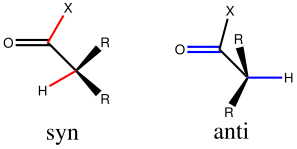
There really are only two possibilities, the syn and anti. Well, I have discovered it is useful to start with a search of the Cambridge data base. With R=H or C, X unspecified,  acyclic and T ≤ 175K, two searches were performed. The first identified the torsion around O=C-C-H. This clearly shows a maximum at 120° (with twice the probability), and a smaller one at 0°. This matches syn; the anti conformation above would be expected to have peaks at 60° and 180°; the latter in particular is singularly missing.

acetaldehyde-180

An alternative search is to define the distance between the oxygen and the H. For the syn conformer, distances of ~2.5 and 3.1Å are expected; for the anti conformer, 2.7 and 3.3Å. Again, syn matches better. Remember, searches based on the position of a hydrogen are less reliable than most, so these distributions provide only a statistical indication.

acetaldehyde-dist

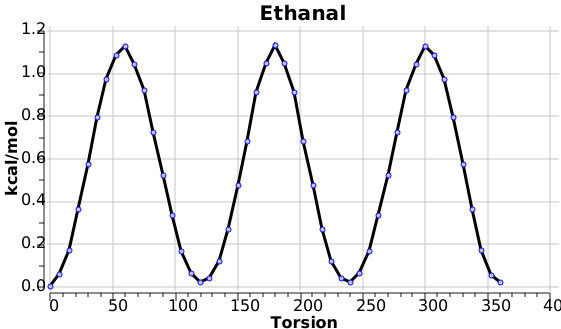
Now for a (ωB97XD/6-311G(d,p) calculation of the rotational barrier. The minima occur at torsions of 0, 120 and 240°, matching syn, although the barrier is very low.

acet-rot

Now to try to find explanations. The standard one finds this in three effects:

  1. Donation from two C-H bonds (R=H above) into the π*C=O NBO orbital (in the manner that was used to explain the cis-orientation of the two methyl groups in cis-butene). 
  2. Donation from the single co-planar C-H bond into the σ*C=O NBO orbital (blue bonds above)
  3. Pauli bond-bond repulsions between two filled NBOs. 

Effect 1 has an NBO perturbation energy E(2) of 7.0 kcal/mol for the syn conformer and 6.45 for the anti. The explanation is the π*C=O NBO “leans outward”, overlapping better with the C-H bonds in the syn than in the anti.  the One up to the syn! Effect 2 has values of 1.3 for the syn and 4.1 for the anti. The latter now has the edge. But wait, there are other (smaller) interactions. The syn has an antiperiplanar orientation of the two C-H bonds shown above (X=H,red), E(2) = 3.3 vs 0.6 for the corresponding syn-planar orientation in the anti-conformation. It’s now a tie; neck-and-neck.

Effect three suggests that the disjoint NLMO steric exchange energy is 54.34 for the anti and 53.88 (i.e. lower) for the syn. It is vaguely disappointing that no absolutely clear-cut explanation emerges. But then the difference (in total free energy) is only 1.4 kcal/mol. But even this small difference in energy can manifest in fairly clear-cut conformational preferences obtained from crystal structures. Ultimately of course, all effects in chemistry are reducible to the sum of lots of small effects (in other words unpredictable until one does the sum). 

I cannot end without mentioning the largest of all the NBO interactions, namely the in-plane lone pair on the oxygen as donor and the aldehyde proton C-H as acceptor (X=H). This has values of 29.3 for syn and 28.8 kcal/mol for anti. This manifest (inter alia) in a greatly reduced C-H vibrational wavenumber (ν 2982 for syn, 2900 cm-1 for anti) compared to the methyl C-H values (~3043-3164).

So this tiny little molecule ended up a little less obvious than might have seemed at the outset. One can find interesting things in even the tiniest of things! 


HC...C-H alignment. Click for  3D.

HC…C-H alignment. Click for 3D.


HC...C-H alignment. Click for  3D.

O=C*…C-H alignment. Click for 3D.