Posts Tagged ‘energy’

How does one describe the wavefunction for the π-complex formed from PhNHOPh?

Friday, January 25th, 2013

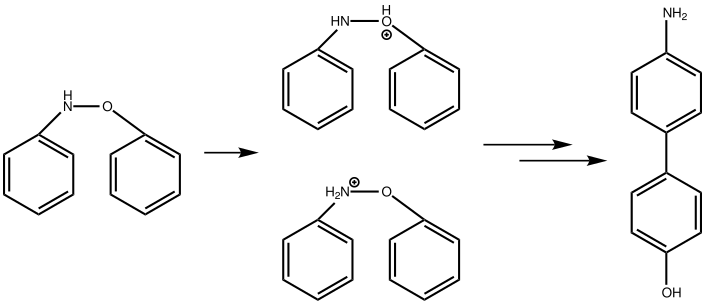
Although have dealt with the π-complex formed by protonation of PhNHOPh in several posts, there was one aspect that I had not really answered; what is the most appropriate description of its electronic nature? Here I do not so much provide an answer, as try to show how difficult getting an accurate answer might be.
pi-complex

In an earlier post, I had shown how an in-phase combination of the HOMO of the anion 1 with the LUMO of the cation 2 led to an occupied molecular orbital for the complex (below, left). An out-of-phase combination of these two gives instead the LUMO of the π-complex (below, right). It might seem as if a pair of electrons would like to occupy the first of these, and indeed a wavefunction constructed on this basis (using this occupancy as the single reference; indeed only state) resulted in the conclusion that the complex was aromatic. The diatropicity (~magnetic aromaticity) was strongest in the region between the two stacked rings, and the individual rings themselves had lost their local aromaticity. One might then infer that a wavefunction constructed by populating the LUMO below would in fact rearrange the aromaticity, returning this property back to the two individual rings. There would in fact be apparently nothing to keep the rings stacked, and so in the limit this wavefunction would correspond to a biradical (both states would be degenerate and hence have one electron in each). 

The HOMO. Click for  3D.

The π-complex HOMO. Click for 3D.

LUMO. Click for 3D

The π-complex LUMO. Click for 3D

So where along this spectrum of possible interpretations does a more realistic wavefunction settle? To answer this question, we must optimise the self-consistent field describing the electronic structure using BOTH electronic configurations (as a first approximation). This method is known as a multi-reference configuration interaction or CASSCF (complete active space self-consistent field) approach. Technically, the variation principle of minimising the electronic energy is applied to all the eigenvalues of the CI matrix, and not just the single reference state as is normally done. The simplest approach to the molecule above is to consider the active space as just the two orbitals above (the inactive space is represented by all the remaining doubly occupied and unoccupied orbitals), resulting in a CI determinant with three solutions (two electrons in the HOMO, two electrons on the LUMO and one electron in each). One would then use the energy computed from this multi-reference solution to re-optimise the geometry of the π-complex. This would then surely be a “better” description of the wavefunction for this molecule. Or would it? Well, this is what happened when I tried.

  1. I took the geometry previously found for the π-complex (it is pertinent that this was obtained using a density functional method with inclusion of dispersion attractions; ωB97XD/6-311(d,p)/SCRF=water) and ran a CASSCF(2,2) calculation at that geometry (and retaining the solvent field). This means an active space of two orbitals (the two shown above) populated with two electrons in three different configurations. The answer came out that the lowest energy solution (eigenvalue) of the CI matrix had eigenvectors corresponding to 0.94 (two electrons in the HOMO) and -0.34 (two electrons in the LUMO). This translates to an electronic population of 1.77 electrons in the former and 0.23 electrons in the latter. So this molecule shows some noticeable multi-reference character. In that it resembles for example, ozone. Such molecules are often described as awkward, since the simple molecular orbital picture which we use when thinking about doubly occupied orbitals is clearly only an approximation (in this case 1.77 rather than 2.0). We often sweep this thought under the carpet.
  2. I then tried to optimise the geometry of the complex using this new, improved electronic description. Well, slowly, the two rings drifted apart. Very slowly! Remember we have a complex hybrid method operating here; CASSCF(2,2)/6-311G(d,p) under the influence of a continuum solvent field for water (which appears necessary to attempt to describe the nature of two ion-pairs stacking on top of each other). The CI vectors crept towards 0.75 (HOMO) and -0.67 (LUMO), corresponding to electron occupancies of 1.11 and 0.89 (almost equal, i.e. a biradical) and close to the other extreme noted above. During this process, the energy dropped by about 10 kcal/mol. So is this a more realistic solution? 
  3. Well, we have to return to the difference between a density functional method with dispersion correction and CASSCF. The former attempts to allow for dynamic electron correlation, and this is particularly important for stacked π-rings. Getting the correct ring separation distance can only be achieved when such electron correlation is included; it is notably not obtained if a simple Hartree-Fock approach is used. CASSCF is a Hartree-Fock based method that captures the static electron correlation, but NOT that dynamic one.
  4. So this leads us to the next refinement, including CASSCF for static correlation and e.g. a method such as MP2 (CASPT2) to recover some dynamic correlation (and the dispersion attractions). This is tough for a molecule with 75 degrees of (geometrical) freedom, since one really needs analytical first derivatives of the energy to optimise the geometry. This combination (CASSCF, MP2, SCRF=water, analytical first derivatives) is not often found! And one I have not yet attempted to use.

What I did learn is that the balance between a mostly single-reference description of the wavefunction (occupancy of 2.0 in the HOMO above) and a multi-reference description (occupancy of 1.0 in the HOMO, 1.0 in the LUMO) is a fine one, and that balance can be perturbed by other effects, such as how one describes the correlation promoting π-stacking of the rings. And to be fair, I have not yet even found out if a CASSCF(2,2) is good enough. Perhaps it should be CASSCF(10,10), since we do have (at least) ten electrons that could populate our active space? 

Of course, there are many solutions to the above problem (and some might even solve the analytical first derivatives limitation noted above). So if any reader of this blog has knowledge/expertise of this type of calculation, it would be wonderful to know what the answer is for protonated PhNHOPh. It is such an innocent molecule, and yet it seems such a challenge to properly compute its geometry (and aromaticity). 

The π-complex in the benzidine rearrangement: a molecular orbital analysis.

Friday, January 18th, 2013

Michael Dewar[1] famously implicated a so-called π-complex in the benzidine rearrangement, back in the days when quantum mechanical calculations could not yet provide a quantitatively accurate reality check. Because this π-complex actually remains a relatively unusual species to encounter in day-to-day chemistry, I thought I would try to show in a simple way how it forms.

pi-complex

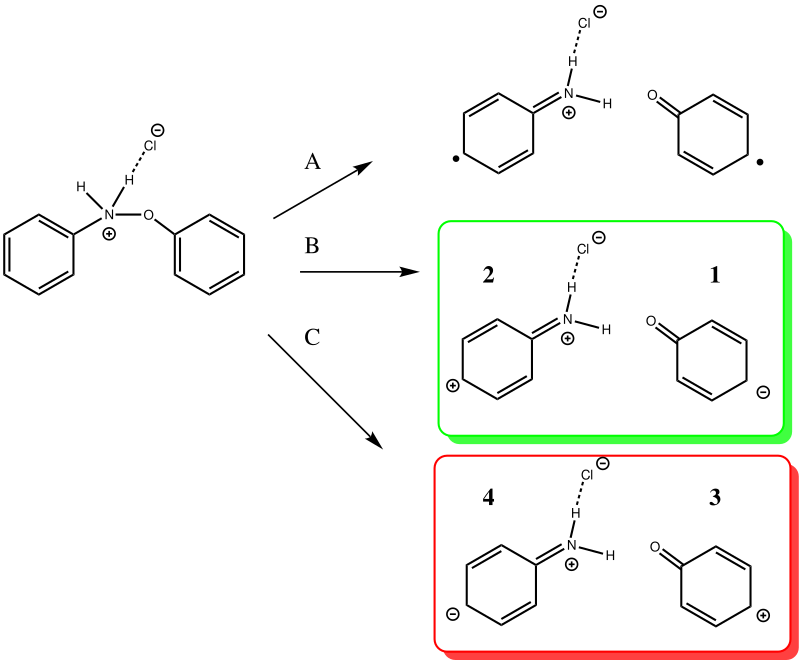
I am actually illustrating it with the benzidine rearrangement of monoprotonated PhNHOPh, which I dealt with in the previous post, if only because the energy of this π-complex relative to monoprotonated PhNHOPh is amazingly low (in other words, it is not one of these high energy molecules which only exist in the virtual world of computational modelling). The mechanism can be conceptually broken down to considering how the N-O bond can be cleaved in one of three ways. Route A is the homolytic route to give a 4-biradical (in one of the possible resonance forms), which of course can couple to form a 4,4′-biphenyl. Route B is a heterolytic route in which the two electrons from the N-O σ-bond are retained by 1, whilst for route C this electron pair is retained by 4.

These two fragments can then interact in several ways to form the π-complex.  Here I will illustrate just the two closed shell options (B/C), whilst recognising that there may also be contribution from the open shell biradical (in water as solvent, the two ionic configurations are clearly going to be stabilised by solvation and so may contribute relatively more than the non-polar radical-pair ).

  1. Route B (green), overlapping the HOMO of 1 with the LUMO of 2 to create a new π-MO to be occupied by the two electrons extracted from the N-O σ-bond (a similar promotion of a σ- to a π-pair was noted in this post).
  2. Route C (red), overlapping the HOMO of 4 with the LUMO of 3 to achieve the same result.
Route B
HOMO for 5,5 benzidine rearrangement. Click for 3D.

LUMO of 2. Click for 3D.

HOMO for 5,5 benzidine rearrangement. Click for 3D.

HOMO for π-complex. Click for 3D.

HOMO for π-complex. Click for 3D.

HOMO of 1. Click for 3D.

Route C
HOMO for 5,5 benzidine rearrangement. Click for 3D.

LUMO of 3. Click for 3D.

HOMO for 5,5 benzidine rearrangement. Click for 3D.

HOMO for π-complex. Click for 3D.

HOMO for π-complex. Click for 3D.

HOMO of 4. Click for 3D.

The relative weight of these two combinations is largely determined by the difference in energies between the two HOMO/LUMO pairs and their overlap. ΔE is different for the two combinations, being 0.021 Hartree (route B) and 0.091 (route C), with lower being better.

The overlap of the HOMO/LUMO (in either orbital combination) is almost perfect for the face-to-face π-stacking of the complex. Note that this π-π-stacked arrangement in effect returns some electrons to the N-O region, in what is now called σ-π conjugation, and which used to be called hyperconjugation (it also resembles the conjugation of a Si-C bond with a phenyl ring in the Wheland intermediate).

References

  1. M. Dewar, and H. McNicoll, "Mechanism of the benzidine rearrangement", Tetrahedron Letters, vol. 1, pp. 22-23, 1959. https://doi.org/10.1016/s0040-4039(01)82765-9

Why is N,O-diphenyl hydroxylamine (PhNHOPh) unknown?

Wednesday, January 16th, 2013

If you search e.g. Scifinder for N,O-diphenyl hydroxylamine (RN 24928-98-1) there is just one literature citation, to a 1962 patent. Nothing else; not even a calculation (an increasing proportion of the molecules reported in Chemical Abstracts have now only ever been subjected to calculation, not synthesis). A search of Reaxys also offers only one hit[1] reporting one unsuccessful attempt in 1963 to prepare this compound. Again, nothing else. Yet show this structure to most organic chemists, and I venture to suggest few would immediately predict this (unless they are experts on benzidine rearrangements).

PhNHOPh

The eagle-eyed reader of this blog may have noticed my noting in previous posts that the benzidine rearrangement proper is normally promoted by double protonation, and that reaction via monoprotonation has a significantly higher barrier. So what are the corresponding predicted reaction barriers for PhNHOPh? I start in fact with catalytic monoprotonation. The calculations are at ωB97XD/6-311G(d,p)/SCRF=water (closed shell) level.

System N-protonated O-Protonated
Reactant  0.0  11.3
TS N-O  7.3  17.4
π-complex  2.1  6.0
TS C-C  4.8  13.2
Relative to N-protonated reactant, in kcal/mol.

So it seems that even monoprotonation (on nitrogen) results in a very small ΔG298 barrier to the formation of a π-complex and its subsequent facile breakdown to form a C-C bond. I had noted in the earlier post that Ghigo and co-workers[2] had found that with diprotonated diphenyl hydrazine, the resulting π-complex has some open shell (biradical) character. The calculations reported here on the monoprotonated system are done as closed shell, but any biradical character this might have will only serve to even further reduce the barriers seen in the table. So we may confidently conclude that even monoprotonated N,O-diphenyl hydroxylamine will rapidly rearrange. A follow-up investigation for the diprotonated route hardly seems necessary!

But here is a challenge: if one were able to prepare PhNHOPh in thoroughly deprotic conditions, might it be isolable? There is precedent; the keto form of phenol can indeed be isolated under such conditions.[3].

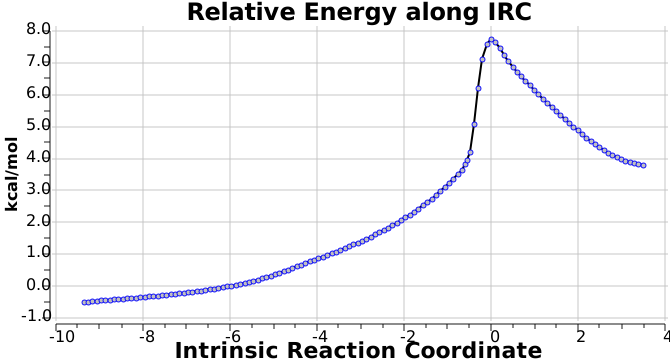
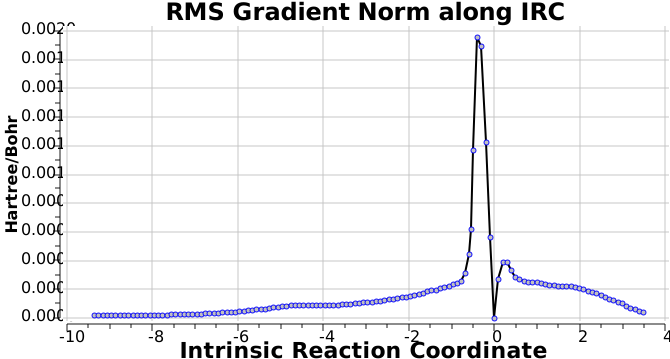
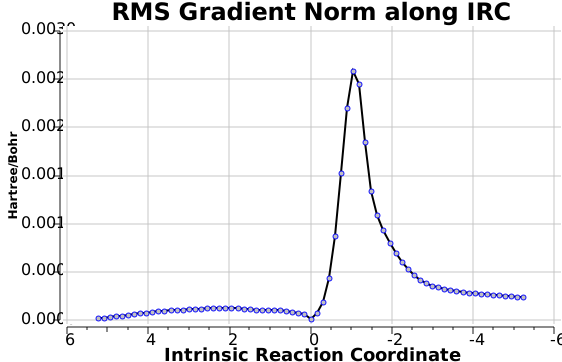
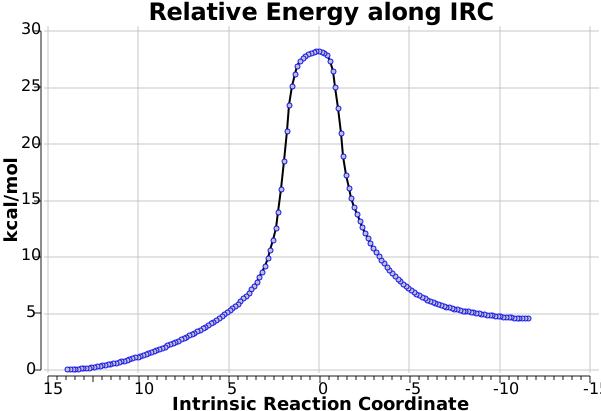
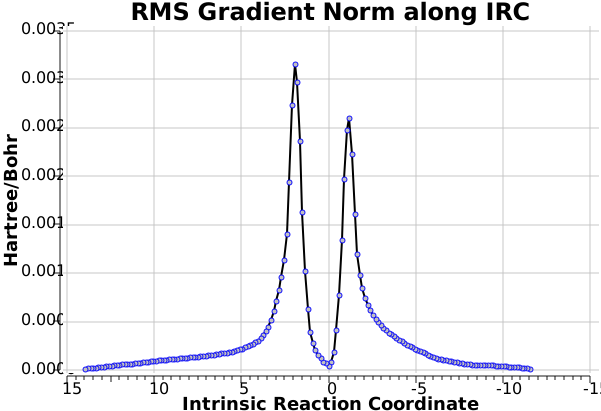
Here are some intrinsic reaction coordinates to finish with. Firstly, for the formation of the  π-complex from N-protonated precursor:

PhNH2OPh-NO
 PhNH2OPh-NO PhNH2OPh-NOG 

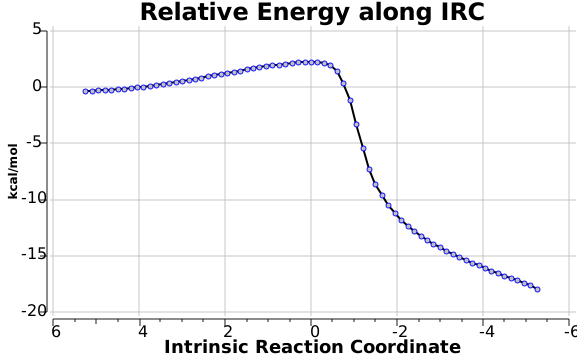
Once formed, the  π-complex collapses readily to the 4,4′-coupled biphenyl. 

PhNH2OPh-pi2p
 PhNH2OPh-pi2p PhNH2OPh-pi2pG 

There may be another pathway which collapses to the 1,1′-coupled biphenyl which I have not found yet. A [3,3] sigmatropic rearrangement converting the 4,4′ to the 1,1′-biphenyl is higher in energy, but still just about accessible thermally.

PhNH2OPh-o2p
 
PhNH2OPh-o2p
PhNH2OPh-o2pG
 

To end, here is a question. Could one systematically identify “gaps” in the distribution of known molecules; species which appear as if they should exist, but have never been reported? Of these, the majority will no doubt be absent from the record simply because they uninteresting. But some, as here, are absent because they are too unstable to exist, unless (extreme?) precautions are taken to remove the factors responsible for their instability (in this case, protons). Cyclobutadiene was one such famous example (stabilised by coordination to a metal). Certainly, computation nowadays can help identify conditions for how such molecules might be isolated.


In contrast, PhNHSPh (N-Phenylbenzenesulfenamide) is a well known species[4].

References

  1. J.R. Cox, and M.F. Dunn, "The chemistry of O,N-diarylhydroxlamines - I", Tetrahedron Letters, vol. 4, pp. 985-989, 1963. https://doi.org/10.1016/s0040-4039(01)90757-9
  2. G. Ghigo, S. Osella, A. Maranzana, and G. Tonachini, "The Mechanism of the Acid‐Catalyzed Benzidine Rearrangement of Hydrazobenzene: A Theoretical Study", European Journal of Organic Chemistry, vol. 2011, pp. 2326-2333, 2011. https://doi.org/10.1002/ejoc.201001636
  3. B. Miller, "Preparation of the Ketone Tautomer of a Phenol by a Cope Rearrangement<sup>1</sup>", Journal of the American Chemical Society, vol. 87, pp. 5515-5516, 1965. https://doi.org/10.1021/ja00951a064
  4. I. Brito, A. Cárdenas, A. Mundaca, M. López-Rodríguez, and A. Reyes, "2-Iodo-<i>N</i>-(2-nitrophenylsulfanyl)aniline", Acta Crystallographica Section E Structure Reports Online, vol. 64, pp. o1387-o1387, 2008. https://doi.org/10.1107/s1600536808019491

Hydrogen bond strength as a function of ring size.

Thursday, January 3rd, 2013

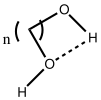
One frequently has to confront the question: will a hydrogen bond form between a suitable donor (lone pair or π) and an acceptor? One of the factors to be taken into consideration for hydrogen bonds which are part of a cycle is the ring size. Here I explore one way of quantifying the effect for the series below, n=1-5 (4-8 membered rings).h-bond

I will use the NBO approach. To remind, this reduces the wavefunction for a molecule to a set of localised orbitals, referred to as natural bond orbitals. The perturbation interaction energy E(2) between any (doubly occupied, i.e. donor) orbital and an (unoccupied) acceptor orbital establishes the strength of that interaction. For a hydrogen bond, this can be expressed as the NBO corresponding to the (in this case oxygen) lone pair (shown in orange and purple below) and the corresponding H-O σ* empty orbital (shown as red and blue below). E(2) is a function both of how close in energy this pair of orbitals is (the smaller the energy gap the better) and how well they overlap (the relevant overlap in this case is the positive one between purple and blue). This latter attribute is shown below for the series n=2,3,4,5 (n=1 does not form any discernible hydrogen bond), at the ωB97XD/6-311G(d,p) computational level.

NBO interaction for 5-ring H-bond. Click for 3D.

NBO interaction for 6-ring H-bond. Click for 3D

NBO interaction for 7-ring H-bond. Click for 3D.

NBO interaction for 8-ring H-bond. Click for 3D.

The interaction energies E(2) are collected below, together with the computed lengths. To put E(2) into context, it is around 16 kcal/mol for a strong anomeric interaction, and about 6 kcal/mol for the stereoelectronic influence in di-fluoroethane. One can see that by the time the angle subtended at the hydrogen has increased to ~150°, the interaction energy has reached a respectable value.

E(2), kcal/mol  O…H length, Å  Angle, °
1 ~0.0  –  81.8
2 0.75 2.294  109.7
3 3.56 1.984  139.6
4 6.24 2.017  146.5
5 8.35 1.957  153.4

So the simple trick of looking at the donor-acceptor NBO interaction in a cyclic hydrogen bond can give us a straightforward way of quantifying how the size of the ring and hence the orbital overlap (one presumes that the Lp/C-O σ* energy gap is similar for all the systems) affects the strength of the interaction. One might also explore this by looking at structures in the Cambridge crystal database. But note from the above that whilst the  E(2) energies follow ring size, this does not appear to happen for the H…O lengths! The analysis reveals that the maximum number of structures for the span 5 to 8-rings occurs at ~2.15, 1.85, 1.65 and 1.85Å respectively. 

Crystal data for 5-rings

Crystal data for 5-rings

Crystal data for  6-rings.

Crystal data for 6-rings.

Crystal data for 7-rings

Crystal data for 7-rings

Crystal data for  8-rings

Crystal data for 8-rings

Sharpless epoxidation, enantioselectivity and conformational analysis.

Thursday, January 3rd, 2013

I return to this reaction one more time. Trying to explain why it is enantioselective for the epoxide product poses peculiar difficulties. Most of the substituents can adopt one of several conformations, and some exploration of this conformational space is needed.

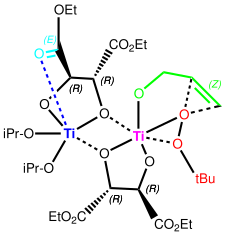
sharpless-binuclear

Amongst the conformational possibilities are the two rotations shown below. The blue rotates the ester with respect to the Ti-O-C unit, and the red rotates within the ester group itself. In fact the conformations of esters almost invariably adopt the first conformation shown, a s-cis orientation where one lone pair from the alkoxy group is anti to the axis of the carbonyl group (red rotation). Crystal structures of binuclear titanoxy compounds show both options for the blue rotation.sharpless-conf

One might imagine that there are two rotations about the C-O and O-Ti bonds in the iPr-O-Ti fragment as well. Whilst some of the many permutations are precluded simply on steric grounds, this still leaves a lot of possibilities. I have certainly not explored anything like the full set, but felt it worth reporting two conformations which have lower energies than the ones I reported in this post. If I find any yet lower in energy, I will add a postscript here.

New conformations (hydrogens removed for clarity)
R. Click for  3D

(R). Click for 3D

S Click for  3D.

(S). Click for 3D.

Old conformations

(R). Click for 3D.

(S). Click for 3D

(S). Click for 3D

The conformations differ in the regions indicated with a red arrow; the (R) being 10.1 and the (S) 7.5 kcal/mol lower in ΔG298. Note how a change in conformation of just one group can “knock-on” to other groups. The relative energies (kcal/mol) of these two new conformations are shown below, broken down into three components.

Enantiomer Total energy Attractive dispersion energy Free energy
R  +2.2  +2.9  +0.3
S  0.0  0.0  0.0

As before, (S) wins out clearly in terms of the dispersion attractions, which appears to be also reflected in the total energy of each system (in other words, differentiation from non-dispersion terms is not large). The free energy includes the entropy calculated from the normal vibrational modes using the rigid-rotor-harmonic-oscillator approximation. Whilst it too shows (S) to be the lower in energy, the distinction is less clear-cut than with the old conformations. One is often warned that the RRHO oscillator approximation is not good for molecules with many free rotors (which normally means about single bonds), although one normally might expect that comparing two very similar systems will result in a lot of cancellation of errors. But this result here does suggest that for the Sharpless system, which has many free-rotor groups, free energies might need taking with an extra dose of caution. I would also add that one does need to optimise the geometry of transition states for such systems with extraordinary accuracy; for these two examples, one does need to achieve values for the six “zero” translations and rotations of < 10 cm-1, which can involve heroic efforts (as it did here!). 

I end by reiterating my earlier conclusion. The Sharpless seems to be an example of a reaction which achieves stereospecificity by the accumulation of many very tiny effects (the dispersion attractions), and hence the use of a dispersion-corrected method is absolutely critical. It may also in part involve accumulation of another set of small effects contributing to the total entropy and hence free energy. What it appears not to be is a manifestation of a small number of larger effects (e.g. stereoelectronic alignments) which can be “named”. Chemistry by and large is always an attempt to achieve simple explanations by use of the latter; in other words developing simple heuristics or rules that can be transferred between systems. Where you have an effect that is in effect an accumulation of many terms, it is much more difficult to express this as simple transferable rules. Chemistry at such a level then is reduced simply to computing the sum of these small effects, rather than relying on simple rules. Have we perhaps reached this level with the Sharpless per-epoxidation? Would it be such fun if it were?

How to tame an oxidant: the mysteries of "tpap" (tetra-n-propylammonium perruthenate).

Monday, December 24th, 2012

tpap[1], as it is affectionately known, is a ruthenium-based oxidant of primary alcohols to aldehydes discovered by Griffith and Ley. Whereas ruthenium tetroxide (RuO4) is a voracious oxidant[2], its radical anion countered by a tetra-propylammonium cation is considered a more moderate animal[3]. In this post, I want to try to use quantum mechanically derived energies as a pathfinder for exploring what might be going on (or a reality-check if you like). 


tpap

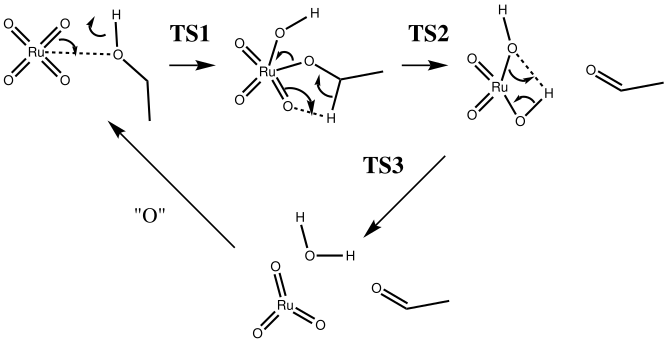
A basic (i.e. simple) mechanism for oxidation of an alcohol by RuO4 is shown above. Here I reality-check this mechanistic pathway with the help of ωB97XD/Def2-SVPF/SCRF=dichloromethane calculations. I should point out that since the mechanism is going to involve ion-pairs, it is particularly important to adopt a solvent=corrected model from the outset[4]. TS1 is the transition state for addition of the alcohol to the metal, a process which involves a synchronous proton transfer for the singlet electronic state.

TS1. Click for 3D

TS1 as a singlet. Click for 3D

tpap-TS1

Next comes TS2, which involves a hydride abstraction with concomitant reduction of the oxidation number of Ru(VIII) to Ru(VI). It is higher in free energy than TS1 by 1.1 kcal/mol. The barrier corresponds to ΔG298 37.1 kcal/mol. The process completes by low energy elimination of water (TS3) from the Ru(VI) species to give RuO3, which either undertakes further oxidisation to give RuO2, or might instead be re-oxidized back to RuO4 by oxygen (or an amine N-oxide) to complete a catalytic cycle.

TS1. Click for 3D

TS2 as a singlet. Click for 3D

tpap-TS2
TS2 as a triplet. Click for 3D

TS2 as a triplet. Click for 3D

RuO4-ts2-triplet

Right away, we have a problem; ΔG298‡ 37.1 kcal/mol is too high to be a realistic pathway, and yet RuO4 is a known oxidant[2]. One way out is to see if the triplet state energy of this system might be lower. Whilst the triplet-state reactant is higher in energy (by 27.5 kcal/mol) , TS2  is lower and corresponds to a reduced barrier of ΔG298 28.2 kcal/mol. Better, but a (small?) question mark still remains, since one would really expect the barrier to be ~20 kcal/mol or less for a “voracious oxidant”. Perhaps the incursion of triplets makes it indiscriminate? The spin density at the transition state is shown below, it extends across both oxygen, carbon and Ru.

ts2-triplet-spin

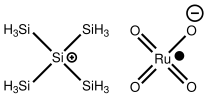
The tpap modification to this process is to use Ru(VII) in the form of a radical anion partnered with a quaternary ammonium cation. The basic reagent is therefore an ion-pair, hence the solvation approach mentioned earlier is needed to describe the energetics of such a species. The R alkyl groups here are modelled as methyl rather than propyl.

tpap1

TS2 for this radical-ion-pair is shown below, and it has ΔG298 30.8 kcal/mol, 2.6 kcal/mol higher than for the un-moderated reagent. In this case, the higher-spin quartet states are higher  in energy (by at least ~7.9 kcal/mol) and so do not participate. 

tpap-ts2

The spin density for tpap-TS2 also reveals it to be concentrated on Ru and one oxygen. Little is transferred to the ethanol, and we might infer then that this TS corresponds to transfer of two-electrons from the ethanol to the Ru-oxidant. This corresponds to Ru(VII) being reduced to Ru(V), i.e. a 2-electron oxidation/reduction. Unfortunately, an attempt to chart the reaction across a whole reaction coordinate (IRC) failed with SCF-convergence problems, which might suggest a change in the spin-configuration during this process. A more sophisticated multi-configurational approach might be needed to properly establish the electron dynamics of what is turning out to be a more complex reaction than first seemed.

tpap-ts2-spin-density

It is time to sum up what might have been learnt.

  1. A reality check on the energetics of a viable-looking mechanistic route can establish whether such a mechanism does have a low enough free-energy to be viable at (in this case) room temperatures.
  2. In fact, observing that our initial mechanism had too high an energy led us to discover a triplet-state path that was significantly lower in energy. However, even this is still a bit too high.
  3. The tpap-variation of the oxidant, which enforces a doublet-state upon the mechanism,has a barrier which appears to be similar to the triplet-state RuO4 mechanism. This too may be too high in energy. At least we can probably rule out a quartet-state mechanism.
  4. And so it seems appropriate to end here by noting that experimentally[3] the kinetics of tpap oxidations appear to be autocatalytic. The rate speeds up once some RuO3 (or RuO2) has been formed, and this suggests that perhaps a binuclear system containing two Ru atoms is a faster oxidant than the mononuclear variety. This reminds of the mechanism for Sharpless perepoxidation, where two metal centres were needed to control the stereochemistry.

So after all of this, we have not really found an explanation of why tpap is a more selective and moderate oxidant than the rapacious RuO4. But perhaps this is because more complex models with more than one Ru-atom need to be constructed. This would in turn allow the oxidative hydride abstraction from the alcohol to occur in a larger (7) ring transition state, which is always the preferred geometry for such transfers. If I find such, I will report back here.

References

  1. S.V. Ley, J. Norman, W.P. Griffith, and S.P. Marsden, "Tetrapropylammonium Perruthenate, Pr<sub>4</sub>N<sup>+</sup>RuO<sub>4</sub> <sup>-</sup>, TPAP: A Catalytic Oxidant for Organic Synthesis", Synthesis, vol. 1994, pp. 639-666, 1994. https://doi.org/10.1055/s-1994-25538
  2. D.G. Lee, U.A. Spitzer, J. Cleland, and M.E. Olson, "The oxidation of cyclobutanol by ruthenium tetroxide and sodium ruthenate", Canadian Journal of Chemistry, vol. 54, pp. 2124-2126, 1976. https://doi.org/10.1139/v76-304
  3. D.G. Lee, Z. Wang, and W.D. Chandler, "Autocatalysis during the reduction of tetra-n-propylammonium perruthenate by 2-propanol", The Journal of Organic Chemistry, vol. 57, pp. 3276-3277, 1992. https://doi.org/10.1021/jo00038a009
  4. J. Kong, P.V.R. Schleyer, and H.S. Rzepa, "Successful Computational Modeling of Isobornyl Chloride Ion-Pair Mechanisms", The Journal of Organic Chemistry, vol. 75, pp. 5164-5169, 2010. https://doi.org/10.1021/jo100920e

How to tame an oxidant: the mysteries of “tpap” (tetra-n-propylammonium perruthenate).

Monday, December 24th, 2012

tpap[1], as it is affectionately known, is a ruthenium-based oxidant of primary alcohols to aldehydes discovered by Griffith and Ley. Whereas ruthenium tetroxide (RuO4) is a voracious oxidant[2], its radical anion countered by a tetra-propylammonium cation is considered a more moderate animal[3]. In this post, I want to try to use quantum mechanically derived energies as a pathfinder for exploring what might be going on (or a reality-check if you like). 


tpap

A basic (i.e. simple) mechanism for oxidation of an alcohol by RuO4 is shown above. Here I reality-check this mechanistic pathway with the help of ωB97XD/Def2-SVPF/SCRF=dichloromethane calculations. I should point out that since the mechanism is going to involve ion-pairs, it is particularly important to adopt a solvent=corrected model from the outset[4]. TS1 is the transition state for addition of the alcohol to the metal, a process which involves a synchronous proton transfer for the singlet electronic state.

TS1. Click for 3D

TS1 as a singlet. Click for 3D

tpap-TS1

Next comes TS2, which involves a hydride abstraction with concomitant reduction of the oxidation number of Ru(VIII) to Ru(VI). It is higher in free energy than TS1 by 1.1 kcal/mol. The barrier corresponds to ΔG298 37.1 kcal/mol. The process completes by low energy elimination of water (TS3) from the Ru(VI) species to give RuO3, which either undertakes further oxidisation to give RuO2, or might instead be re-oxidized back to RuO4 by oxygen (or an amine N-oxide) to complete a catalytic cycle.

TS1. Click for 3D

TS2 as a singlet. Click for 3D

tpap-TS2
TS2 as a triplet. Click for 3D

TS2 as a triplet. Click for 3D

RuO4-ts2-triplet

Right away, we have a problem; ΔG298‡ 37.1 kcal/mol is too high to be a realistic pathway, and yet RuO4 is a known oxidant[2]. One way out is to see if the triplet state energy of this system might be lower. Whilst the triplet-state reactant is higher in energy (by 27.5 kcal/mol) , TS2  is lower and corresponds to a reduced barrier of ΔG298 28.2 kcal/mol. Better, but a (small?) question mark still remains, since one would really expect the barrier to be ~20 kcal/mol or less for a “voracious oxidant”. Perhaps the incursion of triplets makes it indiscriminate? The spin density at the transition state is shown below, it extends across both oxygen, carbon and Ru.

ts2-triplet-spin

The tpap modification to this process is to use Ru(VII) in the form of a radical anion partnered with a quaternary ammonium cation. The basic reagent is therefore an ion-pair, hence the solvation approach mentioned earlier is needed to describe the energetics of such a species. The R alkyl groups here are modelled as methyl rather than propyl.

tpap1

TS2 for this radical-ion-pair is shown below, and it has ΔG298 30.8 kcal/mol, 2.6 kcal/mol higher than for the un-moderated reagent. In this case, the higher-spin quartet states are higher  in energy (by at least ~7.9 kcal/mol) and so do not participate. 

tpap-ts2

The spin density for tpap-TS2 also reveals it to be concentrated on Ru and one oxygen. Little is transferred to the ethanol, and we might infer then that this TS corresponds to transfer of two-electrons from the ethanol to the Ru-oxidant. This corresponds to Ru(VII) being reduced to Ru(V), i.e. a 2-electron oxidation/reduction. Unfortunately, an attempt to chart the reaction across a whole reaction coordinate (IRC) failed with SCF-convergence problems, which might suggest a change in the spin-configuration during this process. A more sophisticated multi-configurational approach might be needed to properly establish the electron dynamics of what is turning out to be a more complex reaction than first seemed.

tpap-ts2-spin-density

It is time to sum up what might have been learnt.

  1. A reality check on the energetics of a viable-looking mechanistic route can establish whether such a mechanism does have a low enough free-energy to be viable at (in this case) room temperatures.
  2. In fact, observing that our initial mechanism had too high an energy led us to discover a triplet-state path that was significantly lower in energy. However, even this is still a bit too high.
  3. The tpap-variation of the oxidant, which enforces a doublet-state upon the mechanism,has a barrier which appears to be similar to the triplet-state RuO4 mechanism. This too may be too high in energy. At least we can probably rule out a quartet-state mechanism.
  4. And so it seems appropriate to end here by noting that experimentally[3] the kinetics of tpap oxidations appear to be autocatalytic. The rate speeds up once some RuO3 (or RuO2) has been formed, and this suggests that perhaps a binuclear system containing two Ru atoms is a faster oxidant than the mononuclear variety. This reminds of the mechanism for Sharpless perepoxidation, where two metal centres were needed to control the stereochemistry.

So after all of this, we have not really found an explanation of why tpap is a more selective and moderate oxidant than the rapacious RuO4. But perhaps this is because more complex models with more than one Ru-atom need to be constructed. This would in turn allow the oxidative hydride abstraction from the alcohol to occur in a larger (7) ring transition state, which is always the preferred geometry for such transfers. If I find such, I will report back here.

References

  1. S.V. Ley, J. Norman, W.P. Griffith, and S.P. Marsden, "Tetrapropylammonium Perruthenate, Pr<sub>4</sub>N<sup>+</sup>RuO<sub>4</sub> <sup>-</sup>, TPAP: A Catalytic Oxidant for Organic Synthesis", Synthesis, vol. 1994, pp. 639-666, 1994. https://doi.org/10.1055/s-1994-25538
  2. D.G. Lee, U.A. Spitzer, J. Cleland, and M.E. Olson, "The oxidation of cyclobutanol by ruthenium tetroxide and sodium ruthenate", Canadian Journal of Chemistry, vol. 54, pp. 2124-2126, 1976. https://doi.org/10.1139/v76-304
  3. D.G. Lee, Z. Wang, and W.D. Chandler, "Autocatalysis during the reduction of tetra-n-propylammonium perruthenate by 2-propanol", The Journal of Organic Chemistry, vol. 57, pp. 3276-3277, 1992. https://doi.org/10.1021/jo00038a009
  4. J. Kong, P.V.R. Schleyer, and H.S. Rzepa, "Successful Computational Modeling of Isobornyl Chloride Ion-Pair Mechanisms", The Journal of Organic Chemistry, vol. 75, pp. 5164-5169, 2010. https://doi.org/10.1021/jo100920e

The mechanism of the Birch reduction. Sequel to benzene reduction.

Wednesday, December 5th, 2012

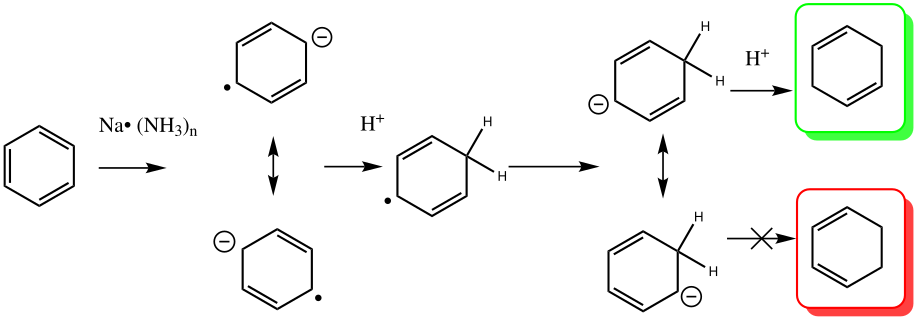
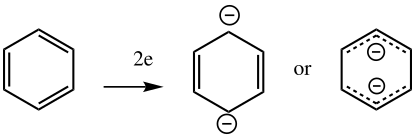
I noted briefly in discussing why Birch reduction of benzene gives 1,4-cyclohexadiene (diagram below) that the geometry of the end-stage pentadienyl anion was distorted in the presence of the sodium cation to favour this product. This distortion actually has some pedagogic value, and so I elaborate this here.

The starting point is now the molecular orbitals of benzene, and in particular the lowest unoccupied set (LUMO), which is doubly degenerate (in energy).

First of the pair of degenerate lowest unoccupied MOs of benzene. Click for 3D.

Second of the pair of degenerate lowest unoccupied MOs of benzene. Click for 3D.

An (overall) two-electron reduction of benzene (followed by protonation) can formally at least place the two electrons into either of these orbitals. Doing so would lower the energy of the occupied orbital, and hence induce a geometric distortion as illustrated below. In effect, the outcome is an (antiaromatic) di-anion with either two short and four long bonds, or the alternative of four shorter and two long bonds. The proximate presence of a solvated sodium cation now clearly breaks this degeneracy; the coordination preference of Na+ (and a proton) favours the former over the latter, and the outcome is as shown in the previous post.

The orbitals of benzene are frequently included in undergraduate teaching, but here we have a direct use for the LUMO pair in explaining the outcome of the reduction of benzene by electrons. It also links into what happens when anti-aromaticity is avoided (when a  4n π-electron system distorts to avoid it).

Postscript:  The computed structure of benzene di-anion is shown below. It is 19.5 kcal/mol lower than the alternative valence bond isomer.

Stable form. Click for 3D.


Less stable form. Click for 3D.

The mechanism of the Birch reduction. Part 3: reduction of benzene

Tuesday, December 4th, 2012

Birch reduction of benzene itself results in 1,4-cyclohexadiene rather than the more stable (conjugated) 1,3-cyclohexadiene. Why is this?

The mechanism, as elaborated in the previous two posts, involves a one-electron transfer from a sodium atom to form the radical anion, which is then protonated in a second step, and this is again reduced to form a pentadienyl anion in the penultimate step.[1] The question now becomes why does this anion protonate to give predominantly the less stable diene product? The answer involves the actual structure of this anion. A calculation at the ωB97XD/6-311+G(d,p)/SCRF=acetonitrile level for the ion pair comprising the cyclohexadienyl anion and a Na(NH3)3+ counterion is shown below.

Structure of the cyclohexadienyl ion pair. Click for 3D.

From this, it appears that the sodium cation is η2 coordinated to each of two relatively localised double bonds (1.37Å), resulting in the negative charge accumulating on just the one carbon (red arrow), this being the carbon that then exclusively receives a final proton. The highest energy (-0.115 au) natural bond orbital (NBO) also emerges as being located on this carbon (the next two highest energy NBOs only come in at -0.303 au, and reside on each of the localised alkene bonds).

The highest energy NBO orbital. Click for 3D.

The molecular electrostatic potential in effect integrates over all the electrons (not just those in the highest orbital), resulting in a function that measures the attractiveness of any point to a proton (red). It too shows that the most attractive region (red) for a proton is again on this carbon.

Molecular electrostatic potential. Click for 3D.

There is even evidence from crystal structures that this sort of motif is possible. Thus the dianion of 1,4-diphenylbenzene (with two Na(thf)3+ counter-ions) reveals[2] this type of coordination.  The buckling seen in the above mono-anion is inhibited by the presence of cations on both sides of the di-anion, but the pattern of short/long bonds seen above also manifests in the crystal structure.

Crystal model. Click for 3D.

So the take home message is that the counter-ion (solvated sodium cations) in the Birch reduction  of benzene itself may coordinate to the anionic intermediates in the reductive process, and the resulting geometry of this ion-pair determines the eventual product of protonation.

References

  1. H.E. Zimmerman, and P.A. Wang, "Regioselectivity of the Birch reduction", Journal of the American Chemical Society, vol. 112, pp. 1280-1281, 1990. https://doi.org/10.1021/ja00159a078
  2. J.H. Noordik, H.M. Doesburg, and P.A.J. Prick, "Structures of the sodium–<i>p</i>-terphenyl ion pairs: disodium terphenylide–tetrahydrofuran (1/6) and disodium diterphenylide terphenyl–1,2-dimethoxyethane (1/6)", Acta Crystallographica Section B Structural Crystallography and Crystal Chemistry, vol. 37, pp. 1659-1663, 1981. https://doi.org/10.1107/s0567740881006833

The mechanism of the Birch reduction. Part 2: a transition state model.

Monday, December 3rd, 2012

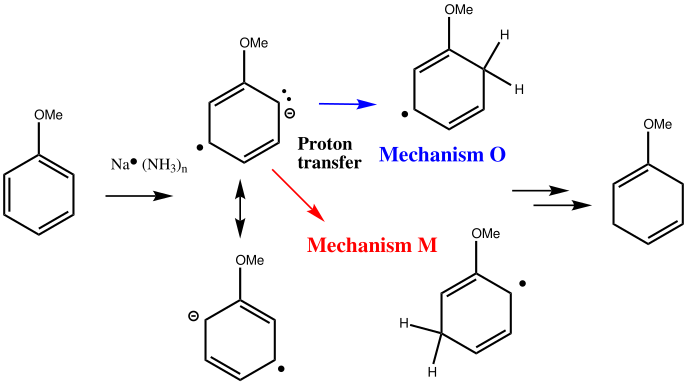
I promised that the follow-up to on the topic of Birch reduction would focus on the proton transfer reaction between the radical anion of anisole and a proton source, as part of analysing whether the mechanistic pathway proceeds O or M.

To add some context, Hammond’s postulate [1] states that “the structure of a transition state resembles that of the species nearest to it in free energy.” If the structure of the transition state for proton transfer above resembles that of the radical anion precursor we would call this an early transition state and it would be a reasonable approximation to infer properties of the reaction from the properties of that radical anion. The previous post explored those properties via the computed molecular electrostatic potential (MEP) and the highest energy NBO (natural bond orbitals, which are used here instead of molecular orbitals). Unfortunately, they did not agree with each other. Remember that Hammond’s postulate dates from 1955, an era when it was not practical to compute the structure of a transition state directly using quantum mechanics (certainly not so for such a complex reaction as that shown above). Indeed, one might argue that such a structure has only become computable in a practical sense very recently! As I showed previously, the radical ion-pair resulting from a 1-electron transfer from sodium to anisole has a dipole moment of ~11.6D, and the reaction is conducted in a solvent of medium polarity. This combination means that one really is obliged to take into account the dielectric of the solvent, and indeed any strong explicit hydrogen bonds that might be present. The codes for doing this have really only recently become robust enough to tackle such an endeavour[2], which might explain why such calculations are not yet abundant, or ubiquitously cited in the text books.

Proton transfer for M mechanism. Click for 3D.

The proton transfer via one M mechanism is shown above. The proton source is ammonia, which is known from experiment to lead to sluggish reactions (the more acidic t-butanol is often added to speed up the reaction), but we can see that the transition state is very late, νi 423.8 cm-1. The N…H bond is largely broken, and the C-H bond is mostly formed. The dipole moment is 7.7D, also different from that of the reactant. Perhaps, knowing this, it is not too surprising that inferences based on Hammond’s postulate as applied to the reactant are not reliable. The value of ΔG298computed from this model is 22.8 kcal/mol, which is on the high-ish side for a reaction to occur readily at room temperatures or below.[3] This nevertheless nicely conforms what we already know, that a more acidic proton donor is needed to achieve a fast reaction.

Proton transfer for O mechanism. Click for 3D.

The proton transfer via one O mechanism is similar, but a tad less “late”. This already raises doubts about application of Hammond’s postulate to this system; one cannot really compare two reactions in which each reactant differs in its resemblance to its transition state. The dipole moment of this alternative transition state is also 7.7D, but the transition imaginary mode is much higher at νi 869 cm-1. The free energy barrier is 21.0, some 1.8 kcal/mol lower than the barrier for the M mechanism. This corresponds to a rate about 21 times faster for O over M (at 298K).

To conclude, we characterise two (of the four) isomeric transition states for protonation of the radical anion intermediate in the Birch reduction of anisole. These two transition states are actually different in several subtle regards, differences which would not have manifested if only the properties of the reactant had been considered. The final word must be that the text books are likely correct on this one, although a little more work is still needed to tidy up loose ends.  

References

  1. G.S. Hammond, "A Correlation of Reaction Rates", Journal of the American Chemical Society, vol. 77, pp. 334-338, 1955. https://doi.org/10.1021/ja01607a027
  2. J. Kong, P.V.R. Schleyer, and H.S. Rzepa, "Successful Computational Modeling of Isobornyl Chloride Ion-Pair Mechanisms", The Journal of Organic Chemistry, vol. 75, pp. 5164-5169, 2010. https://doi.org/10.1021/jo100920e
  3. H.E. Zimmerman, and P.A. Wang, "Regioselectivity of the Birch reduction", Journal of the American Chemical Society, vol. 112, pp. 1280-1281, 1990. https://doi.org/10.1021/ja00159a078