Posts Tagged ‘catalysis’

Chemistry rich diagrams: do crystal structures carry spin information? Iron-di-imine complexes.

Sunday, June 18th, 2017

The iron complex shown below forms the basis for many catalysts.[1] With iron, the catalytic behaviour very much depends on the spin-state of the molecule, which for the below can be either high (hextet) or medium (quartet) spin, with a possibility also of a low spin (doublet) state. Here I explore whether structural information in crystal structures can reflect such spin states.

We studied this a few years back and the talk I gave on the topic included some of our first statistical explorations of the CSD (Cambridge structure database). Here I update those searches, using the search query (DOI: 10.14469/hpc/2675) shown below. The di-imine ligand contains only 3-coordinate atoms, whilst the iron is 5-coordinate. The angles subtended at the Fe and group X=NM (any non-metal atom) are as defined below.

The resulting scatterplot is shown below and contains a rich variety of phenomena.

  1. In the bond length region of 1.85-1.95Å one sees three clusters, one arranged on the diagonal indicating both N-Fe lengths are the same and two off the diagonal which indicates one length is ~0.1Å longer than the other.
    • To explain this, one needs to know that 5-coordinate Fe has a trigonal bipyramidal shape in which one X=NM group subtends an (anti-periplanar)  angle of ~180° at Fe with one of the ring nitrogens and the other two X=NM groups each subtend an angle of <120° with the other ring nitrogen. The result is that if the group X has the appropriate (electron withdrawing) properties, the two N-Fe bond lengths are no longer equal. If group X is more passive, the two N-Fe bond lengths may remain more equal.
  2. A second cluster occurs at ~2.00-2.1Å, mostly along the diagonal but with hints of smaller off-diagonal clusters.
  3. A third feature occurs at ~2.1-2.3Å, where now the off-diagonal clusters contain more examples than are on the diagonal itself.

Clearly, there is more going on here than can be explained simply by the orientation of X=NM with respect to the Fe-N bond axis. That something is the spin-multiplicity of the molecule. With the Fe complex shown above, this can be one of doublet (one unpaired electron), quartet (three unpaired electrons) or hextet (five unpaired electrons). To gain insight into how this affects the bond lengths, some calculations are needed, using X=Cl, R=H. Here they are done at the TPSSH/Def2-TZVPP level. In fact it is well-known[2] that the energy separations of low/medium/high spin Fe complexes are highly sensitive to the functional, but TPSSH seems to be amongst the best. This shows that the energy ordering of the three states using this particular method is hextet (0.0, DOI: 10.14469/hpc/2676) < quartet (10.5, DOI: 10.14469/hpc/2677) < doublet (13.2 kcal/mol, DOI: 10.14469/hpc/2678), with the bond lengths shown below (for X=Cl).

We might make tentative hypotheses based on these values:

  1. The off-diagonal bottom left clusters (1 in list above) might arise from doublet states.
  2. The off-diagonal top right clusters (3 in list above) might arise from sextet states.
  3. The cluster (2 in list above) might be quartet states for which X is not sufficiently electronegative to induce bond length discriminations.
  4. It is worth noting that the energy span between the three states for the above molecule is only ~13 kcal/mol, which is small enough to be altered by substituents.

Testing these hypotheses requires knowledge of the spin state of all the entries in any cluster. This information is unfortunately not carried by the CSD, which has relatively little information over and above structural data. Each entry would have to be individually inspected. Indeed the spin state of many of these complexes may not even be known. Nevertheless, it would be great to repeat the graphs shown above as a function of known spin state so that the (again I repeat tentative) hypotheses might be confirmed or refuted.


This article evaluates a whole host of functionals against e.g. the spin-state energy separations of the Fe2+ ion. As it happens, TPSSH was not one that was evaluated, but in fact it gives more or less the best match to experiment. Thus Esinglet-Equintet obs = 85.6 kcal/mol, calc 92.4; Etriplet-Equintet obs 56.1, calc 59.5 kcal/mol. A hypothesis therefore is that the TPSSH functional is a reasonable one to go exploring such high-spin species.

References

  1. M.P. Shaver, L.E.N. Allan, H.S. Rzepa, and V.C. Gibson, "Correlation of Metal Spin State with Catalytic Reactivity: Polymerizations Mediated by α‐Diimine–Iron Complexes", Angewandte Chemie International Edition, vol. 45, pp. 1241-1244, 2006. https://doi.org/10.1002/anie.200502985
  2. P. Verma, Z. Varga, J.E.M.N. Klein, C.J. Cramer, L. Que, and D.G. Truhlar, "Assessment of electronic structure methods for the determination of the ground spin states of Fe(<scp>ii</scp>), Fe(<scp>iii</scp>) and Fe(<scp>iv</scp>) complexes", Physical Chemistry Chemical Physics, vol. 19, pp. 13049-13069, 2017. https://doi.org/10.1039/c7cp01263b

Sharpless epoxidation, enantioselectivity and conformational analysis.

Thursday, January 3rd, 2013

I return to this reaction one more time. Trying to explain why it is enantioselective for the epoxide product poses peculiar difficulties. Most of the substituents can adopt one of several conformations, and some exploration of this conformational space is needed.

sharpless-binuclear

Amongst the conformational possibilities are the two rotations shown below. The blue rotates the ester with respect to the Ti-O-C unit, and the red rotates within the ester group itself. In fact the conformations of esters almost invariably adopt the first conformation shown, a s-cis orientation where one lone pair from the alkoxy group is anti to the axis of the carbonyl group (red rotation). Crystal structures of binuclear titanoxy compounds show both options for the blue rotation.sharpless-conf

One might imagine that there are two rotations about the C-O and O-Ti bonds in the iPr-O-Ti fragment as well. Whilst some of the many permutations are precluded simply on steric grounds, this still leaves a lot of possibilities. I have certainly not explored anything like the full set, but felt it worth reporting two conformations which have lower energies than the ones I reported in this post. If I find any yet lower in energy, I will add a postscript here.

New conformations (hydrogens removed for clarity)
R. Click for  3D

(R). Click for 3D

S Click for  3D.

(S). Click for 3D.

Old conformations

(R). Click for 3D.

(S). Click for 3D

(S). Click for 3D

The conformations differ in the regions indicated with a red arrow; the (R) being 10.1 and the (S) 7.5 kcal/mol lower in ΔG298. Note how a change in conformation of just one group can “knock-on” to other groups. The relative energies (kcal/mol) of these two new conformations are shown below, broken down into three components.

Enantiomer Total energy Attractive dispersion energy Free energy
R  +2.2  +2.9  +0.3
S  0.0  0.0  0.0

As before, (S) wins out clearly in terms of the dispersion attractions, which appears to be also reflected in the total energy of each system (in other words, differentiation from non-dispersion terms is not large). The free energy includes the entropy calculated from the normal vibrational modes using the rigid-rotor-harmonic-oscillator approximation. Whilst it too shows (S) to be the lower in energy, the distinction is less clear-cut than with the old conformations. One is often warned that the RRHO oscillator approximation is not good for molecules with many free rotors (which normally means about single bonds), although one normally might expect that comparing two very similar systems will result in a lot of cancellation of errors. But this result here does suggest that for the Sharpless system, which has many free-rotor groups, free energies might need taking with an extra dose of caution. I would also add that one does need to optimise the geometry of transition states for such systems with extraordinary accuracy; for these two examples, one does need to achieve values for the six “zero” translations and rotations of < 10 cm-1, which can involve heroic efforts (as it did here!). 

I end by reiterating my earlier conclusion. The Sharpless seems to be an example of a reaction which achieves stereospecificity by the accumulation of many very tiny effects (the dispersion attractions), and hence the use of a dispersion-corrected method is absolutely critical. It may also in part involve accumulation of another set of small effects contributing to the total entropy and hence free energy. What it appears not to be is a manifestation of a small number of larger effects (e.g. stereoelectronic alignments) which can be “named”. Chemistry by and large is always an attempt to achieve simple explanations by use of the latter; in other words developing simple heuristics or rules that can be transferred between systems. Where you have an effect that is in effect an accumulation of many terms, it is much more difficult to express this as simple transferable rules. Chemistry at such a level then is reduced simply to computing the sum of these small effects, rather than relying on simple rules. Have we perhaps reached this level with the Sharpless per-epoxidation? Would it be such fun if it were?

How to tame an oxidant: the mysteries of “tpap” (tetra-n-propylammonium perruthenate).

Monday, December 24th, 2012

tpap[1], as it is affectionately known, is a ruthenium-based oxidant of primary alcohols to aldehydes discovered by Griffith and Ley. Whereas ruthenium tetroxide (RuO4) is a voracious oxidant[2], its radical anion countered by a tetra-propylammonium cation is considered a more moderate animal[3]. In this post, I want to try to use quantum mechanically derived energies as a pathfinder for exploring what might be going on (or a reality-check if you like). 


tpap

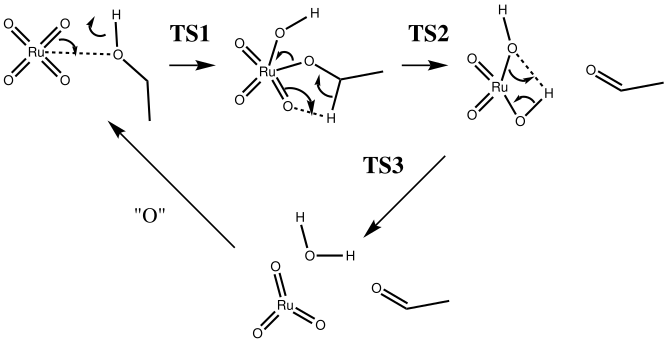
A basic (i.e. simple) mechanism for oxidation of an alcohol by RuO4 is shown above. Here I reality-check this mechanistic pathway with the help of ωB97XD/Def2-SVPF/SCRF=dichloromethane calculations. I should point out that since the mechanism is going to involve ion-pairs, it is particularly important to adopt a solvent=corrected model from the outset[4]. TS1 is the transition state for addition of the alcohol to the metal, a process which involves a synchronous proton transfer for the singlet electronic state.

TS1. Click for 3D

TS1 as a singlet. Click for 3D

tpap-TS1

Next comes TS2, which involves a hydride abstraction with concomitant reduction of the oxidation number of Ru(VIII) to Ru(VI). It is higher in free energy than TS1 by 1.1 kcal/mol. The barrier corresponds to ΔG298 37.1 kcal/mol. The process completes by low energy elimination of water (TS3) from the Ru(VI) species to give RuO3, which either undertakes further oxidisation to give RuO2, or might instead be re-oxidized back to RuO4 by oxygen (or an amine N-oxide) to complete a catalytic cycle.

TS1. Click for 3D

TS2 as a singlet. Click for 3D

tpap-TS2
TS2 as a triplet. Click for 3D

TS2 as a triplet. Click for 3D

RuO4-ts2-triplet

Right away, we have a problem; ΔG298‡ 37.1 kcal/mol is too high to be a realistic pathway, and yet RuO4 is a known oxidant[2]. One way out is to see if the triplet state energy of this system might be lower. Whilst the triplet-state reactant is higher in energy (by 27.5 kcal/mol) , TS2  is lower and corresponds to a reduced barrier of ΔG298 28.2 kcal/mol. Better, but a (small?) question mark still remains, since one would really expect the barrier to be ~20 kcal/mol or less for a “voracious oxidant”. Perhaps the incursion of triplets makes it indiscriminate? The spin density at the transition state is shown below, it extends across both oxygen, carbon and Ru.

ts2-triplet-spin

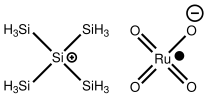
The tpap modification to this process is to use Ru(VII) in the form of a radical anion partnered with a quaternary ammonium cation. The basic reagent is therefore an ion-pair, hence the solvation approach mentioned earlier is needed to describe the energetics of such a species. The R alkyl groups here are modelled as methyl rather than propyl.

tpap1

TS2 for this radical-ion-pair is shown below, and it has ΔG298 30.8 kcal/mol, 2.6 kcal/mol higher than for the un-moderated reagent. In this case, the higher-spin quartet states are higher  in energy (by at least ~7.9 kcal/mol) and so do not participate. 

tpap-ts2

The spin density for tpap-TS2 also reveals it to be concentrated on Ru and one oxygen. Little is transferred to the ethanol, and we might infer then that this TS corresponds to transfer of two-electrons from the ethanol to the Ru-oxidant. This corresponds to Ru(VII) being reduced to Ru(V), i.e. a 2-electron oxidation/reduction. Unfortunately, an attempt to chart the reaction across a whole reaction coordinate (IRC) failed with SCF-convergence problems, which might suggest a change in the spin-configuration during this process. A more sophisticated multi-configurational approach might be needed to properly establish the electron dynamics of what is turning out to be a more complex reaction than first seemed.

tpap-ts2-spin-density

It is time to sum up what might have been learnt.

  1. A reality check on the energetics of a viable-looking mechanistic route can establish whether such a mechanism does have a low enough free-energy to be viable at (in this case) room temperatures.
  2. In fact, observing that our initial mechanism had too high an energy led us to discover a triplet-state path that was significantly lower in energy. However, even this is still a bit too high.
  3. The tpap-variation of the oxidant, which enforces a doublet-state upon the mechanism,has a barrier which appears to be similar to the triplet-state RuO4 mechanism. This too may be too high in energy. At least we can probably rule out a quartet-state mechanism.
  4. And so it seems appropriate to end here by noting that experimentally[3] the kinetics of tpap oxidations appear to be autocatalytic. The rate speeds up once some RuO3 (or RuO2) has been formed, and this suggests that perhaps a binuclear system containing two Ru atoms is a faster oxidant than the mononuclear variety. This reminds of the mechanism for Sharpless perepoxidation, where two metal centres were needed to control the stereochemistry.

So after all of this, we have not really found an explanation of why tpap is a more selective and moderate oxidant than the rapacious RuO4. But perhaps this is because more complex models with more than one Ru-atom need to be constructed. This would in turn allow the oxidative hydride abstraction from the alcohol to occur in a larger (7) ring transition state, which is always the preferred geometry for such transfers. If I find such, I will report back here.

References

  1. S.V. Ley, J. Norman, W.P. Griffith, and S.P. Marsden, "Tetrapropylammonium Perruthenate, Pr<sub>4</sub>N<sup>+</sup>RuO<sub>4</sub> <sup>-</sup>, TPAP: A Catalytic Oxidant for Organic Synthesis", Synthesis, vol. 1994, pp. 639-666, 1994. https://doi.org/10.1055/s-1994-25538
  2. D.G. Lee, U.A. Spitzer, J. Cleland, and M.E. Olson, "The oxidation of cyclobutanol by ruthenium tetroxide and sodium ruthenate", Canadian Journal of Chemistry, vol. 54, pp. 2124-2126, 1976. https://doi.org/10.1139/v76-304
  3. D.G. Lee, Z. Wang, and W.D. Chandler, "Autocatalysis during the reduction of tetra-n-propylammonium perruthenate by 2-propanol", The Journal of Organic Chemistry, vol. 57, pp. 3276-3277, 1992. https://doi.org/10.1021/jo00038a009
  4. J. Kong, P.V.R. Schleyer, and H.S. Rzepa, "Successful Computational Modeling of Isobornyl Chloride Ion-Pair Mechanisms", The Journal of Organic Chemistry, vol. 75, pp. 5164-5169, 2010. https://doi.org/10.1021/jo100920e

How to tame an oxidant: the mysteries of "tpap" (tetra-n-propylammonium perruthenate).

Monday, December 24th, 2012

tpap[1], as it is affectionately known, is a ruthenium-based oxidant of primary alcohols to aldehydes discovered by Griffith and Ley. Whereas ruthenium tetroxide (RuO4) is a voracious oxidant[2], its radical anion countered by a tetra-propylammonium cation is considered a more moderate animal[3]. In this post, I want to try to use quantum mechanically derived energies as a pathfinder for exploring what might be going on (or a reality-check if you like). 


tpap

A basic (i.e. simple) mechanism for oxidation of an alcohol by RuO4 is shown above. Here I reality-check this mechanistic pathway with the help of ωB97XD/Def2-SVPF/SCRF=dichloromethane calculations. I should point out that since the mechanism is going to involve ion-pairs, it is particularly important to adopt a solvent=corrected model from the outset[4]. TS1 is the transition state for addition of the alcohol to the metal, a process which involves a synchronous proton transfer for the singlet electronic state.

TS1. Click for 3D

TS1 as a singlet. Click for 3D

tpap-TS1

Next comes TS2, which involves a hydride abstraction with concomitant reduction of the oxidation number of Ru(VIII) to Ru(VI). It is higher in free energy than TS1 by 1.1 kcal/mol. The barrier corresponds to ΔG298 37.1 kcal/mol. The process completes by low energy elimination of water (TS3) from the Ru(VI) species to give RuO3, which either undertakes further oxidisation to give RuO2, or might instead be re-oxidized back to RuO4 by oxygen (or an amine N-oxide) to complete a catalytic cycle.

TS1. Click for 3D

TS2 as a singlet. Click for 3D

tpap-TS2
TS2 as a triplet. Click for 3D

TS2 as a triplet. Click for 3D

RuO4-ts2-triplet

Right away, we have a problem; ΔG298‡ 37.1 kcal/mol is too high to be a realistic pathway, and yet RuO4 is a known oxidant[2]. One way out is to see if the triplet state energy of this system might be lower. Whilst the triplet-state reactant is higher in energy (by 27.5 kcal/mol) , TS2  is lower and corresponds to a reduced barrier of ΔG298 28.2 kcal/mol. Better, but a (small?) question mark still remains, since one would really expect the barrier to be ~20 kcal/mol or less for a “voracious oxidant”. Perhaps the incursion of triplets makes it indiscriminate? The spin density at the transition state is shown below, it extends across both oxygen, carbon and Ru.

ts2-triplet-spin

The tpap modification to this process is to use Ru(VII) in the form of a radical anion partnered with a quaternary ammonium cation. The basic reagent is therefore an ion-pair, hence the solvation approach mentioned earlier is needed to describe the energetics of such a species. The R alkyl groups here are modelled as methyl rather than propyl.

tpap1

TS2 for this radical-ion-pair is shown below, and it has ΔG298 30.8 kcal/mol, 2.6 kcal/mol higher than for the un-moderated reagent. In this case, the higher-spin quartet states are higher  in energy (by at least ~7.9 kcal/mol) and so do not participate. 

tpap-ts2

The spin density for tpap-TS2 also reveals it to be concentrated on Ru and one oxygen. Little is transferred to the ethanol, and we might infer then that this TS corresponds to transfer of two-electrons from the ethanol to the Ru-oxidant. This corresponds to Ru(VII) being reduced to Ru(V), i.e. a 2-electron oxidation/reduction. Unfortunately, an attempt to chart the reaction across a whole reaction coordinate (IRC) failed with SCF-convergence problems, which might suggest a change in the spin-configuration during this process. A more sophisticated multi-configurational approach might be needed to properly establish the electron dynamics of what is turning out to be a more complex reaction than first seemed.

tpap-ts2-spin-density

It is time to sum up what might have been learnt.

  1. A reality check on the energetics of a viable-looking mechanistic route can establish whether such a mechanism does have a low enough free-energy to be viable at (in this case) room temperatures.
  2. In fact, observing that our initial mechanism had too high an energy led us to discover a triplet-state path that was significantly lower in energy. However, even this is still a bit too high.
  3. The tpap-variation of the oxidant, which enforces a doublet-state upon the mechanism,has a barrier which appears to be similar to the triplet-state RuO4 mechanism. This too may be too high in energy. At least we can probably rule out a quartet-state mechanism.
  4. And so it seems appropriate to end here by noting that experimentally[3] the kinetics of tpap oxidations appear to be autocatalytic. The rate speeds up once some RuO3 (or RuO2) has been formed, and this suggests that perhaps a binuclear system containing two Ru atoms is a faster oxidant than the mononuclear variety. This reminds of the mechanism for Sharpless perepoxidation, where two metal centres were needed to control the stereochemistry.

So after all of this, we have not really found an explanation of why tpap is a more selective and moderate oxidant than the rapacious RuO4. But perhaps this is because more complex models with more than one Ru-atom need to be constructed. This would in turn allow the oxidative hydride abstraction from the alcohol to occur in a larger (7) ring transition state, which is always the preferred geometry for such transfers. If I find such, I will report back here.

References

  1. S.V. Ley, J. Norman, W.P. Griffith, and S.P. Marsden, "Tetrapropylammonium Perruthenate, Pr<sub>4</sub>N<sup>+</sup>RuO<sub>4</sub> <sup>-</sup>, TPAP: A Catalytic Oxidant for Organic Synthesis", Synthesis, vol. 1994, pp. 639-666, 1994. https://doi.org/10.1055/s-1994-25538
  2. D.G. Lee, U.A. Spitzer, J. Cleland, and M.E. Olson, "The oxidation of cyclobutanol by ruthenium tetroxide and sodium ruthenate", Canadian Journal of Chemistry, vol. 54, pp. 2124-2126, 1976. https://doi.org/10.1139/v76-304
  3. D.G. Lee, Z. Wang, and W.D. Chandler, "Autocatalysis during the reduction of tetra-n-propylammonium perruthenate by 2-propanol", The Journal of Organic Chemistry, vol. 57, pp. 3276-3277, 1992. https://doi.org/10.1021/jo00038a009
  4. J. Kong, P.V.R. Schleyer, and H.S. Rzepa, "Successful Computational Modeling of Isobornyl Chloride Ion-Pair Mechanisms", The Journal of Organic Chemistry, vol. 75, pp. 5164-5169, 2010. https://doi.org/10.1021/jo100920e

Non covalent interactions in the Sharpless transition state for asymmetric epoxidation.

Wednesday, December 19th, 2012

The Sharpless epoxidation of an allylic alcohol had a big impact on synthetic chemistry when it was introduced in the 1980s, and led the way for the discovery (design?) of many new asymmetric catalytic systems. Each achieves its chiral magic by control of the geometry at the transition state for the reaction, and the stabilizations (or destabilizations) that occur at that geometry. These in turn can originate from factors such as stereoelectronic control or simply by the overall sum of many small attractions and repulsions we call dispersion interactions. Here I take an initial look at these for the binuclear transition state shown schematically below.

sharpless-binuclear

The NCI method was described recently[1] as a method for probing the non-covalent electron density in a molecule. It does this by cleverly filtering out the covalent density via computing a first derivative of the density ρ(r) called the reduced density gradient and taking the band of values appropriate for non-covalent densities. By inspecting the Laplacian of these densities at any point in space, the region can be characterised as attractive, repulsive or neutral. Visually, this information can be transformed into isosurfaces which are colour coded depending on whether the region is attractive (=blue to green) or repulsive (yellow to red). In the previous post, it turned out that the attractive contributions to the dispersion energies differed for the two diasteromeric transition states (in the conformations calculated) by about 2.6 kcal/mol. Shown below are the two NCI surfaces for these which allow one to get some insight into where this overall contribution might come from (together with weak hydrogen bonds and other non-covalent contributions).

(R)-diastereomer. NCI surfaces

(R)-diastereomer. Click for NCI surfaces

(S)-diastereomer.  Click for  NCI surfaces.

(S)-diastereomer. Click for NCI surfaces.

Yes, it is a very complex diagram, and you really do need to study it by obtaining the 3D model and rotating it around to explore the 3D space. I would note that it is possible to integrate the NCI function (see [2] for an example and leading references) and hence try to obtain further insights. I highlight just one here;  the terminal  =CH2 of the allyl alcohol points into empty space for  (R), but folds back to interact with the catalyst for  (S). 

Finally, in case you are asking how do I obtain an NCI surface, I have created a little web site where you can submit a computed (or indeed experimental) electron density cube for processing using Jmol. Give it a go and see how it works (and thanks to  Julia  Contreras-Garcia and  Bob Hanson for putting this together).

References

  1. E.R. Johnson, S. Keinan, P. Mori-Sánchez, J. Contreras-García, A.J. Cohen, and W. Yang, "Revealing Noncovalent Interactions", Journal of the American Chemical Society, vol. 132, pp. 6498-6506, 2010. https://doi.org/10.1021/ja100936w
  2. J.L. Arbour, H.S. Rzepa, J. Contreras‐García, L.A. Adrio, E.M. Barreiro, and K.K.(. Hii, "Silver‐Catalysed Enantioselective Addition of OH and NH Bonds to Allenes: A New Model for Stereoselectivity Based on Noncovalent Interactions", Chemistry – A European Journal, vol. 18, pp. 11317-11324, 2012. https://doi.org/10.1002/chem.201200547

Why the Sharpless epoxidation is enantioselective!

Monday, December 17th, 2012

Part one on this topic showed how a quantum mechanical model employing just one titanium centre was not successful in predicting the stereochemical outcome of the Sharpless asymmetric epoxidation. Here in part 2, I investigate whether a binuclear model might have more success. The new model is constructed using two units of Ti(OiPr)4, which are likely to assemble into a dimer such as that shown below (in this crystal structure, some of the iPr groups are perfluorinated).

WAWBUR. Click for 3D

WAWBUR. Click for 3D

This allows one to construct a transition state model as follows.

sharpless-binuclear

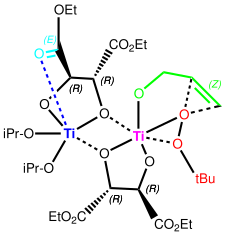
  1. Two iPrOH molecules are displaced by diethyl tartrate for each half of the Ti2(OiPr)8, with the two metals then becoming bridged by one oxygen from each tartrate. 
  2. Two further iPrOH are then displaced from the second Ti by one of the substrate (allyl alcohol) and one of the oxidant (t-butyl peroxide).
  3. The oxygen transfer now proceeds via the second (hexacoordinate) Ti. The first Ti also achieves hexa-coordination via the carbonyl oxygen of one of the tartrate ester groups. It is the geometric properties of such a hexa-coordinated Ti that in part accounts for the subtle properties of this system. Put more simply, the extra crowding at the catalytic centre of the binuclear complex restricts the space available for the transition state, making it more selective for producing one enantiomer of the epoxide.

The (ωB97XD/6-311G(d,p)/SCRF=dichloromethane) optimised geometries are shown below. The reaction centre is shown in a magenta box for the disfavoured (R) epoxide and in green for the favoured (S) epoxide (the hydrogens are not shown for clarity; if you want to see them, click on the image to get the 3D model).

(R). Click for 3D.

(S). Click for 3D

(S). Click for 3D

You can see immediately that the biggest differences between the two occur in the bottom right corner. The t-butyl-O-O group folds in for (S) and this has a knock on effect on the two ester groups of the bottom right tartrate (the disposition of the tartrate on the top left is hardly changed). This folding is mediated by the hexa-coordination of the catalytic metal centre, together with dispersion interactions occurring to the t-butyl group, and this is helped by buttressing from the second Ti centre and its substituents.

The free energy difference ΔΔG298 favours the (S) for over the (R) by 3.0 kcal/mol. This free energy difference corresponds to an enantiomeric excess of >99%. In terms of attractive dispersion forces alone, (S) is favoured over (R) by -2.6 kcal/mol, and hence attractive dispersion seems to be the dominant term distinguishing between the two diastereomeric transition states. This aspect of non-covalent-interactions will be investigated in another post.

KOGYEK. Click for 3D.

KOGYEK, a Ti oligomer. Click for 3D.

One should however finally ask if this is the best model?

  1. Not all conformations have been explored in these models, although (S) was built from (R) as a template, so many features are the same. Nevertheless, further conformational exploration may be useful.
  2. Alkoxytitaniums are known to also form higher oligomers, such as the one shown above.[1]. If their concentration is significant, these too might be catalysing the reaction. Only computation would establish if they are capable of greater stereoselectivity/faster kinetics.

So we could end up with an answer that a number of oligomeric transition states are involved. But the one presented here, if not necessarily the most accurate or “best” model, seems good enough to form a template for further exploratory computation to see if the enantioselectivity of the reaction might be improved upon further.

References

  1. V.W. Day, T.A. Eberspacher, W.G. Klemperer, C.W. Park, and F.S. Rosenberg, "Solution structure elucidation of early transition metal polyoxoalkoxides using oxygen-17 NMR spectroscopy", Journal of the American Chemical Society, vol. 113, pp. 8190-8192, 1991. https://doi.org/10.1021/ja00021a068

Why is the Sharpless epoxidation enantioselective? Part 1: a simple model.

Sunday, December 9th, 2012

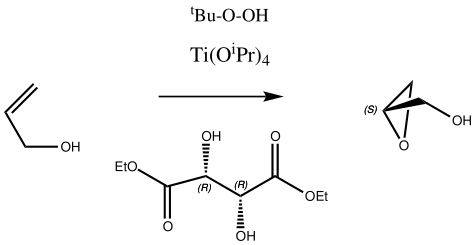
Sharpless epoxidation converts a prochiral allylic alcohol into the corresponding chiral epoxide with > 90% enantiomeric excess[1],[2]. Here is the first step in trying to explain how this magic is achieved.

The scheme above shows how (achiral) prop-2-enol is converted using the asymmetric catalyst (R,R)-diethyl tartrate  and t-butyl hydroperoxide as oxidant into the (S)-chiral epoxide. The first step is to try to construct a simple model for the reaction, and in this post I will start by using one titanium as the core of the stage on which these actors will perform. This is the mononuclear model. One can simply envisage that a molecule of tartrate displaces two iPrOH molecules from Ti(OiPr)4 in an ester exchange to form a Ti(OiPr)2(tartrate) complex. The remaining two iso-propanols are then replaced by one molecule each of prop-2-enol and tBu-OOH. Now we have the species Ti(OOtBu)(O-CH2CH=CH2)(tartrate) as the starting point from which a transition state for oxygen transfer to the alkene to form the (S) epoxide (for R,R tartrate) can be constructed (ωB97XD/6-311G(d,p)/SCRF=dichloromethane model).

Mononuclear TS for S-epoxide. Click for 3D.

Mononuclear TS for R-epoxide. Click for 3D.

IRC for mononuclear model showing oxygen atom transfer

The transition state leading to (S) epoxide emerges as 0.86 kcal/mol higher in ΔG than the (R), contrary to the experimental result where (S) is formed with high specificity[1]. Inspecting the model, it is clear that the allylic alcohol substrate sits in a very open pocket un-encumbered by any nearby groups (bottom right in the animation above) and so the lack of π-facial selectivity is perhaps not surprising.

To elaborate the model, I will turn to a crystal structure determined for a Ti complex bearing a t-butyl peroxy group[3], showing it to be a binuclear complex (magenta arrows indicate the peroxy groups) with bridging oxygen atoms.

ZUKJIY. Click for 3D

In the follow-up post,  we will see whether these binuclear models can do better at explaining the enantioselectivity of the Sharpless reaction.


See this post for an example of such “single-site” catalysis using Mg or this article for an example using silver[4].

A binuclear Zn catalyst with similar oxy-bridges is used to co-polymerise epoxides themselves with carbon dioxide[5]. Many such binuclear complexes are known.

The other element for which a number of examples of such t-butyl peroxy bonding are known is oddly enough, lithium.[6]

MUKVAQ. Click for 3D.


Postscript: Two lower energy conformations for the S and R transition states have been found, the latter being 1.6 kcal/mol lower in free energy. 

S R
S-new R-new

References

  1. J.M. Klunder, S.Y. Ko, and K.B. Sharpless, "Asymmetric epoxidation of allyl alcohol: efficient routes to homochiral .beta.-adrenergic blocking agents", The Journal of Organic Chemistry, vol. 51, pp. 3710-3712, 1986. https://doi.org/10.1021/jo00369a032
  2. R.M. Hanson, and K.B. Sharpless, "Procedure for the catalytic asymmetric epoxidation of allylic alcohols in the presence of molecular sieves", The Journal of Organic Chemistry, vol. 51, pp. 1922-1925, 1986. https://doi.org/10.1021/jo00360a058
  3. G. Boche, K. Möbus, K. Harms, and M. Marsch, "[((η<sup>2</sup>-<i>tert</i>-Butylperoxo)titanatrane)<sub>2</sub>· 3 Dichloromethane]:  X-ray Crystal Structure and Oxidation Reactions", Journal of the American Chemical Society, vol. 118, pp. 2770-2771, 1996. https://doi.org/10.1021/ja954308f
  4. J.L. Arbour, H.S. Rzepa, J. Contreras‐García, L.A. Adrio, E.M. Barreiro, and K.K.(. Hii, "Silver‐Catalysed Enantioselective Addition of OH and NH Bonds to Allenes: A New Model for Stereoselectivity Based on Noncovalent Interactions", Chemistry – A European Journal, vol. 18, pp. 11317-11324, 2012. https://doi.org/10.1002/chem.201200547
  5. A. Buchard, F. Jutz, M.R. Kember, A.J.P. White, H.S. Rzepa, and C.K. Williams, "Experimental and Computational Investigation of the Mechanism of Carbon Dioxide/Cyclohexene Oxide Copolymerization Using a Dizinc Catalyst", Macromolecules, vol. 45, pp. 6781-6795, 2012. https://doi.org/10.1021/ma300803b
  6. W. Uhl, M. Reza Halvagar, and M. Claesener, "Reducing GaH and GaC Bonds in Close Proximity to Oxidizing Peroxo Groups: Conflicting Properties in Single Molecules", Chemistry – A European Journal, vol. 15, pp. 11298-11306, 2009. https://doi.org/10.1002/chem.200900746

Stereoselectivities of Proline-Catalyzed Asymmetric Intermolecular Aldol Reactions.

Sunday, April 22nd, 2012

Astronomers who discover an asteroid get to name it, mathematicians have theorems named after them. Synthetic chemists get to name molecules (Hector’s base and Meldrum’s acid spring to mind) and reactions between them. What do computational chemists get to name? Transition states! One of the most famous of recent years is the Houk-List.

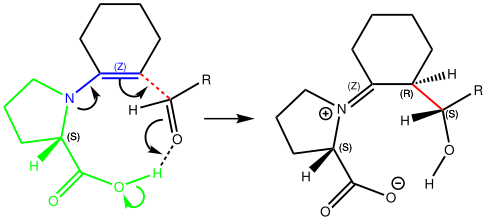
In the last 12 years or so, the area of enantioselective organocatalysis has blossomed, and an important example involves the asymmetric amino acid (S)-proline (below, shown in green). As its enamine derivative (below, shown in blue), it can catalyse the aldol condensation with an aldehyde or ketone to form two new adjacent stereogenic centres resulting from C-C bond formation (shown below as (R) and (S) as attached to the carbons connected to the red bond).

The Houk-List transition state was located for this reaction, and as a useful model for rationalising the stereospecificity of this reaction it has become justly famous (although to be fair, other models have also been proposed). The challenge is to identify the factors selecting for just one stereoisomer (S,R in this case) over the other three (a similar challenge is described in this post for the heterotactic polymerisation of lactide). Houk, List and co-workers constructed their model (the example shown below is for R=isopropyl)  as follows.

  1. They employed a B3LYP/6-31G(d) density functional model.
  2. The geometry of the transition state was located for all four diastereomeric transition states using this method. Importantly, this geometry was for the gas phase, which provided a value for ΔG298.
  3. These free energies were then corrected for the (relative) solvation energies of the four transition states. This was essential, since in the mechanism shown above, a neutral reactant gives a zwitterionic product, via a partially ionic transition state (indeed, the dipole moment of these transition states is around 10D). 
  4. The resultant Houk-List model then predicted that of the four isomeric transition states, the lowest was (as shown above) the (S,R) diastereomer.
  5. This particular transition state geometry has an interesting feature involving a 9-membered ring, large enough to accommodate a linear proton transfer without strain, by virtue of a trans double bond motif (the C=N bond). The (S,S) and (R,S) isomers have a cis motif instead at this location.

    Houk-List transition state. Original geometry.

Well, this transition state is now nine years old. Unlike asteroids, or mathematical theorems, or indeed molecules and their reactions, a transition state is a slightly more ephemeral object. Its features and properties do rather depend on the particular quantum model used to construct it. There is one feature of the model, necessary in 2003, but no longer so in 2012. This was the use of a gas-phase optimised geometry, augmented at that geometry with a so-called single-point solvation energy correction. Nowadays, the solvation correction is included in the energy used in the geometry optimisation, which now properly reflects the effect of the solvation. Re-optimisation with this inclusion, at the ωB97XD/6-311G(d,p)/SCRF=dmso level thus updates the original Houk-List geometry.

(S,R) Houk-List transition state, updated geometry. Click for 3D

  1. The most significant changes involve the O…H—O bond lengths. Respectively 1.13/1.31Å in the original, they change to 1.06/1.40Å at the new level.
  2. The forming C-C bond changes in length from 1.89 to 2.05Å (the latter, it has to be said, being a much more “normal” value for a transition state). 
  3. Whilst these might not seem very great changes, we do not yet know how they might impact upon the relative free energies of the four transition states. Houk and List reported the (S,R), (R,R), (S,S) and (R,S) relative free energies as 0.0, 6.7, 7.8 and 4.6 kcal/mol. The updated values for (S,R), (R,R), (S,S) and (R,S) [click on preceding links to view models] are 0.0, 6.0, 5.7 and 5.4 kcal/mol [click on preceding links to view calculation archives], which represent only minor changes to these energies.
  4. The (S,S) diastereoisomer is an interesting outlier. The transition state normal mode wave numbers are -373, -481, -815 and -402 cm-1 respectively and the O…H…O bond lengths for (S,S) are 1.18 and 1.20Å, a rather more symmetrical proton transfer than the other three.

Which brings us to the main point; what is the origin of the diastereoselectivity? An NBO analysis can compare the total steric exchange energy (due to Pauli bond-bond repulsions) of the four isomers, which  turns out to be respectively 1214, 1221, 1235 and 1229 kcal/mol. In other words, the favoured isomer has the smallest steric exchange energy. Of course this one term is not the only contributing factor, and a more elaborate analysis will no doubt provide further insight.

So an update to the Houk-List transition state reveals the general characteristics are intact and it is still a very useful model for analysing stereoselectivity in proline organocatalysis.

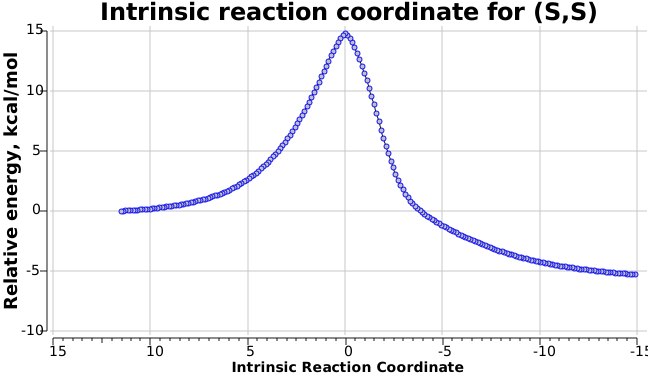
Postscript:  The Intrinsic reaction coordinate  (for (S,S) ) is shown below.


Rate enhancement of the Diels-Alder reaction inside a cavity

Saturday, October 30th, 2010

Reactions in cavities can adopt quite different characteristics from those in solvents. Thus first example of the catalysis of the Diels-Alder reaction inside an organic scaffold was reported by Endo, Koike, Sawaki, Hayashida, Masuda, and Aoyama (DOI: 10.1021/ja964198s), where the reaction shown below is speeded up very greatly in the presence of a crystalline lattice of the anthracene derivative shown below.

A Diels-Alder reaction. Click for animation.

Organic scaffold based on an anthracene derivative. Click for crystal structure.

Its difficult to be precise about how much faster, since the kinetics depend on reorganisation of the scaffold, the actual reaction kinetics, and diffusion of the products in and out of the cavity. It does however mean that a poor solution reaction (reflux, many hours, modest yield) can be accomplished in an hour or so at room temperature in high yield.

Some idea of what is going on can be probed using calculation. Because the host and the guest interact though van der Waals or dispersion forces, a new breed of density functional theory which takes these into account is used (ωB97XD). The basic assemblage comprises the reactants shown below, enclosed in a cage formed by four of the anthracene units. A total of 236 atoms. This is a pretty challenging size for a full-blown quantum mechanical calculation. Here, its been done using a reasonable basis set, 6-31G(d) and with a continuum solvation model applied (dichloromethane). If you are interested in this sort of thing, that is 2292 basis functions.  I started the calculations in mid September, and its taken more than six weeks to optimise (on 8-processor computers).

Firstly, the results for a control calculation in dichloromethane. The energies of activation of the two isolated reactants coming together at the transition state are calculated as:
ΔG298 29.5, ΔH 15.5, T.ΔS  -13.98 kcal mol-1 (ΔS -46.9 cal K-1mol-1)

which are of course the various contributions to the equation ΔG = ΔH – T.ΔS. Note in particular how the last term increases the free energy barrier by ~14 kcal mol-1! Using the equation Ln k/T = 23.76 – ΔG/RT, one can estimate a rate constant of ~4 x 10⁻⁶ hour-1 at 298K (i.e. very slow at room temperatures). If the unfavourable -T.ΔS term is ignored (ΔG = ΔH), the rate constant increases to ~9 x 10⁴ hour-1 at 298K (i.e. fast), quite a difference. What about the values when the reactants and transition state are surrounded by the host?

ΔG298 20.0, ΔH 16.5, T.ΔS -3.49 kcal mol-1 (ΔS -11.7 cal K-1 mol-1)

The key difference is that the last term is now  much smaller, this reduces the free energy of activation and the estimated rate constant at 298K is now ~ 0.01 s-1 (42.5 hour-1).  This magnitude of rate constant corresponds to a reasonably fast reaction at room temperatures.

Transition state for  Diels Alder inside a cavity. Click for 3D.

This post demonstrates that the fascinating area of supermolecular chemistry can be just as amenable to computational exploration as the more conventional reaction.


Reactions in supramolecular cavities – trapping a cyclobutadiene: ! or ?

Sunday, August 8th, 2010

Cavities promote reactions, and they can also trap the products of reactions. Such (supramolecular) chemistry is used to provide models for how enzymes work, but it also allows un-natural reactions to be undertaken. A famous example is the preparation of P4 (see blog post here), an otherwise highly reactive species which, when trapped in the cavity is now sufficiently protected from the ravages of oxygen for its X-ray structure to be determined. A colleague recently alerted me to a just-published article by Legrand, van der Lee and Barboiu (DOI: 10.1126/science.1188002) who report the use of cavities to trap and stabilize the notoriously (self)reactive 1,3-dimethylcyclobutadiene (3/4 in the scheme below). Again sequestration by the host allowed an x-ray determination of  the captured species!

Scheme for production of 1,3-dimethylcyclobutadiene 3 and CO2.

The colleague tells me he has himself already penned an article on the topic and submitted this to a conventional journal. However, their rules decree that whilst it is being refereed, I could not discuss the article here, or indeed even name its author. Assuming his article is published, I will indeed reveal his identity, so that he gets the credit he deserves! Meanwhile, I will concentrate in this blog purely on two other aspects of this reaction which caught my own eye after he brought the article to my attention.

The reaction involves imobilising a precursor 1 in a crystalline calixarene network as shown above, and then in situ photolysis to form the Dewar lactone 2. Further photolysis then results in extrusion of carbon dioxide and the formation of 1,3-dimethyl cyclobutadiene 3 and CO2, both still trapped in the host crystals. Thus imobilised, here they both apparently remain (at 175K) for long enough for their X-ray structure to be determined. What attracted me to this chemistry was the potential of this reaction as a nice example of a Diels Alder reaction occuring in a cavity. The first example of such catalysis was reported by Endo, Koike, Sawaki, Hayashida, Masuda, and Aoyama (DOI: 10.1021/ja964198s) and I have used this in my lectures for many years. This latter example however illustrates the promotion of a cycloaddition, which inside a cavity is accelerated by a factor of ~105, rather than of the reverse cycloelimination. I explain this to students by invoking entropy. Normally, when two molecules react together, there is an entropic penalty, which can add 8 or more kcal/mol to the free energy of activation of a bimolecular reaction in the absence of the cavity.

Structure of entrapped 1,3-dimethylcyclobutadiene, obtained from the CIF file provided via DOI: 10.1126/science.1188002

By a strange coincidence, my name is also on a recently published article (DOI: 10.1021/ol9024259) with other colleagues on the use of (Lewis) acid catalysts to accelerate a type of reaction known as the Prins. This involves the addition of an alkene to a carbonyl group. Now as it happens, the reaction in the scheme above showing 42 happens to combine these features; it is both a Diels-Alder cycloaddition and also involves an alkene adding to a carbonyl compound! It is therefore noteworthy that the claimed reaction 123 + CO2 is done in the presence of a strong acid catalyst, the guanidinium cation 5, which is itself part of the structure of the calixarene-based host. It is represented as X in the scheme above, and can also be identified in the above 3D model via the light blue atoms.

There are however crucial differences between these two earlier examples I quoted and the reaction of 23; the latter is in fact a cycloelimination and not a (cyclo)addition. In other words, according to literature precedent, the guanidinium cation-based cavity should act to accelerate the reverse cycloaddition 42 rather than the forward cycloelimination. Since the isomerisation 34 is thought to be fast, the question arises: how rapid is the reverse reaction 42? In particular, is it slow enough to allow X-ray diffraction data to be collected for 3/4 over the necessary period of 24 hours or more? Legrand, van der Lee and Barboiu do not address this point in their article. Nor is there discussion there of how the cavity and the acid catalyst might influence the position of the equilbrium 23 + CO2.

This is where calculations can help. At the B3LYP/6-311G(d,p) level four different models were selected.

  1. Model A is a simple gas phase calculation for the singlet state, which reveals the free energy barrier for 42 is already quite modest for a Diels-Alder reaction (more typical values are ~22 kcal/mol), due no doubt to the instability/reactivity of the cyclobutadiene. However, at 175K, that would still be quite sufficient to prevent the reverse reaction from occurring to any extent over the period of X-ray data collection.
  2. Model B adds a condensed phase (water) to the model. This serves in part to simulate the condensed crystal environment (which is pretty ionic being a tetra ion-pair). The barrier drops to 12.1 kcal/mol.
  3. Adding one guanidinium cation to both these models (C and D) which simulate the Prins conditions, drops the barrier to 8.3 kcal/mol (model 4).
  4. You can inspect details of any of the calculations by clicking on the digital repository entry (shown as dr in the table), where full data is available.

None of these models includes the entropic effects of full constraint in a cavity (which I estimated above as capable of reducing the free energy barrier for reaction by ~8 or more kcal/mol). If this correction is applied to model D, it would reduce the barrier to ~0 kcal/mol! The calculations also reveal that the reverse reaction 42 is exothermic, and this exothermicity is enhanced by the acid catalyst 5. It would be further enhanced by reducing the entropy of reaction by pre-organizing the reactants in the cavity. The tendency must therefore be for 3/4 to revert to 2 on purely thermodyamic grounds, and only the presence of a significant kinetic barrier would allow them to exist as separate species. This barrier, as one might infer from the calculations shown in the table below, may not be a large one. Even a barrier of 8 kcal/mol might require cooling to significantly lower than 175K to render the reaction slow on a ~24 hour timescale.

Model ΔG4 → 2
kcal/mol
ΔGreac 4 → 2 Singlet-triplet
separation
A. Gas phase,X=none dr ts 16.8 dr -3.5dr +5.7 dr
B. Continuum solvent (water),X=none dr ts 12.1dr -6.0 dr +7.7 dr
C. Gas phase,X=guanidinium+ dr ts 6.1 dr -19.5dr +2.1dr
D. Continuum solvent (water),X=guanidinium+ dr ts 8.3 dr -10.1 dr +7.7 dr

So I end my own speculations here on the nature of the reaction reported by Legrand, van der Lee and Barboiu by asking: are the products they claim (1,3-dimethylcyclobutadiene and carbon dioxide) capable of existing as separate species for long enough inside their cavity, even at 175K, to allow for the collection of X-ray data for a structure determination?

I tend to think probably not (? rather than !). But do decide for yourselves.


Archived as http://www.webcitation.org/5rpkn2Z5S on 08/08/2010. See also this post.