Posts Tagged ‘Chemistry’

Organocatalytic cyclopropanation of an enal: (computational) assignment of absolute configurations.

Saturday, September 1st, 2018

I am exploring the fascinating diverse facets of a recently published laboratory experiment for undergraduate students.[1] Previously I looked at a possible mechanistic route for the reaction between an enal (a conjugated aldehyde-alkene) and benzyl chloride catalysed by base and a chiral amine, followed by the use of NMR coupling constants to assign relative stereochemistries. Here I take a look at some chiroptical techniques which can be used to assign absolute stereochemistries (configurations).

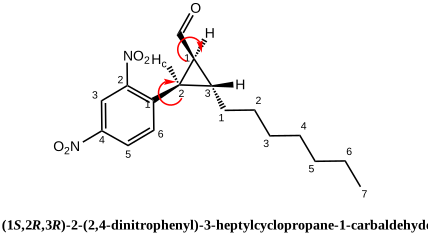
I will focus on the compound 4a, the major stereochemical product of this student laboratory reaction, with the stereochemistry as represented in e.g. the abstract of the main article[1] and shown below with added CIP (Cahn-Ingold-Prelog) notation as (1S,2R,3R);

Its enantiomer (not shown in the article) is of course;
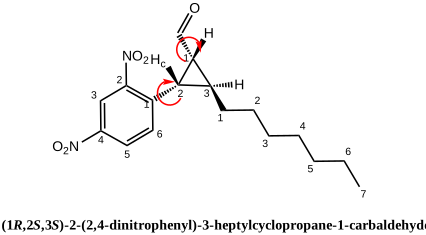
In the article supporting information[1]), the major diasteromer of 4a deriving from use of the S stereoisomer of the prolinol catalyst is reported as having an optical rotation (ORP) [α]D25 of -62.4°, p6 or -58.1°, p5), but the stereo-labels are not added there. On  p1 (“based on a student report”) 4a was however labelled as (1R,2S,3S) and the chirality (S) of the catalyst used was also noted in the adjacent experimental procedure. One might then reasonably match (1R,2S,3S)-4a to the S-catalyst and hence (1S,2R,3R)-4a to the R-catalyst.  However, in a laboratory environment where both S and R catalysts are in circulation, it is always useful to have procedures available for independent checks.

There are two methods of assigning absolute chirality, crystallography and chiroptical spectroscopy. The former does require crystalline samples; the latter can use solutions. To cut to the chase, the former method was used for a related compound where the n-heptyl group above is replaced by a p-chlorophenyl substituent (perhaps because the latter imparts suitable crystallinity). On p S123 of the SI of an earlier article[2] the assignment for the p-chlorophenyl derivative was as (1R,2S,3S)-4a for S-catalyst (see DOI: 10.5517/ccdc.csd.cc1mcqg5 OZAXEU). But this procedure is not entirely foolproof; the stereochemistry is decided by interactions between often bulky substituents at the transition state and it might be that here the p-chlorophenyl derivative has different properties from n-heptyl. Moreover bulk solutions may be different in their composition from single crystals. So it is useful to obtain independent proof.

An absolute assignment procedure based on chiroptical methods was first famously used by Kirkwood in 1951 (the Fischer convention is confirmed as a structurally correct representation of absolute configuration).[3] Such calculations need to take into account e.g. rotational conformers about the two bonds labelled in red above. In the previous post, I had noted variation of up to 2Hz in the calculated 3JHH coupling constants as a result of this mobility. This variation is probably too small to really influence any relative stereochemical interpretations, but is the same true for chiroptical assignments?

In Table 1 we can see whether this is still true for the predicted optical rotation of compound 4a, using two different functionals for the calculation (B3LYP and M062X respectively). The results rather surprised me; a simple bond rotation of an aryl or carbonyl group can invert the sign of the rotation. Clearly the observed optical rotation of -62.4° arises from a suitable combination of different Boltzmann populations of the individual bond rotamers, but to combine these accurately you would need to know the solution populations themselves very accurately and that is quite a challenge. So at this stage, we do not really have totally convincing independent evidence of whether the observed negative optical rotation corresponds to (1S,2R,3R)-4a or to its enantiomer (1R,2S,3S).

Table 1. Calculated Optical rotations for (1S,2R,3R)-4a. 

FAIR Data DOI: 10.14469/hpc/4678

Conformer

ORP [α]D, B3LYP+GD3BJ/Def2-TZVPP/SCRF=chloroform

ORP [α]D, M062X/Def2-TZVPP/SCRF=chloroform

4 +376 +238
3 -335 -301
2 -247 -223
1 +710 +522

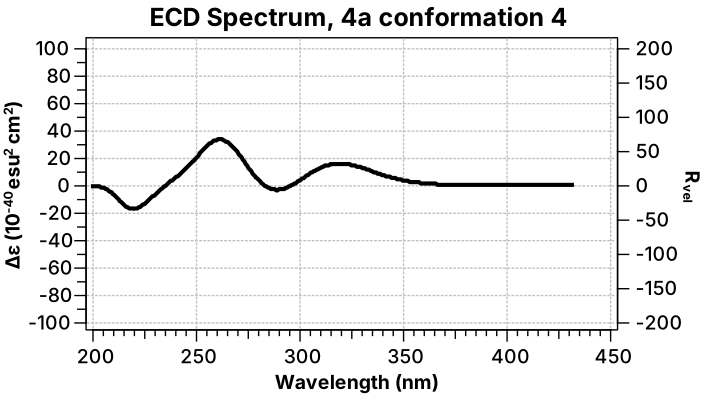
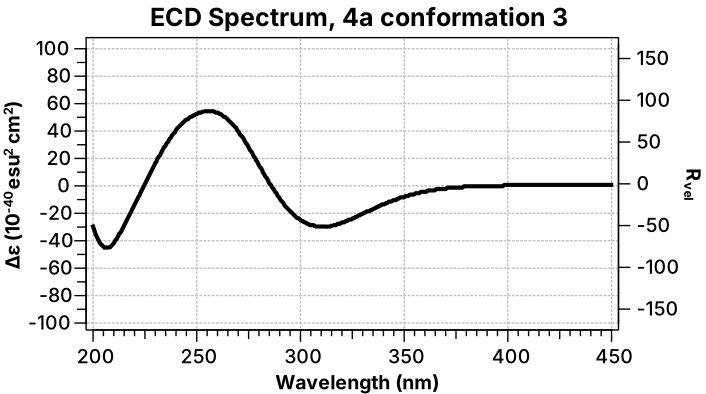
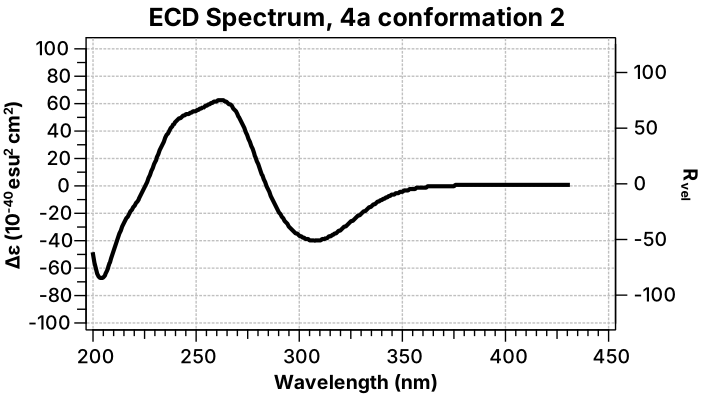
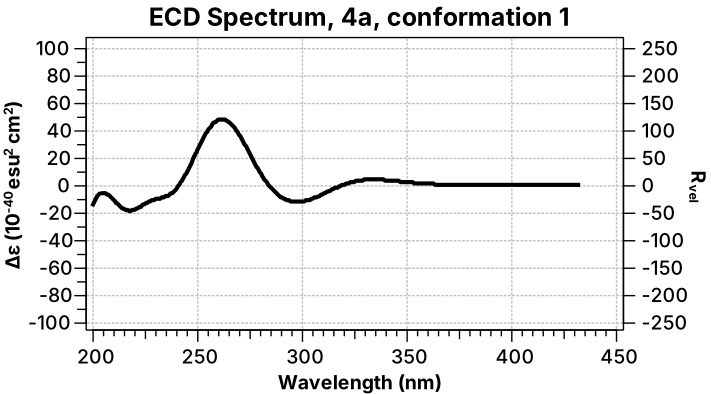
Next, another chiroptical technique, electronic circular dichroism, or ECD. Here, the sign of the difference in absorption of polarized light (Δε), and known at the Cotton effect, characterises the specific enantiomer. The experimental Cotton effect for compound 4a obtained from S-catalyst (known as 3d in the SI, p S142[2]) can be simply summarised as +ve@315nm and -ve@275nm. Comparison with calculated spectra (Figure S17, p S146-7[2])  was performed using a Boltzmann-averaging (albeit based on enthalpies rather than the formally correct free energies), for three significant populations and this procedure matched to (1R,2S,3S).  Since the reported calculations were apparently for gas phase (and replacing n-heptyl with methyl) here I have repeated them in the actual solvent used (acetonitrile) and with the heptyl present. Although the ECD responses can still be severely dependent on the conformation, three of the spectra qualitatively agree that the responses at ~300nm and 260 nm are respectively -ve and +ve. This confirms that (1S,2R,3R)-4a is the wrong enantiomer for S-catalyst and that the correct assignment is therefore (1R,2S,3S), as was indeed reported.[2]

Table 2. Calculated electronic circular dichroism for

 (1S,2R,3R)-4a. FAIR Data DOI: 10.14469/hpc/4678

Conformer

ECD calculation, ωB97XD/Def2-TZVPP

4
3
2
1

It is still true that the overall the fit between chiroptical experiment and theory can be sensitive to the Boltzmann population, as obtained from e.g. ΔΔG = -RT ln [1]/[2]), where 1 and 2 are two different conformers. ΔΔG is a difficult energy difference to compute accurately. Here is a suggested exercise in the statistics of error propagation. How does an error in ΔΔG propagate to the ratio of concentrations of two conformers [1]/[2]? Or, how accurately must ΔΔG be calculated in order to predict conformer populations to say better than 5%.

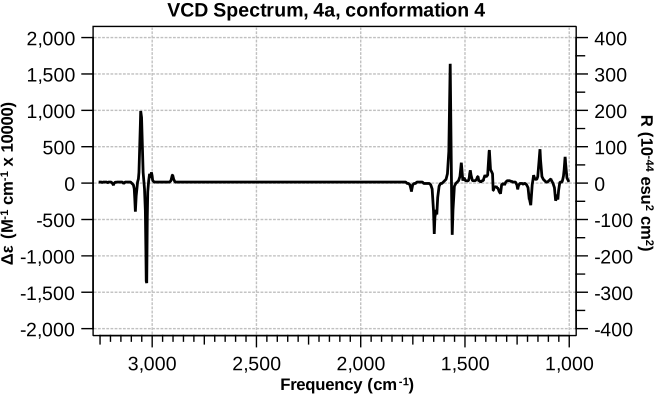
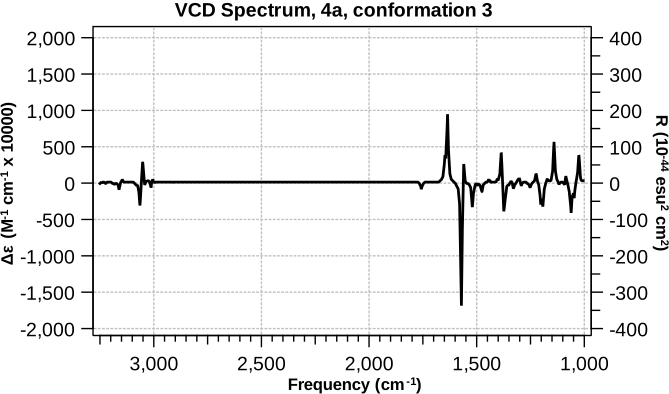
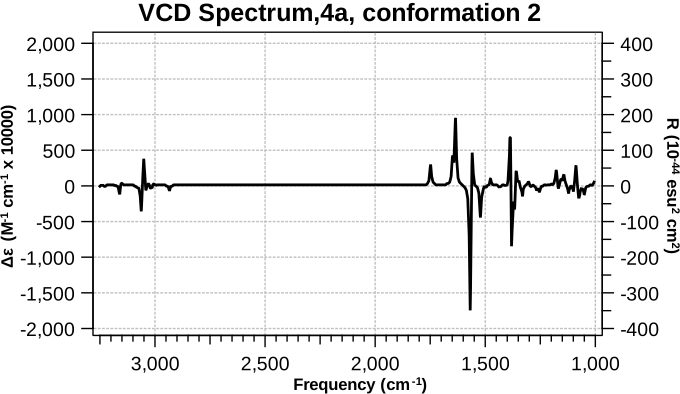
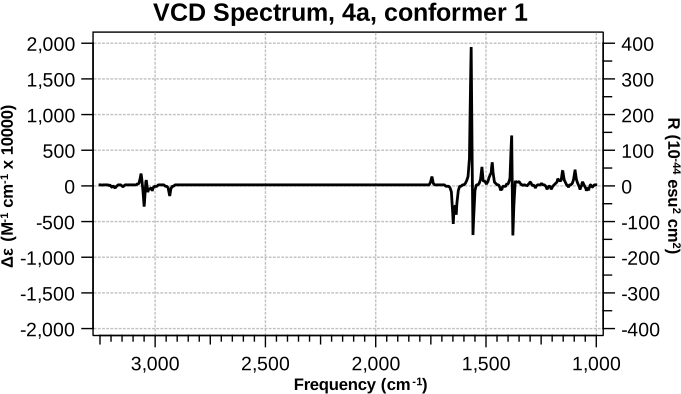
One more go at chiroptics, this time Vibrational Circular Dichroism, or VCD. The nature of the chromophore is different, but the principle is the same as ECD. I have deliberately truncated the spectrum to cut off all vibrations below 1000 cm-1 (these being the modes associated with group rotations) but to no avail, the four conformations all still look too different to avoid doing a Boltzmann averaging.

Table 3. Calculated VCD spectra for (1S,2R,3R)-4a. 

Conformer Spectrum
4
3
2
1

A modern VCD instrument does have one trick up its sleeve for coping with the conformer problem. The sample (as a thin-film) can be annealed down to very low temperatures before the spectrum is recorded. This effectively removes all higher energy forms, leaving just the most stable conformation as the only species present. However, that is an expensive experiment (and instrument!) to use.

There are perhaps some 2 million scalemic molecules (substances where one chiral form is in excess over the mirror image) for which chiroptical properties have been reported, but probably <50,000 crystal structures where absolute configurations have been assigned. Thus the vast majority of absolute configuration assignments have been done either chiroptically or by synthetic correlations (chemical transformations from molecules of known absolute configuration, with the assumption that you know how each transformation affects the chiral centres present). Given some of the difficulties and challenges noted above, it is tempting to conclude that a significant proportion of those 2 million molecules may have been mis-assigned (I once estimated up to 20%). However, we may conclude that the molecules discussed here are safely assigned correctly! 


No CIP-stereolabels appear in the article itself.[1] Perhaps this assignment is omitted in order to provide a student exercise? There are many errors in stereochemical assignments in the literature. A good many of them may be the result of simple sample mis-labelling.[4] The caption to Figure S17 states All the simulations are for the 1R,2R,3S absolute configuration. This is probably an error and should read 1R,2S,3SA correction of ~+15nm is sometimes applied to these values, but not done here.


References

  1. M. Meazza, A. Kowalczuk, S. Watkins, S. Holland, T.A. Logothetis, and R. Rios, "Organocatalytic Cyclopropanation of (<i>E</i>)-Dec-2-enal: Synthesis, Spectral Analysis and Mechanistic Understanding", Journal of Chemical Education, vol. 95, pp. 1832-1839, 2018. https://doi.org/10.1021/acs.jchemed.7b00566
  2. M. Meazza, M. Ashe, H.Y. Shin, H.S. Yang, A. Mazzanti, J.W. Yang, and R. Rios, "Enantioselective Organocatalytic Cyclopropanation of Enals Using Benzyl Chlorides", The Journal of Organic Chemistry, vol. 81, pp. 3488-3500, 2016. https://doi.org/10.1021/acs.joc.5b02801
  3. W.W. Wood, W. Fickett, and J.G. Kirkwood, "The Absolute Configuration of Optically Active Molecules", The Journal of Chemical Physics, vol. 20, pp. 561-568, 1952. https://doi.org/10.1063/1.1700491
  4. H.S. Rzepa, "The Chiro-optical Properties of a Lemniscular Octaphyrin", Organic Letters, vol. 11, 2009. https://doi.org/10.1021/ol901172g
Organocatalytic cyclopropanation of an enal: (computational) product stereochemical assignments.

Sunday, August 26th, 2018

In the previous post, I investigated the mechanism of cyclopropanation of an enal using a benzylic chloride using a quantum chemistry based procedure. Here I take a look at the NMR spectra of the resulting cyclopropane products, with an evaluation of the original stereochemical assignments.[1]

Three products were identified, 4a-c (aryl=2,4-dinitro) with a fourth diastereomer undetected. The relative stereochemistries were assigned[1] on the basis of NMR coupling constants, using the empirical Karplus or Bothner-By relationships. Here I calculate the NMR couplings at the B3LYP+GD3BJ/Def2-TZVPP/SCRF=chloroform level for a comparison, using a methyl group rather than the full n-heptyl one shown above.

System, Data DOI

10.14469/hpc/4650

Gibbs Energy J1(a)-2(b) J1(a)-3(c)

J3(c)-2(b)

4a (1S,2R,3R) expt 4.9 9.0 7.5
4a calc -910.861653 4.6 9.9 8.3
-910.860816 4.4 10.7 7.9
-910.859908 4.9 10.9 7.7
-910.860299 5.2 8.1 8.1
4b (1R,2R,3R) expt 9.6 5.3 6.7
4b calc -910.859549 10.8 5.1 7.7
4c (1S,2R,3S) expt 5.4 5.4 9.9
4c calc -910.859820 4.2 5.5 10.4
4d (1R,2R,3S) expt n/a
4d calc -910.855965 10.3 9.4 9.6

The variation resulting from rotations about the substituents (the o-nitro and the carbaldehyde) as seen for 4a can be up to ~2 Hz. This could if needed be averaged by weighting with the Boltzmann populations. Even without this procedure one can see that for the three diastereomers where values were measured, the calculated couplings agree to 1 Hz or better. This provides confirmation of the original assignments. This quantum-based method can be used in cases where simple formulaic relationships may apply less well.


For four conformations, rotating the carbaldehyde and the o-nitro groups, as in red above.

References

  1. M. Meazza, A. Kowalczuk, S. Watkins, S. Holland, T.A. Logothetis, and R. Rios, "Organocatalytic Cyclopropanation of (<i>E</i>)-Dec-2-enal: Synthesis, Spectral Analysis and Mechanistic Understanding", Journal of Chemical Education, vol. 95, pp. 1832-1839, 2018. https://doi.org/10.1021/acs.jchemed.7b00566

Organocatalytic cyclopropanation of an enal: (computational) mechanistic understanding.

Saturday, August 25th, 2018

Symbiosis between computation and experiment is increasingly evident in pedagogic journals such as J. Chemical Education. Thus an example of original laboratory experiments[1],[2] that later became twinned with a computational counterpart.[3] So when I spotted this recent lab experiment[4] I felt another twinning approaching.

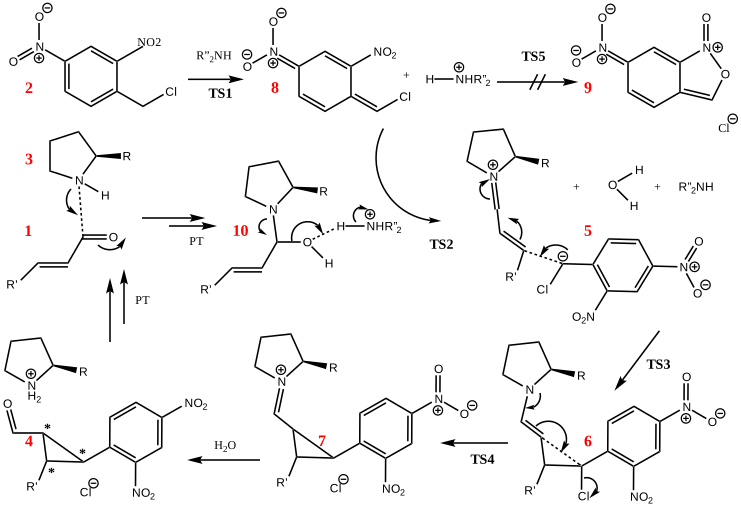
The reaction under consideration is that between dec-2-enal and 2,4-dinitrobenzyl chloride as catalysed by an α,α-diphenylprolinol trimethylsilyl ester with addition of further base (di-isopropylamine?). The proposed mechanism can be seen in figure 7 of the journal article[4] and also scheme 2 of an earlier article.[5] The following is my interpretation of their published mechanism (the compound numbering is the same as in Figure 7).

  1. The initiating step is the condensation between the alkyl enal (1) and the prolinol derivative (3), with elimination of water and the formation of a positive iminium cation (5). One might wonder at this stage what the counter ion to this cation is.
  2. 5 then reacts with 2,4-dinitrobenzyl chloride (2) with apparent elimination of HCl to form 6. This corresponds to 1,4-Michael addition to 5 with the formation of the first new  C-C bond and the creation of two new stereogenic centres.
  3. 6 then cyclises to form a second new C-C bond and a third new stereogenic centre as in 7.
  4. 7 is then hydrolysed to give the final product 4.

A total of three (starred) stereogenic centres are therefore created in 4, implying 23 = 8 steroisomers, arranged as four diastereomers and their enantiomers. A computational mechanistic analysis might strive to cast light on the following questions.

  • Is the sequence shown in figure 7 reasonable? If not can a more reasonable cycle be constructed that has energetics corresponding to a facile reaction at 0°C?
  • What are the predicted relative yields of the four possible diastereomeric products and do they match those observed?
  • If  R=α,α-diphenylprolinol trimethylsilyl ester, then this fourth chiral centre increases the total number of stereoisomers to 16, arranged in eight pairs of diastereomers. Does this result in the diastereomers of 4 forming with an excess of one enantiomer over the other (an ee ≠ 0)?

This post addresses just the first question (R=R’=H, R”=isopropylamine) leaving the other two questions for later analysis.

My analysis (figure above) of the mechanism, as cast for computational analysis, differs in various details from Figure 7/Scheme 2 of the published articles.[4],[5]

  1. The issue of defining a counterion to 5 is solved by in fact starting the cycle with proton abstraction from 2 by di-isopropylamine to form a benzylic anion, as stabilized by the 2,4-dinitro groups and with the positive counter-ion being the protonated amine base.
  2. The next step is reaction between 1 and 3 to form an aminol 10, a tetrahedral intermediate.
  3. To remove water from this to form an iminium cation 5, one has to protonate the hydroxy group and this can now be done using the cationic ammonium species formed in step 5 above.
  4. The benzylic anion can now react with the iminium cation to form the first C-C bond and the first two stereocentres via 1,4-Michael addition to form 6
  5. The species 6 can now eliminate chloride anion to form the cyclopropyl iminium cation/anion pair 7, generating the 3rd stereogenic centre.
  6. Hydrolysis forms the product 4 and returns the system to the starting point in the catalytic cycle.
  7. Also included is whether an alternative mechanism is viable, involving elimination of Cl from 8 to form a “carbene”, which could then potentially add to the alkene in 1.

Species (transition state)

FAIR Data DOI
10.14469/hpc/4642

ΔG273.15, Hartree
(ΔΔG273.15, kcal/mol)

Structure
(click for 3D model)

Reactants -1837.174744 (0.0)
TS1 -1837.150502 (15.2)
TS2 -1837.154923 (12.4)
TS3 -1837.147927 (16.8)
TS4 -1837.175723 (-0.6)
TS5 -1837.101534 (45.9)

The (relative) free energies of the transition states at the B3LYP+GD3BJ/6-311G(d,p)/SCRF=chloroform level shown in the table above (click on the thumbnail images to show the 3D model of each transition state) reveal that the highest point corresponds to TS3, a C-C bond forming reaction. This is noteworthy because it constitutes the reaction between an ion-pair, albeit ions which are both heavily stabilized by delocalisation. Since the reaction is known to proceed over 3 hours at 0°C, the activation barrier of 16.8 kcal/mol is also entirely reasonable. TS5, the putative formation of a carbene from the benzyl chloride, has a very high barrier and in fact cyclises to form 9. This pathway can therefore be safely ignored.

The next stage would be to investigate the stereochemical implications of this mechanism (atoms in 4 marked with a *) using the actual substituents for R and R’. Because the mechanism includes ion-pairs throughout, this does actually present some tricky issues. Unlike molecules with covalent bonds, where the shapes are relatively easy to predict, ion-pairs are more flexible and can often adopt a variety of poses, the relative energy of which is frequently determined simply by the magnitudes of their dipole moments.[6] If I manage to sort this out, I will report back here.


I would love to show you figure 7 here, but the publisher asserts that I would need to pay them $87.75 to do so and so you will have to acquire the article yourself to see it.

Various guiding rules include constructing the entire catalytic cycle using exactly the same number of atoms so that the cycle can show only relative (free) energies and using neutral ion-pair models rather than just charged species alone.

Almost all the chemical diagrams on this blog for some ten years now have been in SVG (scalable vector graphics) format. Most modern web browsers for a number of years now have had excellent support for SVG. Until recently SVG could not be generated directly from a drawing program such as e.g. ChemDraw. Instead I saved as EPS (encapsulated postscript) and then used a program called Scribus to convert to SVG. In fact with Chemdraw V18.0, the direct conversion to SVG seems to be working very well, including honoring color maps. To scale up a diagram, click on it to open a new browser window containing only it and then use the browser zoom-in control to magnify it. Unlike e.g. a pixel image, SVG images magnify/scale correctly.

This relates to metadata as described in this post in performing a global search of any species matching this Gibbs Energy.

If the mechanism is set up without any base, then proton abstraction must occur directly from the benzyl chloride. Under these circumstances, the barrier for proton removal is 27.5 kcal/mol, whilst that for C-C bond formation is only 13.6.

References

  1. A. Burke, P. Dillon, K. Martin, and T.W. Hanks, "Catalytic Asymmetric Epoxidation Using a Fructose-Derived Catalyst", Journal of Chemical Education, vol. 77, pp. 271, 2000. https://doi.org/10.1021/ed077p271
  2. J. Hanson, "Synthesis and Use of Jacobsen's Catalyst: Enantioselective Epoxidation in the Introductory Organic Laboratory", Journal of Chemical Education, vol. 78, pp. 1266, 2001. https://doi.org/10.1021/ed078p1266
  3. K.K.(. Hii, H.S. Rzepa, and E.H. Smith, "Asymmetric Epoxidation: A Twinned Laboratory and Molecular Modeling Experiment for Upper-Level Organic Chemistry Students", Journal of Chemical Education, vol. 92, pp. 1385-1389, 2015. https://doi.org/10.1021/ed500398e
  4. M. Meazza, A. Kowalczuk, S. Watkins, S. Holland, T.A. Logothetis, and R. Rios, "Organocatalytic Cyclopropanation of (<i>E</i>)-Dec-2-enal: Synthesis, Spectral Analysis and Mechanistic Understanding", Journal of Chemical Education, vol. 95, pp. 1832-1839, 2018. https://doi.org/10.1021/acs.jchemed.7b00566
  5. M. Meazza, M. Ashe, H.Y. Shin, H.S. Yang, A. Mazzanti, J.W. Yang, and R. Rios, "Enantioselective Organocatalytic Cyclopropanation of Enals Using Benzyl Chlorides", The Journal of Organic Chemistry, vol. 81, pp. 3488-3500, 2016. https://doi.org/10.1021/acs.joc.5b02801
  6. J. Clarke, K.J. Bonney, M. Yaqoob, S. Solanki, H.S. Rzepa, A.J.P. White, D.S. Millan, and D.C. Braddock, "Epimeric Face-Selective Oxidations and Diastereodivergent Transannular Oxonium Ion Formation Fragmentations: Computational Modeling and Total Syntheses of 12-Epoxyobtusallene IV, 12-Epoxyobtusallene II, Obtusallene X, Marilzabicycloallene C, and Marilzabicycloallene D", The Journal of Organic Chemistry, vol. 81, pp. 9539-9552, 2016. https://doi.org/10.1021/acs.joc.6b02008

Tetrahedral carbon and cyclohexane.

Wednesday, August 22nd, 2018

Following the general recognition of carbon as being tetrahedrally tetravalent in 1869 (Paterno) and 1874 (Van’t Hoff and Le Bell), an early seminal exploitation of this to the conformation of cyclohexane was by Hermann Sachse in 1890.[1] This was verified when the Braggs in 1913[2], followed by an oft-cited article by Mohr in 1918,[3] established the crystal structure of diamond as comprising repeating rings in the chair conformation. So by 1926, you might imagine that the shape (or conformation as we would now call it) of cyclohexane would be well-known. No quite so for everyone!

When The Journal of the Imperial College Chemical Society (Volume 6) was brought to my attention, I found an article by R. F Hunter;

He proceeds to argue as follows:

  1. The natural angle subtended at a tetrahedral carbon is 109.47°.
  2. “The internal angle between the carbon to carbon valencies of a six-membered ring cyclohexane will, if the ring is uniplanar, be … 120°.
  3. “When the cyclohexane ring is prepared … we must therefore have the pushing apart of two of the valencies”.
  4. The object of the experiments commenced in this College in 1914 was “to find what effect the pushing apart of the valencies …must have on the angle between the remaining pair of valencies“.
  5. You do wonder then why the assumption highlighted in red above was never really questioned during the twelve-year period of investigating angles around tetrahedral carbon.

The article itself is quite long, reporting the synthesis of many compounds in search of the postulated effect. Of course around twenty years later, Derek Barton used the by then generally accepted conformation of cyclohexane to explain reactivity in what become known as the theory of conformational analysis.

These two articles dating from 1926, and probably thought lost to science, show how some ideas can take decades to have any influence, whilst others can take root very much more quickly.


The chair cyclohexane structure is easily discerned from Figure 7 in the Braggs’ paper![2]

References

  1. H. Sachse, "Ueber die geometrischen Isomerien der Hexamethylenderivate", Berichte der deutschen chemischen Gesellschaft, vol. 23, pp. 1363-1370, 1890. https://doi.org/10.1002/cber.189002301216
  2. W.H. Bragg, and W.L. Bragg, "The structure of the diamond", Proceedings of the Royal Society of London. Series A, Containing Papers of a Mathematical and Physical Character, vol. 89, pp. 277-291, 1913. https://doi.org/10.1098/rspa.1913.0084
  3. E. Mohr, "Die Baeyersche Spannungstheorie und die Struktur des Diamanten", Journal für Praktische Chemie, vol. 98, pp. 315-353, 1918. https://doi.org/10.1002/prac.19180980123

Early "curly" (reaction) arrows. Those of Ingold in 1926.

Wednesday, August 22nd, 2018

In 2012, I wrote a story of the first ever reaction curly arrows, attributed to Robert Robinson in 1924. At the time there was a great rivalry between him and another UK chemist, Christopher Ingold, with the latter also asserting his claim for their use. As part of the move to White City a lot of bookshelves were cleared out from the old buildings in South Kensington, with the result that yesterday a colleague brought me a slim volume they had found entitled The Journal of the Imperial College Chemical Society (Volume 6). 

This journal is a record of lectures given to the chemistry department by visiting speakers, this one dating from 1926, about two years after the article by Robinson noted above.

There are a number of points of interest.

  1. Early on, Ingold introduces the topic of atoms in combination. Lewis (who is acknowledged to have introduced this concept in 1916) is mentioned in parentheses, if not actually in passing, as generalizing (Lewis) from this case, … As was the practice at the time, referencing one’s sources was not always common, and you do not here get an actual citation for Lewis!
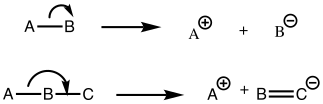
  2. Next comes the topic changes in molecular structure (which could be a synonym for reactions) and here you get this diagramA modern version is shown below, scarcely different!
  3. Whilst the first example has examples such as SN1 ionizations, the second is perhaps not as common as might be imagined. It would only work if atom C (assuming it to be carbon) was e.g. a carbene (with six valence electrons) converting to a vinyl carbanion (with eight). Although we may speculate that Ingold thought that the second example might relate to common reactions, in the event both curly arrows are still entirely valid by modern standards. There is no acknowledgement of Robinson’s 1924 effort.
  4. Ingold goes on to discuss substitution patterns in benzene derivatives, and the o/p or m-directing abilities of substituents. He concludes that the Dewar formula for benzene is the most satisfactory vehicle for expressing the theory that electrical disturbances readily reach the o- and p-position, whilst only a small second order effect can reach the m-position. Here I think we can conclude that this approach has not survived into modern thinking. Robinson in his 1924 arrows had of course striven to explain the apparent propensity of nitrosobenzene towards electrophilic substitution in the p-position. Henry Armstrong some thirty years earlier in 1887[1] had arguably already made a pretty decent start, without requiring the use of Dewar benzene.

I suspect those who have dug through the historical archives to cast light on the Robinson/Ingold rivalry may not have appreciated that the Journal of the Imperial College Chemical Society might have been an interesting source!


There were nine volumes produced during 1921-1930. It then morphed into The Scientific Journal of the Royal College of Science which continued for an unknown number of years.

References

  1. H.E. Armstrong, "XXVIII.—An explanation of the laws which govern substitution in the case of benzenoid compounds", J. Chem. Soc., Trans., vol. 51, pp. 258-268, 1887. https://doi.org/10.1039/ct8875100258

Early “curly” (reaction) arrows. Those of Ingold in 1926.

Wednesday, August 22nd, 2018

In 2012, I wrote a story of the first ever reaction curly arrows, attributed to Robert Robinson in 1924. At the time there was a great rivalry between him and another UK chemist, Christopher Ingold, with the latter also asserting his claim for their use. As part of the move to White City a lot of bookshelves were cleared out from the old buildings in South Kensington, with the result that yesterday a colleague brought me a slim volume they had found entitled The Journal of the Imperial College Chemical Society (Volume 6). 

This journal is a record of lectures given to the chemistry department by visiting speakers, this one dating from 1926, about two years after the article by Robinson noted above.

There are a number of points of interest.

  1. Early on, Ingold introduces the topic of atoms in combination. Lewis (who is acknowledged to have introduced this concept in 1916) is mentioned in parentheses, if not actually in passing, as generalizing (Lewis) from this case, … As was the practice at the time, referencing one’s sources was not always common, and you do not here get an actual citation for Lewis!
  2. Next comes the topic changes in molecular structure (which could be a synonym for reactions) and here you get this diagramA modern version is shown below, scarcely different!
  3. Whilst the first example has examples such as SN1 ionizations, the second is perhaps not as common as might be imagined. It would only work if atom C (assuming it to be carbon) was e.g. a carbene (with six valence electrons) converting to a vinyl carbanion (with eight). Although we may speculate that Ingold thought that the second example might relate to common reactions, in the event both curly arrows are still entirely valid by modern standards. There is no acknowledgement of Robinson’s 1924 effort.
  4. Ingold goes on to discuss substitution patterns in benzene derivatives, and the o/p or m-directing abilities of substituents. He concludes that the Dewar formula for benzene is the most satisfactory vehicle for expressing the theory that electrical disturbances readily reach the o- and p-position, whilst only a small second order effect can reach the m-position. Here I think we can conclude that this approach has not survived into modern thinking. Robinson in his 1924 arrows had of course striven to explain the apparent propensity of nitrosobenzene towards electrophilic substitution in the p-position. Henry Armstrong some thirty years earlier in 1887[1] had arguably already made a pretty decent start, without requiring the use of Dewar benzene.

I suspect those who have dug through the historical archives to cast light on the Robinson/Ingold rivalry may not have appreciated that the Journal of the Imperial College Chemical Society might have been an interesting source!


There were nine volumes produced during 1921-1930. It then morphed into The Scientific Journal of the Royal College of Science which continued for an unknown number of years.

References

  1. H.E. Armstrong, "XXVIII.—An explanation of the laws which govern substitution in the case of benzenoid compounds", J. Chem. Soc., Trans., vol. 51, pp. 258-268, 1887. https://doi.org/10.1039/ct8875100258

The “White City Trio” – The formation of an amide from an acid and an amine in non-polar solution (updated).

Wednesday, August 8th, 2018

White City is a small area in west london created as an exhibition site in 1908, morphing over the years into an Olympic games venue, a greyhound track, the home nearby of the BBC (British Broadcasting Corporation) and most recently the new western campus for Imperial College London. The first Imperial department to move into the MSRH (Molecular Sciences Research Hub) building is chemistry. As a personal celebration of this occasion, I here dedicate three transition states located during my first week of occupancy there, naming them the White City trio following earlier inspiration by a string trio and their own instruments.

The chemistry revisits the mechanism of amide formation from an acid and an amine, which I first described on this blog about four years ago. I had constructed a model of one amine and one carboxylic acid, to which I added a further acid in recognition that proton transfers are a key aspect of the mechanism. When the model is quantified using quantum calculations (ωB97XD/6-311G(d,p)/SCRF=p-toluene) it resulted in a free energy barrier ΔG298 of about 22 kcal/mol. Re-reading what I wrote, I see I did rather gloss over this value, which implies a decently rapid reaction! In fact, the reaction occurs relatively slowly at the temperature of refluxing toluene. Perhaps some alarm bells should have been tinkling at this stage (although the sluggish reaction might for example instead be due to poor solubility) and so here I have a rethink of the model used to see if that modest barrier really is correct.

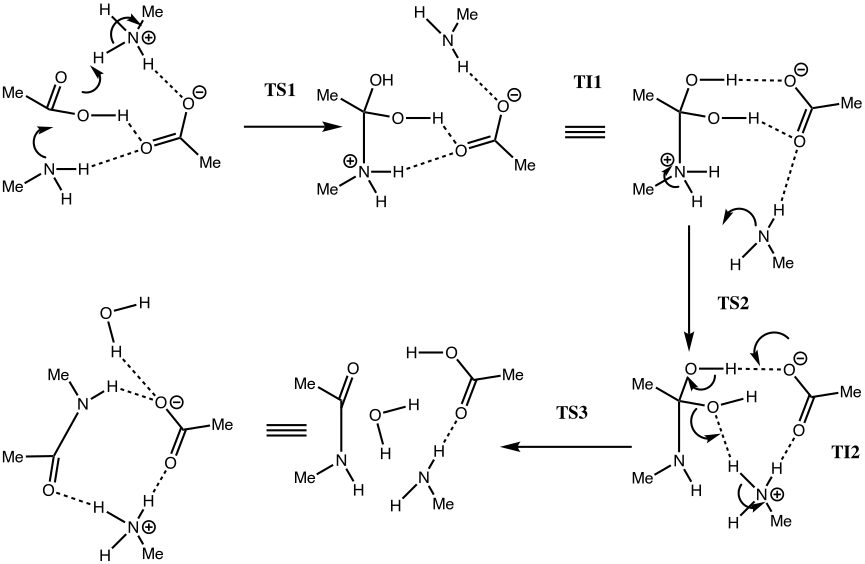
The new premise is to test if the required proton transfers can instead be mediated using a second molecule of amine instead of acid; thus two molecules of carboxylic acid are now accompanied by two of amine, one of which will be used to transfer protons. The second acid is retained to facilitate comparison. As before, the mechanism is characterised by three transition states and two tetrahedral intermediates. The new mechanism is summarised below, with TS1-3 being the White City Trio.

The free energies are summarised in the table below. TS3, the rate limiting step, is slightly lower in energy if the amine is used for the proton transfer than via carboxylic acid. This is the wrong direction; we really want the barrier to increase to explain the relative difficulty of the reaction as observed in refluxing toluene! Fear not however, the new barrier is indeed a much more sluggish 28.6 kcal/mol (30.5 using a larger basis set).

Species

(FAIR Data DOI 10.14469/hpc/4598)

ΔG298 (ΔG298)

kcal/mol

Structure

Ionic reactants -649.737562 (0.0)
TS1 (N-C bond formation via acid PT) -649.702436 (22.0)
TS1 (N-C bond formation via amine PT), the “White City” -649.702307 (22.1)
TI1 from TS1 -649.709938 (17.3)
TS2 (PT from N to O via acid PT) -649.713027 (15.4)
TS2 (PT from N to O via amine PT), the “White City” -649.706042
TI2 from TS2 -649.711481 (16.4)
TS3 (O-C bond cleavage via amine PT), the “White City” -649.691918 (28.6) [30.5]
TS3 (O-C bond cleavage via acid PT) -649.689910 (29.9)
Non-ionic product from TS3 -649.732417 (+3.2)
Ionic product after PT -649.741246 (-2.3)

How did this happen? It’s the reactants! The original reactant model was based on the known structure of acetic acid dimer, with an amine weakly hydrogen bonded. Adding an extra amine now allows an entirely new motif to form, in which the amine disrupts the acetic dimer to form a cyclic system with a pair of very strong (-)O-H-N(+)-H-O(-) hydrogen bond units.† The original model did not have sufficient components to fully allow this to happen.

So the White City Trio achieve a performance which helps explain why a reaction is sluggish rather than facile (normally one strives to show the opposite). Perhaps however it should be the White City quartet, in recognition that the reactant also had a role to play?


A photograph of the building under construction can be seen here. Def2-TZVPPD basis set. There does not appear to be a recorded structure for methylammonium acetate. We hope to obtain one to check what the extended structure actually is. I will elaborate an interesting new use of this value in a separate post.

The "White City Trio" – The formation of an amide from an acid and an amine in non-polar solution (updated).

Wednesday, August 8th, 2018

White City is a small area in west london created as an exhibition site in 1908, morphing over the years into an Olympic games venue, a greyhound track, the home nearby of the BBC (British Broadcasting Corporation) and most recently the new western campus for Imperial College London. The first Imperial department to move into the MSRH (Molecular Sciences Research Hub) building is chemistry. As a personal celebration of this occasion, I here dedicate three transition states located during my first week of occupancy there, naming them the White City trio following earlier inspiration by a string trio and their own instruments.

The chemistry revisits the mechanism of amide formation from an acid and an amine, which I first described on this blog about four years ago. I had constructed a model of one amine and one carboxylic acid, to which I added a further acid in recognition that proton transfers are a key aspect of the mechanism. When the model is quantified using quantum calculations (ωB97XD/6-311G(d,p)/SCRF=p-toluene) it resulted in a free energy barrier ΔG298 of about 22 kcal/mol. Re-reading what I wrote, I see I did rather gloss over this value, which implies a decently rapid reaction! In fact, the reaction occurs relatively slowly at the temperature of refluxing toluene. Perhaps some alarm bells should have been tinkling at this stage (although the sluggish reaction might for example instead be due to poor solubility) and so here I have a rethink of the model used to see if that modest barrier really is correct.

The new premise is to test if the required proton transfers can instead be mediated using a second molecule of amine instead of acid; thus two molecules of carboxylic acid are now accompanied by two of amine, one of which will be used to transfer protons. The second acid is retained to facilitate comparison. As before, the mechanism is characterised by three transition states and two tetrahedral intermediates. The new mechanism is summarised below, with TS1-3 being the White City Trio.

The free energies are summarised in the table below. TS3, the rate limiting step, is slightly lower in energy if the amine is used for the proton transfer than via carboxylic acid. This is the wrong direction; we really want the barrier to increase to explain the relative difficulty of the reaction as observed in refluxing toluene! Fear not however, the new barrier is indeed a much more sluggish 28.6 kcal/mol (30.5 using a larger basis set).

Species

(FAIR Data DOI 10.14469/hpc/4598)

ΔG298 (ΔG298)

kcal/mol

Structure

Ionic reactants -649.737562 (0.0)
TS1 (N-C bond formation via acid PT) -649.702436 (22.0)
TS1 (N-C bond formation via amine PT), the “White City” -649.702307 (22.1)
TI1 from TS1 -649.709938 (17.3)
TS2 (PT from N to O via acid PT) -649.713027 (15.4)
TS2 (PT from N to O via amine PT), the “White City” -649.706042
TI2 from TS2 -649.711481 (16.4)
TS3 (O-C bond cleavage via amine PT), the “White City” -649.691918 (28.6) [30.5]
TS3 (O-C bond cleavage via acid PT) -649.689910 (29.9)
Non-ionic product from TS3 -649.732417 (+3.2)
Ionic product after PT -649.741246 (-2.3)

How did this happen? It’s the reactants! The original reactant model was based on the known structure of acetic acid dimer, with an amine weakly hydrogen bonded. Adding an extra amine now allows an entirely new motif to form, in which the amine disrupts the acetic dimer to form a cyclic system with a pair of very strong (-)O-H-N(+)-H-O(-) hydrogen bond units.† The original model did not have sufficient components to fully allow this to happen.

So the White City Trio achieve a performance which helps explain why a reaction is sluggish rather than facile (normally one strives to show the opposite). Perhaps however it should be the White City quartet, in recognition that the reactant also had a role to play?

A photograph of the building under construction can be seen here. Def2-TZVPPD basis set. There does not appear to be a recorded structure for methylammonium acetate. We hope to obtain one to check what the extended structure actually is. I will elaborate an interesting new use of this value in a separate post.

A Theoretical Method for Distinguishing X‐H Bond Activation Mechanisms.

Wednesday, July 25th, 2018

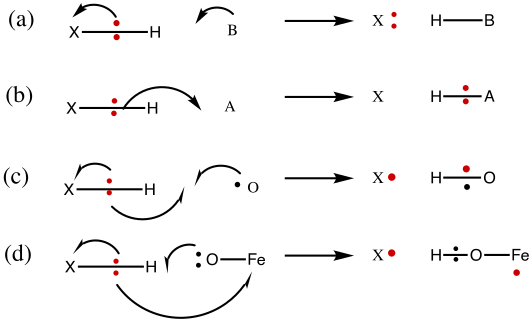
Consider the four reactions. The first two are taught in introductory organic chemistry as (a) a proton transfer, often abbreviated PT, from X to B (a base) and (b) a hydride transfer from X to A (an acid). The third example is taught as a hydrogen atom transfer or HAT from X to (in this example) O. Recently an article has appeared[1] citing an example of a fourth fundamental type (d), which is given the acronym cPCET which I will expand later. Here I explore this last type a bit further, in the context that X-H bond activations are currently a very active area of research.

To help understand these four types, I have colour-coded the electron pair constituting the X-H covalent bond in red.

  1. In mechanism (a), this electron pair stays with X, thus liberating a proton which is captured by the base.
  2. The hydride transfer (b) is so-called because in fact this electron pair travels together with the proton, hence the term hydride or H.
  3. Hydrogen atom transfers as in (c) in effect transfer both a proton and one electron to another atom (oxygen in the example above), leaving behind one electron on X. The electron and the proton are said to travel together as a “true” hydrogen atom.
  4. The fourth mechanism (d) is fundamentally different from (c) in that whilst the electron and the proton travel in concert (at the same time), they do not travel together. In this example the proton travels to the oxygen, whilst the electron travels to the iron centre, in the process reducing its oxidation state. This mode is now called a concerted proton-coupled electron transfer, or cPCET as above.

The tool employed to distinguish between mechanisms (c) and (d) is the IBO or intrinsic bond orbital localisation scheme.[2] One practical advantage of such a scheme over better known localisation methods such as NBO (Natural bond orbitals) is that IBOs can be made to transform smoothly during the course of a reaction, as followed by say an IRC (Intrinsic reaction coordinate). NBOs may instead show discontinuous behaviour along a reaction IRC. Klein and Knizia have located transition states for examples of both (c) and (d) above and studied the IBOs along such IRCs. The two IBO reaction transformations are very different, as illustrated below (used, with permission, from the article itself). For the HAT type (X=C above), an α-spin IBO morphs from a C-H bond into a H-O bond, whilst the β-spin counterpart morphs from being located on the C-H bond into a carbon-centered radical. For the cPCET mode, the α-spin IBO morphs from C-H to a C-centered radical, but the β-spin region grows onto an iron d-orbital. It is in fact even more complex than the diagram above implies, since some reorganisation of the O-Fe region occurs and the H…:O region is still anti-bonding at the transition state.

We can see from this that mechanistic reaction analysis is starting to track the “curly arrows” we conventionally use to represent reactions in some detail, as well as informing us about the relative detailing timing of the various curly arrows used. Of course this latter aspect cannot be easily represented by conventional curly arrows. It seems timely to revisit the vast corpus of organic and organometallic “curly arrow pushing” to starting adding such information!

References

  1. J.E.M.N. Klein, and G. Knizia, "cPCET versus HAT: A Direct Theoretical Method for Distinguishing X–H Bond‐Activation Mechanisms", Angewandte Chemie International Edition, vol. 57, pp. 11913-11917, 2018. https://doi.org/10.1002/anie.201805511
  2. G. Knizia, "Intrinsic Atomic Orbitals: An Unbiased Bridge between Quantum Theory and Chemical Concepts", Journal of Chemical Theory and Computation, vol. 9, pp. 4834-4843, 2013. https://doi.org/10.1021/ct400687b

Why do flowers such as roses, peonies, dahlias, delphiniums (etc), exhibit so many shades of colours?

Monday, June 18th, 2018

It was about a year ago that I came across a profusion of colour in my local Park. Although colour in fact was the topic that sparked my interest in chemistry many years ago (the fantastic reds produced by diazocoupling reactions), I had never really tracked down the origin of colours in many flowers. It is of course a vast field. Here I take a look at just one class of molecule responsible for many flower colours, anthocyanidin, this being the sugar-free counterpart of the anthocyanins found in nature.

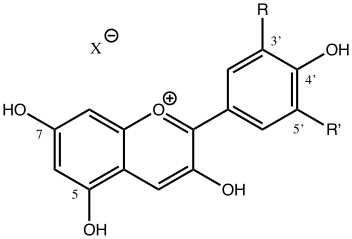
These vary widely in the substituent around the aromatic rings, but here I take a look at just three differing substitutions. Thus pelargonidin has just one OH on ring C (R1‘, R3‘=H, see crystal structure[1]), cyanidin has two (R5‘=H, see crystal structure[2]) and is found in red roses, dahlia, peonies etc. Finally delphinidin (no crystal structure available) has three OHs in that region and is found in yes, delphiniums but also grape skins etc. Below is a colour table that allows one to relate the electronic transitions in a molecule to the observed colour, which of course is due to removal (absorption) of wavelength of light leaving us to see all the remaining wavelengths.
colour table

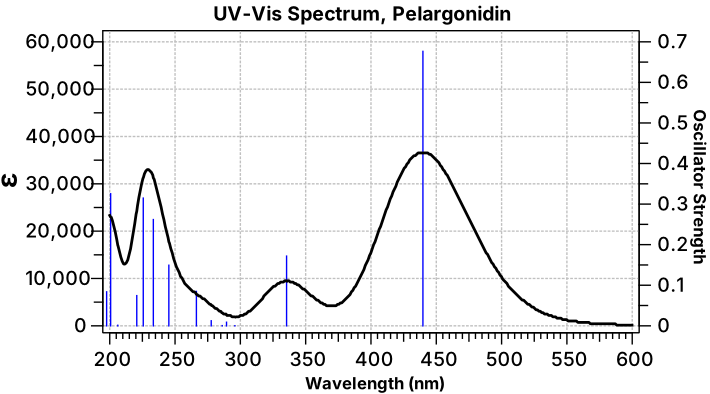
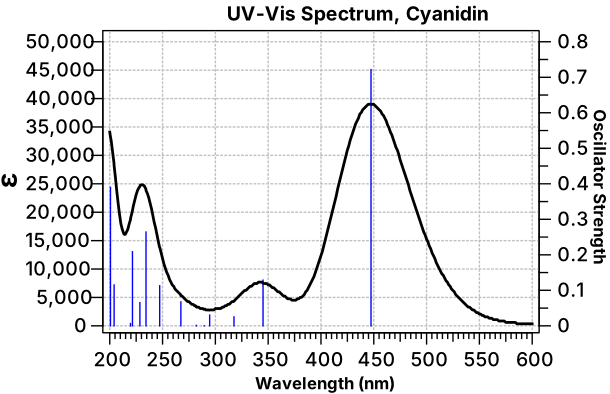
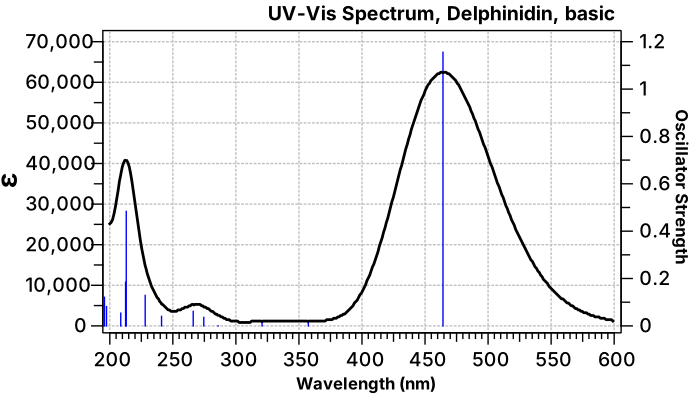
Next I show the computed UV/visible spectra of these three species (ωB97XD/6-311G(d,p)/SCRF=water). Click on any image to se a 3D model of the molecule.

Note how in the visible region, all have a very simple (monochromatic) single electronic transition comprising mostly the HOMO→LUMO excitation.

Click to view 3D model of the HOMO

Click to view 3D model of the LUMO

Now, λmax can be predicted quite poorly using most DFT methods, but the trends should be better predicted. Thus the change induced by adding two hydroxy groups is ~7nm, which is in effect how the colour seen in a flower can be tuned to display different shades.

Next, pH. Using delphinidin, under basic conditions one can remove a proton from the cationic species to produce a neutral quinone. In fact, any one of five OH groups could have its proton removed and so it is of some interest to compare the relative energies of the five isomers so produced.

Position proton removed Relative ΔG298, kcal/mol
4′ 0.0
5 3.8
7 4.7
3′ 11.8
5′ 22.2

In fact, one species only would have the major Boltzmann population (4′) and so we need only look at its UV/Visible predicted spectrum. This is shifted 17nm towards the red, thus producing a blue colour in what remains after it is absorbed. The absorption (ε) also increases significantly. Indeed the very striking colour of blue delphiniums (one of my favourite flowers) must be produced by such pH control in the plant. Given the presence of delphinidin in many grape skins, the next time I drink a glass of red wine, I will see if it turns blue upon adding some NaOH!


FAIR data doi: 10.14469/hpc/4473

References

  1. N. Saito, and K. Ueno, "The Crystal and Molecular Structure of Pelargonindin Bromide Monohydrate", HETEROCYCLES, vol. 23, pp. 2709, 1985. https://doi.org/10.3987/r-1985-10-2709
  2. K. Ueno, and N. Saito, "Cyanidin bromide monohydrate (3,5,7,3',4'-pentahydroxyflavylium bromide monohydrate)", Acta Crystallographica Section B Structural Crystallography and Crystal Chemistry, vol. 33, pp. 114-116, 1977. https://doi.org/10.1107/s0567740877002702