Posts Tagged ‘energy’

Deuteronium deuteroxide. The why of pD 7.435.

Friday, April 22nd, 2016

Earlier, I constructed a possible model of hydronium hydroxide, or H3O+.OH– One way of assessing the quality of the model is to calculate the free energy difference between it and two normal water molecules and compare the result to the measured difference. Here I apply a further test of the model using isotopes.

Pure water has pH 7, which means equal concentrations for both [H3O+] and  [OH] of 10-7M. Converting this to a free energy one gets ΔG298 19.088 kcal/mol. Now the pD of pure deuterium oxide is reported as 7.435, equivalent to ΔG298 20.274, an isotope effect on the free energy of ΔΔG298 =1.186 kcal/mol. How does the theoretical model (ωB97XD/Def2-TZVPPD/SCRF=water) previously reported[1],[2] do? The value obtained is 1.215,[3] an apparent error of only 0.029 kcal/mol. I am quite pleased with the close correspondence; at least the model is capable of reporting good isotope effects on the ionisation equilibrium of pure water!

Finally, with some confidence assured, one might apply this to tritonium tritoxide. Tritiated water is so radioactive it would boil in an instant, probably well before its pT could be measured. ΔΔG298 is calculated as 1.798 kcal/mol. Will this estimate ever be challenged by experiment?


‡ It is assumed no isotope effect acts on the dielectric constant of water and hence the continuum model used here to model it. In fact the isotope effect on this property is modest; ε298 = 77.94, compared with 78.36 for normal water.[4]

References

  1. H.S. Rzepa, "H 22 O 11", 2016. https://doi.org/10.14469/ch/191999
  2. H.S. Rzepa, "H 22 O 11", 2016. https://doi.org/10.14469/ch/191998
  3. H. Rzepa, "Deuteronium deuteroxide; free energy differences.", 2016. https://doi.org/10.14469/hpc/407
  4. C. Malmberg, "Dielectric constant of deuterium oxide", Journal of Research of the National Bureau of Standards, vol. 60, pp. 609, 1958. https://doi.org/10.6028/jres.060.060

Hydronium hydroxide: the why of pH 7.

Thursday, April 14th, 2016

Ammonium hydroxide (NH4+…OH) can be characterised quantum mechanically when stabilised by water bridges connecting the ion-pairs. It is a small step from there to hydronium hydroxide, or H3O+…OH. The measured concentrations [H3O+] ≡ [OH] give rise of course to the well-known pH 7 of pure water, and converting this ionization constant to a free energy indicates that the solvated ion-pair must be some ~19.1 kcal/mol higher in free energy than water itself. So can a quantum calculation reproduce pH7 for water?

Let me start by saying that locating a stable minimum for H3O+…OH is non-trival. I have been trying to find a structure on and off for a little while now, but all my erstwhile attempts have resulted in barrierless proton transfers back to H2O…OH2. So I now decided on a more systematic approach by running a CSD (Cambridge structure database) search, defining the species H3O+ and specifying that the oxygen sustain one additional hydrogen bond, as per H3O+….H.[1] This produced 69 hits, with the distribution of O…H distances shown below indicating that a wide spectrum of hydrogen bond lengths to this oxygen appears possible.

NH3-8

Restricting the search to  H3O+….H-O  and specifying that the last O is bonded to just one atom reduces this to one hit.[2] If you click on the image below or visit here[3] you will see the hydrogen bonding pattern in this unique example is of the type (ROH…H)3O+…HO(…HOR)3 with overall three-fold symmetry. The "bridge" across the ion pair in this case is formed from hydrogen bonds to -CH2OH groups in 1,3,5-tris(hydroxymethyl)-2,4,6-triethylbenzene.

NH3-8

This structure immediately poses the question of whether water bridges could replace the organic bridge in the species above, to enable the elusive water-solvated hydronium hydroxide to finally be characterised as a bona-fide minimum in a quantum mechanical potential. By analogy one would need three bridges, each to be comprised of 3H2O. In other words a system containing  eleven water molecules.  An ωB97XD/6-311++G(d,p)/SCRF=water calculation indeed reveals this C3-symmetric arrangement is a minimum with a calculated[4] free energy (298K) 23.3 (23.5/Def2-TZVPPD) kcal/mol above that of the corresponding water cluster[5] in which a proton transfer has neutralised the ion pair. The error of +4.2 kcal/mol is probably due to a combination of incomplete basis set (calculations with better bases are under way), incomplete correction for solvation (continuum) as well as the limited size of the explicit water cluster (nine supporting water molecules) and other aspects such as the DFT method itself and the RRHO partition function approximations for thermal corrections. It would be a useful calibrant of all these aspects to explore whether these various corrections would converge to the known value or not.

The calculated geometry[4] reveals a H3O…HO hydrogen bond ~2.14Å, well within the range shown in the crystal structure distribution above.

NH3-8

With the basic model for hydronium hydroxide identified, one can now explore how to improve both the accuracy of the model in reproducing the "pH 7" observable and how indeed one might engineer a more superbasic variation.

Addendum 1: The NCI (non-covalent-interaction) analysis of the hydronium hydroxide water complex is shown below. The blue regions indicate strong hydrogen bonds, with cyan being weaker. In fact, the covalent/non-covalent threshold normally taken for an  NCI analysis  (0.05 au) had to be increased to 0.10 for this example (the default threshold was already treating the HO…H interactions as covalent rather than non-covalent).

NH3-8

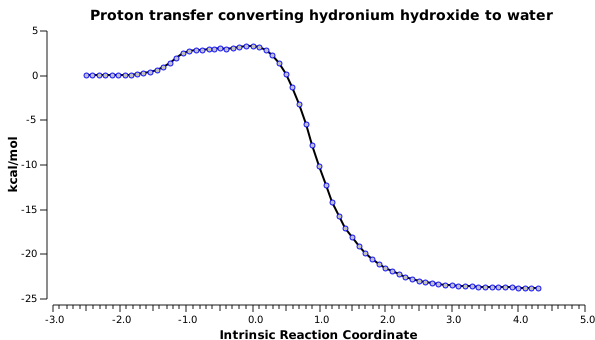
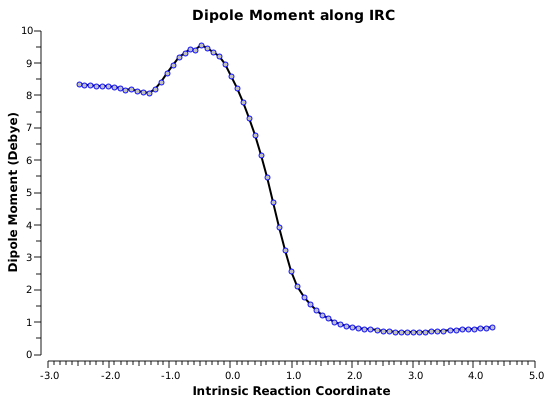
Addendum 2: Shown below is the intrinsic reaction cooordinate (IRC) calculated[6] for the proton transfer from the hydronium hydroxide ion-pair to form neutral water, revealing a barrier of ~3kcal/mol and exothermicity of 23 kcal/mol and how the dipole moment evolves.

NH3-8
NH3-8
NH3-8


Dissociation/equilibrium constants are rarely converted into free energies in text books and elsewhere. I would argue here that one gets a better intuitive feeling for such systems if expressed as energies. In this case, such a self-ionization energy for water might also be a useful way of calibrating how any given quantum mechanical procedure might perform in terms of the solvation model etc.

Recent calculations of like-charge pairs of either H3O+ or OH have been reported[7] but not as an ion-pair.

It is implicit when one talks about connecting bonds that the weaker hydrogen bonds do not qualify. Of course there is a whole spectrum of hydrogen bonding strengths; ones involved in ion-pairs for example can be up to 3 times stronger than those to neutral systems.

References

  1. H. Rzepa, "Crystal structures containing the hydronium cation", 2016. https://doi.org/10.14469/hpc/370
  2. M. Stapf, W. Seichter, and M. Mazik, "Unique Hydrogen‐Bonded Complex of Hydronium and Hydroxide Ions", Chemistry – A European Journal, vol. 21, pp. 6350-6354, 2015. https://doi.org/10.1002/chem.201406383
  3. Stapf, Manuel., Seichter, Wilhelm., and Mazik, Monika., "CCDC 1034049: Experimental Crystal Structure Determination", 2015. https://doi.org/10.5517/cc13q0f8
  4. H.S. Rzepa, "H22O11", 2016. https://doi.org/10.14469/ch/191994
  5. H.S. Rzepa, "H 22 O 11", 2016. https://doi.org/10.14469/ch/191995
  6. H.S. Rzepa, "H22O11", 2016. https://doi.org/10.14469/ch/192002
  7. M.K. Ghosh, T.H. Choi, and C.H. Choi, "Like-charge ion pairs of hydronium and hydroxide in aqueous solution?", Physical Chemistry Chemical Physics, vol. 17, pp. 16233-16237, 2015. https://doi.org/10.1039/c5cp02182k

Ways to encourage water to protonate an amine: superbasing.

Friday, April 8th, 2016

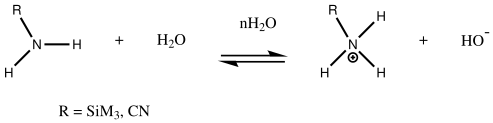
Previously, I looked at models of how ammonia could be protonated by water to form ammonium hydroxide. The energetic outcome of my model matched the known equilbrium in water as favouring the unprotonated form (pKb ~4.75). I add here two amines for which R=Me3Si and R=CN. The idea is that the first will assist nitrogen protonation by stabilising the positive centre and the second will act in the opposite sense; an exploration if you like of how one might go about computationally designing a non-steric superbasic amine that becomes predominantly protonated when exposed to water (pKb <1) and is thus more basic than hydroxide anion in this medium.

NH3-8

Before reporting any calculations, let us see what the CSD (Cambridge structure database) might contain. The search query is simple, a 3-coordinate amine forming a 4-coordinate quaternary nitrogen with one N-H and a positive (formal) charge on the N, and a 1-coordinate oxygen with one O-H and a negative charge on the O. With the constraints R < 10%, no disorder and no errors, one gets as many as 15 hits,[1] several of which also apparently contain separate water molecules in the crystal. A warning bell (perhaps several) sounds, since if R < 5%, the number of hits drops to just 2; these are clearly difficult structures to refine! So there is some tantalising evidence that in the solid state at least, the quaternary ammonium group (with at least one N-H), water and a hydroxide anion might be capable of co-existence. As noted below some fascinating 2-coordinate amines have also been reported as having superbasic properties.

NH3-8

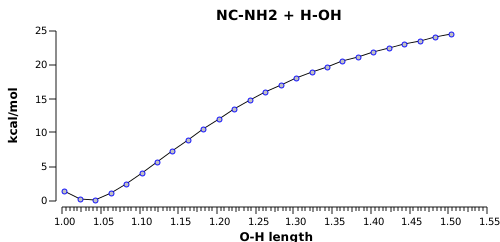
R=CN: the well known compound cyanamide is known to act only as an acid and its basic properties are never quoted. Shown below is the reaction path for transfer of a proton from water to the amine using an 8-water model (n=8) in which two bridges can serve to help stabilize any ionic form. The energy required to do so however is at least 24 kcal/mol (ωB97XD/Def2-TZVPPD/SCRF=water) which indicates that no protonated amine is formed. This can be attributed to the electron withdrawing cyano group strongly destablising any adjacent positive ammonium centre and thus effectively completely inhibiting its formation.

NH3-8

R=Me3Si: this too is already known[2],[3] but only in the presence of the non-coordinating counter-anion B(C6F5)4 crystallised from non-protic solution. An ionised form can now be located using the model above. This has the structure shown below; note the very short hydrogen bonds associated with the hydroxide anion and the possibility of forming only two water bridges across the ion-pair. The relative free energy of the ion-pair (table below) shows it to be if anything less basic than ammonia. 

NH3-8

n=8 R=H R=SiMe3 R=CN
ΔΔG298 7.0[4]

7.6[5],[6]

>24[7]

NBO (natural bond orbital) analysis might here  be a useful metric of basicity. Hence Me3SiNH2…H2O  suggests that donation from the N lone pair into an antiperiplanar Si-C bond is quite large (E(2) = 11.9 kcal/mol), although alternative donation by nitrogen into the H-O σ* bond  of the water is much higher (33.4 kcal/mol). 

Perhaps the basicity of simple amines is related to their ability to form stabilizing water bridges across the ion-pair? With trimethylsilyl substituents, this feature (and hence the basicity) is partially or even fully suppressed as in e.g. tris(trimethylsilyl)amine.The pKb of the latter appears to be unreported[8] but it does seem to be only weakly basic and "inert to H2O",[9] a property attributed instead to multiple character in the Si-N bonds. 

I will in a future post look at the alternative class of phosphazenium amines which do manage to achieve superbasicity.[10]


A phosphazenium 3-coordinate amine[11] was in 1991 claimed to be the strongest metal-free neutral base. This has now been superceded by combining this base motif with that of a sterically operating proton sponge.[12],[10] I will report the computational modelling of these systems in a later post.

One of the structures identified with R<10% is UBEJIU[13] and which is worth showing below. Note the apparent close contact of the type N-H…H-O (1.416-1.463Å) rather than the expected N-H…OH.  If correct (this feature is not mentioned in the article itself) it would be classified as a dihydrogen bond, a type normally only found in situations such as B-H…H-N. There are a number of other inconsistencies which must be resolved if this structure is to stand as correct.

NH3-8

References

  1. H. Rzepa, "Substituted ammonium hydroxides", 2016. https://doi.org/10.14469/hpc/361
  2. Y. Sarazin, J.A. Wright, and M. Bochmann, "Synthesis and crystal structure of [C6H5Hg(H2NSiMe3)][H2N{B(C6F5)3}2], a phenyl–mercury(II) cation stabilised by a non-coordinating counter-anion", Journal of Organometallic Chemistry, vol. 691, pp. 5680-5687, 2006. https://doi.org/10.1016/j.jorganchem.2006.09.021
  3. Sarazin, Y.., Wright, J.A.., and Bochmann, M.., "CCDC 608250: Experimental Crystal Structure Determination", 2007. https://doi.org/10.5517/ccndxzx
  4. H.S. Rzepa, and H.S. Rzepa, "H21NO9", 2016. https://doi.org/10.14469/ch/191946
  5. H.S. Rzepa, and H.S. Rzepa, "C 3 H 29 N 1 O 9 Si 1", 2016. https://doi.org/10.14469/ch/191987
  6. H.S. Rzepa, and H.S. Rzepa, "C 3 H 29 N 1 O 9 Si 1", 2016. https://doi.org/10.14469/ch/191982
  7. H.S. Rzepa, "CH20N2O9", 2016. https://doi.org/10.14469/ch/191983
  8. E.W. Abel, D.A. Armitage, and G.R. Willey, "Relative base strengths of some organosilicon amines", Transactions of the Faraday Society, vol. 60, pp. 1257, 1964. https://doi.org/10.1039/tf9646001257
  9. J. Goubeau, and J. Jimenéz‐Barberá, "Tris‐(trimethylsilyl)‐amin", Zeitschrift für anorganische und allgemeine Chemie, vol. 303, pp. 217-226, 1960. https://doi.org/10.1002/zaac.19603030502
  10. Kögel, Julius F.., Oelkers, Benjamin., Kovačević, Borislav., and Sundermeyer, Jörg., "CCDC 1002088: Experimental Crystal Structure Determination", 2014. https://doi.org/10.5517/cc12mrfw
  11. R. Schwesinger, and H. Schlemper, "Peralkylated Polyaminophosphazenes— Extremely Strong, Neutral Nitrogen Bases", Angewandte Chemie International Edition in English, vol. 26, pp. 1167-1169, 1987. https://doi.org/10.1002/anie.198711671
  12. J.F. Kögel, B. Oelkers, B. Kovačević, and J. Sundermeyer, "A New Synthetic Pathway to the Second and Third Generation of Superbasic Bisphosphazene Proton Sponges: The Run for the Best Chelating Ligand for a Proton", Journal of the American Chemical Society, vol. 135, pp. 17768-17774, 2013. https://doi.org/10.1021/ja409760z
  13. P. Vianello, A. Albinati, G.A. Pinna, A. Lavecchia, L. Marinelli, P.A. Borea, S. Gessi, P. Fadda, S. Tronci, and G. Cignarella, "Synthesis, Molecular Modeling, and Opioid Receptor Affinity of 9,10-Diazatricyclo[4.2.1.1<sup>2,5</sup>]decanes and 2,7-Diazatricyclo[4.4.0.0<sup>3,8</sup>]decanes Structurally Related to 3,8-Diazabicyclo[3.2.1]octanes", Journal of Medicinal Chemistry, vol. 43, pp. 2115-2123, 2000. https://doi.org/10.1021/jm991140q

Real hypervalency in a small molecule.

Sunday, February 21st, 2016

Hypervalency is defined as a molecule that contains one or more main group elements formally bearing more than eight  electrons in their  valence shell. One example of a molecule so characterised was CLi6[1] where the description "“carbon can expand its octet of electrons to form this relatively stable molecule“ was used. Yet, in this latter case, the octet expansion is in fact an illusion, as indeed are many examples that are cited. The octet shell remains resolutely un-expanded. Here I will explore the tiny molecule CH3F2- where two extra electrons have been added to fluoromethane.

Two such electrons added to e.g. such a methane derivative can be in principle accommodated in two ways:

  1. The electrons on carbon could expand the octet shell by populating molecular orbitals constructed using 3s or 3p atomic orbitals (AOs) as well as the normal 2s and 2p shells. This is also the normal "explanation" for expanded octets, the assumption being that as one moves down the rows of the periodic table (e.g. P, S, Cl, etc) these shells become energetically more accessible (e.g. the 3d or 4s shell for P, S, Cl etc). In fact, for e.g. PF5, the occupancy of such  "Rydberg" shells is only ~0.2 electrons, not a significant octet expansion.
  2. The electrons can instead or as well as populate the antibonding molecular orbitals (MOs) formed from just the 2s/2p AOs. For a methane derivative, there are four bonding MOs (into which the octet of electrons are placed) and four anti-bonding MOs all constructed from the total of eight AOs. Well known examples of populating antibonding MOs are the series N≡N, O=O (singlet), F-F, Ne…Ne where the additional electrons are added to anti-bonding MOs and have the effect of reducing the bond orders from 3 to 2 to 1 to 0. And of course all core shells contain populated bonding and antibonding pairs.

Here are some ωB97XD/Def2-TZVPPD/scrf=water calculations. All these species are molecules with all-real vibrations, being stable toward dissociation to e.g. CH3 + H or CH3 + F.  A transition state for this latter dissocation with IRC[2] can be characterised. In all cases the energy of the highest occupied MO or NBO is -ve, meaning that the electrons are bound, at least in part due to the solvent field applied.

Molecule Wiberg CH order Wiberg CF order Natural Populations E HONBO, au dataDOI
CH42- 0.773

C:[core]2S(1.98)2p(3.82)3S( 0.15)4d( 0.01)

H:1S( 1.00)

-0.144CH4 [3]
CH3F2- 0.980 1.213

C:[core]2S(1.05)2p( 3.20)3S(1.26)4p( 0.01)4d( 0.01)

H:1S( 0.84)2S( 0.01)2p( 0.02)

F:[core]2S(1.88)2p( 5.61)3S( 0.30)3p( 0.04)3d( 0.01)4p( 0.01)

-0.068
Click for  3D

Click for 3D

[4]
CH2F22- 0.871 0.897

C:[core]2S(1.60)2p( 2.64)3S(0.39)3p( 0.01)4d( 0.01)

H:1S(1.19)2S( 0.06)

F:[core]2S(1.86)2p( 5.52)3S( 0.01)3p( 0.01)4p( 0.01)

-0.281
Click for  3D

Click for 3D

[5]
CF42- 0.801

C:[core]2S(1.94)2p( 1.96)3S( 0.19)3p( 0.04)5d( 0.01)

F:[core]2S(1.89)2p( 5.54)3p( 0.01)3d( 0.02)


-0.148CF4 [6]
  1. CH42- shows only small Rydberg occupancy (< 0.2e), but a significantly reduced bond order for the four C-H bonds (each C-H bonding NBO also has some antibonding character for the other three CHs) and hence the molecule is not truly hypervalent.
  2. CH3F2- in contrast shows quite different behavour. The C-H bond order is almost 1 and the C-F bond order is actually >1. Of the two extra electrons, ~1.28 now occupy carbon Rydberg AOs and the fluorine also has significant Rydberg population (~0.36e). So this is a real hypervalent system, in which the total valencies exceed that expected from an octet.
  3. CH2F22- is somewhere inbetween the previous two systems. The carbon has modest Rydberg occupancy (~0.4e) but there is also significant occupation of the antibonding MOs. Both the C-H and C-F bond orders are <1.
  4. CF42- shows a further reduction in the C Rydberg occpancy (<0.2) and the C-F bond order is also reduced. This reduction in bond order is also seen in other so-called hypervalent systems such as PF5.

So of these systems, CH3F2- can be reasonably called hypervalent, whilst the others have much less such character. It does appear that there is a fine balance between placing extra electrons into Rydberg orbitals to expand the "octet" and hence valencies, and placing them in anti-bonding orbitals where the individual valencies are actually reduced. It seems that substituting methane with just one fluorine encourages population of the Rydberg orbitals, but that more fluorines encourage instead population of the antibonding orbitals. What is remarkable is that CH3F2- actually has a (small) barrier to dissociation. The challenge now is to try to design a system which has a significant Rydberg population, a low antibonding population AND is stable to dissociation; this will require some inspiration. So do not hold your breaths!


References

  1. H. Kudo, "Observation of hypervalent CLi6 by Knudsen-effusion mass spectrometry", Nature, vol. 355, pp. 432-434, 1992. https://doi.org/10.1038/355432a0
  2. https://doi.org/
  3. H.S. Rzepa, "C 1 H 4 -2", 2016. https://doi.org/10.14469/ch/191837
  4. H.S. Rzepa, "C 1 H 3 F 1 -2", 2016. https://doi.org/10.14469/ch/191919
  5. H.S. Rzepa, "C 1 H 2 F 2 -2", 2016. https://doi.org/10.14469/ch/191918
  6. H.S. Rzepa, "C 1 F 4 -2", 2016. https://doi.org/10.14469/ch/191916

Bond stretch isomerism. Did this idea first surface 100 years ago?

Tuesday, February 9th, 2016

The phenomenon of bond stretch isomerism, two isomers of a compound differing predominantly in just one bond length, is one of those chemical concepts that wax and occasionally wane.[1] Here I explore such isomerism for the elements Ge, Sn and Pb.

In one earlier post, I noted a form of bond stretch isomerism that can arise from a Jahn-Teller distortion ending in two different geometries in which one or more pairs of bonds swap short/long lengths. Examples include substituted cyclo-octatetraenes[2] and octahedral d9-Cu(II) complexes.[3] A more interesting seminal possibility was implied by G. N. Lewis a century ago when discussing the arrangement of electrons in a (carbon-carbon) triple bond.[4]

lewis1
*It took ~50 years to prove this assertion wrong.[5]

In a commentary, I reported the results of a search of the crystal structure database for the geometries associated with RX≡XR systems (X= C, Si, Ge, Sn, Pb). Here I focus the search[6] specifically for X=Sn,Ge; this version of bond stretch isomerism also allows angles to change (= rehybridisation at atoms) in order to provide a mechanism for a barrier separating the two forms.

For X=Sn, note the presence of up to three clusters, although the relatively low number of hits makes the statistics less certain.

  1. The hotspot cluster centered around angles of 125° and a Sn-Sn distance of ~2.6Å.
  2. Another with angles of <100° and Sn-Sn distances of ~3.3Å.
  3. A third with angles of <100° and Sn-Sn distances of 2.8Å, which may or may not be a genuine unique form of bonding.

This pattern was commented on in 2010 by Power[7], whose group synthesized most of the examples in the hits above. A plot of compounds with Ge-Ge bonds reveals both similarity with (two, possibly three clusters) and difference from (the clusters are closely spaced in terms of the Ge-Ge bond length, but separated in terms of angle) Sn.

GeGe

Time for some computations (which at least will remove random errors in the geometry). I selected the only known example of an RPb-PbR compound[8] as a seed and put it through a B3LYP+D3/Def2-TZVPP calculation (with 172 atoms and 2920 basis functions, this is a relatively large calculation!), which reproduces the known structure pretty well (table).

QIMQUY

So what about another bond stretch isomers? The Pb=Pb variation is indeed a stable minimum around 28.0 kcal/mol above the known structure, which seems to put this form out of experimental reach (with this ligand/aryl group at least). With Sn for the same aryl ligand, the energy difference is smaller (~15.8 kcal/mol for this ligand; Powers reports other systems where the energy difference may be only ~5 kcal/mol). Judging by the distribution of the 13 hits recovered from the CSD search, both bond stretch isomers may be accessible experimentally. The calculations show that the GeGe bond isomers are much closer in energy than SnSn (for this ligand). For all three metals however, the calculated difference in the metal-metal length for the two isomers is ~0.45 – 0.52Å. This strongly suggests that whereas the SnSn plot above is demonstrating bond length isomerism, the GeGe plot may not be; at least not of the same type that the calculations here are revealing (via the Wiberg bond orders).

System Relative energy XX distance RXX angle Wiberg bond order DataDOI
Pb=Pb +28.0 2.767 118.7 1.666 [9]
Pb-Pb 0.0 3.215 (3.188)[8] 93.7 (94.3)[8] 0.889 [10]
Sn=Sn +15.8 2.640 123.1 1.911 [11]
Sn-Sn 0.0 3.126 95.5 0.892 [12]
Ge=Ge +0.5 2.263 125.2 2.138 [13]
Ge-Ge 0.0   2.777 99.7 0.866 [14]

No doubt the particular bond length form is being facilitated by the nature of the ligand and the steric interactions therein imparted, both repulsive AND attractive. These interactions can be visualised via NCI (non-covalent-interaction) plots (click on the image to obtain a rotatable 3D model). First Pb-Pb followed by Pb=Pb. Note how in both cases, the PbPb region is enclosed in regions of weak attractive dispersion interactions, which however avoid the "hemidirected" inert Pb lone pairs.[15]

Pb-Pb Pb=Pb

So in the end we have something of a mystery. There is evidence from crystal structures that at least two bond-stretch isomers of RSnSnR compounds can form, but the calculations indicate that the Sn=Sn form is significantly higher in energy (although not impossibly so for thermal accessibility). Conversely, the Ge=Ge equivalent is very similar in energy to a Ge-Ge form with a significantly longer bond length, but there seems no crystallographic evidence for such a big difference in bond lengths. Perhaps the answer lies with the ligands?

It seems particularly appropriate on the centenary of G. N. Lewis' famous paper in which he clearly notes the possibility of three isomeric forms for the triple bond, to pay tribute to the impact his suggestions continue to make to chemistry.


The individual entries can be inspected via the following dois: [16],[17],[18],[19],[20],[21],[22],[23],[24],[25]

You can view individual entries via the following DOIs: [26],[27],[28],[29],[30],[31],[32],[33],[34],[35]

References

  1. J.A. Labinger, "Bond-stretch isomerism: a case study of a quiet controversy", Comptes Rendus. Chimie, vol. 5, pp. 235-244, 2002. https://doi.org/10.1016/s1631-0748(02)01380-2
  2. J.E. Anderson, and P.A. Kirsch, "Structural equilibria determined by attractive steric interactions. 1,6-Dialkylcyclooctatetraenes and their bond-shift and ring inversion investigated by dynamic NMR spectroscopy and molecular mechanics calculations", Journal of the Chemical Society, Perkin Transactions 2, pp. 1951, 1992. https://doi.org/10.1039/p29920001951
  3. W. Zhang, L. Chen, R. Xiong, T. Nakamura, and S.D. Huang, "New Ferroelectrics Based on Divalent Metal Ion Alum", Journal of the American Chemical Society, vol. 131, pp. 12544-12545, 2009. https://doi.org/10.1021/ja905399x
  4. G.N. Lewis, "THE ATOM AND THE MOLECULE.", Journal of the American Chemical Society, vol. 38, pp. 762-785, 1916. https://doi.org/10.1021/ja02261a002
  5. F.A. Cotton, "Metal-Metal Bonding in [Re<sub>2</sub>X<sub>8</sub>]<sup>2-</sup> Ions and Other Metal Atom Clusters", Inorganic Chemistry, vol. 4, pp. 334-336, 1965. https://doi.org/10.1021/ic50025a016
  6. H. Rzepa, "Crystal structures containing Sn...Sn bonds", 2016. https://doi.org/10.14469/hpc/249
  7. Y. Peng, R.C. Fischer, W.A. Merrill, J. Fischer, L. Pu, B.D. Ellis, J.C. Fettinger, R.H. Herber, and P.P. Power, "Substituent effects in ditetrel alkyne analogues: multiple vs. single bonded isomers", Chemical Science, vol. 1, pp. 461, 2010. https://doi.org/10.1039/c0sc00240b
  8. L. Pu, B. Twamley, and P.P. Power, "Synthesis and Characterization of 2,6-Trip<sub>2</sub>H<sub>3</sub>C<sub>6</sub>PbPbC<sub>6</sub>H<sub>3</sub>-2,6-Trip<sub>2</sub> (Trip = C<sub>6</sub>H<sub>2</sub>-2,4,6-<i>i</i>-Pr<sub>3</sub>):  A Stable Heavier Group 14 Element Analogue of an Alkyne", Journal of the American Chemical Society, vol. 122, pp. 3524-3525, 2000. https://doi.org/10.1021/ja993346m
  9. H.S. Rzepa, "C 72 H 98 Pb 2", 2016. https://doi.org/10.14469/ch/191856
  10. H.S. Rzepa, "C 72 H 98 Pb 2", 2016. https://doi.org/10.14469/ch/191873
  11. https://doi.org/
  12. H.S. Rzepa, "C 72 H 98 Sn 2", 2016. https://doi.org/10.14469/ch/191881
  13. H.S. Rzepa, "C 72 H 98 Ge 2", 2016. https://doi.org/10.14469/ch/191882
  14. H.S. Rzepa, "C 72 H 98 Ge 2", 2016. https://doi.org/10.14469/ch/191883
  15. M. Imran, A. Mix, B. Neumann, H. Stammler, U. Monkowius, P. Gründlinger, and N.W. Mitzel, "Hemi- and holo-directed lead(<scp>ii</scp>) complexes in a soft ligand environment", Dalton Transactions, vol. 44, pp. 924-937, 2015. https://doi.org/10.1039/c4dt01406e
  16. Jones, C.., Sidiropoulos, A.., Holzmann, N.., Frenking, G.., and Stasch, A.., "CCDC 892557: Experimental Crystal Structure Determination", 2012. https://doi.org/10.5517/ccyys5t
  17. Phillips, A.D.., Wright, R.J.., Olmstead, M.M.., and Power, P.P.., "CCDC 187521: Experimental Crystal Structure Determination", 2002. https://doi.org/10.5517/cc6942p
  18. Peng, Yang., Fischer, R.C.., Merrill, W.A.., Fischer, J.., Pu, Lihung., Ellis, B.D.., Fettinger, J.C.., Herber, R.H.., and Power, P.P.., "CCDC 771267: Experimental Crystal Structure Determination", 2010. https://doi.org/10.5517/cctwklt
  19. Peng, Yang., Fischer, R.C.., Merrill, W.A.., Fischer, J.., Pu, Lihung., Ellis, B.D.., Fettinger, J.C.., Herber, R.H.., and Power, P.P.., "CCDC 771268: Experimental Crystal Structure Determination", 2010. https://doi.org/10.5517/cctwkmv
  20. Peng, Yang., Fischer, R.C.., Merrill, W.A.., Fischer, J.., Pu, Lihung., Ellis, B.D.., Fettinger, J.C.., Herber, R.H.., and Power, P.P.., "CCDC 771270: Experimental Crystal Structure Determination", 2010. https://doi.org/10.5517/cctwkpx
  21. Peng, Yang., Fischer, R.C.., Merrill, W.A.., Fischer, J.., Pu, Lihung., Ellis, B.D.., Fettinger, J.C.., Herber, R.H.., and Power, P.P.., "CCDC 771271: Experimental Crystal Structure Determination", 2010. https://doi.org/10.5517/cctwkqy
  22. Peng, Yang., Fischer, R.C.., Merrill, W.A.., Fischer, J.., Pu, Lihung., Ellis, B.D.., Fettinger, J.C.., Herber, R.H.., and Power, P.P.., "CCDC 771272: Experimental Crystal Structure Determination", 2010. https://doi.org/10.5517/cctwkrz
  23. Peng, Yang., Fischer, R.C.., Merrill, W.A.., Fischer, J.., Pu, Lihung., Ellis, B.D.., Fettinger, J.C.., Herber, R.H.., and Power, P.P.., "CCDC 771274: Experimental Crystal Structure Determination", 2010. https://doi.org/10.5517/cctwkt1
  24. Fischer, R.C.., Pu, Lihung., Fettinger, J.C.., Brynda, M.A.., and Power, P.P.., "CCDC 624216: Experimental Crystal Structure Determination", 2007. https://doi.org/10.5517/ccnyk04
  25. Pu, Lihung., Phillips, A.D.., Richards, A.F.., Stender, M.., Simons, R.S.., Olmstead, M.M.., and Power, P.P.., "CCDC 221953: Experimental Crystal Structure Determination", 2004. https://doi.org/10.5517/cc7fysc
  26. Sasamori, Takahiro., Sugahara, Tomohiro., Agou, Tomohiro., Guo, Jing-Dong., Nagase, Shigeru., Streubel, Rainer., and Tokitoh, Norihiro., "CCDC 1035078: Experimental Crystal Structure Determination", 2014. https://doi.org/10.5517/cc13r2mk
  27. Sidiropoulos, A.., Jones, C.., Stasch, A.., Klein, S.., and Frenking, G.., "CCDC 749451: Experimental Crystal Structure Determination", 2010. https://doi.org/10.5517/cct4vvm
  28. Shan, Yu-Liang., Yim, Wai-Leung., and So, Cheuk-Wai., "CCDC 1019495: Experimental Crystal Structure Determination", 2015. https://doi.org/10.5517/cc136vy3
  29. Sugiyama, Y.., Sasamori, T.., Hosoi, Y.., Furukawa, Y.., Takagi, N.., Nagase, S.., and Tokitoh, N.., "CCDC 297827: Experimental Crystal Structure Determination", 2006. https://doi.org/10.5517/cc9zxbh
  30. Stender, M.., Phillips, A.D.., Wright, R.J.., and Power, P.P.., "CCDC 180660: Experimental Crystal Structure Determination", 2002. https://doi.org/10.5517/cc61zry
  31. Peng, Yang., Fischer, R.C.., Merrill, W.A.., Fischer, J.., Pu, Lihung., Ellis, B.D.., Fettinger, J.C.., Herber, R.H.., and Power, P.P.., "CCDC 771273: Experimental Crystal Structure Determination", 2010. https://doi.org/10.5517/cctwks0
  32. Peng, Yang., Fischer, R.C.., Merrill, W.A.., Fischer, J.., Pu, Lihung., Ellis, B.D.., Fettinger, J.C.., Herber, R.H.., and Power, P.P.., "CCDC 771269: Experimental Crystal Structure Determination", 2010. https://doi.org/10.5517/cctwknw
  33. Peng, Yang., Fischer, R.C.., Merrill, W.A.., Fischer, J.., Pu, Lihung., Ellis, B.D.., Fettinger, J.C.., Herber, R.H.., and Power, P.P.., "CCDC 771266: Experimental Crystal Structure Determination", 2010. https://doi.org/10.5517/cctwkks
  34. Jones, C.., Sidiropoulos, A.., Holzmann, N.., Frenking, G.., and Stasch, A.., "CCDC 892556: Experimental Crystal Structure Determination", 2012. https://doi.org/10.5517/ccyys4s
  35. Jones, C.., Sidiropoulos, A.., Holzmann, N.., Frenking, G.., and Stasch, A.., "CCDC 892555: Experimental Crystal Structure Determination", 2012. https://doi.org/10.5517/ccyys3r

A molecular balance for dispersion energy?

Sunday, February 7th, 2016

The geometry of cyclo-octatetraenes differs fundamentally from the lower homologue benzene in exhibiting slow (nuclear) valence bond isomerism rather than rapid (electronic) bond-equalising resonance. In 1992 Anderson and Kirsch[1] exploited this property to describe a simple molecular balance for estimating how two alkyl substituents on the ring might interact via the (currently very topical) mechanism of dispersion (induced-dipole-induced-dipole) attractions. These electron correlation effects are exceptionally difficult to model using formal quantum mechanics and are nowadays normally replaced by more empirical functions such as Grimme's D3BJ correction.[2] Here I explore aspects of how the small molecule below might be used to investigate the accuracy of such estimates of dispersion energies.

bu

The concentration of the two forms shown above can be readily estimated by NMR spectroscopy (the barrier is slow enough to allow peaks for both isomers to be integrated). This shows that the 1,6 form is present in greater concentrations than the 1,4 form, equivalent to a difference in free energy ΔΔG298 of 0.39 kcal/mol in favour of the former. Why is this? Because, it is claimed,  in the 1,6 isomer the two t-butyl groups are close enough to experience mutual dispersion attractions not experienced by the 1,4 form. This can be illustrated using the NCI display below for the two forms.

Click for 3D.  Addition NCI interactions ringed in red.

Click for 3D. 1,6-isomer: Additional NCI interactions ringed in red.

Click for  3D

Click for 3D, 1,4 isomer.

Method Equilibrium constant, 298K ΔΔE ΔΔH298 ΔΔS298 ΔΔG298 Source
Experiment 1.93 1.14 -2.5 0.387 [1]
B3LYP/Def2-TZVPP/CDCl3 (no dispersion) 1.906 0.05 0.00 +1.3 0.382 [3],[4]
B3LYP/Def2-TZVPP/CDCl3 (gd3bj dispersion) 8.36 0.75 0.66 +2.0 1.25 [5],[6]

This contains a contribution of RTLn 2 (= 0.410 kcal/mol = 1.04 in ΔS), where 2 is the symmetry number for a species with C2 rotational symmetry, to the 1,4-isomer only.

The interpretation of these results, as is often found, is non-trivial.

  1. The relative concentrations of species in equilibrium equates with their relative free energies, ΔG298 and not ΔE (the difference in total energy computed using either quantum or molecular mechanics).
  2. ΔG298  has a component derived from the entropy of the system, and this in turn has contributions from symmetry (numbers).  Only the 1,6-isomer has two-fold rotational symmetry for the lowest energy pose of the two t-butyl groups, and this contributes 0.41 kcal/mol to ΔG298. This aspect is not discussed in the original article.[1]
  3. The B3LYP/Def2-TZVPP DFT method predicts ΔΔE to be +0.05 kcal/mol without the inclusion of the D3BJ dispersion correction but +0.75 kcal/mol with. One might approximately equate the latter to the contributions ringed in red in the NCI distributions shown above. The enthalpies (where ΔΔE is corrected for zero point energies) are very similar.
  4. Conversion to ΔG298 involves use of the vibrational frequencies to obtain the entropy; here one encounters a difference between the two double bond isomers. The lowest energy vibration for C2-symmetric 1,4 is 23 cm-1, whereas that for the 1,6 is only 7 cm-1 (a value which also depends on round-off errors and accuracies in the calculation). These errors in the RRHO (rigid-rotor-harmonic-oscillator) approximations makes meaningful calculation of ΔS298 and hence ΔG298 problematic at this small energy difference level. In both cases, this approach suggests that the entropy of the 1,6 form is slightly larger than the 1,4 isomer, whereas the reverse is apparently true by experimental measurement. It might all boil down to those low-frequency vibrations!

So we may conclude that whereas the dispersion uncorrected method gets the right answer for the equilibrium constant for probably the wrong reasons, inclusion of a dispersion correction would get the right answer were it not for the error in the entropy. Agreement with experiment would be obtained if the calculated entropy difference were to be -0.9 kcal/mol K-1 instead of +2.0. Thus the 1,6 isomer has the two t-butyl groups weakly interacting (red circle above), which intuition tends to suggest would reduce the entropy (reduce the disorder) of the system and not increase it. 

At least in this relatively small molecule, we now have a handle for estimating these sorts of effects in terms of variables such as the basis set used, the energy Hamiltonian (e.g. type of functional etc) and of course the dispersion correction.

References

  1. J.E. Anderson, and P.A. Kirsch, "Structural equilibria determined by attractive steric interactions. 1,6-Dialkylcyclooctatetraenes and their bond-shift and ring inversion investigated by dynamic NMR spectroscopy and molecular mechanics calculations", Journal of the Chemical Society, Perkin Transactions 2, pp. 1951, 1992. https://doi.org/10.1039/p29920001951
  2. S. Grimme, S. Ehrlich, and L. Goerigk, "Effect of the damping function in dispersion corrected density functional theory", Journal of Computational Chemistry, vol. 32, pp. 1456-1465, 2011. https://doi.org/10.1002/jcc.21759
  3. H.S. Rzepa, "C 16 H 24", 2016. https://doi.org/10.14469/ch/191875
  4. H.S. Rzepa, "C 16 H 24", 2016. https://doi.org/10.14469/ch/191876
  5. H.S. Rzepa, "C 16 H 24", 2016. https://doi.org/10.14469/ch/191874
  6. H.S. Rzepa, and H.S. Rzepa, "C 16 H 24", 2016. https://doi.org/10.14469/ch/191880

Quintuple bonds: resurfaced.

Sunday, January 31st, 2016

Six years ago, I posted on the nature of a then recently reported[1] Cr-Cr quintuple bond. The topic resurfaced as part of the discussion on a more recent post on NSF3, and a sub-topic on the nature of the higher order bonding in C2. The comment made a connection between that discussion and the Cr-Cr bond alluded to above. I responded briefly to that comment, but because I want to include 3D rotatable surfaces, I expand the discussion here and not in the comment.

Firstly, a quick update. Since the original post, quite a few Cr-Cr quintuple bonds have been reported. In searching the crystal structure database, I used the text "quintuple" as a text search term (since specifying a quintuple bond as such is not supported) along with a Boolean AND using the sub-structure Cr-Cr (with any type of bond allowed). The result is shown below. It is striking that in fact these "quintuple" bonds cluster into a set with a bond distance of ~1.74Å and another with 1.83Å. Are these valence bond isomers?


Now to the system shown at the top (one of the 1.74Å set). My original post discussed the results of a density functional evaluation of the properties of the electron density in the Cr-Cr region. Most striking was the value of the Laplacian ∇2ρ(r) of this density, the value of +1.45au being the largest ever reported for a pair of identical atoms. I should remind that ∇2ρ(r) is used as one measure of the character of a bond, being the balance between electronic kinetic energy density and potential energy density along a bond. But it is well recognised that the bonding between such transition metals has what is called multi-reference character; the wavefunction is not well described by just a single doubly occupied electronic configuration. More electronic configurations have to be included, and hence a MC-SCF (multi-configuration) self-consistent description of the wavefunction is needed. So as a response to the comment noted above, I decided to carry out CASSCF/6-311G(d) calculations, in which an active space of electrons and molecular orbitals is specified, and using the geometry previously obtained at the DFT level. Thus a CASSCF(8,8) calculation takes 8 electrons and evaluates all possible configurations arising from placing them into an active space of eight molecular orbitals. With metals unfortunately the active space is likely to be large, and so I decided to computed (10,10), (12,12) and (14,14) CASSCF as well to see if any convergence might occur. The last is close to the limit offered by the program. The values shown below are at the QTAIM line (bond) critical point along the Cr-Cr axis.

Active space ρ(r) 2ρ(r) Total energy, Hartree % of CS config Calculation DOI
8 .303 1.720 -2383.48049 63 [2]
10 .308 1.612 -2383.68830 61 [3]
12 .308 1.612 -2383.70398 60.6 [4]
14 .308 1.612 -2383.72161 59 [5]
DFT .313 1.45 100 [6]

From the trend above, we might safely conclude that the CASSCF active space IS convergent, at least for the density if not for the energy. Also convergent are the properties of the density such as ∇2ρ(r), and noteworthy is that the value of this property is even higher than was obtained using single-configuration DFT theory. So the claim that this system has a record such property does not change. Negative values of the Laplacian are normally taken to indicate a conventionally covalent bond, whereas +ve values show the bond has what is called charge-shift character.[7] So these Cr-Cr quintuple bonds must be amongst the most charge-shifted exemplars!

I show some surfaces (click on the image to get a rotatable model) computed from the CASSCF(14,14) density. Firstly the electron density ρ(r) itself, contoured at 0.25au, showing the high value between the chromium atoms.

Next, ∇2ρ(r) contoured at ±1.5, revealing its high value in the Cr-Cr region (blue = +ve, red = -ve) and then below at ± 0.25 which includes the covalent bonds of the ligands.

Finally, the ELF (electron localisation function) function which tries to gather the electron density into localised ELF basins (numbers are the integration of the electron density in this basin). This looks very similar to that shown previously and is striking because there is no basin in the Cr-Cr region. Instead, the localisation is along the Cr-N bonds. One might describe this as saying that the Cr-Cr region is very highly correlated.


It is a limitation of the WordPress system that such objects cannot be included in comments.


References

  1. C. Hsu, J. Yu, C. Yen, G. Lee, Y. Wang, and Y. Tsai, "Quintuply‐Bonded Dichromium(I) Complexes Featuring Metal–Metal Bond Lengths of 1.74 Å", Angewandte Chemie International Edition, vol. 47, pp. 9933-9936, 2008. https://doi.org/10.1002/anie.200803859
  2. H.S. Rzepa, "C 2 H 6 Cr 2 N 4", 2016. https://doi.org/10.14469/ch/191860
  3. H.S. Rzepa, "C 2 H 6 Cr 2 N 4", 2016. https://doi.org/10.14469/ch/191857
  4. H.S. Rzepa, "C 2 H 6 Cr 2 N 4", 2016. https://doi.org/10.14469/ch/191858
  5. H.S. Rzepa, "C2H6N2O2", 2016. https://doi.org/10.14469/ch/191855
  6. H.S. Rzepa, "C 2 H 6 Cr 2 N 4", 2010. https://doi.org/10.14469/ch/4156
  7. S. Shaik, D. Danovich, W. Wu, and P.C. Hiberty, "Charge-shift bonding and its manifestations in chemistry", Nature Chemistry, vol. 1, pp. 443-449, 2009. https://doi.org/10.1038/nchem.327

I’ve started so I’ll finish. Mechanism and kinetic isotope effects for protiodecarboxylation of indoles.

Saturday, January 2nd, 2016

Another mechanistic study we started in 1972[1] is here 40+ years on subjected to quantum mechanical scrutiny.

Indole diazocoupling

The kinetics are again complex, the mechanism involving protonation of the indole carboxylate (by a general acid), followed by the presumption of a zwitterionic Wheland intermediate that then loses carbon dioxide in a second step (blue arrows). Kinetically indistinguishable is a concerted alternative in which both steps are conflated into a concerted but not necessarily synchronous process (red arrows). In 1972, this latter mechanistic alternative was never really considered, iin part because it was not easy to prove or disprove an asynchronous concerted route by experiment. A brief summary of the conclusions:

  1. The reaction was found to be catalysed by a general acid.
  2. But a residual rate at low acid concentration was measured, corresponding to catalysis by water as an acid (shown in the scheme above).
  3. A deuterium isotope effect of ~2.2-2.7 on the apparent protonation step was observed when the reaction was conducted in D2O rather than H2O (the disentangled complex kinetics yielded isotope effects for two other kinetic parameters as well, also in the range 2.0-2.6).
  4. The isotope effects were found to be insensitive to various substituents on the indole, leading to the final conclusion that isotope effects for proton transfer are little influenced by the symmetry of the process.

Here, I set out to test some of these forty-year old assumptions; in particular to see if a model can be constructed that reproduces the unusually low value of the primary deuterium kinetic isotope effect, since normally proton transfers to carbon sustain a value closer to 7.

Now for the mechanism. Shown below are eight potential models for the process.

  1. Model 1 is the most basic, with just a single water molecule delivering a proton to the 3-position of the indole and abstracting it from the carboxylic acid group.
  2. Models 1a, 1b and 1c add a second water as a passive hydrogen bonder.
  3. Model 2 is isomeric to 1a,b,c but the second water now actively participates in the proton relay.
  4. Model 3 replaces the single water molecule with a more acidic proton relay molecule, ethanoic acid (red).
  5. Models 4 and 5 augment model 3 with one water molecule as well, in two different positions.
  6. Model 6 uses a three-water proton relay with one H-bonding water.
  7. Model 7 uses a two-water proton relay with two H-bonding waters.

Indole diazocoupling

The results of a B3LYP+D3/Def2-TZVP/SCRF=water calculation are collected below in the table. The following conclusions can be drawn:

  1. Model 1, with just a single water molecule acting as proton transfer acid/base reveals a concerted route via TS. 
  2. Model 1b, with an extra water acting via a hydrogen bond now changes the mechanism to stepwise via  TS1 and  TS2, the latter being some 12.6 kcal/mol lower in energy and hence making  TS1 rate determining. The kinetic deuterium isotope effect (KIE) on  TS1 of  7.27 is much larger than is observed.  That for the second step TS2 is negligible.
  3. Model 2, isomeric with 1b, is lower by 4 kcal/mol, largely due to a more favourable geometry for linear proton transfer. The KIE is getting closer to the observed value as is the free energy barrier (measured as ΔG298 22 kcal/mol[1]).
  4. Model 3 replaces the water proton transfer agent by ethanoic acid, with a significant lowering of the barrier. This constitutes a prediction for protiodecarboxylation in ethanoic acid solutions.
  5. Models 4 and the isomeric 5 now combines models 2+3, and represents one possibility for general acid catalysis in aqueous ethanoic acid solutions. The KIE is predicted to rise significantly (again, this experiment has not been done).
  6. Model 7 incorporates model 2 (a two-water proton relay) with two additional passive water molecules acting via hydrogen bonds. The barrier is converging to the measured value, and the KIE has now dropped below the measured value! As before TS2 is lower (by 6.8 kcal/mol) than TS1.
  7. Model 6 (below) is isomeric with model 7 and incorporates a three-water proton relay with one solvating water, with a predicted KIE higher than model 6.

Indole diazocoupling

Model ΔG298 dataDOIs Mechanism kH/kD [2]
1 33.8 [3],[4] TS[5] 9.88
1a 35.6 [6],[7]
1b 33.8 (21.2) [6],[8],[9] TS1,TS2[10] 7.27 (1.05)
1c 33.9 [6],[11]
2 29.9 [6],[12] TS1,TS2[13] 4.20
3 20.9 [14],[15] TS1,TS2[16] 4.29
4 25.7 [17],[18] TS1,TS2[19]
5 24.4 [17],[20] TS1,TS2[21] 8.55
6 23.9 [22],[23] TS1,TS2 5.66
7 24.3 (8:17.9) [22],[24],[25] TS1,TS2[26] 1.44

These models show that the arrangements of the solvation and proton-relay components of the mechanism are crucial to understanding the kinetic isotope effects induced by deuterium. The partition function ratios responsible for the KIE emerge[2] as a complex function of the structure and so the KIE itself provides a particularly sensitive probe of these structures. This exploration is not stochastical in nature;  there are clearly many more variations in which even more than four water molecules could be used in the model. One would take the Boltzmann population/weight of each pose and use these to predict the statistical probability of properties such as the KIE. Working in the other direction and from the results shown in the table, a population of ~25% of model 6 and 75% of model 7 would give a KIE in agreement with experiment. A more complete stochastical model would no doubt include many more solvation structures.

In 1972, transition state models could only be slowly and painfully constructed by accumulating kinetic data and making many assumptions. Quantum computation provides a more systematic and rational way in which to base the assumptions. What has emerged for this reaction is that the rate determining protonation of a 3-carboxyindole prior to its decarboxylation is largely defined by the solvation structures that accumulate in the transition state;  we are really learning about solvation here rather than just proton transfer. The two techniques together, experimental kinetics and quantum chemical modelling, are true symbiotes in each informing the other.


Here is a crystal structure which shows an O-H hydrogen bond to the π-face of the indole 5-ring, indicating the indole π-system is basic enough to hydrogen-bond with an acidic proton.[27] This water molecule has an additional role, which I will describe in a separate post.


References

  1. B.C. Challis, and H.S. Rzepa, "Heteroaromatic hydrogen exchange reactions. Part 9. Acid catalysed decarboxylation of indole-3-carboxylic acids", Journal of the Chemical Society, Perkin Transactions 2, pp. 281, 1977. https://doi.org/10.1039/p29770000281
  2. H. Rzepa, "Mechanism and kinetic isotope effects for protiodecarboxylation of indoles.", 2016. https://doi.org/10.14469/hpc/179
  3. H.S. Rzepa, "C 9 H 9 N 1 O 3", 2015. https://doi.org/10.14469/ch/191738
  4. H.S. Rzepa, "C 9 H 9 N 1 O 3", 2015. https://doi.org/10.14469/ch/191728
  5. H.S. Rzepa, "C9H9NO3", 2015. https://doi.org/10.14469/ch/191735
  6. H.S. Rzepa, "C 9 H 11 N 1 O 4", 2015. https://doi.org/10.14469/ch/191737
  7. H.S. Rzepa, "C 9 H 11 N 1 O 4", 2015. https://doi.org/10.14469/ch/191733
  8. H.S. Rzepa, "C 9 H 11 N 1 O 4", 2015. https://doi.org/10.14469/ch/191732
  9. H.S. Rzepa, "C 9 H 11 N 1 O 4", 2015. https://doi.org/10.14469/ch/191748
  10. H.S. Rzepa, "C9H11NO4", 2015. https://doi.org/10.14469/ch/191741
  11. H.S. Rzepa, "C 9 H 11 N 1 O 4", 2015. https://doi.org/10.14469/ch/191729
  12. H.S. Rzepa, "C 9 H 11 N 1 O 4", 2015. https://doi.org/10.14469/ch/191731
  13. H.S. Rzepa, "C9H11NO4", 2015. https://doi.org/10.14469/ch/191739
  14. H.S. Rzepa, "C 11 H 11 N 1 O 4", 2015. https://doi.org/10.14469/ch/191745
  15. H.S. Rzepa, "C 11 H 11 N 1 O 4", 2015. https://doi.org/10.14469/ch/191743
  16. H.S. Rzepa, "C11H11NO4", 2015. https://doi.org/10.14469/ch/191749
  17. H.S. Rzepa, "C 11 H 13 N 1 O 5", 2015. https://doi.org/10.14469/ch/191747
  18. H.S. Rzepa, "C 11 H 13 N 1 O 5", 2015. https://doi.org/10.14469/ch/191734
  19. H.S. Rzepa, "C11H13NO5", 2015. https://doi.org/10.14469/ch/191751
  20. H.S. Rzepa, "C 11 H 13 N 1 O 5", 2015. https://doi.org/10.14469/ch/191742
  21. H.S. Rzepa, "C11H13NO5", 2016. https://doi.org/10.14469/ch/191754
  22. H.S. Rzepa, "C 9 H 15 N 1 O 6", 2016. https://doi.org/10.14469/ch/191753
  23. H.S. Rzepa, "C 9 H 15 N 1 O 6", 2016. https://doi.org/10.14469/ch/191755
  24. H.S. Rzepa, "C 9 H 15 N 1 O 6", 2015. https://doi.org/10.14469/ch/191750
  25. H.S. Rzepa, "C 9 H 15 N 1 O 6", 2015. https://doi.org/10.14469/ch/191752
  26. H.S. Rzepa, "C9H15NO6", 2016. https://doi.org/10.14469/ch/191756
  27. Ibrahim, Abeer A.., Khaledi, Hamid., Hassandarvish, Pouya., Ali, Hapipah Mohd., and Karimian, Hamed., "CCDC 939908: Experimental Crystal Structure Determination", 2014. https://doi.org/10.5517/cc10k1m7

A tutorial problem in stereoelectronic control. A Grob alternative to the Tiffeneau-Demjanov rearrangement?

Saturday, November 28th, 2015

In answering tutorial problems, students often need skills in deciding how much time to spend on explaining what does not happen, as well as what does. Here I explore alternatives to the mechanism outlined in the previous post to see what computation has to say about what does (or might) not happen.

TD

I start with posing the question what does the chloride counter-ion do? If you are aware of the literature on computational reaction mechanisms, you may note that where ionic species are involved, one of the ions is often excluded from the calculations. Here for example, the pertinent reacting species is a diazonium cation, but the anion would likely not be mentioned, and the calculation would be performed as a charged cation (the physically unrealistic charge=1 in the input file!). This is because of an awkward difficulty with ion-pairs. There is no formal bond between the two charged fragments (unless a zwitterion) and so it is not entirely obvious quite where to place the counter-ion. In the diagram above, position 1 is where it was in my first exploration, but with knowledge that it might form a hydrogen bond to an acidic hydrogen, one could also perhaps place it into positions 2 or 3. In 2, as shown by the blue arrows and product above, an entirely different reaction occurs known as the Grob fragmentation.[1] In fact as a di-carbonyl compound, it can then participate in an acid-catalysed aldol condensation and this can lead to the same product as the original Tiffeneau-Demjanov rearrangement, albeit with loss of stereochemical integrity. So it might be worth effort in explaining whether this alternative is likely (in other words how robust the likely stereochemical integrity of the product is).

System Relative TS free energy TS Dipole moment DataDOI
1 0.0 17.7 [2]
2 1.4 24.2 [3]
3 3.7 29.3 [4]

The energies of the three located transition states increase with the dipole moment; as the counter-ion moves further from the positive charge, its position becomes less stable. Still, route 2 is not that much higher in energy. Time for an IRC (intrinsic reaction coordinate) to explore what actually does happen during route 2, the possible Grob rearrangement.

grob1

The reaction animation above shows the required Grob characteristic, the green bond breaking. But instead of the OH then de-protonating, the hydrogen stays in place and instead the Tiffeneau-Demjanov migration takes place. This will require removal of a different proton and indeed in the latter stages, the chloride anion starts off in its determined journey to do so.

GrobDM

The variation in dipole moment as the reaction proceeds is fascinating. At IRC -6, it reaches a minimum, but then reverses itself in hunt of a better way of reducing the dipole moment.

What about 3? This is slightly artificial, since the real system has a methoxy group here, which would inhibit this route. One can still learn chemistry though. The hydrogen bond formed from chloride to the OH encourages the anomeric effect to form a partial oxy-anion, which in turn encourages the red bond to break rather than the green one. But in fact no complete proton transfer happens, and the reaction reaches a non-productive cul-de-sac. 

Alt1

So, to conclude, there is no Grob fragmentation! Instead, a slightly confused Tiffeneau-Demjanov migration occurs in a rather more roundabout manner than previously. We have explored here just TWO reaction trajectories. A more statistical exploration of the trajectory landscape will give us a more complete picture, but I rather fancy that would be very well above the call of duty required to answer a stereochemical problem!

References

  1. C.A. Grob, and W. Baumann, "Die 1,4‐Eliminierung unter Fragmentierung", Helvetica Chimica Acta, vol. 38, pp. 594-610, 1955. https://doi.org/10.1002/hlca.19550380306
  2. H.S. Rzepa, "C 8 H 13 Cl 1 N 2 O 4", 2015. https://doi.org/10.14469/ch/191653
  3. H.S. Rzepa, "C 8 H 13 Cl 1 N 2 O 4", 2015. https://doi.org/10.14469/ch/191654
  4. H.S. Rzepa, "C 8 H 13 Cl 1 N 2 O 4", 2015. https://doi.org/10.14469/ch/191655

A tutorial problem in stereoelectronic control. The Tiffeneau-Demjanov rearrangement as part of a prostaglandin synthesis.

Monday, November 23rd, 2015

This reaction emerged a few years ago (thanks Alan!) as a tutorial problem in organic chemistry, in which students had to devise a mechanism for the reaction and use this to predict the stereochemical outcome at the two chiral centres indicated with *.  It originates in a brief report from R. B. Woodward’s group in 1973 describing a prostaglandin synthesis,[1] the stereochemical outcome being crucial. Here I take a look at this mechanism using computation.

TD

The amino group is firstly converted to a diazonium chloride by nitrous acid and the resulting group is then easily eliminated. The problem is easy once you spot that either of the coloured bonds in the reactant is approximately antiperiplanar to the diazonium group, and might migrate to contract the ring. The green bond has a dihedral angle of ~174° with respect to the C-N≡N bond whilst the red bond has a less optimal value of ~166°. This alignment can also be viewed using orbital overlaps, in this case the (localised) NBO corresponding to the green or red bond and the empty antibonding NBO for the C-N bond. Below, the blue phase of the C-C bond is presumed to overlap constructively with the purple phase of the C-N anti bond, and likewise for the red/orange phases for the red bond.

Click for  3D

Click for 3D

Click  for  3D

Click for 3D

A transition state (ωB97XD/6-311G(d,p)/SCRF=dichloromethane) can be located[2] and this yields[3] the reaction animation shown below;

Ta

This has lots of interesting features, itemised below. The essence of the mechanism is that the green bond is induced to migrate by the proton removal from the OH bond by the chloride group. The red bond, although also aligned more or less correctly, has no such assistance.

  1. Plot 1 of energy shows a small activation energy (7 kcal/mol), leading to an exothermic reaction by about 34 kcal/mol.
  2. The gradient plot 2 (the derivative of the energy with respect to the geometry) shows several interesting features
    1. The reaction starts at IRC = 1.5 with zero gradients.
    2. It reaches the transition state very early (IRC=0.0), at which point the gradients are again zero.
    3. and then the gradients (almost but not quite) reach zero again (IRC ~-2). This is called a hidden reaction intermediate and corresponds to the cations noted above (as an ion pair, with chloride anion). Because the ion pair has a large dipole moment, one might expect the reaction to be sensitive to the polarity of any solvent, and these hidden intermediates might become real ones in highly polar solvents.
    4. At IRC -5, the gradients become large as the carbon starts to migrate.
    5. The migration (with retention of stereochemistry, it is a cationic [1,2] sigmatropic shift) is induced by the chloride anion starting to abstract the proton from the OH group, in synchrony with the carbon migration.
    6. After IRC -8, we see only conformational changes occurring, which may also be interesting to analyse.
  3. Plot 3 shows the length of the breaking (migrating) C-C (green) bond. It hardly changes up to the transition state; it is only afterwards that it really starts to break/migrate. Curiously, the red bond actually lengthens more than the green one at this stage (watch the animation above carefully) before changing its mind and reforming.
  4. Plot 4 the length of the newly forming (migrating) C-C bond. Note how initially, up to the transition state, this bond also lengthens (rather more than the green one does), before slowly reversing itself to contract at the transition state after IRC -3.
  5. Plots 5 and 6 show the lengths of the O…H and Cl…H bonds as the proton transfer proceeds. This mostly occurs AFTER the transition state is passed, and so the reaction should not exhibit any primary kinetic isotope effect induced by e.g. deuterium substitution.
  6. Plot 7 shows the dipole moment evolving along the reaction. At the start the species is an ion pair (diazonium chloride), but as the reaction proceeds HCl is formed and the dipole moment decreases to that of a less ionic compound.

TSE

TSG

TSBL12

TSBL13

TSBLOH

TSBLClH

TSDM

As a learning tool, I find such animations carry a lot of information about reactions and their mechanism and it does not take more than a day or so to chart their course in the manner above.

References

  1. R.B. Woodward, J. Gosteli, I. Ernest, R.J. Friary, G. Nestler, H. Raman, R. Sitrin, C. Suter, and J.K. Whitesell, "Novel synthesis of prostaglandin F2.alpha.", Journal of the American Chemical Society, vol. 95, pp. 6853-6855, 1973. https://doi.org/10.1021/ja00801a066
  2. H.S. Rzepa, "C 8 H 13 Cl 1 N 2 O 4", 2015. https://doi.org/10.14469/ch/191625
  3. H.S. Rzepa, "C8H13ClN2O4", 2015. https://doi.org/10.14469/ch/191626