Archive for the ‘General’ Category
Sunday, September 11th, 2016
To quote from Wikipedia: in chemistry, a carbene is a molecule containing a neutral carbon atom with a valence of two and two unshared valence electrons. The most ubiquitous type of carbene of recent times is the one shown below as 1, often referred to as a resonance stabilised or persistent carbene. This type is of interest because of its ability to act as a ligand to an astonishingly wide variety of metals, with many of the resulting complexes being important catalysts. The Wiki page on persistent carbenes shows them throughout in form 1 below, thus reinforcing the belief that they have a valence of two and by implication six (2×2 shared + 2 unshared) electrons in the valence shell of carbon. Here I consider whether this name is really appropriate.

Let us start by counting the electrons in the 2p atomic orbitals on the ring atoms of 1, forming what we call a π-system. There are six; two from the carbons shown connected by a double bond, C=C and a further four from the two nitrogen lone pairs. Now in benzene, we also have six π-electrons in a ring and this molecule is of course famously aromatic due to the diatropic ring current created by the circulation of these six electrons. Moreover, all the C-C bonds are equal in length, ~1.4Å long (although the reasons for this equality are subtle).
So does 1 behave similarly? A ωB97XD/Def2-TZVPP calculation[1] shows the following calculated structure, in which all the bonds are clearly intermediate between single and double. The N-C(“carbene”) length of 1.357Å in particular is much shorter than a C-N single bond (~1.44AÅ), which tends to suggest that the resonance form 2 is a better representation than 1. This form is also pretty similar to pyrrole, itself a well-known hetero-aromatic species.
An alternative reality check is crystal structures. There are 42 examples (no errors, no disorder, R < 0.05) in the Cambridge structure database (CSD) and the distribution of C-N bond lengths below is indeed quite similar to the calculation shown above for the unsubstituted parent, with the lhs “hot-spot” almost exactly coincident. The C-C length similarly corresponds.


Let us try a technique for explicitly counting electrons, the ELF (electron localisation method), which works directly on a function of the electron density to identify the centroids of localized “basins” containing the integrated density. The three surrounding the “carbene” atom sum to 7.54e (with small seepage also into the carbon 1s core; 2.08e). A “normal” carbon on the C=C bond is 7.65e. The localization below turns out to closely resemble resonance structure 2 above.

Further in-silico experiments can be carried out with species 3 and 4, in which a carbon atom replaces each of the nitrogens. This reduces the total electron count by two and now this poor molecule has a difficult choice to make. Should it be the π-system that sacrifices these two electrons, or could it be the σ-lone-pair found on the two-coordinate carbon? We will let the quantum mechanical solution decide[2] (with a constraint that the molecule be planar). The electrons arrange themselves to resemble the resonance form 4, choosing to retain the six π-electrons and sacrifice the carbene “unshared pair”. The 2-coordinate carbon as a vinyl cation now does have ~6 valence electrons (ELF indicates 5.23e). 
What about the other choice? By promoting two electrons from HOMO to LUMO one can also calculate 3 (again constrained to planarity)[3] which finally does correspond to the classical description of a carbene.

The arrow connecting 3 and 4 in the scheme at the top is NOT in this case an electronic resonance, but a a real equilibrium between two different species separated by an energy barrier. With only four π-electrons in a cycle it is also antiaromatic, and so the two localised alkene bonds avoid any conjugation with each other. This form has a free energy some 5.7 kcal/ml higher than the aromatic form. In fact, the molecule is very keen to avoid all antiaromaticity and hence if the planar constraint is lifted, it will distort with no activation to a non-planar diene (just as cyclo-octatetraene does to a non-planar tetra-ene). And to complete the tale, even though 4 is aromatic, it too distorts without activation to an odd-looking non-planar form with no symmetry[4],[5],[6] (but that is another story).
The final word should be that the naming of these types of persistent carbene does need a reality check; they should not be called this at all! They are really dipolar species or carbon-ylides as shown in 2. As it happens, a very closely related species in which one sulfur replaces one nitrogen is a very familiar compound, vitamin B1 or thiamine. The only example of a stable deprotonated thiamine derivative is referred to as a carbene[7], perhaps because with an acid catalyst it can dimerise in the manner expected of a real carbene. Significantly however, without acid catalyst this does not happen; a true carbene would not require such a catalyst.
References
- H. Rzepa, "NHC wfn", 2016. https://doi.org/10.14469/hpc/1473
- H. Rzepa, "butadiene carbene aromatic -192.700746", 2016. https://doi.org/10.14469/hpc/1581
- H. Rzepa, "butadiene carbene antiaromatic guess=alter -192.691607", 2016. https://doi.org/10.14469/hpc/1582
- H. Rzepa, "C5H4 non-planar, Cs symmetry", 2016. https://doi.org/10.14469/hpc/1583
- H. Rzepa, "C5H4 non-planar, C2 symmetry", 2016. https://doi.org/10.14469/hpc/1584
- H. Rzepa, "C5H4 non-planar, no symmetry", 2016. https://doi.org/10.14469/hpc/1585
- A.J. Arduengo, J.R. Goerlich, and W.J. Marshall, "A Stable Thiazol‐2‐ylidene and Its Dimer", Liebigs Annalen, vol. 1997, pp. 365-374, 1997. https://doi.org/10.1002/jlac.199719970213
Tags:Carbenes, chemical bonding, energy barrier, free energy, Functional groups, Ligand, Mesoionic carbene, Organometallic chemistry, Persistent carbene, quantum mechanical solution, Reactive intermediates, Transition metal carbene complex, Valence, Valence electron
Posted in crystal_structure_mining, General | No Comments »
Wednesday, August 17th, 2016
In the previous post, I noted that a chemistry publisher is about to repeat an earlier experiment in serving pre-prints of journal articles. It would be fair to suggest that following the first great period of journal innovation, the boom in rapid publication “camera-ready” articles in the 1960s, the next period of rapid innovation started around 1994 driven by the uptake of the World-Wide-Web. The CLIC project[1] aimed to embed additional data-based components into the online presentation of the journal Chem Communications, taking the form of pop-up interactive 3D molecular models and spectra. The Internet Journal of Chemistry was designed from scratch to take advantage of this new medium.[2] Here I take a look at one recent experiment in innovation which incorporates “augmented reality”.[3]
The title is interesting: “Combination of Enabling Technologies to Improve and Describe the Stereoselectivity of Wolff–Staudinger Cascade Reaction“. One of these technologies relates to “microwave-assisted flow generation of primary ketenes by thermal decomposition of α-diazoketones at high temperature”, but the journal presentation itself attempts the “faster interpretation of computed data via a new web-based molecular viewer, which takes advantage from Augmented Reality (AR) technology“. To access this component directly, go to the link https://leyscigateway.ch.cam.ac.uk/staudinger/ It is not incorporated into the journal infrastructures as the CLIC project attempted, but is perhaps closer to the model I noted in the previous post of supporting (FAIR) data associated with the article and hosted separately from the journal.
What happens next depends rather on the Web browser you are using. With many browsers and tablets, a conventional 3D molecular presentation appears; there is no button present where the red arrow points. You will find out this is because “Augmented Reality is not available in your browser, as the getUserMedia() API is not supported“

Some browsers (the latest Opera, FireFox, Chrome) do support this feature, and a new AR button appears. Selecting this now layers the video from the device camera onto the 3D molecular model; the molecule now floats in the scene captured by the camera (which in the case below is the room I am sitting in). After a few seconds you are urged to “point the camera towards the AR marker”. The supporting information contains such AR markers as a navigation aid for the 3D coordinates contained there. An example is:

If this marker is now brought into the camera view (by printing it, sic) and holding it in front of the camera image, the marker resolves into further data relevant to the molecule of interest, layered into the existing scene of the room and the molecule. For the marker above, it resolves to a reaction energy profile which reveals where the specific molecule sits energetically in terms of the overall reaction.

This layering of “heads up” molecular data into a scene comprising a 3D molecular model and the human viewer of that molecule captured in video is what defines the concept of “augmented reality” (the data being the augmentation, rather than the human).
Having now tried it out, I was left wondering whether this truly was a great advance in enabling technology for chemistry journals. The role of the camera seems primarily to capture the AR markers contained in the supporting information; the presence of the reader in the video image apparently inspecting the molecule could be regarded as a distraction. The AR markers (QR codes) are merely visual representations of a URL, which in the form of a DOI (as used in this blog) to locate data is rather more familiar to most readers. The DOI, by the way, carries further information in the form of metadata, and which when sent to e.g. DataCite, enables the data to be found. Does the data need to be layered onto the molecule (and apparently floating in front of the reader) to become usable? Could it instead be placed in a pop-up or separate window of its own (as the 1994 CLIC project achieved)? Do the AR markers enable the data to be FAIR? One can Find the data (albeit only by reading and printing the supporting information) and view it in the AR scene, but is it Accessible (can one access the underlying numerical data?) or Interoperable (place it into another program) or Re-usable?
As with all enabling technologies, one has to always ask if that technology helps or hinders. Or is the principle of KISS (keep it simple) sometimes better? It is however good to see research groups experimenting with these themes and meanwhile readers can judge for themselves whether “heads up” AR augmentation of the data describing research is indeed the next big thing.
References
- D. James, B.J. Whitaker, C. Hildyard, H.S. Rzepa, O. Casher, J.M. Goodman, D. Riddick, and P. Murray‐Rust, "The case for content integrity in electronic chemistry journals: The CLIC project", New Review of Information Networking, vol. 1, pp. 61-69, 1995. https://doi.org/10.1080/13614579509516846
- S.M. Bachrach, and S.R. Heller, "The<i>Internet Journal of Chemistry:</i>A Case Study of an Electronic Chemistry Journal", Serials Review, vol. 26, pp. 3-14, 2000. https://doi.org/10.1080/00987913.2000.10764578
- S. Ley, B. Musio, F. Mariani, E. Śliwiński, M. Kabeshov, and H. Odajima, "Combination of Enabling Technologies to Improve and Describe the Stereoselectivity of Wolff–Staudinger Cascade Reaction", Synthesis, vol. 48, pp. 3515-3526, 2016. https://doi.org/10.1055/s-0035-1562579
Tags:Academia, Academic publishing, Boom, Design, Design Services, Innovation, Internet Journal, online presentation, Preprint, Publishing, reaction energy profile, technology helps, Web browser, web-based molecular viewer
Posted in General | 1 Comment »
Friday, April 15th, 2016
If H3N+-O– is viable compared with its tautomer H2N-OH when carrying water bridges, then why not try H2O+-O– vs HO-OH?
There are no examples to be found in crystal structures! The solvated structure of H2O+-O– is modified directly from that of H3N+-O– and the computed (ωB97XD/6-311++G(d,p)/SCRF=water) structure[1] is shown below. Noteworthy is that the hydrogen bonds at the O+ end are far stronger than those to at the O– end.

The corresponding hydrated hydrogen peroxide is 16.3 kcal/mol lower in free energy; this compares favourably with the value for water itself and suggests that oxane oxide might also be capable of isolation inside a suitable hydrogen bond stabilising cavity.
References
- H.S. Rzepa, "H20O11", 2016. https://doi.org/10.14469/ch/192005
Tags:Ammonia, Anions, free energy, Hydrogen bond, Hydrogen peroxide, Inorganic solvents, Oxide, Oxidizing agents, Peroxide, Properties of water
Posted in General, Interesting chemistry | No Comments »
Friday, April 15th, 2016
In the previous post I described how hydronium hydroxide or H3O+…HO–, an intermolecular tautomer of water, has recently been observed captured inside an organic cage[1] and how the free-standing species in water can be captured computationally with the help of solvating water bridges. Here I explore azane oxide or H3N+-O–,‡ a tautomer of the better known hydroxylamine (H2N-OH).
The usual search[2] of the Cambridge structure database reveals only two (related) entries[3],[4] the second reported in 2015.[5].


Now, location of hydrogen atoms is always a bit tricky, but here we see two species H3N+-OH…–O-+NH3 connected by a strong hydrogen bond of 1.54Å (click on the above image to see this packing). However, it is noteworthy that the N-O bonds for each of these species are exactly the same length (1.412Å); one might have imagined that whether the oxygen carries a proton or not would affect its bond length to nitrogen. There is here a strong hint that energetically the azane oxide might be relatively low in energy relative to hydroxylamine and perhaps that the zwitterionic form might be favoured when captured with hydrogen bonds.
So certainly time for a computational exploration of this species. I am using the three water bridges as before, each comprised of three water molecules and the ωB97XD/6-311++G(d,p)/SCRF=water method. In fact the structure optimises[6] to a delightful propeller-like geometry in which bridges are formed from both two AND three waters across the ion-pair, with overall three-fold C3 symmetry (i.e. chiral! Indeed, this species has a predicted optical rotation of 40° at 589nm).

Hydroxylamine itself has a less symmetric arrangement of hydrogen bonds[7], with a free energy in fact very similar (within 1 kcal/mol) to the ion-pair isomer. Here, a stochastic (statistical) exploration of all the various arrangements of water would be needed to be confident that the lowest energy form had been located. I would note that the N-O bond lengths in the ion-pair and neutral forms are respectively 1.399 and 1.435Å.

Certainly, this very brief computational look at azane oxide suggests that concentrations of this species in aqueous solutions of hydroxylamine might be appreciable (detectable). Its "trapping" inside a suitably designed cavity must be a realistic possibility (the cavity used to trap hydronium hydroxide probably does not have the correct dimensions for this purpose), as indeed illustrated in the two crystal structures noted above.
‡ I have represented this species in ionic form, but you may find text books showing it in dative form, or H3N→O. My personal inclination is to always prefer the ionic form, if only because it enables connections/analogies such as the one here to hydronium hydroxide to be more easily made.
References
- M. Stapf, W. Seichter, and M. Mazik, "Unique Hydrogen‐Bonded Complex of Hydronium and Hydroxide Ions", Chemistry – A European Journal, vol. 21, pp. 6350-6354, 2015. https://doi.org/10.1002/chem.201406383
- H. Rzepa, "Search for Azane oxide", 2016. https://doi.org/10.14469/hpc/380
- Fischer, Dennis., Klapotke, Thomas M.., and Stierstorfer, Jorg., "CCDC 1054611: Experimental Crystal Structure Determination", 2015. https://doi.org/10.5517/cc14ddqn
- Fischer, D.., Klapotke, T.M.., and Stierstorfer, J.., "CCDC 827687: Experimental Crystal Structure Determination", 2012. https://doi.org/10.5517/ccws8lh
- D. Fischer, T.M. Klapötke, and J. Stierstorfer, "1,5‐Di(nitramino)tetrazole: High Sensitivity and Superior Explosive Performance", Angewandte Chemie International Edition, vol. 54, pp. 10299-10302, 2015. https://doi.org/10.1002/anie.201502919
- H.S. Rzepa, "H 21 N 1 O 10", 2016. https://doi.org/10.14469/ch/192000
- H.S. Rzepa, "H 21 N 1 O 10", 2016. https://doi.org/10.14469/ch/192001
Tags:Ammonia, aqueous solutions, Bases, energy relative, free energy, Functional groups, Hydrogen bond, Hydronium, Hydroxides, Hydroxyl, Hydroxylamine, lowest energy form, Properties of water, Reducing agents, Self-ionization of water
Posted in General, Interesting chemistry | No Comments »
Thursday, April 14th, 2016
Ammonium hydroxide (NH4+…OH–) can be characterised quantum mechanically when stabilised by water bridges connecting the ion-pairs. It is a small step from there to hydronium hydroxide, or H3O+…OH–. The measured concentrations [H3O+] ≡ [OH–] give rise of course to the well-known pH 7 of pure water, and converting this ionization constant to a free energy indicates that the solvated ion-pair must be some ~19.1 kcal/mol higher in free energy than water itself.♣ So can a quantum calculation reproduce pH7 for water?
Let me start by saying that locating a stable minimum for H3O+…OH– is non-trival. I have been trying to find a structure on and off for a little while now, but all my erstwhile attempts have resulted in barrierless proton transfers back to H2O…OH2.† So I now decided on a more systematic approach by running a CSD (Cambridge structure database) search, defining the species H3O+ and specifying that the oxygen sustain one additional hydrogen bond, as per H3O+….H.[1] This produced 69 hits, with the distribution of O…H distances shown below indicating that a wide spectrum of hydrogen bond lengths to this oxygen appears possible.

Restricting the search to H3O+….H-O and specifying that the last O is bonded to just one atom‡ reduces this to one hit.[2] If you click on the image below or visit here[3] you will see the hydrogen bonding pattern in this unique example is of the type (ROH…H)3O+…HO–(…HOR)3 with overall three-fold symmetry. The "bridge" across the ion pair in this case is formed from hydrogen bonds to -CH2OH groups in 1,3,5-tris(hydroxymethyl)-2,4,6-triethylbenzene.

This structure immediately poses the question of whether water bridges could replace the organic bridge in the species above, to enable the elusive water-solvated hydronium hydroxide to finally be characterised as a bona-fide minimum in a quantum mechanical potential. By analogy one would need three bridges, each to be comprised of 3H2O. In other words a system containing eleven water molecules. An ωB97XD/6-311++G(d,p)/SCRF=water calculation indeed reveals this C3-symmetric arrangement is a minimum with a calculated[4] free energy (298K) 23.3 (23.5/Def2-TZVPPD) kcal/mol above that of the corresponding water cluster[5] in which a proton transfer has neutralised the ion pair. The error of +4.2 kcal/mol is probably due to a combination of incomplete basis set (calculations with better bases are under way), incomplete correction for solvation (continuum) as well as the limited size of the explicit water cluster (nine supporting water molecules) and other aspects such as the DFT method itself and the RRHO partition function approximations for thermal corrections. It would be a useful calibrant of all these aspects to explore whether these various corrections would converge to the known value or not.
The calculated geometry[4] reveals a H3O…HO hydrogen bond ~2.14Å, well within the range shown in the crystal structure distribution above.

With the basic model for hydronium hydroxide identified, one can now explore how to improve both the accuracy of the model in reproducing the "pH 7" observable and how indeed one might engineer a more superbasic variation.
Addendum 1: The NCI (non-covalent-interaction) analysis of the hydronium hydroxide water complex is shown below. The blue regions indicate strong hydrogen bonds, with cyan being weaker. In fact, the covalent/non-covalent threshold normally taken for an NCI analysis (0.05 au) had to be increased to 0.10 for this example (the default threshold was already treating the HO…H interactions as covalent rather than non-covalent).

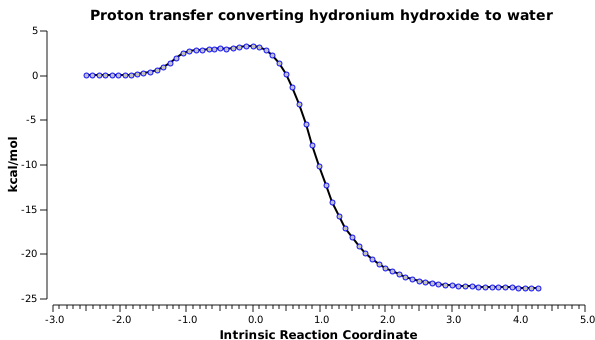
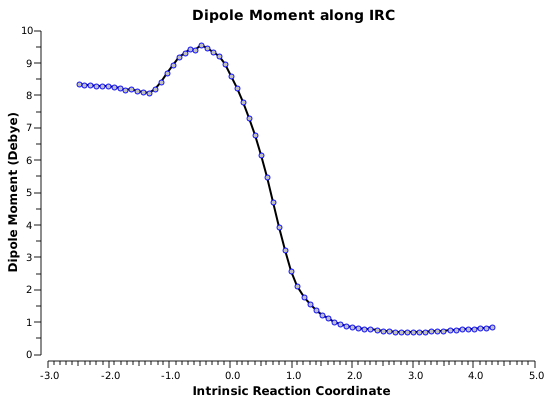
Addendum 2: Shown below is the intrinsic reaction cooordinate (IRC) calculated[6] for the proton transfer from the hydronium hydroxide ion-pair to form neutral water, revealing a barrier of ~3kcal/mol and exothermicity of 23 kcal/mol and how the dipole moment evolves.

♣Dissociation/equilibrium constants are rarely converted into free energies in text books and elsewhere. I would argue here that one gets a better intuitive feeling for such systems if expressed as energies. In this case, such a self-ionization energy for water might also be a useful way of calibrating how any given quantum mechanical procedure might perform in terms of the solvation model etc.
†Recent calculations of like-charge pairs of either H3O+ or OH– have been reported[7] but not as an ion-pair.
‡It is implicit when one talks about connecting bonds that the weaker hydrogen bonds do not qualify. Of course there is a whole spectrum of hydrogen bonding strengths; ones involved in ion-pairs for example can be up to 3 times stronger than those to neutral systems.
References
- H. Rzepa, "Crystal structures containing the hydronium cation", 2016. https://doi.org/10.14469/hpc/370
- M. Stapf, W. Seichter, and M. Mazik, "Unique Hydrogen‐Bonded Complex of Hydronium and Hydroxide Ions", Chemistry – A European Journal, vol. 21, pp. 6350-6354, 2015. https://doi.org/10.1002/chem.201406383
- Stapf, Manuel., Seichter, Wilhelm., and Mazik, Monika., "CCDC 1034049: Experimental Crystal Structure Determination", 2015. https://doi.org/10.5517/cc13q0f8
- H.S. Rzepa, "H22O11", 2016. https://doi.org/10.14469/ch/191994
- H.S. Rzepa, "H 22 O 11", 2016. https://doi.org/10.14469/ch/191995
- H.S. Rzepa, "H22O11", 2016. https://doi.org/10.14469/ch/192002
- M.K. Ghosh, T.H. Choi, and C.H. Choi, "Like-charge ion pairs of hydronium and hydroxide in aqueous solution?", Physical Chemistry Chemical Physics, vol. 17, pp. 16233-16237, 2015. https://doi.org/10.1039/c5cp02182k
Tags:Acid dissociation constant, Acids, Cations, chemical bonding, energy, Equilibrium chemistry, free energy, Hydride, Hydrogen bond, Hydronium, Hydroxide, Physical chemistry, Properties of water, self-ionization energy, Self-ionization of water
Posted in General, Interesting chemistry | 3 Comments »
Friday, April 8th, 2016
Previously, I looked at models of how ammonia could be protonated by water to form ammonium hydroxide. The energetic outcome of my model matched the known equilbrium in water as favouring the unprotonated form (pKb ~4.75). I add here two amines for which R=Me3Si and R=CN. The idea is that the first will assist nitrogen protonation by stabilising the positive centre and the second will act in the opposite sense; an exploration if you like of how one might go about computationally designing a non-steric superbasic amine that becomes predominantly protonated when exposed to water (pKb <1)† and is thus more basic than hydroxide anion in this medium.
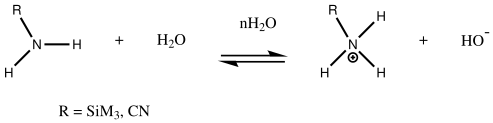
Before reporting any calculations, let us see what the CSD (Cambridge structure database) might contain. The search query is simple, a 3-coordinate amine forming a 4-coordinate quaternary nitrogen† with one N-H and a positive (formal) charge on the N, and a 1-coordinate oxygen with one O-H and a negative charge on the O. With the constraints R < 10%, no disorder and no errors, one gets as many as 15 hits,[1] several of which also apparently contain separate water molecules in the crystal. A warning bell (perhaps several) sounds, since if R < 5%, the number of hits drops to just 2; these are clearly difficult structures to refine!‡ So there is some tantalising evidence that in the solid state at least, the quaternary ammonium group (with at least one N-H), water and a hydroxide anion might be capable of co-existence. As noted below† some fascinating 2-coordinate amines have also been reported as having superbasic properties.

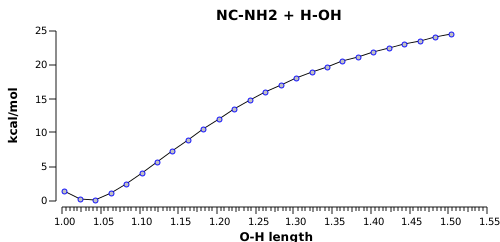
R=CN: the well known compound cyanamide is known to act only as an acid and its basic properties are never quoted. Shown below is the reaction path for transfer of a proton from water to the amine using an 8-water model (n=8) in which two bridges can serve to help stabilize any ionic form. The energy required to do so however is at least 24 kcal/mol (ωB97XD/Def2-TZVPPD/SCRF=water) which indicates that no protonated amine is formed. This can be attributed to the electron withdrawing cyano group strongly destablising any adjacent positive ammonium centre and thus effectively completely inhibiting its formation.
R=Me3Si: this too is already known[2],[3] but only in the presence of the non-coordinating counter-anion B(C6F5)4 crystallised from non-protic solution. An ionised form can now be located using the model above. This has the structure shown below; note the very short hydrogen bonds associated with the hydroxide anion and the possibility of forming only two water bridges across the ion-pair. The relative free energy of the ion-pair (table below) shows it to be if anything less basic than ammonia.

NBO (natural bond orbital) analysis might here be a useful metric of basicity. Hence Me3SiNH2…H2O suggests that donation from the N lone pair into an antiperiplanar Si-C bond is quite large (E(2) = 11.9 kcal/mol), although alternative donation by nitrogen into the H-O σ* bond of the water is much higher (33.4 kcal/mol).
Perhaps the basicity of simple amines is related to their ability to form stabilizing water bridges across the ion-pair? With trimethylsilyl substituents, this feature (and hence the basicity) is partially or even fully suppressed as in e.g. tris(trimethylsilyl)amine.The pKb of the latter appears to be unreported[8] but it does seem to be only weakly basic and "inert to H2O",[9] a property attributed instead to multiple character in the Si-N bonds.
I will in a future post look at the alternative class of phosphazenium amines which do manage to achieve superbasicity.[10]
†A phosphazenium 3-coordinate amine[11] was in 1991 claimed to be the strongest metal-free neutral base. This has now been superceded by combining this base motif with that of a sterically operating proton sponge.[12],[10] I will report the computational modelling of these systems in a later post.
‡One of the structures identified with R<10% is UBEJIU[13] and which is worth showing below. Note the apparent close contact of the type N-H…H-O (1.416-1.463Å) rather than the expected N-H…OH. If correct (this feature is not mentioned in the article itself) it would be classified as a dihydrogen bond, a type normally only found in situations such as B-H…H-N. There are a number of other inconsistencies which must be resolved if this structure is to stand as correct.

References
- H. Rzepa, "Substituted ammonium hydroxides", 2016. https://doi.org/10.14469/hpc/361
- Y. Sarazin, J.A. Wright, and M. Bochmann, "Synthesis and crystal structure of [C6H5Hg(H2NSiMe3)][H2N{B(C6F5)3}2], a phenyl–mercury(II) cation stabilised by a non-coordinating counter-anion", Journal of Organometallic Chemistry, vol. 691, pp. 5680-5687, 2006. https://doi.org/10.1016/j.jorganchem.2006.09.021
- Sarazin, Y.., Wright, J.A.., and Bochmann, M.., "CCDC 608250: Experimental Crystal Structure Determination", 2007. https://doi.org/10.5517/ccndxzx
- H.S. Rzepa, and H.S. Rzepa, "H21NO9", 2016. https://doi.org/10.14469/ch/191946
- H.S. Rzepa, and H.S. Rzepa, "C 3 H 29 N 1 O 9 Si 1", 2016. https://doi.org/10.14469/ch/191987
- H.S. Rzepa, and H.S. Rzepa, "C 3 H 29 N 1 O 9 Si 1", 2016. https://doi.org/10.14469/ch/191982
- H.S. Rzepa, "CH20N2O9", 2016. https://doi.org/10.14469/ch/191983
- E.W. Abel, D.A. Armitage, and G.R. Willey, "Relative base strengths of some organosilicon amines", Transactions of the Faraday Society, vol. 60, pp. 1257, 1964. https://doi.org/10.1039/tf9646001257
- J. Goubeau, and J. Jimenéz‐Barberá, "Tris‐(trimethylsilyl)‐amin", Zeitschrift für anorganische und allgemeine Chemie, vol. 303, pp. 217-226, 1960. https://doi.org/10.1002/zaac.19603030502
- Kögel, Julius F.., Oelkers, Benjamin., Kovačević, Borislav., and Sundermeyer, Jörg., "CCDC 1002088: Experimental Crystal Structure Determination", 2014. https://doi.org/10.5517/cc12mrfw
- R. Schwesinger, and H. Schlemper, "Peralkylated Polyaminophosphazenes— Extremely Strong, Neutral Nitrogen Bases", Angewandte Chemie International Edition in English, vol. 26, pp. 1167-1169, 1987. https://doi.org/10.1002/anie.198711671
- J.F. Kögel, B. Oelkers, B. Kovačević, and J. Sundermeyer, "A New Synthetic Pathway to the Second and Third Generation of Superbasic Bisphosphazene Proton Sponges: The Run for the Best Chelating Ligand for a Proton", Journal of the American Chemical Society, vol. 135, pp. 17768-17774, 2013. https://doi.org/10.1021/ja409760z
- P. Vianello, A. Albinati, G.A. Pinna, A. Lavecchia, L. Marinelli, P.A. Borea, S. Gessi, P. Fadda, S. Tronci, and G. Cignarella, "Synthesis, Molecular Modeling, and Opioid Receptor Affinity of 9,10-Diazatricyclo[4.2.1.1<sup>2,5</sup>]decanes and 2,7-Diazatricyclo[4.4.0.0<sup>3,8</sup>]decanes Structurally Related to 3,8-Diazabicyclo[3.2.1]octanes", Journal of Medicinal Chemistry, vol. 43, pp. 2115-2123, 2000. https://doi.org/10.1021/jm991140q
Tags:Acid, Acid dissociation constant, Amide, Amine, Ammonia, Ammonium, Bases, City: Cambridge, energy, from non-protic solution, Functional groups, Hydrogen bond, Hydroxide, Lone pair, metal, Nitrile, relative free energy, search query
Posted in General, Interesting chemistry | 2 Comments »
Monday, March 28th, 2016
Augmented reality, a superset if you like of virtual reality (VR), has really been hitting the headlines recently. Like 3D TV, its been a long time coming! Since ~1994 or earlier, there have been explorations of how molecular models can be transferred from actual reality to virtual reality using conventional computers (as opposed to highly specialised ones). It was around then that a combination of software (Rasmol) and hardware (Silicon Graphics, and then soon after standard personal computers with standard graphics cards) became capable of such manipulations. VRML (virtual reality modelling language) also proved something of a false start‡ So have things changed?
Many of the posts on this blog have some element of such VR in the form of the Jmol or JSmol software (the natural successor to Rasmol) that allows a 2D projection of a 3D model to be manipulated in "real-time", allowing the geometrical features to be inspected and even animations of reactions. Google cardboard is a (minor?) variation on the VR theme, allowing a 3D object to be viewed through a simple cardboard headset containing a mounted phone, but controlled by head movements acting on the accelerometers in the phone rather than a mouse or trackpad. But the full-blown experience is something else, and watching this TED video really brought it home to me. The virtual object, such as say a molecule, is superimposed upon one's view of the real world (AR) and this object can now be controlled with hands as well as eyes. Again, this is not new; so-called haptic control of virtual objects has been around for a decade or more, in which you can e.g. probe how "hard" an object is using a haptic or hands-on device such as a joystick. All of this quickly convinces one that the secret of successful use of VR and now AR to augment chemistry is going to be the software!
We now need inspired programmers to create the Rasmol/Jmol of augmented reality. But beyond mere software, chemistry with AR needs to be placed into the appropriate environment or context. One might presume this will include the stereoscopic video inputs from other AR headsets (the research team, the collaborators, etc) but what else? The pages of a blog? Or a journal article? Could indeed one recast the journal article itself into an AR scene, with the various components floating in space, with molecules conjured out of a table (or a synthetic procedure) to float in full 3D glory to be played with by the participants? I rather suspect this might be quite a few steps too many for most! Think how little ~22 years of the Web (and perhaps ~36 years of the Internet itself) has actually changed the construction (I do not mean the delivery) of the average scientific article. Even now, tables in which molecules can be treated interactively are extremely rare. Most of this is because authoring tools such as Microsoft Word have not yet made the production of such documents viable. So perhaps the augmented-reality scientific or chemical article may not be quite around the corner. Perhaps the AR hype will end in the same way that 3D TV appears to have. But unless we experiment, we will never know the answer. So if any reader of this blog knows of interesting work in chemistry AR, do drop me a line.
‡ Virtual Reality Modelling Language (VRML) in Chemistry, O. Casher, C. Leach, C. S. Page and H. S. Rzepa, Chem. in Brit., 1998, 34(9), 26. But VRML has made a come-back as the language of choice for 3D printing!
Tags:Augmented reality, chemical article, Company: Microsoft, Company: Silicon Graph, for 3D printing, Google Cardboard, jmol, RasMol, User interface techniques, Virtual reality, VRML
Posted in Chemical IT, General | No Comments »
Sunday, March 20th, 2016
This is a corollary to the previous post‡ exploring how many molecules are needed to ionise HCl. Here I am asking how many water molecules are required to form the ionic ammonium hydroxide from ammonia and water.
As Wikipedia will inform you, "it is actually impossible to isolate samples of NH4OH (more formally the ion-pair NH4+OH– ) as these ions do not comprise a significant fraction of the total amount of ammonia except in extremely dilute solutions (my italics)". In fact, the ionization constant Kb = [NH4+][OH–]/[NH3][H2O] is ~1.8 x 10⁻⁵ (pKb 4.75) equivalent to a free energy difference of ~6.5 kcal/mol between the two forms.† This is in stark contrast to solutions of e.g. HCl in water, where essentially all of the HCl is ionised to hydronium chloride or H3O+Cl– by addition of just ~4-5 water molecules. So what is the water model required to compute this known behaviour of ammonia? Here, this will be ωB97Xd/Def2-TZVPPD/SCRF=water, i.e. a continuum water model is already included and we add n further discrete water molecules to enhance it.
For n=0 or 2, the ion-pair is not an explicit minimum (although it appears to be a "hidden intermediate"[1]). Values of e.g. n=4,6,8 allow the formation of two or three "bridges" comprising two or three water molecules connecting the N and O atoms by hydrogen bonds and this additional solvation enables location of a transition state for proton transfer between O and N. This implies an equilibrium can be established as NH3 + H2O ⇌* NH4+.OH– with the ion-pair now a genuine minimum stabilized by those ion-pair bridges. Note in particular how the hydrogen bond lengths involving the water salt-bridge in the ion-pair are shorter than for the neutral water-ammonia complex.

The contact ion-pair is nevertheless a very shallow minimum when surrounded by 4 or more explicit waters, the barrier from proton transfer from N being less than a vibrational quantum, and so the lifetime of the contact ion-pair is very much defined by the proton dynamics of the system..
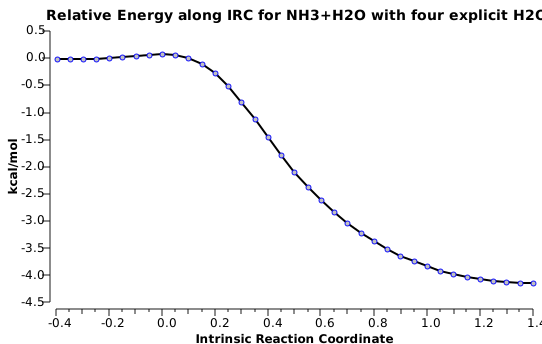
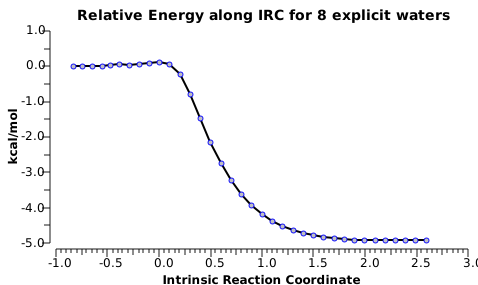
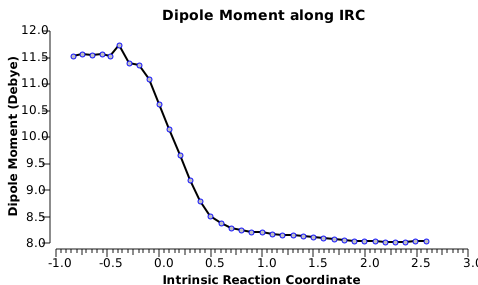
For n=8, the dipole moment changes along the IRC for proton transfer between N and O as might be expected for the collapse of a contact ion-pair.
The relative free energies of the ion-pair and the un-ionized pair are shown below, the former being the higher. The values correspond approximately to the known ionization constant. As more explicit water molecules are added, there is a hint that the proportion of ion-pairs might actually decrease relative to neutral ammonia. However, these calculations are for a contact ion-pair and not a solvent-separated ion pair, the latter form possibly being the more appropriate form for extremely dilute solutions (see above). Modelling the latter type of ion-pair is not as straightforward as the contact variety; as the ion separation increases, so the propensity for barrierless proton transfers increases, ultimately leading back to the contact form. So to understand if it is correct that in extremely dilute solutions there is no remaining neutral ammonia, probably only a full molecular dynamics treatment of such a system is likely to give further insights.
To summarise, in order to compute the formation of the ammonium hydroxide ion pair from ammonia and water, one has to include an additional four or more explicit water molecules in the calculation. This model confirms that in the resulting equilibrium, only a tiny proportion of the ammonia becomes ionised. With such a base model in place, one can now proceed to investigate how addition of substituents on the nitrogen might impact upon such ionisation, i.e. to form a stronger or a weaker base.
‡A more complete analysis followed.[5] *If you are wondering how to produce a reversible arrow, see here. †This is only approximate, since the concentration of water needs renormalising.
References
- https://doi.org/
- H.S. Rzepa, and H.S. Rzepa, "H13NO5", 2016. https://doi.org/10.14469/ch/191950
- https://doi.org/
- H.S. Rzepa, and H.S. Rzepa, "H21NO9", 2016. https://doi.org/10.14469/ch/191946
- A. Vargas‐Caamal, J.L. Cabellos, F. Ortiz‐Chi, H.S. Rzepa, A. Restrepo, and G. Merino, "How Many Water Molecules Does it Take to Dissociate HCl?", Chemistry – A European Journal, vol. 22, pp. 2812-2818, 2016. https://doi.org/10.1002/chem.201504016
Tags:Ammonia, Ammonium, Ammonium hydroxide, Bases, dilute solutions, free energy difference, Hydroxides, Ion, Properties of water
Posted in General | No Comments »
Sunday, February 7th, 2016
The geometry of cyclo-octatetraenes differs fundamentally from the lower homologue benzene in exhibiting slow (nuclear) valence bond isomerism rather than rapid (electronic) bond-equalising resonance. In 1992 Anderson and Kirsch[1] exploited this property to describe a simple molecular balance for estimating how two alkyl substituents on the ring might interact via the (currently very topical) mechanism of dispersion (induced-dipole-induced-dipole) attractions. These electron correlation effects are exceptionally difficult to model using formal quantum mechanics and are nowadays normally replaced by more empirical functions such as Grimme's D3BJ correction.[2] Here I explore aspects of how the small molecule below might be used to investigate the accuracy of such estimates of dispersion energies.

The concentration of the two forms shown above can be readily estimated by NMR spectroscopy (the barrier is slow enough to allow peaks for both isomers to be integrated). This shows that the 1,6 form is present in greater concentrations than the 1,4 form, equivalent to a difference in free energy ΔΔG298 of 0.39 kcal/mol in favour of the former. Why is this? Because, it is claimed, in the 1,6 isomer the two t-butyl groups are close enough to experience mutual dispersion attractions not experienced by the 1,4 form. This can be illustrated using the NCI display below for the two forms.

Click for 3D. 1,6-isomer: Additional NCI interactions ringed in red.

Click for 3D, 1,4 isomer.
|
Method
|
Equilibrium constant, 298K
|
ΔΔE
|
ΔΔH298
|
ΔΔS298
|
ΔΔG298
|
Source
|
|
Experiment
|
1.93
|
–
|
1.14
|
-2.5
|
0.387
|
[1]
|
|
B3LYP/Def2-TZVPP/CDCl3 (no dispersion)
|
1.906‡
|
0.05
|
0.00
|
+1.3‡
|
0.382‡
|
[3],[4]
|
|
B3LYP/Def2-TZVPP/CDCl3 (gd3bj dispersion)
|
8.36
|
0.75
|
0.66
|
+2.0
|
1.25
|
[5],[6]
|
‡This contains a contribution of RTLn 2 (= 0.410 kcal/mol = 1.04 in ΔS), where 2 is the symmetry number for a species with C2 rotational symmetry, to the 1,4-isomer only.
The interpretation of these results, as is often found, is non-trivial.
-
The relative concentrations of species in equilibrium equates with their relative free energies, ΔG298 and not ΔE (the difference in total energy computed using either quantum or molecular mechanics).
-
ΔG298 has a component derived from the entropy of the system, and this in turn has contributions from symmetry (numbers). Only the 1,6-isomer has two-fold rotational symmetry for the lowest energy pose of the two t-butyl groups, and this contributes 0.41 kcal/mol to ΔG298. This aspect is not discussed in the original article.[1]
-
The B3LYP/Def2-TZVPP DFT method predicts ΔΔE to be +0.05 kcal/mol without the inclusion of the D3BJ dispersion correction but +0.75 kcal/mol with. One might approximately equate the latter to the contributions ringed in red in the NCI distributions shown above. The enthalpies (where ΔΔE is corrected for zero point energies) are very similar.
-
Conversion to ΔG298 involves use of the vibrational frequencies to obtain the entropy; here one encounters a difference between the two double bond isomers. The lowest energy vibration for C2-symmetric 1,4 is 23 cm-1, whereas that for the 1,6 is only 7 cm-1 (a value which also depends on round-off errors and accuracies in the calculation). These errors in the RRHO (rigid-rotor-harmonic-oscillator) approximations makes meaningful calculation of ΔS298 and hence ΔG298 problematic at this small energy difference level. In both cases, this approach suggests that the entropy of the 1,6 form is slightly larger than the 1,4 isomer, whereas the reverse is apparently true by experimental measurement. It might all boil down to those low-frequency vibrations!
So we may conclude that whereas the dispersion uncorrected method gets the right answer for the equilibrium constant for probably the wrong reasons, inclusion of a dispersion correction would get the right answer were it not for the error in the entropy. Agreement with experiment would be obtained if the calculated entropy difference were to be -0.9 kcal/mol K-1 instead of +2.0. Thus the 1,6 isomer has the two t-butyl groups weakly interacting (red circle above), which intuition tends to suggest would reduce the entropy (reduce the disorder) of the system and not increase it.
At least in this relatively small molecule, we now have a handle for estimating these sorts of effects in terms of variables such as the basis set used, the energy Hamiltonian (e.g. type of functional etc) and of course the dispersion correction.
References
- J.E. Anderson, and P.A. Kirsch, "Structural equilibria determined by attractive steric interactions. 1,6-Dialkylcyclooctatetraenes and their bond-shift and ring inversion investigated by dynamic NMR spectroscopy and molecular mechanics calculations", Journal of the Chemical Society, Perkin Transactions 2, pp. 1951, 1992. https://doi.org/10.1039/p29920001951
- S. Grimme, S. Ehrlich, and L. Goerigk, "Effect of the damping function in dispersion corrected density functional theory", Journal of Computational Chemistry, vol. 32, pp. 1456-1465, 2011. https://doi.org/10.1002/jcc.21759
- H.S. Rzepa, "C 16 H 24", 2016. https://doi.org/10.14469/ch/191875
- H.S. Rzepa, "C 16 H 24", 2016. https://doi.org/10.14469/ch/191876
- H.S. Rzepa, "C 16 H 24", 2016. https://doi.org/10.14469/ch/191874
- H.S. Rzepa, and H.S. Rzepa, "C 16 H 24", 2016. https://doi.org/10.14469/ch/191880
Tags:dispersion, energy, Entropy, lowest energy, lowest energy pose, Physical organic chemistry, Potential theory
Posted in General | No Comments »
Sunday, January 31st, 2016
Six years ago, I posted on the nature of a then recently reported[1] Cr-Cr quintuple bond. The topic resurfaced as part of the discussion on a more recent post on NSF3, and a sub-topic on the nature of the higher order bonding in C2. The comment made a connection between that discussion and the Cr-Cr bond alluded to above. I responded briefly to that comment, but because I want to include 3D rotatable surfaces, I expand the discussion here and not in the comment.‡

Firstly, a quick update. Since the original post, quite a few Cr-Cr quintuple bonds have been reported. In searching the crystal structure database, I used the text "quintuple" as a text search term (since specifying a quintuple bond as such is not supported) along with a Boolean AND using the sub-structure Cr-Cr (with any type of bond allowed). The result is shown below. It is striking that in fact these "quintuple" bonds cluster into a set with a bond distance of ~1.74Å and another with 1.83Å. Are these valence bond isomers?

Now to the system shown at the top (one of the 1.74Å set). My original post discussed the results of a density functional evaluation of the properties of the electron density in the Cr-Cr region. Most striking was the value of the Laplacian ∇2ρ(r) of this density, the value of +1.45au being the largest ever reported for a pair of identical atoms. I should remind that ∇2ρ(r) is used as one measure of the character of a bond, being the balance between electronic kinetic energy density and potential energy density along a bond. But it is well recognised that the bonding between such transition metals has what is called multi-reference character; the wavefunction is not well described by just a single doubly occupied electronic configuration. More electronic configurations have to be included, and hence a MC-SCF (multi-configuration) self-consistent description of the wavefunction is needed. So as a response to the comment noted above, I decided to carry out CASSCF/6-311G(d) calculations, in which an active space of electrons and molecular orbitals is specified, and using the geometry previously obtained at the DFT level. Thus a CASSCF(8,8) calculation takes 8 electrons and evaluates all possible configurations arising from placing them into an active space of eight molecular orbitals. With metals unfortunately the active space is likely to be large, and so I decided to computed (10,10), (12,12) and (14,14) CASSCF as well to see if any convergence might occur. The last is close to the limit offered by the program. The values shown below are at the QTAIM line (bond) critical point along the Cr-Cr axis.
|
Active space
|
ρ(r)
|
∇2ρ(r)
|
Total energy, Hartree
|
% of CS config
|
Calculation DOI
|
|
8
|
.303
|
1.720
|
-2383.48049
|
63
|
[2]
|
|
10
|
.308
|
1.612
|
-2383.68830
|
61
|
[3]
|
|
12
|
.308
|
1.612
|
-2383.70398
|
60.6
|
[4]
|
|
14
|
.308
|
1.612
|
-2383.72161
|
59
|
[5]
|
|
DFT
|
.313
|
1.45
|
–
|
100
|
[6]
|
From the trend above, we might safely conclude that the CASSCF active space IS convergent, at least for the density if not for the energy. Also convergent are the properties of the density such as ∇2ρ(r), and noteworthy is that the value of this property is even higher than was obtained using single-configuration DFT theory. So the claim that this system has a record such property does not change. Negative values of the Laplacian are normally taken to indicate a conventionally covalent bond, whereas +ve values show the bond has what is called charge-shift character.[7] So these Cr-Cr quintuple bonds must be amongst the most charge-shifted exemplars!
I show some surfaces (click on the image to get a rotatable model) computed from the CASSCF(14,14) density. Firstly the electron density ρ(r) itself, contoured at 0.25au, showing the high value between the chromium atoms.

Next, ∇2ρ(r) contoured at ±1.5, revealing its high value in the Cr-Cr region (blue = +ve, red = -ve) and then below at ± 0.25 which includes the covalent bonds of the ligands.


Finally, the ELF (electron localisation function) function which tries to gather the electron density into localised ELF basins (numbers are the integration of the electron density in this basin). This looks very similar to that shown previously and is striking because there is no basin in the Cr-Cr region. Instead, the localisation is along the Cr-N bonds. One might describe this as saying that the Cr-Cr region is very highly correlated.


‡It is a limitation of the WordPress system that such objects cannot be included in comments.
References
- C. Hsu, J. Yu, C. Yen, G. Lee, Y. Wang, and Y. Tsai, "Quintuply‐Bonded Dichromium(I) Complexes Featuring Metal–Metal Bond Lengths of 1.74 Å", Angewandte Chemie International Edition, vol. 47, pp. 9933-9936, 2008. https://doi.org/10.1002/anie.200803859
- H.S. Rzepa, "C 2 H 6 Cr 2 N 4", 2016. https://doi.org/10.14469/ch/191860
- H.S. Rzepa, "C 2 H 6 Cr 2 N 4", 2016. https://doi.org/10.14469/ch/191857
- H.S. Rzepa, "C 2 H 6 Cr 2 N 4", 2016. https://doi.org/10.14469/ch/191858
- H.S. Rzepa, "C2H6N2O2", 2016. https://doi.org/10.14469/ch/191855
- H.S. Rzepa, "C 2 H 6 Cr 2 N 4", 2010. https://doi.org/10.14469/ch/4156
- S. Shaik, D. Danovich, W. Wu, and P.C. Hiberty, "Charge-shift bonding and its manifestations in chemistry", Nature Chemistry, vol. 1, pp. 443-449, 2009. https://doi.org/10.1038/nchem.327
Tags:Chemical bond, chemical bonding, Electron, Electron configuration, energy, Molecular orbital, Multi-configurational self-consistent field, Quantum chemistry, quintuple bond, search term, Transition metal, Valence bond theory
Posted in General, Interesting chemistry | 6 Comments »