Posts Tagged ‘energy’
Sunday, December 17th, 2017
Alkalides are anionic alkali compounds containing e.g. sodide (Na–), kalide (K–), rubidide (Rb–) or caeside (Cs–). Around 90 examples can be found in the Cambridge structure database (see DOI: 10.14469/hpc/3453 for the search query and results). So what about the ammonium analogue, ammonide (NH4–)? A quick search of Scifinder drew a blank! So here I take a look at this intriguingly simple little molecule.‡
It can be formed by adding two electrons to the ammonium cation; NH4+ + 2e ↠ NH4–. One might be encouraged to do this since the LUMO (lowest unoccupied molecular orbital, below) of the ammonium cation has A1 symmetry and so can accept two electrons without the penalty of Jahn-Teller distortions. These electrons will apparently expand the valence electron “octet” around the nitrogen from 8 to 10; a hypervalent species then?
So what are the (calculated) properties of NH4–? The energy of the now HOMO (highest occupied molecular orbital) at the ωB97XD/Def2-TZVPPD/solvent=water level is -3.6eV, a respectable electron affinity (the additional electrons are said to be bound). More insight can be obtained from the NBO analysis, which produces localized versions of the molecular orbitals. There are four equivalent NBOs, one of which is shown below.

Each is bonding along one H-N bond, mildly anti-bonding along the other three N-H bonds, but again bonding in the H-H regions! This matches the observations made earlier that when more electrons are pumped into normally valent main group molecules, they will occupy the antibonding levels. This is accompanied by a reduction in the bond orders associated with the central atom. In this case, the N-H bond orders are reduced from 0.79 to 0.602 and the total bond index at the nitrogen is reduced from 3.16 to 2.408. The bond index at hydrogen is at first sight increased from 0.79 to a surprising 1.0003, but this is explained because the H-H bond orders are 0.1328 (three for each H), which brings the H index up to 1.0. The N-H vibration (A1 symmetric) is 3466 cm-1 for NH4+ which is reduced to 2659 for NH4–.†
So it appears that adding two electrons to the ammonium cation induces H-H bonding! More insight can be obtained from an ELF analysis of the electron density basins.

The above shows four attractors (as they are called) centered at the hydrogen nuclei, with 2.053e each (4*2.053 = 8.212e). The remaining ~2e are located in basins (green) centered at two different types of attractors. One is along the axis of each N-H bond and exo to it (0.316e) and the other sits on top of any set of three hydrogens (0.103e), 1.68e in total. The value of the ELF function at the attractor is shown above. You should realize that ELF=1.0 corresponds to perfectly localized electrons (for which the kinetic energy density is zero) and ELF=0.5 would correspond to a free-electron gas. The ELF value of e.g. 0.77 is getting close to an electron gas, and in fact corresponds to what we call an electride.

So, the nitrogen valence shell electron octet is not actually exceeded! The additional two electrons in ammonide sit beyond the nitrogen, in H-H regions. Whether or not it is a viable species for detection remains to be established, but even its computed bonding properties have proved interesting and it deserves to join the alkalide family.
Postscript
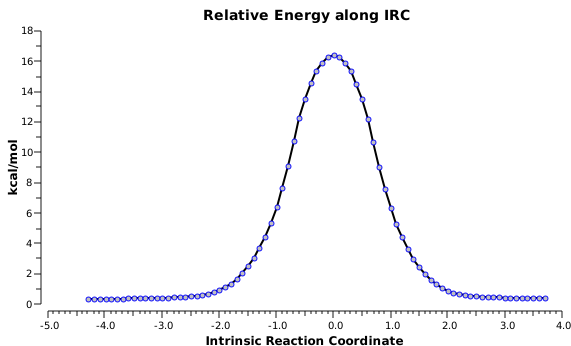
Ammonide exists in a shallow well in the potential energy surface, shown below, with the dissociation to ammonia and hydride anion being exothermic.
The intrinsic reaction coordinate shows one interesting feature at IRC ~-1.1 which corresponds to repulsion between the hydride and the lone pair of the nitrogen atom resulting in inversion of configuration during the latter stages of the IRC.


‡FAIR data collection; 10.14469/hpc/3455. †Perhaps unsurprisingly, these values are somewhat basis set dependent. Thus a ωB97XD/Def2-QZVPPD/Water calculation gives the following values: bond index at N, 1.998, N-H bond index, 0.4995, H-H bond index 0.1689, H bond index 1.0062, total Rydberg population, 0.2738, ν(A1) 2686 cm-1. The ELF basins are H, 2.039, exo-basins 0.282 and 0.141 (total 1.692). The improved basis set better describes the diffuse regions beyond the N-H bonds.
Tags:Alkalide, Ammonium, Anions, Atomic physics, Chemistry, electron gas, energy, free-electron gas, Jahn-Teller, kinetic energy density, Matter, Nitrogen, potential energy surface, search query
Posted in Hypervalency | 2 Comments »
Tuesday, August 29th, 2017
The triennial conference is this year located in Munich. With 1500 participants and six parallel sessions, this report can give only a flavour of proceedings.
- Edward Valeev talked about the scaling problem in coupled cluster theories, the so-called gold standard for computing the energy and properties of small molecules. The problem is that the number of basis functions N describing the atomic basis set for the atoms scales from between N6 to N10 in terms of computer time, with similar behaviour for the memory required for the calculation. He described methods based on natural pair orbitals and localisation schemes which can achieve linear scaling, ie N1 for the energy, quite a break through! Using reasonable basis sets, CCSD(T)-like energies for molecules with 100s of atoms were reported. During the Q&A time afterwards (the tight schedules associated with so many speakers means questions are often limited to 1-2, with very short answers) a question was posed about the prospects for first and second derivatives for the method. This means that e.g. reaction mechanisms can then be probed with unprecedented energetic accuracy. The answer was non-committal, but if these derivatives do arrive, it will revolutionise our ability to understand mechanisms.
- Which brings me nicely to Jeremy Harvey, who talked about calculating accurate overall rate constants for complex mechanistic cycles. The rate equations are solved for the steady state condition and include concentrations of all species and the energies are obtained using CCSD(T)-F12 theory (a modification which allows better basis set scaling without increased computation time) as single point geometries. He described an example where the barrier associated with a postulated mechanism was about 6 kcal/mol higher than derived from the observed rate. This was sufficient to induce them to explore alternative mechanisms, which were indeed located with an appropriately lower barrier. I have used the value of ~10 kcal/mol as my mechanistic test on this blog, and it’s really nice to see this value being reduced further.
- Yet again this theme emerged with Yitzhak Apeloig, who asked about the mechanism for C=Si bond rotations in substituted systems recently made in his group. The energy of this rotation is low enough to be observed in NMR spectra. But when the energy of C=Si bond rotation is computed it comes out about 10 kcal/mol too high. Again alternative mechanisms were explored and it turns out that a 1,2 migration from R2C=SiR2 to form a carbylidene species, R-C-SiR3, rotation and then 1,2 again to reformulate the R2C=SiR2 system came up with the goods.
- Peter Scheiner talked about how attractions between molecules can be induced by dispersion. He described how Ph3C-CPh3 is an unknown molecule (dissociating into Ph3P• radicals) but when 4,6-di-tert-butyl groups are placed on all the phenyl rings, the dispersion attractions between them can account for ~60 kcal/mol (!), more than enough to stabilise the system. I have already described some of this work in a post here. The prospects are very exciting for more dispersion-stabilised molecules to emerge. During Q&A, a question was posed about what other atom pairs other than H…H might be brought into ultra-short contact by these attractive dispersion forces; we may expect further examples to emerge in the near future.
- Ken Houk gave a fascinating glimpse into the post-transition state world of reaction dynamics, as applied to Diels Alder cycloadditions and Cope rearrangements. The reactions are characterised by the residency times of the dynamic trajectories in the region of the transition state as short (~4 fs), medium (20-40fs) and long (80+fs), these times mapping on to what we used to call “synchronous”, “asynchronous” and “stepwise”. A good example is the so-called bis-pericyclic reaction of cyclopentadiene where the trajectories pass through a transition state but then bifurcate into two (in this case) equivalent pathways. He discussed other examples where the trajectories follow either a 2+4 cycloaddition pathway or a 4+6 alternative pathway and how the number of trajectories for each can be influenced by either solvent (water) or an enzyme. Ken described several 20-40fs trajectories as corresponding to “dynamic stepwise” reactions, which during Q&A was suggested are equivalent to the term “hidden intermediate” pathways coined by Dieter Cremer and as revealed in many posts here from the intrinsic reaction coordinates or IRCs. This is a clear growth area and expect many more examples of reaction dynamics to be applied to many exciting systems in the future.
- Leo Radom talked about very simple molecules, H3CX and the effects on the bond dissociation energy (BDE) of the C-H bonds if the group X is either strongly or weakly protonated (the latter via a hydrogen bond), or deprotonated (again strongly or weakly via a hydrogen bond from hydroxide anion). This is important in several enzymic pathways, where the CH bond might be activated in a similar manner by the enzyme. He also talked about similar effects on the ionisation potential. I noticed a connection between this theme and what might be called the electron affinity of H3CX. If you want to see what the connection is, go visit the Aachen bond Slam, about which I have previously blogged!
I will stop with an observation that all the notes above were taken in real-time during the talks, which all emerged as Powerpoint slides, having an average residency time on the screen of perhaps 1-2 minutes each. References were invariably given as full journal citations (authors, journal, year, volume, pages) rather than as DOIs, and given the time constraints I did not try to capture them. Hence the lack of citations above to the presenters’ work. The slide displays are traditionally not made available to audiences‡ and photography of the screen or recording is considered very bad form. Conferences are not really about FAIR data, which I have described often on this blog.
I hope these six examples give one flavour of what is happening at WATOC 2017. If another interesting collection emerges, I may describe it here.
‡But see e.g. doi: b9r9 for an Aachen talk.

Tags:bond dissociation energy, City: Aachen, City: Munich, Dieter Cremer, Edward Valeev, energy, Flavour, Jeremy Harvey, Ken Houk, Leo Radom, Peter Scheiner, Physics, Proceedings, Quark matter, Standard Model, Yitzhak Apeloig
Posted in Interesting chemistry, WATOC reports | No Comments »
Sunday, June 18th, 2017
The iron complex shown below forms the basis for many catalysts.[1] With iron, the catalytic behaviour very much depends on the spin-state of the molecule, which for the below can be either high (hextet) or medium (quartet) spin, with a possibility also of a low spin (doublet) state. Here I explore whether structural information in crystal structures can reflect such spin states.

We studied this a few years back and the talk I gave on the topic included some of our first statistical explorations of the CSD (Cambridge structure database). Here I update those searches, using the search query (DOI: 10.14469/hpc/2675) shown below. The di-imine ligand contains only 3-coordinate atoms, whilst the iron is 5-coordinate. The angles subtended at the Fe and group X=NM (any non-metal atom) are as defined below.

The resulting scatterplot is shown below and contains a rich variety of phenomena.

- In the bond length region of 1.85-1.95Å one sees three clusters, one arranged on the diagonal indicating both N-Fe lengths are the same and two off the diagonal which indicates one length is ~0.1Å longer than the other.
- To explain this, one needs to know that 5-coordinate Fe has a trigonal bipyramidal shape in which one X=NM group subtends an (anti-periplanar) angle of ~180° at Fe with one of the ring nitrogens and the other two X=NM groups each subtend an angle of <120° with the other ring nitrogen. The result is that if the group X has the appropriate (electron withdrawing) properties, the two N-Fe bond lengths are no longer equal. If group X is more passive, the two N-Fe bond lengths may remain more equal.

- A second cluster occurs at ~2.00-2.1Å, mostly along the diagonal but with hints of smaller off-diagonal clusters.
- A third feature occurs at ~2.1-2.3Å, where now the off-diagonal clusters contain more examples than are on the diagonal itself.
Clearly, there is more going on here than can be explained simply by the orientation of X=NM with respect to the Fe-N bond axis. That something is the spin-multiplicity of the molecule. With the Fe complex shown above, this can be one of doublet (one unpaired electron), quartet (three unpaired electrons) or hextet (five unpaired electrons). To gain insight into how this affects the bond lengths, some calculations are needed, using X=Cl, R=H. Here they are done at the TPSSH/Def2-TZVPP level. In fact it is well-known[2] that the energy separations of low/medium/high spin Fe complexes are highly sensitive to the functional, but TPSSH seems to be amongst the best.‡ This shows that the energy ordering of the three states using this particular method is hextet (0.0, DOI: 10.14469/hpc/2676) < quartet (10.5, DOI: 10.14469/hpc/2677) < doublet (13.2 kcal/mol, DOI: 10.14469/hpc/2678), with the bond lengths shown below (for X=Cl).
We might make tentative hypotheses based on these values:
- The off-diagonal bottom left clusters (1 in list above) might arise from doublet states.
- The off-diagonal top right clusters (3 in list above) might arise from sextet states.
- The cluster (2 in list above) might be quartet states for which X is not sufficiently electronegative to induce bond length discriminations.
- It is worth noting that the energy span between the three states for the above molecule is only ~13 kcal/mol, which is small enough to be altered by substituents.
Testing these hypotheses requires knowledge of the spin state of all the entries in any cluster. This information is unfortunately not carried by the CSD, which has relatively little information over and above structural data. Each entry would have to be individually inspected. Indeed the spin state of many of these complexes may not even be known. Nevertheless, it would be great to repeat the graphs shown above as a function of known spin state so that the (again I repeat tentative) hypotheses might be confirmed or refuted.
‡This article evaluates a whole host of functionals against e.g. the spin-state energy separations of the Fe2+ ion. As it happens, TPSSH was not one that was evaluated, but in fact it gives more or less the best match to experiment. Thus Esinglet-Equintet obs = 85.6 kcal/mol, calc 92.4; Etriplet-Equintet obs 56.1, calc 59.5 kcal/mol. A hypothesis therefore is that the TPSSH functional is a reasonable one to go exploring such high-spin species.
References
- M.P. Shaver, L.E.N. Allan, H.S. Rzepa, and V.C. Gibson, "Correlation of Metal Spin State with Catalytic Reactivity: Polymerizations Mediated by α‐Diimine–Iron Complexes", Angewandte Chemie International Edition, vol. 45, pp. 1241-1244, 2006. https://doi.org/10.1002/anie.200502985
- P. Verma, Z. Varga, J.E.M.N. Klein, C.J. Cramer, L. Que, and D.G. Truhlar, "Assessment of electronic structure methods for the determination of the ground spin states of Fe(<scp>ii</scp>), Fe(<scp>iii</scp>) and Fe(<scp>iv</scp>) complexes", Physical Chemistry Chemical Physics, vol. 19, pp. 13049-13069, 2017. https://doi.org/10.1039/c7cp01263b
Tags:catalysis, Catalysts, Chemistry, energy, energy separations, energy span, Fe complex, Homogeneous catalysis, Kumada coupling, Organometallic chemistry, spin-state energy separations, Synergistic catalysis
Posted in crystal_structure_mining | 1 Comment »
Saturday, April 15th, 2017
Back in the early 1990s, we first discovered the delights of searching crystal structures for unusual bonding features.[1] One of the first cases was a search for hydrogen bonds formed to the π-faces of alkenes and alkynes. In those days the CSD database of crystal structures was a lot smaller (<80,000 structures; it’s now ten times larger) and the search software less powerful. So here is an update.
The search query (dataDOI:10.14469/hpc/2473) is shown below:
- A mid-point (centroid) of a C-C bond (of any type) is defined, but the carbons are each restricted to being 3-coordinate, with the substituents R being either C or H.
- The distance to a hydrogen (attached to group QA, where QA is any one of N,O,F,Cl, i.e. acidic H) is defined.
- The properties of the alkene are defined by the sines of the two angles subtended at the centroid. This defines how perpendicular the QA-H hydrogen bond is to the C-C bond.
- Four torsions R-C-centroid-H are defined by their sines. The mean of the absolute values of these will define how orthogonal the approach of the hydrogen to the π-π plane is.
- Further constraints in the search are no disorder, no errors, R < 0.05, the H atom position is normalised and this position is defined as being <2.5Å from the C-C bond centroid, which is ~0.3Å < the sum of the van der Waals values for C and H.

The first search is limited to intermolecular contacts between the C-C bond and the H and reveals that for most of the 18 hits, the H approach is close to perpendicular to the centroid but the inclination to the π-π plane is more scattered. The most interesting (shortest H…centroid contact of ~2.22Å, orthogonal approach) can be inspected as KANYAA (dataDOI: 10.5517/CC8JRQ7).
 When the search is repeated for intramolecular contacts, rather shorter distances are obtained for 88 hits and with more variation in the angles of approach. The most interesting candidate (blue dots) is IGELAJ[2] (dataDOI: 10.5517/CC14PBW1 ) which has the very short intramolecular H approach of 1.90Å to the C-C centroid corresponding to ~2.04Å to the carbons, a contraction of ~0.8Å from the van der Waals sum.

The authors remarked[2] “that it possesses a better defined intramolecular hydrogen bond compared to the usual molecules for which it is noted“. They also note JOCQEX, which is present in the above plot, but for which there is a non-orthogonal approach of the hydrogen bond to the π-π plane. The authors do not mention TIBCUD[3] (dataDOI: 10.5517/CCPL0FP), which has a similar close approach of 1.92Å to the C-C centroid, but at an angle inclined to the C-C axis.
IGELAJ, as an intramolecular H-bond, was amenable to calculation of its geometry and properties (inter-molecular interactions would ideally require the periodic lattice to be computed), with the observation[3] that “another test was to compare the energy calculation of IGELAJ to a non-hydrogen-bound version where the OH bond is rotated 180°” and “the results predict IGELAJ to be 7.30 kcal more stable than the non-hydrogen-bound version”. This value, if correct, is indeed typical of a very strong hydrogen bond!
Pedant (curious?) as I am, I wanted to be clear what kind of calculated energy was being reported. Was it the difference in total energies, or the energies corrected for ZPE (zero-point-energy) as ΔH or the free energies for which entropy is included as ΔG? The article[3] itself is unclear on this aspect and no energies are reported in the supporting information. This is an illustration that “supporting information” in most current incarnations may often not provide crucial information; only a full deposition as the management of research (RDM) of FAIR data can provide. This process is illustrated for my own calculations of this system (ωB97XD/Def2-TZVPP, dataDOIs: 10.14469/hpc/2474, 10.14469/hpc/2475), which reveals that ΔG298 4.8 kcal/mol and ν 3761 cm-1. In comparison when the OH bond is rotated 180° the wavenumber goes up 3956 cm-1, a difference of 195 cm-1 is calculated, which is indeed a large red-shift. But the “non-hydrogen-bound version where the OH bond is rotated 180°” is not a valid reference point for a non-hydrogen bonded isomer, since it manifests instead as a transition state for OH rotation with νi 166 cm-1, there being no minimum other than the π-facially hydrogen bonded one (dataDOI: 10.14469/hpc/2476). So, for the lack of a suitable reference system, we cannot conclude what the strength of this particular hydrogen bond is, nor make any conclusions about it being unusually strong.
So IGELAJ holds the current record for the shortest π-facial hydrogen bond to an alkene, but not necessarily the strongest! I wonder if this record might be broken with the aid of further computational design and prediction?
References
- H.S. Rzepa, M.H. Smith, and M.L. Webb, "A crystallographic AM1 and PM3 SCF-MO investigation of strong OH ⋯π-alkene and alkyne hydrogen bonding interactions", J. Chem. Soc., Perkin Trans. 2, pp. 703-707, 1994. https://doi.org/10.1039/p29940000703
- M.D. Struble, M.G. Holl, G. Coombs, M.A. Siegler, and T. Lectka, "Synthesis of a Tight Intramolecular OH···Olefin Interaction, Probed by IR,<sup>1</sup>H NMR, and Quantum Chemistry", The Journal of Organic Chemistry, vol. 80, pp. 4803-4807, 2015. https://doi.org/10.1021/acs.joc.5b00470
- B. Ndjakou Lenta, K.P. Devkota, B. Neumann, E. Tsamo, and N. Sewald, "4-(1,1-Dimethylprop-2-enyl)-1,3,5-trihydroxy-2-(3-methylbut-2-enyl)-9<i>H</i>-xanthen-9-one", Acta Crystallographica Section E Structure Reports Online, vol. 63, pp. o1629-o1631, 2007. https://doi.org/10.1107/s1600536807009907
Tags:calculated energy, chemical bonding, Chemistry, Crystal, crystallography, energy, energy calculation, Intermolecular forces, Nature, search query, search software, Supramolecular chemistry
Posted in crystal_structure_mining | 2 Comments »
Monday, March 20th, 2017
The example a few posts back of how methane might invert its configuration by transposing two hydrogen atoms illustrated the reaction mechanism by locating a transition state and following it down in energy using an intrinsic reaction coordinate (IRC). Here I explore an alternative method based instead on computing a molecular dynamics trajectory (MD).
I have used ethane instead of methane, since it is now possible to envisage two outcomes:

An animation of the IRC starting from the located transition state is shown below (DOI: 10.14469/hpc/2331). This is based purely on the computed potential energy surface of the molecule. The IRC is computed from the forces experienced on the atoms as they are displaced from an initial set of coordinates corresponding to the located transition state and then following the direction indicated by the eigenvectors of the negative force constant required of a transition state. Importantly, there is no time component; the path is based entirely on energies and forces.
Next, a molecular dynamics simulation (ωB97XD/6-31G(d,p), DOI: 10.14469/hpc/2330). This uses the ADMP method, which requests a classical trajectory calculation using the “atom-centered density matrix propagation molecular dynamics model”. This integrates kinetic energy contributions from the molecular vibrations and so explicitly now includes a time component. In this example the evolution of the system from the transition state is charted over a period of 100 femtoseconds (1000 integrated steps). As it happens this is a relatively short period of evolution; sometimes periods of picoseconds may be required to get a realistic model, especially if one is also dealing with explicit solvent molecules (of which perhaps 500 might be required).
Such explicit inclusion of the kinetic energy from molecular vibrations in effect allows the molecule to “jump” over shallow barriers. In this case, the barrier for a [1,2] hydrogen shift from the methyl group to the adjacent carbene (watch atom 8). Simultaneously, the path taken by two hydrogens no longer corresponds to their transposition but to their elimination as a hydrogen molecule. So this quite different outcome from the IRC is very probably also a much more realistic one.
If the MD method is so much more realistic than the IRC, then why is it not always used? The simple answer is computational time! For this very small molecule and using quite a modest basis set (6-31G(d,p)), the relatively short 1000 time steps took about three times as long to compute as the IRC. The factor gets worse as the size of the molecule increases and the number of time steps for a realistic result increases. Perhaps, as technology gets better and new computer architectures emerge, MD simulations of ever increasingly complex reactions will become far more common. In ten years time, I expect most of the examples on this blog will use this method!
Tags:animation, chemical reaction, Chemistry, computational chemistry, computed potential energy surface, energy, Gaseous signaling molecules, Hydrogen, kinetic energy, kinetic energy contributions, Methane, Molecular dynamics, Physical chemistry, Quantum chemistry, Reaction coordinate, simulation, Theoretical chemistry
Posted in reaction mechanism | 2 Comments »
Thursday, December 1st, 2016
Following on from a search for long C-C bonds, here is the same repeated for C=C double bonds.

The query restricts the search to each carbon having just two non-metallic substituents. To avoid conjugation with these, they each are 4-coordinated; the carbons themselves are three-coordinated. Further constraints are the usual no disorder, no errors and R < 0.1 and the C=C distance > 1.4Å (the standard value is ~1.32-1.34Å). The search query is deposited as DOI: 10.14469/hpc/1959[1]

The apparent longest example is LIRVEN, DOI: 10.5517/CC4R2MK[2] with a value of 1.589Å, longer than most C-C single bonds! Closer inspection reveals the presence of lithium cations, and so the molecule bearing the C=C bond must sustain two negative charges. So this apparent C=C bond is in fact anionic, with one electron going into each of the π* orbitals, thus lengthening the CC bond.‡ Not a true example of a neutral C=C bond[3] but it now becomes interesting for what its spin state might be. Is it a biradical or a triplet for example? One to be investigated further I fancy! Another example of this type is QUKCEE[4]

This next FAZWIM has a C=C length of 1.546Å. It is an old structure (1986), and comes without attached hydrogen atoms. Although drawn with no hydrogens on the central C=C bond, the length suggests this molecule is simply mis-assigned.†

The final example I will highlight is pretty ordinary looking and published in 2016 as a private communication; ALOVOO, DOI: 10.5517/CCDC.CSD.CC1LJSWS[5] with a C=C length of 1.443Å. Again no obvious reason for the bond to be longer than normal.‡†

In hunting for such unusual deviations from the norm, the most obvious explanation is normally some anomaly in the crystallographic analysis. Although the CSD (crystal structure database) is a very heavily curated resource, it seems unlikely that each deposition would be carefully inspected for its chemistry, and this must be our task here. But such anomalies can themselves point to interesting or unusual chemistry, which in turn can be subjected to quantum computation to see if either the unusual value can be replicated or other reasons identified. In this case, this exercise can been conducted by a human, but one can easily envisage the entire process being automated on a far larger scale. The future?
‡ In fact the stoichiometry shows each “double bond” is actually a di-anion, with two electrons entering each of the the π* orbitals.
†A calculation on the singlet state for the structure as drawn (ωB97XD/Def2-TZVPP, DOI: 10.14469/hpc/1960) gives a bond length of 1.342Å, i.e. that expected for a double bond. The triplet state is similar in energy, but with a much longer central bond length of 1.476Å, DOI: 10.14469/hpc/1962 but the geometry at the carbons is planar and not bent as shown above. The quintet state is 1.45Å and is again planar, doi 10.14469/hpc/1963. So calculations on FAZWIM strongly suggest the structure as shown is an error.
‡†The computed value is 1.324Å, perfectly normal. DOI: 10.14469/hpc/1966[6]
References
- H. Rzepa, "Long C=C bonds", 2016. https://doi.org/10.14469/hpc/1959
- Matsuo, T.., Watanabe, H.., Ichinohe, M.., and Sekiguchi, A.., "CCDC 141348: Experimental Crystal Structure Determination", 2000. https://doi.org/10.5517/cc4r2mk
- T. Matsuo, H. Watanabe, M. Ichinohe, and A. Sekiguchi, "Reduction of the 1,4,5,8-tetrasila-1,4,5,8-tetrahydroanthracene derivative with lithium metal. Isolation and characterization of the tetralithium salt of a tetraanion, and observation of an Si–H⋯Li+ interaction", Inorganic Chemistry Communications, vol. 2, pp. 510-512, 1999. https://doi.org/10.1016/s1387-7003(99)00136-7
- T. Matsuo, H. Watanabe, and A. Sekiguchi, "A Novel Tetralithium Salt of a Tetraanion and a Dilithium Salt of a Dianion, Formed by the Reduction of the Tetrasilylethylene Moiety. Synthesis, Characterization, and Observation of an Si-H···Li+ Interaction", Bulletin of the Chemical Society of Japan, vol. 73, pp. 1461-1467, 2000. https://doi.org/10.1246/bcsj.73.1461
- M.E. Light, S. Bain, and J. Kilburn, "CCDC 1475906: Experimental Crystal Structure Determination", 2016. https://doi.org/10.5517/ccdc.csd.cc1ljsws
- H. Rzepa, "ALOVOO", 2016. https://doi.org/10.14469/hpc/1966
Tags:Chemical bond, chemical bonding, Chemical nomenclature, Chemistry, Conjugated system, double bond, energy, Nature, Nonmetal, Organic chemistry, Physical organic chemistry, search query, Substituent
Posted in crystal_structure_mining, Interesting chemistry | 2 Comments »
Thursday, September 1st, 2016
Bromoallene is a pretty simple molecule, with two non-equivalent double bonds. How might it react with an electrophile, say dimethyldioxirane (DMDO) to form an epoxide?[1] Here I explore the difference between two different and very simple approaches to predicting its reactivity. 
Both approaches rely on the properties of the reactant and use two types of molecule orbitals derived from its electronic wavefunction. The first of these is very well-known as the molecular orbital (MO), which has the property that it tends to delocalise over all the contributing atoms (the “molecule”). MOs are often used in this context; the highest energy occupied MO is thought of as being associated with the most nucleophilic (electron donating) regions of the molecule and so such a HOMO would be expected to predict the region of nucleophilic attack. The second is known as the natural bond orbital (NBO), which is evaluated in a manner that tends to localise it on bonds (the functional groups or reaction centres) and atom centres. What do these respective orbitals reveal for bromoallene?
| The MOs |
| HOMO, -0.3380 |
HOMO-1, -0.3692 au |
 Click for 3D |
 Click for 3D |
| The NBOs |
| HONBO, -0.3769 |
HONBO-2, -0.3898 |
 Click for 3D |
 Click for 3D |
The table above shows the energies (in Hartrees) of the four relevant orbitals. The less negative (less stable) the orbital, the more nucleophilic it is. The (heavily) delocalized HOMO is located on the C=C bond bond carrying the C-Br bond, Δ1,2 alkene, but it also has a large component on the Br. The more stable HOMO-1 is located on the C=C bond located away from the Br, the Δ2,3 alkene and also with a (different type of) component on the Br.
In contrast, the HONBO is located on the Δ2,3 alkene and it is the HONBO-2 that is on the Δ1,2 alkene. Both these orbitals have very little “leakage” onto other atoms, they are almost completely localised.
Well, now we have a problem since these two analyses lead to diametrically opposing predictions! So what does experiment say? A recent article[1] addresses this issue by isolating the initially formed epoxide from reaction with DMDO and characterising it using crystallography. But here comes the catch; such isolation only proved possible if the allene was also substituted with large sterically bulky groups such as t-butyl or adamantyl. And the isolated product was the Δ1,2 epoxide. So does that mean that the MO method was correct and the NBO method wrong? Well, not necessarily. Those large groups play an additional role via steric effects. To factor in such effects one has to look at the transition state model for the reaction rather than depending purely on the reactant properties. And the steric effects in this case appear to win out over the electronic ones.[1]
The Klopman[2]-Salem[3] equation (shown in very simplified, and original, form below for just the covalent term) casts some light on what is going on. This term is a double summation over occupied/unoccupied (donor-acceptor) orbital interactions, involving the coefficients of the orbitals (the overlap integrals in effect) in the numerator and the energy difference between the occupied/unoccupied orbital pair as denominator.

Performing such a double summation is rarely attempted; instead the equation is reduced to just one single term involving the donor of highest energy and the acceptor of lowest energy, ensuring the energy difference is a minimum and hence the term itself is (potentially) the largest in the summation. There is still the issue of the orbital coefficients, and here we get to the crux of the difference between the use of MOs and NBOs. You can see by inspection that the two π-MOs for bromoallene have different coefficients on the two atoms of interest, the two carbons of the double bond. One really has to evaluate the size of this term in the summation by using quantitative values for the respective coefficients and to very probably include the further terms in the summation for any other orbitals which also have significantly non-zero coefficients on these two atoms. But with the NBOs, the localisation procedure used to derive them has reduced the coefficients to just the carbon atoms and effectively no other atoms; all the other terms in the double summation in effect do drop out entirely. So with NBOs, the only number that matters is the energy difference between the occupied/empty orbitals (the denominator). But since the acceptor (the electrophile, DMDO in this case) is the same for both regiochemistries, things reduce even further to just comparing the donor energies for the two alternatives (Table above). The higher/less stable of these will have the greater contribution in the Klopman-Salem equation.
This little molecule teaches the important lesson that electronic and steric effects both play a role in directing reactions, and in this system they may well oppose each other. Simple interpretations based on reactant orbitals may give only a partial and even potentially misleading answer.
References
- D. Christopher Braddock, A. Mahtey, H.S. Rzepa, and A.J.P. White, "Stable bromoallene oxides", Chemical Communications, vol. 52, pp. 11219-11222, 2016. https://doi.org/10.1039/c6cc06395k
- G. Klopman, "Chemical reactivity and the concept of charge- and frontier-controlled reactions", Journal of the American Chemical Society, vol. 90, pp. 223-234, 1968. https://doi.org/10.1021/ja01004a002
- L. Salem, "Intermolecular orbital theory of the interaction between conjugated systems. I. General theory", Journal of the American Chemical Society, vol. 90, pp. 543-552, 1968. https://doi.org/10.1021/ja01005a001
Tags:chemical bonding, chemical reaction, Chemistry, Delocalized electron, double bond, energy, energy difference, HOMO/LUMO, lowest energy, Molecular orbital, Natural bond orbital, Nature, Physics, Quantum chemistry, stable HOMO-1
Posted in reaction mechanism | No Comments »
Friday, May 27th, 2016
In the previous post, I explored the mechanism for nucleophilic substitution at a silicon centre proceeding via retention of configuration involving a Berry-like pseudorotation. Here I probe an alternative route involving inversion of configuration at the Si centre. Both stereochemical modes are known to occur, depending on the leaving group, solvent and other factors.[1],[2],[3]
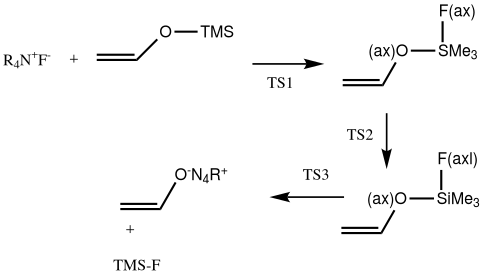
This alternative involves attack by F– along the axial trajectory of the trigonal bipyramidal Si centre, with the OR group occupying the other axial position (TS1). In order to prepare the OR group for elimination with inversion of stereochemistry, the ion-pair complex has to reorganise (a process replacing the previous Berry pseudorotation necessary with for stereochemical retention) via TS2. And finally the OR is eliminated in TS3. The energetics of this pathway (ωB97XD/6-31+G(d) or Def2-TZVPPD/SCRF=thf) are shown below, with the inversion pathway coming out lower in energy than the previously reported retention pathway.
| System |
Relative free energy |
DataDOI |
| Inversion mechanism |
| Reactants |
0.0 |
[4] |
|
TS1
|
4.9 (4.1)* |
[5] |
| TS2 |
3.1 |
[6] |
| TS3 |
0.0 (-0.8)* |
[7] |
| Retention mechanism |
| TS1 |
7.9 (8.3)* |
[8] |
| TS2 |
9.2 (8.7)* |
[9] |
| TS3 |
5.2 (4.9)* |
[10] |
* Values in parentheses are computed for the Def2-TZVPP basis set.
The key new finding for the inversion mechanism is the ion-pair isomerisation (TS2), which is animated below. Transition states which involve no rearrangement at a bond (either formation/cleavage or rotation) are quite rare, and it is nice to show one here.

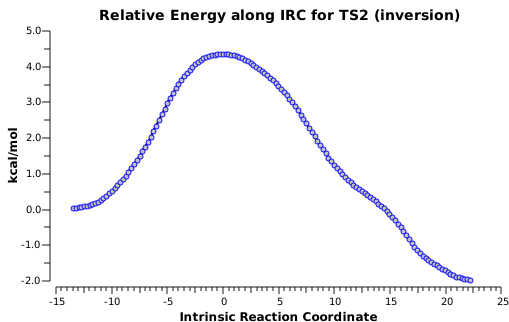
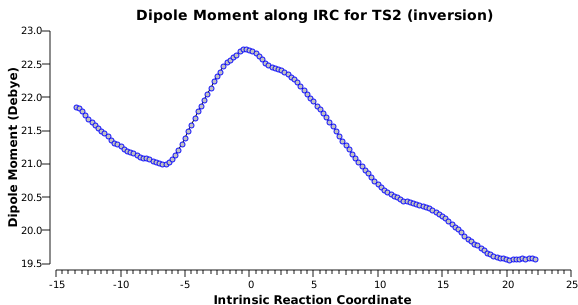
So the nucleophilic displacement reaction at 4-substituted silicon centres is really quite different from carbon.Two distinct associative/elimination mechanisms proceeding through 5-coordinate silicon seem possible. For the specific case of tetra-alkyl ammonium fluoride as nucleophile and an enolate anion as the leaving group, it appears that an inversion mechanism is favoured, and one gets strong indications of this from crystal structures of such 5-coordinate species. It might be nice to repeat this study with a reaction which is known to strongly favour retention of configuration.
References
- L. Wozniak, M. Cypryk, J. Chojnowski, and G. Lanneau, "Optically active silyl esters of phosphorus. II. Stereochemistry of reactions with nucleophiles", Tetrahedron, vol. 45, pp. 4403-4414, 1989. https://doi.org/10.1016/s0040-4020(01)89077-3
- L.H. Sommer, and H. Fujimoto, "Stereochemistry of asymmetric silicon. X. Solvent and reagent effects on stereochemistry crossover in alkoxy-alkoxy exchange reactions at silicon centers", Journal of the American Chemical Society, vol. 90, pp. 982-987, 1968. https://doi.org/10.1021/ja01006a024
- D.N. Roark, and L.H. Sommer, "Dramatic stereochemistry crossover to retention of configuration with angle-strained asymmetric silicon", Journal of the American Chemical Society, vol. 95, pp. 969-971, 1973. https://doi.org/10.1021/ja00784a081
- H. Rzepa, "enol + Me4N(+).F(-) Reactant", 2016. https://doi.org/10.14469/hpc/565
- H. Rzepa, "Di-axial elimination of F", 2016. https://doi.org/10.14469/hpc/570
- H.S. Rzepa, "C 9 H 24 F 1 N 1 O 1 Si 1", 2016. https://doi.org/10.14469/ch/195052
- H. Rzepa, "Di-axial elimination of O TS", 2016. https://doi.org/10.14469/hpc/567
- H. Rzepa, "trimethyl silyl enol + Me4N(+).F(-) 5-coordinate intermediate F axial TS", 2016. https://doi.org/10.14469/hpc/554
- H. Rzepa, "5-coordinate intermediate Berry pseudorotation TS2 New conf?", 2016. https://doi.org/10.14469/hpc/577
- H. Rzepa, "trimethyl silyl enol + Me4N(+).F(-) TS", 2016. https://doi.org/10.14469/hpc/539
Tags:Brook rearrangement, energy, free energy, Leaving group, Nucleophilic substitution, Pseudorotation, Si centre, SNi, Substitution reactions, Walden inversion
Posted in reaction mechanism | No Comments »
Wednesday, May 25th, 2016
The substitution of a nucleofuge (a good leaving group) by a nucleophile at a carbon centre occurs with inversion of configuration at the carbon, the mechanism being known by the term SN2 (a story I have also told in this post). Such displacement at silicon famously proceeds by a quite different mechanism, which I here quantify with some calculations.
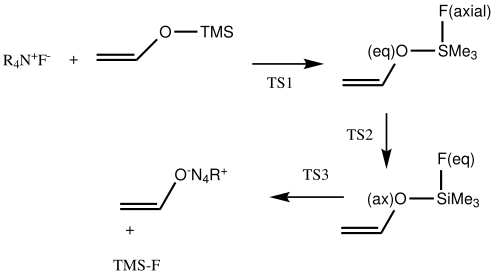
Trialkylsilyl is often used to protect OH groups, and as shown in the diagram above is specifically used to enforce the enol form of a ketone by replacing the OH with OTMS. The TMS can then be removed when required by utilising nucleophilic addition of e.g. fluoride anion from tetra-alkyl ammonium fluoride to form a 5-coordinate silicon intermediate, followed by collapse of this intermediate with expulsion of the oxygen to form an enolate anion. Before starting the calculations, I searched the crystal structure database for examples of R3SIF(OR), as in the search query below.

There were 55 instances of such species, and show below are their geometric characteristics. In all cases, the two electronegative substituents occupy the axial positions of a trigonal bipyramidal geometry. This of course is the orientation adopted by the two electronegative substituents in the SN2 mechanism for carbon, but with silicon this carbon "transition state" can be replaced by a stable (and as we see often crystalline) intermediate!

Turning to calculations (ωB97XD/6-31+G(d)/SCRF=thf), one can locate three transition states for the silicon process (there is only one for the SN2 reaction with carbon).
-
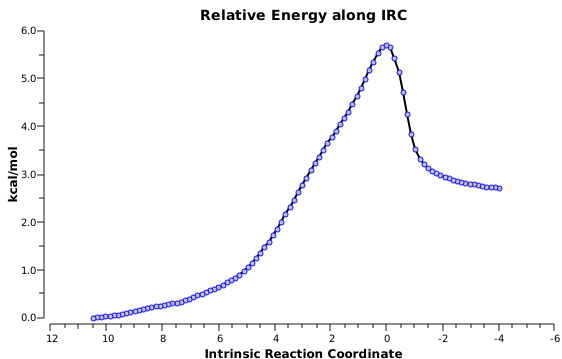
TS1 represents attack of fluoride anion along the axial position of the forming 5-coordinate silicon.[1],[2] The oxygen in this instance occupies an equatorial position, and this close proximity between the incoming F(-) and the about to depart OR groups represents a retention of configuration at the Si. Note that the reaction is endo-energic. (c.f. [3]).


-
The next step, TS2[4],[5] is to move the F ligand to an equatorial position and the OR group from equatorial to its own axial position so that it can depart in the manner the F adopted to arrive. This requires what is called a Berry pseudorotation, an essentially isoenergic process.


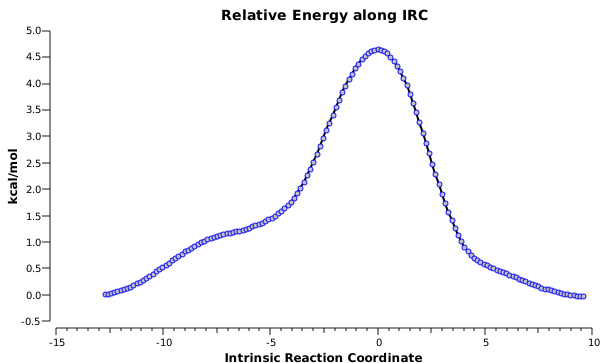
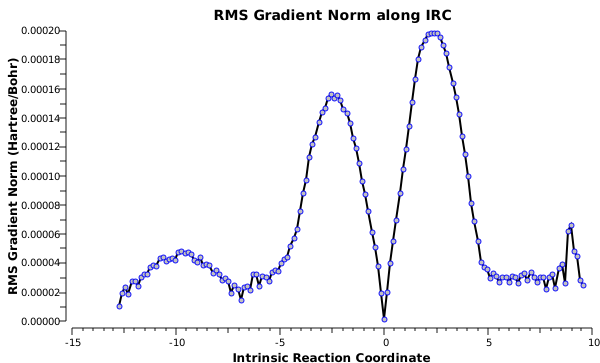
You might note a "hidden intermediate" at IRC ~-7 (the "bump" in the energy profile). This is caused by re-organisation of the ion-pair geometry, with the tetra-alkyl ammonium cation moving its orientation.
-
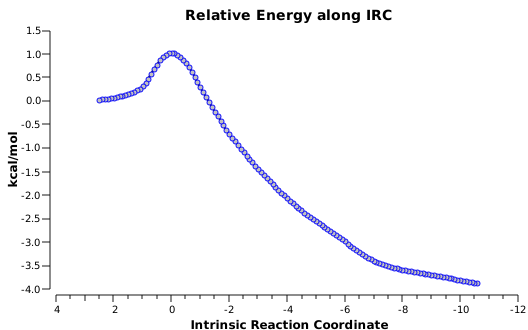
TS3[6],[7] now eliminates the –OR group to complete the deprotection.


The free energies are summarised below. Key points include:
-
The overall free energy of deprotection is appropriately exo-energic.
-
The highest energy barrier is actually for pseudo-rotation! This suggests that tuning the deprotection with alternative alkyl or aryl groups on the silicon may be a matter of controlling the Berry pseudorotation process.
-
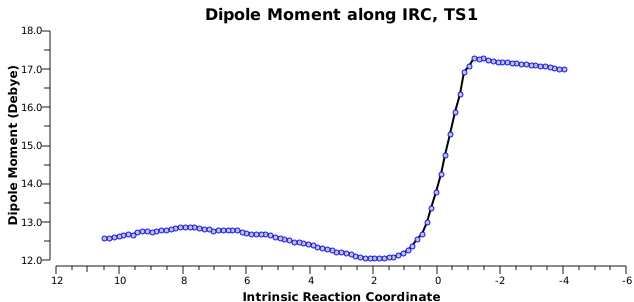
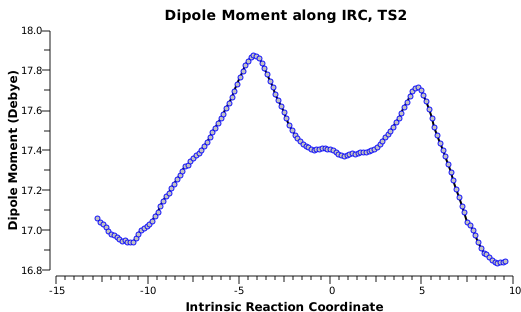
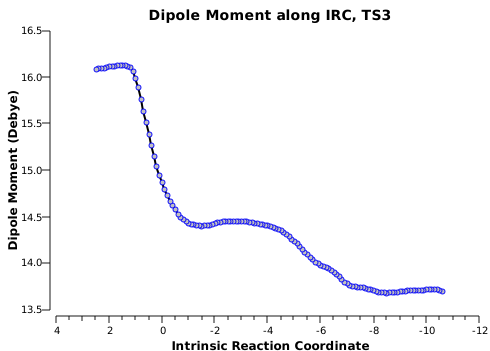
TS1-3 proceed with the attacking and leaving groups in close proximity (the angle between an axial and an equatorial group is ~90° of course, whereas for a di-axial relationship (the inversion of the SN2 mechanism) it is instead 180°. This close proximity of nucleophile and nucleofuge minimises the required reorganisation of the ammonium counter-ion in the ion-pairs, and possibly also the dipole moments induced by the reactions, the changes of which for the three reactions are shown below:
-
The 5-coordinate intermediate where both F and O are axial is in fact significantly lower in energy (a cooperative effect) than when only one of them is axial, which matches the orientations identified above in the 55 crystal structures. For a substitution to occur, the cooperative strengthening of the Si-O and Si-F bonds must be removed; hence the retention of configuration.
|
System
|
Relative free energy
|
DataDOI
|
|
Reactants
|
0.0
|
[8]
|
|
TS1
|
7.9
|
[1]
|
|
Int F(ax), O(eq)
|
5.1
|
[9]
|
|
TS2
|
10.2 (9.2)*
|
[4]
|
|
Int F(eq), O(ax)
|
5.1
|
[10]
|
|
TS3
|
5.2
|
[6]
|
|
Products
|
-4.0
|
[11]
|
|
Int F,O(ax)
|
-2.5
|
[12]
|
*A lower energy orientation of the ion-pair has subsequently been found.[13]
This analysis shows just how different the carbon and the silicon substitution reactions are and how it is the pseudorotation interconverting two 5-coordinate intermediates that appears to be a key step. But questions remain unanswered. What is the energy of the pseudorotation interconverting an intermediate with ax/eq electronegative groups to one with di-axial electronegative groups? Are there transition states starting from the diaxial intermediate and resulting in elimination, and if so what are their relative energies? I leave answers to a follow up post.
References
- H. Rzepa, "trimethyl silyl enol + Me4N(+).F(-) 5-coordinate intermediate F axial TS", 2016. https://doi.org/10.14469/hpc/554
- H. Rzepa, "trimethyl silyl enol + Me4N(+).F(-) 5-coordinate intermediate F axial TS IRC", 2016. https://doi.org/10.14469/hpc/564
- L. Wozniak, M. Cypryk, J. Chojnowski, and G. Lanneau, "Optically active silyl esters of phosphorus. II. Stereochemistry of reactions with nucleophiles", Tetrahedron, vol. 45, pp. 4403-4414, 1989. https://doi.org/10.1016/s0040-4020(01)89077-3
- H. Rzepa, "trimethyl silyl enol + Me4N(+).F(-) 5-coordinate intermediate Berry pseudorotation TS", 2016. https://doi.org/10.14469/hpc/551
- H. Rzepa, "trimethyl silyl enol + Me4N(+).F(-) 5-coordinate intermediate Berry pseudorotation TS IRC", 2016. https://doi.org/10.14469/hpc/553
- H. Rzepa, "trimethyl silyl enol + Me4N(+).F(-) TS", 2016. https://doi.org/10.14469/hpc/539
- H. Rzepa, "trimethyl silyl enol + Me4N(+).F(-) TS IRC", 2016. https://doi.org/10.14469/hpc/552
- H. Rzepa, "enol + Me4N(+).F(-) Reactant", 2016. https://doi.org/10.14469/hpc/565
- H. Rzepa, "enol + Me4N(+).F(-) 5-coordinate intermediate F axial", 2016. https://doi.org/10.14469/hpc/555
- H. Rzepa, "trimethyl silyl enol + Me4N(+).F(-) 5-coordinate intermediate", 2016. https://doi.org/10.14469/hpc/540
- H. Rzepa, "enol + Me4N(+).F(-) Product", 2016. https://doi.org/10.14469/hpc/563
- H. Rzepa, "trimethyl silyl enol + Me4N(+).F(-) 5-coordinate intermediate F/O axial", 2016. https://doi.org/10.14469/hpc/550
- H. Rzepa, "5-coordinate intermediate Berry pseudorotation TS2 New conf?", 2016. https://doi.org/10.14469/hpc/577
Tags:Berry mechanism, Elimination reaction, energy, energy barrier, energy profile, free energy, Leaving group, lower energy orientation, Molecular geometry, Organic reactions, overall free energy, Pseudorotation, search query, SN2 reaction, Stereochemistry, Trigonal bipyramidal molecular geometry
Posted in reaction mechanism | No Comments »
Sunday, April 24th, 2016
The autoionization of water involves two molecules transfering a proton to give hydronium hydroxide, a process for which the free energy of reaction is well known. Here I ask what might happen with the next element along in the periodic table, F.
I have been unable to find much about the autoionization of HF in the literature; the pH of neat HF appears unreported (unlike that of H2O, which of course is 7). Even the dielectric constant of liquid HF[1],[2] seems to vary widely, the largest reported being ~84. It is suggested that liquid HF is much less ordered than e.g. water, and this suggests that a single static model is unlikely to be entirely realistic. Nonetheless, I thought it might be informative to take the model I previously constructed for water and try applying it to HF. Here is part of the geometry optimisation cycle[3] from the original edited water model. I used ωB97XD/Def2-TZVPPD/SCRF=water for the model. Why continuum water as the solvation treatment? Well, standard parameters for liquid HF are not available (perhaps given the variation in dielectric) and since the upper bound might be similar to water, I decided to use that to see what I got. Clearly however an approximation.
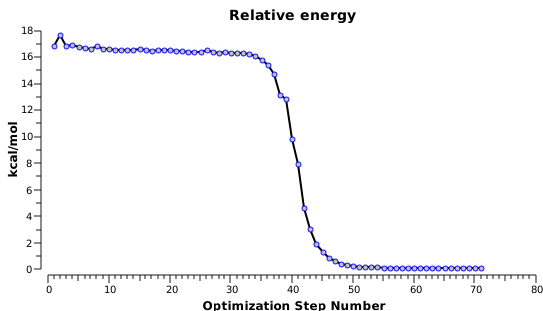
The low energy final geometry corresponds to 10 HF molecules and lies about 16 kcal/mol lower (in total energy) than the cyclic structure containing H2F+.F– species connected by two (HF)3 bridges and two further non-bridge HF molecules hydrogen bonding to the H2F+ and the F–. In fact the ionic structure turns out to be a transition state for proton shifting along the chain to create (HF)10, with a free energy barrier of 9.2 kcal/mol above the neutral form.[4] This difference between ionic and non-ionic forms is considerably less than that for water as previously indicated. Note also how much shorter the hydrogen bonding H…F distances are in the HF cluster.

So unlike water, where the hydronium hydroxide is a clear minimum in the potential with a small but distinct barrier (~3.5 kcal/mol[5]) to proton transfer, with HF at the same level of theory the barrier is zero. Perhaps the difference might be because whereas hydronium hydroxide can support three stabilizing (H2O)3 bridges, only two (HF)3 bridges are possible with H2F+.F–. It might also be higher levels of theory (or better/larger models of the HF cluster) could well give a barrier for the process, but this does tend to suggest that the dynamics of HF liquid may suggest quite different lifetimes for autoionized forms of HF compared to water. Liquid HF is clearly just as complicated a liquid as is H2O, certainly much less is known about it.
References
- R.H. Cole, "Dielectric constant and association in liquid HF", The Journal of Chemical Physics, vol. 59, pp. 1545-1546, 1973. https://doi.org/10.1063/1.1680219
- P.H. Fries, and J. Richardi, "The solution of the Wertheim association theory for molecular liquids: Application to hydrogen fluoride", The Journal of Chemical Physics, vol. 113, pp. 9169-9179, 2000. https://doi.org/10.1063/1.1319172
- H.S. Rzepa, "H 10 F 10", 2016. https://doi.org/10.14469/ch/192032
- H.S. Rzepa, "H 10 F 10", 2016. https://doi.org/10.14469/ch/192034
- H.S. Rzepa, "H22O11", 2016. https://doi.org/10.14469/ch/192022
Tags:dielectric, energy, Equilibrium chemistry, Fluorides, free energy, free energy barrier, Hydrogen bond, Hydronium, Inorganic solvents, Lithium fluoride, low energy final geometry corresponds, Oxides, PH, Properties of water, Self-ionization of water, Water, Water model
Posted in Interesting chemistry | 10 Comments »