Posts Tagged ‘Hydrogen bond’
Wednesday, June 22nd, 2016
I previously used data mining of crystal structures to explore the directing influence of substituents on aromatic and heteroatomatic rings. Here I explore, quite literally, a different angle to the hydrogen bonding interactions between a benzene ring and OH or NH groups.

I start by defining a benzene ring with a centroid. The distance is from that centroid to the H atom of an OH or NH group and the angle is C-centroid-H. To limit the search to approach of the OH or NH group more or less orthogonal to the ring, the absolute value of the torsion between the centroid-H vector and the ring C-C vector is constrained to lie between 70-100° (the other constraints being no disorder, no errors, T < 140K and R < 0.05).[1]

The above shows the results for NH groups interacting with the aromatic ring. The maximum distance 2.8Å is more or less the van der Waals contact distance between a hydrogen and a carbon and as you can see the contacts "funnel down" to the centroid at < 2.1Å. The shortest distance[2] is for ammonium tetraphenylborate, which you can view in e.g. spacefill mode here[3]

The other interesting close contact derives from a protonated pyridine[4], which can in turn be viewed here.[5] The main message from the distribution shown above is that as the distances between the HN and the centroid get shorter, the "trajectory" of approach remains orthogonal to the ring (the angle defined above remains ~90°) and heads towards the centroid of the π-cloud. The hotspot itself (red, ~2.6Å) also lies along this trajectory.
Recollect that when I used such hydrogen bonding to see if crystal structures discriminate between the ortho or meta positions of a ring carrying an electron donating substituent, it was the distance from a HO to the carbon that was measured as the discriminator. So it's a faint surprise to find that with HN, and without the necessary perturbation of an electron donating substituent, the intrinsic preference seems to be for the ring centroid and not any specific carbon atom of the ring.
So how about the OH group? There are in fact rather fewer examples, and so the statistics are a bit less clear-cut. But there is a tantalising suggestion that this time, the trajectory is not ~90° but rather less, implying that the destination is no longer the centroid of the π-cloud but one of the carbon atoms of the ring itself. For those who like to "read between the lines" and spot things that are absent rather than present, you may have asked yourself why I did not use NH probes in my earlier post. Well, it appears that the NH group is less effective at e.g. o/p discrimination than is an OH group.

I can only speculate as to the origins (real or not) of the difference in behaviour between OH and NH groups towards a phenyl π-face. Perhaps it is simply bias in the CSD database? Or might there be electronic origins? Time to end with that phrase "watch this space".
References
- H. Rzepa, "How does an OH or NH group approach an aromatic ring to hydrogen bond with its Ï-face?", 2016. https://doi.org/10.14469/hpc/673
- T. Steiner, and S.A. Mason, "Short N<sup>+</sup>—H...Ph hydrogen bonds in ammonium tetraphenylborate characterized by neutron diffraction", Acta Crystallographica Section B Structural Science, vol. 56, pp. 254-260, 2000. https://doi.org/10.1107/s0108768199012318
- Steiner, T.., and Mason, S.A.., "CCDC 144361: Experimental Crystal Structure Determination", 2000. https://doi.org/10.5517/cc4v6tz
- O. Danylyuk, B. Leśniewska, K. Suwinska, N. Matoussi, and A.W. Coleman, "Structural Diversity in the Crystalline Complexes of <i>para</i>-Sulfonato-calix[4]arene with Bipyridinium Derivatives", Crystal Growth & Design, vol. 10, pp. 4542-4549, 2010. https://doi.org/10.1021/cg100831c
- Danylyuk, O.., Lesniewska, B.., Suwinska, K.., Matoussi, N.., and Coleman, A.W.., "CCDC 819118: Experimental Crystal Structure Determination", 2011. https://doi.org/10.5517/ccwhc5w
Tags:10.1021, 10.1107, 10.5517, aromaticity, benzene, Centroid, chemical bonding, data mining, Functional groups, Hydrogen bond, Physical organic chemistry, Pyridine, Simple aromatic rings, Supramolecular chemistry
Posted in Chemical IT, crystal_structure_mining | 3 Comments »
Sunday, April 24th, 2016
The autoionization of water involves two molecules transfering a proton to give hydronium hydroxide, a process for which the free energy of reaction is well known. Here I ask what might happen with the next element along in the periodic table, F.
I have been unable to find much about the autoionization of HF in the literature; the pH of neat HF appears unreported (unlike that of H2O, which of course is 7). Even the dielectric constant of liquid HF[1],[2] seems to vary widely, the largest reported being ~84. It is suggested that liquid HF is much less ordered than e.g. water, and this suggests that a single static model is unlikely to be entirely realistic. Nonetheless, I thought it might be informative to take the model I previously constructed for water and try applying it to HF. Here is part of the geometry optimisation cycle[3] from the original edited water model. I used ωB97XD/Def2-TZVPPD/SCRF=water for the model. Why continuum water as the solvation treatment? Well, standard parameters for liquid HF are not available (perhaps given the variation in dielectric) and since the upper bound might be similar to water, I decided to use that to see what I got. Clearly however an approximation.
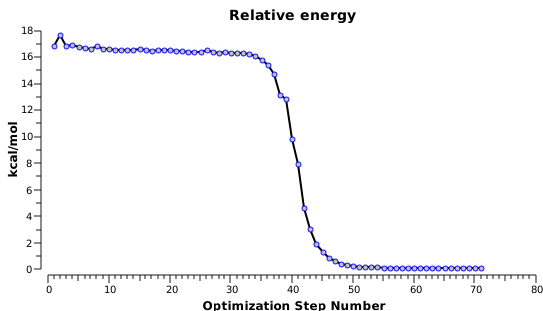
The low energy final geometry corresponds to 10 HF molecules and lies about 16 kcal/mol lower (in total energy) than the cyclic structure containing H2F+.F– species connected by two (HF)3 bridges and two further non-bridge HF molecules hydrogen bonding to the H2F+ and the F–. In fact the ionic structure turns out to be a transition state for proton shifting along the chain to create (HF)10, with a free energy barrier of 9.2 kcal/mol above the neutral form.[4] This difference between ionic and non-ionic forms is considerably less than that for water as previously indicated. Note also how much shorter the hydrogen bonding H…F distances are in the HF cluster.

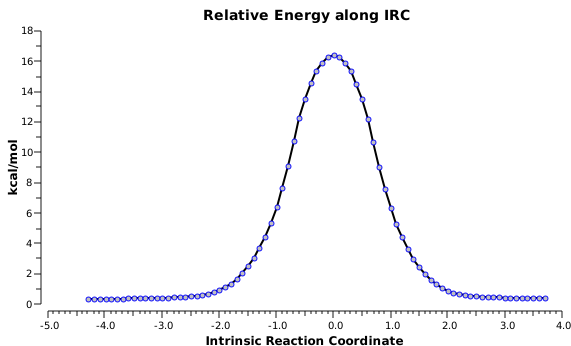
So unlike water, where the hydronium hydroxide is a clear minimum in the potential with a small but distinct barrier (~3.5 kcal/mol[5]) to proton transfer, with HF at the same level of theory the barrier is zero. Perhaps the difference might be because whereas hydronium hydroxide can support three stabilizing (H2O)3 bridges, only two (HF)3 bridges are possible with H2F+.F–. It might also be higher levels of theory (or better/larger models of the HF cluster) could well give a barrier for the process, but this does tend to suggest that the dynamics of HF liquid may suggest quite different lifetimes for autoionized forms of HF compared to water. Liquid HF is clearly just as complicated a liquid as is H2O, certainly much less is known about it.
References
- R.H. Cole, "Dielectric constant and association in liquid HF", The Journal of Chemical Physics, vol. 59, pp. 1545-1546, 1973. https://doi.org/10.1063/1.1680219
- P.H. Fries, and J. Richardi, "The solution of the Wertheim association theory for molecular liquids: Application to hydrogen fluoride", The Journal of Chemical Physics, vol. 113, pp. 9169-9179, 2000. https://doi.org/10.1063/1.1319172
- H.S. Rzepa, "H 10 F 10", 2016. https://doi.org/10.14469/ch/192032
- H.S. Rzepa, "H 10 F 10", 2016. https://doi.org/10.14469/ch/192034
- H.S. Rzepa, "H22O11", 2016. https://doi.org/10.14469/ch/192022
Tags:dielectric, energy, Equilibrium chemistry, Fluorides, free energy, free energy barrier, Hydrogen bond, Hydronium, Inorganic solvents, Lithium fluoride, low energy final geometry corresponds, Oxides, PH, Properties of water, Self-ionization of water, Water, Water model
Posted in Interesting chemistry | 10 Comments »
Friday, April 15th, 2016
If H3N+-O– is viable compared with its tautomer H2N-OH when carrying water bridges, then why not try H2O+-O– vs HO-OH?
There are no examples to be found in crystal structures! The solvated structure of H2O+-O– is modified directly from that of H3N+-O– and the computed (ωB97XD/6-311++G(d,p)/SCRF=water) structure[1] is shown below. Noteworthy is that the hydrogen bonds at the O+ end are far stronger than those to at the O– end.

The corresponding hydrated hydrogen peroxide is 16.3 kcal/mol lower in free energy; this compares favourably with the value for water itself and suggests that oxane oxide might also be capable of isolation inside a suitable hydrogen bond stabilising cavity.
References
- H.S. Rzepa, "H20O11", 2016. https://doi.org/10.14469/ch/192005
Tags:Ammonia, Anions, free energy, Hydrogen bond, Hydrogen peroxide, Inorganic solvents, Oxide, Oxidizing agents, Peroxide, Properties of water
Posted in General, Interesting chemistry | No Comments »
Friday, April 15th, 2016
In the previous post I described how hydronium hydroxide or H3O+…HO–, an intermolecular tautomer of water, has recently been observed captured inside an organic cage[1] and how the free-standing species in water can be captured computationally with the help of solvating water bridges. Here I explore azane oxide or H3N+-O–,‡ a tautomer of the better known hydroxylamine (H2N-OH).
The usual search[2] of the Cambridge structure database reveals only two (related) entries[3],[4] the second reported in 2015.[5].


Now, location of hydrogen atoms is always a bit tricky, but here we see two species H3N+-OH…–O-+NH3 connected by a strong hydrogen bond of 1.54Å (click on the above image to see this packing). However, it is noteworthy that the N-O bonds for each of these species are exactly the same length (1.412Å); one might have imagined that whether the oxygen carries a proton or not would affect its bond length to nitrogen. There is here a strong hint that energetically the azane oxide might be relatively low in energy relative to hydroxylamine and perhaps that the zwitterionic form might be favoured when captured with hydrogen bonds.
So certainly time for a computational exploration of this species. I am using the three water bridges as before, each comprised of three water molecules and the ωB97XD/6-311++G(d,p)/SCRF=water method. In fact the structure optimises[6] to a delightful propeller-like geometry in which bridges are formed from both two AND three waters across the ion-pair, with overall three-fold C3 symmetry (i.e. chiral! Indeed, this species has a predicted optical rotation of 40° at 589nm).

Hydroxylamine itself has a less symmetric arrangement of hydrogen bonds[7], with a free energy in fact very similar (within 1 kcal/mol) to the ion-pair isomer. Here, a stochastic (statistical) exploration of all the various arrangements of water would be needed to be confident that the lowest energy form had been located. I would note that the N-O bond lengths in the ion-pair and neutral forms are respectively 1.399 and 1.435Å.

Certainly, this very brief computational look at azane oxide suggests that concentrations of this species in aqueous solutions of hydroxylamine might be appreciable (detectable). Its "trapping" inside a suitably designed cavity must be a realistic possibility (the cavity used to trap hydronium hydroxide probably does not have the correct dimensions for this purpose), as indeed illustrated in the two crystal structures noted above.
‡ I have represented this species in ionic form, but you may find text books showing it in dative form, or H3N→O. My personal inclination is to always prefer the ionic form, if only because it enables connections/analogies such as the one here to hydronium hydroxide to be more easily made.
References
- M. Stapf, W. Seichter, and M. Mazik, "Unique Hydrogen‐Bonded Complex of Hydronium and Hydroxide Ions", Chemistry – A European Journal, vol. 21, pp. 6350-6354, 2015. https://doi.org/10.1002/chem.201406383
- H. Rzepa, "Search for Azane oxide", 2016. https://doi.org/10.14469/hpc/380
- Fischer, Dennis., Klapotke, Thomas M.., and Stierstorfer, Jorg., "CCDC 1054611: Experimental Crystal Structure Determination", 2015. https://doi.org/10.5517/cc14ddqn
- Fischer, D.., Klapotke, T.M.., and Stierstorfer, J.., "CCDC 827687: Experimental Crystal Structure Determination", 2012. https://doi.org/10.5517/ccws8lh
- D. Fischer, T.M. Klapötke, and J. Stierstorfer, "1,5‐Di(nitramino)tetrazole: High Sensitivity and Superior Explosive Performance", Angewandte Chemie International Edition, vol. 54, pp. 10299-10302, 2015. https://doi.org/10.1002/anie.201502919
- H.S. Rzepa, "H 21 N 1 O 10", 2016. https://doi.org/10.14469/ch/192000
- H.S. Rzepa, "H 21 N 1 O 10", 2016. https://doi.org/10.14469/ch/192001
Tags:Ammonia, aqueous solutions, Bases, energy relative, free energy, Functional groups, Hydrogen bond, Hydronium, Hydroxides, Hydroxyl, Hydroxylamine, lowest energy form, Properties of water, Reducing agents, Self-ionization of water
Posted in General, Interesting chemistry | No Comments »
Thursday, April 14th, 2016
Ammonium hydroxide (NH4+…OH–) can be characterised quantum mechanically when stabilised by water bridges connecting the ion-pairs. It is a small step from there to hydronium hydroxide, or H3O+…OH–. The measured concentrations [H3O+] ≡ [OH–] give rise of course to the well-known pH 7 of pure water, and converting this ionization constant to a free energy indicates that the solvated ion-pair must be some ~19.1 kcal/mol higher in free energy than water itself.♣ So can a quantum calculation reproduce pH7 for water?
Let me start by saying that locating a stable minimum for H3O+…OH– is non-trival. I have been trying to find a structure on and off for a little while now, but all my erstwhile attempts have resulted in barrierless proton transfers back to H2O…OH2.† So I now decided on a more systematic approach by running a CSD (Cambridge structure database) search, defining the species H3O+ and specifying that the oxygen sustain one additional hydrogen bond, as per H3O+….H.[1] This produced 69 hits, with the distribution of O…H distances shown below indicating that a wide spectrum of hydrogen bond lengths to this oxygen appears possible.

Restricting the search to H3O+….H-O and specifying that the last O is bonded to just one atom‡ reduces this to one hit.[2] If you click on the image below or visit here[3] you will see the hydrogen bonding pattern in this unique example is of the type (ROH…H)3O+…HO–(…HOR)3 with overall three-fold symmetry. The "bridge" across the ion pair in this case is formed from hydrogen bonds to -CH2OH groups in 1,3,5-tris(hydroxymethyl)-2,4,6-triethylbenzene.

This structure immediately poses the question of whether water bridges could replace the organic bridge in the species above, to enable the elusive water-solvated hydronium hydroxide to finally be characterised as a bona-fide minimum in a quantum mechanical potential. By analogy one would need three bridges, each to be comprised of 3H2O. In other words a system containing eleven water molecules. An ωB97XD/6-311++G(d,p)/SCRF=water calculation indeed reveals this C3-symmetric arrangement is a minimum with a calculated[4] free energy (298K) 23.3 (23.5/Def2-TZVPPD) kcal/mol above that of the corresponding water cluster[5] in which a proton transfer has neutralised the ion pair. The error of +4.2 kcal/mol is probably due to a combination of incomplete basis set (calculations with better bases are under way), incomplete correction for solvation (continuum) as well as the limited size of the explicit water cluster (nine supporting water molecules) and other aspects such as the DFT method itself and the RRHO partition function approximations for thermal corrections. It would be a useful calibrant of all these aspects to explore whether these various corrections would converge to the known value or not.
The calculated geometry[4] reveals a H3O…HO hydrogen bond ~2.14Å, well within the range shown in the crystal structure distribution above.

With the basic model for hydronium hydroxide identified, one can now explore how to improve both the accuracy of the model in reproducing the "pH 7" observable and how indeed one might engineer a more superbasic variation.
Addendum 1: The NCI (non-covalent-interaction) analysis of the hydronium hydroxide water complex is shown below. The blue regions indicate strong hydrogen bonds, with cyan being weaker. In fact, the covalent/non-covalent threshold normally taken for an NCI analysis (0.05 au) had to be increased to 0.10 for this example (the default threshold was already treating the HO…H interactions as covalent rather than non-covalent).

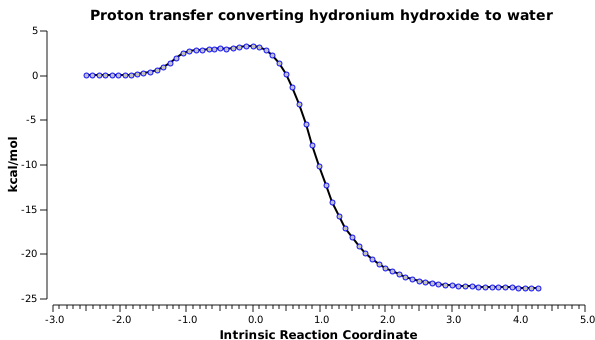
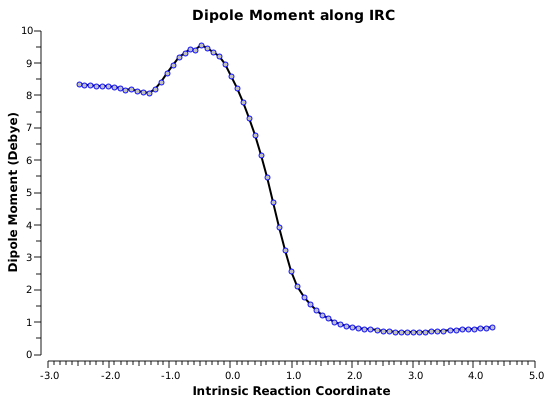
Addendum 2: Shown below is the intrinsic reaction cooordinate (IRC) calculated[6] for the proton transfer from the hydronium hydroxide ion-pair to form neutral water, revealing a barrier of ~3kcal/mol and exothermicity of 23 kcal/mol and how the dipole moment evolves.

♣Dissociation/equilibrium constants are rarely converted into free energies in text books and elsewhere. I would argue here that one gets a better intuitive feeling for such systems if expressed as energies. In this case, such a self-ionization energy for water might also be a useful way of calibrating how any given quantum mechanical procedure might perform in terms of the solvation model etc.
†Recent calculations of like-charge pairs of either H3O+ or OH– have been reported[7] but not as an ion-pair.
‡It is implicit when one talks about connecting bonds that the weaker hydrogen bonds do not qualify. Of course there is a whole spectrum of hydrogen bonding strengths; ones involved in ion-pairs for example can be up to 3 times stronger than those to neutral systems.
References
- H. Rzepa, "Crystal structures containing the hydronium cation", 2016. https://doi.org/10.14469/hpc/370
- M. Stapf, W. Seichter, and M. Mazik, "Unique Hydrogen‐Bonded Complex of Hydronium and Hydroxide Ions", Chemistry – A European Journal, vol. 21, pp. 6350-6354, 2015. https://doi.org/10.1002/chem.201406383
- Stapf, Manuel., Seichter, Wilhelm., and Mazik, Monika., "CCDC 1034049: Experimental Crystal Structure Determination", 2015. https://doi.org/10.5517/cc13q0f8
- H.S. Rzepa, "H22O11", 2016. https://doi.org/10.14469/ch/191994
- H.S. Rzepa, "H 22 O 11", 2016. https://doi.org/10.14469/ch/191995
- H.S. Rzepa, "H22O11", 2016. https://doi.org/10.14469/ch/192002
- M.K. Ghosh, T.H. Choi, and C.H. Choi, "Like-charge ion pairs of hydronium and hydroxide in aqueous solution?", Physical Chemistry Chemical Physics, vol. 17, pp. 16233-16237, 2015. https://doi.org/10.1039/c5cp02182k
Tags:Acid dissociation constant, Acids, Cations, chemical bonding, energy, Equilibrium chemistry, free energy, Hydride, Hydrogen bond, Hydronium, Hydroxide, Physical chemistry, Properties of water, self-ionization energy, Self-ionization of water
Posted in General, Interesting chemistry | 3 Comments »
Friday, April 8th, 2016
Previously, I looked at models of how ammonia could be protonated by water to form ammonium hydroxide. The energetic outcome of my model matched the known equilbrium in water as favouring the unprotonated form (pKb ~4.75). I add here two amines for which R=Me3Si and R=CN. The idea is that the first will assist nitrogen protonation by stabilising the positive centre and the second will act in the opposite sense; an exploration if you like of how one might go about computationally designing a non-steric superbasic amine that becomes predominantly protonated when exposed to water (pKb <1)† and is thus more basic than hydroxide anion in this medium.
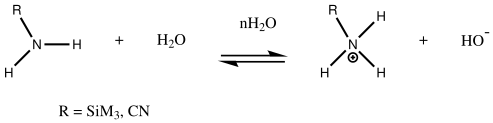
Before reporting any calculations, let us see what the CSD (Cambridge structure database) might contain. The search query is simple, a 3-coordinate amine forming a 4-coordinate quaternary nitrogen† with one N-H and a positive (formal) charge on the N, and a 1-coordinate oxygen with one O-H and a negative charge on the O. With the constraints R < 10%, no disorder and no errors, one gets as many as 15 hits,[1] several of which also apparently contain separate water molecules in the crystal. A warning bell (perhaps several) sounds, since if R < 5%, the number of hits drops to just 2; these are clearly difficult structures to refine!‡ So there is some tantalising evidence that in the solid state at least, the quaternary ammonium group (with at least one N-H), water and a hydroxide anion might be capable of co-existence. As noted below† some fascinating 2-coordinate amines have also been reported as having superbasic properties.

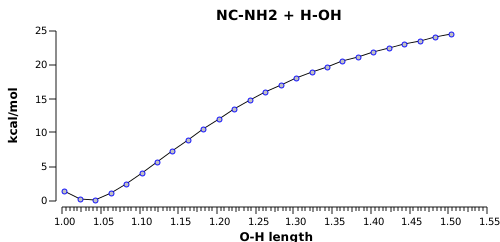
R=CN: the well known compound cyanamide is known to act only as an acid and its basic properties are never quoted. Shown below is the reaction path for transfer of a proton from water to the amine using an 8-water model (n=8) in which two bridges can serve to help stabilize any ionic form. The energy required to do so however is at least 24 kcal/mol (ωB97XD/Def2-TZVPPD/SCRF=water) which indicates that no protonated amine is formed. This can be attributed to the electron withdrawing cyano group strongly destablising any adjacent positive ammonium centre and thus effectively completely inhibiting its formation.
R=Me3Si: this too is already known[2],[3] but only in the presence of the non-coordinating counter-anion B(C6F5)4 crystallised from non-protic solution. An ionised form can now be located using the model above. This has the structure shown below; note the very short hydrogen bonds associated with the hydroxide anion and the possibility of forming only two water bridges across the ion-pair. The relative free energy of the ion-pair (table below) shows it to be if anything less basic than ammonia.

NBO (natural bond orbital) analysis might here be a useful metric of basicity. Hence Me3SiNH2…H2O suggests that donation from the N lone pair into an antiperiplanar Si-C bond is quite large (E(2) = 11.9 kcal/mol), although alternative donation by nitrogen into the H-O σ* bond of the water is much higher (33.4 kcal/mol).
Perhaps the basicity of simple amines is related to their ability to form stabilizing water bridges across the ion-pair? With trimethylsilyl substituents, this feature (and hence the basicity) is partially or even fully suppressed as in e.g. tris(trimethylsilyl)amine.The pKb of the latter appears to be unreported[8] but it does seem to be only weakly basic and "inert to H2O",[9] a property attributed instead to multiple character in the Si-N bonds.
I will in a future post look at the alternative class of phosphazenium amines which do manage to achieve superbasicity.[10]
†A phosphazenium 3-coordinate amine[11] was in 1991 claimed to be the strongest metal-free neutral base. This has now been superceded by combining this base motif with that of a sterically operating proton sponge.[12],[10] I will report the computational modelling of these systems in a later post.
‡One of the structures identified with R<10% is UBEJIU[13] and which is worth showing below. Note the apparent close contact of the type N-H…H-O (1.416-1.463Å) rather than the expected N-H…OH. If correct (this feature is not mentioned in the article itself) it would be classified as a dihydrogen bond, a type normally only found in situations such as B-H…H-N. There are a number of other inconsistencies which must be resolved if this structure is to stand as correct.

References
- H. Rzepa, "Substituted ammonium hydroxides", 2016. https://doi.org/10.14469/hpc/361
- Y. Sarazin, J.A. Wright, and M. Bochmann, "Synthesis and crystal structure of [C6H5Hg(H2NSiMe3)][H2N{B(C6F5)3}2], a phenyl–mercury(II) cation stabilised by a non-coordinating counter-anion", Journal of Organometallic Chemistry, vol. 691, pp. 5680-5687, 2006. https://doi.org/10.1016/j.jorganchem.2006.09.021
- Sarazin, Y.., Wright, J.A.., and Bochmann, M.., "CCDC 608250: Experimental Crystal Structure Determination", 2007. https://doi.org/10.5517/ccndxzx
- H.S. Rzepa, and H.S. Rzepa, "H21NO9", 2016. https://doi.org/10.14469/ch/191946
- H.S. Rzepa, and H.S. Rzepa, "C 3 H 29 N 1 O 9 Si 1", 2016. https://doi.org/10.14469/ch/191987
- H.S. Rzepa, and H.S. Rzepa, "C 3 H 29 N 1 O 9 Si 1", 2016. https://doi.org/10.14469/ch/191982
- H.S. Rzepa, "CH20N2O9", 2016. https://doi.org/10.14469/ch/191983
- E.W. Abel, D.A. Armitage, and G.R. Willey, "Relative base strengths of some organosilicon amines", Transactions of the Faraday Society, vol. 60, pp. 1257, 1964. https://doi.org/10.1039/tf9646001257
- J. Goubeau, and J. Jimenéz‐Barberá, "Tris‐(trimethylsilyl)‐amin", Zeitschrift für anorganische und allgemeine Chemie, vol. 303, pp. 217-226, 1960. https://doi.org/10.1002/zaac.19603030502
- Kögel, Julius F.., Oelkers, Benjamin., Kovačević, Borislav., and Sundermeyer, Jörg., "CCDC 1002088: Experimental Crystal Structure Determination", 2014. https://doi.org/10.5517/cc12mrfw
- R. Schwesinger, and H. Schlemper, "Peralkylated Polyaminophosphazenes— Extremely Strong, Neutral Nitrogen Bases", Angewandte Chemie International Edition in English, vol. 26, pp. 1167-1169, 1987. https://doi.org/10.1002/anie.198711671
- J.F. Kögel, B. Oelkers, B. Kovačević, and J. Sundermeyer, "A New Synthetic Pathway to the Second and Third Generation of Superbasic Bisphosphazene Proton Sponges: The Run for the Best Chelating Ligand for a Proton", Journal of the American Chemical Society, vol. 135, pp. 17768-17774, 2013. https://doi.org/10.1021/ja409760z
- P. Vianello, A. Albinati, G.A. Pinna, A. Lavecchia, L. Marinelli, P.A. Borea, S. Gessi, P. Fadda, S. Tronci, and G. Cignarella, "Synthesis, Molecular Modeling, and Opioid Receptor Affinity of 9,10-Diazatricyclo[4.2.1.1<sup>2,5</sup>]decanes and 2,7-Diazatricyclo[4.4.0.0<sup>3,8</sup>]decanes Structurally Related to 3,8-Diazabicyclo[3.2.1]octanes", Journal of Medicinal Chemistry, vol. 43, pp. 2115-2123, 2000. https://doi.org/10.1021/jm991140q
Tags:Acid, Acid dissociation constant, Amide, Amine, Ammonia, Ammonium, Bases, City: Cambridge, energy, from non-protic solution, Functional groups, Hydrogen bond, Hydroxide, Lone pair, metal, Nitrile, relative free energy, search query
Posted in General, Interesting chemistry | 2 Comments »
Saturday, April 2nd, 2016
A celebration of the life and work of the great chemist Paul von R. Schleyer was held this week in Erlangen, Germany. There were many fantastic talks given by some great chemists describing fascinating chemistry. Here I highlight the presentation given by Andy Streitwieser on the topic of organolithium chemistry, also a great interest of Schleyer's over the years. I single this talk out since I hope it illustrates why people still get together in person to talk about science.
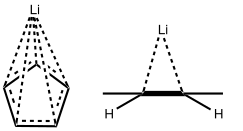
The presentation focused on the structure of the simplest possible metallocene, lithium cyclopentadienyl and why the calculated structure showed that the hydrogen atoms attached to the cyclopentadienyl ring pointed slightly away from the metal rather than towards it (by ~1-2°).† Various explanations had been put forward, some had waxed and then waned. It was still basically an open problem. Now, the title of the symposium was Theory and Experiment: A Meeting at the Interface; Streitwieser had given the theory and whilst listening, I realised I might be able to help relate this to known experiments, i.e. crystal structure data. I could do so by analysing the known crystal structures of metallocenes.[1] So here is the basic search query, and I will go through it thus:
-
A general ring is defined (sizes 4,5,6,7,8) and the ring and metal-C bonds are all specified as of type "any" (it is difficult to know how such bonds might be classified, ie delocalised, aromatic, etc, so best not to constrain things) and a metal is attached.
-
4M is basically any metal; again the search is unconstrained, but one could focus on certain columns of the periodic table if one wished.
-
A ring centroid is computed.
-
ANG1 is defined as the angle H-C-centroid, the angle of interest in Andy's talk. The limits were constrained to lie between 140° and 179°. I did this because when the angle becomes 180°, the torsion becomes mathematically undefined and I did not want to risk this happening.
-
TOR1 is defined as the torsion H-C-centroid-metal. Values of 180° would indicate that the hydrogen was pointing away from the metal; values of 0° would indicate it was pointing towards the metal. The absolute value of the torsion is taken to avoid confusion induced by its sign.
-
ANG2 is one test whether the ring is planar. For an even membered ring, it is the angle subtended at the centroid to opposing carbon atoms. For odd membered rings it is the angle at the centroid involving one carbon and a centroid defined by an opposing pair of atoms (see below).
-
The quality of the crystal structure determination is controlled by specifying that the R value be < 5%, no errors, no disorder. Also, the terminal H-positions are normalised (to correct known errors in H distances deriving from x-ray diffraction). I would point out that in the early days, the actual positions of the hydrogen were often not actually determined, but "idealised". In this case this would mean that the H-C-centroid angle would probably be set to 180°. For perhaps the last 20 years or so however, the positions of hydrogen atoms have been routinely refined. Unfortunately, I know of no search query that can separate the two cases, and so we will have to live with the mixture and see what we get.
-
We define another constraint separately, which is that the temperature of the data collection sample is <140K. This ensures that the data will be free of more vibrational/thermal noise and so should be rather more accurate.
-
Finally, a note on the topic of "research data management" or RDM. I have deposited the files defining the search query in a repository and have assigned DOIs both to the overall search collection[2] and to each individual search definition, the DOIs for which are shown below.


The 4-ring case.[3] Here the temperature constraint was relaxed, since there are few entries. The two red "hot-spots" occur at torsion angles of ~180° (hydrogen pointing away from metal) at bond angle values of between 173-176°.

The 5-ring case.[4] This includes the classic ferrocene example, the first metallocene for which the structure was correctly identified. There are many more examples, and this search is now constrained to <140K. The two hot spots occur at bond angles of very close to 180°, at which values the torsion itself becomes undetermined. That the hot spots actually occur at 0° and 180° and are not spread evenly across the right hand side axis is remarkable given this. There is a significant tail for the 180° torsion (H pointing away from metal) down to H-C-centroid angles of about 170°, but there is no evidence of this tail for torsions of 0°.

One more test must be applied to see if the 5-ring is planar or not. The deviation from planarity is only 2-3°, and there seems to be no correlation between lower values of the H-C-centroid bond angle and non-planarity.

The 6-ring case.[5] There are again numerous examples of data <140K for such rings. There is now a very distinct hotspot at angles of ~170° for the case/torsion where the hydrogen is pointing towards the metal.

This feature persists when the ring planarity is tested, and it occurs specifically for rings where the angle subtended at the centroid is ~180° and H-C-centroid angles of ~170°. So this is clear-cut effect which demands explanation #1.

The 7-ring case[6] again shows a strong hot spot at ~172° for a torsion corresponding to the hydrogens pointing towards the metal. This hot spot is matched by angles subtended at the ring centroid that are close to 180° (i.e. planar). This is clear-cut effect which demands explanation #2.


The 8-ring case[7] also shows a hot spot for hydrogens pointing towards the metal by the strikingly large degree of ~157°, and this feature is associated with a linear C-centroid-C angle. This is clear-cut effect which demands explanation #3.


The 9- and 10-ring cases. There are no examples! Time to make some?
To summarise.
-
The above was done during a conference in response to a point made by one of the speakers. In fact, it proved possible to show the speaker the diagrams above <18 hours after he gave the talk.‡
-
An immediate question that arose from this discussion was whether the hot-spots were artefacts of non-planar rings. So the ANG2 test was added to the plots the next day (today) as part of this dissemination.
-
Also discussed (yesterday) was how these conference insights might be shared. I suggested the forum here and Professor Streitwieser heartily agreed. Another alternative was to write it up as a regular journal article. But we both agreed that ..
-
what you see here is just a statistical analysis. The next stage would be to individually inspect all the molecules which make up these statistics. You see it might just be that every molecule contributing to a "hot-spot" cluster might have special circumstances which conspire to make it look as if there is an interesting chemical effect going on. It is unlikely that such coincidences could accrue in such a manner, but the possibility does have to be considered.
-
I think we both felt that a better way was to expose the basic effects here, as a sort of open science research project, and anyone interested could then (a) try to replicate these plots, which is why you will find the DOIs of datasets containing the definition files to assist in any such replication and (b) tunnel down to any specific hot spot to identify the precise chemical characteristics that might give rise to the geometrical effect.
-
This could then be followed up by computational analysis of the electronic properties which might give rise to the effect. This would in effect complete the cycle, since this was the starting point for Streitwieser's original talk. Remember, the theme of the celebration was the interplay between theory and experiment, a particular favourite of Schleyer's.
-
Regarding the chemical insights, a distinct trend over the ring sizes 4-8 can be seen. The 4-ring shows the hydrogens pointing away from the metal, the 5-ring could be said to be largely agnostic (remember the error in crystallographic angles is probably in the region 1-3°) whilst there is an indication that for the 6-8 rings the ring hydrogens tend to point towards the metal. I have summarised three key points illustrating this as #1-3 above.
-
It is tempting to conclude that a fairly general chemical effect is operating here over #1-3, although of course it could be a number of effects specific to each ring which merely look like a general trend.
So the chemical interpretation of this project is unfinished, a general feature of much of science of course. But my aim here was to give a flavour of how a scientific meeting at its best can bring together like (or often unlike) minds which can tease out new connections and lead perchance to new discoveries.
‡These hours were productively employed by sharing a Franconian banquet together, and a modicum of sleep, as well as the searches described above. And in case you see no citations at the bottom of this post, they too take about 48 hours to propagate through the CrossRef and DataCite systems. Be patient and they will appear. †In my original representation, I showed the Hs pointing towards the metal. In fact Prof Streitwieser has just contacted me reversing this orientation and correcting my recollection of his lecture.
References
- H.S. Rzepa, "Discovering More Chemical Concepts from 3D Chemical Information Searches of Crystal Structure Databases", Journal of Chemical Education, vol. 93, pp. 550-554, 2015. https://doi.org/10.1021/acs.jchemed.5b00346
- H. Rzepa, "Crystallographic searches of metallocene type complexes.", 2016. https://doi.org/10.14469/hpc/346
- H. Rzepa, "4-Ring metallocene search query", 2016. https://doi.org/10.14469/hpc/347
- H. Rzepa, "The 5-ring case.", 2016. https://doi.org/10.14469/hpc/348
- H. Rzepa, "6-ring metallocene search queries", 2016. https://doi.org/10.14469/hpc/349
- H. Rzepa, "7-ring metallocene search queries", 2016. https://doi.org/10.14469/hpc/350
- H. Rzepa, "8-ring metallocene search queries", 2016. https://doi.org/10.14469/hpc/351
Tags:Centroid, chemical effect, chemical insights, chemical interpretation, City: Erlangen, Country: Germany, Degree of a continuous mapping, Ferrocene, Hydrogen bond, individual search definition, metal, overall search collection, Streitwieser, terminal H-positions, Torsion, X-ray
Posted in Chemical IT, crystal_structure_mining, Interesting chemistry | 6 Comments »
Tuesday, February 9th, 2016
The phenomenon of bond stretch isomerism, two isomers of a compound differing predominantly in just one bond length, is one of those chemical concepts that wax and occasionally wane.[1] Here I explore such isomerism for the elements Ge, Sn and Pb.
In one earlier post, I noted a form of bond stretch isomerism that can arise from a Jahn-Teller distortion ending in two different geometries in which one or more pairs of bonds swap short/long lengths. Examples include substituted cyclo-octatetraenes[2] and octahedral d9-Cu(II) complexes.[3] A more interesting seminal possibility was implied by G. N. Lewis a century ago when discussing the arrangement of electrons in a (carbon-carbon) triple bond.[4]

*It took ~50 years to prove this assertion wrong.[5]
In a commentary, I reported the results of a search of the crystal structure database for the geometries associated with RX≡XR systems (X= C, Si, Ge, Sn, Pb). Here I focus the search[6] specifically for X=Sn,Ge; this version of bond stretch isomerism also allows angles to change (= rehybridisation at atoms) in order to provide a mechanism for a barrier separating the two forms.

For X=Sn, note the presence of up to three clusters, although the relatively low number of hits makes the statistics less certain.
-
The hotspot cluster centered around angles of 125° and a Sn-Sn distance of ~2.6Å.
-
Another with angles of <100° and Sn-Sn distances of ~3.3Å.
-
A third with angles of <100° and Sn-Sn distances of 2.8Å, which may or may not be a genuine unique form of bonding.
This pattern was commented on in 2010 by Power[7], whose group synthesized most of the examples in the hits above.‡ A plot of compounds with Ge-Ge bonds reveals both similarity with (two, possibly three clusters) and difference from (the clusters are closely spaced in terms of the Ge-Ge bond length, but separated in terms of angle) Sn.†

Time for some computations (which at least will remove random errors in the geometry). I selected the only known example of an RPb-PbR compound[8] as a seed and put it through a B3LYP+D3/Def2-TZVPP calculation (with 172 atoms and 2920 basis functions, this is a relatively large calculation!), which reproduces the known structure pretty well (table).

So what about another bond stretch isomers? The Pb=Pb variation is indeed a stable minimum around 28.0 kcal/mol above the known structure, which seems to put this form out of experimental reach (with this ligand/aryl group at least). With Sn for the same aryl ligand, the energy difference is smaller (~15.8 kcal/mol for this ligand; Powers reports other systems where the energy difference may be only ~5 kcal/mol). Judging by the distribution of the 13 hits recovered from the CSD search, both bond stretch isomers may be accessible experimentally. The calculations show that the GeGe bond isomers are much closer in energy than SnSn (for this ligand). For all three metals however, the calculated difference in the metal-metal length for the two isomers is ~0.45 – 0.52Å. This strongly suggests that whereas the SnSn plot above is demonstrating bond length isomerism, the GeGe plot may not be; at least not of the same type that the calculations here are revealing (via the Wiberg bond orders).
|
System
|
Relative energy
|
XX distance
|
RXX angle
|
Wiberg bond order
|
DataDOI
|
|
Pb=Pb
|
+28.0
|
2.767
|
118.7
|
1.666
|
[9]
|
|
Pb-Pb
|
0.0
|
3.215 (3.188)[8]
|
93.7 (94.3)[8]
|
0.889
|
[10]
|
|
Sn=Sn
|
+15.8
|
2.640
|
123.1
|
1.911
|
[11]
|
|
Sn-Sn
|
0.0
|
3.126
|
95.5
|
0.892
|
[12]
|
|
Ge=Ge
|
+0.5
|
2.263
|
125.2
|
2.138
|
[13]
|
|
Ge-Ge
|
0.0
|
2.777
|
99.7
|
0.866
|
[14]
|
No doubt the particular bond length form is being facilitated by the nature of the ligand and the steric interactions therein imparted, both repulsive AND attractive. These interactions can be visualised via NCI (non-covalent-interaction) plots (click on the image to obtain a rotatable 3D model). First Pb-Pb followed by Pb=Pb. Note how in both cases, the PbPb region is enclosed in regions of weak attractive dispersion interactions, which however avoid the "hemidirected" inert Pb lone pairs.[15]


So in the end we have something of a mystery. There is evidence from crystal structures that at least two bond-stretch isomers of RSnSnR compounds can form, but the calculations indicate that the Sn=Sn form is significantly higher in energy (although not impossibly so for thermal accessibility). Conversely, the Ge=Ge equivalent is very similar in energy to a Ge-Ge form with a significantly longer bond length, but there seems no crystallographic evidence for such a big difference in bond lengths. Perhaps the answer lies with the ligands?
It seems particularly appropriate on the centenary of G. N. Lewis' famous paper in which he clearly notes the possibility of three isomeric forms for the triple bond, to pay tribute to the impact his suggestions continue to make to chemistry.
‡The individual entries can be inspected via the following dois: [16],[17],[18],[19],[20],[21],[22],[23],[24],[25]
†You can view individual entries via the following DOIs: [26],[27],[28],[29],[30],[31],[32],[33],[34],[35]
References
- J.A. Labinger, "Bond-stretch isomerism: a case study of a quiet controversy", Comptes Rendus. Chimie, vol. 5, pp. 235-244, 2002. https://doi.org/10.1016/s1631-0748(02)01380-2
- J.E. Anderson, and P.A. Kirsch, "Structural equilibria determined by attractive steric interactions. 1,6-Dialkylcyclooctatetraenes and their bond-shift and ring inversion investigated by dynamic NMR spectroscopy and molecular mechanics calculations", Journal of the Chemical Society, Perkin Transactions 2, pp. 1951, 1992. https://doi.org/10.1039/p29920001951
- W. Zhang, L. Chen, R. Xiong, T. Nakamura, and S.D. Huang, "New Ferroelectrics Based on Divalent Metal Ion Alum", Journal of the American Chemical Society, vol. 131, pp. 12544-12545, 2009. https://doi.org/10.1021/ja905399x
- G.N. Lewis, "THE ATOM AND THE MOLECULE.", Journal of the American Chemical Society, vol. 38, pp. 762-785, 1916. https://doi.org/10.1021/ja02261a002
- F.A. Cotton, "Metal-Metal Bonding in [Re<sub>2</sub>X<sub>8</sub>]<sup>2-</sup> Ions and Other Metal Atom Clusters", Inorganic Chemistry, vol. 4, pp. 334-336, 1965. https://doi.org/10.1021/ic50025a016
- H. Rzepa, "Crystal structures containing Sn...Sn bonds", 2016. https://doi.org/10.14469/hpc/249
- Y. Peng, R.C. Fischer, W.A. Merrill, J. Fischer, L. Pu, B.D. Ellis, J.C. Fettinger, R.H. Herber, and P.P. Power, "Substituent effects in ditetrel alkyne analogues: multiple vs. single bonded isomers", Chemical Science, vol. 1, pp. 461, 2010. https://doi.org/10.1039/c0sc00240b
- L. Pu, B. Twamley, and P.P. Power, "Synthesis and Characterization of 2,6-Trip<sub>2</sub>H<sub>3</sub>C<sub>6</sub>PbPbC<sub>6</sub>H<sub>3</sub>-2,6-Trip<sub>2</sub> (Trip = C<sub>6</sub>H<sub>2</sub>-2,4,6-<i>i</i>-Pr<sub>3</sub>): A Stable Heavier Group 14 Element Analogue of an Alkyne", Journal of the American Chemical Society, vol. 122, pp. 3524-3525, 2000. https://doi.org/10.1021/ja993346m
- H.S. Rzepa, "C 72 H 98 Pb 2", 2016. https://doi.org/10.14469/ch/191856
- H.S. Rzepa, "C 72 H 98 Pb 2", 2016. https://doi.org/10.14469/ch/191873
- https://doi.org/
- H.S. Rzepa, "C 72 H 98 Sn 2", 2016. https://doi.org/10.14469/ch/191881
- H.S. Rzepa, "C 72 H 98 Ge 2", 2016. https://doi.org/10.14469/ch/191882
- H.S. Rzepa, "C 72 H 98 Ge 2", 2016. https://doi.org/10.14469/ch/191883
- M. Imran, A. Mix, B. Neumann, H. Stammler, U. Monkowius, P. Gründlinger, and N.W. Mitzel, "Hemi- and holo-directed lead(<scp>ii</scp>) complexes in a soft ligand environment", Dalton Transactions, vol. 44, pp. 924-937, 2015. https://doi.org/10.1039/c4dt01406e
- Jones, C.., Sidiropoulos, A.., Holzmann, N.., Frenking, G.., and Stasch, A.., "CCDC 892557: Experimental Crystal Structure Determination", 2012. https://doi.org/10.5517/ccyys5t
- Phillips, A.D.., Wright, R.J.., Olmstead, M.M.., and Power, P.P.., "CCDC 187521: Experimental Crystal Structure Determination", 2002. https://doi.org/10.5517/cc6942p
- Peng, Yang., Fischer, R.C.., Merrill, W.A.., Fischer, J.., Pu, Lihung., Ellis, B.D.., Fettinger, J.C.., Herber, R.H.., and Power, P.P.., "CCDC 771267: Experimental Crystal Structure Determination", 2010. https://doi.org/10.5517/cctwklt
- Peng, Yang., Fischer, R.C.., Merrill, W.A.., Fischer, J.., Pu, Lihung., Ellis, B.D.., Fettinger, J.C.., Herber, R.H.., and Power, P.P.., "CCDC 771268: Experimental Crystal Structure Determination", 2010. https://doi.org/10.5517/cctwkmv
- Peng, Yang., Fischer, R.C.., Merrill, W.A.., Fischer, J.., Pu, Lihung., Ellis, B.D.., Fettinger, J.C.., Herber, R.H.., and Power, P.P.., "CCDC 771270: Experimental Crystal Structure Determination", 2010. https://doi.org/10.5517/cctwkpx
- Peng, Yang., Fischer, R.C.., Merrill, W.A.., Fischer, J.., Pu, Lihung., Ellis, B.D.., Fettinger, J.C.., Herber, R.H.., and Power, P.P.., "CCDC 771271: Experimental Crystal Structure Determination", 2010. https://doi.org/10.5517/cctwkqy
- Peng, Yang., Fischer, R.C.., Merrill, W.A.., Fischer, J.., Pu, Lihung., Ellis, B.D.., Fettinger, J.C.., Herber, R.H.., and Power, P.P.., "CCDC 771272: Experimental Crystal Structure Determination", 2010. https://doi.org/10.5517/cctwkrz
- Peng, Yang., Fischer, R.C.., Merrill, W.A.., Fischer, J.., Pu, Lihung., Ellis, B.D.., Fettinger, J.C.., Herber, R.H.., and Power, P.P.., "CCDC 771274: Experimental Crystal Structure Determination", 2010. https://doi.org/10.5517/cctwkt1
- Fischer, R.C.., Pu, Lihung., Fettinger, J.C.., Brynda, M.A.., and Power, P.P.., "CCDC 624216: Experimental Crystal Structure Determination", 2007. https://doi.org/10.5517/ccnyk04
- Pu, Lihung., Phillips, A.D.., Richards, A.F.., Stender, M.., Simons, R.S.., Olmstead, M.M.., and Power, P.P.., "CCDC 221953: Experimental Crystal Structure Determination", 2004. https://doi.org/10.5517/cc7fysc
- Sasamori, Takahiro., Sugahara, Tomohiro., Agou, Tomohiro., Guo, Jing-Dong., Nagase, Shigeru., Streubel, Rainer., and Tokitoh, Norihiro., "CCDC 1035078: Experimental Crystal Structure Determination", 2014. https://doi.org/10.5517/cc13r2mk
- Sidiropoulos, A.., Jones, C.., Stasch, A.., Klein, S.., and Frenking, G.., "CCDC 749451: Experimental Crystal Structure Determination", 2010. https://doi.org/10.5517/cct4vvm
- Shan, Yu-Liang., Yim, Wai-Leung., and So, Cheuk-Wai., "CCDC 1019495: Experimental Crystal Structure Determination", 2015. https://doi.org/10.5517/cc136vy3
- Sugiyama, Y.., Sasamori, T.., Hosoi, Y.., Furukawa, Y.., Takagi, N.., Nagase, S.., and Tokitoh, N.., "CCDC 297827: Experimental Crystal Structure Determination", 2006. https://doi.org/10.5517/cc9zxbh
- Stender, M.., Phillips, A.D.., Wright, R.J.., and Power, P.P.., "CCDC 180660: Experimental Crystal Structure Determination", 2002. https://doi.org/10.5517/cc61zry
- Peng, Yang., Fischer, R.C.., Merrill, W.A.., Fischer, J.., Pu, Lihung., Ellis, B.D.., Fettinger, J.C.., Herber, R.H.., and Power, P.P.., "CCDC 771273: Experimental Crystal Structure Determination", 2010. https://doi.org/10.5517/cctwks0
- Peng, Yang., Fischer, R.C.., Merrill, W.A.., Fischer, J.., Pu, Lihung., Ellis, B.D.., Fettinger, J.C.., Herber, R.H.., and Power, P.P.., "CCDC 771269: Experimental Crystal Structure Determination", 2010. https://doi.org/10.5517/cctwknw
- Peng, Yang., Fischer, R.C.., Merrill, W.A.., Fischer, J.., Pu, Lihung., Ellis, B.D.., Fettinger, J.C.., Herber, R.H.., and Power, P.P.., "CCDC 771266: Experimental Crystal Structure Determination", 2010. https://doi.org/10.5517/cctwkks
- Jones, C.., Sidiropoulos, A.., Holzmann, N.., Frenking, G.., and Stasch, A.., "CCDC 892556: Experimental Crystal Structure Determination", 2012. https://doi.org/10.5517/ccyys4s
- Jones, C.., Sidiropoulos, A.., Holzmann, N.., Frenking, G.., and Stasch, A.., "CCDC 892555: Experimental Crystal Structure Determination", 2012. https://doi.org/10.5517/ccyys3r
Tags:a Jahn-Teller, Bond length, chemical concepts, Chemical substance, Company: Ge, Coordination complex, energy, energy difference, Entertainment/Culture, Hydrogen bond, Isomer, Isomerism, Length, Molecular geometry, Organic chemistry, results of a search, search both bond stretch isomers, SN
Posted in crystal_structure_mining, Historical | 1 Comment »
Sunday, January 10th, 2016
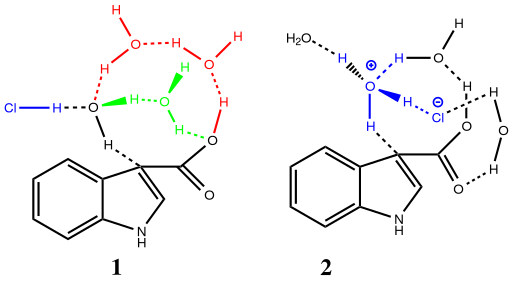
Earlier I explored models for the heteroaromatic electrophilic protiodecarboxylation of an 3-substituted indole, focusing on the role of water as the proton transfer and delivery agent. Next, came models for both water and the general base catalysed ionization of indolinones. Here I explore general acid catalysis by evaluating the properties of two possible models for decarboxylation of 3-indole carboxylic acid, one involving proton transfer (PT) from neutral water in the presence of covalent un-ionized HCl (1) and one with PT from a protonated water resulting from ionised HCl (2).
The original study[1] noted that the rate of decarboxylation fitted well to the kinetic expression: rate = {a + b[L3O+]/(1 + c[L3O+])}[indole], where L can be H or D. Experimentally, [L3O+] is controlled by adding a strong general acid such as HCl, which when the appropriate number of water molecules are added[2] fully ionizes to H3O+.OH–. Now for B3LYP+D3/Def2-TZVPD/SCRF=water calculations:
- Model 1 takes the pure water model and adds HCl (blue above) via hydrogen bonding to the H2O that is transferring the proton to the indole ring. Three water molecules are hydrogen bonding to the carboxylate oxygens to create a bicyclic network in which a ring of either 8 or 10 atoms can act as the proton relay structure. The question now arises whether the proton relay takes the longer (red) route or the slightly shorter green route.
- Isomeric model 2 uses H3O+ for proton transfer, with an adjacent Cl– to complete the ion-pair.
‡Reactant as a non-ionised covalent HCl. †reactant as an isomeric ionized H3O+.Cl– beng 2.0 kcal/mol higher in energ within this solvation model.
- An IRC for Model 1 shows that the proton relay takes the red path, whereas without the HCl the green path is followed.

The transition state free energy however is ..
- 10.6‡ or 8.6† kcal/mol higher than model 2 (click on the image below to load a 3D model). The general acid catalysed model is therefore preferred. The difference in free energy between the two models corresponds to a rate acceleration of >106, which is indeed similar to that observed[1].

The clincher comes with calculation[3] of the kinetic isotope effects (KIE). For general acid catalysis, they were measured as kH/kD ~2.5.[1]
- For model 1, using an un-ionised reactant and un-ionised transition state, the calculated KIE is 5.69 (very similar to that calculated for the water catalysed reaction, 5.66) but not a good fit to experiment.
- For model 2, using the same un-ionised reactant but an ionised transition state, KIE = 2.04, a much better fit.
- For model 2, using ionised reactant AND transition state, KIE = 2.45, an even better fit to experiment.
So we now have a model for the general acid catalysed decarboxylation of a 3-indole carboxylate which agrees with both the kinetic behaviours and the isotope effects measured for this reaction. Since the barrier is a relatively large one, proton tunnelling may play a lesser role in this interpretation, and the stage is set to use this model to e.g. explore how isotope effects are indeed influenced by tuning the reactivity using ring substitutents, the original purpose of my researches all those years ago. Perhaps the catch phrase I’ve started so I’ll start is now more apposite.
References
- B.C. Challis, and H.S. Rzepa, "Heteroaromatic hydrogen exchange reactions. Part 9. Acid catalysed decarboxylation of indole-3-carboxylic acids", Journal of the Chemical Society, Perkin Transactions 2, pp. 281, 1977. https://doi.org/10.1039/p29770000281
- A. Vargas‐Caamal, J.L. Cabellos, F. Ortiz‐Chi, H.S. Rzepa, A. Restrepo, and G. Merino, "How Many Water Molecules Does it Take to Dissociate HCl?", Chemistry – A European Journal, vol. 22, pp. 2812-2818, 2016. https://doi.org/10.1002/chem.201504016
- H. Rzepa, "Ionic model for general acid catalysed decarboxylation", 2016. https://doi.org/10.14469/hpc/204
- H.S. Rzepa, "C 9 H 16 Cl 1 N 1 O 6", 2016. https://doi.org/10.14469/ch/191792
- H.S. Rzepa, "C 9 H 16 Cl 1 N 1 O 6", 2016. https://doi.org/10.14469/ch/191795
- H.S. Rzepa, "C 9 H 16 Cl 1 N 1 O 6", 2016. https://doi.org/10.14469/ch/191794
- H.S. Rzepa, "C9H16ClNO6", 2016. https://doi.org/10.14469/ch/191767
- H.S. Rzepa, "C 9 H 16 Cl 1 N 1 O 6", 2016. https://doi.org/10.14469/ch/191790
Tags:Acid, Acids, bicyclic network, carboxylic acid, free energy, Functional groups, Hydrogen bond, Indole, transition state free energy
Posted in Interesting chemistry | 1 Comment »
Friday, October 23rd, 2015
Steve Bachrach on his own blog has commented on a recent article[1] discussing the structure of the trimer of fluoroethanol. Rather than the expected triangular form with three OH—O hydrogen bonds, the lowest energy form only had two such bonds, but it matched the microwave data much better. Here I explore this a bit more.
The stability of the lowest energy form, as is evident from the title of the article, was attributed to unusual H-Bond topology and bifurcated H-bonds as teased out from bond critical points in the QTAIM analysis of the topology of the electron density. Here I add to this analysis by displaying the computed NCI (non-covalent-interaction)[2] surfaces, as you might see in the comment I posted on Steve’s blog. In essence, the QTAIM had revealed bond paths connecting an oxygen to a H-C and also a bifurcation from an F to two H-C atoms, shown with orange lines in the diagram there. What might an NCI analysis reveal? The analysis[3] is shown below, where I have added orange arrows to indicate the location of these bond paths. The arrows point to an NCI feature which corresponds to a weak dispersion-like stabilisation.

Click for 3D
However, as you can spot from the diagram above (and inspect in a 3D sense if you click on the diagram above to load a 3D Jmol model), there are many more regions where NCI features appear. The most obvious are the blue-coded ones, which in fact represent the conventional O…HO hydrogen bonds, but there are plenty of others as well, including a cyan one which is not part of the published attributions. I will recapitulate my comment on Steve’s blog; the point I make here is that apart from the two regions which have been picked out in the article as responsible for stabilisation of the low energy structure, there are around 4-5 OTHER regions that also may be stabilising but for which there is no corresponding critical point in the density. So whilst the above origins are not incorrect, they may well be very incomplete!.
There is a tendency to only highlight features which can be named, and perhaps to ignore or pay less attention to those which have no name. The latter may in fact be more common than we imagine, and cumulatively they can often have a big impact.
Postscript: A structure has recently been reported[4],[5] illustrating an exceptionally strong OH…F interaction of 1.52Å. This is noteworthy because such hydrogen bonds are rarely strong and indeed even their very existence is controversial. The cyan NCI region mentioned above is just such an interaction (of length ~2.0Å).
References
- J. Thomas, X. Liu, W. Jäger, and Y. Xu, "Unusual H‐Bond Topology and Bifurcated H‐bonds in the 2‐Fluoroethanol Trimer", Angewandte Chemie International Edition, vol. 54, pp. 11711-11715, 2015. https://doi.org/10.1002/anie.201505934
- J. Contreras-García, W. Yang, and E.R. Johnson, "Analysis of Hydrogen-Bond Interaction Potentials from the Electron Density: Integration of Noncovalent Interaction Regions", The Journal of Physical Chemistry A, vol. 115, pp. 12983-12990, 2011. https://doi.org/10.1021/jp204278k
- H.S. Rzepa, and H.S. Rzepa, "C 6 H 15 F 3 O 3", 2015. https://doi.org/10.14469/ch/191558
- M.D. Struble, C. Kelly, M.A. Siegler, and T. Lectka, "Search for a Strong, Virtually “No‐Shift” Hydrogen Bond: A Cage Molecule with an Exceptional OH⋅⋅⋅F Interaction", Angewandte Chemie International Edition, vol. 53, pp. 8924-8928, 2014. https://doi.org/10.1002/anie.201403599
- Struble, Mark D.., Kelly, Courtney., Siegler, Maxime A.., and Lectka, Thomas., "CCDC 991440: Experimental Crystal Structure Determination", 2014. https://doi.org/10.5517/cc128nyy
Tags:Atoms in molecules, chemical bonding, Diagram, Hydrogen bond, low energy structure, lowest energy form, microwave, Steve Bachrach
Posted in Interesting chemistry | 4 Comments »
