Smoke and mirrors. All is not what it seems with this Sn2 reaction!
April 4th, 2019Previously, I explored the Graham reaction to form a diazirine. The second phase of the reaction involved an Sn2′ displacement of N-Cl forming C-Cl. Here I ask how facile the simpler displacement of C-Cl by another chlorine might be and whether the mechanism is Sn2 or the alternative Sn1.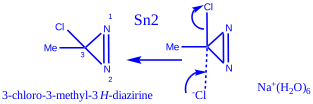 The reason for posing this question is that as an Sn1 reaction, simply ionizing off the chlorine to form a diazacyclopropenium cation might be a very easy process. Why? Because the resulting cation is analogous to the cyclopropenium cation, famously proposed by Breslow as the first example of a 4n+2 aromatic ring for which the value of n is zero and not 1 as for benzene.[1] Another example of a famous “Sn1” reaction is the solvolysis of t-butyl chloride to form the very stable tertiary carbocation and chloride anion (except in fact that it is not an Sn1 reaction but an Sn2 one!)
Here is the located transition state for the above, using Na+.6H2O as the counter-ion to the chloride. The calculated free energy of this transition state is 3.2 kcal/mol lower than the previous Sn2′ version (FAIR data collection, 10.14469/hpc/5045), with an overall barrier to reaction of 26.5 kcal/mol. This compares to ~24.5 kcal/mol obtained by Breslow for solvolysis of the cyclopropenyl tosylate. Given the relatively simple solvation model I used in the calculation (only six waters to solvate all the ions, and a continuum solvent field for water), the agreement is not too bad.

The animation above is of a normal vibrational mode known as the transition mode (click on the image above to get a 3D rotatable animated model). The calculated vectors for this mode (its energy being an eigenvalue of the force constant matrix) are regularly used to “characterise” a transition state. I will digress with a quick bit of history here, starting in 1972 when another famous article appeared.[2] The key aspect of this study was the derivation of the first derivatives of the energy of a molecule with respect to the (3N) geometrical coordinates of the atoms, using a relatively simply quantum mechanical method (MINDO/2) to obtain that energy. Analytical first derivatives of the MINDO/2 Hamiltonian were then used to both locate the transition state for a simple reaction and then to evaluate the second derivatives (the force constant matrix) using a finite difference method. That force constant matrix, when diagonalized, reveals one negative root (eigenvalue) which is characteristic of a transition state. The vectors reveal how the atoms displace along the vibration, and should of course approximate to the path to either reactant or product.
Since that time, it has been a more or less mandatory requirement for any study reporting transition state models to characterise them using the vectors of the negative eigenvalue. The eigenvalue invariably expressed as a wavenumber. Because this comes from the square root of the mass-weighted negative force constant, it is often called the imaginary mode. Thus in this example, 115i cm-1, the i indicating it is an imaginary number. The vectors are derived from quadratic force constants, which is a parabolic potential surface for the molecule. Since most potential surfaces are not quadratic, it is recognized as an approximation, but nonetheless good enough to serve to characterise the transition state as the one connecting the assumed reactant and product. Thousands of published studies in the literature have used this approach.
So now to the animation above. If you look closely you will see that it is a nitrogen and not a carbon that is oscillating between two chlorines (here it is the lighter atoms that move most). The vectors confirm that, with a large one at N and only a small one at C. So it is Sn2 displacement at nitrogen that we have located?
Not so fast. This is a reminder that we have to explore a larger region of the potential energy surface, beyond the quadratic region of the transition state from which the vectors above are derived. This is done using an IRC (intrinsic reaction coordinate). Here it is, and you see something remarkable.

The Cl…N…Cl motions seen above in the transition state mode change very strongly in regions away from the transition state. On one side of the transition state, it forms a Cl…C bond, on the other side a Cl…N.
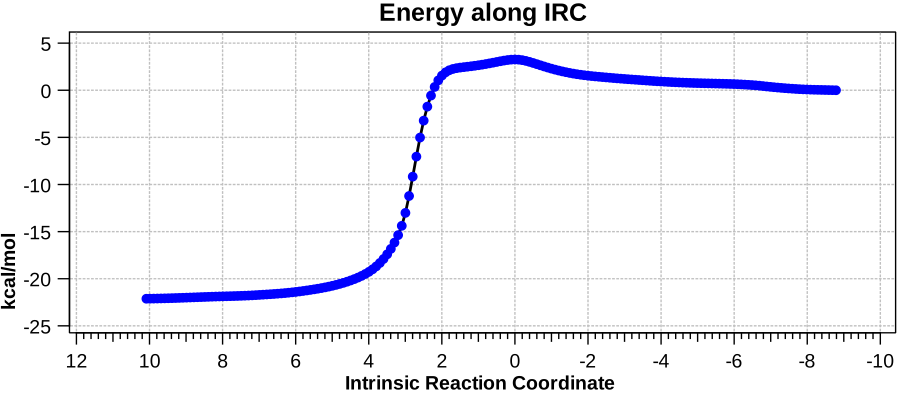
It is also reasonable to ask why the paths either side of the transition state are not the same? That may be because with only six explicit water molecules, three of which solvate the sodium ion, there are not enough to solvate equally the chloride anions either side of the transition state. As a result one chlorine does not behave in quite the same way as the other. The addition of an extra water molecule or two may well change the resulting reaction coordinate significantly.
The overall message is that there are two ways to characterise a computed reaction path. One involves looking at the motions of all the atoms just in the narrow region of the transition state. Most reported literature studies do only this. When the full path is explored with an IRC, a different picture can emerge, as here. The Cl…N…Cl Sn2 mode is replaced by a Cl…C/N…Cl mode. This example however is probably rare, with most reactions the transition state vibration and the IRC do actually agree!
References
- R. Breslow, "SYNTHESIS OF THE s-TRIPHENYLCYCLOPROPENYL CATION", Journal of the American Chemical Society, vol. 79, pp. 5318-5318, 1957. https://doi.org/10.1021/ja01576a067
- J.W. McIver, and A. Komornicki, "Structure of transition states in organic reactions. General theory and an application to the cyclobutene-butadiene isomerization using a semiempirical molecular orbital method", Journal of the American Chemical Society, vol. 94, pp. 2625-2633, 1972. https://doi.org/10.1021/ja00763a011
Impossible molecules.
April 1st, 2019Members of the chemical FAIR data community have just met in Orlando (with help from the NSF, the American National Science Foundation) to discuss how such data is progressing in chemistry. There are a lot of themes converging at the moment. Thus this article[1] extolls the virtues of having raw NMR data available in natural product research, to which we added that such raw data should also be made FAIR (Findable, Accessible, Interoperable and Reusable) by virtue of adding rich metadata and then properly registering it so that it can be searched. These themes are combined in another article which made a recent appearance.[2]
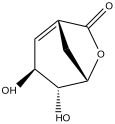
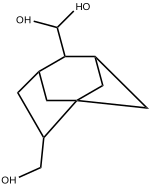
One of the speakers made a very persuasive case based in part on e.g. the following three molecules which are discussed in the first article[1] (the compound numbers are taken from there). The question was posed at our meeting: why did the referees not query these structures? And the answer in part is to provide referees with access to the full/primary/raw NMR data (which almost invariably they currently do not have) to help them check on the peaks, the purity and indeed the assignments. I am sure tools that do this automatically from such supplied data by machines on a routine basis do exist in industry (and which is something FAIR is designed to enable). Perhaps there are open source versions available?
| 17 | 18 | 19 |
|---|---|---|
 |
 |
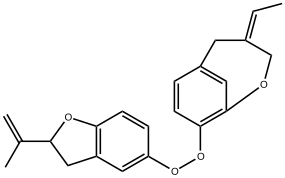 |
| 328[3] | 348 | 713 |
Here I suggest a particularly simple and rapid “reality check” which I occasionally use myself. This is to compute the steric energy of the molecule using molecular mechanics. The mechanics method is basically a summation of simple terms such as the bond length, bond angle, torsion angle, a term which models non bonded repulsions, dispersion attractions and electrostatic contributions. The first three are close to zero for an unstrained molecule (by definition). The last three terms can be negative or positive, but unless the molecule is protein sized, they also do not depart far from zero. A suitable free tool that packages all this up is Avogadro.
The procedure is as follows
- Start from the Chemdraw representation of the molecule. If the publishing authors have been FAIR, you might be able to acquire that from their deposited data. Otherwise, redraw it yourself and save as e.g. a molfile or Chemdraw .cdxml file.
- Drop into Avogadro, which will build a 3D model for you using stereochemical information present in the Chemdraw or Molfile.
- In the E tool (at the top on the left of the Avogadro menu) select e.g. the MMFF94 force field. This is a good one to use for “organic” molecules for which the total steric energy for “normal” molecules is likely to be < 200 kJ. Calculate that for your system; this normally takes less than one minute to complete. The values obtained for the three above are shown in the table. All three are well over 200 kJ/mol, which should set alarm bells ringing.
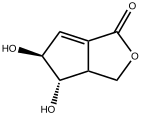
- A “more reasonable” structure for 17 is shown below. This has a steric energy of 152 kJ/mol, some 176 kJ/mol lower than the original structure. This does not of itself “prove” this alternative, but it is a starting point for showing it might be correct.
 Of course mis-assigned but otherwise reasonable structures are unlikely to be revealed by the steric energy test. But impossible ones will probably always be flagged as such using this procedure.
Postscript: Hot on the heels of writing this, the molecule Populusone came to my attention.[4] On first sight, it seems to have some of the attributes of an “impossible molecule” (click on diagram below for 3D coordinates).
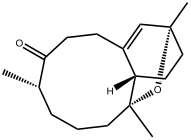
However, it has been fully characterised by x-ray analysis! The steric energy using the method above comes out at 384 kJ/mol, which in the region of impossibility! This can be decomposed into the following components: bond stretch 30, bend 51, torsion 32, van der Waals (including repulsions) 177, electrostatics 87 (+ some minor cross terms). These are fairly evenly distributed, with internal steric repulsions clearly the largest contributor. The C=C double bond is hardly distorted however, which is in its favour. Clearly a natural product can indeed load up the unfavourable interactions, and this one must be close to the record of the most intrinsically unstable natural product known!
References
- J.B. McAlpine, S. Chen, A. Kutateladze, J.B. MacMillan, G. Appendino, A. Barison, M.A. Beniddir, M.W. Biavatti, S. Bluml, A. Boufridi, M.S. Butler, R.J. Capon, Y.H. Choi, D. Coppage, P. Crews, M.T. Crimmins, M. Csete, P. Dewapriya, J.M. Egan, M.J. Garson, G. Genta-Jouve, W.H. Gerwick, H. Gross, M.K. Harper, P. Hermanto, J.M. Hook, L. Hunter, D. Jeannerat, N. Ji, T.A. Johnson, D.G.I. Kingston, H. Koshino, H. Lee, G. Lewin, J. Li, R.G. Linington, M. Liu, K.L. McPhail, T.F. Molinski, B.S. Moore, J. Nam, R.P. Neupane, M. Niemitz, J. Nuzillard, N.H. Oberlies, F.M.M. Ocampos, G. Pan, R.J. Quinn, D.S. Reddy, J. Renault, J. Rivera-Chávez, W. Robien, C.M. Saunders, T.J. Schmidt, C. Seger, B. Shen, C. Steinbeck, H. Stuppner, S. Sturm, O. Taglialatela-Scafati, D.J. Tantillo, R. Verpoorte, B. Wang, C.M. Williams, P.G. Williams, J. Wist, J. Yue, C. Zhang, Z. Xu, C. Simmler, D.C. Lankin, J. Bisson, and G.F. Pauli, "The value of universally available raw NMR data for transparency, reproducibility, and integrity in natural product research", Natural Product Reports, vol. 36, pp. 35-107, 2019. https://doi.org/10.1039/c7np00064b
- A. Barba, S. Dominguez, C. Cobas, D.P. Martinsen, C. Romain, H.S. Rzepa, and F. Seoane, "Workflows Allowing Creation of Journal Article Supporting Information and Findable, Accessible, Interoperable, and Reusable (FAIR)-Enabled Publication of Spectroscopic Data", ACS Omega, vol. 4, pp. 3280-3286, 2019. https://doi.org/10.1021/acsomega.8b03005
- A.I. Savchenko, and C.M. Williams, "The Anti‐Bredt Red Flag! Reassignment of Neoveratrenone", European Journal of Organic Chemistry, vol. 2013, pp. 7263-7265, 2013. https://doi.org/10.1002/ejoc.201301308
- K. Liu, Y. Zhu, Y. Yan, Y. Zeng, Y. Jiao, F. Qin, J. Liu, Y. Zhang, and Y. Cheng, "Discovery of Populusone, a Skeletal Stimulator of Umbilical Cord Mesenchymal Stem Cells from <i>Populus euphratica</i> Exudates", Organic Letters, vol. 21, pp. 1837-1840, 2019. https://doi.org/10.1021/acs.orglett.9b00423
The shortest known CF…HO hydrogen bond.
March 24th, 2019There is a predilection amongst chemists for collecting records; one common theme is the length of particular bonds, either the shortest or the longest. A particularly baffling type of bond is that between the very electronegative F atom and an acid hydrogen atom such as that in OH. Thus short C-N…HO hydrogen bonds are extremely common, as are C-O…HO.‡ But F atoms in C-F bonds are largely thought to be inert to hydrogen bonding, as indicated by the use of fluorine in many pharmaceuticals as inert isosteres.[1] Here I do an up-to-date search of the CSD crystal structure database, which is now on the verge of accumulating 1 million entries, to see if any strong C-F…HO hydrogen bonding may have been recently discovered.
The search query uses the CF…HO distance as one variable, and the C-F-H angle as the second. The first diagram shows just intermolecular interactions, up to a distance of 2.7Å which is the sum of the van der Waals radii of the two elements. The hot spot occurs at this value, and an angle of ~95°.
 The intra-molecular plot shows a similar value for the most common F…H distance, with the interesting variation that the angle subtended at F is about 80°.
 The outlier at the short end of the spectrum (arrow) was observed in 2014[2] with the structure shown below. It is indeed the current record holder by some margin! This length by the way is however a great deal longer than the shortest O…HO hydrogen bonds, which can be in the region of 1.2Å (with the proton sometimes symmetrically disposed between the two oxygen atoms). The value is also very similar to the record holder for the shortest C-H…H-C interaction.
It is always useful to check up on crystallographic hydrogen atom positions using a quantum calculation, so here is one at the ωB97XD/Def2-TZVPP level (Data DOI: 10.14469/hpc/5131) which replicates the values nicely.

ωB97XD/Def2-TZVPP Calculation
A QTAIM analysis of the critical points shows that the F…H BCP has a high value of ρ(r) (most hydrogen bonds only reach about 0.03 au).

NBO analysis indicates the E(2) perturbation energy for donation from an F lone pair into the H-O σ* orbital is 21.2 kcal/mol, which indicates a strong H-bond (typical C-O…HO values are 18-22 kcal/mol). The F…H bond order is 0.05.
This molecule has another interesting property, also noted in the original article;[2] the shift in wavenumber of the O-H stretching vibration. Most hydrogen bonds are characterised by the shift (mostly red and recently discovered blue shifts) that occurs in the OH group when it hydrogen bonds. These shifts are typically 100-200 cm-1 but in this molecule there is no shift, which is described as “exceptional”.
The 1H NMR shift of the OH proton is observed at δ 4.8 ppm, with the value calculated here (ωB97XD/Def2-TZVPP) being 4.75 ppm. A very large H-F coupling was observed of 68 Hz, again a very high value for a “through space” hydrogen bond.
So another record for the molecule makers to try to break!
‡Respectively 7142 and 31428 intermolecular (3859 and 10602 intra) examples using the same search parameters as above, with the shortest values being ~1.28 and ~1.2Å. 

References
- S. Purser, P.R. Moore, S. Swallow, and V. Gouverneur, "Fluorine in medicinal chemistry", Chem. Soc. Rev., vol. 37, pp. 320-330, 2008. https://doi.org/10.1039/b610213c
- M.D. Struble, C. Kelly, M.A. Siegler, and T. Lectka, "Search for a Strong, Virtually “No‐Shift” Hydrogen Bond: A Cage Molecule with an Exceptional OH⋅⋅⋅F Interaction", Angewandte Chemie International Edition, vol. 53, pp. 8924-8928, 2014. https://doi.org/10.1002/anie.201403599
The Graham reaction: Deciding upon a reasonable mechanism and curly arrow representation.
February 18th, 2019Students learning organic chemistry are often asked in examinations and tutorials to devise the mechanisms (as represented by curly arrows) for the core corpus of important reactions, with the purpose of learning skills that allow them to go on to improvise mechanisms for new reactions. A common question asked by students is how should such mechanisms be presented in an exam in order to gain full credit? Alternatively, is there a single correct mechanism for any given reaction? To which the lecturer or tutor will often respond that any reasonable mechanism will receive such credit. The implication is that a mechanism is “reasonable” if it “follows the rules”. The rules are rarely declared fully, but seem to be part of the absorbed but often mysterious skill acquired in learning the subject. These rules also include those governing how the curly arrows should be drawn.† Here I explore this topic using the Graham reaction.[1]‡
I start by noting the year in which the Graham procedure was published, 1965. Although the routine representation of mechanism using curly arrows had been established for about 5-10 years by then, the quality of such representations in many articles was patchy. Thus, this one (the publisher will need payment for me to reproduce the diagram here, so I leave you to get it yourself) needs some modern tidying up. In the scheme below, I have also made a small change, using water itself as a base to remove a NH proton, rather than hydroxide anion as used in the article (I will return to the anion later). The immediate reason is that water is a much simpler molecule to use at the start of our investigation than solvated sodium hydroxide. You might want to start with comparing the mechanism above with the literature version[1] to discover any differences.
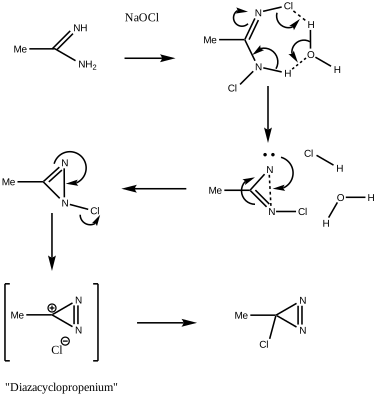
The next stage is to compute all of this using quantum mechanics, which will tell us about the energy of the system as it evolves and also identify the free energy of the transition states for the reaction. I am not going to go into any detail of how these energies are obtained, suffice to say that all the calculations can be found at the following DOI: 10.14469/hpc/5045 The results of this exercise are represented by the following alternative mechanism.♥
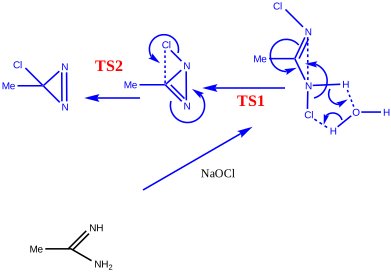
How was this new scheme obtained? The key step is locating a transition state in the energy surface, a point where the first derivatives of the energy with respect to all the 3N-6 coordinates defining the geometry (the derivative vector) are zero and where the second derivative matrix has just one negative eigenvalue (check up on your Maths for what these terms mean). Each located transition state (which is an energy maximum in just one of the 3N-6 coordinates) can be followed downhill in energy to two energy minima, one of which is declared the reactant of the reaction and the other the product, using a process known as an IRC (intrinsic reaction coordinate). The coordinates of these minima are then inspected so they can be mapped to the conventional representations shown above. New bonds in the formalism above are shown with dashed lines and have an arrow-head ending at their mid-point; breaking bonds (more generally, bonds reducing their bond order) have an arrow starting from their mid-point. The change in geometry along the IRC for TS1 can then be shown as an animation of the reaction coordinate, which you can see below.

Don’t worry too much about when bonds appear to connect or disconnect, the animation program simply uses a simple bond length rule to do this. The major difference with the original mechanism is that it is the chlorine on the nitrogen also bearing a proton that gets removed. Also, the N-N bond is formed as part of the same concerted process, rather than as a separate step.
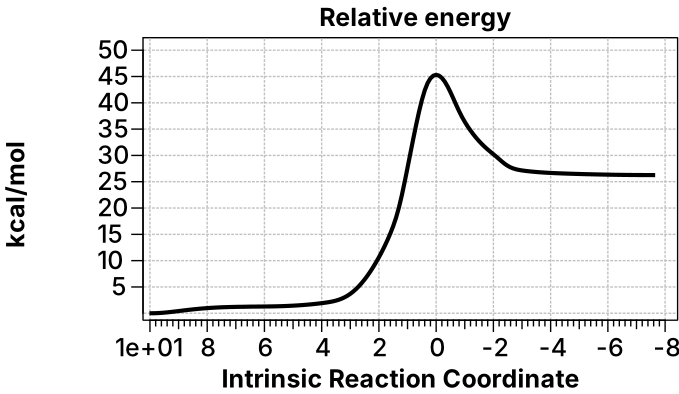
Shown above is the computed energy along the reaction path. Here a “reality check” can be carried out. The activation free energy (the difference between the transition state and the reactant) emerges as a rather unsavoury ΔG‡=40.8 kcal/mol. Why is this unsavoury? Well, according to transition state theory, the rate of a (unimolecular) reaction is given by the expression: Ln(k/T) = 23.76 – ΔG‡/RT where T is temperature (~323K in this example), R = is the gas constant and k is the unimolecular rate constant. When you solve it for ΔG‡=40.8, it turns out to be a very slow reaction indeed. More typically, a reaction that occurs in a few minutes at this sort of temperature has ΔG‡= ~15 kcal/mol. So this turns out to be an “unreasonable” mechanism, but based on the quantum mechanically predicted rate and not on the nature of the “curly arrows”. And no, one cannot do this sort of thing in an examination (not even on a mobile phone; there is no app for it, yet!) I must also mention that the “curly arrows” used in the above representation are, like the bonds, based on simple rules of connecting a breaking with a forming bond with such an arrow. There IS a method of computing both their number and their coordinates “realistically”, but I will defer this to a future post. So be patient!
The next thing to note is that the energy plot shows this stage of the reaction as being endothermic. Time to locate TS2, which it turns out corresponds to the N to C migration of the chlorine to complete the Graham reaction. As it happens, TS2 is computed to be 10.6 kcal/mol lower than TS1 in free energy, so it is not “rate limiting”.

To provide insight into the properties of this reaction path, a plot of the calculated dipole moment along the reaction path is shown. At the transition state (IRC value = 0), the dipole moment is a maximum, which suggests it is trying to form an ion-pair, part of which is the diazacylopropenium cation shown in the first scheme above. The ion-pair is however not fully formed, probably because it is not solvated properly.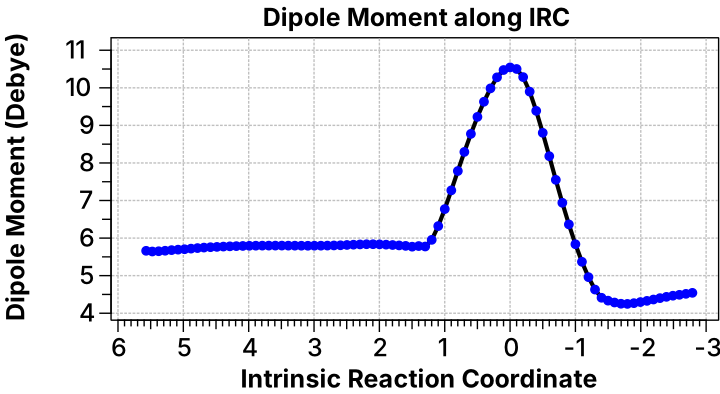
We can add the two reaction paths together to get the overall reaction energy, which is no longer endothermic but approximately thermoneutral. Things are still not quite “reasonable” because the actual reaction is exothermic.
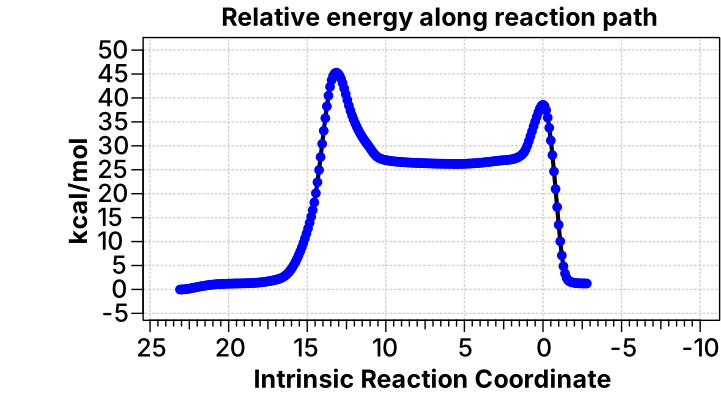
Time then to move on to hydroxide anion as the catalytic base, in the form of sodium hydroxide. To do this, we need to include lots of water molecules (here six), primarily to solvate the Na+ (shown in purple below) but also any liberated Cl–. You can see the water molecules moving around a lot as the reaction proceeds, via again TS1 to end at a similar point as before.

The energy plot is now rather different. The activation energy is now lower than the 15 kcal/mol requirement for a fast reaction; in fact ΔG‡= 9.5 kcal/mol and overall it is already showing exothermicity. What a difference replacing a proton (from water) by a sodium cation makes!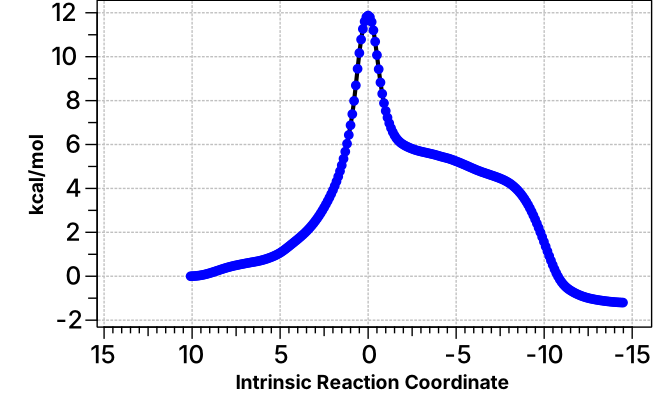
Take a look also at this dipole moment plot as the reaction proceeds! TS1 is almost entirely non-ionic!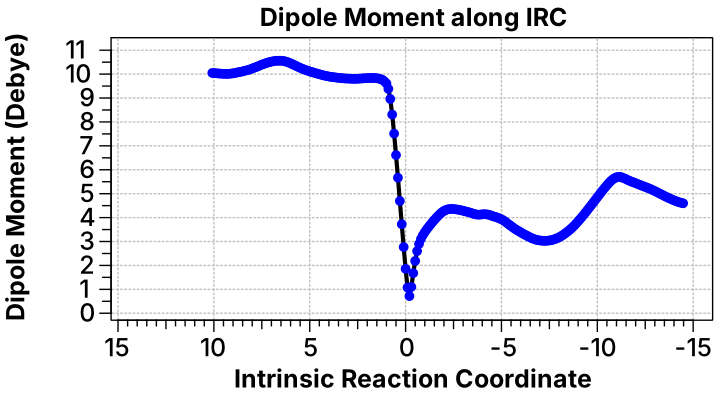
To complete the reaction, the chlorines have to rearrange. This time a rather different mode is adopted, as shown below, termed an Sn2′ reaction. The energy of TS2′ is again lower than TS1, by 9.2 kcal/mol. Again no explicit diazacylopropenium cation-anion pair (an aromatic 4n+2, n=0 Hückel system) is formed.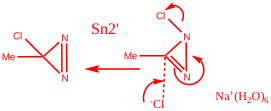


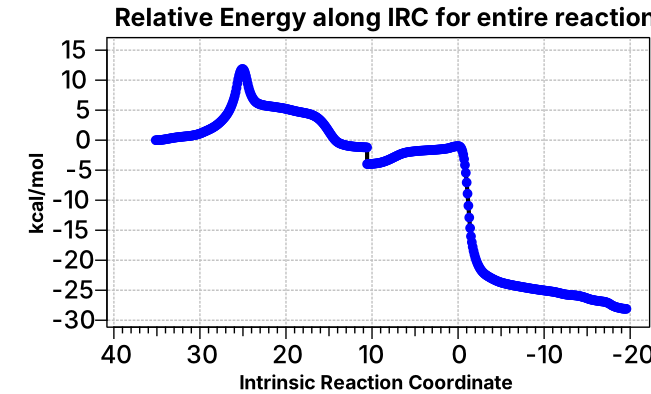
Combing both stages of the reaction as before. The discontinuity in the centre is due to further solvent reorganisation not picked up at the ends of the two individual IRCs which were joined to make this plot. Note also that the reaction is now appropriately exothermic overall.
So what have we learnt?
- That a “reasonable” mechanism as shown in a journal article, and perhaps reproduced in a text-book, lecture or tutorial notes or even an examination, can be subjected in a non-arbitrary manner to a reality check using modern quantum mechanical calculations.
- For the Graham reaction, this results in a somewhat different pathway for the reaction compared to the original suggestion.
- In particular, the removal of chlorine occurs from the same nitrogen as the initial deprotonation
- This process does not result in an intermediate nitrene being formed, rather the chlorine removal is concerted with N-N bond formation.
- The resulting 1-chloro-1H-diazirine does not directly ionize to form a diazacyclopropenium cation-chloride anion ion pair, but instead can undertake an Sn2′ reaction to form the final 3-chloro-3-methyl-3H-diazirine.
- A simple change in the conditions, such as replacing water as a catalytic agent with Na+OH–(5H2O) can have a large impact on the energetics and indeed pathways involved. In this case, the reaction is conducted in NaOCl or NaOBr solutions, for which the pH is ~13.5,♣ indicating [OH–] is ~0.3M.
- The curly arrows here are “reasonable” for the computed pathway, but are determined by some simple formalisms which I have adopted (such as terminating an arrow-head at the mid-point of a newly forming bond). As I hinted above, these curly arrows can also be subjected to quantum mechanical scrutiny and I hope to illustrate this process in a future post.
But do not think I am suggesting here that this is the “correct” mechanism, it is merely one mechanism for which the relative energies of the various postulated species involved have been calculated relatively accurately. It does not preclude that other, perhaps different, routes could be identified in the future where the energetics of the process are even lower.
†This blog is inspired by the two students who recently asked such questions. ‡In fact, you also have to acquire this completely unrelated article[2] for reasons I leave you to discover yourself. ♥You might want to consider the merits or demerits of an alternative way of showing the curly arrows. Is this representation “more reasonable”? 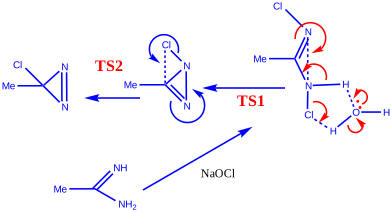 ♣I thank Ed Smith for measuring this value for NaOBr and for suggesting the Graham reaction in the first place as an interesting one to model.
References
- W.H. Graham, "The Halogenation of Amidines. I. Synthesis of 3-Halo- and Other Negatively Substituted Diazirines<sup>1</sup>", Journal of the American Chemical Society, vol. 87, pp. 4396-4397, 1965. https://doi.org/10.1021/ja00947a040
- E.W. Abel, B.C. Crosse, and D.B. Brady, "Trimeric Alkylthiotricarbonyls of Manganese and Rhenium", Journal of the American Chemical Society, vol. 87, pp. 4397-4398, 1965. https://doi.org/10.1021/ja00947a041
"Richer metadata makes content more useful"
February 16th, 2019The title of this post comes from the site www.crossref.org/members/prep/ Here you can explore how your favourite publisher of scientific articles exposes metadata for their journal.
Firstly, a reminder that when an article is published, the publisher collects information about the article (the “metadata”) and registers this information with CrossRef in exchange for a DOI. This metadata in turn is used to power e.g. a search engine which allows “rich” or “deep” searching of the articles to be undertaken. There is also what is called an API (Application Programmer Interface) which allows services to be built offering deeper insights into what are referred to as scientific objects. One such service is “Event Data“, which attempts to create links between various research objects such as publications, citations, data and even commentaries in social media. A live feed can be seen here.
So here are the results for the metadata provided by six publishers familiar to most chemists, with categories including;
- References
- Open References
- ORCID IDs
- Text mining URLs
- Abstracts

RSC

ACS

Elsevier

Springer-Nature

Wiley

Science
One immediately notices the large differences between publishers. Thus most have 0% metadata for the article abstracts, but one (the RSC) has 87%! Another striking difference is those that support open references (OpenCitations). The RSC and Springer Nature are 99-100% compliant whilst the ACS is 0%. Yet another variation is the adoption of the ORCID (Open Researcher and Collaborator Identifier), where the learned society publishers (RSC, ACS) achieve > 80%, but the commercial publishers are in the lower range of 20-49%.
To me the most intriguing was the Text mining URLs. From the help pages, “The Crossref REST API can be used by researchers to locate the full text of content across publisher sites. Publishers register these URLs – often including multiple links for different formats such as PDF or XML – and researchers can request them programatically“. Here the RSC is at 0%, ACS is at 8% but the commercial publishers are 80+%. I tried to find out more at e.g. https://www.springernature.com/gp/researchers/text-and-data-mining but the site was down when I tried. This can be quite a controversial area. Sometimes the publisher exerts strict control over how the text mining can be carried out and how any results can be disseminated. Aaron Swartz famously fell foul of this.
I am intrigued as to how, as a reader with no particular pre-assembled toolkit for text mining, I can use this metadata provided by the publishers to enhance my science. After all, 80+% of articles with some of the publishers apparently have a mining URL that I could use programmatically. If anyone reading this can send some examples of the process, I would be very grateful.
Finally I note the absence of any metadata in the above categories relating to FAIR data. Such data also has the potential for programmatic procedures to retrieve and re-use it (some examples are available here[1]), but apparently publishers do not (yet) collect metadata relating to FAIR. Hopefully they soon will.
References
- A. Barba, S. Dominguez, C. Cobas, D.P. Martinsen, C. Romain, H.S. Rzepa, and F. Seoane, "Workflows Allowing Creation of Journal Article Supporting Information and Findable, Accessible, Interoperable, and Reusable (FAIR)-Enabled Publication of Spectroscopic Data", ACS Omega, vol. 4, pp. 3280-3286, 2019. https://doi.org/10.1021/acsomega.8b03005
“Richer metadata makes content more useful”
February 16th, 2019The title of this post comes from the site www.crossref.org/members/prep/ Here you can explore how your favourite publisher of scientific articles exposes metadata for their journal.
Firstly, a reminder that when an article is published, the publisher collects information about the article (the “metadata”) and registers this information with CrossRef in exchange for a DOI. This metadata in turn is used to power e.g. a search engine which allows “rich” or “deep” searching of the articles to be undertaken. There is also what is called an API (Application Programmer Interface) which allows services to be built offering deeper insights into what are referred to as scientific objects. One such service is “Event Data“, which attempts to create links between various research objects such as publications, citations, data and even commentaries in social media. A live feed can be seen here.
So here are the results for the metadata provided by six publishers familiar to most chemists, with categories including;
- References
- Open References
- ORCID IDs
- Text mining URLs
- Abstracts

RSC

ACS

Elsevier

Springer-Nature

Wiley

Science
One immediately notices the large differences between publishers. Thus most have 0% metadata for the article abstracts, but one (the RSC) has 87%! Another striking difference is those that support open references (OpenCitations). The RSC and Springer Nature are 99-100% compliant whilst the ACS is 0%. Yet another variation is the adoption of the ORCID (Open Researcher and Collaborator Identifier), where the learned society publishers (RSC, ACS) achieve > 80%, but the commercial publishers are in the lower range of 20-49%.
To me the most intriguing was the Text mining URLs. From the help pages, “The Crossref REST API can be used by researchers to locate the full text of content across publisher sites. Publishers register these URLs – often including multiple links for different formats such as PDF or XML – and researchers can request them programatically“. Here the RSC is at 0%, ACS is at 8% but the commercial publishers are 80+%. I tried to find out more at e.g. https://www.springernature.com/gp/researchers/text-and-data-mining but the site was down when I tried. This can be quite a controversial area. Sometimes the publisher exerts strict control over how the text mining can be carried out and how any results can be disseminated. Aaron Swartz famously fell foul of this.
I am intrigued as to how, as a reader with no particular pre-assembled toolkit for text mining, I can use this metadata provided by the publishers to enhance my science. After all, 80+% of articles with some of the publishers apparently have a mining URL that I could use programmatically. If anyone reading this can send some examples of the process, I would be very grateful.
Finally I note the absence of any metadata in the above categories relating to FAIR data. Such data also has the potential for programmatic procedures to retrieve and re-use it (some examples are available here[1]), but apparently publishers do not (yet) collect metadata relating to FAIR. Hopefully they soon will.
References
- A. Barba, S. Dominguez, C. Cobas, D.P. Martinsen, C. Romain, H.S. Rzepa, and F. Seoane, "Workflows Allowing Creation of Journal Article Supporting Information and Findable, Accessible, Interoperable, and Reusable (FAIR)-Enabled Publication of Spectroscopic Data", ACS Omega, vol. 4, pp. 3280-3286, 2019. https://doi.org/10.1021/acsomega.8b03005
The Chemistry of the Book of Kells
January 22nd, 2019The Book of Kells is a spectacularly illuminated gospel manuscript dating from around 800AD and held in Trinity College library in Dublin. Some idea of the colours achieved can be seen below.


I thought it would be of interest to list how these colours were achieved.
- Black ink was made from oak-galls mixed with iron sulfate and acetic acid from wine or vinegar. Carbon-black ink was used less frequently
- Greens made by mixing arsenic sulfide and indigo (extracted from the Woad plant) or using verdigris, which is a copper carbonate or chloride.
- Red dots were made from red lead, or Pb3O4.
- Blue used indigo, not lapis lazuli.
- White was gypsum or calcium sulfate.
- Yellow was arsenic sulfide, known as auripigmentum since it had a lustrous golden quality.
- Purple came from a lichen (Roccella tinctoria) which is better known to chemists as a source of litmus; the basic chromophore of which is 7-hydroxyphenoxazone.
If you ever visit Dublin, do go and see the manuscript for yourself.
Free energy relationships and their linearity: a test example.
January 13th, 2019Linear free energy relationships (LFER) are associated with the dawn of physical organic chemistry in the late 1930s and its objectives in understanding chemical reactivity as measured by reaction rates and equilibria.
The Hammett equation is the best known of the LFERs, albeit derived “intuitively”. It is normally applied to the kinetics of aromatic electrophilic substitution reactions and is expressed as;
log KR/K0 = σRρ (for equilibria) and extended to log kR/k0 = σRρ for rates.
The equilibrium constants are normally derived from the ionisation of substituted benzoic acids, with K0 being that for benzoic acid itself and KR that of a substituted benzoic acid, with σR being known as the substituent constant and ρ the reaction constant. The concept involved obtaining the substituent constants by measuring the ionisation equilibria. The value of σR is then assumed to be transferable to the rates of reaction, where the values can be used to obtain reaction constants for a given reaction. The latter would then be assumed to give insight into the electronic nature of the transition state for that reaction.
The term log kR/k0 (the ratio of rates of reaction) can be related to ΔΔG = -RT ln kR/k0 and this latter quantity can be readily obtained from quantum calculations, where ΔΔG is the difference in computed reaction activation free energies for two substituents (of which one might be R=H). The most interesting such Hammett plots are the ones where a discontinuity becomes apparent. The plot comprises two separate linear relationships, but with different slopes. This is normally taken to indicate a change of mechanism, on the assumption that the two mechanisms will have different responses to substituents.
A test of this is available via the calculated activations energies for acid catalyzed cyclocondensation to give furanochromanes[1] which is a two-step reaction involving two transition states TS1 and TS2, either of which could be rate determining. A change from one to the other would constitute a change in mechanism. In this example, TS1 involves creation of a carbocationic centre which can be stabilized by the substituent on the Ar group; TS2 involves the quenching of the carbocation by a nucleophilic oxygen and hence might be expected to respond differently to the substituents on Ar. As it happens, the reaction coordinate for TS2 is not entirely trivial, since it also includes an accompanying proton transfer which might perturb the mechanism.
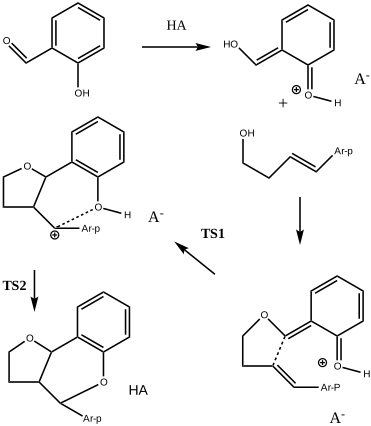
Fortunately for this reaction we have available full FAIR data (DOI: 10.14469/hpc/3943), which includes not only the computed free energies for both sets of transition states but also the entropy-free enthalpies for comparison. This allows the table below to be generated. For each substituent, the highest energy point is in bold, indicating the rate limiting step. The span of substituents corresponds to a range of rate constants of almost 1010, which in fact is rarely if ever achievable experimentally.
|
Highest free energy overall route for HCl catalysed mechanism, trans stereochemistry |
|||||
|---|---|---|---|---|---|
| Sub | ΔH‡/ΔG‡ | Reactant | ΔH‡/ΔG‡, TS1 | ΔH‡/ΔG‡, TS2 | RDS |
| p-NH2 | 0.2/6.36 | 0.0/0.0 | 0.15/4.0 | 0.2/6.4 | TS2/TS2 |
| p-OMe | 2.7/8.48 | 0.0/0.0 | 2.7/8.45 | 2.1/8.48 | TS1/TS2 |
| p-Me | 5.5/10.00 | 0.0/0.0 | 5.5/9.9 | 3.9/10.00 | TS1/TS2 |
| p-Cl | 7.7/12.28 | 0.0/0.0 | 7.7/12.28 | 5.9/11.84 | TS1/TS1 |
| p-H | 7.6/13.01 | 0.0/0.0 | 7.6/13.01 | 5.5/11.51 | TS1/TS1 |
| p-CN | 10.6/18.02 | 0.0/0.0 | 10.6 /17.61 | 10.5/18.02 | TS1/TS2 |
| p-NO2 | 12.4/19.85 | 0.0/0.0 | 12.4/18.24 | 12.0/19.85 | TS1/TS2 |
For the free energies, you can see that TS2 is the rate limiting step for the first two electron donating substituents, and the last two electron withdrawing ones, whilst TS1 represents the rate limiting step for the middle substituents. This represents two changes of rate limiting step over the entire range of substituents. A different picture emerges if only the enthalpies are used. Now TS1 is rate limiting for essentially all the substituents. The difference of course arises because of significant changes to the entropy of the transition states. The Hammett equation, and its use of σR constants to try to infer the electronic response of a reaction mechanism, does not really factor in entropic responses. Nor is it often if at all applied using a really wide range of substituents. So any linearity or indeed non-linearity in Hammett plots may correspond only very loosely to the underlying mechanisms involved.
Starting in the 1940s and lasting perhaps 40-50 years, thousands of different reaction mechanisms were subjected to the Hammett treatment during the golden era of physical organic chemistry, but very few have been followed up by exploring the computed free energies, as set out above. One wonders how many of the original interpretations will fully withstand such new scrutiny and in general how influential the role of entropy is.
References
- C.D. Nielsen, W.J. Mooij, D. Sale, H.S. Rzepa, J. Burés, and A.C. Spivey, "Reversibility and reactivity in an acid catalyzed cyclocondensation to give furanochromanes – a reaction at the ‘oxonium-Prins’ <i>vs.</i> ‘<i>ortho</i>-quinone methide cycloaddition’ mechanistic nexus", Chemical Science, vol. 10, pp. 406-412, 2019. https://doi.org/10.1039/c8sc04302g
Dispersion-induced triplet aromatisation?
January 3rd, 2019There is emerging interest in cyclic conjugated molecules that happen to have triplet spin states and which might be expected to follow a 4n rule for aromaticity.[1] The simplest such system would be the triplet state of cyclobutadiene, for which a non or anti-aromatic singlet state is always found to be lower in energy. Here I explore some crystal structures containing this motif for possible insights.
My search query is shown below, and the search is constrained so that the four substituents are Si, C or H.

The results show three clusters. The top left and bottom right have one long bond length ~1.6Å and the other much shorter at ~1.35Å (Δr ~0.25Å) The central region contains two examples, 2 where the difference between the two lengths is rather smaller and 1 where they are equal.
The first example 1[2] is in fact the di-anion of cyclobutadiene and as a 6π aromatic, one indeed expects the C-C bonds to be equal in length. The second 2 is tetra t-butylcyclobutadiene as reported in 1983.[3] At room temperature the two C-C bond lengths are 1.464 and 1.483Å, at -30°C, 1.466 and 1.492Å and at -150°C 1.441 and 1.526Å (Δr 0.085Å). These results led to the conclusion that this species was not intrinsically square but rectangular, as expected of singlet cyclobutadiene. The equalisation was attributed to equal populations of two disordered rectangular orientations averaging to an approximately square shape at higher temperatures.
But why is the behaviour of this particular cyclobutadiene different from the others in the plot above? Perhaps the answer lies these in the results of the Schreiner group[4], in which the dispersion attractions of substituents such as t-butyl can have substantial and often unexpected effects on the structures of molecules. So it is reasonable to pose the question; could the room temperature bond length differences of 2 be smaller compared with the other more extreme examples as a result of dispersion effects?
Here I have computed the singlet geometry of tetra t-butylcyclobutadiene at the B3LYP+D3BJ/Def2-TZVPP level (i.e. using the D3BJ dispersion correction, FAIR data DOI: 10.14469/hpc/4924). Δr for this singlet state is 0.264Å, larger than apparently from the crystal structure, but in agreement with the other crystal results as seen above.

The origins of the measured structure of 2 must be in the barrier to the automerisation of the singlet state. For normal cyclobutadienes, this must be relatively high since the transition state is presumably anti-aromatic. High enough that the averaging of the two rectangular structures is slow enough that it manifests as two different bond lengths. But in 2, as the temperature of the crystal increases, the bonds become more equal, suggesting a lower barrier to the equalisation than the other examples. This is also supported by the apparent identification of a triplet square state for the tetra-TMS analogue of tetra-tert-butyl cyclobutadiene derivative [5] which again suggests that dispersion might favour a square form over the rectangular one.
To finish, I show the crystal structure search for the 8-ring homologue of cyclobutadiene, plotted for the two adjacent C-C lengths and (in colour) the dihedral angle associated with the three atoms involved and the fourth along the ring. Cluster 1 represents various boat-shaped derivatives with very different C-C bond lengths. Cluster 2 are all ionic, and as per above represent a planar 10π-electron ring. Cluster 3 are mostly “tethered” molecules in which additional rings enforce planarity.

COT
Unfortunately, none of these derivatives include tert-butyl or TMS derivatives in adjacent positions around the central ring. Perhaps octa(t-Bu)cyclo-octatetraene or its TMS analogue would be interesting molecules to try to synthesize!
References
- A. Kostenko, B. Tumanskii, Y. Kobayashi, M. Nakamoto, A. Sekiguchi, and Y. Apeloig, "Spectroscopic Observation of the Triplet Diradical State of a Cyclobutadiene", Angewandte Chemie International Edition, vol. 56, pp. 10183-10187, 2017. https://doi.org/10.1002/anie.201705228
- T. Matsuo, T. Mizue, and A. Sekiguchi, "Synthesis and Molecular Structure of a Dilithium Salt of the <i>cis</i>-Diphenylcyclobutadiene Dianion", Chemistry Letters, vol. 29, pp. 896-897, 2000. https://doi.org/10.1246/cl.2000.896
- H. Irngartinger, and M. Nixdorf, "Bonding Electron Density Distribution in Tetra‐<i>tert</i>‐butylcyclobutadiene— A Molecule with an Obviously Non‐Square Four‐Membered ring", Angewandte Chemie International Edition in English, vol. 22, pp. 403-404, 1983. https://doi.org/10.1002/anie.198304031
- S. Rösel, H. Quanz, C. Logemann, J. Becker, E. Mossou, L. Cañadillas-Delgado, E. Caldeweyher, S. Grimme, and P.R. Schreiner, "London Dispersion Enables the Shortest Intermolecular Hydrocarbon H···H Contact", Journal of the American Chemical Society, vol. 139, pp. 7428-7431, 2017. https://doi.org/10.1021/jacs.7b01879