Re-inventing the anatomy of a research article.

December 29th, 2018

The traditional structure of the research article has been honed and perfected for over 350 years by its custodians, the publishers of scientific journals. Nowadays, for some journals at least, it might be viewed as much as a profit centre as the perfected mechanism for scientific communication. Here I take a look at the components of such articles to try to envisage its future, with the focus on molecules and chemistry.

The formula which is mostly adopted by authors when they sit down to describe their chemical discoveries is more or less as follows:

  1. An introduction, setting the scene for the unfolding narrative
  2. Results. This is where much of the data from which the narrative is derived is introduced. Such data can be presented in the form of:
    • Tables
    • Figures and schemes
    • Numerical and logical data embedded in narrative text
  3. Discussion, where the models constructed from the data are illustrated and new inferences presented. Very often categories 2 and 3 are conflated into one single narrative.
  4. Conclusions, where everything is brought together to describe the essential aspects of the new science.
  5. Bibliography, where previous articles pertinent to the narrative are listed.

In the last decade or so, the management of research data has developed as a field of its own, with three phases:

  1. Setting out a data management plan at the start of the project, often a set of aspirations together with putative actions,
  2. the day-to-day management of the data as it emerges in the form of an electronic laboratory notebook (ELN),
  3. the publication of selected data from the ELN into a repository, together with the registration of metadata describing the properties of the data.

In the latter category, item 8 can be said to be a game-changer, a true disruptive influence on the entire process. The key aspect is that it constitutes independent publication of data to sit alongside the object constructed from 1-5. More disruption emerges from the open citations project, whereby category 5 above can be released by publishers to adopt its own separate existence. So now we see that of the five essential anatomic components of a research article, two are already starting to achieve their own independence. Clearly the re-invention of the anatomy of the research article is well under way already.

Next I take a look at what sorts of object might be found in category 8, drawing very much on our own experience of implementing 7 and 8 over the last twelve years or so. I start by observing that in 2 above, figures are perhaps the object most in need of disruptive re-invention. In the 1980s, authors were much taken by the introduction of colour as a means of conveying information within a figure more clearly; although the significant costs then had to be borne directly by these authors (and with a few journals this persists to this day). By the early 1990s, the introduction of the Web[1] offered new opportunities not only of colour but of an extra dimension (or at least the illusion of one) by means of introducing interactivity for three-dimensional models. Some examples resulting from combining figures from category 2 with 8 above are listed in the table below.

Examples of re-invented data objects from category 2
Example Object title Object DOI Article DOI
1 Figure 9. Catalytic cycle involving one amine …etc. 10.14469/hpc/1854 10.1039/C7SC03595K
2 FAIR Data Figure. Mechanistic insights into boron-catalysed direct amidation reactions 10.14469/hpc/4919 10.1039/C7SC03595K
3 FAIR Data table. Computed relative reaction free energies (kcal/mol-1) of Obtusallene derived oxonium and chloronium cations 10.14469/hpc/1248 10.1021/acs.joc.6b02008
4 (raw) NMR data for Epimeric Face-Selective Oxidations … 10.14469/hpc/1267 10.1021/acs.joc.6b02008
5 Bibliography 10.14469/hpc/1116 10.1021/acs.joc.6b02008

Example 1 illustrates how a figure from category 2 above can be augmented with active hyperlinks specifying the DOI of the data in category 8 from which the figure is derived, thus creating a direct and contextual connection between the research article and the research data it is based upon. These links are embedded only in the Acrobat (PDF) version of the article as part of the production process undertaken by the journal publisher. Download Figure 9 from the link here and try it for yourself or try the entire article from the journal, where more figures are so enhanced.

Example 2 takes this one stage further. The hyperlinks in the published figure in example 1 were embedded in software capable of resolving them, namely a PDF viewer. But that is all that this software allows. By relocating the hyperlink into a Web browser instead, one can add further functionality in the form of Javascripts perhaps better described as workflows (supported by browsers but not supported by Acrobat). There are three such workflows in example 2.

  • The first uses an image map to associate a region of the figure data object defined by a DOI.
  • The second interrogates the metadata specifically associated with the DOI (the same DOIs that are seen in the figure itself) to see if there is any so-called ORE metadata available (ORE= Object Re-use and Exchange). If there is, it uses this information to retrieve the data itself and pass it through to
  • the third workflow represented by a set of JavaScripts known as JSmol. These interpret the data received and construct an interactive visual 3D molecular model representing the retrieved data.

All this additional workflowed activity is implemented in a data repository. It is not impossible that it could also be implemented at the journal publisher end of things, but it is an action that would have to be supported by multiple publishers. Arguably this sort of enhancement is far better suited and more easily implemented by a specialised data publisher, i.e. a data repository.

Example 3 does the same thing for a table.

Example 4 enhances in a different manner. Conventionally NMR data is added to the supporting information file associated with a journal article, but such data is already heavily processed and interpreted. The raw instrumental data is never submitted to the journal and is pretty much always possibly only available by direct request from the original researchers (at least if the request is made whilst the original researchers are still contactable!). The data repository provides a new mechanism for making such raw instrumental (and indeed computational) data an integral part of the scientific process.

Example 5 shows how a bibliography can be linked to a secondary bibliography (citations 35 and 36 in this example in the narrative article) and perhaps in the future to Open Citations semantic searches for further cross references.

So by deconstructing the components of the standard scientific article, re-assembling some of them in a better-suited environment and then linking the two sets of components to each other, one can start to re-invent the genre and hopefully add more tools for researchers to use to benefit their basic research processes. The scope for innovation seems considerable. The issue of course is (a) whether publishers see this as a viable business model or whether they instead wish to protect their current model of the research article and whether (b) authors wish to undertake the learning curve and additional effort to go in this direction. As I have noted before, the current model is deficient in various ways; I do not think it can continue without significant reinvention for much longer. And I have to ask that if reinvention does emerge, will science be the prime beneficiary?

References

  1. H.S. Rzepa, B.J. Whitaker, and M.J. Winter, "Chemical applications of the World-Wide-Web system", Journal of the Chemical Society, Chemical Communications, pp. 1907, 1994. https://doi.org/10.1039/c39940001907
Epoxidation of ethene: a new substituent twist.

December 21st, 2018

Five years back, I speculated about the mechanism of the epoxidation of ethene by a peracid, concluding that kinetic isotope effects provided interesting evidence that this mechanism is highly asynchronous and involves a so-called “hidden intermediate”. Here I revisit this reaction in which a small change is applied to the atoms involved.

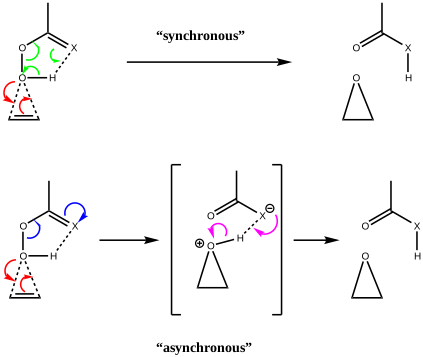
Below are two representations of the mechanism. The synchronous mechanism involves five “curly arrows”, two of which are involved in forming a bond between oxygen and carbon, and three of which transfer a proton to the group X (X=O). The second variation asynchronously stops at the half way stage to form a pseudo ion-pair (the “hidden intermediate”) and the proton transfer only occurs in the second stage. If the ethene is substituted with deuterium, experimentally an inverse kinetic isotope effect is observed, which provides strong evidence that at the transition state, no proton transfer is occurring

Before I go on, I should say that you will not find the mechanism as shown in either variation above in very many text books, which tend to practice “curly arrow economy” by employing only four arrows. I will not pursue this aspect here, except to note that as drawn above, the synchronous mechanism resembles that of a pericyclic reaction in a variation known as coarctate, as I noted in the original post (DOI: 10.14469/hpc/4807).

Now I introduce a veritable variation into this reaction, known as Payne epoxidation[1], which replaces the peracid with a reagent generated by adding hydrogen peroxide to a nitrile to generate a transient species which can be represented by X=NH above. How does this change things? The model below also uses propene rather than ethene (M062X/Def2-TZVPPD/SCRF=dichloromethane). This transition state (ΔG298 31.3 kcal/mol) shows two C-O bond formations, and as before the proton is clearly not yet transferred to the nitrogen (X=NH). Because of this asynchrony, the reaction could also be called a coarctate pseudo-pericyclic reaction.

Asynchronous concerted mechanism. Click for 3D

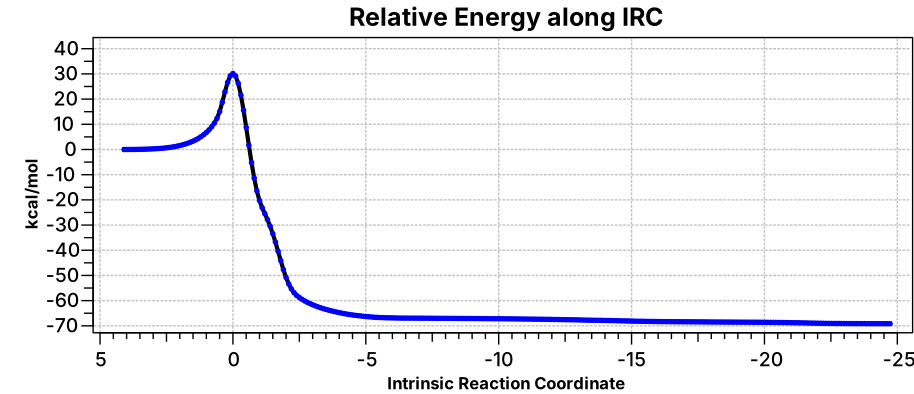
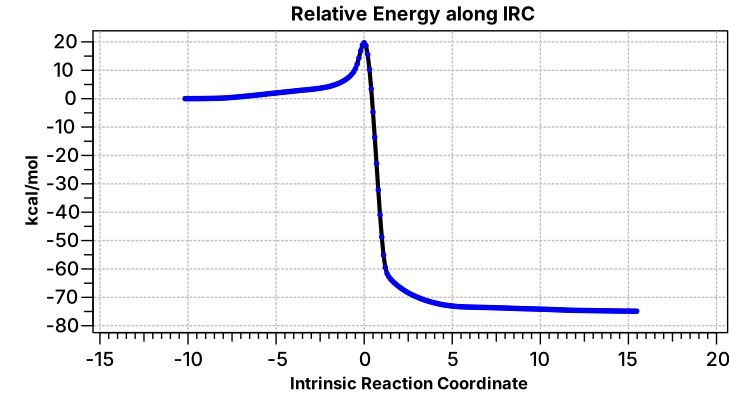
However, the proton transfer is nonetheless part of a concerted mechanism, as shown by the IRC profile.

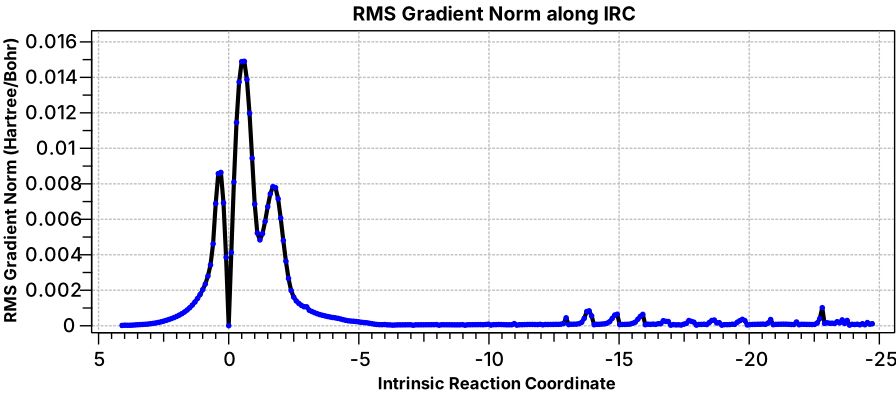
The gradient norm most clearly shows the “hidden ion-pair intermediate” at IRC = -1, and the proton transfer only occurs after this point is passed.

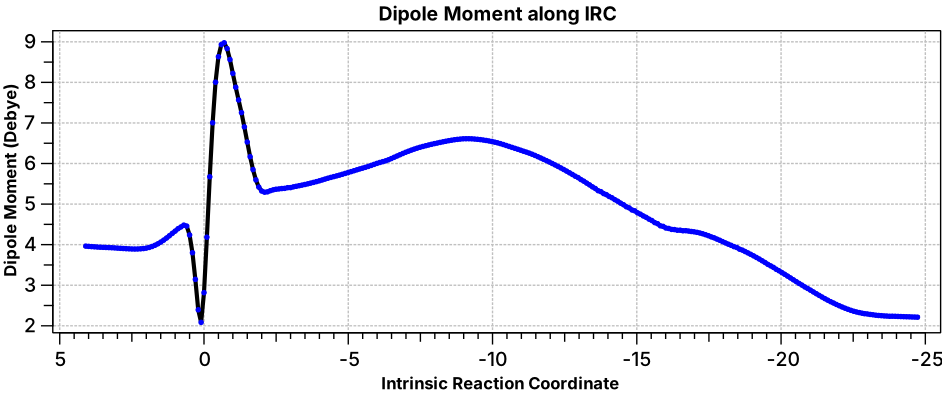
This is even more spectacularly illustrated with a plot of dipole moment along the IRC;

In truth, no real differences are yet revealed between the Payne reagent and the peracid. In fact, this is a real surprise, since the NH of the Payne reagent should be very much more basic than the carbonyl oxygen of the peracid. But more exploration of the potential energy surface reveals another transition state!

Stepwise mechanism. Click for 3D

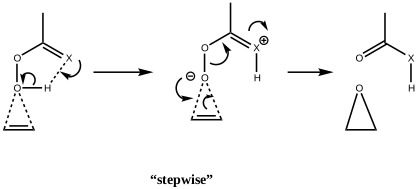
This is seen forming the two C-O bonds AFTER the proton transfer from oxygen to nitrogen. It is 4.2 kcal/mol lower than the first transition state, which corresponds to the scheme below.

The new ion-pair shown above is 7.1 kcal/mol higher than the previous reactant, but is so much more basic than before that the overall activation energy is indeed lowered. Two distinctly separate IRCs can be constructed for this alternative, the first a pure proton transfer (not shown) and the second a pure C-O bond forming process (below). This second step is both concerted and almost purely synchronous.

So now we see how a small change to the reactant molecules (X=O to X=NH) can induce a reaction for which two quite different mechanisms can operate, an asynchronous one albeit with a hidden intermediate and a fully stepwise one in which a quite different, but this time real, intermediate is involved. Nevertheless for both the peracid mechanism and the peroxyimine variation shown here, the proton transfer is NOT involved in the rate limiting step. So for this variation too, inverse kinetic isotope effects would be expected.


FAIR data for the calculations at DOI: 10.14469/hpc/4909 Thanks Ed for pointing this out.

References

  1. G.B. PAYNE, P.H. DEMING, and P.H. WILLIAMS, "Reactions of Hydrogen Peroxide. VII. Alkali-Catalyzed Epoxidation and Oxidation Using a Nitrile as Co-reactant", The Journal of Organic Chemistry, vol. 26, pp. 659-663, 1961. https://doi.org/10.1021/jo01062a004

Open Access journal publishing debates – the elephant in the room?

November 4th, 2018

For perhaps ten years now, the future of scientific publishing has been hotly debated. The traditional models are often thought to be badly broken, although convergence to a consensus of what a better model should be is not apparently close. But to my mind, much of this debate seems to miss one important point, how to publish data.

Thus, at one extreme is COAlition S, a model which promotes the key principle that “after 1 January 2020 scientific publications on the results from research funded by public grants provided by national and European research councils and funding bodies, must be published in compliant Open Access Journals or on compliant Open Access Platforms.” This includes ten principles, one of which “The ‘hybrid’ model of publishing is not compliant with the above principles” has revealed some strong dissent, as seen at forbetterscience.com/2018/09/11/response-to-plan-s-from-academic-researchers-unethical-too-risky I should explain that hybrid journals are those where the business model includes both institutional closed-access to the journal via a subscription charge paid by the library, coupled with the option for individual authors to purchase an Open Access release of an article so that it sits outside the subscription. The dissenters argue that non-OA and hybrid journals include many traditional ones, which especially in chemistry are regarded as those with the best impact factors and very much as the journals to publish in to maximise both the readership, hence the impact of the research and thus researcher’s career prospects. Thus many (not all) of the American Chemical Society (ACS) and Royal Society of Chemistry (RSC) journals currently fall into this category, as well as commercial publishers of journals such as Nature, Nature Chemistry,Science, Angew. Chemie, etc. 

So the debate is whether funded top ranking research in chemistry should in future always appear in non-hybrid OA journals (where the cost of publication is borne by article processing charges, or APCs) or in traditional subscription journals where the costs are borne by those institutions that can afford the subscription charges, but of course also limit the access.  A measure of how important and topical the debate is that there is even now a movie devoted to the topic which makes the point of how profitable commercial scientific publishing now is and hence how much resource is being diverted into these profit margins at the expense of funding basic science.

None of these debates however really takes a close look at the nature of the modern research paper. In chemistry at least, the evolution of such articles in the last 20 years (~ corresponding to the online era) has meant that whilst the size of the average article has remained static at around 10 “pages” (in quotes because of course the “page” is one of those legacy concepts related to print), another much newer component known as “Supporting information” or SI has ballooned to absurd sizes. It can reach 1000 pages[1] and there are rumours of even larger SIs. The content of SI is of course mostly data. The size is often because the data is present in visual form (think spectra). As visual information, it is not easily “inter-operable” or “accessible”. Nor is it “findable” until commercial abstracting agencies chose to index it. Searches of such indexed data are most certainly “closed” (again depending on institutional purchases of access) and not “open access”. You may recognise these attributes as those of FAIR (Findable, accessible, inter-operable and re-usable). So even if an article in chemistry is published in pure OA form, in order to get FAIR access to the data associated with the article, you will probably have to go to a non-OA resource run by a commercial organisation for profit. Thus a 10 page article might itself be OA, but the full potential of its 1000+ page data (an elephant if ever there was one) ends up being very much not OA.

You might argue that the 1000+ pages of data does not require the services of an abstracting agency to be useful. Surely a human can get all the information they want from inspecting a visual spectrum? Here I raise the future prospects of AI (artificial intelligence). The ~1000 page SI I noted above[1] includes e.g NMR spectra for around 70 compounds (I tried to count them all visually, but could not be certain I found them all). A machine, trained to identify spectra from associated metadata (a feature of FAIR), could extract vastly more information than a human could from FAIR raw data (a spectrum is already processed data, with implied information/data loss) in a given time. And for many articles, not just one. Thus FAIR data is very much targeted not only at humans but at the AI-trained machines of the future.

So I again repeat my assertion that focussing on whether an article is OA or not and whether publishing in hybrid journals is to be allowed or not by funders is missing that 100-fold bigger elephant in the room. For me, a publishing model that is fit for the future should include as a top priority a declaration of whether the data associated with it is FAIR. Thus in the Plan-S ten principles, FAIR is not mentioned at all. Only when FAIR-enabled data becomes part of the debates can we truly say that the article and its data are on its way to being properly open access.


The FAIR concept did not originally differentiate between processed data (i.e. spectra) and the underlying primary or raw data on which the processed data is based. Our own implementation of FAIR data includes both types of data; raw for machine reprocessing if required, and processed data for human interpretation. Along with a rich set of metadata, itself often created using carefully designed workflows conducted by machines.

The proportion of articles relating to chemistry which do not include some form of SI is probably low. These would include articles which simply provide a new model or interpretation of previously published data, reporting no new data of their own. A famous historical example is Michael Dewar’s re-interpretation of the structure of stipitatic acid[2] which founded the new area of non-benzenoid aromaticity.

References

  1. J.M. Lopchuk, K. Fjelbye, Y. Kawamata, L.R. Malins, C. Pan, R. Gianatassio, J. Wang, L. Prieto, J. Bradow, T.A. Brandt, M.R. Collins, J. Elleraas, J. Ewanicki, W. Farrell, O.O. Fadeyi, G.M. Gallego, J.J. Mousseau, R. Oliver, N.W. Sach, J.K. Smith, J.E. Spangler, H. Zhu, J. Zhu, and P.S. Baran, "Strain-Release Heteroatom Functionalization: Development, Scope, and Stereospecificity", Journal of the American Chemical Society, vol. 139, pp. 3209-3226, 2017. https://doi.org/10.1021/jacs.6b13229
  2. M.J.S. DEWAR, "Structure of Stipitatic Acid", Nature, vol. 155, pp. 50-51, 1945. https://doi.org/10.1038/155050b0

The history of Alizarin (and madder).

October 18th, 2018

The Royal Society of Chemistry historical group (of which I am a member) organises two or three one day meetings a year. Yesterday the October meeting covered (amongst other themes) the fascinating history of madder and its approximately synthetic equivalent alizarin. Here I add a little to the talk given by Alan Dronsfield on the synthesis of alizarin and the impact this had on the entire industry.

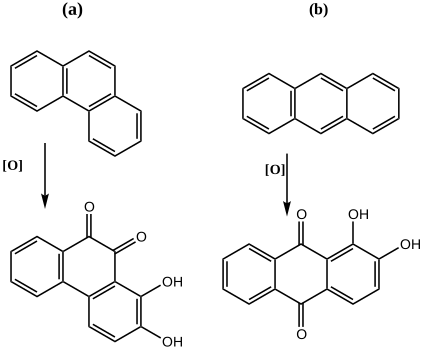
Although William Perkin famously (and accidentally) produced the first synthetic chemical dye in 1856 (Mauveine), the industry at that time was both large and dominated by dyes from natural products. Mauve was something of a niche colour; far more important was alizarin, both as a red dye (for cotton) and a red pigment (in painting) and up to 1869 it was sourced from the roots of the madder plant (which was difficult to farm) and from insects (which could be farmed). It was nonetheless expensive to produce it from either and so a race started to create it synthetically. Famously, two groups submitted patents for such a synthesis in 1869, William Perkin himself and two scientists working in BASF, Carl Graebe and Carl Liebermann.[1],[2] The latter were the winners (by one day) and they are now famed for their work (what a difference one day can make; Perkin is known for his other work, but not as much for the synthesis of alizarin). As with mauveine, the structures of these dyes were not known with certainty (or for mauveine even approximately) at the time, but Graebe and Liebermann had managed to prove that alizarin was derived from anthracene by reducing the former to the latter using zinc dust. Trouble was, the structure of anthracene itself was not certain in 1869! There were two probable candidates, (a) and (b) below.

Alan told us how Graebe and Liebermann favoured structure (a), now known as phenanthrene, rather than (b), which we recognize as anthracene. A full story is told in this PhD thesis, written in 1919 and published in 1921[3] and I can only tell a tiny bit of it here. Essentially (a) was preferred over (b) because the former could sustain three aromatic (benzene-like) rings, whereas the latter only two (p 3 of the thesis above). Years later in 1972, this concept emerged as the Clar π-sextet rule, but the idea was already more than 100 years old by then! And indeed thermodynamically, phenanthrene is more stable than anthracene. By 1872, circumstantial evidence was accumulating that in fact alizarin was derived from (b), largely via attempts to synthesize the molecule by various reactions. These often were performed at high temperatures (red-hot tubes), and we now know that many complex rearrangements can occur at such temperatures. In 1889[4], Armstrong was quoting the structure of anthracene with no doubts about its structure. However, it took another 30 years or so for an entirely unambiguous total synthesis of anthracene to be devised.[3] Also around that time the first structures based on crystallography were emerging (by William Bragg) that supported this hypothesis. Even so, the first modern crystal structure had to wait until 1950.[5]

We learn from this story that many chemical structures established during the 19th century were largely based on (admittedly a large) body of circumstantial evidence. A wonderful example of how a systematic rather than a circumstantial proof of the structure of naphthalene was established using chemical synthesis and degradations alone can be found here in the work by Armstrong. Evidence obtained from instruments was largely restricted to techniques such as thermochemistry and polarimetry in the 19th century and for the first twenty years of the 20th to e.g. infra-red spectroscopy.[6] It is remarkable then that actually, most 19th century structures have stood the test of time. Moreover, not knowing the precise structure did not prevent the processes for making them to be patented. Nowadays of course, a simple crystal structure can often be solved in a few minutes and NMR spectroscopy takes a similar amount of time. We are no longer used to waiting for years or indeed decades for structural proof!


This synthesis proved to be very expensive (requiring a step using bromine and then a second step to remove it). But shortly after, a much more efficient synthesis which dispensed with the bromine brought the cost of the dye down dramatically. The madder industry never really recovered from this blow.

References

  1. C. Graebe, and C. Liebermann, "Ueber künstliche Bildung von Alizarin", Berichte der deutschen chemischen Gesellschaft, vol. 2, pp. 14-14, 1869. https://doi.org/10.1002/cber.18690020106
  2. C. Graebe, and C. Liebermann, "Ueber künstliches Alizarin", Berichte der deutschen chemischen Gesellschaft, vol. 2, pp. 332-334, 1869. https://doi.org/10.1002/cber.186900201141
  3. C.W. Colver, and W.A. Noyes, "SYNTHESIS OF ANTHRACENE<sup>1</sup> FROM NAPHTHALENE.", Journal of the American Chemical Society, vol. 43, pp. 898-905, 1921. https://doi.org/10.1021/ja01437a023
  4. "Proceedings of the Chemical Society, Vol. 6, No. 85", Proceedings of the Chemical Society (London), vol. 6, pp. 95, 1890. https://doi.org/10.1039/pl8900600095
  5. A. McL Mathieson, J.M. Robertson, and V.C. Sinclair, "The crystal and molecular structure of anthracene. I. X-ray measurements", Acta Crystallographica, vol. 3, pp. 245-250, 1950. https://doi.org/10.1107/s0365110x50000641
  6. W.W. Coblentz, "Infra-red Absorption Spectra: I. Gases", Physical Review (Series I), vol. 20, pp. 273-291, 1905. https://doi.org/10.1103/physrevseriesi.20.273

Organocatalytic cyclopropanation of an enal: Transition state models for stereoselection.

September 30th, 2018

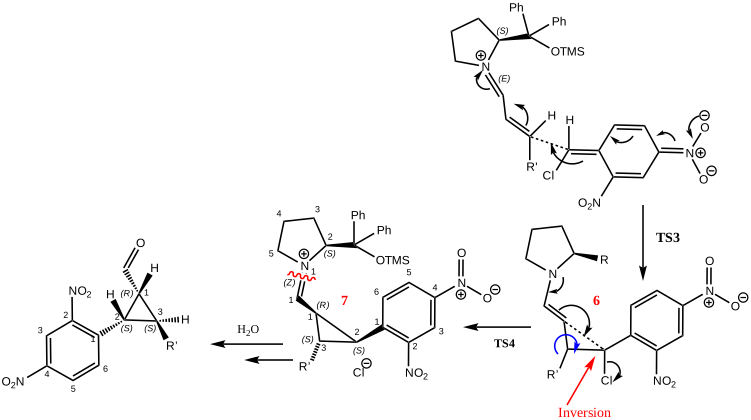
Here is the concluding part of my exploration of a recently published laboratory experiment for undergraduate students.[1] I had previously outlined a possible mechanistic route, identifying TS3 (below) as the first transition state in which C-C bond formation creates two chiral centres. This is followed by a lower energy TS4 where the final stereocentre is formed, accompanied by inversion of configuration of one of the previously formed centres (red below). Now I explore what transition state calculations have to say about the absolute configurations of the final stereocentres in the carbaldehyde product.

Previously, I had clarified that using the (S)-configuration of the prolinol catalyst results in the major stereochemical isomer as (1R,2S,3S), as shown above. TS3 is now explored in more detail as four stereochemical isomers, depending on the facial selectivity of the two nominal double bonds used to create the new C-C bond (dashed line above). The subsequent step TS4 is of lower energy and hence is not rate determining in a classical sense at least. It involves inversion of configuration to eliminate the chlorine to form the second C-C bond. Then a last tidying up step where the imine is hydrolysed down to the carbaldehyde, a process in which no stereocentres are involved. The computational method used is as before, B3LYP+GD3BJ/6-311G(d,p)/SCRF=chloroform and T=273.15K. This selection is so that a good quality recent dispersion correction (GD3BJ) can be used, since dispersion attractions in large part often control stereochemical outcomes.

The results are summarised below for two models; (a) a partial model in which the products of the first steps of the reaction, namely water and amine base, are excluded; (b) a fuller model in which both water and amine base are allowed to interact with the transition state. The R’ group (Me replacing heptyl) is placed trans to the en-iminium group for the four transition states arising from facial selectivity. Two more are derived from bond rotation (blue above) to place the R’ group cis to the iminium group.

Transition state models.

Stereochem

of product[1]

ΔΔG273
Model (a)
kcal/mol
ΔΔG273
Model (b)
kcal/mol

TS3

(click for model)

(1R,2S,3S) ≡ 4a

major” isomer

0.0 0.0

(1S,2S,3R)

middle isomer?

6.8 0.3

(1S,2S,3S) = 4b 

“middle” isomer

7.9 1.8

(1R,2R,3S) ≡ 4c

minor” isomer

0.9 0.7

(1S,2R,3R)

undetected isomer

7.4 1.8

(1S,2R,3S) = 4d

undetected isomer

7.8 2.0

FAIR data DOI 10.14469/hpc/4704 The links to ΔΔG273 are to a DataCite metadata search of the free energy values for these species as described here.


The following conclusions can be drawn.

  1. The major 1R,2S,3S isomer resulting from use of (S)-chiral auxiliary agrees with experimental assignments in being the lowest in activation free energy for both models (a) and (b).
  2. Similarly the experimentally undetected 1S,2R,3R isomer 4d also has the highest activation free energy.
  3. There is however a mismatch between the experimental chiral assignment for the “middle” isomer and the calculations. The predicted stereochemistry deriving from the latter is derived from one of the four possibilities arising from Re/Si C=C facial selection when forming a bond between the two double bonds (TS3 = 1S,2S,3R). The experimental assignment[1] implies a mechanism that involves rotation about one C=C bond (and not of a C=C face), as indicated by the blue arrow in the diagram above (= 1S,2S,3S). This is not intrinsically unlikely, since in species  6, following the first C-C bond formation, the pertinent C-C bond is now closer to single than double. This implies however that stereochemistry is determined AFTER the rate limiting transition state is passed. Incorporating such a rotation into TS3 itself for such stereochemistry (1S,2S,3S) makes the free energy slightly higher than for the unrotated TS3 (1S,2S,3R). So we might conclude that the stereochemistry observed for 4b (the “middle” isomer”) could be the result of dynamic effects such as bond rotation after the rate limiting transition state is passed. It might also be that the (1S,2S,3S) stereochemistry indicated in the article[1] for 4b is mis-assigned. 
  4. The minor isomer 1R,2R,3S ≡ 4c has a relative energy in both models (a) and (b) that matches perfectly its low abundance.
  5. The undetected isomer suffers from the same issue as the middle isomer. Its stereochemistry would be 1S,2R,3R from the Re/Si C=C facial selection criterion used to construct TS3, or 1S,2R,3S as shown in the article.[1] Since it is undetected, there is no experimental data for comparison.
  6. The full model (b) appears to replicate the observed results better, in predicting three observable stereoisomers (ΔΔG ≤ 1.0 kcal/mol) and one unobserved isomer (ΔΔG ≥ 1.8 kcal/mol) This has important implications for such modelling, implying that incorporating species not directly involved in the bond making/breaking can nevertheless play a subtle role in the stereochemical outcomes.

The stereochemistry of the formation of two new stereogenic centres during the carbon-carbon bond formation by reaction between the ion-pair of an en-iminium cation and a benzylic anion using a chiral auxiliary has been modelled using a DFT theory which incorporates a good quality dispersion correction term. The very act of constructing such models forces one to inspect the stereochemistry very carefully, and for this purpose the CIP (Cahn-Ingold-Prelog) notation is invaluable. Two versions of such a model both agree on the nature of the major product of this reaction, and they also agree on what is likely to be an unobserved product. But one issue remains to be resolved, the nature of the second most abundant isomer, the “middle” product. Two of the three chiral centres present in the resulting cyclopropane derivative are introduced during the first C-C bond formation between the ion-pair, whilst the third results from a lower energy downstream final C-C coupling, accompanied by inversion of one of the previously introduced stereogenic centres due to elimination of chloride. Here, the experimentally assigned stereochemistry for the “middle” product would require bond rotation AFTER the first C-C bond formation. To computationally model that would probably require the molecular dynamics trajectories to be mapped out. But before doing this, it is worth flagging the need to carefully re-verify the experimental stereochemical assignments for this “middle” product.


Because the final product has three chiral centres, a total of eight possible stereoisomers could result, arranged as two sets of eight enantiomeric pairs depending on the chirality of the auxiliary used. The published article (caption, Figure 3) shows dihedral angles for each possible diastereomer of the cyclopropanation, accompanied by four structures. The other four isomers are enantiomers of these four. In this post, six of the eight stereoisomers possible using the S-chiral auxilliary are shown in the table above.

References

  1. M. Meazza, A. Kowalczuk, S. Watkins, S. Holland, T.A. Logothetis, and R. Rios, "Organocatalytic Cyclopropanation of (<i>E</i>)-Dec-2-enal: Synthesis, Spectral Analysis and Mechanistic Understanding", Journal of Chemical Education, vol. 95, pp. 1832-1839, 2018. https://doi.org/10.1021/acs.jchemed.7b00566

Concerted Nucleophilic Aromatic Substitution Mediated by the PhenoFluor Reagent.

September 20th, 2018

Recently, the 100th anniversary of the birth of the famous chemist Derek Barton was celebrated with a symposium. One of the many wonderful talks presented was by Tobias Ritter and entitled “Late-stage fluorination for PET imaging” and this resonated for me. The challenge is how to produce C-F bonds under mild conditions quickly so that 18F-labelled substrates can be injected for the PET imaging. Ritter has several recent articles on this theme which you should read.[1],[2]

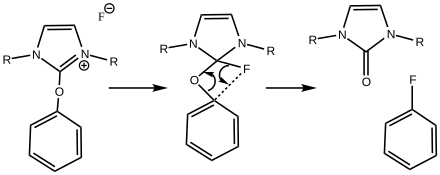
The resonance was that back in 1999 I had been collaborating with colleagues to study the mechanism of rapid fluoridation using R2IF reagents.[3]. This article, by the way, contains a very early example of the use of FAIR data (see here). A further resonance is that Ritter computes that the displacement of an aryl-O bond by a nucleophilic fluorine is a concerted process, unlike the stepwise Meisenheimer like complexes normally occurring in nucleophilic aromatic substitutions. A few years back I explored the possibility of concerted nucleophilic substitutions, finding that F in particular was very prone to such behaviour. So it is nice to see Ritter’s real-world example of such a mechanism and indeed that his reagents (PhenoFluor) represent a significant improvement on the R2IF ones we had been exploring.

To celebrate this new chemistry, I include some results of my own which augment Ritter’s. Firstly I should start with the structure of the reagent, which contains a carbon surrounded by four heteroatoms. There are few such motifs known. Thus a carbon attached to two N, one F and one O has no reported crystal structures. Relaxing the criterion to two N, one F and one other offers 71 examples, of which the most interesting are the outliers with C-F distances > 1.4Å. 

The one with the value 1.5Å (DOI: 10.5517/ccdc.csd.cc1njjg5) is probably an error, as is the one at 1.45Å[4]. So it was a surprise to find that the calculated structure of PhenoFluor (R=2,6-di-isopropyl, B3LYP+D3BJ/Def2-TZVPPD/SCRF=toluene) had a C-F distance of 1.456Å which is surely a candidate for the longest known C(sp3)-F bond. The computed Wiberg C-F bond order is 0.687, which is well reduced from a single bond order. This is probably due to strong anomeric effects from both nitrogens and the one oxygen, which “gang up” on the fluorine to weaken its bond and expel it as a nascent fluoride anion. Thus the E(2) NBO interaction energy is 25.1 kcal/mol for the N(Lp)-CFσ* interaction, which is unusually large, whereas the N(Lp)-COσ* interaction is only 9.2 kcal/mol.

The fluoridation is indeed computed as a concerted process, the IRC animation being shown below. Note that the trajectory of the F is initially away from the carbon but not towards the aryl group. Here it is simply forming a “hidden” fluoride anion intermediate. The trajectory then changes direction to attack the ipso-carbon. So it is a concerted but two-stage reaction path.

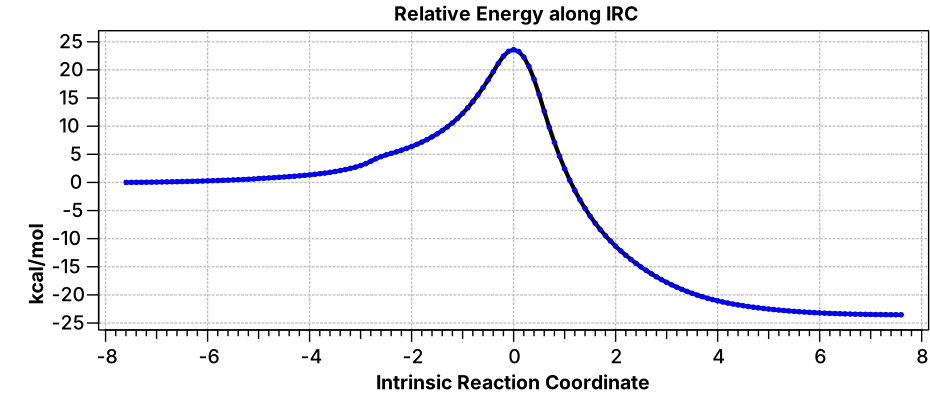
The IRC energy profile corresponds to a free energy barrier of 23 kcal/mol, as reported by Ritter. 

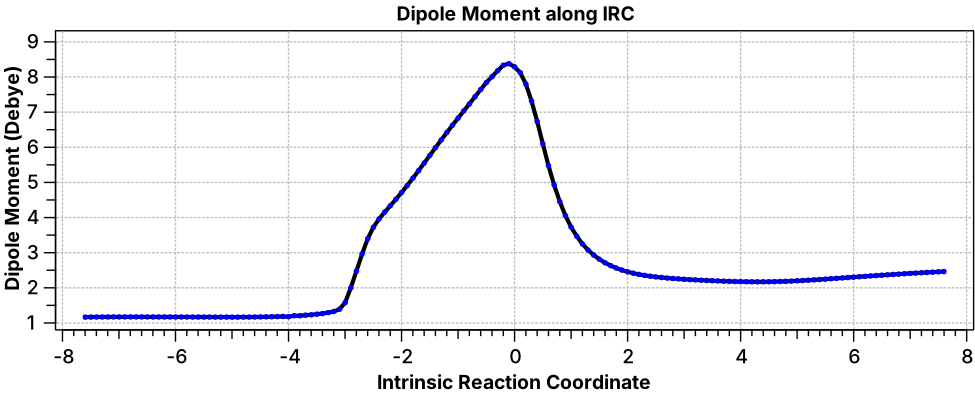
Here is a less well used property along the reaction path, the dipole moment response. This shows a very abrupt charge separation in the region of the transition state and its collapse shortly after which suggests that the reaction barrier might be sensitive to the polarity of the solvent.

The issue then arises as to how much aromatic resonance is lost at the transition state. A NICS(1) aromaticity probe placed 1Å above the centroid of the aryl ring has the value -9.3 ppm, close to the value of ~ -10ppm for benzene itself. So this relatively facile reaction is in part due to significant preservation of the aryl stabilisations by aromatic resonance.

To close, the Phenofluor reagent is commercially available as a 0.1M solution in toluene, which makes one wonder if it is possible to obtain crystals. It might be of course that when the solution is concentrated, it reverts to the iminium fluoride ion pair shown above. But if crystals are possible, then it would be interesting to verify that the C-F bond in this species is indeed unusually long, perhaps even a record holder?


The data represent an early use of the Chime plugin to present a visual 3D model. I really should re-work that page to allow use of eg JSmol, enabled here on this blog.

Excepting CF3X motifs.

FAIR data for the results reported here can be found at DOI: 10.14469/hpc/4713

References

  1. P. Tang, W. Wang, and T. Ritter, "Deoxyfluorination of Phenols", Journal of the American Chemical Society, vol. 133, pp. 11482-11484, 2011. https://doi.org/10.1021/ja2048072
  2. C.N. Neumann, and T. Ritter, "Facile C–F Bond Formation through a Concerted Nucleophilic Aromatic Substitution Mediated by the PhenoFluor Reagent", Accounts of Chemical Research, vol. 50, pp. 2822-2833, 2017. https://doi.org/10.1021/acs.accounts.7b00413
  3. M.A. Carroll, S. Martín-Santamaría, V.W. Pike, H.S. Rzepa, and D.A. Widdowson, "An ab initio and MNDO-d SCF-MO computational study of stereoelectronic control in extrusion reactions of R2I–F iodine(III) intermediates†", Journal of the Chemical Society, Perkin Transactions 2, pp. 2707-2714, 1999. https://doi.org/10.1039/a906212b
  4. T.N. Bhat, and H.L. Ammon, "Structure of N,N,N'N'-tetrakis(2-fluoro-2,2-dinitroethyl)oxamide by the consistent electron density approach", Acta Crystallographica Section C Crystal Structure Communications, vol. 46, pp. 112-116, 1990. https://doi.org/10.1107/s0108270189005044

Organocatalytic cyclopropanation of an enal: (computational) assignment of absolute configurations.

September 1st, 2018

I am exploring the fascinating diverse facets of a recently published laboratory experiment for undergraduate students.[1] Previously I looked at a possible mechanistic route for the reaction between an enal (a conjugated aldehyde-alkene) and benzyl chloride catalysed by base and a chiral amine, followed by the use of NMR coupling constants to assign relative stereochemistries. Here I take a look at some chiroptical techniques which can be used to assign absolute stereochemistries (configurations).

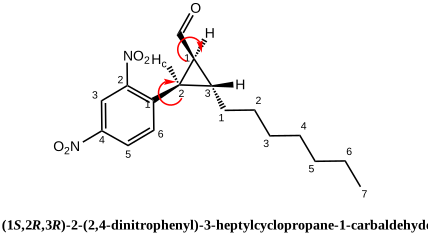
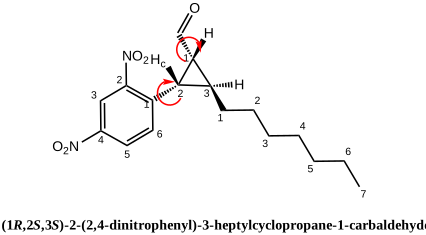
I will focus on the compound 4a, the major stereochemical product of this student laboratory reaction, with the stereochemistry as represented in e.g. the abstract of the main article[1] and shown below with added CIP (Cahn-Ingold-Prelog) notation as (1S,2R,3R);

Its enantiomer (not shown in the article) is of course;

In the article supporting information[1]), the major diasteromer of 4a deriving from use of the S stereoisomer of the prolinol catalyst is reported as having an optical rotation (ORP) [α]D25 of -62.4°, p6 or -58.1°, p5), but the stereo-labels are not added there. On  p1 (“based on a student report”) 4a was however labelled as (1R,2S,3S) and the chirality (S) of the catalyst used was also noted in the adjacent experimental procedure. One might then reasonably match (1R,2S,3S)-4a to the S-catalyst and hence (1S,2R,3R)-4a to the R-catalyst.  However, in a laboratory environment where both S and R catalysts are in circulation, it is always useful to have procedures available for independent checks.

There are two methods of assigning absolute chirality, crystallography and chiroptical spectroscopy. The former does require crystalline samples; the latter can use solutions. To cut to the chase, the former method was used for a related compound where the n-heptyl group above is replaced by a p-chlorophenyl substituent (perhaps because the latter imparts suitable crystallinity). On p S123 of the SI of an earlier article[2] the assignment for the p-chlorophenyl derivative was as (1R,2S,3S)-4a for S-catalyst (see DOI: 10.5517/ccdc.csd.cc1mcqg5 OZAXEU). But this procedure is not entirely foolproof; the stereochemistry is decided by interactions between often bulky substituents at the transition state and it might be that here the p-chlorophenyl derivative has different properties from n-heptyl. Moreover bulk solutions may be different in their composition from single crystals. So it is useful to obtain independent proof.

An absolute assignment procedure based on chiroptical methods was first famously used by Kirkwood in 1951 (the Fischer convention is confirmed as a structurally correct representation of absolute configuration).[3] Such calculations need to take into account e.g. rotational conformers about the two bonds labelled in red above. In the previous post, I had noted variation of up to 2Hz in the calculated 3JHH coupling constants as a result of this mobility. This variation is probably too small to really influence any relative stereochemical interpretations, but is the same true for chiroptical assignments?

In Table 1 we can see whether this is still true for the predicted optical rotation of compound 4a, using two different functionals for the calculation (B3LYP and M062X respectively). The results rather surprised me; a simple bond rotation of an aryl or carbonyl group can invert the sign of the rotation. Clearly the observed optical rotation of -62.4° arises from a suitable combination of different Boltzmann populations of the individual bond rotamers, but to combine these accurately you would need to know the solution populations themselves very accurately and that is quite a challenge. So at this stage, we do not really have totally convincing independent evidence of whether the observed negative optical rotation corresponds to (1S,2R,3R)-4a or to its enantiomer (1R,2S,3S).

Table 1. Calculated Optical rotations for (1S,2R,3R)-4a. 

FAIR Data DOI: 10.14469/hpc/4678

Conformer

ORP [α]D, B3LYP+GD3BJ/Def2-TZVPP/SCRF=chloroform

ORP [α]D, M062X/Def2-TZVPP/SCRF=chloroform

4 +376 +238
3 -335 -301
2 -247 -223
1 +710 +522

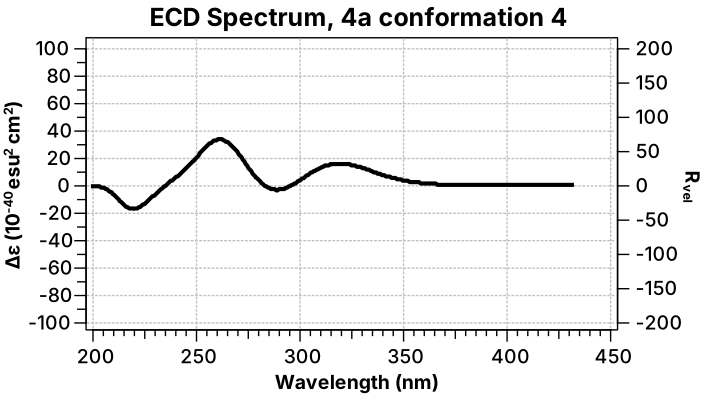
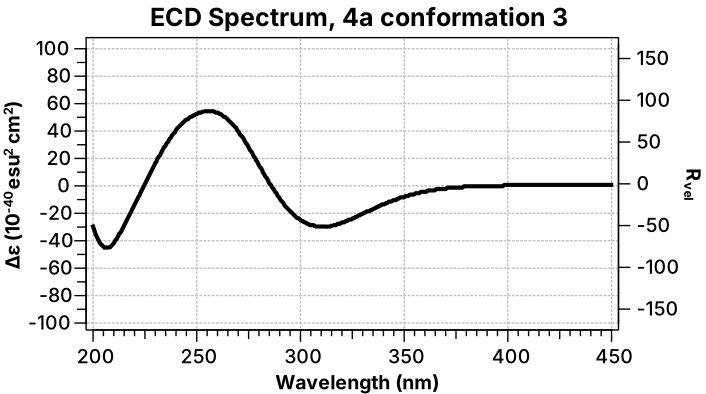
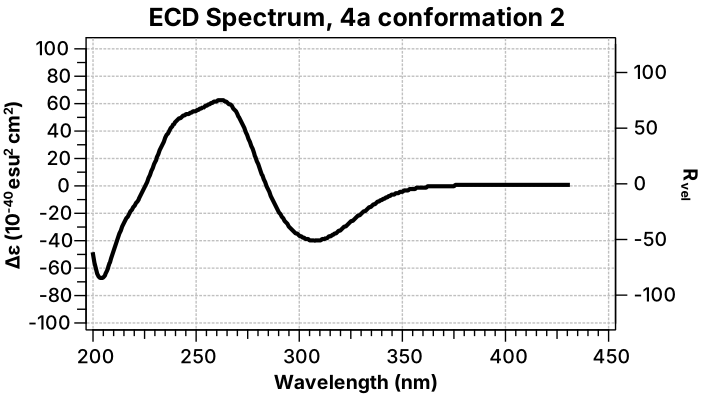
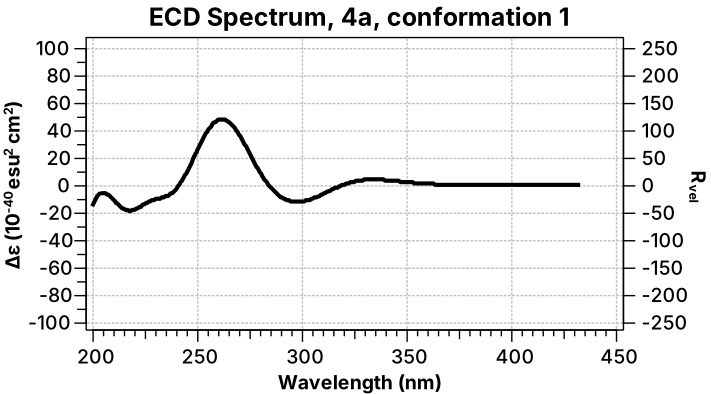
Next, another chiroptical technique, electronic circular dichroism, or ECD. Here, the sign of the difference in absorption of polarized light (Δε), and known at the Cotton effect, characterises the specific enantiomer. The experimental Cotton effect for compound 4a obtained from S-catalyst (known as 3d in the SI, p S142[2]) can be simply summarised as +ve@315nm and -ve@275nm. Comparison with calculated spectra (Figure S17, p S146-7[2])  was performed using a Boltzmann-averaging (albeit based on enthalpies rather than the formally correct free energies), for three significant populations and this procedure matched to (1R,2S,3S).  Since the reported calculations were apparently for gas phase (and replacing n-heptyl with methyl) here I have repeated them in the actual solvent used (acetonitrile) and with the heptyl present. Although the ECD responses can still be severely dependent on the conformation, three of the spectra qualitatively agree that the responses at ~300nm and 260 nm are respectively -ve and +ve. This confirms that (1S,2R,3R)-4a is the wrong enantiomer for S-catalyst and that the correct assignment is therefore (1R,2S,3S), as was indeed reported.[2]

Table 2. Calculated electronic circular dichroism for

 (1S,2R,3R)-4a. FAIR Data DOI: 10.14469/hpc/4678

Conformer

ECD calculation, ωB97XD/Def2-TZVPP

4
3
2
1

It is still true that the overall the fit between chiroptical experiment and theory can be sensitive to the Boltzmann population, as obtained from e.g. ΔΔG = -RT ln [1]/[2]), where 1 and 2 are two different conformers. ΔΔG is a difficult energy difference to compute accurately. Here is a suggested exercise in the statistics of error propagation. How does an error in ΔΔG propagate to the ratio of concentrations of two conformers [1]/[2]? Or, how accurately must ΔΔG be calculated in order to predict conformer populations to say better than 5%.

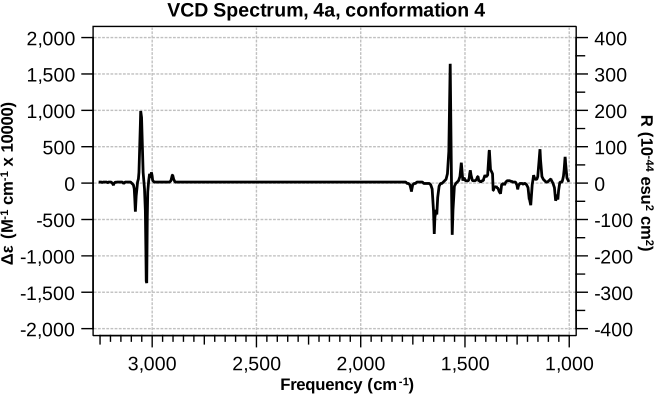
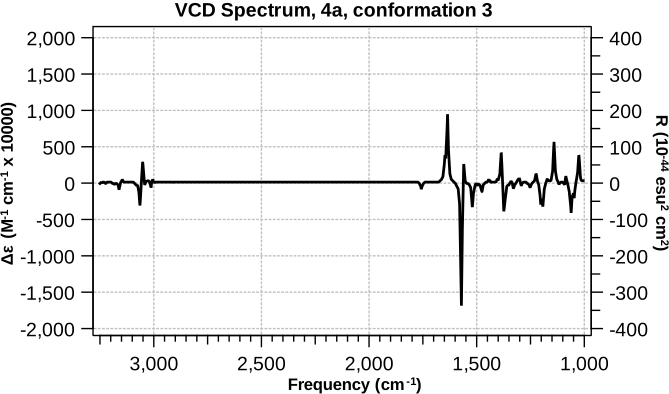
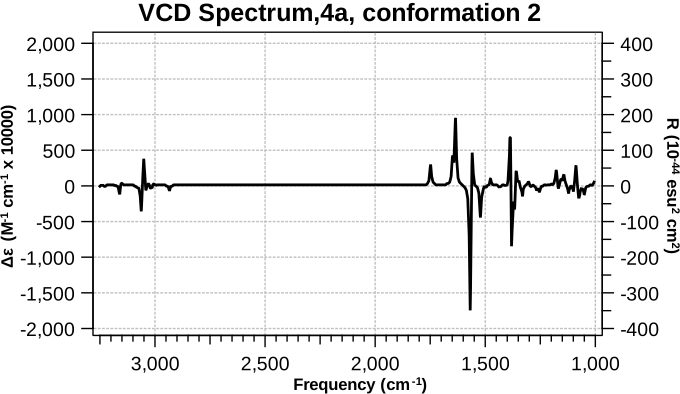
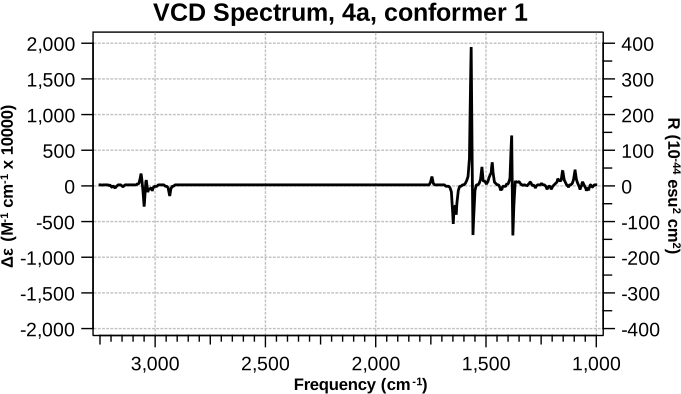
One more go at chiroptics, this time Vibrational Circular Dichroism, or VCD. The nature of the chromophore is different, but the principle is the same as ECD. I have deliberately truncated the spectrum to cut off all vibrations below 1000 cm-1 (these being the modes associated with group rotations) but to no avail, the four conformations all still look too different to avoid doing a Boltzmann averaging.

Table 3. Calculated VCD spectra for (1S,2R,3R)-4a. 

Conformer Spectrum
4
3
2
1

A modern VCD instrument does have one trick up its sleeve for coping with the conformer problem. The sample (as a thin-film) can be annealed down to very low temperatures before the spectrum is recorded. This effectively removes all higher energy forms, leaving just the most stable conformation as the only species present. However, that is an expensive experiment (and instrument!) to use.

There are perhaps some 2 million scalemic molecules (substances where one chiral form is in excess over the mirror image) for which chiroptical properties have been reported, but probably <50,000 crystal structures where absolute configurations have been assigned. Thus the vast majority of absolute configuration assignments have been done either chiroptically or by synthetic correlations (chemical transformations from molecules of known absolute configuration, with the assumption that you know how each transformation affects the chiral centres present). Given some of the difficulties and challenges noted above, it is tempting to conclude that a significant proportion of those 2 million molecules may have been mis-assigned (I once estimated up to 20%). However, we may conclude that the molecules discussed here are safely assigned correctly! 


No CIP-stereolabels appear in the article itself.[1] Perhaps this assignment is omitted in order to provide a student exercise? There are many errors in stereochemical assignments in the literature. A good many of them may be the result of simple sample mis-labelling.[4] The caption to Figure S17 states All the simulations are for the 1R,2R,3S absolute configuration. This is probably an error and should read 1R,2S,3SA correction of ~+15nm is sometimes applied to these values, but not done here.


References

  1. M. Meazza, A. Kowalczuk, S. Watkins, S. Holland, T.A. Logothetis, and R. Rios, "Organocatalytic Cyclopropanation of (<i>E</i>)-Dec-2-enal: Synthesis, Spectral Analysis and Mechanistic Understanding", Journal of Chemical Education, vol. 95, pp. 1832-1839, 2018. https://doi.org/10.1021/acs.jchemed.7b00566
  2. M. Meazza, M. Ashe, H.Y. Shin, H.S. Yang, A. Mazzanti, J.W. Yang, and R. Rios, "Enantioselective Organocatalytic Cyclopropanation of Enals Using Benzyl Chlorides", The Journal of Organic Chemistry, vol. 81, pp. 3488-3500, 2016. https://doi.org/10.1021/acs.joc.5b02801
  3. W.W. Wood, W. Fickett, and J.G. Kirkwood, "The Absolute Configuration of Optically Active Molecules", The Journal of Chemical Physics, vol. 20, pp. 561-568, 1952. https://doi.org/10.1063/1.1700491
  4. H.S. Rzepa, "The Chiro-optical Properties of a Lemniscular Octaphyrin", Organic Letters, vol. 11, 2009. https://doi.org/10.1021/ol901172g

Organocatalytic cyclopropanation of an enal: (computational) product stereochemical assignments.

August 26th, 2018

In the previous post, I investigated the mechanism of cyclopropanation of an enal using a benzylic chloride using a quantum chemistry based procedure. Here I take a look at the NMR spectra of the resulting cyclopropane products, with an evaluation of the original stereochemical assignments.[1]

Three products were identified, 4a-c (aryl=2,4-dinitro) with a fourth diastereomer undetected. The relative stereochemistries were assigned[1] on the basis of NMR coupling constants, using the empirical Karplus or Bothner-By relationships. Here I calculate the NMR couplings at the B3LYP+GD3BJ/Def2-TZVPP/SCRF=chloroform level for a comparison, using a methyl group rather than the full n-heptyl one shown above.

System, Data DOI

10.14469/hpc/4650

Gibbs Energy J1(a)-2(b) J1(a)-3(c)

J3(c)-2(b)

4a (1S,2R,3R) expt 4.9 9.0 7.5
4a calc -910.861653 4.6 9.9 8.3
-910.860816 4.4 10.7 7.9
-910.859908 4.9 10.9 7.7
-910.860299 5.2 8.1 8.1
4b (1R,2R,3R) expt 9.6 5.3 6.7
4b calc -910.859549 10.8 5.1 7.7
4c (1S,2R,3S) expt 5.4 5.4 9.9
4c calc -910.859820 4.2 5.5 10.4
4d (1R,2R,3S) expt n/a
4d calc -910.855965 10.3 9.4 9.6

The variation resulting from rotations about the substituents (the o-nitro and the carbaldehyde) as seen for 4a can be up to ~2 Hz. This could if needed be averaged by weighting with the Boltzmann populations. Even without this procedure one can see that for the three diastereomers where values were measured, the calculated couplings agree to 1 Hz or better. This provides confirmation of the original assignments. This quantum-based method can be used in cases where simple formulaic relationships may apply less well.


For four conformations, rotating the carbaldehyde and the o-nitro groups, as in red above.

References

  1. M. Meazza, A. Kowalczuk, S. Watkins, S. Holland, T.A. Logothetis, and R. Rios, "Organocatalytic Cyclopropanation of (<i>E</i>)-Dec-2-enal: Synthesis, Spectral Analysis and Mechanistic Understanding", Journal of Chemical Education, vol. 95, pp. 1832-1839, 2018. https://doi.org/10.1021/acs.jchemed.7b00566

Organocatalytic cyclopropanation of an enal: (computational) mechanistic understanding.

August 25th, 2018

Symbiosis between computation and experiment is increasingly evident in pedagogic journals such as J. Chemical Education. Thus an example of original laboratory experiments[1],[2] that later became twinned with a computational counterpart.[3] So when I spotted this recent lab experiment[4] I felt another twinning approaching.

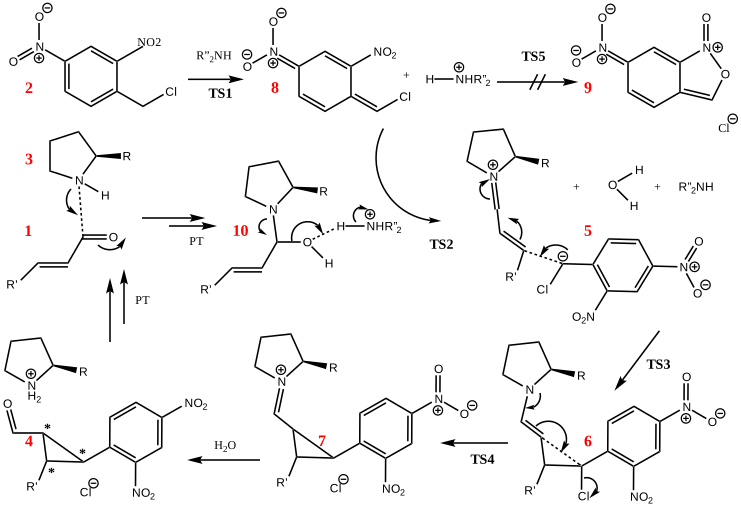
The reaction under consideration is that between dec-2-enal and 2,4-dinitrobenzyl chloride as catalysed by an α,α-diphenylprolinol trimethylsilyl ester with addition of further base (di-isopropylamine?). The proposed mechanism can be seen in figure 7 of the journal article[4] and also scheme 2 of an earlier article.[5] The following is my interpretation of their published mechanism (the compound numbering is the same as in Figure 7).

  1. The initiating step is the condensation between the alkyl enal (1) and the prolinol derivative (3), with elimination of water and the formation of a positive iminium cation (5). One might wonder at this stage what the counter ion to this cation is.
  2. 5 then reacts with 2,4-dinitrobenzyl chloride (2) with apparent elimination of HCl to form 6. This corresponds to 1,4-Michael addition to 5 with the formation of the first new  C-C bond and the creation of two new stereogenic centres.
  3. 6 then cyclises to form a second new C-C bond and a third new stereogenic centre as in 7.
  4. 7 is then hydrolysed to give the final product 4.

A total of three (starred) stereogenic centres are therefore created in 4, implying 23 = 8 steroisomers, arranged as four diastereomers and their enantiomers. A computational mechanistic analysis might strive to cast light on the following questions.

  • Is the sequence shown in figure 7 reasonable? If not can a more reasonable cycle be constructed that has energetics corresponding to a facile reaction at 0°C?
  • What are the predicted relative yields of the four possible diastereomeric products and do they match those observed?
  • If  R=α,α-diphenylprolinol trimethylsilyl ester, then this fourth chiral centre increases the total number of stereoisomers to 16, arranged in eight pairs of diastereomers. Does this result in the diastereomers of 4 forming with an excess of one enantiomer over the other (an ee ≠ 0)?

This post addresses just the first question (R=R’=H, R”=isopropylamine) leaving the other two questions for later analysis.

My analysis (figure above) of the mechanism, as cast for computational analysis, differs in various details from Figure 7/Scheme 2 of the published articles.[4],[5]

  1. The issue of defining a counterion to 5 is solved by in fact starting the cycle with proton abstraction from 2 by di-isopropylamine to form a benzylic anion, as stabilized by the 2,4-dinitro groups and with the positive counter-ion being the protonated amine base.
  2. The next step is reaction between 1 and 3 to form an aminol 10, a tetrahedral intermediate.
  3. To remove water from this to form an iminium cation 5, one has to protonate the hydroxy group and this can now be done using the cationic ammonium species formed in step 5 above.
  4. The benzylic anion can now react with the iminium cation to form the first C-C bond and the first two stereocentres via 1,4-Michael addition to form 6
  5. The species 6 can now eliminate chloride anion to form the cyclopropyl iminium cation/anion pair 7, generating the 3rd stereogenic centre.
  6. Hydrolysis forms the product 4 and returns the system to the starting point in the catalytic cycle.
  7. Also included is whether an alternative mechanism is viable, involving elimination of Cl from 8 to form a “carbene”, which could then potentially add to the alkene in 1.

Species (transition state)

FAIR Data DOI
10.14469/hpc/4642

ΔG273.15, Hartree
(ΔΔG273.15, kcal/mol)

Structure
(click for 3D model)

Reactants -1837.174744 (0.0)
TS1 -1837.150502 (15.2)
TS2 -1837.154923 (12.4)
TS3 -1837.147927 (16.8)
TS4 -1837.175723 (-0.6)
TS5 -1837.101534 (45.9)

The (relative) free energies of the transition states at the B3LYP+GD3BJ/6-311G(d,p)/SCRF=chloroform level shown in the table above (click on the thumbnail images to show the 3D model of each transition state) reveal that the highest point corresponds to TS3, a C-C bond forming reaction. This is noteworthy because it constitutes the reaction between an ion-pair, albeit ions which are both heavily stabilized by delocalisation. Since the reaction is known to proceed over 3 hours at 0°C, the activation barrier of 16.8 kcal/mol is also entirely reasonable. TS5, the putative formation of a carbene from the benzyl chloride, has a very high barrier and in fact cyclises to form 9. This pathway can therefore be safely ignored.

The next stage would be to investigate the stereochemical implications of this mechanism (atoms in 4 marked with a *) using the actual substituents for R and R’. Because the mechanism includes ion-pairs throughout, this does actually present some tricky issues. Unlike molecules with covalent bonds, where the shapes are relatively easy to predict, ion-pairs are more flexible and can often adopt a variety of poses, the relative energy of which is frequently determined simply by the magnitudes of their dipole moments.[6] If I manage to sort this out, I will report back here.


I would love to show you figure 7 here, but the publisher asserts that I would need to pay them $87.75 to do so and so you will have to acquire the article yourself to see it.

Various guiding rules include constructing the entire catalytic cycle using exactly the same number of atoms so that the cycle can show only relative (free) energies and using neutral ion-pair models rather than just charged species alone.

Almost all the chemical diagrams on this blog for some ten years now have been in SVG (scalable vector graphics) format. Most modern web browsers for a number of years now have had excellent support for SVG. Until recently SVG could not be generated directly from a drawing program such as e.g. ChemDraw. Instead I saved as EPS (encapsulated postscript) and then used a program called Scribus to convert to SVG. In fact with Chemdraw V18.0, the direct conversion to SVG seems to be working very well, including honoring color maps. To scale up a diagram, click on it to open a new browser window containing only it and then use the browser zoom-in control to magnify it. Unlike e.g. a pixel image, SVG images magnify/scale correctly.

This relates to metadata as described in this post in performing a global search of any species matching this Gibbs Energy.

If the mechanism is set up without any base, then proton abstraction must occur directly from the benzyl chloride. Under these circumstances, the barrier for proton removal is 27.5 kcal/mol, whilst that for C-C bond formation is only 13.6.

References

  1. A. Burke, P. Dillon, K. Martin, and T.W. Hanks, "Catalytic Asymmetric Epoxidation Using a Fructose-Derived Catalyst", Journal of Chemical Education, vol. 77, pp. 271, 2000. https://doi.org/10.1021/ed077p271
  2. J. Hanson, "Synthesis and Use of Jacobsen's Catalyst: Enantioselective Epoxidation in the Introductory Organic Laboratory", Journal of Chemical Education, vol. 78, pp. 1266, 2001. https://doi.org/10.1021/ed078p1266
  3. K.K.(. Hii, H.S. Rzepa, and E.H. Smith, "Asymmetric Epoxidation: A Twinned Laboratory and Molecular Modeling Experiment for Upper-Level Organic Chemistry Students", Journal of Chemical Education, vol. 92, pp. 1385-1389, 2015. https://doi.org/10.1021/ed500398e
  4. M. Meazza, A. Kowalczuk, S. Watkins, S. Holland, T.A. Logothetis, and R. Rios, "Organocatalytic Cyclopropanation of (<i>E</i>)-Dec-2-enal: Synthesis, Spectral Analysis and Mechanistic Understanding", Journal of Chemical Education, vol. 95, pp. 1832-1839, 2018. https://doi.org/10.1021/acs.jchemed.7b00566
  5. M. Meazza, M. Ashe, H.Y. Shin, H.S. Yang, A. Mazzanti, J.W. Yang, and R. Rios, "Enantioselective Organocatalytic Cyclopropanation of Enals Using Benzyl Chlorides", The Journal of Organic Chemistry, vol. 81, pp. 3488-3500, 2016. https://doi.org/10.1021/acs.joc.5b02801
  6. J. Clarke, K.J. Bonney, M. Yaqoob, S. Solanki, H.S. Rzepa, A.J.P. White, D.S. Millan, and D.C. Braddock, "Epimeric Face-Selective Oxidations and Diastereodivergent Transannular Oxonium Ion Formation Fragmentations: Computational Modeling and Total Syntheses of 12-Epoxyobtusallene IV, 12-Epoxyobtusallene II, Obtusallene X, Marilzabicycloallene C, and Marilzabicycloallene D", The Journal of Organic Chemistry, vol. 81, pp. 9539-9552, 2016. https://doi.org/10.1021/acs.joc.6b02008

Tetrahedral carbon and cyclohexane.

August 22nd, 2018

Following the general recognition of carbon as being tetrahedrally tetravalent in 1869 (Paterno) and 1874 (Van’t Hoff and Le Bell), an early seminal exploitation of this to the conformation of cyclohexane was by Hermann Sachse in 1890.[1] This was verified when the Braggs in 1913[2], followed by an oft-cited article by Mohr in 1918,[3] established the crystal structure of diamond as comprising repeating rings in the chair conformation. So by 1926, you might imagine that the shape (or conformation as we would now call it) of cyclohexane would be well-known. No quite so for everyone!

When The Journal of the Imperial College Chemical Society (Volume 6) was brought to my attention, I found an article by R. F Hunter;

He proceeds to argue as follows:

  1. The natural angle subtended at a tetrahedral carbon is 109.47°.
  2. “The internal angle between the carbon to carbon valencies of a six-membered ring cyclohexane will, if the ring is uniplanar, be … 120°.
  3. “When the cyclohexane ring is prepared … we must therefore have the pushing apart of two of the valencies”.
  4. The object of the experiments commenced in this College in 1914 was “to find what effect the pushing apart of the valencies …must have on the angle between the remaining pair of valencies“.
  5. You do wonder then why the assumption highlighted in red above was never really questioned during the twelve-year period of investigating angles around tetrahedral carbon.

The article itself is quite long, reporting the synthesis of many compounds in search of the postulated effect. Of course around twenty years later, Derek Barton used the by then generally accepted conformation of cyclohexane to explain reactivity in what become known as the theory of conformational analysis.

These two articles dating from 1926, and probably thought lost to science, show how some ideas can take decades to have any influence, whilst others can take root very much more quickly.


The chair cyclohexane structure is easily discerned from Figure 7 in the Braggs’ paper![2]

References

  1. H. Sachse, "Ueber die geometrischen Isomerien der Hexamethylenderivate", Berichte der deutschen chemischen Gesellschaft, vol. 23, pp. 1363-1370, 1890. https://doi.org/10.1002/cber.189002301216
  2. W.H. Bragg, and W.L. Bragg, "The structure of the diamond", Proceedings of the Royal Society of London. Series A, Containing Papers of a Mathematical and Physical Character, vol. 89, pp. 277-291, 1913. https://doi.org/10.1098/rspa.1913.0084
  3. E. Mohr, "Die Baeyersche Spannungstheorie und die Struktur des Diamanten", Journal für Praktische Chemie, vol. 98, pp. 315-353, 1918. https://doi.org/10.1002/prac.19180980123